Yemen’s Saudi-backed government forces claim to have killed hundreds of Houthi fighters as they attempt to retake swathes of lost territory. The Houthis said they targeted an Aramco facility in Riyadh, although Saudi authorities have not confirmed the strike.
Shehbaz Sharif speaks as Islamabad, Riyadh and Ankara army chiefs meet to discuss Mecca pact, closer military ties.
Pakistan’s prime minister has condemned Houthi attacks on Saudi Arabia, warning that any “threat to the sanctity” of the Muslim holy cities of Mecca and Medina is a “red line that must never be crossed”.
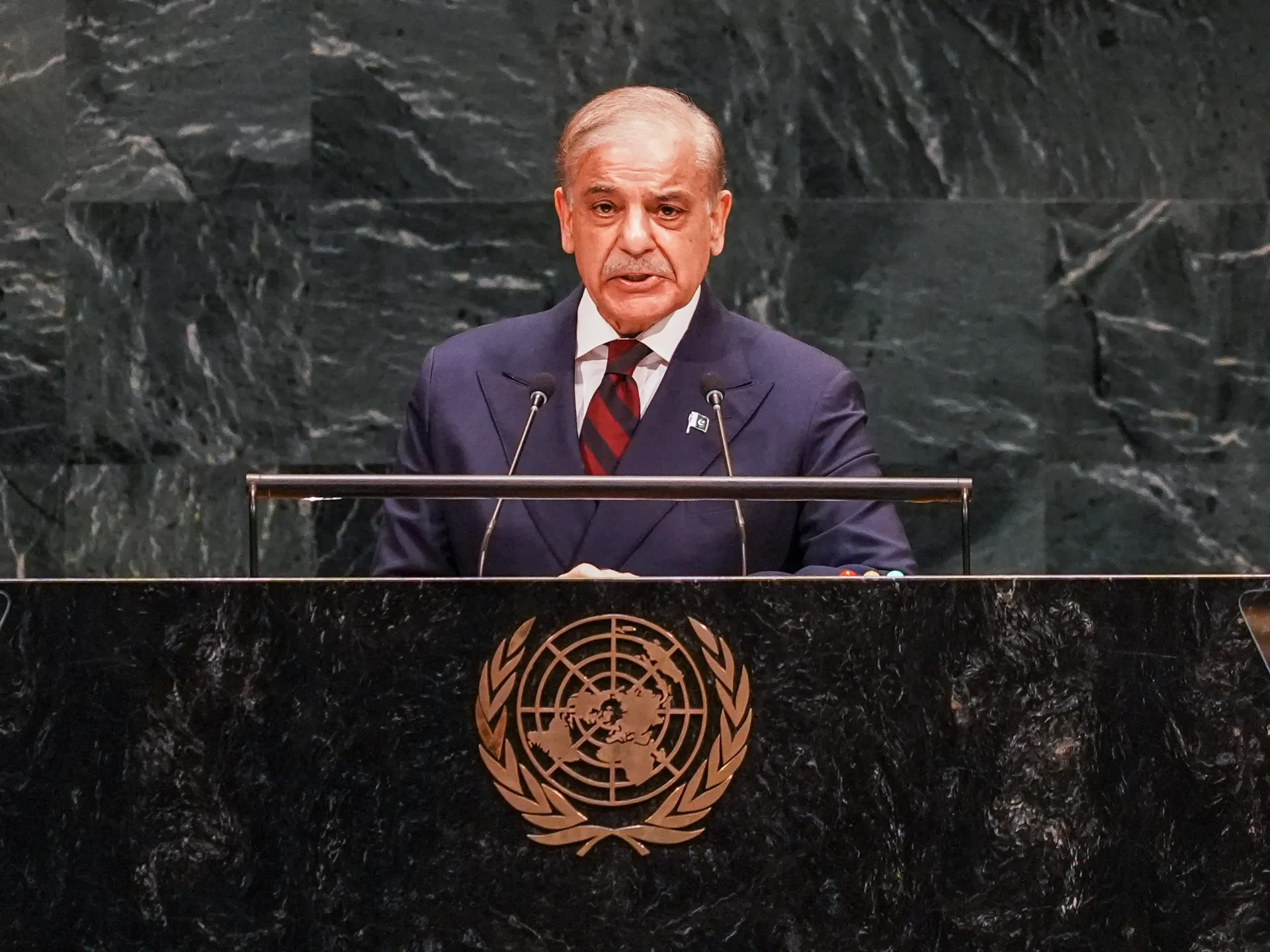
Addressing the United Nations General Assembly in New York on Friday, Shehbaz Sharif denounced recent Houthi attacks as “deplorable”.
Recommended Stories
list of 3 itemsend of list
He added that an attack by the Iran-aligned Yemeni group, which Riyadh says targeted Mecca, “outraged Muslims across the globe”. The Houthis have dismissed the accusations as a “heinous lie”.
Last month, Pakistan, Saudi Arabia and Turkiye signed a trilateral defence pact, formally known as the Mecca Joint Defence Agreement. The pact states that an attack on any member will be treated as an attack on all. However, Islamabad and Ankara have refrained from getting involved in Riyadh’s ongoing fight with the Houthis.
The military chiefs of all three countries met in Riyadh on Friday and discussed enhancing intelligence sharing and military coordination, the Pakistani military said. The chiefs reviewed the security situation and threats facing Saudi Arabia, affirmed a commitment to collective defence and pledged to turn Mecca Agreement commitments into effective cooperation, the army added.
It is not clear what, if any, support Ankara and Islamabad may provide to Riyadh. In a written interview published by the US media outlet Newsweek on Friday, Turkish President Recep Tayyip Erdogan said support could include “intelligence, logistics or ammunition, with more extensive military assistance possible depending on the scale of the threat”.
Iran and Palestine
In Sharif’s UN address, he also referenced the US-Israeli war that was launched against Iran in late February, as well as Islamabad’s role as a co-mediator.
Pakistan’s efforts culminated in the Islamabad Memorandum of Understanding, signed by Washington and Tehran, which was intended to help end the conflict.
The accord has since unravelled while regional countries push for a conclusive end to the war, which has caused a global energy crisis and exacerbated tensions across the Middle East.
“Yet amid the roar of missiles, drones and guns, the voice for diplomacy must echo even louder and stronger,” Sharif said.
He added that the Strait of Hormuz, which Iran has effectively blockaded, and the Bab al-Mandeb waterway, which is now largely under Houthi control, are “arteries of the global economy” that should remain free and safe.
The Pakistani prime minister also denounced what he described as Israel’s “genocidal agenda” in Palestine, while condemning “Israeli aggression against Lebanon and Syria”. These were sentiments echoed earlier in the day by Lebanese Prime Minister Nawaf Salam in his UN General Assembly address.
India, Kashmir, Afghanistan
Closer to home, Sharif’s speech touched on tensions with Pakistan’s neighbours.
Criticising India, he accused New Delhi of weaponising the Indus waters, which both countries have jointly managed for more than six decades. The two neighbours heavily rely on the Himalayan river network.
Sharif warned that “any attempt to stop, impede or divert Pakistan’s share of the waters will be treated as an act of war”.
He also called for what he described as a “just and fair solution” to the Kashmir dispute, which both Pakistan and India claim in its entirety. Sharif alleged that there have been attempts to “alter the legal status” of Kashmir through demographic engineering.
Another pressing issue for Islamabad is the threat posed by the Tehrik-e-Taliban (TTP), or Pakistani Taliban. Sharif said groups operate from “sanctuaries inside Afghanistan, with the aim of destabilising Pakistan”, insisting that attacks launched from Afghanistan “must come to a grinding halt”.
This comes as the latest cross-border fighting left several Afghan Taliban fighters dead on Friday.
Flights operated by Iranian airlines to and from the UAE suspended as part of broader efforts to enforce US aviation sanctions on Iran.
Published On 25 Sep 202625 Sep 2026
The United Arab Emirates has halted flights operated by Iranian airlines, joining several other countries in adopting United States sanctions aimed at pressuring Tehran’s aviation sector.
On Thursday, a statement carried by the Emirati WAM news agency said, “The General Civil Aviation Authority announced the suspension of all flights operated by Iranian airlines to and from the UAE.”
Recommended Stories
list of 3 itemsend of list
It said the decision was “based on the US sanctions imposed on Iranian airlines preventing them from using airports around the world”.
The UAE has joined Oman, Iraq, Azerbaijan, Georgia and Turkmenistan in restricting or suspending access for Iranian airlines amid the new US sanctions threat.
Dubai, the UAE’s commercial hub, is a major destination for Iranian carriers, with multiple daily flights, a large Iranian community and close business links.
An Iran Airtour flight from Tehran to Dubai was cancelled shortly before its scheduled departure on Thursday morning, after tickets had already been issued, according to the AFP news agency.
The UAE, which was repeatedly hit by Iranian missiles and drones throughout the US-Israel war on Iran, suspended trade and financial exchanges with Iran last month.
On Wednesday, the UAE’s central bank blocked transactions involving Iran’s Bank Melli, claiming the financial institution had violated rules on money laundering, terrorism and arms proliferation.
The US Treasury announced sweeping sanctions on Iran’s aviation sector earlier this month, targeting 27 airlines and dozens of companies that support them. The measures aim to cut off Iran’s air links entirely, warning that any airport or company still servicing Iranian carriers risks being cut off from the US dollar system.
Iran’s Civil Aviation Organization spokesman Majid Akhavan said: “Diplomatic and aviation talks are under way to remove the restrictions and restore flights” to the UAE.
Akhavan added that Turkmenistan also turned back a flight from Tehran to Dushanbe on Thursday.
“Turkmenistan’s refusal to allow the Iranian aircraft to pass through its airspace meant the flight could not continue on its route and had to return,” Akhavan told the Iranian IRNA news agency.
Several smaller Iranian airlines continue flying to China and Armenia, both of which have resisted US pressure, while routes to Turkiye remain open for some carriers.
The United States and Iran have engaged in hours of indirect talks through mediators on the sidelines of the United Nations General Assembly (UNGA) in New York, but accounts differed over whether officials from the two countries met directly.
US special envoy Steve Witkoff said mediators had “shuttled between” the American and Iranian delegations throughout Tuesday.
Recommended Stories
list of 4 itemsend of list
“Today, on the sidelines of the United Nations General Assembly, we engaged in lengthy talks with the Iranian delegation through the mediators, who shuttled between the two sides throughout the day,” Witkoff said in a post on X.
“They successfully completed a round of discussions that we hope will prove constructive and promising. The mediators will continue their work.”
US President Donald Trump gave a more direct account, saying Witkoff and Jared Kushner had held a three-hour meeting with Iranian officials.
“They had a very good meeting, a very productive meeting,” Trump told reporters at the UN, adding that he believed there was “a lot of momentum” towards an agreement. Trump later said talks were continuing and that he believed a settlement would eventually be reached.
Al Jazeera’s Kimberly Halkett, reporting from Washington, said Trump’s initial comments had created confusion over who had participated. She said the White House later clarified that Trump had not attended and that Witkoff and Kushner represented the US side.
Al Jazeera’s Tohid Asadi, reporting from Tehran, said state media had confirmed a meeting between Iranian Foreign Minister Abbas Araghchi and Witkoff after weeks without direct contact.
“This latest meeting was held at the request and insistence of the American side, and was aimed at conveying Iran’s messages and conditions, particularly around reopening the Strait of Hormuz,” Asadi reported.
Iranian state media said those conditions included lifting the US naval blockade, releasing frozen Iranian assets and ending the war on what Tehran describes as the “resistance” fronts.
Asadi also reported that an Iranian security source told Al Jazeera there could be room for further diplomatic engagement if Washington met Iran’s conditions and commitments.
The contacts came after a senior Iranian official told the Reuters news agency that Tehran’s delegation in New York had full authority to pursue diplomacy and described the UN gathering as a “golden opportunity” for Washington to return to negotiations.
The official said Iran had submitted its latest proposal to Washington through mediators on September 16 and that details of a possible agreement to end hostilities could be discussed in New York.
The official also said Iran could reopen Hormuz within seven days if the US eased military pressure and lifted its blockade of Iranian ports.
Regional powers push for de-escalation
The indirect talks have been accompanied by a broader diplomatic effort involving the Gulf and other regional states.
Qatar said it was working with Pakistan to reduce tensions between Washington and Tehran, safeguard freedom of navigation through the Strait of Hormuz and promote regional stability.
Qatar’s Prime Minister and Foreign Minister Sheikh Mohammed bin Abdulrahman bin Jassim Al Thani also met Araghchi in New York on Tuesday.
Qatar’s Ministry of Foreign Affairs said they discussed developments in the region, efforts to de-escalate tensions and ways of creating conditions for dialogue.
Oman has also been involved in maritime diplomacy over the waterway, having previously discussed maritime arrangements with Tehran aimed at facilitating navigation through the strait.
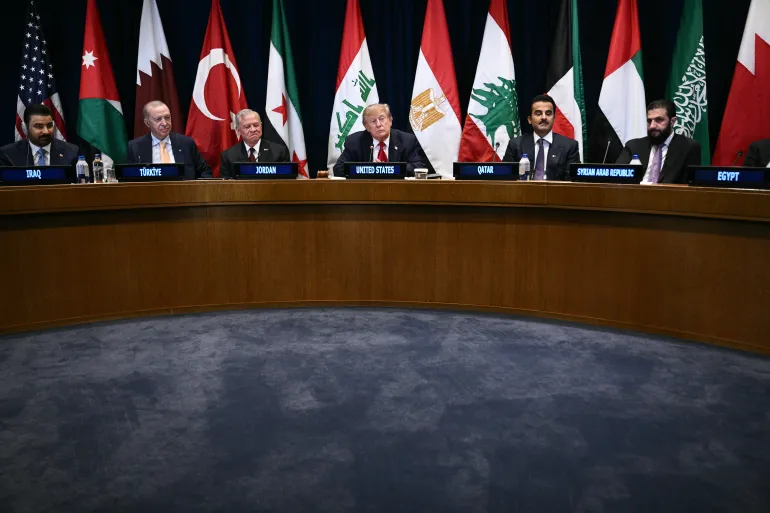
Trump also met leaders and senior officials from Gulf Cooperation Council states, Turkiye, Jordan, Syria and Iraq on Tuesday to discuss Iran and regional security.
Reuters reported that a Qatari proposal for a common security framework involving Iran and Gulf states was among the issues under consideration, with one regional source saying Tehran was reviewing it.
Qatar has not made the proposal public.
US President Donald Trump attends a multilateral meeting on the sidelines of the 81st UN General Assembly in New York with leaders and senior officials from Arab countries and Turkiye on September 22, 2026 [Brendan Smialowski/AFP]
Talks follow Trump’s warning
The indirect talks came hours after Trump used his UNGA address to combine the possibility of an agreement with another warning of military escalation.
Trump said he faced a “big decision” between reaching a deal that would allow Iran to rebuild and moving to “annihilate the Islamic Republic”. He also said Washington had previously offered Tehran “full economic cooperation” in return for ending its nuclear programme and what the US describes as Iranian support for terrorism.
Iran’s General Staff of the Armed Forces and Khatam al-Anbiya Central Headquarters responded in a statement carried by Iranian media, describing Trump’s threats as evidence of “strategic weakness” and saying Iran was ready to deliver “more severe, crushing, and unpredictable blows” in response to further attacks.
US officials have repeatedly suggested that negotiations were making progress following the collapse of the June memorandum of understanding. In early August, Trump said the sides had reached parameters for a possible agreement and later described talks over Hormuz as “moving along nicely”, although significant differences remained. Earlier this month, he again said he hoped the war was “towards the end”.
Tehran continues to condition the reopening of the Strait of Hormuz on the US easing military pressure and lifting its blockade of Iranian ports, while Witkoff said mediators would continue their efforts following Tuesday’s mediated exchanges.
Leaders of the six Gulf Cooperation Council (GCC) states are set to meet United States President Donald Trump in New York on Tuesday, as the US-Israel war on Iran nears seven months.
The meeting, to be held on the sidelines of the United Nations General Assembly (UNGA), brings together countries that have borne much of the fallout from a war they did not start.
Recommended Stories
list of 4 itemsend of list
Since the war began on February 28, Iran has repeatedly struck US bases across the Middle East as well as airports, energy facilities and hotels. The war has particularly hit the Gulf nations hard, as their oil and gas exports – the mainstay of their economies – have been disrupted, causing a global energy crisis.
A June memorandum of understanding (MoU) briefly raised hopes of an end to the war, but it collapsed last month amid disputes over navigation through the Strait of Hormuz, which remains effectively closed.
These talks come as Trump says he faces a “big decision” on the war, and as Iran’s president and foreign minister are also in New York for the UNGA.
So what is on the table and what might come out of the talks? Here is all you need to know:
What do we know about the GCC-Trump meeting?
Trump is set to meet the leaders from Bahrain, Kuwait, Oman, Qatar, Saudi Arabia and the United Arab Emirates, which form the GCC, on the sidelines of the UNGA.
Trump told US media outlet Axios on Thursday that he wanted to meet the GCC leaders as he faced a “big decision” on the war and wanted to speak with them directly.
Experts say there are two interconnected issues – the US-Israel war on Iran and the conflict between Houthi rebels and the Saudi-backed government forces in Yemen.
What do the GCC countries want from the meeting?
Broadly, experts say, the GCC nations share a common goal for the meeting.
The GCC has “shared positions on the main principles of regional security and de-escalation”, Luciano Zaccara, a researcher with the New Ground Research think tank in Doha, Qatar, told Al Jazeera.
“With Trump recently threatening to ‘wipe out’ Iran, I expect the six GCC states, or at least most of them, to convey to the US president their grave concerns about the likely consequences of another round of intense US military strikes on Iran,” Giorgio Cafiero, CEO of Gulf State Analytics, told Al Jazeera.
“They will probably seek to underscore their own vulnerabilities to a renewed cycle of all-out fighting between the United States and Iran,” he said, adding that they will try to persuade Trump into making certain concessions to Tehran.
Cafiero said they will look to develop an arrangement that builds on the MoU and which “offers the most viable path toward winding down the crisis”.
Chief among their common concerns is freedom of navigation through the Strait of Hormuz and the Red Sea, according to Ahmed Helal, managing director for the Gulf region at The Asia Group.
‘Divergent’ goals
Despite common goals, the Gulf states have still experienced “divergent” outcomes from the war and will also look to persuade Trump to address their particular predicaments, Helal said.
The UAE, he explained, has been able to keep exporting oil by pipeline to its port of Fujairah, which bypasses the Strait of Hormuz, although not at the volumes it would like.
But fellow GCC member Qatar, whose gas exports depend on the strait, has seen its LNG shipments severely curtailed and wants to avoid any renewed escalation that could see its energy infrastructure targeted again, Helal said.
Speaking at an event in New York, US, on Sunday, Qatar’s Prime Minister Sheikh Mohammed bin Abdulrahman bin Jassim Al Thani described the economic fallout from the US-Israel war on Iran as an “earthquake”.
Saudi Arabia has another problem, as it is now under “enormous pressure” as the Houthis gain ground in Yemen, and has been “intensifying their lobbying” for US strikes on the group, he said.
What does Trump want from the meeting?
Predicting what the US president plans has been difficult since the outbreak of the US-Israel war on Iran, experts say.
“It could be possible that the US is expecting a more direct GCC engagement against Iran in exchange for a direct US intervention to stop the Houthi attacks against Saudi Arabia, but without the GCC leaving the main role in defending themselves”, Zaccara told Al Jazeera.
“Regarding Iran, Trump has not ruled out another major military escalation. At the same time, the administration seems to be open to exploring diplomatic options,” he said, adding there are rumours of a possible indirect US-Iran meeting on the sidelines before Iranian President Masoud Pezeshkian’s speech on Wednesday.
Helal said the administration’s focus is domestic, with the midterm elections weeks away and Trump’s approval ratings at a record low; there is “immense pressure” to lower petrol prices.
While Trump has threatened further military action, he remains politically sensitive to an “escalatory ladder” that could spike oil prices, Helal said.
The talks are unlikely to produce a breakthrough, he added, with the best-case scenario an agreement to return to negotiations potentially brokered by Qatar or Pakistan.
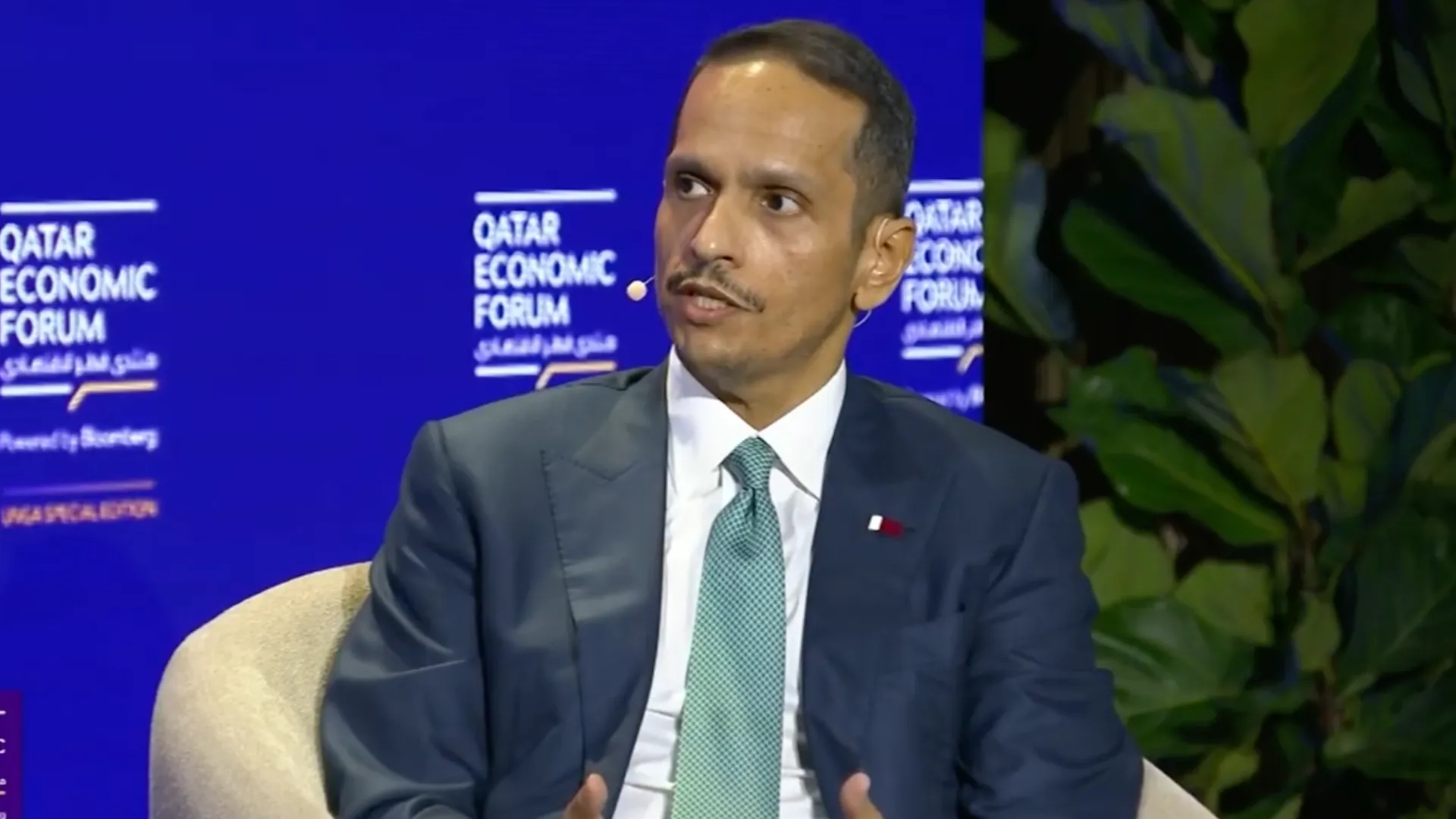
Qatar’s Prime Minister tells Bloomberg, the Gulf won’t be the same as before the war, unless there’s a security framework ensuring no one is a threat to each other. Speaking at the Qatar Economic Forum in New York, Sheikh Mohammed bin Abdulrahman Al Thani says the region needs to have good relations.
Fidan highlights Turkiye’s readiness to assist Saudi Arabia militarily, as Houthi attacks escalate in Yemen.
Published On 19 Sep 202619 Sep 2026
Turkish Foreign Minister Hakan Fidan has said that Saudi Arabia may have unmet military needs from the attacks by Yemen’s Houthi rebels and that Turkiye would consider how to support the kingdom as part of a trilateral defence pact.
Speaking to Turkish broadcaster NTV on Friday, Fidan said it was unacceptable for Saudi Arabia to be dragged into the US-Iran war, adding that Riyadh had no desire to join the conflict.
Recommended Stories
list of 3 itemsend of list
He added that proposals had been conveyed to all sides in an effort to end the fighting, without further elaborating.
The Iran-backed Houthi rebels and Saudi Arabia continue trading attacks in an escalating war in Yemen, as the Houthis press gains that have brought large stretches of the Red Sea coast, including the strategic Bab al-Mandeb Strait, under their control.
Pakistan has made a similar pledge to defend Saudi Arabia under the defence pact.
Lieutenant-General Ahmed Sharif Chaudhry, a spokesperson for Pakistan’s military, told Arab News on Thursday that Islamabad would defend Saudi Arabia “to any extent”, including “physically”, though he did not say whether Riyadh had asked for more Pakistani troops.
Pakistan’s Foreign Office has said no military response is currently under discussion under the pact, adding that Islamabad would act “when time comes”.
The trilateral agreement, known as the Mecca Joint Defence Agreement, was signed on August 7 in Mecca by Saudi Crown Prince Mohammed bin Salman, Turkish President Recep Tayyip Erdogan and Pakistani Prime Minister Shehbaz Sharif.
The three countries formally named the arrangement the Mecca Defence Alliance on August 31, after officials meeting in Istanbul agreed to set up a secretariat in Riyadh, to be headed initially by a Pakistani secretary-general.
Its founding principle is that an armed attack against any one of the three states will be treated as an attack against all three.
Fidan said at the time the alliance was built on “respecting the sovereignty of other states, territorial integrity and not intervening in internal affairs”, and remained open to other countries joining.
Analysts have questioned how much substance lies behind the pact so far, noting it lacks the integrated command structure and standing forces that underpin NATO.
Its institutional shape, including how the mutual defence clause would actually be triggered, remains unclear.
The trilateral pact was struck as Gulf states grow increasingly concerned about being pulled into the wider US-Iran war, which has continued for more than six months since Washington and Israel first struck Iran in February.
The world is creating more wealth than ever before but protecting and growing it has become increasingly challenging.
To put this into perspective, BCG’s Global Wealth Report 20261 found that global financial wealth increased by 10.7% in 2025 to US$333 trillion, its highest rate of growth since 2021. The Gulf Cooperation Council (GCC) is also becoming more prominent within this evolving landscape. The region’s total wealth reached an estimated US$8.6 trillion in 2024, while EY’s GCC Wealth Management Industry Report 20252 estimated that more than 200,000 individuals across the region qualify as ‘high net worth’ (HNW).
Amid this trend, around half of the private wealth in the GCC remains tied to real estate, highlighting an opportunity for greater diversification across assets and markets.
We see this among QNB’s private banking and wealth management clients, with a move beyond traditional equity and fixed income allocations towards broader diversification strategies. For example, interest is growing in alternative investments, international opportunities and actively managed solutions that can respond to changing market conditions.
The GCC’s Growing Role in Global Wealth
The GCC’s emergence as an international wealth hub reflects the broader transformation taking place across its economies. Investment in technology, infrastructure, financial services, tourism and advanced industries is widening the range of opportunities available to investors and strengthening the region’s connections with markets across Asia, Africa and Europe.
The development of financial centres, deeper capital markets and national economic transformation programmes is also creating a more sophisticated regional investment ecosystem. These initiatives are strengthening the region’s position not only as a source of capital, but also as a destination for private wealth and a platform through which investors can access international markets.
From Portfolio Allocation to Active Stewardship
As the investment universe expands, diversification is no longer limited to simply holding a mixture of listed equities and fixed income instruments. Investors increasingly require portfolios diversified across geographies, currencies, sectors, asset classes and investment horizons.
This is driving demand for alternative investments as investors look for new sources of return and greater portfolio resilience.
According to EY’s GCC Wealth Management Industry Report 20253, 69% of wealthy clients in the Middle East hold alternative investments. This supports what we are seeing among QNB’s clients, with growing interest in private markets, structured solutions and thematic opportunities that can enhance diversification and provide attractive risk-adjusted returns.
These investments can provide access to opportunities that are not always available through public markets. However, they can also introduce liquidity constraints, longer investment horizons, valuation complexity and varying levels of transparency. Access alone is therefore not enough.
Each allocation also requires rigorous due diligence and a clear understanding of how it contributes to the objectives, liquidity requirements and risk profile of the overall portfolio.
For HNW individuals and family offices, their objectives often extend beyond investment performance. These may include capital preservation, liquidity planning, succession, or the responsible stewardship of family assets.
Such priorities are becoming more pronounced. EY estimates that approximately 500,000 older individuals across the GCC could transfer around US$438 billion to their heirs by 2030, increasing the importance of multigenerational wealth planning.
Combining Global Access with Regional Expertise
To meet the evolving needs of HNW individuals, global reach provides access to a wider universe of investments, specialist expertise and institutional relationships. At the same time, regional knowledge allows advisers to understand local market structures, emerging opportunities and individual client priorities.
Together, these capabilities support portfolio strategies that are globally diversified while remaining relevant to each client’s circumstances.
QNB Group is well positioned at the intersection of these dynamics. As a leading financial institution in the Middle East and Africa, with a presence in over 28 countries across Asia, Europe and Africa, the Group combines international market access with deep regional knowledge. This enables QNB to provide tailored wealth-management solutions informed by a strong understanding of market opportunities and client needs.
However, scale and access are only part of effective wealth management. Clients increasingly expect advice that reflects their individual circumstances, risk appetite and ambitions. This requires bespoke portfolio strategies, data-driven market insights and robust governance, supported by relationships built on trust and discretion.
A More Active Approach to Long-term Wealth
The next phase of wealth management will be more globally diversified, actively managed and advisory-led.
This degree of monitoring is essential; while investors will continue to seek wider access to international and alternative opportunities, they will also require greater discipline in how those opportunities are evaluated and integrated into their portfolios.
The GCC is well placed to play a growing role in this evolution. Its expanding wealth base, economic transformation, financial capacity and international connectivity are strengthening its position as both a destination for capital and a centre for long-term wealth creation.
Ultimately, successful wealth management depends on the ability to combine global access with regional understanding and investment opportunity with disciplined stewardship. Institutions that combine these capabilities will play an increasingly important role in helping clients preserve their wealth, navigate complexity and create enduring value across generations.
Read more about QNB Group’s wealth management capabilities and solutionshere.
Tehran, Iran – Another attempt to clinch a deal between Iran and Oman to restore some traffic to the Strait of Hormuz has been set back by a lack of regional consensus on the future of the waterway.
Officials from Iran, Iraq and the Gulf Cooperation Council (GCC) nations – minus objecting Bahrain – were scheduled to meet in Oman’s port city of Salalah on Monday to confer on new temporary routes in the Strait of Hormuz amid Tehran’s ongoing hot-and-cold war with the United States.
Recommended Stories
list of 4 itemsend of list
On Sunday night, the region’s officials announced the postponement of the meeting, without giving a new date. None of the stakeholders gave any indication that the postponement was directly linked to recent Houthi and Iraqi militia attacks on Saudi Arabia.
However, Iran’s Ministry of Foreign Affairs said Saudi objection was the reason for the postponement, without providing further details.
US media outlets Axios and CNN reported that Saudi Arabia had submitted amendments to the Iran-Oman proposal for Hormuz because it had concerns that the wording would establish a new status quo which would be unacceptable to Riyadh.
It comes days after Saudi Arabia shut down its critical East-West oil pipeline – the kingdom’s key route for energy exports – after drone attacks in the area originating from Iraq. US President Donald Trump said these attacks were likely conducted at Tehran’s behest.
Saudi Arabia has also faced repeated attacks by the Houthis, who took control of Yemen’s Red Sea coast over the weekend.
Hours after the Salalah meeting was postponed, the Saudi civil defence issued alerts for Abha, Khamis Mushait, Jazan and Najran in southern and western parts of the kingdom. The Houthis claimed to have fired dozens of ballistic missiles and drones at military facilities in Khamis Mushait, in retaliation for air strikes across Yemen, which it blames on Saudi Arabia.
With continued disruptions to the passage of vessels through the strait, Iran has signalled that it intends to continue pursuing the bilateral agreement with Oman over Hormuz, which it said was finalised last month.
“In consultation with Oman, in the next step, we will make a decision on how to announce or register the agreement,” Ministry of Foreign Affairs spokesman Esmaeil Baghaei told reporters during a weekly news conference on Monday.
When the two countries initially advanced the bilateral deal, Trump threatened to bomb Oman if it “gets in the way” of US talks with Iran.
Ali Vaez, deputy director of the Middle East and North Africa programme at the Crisis Group, told Al Jazeera that Tehran wants to use its leverage over Hormuz for regional legitimacy – and ultimately to pressure the US.
“The broader the regional buy-in, the harder it becomes for the US to dismiss the arrangement as an Iranian diktat,” he told Al Jazeera.
GCC states, suffering from a sharp decrease in energy receipts, want ships moving and their economies insulated from a war they neither started nor can end. But Vaez said Washington is unlikely to lift the blockade on Iran even if the region blesses the arrangement between Muscat and Tehran.
“[The US] will find it much harder to sustain a policy that its own partners increasingly see as perpetuating the crisis,” Vaez said
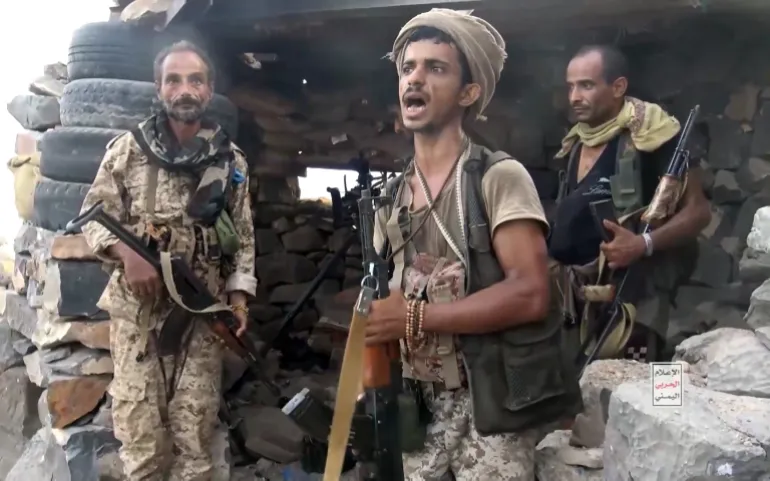
Houthi fighters stand guard at a seized camp during an offensive in the port city of Mocha, Yemen [Handout/Houthi Military Media Centre via EPA]
Temporary entry and exit
The Omani-Iranian planned agreement envisions temporary entry and exit routes for commercial vessels in the strait, with Tehran repeatedly stating that this would not mean that the Strait of Hormuz has reopened.
Iran and Oman are the only two countries with territorial waters in the Strait of Hormuz. The proposed inbound corridor reportedly goes through Iranian waters, while the outbound corridor mostly passes through Omani waters, with small parts still in Iranian territory.
During Monday’s scheduled meeting, Iran and Oman were supposed to share precise maps and discuss the details of the routes with GCC members Saudi Arabia, the United Arab Emirates, Qatar and Kuwait, and Iraq, which is outside the bloc. The deal could reportedly include voluntary tolls to fund navigation, environmental protection and search-and-rescue operations.
Bahrain, which has borne the brunt of Iranian attacks since the US-Israel war on Iran started at the end of February, said it would not participate in the forum since it would amount to “appeasement”. The Tasnim news outlet, affiliated with Iran’s Islamic Revolutionary Guard Corps (IRGC), claimed Israel pushed Bahrain to refuse participation.
How does Yemen fit in this picture?
The latest diplomatic movement comes after days of explosive developments in Yemen, when the Houthis, officially known as Ansar Allah, essentially took control of the Bab al-Mandeb strait and the Red Sea after a lightning offensive against government forces.
Thomas Juneau, assistant professor in the Graduate School of Public and International Affairs at the University of Ottawa, said the Houthi advances represent a significant gain for Iran. Its Yemeni allies’ position in the Red Sea offers Iran an important new bargaining chip in future negotiations with the US.
“The Houthis are not a simple arm of Iranian foreign policy. They operate largely based on their own interests, and do not take and execute Iranian commands,” he told Al Jazeera. “But Houthi and Iranian interests are largely, if not always fully, aligned. They cooperate closely on the basis of those shared interests.”
Juneau sees the ability for Iran and the Houthis to potentially partially block traffic in the Strait of Hormuz and the Bab al-Mandeb – two of the world’s most crucial maritime bottlenecks – would give them tremendous influence over the global economy, and thus the US.
The Houthis are trying to seize the opportunity to “institutionalise the de facto reality of their veto on maritime traffic” in the southern Red Sea and replicate partial Iranian success in doing the same in the Strait of Hormuz, Juneau said.
Iran has stressed that their allies’ gains in the Red Sea cannot be separated from the Saudi-led blockade and attacks on Houthi areas in Yemen since 2015.
“We know very well that continued war between Islamic countries in the region only has one winner, and that winner is no one but the Zionist regime, which is after persisting tensions and conflict in our region and between Islamic countries,” Iranian spokesperson Baghaei said.