Gay

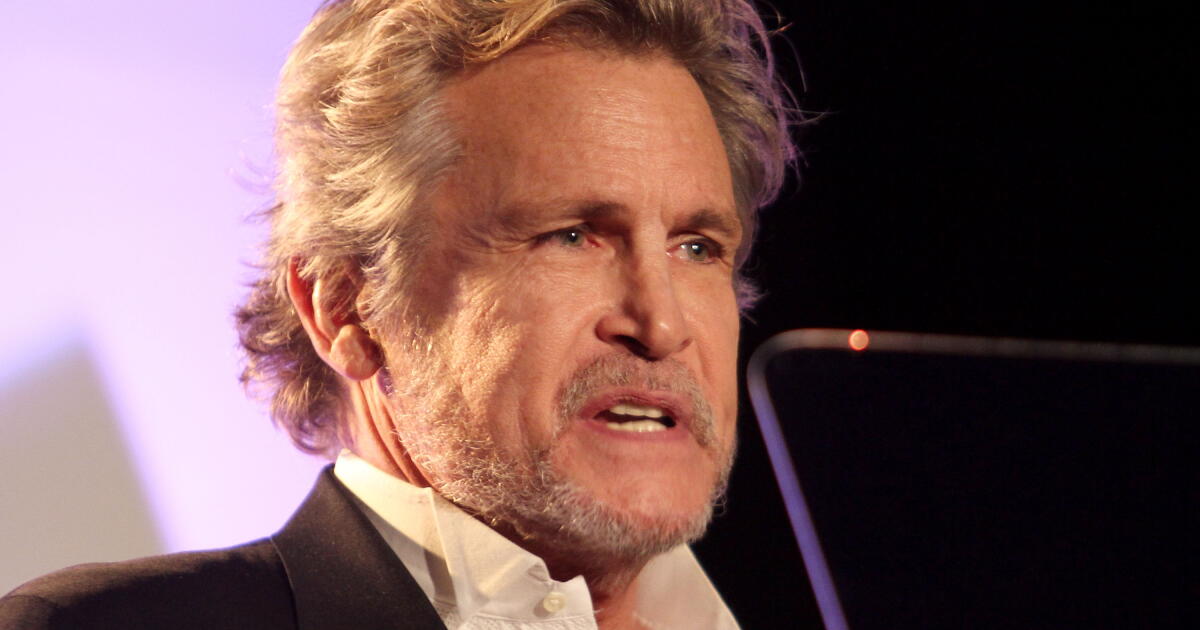
Barney Frank, a liberal congressman and trailblazer for gay rights, dies. He was 86.

Barney Frank, the longtime Democratic congressman and leading liberal who brought new visibility to gay rights and crafted the most significant reforms to the financial system in a generation, has died. He was 86.

Frank died late Tuesday, according to Jim Segel, Frank’s former campaign manager and close friend.

After representing broad swaths of Boston’s suburbs in Congress for 32 years, Frank and his husband moved to Ogunquit, Maine. He entered hospice there in April with congestive heart failure and is survived by his husband, Jim Ready, and sisters, the longtime Democratic strategist Ann Lewis and Doris Breay, along with brother David Frank.

A self-described “left-handed gay Jew,” Frank was known for his acerbic wit, combative style and focus on marginalized communities. He represented the party’s left wing while keeping close with Democratic leaders who sometimes frustrated progressives.

He is best known as a pioneer for LGBT rights. After decades of grappling with his sexuality, he publicly came out as gay in 1987, the first member of Congress to do so voluntarily. With his 2012 marriage to Ready, he became the first incumbent lawmaker on Capitol Hill to marry someone of the same sex.

But in an April interview as he entered hospice, Frank said he hoped he would be remembered for advocating a brand of politics that embraced progressive ideals without forcing them on voters prematurely. It is an approach he feared was being rejected as Democrats prepare for what could be a rollicking primary as they hope to retake the White House in 2028 and move past the Trump era.

“I hope I made the point that the best way to accomplish the improvements in our society that we need, particularly in making it less unfair economically and socially, is by conventional political methods,” Frank said. “The main obstacle to our defeating populism and going further in the right direction is that mainstream Democrats have to make it clear that we oppose that part of the agenda of our friends on the left that is politically unacceptable. They’re right about a lot of things but you have to have some discretion.”

“You should not take the most unpopular parts of your agenda and make them litmus tests,” he added. “And that’s what my friends on the left have been doing.”

Frank’s path to public life

Born in 1940 in Bayonne, N.J., Frank wrote in his 2015 memoir that he was drawn to public life after Emmett Till, a Black 14-year-old from Chicago, was lynched by white men in Mississippi. Frank would volunteer in Mississippi during the Freedom Summer of 1964, though he acknowledged the fast-talking style was a challenge in the Deep South.

“My direct organizing of Mississippi voters was limited by the fact that my accent [to this day more New Jersey than New England], my poor diction, and my rapid speech, especially when I got excited, rendered me largely incomprehensible to rural Mississippians of both races,” he wrote.

He entered politics in 1968 as an aide to Boston Mayor Kevin White before winning a seat in the Massachusetts House in 1972. Frank was elected to Congress in 1980, an otherwise dismal year for Democrats as the party lost dozens of seats in the U.S. House and Republican Ronald Reagan won the White House.

Frank’s pragmatic style surfaced early in his congressional career. He joined the liberal Democratic Study Group to help push then-Speaker Tip O’Neill (D-Mass.) to respond more aggressively to the Reagan administration. But Frank said he found himself more often agreeing with O’Neill’s less confrontational approach.

Years later, as Congress prepared to pass a massive tax overhaul package, Frank intended to vote “no,” opposed to the bill’s lowering of top tax rates. He changed his mind, however, when he worked out a deal boosting affordable housing tax credits.

“I was happy to sacrifice my ideological purity to improve legislation that was going to become law with or without me,” he wrote.

Rep. Nancy Pelosi, the California Democrat and former House speaker, called Frank an “idealist to the nth degree.”

“The goals, the vision, the promise of it all,” she recalled in an interview. “Nobody could ever surpass what he brought to the table in that regard.”

Making history in Congress

Through his early years in Washington, Frank led something of a double life.

Privately, he socialized in the city’s gay circles and had relationships but did not publicly acknowledge his sexuality. The media at the time rarely reported that someone was gay unless that person was involved in a scandal. When Frank in 1987 invited a reporter to his office to formally ask whether the congressman was gay, Frank responded, “yeah, so what?”

Other elected leaders, perhaps most notably San Francisco’s Harvey Milk, had come out years before. Members of Congress, including Rep. Gerry Studds (D-Mass.), were previously outed through scandal.

Frank’s approach made him the most prominent gay leader in national politics for much of the 1980s and 1990s. He helped secure AIDS funding and pressed the Democratic Clinton administration, unsuccessfully, to lift a ban on gays serving in the military.

But there were low points, too, most notably an overwhelming 1987 House vote to reprimand him for poor judgment involving a male prostitute he hired in 1985. Rep. Newt Gingrich of Georgia, the Republican whip at the time, pressed for the more severe punishment of censure, which was rejected by a large margin.

Frank became something of a punch line among conservative Republicans, with House Majority Leader Dick Armey (R-Texas) calling him “Barney Fag” in 1995. Armey said he misspoke and later apologized from the House floor.

Along the way, Frank became known as one of the most quotable lawmakers in Congress.

Regarding abortion, he said Republicans believed “life begins at conception and ends at birth,” criticizing the party’s push to curb social programs. After Ken Starr released a report describing President Clinton’s relationship with Monica Lewinsky in sometimes intimate detail, Frank said it required “too much reading about heterosexual sex.”

Rep. Steny Hoyer (D-Md.) entered Congress the same year as Frank and he recalled his former colleague: “You may get a blow, but it was softened by the humor that came with it.”

Presiding over a financial overhaul

By 2007, Frank was the chairman of the House Financial Services Committee, where he would leave his lasting policy mark as the U.S. economy careened toward collapse. He worked with the Republican Bush administration to pass a rescue package, providing vital support to financial institutions but spurring a populist revolt that still courses through American politics.

Once the initial crisis eased, Frank helped develop the most significant reform legislation since the New Deal. Working with then-Senate Banking Committee Chairman Chris Dodd (D-Conn.), the Dodd-Frank Act would enhance consumer protections, impose new capital requirements for banks and boost the ability of regulators to monitor risk.

“Barney and I shared a fantastic relationship,” Dodd said. “I had many good moments in those 36 years in Congress, but none more significant, joyful, or productive than those almost two years working with Barney on our banking bill.”

During President Trump’s second term, his Republican administration has worked to roll back many of the legislation’s provisions, arguing they were too onerous.

Frank faced his toughest reelection campaign in years in 2010 as the tea party wave swept over American politics. He opted against running again in 2012, though remained engaged in politics long after leaving Congress and was a fierce critic of Trump.

Asked for his prediction on who might succeed Trump, Frank said “unfortunately I won’t get to vote for it.”

Sloan writes for the Associated Press.

Source link

Emilio Gay: New England opener drove from Durham to Bedford to tell parents the news about call-up

On the day he learned he would be England’s new opener, Emilio Gay drove from Durham to Bedford to tell his parents about his first international call-up.

The 26-year-old Durham batter received a phone call at 08:00 BST from his county director of cricket and new England national selector Marcus North, telling the left-hander he is in the squad to play New Zealand at Lord’s on 4 June.

“He actually kind of woke me up,” Gay told BBC Radio 5 Live.

Instead of then calling his parents to relay the news, Gay decided to jump in the car as part of his journey to the County Championship game against Kent at Beckenham on Friday.

“I didn’t really want to ring them, because we’ve been through so much,” said Gay. “I thought I’ve got to be there to tell them. I drove back to Bedford.

“My brother videoed it and it was a moment I’ll never forget. It was a really good day.”

Gay’s mother is Italian, which is how he qualified to play three T20 internationals for Italy last year.

His father’s family hail from Grenada and it was a trip to the Caribbean in 2007, around the time West Indies hosted the World Cup, that sparked Gay’s love of cricket. He even got a signed shirt from former Windies all-rounder Dwayne Bravo.

“I fell in love with the game through my dad’s family roots in the Caribbean,” said Gay.

“That’s how I really got into it properly at seven years old, and from there it built and built. One day I dreamed of getting called up to play for England and that day came today.”

Just like Sir Alastair Cook, the most successful opener ever to play for England, Gay is a former pupil of Bedford School.

He began his professional career at Northamptonshire and moved to Durham last season. A specialist opener by trade, he usually bats at three for the north-east county.

Though Gay is one of two uncapped batters in the England squad for the first Test against New Zealand, alongside Somerset’s James Rew, director of cricket Rob Key has confirmed it will be Gay opening at Lord’s against the Black Caps.

He will take the place of Zak Crawley, who has been dropped following the 4-1 Ashes defeat in Australia.

Crawley’s omission has been expected for some time, with Gay’s three centuries at the beginning of the new County Championship season putting him in the spotlight.

Source link

Jason Collins, NBA’s first out gay player, dies at 47

Jason Collins, the NBA’s first openly gay player who went on to become a pioneer for inclusion and an ambassador for the league, has died after an eight-month battle with an aggressive form of a brain tumor, his family announced Tuesday.

Collins, who starred at Stanford and Harvard-Westlake High, where he helped the Wolverins win to back-to-back Division III state titles along with twin brother Jarron, spent 13 years as a player in the league for six different franchises. He revealed in 2013 that he was gay, an announcement that came toward the end of his playing career.

Collins had been diagnosed with Stage 4 glioblastoma, which has an extremely low survival rate. He was 47.

“Jason changed lives in unexpected ways and was an inspiration to all who knew him and to those who admired him from afar,” Collins’ family said in a statement released through the NBA. “We are grateful for the outpouring of love and prayers over the past eight months and for the exceptional medical care Jason received from his doctors and nurses. Our family will miss him dearly.”

Just last week, Collins received the inaugural Bill Walton Global Champion Award at the Green Sports Alliance Summit. He was too ill to attend so Jarron Collins accepted for him.

“I told my brother this before I came here: He’s the bravest, strongest man I’ve ever known,” Jarron Collins said while accepting that award.

Jason Collins averaged 3.6 points and 3.7 rebounds in his career. He helped the New Jersey Nets reach two NBA Finals and in his best season averaged 6.4 points and 6.1 rebounds for them in 2004-05.

“Jason Collins’ impact and influence extended far beyond basketball as he helped make the NBA, WNBA and larger sports community more inclusive and welcoming for future generations,” NBA commissioner Adam Silver said. “He exemplified outstanding leadership and professionalism throughout his 13-year NBA career and in his dedicated work as an NBA Cares Ambassador. Jason will be remembered not only for breaking barriers, but also for the kindness and humanity that defined his life and touched so many others.

“On behalf of the NBA, I send my heartfelt condolences to Jason’s husband, Brunson, and his family, friends and colleagues across our leagues.”

Jason Collins revealed his sexuality in a first-person account for Sports Illustrated in April 2013. He was a free agent at the time, said he wanted to keep playing, and went on to play in 22 games with Brooklyn the following season.

“If I had my way, someone else would have already done this,” he wrote at that time. “Nobody has, which is why I’m raising my hand.”

His decision was widely lauded, with star players such as Kobe Bryant quickly speaking out in support of Collins. There was even support from the White House and then-former President Bill Clinton — whose daughter, Chelsea, went to Stanford with Collins. At Stanford, Collins was roommates with someone who was part of another American political dynasty, that being Joe Kennedy III, who spent eight years in Congress representing Massachusetts.

Collins, in the piece for Sports Illustrated, wrote that he realized he needed to go public about his sexuality when Kennedy walked in Boston’s gay pride parade in 2012 — but Collins couldn’t do the same.

Until then, Collins kept his feelings about gay rights close to the vest. He wore jersey No. 98 for the majority of his final three playing stints with Boston, Washington and Brooklyn — a nod to the year that Matthew Shepard, a gay college student in Wyoming, was killed. He also wore 46 in one game for the Nets, since it was the only jersey the team had available when he signed.

Collins made nearly 61% of his shots in his career at Stanford, which remains a school record. He was an honorable mention selection for the Associated Press’ All-America team in 2001, a few months before the Houston Rockets took him with the 18th pick in that year’s NBA draft.

“It’s a sad day for all of us associated with Stanford basketball when we lose one of the program’s greats,” former Stanford coach Mike Montgomery said. “We all have great memories of Jason and the kind of person he was. It’s hard to separate Jarron and Jason because they thought so alike, but even though he was an identical twin, Jason was unique in his own way. The impact he had on Stanford was immense, as he could match up against anyone in the country because he was big, smart, strong and skilled, all while being a very bright and nice person.”

Source link

Russian police raid book publisher accused of pushing ‘gay propaganda’ | Russia-Ukraine war News

Raid is part of Moscow’s hardline social conservatism and clampdown on political life.

Russian police have raided the country’s top publishing house on suspicion that it has been disseminating “homosexual propaganda”, local media report.

Police reportedly seized thousands of books on Tuesday and took Yevgeny Kapiev, the chief executive of Eksmo, in for questioning. The raid appears to be part of Moscow’s pivot to hardline social conservatism with repressive laws running alongside a clampdown on political life and aggressive foreign policy.

Recommended Stories

list of 4 itemsend of list

Police targeted Kapiev as part of a “criminal case on extremism” over the publication of books “dealing with LGBT themes”, Eksmo communications director Yekaterina Kozhanova told the AFP news agency.

The firm’s finance director, head of distribution and deputy commercial director were also interrogated, Kozhanova said.

Eksmo is suspected of unofficially marketing books, including novels, that promote “gay propaganda” to Russian youth, the broadcaster Ren-TV reported.

An investigation into Eksmo was opened last year when authorities said “LGBT propaganda” had been “detected” in books published by its Popcorn Books subsidiary and they arrested several members of its staff.

Ultraconservative turn

Books showing approval of same-sex relations have been banned in Russia for more than 10 years.

The law has been tightened recently, requiring publishers to remove publications and destroy entire editions if they depict same-sex relationships.

The persecution of LGBTQ individuals, organisations and communities has intensified in the past decade or so as the Kremlin heralds “traditional values”. That drive has included a crackdown on films, books, art and culture, among other areas of social life.

Cultural producers have faced significant pressure even when they focus on giants of Russian culture. Biographies of Mikhail Bulgakov, author of The Master and Margarita, and the poet, actor and singer Vladimir Vysotsky have to be marked with warning labels because they are seen as promoting drug-taking.

The ultraconservative social turn has accelerated since Russia launched its full-scale invasion of Ukraine in February 2022.

In 2023, Russia’s Supreme Court ruled that LGBTQ activists should be designated as “extremists” and banned activities of the “international LGBTQ movement”.

Courts have issued fines and jail sentences to people displaying LGBTQ “symbols”, such as clothes, jewellery or posters featuring the rainbow flag.

Out of 49 European countries, the Rainbow Europe organisation ranked Russia third from bottom in terms of tolerance of LGBTQ people.

Source link