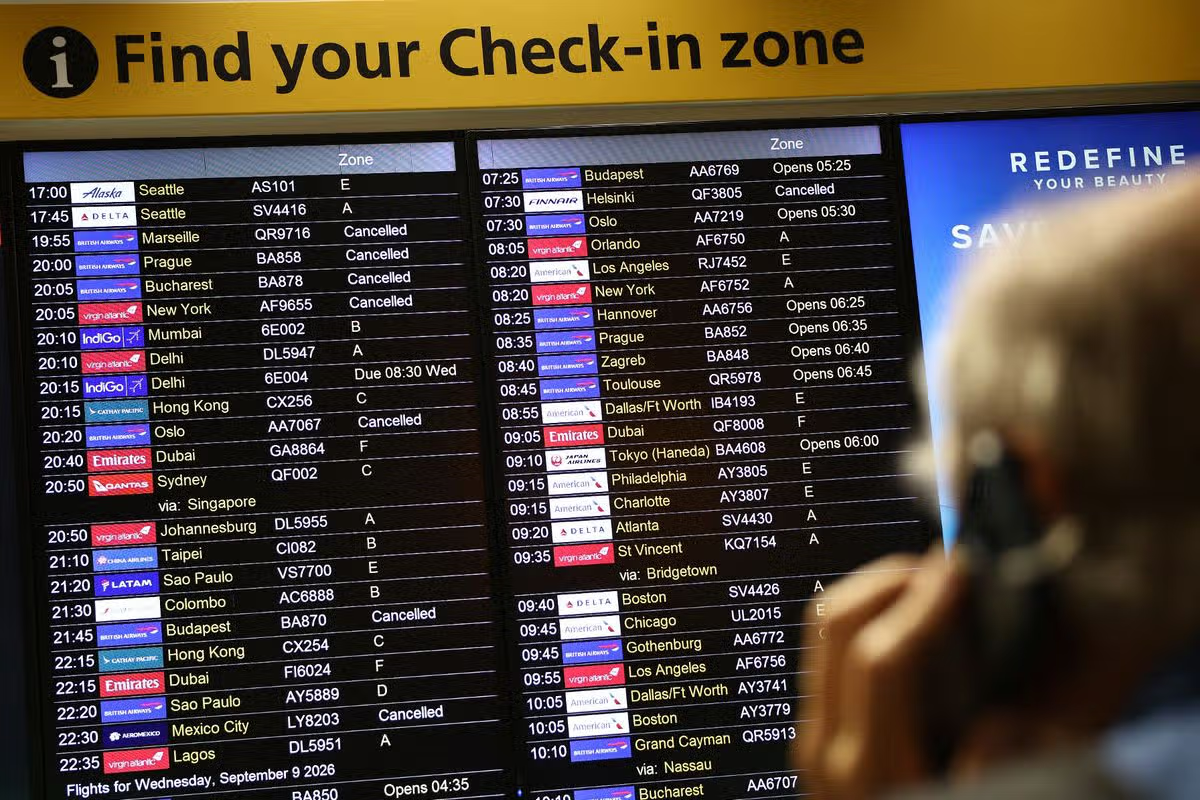
ABTA has issued a statement on the situation at airports across the UK, advising passengers of their rights and what steps they should take if their flight is cancelled or delayed this week

Thousands of flights have been cancelled(Image: Henry NICHOLLS / AFP via Getty Images)
ABTA, the UK’s biggest trade travel association, has issued a statement amid air traffic control chaos at British airports which has continued into a second day.
According to BBC figures, obtained from aviation analytics firm Cirium, 1,750 flights were cancelled yesterday (Tuesday, September 8), and more than 150 have been cancelled today so far. Significant delays are also expected to persist today due to the knock-on effect of yesterday’s cancellations.
At least 16 major UK airports have been affected by the wave of cancellations, which are due to a major technical problem impacting National Air Traffic Services (NATS), leading ABTA to issue advice to affected passengers.
Luke Petherbridge, director of public affairs at ABTA, said in a statement: “If your flight has been delayed or cancelled customers will have rights, which will vary depending on whether they booked their flight separately or as part of a package.
“ABTA members will be supporting those booked with them, to help make alternative arrangements, and we have advice on abta.com to help people understand their rights.
“While the immediate priority is supporting customers, as this isn’t the first NATS outage to cause widespread disruption, the industry and the public will want answers as to what has gone wrong, what lessons are being learned, and how the system will be made more resilient to avoid this happening again.”
ABTA has advised passengers to visit it FAQs page, which gives passengers a breakdown of their rights if a flight is delayed or cancelled. If a flight is delayed, your airline is required to offer certain support, from refreshments to accommodation and transfers, depending on the length of the delay and the route.
ABTA also says: “If the delay exceeds five hours, your airline must offer you the choice of taking a refund of the flight cost.” However, it’s unlikely passengers hit by today’s delays and cancellations will be able to claim for additional compensation. It states: “if it wasn’t the airline’s fault, you won’t be entitled to receive any compensation. Delays caused by things like extreme weather, airport or air traffic control strikes or other ‘extraordinary circumstances’ are not eligible for compensation.”
For those hit by cancellations, ABTA says: “If your flight is cancelled and you’re departing from the UK, your airline must offer you the choice of a replacement flight at the earliest opportunity or a refund.”
It advises: “If you were at the airport when your flight was cancelled, and you’ve chosen rerouting, you’re also entitled to care and assistance while you wait to be rerouted. This usually means food, drink, access to communications (e.g. two free phone calls) plus accommodation and the necessary transfers if the replacement flight departs the next day or later.”
Airlines affected by delays and cancellations include London-Heathrow, Gatwick, London-Stansted, London-City, London=-Southend, Manchester, Birmingham, Bristol, East Midlands, Edinburgh, Liverpool John Lennon, Aberdeen, Belfast, EMA, Southampton, Leeds and Jersey.
Have a story you want to share? Email us at webtravel@reachplc.com