Gas

Paraguay derby abandoned as police fire rubber bullets and tear gas amid violent clashes

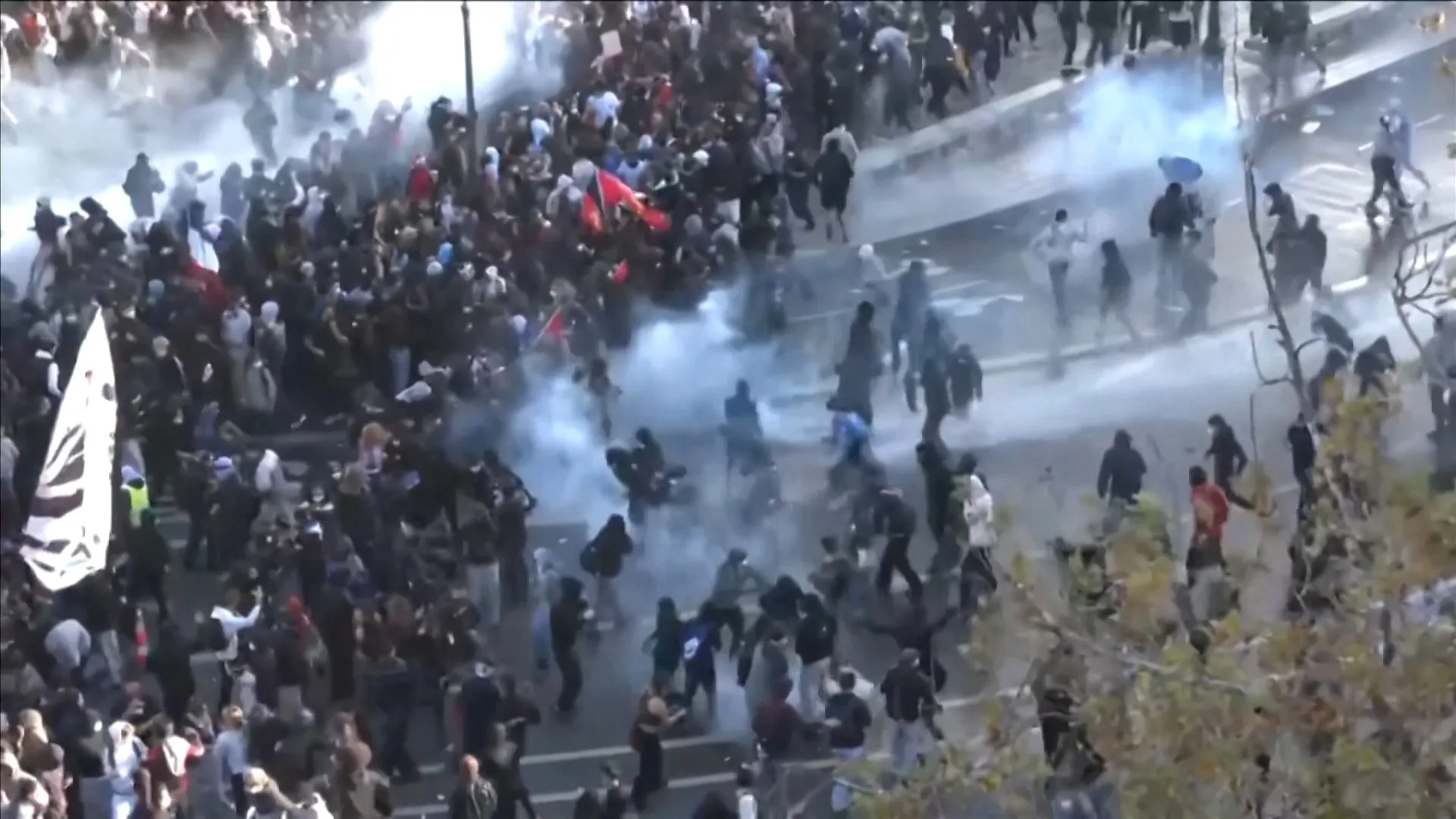
Violent clashes between fans and police caused the abandonment of a match between the top two sides in Paraguay on Sunday.

Hundreds of spectators escaped onto the pitch as police fired rubber bullets and tear gas into the stands at the Superclasico, played between Olimpia and Cerro Porteno, both based in capital city Asuncion.

According to witnesses, the trouble began when firecrackers were detonated in the section of the Defensores del Chaco Stadium which was allocated to Cerro Porteno supporters.

The police detained around 100 people, and while it was not immediately clear whether any fans had been injured, security forces reported that at least six officers were hurt, with one in a serious condition.

David Torales, a spokesperson for a local hospital, said the “officers sustained head injuries, lacerations, including possible stab wounds, and other injuries”.

Source link

As oil prices plunge below $91 after weeks, a new Hormuz crisis emerges | Oil and Gas News

Brent crude falls more than 9 percent after Iran said it will reopen the strategic waterway, only to shut it down again over US blockade of its ports.

Oil prices have plummeted to their lowest point in weeks after Iran said the Strait of Hormuz was open for passage during a ceasefire in Lebanon, and United States President Donald Trump said he expected to ⁠reach a deal to end the war soon.

Brent crude, the international benchmark, fell more than 9 percent to $90.38 a barrel on Friday, taking it below $91 for the first time since March 10.

Recommended Stories

list of 4 itemsend of list

The plunge came after Iranian Foreign Minister Abbas Araghchi said the strait was “completely open” and would remain so for the duration of the 10-day ceasefire between Israel and Lebanon, which took effect on Friday.

Hailing Tehran’s announcement, Trump declared the waterway “ready for business and full passage,” but said the US Navy’s blockade of Iranian ports would remain in “full force” until the sides reached a peace deal.

On Saturday, however, Iran rowed back on its decision to reopen the Strait of Hormuz, warning that it would continue to block transit through the key waterway as long as the US blockade of Iranian ports remained in effect.

The announcement came after Trump said the blockade “will remain in full force” until Tehran reaches a deal with the US, including on its nuclear programme.

Roughly one-fifth of the world’s oil passes through Hormuz and further limits would squeeze already constrained supply, driving prices higher once again.

Amid the escalation, Pakistani officials say they are trying for more talks between the US and Iran ahead of the April 22 ceasefire deadline.

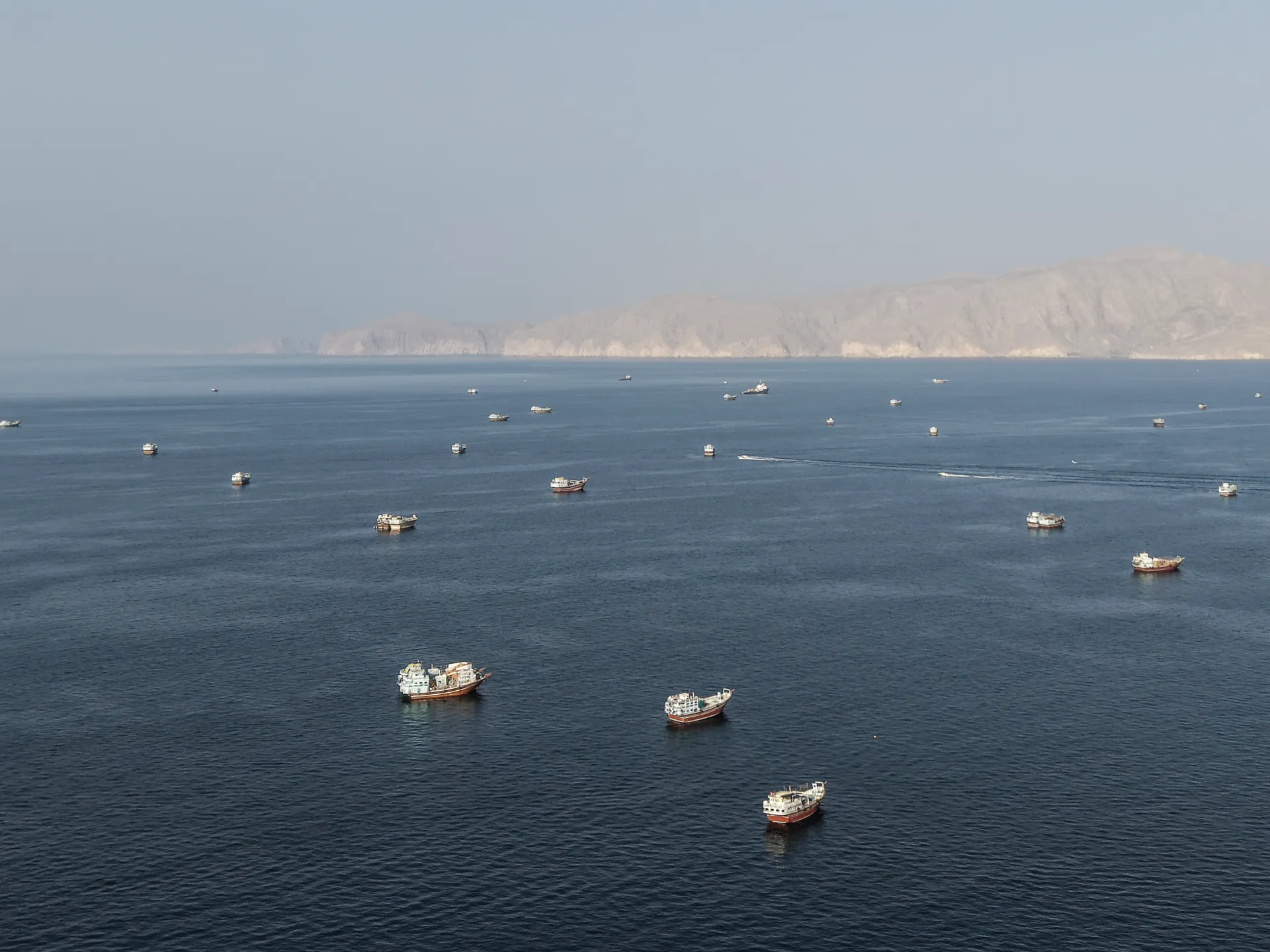
Meanwhile, ship tracking data displayed by MarineTraffic earlier on Saturday showed a significant uptick in vessels crossing the strait, which is located between Iran, the United Arab Emirates and Oman.

“It’s busy out there, the busiest I’ve seen it since the Strait of Hormuz was effectively closed at the beginning of the war,” Michelle Wiese Bockmann, an analyst at maritime intelligence firm Windward, said in a post on X.

“Last night there were few ships taking the risk but overnight there seems to have been a change.”

While Iran allowed a limited number of vetted ships to transit the waterway since the start of the war, traffic has remained at a trickle compared with pre-conflict levels.

The near-total closure of the strait has triggered one of the worst energy shocks in history, driving up fuel prices and prompting governments to roll out emergency measures.

Oil prices have swung wildly since the US and Israel launched strikes on Iran on February 28, hitting a post-conflict peak of $119 a barrel on March 19.

Source link

Dust storms have overtaken Coachella. Researchers say it’s a sign of what’s to come

A powerful dust storm disrupted the first weekend of the Coachella music festival as blustery winds swept over the sprawling grounds and enveloped concertgoers in a whirlwind of desert sand.

Several social media videos from last Friday night showed attendees navigating the festival grounds amid wind-tossed tents and wearing face masks to guard against the airborne dust.

The weather conditions prompted the South Coast Air District to issue dust advisories for parts of the Coachella Valley, warning that strong winds could expose people to unhealthy dust levels. The dust storm caused festival organizers to cancel a highly anticipated performance by Italian EDM artist Anyma, who had been scheduled to perform Friday at midnight on the main stage.

“I don’t have many words other than to say I’m truly devastated and deeply sorry to everyone who showed up to the main stage, and to those watching the livestream at home,” he posted on X. “The dangerous winds not only prevented us and Coachella from building our stage, but also made it impossible for my entire live setup and performance to operate safely.”

You’re reading Boiling Point

The L.A. Times climate team gets you up to speed on climate change, energy and the environment. Sign up to get it in your inbox every week.

It was the latest instance in which dusty conditions hampered one of the nation’s largest and most profitable music festival, which has been called “Dustchella.” But it is just one fragment of the economy disrupted by this natural phenomenon.

Wind-driven dust is an overlooked environmental hazard — and one that carries a hefty price tag. A recent study estimated that dust storms cost more than $154 billion in the U.S. in 2017, alone. The evaluation puts dust events on par with natural disasters in terms of economic costs, eclipsing, for example, the 2017 wildfire season but shy of that year’s hurricane season, according to Irene Feng, the lead author of the 2024 study, who researched dust at the University of Texas at El Paso.

“Dust is kind of a big deal,” said Feng, now a post-graduate student at George Mason University. “The fact that it was even comparable to hurricanes … was a huge surprise to me.”

Since researchers last attempted to calculate the costs associated with dust pollution in the 1990s, the numbers overall numbers essentially quadrupled.

Some of the greatest costs calculated in the new study include:

  • $100 billion related to dust-related deaths and lost productivity from health issues, as inhaling dust particles can lead to serious respiratory illness and trigger heart attacks.
  • $40 billion from additional household costs from cleaning, painting and property damage.
  • $9.6 billion for damages to agriculture from lost water and weaker crop yields.
  • $4 billion in lost value of weakened renewable energy generation, because dust obscures solar panels and gum up wind turbines.
  • $280 million for traffic crashes caused by reduced visibility due to dust storms.

Among one of the most grave conditions Feng analyzed was a potentially life-threatening respiratory infection known as “valley fever.” Throughout much of Southwest, desert soil can be laced with Coccidioides fungus spores. When inhaled, this fungus can propagate in the lungs, potentially causing scarring and collapse of lungs.

In many cases, valley fever symptoms can mirror the flu or COVID, leading doctors to misdiagnose patients, and to not provide proper treatment.

Coachella, which is hosted at an irrigated polo field surrounded by desert, is particularly susceptible.

“When I heard that there was a dust event at Coachella, I was actually really concerned about the valley fever cases that might come out of that,” Feng said. “Because there’s so many people traveling from outside the state, and they don’t necessarily know what valley fever is.”

But devastating dust-related effects, like valley fever, can be mitigated, at least to some degree, according to environmental experts.

In California, state and local government agencies have launched dust-mitigation efforts by installing windbreaks, such as cultivating native plants or reshaping the topography with more ridges. About 200 miles north of Los Angeles, at the eastern base of the Sierra Nevada mountains, Owens Lake, a critical and controversial source of water for Angelenos, city officials say they have drastically reduced dust near the dry, exposed lake bed in recent years after implementing some of these measures.

Scientists say global warming is causing warmer temperatures and more intense droughts, paving the way for more dust emissions. Feng said that could require more innovative solution, more action and more money.

“From what I’ve seen, it’s projected to be dustier in the future,” Feng said. “So, all these effects, all these costs, they’re just only going to get worse.”

More recent air news

The NAACP sued Elon Musk’s artificial intelligence company this week, claiming xAI (the creator of Grok) violated federal clean air laws. The lawsuit, reported by CNBC’s climate tech reporter Lora Kolodny, accuses the company of installing and operating 27 natural gas-fired turbines to power its data center in Memphis without the necessary air permits.

Recent far-flung wildfire smoke has led to air quality risks in unlikely places. Now, Michigan, my beloved home state, is overhauling its air quality alerts system after having endured heavy smoke from Canadian wildfires in 2023 and 2025, per Planet Detroit’s senior reporter Brian Allnutt.

New research suggests methane emissions have been drastically underestimated in the country’s largest cities. An satellite analysis of 12 urban areas, including New York City and Los Angeles, found up to 80% more methane emissions than previously thought, according to ABC reporter Julia Jacobo.

Because methane warms the atmosphere far more than carbon dioxide, the findings underscore the need to investigate large emitters, such as landfills, gas pipelines and wastewater treatment facilities. One other, underreported source is California’s man-made lakes that we tap for drinking water, L.A. Times water reporter Ian James writes. Environmental groups are urging environmental regulators to investigate why.

A few last things in climate news

Sales of new electric vehicles have slumped as Trump has eliminated federal incentives for car buyers. But, as oil prices have spiked due to the war in Iran, used EV sales have jumped 20%, signaling a renewed willingness by Americans to ween themselves off fossil fuels, according to Bloomberg senior correspondent Kyle Stock.

Stingrays injuries in Southern California have been on the rise. LAist climate reporter Erin Stone, who was recently wounded by stingray’s barb herself, writes that warming waters attract more rays and make these painful encounters more likely.

Under an ambitious proposal, the Bay Area could host the world’s largest floating wind farm, taking California closer to its 100% renewable energy goal, L.A. Times climate reporter Hayley Smith writes. The plan would involve building hundreds of Eiffel Tower-sized wind turbines and towing them into the deep, breezy waters of the Humboldt Bay, where they could generate up to 15% of the state’s electricity.

This is the latest edition of Boiling Point, a newsletter about climate change and the environment in the American West. Sign up here to get it in your inbox. And listen to our Boiling Point podcast here.

For more air quality news, follow me at @_TonyBriscoe on X and on LinkedIn.

Source link

Democrats clash with US Energy Secretary over Iran war and gas prices | US-Israel war on Iran News

Watch the moment a Democratic congresswoman tells the US Energy Secretary he is ‘living in a different world’ after his response to whether he’d adequately warned the White House that a war on Iran would have global consequences.

Source link

Oil prices surge past $103 a barrel after US announces blockade of Iran | Oil and Gas News

Asian stocks fall as naval blockade threat injects new turmoil into financial markets.

Oil prices have risen sharply following US President Donald Trump’s announcement of a naval blockade of Iran.

Brent crude, the international benchmark, rose more than 8 percent on Sunday to top $103 a barrel.

Recommended Stories

list of 4 itemsend of list

It was the first time the benchmark rose above the psychologically important threshold of $100 since Tuesday, when prices surpassed $111 a barrel.

Trump announced on Sunday that the US Navy would block all ships from entering or exiting the Strait of Hormuz, following the collapse of ceasefire talks between US and Iranian officials over the weekend.

US Central Command said in a later statement that it would only block vessels travelling to and from Iran and that other traffic would not be impeded, in an apparent scaling back of Trump’s threat to impose a full blockade.

The command said the blockade would take effect on Monday at 10am Eastern Time (14:00 GMT).

Oil prices have been a rollercoaster since US-Israeli strikes on Iran prompted Tehran to impose a de facto blockade of the Strait of Hormuz, a conduit for about one-fifth of global oil and natural gas supplies.

After topping $119 last month, Brent fell below $92 a barrel last week after the US and Iran announced a two-week ceasefire following more than six weeks of war.

While Iran has allowed a limited number of ships to transit the waterway, subject to prior vetting and authorisation, traffic has been reduced to a trickle compared with peacetime levels.

Despite Washington and Tehran’s fragile truce officially remaining in place until April 22, only 17 vessels crossed the strait on Saturday, according to maritime intelligence firm Windward, down from roughly 130 daily transits before the war.

Major stock markets in Asia opened lower on Monday as Trump’s blockade threat stoked uncertainty on trading floors.

Japan’s benchmark Nikkei 225 fell 0.9 percent in morning trading, while South Korea’s KOSPI dropped more than 1 percent.

US stock futures, which are traded outside of regular market hours, also fell, with those tied to the benchmark S&P 500 down about 0.8 percent.

Source link

Masters 2026: Rory McIlroy plans to keep ‘foot on gas’ after building record six-shot lead

McIlroy, who is hoping to become just the fourth player after Jack Nicklaus, Nick Faldo and Tiger Woods to win back-to-back Masters titles has held a six-shot lead at this point in a major before.

He went on to win the 2011 US Open by eight shots – claiming the first of his five majors – and also spreadeagled the field with an eight-shot victory at the 2012 US PGA Championship.

And he plans to maintain an aggressive approach around Augusta National over the weekend as he bids to match Faldo, Phil Mickelson and Lee Trevino’s haul of six majors.

“Don’t protect it. Go out and play freely, keep swinging,” he said when asked what advice his 2011 self would have for him before Saturday.

McIlroy led that year’s Masters by four shots going into the final round, but carded an eight-over-par 80 to tumble down the leaderboard.

“A big part of the lesson from the 2011 Masters to the 2011 US Open was don’t get protective,” he added. “Go out there and keep playing, keep trying to make birdies, stay as trusting and as committed as possible.”

McIlroy also said he plans to watch tennis and spend time with his daughter Poppy to take his mind off the third round.

“That distraction is usually a good thing for me, especially with a late tee time and the lead,” he explained.

“There are two really good semi-finals at Monte Carlo in the tennis. So I’ll watch those.

“We’ve been watching the tennis early in the mornings. And then hopefully spend some time with Poppy. I think we’re about halfway through Zootopia 2.”

Source link

Mexico’s Sheinbaum defends energy shift to cut reliance on U.S. gas

“Mexico must guarantee its sovereignty. And a fundamental part of sovereignty is energy sovereignty,” Mexican President Claudia Sheinbaum has reiterated. Photo by Isaac Esquivel/EPA

April 9 (UPI) — Mexican President Claudia Sheinbaum signaled a major shift in the country’s energy policy aimed at reducing its dependence on natural gas imports from the United States, including a possible reopening of hydraulic fracturing under stricter controls.

“Mexico must guarantee its sovereignty. And a fundamental part of sovereignty is energy sovereignty,” Sheinbaum said Thursday during a press conference.

The president said her administration is exploring new domestic production pathways, including using fracking, a technique she previously opposed due to environmental concerns.

Sheinbaum described the move as a “responsible decision” to be carried out under “strict scientific oversight” with the support of a specialized committee.

The proposal centers on creating a technical and scientific panel of experts from the National Autonomous University of Mexico and the National Polytechnic Institute.

The group will have two months to develop a protocol for extracting unconventional reserves, while minimizing environmental impact and prioritizing using treated or non-potable water.

The initiative marks a departure from the policy of former President Andrés Manuel López Obrador, who maintained a strict ban on fracking on environmental grounds.

Mexico currently imports about 75% of the natural gas it consumes, mostly from Texas, exposing the country to price volatility and geopolitical risks that could affect the National Electric System.

“We cannot achieve energy sovereignty if we depend on a valve that can be shut outside our borders,” Sheinbaum said.

Government projections estimate gas demand could rise by about 30% by the end of the administration, driven by new power plants, industrial expansion, petrochemicals and fertilizer production, according to local media reports.

Energy Secretary Luz Elena González Escobar outlined a plan Wednesday to strengthen energy security by increasing domestic gas production and reducing reliance on imports.

She also said the government will accelerate its energy transition plan, aiming for renewable sources to account for 38% of electricity generation by 2030 while reducing the share of fossil fuels.

The strategy envisions starting unconventional extraction by late 2027, with a goal of increasing production to more than 8 billion cubic feet per day by 2035 from about 2.3 billion cubic feet.

The administration has invited private sector participation in renewable energy projects and combined-cycle power plants under a mixed model in which the state, through the Federal Electricity Commission and Pemex, retains 54% of generation and strategic control, leaving 46% to private investment.

Officials say the model is designed to attract capital for storage and extraction infrastructure that the public sector cannot fully finance in the short term.

Energy analysts say the policy shift responds in part to nearshoring trends, as multinational companies relocating operations to Mexico require reliable and affordable electricity supply.

The proposal has drawn criticism from environmental groups, which called it a “green setback” and warned that fracking could threaten aquifers in regions already facing severe water stress.

Source link

How much water lies underground? Scientists finally have an answer

For scientists, measuring the water in a river or a lake is relatively straightforward. It’s much more complicated to figure out how much water lies underground.

After years of research, a team of scientists has finally mapped what remains of these hidden waters across the United States, and they’ve produced the most extensive estimate of the country’s groundwater to date.

Researchers at Princeton University and the University of Arizona took data from about 800,000 wells and applied a machine-learning model to estimate the depth of the water table nationwide.

“Groundwater is out of sight and out of mind for most people,” said Reed Maxwell, a hydrologist at Princeton and co-author of the recent study in the journal Nature. “Knowing how much we have will be helpful in knowing how to use it wisely.”

They incorporated data on the geology of aquifers and estimated down to nearly 1,300 feet, far deeper than most wells.

You’re reading Boiling Point

The L.A. Times climate team gets you up to speed on climate change, energy and the environment. Sign up to get it in your inbox every week.

The scientists say their detailed map and data could help local decision-makers address overpumping from stressed aquifers, and help researchers estimate how much water has been depleted.

California has seriously depleted groundwater in the San Joaquin, Salinas and Cuyama valleys, Ventura County and other places, with some of the fastest rates of water decline in the world.

In parts of the Central Valley, where large farms draw heavily from wells, aquifer levels have plummeted. The U.S. Geological Survey estimates it has lost 128 million acre-feet, comparable to the volume of Lake Tahoe, since pumps started pulling it out in the early 20th century.

That was as of 2019, and water levels have continued to decline.

A map shows the depth of groundwater across the US. The West generally shows lower levels of groundwater.

(Yueling Ma et al. / Princeton University)

In the desert Southwest, the groundwater is largely considered “fossil water” because it took millennia to accumulate. So once it is pumped out, it’s in effect gone for good.

Even depleting small amounts of water can be a problem, said co-author Laura Condon, a University of Arizona hydrologist. “We see this in Arizona and in Southern California too, where long before you run out of water, you start disappearing wetlands, disappearing small tributaries.”

The total quantity of water underground is still immense. The scientists found nationwide there is roughly 250 billion acre-feet, or 13 times the volume of the Great Lakes.

Data compiled by lead author Yueling Ma show the Colorado River watershed has about as much groundwater as the volume of the Great Lakes, while California has about 70% of that.

Those are vast quantities, but the researchers said that definitely doesn’t mean there is plenty of water to recklessly use up. Declines in groundwater levels have in recent years caused household wells to sputter and run dry, streams and wetlands to dry up, and land to sink, damaging canals and levees. California’s database of dry wells shows about 6,000 have run dry since 2013, but in the last year, only 13 dry wells were reported. So that problem has slowed down for now. It could soon worsen again.

The new map shows groundwater varies widely across the country. In some places, you have to drill down 300 feet to reach it. In others, it’s just a few feet below the soil.

The map can help scientists studying where slow-flowing aquifers are feeding nature, nourishing streams and wetlands.

Jay Famiglietti, a hydrologist and professor at Arizona State University who wasn’t involved in the research, called the researchers’ map and estimates a “remarkable achievement for modeling and understanding groundwater” in the United States.

The scientists “convincingly show that it is now possible to simulate groundwater depths and availability at very high resolutions,” he said, and they have made their results “accessible and useful for water managers across the country.”

He said the research adds to satellite measurements that scientists now use to track shifts in water over time. What the country still needs, he said, is a “national-scale network of deep groundwater wells” to track the quantity and quality of water all the way down to bedrock.

More water news

Two years ago, Gov. Gavin Newsom announced a strategy to save declining salmon. Now, as Rachel Becker reports for CalMatters, members of the Winnemem Wintu Tribe say the state is ending its support for an effort to reintroduce endangered winter-run Chinook to waters upstream of Shasta Lake reservoir, and they feel betrayed.

The Trump administration recently announced it will spend $40 million to begin a plan to raise the height of Shasta Dam, which would expand California’s largest reservoir. As Camille von Kaenel reported for E&E News by Politico, dozens of environmental, fishing and tribal groups sent a letter to Newsom urging him to oppose the Trump administration’s renewed effort to raise the dam.

I followed up to ask Newsom’s office about the idea of raising Shasta Dam. “We aren’t getting distracted by conceptual projects, years from viability,” Newsom spokesperson Tara Gallegos said. Instead, she said the governor is focusing on getting the planned Sites Reservoir built northwest of Sacramento, which “will benefit regions throughout California and is much farther along towards construction.” Gallegos added that the state already is “a significant investor in the project, and the federal government should join us in ensuring this project comes to fruition.”

In the San Joaquin Valley, the Delta-Mendota subbasin has become the fourth farming area to avoid being placed on groundwater probation by state regulators. The State Water Resources Control Board voted this week not to impose enforcement measures on the area, Monserrat Solis reported for SJV Water.

More climate and environment news

The Trump administration has a budget proposal that calls for increasing military spending while slashing funding for clean energy and federal science programs. My colleague Hayley Smith wrote about the proposed cuts, which are strongly opposed by Democrats and environmental groups.

A wolf that captured national attention when she ventured into L.A. County earlier this year continues to make history. As Lila Seidman reports for The Times, it’s the first time a wolf has ventured into Inyo County in the Eastern Sierra in more than a century.

Imperial County supervisors voted to combine several parcels of land to clear the way for construction of a massive data center, which has faced opposition from residents who worry about the complex’s environmental footprint, Kori Suzuki reports for KPBS.

California’s last remaining nuclear power plant has received federal approval to run through at least 2030. My L.A. Times colleague Blanca Begert reports that the federal Nuclear Regulatory Commission has renewed Diablo Canyon Power Plant’s license to operate.

A couple more things

Los Angeles Climate Week started April 8, with a big lineup of community events running through April 15. Here is the full calendar of events, which include a day of activities along the L.A. River and an interfaith climate gathering.

PBS SoCal’s new season of its locally produced environmental series Earth Focus premieres April 22, Earth Day, at 7:30 p.m., with an episode focusing on how L.A. stadiums are taking steps to be more environmentally friendly.

This is the latest edition of Boiling Point, a newsletter about climate change and the environment in the American West. Sign up here to get it in your inbox. And listen to our Boiling Point podcast here.

For more water and climate news, follow Ian James @ianjames.bsky.social on Bluesky and @ByIanJames on X.

Source link

Shell Moves to Expand Venezuela Natural Gas Operations

Venezuela possesses significant, largely untapped gas reserves. (Archive)

Mérida, April 8, 2026 (venezuelanalysis.com) – Energy multinational Shell is reportedly in advanced negotiations with the Venezuelan government to expand its operations in the country’s offshore natural gas fields

According to Reuters, the London-based oil and gas giant is seeking rights to exploit four major fields in Venezuelan waters near the maritime border with Trinidad and Tobago.

Shell wants to move beyond the 4.2 trillion cubic feet (tcf) Dragon field project, which it is set to develop alongside Trinidad’s National Gas Company (NGC) after receiving a 30-year license from the Venezuelan government in December 2023.

The company is currently targeting three additional fields that, together with Dragon, comprise the Mariscal Sucre project: Río Caribe, Patao, and Mejillones. The four fields represent approximately 12 tcf of reserves combined.

Shell likewise aims to accelerate operations in the 7.3 tcf Loran field, which forms part of the Loran-Manatee cross-border reservoir with Trinidad. The firm is already developing the Manatee side in Trinidadian waters, and spokespeople referred to Loran, which remains largely untapped, as an “attractive investment opportunity.” 

If the deals are finalized, Shell would gain access to a combined resource base of approximately 20 tcf of Venezuelan natural gas, with plans to process it into liquefied natural gas (LNG) in Trinidadian facilities.

Shell CEO Wael Sawan stated during the late March CERAWeek conference in Houston that the company could reach a final investment decision (FID) on at least two Venezuelan projects “before the end of this year, if afforded the right fiscal and legal frameworks.” Sawan added that there is “a long way to go” before the projects launch but that he was “encouraged” by recent progress.

A primary hurdle in the current negotiations is the status of the Río Caribe and Mejillones fields, which had partial ownership stakes previously assigned to Rosneft and then transferred to Russian state-owned Roszarubezhneft in 2020. Both fields have remained largely untouched.

In a statement to Reuters, a Shell spokesperson confirmed that the Russian part-ownership is “a problem” but expressed confidence in overcoming it.

For its part, the government of Trinidad and Tobago has maintained a supportive stance toward the integration of Venezuelan gas into its domestic infrastructure. Port of Spain possesses significant idle capacity at its Atlantic LNG facility, partly owned by Shell, due to declining domestic production in recent years.

The Trinidadian Energy Chamber recently expressed optimism that the expanded Shell projects in Venezuelan waters would “boost [Trinidadian] exports and generate much-needed foreign currency.”

However, the recent negotiations have drawn internal scrutiny. Former Energy Minister Kevin Ramnarine noted that while the deals will benefit Trinidad’s LNG exports, it effectively transitions the country into a gas importer.

The acceleration of talks for natural gas concession projects in Venezuelan waters follows the January 2026 reform of the Caribbean nation’s Organic Hydrocarbon Law. The pro-business overhaul granted private corporations significant benefits in terms of reduced fiscal responsibilities and increased control over operations and sales.

In addition to offshore natural gas ventures, Shell additionally signed agreements to take over light and medium-crude projects in the Punta de Mata Division in eastern Venezuela.

For the Dragon Project, the proposed development plan involves drilling subsea wells in Venezuelan waters and tying them to the Hibiscus platform off the north coast of Trinidad. The Loran field is expected to be linked to the Manatee platform.

Alongside Shell, BP had also previously progressed in talks to exploit the Cocuina-Manakin joint field. Both energy corporations recently received US Treasury licenses to negotiate contracts with Caracas under restricted conditions.

The Nicolás Maduro government had suspended all joint natural gas projects with Trinidad in late 2025 after the Kamla Persad-Bissessar government openly supported the Trump administration’s Caribbean military build-up ahead of the January 3 military strikes against Venezuela. Maduro and First Lady Cilia Flores were kidnapped by US special forces.

Edited by Ricardo Vaz in Caracas.

Source link

Explosives found near Russian pipeline supplying gas to Serbia, Hungary

April 5 (UPI) — Explosives were found in a border area between Hungary and Serbia near a pipeline that carries Russian gas, and which both depend heavily on.

Serbian president Aleksander Vucic said Sunday that the explosives were found in backpacks “a few hundred miles from the gas pipeline,” and that he’d alerted Hungarian Prime Minister Viktor Orban that an investigation was being mounted, CNN and The BBC reported.

“Our units found an explosive of devastating power,” Vucic said on Instagram. “I told PM Orban that we would keep him updated on the investigation.

Experts have suggested that a false flag, or staged, operation could be conducted in one of the two countries to help Orban in his re-election campaign, which has seen support for his 16-year rule in Hungary sagging.

Vucic said that although there were “certain traces” of the origin of the explosives and the backpacks that contained them, he could not offer details as Serbia’s military and police authorities are conducting their investigation.

The purchase and use of Russian oil by Hungary and Serbia, both of whose leaders are allies of Russian President Vladimir Putin, has been controversial in Europe amid Putin’s now four-year-long war to take Ukraine.

Orban, who has previously accused Urkaine of blocking its ability to get the fuels it needs, said Sunday in a post on X that an investigation into the “powerful explosive device” is ongoing and that he had convened an emergency meeting of his defense council this afternoon.

Orban allies have suggested that Ukraine could be behind the attempted explosion based on previous allegations that the country is interfering with Russian-linked gas and fuel facilities amid the ongoing war.

These allegations included Hungarian Foreign Minister Peter Szijjarto said it would be “illogical” for it to blow up its own gas pipelines, Ukrainska Pravda reported.

“In recent weeks, dozens of drones have been constantly attacking the TurkStream pipeline, which supplies gas to Hungary, on Russian territory, and now the terrorist attack foiled by Serbia appears to be part of these attacks,” Szijjarto said.

Sunday, Ukrainian Foreign Ministry spokesperson Heorhii Tykhyi said that “Ukraine has nothing to do with this,” Ukriniform reported.

“We categorically reject attempts to falsely link Ukraine to the incident with explosives found near the Turkstream pipeline in Serbia,” Tykhyi said, noting that the incident could be a Russian effort to affect the upcoming election in Hungary.

President Donald Trump delivers a prime-time address to the nation from the Cross Hall in the White House on Wednesday. President Trump used the address to update the public on the month-long war in Iran. Pool photo by Alex Brandon/UPI | License Photo

Source link

We solved the fire crisis 100 years ago, by the way

When I cracked open retired firefighter Bruce Hensler’s 15-year-old book, Crucible of Fire, I felt I had found an oracle.

Before 15 out of California’s 20 most destructive fires on record, Hensler described large chunks of cities burning to the ground, insurance companies jacking up premiums after realizing they wildly underestimated the risk and politicians failing to enforce the few fire safety rules on the books.

He even describes the fire chief of a decimated city criticizing city its politicians for failing to properly prepare for such a disaster, resulting in the city ousting the chief. (Sound familiar, Palisadians?)

Yet Hensler wasn’t trying to predict what would unfold in California’s wildland-urban interface in the 21st century. He was simply telling the story of the late 1800s and early 1900s in the Eastern U.S.’ downtowns of dense, wooden buildings.

Spoiler: Firefighters, policymakers, local advocates and, notably, insurance professionals figured out how to stop it from happening. Here’s how they did it.

You’re reading Boiling Point

The L.A. Times climate team gets you up to speed on climate change, energy and the environment. Sign up to get it in your inbox every week.

The Industrial Revolution, supercharged by the Civil War, transformed Northeastern cities into denser and denser wooden tinderboxes filled with tons of humans more than capable of accidentally generating sparks.

Fire departments, inspired by the war, were already reorganizing under a new paramilitary structure to more quickly and aggressively respond to blazes although most were still primarily volunteer-based. And beyond a few ad hoc fire safety laws that were scarcely enforced, cities’ building codes and water infrastructure naively lagged far behind the threat cities were creating.

So, cities started burning.

In 1866, a Fourth of July firecracker burned down much of Portland, Maine.

The destruction — more than $240 million in damage in today’s dollars — seriously spooked insurance companies focused on downtown industrial properties. Within days, they joined together to form the National Board of Fire Underwriters to try to stabilize their industry and promote fire-safety measures.

It wasn’t enough. A barn fire burned down Chicago in 1871 — more than $4 billion in damage in today’s dollars. A warehouse fire burned down Boston the next year — causing more than $1 billion in damage.

After the Boston fire, the board raised rates by 50% in large cities and began hurling ham-fisted threats to pull coverage altogether if cities didn’t get their act together and address their tinderbox problems quickly.

Over the next few decades, the board slowly got its own act together: It began collecting data on what caused cities to burn and funded a lab to run experiments. After Baltimore burned in 1904, the board released its own national fire-safety building codes based on that knowledge and created a grading scale to identify the risk of different cities based on their fire departments and water utilities as well as how closely their building practices aligned with the board’s building and electrical codes.

For politicians who dragged their feet because bolstering a water system or fire department is costly and designing a fire-safe building is, quite frankly, more cumbersome, the grading system made maintaining the status quo no longer viable — try explaining to your constituents that insurance rates in town are through the roof simply because the city won’t adopt the board’s new codes.

At some point, cities no longer burned down, only blocks or buildings did. As fire departments and cities continued to adopt new tech (with some pushing from the insurance industry) — motorized fire engines to replace horse-drawn ones, and later, smoke detectors and indoor sprinklers, then air tanks that allowed firefighters to enter buildings — fires didn’t often spread past a single floor or room.

These reforms, targeted mainly at commercial and industrial buildings in dense downtowns, largely missed the looming crisis in suburban residential areas that were slowly building themselves into a different kind of tinderbox that burned from the outside in.

In those areas, we’ve already seen many of the same dynamics play out: first the insurance rate hikes, then the cancellations. Now, some conversations and many heated debates — often driven by the insurance industry — are taking place around what we ought to do to protect our urban-wildland interface areas and how we can make them insurable again.

Organizations such as the Institute for Business & Home Safety play the role of the National Board of Fire Underwriters. Insurance wildfire models are starting to play the role of the grading scale, and policies such as Zone Zero, the national building codes.

As Hensler wrote in 2011, we now “accept building fires as commonplace but no longer expect them to consume adjacent buildings or blocks.”

It reminds me of a text Keegan Gibbs, who leads the Community Brigade program with the Los Angeles County Fire Department, sent me when I asked what he hopes to see in 10 years’ time: “neighborhoods where wildfire can move through the landscape without becoming a community-level disaster.”

More recent wildfire news

State Farm reached a deal with California last month to keep a 17% rate hike that took effect after the 2025 L.A. County fires, my colleague Paige St. John reports. The state initially rejected State Farm’s 22% rate hike request but eventually offered a temporary approval of the 17% hike last year. State Farm — which said it paid $6.2 billion in claims last year, largely from the L.A. County fires — said the increase enables the company to continue serving Californians.

A monthlong heat dome over the American West, fueled by climate change, has melted mountain snowpacks significantly this year, writes fellow Boiling Point host Ian James. With more time for vegetation to dry out, the early melting brings an increased risk of wildfire across the region this year.

In fact, acreage burned this year is nearly triple the 10-year average, reports Tim Casperson of newsletter the Hotshot Wake Up. The uptick has been fueled by a series of fires in Nebraska that has stunned many of the state’s ranchers as it decimated the hay that cattle rely on and stressed pregnant cows, reports Anila Yoganathan at the Flatwater Free Press.

A few last things in climate news

The U.S. Forest Service announced a major reorganization effort Tuesday that will move its headquarters from Washington to Salt Lake City, close research and development facilities in more than 30 states and shift management from broader regional offices to more localized state offices, reports Christine Peterson for High Country News. Former Forest Service employees and tribal leaders expressed concern that the move would uproot thousands of employees, scattering specialized regional knowledge. The chief of the Forest Service said the plan is intended to make the agency more “nimble, efficient, effective and closer to the forests and communities it serves.”

Gas prices in Los Angeles surged to $6 per gallon this week after the U.S. and Israel’s and the U.S.’s attack on Iran prompted the nation to close the Strait of Hormuz. However, California’s petroleum market watchdog is warning that some of the inflated price may be due to price gouging, my colleague Blanca Begert reports. In January, refineries were making 49 cents on the gallon, the watchdog group said; now, it’s closer to $1.25.

Honda is scrapping plans to build and sell three new electric-vehicle models in the U.S. after the Trump administration abandoned Biden-era policy goals to increase EV manufacturing and adoption, Dan Gearino reports for Inside Climate News. It comes after similar moves by Ford and Ram.

Finally, Heatmap News, in collaboration with MIT, has launched a new tool tracking electricity prices across the country on a month-to-month basis all the way down to the Zip Code level. You can check it out here.

This is the latest edition of Boiling Point, a newsletter about climate change and the environment in the American West. Sign up here to get it in your inbox. And listen to our Boiling Point podcast here.

For more wildfire news, follow @nohaggerty on X and @nohaggerty.bsky.social on Bluesky.

Source link

U.S. exempts oil, gas drilling in gulf from endangered species rules

The Trump administration on Tuesday exempted oil and gas drilling in the Gulf of Mexico from the Endangered Species Act after Defense Secretary Pete Hegseth said environmentalists’ lawsuits against the industry threatened to hobble domestic energy supplies as the U.S. wages war against Iran.

Critics said the move by the government’s Endangered Species Committee could doom a rare whale species and harm other marine life. Nicknamed the “God Squad” by groups that say it can decide a species’ fate, the committee comprises several Trump administration officials and is chaired by Interior Secretary Doug Burgum.

It met Tuesday for the first time in more than three decades amid global oil shocks and soaring energy prices brought on by the Iran war. The U.S. pumps more oil than any other nation, but that hasn’t insulated it from spiking prices: The national average for a gallon of gasoline topped $4 on Tuesday for the first time since 2022.

“Disruptions to Gulf oil production doesn’t hurt just us, it benefits our adversaries,” Hegseth told the committee. “We cannot allow our own rules to weaken our standing and strengthen those who wish to harm us. When development in the Gulf is chilled, we are prevented from producing the energy we need as a country and as a department.”

Environmental groups sought unsuccessfully to block Tuesday’s meeting and pledged to challenge the exemption. They say the exemption would speed the extinction of the rare Rice’s whale, which is found exclusively in the Gulf of Mexico. Government biologists say only about 50 of the animals remain.

“If Trump is successful here, he could be the first person in history to knowingly extirpate a species from the face of the Earth. That’s how precarious the condition of the Rice’s whale is,” said Patrick Parenteau, emeritus professor of law at Vermont Law School.

President Trump has made increased fossil fuel production a central focus of his second term. He wants to open new areas of the gulf off the Florida coast to drilling and has proposed sweeping rollbacks of environmental regulations disliked by industry.

Hegseth had notified Burgum on March 13 that an Endangered Species Act exemption for oil and gas drilling in the gulf was “necessary for reasons of national security.”

Hegseth told committee members Tuesday that Iran’s efforts to block shipping through the world’s busiest oil route, the Strait of Hormuz, underscored the national security imperative of having robust domestic oil production. He said the energy industry is under threat from pending litigation from environmental groups challenging government approvals for drilling.

Industry observers said the Endangered Species Act exemption could have significant implications for energy companies by streamlining approvals of new projects and impeding opponents’ ability to derail drilling plans.

“Serial litigation from activist groups targeting a lawful, well-regulated industry should not be allowed to indefinitely obstruct projects of clear national importance,” said Erik Milito with the National Ocean Industries Assn., which represents offshore developers.

The Gulf of Mexico is one of the nation’s top oil regions, producing 2 million barrels a day. It accounts for almost 15% of crude pumped annually in the U.S., plus a small share of domestic natural gas production.

But the gulf also has been the scene of environmental disasters such as BP’s Deepwater Horizon blowout in 2010, which killed 11 workers and spilled 134 million gallons of oil. A spill in the gulf earlier this month spread 373 miles, contaminating at least six species and polluting seven protected natural reserves.

The Trump administration in mid-March approved BP’s new $5-billion ultra-deepwater drilling project in the Gulf of Mexico.

A 2025 National Marine Fisheries Service analysis determined the gulf oil and gas program was likely to harm several species of whales, sea turtles and gulf sturgeon that face potential harm from ship strikes, oil spills and other impacts.

The Endangered Species Committee was established in 1978 as a way to exempt projects from the Endangered Species Act, which makes it illegal to harm or kill species on a protected list, if no alternative would provide the same economic benefits in a region or if it was in the nation’s best interest.

Before this week, the panel had convened just three times in its 53-year history and issued only two exemptions. The first was in 1979 to allow construction on a dam on the Platte River in Wyoming, home to the whooping crane. It last met in 1992, allowing logging in northern spotted owl habitats in Oregon. That exemption request was later withdrawn.

Its latest meeting follows a federal judge’s ruling on Monday that struck down attempts during Trump’s first term to weaken rules regarding endangered species.

The panel’s members include the secretaries of Agriculture, Interior and the Army, the chairperson of the Council of Economic Advisors, and the administrators of both the Environmental Protection Agency and the National Oceanic and Atmospheric Administration. They all voted in favor of Hegseth’s request for an exemption.

Brown writes for the Associated Press.

Source link

Russian tanker reaches Cuba amid critical energy shortage | Oil and Gas News

A Russian tanker has delivered enough fuel to meet Cuba’s energy needs for up to 10 days, following a three-month blockade.

A Russia-flagged tanker carrying 730,000 barrels of oil has docked in Cuba, marking the first time in three months that an oil tanker has reached the island nation.

The administration of United States President Donald Trump allowed the Anatoly Kolodkin to proceed despite an ongoing US energy blockade. The Aframax tanker entered the Bay of Matanzas – the country’s largest supertanker and fuel storage port – on Tuesday at daybreak.

Recommended Stories

list of 4 itemsend of list

The vessel, under US sanctions, entered Cuban territorial waters late on Sunday, not far from the US Navy base at Guantanamo Bay. The United States said it was allowing the tanker to deliver fuel for humanitarian reasons.

The Anatoly Kolodkin entered the Bay of Matanzas under clear skies and light winds at sunrise. Much of the nearby city – and the majority of Cuba – was without power when the tanker arrived at the port area.

Cuba has not received an oil tanker in three months, according to President Miguel Diaz-Canel, exacerbating an energy crisis that has led to seemingly endless blackouts across the country of 10 million people and brought hospitals, public transportation, and farm production to the brink of collapse.

Cubans, including Energy and Mines Minister Vicente de la O Levy, cheered the ship’s arrival. A shortage of petroleum has exacerbated a deep economic crisis, leaving the population mired in long blackouts and facing severe shortages of food and medicine.

“Our gratitude to the Government and People of Russia for all the support we are receiving. A valuable shipment that arrives amidst the complex energy situation we are facing,” de la O Levy wrote on X.

The fuel, if delivered, would give Cuba’s communist-run government breathing room amid growing pressure from the Trump administration, which has promised change in Cuba.

It will take days before the crude on board the Anatoly Kolodkin can be processed domestically and turned into motor fuel and refined products, such as diesel and fuel oil for power generation.

The ship is carrying Russian Urals, a medium sour crude, which is a good fit for Cuba’s ageing refineries.

Cuba produces barely 40 percent of its required fuel and relies on imports to sustain its energy grid. Experts say the anticipated shipment could produce about 180,000 barrels of diesel, enough to feed Cuba’s daily demand for nine or 10 days.

Cuba used to receive most of its oil from Venezuela, but those shipments have been halted ever since the US attacked the South American country and abducted its leader, Nicolas Maduro, in early January.

Source link

Oil rises above $116 a barrel as Iran accuses US of preparing invasion | Oil and Gas News

DEVELOPING STORY,

Crude prices continue to climb as world faces its biggest energy crisis in decades.

Oil prices have surged to their highest level in nearly two weeks amid escalation on multiple fronts of the US-Israel war on Iran.

Brent crude, the global benchmark, rose more than 3 percent on Monday morning to top $116 a barrel.

Recommended Stories

list of 4 itemsend of list

The latest climb took the global benchmark to its highest point since March 19, when it briefly touched $119 a barrel.

The surge came after Iran said it was prepared for a US ground invasion, with the speaker of the country’s parliament warning that Tehran was waiting for the arrival of US troops to “set them on fire” and “punish” their regional allies.

Tehran’s warning came as the conflict deepened over the weekend, with the Iranian-backed Houthis launching missiles at Israel for the first time in the war, and Israel expanding its invasion of southern Lebanon.

Iran’s effective closure of the Strait of Hormuz in retaliation for the US-Israel war has disrupted about one-fifth of global oil and liquified natural gas (LNG) supplies, plunging the world into its biggest energy crisis in decades.

Oil prices have risen nearly 60 percent since the start of the war, driving up fuel prices worldwide and forcing numerous countries to adopt emergency measures to conserve energy.

Analysts have warned that oil prices are likely to keep rising unless maritime traffic returns to normal levels in the strait.

Greg Newman, the CEO the Onyx Capital Group, which began as an oil derivatives trading house, said that energy markets were only beginning to feel the fallout of the turmoil.

“Physical oil moves around the world in loading cycles , and Europe has taken around three weeks to really start feeling the effects of the oil shortage,” Newman told Al Jazeera.

“Brent is starting to reflect the reality, and we think it’s a steady rise from here towards $120 and beyond.”

Newman said the scale of the disruption had yet to be fully appreciated.

No one in the market has ever seen the outages we are now suffering from – physical premiums are the highest ever. There is still a sense that the macro world is not taking this seriously enough, but it is worse than anything that has come before it,” he said.

“The reality will come out in the economic numbers over the coming months.”

More to follow…

Source link

The Interior Department is making it hard to report on national parks

If I had a nickel for every time an editor has sent me an SFGate story and asked me to match it, I’d be at least a couple dollars richer. The San Francisco-based news website provides solid coverage of California public lands, especially our national parks.

So when my colleague Jaclyn Cosgrove told me the National Park Service had reportedly blacklisted SFGate, I wasn’t exactly shocked.

Recent SFGate stories have revealed efforts to limit which public lands employees can share information with the public, quoted critics of the Department of the Interior’s decision to end reservation systems at popular parks and detailed a litany of items that were previously offered at the parks but are now being reviewed for possible removal, thanks to an executive order to “restore truth and sanity” to American history, including books about Indigenous culture and educational materials for children.

You’re reading Boiling Point

The L.A. Times climate team gets you up to speed on climate change, energy and the environment. Sign up to get it in your inbox every week.

But over the past month, the National Park Service essentially stopped responding to inquiries sent by SFGate reporters on dozens of subjects, national parks bureau chief Ashley Harrell wrote last week. The outlet spoke with sources, reviewed internal communications and learned that an Interior Department spokesperson had instructed the National Park Service to ignore SFGate reporters, Harrell wrote. The blacklisting was apparently prompted by a Feb. 10 article on the Interior Department’s efforts to centralize control of park service communications.

I emailed the National Park Service to learn more. “Unfortunately, SFGate has distorted the facts and has caused confusion with their reporting with the mainstream media,” a spokesperson replied. “This has caused the Department to spend countless hours correcting their false narrative with other media outlets.”

Although the statement came from a park service email address, the wording is identical to a statement provided to SFGate by an Interior Department spokesperson.

I’ve also noticed changes in how the park service handles media requests over the past year or so. Some L.A. Times inquiries — about a coyote swimming to Alcatraz and a man charged with BASE jumping in Yosemite, for instance — received prompt replies.

But others — like questions about whether the park service is relying more heavily on seasonal employees amid a decline in permanent staff — went unreturned. And some — like an inquiry for a previous edition of a Boiling Point newsletter about an interpretive exhibit under scrutiny at Death Valley National Park — were fielded by a spokesperson for the Interior Department , rather than the park itself.

I’m not alone. When our wildlife and outdoors reporter Lila Seidman wrote about a wildfire that ripped through Joshua Tree National Park during last year’s government shutdown, she received responses from the Interior Department, but emails to the park service went unreturned.

Jack Dolan, an investigative reporter who often covers public lands, said he hasn’t received meaningful responses from the National Park Service since early last year.

And Cosgrove, who writes The Wild newsletter, said that park rangers remain friendly and helpful, but any communication involves a demand for all questions in writing.

Park service sources and advocates describe all this as part of a broader effort to centralize communications from sub-agencies to the Department of the Interior. Since last year, roughly 230 communications employees have been moved from the National Park Service to the Department of the Interior — part of a broader push in which more than 5,700 employees at the 11 agencies the Interior Department oversees were shifted from the agencies to the department, according to figures provided by the National Parks Conservation Assn., a nonprofit that advocates for the park system.

What’s more, the Interior Department must now approve many park service communications that were once left up to the parks themselves, said John Garder, senior director of budget and appropriations for the National Parks Conservation Assn. That includes exhibits, news releases, website updates and even social media posts, said a source within the park service who asked to remain anonymous over fears of retaliation.

The consolidation “creates significant inefficiencies and removes a layer of accountability to the parks themselves,” Garder said. “It makes it difficult for parks to act nimbly using their professional discretion to make decisions about informing the public about developments in the park,” like a closed road, wildlife hazard or natural disaster.

In an email to The Times, the park service accused National Parks Conservation Assn. employees of donating to Democratic political campaigns and pointed out the nonprofit’s X account follows progressive politicians and groups. “Our parks are nonpartisan, but the NPCA isn’t and they are using you to further raise money off of our parks while never giving those funds to our parks,” a spokesperson wrote in an emailed statement.

National Parks Conservation Assn.’s X account follows over 55,000 users of the platform, including both Democratic and Republican lawmakers and organizations. Garder also noted that the association’s longstanding role has been to advocate for national parks, rather than to raise money directly for them.

The park service email confirmed that officials are “modernizing” the Department of the Interior so that it “will share one voice when communicating the priorities of the Department.”

“The unification of the communication functions will allow for a more collaborative, creative and hands-on approach to Department communications,” the statement said, “and will modernize the federal government by providing a product that is not only better for the American taxpayer but also showcases the state-of-the-art communications capabilities of the United States of America.”

I asked whether I should attribute the statement to a spokesperson for the park service or the Interior Department. The spokesperson replied that I could attribute it to either.

A quick announcement

If you’re a Southern California local, you are probably familiar with PBS SoCal. On April 22, the public media organization is premiering the seventh season of the award-winning program “Earth Focus,” which will be followed by the eighth season in May. We’re excited for the eighth season in particular, because we collaborated with the PBS SoCal team on a few stories about the complexities of rebuilding Los Angeles. You can stream the show for free at pbssocal.org/earthfocus.

More recent land news

Karen Budd-Falen, the third highest-ranking official at the Department of the Interior, has been granted an ethics waiver to work on grazing issues despite potential conflicts of interests that prompted her to recuse herself from such matters during the first Trump presidency, according to Chris D’Angelo of Public Domain.

A pair of Republican senators have officially moved to overturn the management plan for Utah’s Grand StaircaseEscalante National Monument, casting uncertainty on its future and raising new questions about the future of public lands management, Caroline Llanes of Rocky Mountain Community Radio reports.

The Trump administration is aggressively expanding the border wall through ecologically sensitive public lands, with a portion planned for Big Bend National Park emerging as a political flash point, Arelis R. Hernández, Jake Spring, John Muyskens and Thomas Simonetti write in this Washington Post deep dive.

The Interior Department has officially pulled back more than 80% of its regulations tied to implementing the National Environmental Policy Act in a bid to streamline the environmental review process for major projects on federal public lands. Conservation groups say the changes will block public input and violate federal law, according to Hannah Northey and Scott Streater of E&E News by Politico.

The Trump administration is taking the final steps to undo the Public Lands Rule, which elevated conservation to an official use of Bureau of Land Management lands, Streater also reports. The rule allowed conservation groups to obtain leases for restoration work, similar to how the Bureau of Land Management awards leases to private contractors for extraction and development, points out Sage Marshall of Field & Stream.

Meanwhile, the U.S. Forest Service is expected to soon release an updated proposal for the rescission of the Roadless Rule, which blocked new road building and commercial logging on some 58 million acres of backcountry. The rollback would strike a big blow to hunting and fishing opportunities, according to a report from Trout Unlimited.

A few last things in climate news

Amid a global energy crisis that’s seen oil prices skyrocket, California has been particularly hard-hit due to a dearth of refineries and higher taxes and fees, all of which have left politicians, consumer groups and business interests arguing over who’s to blame, write Ivan Penn and Kurtis Lee for the New York Times.

In the latest maneuver in its campaign against renewable energy, the Trump administration will pay a French company $1 billion to walk away from two U.S. offshore wind leases, according to Jennifer McDermott of the Associated Press.

Southern California’s most destructive wildfires, wettest holiday season and hottest March heat wave have all taken place in the last 15 months, and there’s one clear through line connecting them all, scientists told my colleague Clara Harter.

Mosquitoes have gone year-round in Los Angeles, but business owners have indicated they’re not willing to pay to expand a promising effort to help control their numbers, my buddy Lila Seidman reports.

This is the latest edition of Boiling Point, a newsletter about climate change and the environment in the American West. Sign up here to get it in your inbox. And listen to our Boiling Point podcast here.

For more land news, follow @phila_lex on X and alex-wigglesworth.bsky.social on Bluesky.

Source link

Most Americans say U.S. military action against Iran has gone too far, a new AP-NORC poll finds

Most Americans believe recent U.S. military action against Iran has gone too far, and many are worried about affording gasoline, according to a new AP-NORC poll.

As the war launched by the U.S. and Israel continues in its fourth week, the survey from the Associated Press-NORC Center for Public Affairs Research indicates that while President Trump’s approval rating is holding steady, the conflict could be swiftly turning into a major political liability for his Republican administration.

While Trump is deploying more warships and troops to the Middle East, about 59% of Americans say U.S. military action in Iran has been excessive.

Meanwhile, 45% are “extremely” or “very” concerned about being able to afford gas in the next few months, up from 30% in an AP-NORC poll conducted shortly after Trump won reelection with promises that he would improve the economy and lower the cost of living.

There is significant support for at least one of the president’s objectives, which is preventing Iran from obtaining a nuclear weapon. About two-thirds of Americans say that should be an “extremely” or “very” important foreign policy goal for the U.S. However, they are just as likely to say it’s important to keep U.S. oil and gas prices from rising — a juxtaposition that could be difficult for the White House to manage.

About 4 in 10 U.S. adults continue to approve of Trump’s performance as president, which is unchanged from last month. His approval on foreign policy, while slightly lower than his overall approval, also largely held steady.

Trump has left unclear his next steps on Iran. Despite escalating threats, he’s also suggested diplomatic talks could resolve the fighting. Americans remain broadly apprehensive about Trump’s ability to make the right decisions on the use of military force outside the U.S., and they mostly oppose more aggressive steps, such as deploying ground forces.

Republicans and Democrats prioritize keeping gas prices low

Keeping the price at the pump down is the rare goal that unites Americans in both major political parties.

About three-quarters of Republicans and about two-thirds of Democrats say it’s highly important to prevent U.S. oil and gas prices from going up.

However, concern about the current situation isn’t evenly felt. Only about 3 in 10 Republicans said they’re “extremely” or “very” worried about affording gas in the next few months, as opposed to about 6 in 10 Democrats.

Trump’s focus on Iran’s nuclear program also appears more compelling to Republicans than to Democrats. About two-thirds of Americans say the U.S. should prioritize keeping Iran from obtaining a nuclear weapon, but about 8 in 10 Republicans say this is at least “very” important, compared with about half of Democrats.

The war has exacerbated political debates over the role that Israel should play in U.S. foreign policy, especially since Israeli Prime Minister Benjamin Netanyahu was a leading voice for attacking Iran. Only about 4 in 10 U.S. adults say preventing Iran from threatening Israel should be a high priority.

Toppling Iran’s leaders is viewed as slightly less important. Only about 3 in 10 say it’s at least “very” important for the U.S. to replace Iran’s government with one that’s friendlier to U.S. interests.

Most Americans say U.S. action has gone too far in Iran

As Trump provides mixed messages on whether the Iran war will end soon, about 9 in 10 Democrats and about 6 in 10 independents say the Iran attacks have “gone too far.”

Republicans are more divided. About half of Republicans say the U.S. military action has been “about right,” but relatively few want to see it go further. Only about 2 in 10 Republicans say the U.S. military action has not gone far enough, while about one-quarter say it’s gone too far.

Recent AP-NORC polling has found that about 6 in 10 Americans say Trump has “gone too far” on a range of issues, including his approach to tariffs and presidential power. That number, which is broadly reflective of his overall approval, signals that while Trump’s actions in Iran are unpopular, it’s still comparable to other controversial moves he’s taken as president.

Further entrenching the U.S. in the war could change that, depending on what happens next. About 6 in 10 Americans “somewhat” or “strongly” oppose deploying U.S. troops on the ground to fight Iran, including about 8 in 10 Democrats and roughly half of Republicans. Just under half of Americans oppose airstrikes targeting Iranian leaders and airstrikes against military targets in Iran, while about 3 in 10 are in favor and about 3 in 10 don’t have an opinion.

Many Americans distrust Trump on use of military force abroad

About half of U.S. adults have “only a little” trust or “none at all” in Trump when it comes to making the right decisions about the use of military force outside the U.S., in line with an AP-NORC poll from February.

About 34% of U.S. adults approve of the way Trump is handling foreign policy, similar to 36% in February. That measure has been consistent in recent months despite a cascade of actions, including confrontations over Greenland and an attack on Venezuela, that have generated controversy at home and abroad.

It’s also very similar to Trump’s approval on Iran in the new poll, which found that 35% of Americans have a positive view of his handling of that issue.

Sanders and Catalini write for the Associated Press. The AP-NORC poll of 1,150 adults was conducted March 19-23 using a sample drawn from NORC’s probability-based AmeriSpeak Panel, which is designed to be representative of the U.S. population. The margin of sampling error for adults overall is plus or minus 4 percentage points.

Source link