game

Dodgers Dugout: At which positions are the Dodgers excelling and failing?

Hi, and welcome to another edition of Dodgers Dugout. My name is Houston Mitchell. There are only 34 games left in the regular season for the Dodgers. How is that possible?

Are you a true-blue fan?

Get our Dodgers Dugout newsletter for insights, news and much more.

Well, nothing cures a team’s woes more than playing Colorado. But was it a cure or a placebo?

At which positions are the Dodgers excelling or struggling compared with the rest of MLB this season? One way we can tell is by looking at Wins Above Average at each position. WAA measures how many wins a player gives their team compared with an average major league player. A score of zero means the player is average, a positive score means they are better than average, and a negative score means they are below average.

Let’s look at the top five teams at each position, where the Dodgers rank if not in the top five, and at the last-place team. The number includes all players who played at that position this season.

Catcher
1. Detroit, 1.9
2. Arizona, 1.5
3. Minnesota, 1.2
4. Miami, 1.1
5. Athletics, 1.0
14. Dodgers, -0.1
30. Chicago White Sox, -2.5

As you can see, the loss of Will Smith has been huge. He is a steadying influence in the lineup and behind the plate.

First base
1. Boston, 2.6
2. Atlanta, 2.5
3. Chicago White Sox, 1.7
3. Athletics, 1.7
5. Dodgers, 1.6
30. Arizona, -1.8

Speaking of steadying influences: Freddie Freeman.

Second base
1. Milwaukee, 3.5
2. St. Louis, 2.6
3. Seattle, 2.1
4. Pittsburgh, 1.7
5. San Francisco, 1.6
11. Dodgers, 0.5
30. NY Mets, -2.1

Third base
1. Tampa Bay, 2.7
2. Dodgers, 2.2
2. Boston, 2.2
4. Chicago Cubs, 2.0
5. Chicago White Sox, 1.6
30. Philadelphia, -2.0

Shortstop
1. Kansas City, 4.2
2. Miami, 3.3
3. Washington, 2.8
4. Houston, 2.3
5. Arizona, 2.2
13. Dodgers, 0.8
30. Colorado, -2.3

Left field
1. Seattle, 1.9
2. NY Yankees, 0.9
3. Pittsburgh, 0.8
4. Miami, 0.7
5. Milwaukee, 0.6
20. Dodgers, -0.7
30. Arizona, -1.7

This is mostly Teoscar Hernández, with contributions from Alex Call, Tommy Edman and Ryan Ward.

Center field
1. Chicago Cubs, 5.9
2. Dodgers, 3.8
3. Boston, 3.7
4. Atlanta, 2.1
5. Angels, 1.4
30. Detroit, -1.8

If someone had told you after his miserable 2025 postseason that Andy Pages would be the second-best center fielder in baseball this year, would you have believed them? And the Angels make their only appearance here thanks to Mike Trout.

Right field
1. Boston, 3.6
2. Arizona, 2.7
3. St. Louis, 1.7
3. Chicago Cubs, 1.7
5. Washington, 1.3
22. Dodgers, -1.5
30. Cincinnati, -3.1

The corner outfielders are killing the Dodgers.

DH
1. Houston, 3.1
2. Dodgers, 2.2
3. Tampa Bay, 1.2
4. Philadelphia, 1.1
5. Chicago Cubs, 0.6
30. NY Mets, -1.9

Houston’s (no relation) designated hitter is Yordan Alvarez, traded by the Dodgers as a prospect in 2016 for reliever Josh Fields in probably the worst trade of the Andrew Friedman era.

Starting pitchers
1. Philadelphia, 9.9
2. Detroit, 7.4
3. NY Yankees, 6.9
4. Milwaukee, 5.6
5. Dodgers, 5.1
30. Chicago Cubs, -4.7

Relief pitchers
1. San Diego, 3.9
2. NY Yankees, 2.6
3. Philadelphia, 1.9
4. Chicago White Sox, 1.6
5. Atlanta, 1.0
5. Toronto, 1.0
23. Dodgers, -2.5
30. Kansas City, -7.9

So, relief pitching and the corner outfielders are the gaping hole in the equation. But keep in mind, because I fall prey to this also: Every team has problems. We tend to focus on the Dodgers and don’t think about it this way. Every team has holes they are trying to solve before the postseason (or next season) begins. Some teams, like the Angels and Rockies, have holes almost everywhere. But even the best team isn’t perfect. And, yes, I will repeat it again, anything can happen in the postseason.

Remember last season? The Dodgers were 29th in relief pitching at -6.4. They were 29th in left field at -2.4. But they pulled it together and won. No reason they can’t do it again this year. And there’s no reason they can’t get swept in the first round.

Dodgers’ record at this point the last three seasons:

2026
77-51, first place by nine games

2025
73-55, first place by one game

2024
76-52, first place by four games

Dave Roberts on Kyle Tucker

Here is Roberts’ viewpoint on Tucker, after Tuesday’s win over Colorado:

“When you start to struggle and you internalize … you find yourself going dark, and that’s a lonely place,” Roberts said Tuesday, before the Dodgers’ 7-6 win against the Rockies. “So I think that for me, trying to proactively pull conversations out of him, talk about life, talk about baseball, it just kind of opens things up, and I think that it’s freeing.

“He’s a cerebral guy by nature, internalizes a lot. But still, for me, he’s with a new ballclub, he’s scuffling, so I want to get that out of him.”

Tucker dropped a relatively easy fly ball during that game, and Roberts said:

“There’s indecision, and catching a baseball at your ankles kind of speaks to where his head is at right now. It’s not from lack of effort, or care. It’s just right now, I think he’s kind of fighting. So we’ve got to keep supporting him.”

Forgotten Dodger: Zack Wheat

Dodgers manager Wilbert Robinson, first baseman Jack Fournier and outfielder Zack Wheat in the dugout in 1921.

Dodgers manager Wilbert Robinson, first baseman Jack Fournier and outfielder Zack Wheat in the dugout in 1921.

(Associated Press)

One of the things the Dodgers don’t do very well is celebrate their rich and diverse history, especially if something happened before 1947. With that in mind, this is the first in an occasional series of items looking at Dodgers that often get overlooked.

Zack Wheat played for the Dodgers from 1909 to 1926 and was inducted into the Hall of Fame in 1959. He is still the all-time Dodgers leader in games played (2,322), hits (2,804), doubles (464), triples (171) and total bases (4,003).

He has yet to make the Dodgers Dugout Dodgers Hall of Fame. Of course, there aren’t a lot of people alive who saw Wheat play, probably hurting him in the voting. Many voters tell me that they can’t judge someone they never saw, but I don’t need to have seen Babe Ruth, Lou Gehrig, Tris Speaker or Al Simmons to know they were all-time greats.

Wheat’s best season might have been 1918, when he led the league with a .335 batting average. Or it might have been 1916, when he hit 32 doubles and 13 triples and led the league in slugging. Or it might have been 1922, when he hit .335 with 29 doubles, 12 triples, 16 homers and 112 RBIs. Or it might have been any number of other seasons. He finished with a .317 career batting average.

And don’t think he was only a hitting machine. He was a great defensive outfielder.

Baseball Magazine in 1918: “What Napoloen Lajoie was to infielders, Zack Wheat is to outfielders, the finest mechanical craftsman of them all. He is the easiest, most graceful of outfielders with no close rivals.”

Wheat got married during the 1912 season and his new wife, Daisy, became his agent. In the same Baseball Magazine story, she said, “I made him hold out each year for seven years and each time he got a raise.”

Other things of note about Wheat:

—He has an OPS+ of 130. Among Dodgers with 5,000 plate appearances (Wheat had almost 10,000), that is third all time, behind Duke Snider and Jackie Robinson.

—He is fourth in career WAR among batters, behind Snider, Robinson and Pee Wee Reese.

—To make money during the offseason, Wheat raised mules and sold them to the Army, which used them as pack animals during World War I. It was because of the money he made doing this that he was able to hold out for a better contract each offseason. The most money he earned in one season as a player was $16,000.

—Wheat recommended the Dodgers sign his longtime friend, Casey Stengel. It’s unlikely any other team would have signed him, so Wheat is basically responsible for Stengel’s career.

—Wheat and manager Wilbert Robinson never got along. Longtime Dodgers owner and team president Charles Ebbets died in 1925 and was replaced as team president by Ed McKeever, who named Wheat the manager of the team, making Robinson a front-office executive. McKeever died two weeks later, and, with no team president, the Dodgers’ board of directors named Robinson manager again.

—No longer needing Wheat and thinking he was getting too old, the Dodgers released him before the 1927 season so he could negotiate with any club he wanted to, instead of trading him to a team he didn’t wish to play for. Wheat signed with the Philadelphia A’s and hit .324 in 88 games.

—Wheat was listed as 5-10, 170 pounds, but many thought he was smaller than that. He wore a size 5 shoe and suffered from ankle problems throughout his career. A bruised heel brought an end to his career.

—Wheat didn’t stay in baseball when he retired. When asked why years later, he said, “Nobody asked me to.”

—Wheat was 10th all-time in hits when he retired, with 2,884.

—Wheat became a farmer after retiring, then became a police officer in Kansas City after the Depression caused him to sell his farm.

—While on a police call in 1936, Wheat crashed his car and suffered a fractured skull, broken wrist and 15 broken ribs. He spent five months in the hospital and retired as a police officer. He moved with his family to a lakeside house in Sunrise Beach, Mo., and opened a 46-acre hunting and fishing resort.

—Wheat was voted into the Hall of Fame by the Veterans Committee in 1957. Unfortunately, he wasn’t eligible to be voted in by the Veterans Committee because he hadn’t been retired long enough. So they elected him again in 1959.

—When told he was finally elected for real, Wheat, 70, said, “That makes me feel mighty proud. I feel a little younger, too.”

—In 1971, Wheat was asked if he had any advice for boys who wanted to become major leaguers. “Yes,” he said. “Tell them to learn to chew tobacco.”

—Wheat was once asked his secret for playing so well for so long. He said: “I smoke as much as I want and chew tobacco a good deal of the time. I don’t pay any attention to the rules for keeping in physical condition. I think they are a lot of bunk. The less you worry about the effect of tea and coffee on the lining of your stomach, the longer you will live and the happier you will be.”

—Wheat died of a heart attack in Missouri on March 11, 1972. He was 83 years old.

You can see Wheat’s career stats here.

You can read much more about Wheat in this excellent bio by Eric Enders as part of the SABR bio project.

Up next

Friday: Pittsburgh (Bubba Chandler, 6-8, 4.23 ERA) at Dodgers (Yoshinobu Yamamoto, 12-7, 2.60 ERA), 7:10 p.m., SportsNet LA, AM 570, KTNQ 1020

Saturday: Pittsburgh (Jared Jones, 2-5, 4.78 ERA) at Dodgers (*Tarik Skubal, 7-7, 2.85 ERA [0-2, 3.18 ERA with Dodgers]), 4:15 p.m., Fox, AM 570, KTNQ 1020

Sunday: Pittsburgh (TBD) at Dodgers (*Blake Snell, 1-1, 3.60 ERA), 1:10 p.m., SportsNet LA, AM 570, KTNQ 1020

All times Pacific

*-left-handed

In case you missed it

The Dodgers are Mark Walter’s crown jewel. Can he hold on to it amid federal probe?

Cox customers can finally watch the Dodgers on SportsNet LA

Dodgers Debate: Never a dull moment with the Dodgers

Dodgers closer Edwin Díaz heads back to injured list because of neck inflammation

And finally

Michael Kay interviews Vin Scully in 2013. Watch and listen here.

Until next time …

Have a comment or something you’d like to see in a future Dodgers newsletter? Email me at houston.mitchell@latimes.com. To get this newsletter in your inbox, click here.
Source link

Prep talk: Newbury Park offensive tackle Junior Dominguez discovers sport he loves

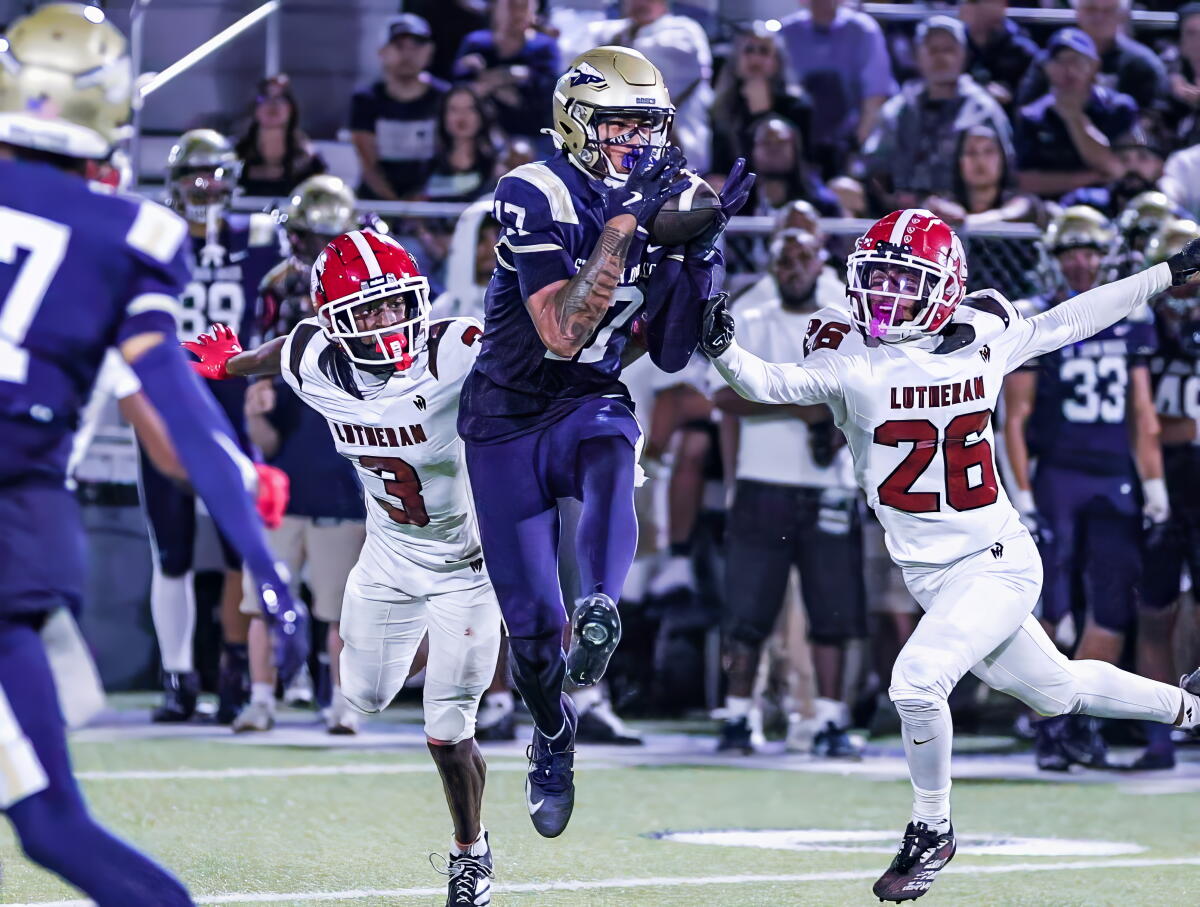
When Junior Dominguez enrolled as a high school freshman at Newbury Park two years ago, he joined the junior varsity football team.

“I had never played a snap of football,” he said. “Not at all.”

Learning how to put on a helmet and how to fasten shoulder pads became his biggest challenge. He’s apparently a quick learner. By season’s end, he was promoted to varsity for the playoffs. Last year, he started at right offensive tackle. Now, Newbury Park is moving the 6-foot-4, 270-pound junior to left tackle.

His coach, Joe Smigiel, is a former offensive lineman who played at Arizona and believes Dominguez is well on his way to earning a college scholarship.

He’s another example of what high school is supposed to be about — trying new things and discovering something you like and are good at.

“I just like the intensity of the game,” Dominguez said. “I’ve noticed I’ve been more aggressive and learning how to succeed.”

Growing up with a mom and dad who work for McDonald’s in management, a young Dominguez got to eat whatever he wanted. He remembers Quarter Pounders being his favorite. If teammates get hungry, he might be lobbied for a trip to McDonald’s.

After games, watch out for the players craving french fries at Newbury Park and knowing someone to seek out who can help.

This is a daily look at the positive happenings in high school sports. To submit any news, please email eric.sondheimer@latimes.com.

Source link

Five things to watch for when the Chargers play the 49ers in preseason

p]:text-cms-story-body-color-text”>

While McDaniel and his system have been a hot topic throughout training camp, he isn’t the only new coordinator in town.

Thursday’s game will offer a similar peek at what Chris O’Leary’s starting defense has in store.

“Overall, we played together; we played fast; we played violent,” O’Leary said of the group’s performance in Houston. “The result was a good result for us. We see a lot of stuff we can clean up along the way.”

O’Leary’s defense followed up a strong opening game by playing well against the 49ers’ offense in Tuesday’s practice.

“Honestly, don’t think it was our best day,” San Francisco quarterback Brock Purdy said.

The Chargers would like to hear Purdy — who might play Thursday, according to 49ers coach Kyle Shanahan — say that again.

Source link

Kyle Tucker finally breaks hitless streak in Dodgers’ win, searches for light in dark season

Dodgers manager Dave Roberts called right fielder Kyle Tucker into the visiting manager’s office at Chase Field a week and a half ago, just to catch up.

Roberts had run into Tucker’s wife Samantha and their 5-month old baby that morning in Arizona. And he saw it as a good time to check in.

“When you start to struggle and you internalize … you find yourself going dark, and that’s a lonely place,” Roberts said Tuesday, before the Dodgers’ 7-6 win against the Rockies. “So I think that for me, trying to proactively pull conversations out of him, talk about life, talk about baseball, it just kind of opens things up, and I think that it’s freeing.

“He’s a cerebral guy by nature, internalizes a lot. But still, for me, he’s with a new ballclub, he’s scuffling, so I want to get that out of him.”

Scuffling is a mild way of describing Tucker’s struggles this season. He described it as the “first time in [his] life” that he’s had a season with so many offensive false starts. After being named an All-Star in each of his previous four seasons, Tucker is on pace for the worst offensive year since his 2018 debut season with the Astros.

On Tuesday, he finally ended his career-high hitless streak at seven games, with a double up the right-field line in the fourth inning (although he grounded out once and struck out twice in his other plate appearances). He’d gone 26 straight at-bats without a hit.

So much about Tucker’s year has been head-scratching.

Take his plate discipline, for example. Traditionally known for his strike-zone control, Tucker’s chase rate has been up this season. But even when he trimmed it to 21.6% in July (not as low as the last two years but even with his 2023 season), his production at the plate didn’t respond accordingly.

One of the biggest mysteries has been his extreme home/road splits. Entering Tuesday, he had a solid .822 OPS on the road and a paltry .558 OPS at Dodger Stadium.

Asked about the contrast earlier this week, he said he didn’t have a theory.

“If I knew, I’d probably have figured it out by now,” he said. “But that’s just kind of how it’s gone.”

Recently, his woes have followed him into the outfield. The day after he failed to reel in a flyball in the right-field corner at Dodger Stadium, he had a far worse drop Monday at Coors Field.

In the seventh inning of the Dodgers’ 11-5 victory against the Rockies, Tucker seemed to camp right under a shallow fly. But as it fell, he twisted and put one knee down before dropping the ball.

“There’s indecision, and catching a baseball at your ankles kind of speaks to where his head is at right now,” Roberts said. “It’s not from lack of effort, or care. It’s just right now, I think he’s kind of fighting. So we’ve got to keep supporting him.”

Tucker isn’t the only player who’s struggling. Mookie Betts has been hot and cold at the plate. Teoscar Hernández hasn’t been slugging the way he’s accustomed to. And before arriving in Colorado, the team was in a collective slump.

Tucker, however, is in the first year of a four-year, $240-million contract. And so far the Dodgers haven’t seen the version of him that elevated the Cubs’ offense in the first half of last year and was a steady part of the Astros’ lineup during a run of sustained success.

“Whether it’s my first year or 10th year with a team, I think it’d be frustrating regardless,” Tucker said. “But it’s not like I’m frustrated just because I’m playing at home or anything. Whether it’s on the road or at home, it would be frustrating, just not helping the team win games.”

He slid into his most recent slump during the Dodgers’ last homestand, but the Colorado altitude didn’t immediately work its magic when the team went back on the road.

During Monday’s SNLA broadcast, analyst Eric Karros suggested sending Tucker to Arizona for a reset.

The less extreme version would be sitting Tucker for several games in a row.

“I’m not at the point where it’s like a three-day, three-game reset situation, something like that,” Roberts said Tuesday afternoon.

He did, however, give Tucker a day off Saturday, saying he saw Tucker’s frustration as he continued to struggle offensively at Dodger Stadium. And Tuesday, he said he hadn’t decided whether to start Tucker against Rockies left-handed starter Kyle Freeland the next day.

“It’s tough because, I mean, I feel like I’ve tried just about everything,” Tucker said. “And every time I feel like I’m turning a corner, I get hit with a roadblock. But, you can’t stop. You just got to keep going, try and at least pick out the positives, and just try and ride with that. Just keep on moving to the next day and hope for something to build.”

Source link

Dodgers Dugout: That wasn’t the series we were looking for

Hi, and welcome to another edition of Dodgers Dugout. My name is Houston Mitchell. New ranking of the summer movies I’ve seen this year: 1. “Spider-Man: Brand New Day”; 2. “The Odyssey”; 3. “Supergirl”; 4. “Young Washington”; 5. “Disclosure Day”; 6. “Masters of the Universe”; 7. “The Devil Wears Prada 2.” I keep including these just to annoy the one guy who calls me names for not having “Disclosure Day” last. I have to get thrills where I can get them.

Are you a true-blue fan?

Get our Dodgers Dugout newsletter for insights, news and much more.

So, the Dodgers lost three of four to the Brewers, who now have clinched the tiebreaker over the Dodgers. They always have to do things the hard way. Some random thoughts about the Dodgers

—It’s time for Edwin Díaz to drop the Timmy Trumpet entrance and just come out like any other pitcher. When you have a 10.66 ERA and it’s August, perhaps it’s time to sneak into the game quietly.

Dave Roberts had this answer when asked Thursday night, after Díaz blew a save, as to why he is still closer: “Give me another option. I have to have other options. And to be quite honest, none of those [other] guys really are throwing the baseball great. So that’s just kind of the way it is.”

—It is surprising to see Roberts throw the whole bullpen under the bus. But since he asked, here’s an option: Tanner Scott, who since the All-Star break has an 0.87 ERA in 12 games and 10.1 innings. He has three saves and has given up nine hits, six walks and has struck out 12. Not exactly Mariano Rivera, but better than the current guy.

—But here’s the other thing to keep in mind: The Dodgers seem to do this every year. They are going to give Díaz every chance to right the ship before the postseason, because having him in the bullpen would be great if he was pitching well. But, if he’s pitching like this when the postseason begins, he won’t get a lot of innings. Remember last season? Scott was terrible. He last pitched Sept. 26. He didn’t pitch at all in the postseason. Instead, they put Roki Sasaki in the bullpen and he was solid, though not the second coming of Éric Gagné as some seem to think.

—The Dodgers will figure out whom they trust near the end of September, and that will be the bullpen for the postseason. It will include starters and a guy who is just there to eat innings during big losses (think Will Klein last season. Yes, he saved the season in Game 3, but there was a reason he was the last guy out of the bullpen). And it will include the five to six relievers they trust the most. This happens every season, so this should not come as a surprise.

—Yes, it can be frustrating during the regular season. We in the media say “Greatest team ever!” “They could win 120 games!” But that’s never going to happen. The Dodgers are interested in one thing only: Winning the World Series. They have a plan as to how to approach it, and while it annoys some fans, they aren’t going to deviate from that plan. And why should they? They won three World Series, and almost another one in *2017.

*-The Astros cheated in that series.

—A look at some numbers:

Kyle Tucker at Dodger Stadium this year: .189/.286/.272
Tucker everywhere except Dodger Stadium this year: .275/.361/.469

That’s pretty incredible. In 239 career at-bats at Dodger Stadium (206 from this season), he is hitting .205/.307/.318.

The road Tucker is whom they signed, the home Tucker hits like a pitcher. Why? Could be any number of things.

The Dodgers are 14-15 since the All-Star break. Let’s see how the main people are hitting and pitching (through Sunday):

Freddie Freeman, .327/.367/.366 (109 plate appearances)
Shohei Ohtani, .278/.336/.509 (119)
Alex Call, .278/.350/.389 (20)
Hunter Feduccia, .273/.304/.455 (23)
Andy Pages, .270/.336/.398 (111)
Teoscar Hernández, .267/.298/.422 (94)
Miguel Rojas, .258/.314/.355 (35)
Dalton Rushing, .250/.325/.472 (40)
Mookie Betts, .238/.287/.386 (108)
Max Muncy, .214/.298/.512 (94)
Tommy Edman, .211/.272/.347 (103)
Kyle Tucker, .188/.286/.353 (98)
Ben Rortvedt, .182/.182/.182 (11)
Kiké Hernández, .087/.125/.087 (24)

Team after the break: .248/.306/.403
Before the break: .262/.343/.434

Runs per game before the break: 5.22
Runs per game after the break: 3.93

They have lost their patience at the plate and their power. Not a good combination for winning games. These numbers will go up slightly though because of Monday’s 11-5 win over the Rockies.

Here are the pitching numbers, through Monday:

Jonathan Hernández, 0.00 ERA (7.2 IP)
Tanner Scott, 0.87 (10.1)
Blake Snell, 1.50 (12)
Brock Stewart, 1.80 (5)
Yoshinobu Yamamoto, 1.82 (34.2)
Roki Sasaki, 2.10 (30)
Kyle Hurt, 2.16 (8.1)
Jack Dreyer, 3.09 (11.2)
Tarik Skubal, 3.18 (17)
Eric Lauer, 4.15 (21.2)
Evan Phillips, 4.50 (10)
Alex Vesia, 4.63 (10.2)
Edgardo Henriquez, 6.52 (9.2)
Justin Wrobleski, 6.92 (26)
Edwin Díaz, 12.92 (7.2)
Will Klein, 14.54 (4.1)

Wrobleski, Stewart and Klein are on the IL, as is Blake Treinen.

Dodgers ERA after the break: 4.12
Before: 3.55

For those who think Roberts doesn’t notice these things, here’s what he had to say after Sunday’s loss:

“This has been cumulative. It’s been a long time since we’ve been consistent offensively. … I just don’t see the consistent plan of attack, one through nine. The results are hard, hitting’s hard, but I do think that fighting and winning pitches, spoiling pitches — that’s care, hunger. 
And that’s a reason why [when] you look at four and a half months of the season, the Brewers have outscored us. … A team that’s young and hungry. It’s certainly not talent.

“We just haven’t played clean baseball for quite some time, and that speaks to the defense and not converting an out … it’s just not winning baseball. Our pedigree [and] what we typically do is control the zone, grind it, grind at-bats [and] create stress. We’re not doing that.”

Tommy John dies

Former Dodger Tommy John, who had an arm surgery named after him, died Sunday at 83. He took part in this newsletter’s “Ask….” series last year and here are a couple of highlights:

Bud Layne of Parkersburg, W.V., asked: First, I would just like to join the crowd and say that Tommy John belongs in Cooperstown. Hope it is soon, as my time on this earth is growing short at 82 years old, and I am hopeful that the event takes place in my lifetime. My question: Do you think falling short of 300 career victories is the main hindrance of you not being able to join the immortals in Cooperstown? And, if not, what do you think is the reason?

John: I too will be 82 in May of this year. There is no rhyme or reason why I’m not in the Hall of Fame. I have no idea. I had 288 wins. I lost a season and a half which would’ve brought me to more than likely the 300 mark. I had 188 no decisions. I don’t know if it’s because my name is mentioned almost every day or that it is their jealousy that I have a surgery named after me. I have no idea. All I know is I am very proud of my career and the teams that I played for.

Drew Taylor of Huntington Beach asked: What was going through your mind after having your surgery and being told the odds were 100-1 against you returning to pitch, what drove you to defy those odds?

John: All my life starting as a child all I wanted to do was pitch. When I was given the odds, I figured 1% was better than nothing and I had just become a new dad for the first time. I told Dr. [Frank] Jobe if you do your job I will do more than mine. I just happened to be in the right place at the right time with the right doctor and team.

Tony Smith of Los Angeles asked: You played for two of the most emotional managers in history in Tommy Lasorda and Billy Martin. How would you compare the two and did you have a favorite manager in your career?

John: I loved playing for Tommy Lasorda. He loved all the players. Tommy just made the game fun. Billy was a good manager, but he was very high strung. Tommy just enjoyed the game, his team and all the celebrities who came out to celebrate the Dodgers.

—OK, back to your humble host here. Let’s face it: John should be in the Hall of Fame. He won 288 games, pitched in 26 seasons. That alone would be enough. But if you add in the fact that he underwent what was basically experimental surgery, a surgery that saved his career and went on to save the careers of hundreds of pitchers, then he should be in.

Imagine you were in the hospital for something and the surgeon can fix it, but he says, “I have to try a surgery that has never been done before.” I mean, what thoughts went through John’s head? Maybe he’d lose the use of his arm altogether. It couldn’t have been an easy decision. And sure, someone later would have said yes if he said no. But being the first counts for something. We remember Neil Armstrong more than the other brave men who landed on the moon for a reason. He (and Buzz Aldrin) were the first.

John was pitching on July 17, 1974, when he hurt his arm. “Right at the point where my arm is back and bent, something happened,” he told The Times. “It was as if I had left my arm someplace else. It was as if my left arm had just flown off my body, away from the rest of me.” He said he felt no pain, but after blooping two pitches up to the mound, he signaled for Dodgers manager Walter Alston to take him out. He eventually saw Dr. Jobe , and the rest is history. Jobe took a tendon from John’s right arm, threaded it through holes he had drilled in John’s left elbow and hoped it all would work. And it did, with John returning to the mound on April 16, 1976.

John before the surgery: 124-106, 2.97 ERA, 116 ERA+
After the surgery: 164-125, 3.66 ERA, 107 ERA+

On a personal note, I got John’s autograph at the Carson Mall in 1977. I was a big Dodger fan and knew who he was, but was too young to understand the history. There were a bunch of kids in line, and many dads or older brothers who were interested in seeing him (autographs were for 12 and under only). As I got closer to the front of the line, I noticed that John always took an extra moment to ask the kid about himself. He made each child feel important. It’s something I never forgot. And, when I asked him to do the Q&A, he and his wife, Cheryl, could not have been more pleasant. Sincere condolences to his entire family. He will always be a Hall of Famer in my mind, and I hope he is for real at some point.

The postseason

Here’s a look at the NL. Remember, the three division winners plus the next three teams with the best record make the postseason. The two division winners with the best record get a first-round bye.

Division leaders
1. Milwaukee, 77-48
3. Dodgers, 75-51, 2.5 GB
2. Atlanta, 74-51, 3 GB

Wild-card standings
1. Chicago, 73-53
2. Philadelphia, 68-58
3. San Diego, 67-59

4. Arizona, 66-60, 1 GB
5. Miami, 64-62, 3 GB
6. St. Louis, 64-62, 3 GB
7. Pittsburgh, 61-66, 6.5 GB
8. Cincinnati, 60-65, 6.5 GB
9. Washington, 60-66, 7 GB

In case you missed it

Swanson: Tarik Skubal’s gritty starts would pay off if slumping Dodgers would wake up

‘Rare accomplishment’: How Max Muncy went from being cast off to longest-tenured Dodger

Tommy John, Dodgers pitcher and medical pioneer, dies at 83

MLB approves sale of Padres to José E. Feliciano, Kwanza Jones

Shaikin: For Dodgers’ Charley Steiner, a complete game three years in the making

Swanson: The Dodgers need Mookie to be Mookie

Shohei Ohtani takes important step in his push to return to Dodgers’ rotation

Swanson: Dave Roberts and Dodgers need to stop using Edwin Díaz in high-leverage moments

And finally

Ross Porter interviews Tommy John in 2021. Watch and listen here.

Until next time …

Have a comment or something you’d like to see in a future Dodgers newsletter? Email me at houston.mitchell@latimes.com. To get this newsletter in your inbox, click here.
Source link

MLB approves sale of Padres to José E. Feliciano, Kwanza Jones

Major League Baseball’s team owners unanimously have approved the sale of the San Diego Padres to an investor group led by private equity billionaire José E. Feliciano and his wife and business partner, Kwanza Jones.

The league announced the approval Monday after a vote. Feliciano and Jones reached an agreement in May to buy the Padres from the family of late owner Peter Seidler at an MLB-record valuation of $3.9 billion. The deal is still contingent on the official closing of the transaction in the coming weeks.

“José and Kwanza understand the unique place the Padres hold in San Diego and the powerful bond between the club and its fans,” Commissioner Rob Manfred said in a statement. “We look forward to their leadership of the Padres and to working with them to build on the club’s strong foundation in a market that is so important to Major League Baseball.”

Seidler’s family announced its intention to explore a sale of the Padres last November, two years after his death. The 53-year-old Feliciano, a co-founder of Santa Monica-based private equity firm Clearlake Capital, emerged from the competition as the Seidler family’s top choice.

Padres Chief Executive Erik Greupner and general manager A.J. Preller will remain in charge of day-to-day operations, according to MLB’s announcement.

“We are a family first, and becoming owners of the San Diego Padres means joining an even larger one,” Jones and Feliciano said in a statement. “We are grateful to the Seidler family, and especially to Peter, for raising the expectations of what this franchise can achieve. … Our ambition is clear: to bring a World Series championship to San Diego and build an enduring organization capable of competing for championships year after year. We intend to be engaged owners, bringing our energy, experience and perspective while working alongside the talented team already in place and investing ambitiously and thoughtfully in the Padres’ future.

“We are all in and committed to winning.”

Peter Seidler assumed majority control of the Padres in 2020 after first joining their ownership group in 2012, but he became beloved in San Diego for his aggressive financial pursuit of winning and his eagerness to engage with the team’s fan base. He died at age 63 in November 2023.

The Padres dramatically increased their payroll under Seidler, allowing Preller to build the foundation for the current team, which has made four playoff appearances in the past six years and won at least 89 games in three of the last four seasons during the most successful stretch in franchise history. San Diego is currently in the playoff race again, winning 17 of its last 22 games entering Monday to surge into an NL wild-card position at 67-58.

“As far as the day-to-day operations, nothing changes for us,” Padres manager Craig Stammen said in New York before San Diego’s series opener against the Mets. “We’ve got to go out here and play the games, just like we have all season long. The ownership sale has kind of been something that’s been going on throughout the entire year. It doesn’t really affect the play on the field, but we’re excited to have José and Kwanza a part of the Padres and can’t wait to welcome them.”

The minority partners in the Padres’ new ownership group include Joey and Jesse Buss, two sons of former Lakers owner Jerry Buss. Coincidentally, the six Buss siblings decided earlier Monday to sell their remaining minority ownership stake in the Lakers to incoming majority owners Joshua Kushner and Bob Iger. Jeanie Buss is contesting the sale of the family’s shares.

When Feliciano and Jones reached their agreement to purchase the Padres earlier this year, they praised the team as “a unifying force in San Diego, rooted in community, connection and belonging.” They’ve since been spotted at Padres games in San Diego and in Mexico City.

“It’s good to see people that care working with us, you know?” Padres outfielder Jackson Merrill said. “I mean, the Seidlers cared a lot. It’ll be fun to see how these people take it, mold it into their own, you know? Trust in them, as they trust in us on the field. So, full confidence in them. Excited to meet them.”

The Padres have never won a World Series, but they were a valuable commodity for potential owners as the only team in the four biggest North American sports leagues in a metropolitan area with roughly 3.3 million people. Downtown Petco Park has become one of the liveliest ballparks in the sport, and the Padres ranked second in the majors in attendance last season.

Feliciano, who was born in Puerto Rico, becomes the second Latino principal owner in baseball, along with the Angels’ Arte Moreno. Latino and Hispanic players comprise roughly 30% of major league rosters.

Feliciano and Jones will hold an introductory news conference at Petco Park on Aug. 24.

Beacham writes for the Associated Press.

Source link

The Dodgers need Mookie to be Mookie

Program a reminder into his phone. Tie a string around his finger. Chant his name like a mantra: Moo-kie! Moo-kie! Moo-kie!

Whatever it takes to jog Mookie Betts’ memory, to remind him he’s Mookie freakin’ Betts.

Because this Dodgers’ three-peat campaign won’t succeed without his contributions at the plate.

The Dodgers lose the plot without the swagger they’re used to from the four-time champion in their midst.

They need Betts to be that right-handed hitter who will keep opposing pitchers honest in a lineup of lefty stars. To help them compensate without Will Smith’s dependable bat and without being able to depend on $240-million-man Kyle Tucker in games at home.

They need Betts to keep feeding his “hope meter.”

“I’m always trying to remind him who he is,” Dodgers manager Dave Roberts said Wednesday before the Dodgers began a four-game series with the Milwaukee Brewers. “The guy standing 60 feet, 6 inches from him understands the baseball card, knows who’s in the box. And it’s important that [Betts] can’t forget that, regardless of what the scoreboard might say.”

That scoreboard has really not been helping.

All it’s been doing is serving an oppressive, jumbo-sized reminder every time Betts goes to bat of how un-Mookie-Betts-like he’s been for much of this season. Going into Saturday’s game against the Milwaukee Brewers, he has career lows in batting average (.239), on-base percentage (.295) and on-base-plus-slugging percentage (.709).

Unless, of course, this is Betts, now at 33, in his — unlucky? — 13th major league season and seventh as a Dodger? Father Time is inevitable.

But let’s remind ourselves: It’s better to be lucky than good, and that Betts has been unlucky, which is bad.

There was the oblique strain in early April that sidelined him for more than a month. Misfortune that brought back bad memories of last season’s mystery illness that caused Betts to lose nearly 20 pounds.

Dodgers shortstop Mookie Betts (center) celebrates with teammates after hitting a home run against the Royals on Wednesday.

Dodgers shortstop Mookie Betts (50) celebrates with teammates after hitting a home run against the Royals on Wednesday.

(Eric Thayer / Los Angeles Times)

And there’s the data since his return this season, Baseball Savant’s evidence of Betts’ bad rolls: His .278 expected batting average — the Statcast metric measuring the likelihood that a batted ball will become a hit — is .039 points higher than his actual batting average. That’s the third-largest discrepancy in the big leagues.

Also, Betts’ HardHit% this season — measuring the rate of hard-hit balls — of 38.8%, nearly a 3% increase from last season. His exit velocity (90.5 mph) is a mile and a half more than last season.

The game honors you, and the game tests you.

Early this month, a dejected Betts had as tough a time explaining to reporters why, despite hitting the ball hard and stacking disciplined at-bats, he’d had little to show for it. He hit only .205 in July, with a slugging percentage of .313.

“I’m gonna have to help the team at some point,” Betts said on Aug. 4. “It’s really hard, I’ve just never done this so I don’t really know how to get through it. Everyday I show up and try to restore that hope meter.

“But this is very hard.”

Dodgers shortstop Mookie Betts throws the ball across the infield to first base for an out against the Royals on Wednesday.

Dodgers shortstop Mookie Betts throws the ball to first base for an out against the Royals on Wednesday.

(Ronaldo Bolanos / Los Angeles Times)

That’s why Roberts has stayed on him, he said, reminding him who he is. And who Betts is, of course, is a former MVP and eight-time All-Star, a seven-time Silver Slugger and former batting champion. He’s a scratch-level bowler who made a virtually unprecedented shift from right field to shortstop in Year 11. There’s not a lot Betts hasn’t been able to do.

We got a glimpse of that guy in this recent nine-game stretch, when Betts hit .387 (12 for 31) with a .645 slugging percentage.

“For me,” Roberts said, “it’s just kind of how he’s carrying himself, really. … He’s always been good with not swinging at balls, swinging at strikes. So those components have been consistent. But, yeah, for me, it’s just I like the swagger, the demeanor.”

More like Mookie.

“He’s crucial,” Roberts said. “He’s got the experience, the talent, and he’s an emotional guy. I say that in the sense that when he’s going well, guys feed off that energy. And, when he’s not, you’re sort of trying to find it in him and get it in him.

“So when he’s going well like he has been this past series, guys feel good about it. So, it’s important … that he’s kind of found something to kind of hang his hat on.”

Put a sticky note in Betts’ locker. Better yet, stick his baseball card in there. Because the guy in the box should understand who the guy in the box is — regardless of what the scoreboard might say.

Source link

Dave Roberts laments Dodgers dropping series to Brewers

The Dodgers needed a pivotal win Sunday afternoon against the Milwaukee Brewers. And Tarik Skubal did his part, giving up just one earned run on seven hits over six innings.

“Seemed like they had a good approach,” Skubal, who threw a season-high 109 pitches. “My job doesn’t change. I got to continue to make pitches and continue to get ahead and throw strikes, and I felt like I did that.”

But it wasn’t enough.

Milwaukee’s Logan Henderson quashed the Dodgers’ offense, giving up just three hits and one run over seven innings, to give the Brewers a 6-2 win in front of an announced crowd of 45,828.

The Dodgers (74-51) lost the four-game series 3-1 and also dropped the season series against the Brewers 4-3. The Dodgers trail Milwaukee (77-48) by three games for the best record in baseball.

“I really wanted to win this game because it could matter,” Dodgers manager Dave Roberts said. “But we didn’t, so now we got to move forward. I hope it doesn’t come back to bite us.”

Panic hasn’t — and presumably won’t — set into the Dodgers’ clubhouse. The two-time defending champions, however, are well aware they have lost 11 of their past 16 games.

“This has been cumulative,” Roberts said. “It’s been a long time since we’ve been consistent offensively. … I just don’t see the consistent plan of attack, one through nine. The results are hard, hitting’s hard, but I do think that fighting and winning pitches, spoiling pitches — that’s care, hunger. 
And that’s a reason why [when] you look at four and a half months of the season, the Brewers have outscored us. … A team that’s young and hungry. It’s certainly not talent.

“We just haven’t played clean baseball for quite some time, and that speaks to the defense and not converting an out … it’s just not winning baseball. Our pedigree [and] what we typically do is control the zone, grind it, grind at-bats [and] create stress. We’re not doing that.”

Milwaukee's Jake Bauers beats a tag attempt by Dodgers catcher Ben Rortvedt to score in the seventh inning Sunday.

Milwaukee’s Jake Bauers beats a tag attempt by Dodgers catcher Ben Rortvedt to score in the seventh inning Sunday.

(Eric Thayer / Los Angeles Times)

The Brewers struck first with two outs in the second inning after Luis Lara grounded into a bases-loaded fielder’s choice; Tommy Edman dropped an awkward flip to second base from Mookie Betts, resulting in an error and a 1-0 Milwaukee lead.

Max Muncy got to Henderson in the fourth by hitting a tying home run 370 feet to right field. In the next inning, Milwaukee’s Jake Bauers hit a go-ahead single to right off Skubal, scoring Jackson Chourio from second after his double.

“I just got to be better in those moments,” Skubal said. “You know, the slider down and in to Lara’s got to be probably a little bit more down and in, and the changeup to Bauers has got to be a more quality pitch. … So as much as it’s in the kind of grind of at-bats, they also put some swings on some balls. But I need to execute some pitches and some two-strike counts a little better as well.”

The Brewers added two insurance runs in the seventh, as Bauers and Andrew Vaughn collected a pair of RBI knocks against left-handed reliever Alex Vesia. They got two more in the ninth after a second bases-loaded error by Edman came when he failed to field a choppy ground ball from David Hamilton, allowing Chourio and Lara to score.

“We have a lot of guys with reputations that can really pick the ball,” Dodgers catcher Ben Rortvedt said of the defensive woes. “I don’t think we’re really worried about [it]. All these things are going to help us in the long run.”

Dodgers shortstop Mookie Betts walks back to the dugout after striking out in the seventh inning.

Dodgers shortstop Mookie Betts walks back to the dugout after striking out in the seventh inning.

(Eric Thayer / Los Angeles Times)

The Dodgers had a chance to crawl closer with one out in the eighth, with Teoscar Hernández on third and Hunter Feduccia on first. But Shohei Ohtani grounded into a double play against Brewers reliever Aaron Ashby.

Andy Pages hit a solo home run in the ninth, but it came too late to matter.

“It can’t happen all at once,” Roberts said of a potential turnaround. “It just kind of starts building, collectively. And once we do that, then you get the big hit, things like that. But it’s a process of: each pitch, pass the baton, valuing every single pitch. And mentally, it’s not easy, but we can do it. We’ve done it many times over before.”

The results just haven’t been there for the Dodgers.

As they head to Colorado for a three-game series against the last-place Rockies, the Dodgers aren’t expecting any breaks.

“Honestly, I think every team’s hungry because they’re chasing us,” Roberts said. “They’re trying to make a name for themselves or trying to play spoiler, whatever it is. But every team we play is going to bring their best. The guys we are going to play the next three games, they’re gonna bring their best, I promise you that.”

If there is a silver lining, it’s that Skubal seems to be acclimating just fine in L.A. — even if the two-time defending AL Cy Young winner hasn’t had his best game since joining the Dodgers.

“I just got to be more consistent,” Skubal said of his first three starts with the Dodgers. “Continue to get quality contact on the ground, and sometimes you need a little bit of luck … But the stuff on my hand is as good as it’s ever been. And honestly, my execution today was pretty good too.

“There’s always room for improvement … but [in] the same breath, you can’t beat yourself up too much. I’m not going to be perfect out there. But yeah, I need to be more efficient. That’s the standard that I hold myself to: pitching deeper into ballgames and giving our team a chance to win every time out.”

Injury updates

The Dodgers placed left-handed starter Justin Wrobleski on the 15-day injured list with left forearm inflammation and recalled right-handed reliever Kyle Hurt from triple-A Oklahoma City. Wrobleski, who has pitched a career-high 126⅓ innings this season, surrendered four runs and four hits in a loss against the Brewers on Saturday.

“We just felt collectively that Justin was the right person [to] back off the fatigue of the arm,” Roberts said. “It’s not something that he’s ever going to make an excuse for. But I do think that it’s smart for us, as an organization, to take that load off a little bit from him.”

Wrobleski has struggled recently, giving up 11 home runs over his past four starts.

Stewart, who was placed on the 15-day IL with right shoulder discomfort on July 31, said he’ll join the Dodgers on their upcoming road trip to Colorado and is hopeful he’ll be activated soon.

Source link

The Times’ top 10 high school flag football rankings

The Times’ top 10 high school flag football rankings:

1. JSerra (6-0)
Won the Gold Division at the Chargers Invitational. MVP quarterback Kate Meier has accounted for 11 scores in the last three games.
Next: Tuesday vs. Woodbridge.

2. Newport Harbor (5-1)
The Sailors outscored their first five opponents 97-0 before falling to JSerra 23-6 in the Chargers Invitational championship game.
Next: August 24 vs. Woodbridge.

3. Edison (5-1)
All five of the Chargers’ wins so far have been shutouts. Their biggest test comes Thursday night in a nonleague game at JSerra.
Next: Thursday at JSerra.

4, Orange Lutheran (3-1)
Lost to JSerra at the Chargers Invitational but will have two chances to avenge it in Trinity League matchups Sept 22 and Oct. 13.
Next: Thursday at La Serna.

5. Beckman (5-0)
Won the Division 2 Navy bracket at the Chargers Invitational, beating Mira Costa in the final on Hayden Freedman’s clutch catch.
Next: Wednesday vs. San Juan Hills.

6. Westlake (3-2)
The Warriors gave JSerra its toughest game at the Chargers Invitational, losing by only 13 points. They also nearly beat Torrey Pines.
Next: Tuesday vs. Oak Park.

7. Huntington Beach (3-1)
Fast start behind quarterback and captain Roxie Shaia, highlighted by 18-point victory over Torrey Pines at Chargers Invitational.
Next: Aug. 24 vs. Los Alamitos.

8. Corona del Mar (4-1)
Convincing victories over Ocean View, La Serna and Bishop Amat. Will host a showdown against Huntington Beach on Aug. 26.
Next: Tuesday vs. Santa Margarita.

9. Lakewood St. Joseph (3-0)
Senior quarterback Lexi Loya has already thrown for 679 yards and 13 touchdowns, including five in a 40-6 victory over Corona.
Next: Monday at Cypress.

10. Eagle Rock (0-0)
Quarterback Nylah Moore and the Eagles open the season Monday versus Panorama in a rematch of last fall’s City Open semifinals.
Next: Monday vs. Panorama.

Source link

Tommy John dead: Dodgers pitcher and medical pioneer dies

It’s right there in the medical books, along with Belsey fundoplication, Heineke-Mikulicz pyloroplasty and Keller’s excision arthroplasty: Tommy John surgery.

Purists might refer to it as ulnar collateral ligament reconstruction, but the rest of the world knows it as the career-saving surgery named for a sore-armed left-handed Dodgers pitcher.

Tommy John was facing the bleak reality that his career was likely over when he ruptured a ligament in his left elbow on a summer night in 1974, an injury that had sent so many pitchers into an early retirement. But a then-radical surgery not only saved but revived his career, as well as the careers of hundreds of baseball players ranging from Tom Candiotti to John Smoltz to Shohei Ohtani in the 50 years since.

Always more famous for the surgical procedure than his career stats, John died Saturday, the Dodgers announced. He was 83.

“We are saddened to hear the news of Tommy John’s passing,” Dodgers president and CEO Stan Kasten said in a statement. “… Tommy was an exceptional pitcher throughout his career in Major League Baseball and his courageous role in becoming the first to have surgery that would go on to bear his name can’t be overstated. His impact both on and off the field has been felt by ballplayers of all ages and will be for generations to come.”

A good pitcher before the surgery with 124 wins in 12 seasons with three teams, he won 164 more afterward — only one fewer than Sandy Koufax during his entire career, he liked to point out — in 14 more seasons with four teams, finally retiring at 46 with a 288-231 record and a 3.34 earned-run average.

“Dr. Jobe made it so I could throw a baseball again,” John told The Times’ Sam Farmer in 2023 from his home in Sarasota, Fla. “After surgery, I never missed a start, and I even pitched out of the bullpen every once in a while.”

He pitched for the Dodgers and the Angels and had two successful stints with the New York Yankees but it was with the Dodgers that he had his greatest success, an 87-42 record and a 2.97 ERA, helping them to consecutive World Series appearances.

It was also as a Dodger that he had his history-making operation.

He came to the Dodgers in a trade from the Chicago White Sox in December 1971 with an 84-91 record, a good curveball and a less than intimidating fastball. Pitching coach Red Adams convinced him that precision location and ball movement were more effective than raw speed and John went 11-5 the following season. He also became well acquainted with orthopedist Frank Jobe, the team physician.

Late in the season, he jammed his left elbow sliding into home plate, jarring loose some bone chips. Jobe cleaned things up for John during the offseason.

Dodgers manager Tommy Lasorda congratulates Tommy John after John shut out the Phillies during 1978 NLCS.

Dodgers manager Tommy Lasorda congratulates Tommy John after John shut out the Phillies during 1978 National League Championship Series.

(Associated Press)

Then in July 1974, by which time John had become a mainstay in the pitching rotation, he threw a pitch to Hal Breeden of the Montreal Expos that changed his life, and ultimately the lives of many others.

“Right at the point where I put force on the pitch, the point where my arm is back and bent, something happened,” he told Sports Illustrated. “It felt as if I had left my arm somewhere else. It was as if my body continued to go forward and my left arm had just flown out to right field, independent of the rest of me.

“I heard this thudding sound in my elbow, then I felt a sharp pain.”

John had ruptured the medial ulnar collateral ligament in his left elbow, although he didn’t know that then. The pitch, of course, was nowhere near the strike zone and, despite the pain and in an effort to see if that was a fluke, he tried to throw another. It bounced off the plate, ending his outing and, for all anyone knew, his pitching career.

Jobe recommended total rest but after a month, with no sign of healing, he came up with an outside-the-box suggestion. Earlier, Jobe had grafted a tendon to a recovered polio patient’s ankle to provide stabilization. He thought maybe a tendon could be grafted to a pitcher’s elbow as well.

He gave John a grim choice: Do nothing and never pitch again, or try the surgery at 100-1 odds against success.

“I told Dr. [Frank] Jobe if you do your job I will do more than mine,” John told The Times last year. I just happened to be in the right place at the right time with the right doctor and team.”

So, on Sept. 25, 1974, Jobe took a tendon from John’s right arm, threaded it through holes he had drilled in John’s left elbow and hoped it all would work.

Nerve damage necessitated a second surgery several months later and the prospects were not promising. John’s left arm had atrophied, his hand now basically a claw, and two of his fingers were numb.

Even so, he began rehab, knowing he would miss the entire 1975 season. He taped the unfeeling fingers to the functioning ones so that he could grip a baseball, then, resembling “a little boy throwing against the steps of his back porch,” threw against a wall. He squeezed Silly Putty and strictly adhered to a physical therapy regimen.

By June 1975 he had regained the use of his entire hand and in late September pitched three innings in an exhibition game. He continued his routine through the offseason and into spring training, once joking, “When they operated on my arm, I asked them to put in a Koufax fastball. They did but it turned out to be Mrs. Koufax.”

Surprising many, who considered it at least a minor miracle, he was back in the rotation at the start of the 1976 season and went five innings in his first start, giving up five hits and three runs in a loss to the Braves in Atlanta. He finished the season at 10-10 with a 3.09 ERA, and if anyone was still wondering about his comeback, he put doubts to rest in 1977.

In one of his best seasons, he won 20 games, had a 2.78 ERA and finished second in National League Cy Young award voting for the pennant-winning Dodgers. In a 4-1 win over the Philadelphia Phillies in the clinching Game 4 of the NL Championship Series — then a best-of-five format — John pitched a complete game, striking out eight in a 130-pitch effort.

Dodgers pitcher Tommy John celebrates after the final out in a 4-1 victory over the Phillies in Game 4 of the 1977 NLCS.

Dodgers pitcher Tommy John celebrates after the final out in a 4-1 victory over the Phillies in Game 4 of the 1977 NLCS that clinched the pennant for the Dodgers.

(Associated Press)

He came back with a 17-victory season in ’78 and the Dodgers won the pennant again but again lost to the Yankees in the World Series, with John winning a game in both the NLCS and World Series. After the season, he signed with New York as a free agent.

He was an immediate hit with the Yankees, winning 21 games in 1979 and finishing second in the American League Cy Young voting, then won 22 in ’80. In 1981, the Yankees reached the World Series, once again facing the Dodgers — and John was at the center of the most controversial decision in the series that ultimately sealed New York’s fate.

John was the starter in Game 6 at Yankee Stadium with the Dodgers leading the series, 3-2. The left-hander had won Game 2, giving up three hits over seven innings in a 3-0 victory, and had completed four innings of one-run ball when Yankees manager Bob Lemon elected to pinch-hit for John with two runners on in a 1-1 game. ABC, which broadcast the World Series that year, showed John looking visibly upset and surprised as he paced the dugout.

Bobby Murcer flied out to right to end the inning, and the Dodgers would score eight runs over the next four innings against an ineffective Yankees bullpen to secure a 9-2 victory and win the franchise’s first World Series since 1965.

“At the time my reaction was, ‘why is he doing this?’ I was pitching fine and you don’t pull someone out in the fourth inning just because you need a hit at the time,” John said last year. “I was not happy, but that was so long ago in retrospect could we have won? I think so. Does it matter now? No.”

In John’s two stints with the Yankees — he had four seasons with the Angels in between — he was 91-60 with a 3.59 ERA.

And it was with the Yankees that he made the record book, in a way no player would ever want. He committed three errors in an inning, all on the same play during a game July 27, 1988.

With the Yankees leading the Milwaukee Brewers 4-0 and Jim Gantner on first for the Brewers, John charged a slow roller by Jeffrey Leonard to the first-base side of the mound. First, he bobbled the ball. Then, he sailed it past first baseman Don Mattingly, bouncing it off the right-field ballboy. Dave Winfield made a nice play on the ball and fired a strong throw home. It was on line and probably would have nailed the hustling Gantner but John cut it off, then threw wildly past catcher Don Slaught and into the Brewers’ dugout as Gantner scored.

John’s summation, according to Newsday? “I must have had a metal cup on. It glitched the ions in the air.”

After his playing days, John did some broadcasting, some minor league managing and became a strong advocate for suicide prevention after one of his sons took his own life. And after seeing many young pitchers, some still in their teens, undergo the surgery named for him, he spoke out against arm overuse, recommending less than year-round pitching by young arms.

But regardless of the context, John is forever linked to the operation that continues to be performed by orthopedic surgeons such as Dr. Neal ElAttrache, who began learning how to perform the procedure when he was a fellow at the Kerlan-Jobe Orthopedic Clinic in 1990 from Jobe himself. The two would operate together twice a week throughout the 1990s and were close friends until Jobe’s death in 2014.

“It should have been called the Frank Jobe operation,” ElAttrache told The Times in 2023. “But with Frank being the man he was, it was all about the person he was treating. It wasn’t about him.”

By ElAttrache’s estimation, he has performed the operation between 50 and 75 times per year over his career — including the two he has done on Ohtani, one in 2018 and one in 2023. And although ElAttrache has put his own signatures on the surgery — including a second graft to further fortify Ohtani’s elbow — the operation has remained largely the same since Jobe first performed it in 1974.

John is survived by his wife, Cheryl, and his children, Tommy, Travis and Tamara. A private celebration of his life will be held in Florida.

Source link

Flag Football World Championships 2026: Mexico beat Great Britain in bronze-medal game

Great Britain’s women’s flag football team suffered defeat at the World Championships as they missed out on qualifying for the 2028 Olympics.

The two-time defending European champions fought back to take the bronze-medal game to the final play, only for Mexico to clinch a 20-19 win in Dusseldorf, Germany.

That also meant Mexico – the world’s top-ranked team – secured a spot at Los Angeles 2028, when the non-contact version of American football will make its Olympic debut.

GB got off to a poor start as they were intercepted on their first two drives, with the second punished by a touchdown that put Mexico 13-0 up.

An Angelica Tait touchdown saw GB, who are ranked third in the world, get up and running before Mexico struck again to make it 20-6.

Grace Conway almost claimed an interception, which she could have run in for a touchdown, and GB ran out of time on offence as they aimed to cut the score before half-time.

But they closed to within a point through two touchdowns from Emily Kemp – the tournament’s leading scorer – then went for a two-point conversion to take the lead with two minutes left.

Although Kemp caught Jess Allen’s pass at the back of the endzone, her left foot came down just out of bounds, meaning Mexico could run down the clock to seal victory.

“We fell into a bit of a hole,” GB’s head coach Jack Reed told BBC Sport. “The drive at the end of the first half and the drop for the pick-six were unfortunate.

“I knew we’d fight, I knew we weren’t out of it, and we held them scoreless in the second half. But it’s a game of inches and Emily was out by an inch.”

The USA came from behind to beat GB 27-21 in the semi-finals and set up a meeting with Canada in the final.

The USA automatically qualify for LA28 as hosts and will be joined by Canada and Mexico, while GB must wait two years for another chance to qualify.

“I’m super proud of the team,” added Reed. “We showed the world that we can compete with anybody in the world. We played the number one ranked team today and number two yesterday (USA).

“We had an opportunity to win both games, they went down to the very end, so I think we earned the respect of the flag football world and surprised a lot of people.”

GB’s men beat Brazil 33-26 on Sunday to finish 13th overall, while the USA beat Italy 46-26 to secure their sixth straight world title.

Canada claimed a 34-26 overtime win over Mexico in the bronze-medal game to ensure they and Italy punched their ticket to LA28 this weekend.

Source link

For Dodgers’ Charley Steiner, a complete game 3 years in the making

The radio broadcasters reminded listeners of the final score, invited them to tune in again the next day, and signed off. The Dodgers had lost Saturday, so the sounds of “California Stars” wafted through Dodger Stadium.

“Well,” Charley Steiner said to his colleagues in the broadcast booth, “they’re still playing this song.”

The little things can be the ones we remember the most. On Saturday, for the first time in three years, Steiner called all nine innings of a Dodgers game.

In 2024, he beat cancer into remission. The first sign was back pain. He later suffered three back fractures, and to this day the pain is still there.

“It’s gone from intolerable to tolerable,” Steiner said.

He left Dodger Stadium in a wheelchair Saturday. He can walk, but the trek from the broadcast booth to the parking lot is too much, at least for now.

Yet he was in the booth, and on the air for nine innings, so Saturday was a very good day indeed.

Steiner returned for opening day in 2025, but he wore down and left midway through the game. He has called a few games this season, for a few innings each time, building up his workload as if he were a pitcher in spring training.

On Thursday, after Steiner called six innings, he said he would like to try seven the next time. Duane McDonald, the Dodgers’ radio producer, encouraged him to try the full nine.

And so Steiner did, his voice sounding raspy and rusty in the early innings but getting stronger with each successive inning.

He called the statistics put up by Milwaukee Brewers prodigy Jacob Misiorowski “Koufaxian numbers.” He translated an infield single with an exit velocity of 37 mph into everyday language: “That’s driving in the school zone.”

And, on an afternoon Dodgers starter Justin Wrobleski gave up two home runs — that’s 11 homers surrendered in his last 19⅔ innings — Steiner did not miss a beat when reading an advertisement: “Toyota dealers: they make it easy. Wrobleski makes it hard.”

The Dodgers have consistently and graciously told Steiner to take all the time he needed to get better, but recovery is slow, uneven and ongoing.

“Who would have ever thought that sitting could be painful?” Steiner said.

“I get home after a game, and I’m sitting with three ice packs on my back. It’s like I’ve completed playing.”

In the broadcast booth, he sometimes alternates between standing and sitting, or puts his feet up on a table, anything to avoid sitting for hours on end.

The happiest person next to Steiner on Saturday was the one who has been next to Steiner for two decades in the booth: Rick Monday, who checked on Steiner almost every day the past three years and who teased him unmercifully on Saturday, at times using words best left out of a family newspaper.

“You can’t invent chemistry,” Steiner said.

You also can’t invent what is now a lifelong bond.

“I had fun watching him, because I know he has gone through hell,” Monday said. “His world shrunk. We’re used to 50,000 people and you saw, what, one or two a day?”

Steiner nodded.

“Housebound,” Monday said.

“The last three years have been P.T. [physical therapy],” Steiner said. “Every day. Social life? Scratch that.

“If I want to go out to eat, it’s not necessarily where, but what’s the seating like? I can’t sit in a wooden chair.”

It’s too uncomfortable, he said, without cushion or support for his back.

Steiner is 77. He does not have to endure discomfort in the booth. He does not have to be here.
Or, perhaps, he does.

“It’s just nice being back at the park,” he said.

“It’s home.”

He is still building back his strength, no pun intended. His next goal: call a game on consecutive days, just as a relief pitcher has to prove he can pitch on consecutive days.

“But there ain’t going to be no Timmy Trumpet for me,” Steiner said.

That second consecutive day won’t be Sunday. From his home, he’ll do a segment with Monday for the pregame show.

And when might he be back in the broadcast booth on a regular basis? He had a twinkle in his eye, and seven of the most famous words in Dodgers broadcasting lore at the ready.

“Day to day,” he said, “but aren’t we all?”

Source link

Reid Detmers throws eight innings, strikes out 11 in Angels’ win

Reid Detmers pitched eight scoreless innings, Nolan Schanuel had an RBI single in the eighth and the Angels outlasted the Kansas City Royals 1-0 on Saturday night.

Detmers (4-8) gave up two hits, no walks and struck out 11 for his first win this season at Angel Stadium, breaking an 0-5 spell and a streak of 12 games resulting in a loss or no-decision. Ben Joyce worked a hitless ninth for his second save, as the Angels (49-75) won for the fourth time in five games.

In the eighth inning, Jose Siri came on as pinch-runner after Wade Meckler walked. Siri stole second, and Schanuel brought him home on the go-ahead RBI single. Schanuel had three of the Angels’ six hits, finishing three for three.

Nate Pearson (2-1) gave up the winning run for Kansas City (50-74). Randy Dobnak worked 5⅔ scoreless innings during his start, fanning six and giving up four hits.

Kansas City’s Jac Caglianone extended his hitting streak to 13 games.

Source link

Doc Rivers reflects on getting into the Hall of Fame

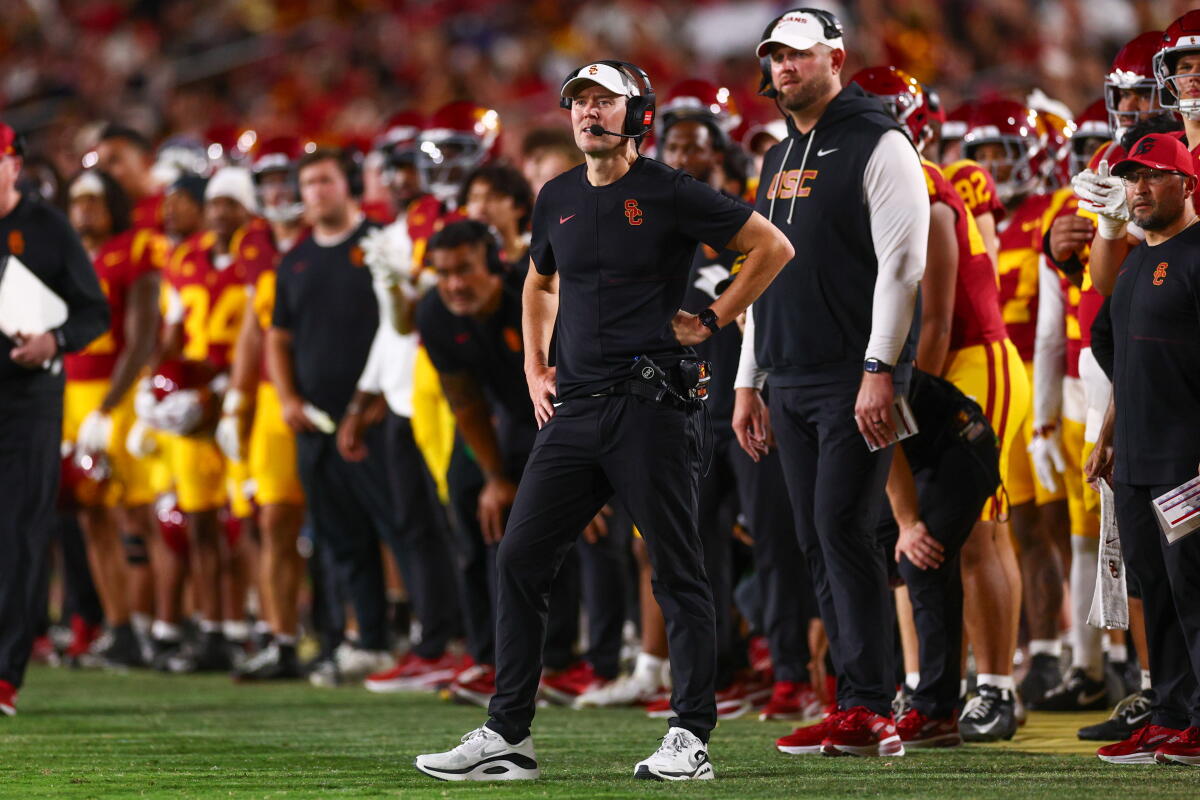
Doc Rivers needed some time to write the speech that he’ll give when formally inducted into the Naismith Memorial Basketball Hall of Fame on Saturday.

The storytelling, that part was easy. He’s a natural at that.

But what Rivers wound up learning during the trial-and-error process of speechwriting was that the words he’ll say from a stage in Springfield, Mass., aren’t going to be about him. They’re going to be about everyone else who played a role in him getting to that moment.

“You go through this journey of writing it and you realize it has nothing to do with you in a very good way,” Rivers said. “People are happy for you, and I am happy for them because they got me there. You hear all your life, ‘You don’t do anything alone.’ When you get in the Hall of Fame, you really understand that you don’t do anything alone. It’s all the coaches in your life, your parents, the players. It’s a thankful journey and that’s what the Hall of Fame should be about.”
Numbers prove he’s among best

A winner of 1,194 regular-season games as an NBA coach — and that’ll be all, he insists, saying his retirement is a real one — Rivers ranks sixth in league history. The only others ahead of him: Gregg Popovich, Don Nelson, Lenny Wilkens, Jerry Sloan and Pat Riley, all of whom are Hall of Famers, so it was obviously a lock that Rivers would be joining them.

He won a championship with Boston in 2008, won 114 playoff games as a coach, played 13 seasons, was an All-Star once, has been a broadcaster and — if he goes back to work, and his family currently has a pool that he will — he’ll be a broadcaster again.

But there’s more to life now. The Illinois native and Marquette legend has seven grandchildren, a house on the water and can’t play enough golf. He’ll still be involved in the game, somehow. It just won’t be as a coach. It’ll be as a Hall of Famer.

“Doc is a proven, extraordinary leader and communicator during his renowned NBA coaching career,” Milwaukee general manager Jon Horst said when the Bucks hired Rivers in 2024. “As a championship coach, he’s widely respected as an established innovator, and the right coach to lead our experienced and talented team.”

He was, until he wasn’t.

Injuries derailed every chance the Bucks had at being a winner last season, and when the season came to its dismal close Rivers was fairly certain it was the end for him as well — after 27 seasons on the sideline, and whole lot of missed moments along the way.

“The one thing that people have no idea about is the toll it takes on you and the family component,” Rivers said. “It is rough. You’re never home. You make sacrifices and your family has to make them as well.”

That won’t be an issue now.

A hit from the beginning

Rivers won coach of the year in his first season, taking a team he called “the 301s” in Orlando and leading it to a 41-41 record. On the surface, there’s nothing special about going .500. But the Magic were supposed to be bottom dwellers that season and Rivers used a preseason ranking of the league’s top 300 players as inspiration — since none of those top 300 were playing for the Magic.

“That season gave me great confidence,” Rivers said.

He has some regrets, of course. Critics have long pointed to the 10 losses that Rivers-coached teams had in Game 7s, by far the most of any coach in NBA history. And his fans will retort by pointing to his 114 playoff wins, fourth-most in NBA history. But the biggest do-over, if Rivers had such an option, would be changing his mind about leaving the Celtics for the Clippers in 2013.

Rivers got to the Clippers not long before the end of Donald Sterling’s ownership of the team; Sterling made racist comments and was banned by NBA commissioner Adam Silver.

“I underestimated what a great situation I was in, and I took that for granted, like you can just go anywhere and create that,” Rivers said. “I messed that one up. But then when I go to the Clippers, the team is pretty damn good. The organization, it was the worst organization in sports with the ownership problem. Within a week there, I remember telling my assistant, ‘We’ve got a lot to do here.’ ”

The championship with the Celtics in 2008 — Ray Allen, Paul Pierce and Kevin Garnett, the stars of that team, will be together again to present their former coach for his Hall enshrinement — was an obvious high point for Rivers’ career. There were other moments he’s particularly proud of as well, such as delivering on a promise that he made to someone who barely played for him.

Tyronn Lue succeeded Rivers as coach of the Clippers. Lue played 11 games for Rivers in Orlando during the 2003-04 season; that was all the time it took for Rivers to be convinced that Lue would one day be a coach. He told Lue to call him if he ever wanted a job and Lue took him up on it. Rivers wound up going to the Hall of Fame, and few within the game would be surprised if Lue joins him there one day.

“It’s the stories like that that you think about,” Rivers said. “Rajon Rondo played for me in Boston. We had a very tumultuous relationship when I coached him and now, I probably talk to Rondo more than probably than any player that I coached.”

It’s what the game does, Rivers said. The lucky ones get guided along the way. He played that role with players like Rondo — who coached with Rivers — and Lue, and in Rivers’ own case, it was Riley who gave him the push he needed.

Riley and Rivers clashed at times during their player-coach relationship, and their biggest fights came when Riley was telling Rivers that he belonged in coaching.

Riley was right.

“When I was doing TV, he kept writing and sending me these freaking messages about getting into the fray,” Rivers said. “He knew it. And here I am, going into the Hall of Fame.”

Reynolds writes for the Associated Press.

Source link

Letters: Lakers sale to Iger and Kushner is talk of L.A.

p]:text-cms-story-body-color-text”>

Bill Plaschke should have consulted with his colleague Laurence Darmiento before writing his ill-informed column on the sale of the Lakers. Had he done so he would’ve realized that Joshua Kushner, who is co-buying the Lakers, is a lifelong Democrat, and therefore President Trump‘s showing up for a Lakers’ tip-off as suggested by Plaschke is off the table.

Jack Wishard
Los Angeles


In 2025, when Mark Walter acquired his majority stake in the Lakers, he said, “It’s a privilege to work alongside Jeanie Buss as we maintain that excellence and set the standard for success in this new era, both on and off the court.”

That era concluded quickly, undone by his hubris and deceit. Did he mean to say “error” both on and off the court? That he did quite well.

David Griffin
Westwood


Like in real estate, the Lakers were flipped by Dodgers majority owner Mark Walter after only 10 months of ownership. One person took a “flip in his grave,” previous owner Jerry Buss, who died in 2013. The Lakers as an organization have never been the same since his passing.

Wayne Muramatsu
Cerritos


Former Disney head honcho Bob Iger, et al., owning the Lakers? Can’t wait to see Goofy and Mr. Toad as ushers at the Crypt!

Jack Wolf
Westwood


Lakers previous owner Mark Walter is under federal investigation for possible loan fraud, and new Lakers owner Joshua Kushner’s company, Thrive Eternal, participated in the recent FIFA private equity scandal. Why can’t NBA owners avoid financial shenanigans? Thank God for Clippers owner Steve Ballmer. … Oh, wait.

Jonathan Curtiss
Sherman Oaks

Source link

Shohei Ohtani takes an important step in push to pitch for Dodgers

Dodgers star Shohei Ohtani took the bullpen mound at Dodger Stadium, with president of baseball operations Andrew Friedman and pitching coach Mark Prior looking on, and began his first bullpen throwing session in more than three weeks.

Friday marked an important step in Ohtani’s throwing progression. He threw 34 pitches before the Dodgers’ game against the Milwaukee Brewers, appearing to mix in different pitch types.

Although Ohtani hasn’t landed on the injured list for lingering inflammation and soreness in his left knee, he hasn’t pitched in a game since July 3.

After Ohtani received a lubricating Orthovisc injection in his knee at the beginning of the All-Star break, the Dodgers hoped he would pitch against the Philadelphia Phillies on July 22. But as they monitored his response, it became clear he wasn’t going to be ready.

Instead, Ohtani threw a 31-pitch bullpen. But his recovery regressed, and he was shut down from throwing.

“At the end of the day, he wants to be healthy,” manager Dave Roberts said earlier this week. “He wants to be there in the postseason. I think that did check him up. If you look at how we kind of paused things — we all want to be smart and careful. I’m happy that we’ve done that with him.”

Ohtani restarted catch play on Aug. 7. And after playing catch three more days this week, Ohtani and the Dodgers determined he was ready to throw off the mound again.

“Rather than rush the progression of this I would rather make sure we’re headed in the right direction,” Ohtani said last week. “Making sure we’re taking the right steps.”

Ohtani is expected to go through a bullpen progression and then advance to throwing live batting practice — although Roberts said earlier this week he didn’t know how many of each he’d need before returning.

Because the Dodgers want to keep Ohtani in the lineup, he’ll have to build up in games rather than going on a minor-league rehab assignment.

Ohtani did something similar last season, but then, he was returning to the mound for the first time since 2023 elbow surgery.

“Having kind of done that — an inning here, an inning there and then you sort of build up during the season, absolutely,” said Roberts when asked if 2025 could serve as a blueprint. “And I think he’s seen what that buildup can lead to and how it looks. I certainly feel that he’ll buy in.”

Injury updates

Catchers Will Smith (neck) and Dalton Rushing (elbow) each took steps in their hitting progressions. Both took batting practice before the game.

Smith has been out since early June. Rushing landed on the IL on Aug. 3.

Source link