funded

Taxpayers have funded nearly $1.5 milliom in pro-Trump ads. Criticism is mounting, including from the GOP

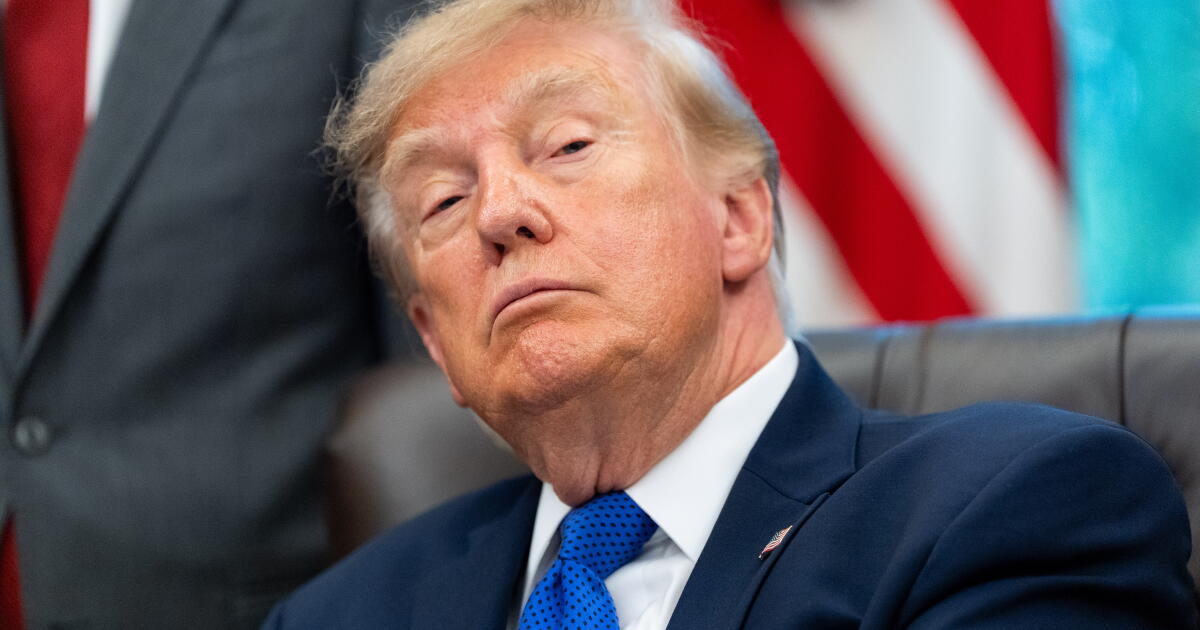
The White House has spent days fiercely defending three taxpayer-funded advertisements that glorify President Trump — approaching at least $1.5 million in public spending — calling them public service announcements.

“Don’t let the Fake News get away with their lies about our epic Public Service Announcements that have been running on tv,” White House communications director Steven Cheung posted on X on Sunday.

But the Republican administration’s ads attracted mounting criticism on Monday, including from members of Trump’s own party.

“It shouldn’t be paid for with taxpayer dollars,” Senate Majority Leader John Thune, R-S.D., told reporters.

“It would not have been something that I would have done. And I know that the White House is not covered by the same guidance that we are, but it’s not something that I would have done,” said Sen. Mike Rounds, another South Dakota Republican.

Multiple legal experts consulted by the Associated Press said the ads appear to run afoul of federal statutes, including a law against congressionally appropriated funds being used for “publicity or propaganda” and a law that limits the partisan political activities of government employees.

They said the new ads, which are airing on network and cable TV and streaming, differ from other administrations’ PSAs because they aren’t designed to help Americans access any specific program.

“You watch all three ads, they’re sheer propaganda,” said Richard Painter, a former White House ethics czar under Republican President George W. Bush. “This is increasingly looking like what authoritarian governments do to promote their leaders.”

The heightened scrutiny comes as the Trump administration has increased spending on the ads and bought time on popular TV shows, including college football and National Football League programming. It remains unclear which part of the government is supplying the funds.

With both chambers of Congress led by Republicans, any oversight would likely have to come from Trump’s allies, decreasing the likelihood of hearings or other accountability efforts before November’s midterm elections.

Three ads have aired in less than a week, totaling well over $1M

The first ad in the campaign, which began airing last Wednesday, features clips of Trump talking about defeating communism interspersed with onscreen text promoting the “largest tax cuts in history,” “reigniting American manufacturing” and a call to “defend law and order and police.”

Later in the week, a second ad began running, showing scenic videos of Mount Rushmore at night with quotes and clips from Trump’s Fourth of July weekend speech there honoring the country’s 250th anniversary.

The latest of the ads, a spot first aired over the weekend, is virtually identical to an ad for Trump’s Republican reelection campaign in 2024. It shows him walking down a hallway as his voice can be heard warning of a “final battle” against “globalists” and “warmongers.”

All three ads end with a message that says: “Paid for by the U.S. Government.” The White House hasn’t responded to inquiries about which part of the government is paying.

According to AdImpact, which tracks media spending, the spots have so far cost more than $1.4 million and run across a wide range of TV networks around the country. The actual amount spent could be significantly more, depending on whether networks classified the ad as a political ad.

The ads are different from past PSAs, experts say

In defending the campaign, the White House published a list of PSAs from recent Democratic and Republican administrations.

Among the examples it cited were Bush’s Republican administration touting a Medicare law, Barack Obama’s Democratic administration promoting Affordable Care Act subsidies and Joe Biden’s Democratic administration running ads promoting COVID-19 vaccinations.

“The announcements are very clearly not campaign ads; President Trump is not on the ballot and there is no call to action,” the White House wrote. “Instead, the announcements are a reminder for Americans to love their country and know why it’s worth defending — at home, at the border, and abroad.”

Kathleen Clark, a legal ethics professor at Washington University in St. Louis, said in her view the new ads differ from the examples the White House provided because they aren’t aimed at helping members of the public benefit from specific government programs.

“These ads are nothing more than government propaganda, aimed at helping Trump,” she said.

Painter, who joined the Bush administration after the Medicare PSAs went out, said that ad campaign toed the line on appropriateness because it included misleading information about Medicare Part D. But he said Trump’s campaign is a far more egregious violation of the statute that blocks congressionally appropriated money from being spent on publicity or propaganda.

“There’s nothing in here about a particular policy that’s at all focused,” Painter said of Trump’s ads. “One of them is just about the evils of the deep state. Another one of them is about communists and Marxists.”

In its support for the ads, the White House also referenced the administrations of President Woodrow Wilson and President Franklin D. Roosevelt, both of whom used posters, radio and film to rally the country during World Wars I and II.

James Kimble, a communication professor at Seton Hall University who studies domestic propaganda, said it’s true that Wilson’s Democratic administration used propaganda to rally Americans. But he said most Americans no longer view its actions in a positive light.

“By almost any objective measure, looking back, we find what they did pretty repulsive,” he said.

Skepticism of the campaign grows on the Hill

Top Democrats on the Senate and House appropriations committees last week wrote to the White House demanding the ads be taken down and requesting more information on how much money was spent to create and air them.

In the days since, more than a dozen Democrats and a handful of Republicans have spoken up to further criticize the ads. Senate Minority Leader Chuck Schumer called the latest ad “an absolute violation of what a democracy is supposed to look like.”

“Americans sat down to watch football, not to be force-fed Trump’s propaganda on their own dime,” he said in a Senate floor speech Monday.

Sen. John Kennedy, a Republican from Louisiana, said on CBS’s “Face the Nation” on Sunday that no public official should spend public money on private ads for themselves.

And Rep. Thomas Massie, a Kentucky Republican who lost his primary to a Trump-backed challenger, had his own harsh words for the administration on Monday.

“Don’t worry, using taxpayer dollars to run ominous campaign ads of the President has been done before and is completely legal… in banana republics,” he wrote in an X post.

The Republican chairs of the Senate and House appropriation committees didn’t respond to requests for comment.

Swenson writes for the Associated Press. AP writers Mary Clare Jalonick and Steven Sloan contributed to this report.
Source link

California donors have funded both sides of Democrats’ primary battles

California is sometimes described as the ATM of Democratic politics.

That’s certainly been the case in the most divisive Democratic races this year.

Donors from California have given more to far-left candidates and their moderate opponents in congressional races and U.S. Senate contests than donors from any other state — more than $17 million combined, according to a Times analysis of the most recently available campaign finance filings.

More of that money — nearly $11 million — went to more progressive candidates. That giving came from more than 95,000 individual donors, which was more than double the number of California donors who gave to their more moderate opponents. That includes 18,000 donors who gave to both progressive and moderate candidates.

There was a geographic divide in giving by Californians. The largest share of cash to progressive candidates came from donors in the Bay Area, while the largest share of financial backing to moderate candidates came from donors in the Los Angeles area.

The Times looked at competitive races outside California in which one of the candidates had been endorsed by either the Justice Democrats or the Democratic Socialists of America, or DSA, as well as key Senate races in Michigan, Minnesota, Florida and Maine that featured a stark ideological divide between top Democratic contenders.

Although these races represent a small fraction of the electoral contests across the country, they were the races in which the future ideological direction of the Democratic Party was most fiercely contested.

Progressive candidates fared better in the majority of these contests.

California donors helped fund the Senate primary victories of progressives Abdul El-Sayed in Michigan and Peggy Flanagan in Minnesota — second only to in-state donors in providing cash to each of those candidates.

Progressive House candidates such as Melat Kiros in Colorado and Darializa Avila Chevalier in New York were able to defeat more moderate incumbents with heavy support from California donors.

Their efforts weren’t always successful, however.

Former Rep. Cori Bush raked in more cash from California donors than in-state supporters in her bid to unseat incumbent Rep. Wesley Bell in Missouri’s 1st Congressional District, the seat she had held previously. But Bell easily cruised to victory in this year’s primary.

And then there was Graham Platner.

California donors gave nearly $2.5 million to his Senate campaign in Maine before he withdrew after he was accused of sexual assault by a former girlfriend. He has denied the accusation.

The Times analysis looked at direct contributions to campaigns, which are capped at $7,000 per election cycle. It did not include contributions to party committees or independent committees that could also be spending in these races. The analysis included both bigger contributions required to be disclosed by campaigns as well as small-dollar contributions through the Democratic fundraising platform ActBlue.

Flipping the script

Progressive donors said they were motivated to give to candidates who would shake up the Democratic Party’s status quo.

“The Democratic Party has to understand that they can’t keep doing the same thing,” said Rehan Alvi, a real estate investor in El Dorado Hills.

He gave the maximum allowable to support the campaigns of El-Sayed and Bush, and also supported Junaid Ahmed’s failed primary bid in the Illinois 8th Congressional District, as well as Platner’s campaign.

Harry Saddler, a retired designer who lives in San Francisco, said that the state of the party is “enraging.”

“That leads me to think about people who can actually flip the script,” he said.

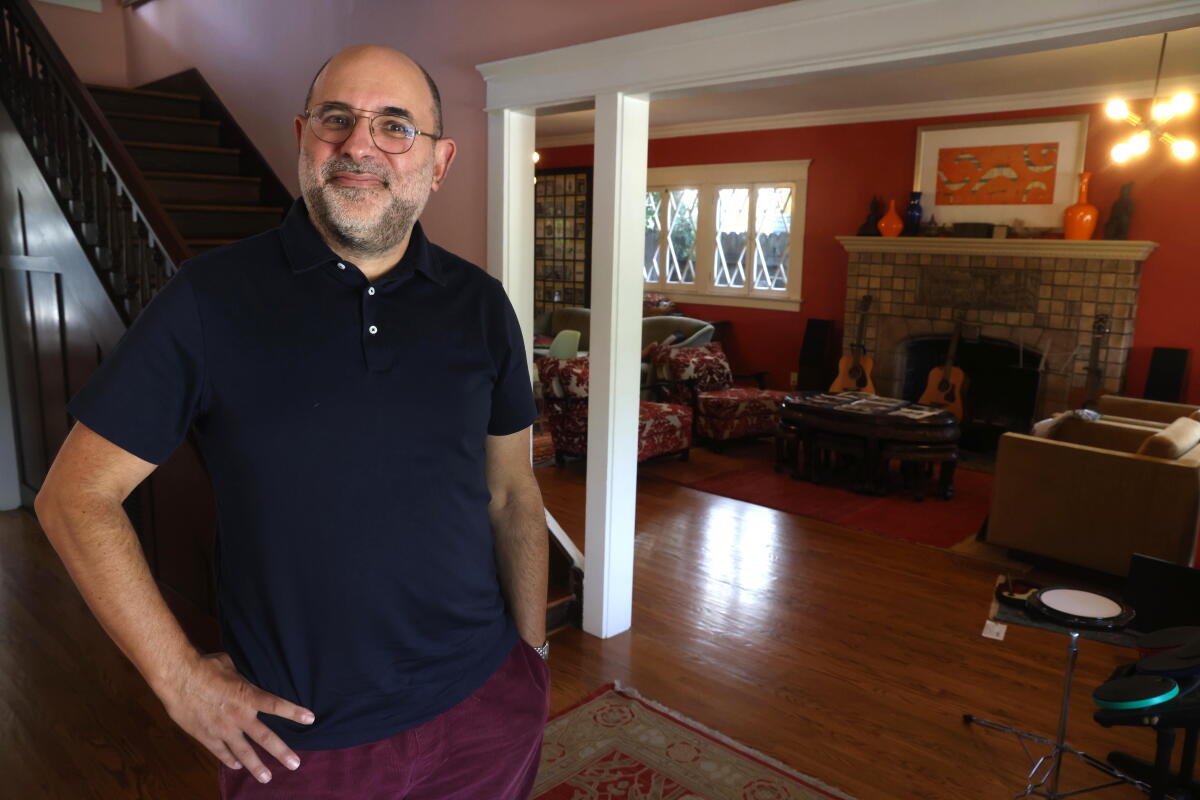
Joshua Saltman stands inside his home in Los Angeles.

Joshua Saltman, shown in his Los Angeles home, is one of many Democratic donors from California who have given in divisive Democratic races across the country.

(Genaro Molina / Los Angeles Times)

Saddler has written checks to a number of more progressive candidates, including Flanagan, Chevalier, Ahmed and Nida Allam, who lost her primary bid to unseat incumbent Rep. Valerie Foushee in North Carolina’s 4th Congressional District, though he has also supported some moderate candidates in other races he sees as crucial to Democrats chances at retaking control of one or both chambers of Congress.

That pragmatic approach is part of the reason Joshua Saltman said he has supported a number of moderate candidates.

“The reality of the map is that if Democrats are going to retake the House, it’s not just winning super blue districts,” said Saltman, a former entertainment industry lawyer who now runs a Broadway music festival.

Saltman said that he considers himself to be a more moderate Democrat and is also inclined to give to moderate candidates who he believes “get a little less love” from other donors, particularly in California.

He has written checks to Rep. Haley Stevens, who lost to El-Sayed in Michigan; Rep. Angie Craig, who lost to Flanagan in Minnesota; Bell in Missouri and Gov. Janet Mills in Maine, who was Platner’s main competition in the Democratic primary before dropping out of the race.

Alan Burye, a retired accountant who lives just outside San Diego, said he prefers more moderate candidates because he thinks they are more productive politicians.

“The ones who are out on the edges, like Bernie Sanders, really don’t get much done,” Burye said.

He cut checks to Craig in Minnesota and Stevens in Michigan.

Israel’s impact

American support for Israel — in the wake of wars in Gaza and Iran — has been a major point of division among more progressive and moderate candidates and is a key fault line among many donors.

Progressive candidates have been increasingly critical of the actions and influence of the Israeli government as the public, broadly, has adopted a more negative view of the Israeli government.

Politicians who have drawn support in the past from the American Israel Public Affairs Committee, or AIPAC, have been a particular target of progressive challengers.

“The problem with the Democratic Party is that they’re all just beholden to AIPAC and to corporate interests,” said Alvi, the real estate investor in El Dorado Hills. “I want a candidate who has the courage to speak.”

In Michigan, El-Sayed described AIPAC’s support of Stevens, his moderate opponent, as “legalized bribery.”

El-Sayed has made no secret of his criticism of American foreign aid for Israel and said that he “doesn’t believe in ethno-states” in response to a question in the summer about whether he supports the right of Israel to exist.

El-Sayed’s comments and similar sentiments expressed by other more progressive candidates are part of the reason some donors have given to moderate candidates.

“I feel that people who fundamentally aren’t big fans of Israel aren’t necessarily people I want to give money to,” said Saltman, who gave to Stevens.

Saltman, who was born in Michigan, said that he would still vote for El-Sayed if he lived in the state.

Other donors said they were inspired to give to moderate candidates because of concern that anti-Israel rhetoric could veer into attacks on Jews more broadly.

Los Angeles investor Steve Emerson said his motivation in writing checks to moderate Democrats such as Stevens is “to fight antisemitism.”

El-Sayed, for his part, said in the summer that his criticism of Israel is about foreign policy, not Jewish people.

“Judaism and the Jewish people are a light onto the world,” he said.

Source link

Donald Trump Jr.’s wedding celebration was partially funded by Russian oligarch, the couple confirms

Donald Trump Jr.’s new wife, Bettina, is confirming that her May wedding weekend celebration was partially funded by a man with close ties to Russian President Vladimir Putin.

In a post on her Instagram page Monday morning signed by the couple, Bettina Trump wrote that the man, Umar Kremlev, was a “dear friend,” who “very generously hosted two incredible nights of celebrations for us AFTER our wedding.”

“It was an extraordinarily generous wedding gift from a friend, and something for which we were and remain incredibly grateful,” it went on.

ProPublica, a nonprofit investigative website, reported earlier Monday that the wedding between Trump Jr. and socialite Bettina Anderson in the Bahamas was heavily funded by Kremlev, a Russian oligarch who heads the International Boxing Association. ProPublica reported that Kremlev “footed the bill for hundreds of thousands of dollars of wedding expenses,” including paying to rent out one of two private islands where the three-day party was held and a fireworks show.

In the post, Bettina Trump said that she and the president’s son were married in a private ceremony “surrounded ONLY by our family,”

“The weekend that followed had actually been planned well in advance as a fun weekend with friends. It was never intended to be our wedding weekend. When our original wedding plans changed, we simply decided to get married before it and arrived at an already planned weekend as newlyweds,” it went on. “It’s unfortunate that something so personal and happy can be recast as something political or sinister simply because of who someone is or where they come from. Friendship doesn’t require a political motive. Generosity doesn’t automatically come with an agenda. And sometimes a wedding gift is simply a wedding gift.”

That gift comes as Russia remains at war following its invasion of Ukraine and as the president has failed to broker a promised peace deal between the nations.

Kremlev was recently honored with the Order of Friendship by Putin, according to the International Boxing Association, and accompanied Putin to China as part of a Russian delegation, according to the Chinese state media cited by the outlet.

Trump Jr. has previously been scrutinized over his Russian ties. During the 2016 campaign, his meeting with Russian attorney Natalia Veselnitskaya in Trump Tower was the subject of intense scrutiny by federal and congressional investigators probing whether the Trump campaign coordinated with Russia to meddle in the election.

The meeting had been billed as an opportunity to discuss potentially incriminating information about the president’s then-Democrat opponent, Hillary Rodham Clinton, as part of the Russian government’s efforts to help Trump Jr.’s father win the White House.

Colvin writes for the Associated Press.


Source link