Fueling

Misinformation Fueling Communal Resistance Amid Renewed Ebola Crisis in DRC

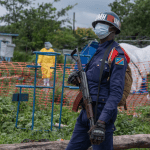
The number of Ebola virus cases and the death toll continue to rise as the epidemic ravages communities in the Democratic Republic of Congo (DRC).

In the Musienene health zone in the Lubero territory of North Kivu, health authorities confirmed 15 new cases of the virus as of Friday, July 17. There have also been nine reported deaths linked to the epidemic. 

A Musienene-based civil society organisation has corroborated these numbers after collecting samples for official verification in Beni, according to Kambale Maboko, the organisation’s president.

The new cases emerged across five health areas: 8 in Nduko, 3 in Vikindwe, 2 in Ivatama, and 1 each in Katolo and Kyambogho. Among the nine deaths reported, five occurred in Nduko, two in Vikindwe, one in Katolo, and one in Ivatama.

Kambale expressed concern over the limited government involvement in combating the Ebola outbreak in Lubero territory. He urged authorities to equip health facilities with necessary prevention kits and stressed the importance of the community adhering to safety measures as confirmed case numbers continue to escalate.

“In view of the high number of confirmed cases and the number of deaths which continue to rise each day, we call on the government to put in place a mechanism to counter this disease. If nothing is done, we risk facing the worst scenario,” Kambale said.  “We find that the government seems to have forgotten about us. We also call on the population to counter this disease by applying barrier actions in all their forms in order to block the road to Ebola.”

He noted how communal resistance is fueled by misinformation, saying: “We must sensitise the populations for them to understand that the disease exists and that it kills. If we are not careful, we risk being decimated, and we would have nothing to gain. The population seems to believe that those who go to the Ebola treatment centre must die, whereas this is not the case. We call on the population to be vigilant.”

At the provincial level, the Ebola response coordination reported seven new confirmed cases on July 17, including five from the Katwa health zone and two from Butembo. As per the epidemiological update released on July 18, 2026, North Kivu province has recorded a total of 213 confirmed cases, with 142 fatalities, resulting in a lethality rate of 66.7 per cent. Additionally, there are 36 recovered individuals, 25 active cases, and 10 patients who are unaccounted for or have moved to different locations. On Saturday, July 18, four patients who were declared healed were released from the Katwa Ebola treatment centre in Butembo.

Katwa is the worst-affected health zone, reporting 93 confirmed cases and 62 deaths. Following it is Butembo with 46 cases and 31 deaths, and Beni with 36 cases and 27 deaths. Other affected areas include Musienene, Kyondo, Kalunguta, Masereka, Oicha, Goma, Vuhovi, and Mabalako. In total, 11 out of the 34 health zones in North Kivu are experiencing the epidemic. The Ebola response committee is currently monitoring 3,009 active contacts, with 2,618 monitored in the past 24 hours, achieving a follow-up rate of 87 per cent.
Source link

Contributor: Hollywood will stop fueling racism when audiences demand better

Exploiting racism has been a profitable strategy in Hollywood since the dawn of filmmaking: 111 years ago, D.W. Griffith’s film “The Birth of a Nation” was incredibly popular and influential, while also being so racist that it was considered controversial even in its own day.

The industry saw immediately just how lucrative fear could be. More than a century later, there is always someone in the entertainment media willing to trade in racist tropes for money, as well as an audience ready to receive them.

Two new films, “Citizen Vigilante” and “Run, Fight, Hide: Infidels,” demonstrate that streaming platforms and social media no longer simply distribute controversial content but in fact thrive on content that provokes, polarizes and sustains attention, regardless of the social cost.

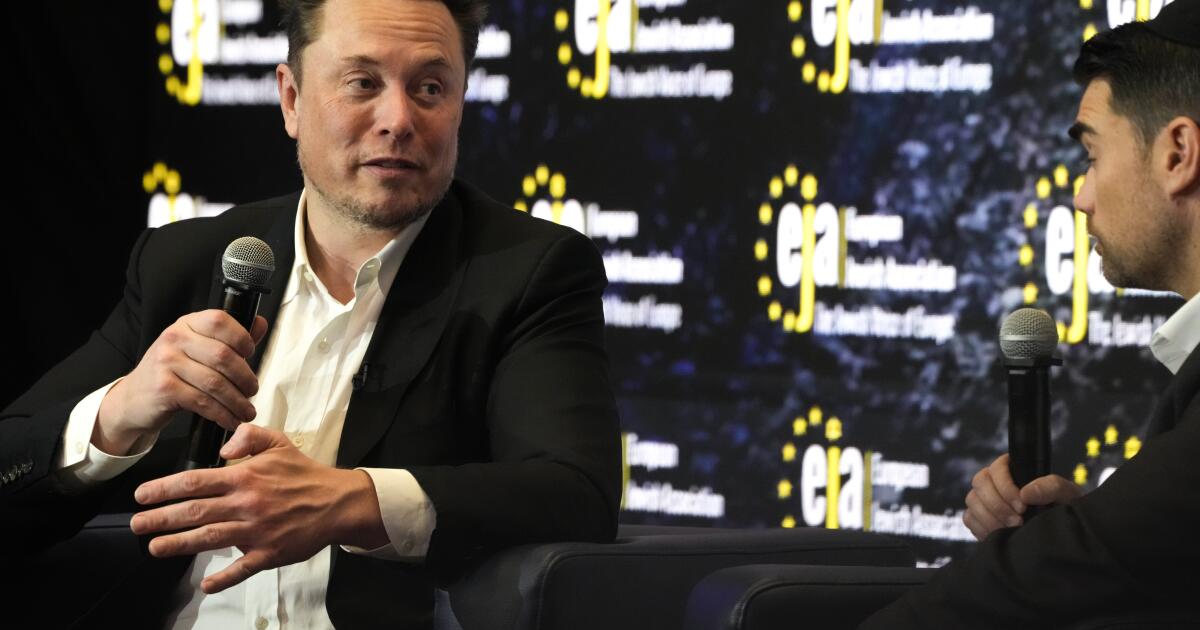
Both of these xenophobic and Islamophobic films are being pushed as “anti-woke” vehicles, deliberately engineered to bypass traditional critical reception and capitalize on a fractured media ecosystem. “Citizen Vigilante,” which features an American protagonist killing dark-skinned immigrants and Muslims in an unnamed European setting, was denied a rating certificate by the German government for inciting violence. Yet despite that determination, the film secured global reach through decentralized digital distribution and high-profile promotion from Elon Musk.

Similarly, “Run, Fight, Hide: Infidels” — a campus siege narrative evoking 1980s action film nostalgia that leans heavily into outdated, post-9/11 anxieties — relies on a built-in conservative media apparatus to guarantee financial returns. The film is produced by the conservative media figure Ben Shapiro and the Daily Wire, which he co-founded. It is a sequel to a 2020 film that was their film company’s premiere.

But while promoters of such films frame their work as a brave rebellion, the reality is much more sinister: rehashing 40-year-old tropes while invoking conspiracy theories of Muslims bringing sharia law to America, because outrage is cheap to produce and easy to monetize.

Stories matter. Stories shape how we see one another. They influence what we love, what we celebrate, whom we trust, whom we understand and whom we fear.

Since January, the Muslim Public Affairs Council has documented a sharp escalation in threats and attacks targeting Muslims and Islamic institutions across the United States, including vandalism, shootings, bomb threats, attempted assassinations and physical assaults. These are not isolated incidents. They reflect a broader climate in which dehumanizing representation increasingly manifests as real-world violence.

Entertainment and politics increasingly employ the same tactic as one another, recycling narratives of fear and “otherness” to mobilize audiences, voters and consumers. When political leaders encourage those narratives, as President Trump recently did by amplifying and commenting on a photo of young Muslim American students in hijab, they further normalize the same stereotypes that entertainment companies have learned to monetize.

Yet while the social costs continue to mount, the economic incentives remain firmly intact. “Citizen Vigilante” earned a 93% audience score on Rotten Tomatoes despite receiving just a 6% critics’ score. More tellingly, it quickly climbed to the top of Amazon’s and Apple TV’s paid video-on-demand charts.

And this isn’t just a Muslim and immigrant issue — and it’s not only about who is portrayed on screens, but also who is not. Representation has been backsliding, and audiences are left with fewer opportunities to see the reality and humanity of diverse communities, making them more vulnerable to fear-based narratives.

According to a 2026 report from the nonprofit Define American, which tracks representation across television and film, Latinos account for only 23% of immigrant characters represented on screen, even though they make up more than 40% of the immigrant population in the United States. In 2020, 50% of immigrants on screen were Latino.

The industry’s defense is that whitewashed and xenophobic films reflect audience demand. But the recent research by Define American challenges this assumption. Data show that nuanced, multidimensional storytelling, in which immigrants and minority characters are woven into the fabric of everyday narratives rather than tokenized or villainized, actually leads to greater audience engagement and deeper systemic understanding.

Entertainment doesn’t simply reflect culture; it teaches us who belongs within it. Studios, distributors, streaming platforms and filmmakers all have a responsibility to reject narratives that portray immigrants as enemies and instead embrace stories that reflect the diversity and complexity of our world. At the same time — as with voters — the power ultimately rests with consumers. The choice to demand storytelling that challenges prejudice rather than profits from it belongs to all of us.

Sue Obeidi is the senior vice president of the Muslim Public Affairs Council Hollywood Bureau. Jose Antonio Vargas is the founder of Define American.

Source link

Ex-Bolivian President Evo Morales accuses U.S. of fueling unrest

Citizens from various sectors in at least five regional capitals across Bolivia took to the streets Thursday to demand an end to the roadblocks organized by peasant unions and groups aligned with former Bolivian President Evo Morales, who are calling for the resignation of the Bolivian President Rodrigo Paz. Photo by Jorge Abrego/EPA

May 22 (UPI) — Former Bolivian President Evo Morales accused the United States of backing the government of President Rodrigo Paz and attempting to criminalize the protests shaking Bolivia.

“The United States does not defend democracy or respect international law. It finances right-wing coups. It invades countries and steals their natural resources,” Morales wrote in a message Thursday on X.

Officials from the Bolivian identified Morales as the main instigator behind the wave of protests and road blockades demanding the president’s resignation.

The historic leader of the Movement Toward Socialism party, who is entrenched in the coca-growing Chapare region, was declared in contempt by a Bolivian court this month after failing to appear at a hearing linked to a human trafficking case.

The former president was responding to a message published by Secretary of State Marco Rubio on X in which Rubiol said the United States would not allow “criminals and drug traffickers” to overthrow democratically elected governments in the hemisphere.

Morales called the remarks “a lie” and accused Washington of supporting the 2019 ouster to gain control of Bolivia’s lithium reserves.

“The United States supported the coup by the gringo against the Indigenous man in 2019 in order to seize our lithium,” he said.

In another message published on X, Morales also questioned Paz’s political legitimacy by claiming he was born in Spain, and he accused the president of “criminalizing” and “repressing” Indigenous people, farmers and students participating in the protests.

“Because he is a foreigner, he surely hates Bolivians. He criminalizes, persecutes and represses Indigenous people. He thinks and acts like an imperialist, neoliberal and neocolonial ruler,” Morales wrote.

In an interview this week with La Octava Radio Nacional, Morales called for early elections within 90 days to “pacify Bolivia,” arguing the country is facing a governance crisis.

Morales’ remarks came as Bolivia entered its third week of protests, road blockades and demonstrations led by unions, farming organizations and Indigenous groups rejecting the government’s economic reforms and denouncing fuel shortages, inflation and economic deterioration, according to reports by Bolivian media outlets La Razón and Los Tiempos.

The crisis has also begun to affect the healthcare system. Bolivia’s Health Ministry said at least four people died in recent days because they were unable to receive medical treatment or be transferred in time to healthcare centers due to road blockades and unrest in different parts of the country.

Among the victims was a 12-year-old boy, who died while being transported in an ambulance after the vehicle was unable to pass through blocked roads.

“We are calling for a humanitarian corridor,” the ministry said, according to reports by Infobae.

The Bolivian Highway Administration reported Friday that 51 road blockades were active across seven of the country’s nine departments, most of them concentrated in the highland region, including the departments of La Paz, Oruro and Cochabamba.


Source link