front

China and UAE’s Exit from OPEC: Risks and Opportunities

The United Arab Emirates’ announcement of its withdrawal from OPEC and the OPEC+ alliance, effective May 1, 2026, represents a major strategic shift in the global energy market, with direct and significant implications for China, the world’s largest oil importer. The primary impact of this UAE withdrawal on China is the enhancement of Chinese energy security, as it will increase available supplies. The UAE will now be able to raise its production towards its target of 5 million barrels per day by 2027, without being bound by OPEC quotas. This expansion will provide China with a substantial and stable source of oil outside the constraints of production alliances. Furthermore, the UAE’s withdrawal from OPEC will impact China’s diversification policy, as China relies on imports to cover approximately 70% of its oil needs. The UAE’s departure will grant Beijing greater flexibility in purchasing from the spot market at potentially more competitive prices.

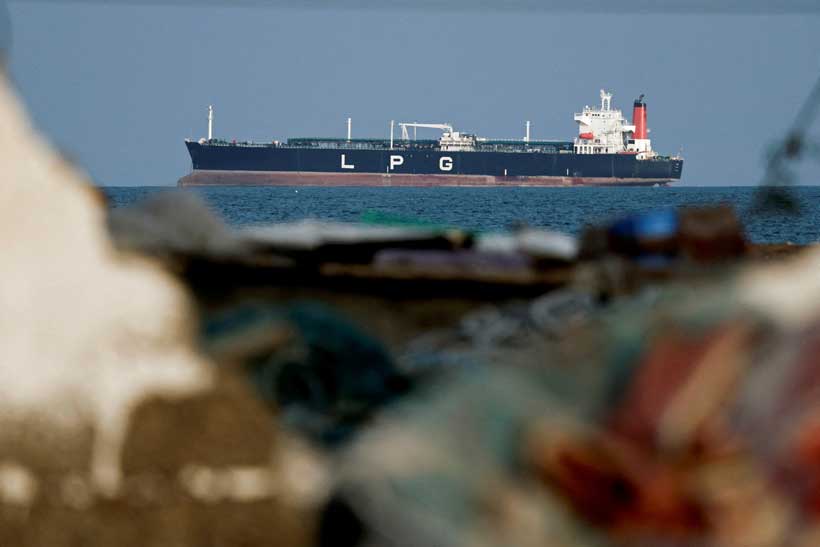
This also has a significant impact on import costs (prices) through prolonged downward pressure. The UAE’s increased oil production (up to 680,000 barrels per day above previous levels) is expected to put downward pressure on global Brent crude prices in the medium term (12-24 months), thus reducing China’s energy import bill. This could lead to short-term volatility, as, despite the potential benefit, the closure of the Strait of Hormuz (due to current regional tensions in April 2026) limits the immediate ability to capitalize on the UAE’s withdrawal from OPEC, since most of the UAE’s exports to China pass through this waterway.

China could benefit from the UAE’s withdrawal from OPEC by enhancing its capacity for financial and trade cooperation and expanding trade in local currencies, particularly the Chinese yuan. The UAE’s departure from OPEC could (facilitate the expansion of oil trade agreements) in rubles, rupees, and yuan, moving away from OPEC’s traditional dollar pricing. This aligns with China’s drive to internationalize the yuan. Such a move could boost joint investments, given China’s existing stakes in UAE oil concessions. With Abu Dhabi freed from restrictions, these Chinese investments could generate higher returns through increased production. Furthermore, China might leverage the UAE’s withdrawal from OPEC to bolster the strategic and geopolitical value of weakening OPEC’s influence. This withdrawal diminishes OPEC’s ability to control global supply, which benefits major consuming nations like China by reducing the likelihood of price shocks resulting from collective production cuts.

In this context, Chinese discussions and analyses have intensified, examining the potential benefits for China from the UAE’s withdrawal from OPEC. Chinese experts are analyzing the likelihood and impact of such a move should it materialize, particularly given the UAE’s increasing production capacity and its desire for greater flexibility. If we assume the UAE’s withdrawal from OPEC is indeed the case, China stands to be the biggest beneficiary for the following reasons. First, it would break the dominance of the petrodollar. The departure of a player the size of the UAE from traditional OPEC constraints opens the door wide to bilateral agreements for pricing oil in digital yuan (or Chinese yuan), thus supporting Beijing’s strategy of internationalizing the yuan to reduce its dependence on the Western financial system (SWIFT). In addition to the increased Chinese-Emirati supply, since Chinese companies such as CNPC and CNOOC hold stakes in oil concessions in Abu Dhabi, the UAE’s release from OPEC production quotas means these companies can increase production and secure China’s growing energy needs at preferential prices and with favorable terms. This facilitates the revitalization of joint UAE-China investments, allowing for deeper Chinese capital flow into the UAE’s refining and petrochemical sector. The exchange of finished goods and crude oil within an economic cycle based on local currencies reduces conversion costs and the risks associated with dollar fluctuations. This supports China’s policy of moving towards BRICS+. As the UAE is a member of the BRICS group, any move away from traditional OPEC frameworks aligns with the group’s overall direction to create a parallel financial system that supports the ruble, rupee, and yuan. This scenario, if it were to occur, would transform the relationship from one of buyer and seller to a comprehensive strategic partnership, making energy the driving force behind the new financial system that China seeks to lead.

Accordingly, the UAE’s withdrawal represents a strategic gain for China in terms of increased supply and potential cost reductions, but maximizing the benefit remains contingent on the stability of shipping lanes in the Arabian Gulf.

Source link

The UAE Just Walked Out of OPEC and the Cartel May Never Recover

Fifty-nine years of membership, ended with a statement on a Tuesday and an effective date of Friday. The United Arab Emirates announced it will exit OPEC and OPEC+ on May 1, citing national interests, its evolving energy profile, and a long-term strategic vision that no longer aligns with the organization’s direction. The Energy Minister did not consult Saudi Arabia before making the announcement. He did not raise the issue with any other member country. He simply said the time had come. 

The timing tells the whole story. OPEC was preparing to meet in Vienna on Wednesday when the news landed. The Iran war had already wiped out 7.88 million barrels per day of OPEC’s production in March alone, resulting in the biggest supply collapse for the producers’ group in recent decades, surpassing even the 2020 Covid shock and the 1970s oil crisis. The UAE had been absorbing Iranian drone and missile attacks for weeks. The Strait of Hormuz, through which the UAE ships its own oil, has been functionally closed or severely restricted since early March. And sitting across the OPEC table was Iran, the country that had been targeting UAE infrastructure repeatedly, and Russia, which had been a steadfast partner to Iran throughout the conflict.

Walking out was not an impulsive decision. It was the logical conclusion of a calculation that had been building for years.

Why Abu Dhabi Was Already Done With OPEC 

The UAE’s frustration with OPEC production quotas is not new. The quotas have capped UAE output at around 3.2 million barrels per day, while the country has the ambition and the capacity to produce closer to 5 million barrels per day by 2027, suggesting production could almost double without OPEC’s constraints. For a country that has invested heavily in expanding ADNOC’s capacity and has the infrastructure to back it up, being told by a cartel committee how much it can produce has become an increasingly poor trade. 

The UAE’s sovereign wealth fund is so large that its economy is now more significantly tied to global economic growth than to the global price of oil. That shift in economic identity matters enormously for understanding why OPEC membership has become structurally uncomfortable. OPEC exists to keep oil prices elevated through production discipline. The UAE increasingly benefits from a growing global economy that demands more energy, more investment, and more trade, all of which are better served by producing at full capacity and building relationships with the countries that need what Abu Dhabi has to sell. 

An energy industry source familiar with the decision said the UAE felt it was “the right time to leave” and that “this decision is good for consumers and good for the world,” adding that the UAE would gradually increase production to supply global markets once freedom of navigation is restored in the Strait of Hormuz. The framing is deliberate. The UAE is not positioning itself as a cartel defector but as a responsible producer responding to a global energy emergency, which is a considerably more defensible diplomatic position. 

The Saudi Rupture Running Underneath It All

The official UAE statement was carefully worded, full of appreciation for “brothers and friends within the group” and “the highest respect for the Saudis for leading OPEC.” None of that diplomatic courtesy changes the underlying reality, which is that the UAE and Saudi Arabia have been on a collision course for some time and the OPEC exit is the most visible expression of that tension yet.

The two countries had joined a coalition to fight the Houthis in Yemen in 2015, but that coalition broke down into open recriminations in late December when Saudi Arabia bombed what it described as a weapons shipment bound for UAE-backed Yemeni separatists. That incident was the visible rupture of a relationship that had been quietly fraying for years over economic competition, differing visions for regional leadership, and diverging approaches to normalization, China, and the post-war order. Within OPEC, the two countries have clashed repeatedly over quota allocations, with the UAE consistently arguing it deserves a larger share based on its expanded capacity. 

The OPEC exit does not resolve any of those tensions. It sidesteps them entirely, which is probably the more elegant solution. By leaving, the UAE removes itself from a framework where Saudi Arabia holds dominant influence and gains the freedom to pursue its own production and partnership strategy without needing Riyadh’s agreement. That is a significant shift in the regional power dynamic, and it happened without a single confrontational statement.

What Remains of OPEC Now 

The UAE’s exit could prompt other members to follow suit, with analysts pointing to Kazakhstan as another significant producer that wants to grow beyond its current quota constraints. “If there is a time to leave, now is the time,” one Dubai-based energy consultant told CNN. 

The cartel’s power has always rested on a specific mechanism: spare production capacity held back from the market to stabilize prices. That spare capacity is concentrated almost entirely in the UAE, Saudi Arabia, and Kuwait, with the other nine member countries possessing little to none. Removing the UAE from that equation means OPEC’s effective spare capacity narrows considerably, and the burden of price stabilization falls almost entirely on Riyadh and Kuwait City. Saudi Arabia will hold an even greater share of the cartel’s remaining leverage, but leverage over a smaller and weaker institution is not the same as leverage over a healthy one.

OPEC has lost members before, but the UAE is a much larger producer than previous departures, and its absence may over time pose an existential risk to the cartel’s sustainability. The organization that has shaped global energy politics since 1960 is now facing its most significant structural test, and it is doing so while simultaneously dealing with a historic supply shock from the Iran war, a closed strait, and a global economy pricing in the possibility that the disruption is not temporary. 

The Geopolitical Implications

Freed from production quotas, the UAE’s most immediate strategic move is likely to deepen its relationship with the countries that need its oil most urgently, and China sits at the top of that list. More production could help the UAE improve ties with oil-importing partners such as China, and given the economic damage caused by the Iran war, the prospect of maximizing energy revenues now is undoubtedly attractive to Abu Dhabi. 

The UAE-US relationship also stands to benefit. With the UAE free to leverage its spare capacity in pursuit of its own strategic interests, the move will likely strengthen the UAE-US relationship, particularly in relation to managing the strategic petroleum reserve and responding to the ongoing Hormuz supply shock. Trump has been publicly critical of OPEC for years, accusing the cartel of exploiting American military protection to keep prices artificially high. An OPEC that is smaller and weaker, with a major member now operating independently and aligned with US interests, is a more congenial arrangement from Washington’s perspective. 

For the global energy market, the picture is more complicated. Once the Strait reopens fully and UAE production ramps up without quota constraints, additional supply should exert downward pressure on prices that have been elevated since February. Whether that actually happens depends on a sequence of events, including a durable Iran settlement and the restoration of free navigation through Hormuz, that are still very much in progress.

Our Take: A Geopolitical Move Dressed as an Energy Decision 

The UAE’s OPEC exit is not primarily an energy story. It is a geopolitical statement about where Abu Dhabi sees itself in the emerging regional order, and the answer is: outside the frameworks that no longer serve its interests, and free to build the bilateral relationships that do. The exit from OPEC follows the same strategic logic as the Abraham Accords, the Huawei contracts, the US base agreement, and the China infrastructure ties. The UAE has been running a multi-alignment strategy for years, positioning itself as indispensable to every major power simultaneously, and OPEC membership was becoming a constraint on that strategy rather than an asset.

What happens to OPEC matters for energy markets in the short term. What the UAE’s departure signals about the fracturing of Gulf institutional solidarity matters considerably more for the regional order that everyone in the Middle East is trying to rebuild in the aftermath of a war that nobody fully planned for and nobody has yet fully ended.

The deeper story is what the UAE’s exit reveals about the post-war Middle East taking shape right now. The institutions that governed the region’s energy politics, security arrangements, and diplomatic alignments for decades were built in a different world, one where the Cold War defined choices, where oil producers had unified interests, and where the US sat at the center of every meaningful regional framework. That world is gone. What the Iran war accelerated, and what the UAE’s OPEC exit makes structurally visible, is that the Gulf’s most capable states are no longer willing to subordinate their individual strategic interests to collective frameworks that were designed for a regional order that no longer exists. 

Abu Dhabi did not leave OPEC because of a quota dispute. It left because it has decided that in the world emerging from this war, the countries that move fastest, align most flexibly, and free themselves from inherited institutional constraints are the ones that will define what comes next. Whether that calculation proves correct depends on what the Islamabad talks produce, how quickly the Strait reopens, and whether the ceasefire holds long enough for the region to build something more durable than a pause. But the signal Abu Dhabi sent on Tuesday was unmistakable, and every government in the region heard it.

Source link

Man from viral video gives home run ball back to young Guardians fan

Guardians fan Evelyn Moore got a pretty cool souvenir from Monday’s game against the Tampa Bay Rays — a two-run home run ball hit by Cleveland second baseman Daniel Schneemann.

The 11-year-old softball player from New Philadelphia, Ohio, almost got the ball right after Schneemann hit it in the bottom of the fifth inning.

But, as seen in video footage that quickly went viral on social media, a man appeared to snatch it away as Evelyn was trying to pick it up near the rail in the left-center field stands at Progressive Field.

He eventually gave it to her, however, and now the girl’s mother wants folks on social media to leave him alone.

“This man’s life shouldn’t be ruined over this,” Nikki Moore-DeVore said. “Jokes and memes are one thing, but it’s getting excessive. It’s too much.”

Moore-DeVore said her family — which also includes her husband, Jon DeVore, and her son, Theo Moore, 9 — attend several Guardians games a year. They sit in the outfield stands, where Evelyn — an avid baseball fan and baseball card collector — likes to take her glove down to the rail and try to persuade Cleveland outfielders to toss her a ball.

Video of Schneemann’s home run shows the ball flying over the left-center field wall, where a bearded man wearing a throwback Cleveland Indians hat and T-shirt tried to catch it in the air. Instead, it bounced off his hands toward the rail to his left.

Two baseball players wearing batting helmets smile and bump hands

Cleveland Guardians’ Daniel Schneemann, right, is greeted at the plate by teammate David Fry after hitting a two-run home run in the fifth inning of a game against the Tampa Bay Rays on Monday in Cleveland.

(Sue Ogrocki / Associated Press)

Evelyn ran down from her seat two rows up, dropped to the ground and attempted to secure the ball in front of her. The man ran over and also dropped to the ground next to her, starting a brief struggle for control of the ball.

The man eventually emerged triumphantly.

“I did not really see how the ball came over to us. I just saw it bounce in our direction and my daughter go down to get it,” Moore-DeVore said. “And I saw the scuffle kind of from behind, but I couldn’t see much of the hands or anything like that. I just saw the shoulders shifting around.

“And then she got up empty-handed, and people started booing. The guys sitting in front of me were like, ‘That was her ball!’ My husband was booing. He was not happy, but we didn’t want to ruin the game.”

Evelyn also was upset by the turn of events, her mother said, “but she didn’t cry.”

“She actually took it like a champ,” Moore-DeVore said. “Every inning, she still went up to the rail to try to get one of the players to throw a ball to her. She didn’t give up.”

Meanwhile, Theo approached the man to request he return the ball to his sister. Moore-DeVore said her son told her the man politely refused.

“I was just proud of him for going over there and taking it upon himself to try to help his sister,” Moore-DeVore said.

The Rays broadcast of the game showed the incident involving Evelyn and the man, with the announcers taking the girl’s side. On social media, fans shared the video and shamed the man for his behavior, with some looking to make his identity public.

Later in the game, Rays sideline reporter Ryan Bass visited the family at their seats and presented both kids with baseballs.

That’s when Evelyn became emotional.

“She cried happy tears,” her mother said. “I think she just felt seen. The incident made her feel small, and Ryan made her feel seen.”

Bass posted about the moment on X.

“We had to make it right,” Bass wrote, adding in a separate post: “We got the chance to make a sweet little girl’s night. There’s nothing better. Kindness is free. Always remember that.”

Before the bottom of the eighth inning, Evelyn went down to her usual post at the rail to try to persuade an outfielder to toss her a ball. She returned with the home run ball from three innings earlier.

“She came back with the biggest smile on her face: ‘Mom, he gave it back to me!’” Moore-DeVore said. “The guys in front of me were like, ‘yeah, he’s, like, getting a lot of social media flack.’ … I’m sure he realized eventually that it was probably the wrong action to take, just not good etiquette.”

In return, Moore-DeVore said, Theo offered the man — whose name has not been revealed despite the internet’s attempts — one of the balls that Bass had given him and his sister.

“He respectfully declined,” she said, “so my son gave it to another kid.”

Moore-DeVore said both of her kids are “on cloud nine” over how everything turned out — and she wants everyone else to get over it as well.

“I don’t want this one moment to ruin this guy,” she said. “And my kids, they wouldn’t want that. They’re sweet kids. I feel like, if kids their age can forgive and offer him a peace offering, grown adults and other fans can, too.”

Source link

Arby’s sign from Sunset Boulevard location in Hollywood appeared at Stagecoach

A weekend in the desert is a go-to getaway for Southern Californians — even if you’re a beloved neon sign.

Nearly two years after the Hollywood Arby’s closed, its cowboy hat shone again this weekend at the Stagecoach Music Festival in Indio.

The restored sign showed up more than 130 miles away from its original home as part of the roast beef chain’s pop-up at the festival at the Empire Polo Club, where it became one of the event’s go-to photo spots.

“As you can see, everyone’s loving it. Everyone’s getting a photo op standing in front of it,” Arby’s franchisee Roger Amaya said.

Over the three days, people moseyed by the pop-up near Diplo’s Honky Tonk, sometimes lining up to wait their turn to take a photo in front of the sign. Some climbed on the surrounding hay bales for a better pose, asking others in line to snap their photo in front of the cowboy hat emblazoned with the words “Arby’s roast beef sandwich is delicious.”

  • Share via

A number of people we talked to taking photos weren’t from L.A. and didn’t know the lore of the Hollywood Arby’s sign — they just liked the visual.

The sign’s original location was the Arby’s at 5920 Sunset Blvd. in Hollywood, which had been open for more than 55 years when it shuttered in June 2024.

The family that owned the location said at the time that rising food costs, the post-pandemic changes in the neighborhood and a law that raised minimum wage contributed to the closure.

Amaya said that Amir Siddiqi, head of a group of Arby’s franchises, was able to get the sign from the Hollywood location and have it restored.

“We were able to bring it back to life here and bring it to all the fans of Arby’s out there,” Amaya said.

Now that Stagecoach is over, where will the sign go next?

“That’s the big question, so you gotta stay tuned,” Amaya said.

Source link

Xi Jinping’s Four Peace Initiatives after the Iran War

As part of promoting the Chinese Global Security Initiative (GSI) as an alternative to the Western approach, Chinese President Xi Jinping proposed a four-point initiative for peace and stability in the Middle East in mid-April 2026, following escalating tensions in the Middle East and the US-Israeli war against Iran. This initiative aims to offer Chinese wisdom for conflict resolution based on sovereignty and development, in contrast to what China considers destabilizing Western alliances. President Xi Jinping discussed and presented this initiative in mid-April 2026 during his meeting with Khalid bin Mohammed Al Nahyan, Crown Prince of Abu Dhabi, outlining a comprehensive four-point initiative aimed at preserving and promoting peace and stability in the Middle East. This Chinese initiative comes within the context of Beijing’s efforts to strengthen its role as a diplomatic mediator following the escalation of tensions in the region. Chinese President Xi Jinping’s four peace initiatives for 2026 are the commitment to the principle of peaceful coexistence, supporting Gulf and Middle Eastern countries in improving their relations, and building a comprehensive, cooperative, and sustainable security architecture in the region based on the principle that the countries of the region are neighbors and cannot be geographically relocated. (Commitment to the principle of national sovereignty), through China’s support for and respect of the sovereignty and territorial integrity of states and its rejection of interference in their internal affairs, while emphasizing the protection of the security of states, their people, infrastructure, and institutions. (China’s full commitment to the principle of the rule of international law), by adhering to the basic norms of international relations and supporting the international system centered on the United Nations, to prevent a return to the law of the jungle. (Reconciling development and security by affirming that security is a prerequisite for development and working to create a favorable environment for sustainable economic development to ensure long-term stability.)

These Chinese moves come as part of China’s efforts to present its Global Security Initiative (GSI) as an alternative to the Western approach to conflict resolution. They are considered a direct response from China to Western and American policies. These Chinese peace proposals emerged in the context of Beijing’s criticism of the American blockade on Iranian ports, which it described as dangerous and irresponsible. By presenting a Chinese security model, China seeks to position itself as a partner committed to peace and dialogue, rather than the American military alliances that Beijing considers a threat to global security. Furthermore, this initiative aims to reinforce the Beijing Declaration, as China seeks to solidify its role as a mediator (following Saudi-Iranian and Palestinian faction mediation efforts) through a formal initiative.

Thus, the Chinese initiative emerged as a direct response to the escalating tensions in the Gulf region and Iran and as a countermeasure to the American blockade. The Chinese Foreign Ministry described the American blockade of Iranian ports and the Strait of Hormuz as dangerous and irresponsible, threatening the security of navigation in the Strait of Hormuz. Especially after the failure of US negotiations with Iran and US President Donald Trump’s announcement of a naval blockade on Iranian ports on April 12, 2026, following the collapse of peace talks in Islamabad, Pakistan, China stepped in as an international mediator. Consequently, China is attempting to promote its own model by presenting itself as a peace partner focused on economic dialogue, in contrast to Western military alliances, which Beijing considers a threat to global security.

In this context, China is trying to leverage its past diplomatic successes to solidify its role in promoting the Beijing Declaration and to play a mediating role in resolving conflicts, such as the Saudi-Iranian mediation. Based on the 2023 Beijing Agreement to normalize relations, China seeks to strengthen its role in the Gulf region. Furthermore, China is working to solidify the Beijing Declaration of July 2024, which aimed to end the Palestinian division, achieve reconciliation between Palestinian factions, and form a national unity government, as a model for its mediation in resolving complex conflicts. With the strengthening of the Beijing Declaration, the new proposal aims to transform the Beijing Declaration from a factional agreement into an official, internationally supported initiative to solidify China’s role as a key mediator in Palestine as well.

These Chinese moves are part of a broader Chinese strategy to promote the Global Security Initiative (GSI) as an alternative to the Western approach, as outlined by Chinese President Xi Jinping for the period 2022-2026. China emphasizes its rejection of the Cold War mentality, criticizing Washington’s military alliances, such as the trilateral AUKUS security pact between the US, Australia, and the UK, and alliances in the Middle East. China also emphasizes the concept of indivisible security, promoting the idea that a nation’s security cannot be achieved at the expense of other nations’ security. China seeks influence through mediation, aiming to position itself as an alternative superpower capable of addressing the root causes of conflicts through development, rather than through the threat of force.

Source link

White House Correspondents’ Dinner Shooting Puts Trump’s Security Back in the Spotlight

The shooting of a Secret Service agent at the White House Correspondents’ Association dinner on Saturday night has raised concerns about the safety of political leaders amid rising political violence. Despite hundreds of agents from various law enforcement agencies being assigned to secure the event, a suspect armed with a shotgun and other weapons was able to approach just one floor above where prominent figures, including President Donald Trump, Vice President JD Vance, and several cabinet members, were dining.

The alleged gunman, who carried a shotgun, a handgun, and knives, was reportedly staying at the Washington Hilton hotel, where the dinner took place. Trump’s remarks following the incident highlighted the dangers of his role, noting the hotel is “not particularly a secure building. ” This vulnerability is concerning given recent assassination attempts against him during the 2024 presidential campaign.

Attendees had to pass through metal detectors at the ballroom, but only needed tickets to access the hotel, which was open to other guests. Many attendees faced demonstrators protesting the Trump administration’s policies. Video footage showed the gunman rushing past a security checkpoint before shooting the agent, after which he was tackled and arrested by officials.

Inside the ballroom, guests were dining when gunshots were heard. Secret Service agents quickly acted to protect Trump and Vance, while security responses varied for other officials, with some agents forming shields and others reacting differently. The timing for evacuating protectees differed, with some leaving almost immediately and others remaining longer. Trump, who has faced close calls with violence in the past, later acknowledged that carrying on with the event was not feasible after the attack.

With information from Reuters

Source link

A defining week in Africa: between moral voice, political tensions, and economic reality

Africa has shown itself in the past week again as a continent of dramatic contrasts, in which moral leadership, political turmoil, and financial aspiration come into collision in a manner that would not only chart its own future but also that of the world. The continent is going through a time that is both precarious and radical, as the potent moral rhetoric of a papal visit gives way to an ever-worsening political persecution and systemic economic disparities.

A Moral Voice in a Fractured Continent

The visit of Pope Leo in some parts of Africa, such as Angola and Cameroon, has been one of the most intriguing this week. His message attracted crowds of more than 10,0000 people, and it was not only religious but also very political, declaring Africa a beautiful but wounded continent and demanding unity, justice, and an end to violence.

It is not only the size of the meetings but also the content of the message that is important. The Pope was outspoken in an attack on corruption, inequality, and exploitative governance systems—the problems that are at the core of most of the struggles in Africa today. His words about people being more important than corporate interests are well-received in a continent where natural resource wealth has not always translated into widespread prosperity.

This visit was, in a sense, a symbol of a greater fact: Africa is not merely economically or politically challenged; it is morally and structurally challenged. The unity cry in Angola, the nation that is yet to overcome the adverse effects of decades of civil war, is a symptom of the bigger continental necessity to mend the wounds of the past and deal with the inequalities of the present.

Political Tensions and Disappearance of Space of Dissent

As the moral pleas of unity reverberated in stadiums, political realities on the ground painted an even more disturbing scenario. The South African arrest of activist Kemi Seba is part of an increasing trend in some parts of Africa, where there is an increased crackdown on dissenting voices.

Seba, the anti-colonial and anti-Western rhetoricist and critic of Western influence, now risks extradition to Benin on charges of inciting rebellion. His detention highlights a broader conflict: the fight between state power and political activism in an area where the democratic institutions are not yet balanced.

This is not a one-time event. Governments all over the continent are striking a fine balance between ensuring stability and political expression. In other instances, this equilibrium is leaning towards control over being open, and this leaves one worrying about the future of democratic governance.

The consequences are not confined nationally. The political situation in Africa is a topic of keen interest to the rest of the world, not just due to its size and population but because it offers one of the final avenues of democratic growth in the 21st century. Political space is reduced here, causing ripples way beyond the continent.

Structural Gaps in Economic Promise

Africa is still a puzzle economically. On paper, the figures are encouraging. Recently, South Africa obtained the promise of billions of investments, which indicates a great interest of other countries in the areas of green energy, infrastructure, and digital development. But the facts speak otherwise. Of these promised investments, only around 42 percent have been translated into real economic activity—much less than world averages. This delivery gap is indicative of an ongoing problem: it is one thing to attract investment and another to implement it.

Simultaneously, the recent climate financing agreement of South Africa with Germany that provides hundreds of millions of euros of loans and green energy assistance reminds us about the increased role of the continent in the global climate plan. Africa is also being increasingly viewed not only as a beneficiary of aid but also as a prime actor in the shift to sustainable energy.

However, structural problems are quite rooted. The effectiveness of economic initiatives is still hampered by policy inconsistency, poor infrastructure, and governance issues. Even the most ambitious plans of investment have a chance of failing without these underlying problems being addressed.

The Overlooked Crisis: Environment and Illicit Economies

The other trend of importance this week has been the further increase in wildlife trafficking in Nigeria, even though the legislation has been taking measures to reduce it. A lack of complete legislation on wildlife protection has allowed the illegal trade to continue, with several seizures of endangered species over the past few months.

The problem is indicative of a larger problem: that of a nexus between environmental degradation and ineffective enforcement. Africa has one of the most biodiverse regions in the world, but it is rapidly being threatened by illegal trade, climate change, and the exploitation of resources.

The inability to adequately deal with such problems not only damages the ecosystems but also weakens the governance and the stability of the economy. In places where there is poor regulation, illegal economies flourish and, as a result, establish parallel economies that undermine state power and promote corruption.

Africa: Moment between Opportunity and Uncertainty

Collectively, what happened this last week shows a continent at a crossroads. On the one hand, there is an increasing international appreciation of the significance of Africa, be it in climate policy, economic investment, or geopolitical strategy. Conversely, internal threats persist to restrict its ability to exploit these opportunities to their full potential.

The message of unity and justice that the Pope is calling for is the spirit of this moment. Africa is not poor in resources, talent, and potential. The greater challenge it confronts is alignment itself, leadership and citizens, economic growth and social equity, and global engagement and local realities.

Conclusion: A Turning Point, Not a Passing Moment

The events of this week do not represent one-off headlines, but they are evidence of larger trends that are defining the future of Africa. The continent is not just responding to the global events—it is steadily becoming one of the main arenas where the global issues are acted out.

The doubt now arises whether Africa will be able to utilize this moment of attention to become a changed continent. Will investment be translated into development? Will politics become more open? Do ethical demands of cohesion result in practical change?

The responses are unclear. Nevertheless, there is one thing that is clear: Africa is never at the periphery of world affairs any longer. It is here in the center, and what occurs here during times of this kind will make the continent and indeed the world.

Source link

The “cake” being pushed in front of Xi is getting bigger and bigger

The smartest thing Trump can do for the United States is to adopt a “cake-sharing” strategy to cope with the arrival of a multipolar era. He wants to ensure that America still gets the largest slice of the cake, with its power base rooted in traditional energy—oil and natural gas.

This aligns well with “Cold War thinking.” From the perspective of oil reserves, the United States plus its friendly Gulf states accounts for about 55%–60% of the global total. If Venezuela—now under U.S. control—is added, the share rises to 72%–77%.

Spreading out the energy map, according to estimates by the U.S. Geological Survey (USGS), Greenland holds approximately 39 billion barrels of oil equivalent (combining East and West Greenland). Cuba has 4–5 billion barrels.

Nigeria, a major oil-producing country in Africa, has 37 billion barrels of oil reserves. The Trump administration has threatened military action against it under the pretext of “persecuting Christians.”

Iran’s oil reserves stand at 2,086 billion barrels, accounting for 13.3% of the global total.

The regions Trump has singled out—Iran, Venezuela, Greenland, Cuba, and Nigeria—clearly show that he is deciding how to “share the cake” with China and Russia based on the traditional energy map.

Although reserves and actual output are two different things, for Trump this is irrelevant. What he puts on the negotiating table is merely a piece of paper for “bidding”—he doesn’t need to worry about minor details.

On the other side of the negotiating table, China’s chips are new energy and critical minerals. In the area of critical minerals, Iran, Venezuela, Greenland, Cuba, and Nigeria all possess rich potential, and all have varying degrees of investment and cooperation ties with China.

One reason Trump scorns “new energy” may be that, within his limited term, competing with China in the new energy field is simply impossible. In the traditional energy domain, however, the United States holds a significant advantage.

Successfully pocketing Venezuela has encouraged Trump to take risks in Iran. Originally, Trump wanted to approach Beijing for a major deal from the position of a traditional energy hegemon, but Iran’s fierce resistance has dampened his ambitions. The United States has been outmaneuvered by Iran, and Trump has postponed his visit to China.

Iranian President Pezeshkian publicly stated: “China is now also seen by the United States as its main enemy; we are just next in line. They want to take us down first, then deal with China.” Behind this statement lies the landscape of U.S.-China competition over energy and critical minerals.

It cannot be said that Trump is unrealistic—this “cake-sharing” strategy has its own rationality. Nor can it be said that Trump has overestimated America’s military strength, because he knows very well that the United States cannot even handle the Houthis, let alone Iran. One can only say that the success of the “decapitation operation” in Venezuela has inflated his sense of luck, and Israel has exploited this psychology to successfully lure Trump into risking involvement in Iran.

The United States and Israel jointly eliminated the appeasement faction in Tehran and greatly underestimated Iran’s counterattack capability. They wanted to control oil but ended up being controlled by Iran on oil export routes. This is a complete strategic failure, and its medium- to long-term damage to the United States far exceeds the energy sector.

We don’t even need to discuss the rise and fall of petrodollars versus petroyuan—just look at the new energy sector. This round of energy crisis has greatly heightened the global urgency for new energy development, and the countries and regions most urgently in need are precisely America’s allies worldwide, including the Gulf states.

America’s allies are mostly developed countries. They have long recognized that China is a superpower in new energy. Before the Iran war, the broader Western camp was developing new energy while trying to reduce dependence on Iran. Now, however, the sense of urgency has pushed these countries to rely even more deeply on China.

These countries and regions include France, Germany, Portugal, Spain, the United Kingdom, and the European Union, as well as India, Japan, South Korea, and Southeast Asian nations such as Vietnam, Thailand, the Philippines, and Indonesia. They are either industrially advanced or rapidly industrializing countries that heavily depend on stable energy supplies.

In the core area of the Iran war—the Gulf states—are also actively accelerating the development of new energy industries, with the solar industry as the key focus. China is the only source capable of providing cheap, high-quality equipment and products. After the war ends, Iran may also exchange oil for the components needed for new energy development with China, achieving economic diversification like the Gulf states and reducing reliance on oil exports.

China’s solar equipment originally suffered from overcapacity; now it stands to gain relief.

What revolves around the core issues of new energy is nothing more than industrial supply chains and critical minerals. In this regard, mainland China’s industrial strength needs no emphasis. In critical minerals, the Democratic Republic of the Congo—China’s deep cooperation partner—will see half of its cobalt mines belong to Chinese enterprises. Given that Congo holds the world’s largest cobalt reserves, China will possess an indisputable “cobalt dominance.” Cobalt is a key mineral for lithium-ion batteries.

In addition, graphite and tantalum are also dominated by China. Tantalum is a critical metal for capacitors, which are essential for stabilizing wind and solar power generation. Graphite is the anode material for lithium-ion batteries and an indispensable mineral for renewable energy storage systems and solar panel production.

Currently, renewable energy plus nuclear power accounts for 40% of global electricity generation, while fossil fuels still account for 60%. However, when looking at the global share of “capacity” (installed capacity) for renewable energy plus nuclear, it has already reached about 55%. Among this, renewable energy accounts for 49.4% and nuclear for about 5%.

“Capacity” refers to installed capacity—in plain terms, the theoretical maximum power generation. The actual global generation share of renewable energy is about 32%. The gap between theoretical and actual values exists because renewable energy generation is less stable than fossil fuels. Adding nuclear’s actual generation share (about 8%), the actual generation share of so-called low-carbon energy reaches 40% globally.

There is no doubt that the oil crisis will inevitably trigger a “green energy surge.” Looking ahead five years, the actual generation share of green energy will exceed 50%. Assuming nuclear can grow to 10% of actual generation and renewables grow by 8%, China’s additional revenue from the global renewable energy business in the next five years could reach the level of hundreds of billions of dollars.

From this perspective, China—which strongly supported green energy development from the very beginning of the climate agenda—did so not so much for carbon reduction as for industrial preparation in the name of energy security. Expanding the global new energy business is merely an added value.

Of course, the key technologies for manufacturing new energy equipment may be even more important than critical minerals. Last November, China imposed export controls on certain lithium batteries, key cathode and anode materials, and their manufacturing equipment and technologies. Given that China controls about 96% of global anode material production capacity and 85% of cathode material capacity, the impact of these export controls is enormous.

On April 15, according to Reuters, China has held preliminary consultations with solar panel production equipment suppliers and is considering restricting exports of the most advanced technologies and equipment to the United States. If true, Beijing is raising the stakes in new energy, waiting for Trump to come to the negotiating table in May.

Admittedly, Trump has no intention of developing new energy. However, considering that the Democrats may return to the White House in three years, Beijing is now blocking America’s path to new energy development, essentially laying the groundwork for U.S.-China competition three years from now.

If Trump’s energy strategy map on the table also included a new energy layer, he should realize that the setback in the Iran war has allowed the new energy domain to encroach upon the traditional energy domain, enabling China to expand its energy power without firing a single shot. As for critical minerals, the United States has made no outstanding progress—at least nothing sufficient for Trump to boast about.

Now, the “cake” being pushed in front of Xi Jinping is getting bigger and bigger. On the surface, Beijing has gained it effortlessly, but today’s harvest is mainly due to strategic 布局 made one step ahead. These layouts are often “low-profit” but highly effective investments, and new energy is merely one of them.

In an uncertain world, those who provide “certainty” win. Therefore, the winner of the Iran war is China—even if Beijing is extremely reluctant to admit it.

Source link

Shakira slammed by fans for VERY cold reaction as cameraman falls over in front of her mid-gig

SHAKIRA has been slammed by fans for her ice cold reaction after one of her cameramen fell over in front of her during a live performance.

A video of the awkward moment is currently circulating on X, with the Colombian pop star, 49, seen stepping around the fallen production member on the ground.

Shakira has been slammed by some fans for her ‘cold’ reaction to a cameraman falling over in front of her midway through a concertCredit: Getty
The pop star was walking through the crowd during a gig when one of the cameramen filming her toppled over some equipmentCredit: X
Shakira continued making her way to the stage and side-stepped around himCredit: X

In the clip, the cameraman is filming Shakira as she makes her way through a walkway between the crowd, but trips over equipment during the moment.

Shakira side steps around the cameraman, who is on the floor, to continue her journey to the stage and move on with her performance.

Sharing the clip to X, one user wrote: “The camera operator filming Shakira falls, and she doesn’t make the slightest attempt to help him.”

Another said: “Lack of empathy, period. Bet if it were her who trips, they’d pause the show for a few minutes, right? …

BAY BEAUTY

Iconic Baywatch star signs up to reboot alongside Brooks Nader and Livvy Dunne


PEACHY SNAP

Sabrina Carpenter flashes bum in tiny denim hotpants ahead of Coachella

“Anyway, it’s the world we live in today, nothing to be done.”

While some branded the move cold, others defended Shakira, noting that the show follows strict timings, and others were there to help him.

One fan said: “The show timings are timed, if she stopped to help the cameraman she probably would have ruined part of the choreography.”

Another agreed: “There are more people there who can help him. She runs off because if she wasn’t on stage on time, it delays the show.

“It’s a live show.”

The circulating moment comes just a few months after Shakira suffered a nasty fall herself on stage.

During a performance in San Salvador in February, Shakira was singing her hit song Si Te Vas when her right ankle suddenly twisted.

She then completely toppled to her side, falling onto her elbow as she brought her microphone stand down with her.

During the moment, Shakira stopped singing as gasps could be heard amongst the audience.

But ever the professional, she quickly got herself back up and managed to continue the song – with the star’s band continuing as her guitarist cheered her on.

The star is currently on her massive Las Mujeres Ya No Lloran World Tour, which translates to “Women No Longer Cry”.

Her next performance will take place on May 2, when Shakira will perform in Rio De Janeiro, before she heads to the USA.

Some fans declared that the singer should have paused her performance to help the injured production workerCredit: X
But others noted how Shakira needed to be on stage at a certain moment due to the strict show timingsCredit: X

Source link