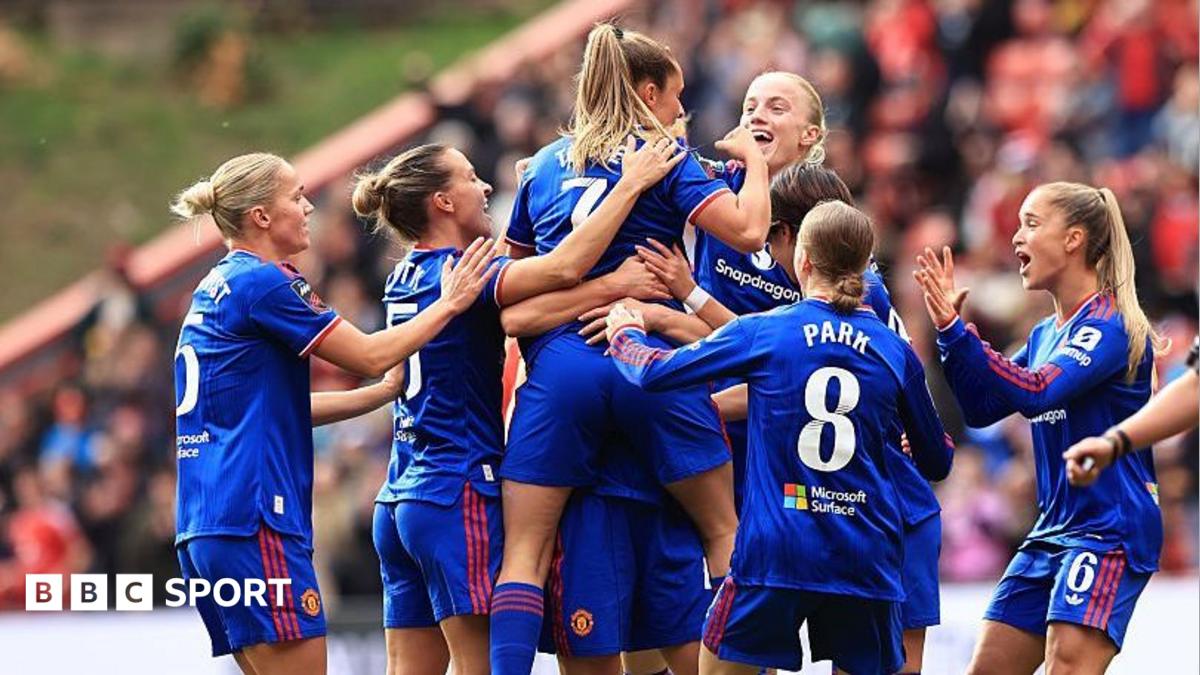
Perhaps the biggest changes at United have been off the pitch.
Olid explained that her side had navigated a “transitional period” and had taken part in big discussions following their 5-0 drubbing by Chelsea.
Players needed to find confidence and Olid admitted the “honest conversations” had to come up with a solution.
“The first two games were good learning for us to connect as a team and for me to know what the players needed from me,” said Olid. “The players also know what I needed. It was about trying to find that balance.
“I feel now we are connected. That doesn’t mean we won’t have more [of those] less good days, but I think we have that understanding of each other.”
Their form at the start of the season impacted individuals with vice-captain Ella Toone missing out on England selection for the first time under Sarina Wiegman.
She responded by scoring in their 3-1 win at Charlton on Sunday, while summer signing Andrea Medina has grown to become a crucial member of the squad.
The international break proved to be a valuable time for Olid to readjust to her new role, reflect on what needed to change and to spend time on the training pitch.
England defender and United captain Maya le Tissier was among those to return with renewed energy having impressed for her country during the break.
The backroom staff positions were also confirmed and Olid has been able to build a group she hopes can lead United to success going forward.
Fellow Spaniard Jose Herrera joined as assistant coach, alongside Gavin Beith, who worked with Olid at former club Hearts.
Speaking about the international break, Olid said: “I had time to re-organise everything, the roles for the new staff and how we are going to work together.
“This break, for me, was amazing. It was like a new start. It was about keeping the good energy from the last matches but then having a new start.”
Now, having been on a winning run, Olid hopes the proposition of a Manchester derby on Sunday will prove to be added motivation for her players.
“I always think that before big games, you want to give confidence to the players and at the same time, you try to motivate them with the opposition,” she told BBC.
“It’s a derby. I think the players are always motivated, but against City, there has to be something else, no?”
Real Madrid beat Sevilla 4-1 a day after Barcelona thrashed Real Betis 5-2, as the Spanish giants prepare for El Clasico.
Published On 19 Oct 202619 Oct 2026
Kylian Mbappe scored twice as Real Madrid closed the gap on La Liga leaders Barcelona to six points with a 4-1 win over Sevilla at the Santiago Bernabeu, a week before the rivals meet.
Despite the absence of suspended Vinicius Jr, Real produced the fluid attacking football the team had been lacking of late, with Arda Guler again orchestrating their best work on Sunday.
After a stale opening, the Turkish international sparked the match into life.
Sevilla appealed for a red card following an incident involving Guler and Peque Fernandez, but Guler responded minutes later by collecting Yan Diomande’s pass and arrowing a shot into the top corner.
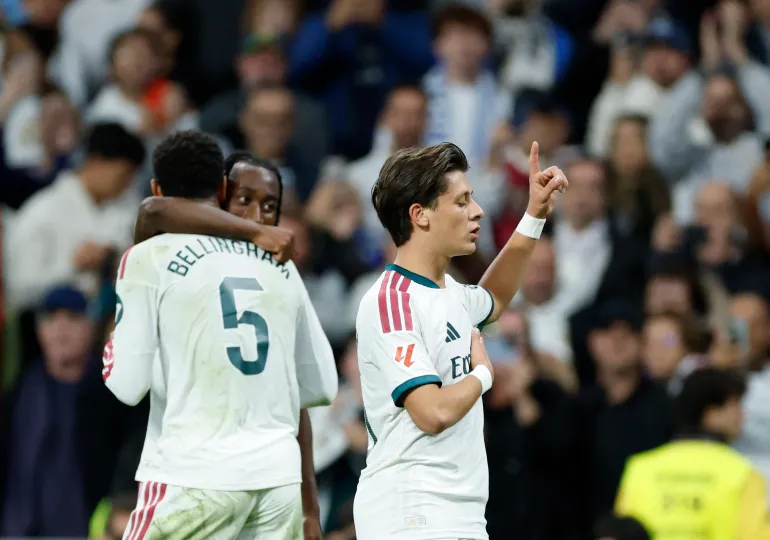
Arda Guler scored his second goal of the La Liga season for Real Madrid [Oscar Del Pozo/AFP]
Mbappe scored an equally impressive second in the 37th minute, turning brilliantly to burst through on goal before calmly beating Odysseas Vlachodimos.
Fede Valverde, restored to right back by coach Jose Mourinho, made a crucial block to deny Felix Correia just before the hour as Sevilla threatened to work their way back into the contest.
Diomande then exploited the space created by Sevilla’s more adventurous approach, evading his marker before sending Mbappe in behind the defence. Andres Castrin brought down the French forward, who got to his feet to convert the resulting penalty and effectively settle the contest.
Substitute Manu Bueno reduced Sevilla’s arrears with a composed finish 10 minutes from time after Mbappe cheaply surrendered possession deep inside his own half.
Diomande restored Real’s three-goal advantage two minutes later, capping a fine display with a thunderous strike.
Eder Militao received a warm ovation when he came on in the 85th minute for his first appearance since undergoing hamstring surgery in April.
Mourinho will take encouragement from one of the most complete performances of his second spell at Real as they prepare for next Sunday’s pivotal meeting with Barcelona.
Real, who have won three straight games in all competitions following the international break, climbed to third on 21 points, one behind Atletico Madrid, while Sevilla are sixth on 14.
Lamine Yamal has begun the season in superb form for Barcelona [Jorge Guerrero/AFP]
Earlier on Saturday, Barcelona beat Real Betis 5-2 to make it nine wins from nine and stretch their blistering league tally to 39 goals.
Lamine Yamal lit the fuse with a dazzling opener before Rodri, Gabriel Jesus, Eric Garcia and substitute Dani Olmo joined the party, while Valentin Gomez and Ez Abde replied for Betis, who played much of the second half with 10 men after Facundo Bernal was sent off for head-butting Lamine.
Barca moved to 27 points, five above Atletico, who won 1-0 at Espanyol, while third-placed Betis have 19 and Real Madrid sit fourth on 18 before welcoming Sevilla on Sunday.
Elsewhere, Osasuna withstood second-half pressure from Racing Santander to win 2-0 in Jagoba Arrasate’s first game back as manager.
Two flying saves from Ionut Radu denied Alaves a point in a 2-1 defeat to Celta Vigo, while Real Sociedad won 5-2 at Malaga.
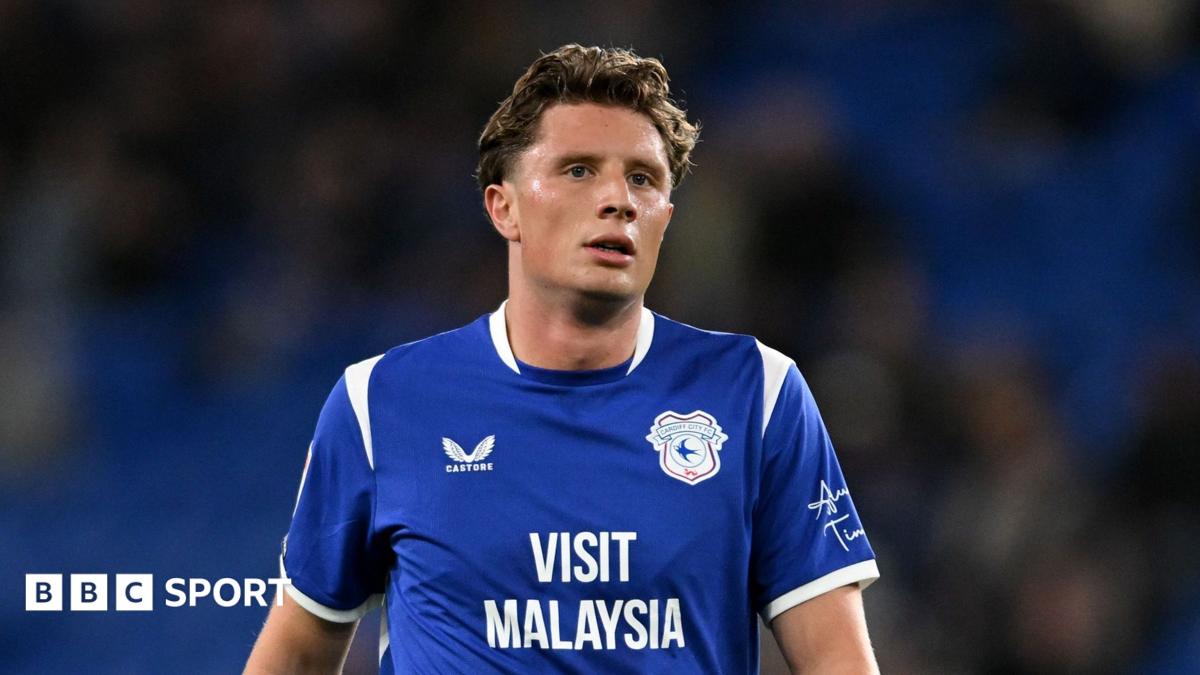
Fish was thrust into the action for his first minutes of the season against the Hornets after Dylan Lawlor went down clutching at his hamstring.
Wales international Lawlor had only just returned from his own injury, and was making his second start of the campaign before being forced off after 29 minutes.
Fish has been recovering from hernia surgery, and feels he has more to go before declaring himself fully fit, although he is in a much better place than he was.
“It’s never nice to get injured, especially as we came back for pre-season. In effect, I’ve not really had a pre-season. I’m almost playing catch-up at the minute,” he said.
“I feel like I’ve got a long way to go, but it was nice to get out there on Tuesday night and get some minutes into my legs.
“My injury, you can’t help that. It is what it is. I got over it, and I feel like I’m in a good place now, and I’m ready to help the team.”
Cardiff established a 5-0 lead with five minutes of Tuesday’s game remaining – only to concede a late Watford consolation shortly after.
“I was disappointed,” admitted Fish.
“At that stage in the game, of course, we could have done better. We were all hoping for the clean sheet, but it was nice to get three points.”
Cardiff are yet to keep a clean sheet since winning promotion back to the Championship and face a tough challenge when they head to second-place Middlesbrough on Saturday, October 17 (12:30 BST).
Like Cardiff, Kim Hellberg’s side rank among the best performers for shots on goal and touches in the opposition box.
After a trip to Teesside, the Bluebirds face further tests against Birmingham and relegated trio Wolves, West Ham and Burnley.
Fish is not looking too far ahead. Instead, he wants his side to lay down a marker by becoming the first away side to win at the Riverside this season.
“The games we have got coming up are tough. Every game of football that you play in this league is tough. We will just take it game by game,” he said.
“[Watford] was a good start, and hopefully we can pick up another win in Middlesbrough on Saturday.”
Heavyweights England play away to Croatia, with captain Harry Kane going up against veteran Luka Modric.
Who: Croatia vs England What: UEFA Nations League 2026-27, Group A3 match Where: Rujevica Stadium, Rijeka, Croatia When: Saturday, October 3, at 6pm local time (16:00 GMT) Howto follow: Al Jazeera Sport will bring you all the build-up and live updates from 13:00 GMT
Action in the Nations League continues this weekend with a matchday three tie between Croatia and England.
Recommended Stories
list of 4 itemsend of list
With a win and a defeat each, Croatia and England have both made a mixed start to this year’s competition.
Drawn in a group alongside the reigning world champions Spain and minnows Czechia, Croatia and England find themselves in an interesting yet challenging pool.
Captain Harry Kane has led from the front for the Three Lions, excelling in front of goal alongside winger Anthony Gordon, while Luka Modric continues to defy age, still playing a vital role in Croatia’s midfield even at 41.
Al Jazeera breaks down everything ahead of Croatia vs England:
What is the UEFA Nations League?
The UEFA Nations League was founded in 2018 to reduce the number of meaningless friendlies and give nations competitive matches against top-ranked teams.
In this competition, countries from across Europe participate in a league structure which features promotion and relegation.
How have Croatia and England played in the Nations League?
Both Croatia and England have won once and lost once.
Croatia started their Nations League campaign with a 2-1 win over Czechia in Prague before losing 4-1 to world champions Spain in Seville.
England, on the other hand, fell 3-2 to Spain in their campaign opener in London before beating a 10-man Czechia side 2-0 in Prague.
When did Croatia and England last meet?
They last met at the 2026 FIFA World Cup.
England beat Croatia 4-2 in a World Cup group game on June 17 in Arlington, Texas. Captain Harry Kane scored a brace, while Marcus Rashford and Jude Bellingham scored a goal apiece.
Croatia vs England: Head-to-head
Matches: 12
Croatia wins: 3
England wins: 7
Draws: 2
Croatia vs England: Form guide
(Last five games, latest results first)
Croatia: L-W-L-W-W
England: W-L-W-L-W
Who are the top players to watch?
Luka Modric and Ivan Perisic (Croatia): The evergreen Modric, very much the heartbeat of the Croatian midfield even at 41 years old, scored the opening goal in their away win in Czechia. Time and again, the captain has pulled the strings in the middle of the park, proving age is just a number. His fellow experienced teammate, Perisic, is also chipping in style, bagging back-to-back assists.
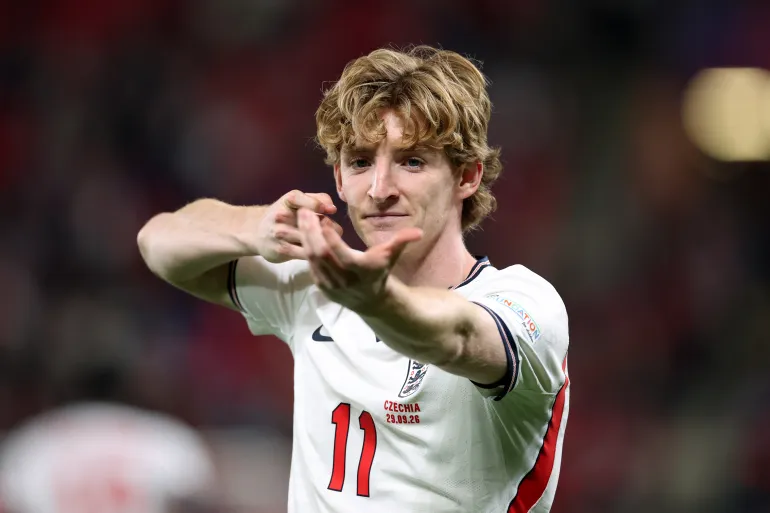
England international Anthony Gordon has scored in back-to-back games [Justin Setterfield/Getty Images]
Harry Kane and Anthony Gordon (England): The script for England has looked the same in the last two games: Gordon opens the scoring, and Kane follows suit. While that wasn’t enough to beat the mighty Spain, it did the job against Czechia. Can this dynamic duo strike again? The numbers swing in their favour – Gordon has five assists already for Barcelona this season, while Kane has scored six times for Bayern Munich.
Team news and predicted lineups
Croatia
Centre-back Martin Erlic is out injured until mid-October, and right-back Josip Juranovic is sidelined with illness.
Probable Croatia XI: Dominik Livakovic; Josip Stanisic, Luka Vuskovic, Josko Gvardiol, Ivan Perisic; Luka Modric, Mateo Kovacic; Luka Sucic, Petar Sucic, Franjo Ivanovic; Dion Beljo
England
England are without left-back Nico O’Reilly, who withdrew from the squad with injury.
Probable England XI: James Trafford; Trent Alexander-Arnold, Trevoh Chalobah, Marc Guehi, Lewis Hall; Elliot Anderson, Miles Lewis-Skelly; Bukayo Saka, Morgan Rogers, Anthony Gordon; Harry Kane
Croatia vs England: TV channel, livestreaming
Croatia: gol
United Kingdom: ITV1
United States: FOX Sports, FuboTV, ViX
India: Sony Sports Network
Middle East and North Africa: beIN SPORTS
South Africa: DStv Stream
You can find your regional broadcaster on UEFA’s official broadcaster listing.
Who: France vs Italy What: UEFA Nations League 2026-27, Group A1 match Where: Stade de France, Saint-Denis, France When: Friday, October 2, at 8:45pm local time (18:45 GMT) How to follow: Al Jazeera Sport will bring you all the build-up and live updates from 15:45 GMT.
It’s time for Zinedine Zidane’s homecoming.
Recommended Stories
list of 4 itemsend of list
Two-time world champions France face neighbours Italy in Friday’s Nations League match, with Zidane taking charge for the first time on home soil.
Appointed in late July as successor to Didier Deschamps, ex-captain Zidane has guided France to back-to-back away wins. Now he has the chance to complete a hat-trick of victories in front of Les Bleus faithful.
Despite losing captain Kylian Mbappe to injury, France have maintained their winning start, all thanks to their squad depth and talent across positions.
Like France, four-time World Cup winners Italy are also managed by a former player – Roberto Mancini – who is back in the job for the second time. Mancini’s first game back in charge ended in Roman jeers, but the Azzurri responded in style with an emphatic win in their second game.
Friday’s match is expected to be played in front of what will be a sell-out crowd of close to 80,000 fans at the national stadium north of Paris.
So, can Italy build on their dazzling display or will France give Zidane more reasons to rejoice?
Al Jazeera breaks down everything in this match preview:
What is the UEFA Nations League?
The UEFA Nations League was founded in 2018 to reduce the number of meaningless friendlies and give nations competitive matches against top-ranked teams.
In this competition, countries from across Europe participate in a league structure which features promotion and relegation.
How have France and Italy played in the Nations League?
France are on top of this group with six points after identical 1-0 wins over Turkiye and Belgium.
Italy, on the other hand, are second-to-last with three points after losing 2-0 to Belgium and thrashing Turkiye 4-1.
When did France and Italy last meet?
They last met in a Nations League group match in November 2024.
France defeated Italy 3-1 in Milan then, with a double from Adrien Rabiot and a Guglielmo Vicario own goal. Andrea Cambiaso netted the consolation goal for the Italians.
France vs Italy: Head-to-head
Matches: 41
France wins: 12
Italy wins: 20
Draws: 9
France vs Italy: Form guide
(Last five games, latest results first)
France: W-W-L-L-W
Italy: W-L-W-W-D
Who are the top players to watch?
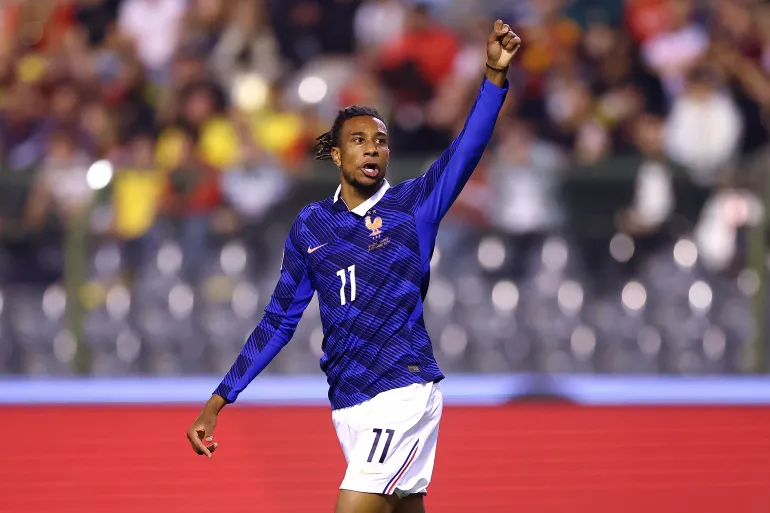
Michael Olise and Desire Doue (France): Olise’s outrageous finish in Monday’s Belgium game had Zidane going berserk on the sideline. Such is his talent. He has been involved in both goals France scored in this year’s Nations League and is also enjoying a flying start at Bayern Munich this term with eight goals and four assists. Doue, 21, is equally impressive – he assisted Olise in the last game, earning player of the match.
Michael Olise of France celebrates scoring against Belgium in the match in Brussels on Monday [Dean Mouhtaropoulos/Getty Images]
Francesco Pio Esposito and Davide Frattesi (Italy): Pio Esposito not only scored a goal in the last game but also celebrated a sweet bit of history – he and his older brother Sebastiano played against Turkiye, marking the first time two brothers started for Italy in more than a century. Inter Milan striker Pio already has five goals in 10 Azzurri appearances. Italian fans should also watch out for Frattesi, another scorer from the last game who has also netted three times for Lazio in this year’s Serie A.
What have the coaches said?
Zinedine Zidane (France): “It is going to be really emotional,” said Zidane, whose last appearance at the Stade de France came as a player in a friendly against Mexico in 2006.
Roberto Mancini (Italy): “Facing Zidane will be a pleasure, but this isn’t a duel between us,” assured Mancini in his press conference.
“It is going to be a great game between France and Italy, teams who are still trying to figure things out. Whatever happens, I feel that this match will be very useful for the process.”
Team news and predicted line-ups
France
Mbappe is the biggest name missing from the France squad. He picked up a knee injury after scoring the winning goal against Turkiye and has since been sidelined for two weeks.
Elsewhere, central midfielder Warren Zaire-Emery is out with a thigh injury, and Matteo Guendouzi remains suspended.
Probable France XI: Mike Maignan; Jules Kounde, Jeremy Jacquet, Maxence Lacroix, Adrien Truffert; Rayan Cherki, Manu Kone, Adrien Rabiot; Desire Doue, Ousmane Dembele, Bradley Barcola
Michael Kayode (right) of Italy celebrates scoring his team’s third goal with teammate Sandro Tonali during last week’s game against Turkiye in Bursa [Ahmad Mora/Getty Images]
Italy
Italy have a fully fit squad.
Probable Italy XI: Gianluigi Donnarumma; Michael Kayode, Giorgio Scalvini, Alessandro Bastoni, Matteo Ruggeri; Sandro Tonali; Davide Frattesi, Nicolo Fagioli; Giacomo Raspadori, Francesco Pio Esposito, Sebastiano Esposito
France vs Italy: TV channel, livestreaming
France: la chaine L’Équipe, TF1+
Italy: RAI PLAY, Mediaset, Sky Italia
United Kingdom: Prime Video UK
United States: FOX Sports, FuboTV, ViX
India: Sony Sports Network
Middle East and North Africa: beIN SPORTS
South Africa: DStv Stream
You can find your regional broadcaster on UEFA’s official broadcaster listing.
Who: Norway vs Portugal What: UEFA Nations League 2026-2027, Group A4 match Where: Ullevaal Stadion in Oslo, Norway When: Sunday at 7:45pm (18:45 GMT) How to follow: Al Jazeera Sport will bring you all the build-up and live updates from 15:45 GMT.
Record two-time UEFA Nations League champions Portugal continue their title defence on matchday two with a trip to Oslo against an exciting Norway side.
Spearheaded by Erling Haaland, arguably one of Europe’s most dangerous strikers, and captained by midfield maestro Martin Odegaard, Norway made a winning start too, beating their Scandinavian rivals Denmark 3-2 in a thrilling opener.
Frustrated after a string of missed chances in the first game, Portugal’s talisman Cristiano Ronaldo will hope to rediscover his form as the team embraces a new chapter under coach Jorge Jesus, whose first game in charge was on Thursday against Wales.
What is the UEFA Nations League?
The UEFA Nations League was founded in 2018 to reduce the number of meaningless friendlies and give nations competitive matches against equally ranked teams.
In this competition, countries from across Europe participate in a league structure that features promotion and relegation.
When did Norway and Portugal last meet?
The teams last met in a 2016 international friendly in Porto when hosts Portugal defeated Norway 3-0.
Norway vs Portugal: Head-to-head
Matches: 11
Norway’s wins: 1
Portugal’s wins: 8
Draws: 2
Norway vs Portugal: Form guide
(Last five games, latest results first)
Norway: W-L-W-W-L
Portugal: W-L-W-D-W
Who are the top players to watch?
Haaland and Oscar Bobb (Norway): A double from Haaland and another goal from Bobb set Norway on course for a winning start, and the attacking pair should be in the limelight in front of their home crowd this weekend. Manchester City’s Haaland, especially, has been in top form this term with an incredible seven goals in as many games across all competitions.
Ronaldo and Joao Felix (Portugal): Portugal’s striking pair of Ronaldo and Felix ought to be careful in the final third this time out after Felix’s lone strike in the opening win in Lisbon. Ronaldo had a goal ruled out and was among the players who missed a flurry of chances as Portugal registered a whopping 23 total shots but with only five on target, of which just one hit the back of the net.
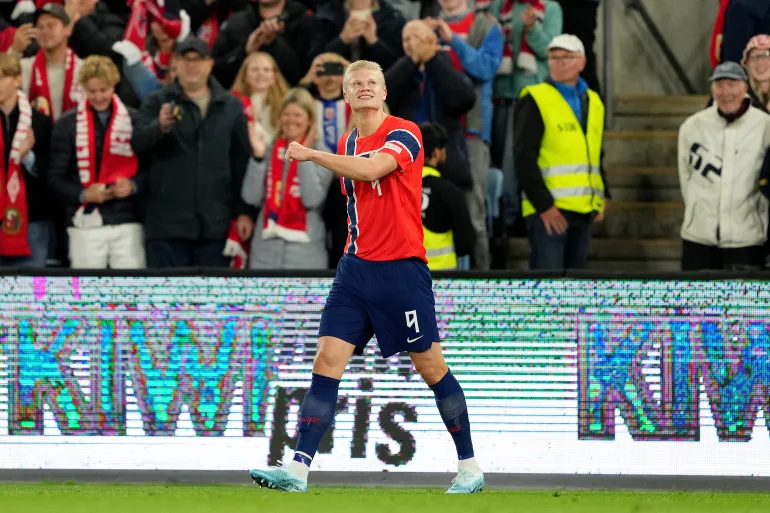
On average, Erling Haaland scores more than one goal a game for Norway [File: Marius Nordnes/Nordnes Foto via Getty Images]
Will Haaland, Ronaldo and Bruno Fernandes play?
Both forwards are fit to play, but Portugal will miss the services of their talismanic midfielder Bruno Fernandes, who is injured.
Fernandes has played in all seven of Manchester United’s matches this season and featured from the start for Portugal against Wales before being withdrawn in the 90th minute.
Jesus said he doesn’t want to “risk” the player against Norway.
“Against Wales, we went in with practically everyone physically available and came out with a complicated problem with Bruno Fernandes,” the coach said.
“He’s coming off an injury at United, and he told me he’s been playing with that pain for the last three games, which is hindering him.
“It was one of the factors that prevented Bruno from playing at his best against Wales. I’ve already spoken to him, and I prefer not to risk it in this game, so he’s fully fit for the Denmark match.”
Haaland: The King of the North
Haaland’s double against Denmark on Thursday marked another milestone in the 26-year-old striker’s enviable career. He is now the highest-scoring Nordic man in international football history, surpassing Sweden’s Zlatan Ibrahimovic.
Haaland’s goal tally for Norway stands at 64 goals compared with Ibrahimovic’s 62. Incredibly, Haaland has shattered that record in 56 appearances – less than half of the 122 matches Ibrahimovic needed.
“It is not possible to explain nor is it possible to learn. He is born with it. It is instinct,” Norway manager Stale Solbakken said about Haaland.
Having made his senior debut in 2019, Haaland boasts a record of scoring more than one goal per game for Norway.
“It’s madness,” midfielder Sander Berge said about Haaland’s talent. “It’s everyday business that Haaland scores goals, so it’s reasonable that he is up there, but it’s powerful.”
What have the coaches said?
Jesus: “Norway are one of the strongest teams in Europe. They have players we know like Haaland and Odegaard who play at a very high level in England. They will create more goalscoring opportunities against us than Wales, and I hope we have the defensive capacity.
“There’s not much to improve. We’ll evolve the game we’ve already played, but I trust that the team will respond defensively and will be more creative offensively.”
Solbakken: “They changed the coach, and if you look at what he did at his previous clubs and the football they played, the way they played against Wales was a little different to what it was with [Roberto] Martinez. There were players in other positions, and we took that into account in our game plan. Obviously, they have good players all over the field. We expect a close and balanced game. It’s our home game, so we’ll try to stop their biggest assets, but it’s also important for us to play our game and be loyal to the way we’ve been playing in recent years.”
Have Haaland and Ronaldo ever played each other?
No, the 26-year-old and 41-year-old greats have never crossed paths. Norway and Portugal have not played each other frequently either.