Wood’s spot-kick, smashed high beyond Emi Martinez, was his 200th career goal and gives Forest something to defend at Villa Park next week.
The New Zealand international only returned this month, having been sidelined since October with his knee issue.
He missed the entirety of Sean Dyche’s reign, having surgery in December, but started the quarter-final first-leg draw in Porto three weeks ago.
Lucas Digne’s baffling decision to raise his arms and handle the ball as Omari Hutchinson tried to keep it in play gave Wood his chance with 19 minutes left.
There was an audible cheer when Wood stepped up to take the penalty – Morgan Gibbs-White having missed from the spot against Strum Graz and Braga this season.
There was a sense of expectation, which is only fair as Wood has not missed a penalty in 10 years – since failing to score against Hull for Leeds in April 2016.
He has now scored 28 successive spot-kicks.
“That’s what I have to do and that’s what I try to do. It’s the job, the responsibility that my team gives me,” he told TNT.
“It’s cup competitions. They come down to small margins at times. Both teams played very well. But it’s small moments that can potentially change games. Thankfully it went in our favour tonight and hopefully again next week.
“It’s one leg of the tie. It’s nice to have the advantage but going to Villa Park will be a tough game. They’re good at their place. But we’ve done the job here at home and now hopefully we’ll build into next week.”
He scored in last Friday’s 5-0 Premier League win at Sunderland – his first goal since a penalty against Midtjylland in October – and has six goals in 19 games for club and country this season.
Wood, 34, has explained he will have to manage his knee injury for the rest of his life – but after watching so much of Forest’s battle against the Premier League drop from the sidelines, he is just glad to be back in action and scoring.
“That’s all I wanted to do,” he said. “I wanted to get back fit and firing to help my team as best as I can at the end of the season. I knew we had a lot to play for when I was fighting to get fit and it’s showing. It’s some big competitions to be a part of.
“We’re in the crunch end of the season. We need to perform on both parts and we’ll be looking to do that for sure.”
I was on a road trip to visit a friend late in March when my phone started lighting up. The Trump administration had just announced a sweeping reorganization of the U.S. Forest Service. People — among them current and former agency staffers — had thoughts.
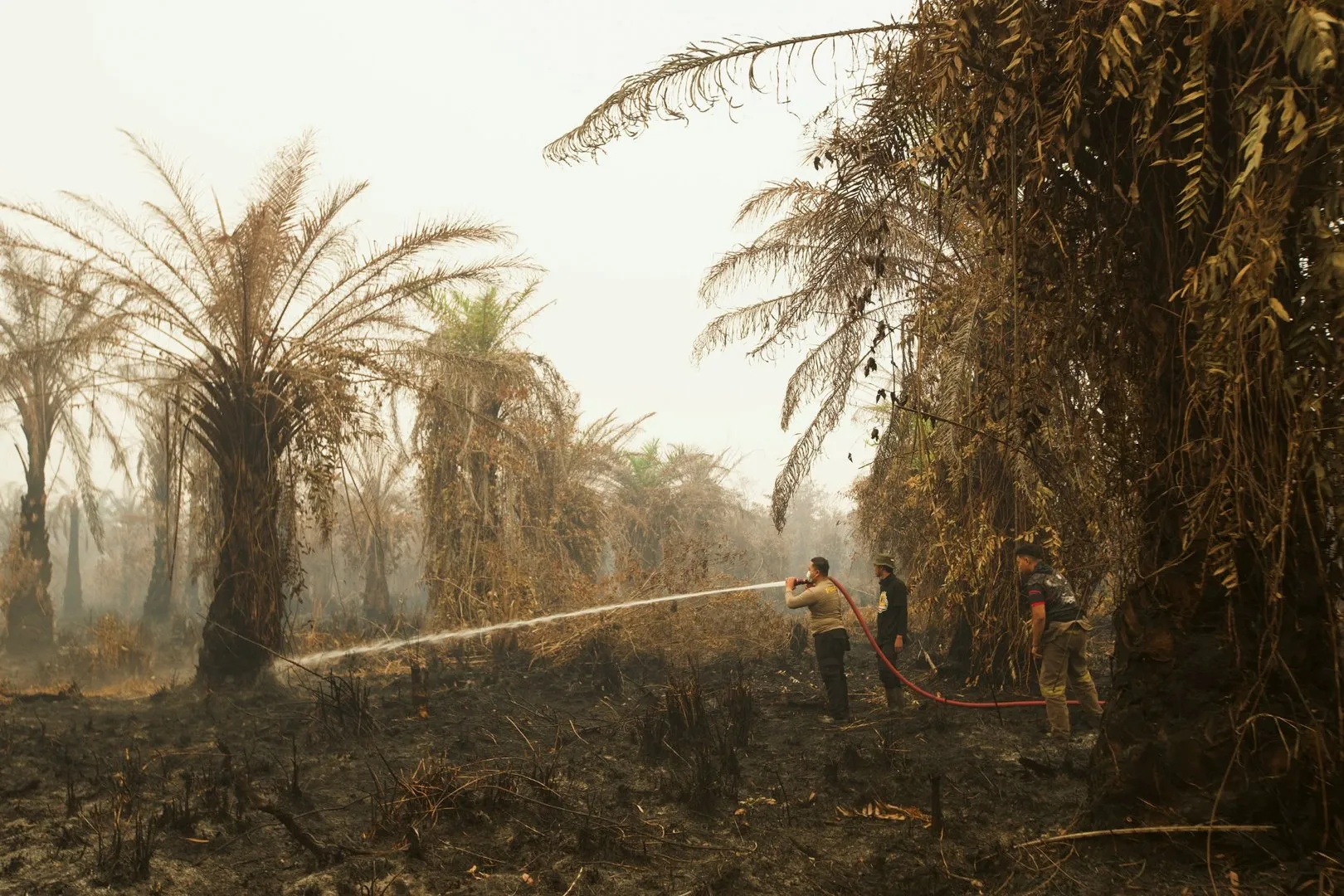
Under the overhaul, the Forest Service will move from a regional to a state-based leadership structure, relocate its headquarters from Washington, D.C., to Salt Lake City and close nearly three-quarters of its research stations. A news release described this as a much-needed shift to streamline the agency and bring its leadership closer to the forests and grasslands it manages, which are primarily west of the Mississippi.
But a common refrain emerged among the sources I spoke with: The Trump administration is trying to break the Forest Service, they claimed, to pave the way for privatizing or even selling off the 193 million acres of land it oversees.
You’re reading Boiling Point
The L.A. Times climate team gets you up to speed on climate change, energy and the environment. Sign up to get it in your inbox every week.
By continuing, you agree to our Terms of Service, which include arbitration and a class action waiver. You agree that we and our third-party vendors may collect and use your information, including through cookies, pixels and similar technologies, for the purposes set forth in our Privacy Policy such as personalizing your experience and ads.
On a recent podcast, Forest Service Chief Tom Schultz said this is false, that the reorganization is about prudently stewarding taxpayer dollars, not dismantling the agency. Trump officials have also said that a public lands sell-off is not part of the president’s agenda.
I figured the controversy would die down a bit by the time I wrote this newsletter. But nearly a month later, it’s still top of mind for most of the former firefighters and recreation and environment advocates I speak with.
“I worry that I sound paranoid like a conspiracy theorist — why would anybody want to break a federal agency?” said Rich Fairbanks, a former Forest Service firefighter and board member of Firefighters United for Safety, Ethics and Ecology. “But that’s exactly what they appear to be trying to do.”
To him, the reorganization smacks of an attempt to sow chaos and drive experienced employees out the door. He described the decision to move the headquarters to Salt Lake City as a red flag. Not only is it likely to prompt more staff departures, he said, but Utah is widely seen as the epicenter of an ongoing movement for states to take over federal public lands. It’s also home to Sen. Mike Lee, who last year proposed selling off millions of acres of public lands.
Max Alonzo, a former Forest Service firefighter who now works as national secretary treasurer for the National Federation of Federal Employees, similarly believes the administration is setting the agency up to fail. He noted the president has also proposed deep cuts that would slash the USFS operations budget by 44% and eliminate funding for forest and rangeland research to refocus the agency’s mission primarily on timber sales.
The administration plans to replace its nine regional offices with 15 state directors. These changes to leadership structure make little sense to Alonzo unless the intention is to lay the groundwork for an eventual state takeover of the agency and its lands, he said.
“They’re putting the chess pieces in place to get rid of our national forests,” he said. He believes the goal is to open the door to more mineral extraction, logging and drilling.
“It’s all about breaking the government so people decide the government doesn’t work,” echoed Hugh Safford, a UC Davis researcher who worked for the Forest Service for over two decades.
Safford is concerned that the move to shutter dozens of research stations will prevent Forest Service scientists from doing on-the-ground work on issues affecting local lands, like seeing how different ecosystems respond to wildfire, pests and drought. This research has driven some of the most important global advancements in fire planning and forest management, he said. He would know: Until 2021, he managed a staff of ecologists that provided science support to Forest Service leadership.
“They are destroying the research part of the agency,” he said. “These plans are so draconian and so depressing my hair stands up when I even read about them.”
Dave Calkin worked for 23 years at the Forest Service, overseeing a team of scientists that researched wildfire management. He took an early retirement offer last April, just after the agency terminated thousands of probationary employees, including a young researcher in his office.
“The more you can demonstrate government isn’t working, the more you can argue to privatize and sell off public lands,” he said. “And that’s clearly one of the intentions of everything they’re doing.”
More recent land news
Although administration officials would later distance themselves from the effort, the Interior Department helped craft talking points that Sen. Lee used to pitch his controversial proposal to sell off federal public land last summer, Chris D’Angelo of Public Domain reports.
Trump has withdrawn hospitality executive Scott Socha as his nominee to lead the National Park Service, reports Jake Spring of the Washington Post. That comes as many parks face their peak seasons with a dramatically reduced staff and the agency braces for more potential cuts, my colleague Justine McDaniel writes.
It’s not just the Park Service: The president’s budget proposal also seeks to decrease staff at the Bureau of Land Management and eliminate its wilderness management funding in favor of focusing on energy production, reports Christine Peterson of Outdoor Life.
The Trump administration is again planning border wall-related construction inside Big Bend National Park, weeks after U.S. Customs and Border Protection backed away from such plans amid bipartisan backlash, according to Travis Bubenik of Marfa Public Radio, who cited an online map showing the planned construction.
A day after Bubenik’s report, the border wall map disappeared from the Customs and Border Protection website, leaving the public with no way to know where and when construction on the wall will take place, writes Mary Andino of Gear Junkie.
In yet another escalation of President Trump’s efforts to obstruct clean energy projects in favor of fossil fuels, the administration said it will pay two energy companies to abandon their offshore wind projects in federal waters — including one off Morro Bay, according to The Times’ Hayley Smith.
This is the latest edition of Boiling Point, a newsletter about climate change and the environment in the American West. Sign up here to get it in your inbox. And listen to our Boiling Point podcast here.
While Nottingham Forest struck the first blow of the weekend on Friday, Tottenham and West Ham – unusually – both play at the same time on Saturday.
The Hammers host Everton and former manager David Moyes, with Spurs visiting already relegated Wolves.
Tottenham boss De Zerbi, whose side conceded a last-minute equaliser to draw 2-2 with Brighton in their previous fixture, said “a win can change this part of the season”.
“We are suffering, they are suffering because it is not easy to play in Tottenham in this condition of the table, but I said they have to be stronger,” he added.
“We have to live every part of the day waiting for a win and preparing for a win.”
Tottenham and West Ham have to contend with similar run-ins, with Spurs arguably facing the slightly easier of the two. The average position of the teams they still have to play is 11th, while for the Hammers it is 10th.
What West Ham do have which Tottenham do not, however, is some semblance of form.
Nuno’s team have won two and lost just one of their past five matches. Spurs have not won since last year.
“The players are improving their levels and the standards,” said Nuno. “We have been solid in defence, good in attack… sometimes not so good. Finding that balance in the remaining matches is going to be crucial for us.”
Deep in a medieval hunting forest, amid 6,500 acres of heathland, a wooden bridge spans a tributary of the River Medway. Every single day, no matter the weather, people flock to stand on its slats and cheer on sticks as they float downstream.
I know this because on a frosty but sunny morning, (“a very long time ago now, about last Friday”, as children’s author AA Milne might have said), I stood with two such adults jumping up and down with delight as my little piece of oak stormed ahead and won the race.
The game is Pooh Sticks, originally described by Milne in Winnie-the-Pooh, which was published in 1926. It was inspired by the game he and his son, Christopher (Robin), would play on Posingford Bridge in Ashdown Forest (AKA the Hundred Acre Wood) in East Sussex. Just 30 miles south of London, this sprawling open heathland lies within the High Weald Area of Outstanding Natural Beauty.
To mark the 100th anniversary of the book, a programme of free cultural events is planned for this summer in the forest and throughout the county. Highlights include a series of interactive performances by “the Curious Adventurer”, a puppet brought to life by 10 puppeteers. Five new walks themed around different species are launching too, encouraging people to visit more of the forest.
Winnie the Pooh’s House. Photograph: Mark Phillips/Alamy
I joined ranger Beth Morgan to explore the real places inextricably linked to the make-believe world where Christopher Robin once played. The bridge is a short walk from the 16th-century farmhouse known as Cotchford Farm where Milne once lived (now an Airbnb), and easily accessed from the public car park off Chuck Hatch Road. “That,” Beth said as we passed a small red wooden door, tucked into the lower roots of a tall, moss-covered birch tree, “is Piglet’s house; Pooh-lovers have added them along the path.” I felt as if I was walking into a storybook.
For fans of the book – and later Disney cartoons – the easy-to-follow 2.5-mile (4km) stroll to Pooh Sticks Bridge is the most popular. Just beside the bridge is Pooh’s postbox, which usually contains offerings of honey that visitors leave for the sweet-toothed bear.
The way Milne captured the magic of this place has been key to helping preserve it. “The low heath habitat we have here is rarer than tropical rainforest,” said Beth. “And people’s interest in it – thanks to the Pooh connection – is what has brought in funding to help conserve it.”
Until Brexit, the forest received about £500,000 a year from EU grants; now it is constantly short of funds. But the hope is that the anniversary plans and new walking trails will help bring more people and donations to the area.
One surprising thing about the forest is that back in Milne’s day just 10% of this open heathland would have been woodland. Now it’s 40%, meaning that trees and gorse are actually encroaching on the ancient landscape, which presents the biggest challenge and cost.
A 20-strong herd of free-roaming ponies, along with Galloway cattle and Hebridean sheep, help manage it. As I watched them meandering slowly through the bracken munching on gorse and saplings, I couldn’t help but picture Eeyore, the grumpy donkey from Winnie-the-Pooh.
AA Milne with his son, Christopher Robin. Photograph: Bettmann Archive
Suitably, my next stop, Pooh Corner, a former post office in the village of Hartfield to the north of the forest, was actually visited by the real Eeyore (Christopher’s real-life donkey Jessica). It’s now a cafe, gift shop and museum. “So many people have either grown up watching the movies or reading the books,” said owner Neil Reed as I tucked into a pile of honey-laden treats, “but really the fascinating story is the one where we learn what happened beyond the pages – who the father and son really were.”
His small museum tells that story, through school photos of Milne, newspaper cuttings (including the first Pooh story, which was published in London’s Evening News on Christmas Eve 1925) and even a note from Milne’s former science teacher HG Wells. Also on display are the understated illustrations of EH Shepard and the more gaudy souvenirs made by Disney, who acquired the rights to Pooh back in 1961.
After my deep dive into Pooh history, I checked into Helix, a new cabin from Unplugged and Healf, on the Buckhurst Estate close to the forest. With its own wood-fired sauna and ice bath, and huge picture windows making the surrounding trees part of the bedroom walls, the emphasis is on bringing the outdoors indoors.
The following day I discovered perhaps the most enchanting thing about Ashdown Forest – that the place hasn’t been Disneyfied. The only real mention of Pooh is on the official Long Pooh Walk from Gills Lap, a 2-mile circular (a route map is available from the Ashdown Forest Centre or online for 50p). And even on that route there are no cutesy bear faces, just a sweeping sandy plateau, punctuated by clumps of trees, AKA the Enchanted Place, and clusters of heather.
Helix cabin has its own wood-fired sauna and ice bath. Photograph: Phillip Scott
Over the next couple of hours I took my time, wandering with map in hand, visiting the Gloomy Place – where Eeyore lost his house (and Christopher Milne’s donkey was put out to pasture), the Heffalump Trap (a striking lone pine with views over the Weald), Roo’s Sandy Pit (a white sand quarry) and ending with a pause at the Milne and Shepard Memorial.
Later that afternoon, I walked from my doorstep to Birchden Vineyards a few miles away. I sampled some of the white and sparkling wine varieties the family-run winery is known for, as well as apple juice and raw, unfiltered honey made by bees who feed on the flora of Ashdown Forest. Pooh would have approved.
On my final day, I decided to take a lesson from the bear I’d been following and do nothing at all. I spent the day at my cabin – where you are encouraged to lock up your mobile phone to be properly off-grid. I sat outside and listened to the call of a warbler, the tap-tap-tapping of a woodpecker and, as night fell, the hoot of an owl. I lay in the sauna and watched a family of fallow deer wander by as though I was invisible, and later I shrieked like Tigger as I plunged into an ice bath under a sky filled with stars.
Winnie-the-Pooh once said: “We didn’t realise we were making memories. We just knew we were having fun.” Perhaps, I mused, as the last of the light faded, he wasn’t such a silly bear after all.
The trip was provided by Visit England and Explore Wealden, with accommodation inHelix: The Wellbeing Cabin with Healf provided byUnplugged. Three nights from £660. For more information about Ashdown Forest and the Winnie-the-Pooh celebrations, see ashdownforest.org.
Aston Villa manager Unai Emery says his side are feeling “motivated and excited” at the prospect of qualifying for the Champions League next season, after their 1-1 draw away to Nottingham Forest in the Premier League.
Nottingham Forest manager Vitor Pereira praises Chris Wood’s character and connection with his teammates, after the New Zealand striker returned from a six month injury layoff in Forest’s 1-1 draw with Aston Villa.
Deep in Kielder Forest, on the northern side of the vast Kielder Water stands Silvas Capitalis, a giant, two-storey timber head, one of the most striking of the 20 sculptures tucked between the pines. It’s an eerie sight, almost shocking; its mouth ajar, as if astounded by all it sees. It’s my first visit to Kielder, and my face has been wearing a similar expression since I stepped out of the car at the lakeside trying to take in the scale of the landscapes unfolding around me.
Kielder doesn’t look like England – at least, not the England I know. For a start, it’s vast; 250 sq miles (648 sq km), with 158m trees, mostly sitka spruce conifers planted by hand. And even though it’s a plantation, there’s a wilderness feel that reminds me of Finland or Canada; a great swathe of nature at its most intense. It’s a working forest, involving 500 full-time jobs (not including tourism) and 2026 marks the centenary of the very first plantings, when the UK was in need of timber reserves after the demands of the first world war.
Silvas Capitalis sculpture is one of six shelters on the Lakeside Way around Kielder Water. Photograph: Christopher Thomond/The Guardian
The desolate moorland around Kielder Castle had been identified as a suitable site for a new forest by Roy Robinson, who was instrumental in the creation of the Forestry Commission in 1919. “He was a visionary,” says Alex MacLennan, part of the Kielder team for more than 20 years. “It was hard farming country, but perfect for forestry. Originally, there were eight villages planned, to house the timber workers. But three decades later, when the first trees were ready to be felled, mechanisation and new tools such as chainsaws meant they only needed three.”
All of which means development in the forest is minimal; the main tourist area is at the Kielder Waterside, where 50 unobtrusive lodges are tucked between the trees, some of which were damaged when Storm Arwen roared in five years ago and tore down a million trees across the forest and the wider Northumberland national park. “It’s given a very different feel to the place,” says Gary Storey, general manager of Waterside, “and a chance to replant with different species, native to the UK – silver birch, oak, aspen, wild cherry – something other than the sitka spruce.”
The careful management of Kielder has made it a benchmark for forestry in the UK, not least for the low-impact tourism that has been carefully folded in. Aside from Kielder Waterside, there are a handful of places to stay, including Calvert Kielder, which in addition to offering self-catering lodges, specialises in respite care breaks packed with forest-based, accessible activities. There are also remote spots with facilities where camper vans can park up for £15 a night and a campsite (two-person pitch £20). “We’re not Center Parcs, and we’re never going to be,” says Liz Blair, director of the Kielder Partnership, when we chat over coffee. “But we’re working to make sure it’s accessible and welcoming for everyone, however you want to enjoy it.”
Many people who visit, including me, set off along the Lakeside Way; a 26-mile (42km) route that encircles Kielder Water, linking the sculptural works and immersing walkers and cyclists in the dense forest. When I visit, the silence that hangs between the trees feels almost thick enough to touch; only broken by the occasional rat-a-tat of a woodpecker, calling out for a mate.
But if Kielder is quiet by day, at night it becomes almost unworldly; a pitch-black void, bereft of almost all signs of life, save for the bright stars of England’s first dark sky park (the Northumberland international dark sky park). Driving up to the observatory, I’m glad to have my sister Caroline beside me in the car, keeping up a flow of chatter as the 2-mile off-road route winds further and further into the silent forest.
It’s the Northumberland dark skies festival when we visit, and we settle in for a fascinating (if slightly science-heavy) talk on exoplanets (planets outside our solar system) before braving the bitter cold to walk across to the telescope room. Sadly, it’s cloudy, but it’s still an extraordinary place, staffed with a mix of professional astronomers and passionate volunteers.
Kielder is a place of superlatives; England’s biggest forest, the UK’s largest human-made lake by capacity, the darkest skies – along with quite possibly the most terrifying mountain bike trails in the country. The Deadwater Double Black Downhill opens officially on 1 May, a rock-strewn, ledge-filled, vertiginous route that I wouldn’t want to walk, let alone cycle. It’s one of several new initiatives planned to celebrate the centenary, including a new Room on the Broom trail for kids, based on the book by Julia Donaldson and Axel Scheffler; the Kielder celebration weekend (4-6 Sept); and the reopening of Kielder Castle in the summer after extensive renovations.
The sky at night at Kielder Observatory
The forest may be vast, but it’s just one part of the Northumberland national park; the least populated and least visited of the UK’s 15 national parks. Coming from the built-up south-east, there’s an extraordinary beauty in the stark, untouched landscapes – a stillness, a peace, unmatched by anywhere closer to home. The history is pretty impressive too; we dip into the ruined Roman fortress at Vindolanda, take a windswept walk along Hadrian’s Wall and warm up with a fabulously hearty lunch of Cumberland sausage, mustard-mash and thick onion gravy at the centuries’ old Twice Brewed Inn.
But nothing quite matches my late afternoon judder up to the top of Deadwater Fell in Alex’s Forestry Commission van. Standing at the very peak, 571 metres (1,900ft) above sea level, it feels as if I can see for ever; a 360-degree widescreen vista, from the Cheviot Hills in the north-east to the peaks of the western Lake District, the snow-capped Pentland Hills rising up towards Edinburgh, like great white meringues. It’s genuinely awe-inspiring. I’m just glad I don’t have to mountain-bike back down.
1 of 2 | A long line of visitors waits outside the “Cocoon’s Private Studio” event venue near Ttukseom Station in Seoul on Thursday. Photo by Asia Today
April 3 (Asia Today) — A once-quiet café district near Seoul Forest is rapidly transforming into a retail hotspot, drawing long lines of visitors as fashion platform Musinsa expands its presence in the area.
By late morning Thursday, more than 200 people were lined up along Atelier-gil in Seongdong District, even on a weekday. The crowd gathered for a pop-up event tied to Musinsa’s “Back to Seoul Forest” campaign, where musician Code Kunst drew attention by serving coffee in person.
“Seoul Forest is really popular these days,” one visitor in her 20s said. “I’ve been to Yeonmujang-gil many times, so now I’m coming here instead.”
The campaign invites visitors to explore 24 stores in the area, scanning QR codes to collect stamps. Participants who collect four stamps receive promotional items and can enter prize drawings, encouraging foot traffic throughout the neighborhood.
The initiative is part of Musinsa’s broader “Seoul Forest Project,” launched earlier this year to expand consumer activity beyond the already saturated Yeonmujang-gil in nearby Seongsu. The company aims to connect the two areas into a single retail corridor.
Local businesses say the change is already noticeable. A staff member at a nearby lifestyle store said customer traffic surged so quickly during the event that QR code stations had to be moved outside to manage demand, adding that the area attracts a particularly young customer base compared to other locations.
Until recently, the Seoul Forest area was dominated by cafes and restaurants, with relatively short visitor stays. The district has about 35 beverage shops and 91 dining establishments, and its closure rate last year exceeded the city average.
Musinsa saw this as an opportunity. While Yeonmujang-gil faces high rents and heavy foot traffic, Seoul Forest had lower visitor numbers – about 3,000 people daily, roughly one-quarter of nearby Seongsu’s café street – despite being within a 15- to 20-minute walk.
To reshape the district, Musinsa leased about 20 vacant storefronts last year and subleased them to emerging brands, lowering entry barriers for companies seeking offline expansion.
As a result, designer brands that were previously difficult to find in physical stores are beginning to cluster in the area. Several labels, including General Idea, Lookcast and Have a Whale, have opened locations within the past two months, filling previously empty spaces with new retail content.
Kim Young-min, a director at a women’s fashion brand operating in the area, said high rents in neighborhoods such as Seongsu and Hannam had delayed offline expansion plans. “Musinsa offered space here, which made it easier to open a store,” Kim said.
The layout of Atelier-gil has also contributed to the shift. Unlike the large industrial-style buildings in Seongsu, the area consists mainly of smaller structures, reducing initial investment costs and making it more accessible for emerging designers.
While some vacancies remain, Musinsa plans to attract about 20 brands to the area this year. Upcoming openings include specialty retail concepts focused on hats, footwear, children’s products and beauty.
The company said it aims to strengthen its identity within the broader Seongsu district while redefining Seoul Forest as a destination where visitors can explore, shop and experience a variety of content.
The effort is already reshaping the neighborhood, turning previously quiet streets into a growing hub of fashion and lifestyle activity.
Kelly Cates, Joe Hart and Danny Murphy discuss why Nottingham Forest midfielder Elliot Anderson is “the favourite” to be in the starting XI for England in this summer’s World Cup.
Antonin Kinsky is set to return at Tottenham‘s goalkeeper once first-choice Guglielmo Vicario has hernia surgery following the Premier League game against Nottingham Forest on Sunday.
Spurs interim boss Igor Tudor controversially replaced Kinsky with Vicario in the 17th minute of their Champions League last-16 tie at Atletico Madrid on 10 March – which they lost 5-2 – after he conceded three goals.
The 23-year-old was consoled by several team-mates, including Vicario, as he made his way off the field.
Vicario has been dealing with the hernia problem for several matches but remains in contention to start in the crucial game at home against Forest.
The other option for Tudor is third-choice goalkeeper Brandon Austin, 27, who came through the club’s youth system and has made three senior appearances.
Tottenham said Italy international Vicario will undergo “a minor procedure” next week and hope to have him fit again by April.
The club said the operation had been “timed” for the international break in order to “have as minimal impact as possible”.
“Guglielmo will commence his rehabilitation with our medical staff immediately, and it is hoped that he could return to action within the next month,” added a statement from Spurs.
Kinsky and Austin have both been on the Tottenham bench for their past two games – a 1-1 draw at Liverpool in the Premier League and a 3-2 win over Atletico in the second leg of their Champions League tie.
While the Europa League will continue to offer respite from an otherwise difficult season for Forest, the additional games present challenges.
Forest will take on Porto in the quarter-final on 9 and 16 April, welcome Aston Villa to the City Ground in between the two legs and then host Burnley the following weekend.
Winning games means positive momentum and that can only be a help when it comes to fighting to stay in the league.
But it also means more games and Pereira, who is set to take charge in his first European quarter-final, must find the balance between keeping his side in the top flight and managing the demands of competing in Europe.
“When we win it’s different,” Pereira said.
“The spirit is different, the energy is different and the boys deserve it because they are a fantastic group, very good players and with team spirit, character – we showed everything today.
“I don’t have any doubt that we have the quality and we will compete to achieve our targets.”
Yates added: “That winning feeling is special, you want to keep that momentum going.
“Momentum at this stage of the season is huge. We’re not going to get ahead of ourselves. Recover now, focus on Tottenham now and keep building, keep getting those wins.