foreign

Foreign Office says ‘don’t travel’ to these 55 countries in 2026 for UK holidaymakers

Anyone travelling to these destinations could invalidate their holiday insurance

There are certain spots around the globe that are considered quite risky, and travellers heading there receive guidance on safety precautions they should adopt to avoid mishaps.

However, only 55 locations feature on the ‘do not travel’ list, which has been flagged with a warning by the Foreign Office.

Anyone journeying to these places will be voiding their holiday insurance, meaning if things go pear-shaped, they’ll be left without support. Officials also caution that they could be jeopardising their safety. If you require consular assistance locally, it will likely be difficult to obtain.

For specific countries, the Foreign Office also advises against all but essential travel, implying you should reconsider any holiday plans The Foreign Office cautions: “Get advice and warnings about travel abroad, including entry requirements, safety and security, health risks and legal differences.”

It explained: “No foreign travel can be guaranteed safe. FCDO publishes travel advice to help you decide if it’s safe enough for you to travel to a particular destination. In some instances we also give information about how to reduce the risks you may face there. All environments contain some level of risk and you should consider what precautions you should take.

“You must take personal responsibility for your own travel. Only you can decide whether you should travel to a country or stay there, and what activities to take part in.”

People may face different risks due to their:

  • gender
  • ethnic background
  • sexuality
  • health

The Foreign Office has general guidance for specific types of traveller to help you understand some of these risks.

The FCDO sometimes formally advises British people against ‘all but essential travel’ or ‘all travel’ to a particular country. It said:

“Your travel insurance could be invalidated if you travel against advice from FCDO. We only advise against travel if we think the risk to British nationals is unacceptably high. For example, this could be due to:

  • armed conflict
  • military coups
  • civil unrest
  • disease outbreaks
  • natural disasters

“For terrorist threats, we only advise against travel:

  • in situations of extreme and imminent danger
  • where the threat is sufficiently specific, large-scale or widespread to affect British nationals severely

“We may advise against travel to:

  • a whole country
  • parts of a country

“The ‘Warnings and insurance’ section of each travel advice page lists all the areas where we advise against travel. If you want to know about changes to travel advice for a specific country, you can sign up to receive email alerts about updates.”

FCDO advises against all travel

  1. Afghanistan – “The security situation is volatile”
  2. Belarus – “You face a significant risk of arrest”
  3. Burkina Faso – “Due to the threat of terrorist attacks and terrorist kidnap”
  4. Haiti – “Due to the volatile security situation”
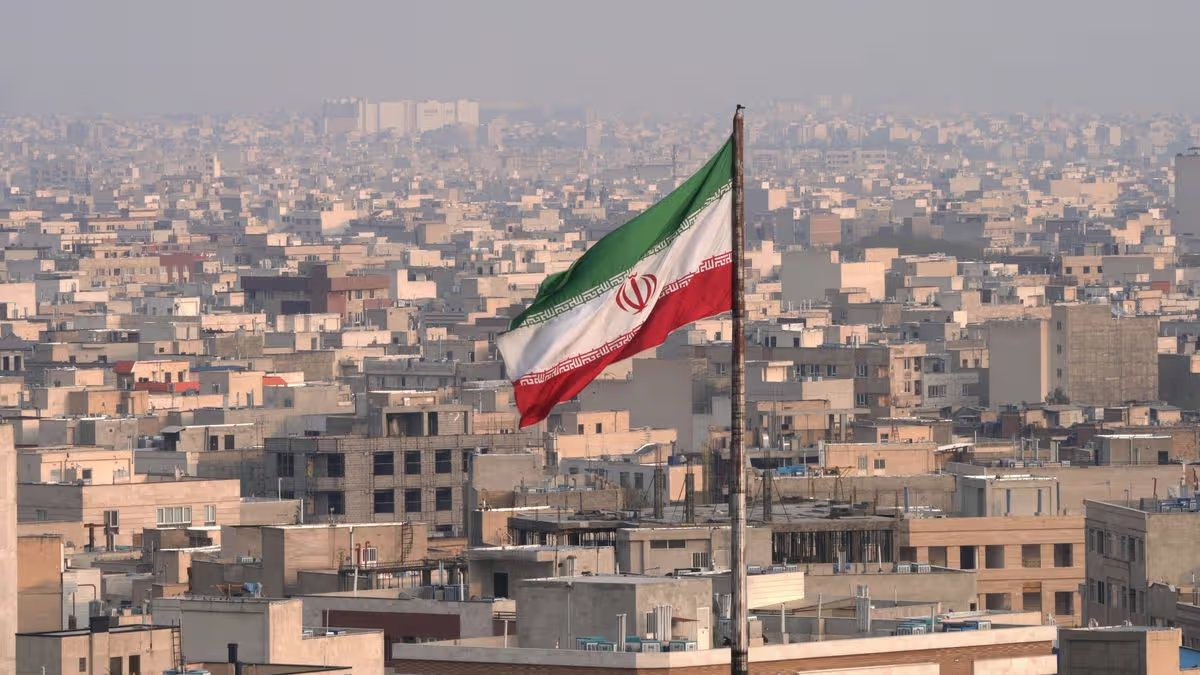
  5. Iran – “British nationals are at significant risk of arrest”
  6. Mali – “Due to unpredictable security conditions”
  7. Niger – “Due to the rise of reported terrorist and criminal kidnappings”
  8. Russia – “Due to the risks and threats from its continuing invasion of Ukraine”
  9. South Sudan – “Due to the risk of armed violence and criminality”
  10. Syria – “Ongoing conflict and unpredictable security conditions”
  11. Yemen – “Unpredictable security conditions”

FCDO advises against all travel to parts

  1. Algeria – all travel to within 30km of Algeria’s borders with Libya, Mauritania, Mali, Niger, Tunisia
  2. Armenia – within 5km of the full eastern border between Armenia and Azerbaijan, the M16/H26 road between the towns of Ijevan and Noyemberyan
  3. Azerbaijan – within 5km of the Azerbaijan-Armenia border
  4. Benin – northern border regions
  5. Burundi – Cibitoke and Bubanza provinces, former Kayanza province, former Bujumbura Rural province and the RN5 road north of Melchior Ndadaye airport
  6. Cambodia – within 50km from the border with Thailand
  7. Cameroon – Bakassi Peninsula, parts of the Far-North Region, North-West Region and South-West Region and within 40km of the Central African Republic, Chad and Nigeria borders
  8. Central African Republic – against all travel except to the capital, Bangui
  9. Chad – Borkou, Ennedi Ouest, Ennedi Est and Tibesti provinces, Kanem Province, including Nokou, Lake Chad region and within 30km of all Chad’s other borders
  10. Congo – within 50km of the Republic of Congo-Central African Republic border in Likouala Region
  11. Côte d’Ivoire – within 40km of borders with Burkina Faso and Mali
  12. Democratic Republic of the Congo – within 50km of the border with the Central African Republic, the province of Kasaï Oriental, the Kwamouth territory of Mai-Ndombe Province and provinces in Eastern DRC
  13. Djibouti – Djibouti-Eritrea border
  14. Egypt – within 20km of the Egypt-Libya border and the North Sinai Governorate
  15. Eritrea – within 25km of Eritrea’s land borders
  16. Ethiopia – international border areas, parts of the Tigray region, Amhara region, Afar region, Gambela region, Oromia region, Somali region, Central, Southern, Sidama and South West regions and Benishangul-Gumuz region
  17. Georgia – South Ossetia and Abkhazia
  18. India – within 10km of the India-Pakistan border and Jammu and Kashmir
  19. Indonesia – Mount Lewotobi Laki-Laki, Mount Sinabung, Mount Marapi, Mount Semeru, Mount Ruang, Mount Ibu
  20. Iraq – advises against all travel to parts of Anbar province, Basra province, Diyala province, Kirkuk province, Ninawa province, Salah al-Din province, Sadr City and within 30km of federal Iraq’s borders with Iran, Syria, Saudi Arabia and Kuwait
  21. Israel – against all travel to Gaza, parts of the West Bank and Northern Israel
  22. Jordan – within 3km of the border with Syria
  23. Kenya – Kenya-Somalia border and northern parts of the east coast
  24. Lebanon – areas in Beirut and Mount Lebanon Governorate, the South and Nabatiyeh Governorates, the Beqaa Governorate, the Baalbek-Hermel Governorate, the Akkar Governorate, the city of Tripoli and Palestinian refugee camps
  25. Libya – advises against all travel to Libya except for the cities of Benghazi and Misrata
  26. Mauritania – Eastern Mauritania and within 25km of the Malian border
  27. Moldova –Transnistria
  28. Mozambique – Cabo Delgado Province
  29. Myanmar (Burma) – Chin State, Kachin State, Kayah State, Kayin State, Mon State, Rakhine State, Sagaing and Magway regions, Tanintharyi Region, Shan State North, North Mandalay Region
  30. Nigeria – Borno State, Yobe State, Adamawa State, Gombe State, Kaduna State, Katsina State, Zamfara State and the riverine areas of Delta, Bayelsa, Rivers, Akwa Ibom and Cross River states
  31. Pakistan – within 10 miles of the border with Afghanistan, areas in Khyber Pakhtunkhwa Province and the Balochistan Province
  32. Philippines – western and central Mindanao and the Sulu archipelago
  33. Saudi Arabia – within 10km of the border with Yemen
  34. Somalia – advises against all travel except the western regions Awdal, Maroodijeh and Sahil
  35. Sudan – against all travel except to the Hala’ib Triangle and the Bir Tawil Trapezoid
  36. Palestine – against all travel to Gaza, parts of The West Bank and Northern Israel
  37. Thailand –parts of the south, near the Thailand-Malaysia border, the Hat Yai to Padang Besar train line and within 50km of the whole border with Cambodia
  38. Togo – within 30km of the border with Burkina Faso
  39. Tunisia – parts of Western Tunisia, including the Tunisia-Algeria border and Southern Tunisia, including the Tunisia-Libya border
  40. Turkey – within 10km of the Turkey-Syria border
  41. Ukraine – all regions of Ukraine with the exception of some western regions
  42. Venezuela – within 80km of the Venezuela-Colombia border, within 40km of the Venezuela-Brazil border, Zulia State
  43. Western Sahara – within 30km of ‘the Berm’ boundary line and areas south and east of the Berm boundary line

FCDO advises against all but essential travel

With regard to the definition of ‘essential travel’, the FCDO says: “Whether travel is essential or not is your own decision. You may have urgent family or business commitments which you need to attend to. Only you can make an informed decision based on your own individual circumstances and the risks.”

  1. North Korea – “The security situation can change quickly with no advance warning”

Source link

Stabilizing Foreign Investment: China’s Dual Strategy Featuring the CIIE and Hainan FTP

The Central Economic Conference meeting in Beijing in December 2025 proposed that “adhering to opening up to the outside world and promoting win-win cooperation in various fields” should be one of the main tasks of China’s economic work in the coming year. In 2025, China issued the “Action Plan for Stabilizing Foreign Investment in 2025,” and simultaneously, the 8th China International Import Expo 2025 was held in Shanghai. It was also agreed that the Hainan Free Trade Port would officially launch island-wide independent customs operations on December 18, 2025. This would bring numerous opportunities and momentum to support China’s continued opening up for global economic development.

 The year 2026 marks the launch of China’s 15th Five-Year Plan. The Central Economic Conference was held in Beijing in December 2025, a significant historical juncture as the 14th Five-Year Plan drew to a close and the 15th began. This held particular significance, as the world looked to China’s economic planning for the coming year for inspiration and opportunities. China’s continued opening up in 2025 represents a vital engine for the global economy, contributing approximately 30% to global growth.

–            The opportunities and momentum generated by these policies are evident in the following areas:

1)       Deepening Institutional Opening through the Hainan Free Trade Port

  The launch of independent customs operations at Hainan Port on December 18, 2025, marked a milestone, transforming the port into a special customs zone governed by high-level international trade regulations.  With China’s ambitious trade facilitation plan, the percentage of duty-free goods in Hainan has risen from 21% to 74%, attracting significant investment. The island has already attracted more than 1.2 million enterprises.

2)       Stabilizing Foreign Investment (2025 Action Plan)

The “2025 Foreign Investment Stabilization Action Plan” aims to boost international investor confidence through practical measures, including opening new sectors by expanding pilot programs in telecommunications, healthcare, and education and supporting manufacturing and services by lifting restrictions on foreign investment across the entire manufacturing sector and encouraging investment in high-tech industries and green development. This has yielded numerous positive results for the Chinese economy, with China registering more than 49,000 new foreign-funded companies in the first half of 2025, representing a year-on-year increase of over 16%.

3)       China International Import Expo (CIIE 2025)

  The eighth edition of the expo in Shanghai solidified China’s position as a global launchpad for new products, achieving record-breaking figures. The expo saw record initial deals worth US$83 billion, a 4.5% increase over the previous year. With broad international participation, more than 4,500 companies from 138 countries participated, showcasing 461 new products and technologies.

4)       The Strategic Direction of the Chinese Economy for 2026 and Beyond

  The Central Economic Work Conference, held in Beijing in December 2025, affirmed that the main task for the coming year, 2026, is to ensure a strong start to the 15th Five-Year Plan (2026-2030) while achieving mutually beneficial cooperation. This will be accomplished by China focusing on aligning its domestic regulations with high-level international economic and trade standards in areas such as government procurement, e-commerce, and finance.  This should coincide with achieving sustainable growth in the Chinese economy, especially given the International Monetary Fund’s upward revision of its growth forecast for China to 5% for 2025, which underscores the resilience of the Chinese economy in the face of global shocks.

  Accordingly, we understand the extent of China’s aspirations to achieve new developmental and economic leaps during 2026, with numerous promising future opportunities available to China. It possesses the capacity to simultaneously improve the quality and scale of development, achieve a strong launch for its 15-year plan, and offer more ambitious investment and development opportunities to the world. 

Source link

Iran’s foreign minister says strikes won’t stop nuclear programme | Israel-Iran conflict

Exclusive: Iran’s foreign minister sits down with Fault Lines to discuss the nuclear standoff and diplomatic deadlock.

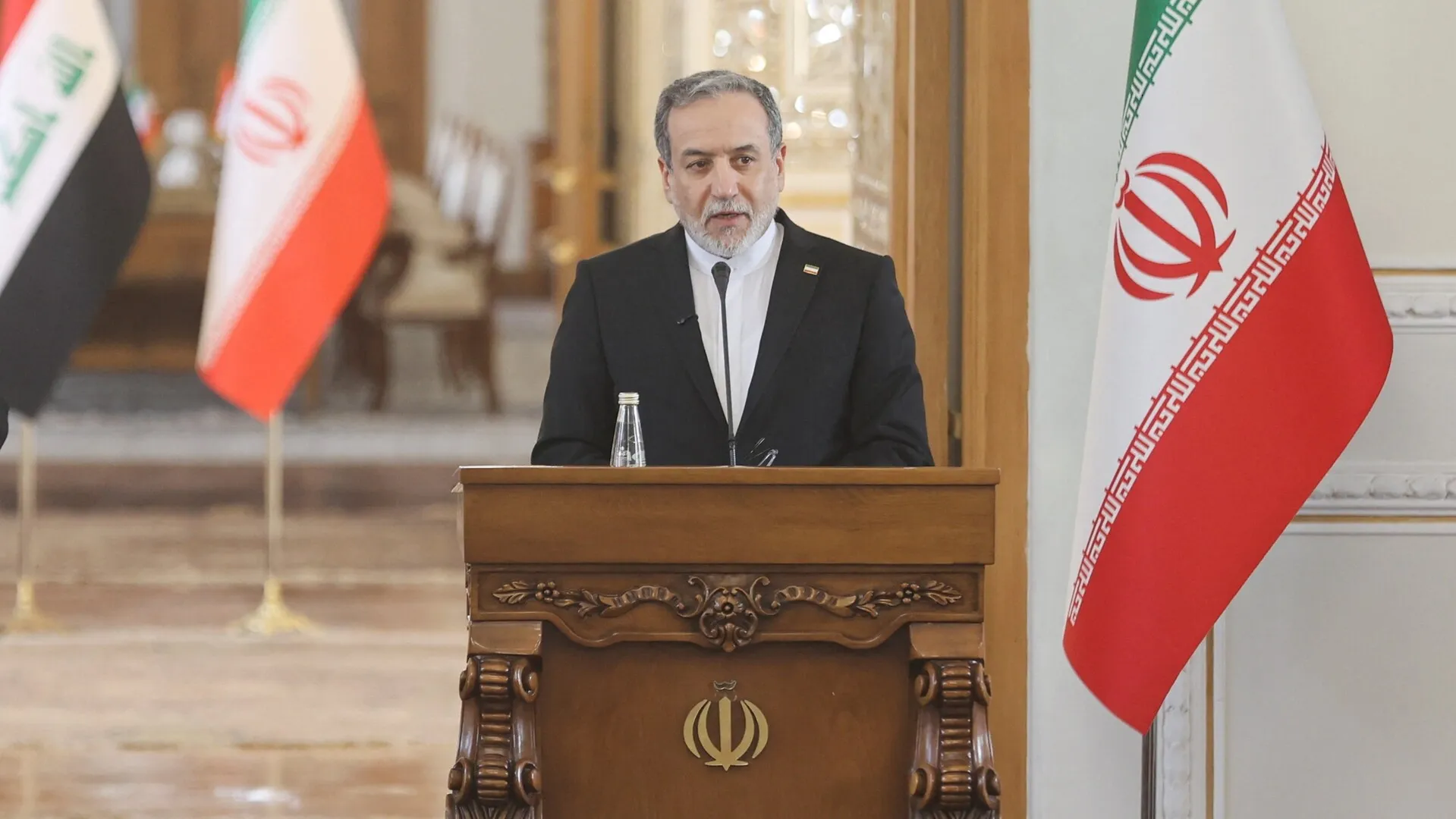
In an exclusive, wide-ranging interview recorded in October with Al Jazeera’s Fault Lines documentary programme, Iranian Foreign Minister Abbas Araghchi tells correspondent Hind Hassan that strikes by Israel and the United States in June caused “serious damage” to Iran’s nuclear facilities but insists its nuclear programme will continue.

“Technology cannot be eliminated by bombing,” he says, arguing that Iran’s scientific knowledge remains intact.

As Iran remains locked in a standoff with the US and refuses to renew negotiations while zero uranium enrichment demands remain in place, Araghchi says European snapback sanctions have undermined future cooperation with the United Nations nuclear watchdog, the International Atomic Energy Agency, and Iran would reconsider how it cooperates in the future.

Despite emphasising that “diplomacy is our priority,” the foreign minister insists that Iran is prepared to fight back if it is attacked again. Araghchi maintains that while Tehran has “never trusted the United States as an honest negotiating partner”, Iran remains prepared to engage diplomatically if both sides respect each other’s rights and pursue mutual interests based on equality.

Source link

UK announces independent probe into foreign interference in politics | Politics News

Minister says probe in response to case of ex-Reform UK lawmaker Nathan Gill, jailed for taking pro-Russia bribes.

The United Kingdom is launching an independent investigation into foreign interference in British politics, just weeks after a former Reform UK lawmaker was jailed for more than 10 years for taking bribes to make pro-Russia statements.

Steve Reed, the UK’s secretary of state for housing, communities and local government, said on Tuesday that he had ordered the probe in response to the case of Nathan Gill, a former Member of the European Parliament and ex-leader of Reform UK in Wales.

Recommended Stories

list of 3 itemsend of list

“A British politician took bribes to further the interests of the Russian regime,” Reed said in the House of Commons. “This conduct is a stain on our democracy. The independent review will work to remove that stain.”

Gill was sentenced to 10 years and six months in prison on November 21.

He pleaded guilty in September to accepting thousands of euros from a pro-Russian politician in Ukraine between 2018 and 2019, and making scripted statements and television appearances at his behest.

The case had spurred widespread condemnation from across the political spectrum, with Nigel Farage’s Reform UK party – which has been leading most polls – last month describing Gill’s actions as “reprehensible, treasonous and unforgivable”.

On Tuesday, Conservative MP Paul Holmes welcomed the independent review into foreign interference as a necessary step.

“Protecting the integrity of our democratic system from foreign interference is not a partisan issue. It goes to the heart of public trust in our elections,” Holmes told the House.

“Interference in our elections from foreign actors is something that we must all be vigilant against.”

Reed, the housing minister, said the independent probe would be led by Philip Rycroft, former UK permanent secretary for the Department for Exiting the European Union.

“The purpose of the review is to provide an in-depth assessment of the current financial rules and safeguards and make recommendations,” said Reed, adding that Rycroft has been asked to report his findings to the government by the end of March.

The minister noted that the British government put forward a strategy “for modern and secure elections” earlier this year in a push to address foreign interference and public distrust in the electoral system, among other issues.

But Reed said on Tuesday that “events have shown that we need to consider whether our firewall is enough”.

“The independent review will look at this,” he said, including by evaluating the UK’s existing political finance laws, systems to identify and mitigate foreign interference, and safeguards against illicit funding streams.

Source link

Foreign Office says ‘be vigilant’ in UK travel warning after Bondi attack

Yvette Coop[er has issued an alert and the Foreign Office has given advice

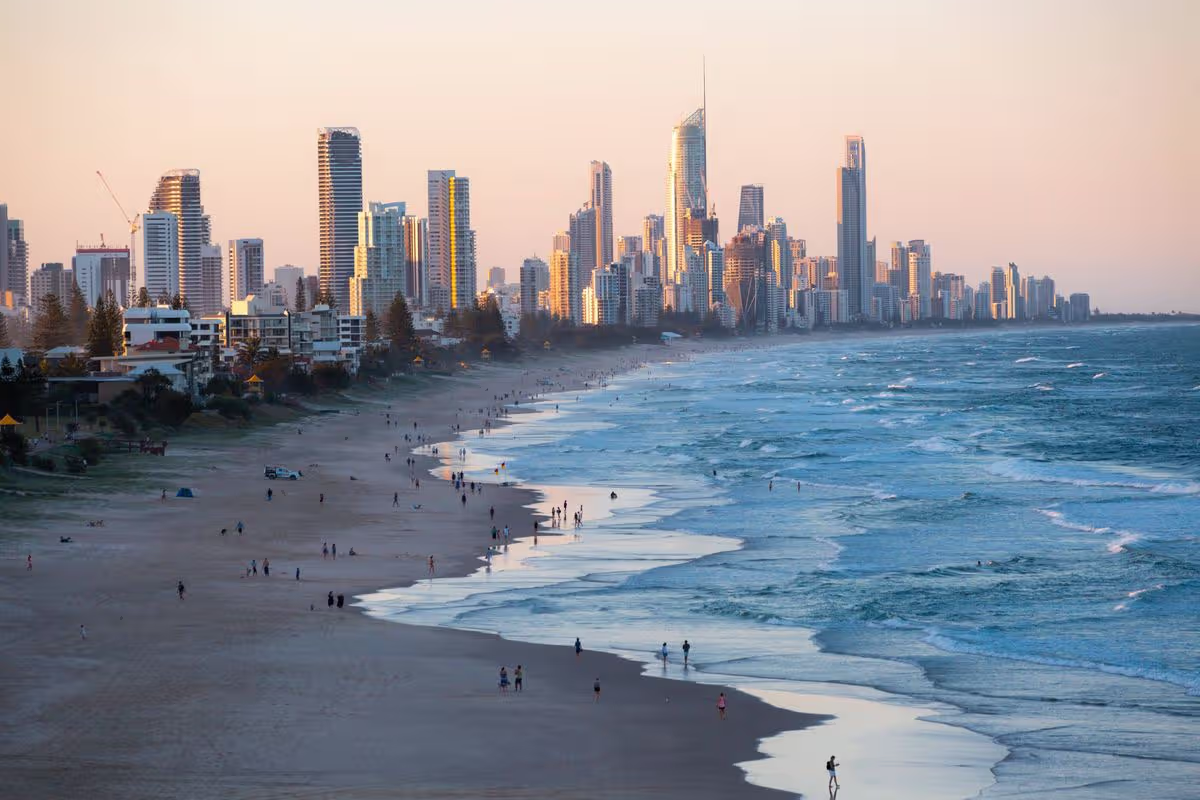
The Government has issued a travel warning for UK citizens after the terror attack in Australia. At least 12 people have been killed and 29 injured in a terrorist attack targeting a Jewish celebration at Bondi Beach in Sydney.

Two individuals armed with guns opened fire on a crowd in the Archer Park area of Bondi Beach at 6.47pm local time on Sunday, New South Wales Police said. The attack has been declared a terrorist incident targeting a Hanukkah celebration at a park next to the beach on the first day of the Jewish festival of lights, the force confirmed.

New South Wales Premier Chris Minns told a press conference: “At approximately 6.47 this evening, two individuals began firing on crowded a group of families on Bondi Beach at Archer Park. I very sadly need to report that, as of now, there are at least 12 individuals that have been killed.

“This attack was designed to target Sydney’s Jewish community on the first day of Hanukkah, what should have been a night of peace and joy celebrated in that community with families and supporters, has been shattered by this horrifying evil attack.”

Police in the UK are stepping up patrols in Jewish communities. A Met Police spokesman said: “While there is no information to suggest any link between the attack in Sydney and the threat level in London, this morning we are stepping up our police presence, carrying out additional community patrols and engaging with the Jewish community to understand what more we can do in the coming hours and days.

“We always encourage the public to be vigilant at events and in public places. If you see anything suspicious, trust your instincts and tell us.”

Hanukkah, also known as Chanukah, is an eight-day festival of light usually observed in December.

Foreign Secretary Yvette Cooper has told any British people caught up in the Bondi Beach shooting to contact the consulate for support.

In a post on X, she said: “The scenes from Bondi Beach are deeply shocking and distressing. My thoughts are with everyone affected and Australia’s emergency services.

“British nationals should follow local police and authorities’ advice and can contact the British Consulate General Sydney for support.”

The UK Foreign Office site reads: “Terrorists are likely to try to carry out attacks in Australia.” It adds: ” There is a high threat of terrorist attack globally affecting UK interests and British nationals, including from groups and individuals who view the UK and British nationals as targets. Stay aware of your surroundings at all times.”

The Foreign Office said: ” Attacks could be indiscriminate, including in places visited by foreign nationals. You should be vigilant, keep up to date with local media reports and follow the advice of local authorities.”

Source link

EU tightens foreign investment screening to counter rising geopolitical threats

Published on
Updated

The European Union’s member states and the European Parliament have struck an agreement to strengthen the screening of foreign investments in the bloc as tensions rise over investments from countries such as China.

The Parliament had been pushing for broad screening of foreign direct investments, but it is EU member states who hold the ultimate authority over investment reviews. The two have now agreed on a common text that strengthens the existing rules.

Under the deal, mandatory screenings will now cover military equipment, artificial intelligence, quantum technologies, semiconductors, raw materials, transport and digital infrastructure, and even election systems.

“By requiring all member states to implement a screening mechanism and by strengthening cooperation among them, the regulation closes potential loopholes for high-risk investments in the internal market,” said MEP Bernd Lange, chair of Parliament’s trade committee.

He added that Parliament’s negotiators “successfully advocated for a broader minimum scope of the national screening mechanisms, ensuring that investments in particularly critical sectors must be screened by all member states”.

Shielding Europe’s economic security

The revamped framework stems from a European Commission initiative to harden the EU’s economic defences.

“In recent months, it has become clear that the geopolitical context has changed significantly,” an EU diplomat said on Thursday. “Trade can no longer always be seen as a neutral transaction between independent economic operators.”

He noted that several recent cases “demonstrated that economic instruments have been weaponized against Europe for geopolitical purposes.”

In September, the Netherlands placed the Dutch-based, Chinese-owned chipmaker Nexperia under state supervision out of concern that critical know-how from its European facilities could be siphoned back to China.

Beijing responded by restricting chip exports to Europe, thus threatening the EU’s automotive industry, which relies heavily on those components. Although a US-China deal eventually restored exports, tensions between Beijing and The Hague remain high.

The EU has had a cooperation mechanism on foreign direct investment screening in place since October 2020, but initial resistance was strong.

“At the beginning, some economic actors across Europe were reluctant to (implement) such a screening,” a parliamentary source told Euronews. “Investment issues are essential to them and they sometimes don’t see the risks.”

Under the EU’s rules, the Commission can request information and issue opinions, but it cannot force a member state to screen and block an investment.

On top of that, a 2023 regulation introduced a new screening regime for non-EU subsidies granted to companies operating in the bloc – another move that places China firmly in the spotlight.

Source link