Elite security personnel carry out a large-scale operation at dawn in the Green Zone and several neighbourhoods in Baghdad, security source says.
Published On 28 Jun 202628 Jun 2026
Several Iraqi politicians, lawmakers and officials have been arrested on corruption charges, Iraqi state-run media report.
Several people, including members of parliament “whose immunity had been lifted and officials whose names appeared in … confessions”, were arrested early on Sunday in the capital, Baghdad, the Iraqi News Agency reported, quoting a security source.
Recommended Stories
list of 3 itemsend of list
It was not immediately clear who had been arrested. There was no immediate official statement on the arrests from the Iraqi government or security forces.
A security source told Al Jazeera that elite Iraqi security forces carried out a large-scale arrest operation at dawn in the fortified International Zone (Green Zone) and several neighbourhoods in Baghdad.
The source said the arrests were carried out by the Counter Terrorism Service and were based on statements provided by Adnan al-Jumaili, deputy oil minister, after his arrest last month on corruption charges.
Iraq’s new prime minister, Ali al-Zaidi, has pledged to fight corruption and mismanagement that have plagued Iraq for decades.
Authorities seized about $86m in cash this month that was allegedly part of the corruption case against al-Jumaili.
The Associated Press news agency reported that seven people were arrested on Sunday, including five members of parliament. It cited a security agency report it obtained. The AP said some of those arrested were from the political bloc of former Prime Minister Mohammed Shia al-Sudani.
During November’s parliamentary elections, al-Sudani’s bloc won the largest share of seats, but he did not return as prime minister. He stepped aside amid a deadlock in the Coordination Framework, a group of Shia parties allied with Iran that brought al-Sudani to power. They disagreed for months over their preferred candidate for the post.
Weekly insights and analysis on the latest developments in military technology, strategy, and foreign policy.
The U.S. military has released new details about the massive Fightertown Recapitalization (FTR) Program at Joint Base Elmendorf-Richardson (JBER), in Anchorage, southeastern Alaska. This is a huge effort valued at approximately $7 billion that would effectively create an entirely new fighter hub to support future Air Force operations in the strategically important Arctic and Pacific regions.
The details emerged in a special notice announcing an upcoming virtual industry day, where government officials plan to brief contractors on the scope of the program and gather feedback on construction risks, industry capabilities, and acquisition strategies before moving toward a formal procurement process.
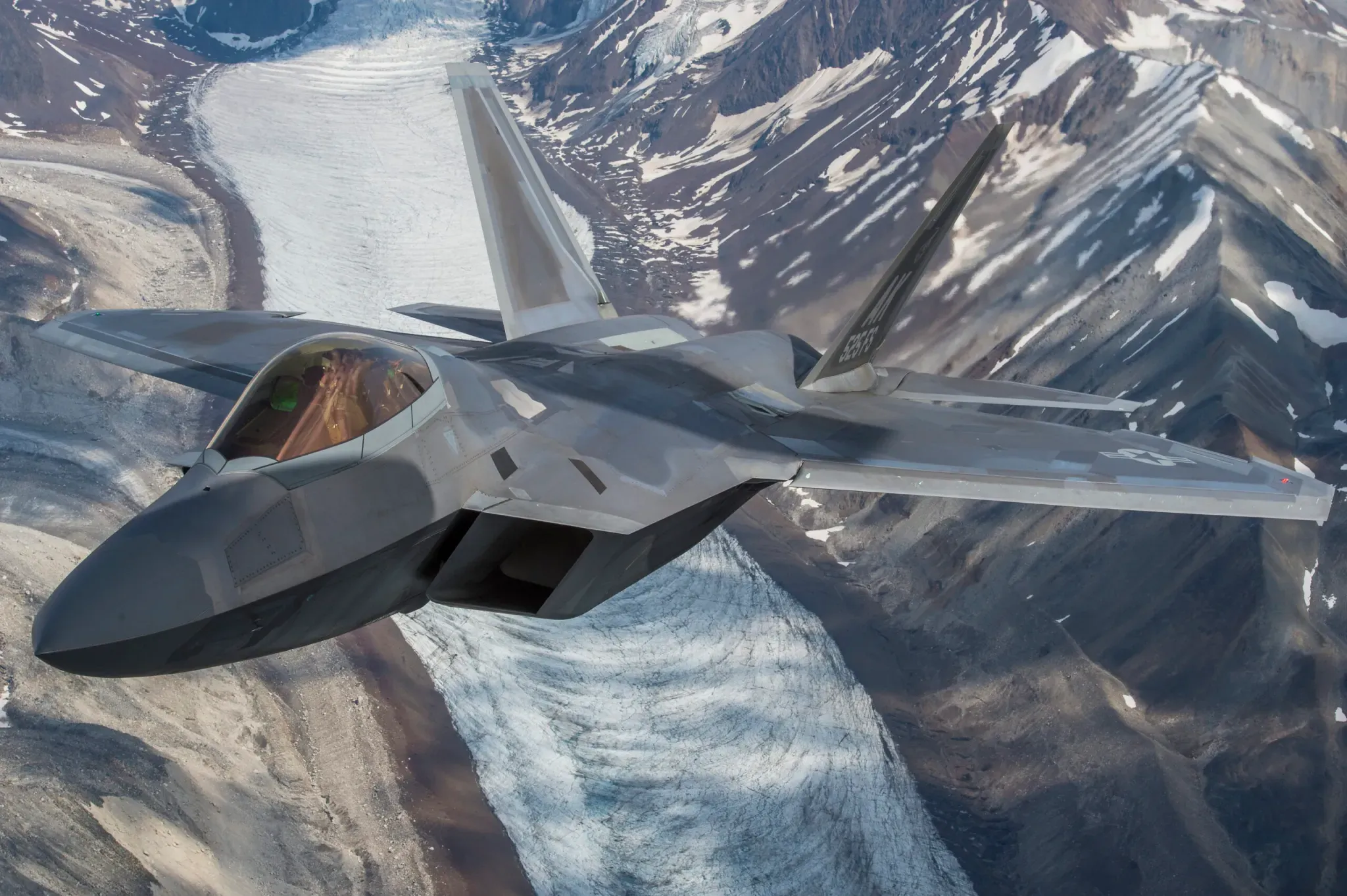
A U.S. Air Force F-22 Raptor from Joint Base Elmendorf-Richardson flies over the Joint Pacific Alaska Range Complex. U.S. Air Force photo by Staff Sgt. James Richardson
While the notice, from the U.S. Army Corps of Engineers, is intended primarily as market research, it offers one of the clearest looks yet at the scale and ambition of the Fightertown recapitalization effort.
According to the notice, existing airfield facilities cannot support the program’s requirements, prompting the selection of a new site to expand the current airfield infrastructure. Rather than a collection of isolated projects, the government describes the effort as a “complete campus approach” intended to synchronize facility construction with aircraft procurement, personnel movements, and logistical requirements.
The envisioned campus would include aircraft hangars, squadron operations facilities, corrosion control facilities, maintenance shops, and other aviation support infrastructure. Extensive airfield improvements are also planned, including new taxiways, aprons, shoulders, and specialized aircraft operating surfaces.
A picture of a so-called “elephant walk” readiness exercise at Joint Base Elmendorf-Richardson showing 24 of the resident 3rd Wing’s F-22s, as well as a C-17 and an E-3. U.S. Air Force
Highly likely to be included in the recapitalization efforts will be measures to help reduce vulnerability and ensure critical operations could continue in wartime. After all, in a potential fight against China or Russia, JBER would be high on the list of priority targets in the opening phases of a large-scale conflict. As we have repeatedly outlined in the past, aircraft shelters with varying degrees of hardening are suddenly very much back on the agenda in response to growing drone and missile threats.
Beyond flight-line infrastructure, the project encompasses a substantial support ecosystem. Plans call for a munitions complex, petroleum operations facilities, warehousing and supply functions, dining facilities, visitor control infrastructure, firefighting facilities, training centers, simulators, and housing for unaccompanied airmen.
The government also notes that the campus design remains flexible and could ultimately involve modifications to, or demolition of, existing facilities as planning progresses.
Rather than relying solely on traditional military construction contracting approaches, the Army Corps of Engineers says the program intends to leverage authorities provided in the Fiscal Year 2026 National Defense Authorization Act. Those authorities could allow the use of Other Transaction Authority (OTA), Progressive Design-Build (PDB), and other alternative execution methods.
The sprawling Joint Base Elmendorf-Richardson (JBER), in Anchorage, southeastern Alaska, as seen in a satellite image from May of this year. Google Earth
The notice explicitly states that the government intends to capitalize on private-sector innovation while avoiding what it describes as costly and time-consuming federal contracting burdens. It also emphasizes that the execution strategy will encourage industry partners to propose novel technical and construction solutions.
The scale of the investment underscores Alaska’s growing importance as a hub for U.S. airpower. JBER already serves as one of the Air Force’s premier fighter installations and occupies a critical geographic position between North America, the Arctic, a part of the world that has only grown in strategic significance in recent years, and the Indo-Pacific theater, where strategic planning is highly focused on a potential future conflict with China.
Joint Base Elmendorf-Richardson hosts the headquarters of the 11th Air Force, the service’s top command in Alaska, and its 3rd Wing, which operates a mix of F-22 Raptor stealth fighters, E-3 Sentry Airborne Warning Control System (AWACS) radar planes, C-17 Globemaster III airlifters, and C-12 light utility aircraft. It is also home to the Alaska Air National Guard’s 176th Wing, which has additional C-17s, as well as HC-130 Combat King rescue aircraft and HH-60 rescue helicopters.
HH-60W Jolly Green II helicopter aircrew assigned to the 210th Rescue Squadron, 176th Wing, Alaska Air National Guard, hoist a simulated downed pilot during a full mission profile training exercise at Malemute Drop Zone, Joint Base Elmendorf-Richardson, Alaska, March 31, 2026. Alaska National Guard photo by Alejandro Peña
In addition, in 2023, the Air Force announced the creation of the 55th Operations Group, Detachment 1 at the base, as a detachment of the 55th Wing at Offutt Air Force Base in Nebraska.
“The new detachment will… serve as a strategic launch and recovery point for RC-135V/W Rivet Joint operations and exercises in the region,” according to the Air Force.
The move reflected increased demand for RC-135V/W Rivet Joint spy plane sorties in the Pacific, with JBER being well-positioned for these aircraft to gather intelligence on areas of interest in the northern end of the Pacific and the increasingly strategic Arctic region.
The arrival of the Rivet Joint prompted a previous reconstruction effort at JBER. In what the Air Force described as a “mega-project,” one of the two runways there was extended to help it better support operations involving larger aircraft like these.
In the future, the strategic location of JBER, as well as its current status as one of the few F-22 bases, suggests that it could eventually host the F-47 sixth-generation stealth fighter, the first of which is expected to make its first flight sometime in 2028. The F-47 could therefore well end up as the centerpiece of the Alaskan Fightertown, in keeping with the vision for the jet serving as a critical force multiplier that can bring together other crewed and uncrewed assets. With that in mind, at least some of the Fightertown Recapitalization Program may be specifically tailored to the requirements of the F-47.
Importantly, JBER also serves as the focal point for the Red Flag-Alaska and Northern Edge exercises.
The Red Flag-Alaska exercises can take place up to four times a year and mirror those flown over the Nellis Range Complex in Nevada, with some differences. Namely, the ranges in Alaska, many of which are instrumented, are enormous, and can include a more varied array of assets.
A U.S. Air Force E-3 Sentry takes off during exercise Red Flag Alaska 26-1 at Joint Base Elmendorf-Richardson, Alaska, April 29, 2026. U.S. Air Force photo by Tech. Sgt. Joseph Miller
From JBER and other bases in the region, Red Flag-Alaska participants have access to the Joint Pacific Alaska Range Complex (JPARC). Covering an area of more than 67,000 square miles and providing 77,000 square miles of airspace above, JPARC is the “largest instrumented air, ground and electronic combat training range in the world,” according to the Air Force. It is regularly used to provide a realistic training environment for full-spectrum engagements, ranging from individual skills to large-scale joint engagements.
Meanwhile, Northern Edge also occurs in and around Alaska every two years, with these large-scale events being used to test and evaluate new systems and capabilities from across the U.S. military.
One of the Air Force’s tiny force of semi-retired F-117 Nighthawk stealth jets, now used for test and evaluation purposes, at Elmendorf during Northern Edge 2023. U.S. Air Force
In the past, the Air Force has described Northern Edge as a demonstration of “the U.S. commitment to the region by building interoperability, advancing common interests and a commitment to our allies and partners in ensuring a free and open Indo-Pacific,” as well as showcasing U.S. ability to defend the homeland from and throughout Alaska.
As planning advances, we will learn more about what this new Alaskan Fightertown will look like. What is already clear is that the Air Force and the Pentagon are preparing for a long-term expansion and modernization effort on a scale rarely seen at an operational fighter base.
More details could emerge during the industry day scheduled for June 30, when government officials will provide a comprehensive update on the program and solicit feedback from industry partners on how to execute one of the Air Force’s biggest military infrastructure projects.
Update: 3:45 PM ET –
“We are deliberately investing in Pacific Air Force’s critical infrastructure by replacing and upgrading operations and maintenance facilities in addition to making repairs to existing buildings and funding mission-ready materiel, storage, and sustainment necessary for homeland defense and Agile Combat Employment operations,” a U.S. Air Force official has now told us in response to our queries for more information about the Fightertown plan. “We are also extending the runway and building a Joint Integrated Test and Training Center at JBER.”
“We are in the design stage now and will have a better idea of timelines once we receive an appropriation,” they added.
The occupied West Bank has seen sustained and rising violence amid ongoing conflict between Israelis and Palestinians. Israeli forces conduct frequent raids in Palestinian areas, saying they are targeting militants and preventing attacks, while Palestinians and rights groups accuse the military of using excessive force and say settlement expansion is a major driver of instability. Israeli settlements in the territory are widely considered illegal under international law by the United Nations and most countries, though Israel disputes this and views the West Bank as disputed land with historical and security significance. In recent months, tensions have further escalated with increased restrictions on Palestinian movement near settlements, alongside a rise in attacks by both Palestinians against Israelis and by settlers against Palestinians, contributing to a cycle of violence that continues to claim lives on both sides.
Fatal Shooting Near Beit Ummar
The incident took place near the town of Beit Ummar in the southern West Bank.
Palestinian news agency WAFA identified the victims as teenagers aged 15 and 19. A relative confirmed their ages to Reuters.
Israeli Military’s Account
The Israeli military said its forces confronted three individuals who were throwing fire bombs and burning tyres near the settlement of Karmei Tzur.
According to the military, soldiers opened fire, killing two of the individuals and wounding a third.
Reuters could not independently verify the military’s account.
Third Teenager Hospitalized
WAFA reported that the third person involved in the incident was hospitalized in stable condition.
The Palestinian Red Crescent Society said the wounded individual is 15 years old.
Tensions Remain High in the West Bank
Israeli forces regularly conduct raids across the occupied West Bank and have tightened movement restrictions around Palestinian communities located near Israeli settlements in recent months.
The territory has experienced heightened tensions amid ongoing violence involving Israeli security forces, settlers and Palestinians.
Dispute Over Settlements
The international community, including the United Nations and most countries, considers Israeli settlements in the West Bank illegal under international law and a major obstacle to the creation of a Palestinian state.
Israel rejects that position, describing the territory as disputed and citing historical Jewish ties to the area.
Rising Violence
According to United Nations data, at least 57 Palestinians have been killed this year in incidents involving Israeli settlers and security forces.
At the same time, Palestinians have carried out attacks against Israeli soldiers and settlers in the West Bank, including at least one fatal attack in 2026, according to Israel’s Shin Bet domestic security service.
What’s Next
The Israeli military is expected to continue reviewing the circumstances of the shooting, including whether the individuals posed an immediate threat and how the confrontation unfolded near the settlement.
Palestinian officials are likely to pursue diplomatic and legal avenues, as similar incidents in the West Bank are often raised with international bodies, including the United Nations, amid ongoing disputes over the use of force by Israeli troops.
On the ground, the incident is likely to add to already high tensions in the West Bank, where Israeli raids, settlement activity, and Palestinian attacks have contributed to a cycle of violence in recent months.
Further clashes cannot be ruled out, particularly in areas close to settlements where movement restrictions and security operations have intensified.
International attention on West Bank violence is also likely to continue, especially as reported fatalities involving Palestinians and Israelis have remained elevated this year, keeping pressure on both sides amid an already fragile security situation.
Weekly insights and analysis on the latest developments in military technology, strategy, and foreign policy.
The Senate Armed Services Committee believes that the U.S. Air Force is currently unable to support combat search and rescue (CSAR) operations “in a major contingency.” Legislators say they are concerned about the CSAR force structure after the Air Force trimmed its buy of HH-60W Jolly Green II helicopters and also elected to transfer some of these aircraft to the so-called Air Force District of Washington (AFDW) mission set, as you can read about here. This comes on top of concerns that the HH-60W fleet isn’t well suited for the realities of a war in the Pacific while no better solution is being sought.
The Senate Armed Services Committee released a full copy of the proposed legislation earlier this week. In this, it states that it is “concerned about CSAR force structure” in the Air Force.
Up close with the HH-60W Combat Rescue Helicopter at Nellis AFB for The War Zone.
Now, the committee points to the Air Force’s decision to truncate its buy of heavily modified HH-60Ws, followed by the transfer of 26 of these from CSAR units to the AFDW to replace UH-1N Twin Huey helicopters. AFDW uses these helicopters to support continuity of government plans, contingency response, homeland operations, and ceremonial honors in the National Capital Region. Under normal circumstances, the vast majority of AFDW missions involve VIP movements.
A UH-1N Huey assigned to the 1st Helicopter Squadron at Joint Base Andrews, Maryland, flies over Washington, D.C., during training, March 31, 2026. U.S. Air Force photo by Staff Sgt. Aubree Owens
“The committee believes that these actions have left CSAR forces unnecessarily short of the forces needed to support CSAR operations in a major contingency,” the legislators say. The committee has now called upon the Secretary of the Air Force to conduct a study of CSAR requirements and capabilities, including HH-60Ws and HC-130J Combat King IIs, and provide a report briefing to Congress before the end of March 2027.
Until that study is completed, the committee has called upon the Secretary of the Air Force to avoid making any more changes in CSAR force structure.
The Air Force had once planned to replace its AFDW UH-1Ns with new MH-139A Grey Wolf helicopters, but revealed last year it was considering using HH-60Ws for this role instead. The Air Force’s proposed budget for the 2027 Fiscal Year confirmed that it was moving ahead with these plans.
A U.S. Air Force MH-139A Grey Wolf assigned to the 40th Helicopter Squadron conducts its first operational mission at Malmstrom Air Force Base, Montana, January 8, 2026. U.S. Air Force photo by Airman 1st Class Teniya Caldwell
As we have discussed in the past, the HH-60W will bring a substantial increase in speed, range, and payload capacity compared with the aging UH-1Ns now flying AFDW missions, while also outperforming the smaller, lighter MH-139 in each of those key metrics.
The Air Force’s current plan calls for development of the HH-60W AFDW variant to begin in Fiscal Year 2027, starting October 1, with the first aircraft entering modification the following fiscal year. Those reconfigured Jolly Green IIs would then begin replacing the increasingly outdated UH-1Ns assigned to the AFDW mission at Andrews Air Force Base (now part of Joint Base Andrews).
TWZ had previously raised the question of how the transfer of 26 HH-60Ws for the AFDW role might affect the operational capacity of the rest of the CSAR-focused fleet.
In particular, the Air Force has no plans to procure additional Jolly Green IIs despite the upcoming transfer.
As the Senate Armed Services Committee points out, the Air Force already decided to scale back HH-60W purchases, from an original program of record for 113 of the helicopters. The total planned fleet now stands at 91. This amounts to the CSAR fleet losing roughly 30 percent of its entire Jolly Green II fleet, the first of which began entering Air Force service in 2022.
A U.S. Air Force HC-130J Combat King II prepares to refuel an HH-60W Jolly Green II during a training mission near Nellis Air Force Base, Nevada, April 24, 2026. U.S. Air Force photo by Airman 1st Class Jennifer Nesbitt
The legislators point to the ongoing demand for CSAR capabilities, not just in lower-end conflicts such as the war with Iran, but especially in potential future high-end fights, such as one between the United States and China in the Pacific, where aircrew losses would be greater by an order of magnitude.
For years, TWZ has warned that the growing reach and sophistication of modern air defenses are calling into question the viability of traditional fixed-wing and helicopter CSAR missions. In a high-end conflict, especially against China in the Pacific, even stealth aircraft are expected to face significant risks inside contested airspace. The idea that a Black Hawk helicopter, no matter what is bolted onto it, is going to survive in that same environment is highly questionable, and that’s if it can even reach the rescue point at all. The distances involved in the Pacific are far greater than those in Europe or the Middle East, which the legacy CSAR fleet was largely optimized around.
Back in 2023, one of the Air Force’s senior procurement officers asserted that the HH-60W fleet would not be “particularly helpful in the Chinese area of operations” due to these reasons. The Air Force’s cuts to planned purchases of HH-60Ws reflected this reality, while other senior officials have acknowledged that the service will need to rethink how it carries out this critical mission in future wars. The issue is that the cuts didn’t result in other capabilities taking the HH-60W’s place, like uncrewed systems and tiltrotors. So now there is an emerging gap in CSAR capabilities, both in terms of new ones more aligned with the challenges of the Pacific and just any kind of CSAR capability at all. Turning a large portion of the HH-60W fleet into VIP transports certainly doesn’t help with problem.
For the time being, at least, the Air Force is heavily reliant upon its HH-60Ws, regardless of potential vulnerabilities. With orders for the Jolly Green II slashed, and more than two dozen examples slated to switch to another mission, it is perhaps not surprising that legislators want to know how the Air Force will be able to conduct CSAR in the future.
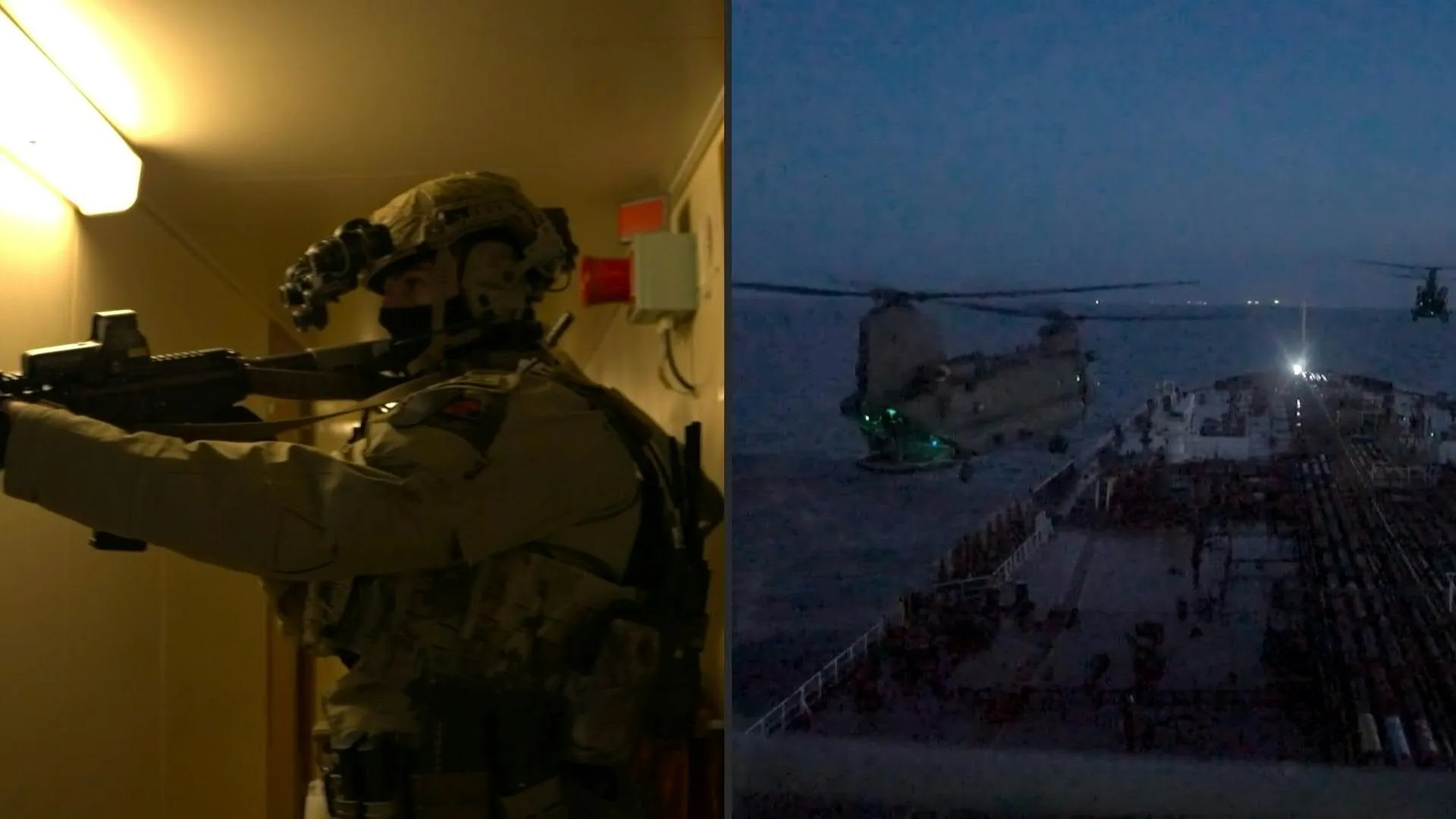
British armed forces intercepted an oil tanker believed to be part of Russia’s sanctioned shadow fleet. The oil tanker ‘SMYRTOS’ was taken in an first-ever operation by the British military in the English Channel.
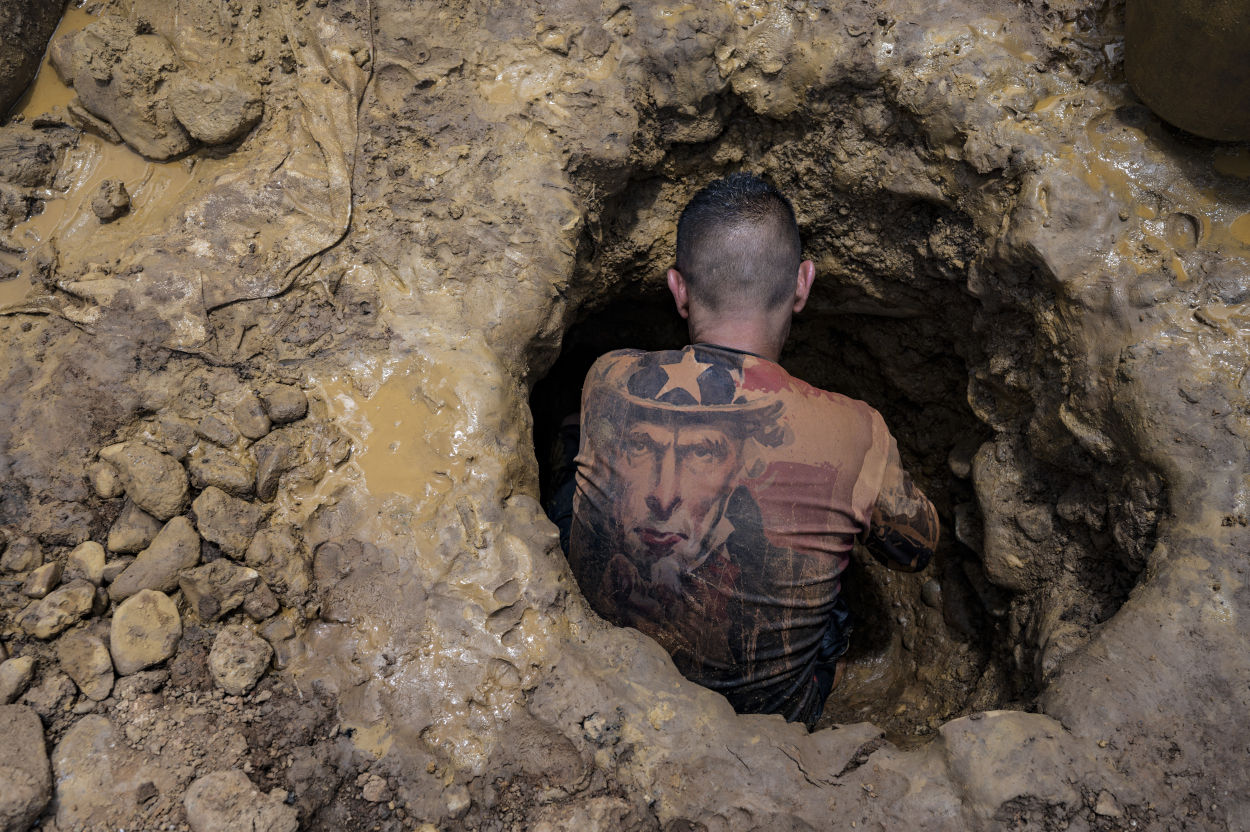
An artisanal miner in Bolívar state with an “Uncle Sam” t-shirt. (AFP)
Caracas, June 12, 2026 (venezuelanalysis.com) – Venezuela’s Bolivarian National Armed Forces (FANB) have launched a large-scale operation on Tuesday in Bolívar state, one of the country’s main mineral-rich regions in the southeast and also one with a heavy presence of criminal organizations.
Local media outlets and non-governmental organizations reported helicopter overflights, explosions, and the displacements of hundreds of people leaving gold extraction zones in Las Claritas and the area known as Kilometer 88, two key locations within the Orinoco Mining Arc.
According to Bloomberg, the military actions targeted illegal mining operations controlled by armed groups. Former opposition lawmaker for Bolívar state Américo De Grazia claimed that military forces attacked several gold-mining enclaves through aerial bombardments and gunfire.
The Venezuelan government, led by acting President Delcy Rodríguez, and the armed forces have offered no official information regarding the operations, as well as casualties, arrests, or official goals. Rodríguez met with military leaders on Wednesday to discuss a “100-Day Plan” to optimize the functioning of the armed forces but did not comment on the reported Bolívar deployment.
The operation took place in a region where the state has struggled to assert authority in the face of a proliferation of armed groups that control and administer mines, run artisanal mining activities, and regulate economic activity linked to gold extraction.
At the same time, local reports indicated that the military operation could be aimed at capturing Yohan José Romero, known as “Yohan Petrica,” a founding member of the Tren de Aragua criminal outfit, who reportedly operates in the area alongside Juan Gabriel Rivas Núñez, alias “El Negro Juancho,” and a third figure known as “Humbertico.”
Some sources have also not ruled out the presence of Héctor Guerrero, alias “Niño Guerrero,” the top leader of the large-scale criminal group that emerged inside Tocorón prison in Aragua state.
In September 2023, the Venezuelan government deployed “Operation Gran Cacique Guaicaipuro,” with more than 11,000 security personnel, to intervene in Tocorón prison. However, multiple reports indicated that “Niño Guerrero” and other senior gang leaders were warned in advance and escaped through a network of secret tunnels.
Guerrero is currently the subject of an Interpol Red Notice on charges related to transnational organized crime, drug trafficking, money laundering, and arms trafficking. The US State Department is offering a reward of up to US $5 million for information leading to his capture.
For its part, the media platform Miraflores al Momento denied separate reports alleging the presence of US military contingents in El Callao, another major gold-mining area in Bolívar state. Likewise, fact-checking outlets Cazadores de Fake News and CotejoInfo confirmed that images circulating were generated by artificial intelligence.
However, local outlets confirmed that, though without any military presence, US officials and business executives have conducted visits to gold-processing facilities belonging to the state-owned Venezuelan Mining Corporation (Minerven) in El Callao.
Last April, Venezuela approved a new mining law granting expanded incentives for private corporations to exploit gold and other “strategic minerals.” Concessions will last up to 30 years and may be renewed for two additional ten-year periods. The new law
The legislation additionally introduced provisions for international arbitration in dispute resolution, a safeguard sought by investors, and a reduction of royalties and taxes at the Venezuelan government’s discretion.
Among the companies expressing interest are Canadian firms Gold Reserve and Augusta Capital Corporation, which seek to revive the large-scale gold and strategic minerals project known as “Siembra Minera.” Likewise, Roland Mineral Enterprises Corp. has already begun procedures to explore and develop gold, copper, and silver deposits. Swiss commodities giant Trafigura is also advancing a responsible sourcing program in partnership with state-owned Minerven.
There have additionally been corporate initiatives and feasibility studies by US companies—including mining firms such as Hartree, Peabody Energy, Ivanhoe, and TechMet—to enter the sector, though security concerns reportedly remain an obstacle.
Mining municipalities in southern Venezuela report some of the country’s highest rates of homicide, as well as reports of forced labor and widespread sexual violence. The gold extracting activities are mostly unregulated. According to former opposition lawmaker Américo De Grazia, only the gold processed by Minerven enters official records, while the rest circulates through parallel channels.
Similarly, Transparency Venezuela estimates that just 14 percent of the revenues generated by the gold sector reach the Central Bank and public coffers through royalties and export-related payments.
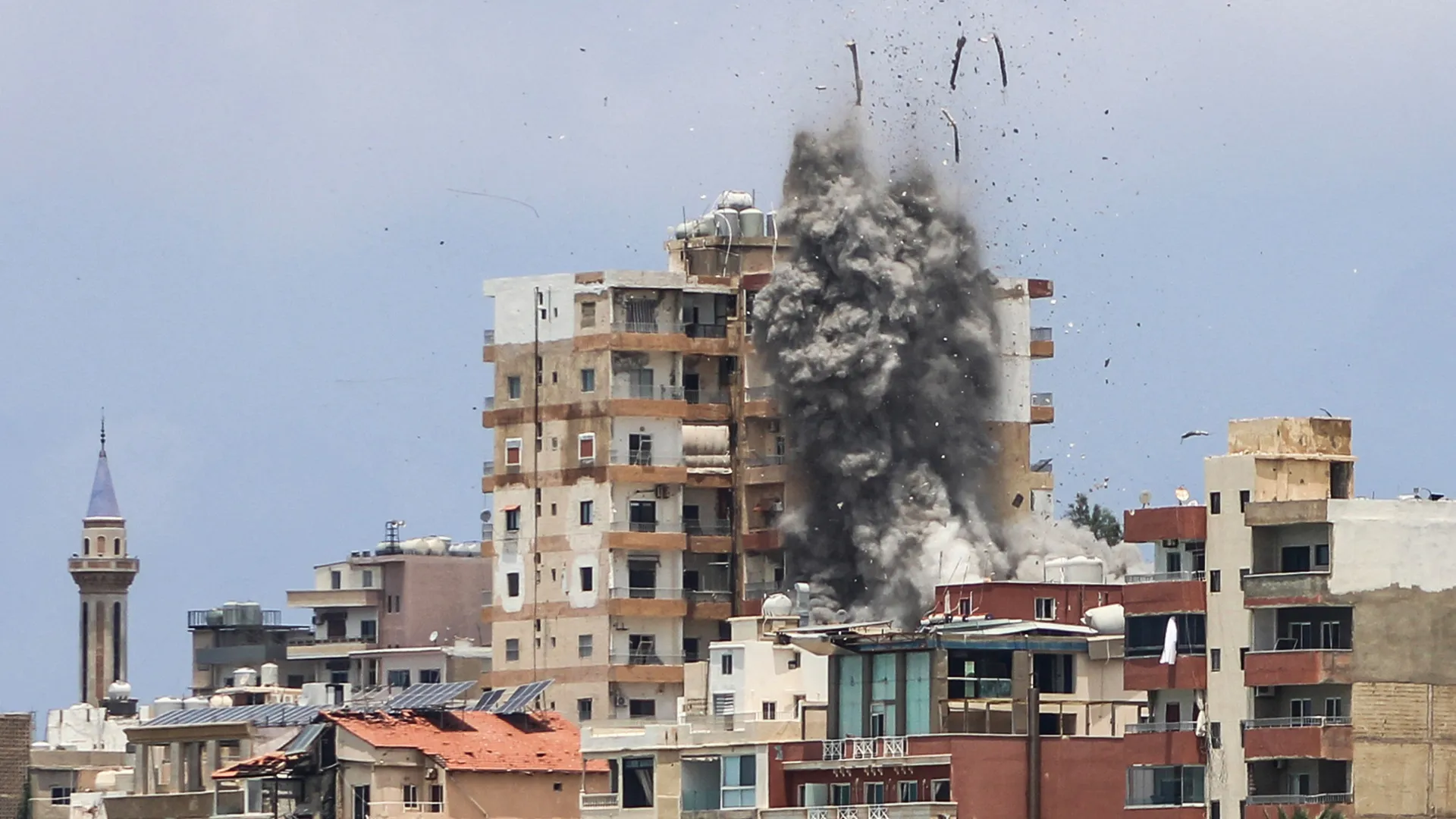
Israeli forces killed nine people in Tyre in the past 24 hours after it issued forced displacement orders on the city and continued deadly attacks across southern Lebanon.
Israeli forces reportedly killed a seven-month-old Palestinian baby, Sam Fahd Abu Haikal, and injured his parents in the Tel Rumeida area near Hebron on Friday evening, according to the Palestinian health ministry. The baby’s grandmother described how the family stopped their car after seeing Israeli military vehicles when shots were fired at them. She recounted that a bullet hit the baby in the face and lodged in his mother’s cheek, while also grazing the father’s finger. The parents were treated for their gunshot wounds.
The Israeli military stated that during operations in Hebron, soldiers fired shots at a vehicle they thought was approaching them quickly. They acknowledged that three Palestinians, later determined to be “uninvolved civilians,” were injured, and the incident is under investigation. Tel Rumeida has a history of violence as Israeli settlers live with military protection among the Palestinian community. Recent EU data indicates over 700,000 settlers reside in East Jerusalem and the West Bank while more than 3 million Palestinians live there.