force

Leon Draisaitl helps Oilers defeat the Ducks to force a Game 6

Leon Draisaitl scored a pair of goals and Evan Bouchard chipped in with three assists as the Edmonton Oilers staved off elimination by beating the Ducks 4-1 on Tuesday night.

The Oilers now trail the best-of-seven Western Conference playoff series 3-2 with Game 6 on Thursday night at Honda Center.

Vasily Podkolzin and Zach Hyman also scored for the Oilers who had previously yielded six separate leads to slip away in the first four games of the series.

Connor McDavid and Ryan Nugent-Hopkins each had a pair of assists. Edmonton is now 18-3 when scoring first in a game when facing elimination.

Alex Killorn scored for the Ducks.

Connor Ingram made 29 stops for Edmonton, while Ville Husso recorded 10 saves for the Ducks after coming in to relieve Lukas Dostal, who gave up three goals on nine shots.

For the fifth straight game the Oilers struck first, scoring on the game’s first shot just 2:22 into the contest as Podkolzin beat Dostal high for his second of the postseason.

Edmonton took a 2-0 lead 8:33 into the opening period as a point shot was deflected twice, the second time through Dostal’s legs by Hyman.

The Oilers took a 3-0 lead just 1:14 later as Draisaitl tipped Bouchard’s point shot in for his second of the playoffs. That spelled an early end of the night for Dostal.

The Ducks got on the board on the power play 8:26 into the second period as Mason McTavish dropped it back to Killorn, who extended his points streak to four games with his third goal of the playoffs.

Edmonton responded with a power-play goal a couple of minutes later on a one-timer by Draisaitl, who tied Wayne Gretzky for the most postseason power-play goals in franchise history at 23.

Edmonton has played the most playoff games of any NHL team since 2022 with 80, two more than the Florida Panthers, who beat the Oilers in the last two Stanley Cup Finals before failing to qualify this season.

Playing in his 80th playoff game, Bouchard collected his 88th point, moving into a tie for third place for players through 80 games with Brian Leetch, behind only Bobby Orr (92) and Paul Coffey (92).

McDavid (63 points) passed Adam Oates for the second-most points in NHL history when trailing in a playoff series. Only Gretzky (80) has more.

Source link

Has Iran exposed the limits of what US can achieve by force? | US-Israel war on Iran

Political scientist Vali Nasr argues that US and Israeli military options ‘have come up short’.

Despite on-again, off-again negotiations, the United States has no other option but to pursue a diplomatic solution with Iran, argues Vali Nasr, professor of international affairs and Middle East studies at Johns Hopkins University.

Nasr tells host Steve Clemons that the US-Israel war on Iran has shown the limits of military force.

“You don’t go to the table to demand surrender. The other side is not going to surrender because they haven’t lost. So you have to cut a deal,” Nasr said, adding that Iran’s objective is to make sure the US and Israel understand that “war with Iran isn’t easy”.

Source link

Spitfire Completes Unique Formation Flights With Royal Air Force

An example of the U.K. Royal Air Force’s most iconic fighter, the Spitfire, flew in a series of air-to-air formations around the United Kingdom over the last two weeks, part of the 90th anniversary celebrations for the aircraft, which became legendary on account of its service in World War II. The nine-leg flight around the United Kingdom was completed Friday.

The Spitfire in question, a two-seater, was painted blue to represent the first prototype, K5054. The original K5054 first flew on March 5, 1936, and was piloted by Capt. Joseph “Mutt” Summers. It took off from Eastleigh Aerodrome, now Southampton Airport.

On this day in 1936 was the prototype Spitfire’s maiden flight. Captain Joseph “Mutt” Summers, chief test pilot for Vickers, took off in K5054 from Eastleigh Aerodrome (later Southampton Airport). pic.twitter.com/7bbjlOBGxf

— RAF BBMF (@RAFBBMF) March 5, 2021

Popular history records that Summers uttered the words “I don’t want anything touched” when he climbed down from the cockpit. If he did say those words, it was almost certainly an instruction to the ground crew to leave the plane as it was before he took it up for his next test sortie. But the legend stuck.

Image of Spitfire “K5054”, seen during transit to RAF Coningsby in the UK. The first flight of the eagerly anticipated commemorative Spitfire90 tour has successfully landed at RAF Coningsby. The nine flights have been organised to celebrate 90 years since the Supermarine Spitfire’s maiden flight. Departing from Southampton International Airport earlier today, the very site where Captain Joseph ‘Mutt’ Summers piloted the original Spitfire prototype K5054 on 5th March 1936, the specially painted two-seat Spitfire, replicating the original K5054, was escorted by the Dakota and Spitfire AB910 belonging to the Royal Air Force’s Battle of Britain Memorial Flight (BBMF) as it made its way to RAF Coningsby, the home of the BBMF. During the flight, "K5054" was also joined in the vicinity of RAF Marham by two F35 Lightning II aircraft.
Spitfire “K5054” seen during transit to RAF Coningsby in the UK. Crown Copyright

Regardless, so promising was the new fighter that the Air Ministry placed a production order less than three months later, with trials still incomplete.

Eventually, more than 20,000 production examples would be built, and the Spitfire would be considered among the best all-round fighters of World War II, in which it played a key role from start to finish. The Royal Air Force didn’t fly its last operational Spitfire sortie until 1954, in Malaya.

The blue Spitfire seen in the accompanying images is actually a Mk IX, BS410, which crashed in May 1943, was recovered and rebuilt in the 2000s, and was converted into a two-seater, allowing for a passenger. It is currently privately owned.

Starting on April 7, the K5054-lookalike Spitfire joined up in the air with a host of modern types.

For the first flight, the Royal Air Force’s most advanced fighter, the F-35B Lightning, flew in formation with the Spitfire. This came just a matter of weeks after British F-35Bs shot down their first enemy aircraft — hostile drones over Jordan, during the conflict in the Middle East.

The formation flight involved two frontline F-35Bs from RAF Marham and two preserved Spitfires.

Image of Spitfire “K5054”, seen here alongside two F35 Lightning II Jets from RAF Marham as they transit to RAF Coningsby in the UK. The first flight of the eagerly anticipated commemorative Spitfire90 tour has successfully landed at RAF Coningsby. The nine flights have been organised to celebrate 90 years since the Supermarine Spitfire’s maiden flight. Departing from Southampton International Airport earlier today, the very site where Captain Joseph ‘Mutt’ Summers piloted the original Spitfire prototype K5054 on 5th March 1936, the specially painted two-seat Spitfire, replicating the original K5054, was escorted by the Dakota and Spitfire AB910 belonging to the Royal Air Force’s Battle of Britain Memorial Flight (BBMF) as it made its way to RAF Coningsby, the home of the BBMF. During the flight, "K5054" was also joined in the vicinity of RAF Marham by two F35 Lightning II aircraft.
Spitfire “K5054” seen here alongside two F-35Bs from RAF Marham. Crown Copyright

The other Spitfire, a Mk Vb, AB910, also saw combat in World War II, including covering the D-Day landings in Normandy. It is now part of the storied Battle of Britain Memorial Flight (BBMF).

Image of Spitfire “AB910”, seen during transit to RAF Coningsby in the UK. The first flight of the eagerly anticipated commemorative Spitfire90 tour has successfully landed at RAF Coningsby. The nine flights have been organised to celebrate 90 years since the Supermarine Spitfire’s maiden flight. Departing from Southampton International Airport earlier today, the very site where Captain Joseph ‘Mutt’ Summers piloted the original Spitfire prototype K5054 on 5th March 1936, the specially painted two-seat Spitfire, replicating the original K5054, was escorted by the Dakota and Spitfire AB910 belonging to the Royal Air Force’s Battle of Britain Memorial Flight (BBMF) as it made its way to RAF Coningsby, the home of the BBMF. During the flight, "K5054" was also joined in the vicinity of RAF Marham by two F35 Lightning II aircraft.
Spitfire AB910 seen during transit to RAF Coningsby in the UK. Crown Copyright
Image of Spitfire “AB910” and Spitfire “K5054”, seen during transit to RAF Coningsby in the UK. The first flight of the eagerly anticipated commemorative Spitfire90 tour has successfully landed at RAF Coningsby. The nine flights have been organised to celebrate 90 years since the Supermarine Spitfire’s maiden flight. Departing from Southampton International Airport earlier today, the very site where Captain Joseph ‘Mutt’ Summers piloted the original Spitfire prototype K5054 on 5th March 1936, the specially painted two-seat Spitfire, replicating the original K5054, was escorted by the Dakota and Spitfire AB910 belonging to the Royal Air Force’s Battle of Britain Memorial Flight (BBMF) as it made its way to RAF Coningsby, the home of the BBMF. During the flight, "K5054" was also joined in the vicinity of RAF Marham by two F35 Lightning II aircraft.
Spitfires AB910 and “K5054” seen during transit to RAF Coningsby in the UK. Crown Copyright

For the first leg of its flight, the K5054-lookalike Spitfire flew from its birthplace of Southampton Airport to RAF Coningsby in Lincolnshire, still a major fighter hub.

While the Spitfire and F-35 could hardly be more different in terms of performance and technologies, both have served the Royal Air Force as its premier frontline fighter. Like its forebear, the F-35B is also now proven in aerial combat, albeit against drones.

On March 6 this year, the Royal Air Force announced that an F-35B pilot had carried out the aircraft’s first combat shootdown in British hands, intercepting and destroying two hostile drones during an operation over Jordan the same week.

An F-35B from No. 617 Squadron at RAF Akrotiri. Crown Copyright

“The pilot, flying alongside two Typhoons from RAF Akrotiri, detected the drones on radar and engaged them with two ASRAAM missiles,” the Royal Air Force said in its statement. The pilot, although assigned to No. 617 Squadron of the Royal Air Force, was serving with the Royal Navy, reflecting the joint nature of the U.K. F-35B force.

The incident followed a separate attack in which a small, low‑speed drone struck RAF Akrotiri in Cyprus after evading base defenses, which were subsequently much enhanced.

Flight two, out of RAF Coningsby, on April 8, saw the Spitfire fly alongside Royal Air Force Red Arrows Hawks and a Phenom T1 trainer.

The Red Arrows flying alongside the Spitfire on Day 2 of the commemorative tour of GB. Two Hawks accompanied her for part of the flight from RAF Coningsby to Leuchars Station. (Photo: Darren Harbar) #Spitfire90 pic.twitter.com/Y4ioabXnoI

— Jane (@JaneFranklin99) April 8, 2026

The third flight, out of RAF Leuchars, on April 9, involved a Royal Air Force P-8 Poseidon maritime patrol aircraft.

Image of a Spitfire aircraft, seen here flying with a P-8A maritime patrol aircraft over RAF Lossiemouth as part of it's tour (Spitfire 90) around the United Kingdom. SPITFIRE 90 is a collaborative commemorative event between the Battle of Britain Memorial Flight (BBMF) and Spitfires.com. The Spitfire Academy. Marking 90 years since the first flight of the Spitfire prototype K5054 from Eastleigh Aerodrome on 5 March 1936, a specially painted twin-seat Spitfire TR9 will complete a nine-leg circumnavigation of Great Britain, with each leg representing a decade of the aircraft’s history. Operating from nine UK locations between 7 and 17 April 2026, the event coordinates with current RAF aircraft to demonstrate the evolution of air power, while raising funds for the RAF Benevolent Fund and the Mark Long Trust.
Spitfire and Poseidon over Scotland. Crown Copyright

Flight four, on April 10, brought the Spitfire to Scotland, where it flew out of RAF Lossiemouth with a pair of Royal Air Force Typhoon fighters.

Image of a Spitfire and Typhoon aircraft seen here at RAF Lossiemouth as part of it's tour (Spitfire 90) around the United Kingdom. SPITFIRE 90 is a collaborative commemorative event between the Battle of Britain Memorial Flight (BBMF) and Spitfires.com. The Spitfire Academy. Marking 90 years since the first flight of the Spitfire prototype K5054 from Eastleigh Aerodrome on 5 March 1936, a specially painted twin-seat Spitfire TR9 will complete a nine-leg circumnavigation of Great Britain, with each leg representing a decade of the aircraft’s history. Operating from nine UK locations between 7 and 17 April 2026, the event coordinates with current RAF aircraft to demonstrate the evolution of air power, while raising funds for the RAF Benevolent Fund and the Mark Long Trust.
A Spitfire and Typhoons seen at RAF Lossiemouth. Crown Copyright

Remaining in Scotland, the fifth flight, on April 13, out of Prestwick Airport, teamed the Spitfire with a Royal Air Force Hawk T2 trainer.

Flight six, on April 14, out of RAF Valley, Wales, involved the Spitfire and two current Royal Air Force training types: a Texan T1 turboprop and a Jupiter HT1 helicopter.

Pictured is the iconic Spitfire TR9 “K5054”, flying alongside a Texan from MOD St Athan in the UK. The sixth flight of the eagerly anticipated commemorative Spitfire90 tour has successfully left RAF Valley and landed at MOD St Athan. The commemorative SPITFIRE 90 event is celebrating 90 years of the infamous WWII aircrraft taken Wednesday 15th April 2026. SPITFIRE 90 is a collaborative commemorative event between the Royal Air Force and Spitfires.com. The nine-day event presents a unique and valuable opportunity to honour the legacy of the iconic Spitfire, celebrating its pivotal role in shaping the UK and RAF's history and inspiring future generations. It also serves to promote the modern-day RAF, showcasing its continued excellence, innovation and dedication to protecting the nation. Additionally, it has raised over £100K for RAF charities, supporting the welfare of our personnel, veterans and their families, while also providing aviation opportunities for disabled individuals. SPITFIRE 90 circumnavigates Great Britain and conducts over nine legs, each of which coordinates with modern RAF aircraft to demonstrate the progress of air power during the last nine decades. SPITFIRE 90 will operate from/ to nine UK locations: Southampton Airport, RAF Coningsby, RAF Leuchars, RAF Lossiemouth, RAF Valley, MoD St Athan, RAF St Mawgan/ Newquay Airport and Exeter Airport during the period 7–17 Apr 26.
The Spitfire alongside a Texan T1. Crown Copyright

Flight seven, on April 15, out of MOD St Athan, provided a formation with two QinetiQ Pilatus PC-21 trainers.

Flight eight, on April 16, out of MOD St Mawgan, involved a Royal Air Force A400M transport.

Image of Spitfire “K5054”, seen during transit to RAF Coningsby in the UK. The first flight of the eagerly anticipated commemorative Spitfire90 tour has successfully landed at RAF Coningsby. The nine flights have been organised to celebrate 90 years since the Supermarine Spitfire’s maiden flight. Departing from Southampton International Airport earlier today, the very site where Captain Joseph ‘Mutt’ Summers piloted the original Spitfire prototype K5054 on 5th March 1936, the specially painted two-seat Spitfire, replicating the original K5054, was escorted by the Dakota and Spitfire AB910 belonging to the Royal Air Force’s Battle of Britain Memorial Flight (BBMF) as it made its way to RAF Coningsby, the home of the BBMF. During the flight, "K5054" was also joined in the vicinity of RAF Marham by two F35 Lightning II aircraft.
Crown Copyright

For the ninth and final flight, on April 17, the Spitfire departed Exeter Airport and met up alongside the BBMF’s Dakota as it flew back to Southampton Airport.

For the final flight of Spitfire90, we were joined by Major Timothy Nigel Peake CMG, a retired British European Space Agency astronaut, Army Air Corps officer and author who flew on board the Dakota from Exeter to Southampton. SPITFIRE 90 is a collaborative commemorative event between the Royal Air Force and Spitfires.com. The nine-day event presents a unique and valuable opportunity to honour the legacy of the iconic Spitfire, celebrating its pivotal role in shaping the UK and RAF's history and inspiring future generations. It also serves to promote the modern-day RAF, showcasing its continued excellence, innovation and dedication to protecting the nation. Additionally, it has raised over £100K for RAF charities, supporting the welfare of our personnel, veterans and their families, while also providing aviation opportunities for disabled individuals. SPITFIRE 90 circumnavigates Great Britain and conducts over nine legs, each of which coordinates with modern RAF aircraft to demonstrate the progress of air power during the last nine decades. SPITFIRE 90 will operate from/ to nine UK locations: Southampton Airport, RAF Coningsby, RAF Leuchars, RAF Lossiemouth, RAF Valley, MoD St Athan, RAF St Mawgan/ Newquay Airport and Exeter Airport during the period 7–17 Apr 26.
For the final flight, the Spitfire was joined by a Dakota for a flight from Exeter to Southampton. Crown Copyright

While not unique, the Royal Air Force doesn’t regularly pair current and historic fighters for displays in the way the U.S. Air Force does with its Heritage Flight. This puts together formations of modern jets flying with fighters from the World War II, Korean War, and Vietnam War eras, such as the P-51 Mustang and F-86 Sabre.

The F-35 Lightning II flies in formation with the P-38 Lightning and two P-51 Mustangs during the Heritage Flight Conference at Davis Monthan Air Force Base in Tucson, Ariz., March 4-6, 2016. The F-35 heritage flight team from Luke Air Force Base, Ariz. is the first F-35 team to participate in the Heritage Flight Program. The program features modern USAF fighter aircraft flying alongside World War II, Korean and Vietnam era aircraft in a dynamic display of our nation's air power history. (U.S. Air Force photo by Staff Sgt. Staci Miller)
A U.S. Air Force F-35A flies with a pair of P-51 Mustangs and a P-38 Lightning as the Heritage Flight at Davis Monthan Air Force Base in Tucson, Arizona, in 2016. U.S. Air Force photo by Staff Sgt. Staci Miller

This makes the series of Spitfire flights all the more special. On each of these flights, one lucky (and deep-pocketed) passenger was in the backseat of the Spitfire, having bid for the chance to do so. The money earned will go to support service-related charities.

For the rest of us, we can enjoy some of the spectacular imagery captured as this special Spitfire completed its countrywide odyssey.

Contact the author: thomas@thewarzone.com

Thomas is a defense writer and editor with over 20 years of experience covering military aerospace topics and conflicts. He’s written a number of books, edited many more, and has contributed to many of the world’s leading aviation publications. Before joining The War Zone in 2020, he was the editor of AirForces Monthly.


Source link

Qatari 747-8i Gifted To Trump For Interim Air Force One Is Undergoing Test Flights

  • Qatar’s 747-8i gifted for interim Air Force One use. The U.S. Air Force is testing a lavish 747-8i donated by Qatar to serve as a temporary Air Force One while awaiting delayed VC-25B deliveries.
  • Test flights underway with expected delivery by 2026. The VC-25B Bridge Aircraft has begun test flights and is expected to be delivered to the Presidential Airlift Group by summer 2026.
  • Limited modifications observed on the aircraft. Photos show few changes to the jet’s communication systems, though it includes new aerials and UHF satcom antennas.
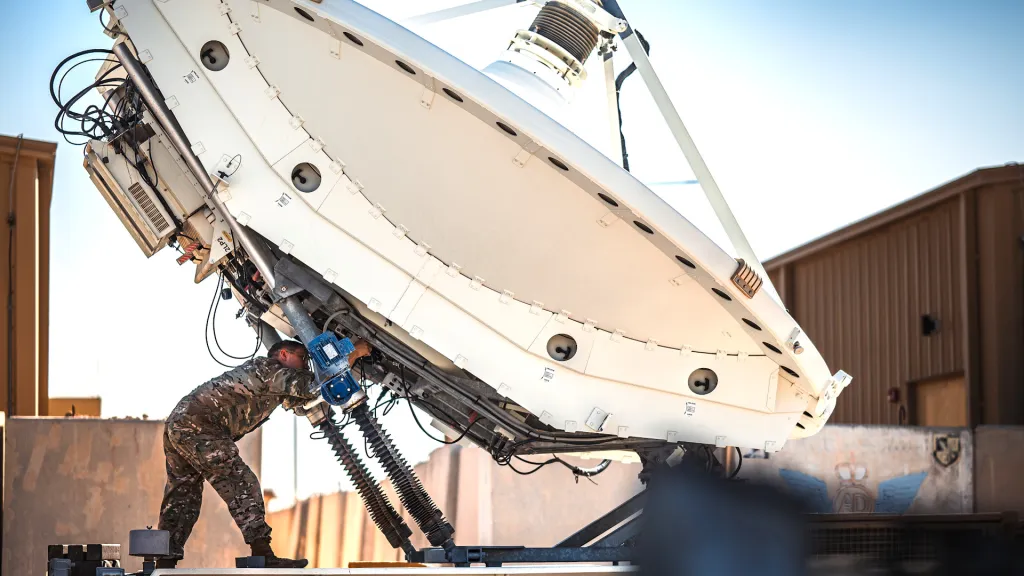
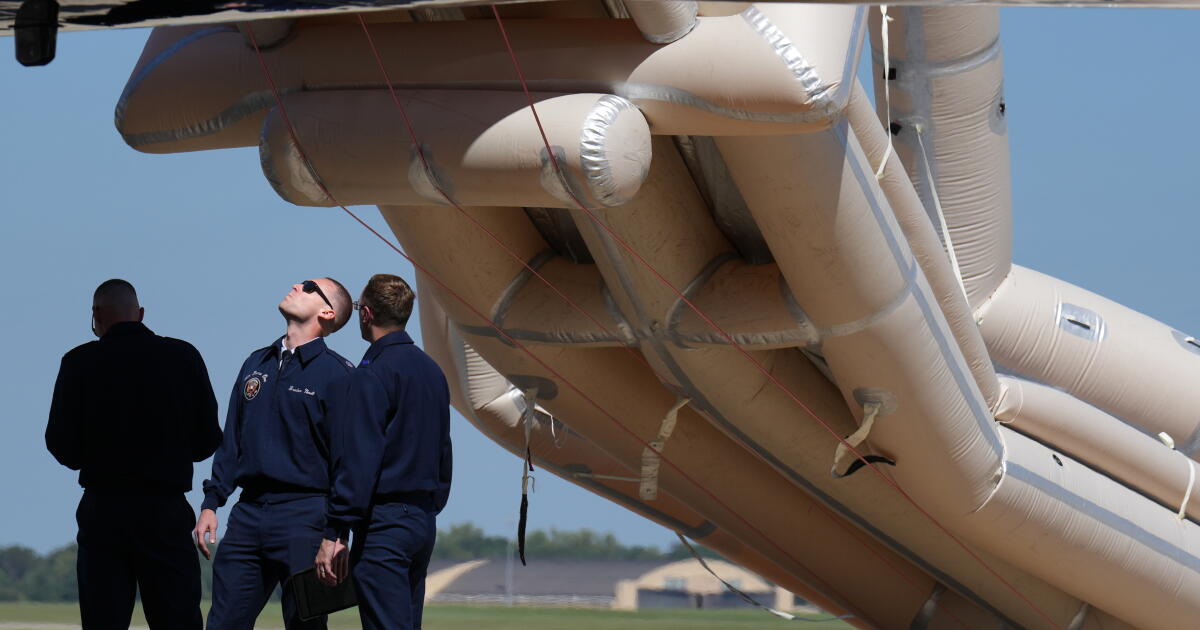
  • Defensive capabilities remain uncertain. The aircraft may lack comprehensive defensive systems like EMP hardening and defensive systems, raising questions about its operational use.
  • High conversion costs and limited operational scope. With a conversion cost nearing $400 million, the jet may only be used domestically or in low-threat areas, prompting questions about its necessity.

Bottom line: The U.S. Air Force is testing a Qatari 747-8i as an interim Air Force One due to delays in Boeing’s VC-25B deliveries. While modifications are underway, the jet’s limited defensive capabilities and high conversion costs raise questions about its practicality and operational use.

The U.S. Air Force has begun test flights on an extremely lavish 747-8i Boeing Business Jet (BBJ) that Qatar donated to the U.S. last year for use by President Donald Trump. The jet, now dubbed VC-25B Bridge Aircraft, is set to serve in the Air Force One role while the White House awaits the extremely delayed delivery from Boeing of two fully-outfitted VC-25B Air Force One aircraft 

“I can confirm that the VC-25B Bridge Aircraft has begun flight test,” an Air Force spokesperson told The War Zone Friday afternoon. “We expect the aircraft will be delivered to the Presidential Airlift Group no later than summer 2026.”

Aviation Week was the first to report the news of the test flight.

The Air Force declined to provide additional information about the testing program, including when it began or how many flights have taken place. It also remains unclear when the 747-8i will conduct real VIP missions or if it will receive a new official designation. With questions swirling about the legality and ethics of a president receiving a gift plane, the Pentagon last May took delivery of the aircraft and said it would rapidly undertake the required modifications.

The jet, using the call sign VADER01, was spotted by flight trackers over Texas yesterday. It took off from Majors Field in Greenville, Texas, flew over Tulsa, Oklahoma, Amarillo and Abilene, Texas, before landing back at Majors Field. The airport is home to L3 Technologies, which is modifying the jet. The facility at Greenville is a hub for this exact kind of modification work on the Pentagon’s larger aircraft.

Video and photos taken by aviation photographers show that the aircraft was in a white base livery, though it will reportedly get Trump’s red, dark blue and white paint scheme. The aircraft was delivered from Qatar in its maroon, white and gray striped scheme originally.

In this February 15, 2025 a Qatari Boeing 747 sits on the tarmac of Palm Beach International airport after US President Donald Trump toured the aircraft on February 15, 2025. Donald Trump plans to accept a luxury Boeing jet from the Qatari royal family for use as Air Force One and then continue flying in it after his tenure, despite strict rules on US presidential gifts, media reported May 11, 2025. Calling the plane a "flying palace," ABC News, which first reported the story, said the Boeing 747-8 jumbo jet would possibly be the most expensive gift ever received by the American government. (Photo by ROBERTO SCHMIDT / AFP) (Photo by ROBERTO SCHMIDT/AFP via Getty Images)
The donated Qatari Boeing 747-8i seen on the tarmac of Palm Beach International airport after Trump toured the aircraft on February 15, 2025. (Photo by ROBERTO SCHMIDT/AFP via Getty Images) ROBERTO SCHMIDT

Aviation photographer TT-33 operator was kind enough to share some images with us. The photos were captured as the aircraft was landing at Majors Field yesterday. You can see more of his work here.

(TT-33 operator)
(TT-33 operator)
(TT-33 operator)

The photos show remarkably few modifications to the VC-25B Bridge Aircraft’s communications system, which already had an extensive broadband satellite communications suite when Qatar handed it over. These additions include a handfuls of new aerials and what appear to be two UHF satcom ‘platter’ antennas.

As TWZ has previously noted, converting any aircraft into one that is secure and safe enough to transport the president is a complex undertaking. The aircraft needs to provide constant, secure communications, including what is needed to order a nuclear strike. Historically, it also needs to be physically hardened both inside and out to withstand myriad threats, from the electromagnetic pulse of a nuclear weapon going off to incoming surface-to-air missiles to enemy intelligence-gathering efforts. To do this requires significant modifications right down to the aircraft’s outer structure.

In this case, it is likely impossible for the jet to receive EMP hardening and, at least based on the limited photos available, we cannot find any clear additions that would indicate the installation of an integrated self defense suite of any kind. The VC-25As are speckled with missile approach warning sensors and many laser countermeasures turrets (DIRCM). They also include the legacy Matador infrared countermeasure system above their jet engines and APU. This is in addition to other defensive features which are less visible and remain closely guarded secrets.

Common Infrared Countermeasures (CIRCM) thumbnail

Common Infrared Countermeasures (CIRCM)


At the very least, this aircraft will have to feature some kind of DIRCM setup to repel shoulder-fired heat-seeking missiles, and modular units are available that can be attached in a canoe to the bottom of the aircraft. These systems, such as Elbit’s C-MUSIC or Northrop Grumman’s Guardian, are in service with foreign VVIP 747s, as well as commercial aircraft, including those flying for Israeli airline El Al. You can read all about these systems here. Still, while they offer far less defensive capacity compared to what is seen under the belly of a VC-25A, they would offer a significant layer of protection.

Northrop Grumman’s Guardian pod is a self-contained DIRCM (includes missile approach and warning sensors and laser pointer) solution for airliner-type aircraft. (Northrop Grumman)

It’s also possible a more elaborate and fully integrated defensive system could be installed in the coming weeks, but it’s hard to imagine this would allow the jet to enter service this summer.

Adding a further layer of complexity to the procurement and fielding process of any new presidential airlift aircraft, there are tight controls around sourcing spares for aircraft with this mission, and specific rules about vetting individual parts to protect against espionage and sabotage. Clearly many practices and requirements had to be relaxed in order to rush this ‘bridge’ aircraft into service.

USAF via FOIA

There are also questions about where this jet could actually fly operationally. Without a fully specialized design meeting all the requirements for the traditional Air Force One mission, it will likely be limited to domestic use or other very low threat areas. Given all that, and its reported conversion price tag approaching $400 million, there are legitimate questions about why it is needed at all.

As we noted earlier in this story, the flight test of this aircraft came as Boeing is far behind in the process of converting two other 747-8is originally built as commercial airliners into new fully customized VC-25B Air Force One aircraft. This led to the emergence of Trump’s idea of procuring an ‘interim’ Air Force One.

On Friday, the Air Force told us that it “is collaborating with Boeing to implement acceleration initiatives and expect the first delivery of the VC-25B in mid-2028.” If this is the case, then this ‘bridge’ aircraft will have served at most around two years until the first full-up VC-25B is delivered.

We have reached out to Boeing for additional details.

The U.S. Air Force has confirmed it is buying two Boeing 747-8 airliners from German flag carrier Lufthansa.
A rendering of a future US Air Force VC-25B Air Force One jet. Boeing

While it is not yet known when the ‘bridge’ VC-25B will actually transport the president, we know there is great pressure to get it doing exactly that from the White House. Judging by its configuration so far, whatever possible appears to have been done to make that happen.

Contact the author: howard@thewarzone.com

Howard is a Senior Staff Writer for The War Zone, and a former Senior Managing Editor for Military Times. Prior to this, he covered military affairs for the Tampa Bay Times as a Senior Writer. Howard’s work has appeared in various publications including Yahoo News, RealClearDefense, and Air Force Times.


Tyler’s passion is the study of military technology, strategy, and foreign policy and he has fostered a dominant voice on those topics in the defense media space. He was the creator of the hugely popular defense site Foxtrot Alpha before developing The War Zone.


Source link

ICE went on a hiring spree. Sterling credentials were not required, AP investigation finds

Their backgrounds stand out. And not in a good way.

Two bankruptcies and six law enforcement jobs in three years. An allegation of lying in a police report to justify a felony charge against an innocent woman — an incident that led to a $75,000 settlement and criticism of his integrity. A third job candidate once failed to graduate from a police academy, then lasted only three weeks in his only job as a police officer.

Their common bond: All were hired recently by U.S. Immigration and Customs Enforcement during an unprecedented hiring spree — 12,000 new officers and special agents to double its force — after the agency received a $75-billion windfall from Congress to enact President Trump’s mass deportation campaign.

The president put a premium on swift action, and for ICE that meant rapid-fire recruitment and hiring, which in turn led to new employees with questionable qualifications. Their backgrounds and training have come under scrutiny after numerous high-profile incidents in which ICE agents used excessive force.

“If vetting is not done well and it’s done too quickly, you have higher risk of increased liability to the agency because of bad actions, abuse of power and the lack of ability to properly carry out the mission because people don’t know what they are doing,” said Claire Trickler-McNulty, who served as an ICE official during the Obama, first Trump and Biden administrations.

The agency has said the majority of new hires are police and military veterans. But evidence is mounting that applicants with questionable histories were either not fully vetted before they were brought on or were hired in spite of their past, an investigation by the Associated Press found.

ICE’s acting director, Todd Lyons, said during a congressional hearing in February that he was proud of the hiring campaign, which drew more than 220,000 applications. “This expansion of a well-trained and well-vetted workforce will help further ICE’s ability to execute the president’s and secretary’s bold agenda,” he said.

Unlike many local law enforcement agencies, ICE said it shields the identity of employees to protect them from harassment, making a full accounting of the new hires impossible.

The AP focused on more than 40 officers who recently made public their new jobs as ICE officers on LinkedIn pages, using public records to check their backgrounds. All but one were male.

While most of them had conventional qualifications as former correctional officers, security guards, military veterans and police officers, it’s unclear how many should have potentially been disqualified because AP did not have access to their full personnel files. But several had histories of unpaid debts that resulted in legal action, two had filed for bankruptcy and three others had faced lawsuits that alleged misconduct in prior law enforcement jobs, the AP found.

Marshall Jones, an expert on police recruiting at the Florida Institute of Technology, said it’s hard to get a full picture of ICE’s new employee pool without more data. But he said ICE has likely hired some “less than ideal candidates” who meet minimum requirements but would be passed over in a normal hiring cycle.

“If you’re hiring hundreds or thousands of people, even with the best of background processes, there are going to be outliers,” he said. “The question is, are these normal outliers from human beings doing things, or is there a systemic challenge in properly vetting folks if there are issues?”

DHS says ‘vetting is an ongoing process’

The Department of Homeland Security, ICE’s parent agency, did not answer questions about specific hiring decisions. But it acknowledged some applicants received “tentative selection letters” and offers to begin working on a temporary status before they had been subjected to full background checks.

“ICE is committed to ensuring its law enforcement personnel are held to the highest standards and rigorously vets them throughout the hiring process,” the department said. “Vetting is an ongoing process, not a one-time occurrence.”

The process includes reviewing their criminal histories and credit scores and conducting background investigations that include interviewing prior employers and other associates, which can take weeks. But the deluge of hires has strained the agency, which promised signing bonuses of up to $50,000 and advertised that college degrees were not required.

An internal memo, first reported by Reuters in February, told ICE supervisors that if they receive “derogatory information about a newly hired employee’s conduct” they should refer the allegations to an internal affairs unit for investigation. Such information could include the employees’ termination or forced resignations, the memo said.

Two bankruptcies, six jobs before ICE hired him

Among the new hires is Carmine Gurliacci, 46, who resigned as a police officer in Richmond Hill, Ga., to join ICE in Atlanta in December, according to a resignation letter obtained by AP.

He filed for bankruptcy in 2022, saying he had no income and had been unemployed for two years after moving from New York to Georgia, court filings show. He said he was living with a friend and doing chores in exchange for housing, listing tens of thousands of dollars of unpaid loans, bills, child support and other debts. He also had filed for bankruptcy in 2013 in New York, when he listed $95,000 in liabilities, records show.

Serious financial problems are “a pretty big red flag” because they might make employees susceptible to bribes or extortion, which have been problems at ICE, Trickler-McNulty said.

After his 2022 bankruptcy petition was approved, Gurliacci rejoined the work force, hopping to six Georgia law enforcement agencies within three years, each time resigning before moving on, records obtained by AP show.

He left one campus security job in 2023, citing “unforeseen personal issues that render me unable to fulfill my duties,” a resignation letter shows. But he then began working for the Butts County Sheriff’s Office soon after.

He lasted months there before moving to the Chatham County Sheriff’s Office, where he quit after two months on the job, records show. The federal government recently obtained his Chatham County personnel file as part of a background check, two months after he started at ICE.

Reached by phone, Gurliacci told a reporter he would call back. He never did and did not respond to follow-up messages.

Critic says new ICE hire ‘abuses his power’

Another new hire is Andrew Penland, 29, who joined ICE after resigning in December as a sheriff’s deputy in Greenwood County, Kansas.

Penland had spent most of his career as a deputy in Bourbon County, Kansas, but left last year after facing a lawsuit alleging he arrested a woman on false allegations in 2022. The county’s insurer paid $75,000 to settle the case, the agreement shows.

The woman, June Bench, recounted in an interview what happened. One of her neighbors, a county official, claimed Bench had purposely made a wide turn and nearly hit him with her car.

Penland responded to the property. Body camera video shows he urged the neighbor to press charges and told the man Bench would go to jail but he would not have to testify in court because it would get resolved through a plea.

Bench denied the allegation and said it was part of a personal dispute. But Penland arrested her on a felony assault charge, took her to jail and seized her car. Penland wrote in a report that he watched surveillance video showing her neighbor jumping out of the way of her speeding car.

It took a week for Bench to get out of jail and more than a year to defeat the charge, which was dismissed for lack of evidence. When she obtained the video Penland cited as proof, it showed her car appearing to make a routine turn and no near-collision with the neighbor.

Bench said she was outraged to learn Penland had been hired by ICE.

“That’s scary to me. He abuses his power,” she said.

After being reached for comment, Penland deactivated his LinkedIn account and alerted ICE to the inquiry but did not respond to AP.

New hire struggled at police academy

A third new ICE hire, Antonio Barrett, initially failed to graduate from a Colorado law enforcement academy in 2020, one of two students who did not “complete portions of the academy” and received “an incomplete grade,” an email obtained by AP shows.

He finished the program after a community college arranged a special one-day training and test for him, and landed a job at the police department in La Junta, Colo., in July 2020. But he worked only three weeks before resigning and never worked in local policing again.

Previously, Barrett worked as a corrections officer at a Colorado prison.

He was accused in a lawsuit of excessive force for inflicting pain on a handcuffed inmate when he and another colleague forcibly removed the man from a wheelchair in 2017. But state officials argued their actions were not excessive and a court agreed, dismissing the case.

Barrett didn’t respond to a message seeking comment.

Ex-ICE instructor says training is inadequate

ICE has denied removing any training requirements, saying new recruits receive 56 days of training and 28 days of on-the-job training. The agency said that most of the new officers have already completed law enforcement academies.

But former ICE academy instructor Ryan Schwank testified in February that agency leaders cut training on the use of force, firearms safety and the rights of protesters. He said the new recruits include some as young as 18 who lack college degrees and whose primary language is not English.

“We’re not giving them the training to know when they’re being asked to do something that they’re not supposed to do, something illegal or wrong,” he said.

Foley writes for the Associated Press.

Source link

Businessman a Harsh, Blunt Political Force : Ventura: Thrift store magnate Ray Ellison is called by some a man of integrity. To others, he’s the godfather of mudslinging.

Thrift store millionaire Ray Ellison leaned back in his office chair and laughed.

He knows a liar when he sees one, he said. And he knows a liberal. He doesn’t like either.

“I called him a slimeball, scum-sucking liar,” said Ellison, 65, reciting a description of then-Ventura Mayor Dennis Orrock that he painted on a truck parked near a freeway in 1984.

Ellison took on the mayor’s ally the following year, dubbing Councilwoman Pati Longo “The Phony with The Toni” in full-page newspaper ads that declared her a liar, too.

In 1991, Ellison’s large ads depicted Councilman Donald Villeneuve astride a defecating bull, stating: “Screw the Marketplace.” Last fall, two councilmen and a challenger were featured as smiling fish in ads titled: “A Fish Stinks From The Head. Take A Sniff of These.”

Of the forces that have reshaped Ventura’s political landscape in recent years–pushing campaigns to increasingly personal attacks–none has been consistently harsher than Raymond W. Ellison.

Spending tens of thousands of dollars, including at least $14,000 last fall, Ellison has been described by critics as Ventura’s godfather of mudslinging.

“Based on the ads he ran, I would judge him to be venal and mean, coarse and crass,” said former Councilman Todd Collart, defeated Nov. 5 after he was caricatured as a smelly fish. “He continues to set lower and lower standards to be aimed for by others. And that works against good people seeking elective office.”

Councilman Gary Tuttle–also featured in the “fish ads”–said he considered not running for a second term last year because of Ellison.

“I knew he was going to come after me, and I had to think, ‘Do I want to put my family through this?’ ” he said. “My mom, my wife, my sisters, they got very upset. The Tuttle name has always been a positive in this community.”

Even some candidates backed by Ellison distanced themselves from his methods. Newly elected Councilwoman Rosa Lee Measures called a press conference before the election to say she was not associated with Ellison, and asked that he cancel future ads.

Councilman James Monahan, a recipient of Ellison political assistance for 16 years, said recently that he does not condone his friend’s advertisements, because they “can have a negative effect on everyone. You can turn people off.”

But to many of Ellison’s political allies and friends, the Ventura businessman is far more complicated and admirable than his crude public persona might suggest. And his opinions–though presented in a blunt style–air the frustrations of Ventura’s business community, they said.

Supporters say Ellison holds work, family and religion most dear–that he is generous in his donations to church and charity and in his employment of society’s least employable.

A high school dropout turned business whiz, Ellison says he started the nation’s first privately owned thrift store in 1948 with money he earned as a paratrooper in World War II. Now semi-retired, he claims about 1,300 employees in the 28 stores he and his two sons own or operate in seven states.

Officials at organizations for war veterans say Ellison’s thrift stores keep them in business by paying the charities millions of dollars a year for donated goods or by operating charity-owned stores at a healthy profit.

“The United States could use more Ray Ellisons,” said Jim Pechin, business manager for the Vietnam Veterans of America in Washington. “We probably wouldn’t be here today without Ray, because he developed our funding base.”

Locally, Ellison donates to charity golf tournaments and gives time and money to the First Baptist Church of Ventura. In recent days, he helped decorate the church for Christmas dinners–then washed dishes afterward.

“He’s just a very helpful, generous man,” said Nick Bailey, a church associate pastor. “He’s not afraid when he sees needs in the church community and in the ministry here to be a part of the solution.”

*

Ventura attorney William D. Fairfield, who has known Ellison for 20 years, said of his friend:

“I have tremendous respect for this man–for his integrity, for his business acumen, for him as a family man. And I think he’s done more for this community than any single individual by asking public officials to be accountable.”

Banker Bob Alviani, president-elect of the Ventura Chamber of Commerce, said the comments of Ellison–whose philosophy is pro-growth, pro-business and anti-government waste–reflect the sentiments of others.

“I don’t think Ray Ellison is alone in his feelings or alone in how he expresses his opinion,” Alviani said. “If he wants to pay the price to say what he’s saying, fine. If you take it to heart, fine. If you choose to ignore it, fine too.

“The wonderful thing about our politics in this country is that a person has a right to say whatever they want,” Alviani said.

Gruff, lean and balding, Ellison is skittish about public attention. He wants to have his say every so often in political advertisements and letters to the editor, and leave it at that.

But the nature of his business–and his family’s pioneer role in it–have prompted a series of television and newspaper reporters to knock at his door.

“I’ve had lots of stories,” Ellison said in a recent interview. “You name it–NBC, CBS, ’60 Minutes,’ ‘The Today Show.’ . . . It’s a big pain in the ass.”

The theme of those stories, including a 1987 investigation by The Times, has been that private thrift store operators such as Ellison use charities’ names to collect tax-deductible donations of clothes and household goods, then sell them for large profits, most of which go into the pockets of the operators and not the programs of charities.

*

The Times’ investigation found that private thrift store operators nationwide typically made $1.50 for each $1 the charities got. Ellison, his extended family and the Ellisons’ former employees dominate the private thrift store industry, The Times found.

But in Ray Ellison’s case, the charities generally have not complained about the revenue they receive from the stores he owns or manages for them. They say their share of profits is higher than industry standards. For instance, charity profits reach about $1.45 million a year–about two-thirds of the total profit–at five stores owned by the Disabled American Veterans organization of Colorado and operated by Ellison.

“Ray runs the Cadillac of the thrift store management,” said Fred Friedrich, president of the DAV’s Colorado thrift store committee. “The guy’s good. He’s got a lot of respect out here.”

Ellison’s Ventura-based M & M Management wrote checks totaling $7 million to veterans’ groups last year, including $4 million in profit from the 28 stores, he said. He won’t say how much his company earned, but he has prospered.

Ellison and his family valued M & M at $5 million in 1985, according to public records. His two sons, Matthew and Mark, and the husbands of his two daughters all work in the family business, Ellison said.

Ellison’s 142-acre ranch just north of Ventura is for sale for $3 million. He has a condominium in Colorado, where he spends summers and holidays. His family owns most of the 28 stores they operate. He’s a real estate developer in Texas, where he recently sold 40 acres to Wal-Mart, and in Washington state, where he’s building a 180-house subdivision and shopping center.

Ellison’s prosperity is surely greater than he could have imagined as a Depression-era son of a Salvation Army officer. As a boy, he said he struggled in school because of frequent family moves along the West Coast, and dropped out in ninth grade.

*

But he began to learn the skills that would make him rich. He remembers watching his parents directing teams of men sorting salvaged goods for the Salvation Army.

Family lore credits his mother, Stella, with coining the term “thrift shop” as the Ellisons helped the Salvation Army transform its bulk salvage operation into a retail one in the 1930s.

Eventually Ellison’s father, Orlo, and four uncles all entered the private thrift store business. But it was young Ray and one uncle who Ellison said started the first private thrift store 46 years ago in Santa Ana with $3,500.

By 1965, Ellison, who lived in Ventura briefly in 1947, had returned to the city with his wife, Sue, a Westmont College graduate, to raise his two sons and two daughters, Ellison said.

Since then, Ellison has left a legacy of hard work and hard feelings.

Even in semi-retirement, the Montana-born Ellison said it is not uncommon for him to arrive at M & M’s national accounting office on Main Street in Ventura by 4 a.m.

“Get your buns out of bed, get your work done before the traffic gets too heavy, then go home and enjoy your family,” Ellison once wrote.

In a recent written statement, Ellison described his children and their spouses, all Ventura residents, as loving and hard working. “Neither they, or my wife and I attend social functions, bridge parties, or have our names associated in any way with playing Santa Claus. Our lives focus around our families, church, friends and business,” he wrote.

Despite such tendencies, Ellison has become well known, first as the Ventura Keys homeowner who led a successful seven-year legal battle against the Ventura Port District to force dredging at the mouth of Ventura Harbor.

The 1968 case cost Ellison $50,000 in fees, but is now cited in law school textbooks as an example of a citizen forcing government to keep its word, he said. More recently, he lost two lawsuits that challenged Ventura County’s General Plan and rezoning policies because of changes he claimed lowered the value of his ranch.

“I have no use for people who lie or abuse their authority to rule over me,” he said in a written explanation of the lawsuits. “I give due respect to every type of authority until that body proves unworthy.”

*

Ellison’s dramatic public entry into Ventura politics came in 1984, when he warned the Ventura City Council not to appoint attorney Dennis Orrock mayor, then attacked Orrock so tenaciously that the new mayor asked the council to appoint an ethics committee to investigate the charges.

On one large sign he placed near a freeway on-ramp, Ellison wrote: “For sale cheap, slightly used mayor. Outstanding qualifications. Unethical. Deceitful. Lies Frequently.”

“I still have the sign,” Ellison said with a laugh.

Ellison claimed Orrock, who years before had represented Ellison and other investors in an ill-fated business deal, knew or should have known that the deal’s promoter had failed elsewhere with similar proposals.

Orrock denied the accusation. And after hours of testimony, all carried on local cable television at Ellison’s expense, the ethics committee cleared Orrock of any wrongdoing.

“That was the first time it got nasty,” remembered John McWherter, a councilman for 18 years ending in 1991. “That was the first time that a personal vendetta had come into City Council politics.”

Orrock said he has not seen or spoken with Ellison since. And despite the “hurtful memories,” he even jokes about the experience.

“In 1984, he elevated me to one of 10 movers and shakers in the area, because I was on the front page of the newspaper for 23 days,” Orrock said. “I don’t know what motivates Mr. Ellison. The guy is kind of an enigma.”

Ellison said his motive was that Orrock was not fit to be mayor. The hearings were a whitewash, Ellison said, but that was OK because Orrock did not seek another council term.

“It was my intention that he never run again for anything,” Ellison said. “I didn’t care about the (lost investment). The money didn’t mean squat. I cared about who would represent the city.”

In 1985, Ellison took on Pati Longo. The councilwoman–whose politics were conservative and pro-business like Orrock’s and Ellison’s–had defended Orrock in his squabble with Ellison.

*

Ellison bought a series of newspaper ads attacking her as a phony who had lied to the grand jury. He cited her admissions that she had been evasive when asked if she’d discussed the closed-door proceedings with others.

“I figured the public had a right to know, because she would have been mayor,” Ellison said.

Longo, who lost her bid for reelection, said she thinks Ellison’s reason for challenging both her and Orrock, and in opposing Villeneuve in 1991 and Collart last year, was to improve Monahan’s chances of being mayor.

“Ray Ellison’s motivation was that Jim Monahan had always been his resident politician,” Longo said. So when Monahan had a chance at the mayoralty, Ellison attacked the favorite, she said.

Villeneuve said he also sees a connection between Ellison’s attacks and Monahan’s political fortunes and agenda.

“His interest in politics is in the form of personal vendetta for somebody he disagrees with in ideology or most often in a very personal sense,” Villeneuve said. “He attempts to parallel his protege, Jim Monahan. I’ve had to sit and listen to Jim Monahan extolling the virtues of Ray Ellison. It’s almost hero worship.”

Both Monahan and Ellison said they are friends who generally see eye-to-eye politically. Ellison will occasionally check with Monahan on issues, they said. Ellison said he doesn’t follow politics closely and will ask Monahan about his reelection plans and the voting records of other council members. But he said he doesn’t ask Monahan’s advice.

“I know that Jim can fill me in if I’m wrong on how somebody has voted,” Ellison said. “I don’t even take the (local) newspaper. I don’t go to council meetings any more. I haven’t for many years. I can get behind on my facts. So I call Jim, or somebody else, but normally Jim.”

Monahan said he has never recommended who Ellison should oppose or support in an election.

“Believe me, he knows how to make up his own mind,” the councilman said. “Ray’s the kind of guy who’s a loner. He does everything on his own.”

*

Monahan said Ellison has helped Ventura politics by bringing information to voters, but he said he didn’t care for the recent fish ads, and thought the Orrock hearings were an unnecessary “dog-and-pony show. That was a sad day for everybody.”

If Ellison opposed Orrock and Longo for perceived ethical shortcomings, he said he opposed Villeneuve two years ago and Collart, Tuttle and environmentalist challenger Steve Bennett this year because he did not agree with their politics.

“They’re discouraging almost carte blanche what needs to be done to rejuvenate the city. What it amounts to is no growth,” he said. “They don’t allow anything that will generate money. They spend hundreds of thousands of dollars on stupid studies.”

That was as detailed as Ellison got in critiques of his political opponents during two recent interviews. He had trouble remembering what he had written about them in campaign ads. At one point, he read his Villeneuve ad to refresh his memory about the councilman’s principal flaws.

“Let’s see what I had to say here,” he said. “Well, yeah, I did look up his votes. I ought to keep this crap (advertisements). . . . I don’t remember them. I just make them up and forget about them.”

In the Villeneuve ads–as with his fish ads–Ellison stated his pro-business philosophy and lashed his “liberal” opponents. He said his colorful headlines were only a way to grab voters so they will read his full message.

“You have to get people’s attention,” he said.

He does that. For example, in a Villeneuve ad segment titled “To Wee or Not to Wee,” Ellison repeated a second-hand comment Villeneuve allegedly made at a City Hall urinal during a break in a hearing about dredging the Ventura Keys.

Villeneuve and former Mayor Richard Francis, who had battled Monahan before leaving the council in 1991, said they responded with their own negative campaign this fall.

*

Some of their “Anyone but Monahan” ads were more personal and biting than Ellison’s fish ads, especially a radio spot late in the campaign.

“I knew his ads were coming,” said Francis, a Ventura attorney. “I didn’t want to start slinging mud, but if mud is going to get slung and you’re going to get dirty anyway, you may as well get into the fray.”

Monahan doesn’t accept that explanation. “Richard Francis took a personal attack on me that was far worse than Ray’s comments about these other three,” he said.

Nor does Monahan think it’s fair that Ellison is seen as “the special interest in the black hat,” while Patagonia, an environmentalist clothing company that spent about $15,000 in the last campaign, “is seen as the special interest in the white hat.”

Patagonia owner Yvon Chouinard “doesn’t give a damn about anybody else’s business but his own,” Monahan said. “Ray Ellison cares about everybody’s business, and he’s willing to stick his neck out for it.”

Patagonia spokesman Paul Tebbel said the big difference between the two is that Patagonia endorses candidates positively, while Ellison attacks them personally.

“He’s strongly within his rights to do that,” Tebbel said, “I just hate to see Ventura politics reduced to who can put out the strongest negative ad.”

Ellison did also buy some endorsement ads last fall, backing Measures, Monahan and Clark Owens.

Whether Ellison has had much impact on election results is an open question. Longo, Villeneuve and Collart, who all lost their races after Ellison’s criticisms, think he has. Tuttle, who placed only fourth last fall, does too.

Others, including McWherter and Monahan, said that Longo, Villeneuve and Collart were vulnerable anyway.

As for himself, Ellison thinks his types of ads work. “I think it’s very effective,” he said.

Ellison said he recognizes the personal pain his ads may cause. Public criticism following news stories about his thrift stores has hurt his family too, he said.

“I feel sorry about that,” he said. “They all have kids. Just like our kids went to school and had to put up with having negative things said about their dad. It’s hard on them. But they become accustomed to it over a period of time. . . . It goes with the territory.”

Yet Ellison felt compelled to write a letter of explanation to Collart shortly after the councilman lost in November.

“I imagine you consider me a callous and insensitive disgrace to society,” Ellison wrote.

He said he respected Collart and considered him truthful. “I wish you well, apologize if you took personal offense to my methods, and thank you for your service,” he wrote.

But within the same letter may be an indication of things to come during the campaign of 1995.

While praising Collart for being true to campaign promises, Ellison chastised those “who forgot . . . what they were elected to do.” He pointedly mentioned Mayor Tom Buford and former Mayor Greg Carson as examples of two who have “breached their stated positions.”

*

Carson and Buford, both originally backed by the business community, have been criticized by some businessmen for votes over the last two years. And Ellison referred to Carson in his fish ads as a weak conservative enticed by liberals with the promise of the mayor’s job.

Nursery owner Carson, who describes himself as a moderate and insists he’s broken no promises, said he first felt Ellison’s sting after council members chose him mayor two years ago.

Ellison immediately telephoned Carson to tell him he had considered him “a nice young man,” but now believed he was a jerk, Carson said. “He was upset because Jim Monahan didn’t become mayor.”

Carson said he considers Ellison’s ads detrimental to Ventura politics, and he said the specter of Ellison would not deter him in 1995.

“Somebody like Ray Ellison doesn’t scare me,” Carson said. “If anything, people like Ray Ellison would be a reason I would run.”

Source link

Amid Fears Houthis Could Close Bab el-Mandeb Strait, Red Sea Task Force Ready For Attacks

Europe’s Red Sea naval task force tells us it is prepared for the resumption of Houthi attacks on shipping in the region. The Iranian proxy group has already launched several ballistic missile strikes against Israel since joining the ongoing war in the Middle East over the weekend. Now there is growing concern that the Houthis could effectively shut down the Bab el-Mandeb (BAM) strait, a narrow stretch of water between Yemen and Djibouti. Doing so would choke off a flow of oil exports from Saudi Arabia, especially to east, exacerbating a huge spike in oil prices after Iran closed off the Strait of Hormuz to most shipping. Having both straits closed at once is something of a ‘sum of all fears’ scenario for the global energy marketplace.

A new Houthi offensive would be a major cudgel for Iran, because it would open a new front in the war and draw in military resources at a time when they are heavily involved in Epic Fury. A potential activation of the Houthis is arguably Tehran’s biggest military card left to play, but just how much control Tehran retains over the Houthis is unclear.

Operation Aspides “maintains a high level of situational awareness and conducts daily assessments of potential risks to freedom of navigation, making necessary operational adjustments where required,” an Aspides official told The War Zone. “In the event of a resumption of Houthi attacks to merchant vessels – which remains a possibility – we are present and ready to implement our mandate.”

“At the moment the missile launches from Houthi against Israel mark the first step,” the official added. “Their statement is not as clear and not a direct threat to merchant vessels passing through the Red Sea. Of course as we’ve already mentioned, a resumption of Houthi attacks to merchant vessels still remains a possibility.”

Bab el-Mandeb

Aspides was created in February 2024 during the Houthi’s 15-month campaign against warships and commercial vessels. It is a defensive operation to provide protection for ships transiting the Red Sea region and situational awareness about Houthi threats.

Operation Prosperity Guardian, a similar effort created months earlier by the U.S. Navy that we were the first to write about, was disbanded a year ago after the Houthis agreed to a ceasefire. Its responsibilities were subsumed by Destroyer Squadron (DESRON) 50, the surface warfare task force under U.S. Naval Forces Central Command (NAVCENT). U.S. Central Command (CENTCOM) on Wednesday declined to comment about what, if any, preparations DESRON 50 is making for the possible resumption of Houthi aggression in the Red Sea.

So far, the Houthis’ intentions for the Red Sea region remain publicly unknown. On Wednesday, the group’s spokesman, Yahya Saree, announced they struck southern Israel with ballistic missiles in coordination with Iran and Hezbollah. No mention was made about the Red Sea.

“The Yemeni Armed Forces, with Allah’s help and reliance upon Allah, carried out the third military operation in the ‘Holy Jihad Battle,’ targeting sensitive Israeli enemy targets…” Saree stated.

بيان القوات المسلحة اليمنية بشأن تنفيذ عملية عسكرية مشتركة مع الإخوة المجاهدين في إيران وحزب الله في لبنان استهدفت أهدافا حساسة للعدو الإسرائيلي جنوبي فلسطين المحتلة وذلك بدفعة من الصواريخ الباليستية. pic.twitter.com/pLEkUfQDev

— العميد يحيى سريع (@Yahya_Saree) April 1, 2026

However, as we noted yesterday, Iran is pushing the rebels “to prepare for a renewed campaign against Red Sea shipping, contingent upon any further escalation by the US in its war on the Islamic Republic,” Bloomberg News reported, citing European officials familiar with the matter.

Houthi leaders “are weighing options for more aggressive action after launching ballistic missiles at Israel,” Bloomberg added. During their previous campaign launched in late 2023, the Houthis attacked so many vessels with missiles and aerial and surface drones that shipping companies avoided the waterway, creating a spike in the price of some goods because alternative routes were much longer, resulting in increased cost of fuel, insurance and wages for crews. 

At issue now are the increasing amount of oil exports flowing through the BAM in the wake of Iran’s Strait closure. 

“Over the first 28 days of March, the amount of crude oil transiting the Bab-el-Mandeb Strait jumped by 21% compared with February,” CNN noted, citing the Vortexa shipping data firm. 

In the past two weeks, Saudi Arabia has diverted nearly five million barrels a day of crude oil to the Red Sea port of Yanbu, the network added. While just a fraction of the 15 million barrels a day that have been cut off by the Strait closure, the Yanbu exports have helped reduce oil shortages and blunt price increases. Brent Crude, the global oil benchmark, reached a high of more than $107 per barrel on March 30 but fell to just over $101 per barrel as of Wednesday morning Eastern Standard Time, according to the latest figures from OilPrices.com.

A disruption of Saudi Arabia’s Red Sea transit option could cause oil prices to rise much higher and very quickly, creating a cascading wave of financial impacts across the globe. Even if the Strait of Hormuz were opened today, it will still take a while for the global economy to recover from the shock. Meanwhile, for Saudi Arabia, the simultaneous closure of both straits is a long-standing nightmare, a financial double-whammy that would also send energy prices around the globe skyrocketing.

ISTANBUL, TURKIYE - MARCH 28: An infographic titled 'Saudi Arabiaâs Yanbu Port' created in Istanbul, Turkiye, on March 28, 2026. Saudi Arabia, the worldâs largest oil exporter, is trying to benefit from alternative export routes via Yanbu. (Photo by Omar Zaghloul/Anadolu via Getty Images)
Saudi Arabia, the world’s largest oil exporter, is trying to benefit from alternative export routes via Yanbu. (Photo by Omar Zaghloul/Anadolu via Getty Images) Anadolu

Beyond the purely economic impact that a resumption of Houthi attacks would bring, defending against them could require military assets at a time when the U.S. is still building up its already heavy commitment for Operation Epic Fury. During the previous Houthi Red Sea campaign that stretched into early 2025, the U.S. and allies deployed many warships, including the Eisenhower and Truman Carrier Strike Groups (CGS) to both defend against Houthi attacks and strike targets in Yemen. These operations resulted in a large expenditure of air defense munitions already under tremendous strain as Iran rains down missiles and drones across the Middle East.

You can see video from some of those encounters below.

Strikes on Iranian-backed Houthi Targets by USS Gravely, USS Carney, and USS Dwight D. Eisenhower


At the moment, the U.S. has only the Lincoln CSG in the Middle East after the departure of the USS Gerald R. Ford for repairs from a fire. While the USS George H.W. Bush is reportedly on the way to replace the Ford, that journey will take a while. Meanwhile, the Trump administration has pushed thousands of Marines and a contingent of the 82nd Airborne to the region in advance of what could be an attack on Iran’s Kharg Island, which would greatly escalate Epic Fury.

The future of the U.S. fight against Iran remains unclear. Monday morning, U.S. President Donald Trump claimed that Iran wanted a ceasefire, which he would only consider after they reopened the Strait of Hormuz. Iran pushed back against that, which you can read more about in our story here. We might learn more tonight during Trump’s scheduled 9 p.m. speech about the war.

What role the Houthis may play in this conflict is not fully clear. They are the most independent of Iran’s proxy groups and often act on their own accord. A weakened Iran could further imperil any obedience they have to the regime in Tehran, though there is also the question of what would happen to Houthi weapon stocks should the Islamic Republic, a key supplier, fall. There is also a long history of fighting with Saudi Arabia to consider, as that could be rekindled.

Regardless, if the conflict continues, the Houthis opening a second front in the Red Sea would have wide-ranging military and economic effects and we will continue to closely monitor the situation.

Contact the author: howard@thewarzone.com

Howard is a Senior Staff Writer for The War Zone, and a former Senior Managing Editor for Military Times. Prior to this, he covered military affairs for the Tampa Bay Times as a Senior Writer. Howard’s work has appeared in various publications including Yahoo News, RealClearDefense, and Air Force Times.


Source link

Will force be used to reopen Strait of Hormuz? | US-Israel war on Iran News

Some countries threaten action against Iran’s blockade of waterway.

When the US and Israel launched their joint offensive on Iran more than a month ago, Tehran moved quickly to block the Strait of Hormuz.

Since then, the Revolutionary Guard has allowed some vessels to transit. But the majority, about 3,000, are stranded.

Recommended Stories

list of 3 itemsend of list

And Iran is accused of holding the global economy hostage.

On Thursday, the UK hosted a meeting of 40 countries to discuss the situation.

The gathering yielded no concrete results, except for an acknowledgement that further consultations were needed.

So, how should the Strait of Hormuz and other vital shipping routes be governed in times of war?

Presenter: Rishaad Salamat

Guests:

Hassan Ahmadian – Associate professor at the University of Tehran

Rockford Weitz – Maritime studies programme director at Tufts University’s Fletcher School

Craig Murray – Maritime specialist and former maritime section head of the UK’s Foreign Office

Source link

Abu Dhabi Power Play: L’Imad Emerges As $300 Billion Sovereign Force

Abu Dhabi consolidates ADQ into L’Imad, creating $300 billion sovereign powerhouse under crown prince as emirate centralizes control over strategic investments.

L’Imad, Abu Dhabi’s newest sovereign wealth fund, took over the assets of rival state-owned fund ADQ, a development that sees a greater role in the emirate’s investment strategy by the emirate’s crown prince Sheikh Khaled bin Mohammed bin Zayed, son of the UAE president Mohammed bin Zayed.

The consolidation signals Abu Dhabi’s intentions to leverage capital for adaptability and power projection. And placing L’Imad under the direct supervision of the Crown Prince is significant. According to Dubai brokerage firm Century Financial, “Abu Dhabi is treating its investment platform as a long-term project managed by top government leaders.”

Prior to the merger, ADQ held assets of $263 billion with major investments spanning airlines, energy, infrastructure, and healthcare. Following the transfer of ADQ’s assets, L’Imad will have around $300 billion in assets under management, according to data from Global SWF, a platform focusing on central banks, sovereign wealth funds and public pension funds.

ADQ was previously chaired by Sheikh Tahnoon bin Zayed, the UAE’s influential national security adviser. He chairs the emirate’s principal wealth fund Adia (Abu Dhabi Investment Authority) that oversees $1.18 trillion in assets under management. 

L’Imad’s rapid ascendancy—formed last year—looks set to become an important investment vehicle under the chairmanship of the 44-year-old crown prince. In January, the Abu Dhabi media office said the emirate’s Supreme Council for Financial and Economic Affairs had passed a resolution consolidating the assets of L’Imad and ADQ “to create a sovereign investment powerhouse with a diversified asset base.”

The new entity includes 25 investment companies and platforms and over 250 group subsidiaries. Jassem Al-Zaabi—who is also chairman the emirate’s department of finance and vice chairman of the UAE central bank—was appointed managing director and chief executive. Meanwhile Mohamed al Suwaidi, ADQ’s first chief executive, has left to become executive chair of Abu Dhabi investment manager, Lunate.  

Source link

IRGC spokesperson says Trump ‘only understands the language of force’ | Donald Trump News

IRGC spokesperson Ebrahim Zolfaghari dismisses threats of US ground operations. He says the US president ‘only understands force’ as the Pentagon prepares plans that could involve thousands of troops on the ground in Iran, according to a report by The Washington Post.

Source link

New airport rule comes into force but there’s 1 thing holidaymakers keep forgetting

Travellers are being caught out by new rules at certain UK airports, as people are reminded to check their airport’s regulations before flying to prevent upset and delays

As the cold, bleak winter drags on, many Brits are counting down the days until they can jet off on their summer holidays. But a major new airport rule change is catching some travellers off guard – and starting their trips with unnecessary stress when they realise they’ve got it wrong.

As of January, passengers flying from certain UK airports can now carry up to two litres of liquids in their hand luggage, replacing the long-standing 100ml limit, thanks to new CT scanners. In a statement, Heathrow Airport said: “Passengers travelling through all terminals at Heathrow no longer need to remove liquids or electronics from their hand luggage, or juggle plastic bags at security.

“The UK’s hub has become the largest airport in the world to fully roll out next-generation CT (computed tomography) security scanners – a move that promises faster queues, less stress and a smoother start to journeys for millions of travellers.”

UK airports that have ditched the 100ml rule

  • Belfast International
  • Belfast City
  • Birmingham
  • Bristol
  • Edinburgh
  • London Gatwick
  • London Heathrow

However, the change has not been rolled out across every airport – with many still sticking to the 100ml rule and requiring liquids to be removed and placed in clear plastic bags.

UK airports still enforcing the 100ml rule

  • Aberdeen
  • Bournemouth
  • Cardiff
  • East Midlands
  • Glasgow International
  • Glasgow Prestwick
  • Inverness
  • Isle of Man
  • Leeds Bradford
  • Liverpool
  • Luton
  • London City Airport
  • Manchester
  • Newcastle
  • Newquay
  • Norwich
  • Southampton
  • Southend
  • Stansted
  • Teesside

Exemptions still apply for essential medicines, baby food, and milk, as well as special dietary requirements.

Travellers are being urged to check their departure airport’s rules before flying – especially ahead of the busy Easter holidays – to avoid delays or having items confiscated at security.

Reacting to the change, one traveller flying from Gatwick Airport wrote on Reddit: “Makes the journey just that little bit less stressful. Leave everything in your bag – laptop too.”

Another added: “Edinburgh is the same, which is really handy.”

A third explained: “This is because a new generation of scanners is being rolled out that allows more liquids and means you don’t have to remove laptops – but only a few airports have them so far.”

However, not everyone is convinced.

One user said: “This change is useless until all major airports follow suit. It’s fine on the way out, but if your return airport still has the old rules, you end up throwing things away. It also causes confusion, especially when different London airports have different rules. It should be all or nothing.”

Another added: “I’ve been travelling with just carry-on for years now and wouldn’t go back. There’s something freeing about not carrying full-size toiletries when you only need a small amount.”

Source link

Vance holds first meeting of a new anti-fraud task force targeting benefit programs

Vice President JD Vance on Friday held the inaugural meeting of a new anti-fraud task force he’s leading as the Trump administration seeks to show it’s cracking down on potential misuse of social programs.

Vance, speaking Friday before the task force held a closed-door meeting, said that the federal government for decades had not taken the issue of fraud seriously and that it needed to be tackled with “a whole-government approach.”

“This is not just the theft of the American people’s money,” Vance said. “It is also the theft of critical services that the American people rely on.”

President Trump, a Republican, has made a crackdown on fraud part of his chief domestic focus as voters have said they’re concerned about affordability ahead of November’s midterm elections. That effort comes after allegations of fraud involving day-care centers run by Somali residents in Minneapolis prompted a massive immigration crackdown in the Midwestern city, resulting in widespread protests.

Vance cited some of the Minnesota allegations on Friday. Last month, he held a news conference to announce a temporary halt of some Medicaid funding until the state took actions that federal officials said would address their concerns.

Minnesota Gov. Tim Walz, a Democrat who faced Vance as a vice presidential candidate in 2024, has called it a “campaign of retribution” and said the Trump administration was “weaponizing the entirety of the federal government to punish blue states like Minnesota.”

The task force is also the most visible assignment to date that Trump has given to Vance, who is seen as a potential 2028 presidential candidate.

Vance and the task force, which includes about half the president’s Cabinet, the leader of a new Justice Department division focused on prosecuting fraud and Federal Trade Commission Chair Andrew Ferguson, are set to meet regularly to look at rooting out potential fraud and waste in federal benefit programs.

Ferguson, who is vice chair of the task force, cast the issue of fraud as a dire crisis facing the country and said it “shreds the social trust on which these programs and our entire nation depend.”

“This fraud crisis is thus existential,” he said. “If we fail to address it, the fabric of our nation will swiftly unravel.”

Joining the task force was Colin McDonald, a top aide to the Justice Department’s second in command. He was recently confirmed as the assistant attorney general overseeing the new division at the department focused on prosecuting fraud.

The Justice Department has long prosecuted fraud nationally through its Criminal Division, but the Trump administration says the new division is needed to crack down on rampant fraud.

Price writes for the Associated Press.

Source link

JD Vance takes aim at Minnesota, Somalis ahead of anti-fraud task force meeting

March 27 (UPI) — U.S. Vice President JD Vance took aim at Minnesota and Somali immigrants on Friday ahead of the first meeting of the Trump administration’s anti-fraud task force.

While the meeting itself was behind closed doors, Vance gave brief remarks to reporters, touting the aims of the task force. He specifically took to task a scam in Minnesota involving a Medicaid program meant to aid children on the autism spectrum.

In September, the Trump administration announced charges against one person in a $14 million fraud scheme involving the autism program, and six additional defendants were charged in December.

“I think that the autism scam that we’ve seen in the Somalian parts of Minnesota really illustrates well what’s been going on across whole layers of our government,” Vance said.

“Now, what we’ve seen is Somali fraudsters at an industrial scale taking advantage of that program to the tune of millions and millions of dollars.”

In February, the Trump administration announced it was pausing more than $250 million in Medicaid payments to Minnesota over the alleged fraud.

President Donald Trump announced the formation of the panel during his State of the Union address earlier this year. He, too, took aim at at Minnesota and immigration in his announcement of the task force, which he said will help balance the federal judge “overnight.”

“The Somali pirates who ransacked Minnesota remind us that there are large parts of the world where bribery, corruption and lawlessness are the norm, not the exception,” Trump said.

“Importing these cultures through unrestricted immigration and open borders brings us problems right here to the USA. And it is the American people who pay the price in higher medical bills, car insurance rates, rent, taxes and, perhaps most importantly, crime.”

Gov. Tim Walz has lashed out at the Trump administration for targeting Minnesota, saying the withholding of funds “has nothing to do with fraud.”

“This is a campaign of retribution. Trump is weaponizing the entirety of the federal government to punish blue states like Minnesota,” he said in a statement.

Federal Trade Commission Chairman Andrew Ferguson, White House deputy chief of staff Stephen Miller and other officials from the executive branch joined Vance for the inaugural meeting of the White House Task Force on Eliminating Fraud.

President Donald Trump and U.S. Ambassador to Greece Kimberly Ann Guilfoyle attend a Greek Independence Day celebration event in the East Room of the White House on Thursday. Photo by Will Oliver/UPI | License Photo

Source link

Veteran KC-135 Base Commander’s View Of Epic Fury’s Strain On The Tanker Force

Operation Epic Fury will hit a month old by the weekend. It and the massive military build-up to it were made possible by a global logistics chain that only the Pentagon can supply. At the heart of it is the aerial refueling fleet. These aircraft have flown thousands of sorties to get materiel where it needs to be and fast. These have included stuffing the fuel tanks of C-17s with cargo holds full of Patriot missiles to dragging stealth fighters across the globe. Epic Fury has been one of many operations to heavily tax the tanker fleet in recent years. To get a much better insight into the tanker portion of the war and its impacts, we talked to one man with an extreme level of experience behind the controls of USAF tankers.

For more than 20 years, Troy Pananon, a retired Air Force colonel, served in the aerial refueling community. He flew KC-10 Extender and KC-135 Stratotanker refueling jets and served as deputy commander of the 6th Air Mobility Wing at MacDill Air Force Base in Tampa, Florida (now 6th Air Refueling Wing), and later as commander of the 100th Air Refueling Wing at RAF Mildenhall in England. Both of these installations and their KC-135s are instrumental in the ongoing war in Iran.

In a two-hour, wide-ranging exclusive interview, Pananon offered insights into the strain of the war on the jets and personnel and the challenges of keeping the aging KC-135s flying as they perform hundreds of sorties gassing up fighters, airlifters and other aircraft. One of those missions resulted in the deaths of six airmen after a suspected midair collision over Iraq. Pananon also addressed a whole host of other issues, including how Epic Fury is affecting readiness for a fight against China, the scourge of drone incursions and much more, which will be addressed in future installments.

Pananon, who began his career as an enlisted Marine, retired from the Air Force in 2023 and is now a 737 first officer with United Airlines. The first installment of our conversation focuses on Epic Fury and the toll on the tankers, crews and maintainers. Some of the questions and answers have been lightly edited for clarity.

U.S. Air Force Col. Troy Pananon, 100th Air Refueling Wing commander, poses for a photo at RAF Mildenhall, England, July 9, 2019. Pananon served five years as an enlisted Marine prior to receiving his commission from Embry-Riddle Aeronautical University, Daytona Beach, Fla., in 1996. He was initially assigned as a maintenance officer at Hurlburt Field, Fla., and then attended Undergraduate Pilot Training at Columbus Air Force Base, Miss. (U.S. Air Force photo by Senior Airman Benjamin Cooper)
U.S. Air Force Col. Troy Pananon, 100th Air Refueling Wing commander, poses for a photo at RAF Mildenhall, England, July 9, 2019. Pananon served five years as an enlisted Marine prior to receiving his commission from Embry-Riddle Aeronautical University, Daytona Beach, Fla., in 1996. He was initially assigned as a maintenance officer at Hurlburt Field, Fla., and then attended Undergraduate Pilot Training at Columbus Air Force Base, Miss. (U.S. Air Force photo by Senior Airman Benjamin Cooper) Tech. Sgt. Benjamin Cooper

Q: The Air Force tanker fleet has come under extremely heavy use in recent years, being widely utilized in the evacuation of Afghanistan, the massive deliveries to Ukraine, the constant crisis in the Middle East and the campaign against the Venezuelan dictator Nicolas Maduro. Now, the war in Iran. Talk about the strain this is putting on it, on the aircrews, the maintainers and the airframes, some of which rolled out during the Eisenhower era.

A: I would categorically say that there’s a huge strain on the entire ecosystem. The KC-135s were rolling off the assembly line in the 50s and 60s. Some of the technology, and we called it technology back then, was graduated from the Wright brothers technology. Parts on that aircraft are still reminiscent of some of the things that were invented by the Wright brothers. So it’s amazing to me that the KC-135 is able to operate, and it’s due in large part to the maintainers and the relentless effort that they follow through to keep those aircraft air worthy. 

KC-135 AI Copilot testing
KC-135 Stratotanker aerial refueling tankers have flown hundreds of sorties supporting Epic Fury. (Tech. Sgt. Joshua Smoot) Tech. Sgt. Joshua Smoot

If you think about the [airmen], how they’re operating in places you mentioned all over the world, they’re there. We’ve broken their normal routine. They’re away from home, away from their family and friends. So that’s a mental and physical stressor, because they’re in environments that they’re not accustomed to. 

We don’t know how long this conflict could last. We’re approaching a high heat of summer in that region, and so depending on where some of these personnel are based or stationed, they’re certainly out of their normal circadian rhythm, their normal environmental routines. It is a huge strain on those maintainers and the airframes that we’re placing in different parts of the world, exposed to different elements than they may have been exposed to at their normal pace. Maintaining these aging aircraft is a strain on the entire ecosystem, and we are operating them at a high operations tempo, and surely that puts a lot of a significant strain on the KC-135.

We do have the KC-46 that is helping to fill some of that void, but we just retired the KC-10, which was a tremendous workhorse. And so I would say that there’s a significant strain on the ecosystem.

U.S. Air Force 100th Maintenance Squadron, aircraft maintainers conduct maintenance on the KC-135 Stratotanker at RAF Mildenhall, England, Dec. 10, 2025. Aircraft maintainers play a critical role in ensuring the KC-135 fleet remains mission-ready to support air refueling operations across the European theater. (U.S. Air Force photo by Airman 1st Class Iris Carpenter)
U.S. Air Force 100th Maintenance Squadron, aircraft maintainers conduct maintenance on the KC-135 Stratotanker at RAF Mildenhall, England, Dec. 10, 2025. (U.S. Air Force photo by Airman 1st Class Iris Carpenter) Airman 1st Class Iris Carpenter

Q: What are the biggest challenges in keeping these Cold War-era jets like the KC-135 flying? How difficult is it to find parts, and what do you do when you can’t?

A: That’s 100% accurate. There have been some breakthroughs in technology. I know that they’ve used 3D printing to help source some parts. They’ve even gone back to the boneyard and pulled parts off of older KC-135s. So resources will always be a great puzzle for our entire team to source. 

There’s no new assembly line. They shut that assembly line down back in the ’50s and ’60s. Some of the parts for those aircraft in general were from the ’60s, ’70s and ’80s. And then, you have to take those back and refurbish those certain parts. There’s not a lot of new technology that’s going on to these core platforms. The avionics, for sure, is newer. But everything that you add to this aircraft, I call it the Frankenstein effort – taking bolt-on technology to try and help modernize the fleet. And by modernizing that means that you’re also helping with the parts availability. But going back to the age of these aircraft, some of these parts were developed back in the ’40s and machined back in the ’50s and ’60s. Our teams have to get creative with the acquisition. And that’s a huge, huge challenge. But they currently have done a great job of putting new engines on the aircraft. And so that means that the parts availability is better in some cases, but it’s not a solution. 

Davis Monthan AMARG Boneyard tour with KC-135s and Boeing 707s


Q: What are some of the old parts you’re talking about that go back to the ’40s, or to the Wright brothers era?

A: Just think about the flight controls. If you, for whatever reason, need to replace certain pulleys or elements within the flight control system, those parts were thought-up and developed way back in the ’40s. Machined maybe back in the ’50s and ’60s. It’s still not a fly-by-wire aircraft like some of the modern aircraft that we have nowadays. And so you have to go back and machine some of these parts if they get wear and tear.

Two Guardsmen from the 171st Maintenance Group, 171st Air Refueling Wing, Pennsylvania Air National Guard, work on top of a KC-135 Stratotanker aircraft while it undergoes an isochronal inspection Aug. 17, 2021, in Pittsburgh, Pennsylvania. (U.S. Air National Guard photo by Staff Sgt. Zoe M. Wockenfuss)
Two guardsmen from the 171st Maintenance Group, 171st Air Refueling Wing, Pennsylvania Air National Guard, work on top of a KC-135 Stratotanker aircraft while it undergoes an isochronal inspection, Aug. 17, 2021, in Pittsburgh, Pennsylvania. (U.S. Air National Guard photo by Staff Sgt. Zoe M. Wockenfuss) Tech. Sgt. Zoe Wockenfuss

Q: What are the complexities of supporting such a high tempo operation like the war against Iran with aerial refueling? We’ve heard that the airspace over Iraq is chaotic and that the lack of onboard situational awareness is a major issue with tanker crews and receivers. What have you heard about this?

A: Obviously I haven’t operated over there in a number of years, but I do go back to the times when I was operating aircraft in that theater. That puts me back into the Enduring Freedom, Iraqi Freedom timeframe. We have deconfliction procedures. We have airspace procedures that we study and that we follow. We have aircraft in there that help us deconflict the airspace and ensure that we have safe separation. And it goes to training, it goes to situational awareness.

Back then, we didn’t have some of the avionics and software suites that we have available to us today, so our situational awareness wasn’t as high, but yet we had good, solid procedures and processes that ensured clear deconfliction and separation in the airspace that they’re operating in. Now, I would assume that it’s congested and it’s contested, and so having the ability to have higher situational awareness with onboard avionics suites that are connected is probably more and more essential as we go forward.

A view from inside the cockpit of a Block 45 KC-135R during a land approach. The wide-area digital multi-function display in the center of the cockpit is another key feature of the upgrade package. (USAF)

Q: But have you heard anything about the chaotic nature of the current airspace and lack of onboard situational awareness? Is it a major issue right now with the tanker crews and receivers?

A:  I really can’t comment on it, because I don’t have firsthand knowledge. What I can say is that it’s in a contested environment, and our crews are definitely trained to operate in these kinds of environments. And you know, it’s just like anything there. There are elements that we have little control over, and I call it the fog and friction of warfare. But I have 100% absolute trust in the personnel. They’ve been trained. They are equipped. Could they be equipped better? Could they be resourced better? Sure. But again, it still goes back to the fact that even if we resource them with the newest technology, they then have to go back and be trained to understand how to integrate it and how to use it effectively. 

There is still an opportunity here. You can’t solve it overnight, but it does need to happen so it would help. I’m certain that if we ever get into conflict with a near peer, it’s going to be even more challenging.

A U.S. Navy F/A-18F Super Hornet aircraft refuels from a U.S. Air Force KC-135 Stratotanker aircraft during a mission in support of Operation Epic Fury over the U.S. Central Command area of responsibility, March 8, 2026. (U.S. Air Force photo)
A U.S. Navy F/A-18F Super Hornet aircraft refuels from a U.S. Air Force KC-135 Stratotanker aircraft during a mission in support of Operation Epic Fury over the U.S. Central Command area of responsibility, March 8, 2026. (U.S. Air Force photo) U.S. Central Command Public Affa

Q: When was the last time tanker crews flew in contested airspace against adversaries with more robust air defenses than we have seen in past conflicts?

A: I would like to say that any time that you’re operating within a conflict zone, that’s considered contested airspace, right? The tankers are considered a high-value, low-density. We don’t have an infinite number of tankers, so they’re going to tend to operate outside the reach of the adversary’s missiles, or fighter aircraft that would try to reach and take down one of these tankers. So they’re really going to try and operate within a safe, safe zone. I would frankly say that in a conflict, tankers operate in contested airspace all the time, and it’s really contingent on the ability of our joint force to clear that airspace and to allow our tankers to move closer to the tip of the spear, but generally speaking, it is really sacrosanct to keep tankers an arm’s reach away from an adversary’s ability to take them down.

U.S. Air Force Airmen prepare for aerial refueling on a KC-135 Stratotanker aircraft during Operation Epic Fury over the U.S. Central Command area of responsibility, March 20, 2026. (U.S. Air Force photo)
U.S. Air Force airmen prepare for aerial refueling on a KC-135 Stratotanker aircraft during Operation Epic Fury over the U.S. Central Command area of responsibility, March 20, 2026. (U.S. Air Force photo) U.S. Central Command Public Affa

Q: Do you have any sense of what happened in the fatal March 12 KC-135 crash in Iraq that led to the deaths of Maj. John “Alex” Klinner, 33, of Auburn, Alabama; Capt. Ariana G. Savino, 31, of Covington, Washington; Tech. Sgt. Ashley B. Pruitt, 34, of Bardstown, Kentucky; Capt. Seth R. Koval, 38, of Mooresville, Indiana; Capt. Curtis J. Angst, 30, of Wilmington, Ohio; and Tech. Sgt. Tyler H. Simmons, 28, of Columbus, Ohio?

A: There’s an investigation taking place and it’d be wrong of me to comment on what I think took place. These crews are highly trained. They have a process. They have procedures. I don’t know what was taking place on the flight decks of both of those aircraft. There was probably some confusion as to who and where each aircraft was supposed to be, but I don’t know what led to that. There’s a lot of speculation out there. It’d be hard for me to really say what I think actually did happen.

Q: The cause of the tanker crash is suspected to be a collision with another KC-135. How many close calls have you experienced in your career?

A: Well, I have a deep background in the KC-10, and that also gives gas and takes gas. So I’ve been within 10 feet of another aircraft, operating at close to 350 miles an hour. It’s an inherently dangerous occupation when you’re trying to receive fuel from another aircraft. I don’t think that was the case in this particular incident over Iraq. But at all times, everything we do is inherently dangerous because we operate within safe operating margins, but they’re tight. So, a simple split-second decision or maybe error puts you in a precarious position. But we have procedures that, if we make a mistake and we come close to another aircraft – there is a term that we use, which is ‘breakaway.’ And that tells both aircraft, ‘hey, we’re in a situation where we need to create some space between our aircraft,’ and we follow our procedures. It’s a safe maneuver, but probably makes the hair on the back of your neck stand up a little bit. I’ve been in this, I’ve been in situations where I’ve had to rapidly escape from another aircraft. 

But again, we get trained for this. We are highly trained. And I think because of the training, when a situation like that occurs, your instinct kicks in and you know what to do. And so, I don’t recall instances where two KC-135s had a midair collision, but certainly, we have had air-to-air collisions, just none in my recent memory.

A KC-135 refueling tanker crashed in Iraq, according to CENTCOM.
Aerial refueling missions, which require close contact between aircraft traveling at high speeds, are inherently dangerous. (USAF) (USAF)

Q: The air refueling tanker community is tight. You served at MacDill Air Force Base in Tampa, Florida, with Tech. Sgt. Pruitt, one of the airmen who was killed in the crash. Tell me about how the crash affected the community. Tell me a little bit about Pruitt.

A: From my time at MacDill, I do remember her family. In general, losing anyone is just a shock to the system. And especially somebody that you may have worked with in the past, and you know. I just feel for their families. And we have a community. The tanker community – it’s just a system, a brotherhood and sisterhood. We are just one big family. Anytime we have a tragedy that strikes our community, especially like this, it’s tough. 

I know that there are teams of people out there that are remorseful for the loss and that are doing anything in their power to support the families of these airmen. And I know there’s a lot of effort right now within our tanker community and outside of our tanker community with Go-Fund-Me pages. This is critical, because the families that have been affected by this lost a parent, right? A brother or sister or a spouse. I really do feel for these families, and I applaud the efforts of the supporters out there that are contributing to help with some of the things that are going to end up financially costing these families; but emotionally, you know that they will need support, probably for the rest of their lives. And so it’s a huge, huge loss.

U.S. Air Force Airmen attend a vigil held by the 909th Air Refueling Squadron at Kadena Air Base, Japan, March 20, 2026. The vigil brought Airmen together in remembrance of six Airmen who died in a KC-135 Stratotanker crash while supporting Operation Epic Fury. (U.S. Air Force photo by Senior Airman James Johnson)
U.S. Air Force airmen attend a vigil held by the 909th Air Refueling Squadron at Kadena Air Base, Japan, March 20, 2026. The vigil brought airmen together in remembrance of six airmen who died in a KC-135 Stratotanker crash while supporting Operation Epic Fury. (U.S. Air Force photo by Senior Airman James Johnson) Senior Airman James Johnson

Q: What can you tell me about Tech. Sgt. Pruitt?

A: Ashley was full of energy and was extremely bright, tenacious, and had an unmatched work ethic. She was a real, genuine people person. When you walked into a room, you knew she was there. But she was incredibly talented and someone that you could rely upon to help others, and she was absolutely an incredible boom operator and highly skilled and her death is this huge, huge loss. For her legacy, she impacted so many people and so many of these airmen and their families were certainly enriched by her being in their lives. At the time, I was the vice commander of the [then-6th Air Mobility Wing] at MacDill. And on occasion, I would go out and go fly with the KC-135 crews. I didn’t have a daily interaction with her, but everybody knew her, and everybody knew of her. And that’s the important part. There are many other airmen that are in our ranks right now that have benefited from being introduced to her and being taught by her and being mentored by her. So she’s surely missed.

An undated photo of Tech. Sgt. Ashley B. Pruitt, 34, of Bardstown, Ky., assigned to the 6th Air Refueling Wing at MacDill Air Force Base, Fla. Pruitt was one of six airmen who died March 12, 2026, when a KC-135 aircraft crashed in western Iraq while supporting Operation Epic Fury. (Courtesy photo)

Q: Give me a sense of how RAF Mildenhall and other bases in Europe and elsewhere keep these aircraft flying to generate sorties and deploy to combat zones like the Middle East.

A: The best part about having a forward operating base like Mildenhall is that you have all the resources in place, and in this particular case, they’re closer to where the conflict is. You don’t have as much of a long logistical chain, but you still have a logistics chain that you have to support. And so operating at a place like Mildenhall, a round the clock operation every day of the year, you do have weather to contend with on occasion, and you do have airspace constraints that you do have to contend with. But again, all of these crews are highly trained and so I would say that the operations tempo at a place like Mildenhall is extremely high. 

Just being able to have the support of the government there and the host nation that there is, and the local community is a big deal. I enjoyed my time there. Of course, we were there during COVID, during the global pandemic, and the lengths and support that we received from the host nation to ensure the safety of our community and our airmen was incredible.

Seven U.S. Air Force KC-135 Stratotanker aircraft line up on the flight line for a training mission at Royal Air Force Station Mildenhall, United Kingdom, on March 13, 2006. (DoD photo by Staff Sgt. Jeanette Copeland, U.S. Air Force. (Released))
Seven U.S. Air Force KC-135 Stratotanker aircraft line up on the flight line at Royal Air Force Station Mildenhall, United Kingdom, on March 13, 2006. (DoD photo by Staff Sgt. Jeanette Copeland, U.S. Air Force. (Released)) Staff Sgt. Jeanette Copeland

Q: The 100th Air Refueling Wing has 15 tankers and more transit through. What are the concerns and checklists of objectives for a Mildenhall commander during a major contingency operation like Epic Fury?

A: It’s just our ability to support, right? You mentioned there are 15 tankers, but the airfield itself was able to surge to support twice as many. I currently don’t know how many aircraft that we’re currently supporting out of Mildenhall, but the ability to support that means that you have to be able to flex to the surge of the operation that you’re encountering. You have personnel that are helping to fuel the aircraft. You need personnel to maintain and sustain the aircraft. And so I would assume that we are getting support from bases in the United States. And they’re deployed there from all parts of our country and major units. The tanker fleet is a total force effort. Nearly half of the force resides in the [Air Reserve Component] ARC, and so personnel from Reserve, Guard, active duty, I’m sure, have been sent to help support operations like that. 

In our next installment, Pananon talks about the KC-46’s lack of a boom pod, how Epic Fury is affecting the ability to potentially fight China and the dangers of flying long distances over the Pacific against an adversary with robust and plentiful modern air defenses.

Contact the author: howard@thewarzone.com

Howard is a Senior Staff Writer for The War Zone, and a former Senior Managing Editor for Military Times. Prior to this, he covered military affairs for the Tampa Bay Times as a Senior Writer. Howard’s work has appeared in various publications including Yahoo News, RealClearDefense, and Air Force Times.


Source link

Congress looks for Trump’s exit plan as the Iran war drags on

President Trump took the United States to war without a vote of support from Congress, but lawmakers are increasingly questioning when, how and at what cost the war with Iran will come to an end.

Three weeks into the conflict, the toll is becoming apparent. At least 13 U.S. military personnel have died and more than 230 have been wounded. A $200-billion request from the Pentagon for war funds is pending from the White House. Allies are under attack, oil prices are skyrocketing, and thousands more U.S. troops are deploying to the Middle East with no endgame in sight.

“The real question is: What ultimately are we trying to accomplish?” Sen. Thom Tillis (R-N.C.) told the Associated Press.

“I generally support anything that takes out the mullahs,” he said. “But at the end of the day, there has to be a kind of strategic articulation of the strategy, what our objectives are.”

Trump said late Friday that he was considering “winding down” the military operations even as he outlined new objectives and goals and despite the continued buildup of forces in the region.

Congress stands still

The president’s decision to launch the U.S.-Israeli war on Iran is testing the resolve of Congress, which is controlled by his party. Republicans have largely stood by the commander in chief, but will soon be faced with more consequential wartime choices.

Under the War Powers Act, the president can conduct military operations for 60 days without approval from Congress. So far, Republicans have easily voted down several resolutions from Democrats designed to halt the war.

But the administration will need to show a more comprehensive strategy ahead or risk blowback from Congress, lawmakers said, especially as they are being asked to approve billions in new spending.

Trump’s casual comment that the war will end “when I … feel it in my bones” has drawn alarm.

“When he feels it in his bones? That’s crazy,” said Virginia Sen. Mark R. Warner, the top Democrat on the Senate Intelligence Committee.

House speaker says mission is ‘all but done’

The president’s party appears unlikely to directly challenge him, even as the conflict drags on. House Speaker Mike Johnson (R-La.) has said the military operation will be over quickly.

“I do think the original mission is virtually accomplished now,” Johnson told the AP and others at the Capitol this week.

“We were trying to take out the ballistic missiles, and their means of production, and neuter the navy, and those objectives have been met,” he said.

Johnson acknowledged that Iran’s ability to threaten ships in the Strait of Hormuz is “dragging it out a little bit,” especially as U.S. allies have largely rebuffed the president’s request for help.

“As soon as we bring some calm to the situation, I think it’s all but done,” Johnson said.

But the administration’s stated goals — of ending Iran’s ability to obtain a nuclear weapon and degrading its ballistic missile supplies, among others — have perplexed lawmakers as shifting and elusive.

″Regime change? Not likely. Get rid of the enriched uranium? Not without boots on the ground,” Warner said.

“If I’m advising the president, I would have said: Before you take on a war of choice, make the case clear to the American people what our goals are,” he said.

The power of the purse

The Pentagon has told the White House that it is seeking an additional $200 billion for the war effort, an extraordinary amount that is unlikely to win support. Senate Democratic leader Chuck Schumer of New York called the amount “preposterous.”

The Defense Department’s approved appropriations from Congress this year are more than $800 billion, and Trump’s tax breaks bill gave the Pentagon an additional $150 billion over the next several years for various upgrades and projects.

Sen. Mazie Hirono (D-Hawaii) said the country has other priorities.

“How about not taking away funding for Medicaid, which will impact millions of people? How about making sure SNAP is funded?” she said, referring to the healthcare and food assistance programs that were cut as part of last year’s Republican tax reductions.

“These are things that we should be doing for the American people,” she said.

Many lawmakers have recalled the decision by President George W. Bush in the aftermath of the Sept. 11, 2001, attacks to come to Congress to seek an authorization for the use of military force — a vote to support his proposed military actions in Afghanistan and later Iraq.

Tillis said Trump has latitude under the War Powers Act to conduct the military campaign, but that will soon shift.

“When you get into the 45-day mark, you’ve got to start articulating one of two things — an authorization for the use of military force to sustain it beyond that or a very clear path on exit,” he said.

“Those are really the options the administration needs to be thinking about.”

Mascaro writes for the Associated Press.

Source link

Pentagon orders 2,500 troops, 3 warships from California to the Middle East

The Pentagon is reportedly sending three California-based warships and roughly 2,500 Marines to the Middle East, the second significant deployment in a week.

The three warships are part of the San Diego-based USS Boxer amphibious ready group. The Marines are from the 11th Marine Expeditionary Unit, based at Camp Pendleton. The deployments were reported Friday by the Associated Press, citing Pentagon sources.

A 2,500-strong Marine unit accompanied by the USS Tripoli warship launched from Japan on Saturday.

The major reinforcement comes as the war’s economic shock waves are felt throughout the globe, as Washington seeks to secure vital shipping lanes and deter further attacks on energy infrastructure around the Persian Gulf.

Secretary of Defense Pete Hegseth and Chairman of the Joint Chiefs of Staff General Dan Caine arrive for a news conference

Secretary of Defense Pete Hegseth, front, and Chairman of the Joint Chiefs of Staff General Dan Caine arrive for a news conference at the Pentagon in Washington on Thursday.

(Mandel Ngan / AFP via Getty Images)

President Trump has continued pressing allies to join his proposed coalition to patrol the Iranian-controlled Strait of Hormuz, a vital shipping lane through which about 20% of the world’s oil supply passes. So far, Europe, Japan, China and Australia have refused to heed the call.

Trump on Thursday said Iran “is close to demolished,” but that securing the Strait of Hormuz remained a struggle. He suggested the U.S. was working to secure the strait not for its own oil needs, but “just to be nice” to other countries that rely on oil from the region to a much larger degree than the U.S.

Marines perform a demonstration with helicopters and the amphibious assault ship USS Boxer

Marines perform a demonstration with helicopters and the amphibious assault ship USS Boxer Oct. 18, 2025, on Marine Corps Base Camp Pendleton.

(Gregory Bull / Associated Press)

“They complain about the high oil prices they are forced to pay, but don’t want to help open the Strait of Hormuz, a simple military maneuver that is the single reason for the high oil prices. So easy for them to do, with so little risk. COWARDS, and we will REMEMBER!” Trump wrote Friday on Truth Social.

Iran continued sweeping attacks on Mideast energy facilities, a retaliation to Israeli strikes on its Iran’s South Pars field, the world’s largest natural gas field Wednesday. The fallout has dragged the gulf states into the war amid the largest energy supply disruption in history.

Iranian Shahed drones hammered Kuwait’s largest oil refinery Friday. Similar attacks triggered fires at Ras Laffan Industrial City in Qatar, bringing energy product screaming to a halt at the largest natural gas hub in the globe. Repairs are expected to take years.

Meanwhile, United Arab Emirates’ air defense systems were countering Iranian missiles overnight, and Saudi Arabia said it might respond with force if Iran continues to attack facilities in the kingdom.

An Israeli self-propelled howitzer artillery gun fires rounds

An Israeli self-propelled howitzer artillery gun fires rounds toward southern Lebanon from a position in the upper Galilee in northern Israel near the border on Friday.

(Jalaa Marey / AFP via Getty Images)

Israel said Friday it had killed Esmail Ahmadi, a senior intelligence official in Iran’s Basij and deputy to its commander, in an airstrike. Officials described Ahmadi as “one of the most important pillars” of the Basij volunteer paramilitary force.

Even as Israel carries out daily decapitation airstrikes in Tehran and the U.S. deploys renewed forces to its front door, the Islamic Republic has not faltered.

Abolfazl Shekarchi, a senior spokesperson for Iran’s armed forces, said American and Israeli officials could be targeted worldwide.

“From now on, based on the information we have, even recreational and tourist locations around the world will not be safe for you,” Shekarchi said.

Oil prices have surged past $100 a barrel and found a volatile new floor amid the chaos.

Financial markets have reacted with sustained losses. Wall Street has now posted its fourth consecutive week of declines, with investors increasingly pricing in the risk that higher energy costs could slow economic growth while reigniting inflation. Analysts warn that persistently elevated crude prices are likely to squeeze corporate margins and weigh on consumer spending in the United States and beyond.

The International Monetary Fund has cautioned that the conflict could push inflation higher, too. The Federal Reserve is now facing renewed uncertainty as they weigh whether to hold interest rates higher for longer in response to rising energy costs.

At a White House event on Friday, Trump maintained that the United States’ military operation is “going extremely well in Iran.”

“The difference between them and us is they had a navy two weeks ago and they have no navy anymore. It’s all at the bottom of the sea,” Trump said. “Fifty-eight ships were knocked down in two days and we have the greatest navy in the world. It is not even close.”

The president did not take questions from reporters in the room. But in unprompted remarks, he said the United States and Iran are not engaging in talks because their leaders “are all gone,” adding to the uncertainty about the war’s exit strategy.

“We are having a hard time, we want to talk to them and there is nobody to talk to,” he said. “We have nobody to talk to and you know what? We like it that way.”

Source link

Israel Claims Destruction Of ‘Iran Force One’

The Israeli Air Force (IAF) claims that it destroyed the Iranian government’s Airbus A340 in a strike on Mehrabad International Airport in Tehran. Last summer, the aircraft had been part of an exodus of Iranian state-operated airliners to Oman, but its apparent demise now underscores the intensity of the current airstrikes against Iran, which have been systematically removing aircraft of all types from the Iranian inventory.

חיל-האוויר השמיד את מטוסו של מנהיג משטר הטרור האיראני בשדה התעופה ״מהאראבד״ שבטהרן – המטוס שימש את עלי ח׳אמנהאי, מנהיג משטר הטרור האיראני, בכירים נוספים ממשטר הטרור וגורמים בצבא איראן, לקידום רכש צבאי ולניהול קשרים עם מדינות הציר באמצעות טיסות פנים וחוץ.

השמדת המטוס פוגעת… pic.twitter.com/lOtRRIHTff

— Israeli Air Force (@IAFsite) March 16, 2026

In a statement on X, the IAF described the A340-300 as “the plane of the leader of the Iranian terror regime” and a “strategic asset,” and said that its destruction “impairs the ability to coordinate between the leadership of the Iranian terror regime and Axis countries, in building military power, and in the regime’s rehabilitation capability.” The IAF posted a library photo showing the A340, which it says was also used by “additional senior officials from the terror regime, and elements in the Iranian military, to advance military procurement and manage relations with Axis countries through domestic and international flights.”

The fact that any airlift-capable aircraft, whether military or civilian by design, can be used to move materiel to Iranian proxies has long been a problem for Israel. With the IAF destroying its airlift fleet, Iran will find it harder to connect with proxies, providing support, as well as engaging in a variety of other nefarious activities.

At this stage, it should be noted that the destruction of the A340 has not yet been independently verified. TWZ has approached various commercial providers of satellite imagery for confirmation.

Video allegedly taken during the strike on the VIP Iranian A340 Airbus in Mehrabad airport geolocates the strike at the western hangars complex which is close to the AA defenses and has access to the open southern runway.
Rough Point of Impact (POI) #geoposted 35.69465,51.271681 pic.twitter.com/zFBPfCZnPa

— OSGINT (@posted_news) March 16, 2026

Previous satellite imagery showed the A340 parked in different dispersed areas around the airport, including among derelict airframes. This was almost certainly an effort to complicate targeting.

A satellite image of Mehrabad showing the runway blocked with parked buses and helicopters, rendering it unusable:

The runway at Tehran’s Mehrabad Airport has been blocked with parked buses and helicopters, apparently to make it unusable and prevent further strikes or aircraft operations.

Satellite imagery from March 7 also shows visible damage at the airport following heavy bombing during… pic.twitter.com/GyG8NB2LCo

— Visegrád 24 (@visegrad24) March 12, 2026

The A340 in question has the Iranian civil registration EP-IGA and is the largest aircraft in Iran’s modest government transport fleet. Widely described as ‘Iran Force One,’ in reference to the U.S. president’s Air Force One, the A340 has been used by the Iranian state for a variety of long-haul missions, making use of its widebody capacity and intercontinental range. In general, the A340 has been a fairly popular choice as a government transport, with VIP A340s having been operated by Egypt, France, Jordan, Libya, Qatar, and Saudi Arabia, among others.

Iran – Government A340-313 with Iran President on board Landing at Karachi Airport


In practice, Iran’s supreme leader only left the country occasionally, with the A340 primarily being used to move other high-ranking officials on diplomatic visits. For example, it was used to transport Iranian President Masoud Pezeshkian to the United States for the main annual United Nations General Assembly meeting in 2024.

Islamic Republic of Iran Air Force (IRIAF) used the Airbus A340-313X aircraft (Serial 5-8405, registration EP-IGA) to carry the Iranian President Masoud Pezeshkian to the New York’s John F. Kennedy Airport.

This aircraft (MSN:257) was part of the fleet of Air Canada (C-GDVV),… pic.twitter.com/ILWzTpcUW8

— FL360aero (@fl360aero) September 23, 2024

The A340, which was operated by the Islamic Republic of Iran Air Force (IRIAF), despite its civilian-style livery, had a complicated history. It was first delivered to Air Canada in 1999, before flying under the colors of Air Jamaica, Turkish Airlines, AirBlue, and Asian Express. By 2015, it was owned by Tehran-based Meraj Airlines, which leased it to the Iranian government. It spent a period with Dena Airways, a passenger charter carrier based out of Mehrabad, but by 2018, it belonged to the Iranian government and was registered as EP-IGA.

צה”ל מודיע שהשמיד הלילה את מטוסו של המנהיג העליון של איראן שחנה בשדה התעופה מהאראבד בטהרן. נראה שמדובר במטוס האיירבוס A340 עם הרישום EP-IGA pic.twitter.com/fG5wR3lEwp

— איתי בלומנטל 🇮🇱 Itay Blumental (@ItayBlumental) March 16, 2026

Serving alongside the A340 in the Iranian government’s transport fleet were at least one Airbus A321-200 and a pair of BAe Avro RJ85 regional jets. Their fates remain uncertain at this stage.

Mehrabad has been hit particularly hard by U.S.-Israeli airstrikes, with targeted aircraft including the unique KC-747 aircraft operated by the IRIAF. The tanker version of the 747 was not flown anywhere else in the world, and Iran had just one flying example. You can read all about the aircraft in this past article

Smoke rises after a reported Israeli strike on Mehrabad on March 3:

In June 2025, during the previous conflict with Israel, the A340 made an unusual flight to the Oman capital, Muscat. The widebody touched down there together with a pair of Airbus A321s, leading to speculation that they were transporting a delegation from Iran to try to negotiate an end to the fighting before the United States became involved.

Since Iran and Oman had strong diplomatic ties, with the Omanis often serving as an intermediary between the regime in Tehran and the West, this certainly seems a likely explanation.

שלושה מטוסים ממשלתיים של איראן המריאו בשעה האחרונה מדרום המדינה ונחתו במסקט בירת עומאן. אחד מהם הוא המטוס הנשיאותי, אשר שימש עד לאחרונה את הנשיא מסעוד פזשכיאן. מטרת הטיסה לא ברורה: האם הגיעו לשיחות תיווך בעומאן, או שמא מולטו מן המדינה ועליהם נוסעים. pic.twitter.com/GRGYEfnnmB

— avi scharf (@avischarf) June 18, 2025

Other options that we discussed at the time included the evacuation of individuals seeking to escape the current conflict. This became particularly urgent after Israel began striking Tehran, as well as other locations across western Iran, with virtual impunity.

There’s also the very strong possibility that the Iranian government moved these aircraft for their own protection from the Israeli strikes on Iranian air bases, including Mehrabad, where IRIAF F-14 Tomcat fighters were also targeted.

Regardless of the purpose, by the end of June, the United States was not only fending off Iranian attacks but had also bombed three key Iranian nuclear sites in Operation Midnight Hammer.

While the A340 made its way back to Tehran after the Twelve-Day War, its apparent destruction in an Israeli airstrike means that it won’t be able to repeat any such missions, and it is now little more than a symbol of the intensity of the U.S.-Israeli campaign to wipe out the Islamic Republic of Iran Air Force fleet alongside other key military capabilities.

Contact the author: thomas@thewarzone.com

Thomas is a defense writer and editor with over 20 years of experience covering military aerospace topics and conflicts. He’s written a number of books, edited many more, and has contributed to many of the world’s leading aviation publications. Before joining The War Zone in 2020, he was the editor of AirForces Monthly.


Source link

What is force majeure and why are some Gulf countries invoking it? | US-Israel war on Iran

NewsFeed

Several Gulf energy producers have declared force majeure on oil and gas shipments after disruptions to shipping through the Strait of Hormuz due to the US-Israeli war on Iran. Al Jazeera’s Alma Milisic explains what the legal term means and how it could affect global energy markets.

Source link

N. Korea launches series of missiles in show of force

North Korea on Saturday staged another of its show-of-force ballistic missile launches — pictured is one launch during a test in December — that sent 10 missiles off its west coast, which traveled more than 200 miles and landed just outside the Japanese exclusive economic zone in the Sea of Japan. Photo by KCNA/EPA

March 14 (UPI) — North Korea launched 10 ballistic missiles into the sea on Saturday — which landed just outside Japan’s economic zone in the East Sea — in a show of force amid a U.S.-South Korea military exercise.

The launch, confirmed by the Japanese and South Korean defense ministries, is one of the largest North Korea shows of force that it has ever launched, The Japan Times and The Independent reported.

The missiles were launched from the west coast of North Korea, flying roughly 211 miles before falling just outside the Sea of Japan.

The Japanese Ministry of Defense in a statement called the launch a continued effort to “threaten the peace and security of Japan, the region and the international community.”

Shinjiro Koizumi, the Japanese defense minister, added that the ministry would remain in close contact with the United States and other allies “to remain fully vigilant and maintain surveillance in preparation for any unforeseen contingencies.”

The launch is the largest since at least November 2022, when Kim Jong Un’s regime launched a volley of 23 missiles that included short-range ballistic missiles and surface-to-air missiles, among others.

Analysts have said that it is unlikely that North Korea would attack U.S. or other nation’s assets in the region while the United States has diverted missile defense systems, among other things, to the Middle East amid the war in Iran.

They say, rather, that the show of force is meant to show that it can defend itself if it is invaded.

North Korea’s launch also comes as the United States and South Korea are about halfway through the annual 11-day Freedom Shield combined joint exercise that includes land, air and sea training events to allow the two nation’s armed forces to integrate seamlessly in combat.

One warship that was involved with the exercise, the USS Tripoli, an amphibious assault ship carrying 2,500 Marines and 2,500 sailors, has been redeployed to the Middle East to bolster U.S. military power there amid the war in Iran.

President Donald Trump speaks during an event celebrating Women’s History Month in the East Room of the White House on Thursday. Photo by Bonnie Cash/UPI | License Photo

Source link

Force majeure: What is it and why have some Gulf countries invoked it? | US-Israel war on Iran News

Gulf countries, including Qatar, Bahrain and Kuwait, have declared force majeure on gas exports following the United States-Israel war on Iran, now in its third week, and the disruptions to shipping through the Strait of Hormuz, as Tehran has retaliated across the region, targeting US assets.

QatarEnergy was among the first to halt production, shutting down gas liquefaction on March 2 and sending ripples through global energy markets. Kuwait Petroleum Corporation and Bahrain’s Bapco Energies followed days later, while India invoked emergency measures to redirect gas supplies to priority sectors.

Oil prices also soared to more $100 a barrel as war intensified and uncertainty grew over energy shipments through one of the world’s most critical maritime chokepoints.

Here’s what we know about force majeure and what Gulf countries invoking it means for global oil and gas markets.

What is force majeure?

Force majeure, from the French meaning “superior force”, is a clause in contracts that allows a party to be excused from its obligations when an event beyond its control prevents performance.

This legal move can allow a party to suspend its obligations temporarily, be released from them partially or fully, or adjust them to reflect the new circumstances.

Why are Gulf countries invoking force majeure?

Companies in Qatar, Kuwait and Bahrain have invoked it following severe disruptions to shipping through the Strait of Hormuz caused by US-Israeli military strikes against Iran that started on February 28.

Following these attacks, a commander in Iran’s Islamic Revolutionary Guard Corps (IRGC) said on March 2 that the Strait of Hormuz was closed and warned that any vessel attempting to pass through would be attacked, a statement echoed by Iran’s new supreme leader, Mojtaba Khamenei, on Thursday.

As a result, Gulf companies started invoking force majeure, in order “to avoid paying damages or other financial penalties under their contracts”, Ilias Bantekas, a professor of transnational law at Hamad bin Khalifa University in Qatar, told Al Jazeera.

“These companies are most likely unable to fulfil their obligations, for example, to deliver shipments of oil and gas to other countries, or for shippers to transport them across the Arabian Gulf,” he said.

Does war automatically qualify as force majeure?

No. For war to qualify as force majeure, it must either be covered by the contract or actually prevent one or both parties from performing their obligations.

Companies and states typically include force majeure clauses that define which events qualify, meaning that when force majeure is invoked, the parties rely on provisions they previously agreed upon.

“War can always be foreseen, but perhaps not at the level at which it is being waged right now,” Bantekas said, adding that under general contract provisions, ships carrying goods are usually expected to find another route, “even if it is more costly to them”.

“What we could never have foreseen is that the Strait of Hormuz could be closed to shipping altogether, even if Iran were attacked in the brutal way it is now. I think that, on its own, could be sufficient to constitute a force majeure event,” he said.

“However, only a court would have the authority to make a definitive determination as to whether this kind of war, under these particular circumstances, amounts to force majeure,” he added.

Will LNG and oil markets be affected?

Yes. QatarEnergy’s declaration of force majeure alone has already significantly disrupted the global LNG market, as Qatar accounts for nearly 20% of global supply.

Gas prices soared immediately following the country’s halt of gas production, and global gas markets are expected to experience shortages for weeks, if not longer.

“The lack of visibility over the likely duration of force majeure, and of the broader military conflict, is injecting extreme uncertainty into global oil, gas and LNG prices,” Seb Kennedy, global gas and LNG analyst, told Al Jazeera.

“Prices will necessarily keep rising as volumes are withheld from the market, until price pain triggers demand destruction in price-sensitive areas of the economy,” he noted.

Which other countries have invoked force majeure?

On Tuesday, India invoked force majeure to redirect gas supplies from non-priority sectors to key users after disruptions to liquefied natural gas shipments through the Strait of Hormuz, according to a government notification.

But India’s measures are a “domestic demand-management response”, Kennedy said, as its government is relocating its limited gas supplies internally “to protect critical sectors such as households, small businesses, power generation and city gas distribution”.

INTERACTIVE - Oil soars past $100 a barrel - March 9 , 2025-1773125106
(Al Jazeera)

Kennedy said the move reflects the difficult choices facing LNG-dependent economies, where governments may prioritise households and power generation over industrial users.

This prioritisation of LNG for domestic use “highlights the tough choices facing LNG-dependent countries”, he noted.

Aside from India, Omani trading house OQ also declared force majeure to a customer in Bangladesh after the Qatari supply was halted.

How will this affect US and European markets?

US LNG exporters are likely to benefit from the disruption. Analysis by Energy Flux estimates that US LNG exporters could generate about $4bn in windfall profits in the first month of the disruption alone.

If the situation persists, “US LNG windfall profits could reach $33bn above the pre-Iran average within four months. Over eight months, that figure rises to $108bn,” says Kennedy.

INTERACTIVE-CRUDE OIL-USED-MARCH 9-2026-1773138980
(Al Jazeera)

These gains largely come at the expense of European consumers, Kennedy notes, as Europe is the main destination for US LNG and remains heavily reliant on those supplies to refill gas storage and ensure winter supply security.

European stock markets fell last week, while the region’s natural gas prices rose sharply again.

What does this mean for Asian markets?

Major Asian economies such as India, China and South Korea rely heavily on imported LNG.

On the other hand, Southeast Asia alone has significant fossil fuel resources, but the region still depends heavily on imported oil and gas, much of which is transported through the Strait of Hormuz.

“Wealthier buyers such as Japan and South Korea can generally outbid others to secure cargoes during periods of extreme scarcity,” Kennedy said, noting that price-sensitive importers, especially in South and Southeast Asia, tend to be “forced out of the market” whenever prices soar, “leading to demand destruction, fuel switching, or industrial curtailment”.

“In that sense, the crisis does not hit all LNG importers equally: It becomes a contest of balance sheets as much as a question of physical supply.”

Can force majeure be challenged?

If a force majeure clause is written in the contract, then it stands because the parties have consented to it.

Contrary to that, if it has not been written in the contract, then any unforeseen event would potentially be open to legal challenge, and it becomes a matter of convincing the courts that the event could never have been foreseen and that it makes obligations on one of the parties impossible to perform.

“However, in the present circumstances, the stronger parties – the ones waiting for deliveries of oil and gas elsewhere in the world – may actually be harming themselves if they refuse to accept force majeure,” Bantekas said.

“Doing business with Gulf countries could become more difficult in the future, and premiums would likely rise significantly. So, I do not think they will be taking these matters to court,” he noted.

Source link

Retired U.S. Air Force major general missing in New Mexico for 2 weeks

Retired U.S. Air Force Maj. Gen. Neil McCasland has been missing since February 27. File Photo courtesy of the FBI

March 12 (UPI) — Law enforcement officials in New Mexico said they’ve been searching for a 68-year-old retired U.S. Air Force major general who was reported missing last month.

William “Neil” McCasland was last seen at his Albuquerque home Feb. 27, the Bernalillo County Sheriff’s Office said in a post on Facebook. The department issued a silver alert searching for the man, saying it wasn’t clear what kind of clothing he was wearing nor what direction he might have traveled.

“Due to his medical issues law enforcement is concerned for his safety,” the sheriff’s office said.

The FBI’s Albuquerque field office said it was unusual for McCasland to be out of touch from his family for this length of time. The FBI said it believes he left his home on foot and doesn’t expect foul play.

“We are, however, utilizing all possible resources including advanced technologies, and still considering all possible scenarios as we follow up on leads towards locating Neil,” the FBI said in a Facebook post on March 6.

The sheriff’s office said it had searched McCasland’s neighborhood, speaking to more than 600 homeowners in the area.

Source link