Food poisoning

Tripadvisor’s new AI tool under fire for ‘putting holidaymakers in danger’ over ‘critical safety information’

An investigation by consumer group Which? claims Tripadvisor’s new summary AI tool has failed to include key information from its own reviews

Holidaymakers are in danger at being put at by travel review giant Tripadvisor’s new artificial intelligence tool, it has been claimed.

Tripadvisor’s hugely popular website now includes an AI generated summary of hotels and other businesses, designed to save potential guests having to scroll through all the other posted feedback. However, consumer group Which? says it found round-ups that masked reports of food poisoning, sexual harassment and serious hygiene failures.

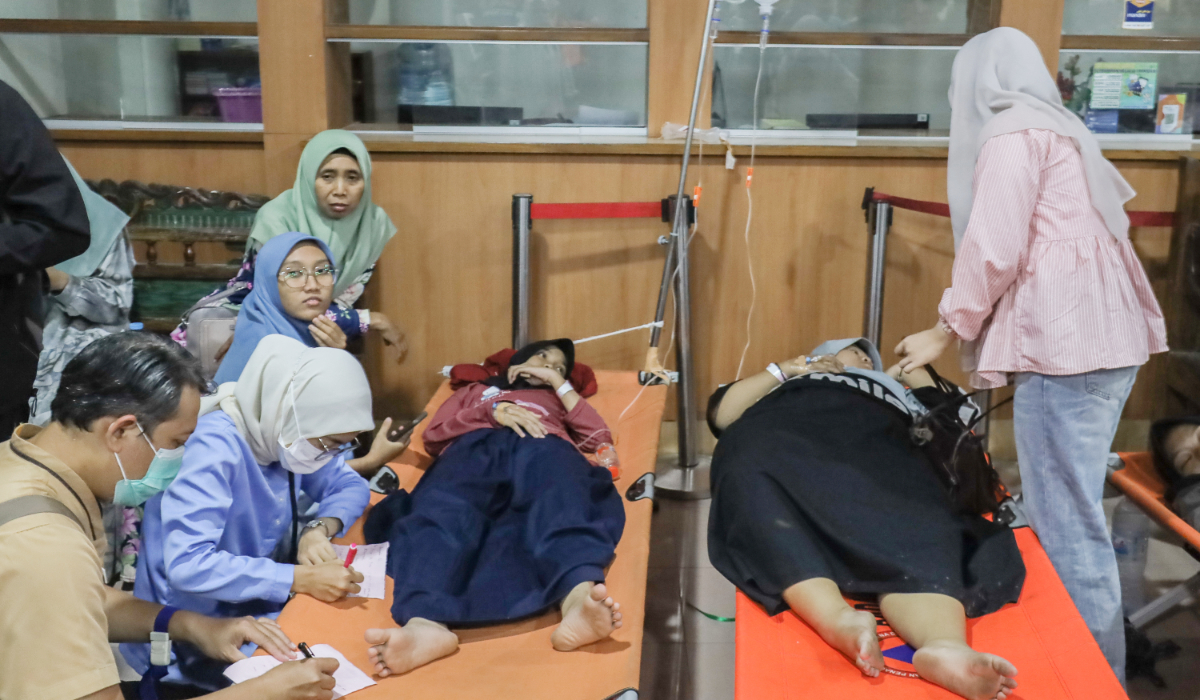
They include a five-star hotel in Cape Verde now involved in a group legal action representing at least 412 holidaymakers who say they became ill after staying at the property.

Nicky Morley, 55, from Devon, holidayed at the five-star Riu Palace Santa Maria in May 2022, with her husband, when she became so ill that she says thought she was “going to die”. She told ITV News: “I was trying to get breath, but (the vomiting was) so strong and so violent, I started to choke, and I was really panicking.”

Yet, according to Which?, Tripadvisor’s AI summary of the Riu Palace described it as “popular with many travellers”, with “diverse restaurants” that earn ‘rave reviews’ and “spotless” cleanliness. The summary has since been removed.

Recent guest reviews on Tripadvisor also painted a very different picture. One described the Riu Palace as having “exceptionally poor hygiene”, while another said she was served raw chicken. Others shared photographs of flies and birds in the buffet food and another spotted “dead little roasted mice by the sitting area” on her “nightmare” holiday.

Which? checked in March this year and said there were 102 mentions of food poisoning at the Riu Palace. The consumer group also singled out a hotel in the popular Mexican resort of Cancun where several guests left reviews saying they fell ill, including a wedding party. Yet Tripadvisor’s AI overview once again gave a glowing summary, describing its “immaculate cleanliness”.

It also highlighted a hotel on the Antalya coast in Turkey where several reviewers who visited last summer wrote they felt unsafe due to repeated sexual harassment from male hotel staff, including inappropriate jokes and gestures, and repeated requests to connect on social media. Yet the Tripadvisor AI review summarised its service as “friendly”. The closest it comes to referring to the serious allegations is: “Lapses (in service) noted by a few”.

Rory Boland, editor of Which? Travel said: “Tripadvisor may insist users can still fact-check its summaries against real reviews, but this ignores the fact that it made the decision to push these summaries to the very top of the page. This failure to surface critical safety information is unacceptable and potentially life-threatening.

“The platform has a responsibility to revisit the accuracy of its AI summaries and AI chatbot. In the meantime, users should scroll past these summaries and look at guest reviews, particularly one-star ratings, and at reviews on other sites, to make sure their next stay is a safe one.”

A spokesperson for Tripadvisor said: “We fundamentally disagree with the premise of this investigation. Our AI Summaries have been designed to uphold the integrity and transparency that has made Tripadvisor trusted by millions of travelers for over 25 years. They provide snapshots based on high volumes of user generated content and explicitly are not intended to replace individual reviews. Users can easily click to see the traveller quotes behind each review element or access all reviews for that listing, eliminating any need to blindly trust AI-generated content.

“We also have comprehensive safeguards in place to ensure important safety information is properly reflected across our platform. Our AI systems are designed to capture all types of traveller feedback and we continuously monitor and refine our models. Our systems automatically suppress AI Summaries for listings that feature warnings from travellers about serious safety incidents such as death, drugging or sexual assault, helping ensure this content is highly visible to our community.

“No review content has been suppressed or hidden by the introduction of these tools, and the suggestion they pose danger to travellers is an unfounded claim that seems designed to generate controversy rather than inform readers. We believe our community understands that AI technology is still developing and has the common sense to check any AI advice against Tripadvisor’s billion-plus reviews and contributions.”

A spokesperson from RIU Hotels & Resorts said: “At RIU Hotels & Resorts, the health and safety of our guests is always our main priority. RIU has been operating in Cape Verde for 20 years and currently manages six hotels, totaling 4,650 rooms and employing 3,307 staff members. We maintain an average occupancy rate of over 90% year-round, and in 2025 alone, we welcomed over 400,000 guests.

“Let us assure that we operate with the highest standards of professionalism and service, placing hygienic-sanitary safety as our top priority. Our hotels in Cape Verde follow the strictest international health and hygiene standards, certified by external prestigious consultancy firms, specialized in health and safety.”

Source link

164 UK tourists come back with dysentery – with 112 from just one popular location

Foreign Office backed experts issue update as tourists from England, Scotland and Wales struck down

UK health experts have disclosed that 164 individuals have arrived back in England, Scotland and Wales from a holiday destination carrying a serious infection. In a fresh update, the Foreign Office-backed Travel Health Pro stated that people must exercise additional caution.

The surge in stomach bugs Shigella – also referred to as shigellosis or dysentery – and Salmonella has been occurring on the Cape Verde Islands, a favoured destination among British holidaymakers. Authorities confirmed that over the past eight months, cases of Shigella and Salmonella infection have been documented in travellers returning to England, Scotland and Wales from the Cape Verde Islands.

Of 164 confirmed Shigella cases, the majority – 112 – individuals reported travel to Cape Verde, predominantly to the Santa Maria and Boa Vista regions. As of June 2026, of 99 confirmed Salmonella cases, from three distinct clusters reported in England, Scotland and Wales since 1 October 2025, a total of 70 individuals reported travel to Cape Verde.

Cases in the largest of the Salmonella clusters reached their peak in January 2026. The European Centre for Disease Prevention and Control (ECDC) also flagged a surge in Shigella cases amongst travellers returning from Cape Verde since September 2022.

More than 1,000 confirmed and suspected cases of shigella and other gastrointestinal infections, including salmonella, have been identified in travellers returning from Cape Verde to 13 countries across the European Union/European Economic Area: Belgium, Czechia, Denmark, Finland, France, Germany, Ireland, Luxembourg, Norway, Poland, Portugal, Sweden and the Netherlands. Cases have also been recorded amongst US travellers who visited Cape Verde.

Shigella is a bacterium that can trigger shigellosis, a gut infection capable of causing severe diarrhoea, fever and stomach cramps. The majority of people recover within a week.

However, certain individuals, such as older adults, those with weakened immune systems, anyone with complex medical conditions, pregnant women and children under five, may face a heightened risk of complications, including sepsis.

Shigella spreads through contact with contaminated faeces, either directly via person-to-person transmission or indirectly through food, water or surfaces tainted with Shigella. Travellers visiting destinations where food and water safety cannot be guaranteed are particularly at risk.

Globally, the majority of Shigella cases occur in children younger than five years of age, though all age groups can be affected. There is additionally a risk of sexual transmission amongst men who have sex with men.

Salmonella, also known as salmonellosis, is a bacterial illness that primarily targets the intestines. Symptoms such as diarrhoea, stomach cramps, nausea, vomiting and fever typically appear between 12 and 72 hours after infection [8].

Young children, pregnant women, those with underlying health conditions and elderly people are at greater risk of developing severe symptoms. The majority of human cases stem from contaminated food and water.

For further details, click here.

While you are away.

Be sure to follow these steps when travelling overseas.

Source link