Food and Drug Administration

FDA approves first wearable device to monitor blood sugar, ketone levels

Aug. 25 (UPI) — On Tuesday, the U.S. Food and Drug Administration approved a device designed to continuously monitor both blood sugar levels and ketone levels in people with diabetes.

The Libre Duo 10-Day Continuous Dual Glucose Ketone Monitoring System is the first of its kind to be approved in the United States — both the first wearable device to monitor ketone levels and the first to combine monitoring of ketone and blood sugar levels, the FDA said. It’s approved for those ages 2 and older.

“Today’s authorization is a breakthrough for the safety of children and adults living with diabetes,” said Dr. Michelle Tarver, director of the FDA’s Center for Devices and Radiological Health. “Knowing that ketone levels are rising, and having that information in real time, around the clock, can be the difference between early intervention and a life-threatening emergency.”

The U.S. Centers for Disease Control and Prevention estimates that 40.1 million Americans live with diabetes. About 2.1 million of them have type 1 diabetes, which also makes it important to monitor the levels of ketone, an acid. The body creates this substance when, due to a lack of insulin, it uses fat instead of glucose to produce energy. Too much ketone can cause diabetic ketoacidosis, a dangerous complication.

“Early detection of rising ketone levels is critical,” the FDA said.

Until now, the agency said, people had to monitor ketone levels with separate tests that only provided a single measurement at one point in time. The new system combines blood sugar and ketone tests and monitors them continuously. Readings — and alerts in case of dangerous trends — are sent wirelessly to a smartphone app.

The FDA previously granted “breakthrough device” status to the system, which is meant to expedite the device’s development and review.

Source link

Trump taps White House policy aide Heidi Overton to lead FDA

Aug. 20 (UPI) — President Donald Trump has nominated White House aide Dr. Heidi Overton to lead the Food and Drug Administration, drawing anger from Democrats and criticism from a key Republican senator.

Trump announced his nomination of Overton to be the next FDA commissioner on his Truth Social platform Wednesday, calling the deputy director of the White House Domestic Policy Council “a ROCKSTAR in my administration.”

“She is known to take on the HARDEST issues, and bring me solutions that work best for the Country,” Trump said. “We need her leadership at the FDA now to ensure that the U.S. remains the WORLD LEADER for Scientific Discovery and CURES.”

If confirmed by the Senate, Overton will be tasked with overseeing agency policy concerning drugs, vaccines, tobacco products and much of the food supply, among other responsibilities. Kyle Diamantas, a friend of Trump’s son Donald Trump Jr. has been serving as acting FDA commissioner since Marty Makary resigned as head of the agency in May following reported clashes with the Trump administration over its decision to authorize fruit-flavored electronic cigarettes.

“Heidi brings exceptional judgment, professionalism, discipline and an unwavering commitment to the American people,” Department of Health and Human Services Secretary Robert F. Kennedy Jr. said in a statement supporting her nomination to lead the FDA under him.

“I have seen her challenge assumptions, demand excellence and turn bold ideas into meaningful results.”

She has had an increasingly visible presence near the president in recent months and most recently appeared with him earlier this month when he signed an executive order to reduce the number of vaccines recommended for children, which has sparked widespread concern among the medical community.

House Speaker Mike Johnson, R-La., called Overton “a woman of deep faith, an accomplished physician and a champion of the America First agenda” as he congratulated her on the nomination.

“I have seen firsthand her ability to navigate complex policy challenges with conviction and clarity,” he said in a social media statement.

“She will serve our country well.”

While Republicans praised Trump’ pick, Sen. Bill Cassidy, a doctor, broke ranks, saying that while he respected her experience as a physician, “I have strong concerns about her nomination,” citing her lack of managerial experience of a large organization, such as the FDA, which is dealing with staffing and morale issues.

“Additionally, Dr. Overton’s active role in last week’s nonsensical vaccine executive order calls into question her commitment to standing up for sound science and protecting children’s health,” he said online.

“That alone is almost disqualifying.”

Cassidy, who represents Louisiana, will play a key roe in her confirmation as chairman of the Senate Health, Education Labor and Pensions Committee a key vote in whether she is confirmed. Republicans can afford to lose only three votes on the Senate floor, as they only hold a 53-seat majority. The two independent senators caucus with the Democrats, who are all expected to all vote against her nomination.

“Heidi Overton is a far-right, anti-abortion extremist who has no business leading the FDA,” Sen. Patty Murray, D-Wash., said in a statement.

“The American people deserve someone who will put science and facts FIRST, not another Trump sycophant who will make it their mission to attack medication abortion.

“I will vote NO.”

Reproductive health organizations also criticized Trump’s pick, pointing to Overton’s celebration of the overturning of Roe vs. Wade, returning oversight of abortion to the states, as a “huge victory” and to her advocacy for what they described as the politicization of government agencies when she worked at the far-right America First Policy Institute think tank.

“Donald Trump is trying to put an anti-abortion extremist in charge of any agency that could seriously undermine reproductive healthcare — including the agency that could roll back access to mifepristone nationwide,” Reproductive Freedom for All President and CEO Mini Timmaraju said in a statement, referring to a prescription oral medication used to terminate an early pregnancy.

“Her nomination is another alarming step in Trump’s plan to weaponize every part of the federal government to restrict abortion nationwide.”

President Donald Trump speaks to the press as he tours a new helipad on the South Lawn of the White House on Wednesday. Photo by Al Drago/UPI | License Photo
Source link

Trump expected to nominate Heidi Overton as FDA commissioner

Aug. 19 (UPI) — President Donald Trump is expected to nominate Dr. Heidi Overton, a White House policy aide, to lead the Food and Drug Administration.

The decision was reported by the Washington Post, The New York Times and Politico, all citing anonymous sources. Overton is an aide at the White House’s Domestic Policy Council and will be tapped to be the next FDA commissioner, sources say.

Overton will replace Marty Makary, who left the position in May, and the Senate will have to confirm her to the position.

The FDA commissioner is one of the most powerful jobs in U.S. health care. The FDA oversees drugs, vaccines, tobacco products, the bulk of the food supply and more. The position has remained open longer than expected as some have turned it down over fears of administration interference, the Post reported.

The position has been run by acting FDA Commissioner Kyle Diamantas, a friend of Donald Trump Jr., and a former partner at the law firm Jones Day.

Overton is board-certified in public health and general preventive medicine and was a general surgery resident at Johns Hopkins Hospital in Baltimore, where she also earned a doctorate in clinical investigation. She worked at the America First Policy Institute, a conservative think tank. She has also written articles calling abortion “corrosive” to women. She called abortion pills “far more dangerous to women” and has called for more controls on the pills.

In September, Secretary of Health and Human Services Robert F. Kennedy Jr. said Overton and Calley Means worked on a Make America Healthy Again strategy report calling for more review of chemicals in food and an increase in oversight over pharmaceutical advertisements, The Times reported.

Makary left the position in May because he disagreed with the administration’s policy of allowing tobacco and e-cigarette companies to sell flavored vapes. The White House had been pressuring Makary to allow the vapes, but he disagreed, citing their appeal to teens and young adults.

The FDA approved mango and blueberry vapes just after Trump had lunch with tobacco executives, The Times reported.

While she is a doctor and has been present for many FDA announcements at the White House, she hasn’t run a large agency before. The FDA has thousands of employees and shapes food safety and pharmaceutical policies.

President Donald Trump hosts lifeguard Ryder Williams in the Oval Office of the White House on Monday. Photo by Samuel Corum/UPI | License Photo

Source link

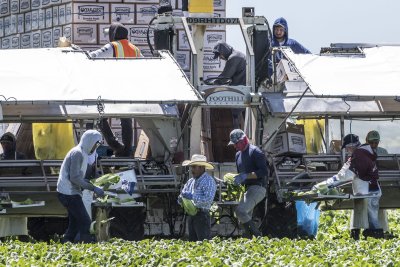
FDA, CDC inspect Taylor Farms’ Mexican plant in cyclosporiasis probe

Aug. 14 (UPI) — U.S. health officials said they have begun inspections at the Mexican processing plant of the U.S. food distributor Taylor Farms as they deal with a continuing cyclosporiasis outbreak that has spread across 17 states.

The Food and Drug Administration and the Centers for Disease Control and Prevention announced Thursday they have “initiated an onsite inspection and sampling” at Taylor Farms de Mexico’s facility in Guanajuato, Mexico, located about 185 miles northwest of Mexico City.

Taylor Farms, based in Salinas, Calif., voluntarily recalled all iceberg lettuce from that area on July 17, including shredded lettuce used in Taco Bell products and in salad kits sold in some grocery stores.

Taco Bell also said it was removing shredded lettuce supplied by Taylor Farms in affected states.

The illnesses, most of which began before July 17, have reached 9,481 cases reported across 17 states as of Thursday, the FDA said.

The latest total included two new states since the previous update issued last week — Maine and Massachusetts. The other affected states include Illinois, Indiana, Kansas, Kentucky, Michigan, Ohio, Oklahoma, Pennsylvania, West Virginia, Missouri, Arkansas, Iowa, Nebraska, New Hampshire and North Carolina.

“FDA remains confident that all recalled iceberg lettuce related to this specific Cyclospora outbreak is off the market,” the agency said Thursday. “FDA will continue to work with federal and state partners to investigate this multistate outbreak.”

Including the current outbreak, the CDC has registered reports of 13,895 cases of cyclosporiasis since May 1, and is also tracking of at least 10,455 additional cases of cyclospora infection requiring further investigation and analysis.

The situation has angered Democratic lawmakers who are demanding answers from Taylor Farms and the Trump administration.

On July 27, Rep. Robert Garcia, D-Calif., ranking member of the House Committee on Oversight and Government Reform, called on Taylor Farms CEO Bruce Taylor to explain his company’s role in the outbreak and whether it “used its political donations and White House connections to interfere with the Food and Drug Administration’s investigation into the contaminated food supply.”

“Evidence points to Taylor Farms products as a source of the outbreak, but reports indicate that your company may have attempted to influence the ongoing [FDA] investigation into the matter, obfuscate Taylor Farms’ role in a public health crisis, and mislead consumers trying to keep their families safe,” Garcia wrote.

And on Wednesday, the Food Safety Coalition, a group including consumers, scientists and government watchdogs, urged the Senate Republicans to rescind a measure instituted last year which “prevents the [FDA] from implementing traceability requirements for high-risk foods, including leafy greens, until July 2028.”

The hobbled traceability rules, the coalition said, has contributed to “a crisis in consumer confidence, in part due to Taylor Farms’ … failure to provide information to the public required under the FDA rule in its recall communications.”

Source link

Taylor Farms: FDA mistakenly reports parasite in lettuce amid recall

July 20 (UPI) — Taylor Farms said late Sunday the Trump administration mistakenly informed it that a sample of its shredded iceberg lettuce tested positive for a parasite amid a multi-state outbreak that prompted the U.S.-based fresh-produce giant to initiate a recall of the salad staple distributed to 27 states.

The Food and Drug Administration reversed the finding Sunday, determining that the purported positive test for the microscopic Cyclospora parasite, which causes the intestinal illness cyclosporiasis, was a false positive.

“Today, FDA apologized to us,” the company said in a statement.

“Today, we were informed that FDA made a mistake.”

Taylor Farms had initiated the voluntary recall Friday after federal health investigators linked shredded iceberg lettuce sourced from central Mexico to a multi-state cyclosporiasis outbreak through a traceback investigation.

At least 1,644 people in five states have been infected, including 94 hospitalizations, since May 13, according to the U.S. Centers for Disease Control and Prevention, which said there have been no fatalities.

Federal health investigators have linked the illnesses to shredded iceberg lettuce served at Taco Bell locations in Indiana, Kentucky, Michigan, Ohio and West Virginia.

The FDA said Friday that its traceback investigation identified the supplier as Taylor Farms de Mexico. The company then initiated the voluntary recall.

On Saturday, federal investigators said a sample collected during targeted import surveillance tested positive for Cyclospora. The FDA said the produce was not part of the initial recall and investigators were working to identify whether any of the lot was available in commerce.

A day later, Taylor Farms said it was informed of the FDA’s “mistake.”

“To be clear, at this moment, the FDA has not identified a single positive product test result for Cyclospora,” it said.

The FDA told media it had discovered the false positive after rechecking the results of the purported positive sample.

“As of July 19, 2026, there are no confirmed positive sample results for product testing for Cyclospora,” the FDA said in a statement, NBC News reported.

Taylor Farms said it had completed the voluntary recall, which was limited to iceberg lettuce grown and processed in central Mexico, and that all of its other produce is available for purchase.

“Our thoughts remain with everyone who has fallen ill in this outbreak,” it said.

“We are committed to working with public health authorities as the ongoing outbreak investigation continues.”

Source link

Taylor Farms removing lettuce linked to cyclosporiasis outbreak

The U.S. Centers for Disease Control and Prevention have said that shredded iceberg lettuce from Taylor Farms served in Taco Bell have cause many of the cyclosporiasis illnesses. File Photo by Erik S. Lesser/EPA

July 17 (UPI) — Taylor Farms announced Friday it is removing all iceberg lettuce sourced from central Mexico from the U.S. market, after federal officials said they traced the cyclosporiasis outbreak that’s caused illness in thousands of people to lettuce supplied to Taco Bell restaurants in five states.

The U.S. Centers for Disease Control and Prevention and the Food and Drug Administration said their investigators found the shredded iceberg lettuce came from Taylor Farms, a supplier that also sells salad kits in grocery stores.

In a statement, the company said it is voluntarily removing all of its Mexico-sourced iceberg lettuce, adding the outbreak is not associated with any of its salad kits.

“While the FDA traceback is indicating a specific independent farm that represents less than 1% of the U.S.’s iceberg lettuce supply as the potential source of the outbreak, we have removed all iceberg lettuce from the region indefinitely,” the company statement said.

The CDC’s website says not to eat “shredded iceberg lettuce served at Taco Bell locations in Indiana, Kentucky, Michigan, Ohio and West Virginia.”

More than 1,600 people have been confirmed ill with the bug.

The agencies did not name a supplier, but two people familiar with the inquiry told The Washington Post that investigators have identified Taylor Farms as the supplier.

“The investigation remains active, and additional states, restaurants, retailers or products may be identified as more information becomes available,” said Emily Hilliard, a spokesperson for the Health and Human Services Department.

“The signal we have gotten is that there is a very high percentage of people who got sick at Taco Bell, and when investigators asked what their menu items were in common, lettuce came up frequently,” one person familiar with the investigation said.

“Based on ongoing conversations with public health officials, and out of an abundance of caution, Taco Bell has taken immediate action to voluntarily remove potentially impacted lettuce from a supplier in select states,” Taco Bell Corp. said in a statement. “The affected ingredient from our supplier is being indefinitely removed from our supply chain nationwide and will be replaced within 24 hours in select states.”

Taylor Farms is a leading global producer of salads and healthy fresh foods, with production facilities across the United States, Canada, Mexico and Western Europe. The company has been linked to several outbreaks.

In November 2024, onions from Taylor Farms were tainted with E.Coli and sold at McDonald’s stores via Quarter Pounders burgers. About 100 people in 14 states were sickened. In December 2015, 19 people in 18 states were sickened with E. Coli after eating tainted celery supplied by the company to grocery stores. In August 2013, salad kits from Taylor Farms grown in Mexico were recalled after more than 360 people in Texas, Iowa and Nebraska became ill with cyclosporiasis. In February 2013, Taylor Farms recalled organic baby spinach products sold in 39 states for potential E. coli contamination, though there were no reports of illness.

President Donald Trump delivers a prime-time address to the nation from the East Room of the White House on Thursday. Pool photo by Saul Loeb/UPI | License Photo

Source link

Army integrating new handheld device to quickly assess brain injuries

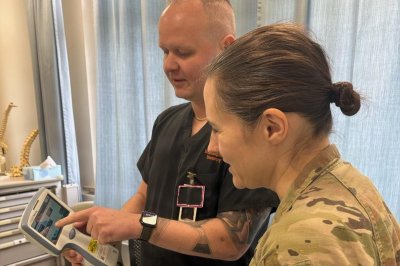
U.S. Army Lt. Col. Bradley Dengler, the neurosurgery consultant to the Army Surgeon General, with Landstuhl Regional Medical Center, shows Col. Jessica Peck, the command surgeon for 10th Army Air and Missile Defense Command, how to use the i-Stat Alinity at LRMC, Germany on May 21. The device is a portable blood analyzer used to detect traumatic brain injures and delivers real-time, lab-quality diagnostic test results. U.S. Army Photo by Sgt. 1st Class Jacob Kohrs

July 16 (UPI) — U.S. Army medics in Europe said Thursday they are testing a new handheld diagnostic tool that can identify traumatic brain injuries in as little as 15 minutes.

Military officials predicted the new i-STAT Alinity device, made by Abbott Laboratories, can revolutionize the way medics can detect and treat such injuries quickly in the battlefield environment.

Rather than traditional methods of assessing brain injury or concussion by making subjective judgements based on questioning patients, the new device can yield objective information by measuring unique biomarkers that are present in the blood of the injured.

Lt. Col. Bradley Dengler, the neurosurgery consultant to the Army Surgeon General and director of the Military Traumatic Brain Injury Initiative at the Uniformed Services University, said the development of the i-STAT Alinity is a game-changer.

“This is probably the single most important advancement in traumatic brain injury care in the last 15 to 20 years,” he said in an Army release. “Historically, we’ve missed a lot of these injuries.”

Abbott Labs received clearance from the Food and Drug Administration to use the device with whole blood two years ago. The company says it allows doctors to help assess patients with suspected concussion at the bedside and obtain “lab-quality” results in 15 minutes.

Prior to that, the tests were only cleared for use with plasma or serum, requiring samples to be sent to a lab for processing and testing.

With that approval, the Army is now integrating the devices into air defense forward units under 10th Army Air and Missile Defense Command. These units were judged to be among the most likely to benefit from the devices because they often operate in far-flung locations, hours away from advanced medical facilities and sophisticated brain scanners.

The i-Stat device measures two biomarkers from the brain that may be released into the bloodstream indicating a possible brain injury — ubiquitin C-terminal hydrolase L1, or UCH-L1, and glial fibrillary acidic protein, or GFAP.

Dengler said the tests are extremely valuable because if the blood biomarkers are not elevated, there is a 99% chance that there is no bleeding in the brain.

That’s deemed a major improvement over the widely used Military Acute Concussion Evaluation, a 15-minute standardized cognitive assessment involving memory lists and concentration exercises.

Source link

More than 800 people in U.S. confirmed to have stomach parasite cyclospora

The Centers for Disease Control and Prevention on Friday said that it has confirmed well over 800 infections by the food-borne parasite cyclospora in 31 states and is aware of at least 1,500 more potential cases. File Photo by Erik S. Lesser/EPA-EFE

July 10 (UPI) — The Centers for Disease Control and Prevention on Friday reported that well over 800 cases of a food-borne parasite have been confirmed by 31 states.

CDC officials were working with state and local health agencies to investigate clusters of cyclosporiasis cases in multiple states, some of which the Food and Drug Administration is working to trace and others that have not yet been linked to a common source, the agency said in an update.

Cyclosporiasis is a gastrointestinal disease caused by the parasite cyclospora, which can cause watery diarrhea, loss of appetite and weight loss, and in some cases require hospitalization, according to the CDC.

The parasite can be acquired when people eat or drink contaminated food or water and, although it can be spread year-round, it is considered to be a larger problem during the spring and summer months.

The current series of outbreaks has been tracked since at least mid-June, although the FDA lists its first investigation of cyclospora as staring June 3. With no product linked to the parasite or any other outbreak, the FDA is attempting to trace back to a source.

“Multiple jurisdictions have reported an increase of cases in the last two weeks compared to the same period in 2025,” the CDC said in the update.

“We assume a 6-week reporting lag between illness onset and case reporting to CDC,” the agency said. “Therefore, we anticipate that case counts will continue to rise as data are received.”

The CDC reported that as of July 9, it has confirmed 843 cases of the nationally notifiable disease in 31 states, with 86 hospitalizations, but officials said the agency is aware of at least 1,500 more cases that have not yet been confirmed as domestically acquired in the United States.

Among the states reporting cases and investigations, Michigan on July 4 reported that its confirmed cases increased to 572, a large increase from 170 on June 30.

Cyclospora infects the small intestine after contaminated food or drink is consumed, and symptoms of infection can be seen anywhere from two days to two weeks after exposure.

Overall, the infection is generally not life-threatening, but because of dehydration linked to frequent and sometimes explosive diarrhea — especially in younger or older people, and those with weakened immune systems — it may require hospitalization.

Outbreaks in the United States have previously been linked to bagged salad mixes and kits, fresh cilantro and basil, raspberries, snow peas, and green onions, health officials said.

Source link

FDA recalls millions of bottles of eye drops over possible ‘foreign substance’

July 9 (UPI) — The Food and Drug Administration on Thursday recalled more than 2.5 million bottles of eye drops because they may contain a “foreign substance.”

The nationwide recall was initiated by Lupin Pharmaceuticals on June 4 because of some type of foreign substance, though the company and the FDA have not identified it or how it got into the eye drops, MassLive and NJ.com reported.

The class II recall of the prednisolone acetate eye drops — used to reduce inflammation after eye surgery or for allergic and other conditions — is the second-highest risk recall for the agency because it may cause adverse consequences if used.

In a recall notice posted on its website on Thursday, the FDA said that the recall of more than 2.5 million bottles of Lupin’s prednisolone eye drops was because of the “presence of foreign substance.”

The affected bottles come in 5 mL, 10 mL and 15 mL quantities, and were produced by the India-based Lupin, which specializes in manufacturing generic pharmaceutical medications.

The FDA also cautions against simply pausing the use of these medications, suggesting that people who need to use them contact their eye doctor or pharmacist in order to properly react for their own conditions.

Olympic canoeist David Hearn departs the Moultrie Courthouse after pleading not guilty to damaging the Lincoln Memorial Reflecting Pool on Thursday. Hearn was indicted on July 2 on one count of destruction of property of more than $1,000 for allegedly damaging the Reflecting Pool, carrying a maximum penalty of 10 years in prison if convicted. Photo by Bonnie Cash/UPI | License Photo

Source link

FDA expands sunscreen options, adds bemotrizinol

A woman applies sunscreen to her face. On Tuesday, the U.S. Food and Drug Administration said it will allow the first new permitted ingredient in over-the-counter sunscreens in 20 years. File Photo by Bill Branson/National Cancer Institute

June 9 (UPI) — The U.S. Food and Drug Administration on Tuesday added bemotrizinol to the list of permitted active ingredients in over-the-counter sunscreens, the first addition to that list since the 1990s.

The Department of Health and Human Services “is advancing innovation by bringing a new sunscreen ingredient to the U.S. market for the first time in 20 years,” HHS Secretary Robert F.Kennedy Jr said. “Bemotrizinol has been used safely in Europe for decades, and FDA’s action will increase competition and consumer confidence in sunscreen products.

The FDA said the ingredient has low levels of absorption through the skin and into the body and is generally recognized as safe and effective for adults and children 6 months old and older.

The American Chemical Society said that BEMT blocks ultraviolet A and ultraviolet B light rays and was first used in sunscreens in the European Union in 2000, with Canada, Australia and some countries in Asia following suit soon after.

UV B rays have more energy, cause visible sunburns and are the ones blocked by most U.S. sunscreens today. However, UV A rays can also cause skin cancers, the American Cancer Society said. They also cause skin cells to age and can cause indirect damage to cells’ DNA. The ACS said about 95% of the UV rays that reach the ground are UV A rays.

The FDA said an over-the-counter monograph drug, such as a sunscreen product, can enter the market without an approved drug application if it meets certain requirements. DSM Nutritional Products LLC submitted an OTC monograph order request to add BEMT, at concentrations up to 6%, as a new active ingredient in the OTC monograph for sunscreens. The FDA proposed to add BEMT in December, and the public could submit comments through Jan. 26.

Source link