following year

‘MJ’ Shannon, née Mary Jo Campbell, dies: Kris Jenner’s mom was 91

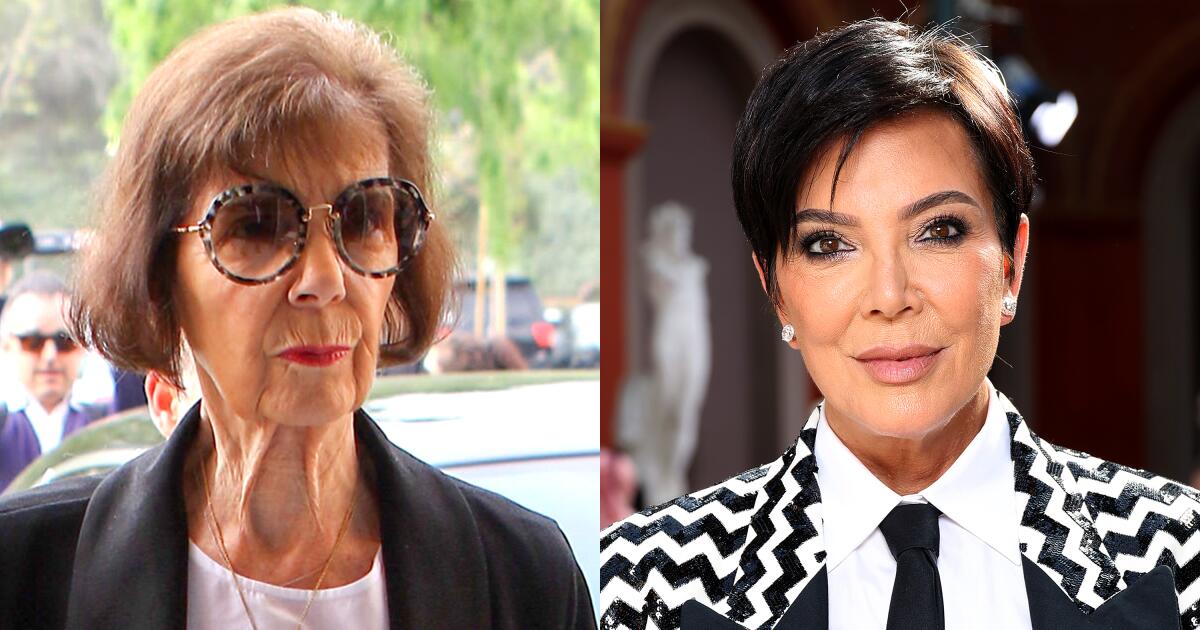
Kris Jenner’s mom, Mary Jo “MJ” Shannon, has died.

Jenner announced the news of Shannon’s death Thursday in an Instagram tribute. She was 91.

“Today, we said goodbye to my beautiful Mommy MJ. … There are no words that could ever capture what she has meant to me or the heartbreak of having to say goodbye. My mom was the heart of our family.”

Jenner wrote that her mother, the matriarch of the Jenner-Kardashian clan, taught her everything that “truly matters.”

“To love your family fiercely, to be kind, to show up for the people you love, and to never take a single moment together for granted,” she wrote alongside a glamour shot of Shannon. “She taught us that family is everything. She showed us how to love unconditionally and how to find joy in the little moments. She showed me how to face life’s challenges with resilience and faith.”

Jenner concluded the post with an open letter to MJ:

“Mom, thank you for every sacrifice you made, every piece of wisdom you shared, and every moment you loved us so completely. I will miss our daily talks, your smile, your laughter… Our hearts are broken, but we find comfort knowing that love like yours never truly leaves us. Your love will live on in our family, in our traditions, in every moment we are together, and in every life you touched. When I look at my kids and my grandkids, I will forever see pieces of you in all of us. There is not a part of me that isn’t shaped by you. And if I have done anything right in this world, it’s because I spent my life trying to live in a way that would make you proud. Every memory, every moment, every blessing, it was all because of you, and I will forever thank God every single day for making you my mommy. My heart is broken into a million pieces… thank you for giving me the greatest childhood and oh what a beautiful blessed life… I love you forever Mommy. Thank you for giving us everything.”

Born Mary Jo Campbell on July 26, 1934, MJ married her high school sweetheart, whom she divorced two months later. Then in 1954, she wed Jenner’s dad, Robert “Bob” True Houghton. She gave birth to Jenner the following year and Jenner’s late sister, Karen Houghton, in 1958. After seven years of marriage, MJ and Bob called it quits and she married Harry Shannon, a businessman who helped raise Jenner and her sister in San Diego, where MJ ran a children’s clothing store.

Harry Shannon died in 2003.

MJ was featured on the famous clan’s E! reality series “Keeping Up With the Kardashians” and the follow-up Hulu series “The Kardashians” numerous times over the years. In a clip from the show, granddaughter Kim Kardashian detailed that her grandmother had survived colon cancer and breast cancer and, in her sunset years, struggled with sickness resulting from the cancer treatments.

In one clip from the show, MJ said she didn’t have an appetite without taking her “medication” first. Then she persuaded her daughter, Jenner, to have marijuana gummies with her. Together they lit some incense and munched on muffins and chips and guacamole.

In another clip, Jenner interviews MJ about her life, and during the sit-down, Jenner asks MJ, “What’s your biggest fear?”

MJ replies, “I try not to fear,” and then follows up asking Jenner what her biggest fear is.

Jenner starts to cry and says, “I don’t want to say it. I can’t believe I’m crying. … Just, losing someone.”

On Thursday, Kim Kardashian caught flak online when a post featuring the Skims mogul and her sister Khloe Kardashian swigging tequila from a boat on a lake published shortly after Jenner announced the news of MJ’s death.

“This post was scheduled a few days ago before we lost MJ, so its timing came right alongside her passing,” Kim wrote in the comment section of the post. “I’ve been by my mom and grandma’s side this past week, and my heart is completely with my family right now. We love and miss her so deeply, and in the days ahead, we’ll be focusing on celebrating her beautiful life.”

Kim followed up with a post celebrating her grandmother, writing, “My sweet Grandma MJ, my best friend, my gossip buddy, my forever twin … You taught all of us the importance of family, and those values are something we’ll carry with us forever!!!!! You were the woman who showed me what it meant to be a hardworking businesswoman. You gave me my very first job at your store in San Diego and taught me lessons about work ethic, strength, and confidence that I’ve carried with me ever since.

“You always believed in me, championed me, and were my safe place. You truly were the matriarch of our family, and your love is woven into all of us. I know you’re at peace now. Give Papa Harry, Aunt Karen, and my dad a hug for me. You will always be a part of me, I love you soooooo much and I will miss you forever and ever. … YOU ARE THE BEST OF US!!!”

Two weeks ago, Jenner’s bodyguard, Mason Haynes, who also worked as a close protection guard for other members of the Kardashian-Jenner family, died in a traffic accident. He was 52.


Source link

David Clayton-Thomas of Blood, Sweat & Tears dies at 84

David Clayton-Thomas, the lead singer of Blood, Sweat & Tears, whose husky, high-strung tenor on “Spinning Wheel,” “And When I Die” and other hits helped make the so-called brass rock band among the most popular acts of the late 1960s, has died at age 84.

Spokesperson Eric Alper said that Clayton-Thomas died peacefully Wednesday at St. Michael’s Hospital in Toronto. Alper did not cite a specific cause of death.

Clayton-Thomas was a onetime street fighter and petty thief from Canada who briefly became a rock superstar, the front man of a nine-member group that sold millions of records and won two Grammys for “Blood, Sweat & Tears,” which beat out the Beatles’ “Abbey Road” for best album of 1969. Calling out amid a jazzy parade of horns, keyboards and percussion, Clayton-Thomas’ urgent shout was a signature voice of the era, preaching love on the Motown cover “You’ve Made Me So Very Happy,” a lasting legacy on Laura Nyro’s “And When I Die” and a cool head on his own “Spinning Wheel.” Meanwhile, Blood, Sweat & Tears helped inspire a wave of horn-led bands, among them Chicago, the Electric Flag and Ten Wheel Drive.

“A lot of the guys [in Blood, Sweat & Tears] would play a Broadway show matinee, then go up to Harlem and play Latin music or R&B and funk at night, or come down to the Village and play pure jazz the next night,” Clayton-Thomas told Bestclassicbands.com in 2023. “I was just a blues player: Give me three chords and I’ve got a song.”

At its peak, Blood, Sweat & Tears’ appeal was so broad it helped lead to the band’s downfall.

Hip enough to perform at the 1969 Woodstock festival, where they were among the highest paid acts, they also were known enough to the establishment to tour Eastern Europe the following year on behalf of the State Department. When Clayton-Thomas and other band members denounced the Communist regimes on the other side of the Cold War, Rolling Stone’s David Felton wrote that “the State Department got its money worth.” Counterculture Yippies would turn up at a 1970 Blood, Sweat & Tears show at Madison Square Garden, carrying obscene banners outside and dumping manure by the front gate.

The band had practical reasons for going along with the government: Clayton-Thomas, who had allegedly wielded a gun at his girlfriend, had been denied a green card and faced deportation. But after topping the charts in 1970 with the album “Blood, Sweat & Tears 3,” their appeal soon faded. A burned-out Clayton-Thomas left the group in 1972, and neither he nor the remaining musicians ever regained their old stature. Blood, Sweat & Tears would continue recording over the next few years, and even briefly reunited with Clayton-Thomas, who went on to release more than a dozen solo albums and tour on his own for decades.

Beginning under a licensing agreement reached in 1984, Clayton-Thomas toured as “Blood, Sweat Tears” for 20 years with a revolving roster of bandmates. A 1994 Times review of a show at the Coach House in San Juan Capistrano reported that “BS&T’s formula has legs, that its music has withstood the test of time. Indeed, in a world full of today’s pop harmonic minimalism, the sound of trumpets, trombones, guitar and sax backing a singer somehow seems fresh, even if it has been around for so long,” and Clayton-Thomas “still has all the enthusiasm and buzz-saw roughness that gave his voice its distinctive quality way back when.”

In 2005, BS&T re-formed (without Clayton-Thomas, who continued his solo career) and has toured since with various lead singers.

Clayton-Thomas was inducted into the Canadian Music Hall of Fame in 1996. “Spinning Wheel,” covered by everyone from James Brown to TV star Barbara Eden, was voted into the Canadian Songwriters Hall of Fame a decade later.

Born David Henry Thomsett on Sept. 13, 1941, in Kingston upon Thames, near London, and raised near Toronto and Ottawa, he was the son of a Canadian World War II veteran and of a pianist-entertainer who helped inspire her son’s interest in music. Thomsett was lucky to have the chance. He fought violently with his father, was living in the streets by his mid-teens and by age 20 was serving time in a reformatory for vagrancy, assault and other crimes.

An old guitar, left behind by a fellow inmate, changed his life. He taught himself to play and began spending extensive time in the early 1960s around Toronto’s Yonge Street music “strip,” where peers included the American rockabilly star Ronnie Hawkins, a mentor to Robbie Robertson and other future members of the Band and a guide for Thomsett early in his career.

Eager to reinvent himself, he changed his last name to Clayton-Thomas while leading his own groups. In the mid-’60s, he released such albums as “Sings Like It Is” and had a hit single with the antiwar rocker “Brainwashed.” He would also befriend a rising star, Joni Mitchell, whose childlike “Circle Game” helped inspire “Spinning Wheel,” and the venerable John Lee Hooker, who would indirectly contribute to Clayton-Thomas’ breakthrough in the U.S.

Blood, Sweat & Tears film

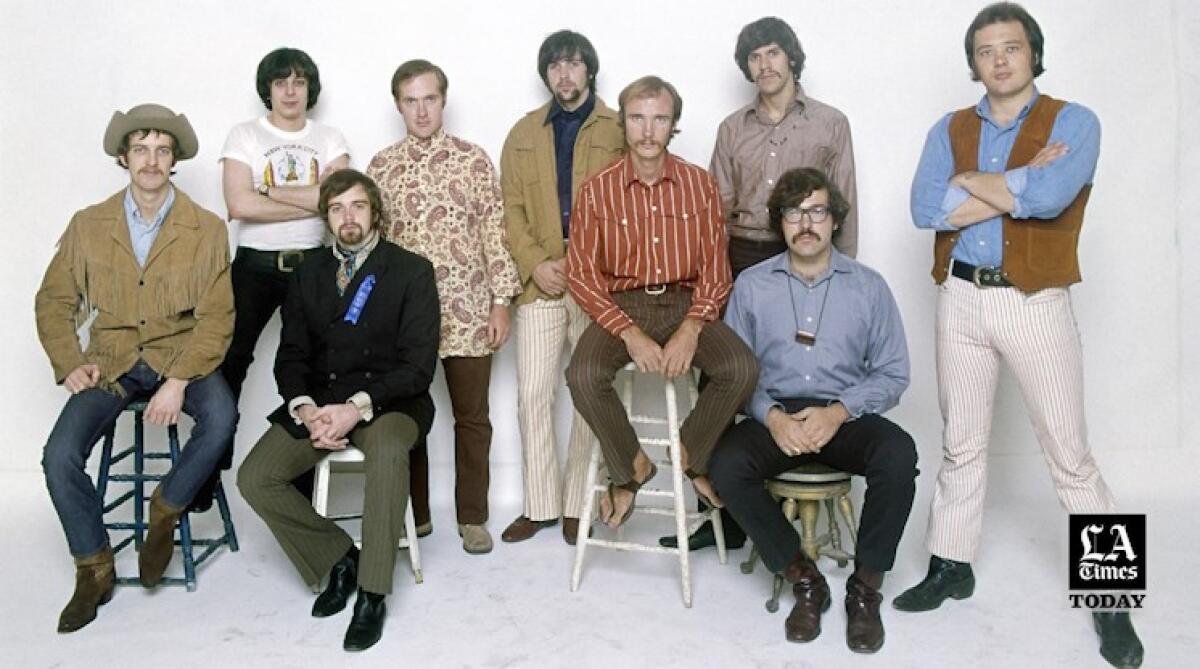
The band Blood, Sweat & Tears, including David Clayton-Thomas, far right, from the documentary “What the Hell Happened to Blood, Sweat & Tears?”

(Sony Music Archives)

Hooker had encouraged Clayton-Thomas to move to New York, where the American bluesman had an engagement at the Cafe Au Go Go in Greenwich Village. When Hooker unexpectedly departed for a tour of Europe, club owner Howard Solomon needed a replacement and recruited Clayton-Thomas.

“So I played him a couple songs on the guitar,” Clayton-Thomas told Bestclassicbands.com. “He said, ‘Do you have a band?’ I said, ‘Sure,’ and went out into Greenwich Village looking for anybody carrying a guitar case or even looking like a musician, and we put together a little band and we opened there that night. We ended up staying there for several months.”

Around the same time, session man-producer Al Kooper was looking to form a jazz-rock group and was joined by such musicians as guitarist Steve Katz, drummer Bobby Colomby and horn players Randy Brecker and Jerry Weiss. They called themselves Blood, Sweat & Tears, releasing the debut album “Child Is Father to the Man” early in 1968. Although praised by Rolling Stone publisher Jann Wenner as “a fine, exemplary group,” members were torn between those allied with Kooper and those who thought his vocals too weak to attract a substantial audience.

By the end of the year, Kooper and others had departed, and the band was seeking a new singer. After Judy Collins saw Clayton-Thomas perform, she recommended him to Colomby.

“I got home and just a couple of days later, Bobby Colomby called me up and said, ‘Hey, Kooper’s gone. We got four guys left out of the nine. And we still got a record contract with Columbia. Do you want to come down and try out for the band?’ ” Clayton-Thomas told Bestclassicbands.com. ”I said, ‘You’re damn right.’ I knew [bassist] Jim Fielder real well and I knew they were superb musicians. So I was on the next plane. We had a rehearsal that afternoon, an audition, and it was instant magic. We just knew right off the bat.”

Clayton-Thomas is survived by his daughters, Ashleigh Clayton-Thomas and Christine Graham.

Italie writes for the Associated Press.

Source link