Weekly insights and analysis on the latest developments in military technology, strategy, and foreign policy.
NASA has received its new flying laboratory, the ex-commercial Boeing 777 airliner that had previously undergone modifications for its research mission in Waco, Texas. The research aircraft will become NASA’s largest platform, taking over from the agency’s now-retired Douglas DC-8, an aircraft that you can read about here.
It’s Happening!!
NASA’s New “Flying Laboratory” is on it’s way home to Langley Research Center.
It will now undergo a full interior revamp after having structural mods completed by L3Harris.
The Boeing 777-200ER was previously flown by Japan Airlines. Surprisingly it still has… pic.twitter.com/yHbTq9DBdp
L3Harris told TWZ that the aircraft arrived at NASA’s Langley Research Center in Hampton, Virginia, yesterday, after a check flight and a three-hour transit from Waco. The company says that it “completed extensive structural modifications” and delivered it ahead of schedule. The program was accelerated by using “advanced engineering techniques,” including 3D scanning and specialized installation tooling.
The 777 prepares to depart Waco, Texas, yesterday. L3Harris Brenda Hawkins
The company also confirmed that it partnered with Yulista on the modification work. According to its website, Yulista provides “integrated modernization, sustainment, readiness, and mission support for defense and aerospace customers.”
As we reported in the past, the 777-200ER was manufactured in 2003 and saw commercial service with Japan Airlines as JA704J (as seen in the tweet below) before going into storage in Southern California in 2020.
NASA bought the aircraft in December 2022, at a cost of less than $30 million. It underwent a first series of modifications at the NASA Langley Research Center before arriving at Waco in January 2025.
The 777 flying laboratory at Waco, Texas. NASA
While L3Harris and Yulista handled major structural modifications, research station and wiring upgrades in the cabin are being performed by NASA and HII, better known as America’s largest shipbuilder.
As a flying laboratory, the 777 will be able to accommodate between 50 and 100 onboard operators, compared to the 45 researchers and flight crew that typically flew aboard the 1969-vintage DC-8. The 777 also offers a useful payload of 75,000 pounds, considerably more than the 30,000 pounds of scientific instruments and equipment that the Douglas jetliner could carry. The Boeing jet will conduct missions of up to 18 hours at a maximum altitude of 43,000 feet; DC-8 missions typically lasted between six and 10 hours.
The DC-8 returns to NASA’s Armstrong Flight Research Center in Palmdale, California, on April 1, 2024, after completing its final test mission. NASA Photo bySteve Freeman
While in Waco, the 777 underwent modifications, including the installation of dedicated research stations and extensive wiring. Wiring harnesses running through the fuselage are needed to allow the operators’ workstations to communicate with sensors such as LIDAR and infrared imaging spectrometers during flights.
Temporary fasteners are utilized to map out hole patterns through four layers of reinforcement. Nearly 35,000 precision holes were drilled into the belly of the aircraft. L3Harris
Other changes included enlarged cabin windows and ports installed in the bottom of the fuselage to mount remote-sensing instruments. Meanwhile, the aircraft received new power, data, and communications systems and accommodation for instrument operators.
Widened windows along the 777 will serve as viewports for a variety of scientific instrument sensors. L3HarrisL3Harris installs viewports in the 777 aircraft cargo bay that will house advanced scientific instruments. L3Harris
“Airborne missions at NASA use cutting-edge instruments to explore and understand our home planet,” explained Derek Rutovic, program manager for the Airborne Science Program at NASA Headquarters in Washington, in a press release. “The 777 will be the largest airborne research laboratory in our fleet, collecting data to improve life on our home planet and extend our knowledge of the Earth system as a whole.”
“I’m excited for what the 777 will bring,” added Kirsten Boogaard, the NASA 777 program manager at Langley and former deputy program manager of NASA’s DC-8. “Being part of that team, I got to see the impact up close. It gives us the ability to bring together more partners, more educational opportunities, and more instruments. That will make a real difference in the data we collect moving forward.”
The 777 is expected to fly its first science mission in January 2027. This will be part of the North American Upstream Feature-Resolving and Tropopause Uncertainty Reconnaissance Experiment (NURTURE), and will involve the aircraft studying high-impact winter weather events, including severe cold air outbreaks, wind, snow and ice storms, and hazardous seas. This will be an extensive mission, gathering data in North America, Europe, Greenland, and the Arctic and North Atlantic Oceans.
The NURTURE payload has been installed alongside the general modification work.
The 777 prepares to depart Waco. L3Harris Brenda Hawkins
NASA’s DC-8 mission spectrum was broken down into four main categories: sensor development, satellite sensor verification, telemetry data retrieval, and optical tracking for space vehicle launch and re-entry, and research studies of the Earth’s surface and atmosphere.
According to a press release from L3Harris, the 777 will be used for gathering Earth science data. In response to our question about other mission sets, a NASA spokesperson confirmed that the 777 “will primarily be used for airborne science campaigns, but similar to the DC-8, it will support a variety of other mission requests as the aircraft is available.”
Broadly speaking, Earth sciences missions include using sensors aboard the aircraft to monitor all kinds of activities and phenomena on the surface of the globe, including studying polar ice fields and monitoring wildfires. Among the main tools used for this are remote sensing and gas sampling instruments.
L3Harris Brenda Hawkins
The arrival of the 777 continues the modernization and rationalization of NASA’s test aircraft fleet. This has included the retirement of the DC-8 as well as the Stratospheric Observatory for Infrared Astronomy, or SOFIA, a kind of flying telescope housed in an adapted Boeing 747SP, in 2022.
An F/A-18 mission support aircraft shadows the Stratospheric Observatory for Infrared Astronomy, or SOFIA, 747SP during a functional check flight. NASA Photo by Jim Ross
NASA’s new flying laboratory is now set to serve as a highly capable successor to the DC-8, continuing its legacy of delivering critical data to federal and state agencies, U.S. academic institutions, and scientists worldwide. At the same time, it underscores the ongoing commitment to advancing the tools and expertise needed to tackle some of the most pressing and complex questions in Earth science.
IT’S fair to say that there is a sense of nervousness when it comes to a holiday abroad this year.
What with warnings of summer holiday cancellations and airlines cancelling thousands of flights – it’s no wonder Brits are booking more staycations than ever.
Sign up for the Travel newsletter
Thank you!
Forget flights – you can still explore Europe and the Caribbean thanks to cruises and trainsCredit: Alamy
But there is still a way to have a foreign holiday without hopping on a flight, thanks to a number of cruises, ferries, trains and car tunnels going from the UK.
Brittany Ferries, who operate a number of sailings across the UK, said that maritime fuels are not being affected, and prices won’t be going up either.
Brittany Ferries boss Christophe Mathieu said: “If you have booked with us, or are considering doing so, we will get you to a beautiful and safe holiday destination this year. Period.
“We will play no part in profiteering or seeking to recover losses from a gamble gone wrong, as some appear to be doing.
“The cost of our holidays rose by inflation earlier this year, and by inflation alone. There will be no further rises in the weeks or months ahead.”
So we’ve done the hard work for you and rounded up some of the best places to go from the UK where you can avoid the having to go to the airport entirely.
Seven nights around Spain and Portugal by cruise
You don’t have to hop on a plane to explore Spain and Lisbon.
Royal Caribbean have week-long sailings from Southampton which stop at Bilbao, Lisbon and Vigo, before returning to Southampton.
Prices start from £743pp.
Eurostar train to Lille and Paris
Why not have a two city break with Eurostar, stopping at both of their French cities.
The closest city to the UK by train is Lille, taking less than two hours to get to.
You could then hope on a train the next day to explore Paris, just one stop over.
Prices from £39pp.
You could do Lille and Paris in one weekend via train, thanks to EurostarCredit: Alamy
Eurostar train to Amsterdam and Rotterdam
In a similar vein of Paris and Lille, Eurostar also have direct trains to Amsterdam and Rotterdam.
They take slightly longer – Rotterdam is around 3hr15 while Amsterdam is just over four hours – but can easily make for a long weekend break.
Prices from £39pp.
Eurotunnel to French seaside towns
The Eurotunnel in Folkestone opens up all of Europe as long as you’re happy to travel by car.
Entering via Calais, why not explore some of France‘s best seaside towns such as Boulogne-sur-Mer and picturesque Wimereux?
Prices from £59pp.
Eurostar runs to a number of cities by train such as Amsterdam as wellCredit: AlamyThe Eurotunnel is perfect for exploring the French seaside towns by carCredit: Alamy
35 days around Caribbean by cruise
If you have the time, you could explore the Caribbean for a month without having to get on a flight.
P&O will take you to St Kitts, Barbados, Grenada, St Lucia, Antigua and Barbuda, while sailing from Southampton – it even includes all your food and tips.
Prices from £2,999pp.
Seven nights around Norwegian Fjords by cruise
Also sailing from Southampton, the Celebrity Cruises trip lets you go around some of the beautiful fjords.
Stops include Haugesund, Ålesund, Nordfjordeid and Zeebrugge.
Here’s what Jet2 passengers travelling as a family need to know
Jet2 is one of the UK’s largest airline(Image: tupungato via Getty Images)
Heading off on holiday is an exciting time, but travelling as a family can also prove demanding. You’ll need to ensure everything is organised and all your crucial documents such as passports and boarding passes are sorted.
As well as this before departing, it is useful to familiarise yourself with any rules or regulations you might be unaware of – including any airline requirements. This is particularly important when travelling with children and babies. And by making sure you know what’s expected, you can make your journey as easy as possible.
Here are the latest Jet2 rules for passengers travelling with children and babies.
Firstly, the travel operator allows only those aged 14 or above to travel unaccompanied, and that any passenger under the age of 14 can only travel if accompanied by a passenger aged 16 years or over who will assume full responsibility for them. Jet2 guidance adds: “Some countries impose special conditions for minors who are travelling either alone, or without their legal parent/guardian.”
Passengers are advised to verify the requirements for their destination. When departing or entering Portugal, including Madeira, without a parent or legal guardian, young people under the age of 18 are required to have a letter of authorisation with them.
This letter must be signed by the parent or legal guardian and contain accurate detail confirming the young person’s temporary address and the responsible person’s contact information, while in their destination. Jet2 adds: “To avoid delays at the border, we recommend a copy of the signatories’ (parent or legal guardian) photo identification is carried with the young person for verification purposes, by the authorities at the Portuguese border.
“Residents or nationals of Portugal under the age of 18, leaving Portuguese territory, may additionally require authorisation letters to be legally certified prior to departure.”
Travelling with Jet2 with children and babies
Travellers are permitted to bring up to two items per child or infant at no extra cost, which can include a pram or buggy, a car seat, a baby carrier, and a travel cot. Items must not exceed 32kg in weight and any further items will be subject to excess baggage charges.
Infants under two years of age on the date of travel can fly free of charge. Infants over 7 days old without any underlying health conditions won’t require prior clearance and will be permitted onboard.
However, babies aged between two and seven days old will require prior approval from Jet2.com. Infants 2-14 days old who have been incubated, ventilated or have experienced any birth complications will also need authorisation before flying, and Jet2 says it is unable to carry any infants less than 2 days old.
Bookings can be made before an infant has been born. Should their name be unconfirmed, simply enter the first name as ‘Unborn’ and last name as ‘Baby’. Jet2 further explains: “Once the infant’s name has been confirmed, contact us and we’ll be happy to update the name free of charge.”
Infants will be positioned on the lap of their accompanying adult and fastened using an extension seatbelt, which will be supplied by cabin crew and you are not allowed to use your own infant or extension seatbelt. Alternatively, you can reserve a seat for them where they’ll need to sit in a car seat, provided it meets the necessary criteria.
Anyone wishing to book a seat for an infant is advised to contact the Jet2 Customer Service team for guidance and costs. Jet2 is also informing passengers that if you’re flying with an infant and you’ve already added a hold bag to your booking, your allowance will automatically be increased by an additional 10kg per infant, free of charge.
A man splurged almost £7,000 on a first class flight with British Airways but one big issue left him feeling unimpressed with some saying he has “sufficient evidence for a refund”
Jess Flaherty Senior News Reporter
05:31, 12 Apr 2026
A man spend thousands on a first class flight with BA but had a “shocking” experience (stock image)(Image: Getty Images)
A man forked out almost £7,000 on a first class flight with British Airways but branded his experience “shocking” due to one specific downside.
Flying first class is a dream many people have, especially on a long-haul flight as standard airline seats are notoriously tight and cramped. For those lucky enough to snap up a first class ticket, their expectations may be as high as the price. Now one content creator, known as Jabz, splashed £6,800 on a first class ticket with British Airways and documented his experience in a vlog-style video which he shared to social media.
In the footage, which was posted on Instagram to his 213,000 followers, he narrated his thoughts. Jabz began: “I just flew British Airways’ first class which was £6,800 and it was shocking.”
He did praise the cabin, which looked quite “modern” with a “minimal” design. It also came with a “super wide” seat which offered “more than enough space” to stretch out his “long” legs.
Jabz said: “The only downside is there was no privacy door which is a shame because even business classes have them now.”
When he was handed an “amenity kit” and a set of pyjamas, he was immediately impressed, and then enjoyed a welcome drink while he familiarised himself with the features of his seat.
But things took a turn for the worst after he was handed a menu. First class passengers are able to “request different meals before departure”, which he did, but was told by staff that “they forgot to load it onto the plane”.
Jabz said sarcastically: “That’s fine because there’s gonna be other options, right?”
He had wanted a fish dish but this wasn’t possible. He continued: “BA said they only had one fish meal in first class and someone had already requested it but they said they’re gonna check what they had spare in the lower cabins to see what they could do.
“Talk about first world problems but that’s just not what I paid for. I’m over here getting treated like I’m Oliver Twist.”
Content cannot be displayed without consent
He then included clips of all the meals he was served onboard. He branded a tomato soup “actually quite decent” but said a “cold plate of tomatoes, paneer and couscous” was “really not good, unfortunately”.
Jabz jokingly described his main dish as a plate of “glippy gloop and fizzy widgets”. He said: “If this is what they’re serving in first class, the food in economy must be radioactive because I genuinely don’t know what this is supposed to be.”
He was “excited” for dessert which “looked good” but “tasted like baby oil and sugar” while the accompanying fruit plate contained mangoes which “weren’t even ripe”.
Jabz also noted the first class bathroom didn’t contain a shower, which differed to previous experiences he enjoyed on other first class flights.
Onto a positive feature, he praised the “really cool” wardrobe outside first class seats which allows passengers to hang up their clothes once they’ve changed into the provided pyjamas. After returning to his seat, he noted the flight attendant had made it into a bed so he could lay down and get some rest. Jabz was pleased it was “really spacious” and said it was “one of the more comfortable cabins to sleep in”.
But his final plate of food was made up of “miscellaneous ingredients” that he wasn’t impressed by.
In the comments section, fellow Instagram users were keen to share their thoughts. One person said: “Flying first class is a personal dream that I’ll likely never achieve. Thanks BA for making me feel so much happier about not being able to afford it.”
Another quipped: “You have sufficient evidence for 70% refund.”
A third said: “These for £6,700? No thanks.”
Another added: “That is pretty shocking. That food wouldn’t be barely passable in business but First? It should be pure gourmet.”
Meanwhile others had more positive things to say about their previous experiences. One said: “Yes I fly First Class to Barbados, worth it. I love BA, thanks.”
While someone else commented: “I’ve flown BA business with the new sliding doors and it was great.”
What does BA offer in First Class?
According to BA’s website, a first class experience comes with “exceptional, elegant service”. It added: “Your own private, spacious suite, a fully flat bed with luxurious bedding.
“Delicious, indulgent fine dining. Temperley London loungewear, amenity bag and slippers. Seven-piece luxury skin and body care collection from Elemis. Access to luxurious lounges. Exclusive and dedicated service. Priority boarding.”
The airline prides itself on providing a “luxury travel experience” where you can “cross the world’s skies comfortably, enjoying excellent food”.
TikTok travel influencer Luke Patrick described the city as “highly underrated”. He said: “It’s unfairly a bit overshadowed by Istanbul, but I’m here to change that.
16:00, 11 Apr 2026Updated 16:04, 11 Apr 2026
Bursa’s old town is just one of the great things to see in the city(Image: Getty Images)
While Turkey is already an incredibly popular holiday destination among Brits for its stunning beaches and the historic city of Istanbul, there’s another part of the country you might not have considered for your next break. And if you’re looking for somewhere a bit off the beaten track filled with history, culture, and great food, one travel influencer has you covered.
Luke Patrick, who regularly shines a light on lesser-known destinations in Eastern Europe and further afield on TikTok, where he has more than 22,000 followers, recently posted a video showcasing the city of Bursa. The city in north-west Turkey lies south of Istanbul, across the Sea of Marmara, and has a lot to offer.
Opening his video, Luke said: “I am in Bursa, one of the largest cities in Türkiye, and one of the former capitals of the Ottoman Empire. Here’s how to spend a day in this wonderful city.”
The Ottoman Empire spanned much of South East Europe, West Asia, and North Africa, with its heart in modern-day Turkey. It lasted more than 600 years, from the 14th century up to 1922.
Continuing, Luke said: “Bursa is one highly underrated city. It’s unfairly a bit overshadowed by Istanbul, but I’m here to change that.
“The first place you should visit is Tophane Park. It’s where the old Ottoman Sultans are buried, and here you can get the best views over the city.”
He continued by highlighting the cuisine on offer, saying: “Bursa is in my opinion the best food city in Türkiye. What you want to get is iskender and tahini bread with simit.” Iskender is a dish consisting of sliced lamb or chicken with hot tomato sauce over pieces of pita bread, topped with sheep’s milk butter and yoghurt, while simit is a ring-shaped bread which looks similar to a bagel.
Luke said: “You eat it by dipping the simit in the tahini. This is usually my go-to breakfast.”
Continuing, he said: “Another place you definitely want to visit in Bursa is Koza Han. A Han is basically an old rest stop for merchants and travellers. Here you can get the best Turkish coffee.
“And finally, you want to visit the Grand Bazaar. Here they sell everything, and it’s all much cheaper than at the one in Istanbul.”
One person in the comments added their own suggestion for people visiting the city. They said: “Bursa is also renowned for its skiing resort, and also the oldest Ottoman village, Cumalıkızık.”
Content cannot be displayed without consent
How can I get to Bursa?
The closest airport to the city is Bursa Yenişehir Airport, which is about 30 miles east of the city itself. However, no airlines currently offer direct flights from the UK.
The most direct option is to fly to one of Istanbul’s two airports – Istanbul or Sabiha Gokcen. Direct flights to both are available from a number of UK airports. The flight takes around four hours.
From there, you can either hire a car, or travel by bus to Bursa. The journey takes around two hours.
Weekly insights and analysis on the latest developments in military technology, strategy, and foreign policy.
For nearly four weeks now, a very stealthy high-altitude, long-endurance (HALE) surveillance and reconnaissance drone commonly and unofficially referred to as the RQ-180, or an evolution thereof, has been seen flying around Larissa Air Base in Greece. New, remarkably detailed videos of the uncrewed aircraft that have recently spread on social media offer insights into its sensor package and other aspects of the design. Just yesterday, TWZ also published an in-depth feature exploring the likely role of the ‘RQ-180’ in the ongoing conflict in Iran and how it ties to a secret Cold War drone program that was, in many ways, its progenitor.
The very large and very stealthy flying wing-type drone was first spotted in the skies around Larissa Air Base, also known as Larissa National Airport, in the city of the same name in Greece, back on March 18. Local spotter Efthymios Siakaras shared two new video clips offering especially good views of the uncrewed aircraft in flight, one on Sunday and another on Monday, which our friends over at The Aviationist were first to report on. Similar to the stealthy RQ-170 Sentinel being dubbed the “Beast of Kandahar” after it was first spotted in Afghanistan in the late 2000s, many are now also calling this drone the “Lady of Larissa.”
🇺🇸🇬🇷 O drone de reconhecimento furtivo americano RQ-180, de uso secreto, foi avistado pela segunda vez ontem, pousando em Larissa, na Grécia.
Esta é a melhor imagem até o momento da aeronave altamente secreta e ainda não confirmada.
Of the features visible in the latest footage of the Lady of Larissa, the most notable are a pair of large electro-optical sensor apertures underneath its central fuselage, right behind the main landing gear bay. The two windows are noticeably angled to the left and right. Behind those transparencies would be a large multi-spectral sensor system that can look down to the ground below and out at long slant angles towards the horizon from the aircraft’s very high perch. By having one window on each side, the RQ-180 could run racetrack patterns some distance from its target while providing continuous coverage. If a sensor is housed under each window, it could collect intelligence over much larger swathes of terrain at any given time.
As TWZ has noted for years, the RQ-180 would, with near certainty, carry a powerful radar with ground moving target indicator (GMTI) and synthetic aperture radar (SAR) modes as its primary sensor, along with electronic intelligence collection capabilities. Optical camera systems were always another possibility, one that seems to have proven true now.
“At its most basic, GMTI allows battle managers to see the enemy’s ground movements in real-time and then quickly adapt their game plan to counter those enemy forces before they can ever attack, or even pose a threat to friendly forces. GMTI is also a critical capability for detecting changes in force posture, establishing patterns of enemy movements over time, and identifying new targets of interest. Modern GMTI products can also be looped into a ‘kill web’ for rapid targeting purposes.“
“Some of this is also achieved through the aforementioned SAR mode, which basically provides a satellite-like image of a target area using radar. It also has the ability to see some things optical systems cannot, and, like GMTI, it can work under nearly all atmospheric conditions, day or night. When paired with GMTI, SAR can be used to help positively identify targets, as well as gain better situational awareness about the targets being tracked.“
A generic example of GMTI tracks overlaid on top of a SAR image. Public Domain
“Passive electronic intelligence collection that allows for radiofrequency-emitters to be quickly detected and geolocated via onboard antennas and interferometry-based computing is another part of the equation. Long-range optical sensors can also provide higher-fidelity intelligence and spot movements of infrared signatures over large areas. You can imagine how fusing all these capabilities together, combined with advanced networking, on a single platform could be incredibly potent. Basically, detecting a target or target group of interest, and then training advanced sensors on it to rapidly build up a high-quality understanding of what is going on and even to provide real-time targeting data to ‘shooters’ would be this aircraft’s bread and butter.“
The drone’s electro-optical system and radar, together with the rest of its sensor suite, could offer a secondary air-to-air surveillance capability, as well.
As an interesting aside, Scaled Composites’ Proteus high-altitude test aircraft has previously been seen flying with an extremely similar-looking sensor suite with an oddly angled aperture housing. The high-flying Proteus has a long history of being used to test and evaluate new sensors and other advanced capabilities. Scaled Composites is also a wholly-owned subsidiary of Northrop Grumman, widely understood to be the prime contractor behind the RQ-180.
When we saw pics of that EO aperture on Proteus years ago I said to Joe, “well that’s sure to be for the 180!” https://t.co/iGT83KX4JC
In addition, the underside of the drone’s central fuselage, which is where the main array for the aforementioned radar would go, has a very pronounced bulge. This would house a rotating radar or a two-sided one so that the aircraft can scan the same area while traveling in either direction. Supplemental conformal arrays, or even load-bearing ones, could also be positioned all around the aircraft, along with communications antennas, electronic warfare gear, and electronic surveillance measures hardware.
The new views of the drone flying around Larissa underscore just how widely positioned its tricycle landing gear is, along with its very broad wingspan. As we’ve noted previously, a landing gear configuration like this allows for a large volume for payload and good stability on the ground.
It is worth pointing out that there looks to be a foreign object debris (FOD) deflector fitted around the wheel of the nose landing gear. In general, the radar absorbent coatings and the composite skins of stealthy aircraft are very sensitive. What might look to be relatively minor surface damage at a casual glance can have significant negative impacts when it comes to radar cross-section, which is critical for the aircraft’s mission effectiveness and survival. From what we can see, the drone will be sitting very low on its gear when on the ground. This only increases the potential for foreign objects to get kicked up and hit its belly during takeoff and landing. This is especially true for the low-hanging ventral bulge where sensor apertures are, right behind the nose gear. So, this debris guard makes total sense.
The trailing-link style nose landing gear otherwise has a two-wheel configuration very much in line with that of the B-21 Raider bomber, but in a scaled-down form. This is not all that much of a surprise, as the B-21 shares a general planform with the RQ-180. The Raider’s development was likely heavily influenced by the RQ-180, or a progenitor of the flying wing uncrewed aircraft we are seeing today.
A close-up look at the nose landing gear on a preproduction B-21 Raider bomber. USAF
The drone’s main landing gear looks extremely similar to what is found on F-15 fighters. Borrowing existing, proven components for experimental or low-production aircraft like this is a time-honored tradition. The use of an F-15’s main landing gear points to a high gross takeoff weight. The maximum takeoff weight of the latest F-15EX variant is 81,000 pounds, according to Boeing, and the F-15 has a much smaller, single nose wheel. For comparison, the high-flying Global Hawk drone’s maximum takeoff weight is 32,250 pounds, per the U.S. Air Force, and it has distinctly less robust landing gear to match.
A look at one of the US Air Force’s new F-15EX fighters, offering a good look at its main landing gear. USAFThe less robust design of the RQ-4 Global Hawk’s landing gear is plainly visible in this stock picture of one of the drones. USAF
At the same time, the Lady of Larissa would not necessarily need to make use of all of that capacity, or it could even have a bit higher gross weight, and various additional factors could have influenced the choice of landing gear. The overall design is likely to be light for its overall size to maximize range, endurance, and high-altitude performance. With its reconnaissance and surveillance mission sets, there would be no need for a payload bay structure to carry heavy weapons. This, along with the lack of any need to support a crew, would allow the aircraft to be absolutely packed with fuel.
While its similarities to the B-21 are glaring, the Lady of Larissa is even more optimized for high-altitude flight than the Raider, which itself is a step beyond in altitude performance over the B-2. You can read all about this in our past feature here. The drone’s overall massive flying wing shape and its very clean, laminar flow-like sculpting, along with wings that look designed to allow the RQ-180 to loiter at relatively extreme altitudes, support its penetrating, persistent reconnaissance mission set.
Furthermore, the most recent videos of the Lady of Larissa offer new looks at the control surfaces in action. Like what is found on the B-21 and Northrop’s preceding B-2 Spirit bomber, the drone has flaperons along the trailing edges of the wings and along its diamond-like empennage. There may also be a central variable geometry ‘beaver tail’ section, something also found on the B-2, but not on the B-21, although this could just be the inboard flaps being slightly extended.
The B-2’s ‘beaver tail’ control surface can be seen here in this picture of one of the bombers.USAF
Much remains to be learned about the drone’s design and capabilities, as well as why it is operating out of Greece and how long it has used Larissa as a forward base. Why such a sensitive asset continues to be seen flying in the middle of the day is also curious. After the highly exotic uncrewed aircraft was first spotted at Larissa, reports said that it had landed there after experiencing some kind of technical issue, though this remains unconfirmed. The drone could have diverted there after taking off for a mission from another operating location, even one potentially inside the United States. All that being said, as we’ve noted in the past, Larissa does look to have unique facilities that seem very well suited for hosting an aircraft like this, and that were only built in recent years.
It may be that it simply has no place to hide any longer, and more flexibility is being exercised as to when it can and can’t depart and land from wherever it’s operating from. This could also mean the Pentagon may be more willing to acknowledge its existence in the not-so-distant future.
As mentioned at the start of this story, TWZ just yesterday laid out a detailed case for why the RQ-180 would be very relevant for helping hunt Iranian mobile missile launchers. That is a mission set that likely evolved from work on a previous secret Cold War-era stealthy drone program called the Advanced Airborne Reconnaissance System (AARS), also known by the codename Quartz. There are many other roles it could execute in relation to Operation Epic Fury, as well.
Overall, we have gotten our best look at the so-called RQ-180. We now know it is capable of radio-frequency and electro-optical sensing, and we have a bit better idea of its overall size and mass. This is a very large unmanned system that is smaller in size than the B-21, but far larger than RQ-170. A very cursory guess supports a wingspan of something on the order of 130 feet or larger, but again, that is just a guess. This aircraft is clearly optimized to fly at least at Global Hawk altitudes (upwards of 60,000 feet) and possibly higher, approaching that of the U-2, giving it a huge line of sight to target areas. Being such an efficient-looking design and being so large with so much internal volume, it likely measures its endurance in days, not hours.
Passengers should act now before flights get more expensive
Steffan Rhys Deputy Content Hub Director
10:35, 29 Mar 2026Updated 10:40, 29 Mar 2026
The cost of air passenger duty goes up on Wednesday
Passengers thinking of booking flights from the UK should book before Wednesday if they want to avoid an imminent cost increase. Air passenger duty (APD) is going up on April 1, making flights more expensive. As the duty forms part of the cost of each airline ticket, carriers say the adjustment is likely to result in higher fares on some routes, Majorca Daily Bulletin reports.
The amount of air passenger duty per person depends on several things, including ticket class and how far the country’s capital city is from the UK. The amount goes up significantly if you sit in anything but basic economy and if you fly to a country whose capital is more than 2,000 miles away from London.
Travel expert Simon Calder explains that the levy “is unique to the UK and a topic of much controversy”. He adds: “Chancellor Rachel Reeves has imposed an above-inflation increase from April 1, 2026 and one in line with the retail prices index a year after that. By the summer of 2027, a family of four flying premium economy to Orlando will pay over £1,000 in tax for leaving the UK in anything better than basic economy.”
Four different categories of destination
UK domestic flights
Band A: Countries where capital city is 2,000 miles or less from London — this covers all of Europe
Band B: Capital city is 2,001-5,500 miles from London — includes most long-haul destinations
Band C: Capital city is over 5,500 miles from London — includes Bangkok, Singapore, Hong Kong, Tokyo, Buenos Aires and Australia.
What are the rates?
From April 1, 2026, they will all rise to the following:
UK domestic: £8 (economy) or £16 (anything but economy)
Band A: £15 or £32
Band B: £102 or £244
Band C: £106 or £253
Before April 1, 2026 the rates are as follows:
UK domestic: £7 or £14
Band A: £13 or £28
Band B: £90 or £216
Band C: £94 or £224
So you can see, the increases are not huge but could add significant costs to the price of a holiday for a family of four to somewhere that is more than 2,000 miles away.
APD does not apply to children under 16 travelling in basic economy but is payable for all children over two travelling in premium classes.
How much APD will I pay?
A family of four with childrenbetween two and 15 will pay the following APD from April 1, 2026:
UK: £16 in basic economy, £64 in premium economy or better.
Europe: £30 or £128
Most long-haul destinations: £204 or £976
Ultra-long-haul destinations: £212 or £1,012
But a family of four with children aged 16 and over will pay the following APD from April 1, 2026:
UK: £32 in basic economy, £64 in premium economy or better
Europe: £60 or £128
Most long-haul destinations: £408 or £976
Ultra-long-haul destinations: £424 or £1,012
As you can see, the year-on-year increases are not that significant for shorter flights, but can add up more if you are taking older children on longer flights. But if you feel that you want to save every pound possible, if you get your flights booked before Wednesday then you’ll save on APD.
Air Passenger Duty (APD) is set to increase, with the tax usually passed on to passengers
Airlines will have to pay more tax, and this is usually passed on to customers(Image: Grant Faint via Getty Images)
British holidaymakers are being warned that flight prices are soon very likely to rise.
Among many other price hikes Brits are likely to encounter this April, Air Passenger Duty (APD) is poised to rise on flights departing from most parts of the UK from April 1. While APD is levied on airlines and aircraft operators, the costs are typically transferred to passengers at the point of booking. Charges vary depending on the distance travelled, with categories for domestic journeys as well as distances spanning 0 to 2,000 miles, 2,001 to 5,500 miles, and beyond 5,500 miles.
From April onwards, passengers taking an economy domestic flight within the UK will fork out an additional £1, bringing the cost to £8 per leg. Travellers will pay £2 extra for economy short-haul flights, with the rate climbing from £13 to £15. The levy on an economy medium-haul flight – covering 2,001 to 5,500 miles – will jump by £12 to £102, and by £12 – from £94 to £106 – on a long-haul journey.
The surcharge is considerably steeper for those travelling in premium class, escalating to £32 for short-haul, £244 for medium-haul, and £253 for long-haul. And for those opting for private jets, the hike will see APD rocket from £673 to £1,141.
The aforementioned rates exclude Northern Ireland and the Scottish Highlands and Islands. HM Revenue and Customs (HMRC) clarifies that passengers on flights departing from airports in the Scottish Highlands and Islands region are exempt. This region encompasses:
the Highland Region, Western Isles Islands Area, Orkney Islands Area, Shetland Islands Area, Argyll and Bute District, Arran, Great Cumbrae and Little Cumbrae.
in the Moray District, it includes the parishes of Aberlour, Cabrach, Dallas, Dyke, Edinkillie, Forres, Inveravon, Kinloss, Kirkmichael, Knockando, Mortlach, Rafford and Rothes.
Passengers on flights from other parts of the UK to airports in this area are not exempt.
Direct long-haul flights leaving from Northern Ireland airports are exempt from APD. However, for domestic and short-haul flights departing Northern Ireland, the standard rates apply.
Weekly insights and analysis on the latest developments in military technology, strategy, and foreign policy.
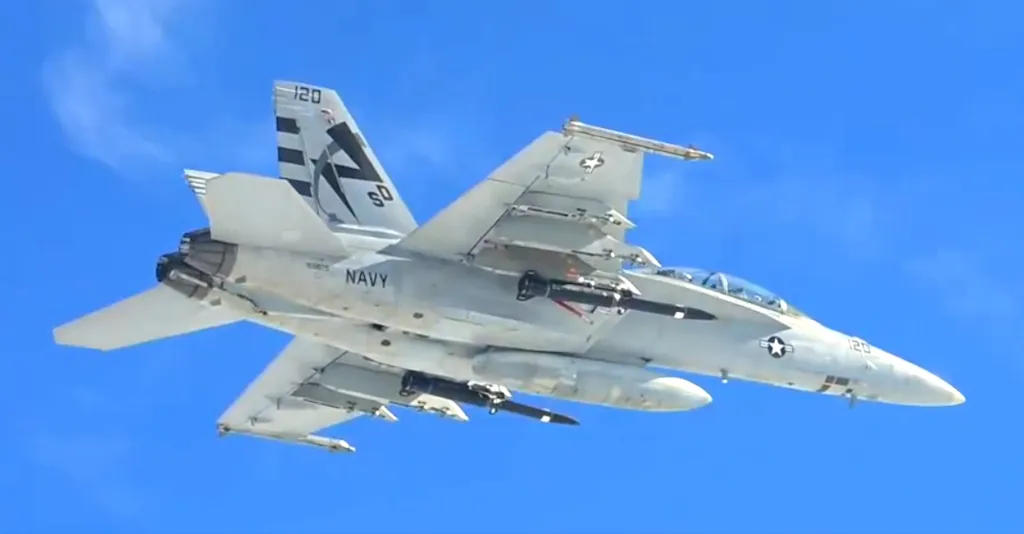
A picture of a U.S. Navy EA-18G Growler taking part in the current operations against Iran shows the plane carrying an interesting split load of two different electronic warfare pods. Typically, Growlers carry a pair of new AN/ALQ-249 Next Generation Jammer-Mid Band (NGJ-MB) pods or older AN/ALQ-99 pods under their wings, not one of each. The NGJ-MB pods offer a major leap in capability, but have continued to face reliability and other challenges. In general, the capabilities Growlers provide are essential to help support the launching of standoff strikes in the opening phases of a conflict, as well as missions penetrating deeper into defended areas as time goes on.
U.S. Central Command released the image of the EA-18G, seen at the top of this story, and taken as the aircraft was launching from the Nimitz class aircraft carrier USS Abraham Lincoln, last week. The Growler in question is assigned to the Electronic Attack Squadron 133 (VAQ-133). The Lincoln’s air wing, which has been very active in support of Operation Epic Fury since it began, also includes F/A-18E/F Super Hornet and F-35C fighters, E-2D Hawkeye airborne early warning and control planes, CMV-22B Osprey tilt-rotor carrier onboard delivery aircraft, and MH-60R/S Seahawk helicopters.
At first glance, the EA-18G picture is unremarkable, but a closer inspection shows the jet has one ALQ-99 Tactical Jamming System (TJS) pod and one AN/ALQ-249 Next Generation Jammer-Mid Band (NGJ-MB) pod under its left and right wings, respectively. The aircraft also has a drop tank under each wing, as well as what looks to be a third one on the centerline station under its fuselage. The Navy is in the process of replacing the ALQ-99s in part with the ALQ-249, something we will come back to later on.
A close-up look at the AN/ALQ-99 pod under the Growler’s left wing and the AN/ALQ-249 pod under the right wing. USNAn ALQ-99 pod seen being moved within the hangar bay of the Nimitz class aircraft carrier USS Carl Vinson. USNAn ALQ-249 NGJ-MB pod. Raytheon
The Navy is still in the process of transitioning away from the ALQ-99, and those pods remain in active service alongside ALQ-249s. However, TWZ was told in a past interview with two top officers involved in the NGJ-MB effort that the standard mixed loadout for jets carrying ALQ-249s is one of those pods under each wing, along with an ALQ-99 on the centerline. Growlers continue to fly operational missions carrying just ALQ-99s, as well.
A Growler seen carrying ALQ-249s under each wing and an ALQ-99 on its centerline station during a test flight. USNEA-18Gs with AN/ALQ-249 pods, at left, and ALQ-99 pods, at right, seen on the USS Abraham Lincoln’s flight deck on November 2025. USN
Why the VAQ-133 Growler flew this particular sortie with this split loadout of one ALQ-249 and one ALQ-99 is unknown. It is possible that ALQ-99 was substituted for an ALQ-249 on that particular mission due to a lack of availability of the new pods due to maintenance or other factors.
The NGJ-MB pod has suffered from reliability and other technical issues in the past. At least as of the end of Fiscal Year 2025, the pods have continued to face challenges, according to a newly released report from the Pentagon’s Office of the Director of Test and Evaluation (DOT&E).
“The NGJ-MB with the OFP 5.3 software series is not currently suitable for supporting operational missions, due to additional progress required to improve reliability and availability,” the DOT&E report said. “The NGJ-MB system met its maintainability requirements, and aircrew and maintainers found training to be adequate. Insufficient data are currently available to draw any significant conclusions on pilot and maintainer workload and usability, given the sample size of the data.”
What steps the Navy may have taken to mitigate these issues since the end of the 2025 Fiscal Year is unknown. Whether this particular software configuration is found in deployed pods that are being used operationally is also not known.
“The Navy has deployed the NGJ-MB to five different Electronic Attack Squadrons,” the report also notes.
A VAQ-133 Growler assigned to the USS Abraham Lincoln seen with ALQ-249 pods under its wings last year. USN
In a separate report released in 2020, the Government Accountability Office (GAO), a Congressional watchdog, highlighted negative impacts to EA-18G’s combat range when carrying an ALQ-249 under each wing and one ALQ-99 on the centerline. What the Navy may have done to address this since then is unknown.
A desire to ensure a certain mix of capabilities, together with a need for three drop tanks’ worth of additional fuel, may have also factored in the decision.
ALQ-249s do offer a major boost in capability, broadly speaking, compared to the older ALQ-99s. The NGJ-MB’s use of active electronically scanned array (AESA) antennas, which the AN/ALQ-99s do not have, as well as its modular open architecture design, also opens the door to more rapid integration of new and improved functionality down the line. This could include so-called next-generation cognitive electronic warfare capabilities, which you can learn more about here.
An exploded view of the components inside Raytheon’s NGJ-MB pod, including its active electronically scanned arrays. USNA briefing slide showing the interior layout of the two types of AN/ALQ-99 pod.RAAF
However, as its name makes clear, the ALQ-249 was originally designed primarily to provide mid-band coverage. ALQ-99s come in two separate versions, offering high and low-band coverage, respectively. Air defense radars and other targets for electronic warfare attacks do not all operate in the same frequency ranges, and some are capable of widely modulating their signal outputs specifically to help reduce vulnerability to jamming. Broader frequency ranges could also help when dealing with known threat systems that are being operated in unfamiliar ways.
“The NGJ-MB is assessed to be at least as operationally effective as the legacy AN/ALQ-99 system, against the threats tested on the open-air test ranges during IOT&E,” according to DOT&E’s report. However, the office’s “full assessment of operational effectiveness is provided in the classified IOT&E report published in July 2025.”
A separate Next Generation Jammer-Low Band (NGJ-LB) pod, now designated the AN/ALQ-266, is in development to complement as part of plans to completely replace the ALQ-99 family. However, as of 2024, the NGJ-LB pod was not expected to reach even an early operational capability until 2029. A years-long contract dispute contributed to the delays in work on this pod.
An EA-18G with a prototype NGJ-LB pod on its centerline suspended inside an anechoic test chamber. USN
The Navy has also made a decision to expand the capabilities of the NGJ-MB pod to “extend the upper frequency coverage limit to counter modern and adaptive threats” and to “increase frequency range of the NGJ-MB system and enhance the survivability of the platform and protected entities against emerging threats,” according to official budget documents. When these improved NGJ-MB Extended (NGJ-MBX) pods are expected to enter operational service is unclear.
The Navy has also talked in the past about acquiring a dedicated NGJ-High Band (NGJ-HB) pod to address that end of the frequency spectrum, but the current status of that plan is not clear. “I’ll say high band is still on the to do list, but it’s prioritized appropriately, and we’ll get to it eventually,” Capt. David Rueter, then program manager for airborne electronic attack systems at Naval Air Systems Command (NAVAIR), told TWZ last year.
It’s also worth noting here that external pods are just one part of the complete electronic warfare suite on the EA-18G, which also includes elements integrated inside the fuselage and in fixed pods on the tips of the wings. Just last Friday, Prime contractor Boeing received a new modification to the existing contract, with a value not-to-exceed $489,306,966, for upgrades to Growler’s built-in electronic warfare capabilities with the integration of a new system called the AN/ALQ-264 Beowulf. This is part of a larger ongoing upgrade effort for the Navy’s EA-18G fleet.
A graphic showing various systems on the EA-18G Growler and a typical mission loadout, including the three AN/ALQ-99 pods. RAAF A graphic showing various systems on the EA-18G Growler and a typical mission loadout. RAAF
All of this underscores the overall importance of the Navy’s EA-18Gs to U.S. joint operations, which has been on display as part of the current campaign against Iran. As TWZ has explored in detail, American and Israeli strikes have substantially degraded Iranian air defenses and other military capabilities, but this should not be confused with total air dominance, especially over the northeastern end of the country. When it comes to standoff strikes, the support Growlers provide can help ensure munitions get to their targets, as well as help reduce risks to launch platforms. More recently, there has been a notable shift to direct attacks across other parts of Iran, where air supremacy has largely been achieved. Still, electronic warfare support would help in those areas to mitigate any residual air defense risks.
USS Abraham Lincoln continues flight operations day and night during Operation Epic Fury. Sailing close to Iran, Lincoln and its embarked carrier air wing are executing back-to-back waves of strikes. pic.twitter.com/EPhhmCAyPB
With the Operation Epic Fury air campaign still in full swing, Growler will continue to provide essential electronic warfare support, whatever mixture of pods they carry.