Nothing defines a Welsh rugby nation like differing viewpoints of the make-up of a national team, with the old adage of Wales having three million selectors.
Tandy’s opinion is the only one that counts but he has had plenty of contrasting advice from the Welsh public this week.
In one corner, you have somebody like former Wales wing Alex Cuthbert stating on the Scrum V podcast that Tandy should have selected a full side to put Japan to the sword and build momentum towards next year’s Six Nations.
Then you open up social media, with the vocal element telling the Wales head coach he should be blooding more players.
Tandy has made five changes from the side that lost to Australia with seven players – full-back Blair Murray, wing Louis Rees-Zammit, centres Eddie James and Max Llewellyn, fly-half Sam Costelow, prop Archie Griffin and lock Dafydd Jenkins – starting all four matches in the November campaign.
Uncapped quartet Che Hope, Macs Page, Rhys Barratt and Aneurin Owen are among the players who have not been given game time, alongside Liam Belcher, Tom Rogers, Seb Davies, Keiron Assiratti and Jarrod Evans.
It is the first time Wales have not blooded a new cap in an autumn campaign this century.
“It wasn’t deliberate,” said Tandy.
“We’ve handed out probably roughly nine new caps over the last couple of campaigns.
“We feel we have got a young group that are growing and we want to keep our cohesion while freshening things up.
“We are starting to probably see the spine of our team developing and our squad becoming more consistent.
“When we’re picking the team, it’s about performance and we’ve also got one eye on the future.
“We felt this is the right sort of blend to go and produce a performance on the weekend.”
Tandy knows there will be a number of disappointed players returning to their clubs after their lack of match opportunities during the past month.
“What the group spoke about on the first Sunday that we came back in, is that we’ve got to be competitive right across the board,” said Tandy.
“You’re going to have disappointed players and you can’t keep everyone happy, because they all want an opportunity.
“International rugby is tough and we need to have competition.”
When I recall the great restaurants, culture and art found in Los Angeles’ Little Tokyo, one story that comes to mind is the tranquility and resilience of Higashi Honganji Buddhist Temple.
The roughly 1½-acre parcel at the corner of 3rd Street and Central Avenue offers peace amid the noise and bustle of downtown. It’s an oasis I first learned about five years ago when an unknown vandal broke into the sanctuary and stole some lanterns while burning others and vandalizing the facility.
You’re reading the Essential California newsletter
L.A. Times reporters guide you through the most important news, features and recommendations of the morning.
By continuing, you agree to our Terms of Service, which include arbitration and a class action waiver. You agree that we and our third-party vendors may collect and use your information, including through cookies, pixels and similar technologies, for the purposes set forth in our Privacy Policy such as personalizing your experience and ads.
Hallock jumps into the history of one of L.A.’s most vibrant neighborhoods and picks a few of the many places and experiences that make Little Tokyo unique. Let’s jump into a few of them.
(Laurie Ochoa / Los Angeles Times)
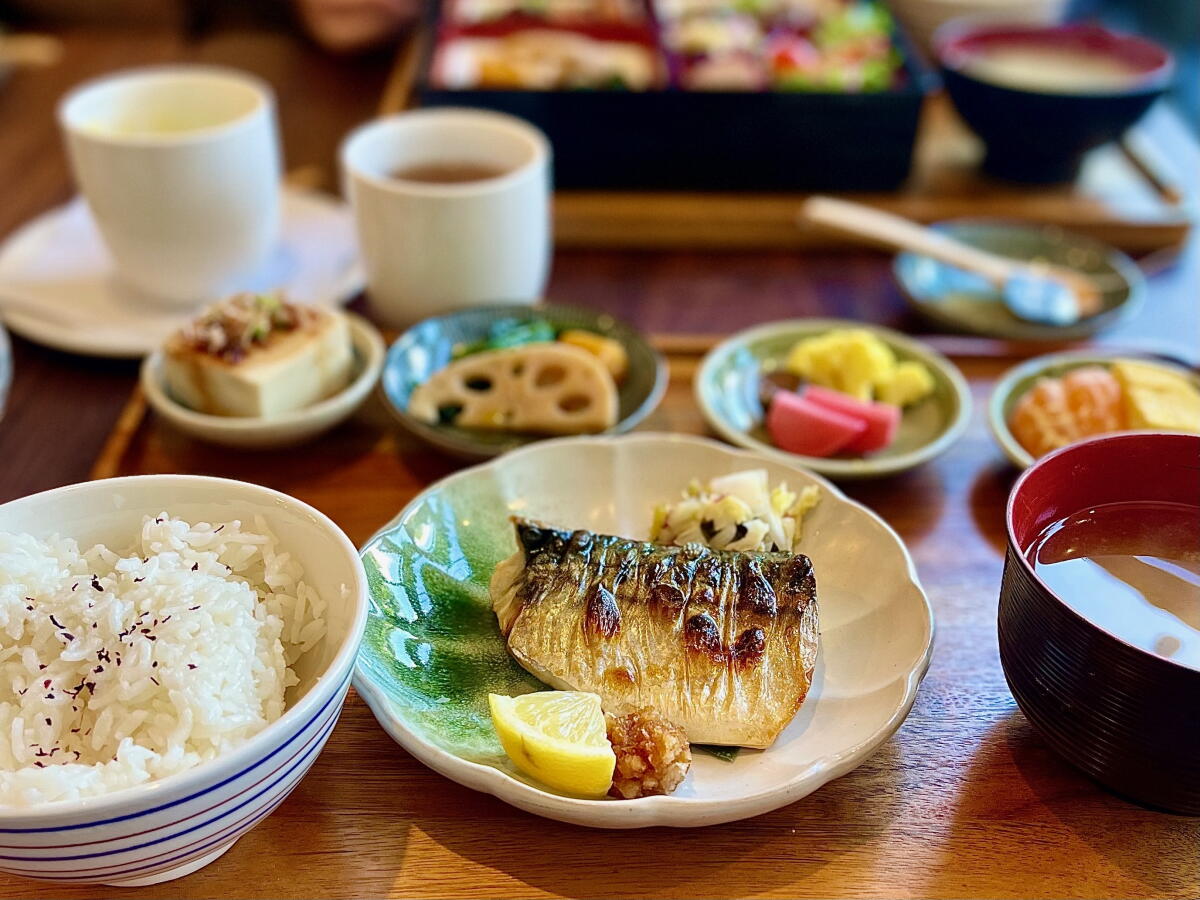
Japanese breakfast at Azay
Azay, a restaurant founded by the late chef Akira Hirose and run by his son Philip and wife, JoAnn, is one of the few places in Los Angeles serving traditional Japanese breakfast, and this one is stellar.
Composed of several small dishes, it feels like a celebration and draws a weekend crowd (reservations recommended). A wooden tray arrives at the table laden with jewel-like dishes such as grilled black cod and rolled omelet. Or order the daily bento or à la carte items, including custardy, savory chawanmushi or curry potato croquettes with shiso aioli.
Visit the family’s legacy shop next door, Anzen Hardware, for Japanese kitchen goods, knives and housewares. Philip Hirose also regularly programs community workshops and pop-ups.
Pro tip: Park all day in the Aiso Parking Garage across the street at 101 N. Judge John Aiso St., named after the first Japanese American to hold a judicial position in the continental U.S.
(Gary Coronado/For The Times)
Mexican American muralist Robert Vargas, who was born near Little Tokyo in Boyle Heights, painted a 150-foot image of baseball superstar Shohei Ohtani on the side of the 11-story Miyako Hotel, unveiled in the spring of 2024.
The painting, titled “L.A. Rising,” is meant to promote a cultural bridge between communities celebrating Dodgers pride. Vargas painted two versions of Ohtani, the best two-way player in Major League Baseball history (he’s the first to hit at least 50 home runs and steal at least 50 bases in a single season).
The mural shows Ohtani both pitching and hitting, and you can see him come to life by using an augmented reality feature. Scan a QR code located beneath the mural and point your phone camera at the image to see Ohtani swing the bat and pitch.
(Jeni Afuso/For The Times)
Shop for souvenirs at Bunkado, where Little Tokyo began
Gift shop Bunkado stands at the location of Little Tokyo’s beginning, where Hamanosuke Sugita opened a restaurant called Kame (which means “turtle,” a symbol of longevity) in 1884, the first Japanese-owned business in Los Angeles.
In 2022, the L.A. City Council commemorated the site and “the birth of Little Tokyo” with a plaque and street sign. Bunkado was founded in the same location in the mid-1940s by renowned Japanese American oil painter Tokio Ueyama and his wife, Suye, after they returned from incarceration in the World World II internment camps.
The name means “house of culture,” and the Ueyamas built an artists’ hub and eventually became important sellers and importers of recorded Japanese music. The store is now owned by their niece, Irene Tsukada Simonian, and sells Japanese ceramics, art tools, incense, toys, T-shirts and postcards.
(Illustrations by Lindsey Made This; photograph by Monica Schipper / Getty Images for The Recording Academy)
Today’s recipe
(Katrina Frederick / For The Times)
Los Angeles food writer Carolynn Carreño believes the shift in the season marks an opportunity to embrace pumpkins this fall. Carreño’s twist, however, is telling her readers, who love fresh and organic ingredients, that it’s OK to use canned pumpkins. In fact, the canned product beats fresh when baking loaves, cookies and pancakes. She included several recipes here. Take a deep breath and try it out.
Photo of the day
Construction platforms are visible beneath and on the sides of the Vincent Thomas Bridge as vehicles travel across the span above the Port of Los Angeles in San Pedro. Caltrans is preparing for a 16-month closure of the bridge.
Have a great day, from the Essential California team
Jack Dolan, investigative reporter Hugo Martín, assistant editor, Fast Break desk Kevinisha Walker, multiplatform editor Andrew J. Campa, weekend writer Karim Doumar, head of Newsletters