Floods

Nepali families pray for miracles with relatives missing after flood | Floods

At a Kathmandu hospital, families peer at lists of those who are critical, dead — or have been released.

Kathmandu/Nuwakot/Trishuli, Nepal – Loknath Chaulagain is looking for his 23-year-old nephew Sudarshan at Tribhuvan University Teaching Hospital in Kathmandu, Nepal’s capital.

A bus conductor, Sudarshan was waiting at the checkpoint in Timure, a town bordering Tibet, when the flash flood that devastated parts of Nepal and Tibet struck on Wednesday. His family says a phone call went through to his number at 9:54am local time – after the flash flood struck the border region – but Sudarshan did not pick up the call. Since then, his phone has been unreachable.

The family has been searching for him – near where the floods struck, and now in Kathmandu’s hospitals, where some survivors have been brought. But so far, they’ve had no luck.

They’re not alone. Thousands of families in Nepal are still stranded in the no-man’s land between hope and fear: hopes of an impossible miracle and worst fears of losing someone they love.

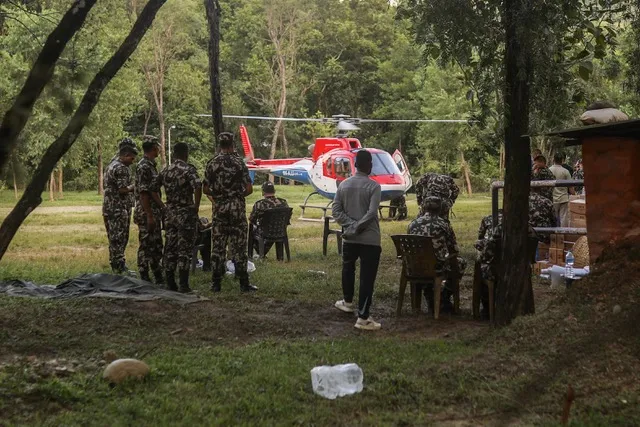
An army camp in Nuwakut, Nepal, where helicopters are being used for rescue efforts
An army camp in Nuwakut, Nepal, where helicopters are being used for rescue efforts [Mohammad Meherban/Al Jazeera]

Two days after the flash flood swept away much of what lay in its path along the Bhotekoshi River in the northern Himalayan region bordering Tibet, the full scale of devastation is yet to be ascertained in Nepal. The death toll is on the rise, with nearly 500 bodies recovered. The missing toll is well over 1,000 and is expected to rise further.

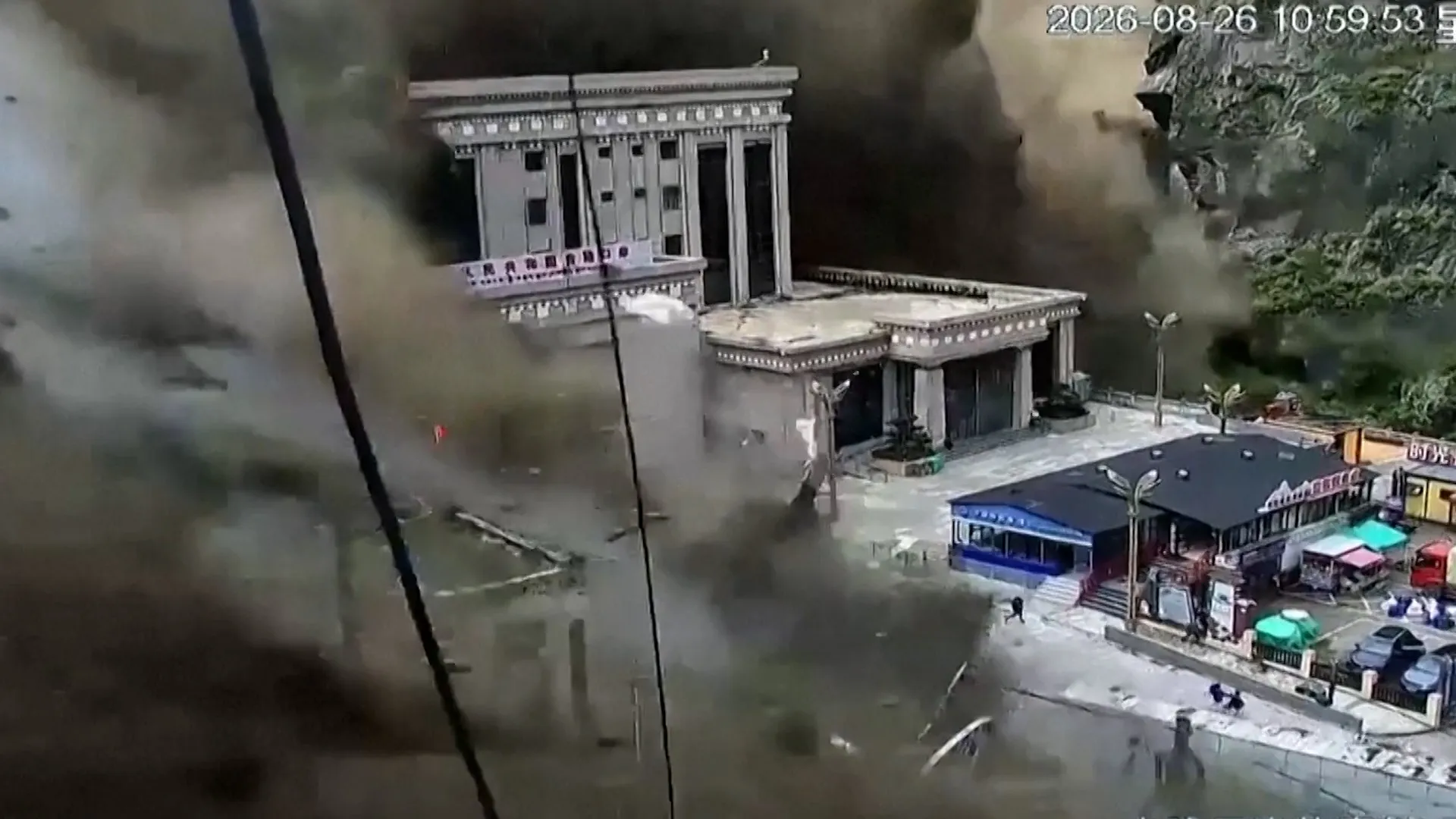
The wall of water with ice and mud that surged downstream with fury on August 26 caused maximum damage to Timure, Rasuwagadhi and Syabrubesi in the higher Rasuwa region nearer to Tibetan border checkpoints.

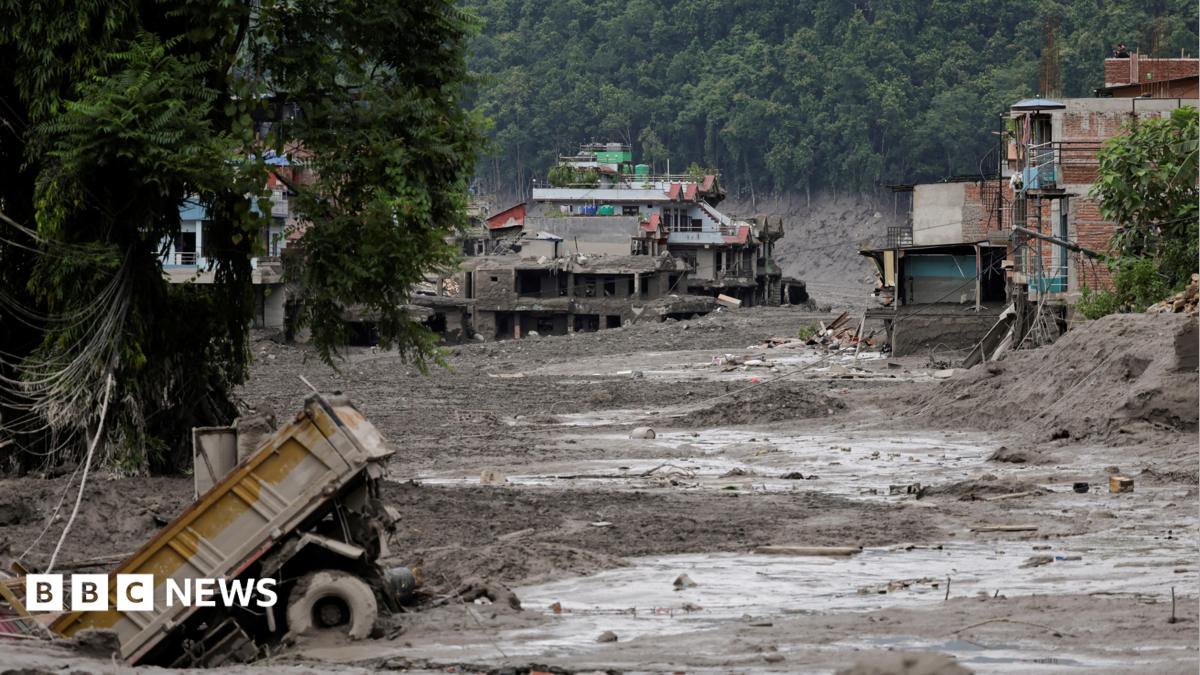
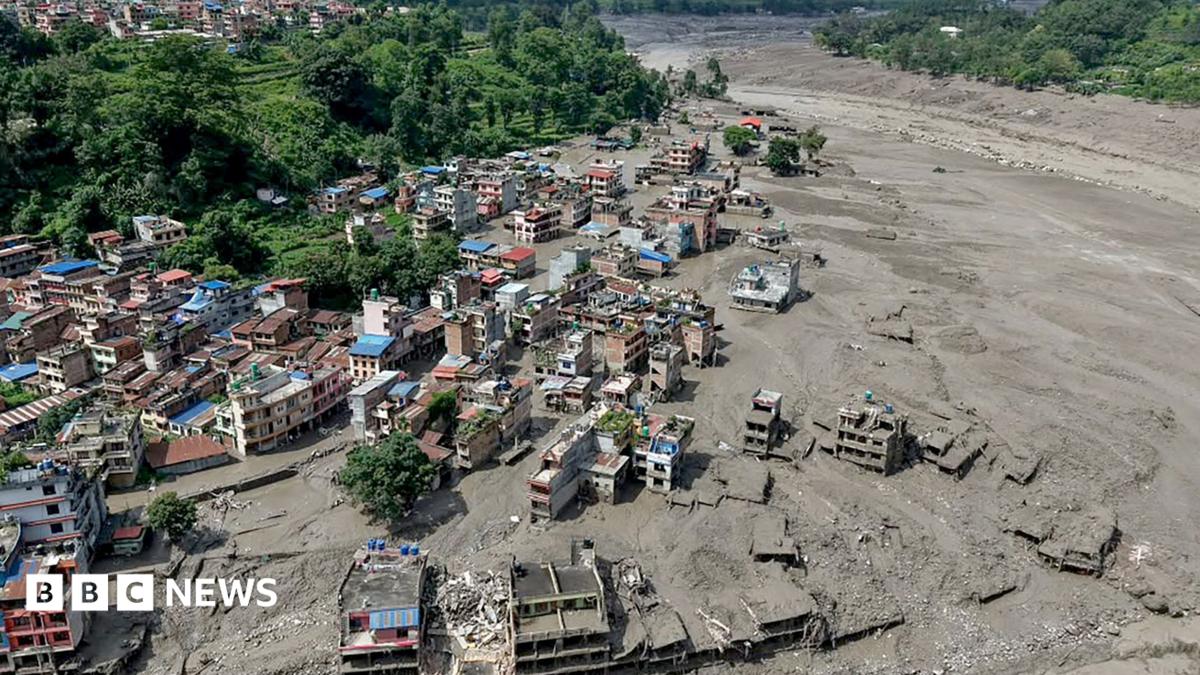
Downstream, it washed away buildings, electric poles, bridges, markets, homes and vehicles that stood in its path in Trishuli and Nuwakot regions.

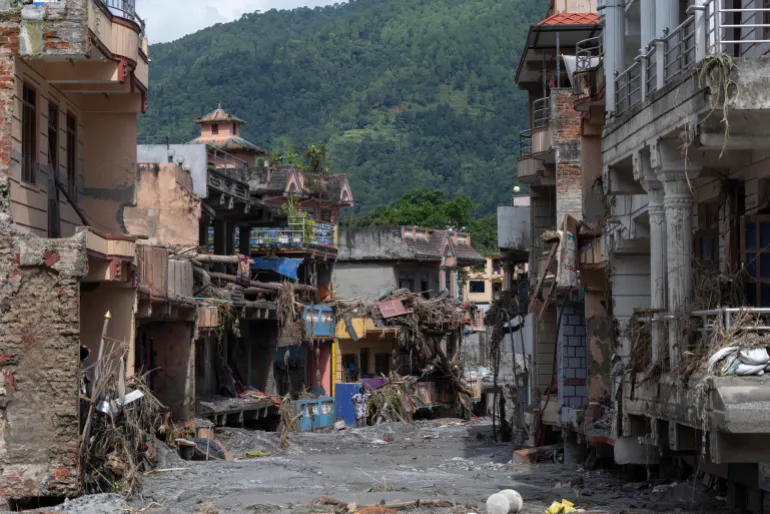
The usually buzzing Trishuli market is today covered in mud, sludge and debris. Locals, including many Indians who have made the area their home for many years, beg and plead with relief workers to take them to their destroyed homes in earthmovers to retrieve whatever may be left of their belongings.

Trishuli market, covered in sludge, in Trishuli, Nepal [Mohammad Meherban/Al Jazeera]

Helicopters whirred nonstop on Wednesday and Thursday in these areas, trying to rescue those trapped under the rubble or washed away and stranded in dangerous situations. Those rescued with lighter injuries are being treated at the army camp helipad medical unit, while those with grievous injuries are being airlifted to bigger facilities in Kathmandu.

At the Tribhuvan University Teaching Hospital, people come by and plaster posters on walls with photographs and contact details of missing friends and family. Other hospital pillars bear lists of those who have been admitted or are in critical condition – or those who have been killed: five-year-old Ishara Tamang in paediatric surgery; 30-year-old Tej Bhadur Tamang in the ICU; 25-year-old male Kusal Magar, listed as dead. Multiple pairs of concerned eyes gaze intensely at these lists, hoping to find their loved ones there.

Among them is Sohan, a young man who does not want to speak to journalists on camera. He is searching for his 42-year-old father, Gyan Bahadur Rana Magar. “Three days on, we are searching and still trying to find him,” he says. His father went with Indian tourists as a guide to Rasuwa, the border district with Tibet that is one of the worst affected.

When the lists on pillars offer no answers, people searching for their loved ones head to the mortuary where photographs of some of the recovered bodies have been glued to the gates. Many bodies were found dismembered; some were missing limbs. When someone finds a hint of familiarity, they inform security officials, who let them in after some identification check to take a look at the body.

Dressed in a red saree and blouse, and wearing a red pothe necklace  – a traditional glass-bead necklace worn by married women in Nepal – Lal Kumari is desperately looking for her husband, Arjun Shreshtha. A tourist van driver in his late 40s, he was swept away by the flood in Rasuwa district. Kumari has three children, including a married daughter and a grandchild, and her only question is: Could her husband, miraculously, still be alive?

Lal Kumari, one of thousands still searching for loved ones, is looking for her husband, Arjun Shreshtha, a tourist van driver missing since the floods
Lal Kumari, one of thousands still searching for loved ones, is looking for her husband, Arjun Shreshtha, a tourist van driver missing since the floods [Mohammad Meherban/Al Jazeera]

Source link

Nepal and China halt rescue efforts as border barrier lake overflows | Climate Crisis News

Nepal and China have paused rescue efforts for survivors of the devastating flash flood that hit the border region two days ago as a “barrier lake” formed during the disaster began to overflow.

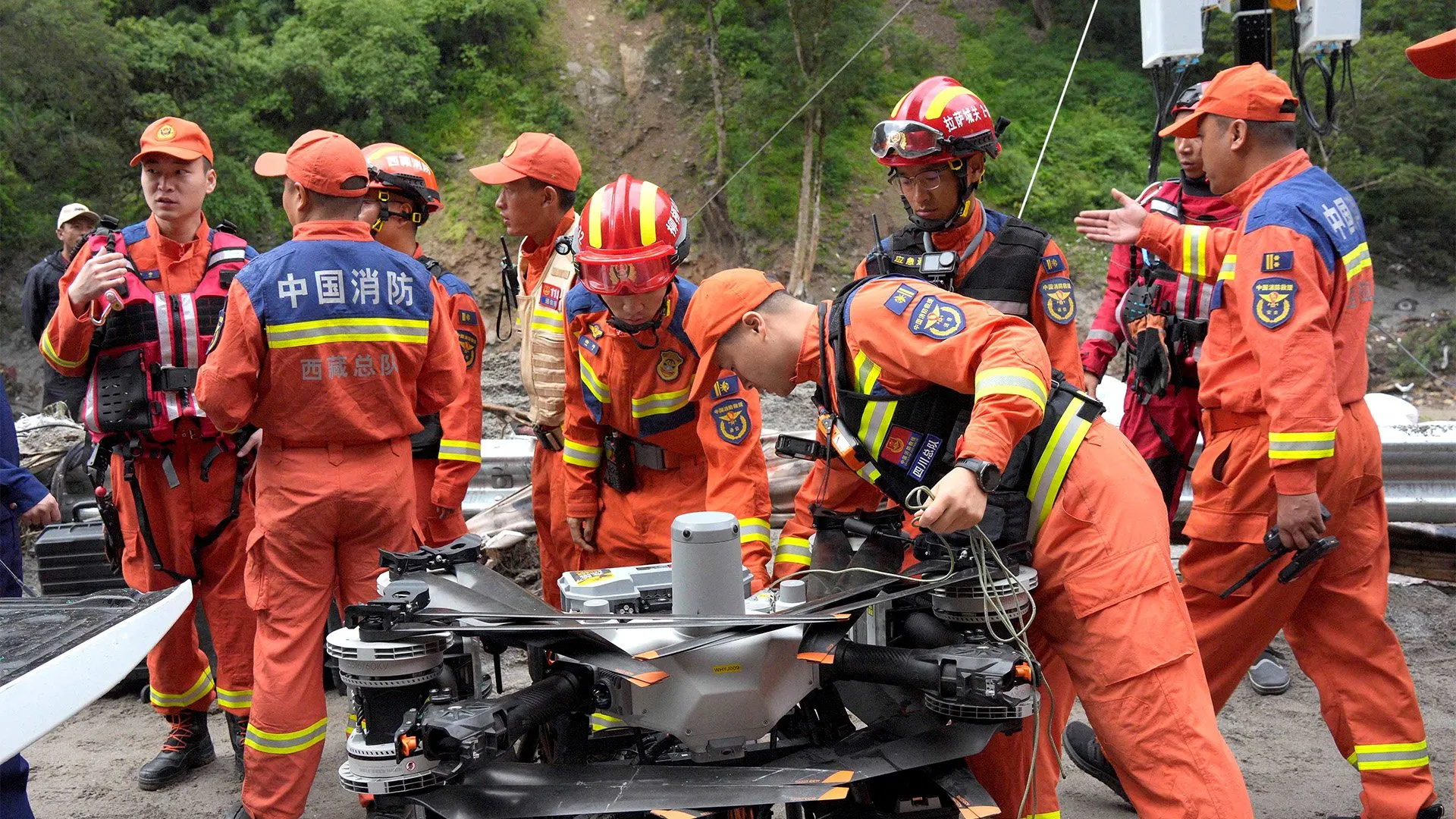
Chinese rescue teams and vehicles were forced to pull back to safe ground, state broadcaster CCTV reported, as the risk of the lake bursting rose. Nepalese authorities also paused search operations for 90 minutes, an army officer confirmed.

The “barrier lake”, formed as Wednesday’s flash flood carried huge volumes of mud and debris down a steep valley, is threatening to unleash another huge and destructive wave.

In Nepal’s Rasuwa district, on the border with Tibet, residents were seen scrambling up hillsides to escape potential surges in the river level, according to the Reuters news agency.

The barrier lake adds a new threat to communities devastated by Wednesday’s flash flood [EPA]

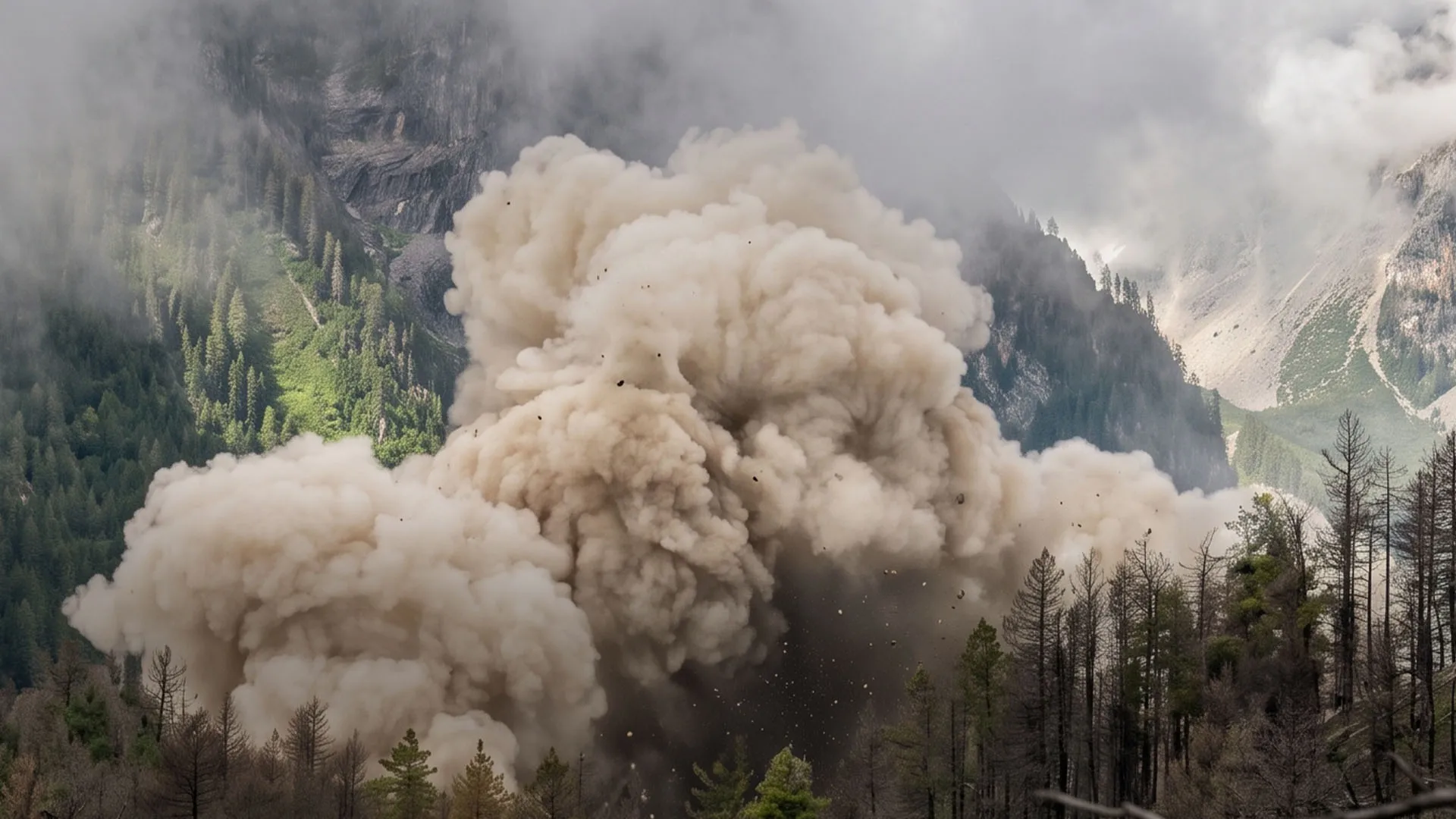
The disaster unfolded as a glacier collapsed and sent a huge torrent of ice, water, rock, and mud down Himalayan river valleys, burying entire villages and destroying roads, bridges, and hydropower plants.

In its wake, leftover debris trapped water to form a barrier lake, a natural dam created when landslides block a river.

With water continuing to pour into the lake, the threat to downstream communities of another wave of flooding is rising.

China has deployed an engineering team to conduct aerial surveys and 3D modelling of the site. By Friday, the lake’s volume had swelled to more than 2.5 million cubic metres, up from the estimated 1.5 to 2 million cubic metres recorded just a day earlier.

Downstream in Nepal, officials received warnings that the lake had begun breaking its bank, according to Narendra Pariyar, the top administrator in the hard-hit Rasuwa district.

“We can see that the level of water in the river is rising,” he said, adding that the exact height of the surge remains unclear.

Relief supplies blocked

The death toll from the disaster has surpassed 470. On Friday, the Nepalese prime minister’s office reported 469 confirmed deaths, with 977 people still missing. About 1,550 people have been rescued.

Chinese authorities reported on Friday that the death toll in Tibet has now risen to at least five, with 558 missing.

Bishal Nath Upreti, president of the Nepal Centre for Disaster Management, told Al Jazeera that conditions are “extremely difficult” for those trapped in the disaster zone, as destroyed roads have left them completely cut off.

So far, about 800 people have been rescued by helicopter and 700 by land, with airlifts delivering vital aid to survivors.

Al Jazeera’s Katrina Yu, reporting from Beijing, said the number of missing is expected to rise. China has deployed about 500 military and paramilitary personnel and sent Premier Li Qiang to supervise operations on the ground, while Nepal has deployed 30,000 security personnel to search remote, cut-off valleys, she said.

More ⁠than ⁠90,000 people are estimated to have been affected ⁠by disaster, the ⁠Red Cross said on Friday, adding that the delivery of relief supplies has been blocked by the overflowing lake.

“We’re of course very concerned about the secondary flood,” said David Fisher, head of delegation ⁠for the International Federation ⁠of Red Cross and Red Crescent Societies in ⁠Nepal.

Source link

Nepal’s mudslide wiped out areas of eastern China, army helps search | Climate Crisis

China has dispatched hundreds of military personnel to the border town of Gyirong in Tibet, after a wall of ice, mud, and rock collapsed into a mountain river, triggering a catastrophic flash flood on Thursday. Al Jazeera’s Katrina Yu reports from Beijing.

Source link

How a glacial collapse caused Nepal’s catastrophic floods | Weather

Scientists believe a glacier and rock collapse near the Nepal-China border triggered a massive flood along Nepal’s Trishuli River, killing at least 359 people and leaving 1,500 missing. Here’s how the disaster unfolded.

Source link

Girl, 13, among 33 UK nationals missing after Nepal flash floods

According to the company’s travel logs, shared with the Press Association, the age of the missing British citizens ranges from 13 to 65.

Alpine Eco Trek said the youngest member of the group is believed to be a 13-year-old girl, according to PA.

It also reported four of the firm’s Nepali tour guides are also missing.

The company’s manager Kumar Adhikari said he was in contact with the guides until 08:40 when they were expected to be at Tibet’s immigration office, but their phones were disconnected.

“We were hoping that inside it was safe,” he told PA, “but later the video came from China’s government which [showed] even Tibet’s side was hit by the flood.”

Adhikari said he was “slowly responding to” the families of the Britons but has been unable to give them any updates, adding he has been in contact with the British consulate and forwarded them copies of the clients’ passports.

“I feel so sad. We are just thinking about what to do next…We are in pain at the moment, deep pain.”

Another tour company impacted by the flash floods, Himalayan Glacier US, told the BBC they have lost contact with a group of 47 guests and staff who where making a pilgrimage to Mount Kailash, which included two British citizens.

Kailash Journeys also reported a group of 27 guests and staff missing, with a spokesperson saying they were last in contact with them early Wednesday morning local time.

A list of names provided to the BBC included two men who are British citizens.

Foreign Secretary Ed Miliband said he is “deeply concerned” by news of the flash flooding, and wrote on social media: “All my thoughts are with those affected and with British nationals in the area and their relatives here at home”.

In a joint statement with Australia, the EU, Finland, France, Norway and Switzerland, the UK embassy in Nepal urged British nationals in Nepal to “exercise caution in affected areas”.

Source link

CCTV captures terrifying mudslide engulfing Nepal-China border | Climate Crisis News

CCTV footage shows people fleeing seconds before a massive mudslide engulfs a crossing on the Nepal-China border, sweeping through roads, buildings and vehicles. At least nine people have been killed and hundreds of people were reported missing after torrential floods.

Source link