Flight

1 long haul flight mistake people make is ‘costing travellers precious sleep’

When it comes to travelling on a long-haul flight, many people turn to comfort items such as neck pillows, blankets and eye masks, but one frequent flyer says most are making a major mistake

Before setting off on a long-haul flights, most travellers know to wear comfortable clothes to make their journey more easy and relaxing. Beyond this, many passengers also bring along comfort items like neck pillows, blankets and eye masks.

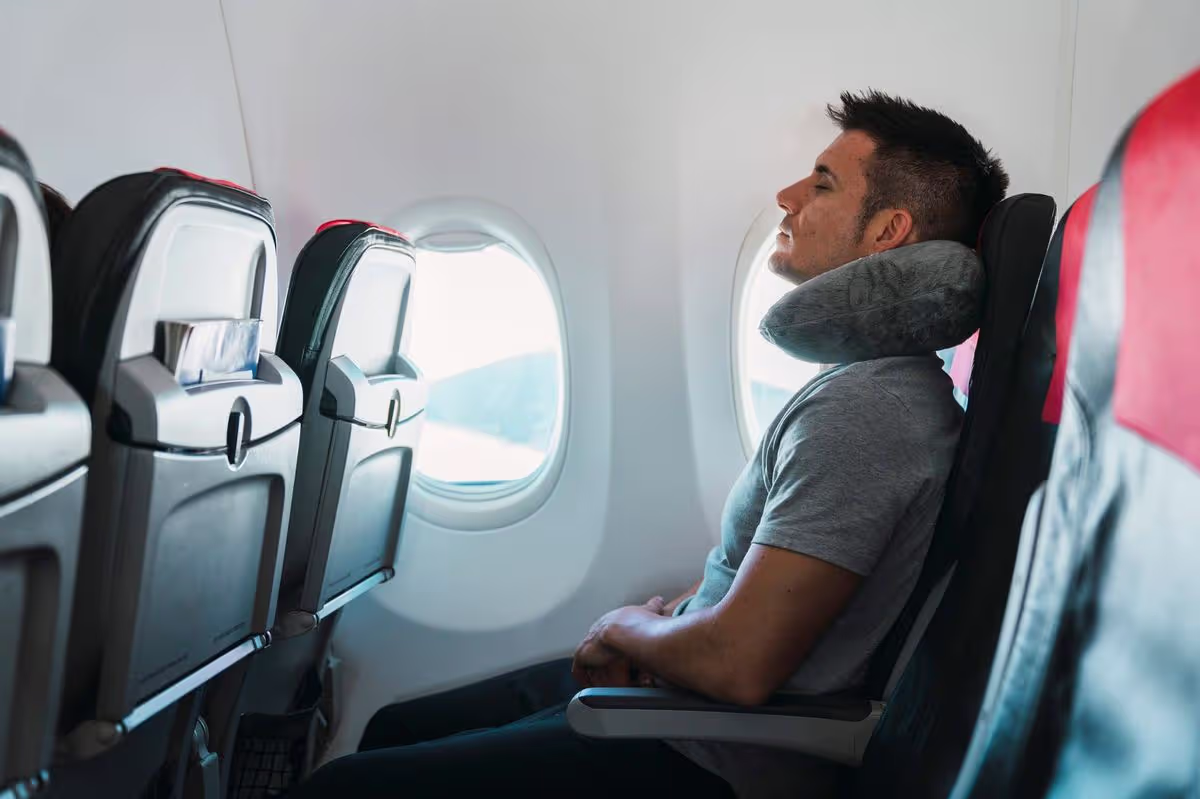
Yet, according to traveller @epthelatino, countless people are making a same mistake with their neck pillows when it comes to flights – and it’s costing them precious sleep. In his clip, he suggests that most long haul flight passengers position their neck pillows with the opening at the front, which fails to adequately support the neck when the head drops forward.

Instead, he says they should rotate it so the gap sits at the back, which he says enables you to rest your head in various positions whilst maintaining proper support.

Reacting to his clip, one viewer said: “I think the inventor should make a doughnut pillow instead.” Another viewer added: “You are doing it all wrong – try sideways.”

A third commented: “I wear my neck pillow sideways. It’s more comfortable… thank me later.” One more person said: “Ooooh! Okay. That’s why it’s called a neck pillow.”

Whilst another added: “I’ve used it this way – it’s way better than how it was meant to be used.”

Content cannot be displayed without consent

Offering their perspective, the experts at Travel Sentry stated: “Once you have chosen the right pillow, it’s crucial to place it correctly for maximum comfort.

“Many people make the mistake of placing the pillow behind their head, which can cause their head to fall forward, leading to neck pain.

“Instead, place the pillow on your shoulder and lean your head towards it. This position will support your neck and keep your head from falling forward.”

They suggest that getting to grips with a neck pillow properly “takes practice”, noting: “Like any skill, mastering the art of travel pillow comfort takes practice.

“Don’t get discouraged if you don’t get it right on your first try. Keep experimenting with different positions and adjustments until you find what works best for you.

“With time, you will become a pro at using a travel pillow and enjoy a comfortable journey every time.”

However, if you’re still finding it difficult to settle in, travellers are advised to explore additional comfort aids.

They continued: “If you have trouble finding a comfortable position with just a travel pillow, you can use additional support.

“For example, use a blanket or scarf to support your lower back. Alternatively, place a small pillow or a rolled-up jacket under your knees to relieve pressure on your lower back.”
Source link

Easy flight hack could help you save money on holidays with little effort

Choosing this option when you book your flights could help you save hundreds of pounds, and it’s especially useful during peak seasons such as half-term or the summer holidays

When it comes to booking a flight, we all want to save money, especially when we need to travel during peak times such as the dreaded school summer holidays.

Luckily, there are still some hacks that can help you cut the cost of flights, and Laura Lindsay who works at SkyScanner has offered up some of her expert travel tips. She said: “Last-minute doesn’t have to mean bad value. Whether you’re staying at home or going abroad, the travellers who take the time to shop around and compare deals will get the best prices. Being a little bit flexible could make a big difference in cost, as well as opening up options for destinations and accommodation you may not have considered.”

One of her clever tricks? Look at the school holiday dates for the counties and regions on the border of your own; these dates can differ, which means you might be travelling in your county’s own peak season, but your neighbouring towns might be ‘off peak’, causing a price difference.

For example bargain hunters who live in the north of England can often bag a cheap flight by flying from a Scottish airport. This is because school holidays in Scotland tend to be slightly different, for example, the six-week summer holiday begins early-July and ends around mid-August.

That means if you have a Scottish airport within reasonable travelling distance, you can save a lot of money by flying from Scotland in the last two weeks of August. And on the flipside, Scots can pick up cheaper flights by jetting off in early July from English airports.

In the meantime, check out more of Laura’s money-saving hacks below…

Search ‘everywhere’ for the best prices

Not fussy about where you want to go? On sites such as Skyscanner you can select ‘everywhere’ as your destination and will be able to find the cheapest destination for your dates. This will give you a number of options from city breaks to beach destinations, and you may be able to find an inexpensive hidden gem.

Skyscanner also have a cheapest destinations tool, where you simply choose the month you want to travel and get a list of the ten cheapest destinations for that period. For example, in March the cheapest flights can be found to Milan and Tirana in Albania for city breaks, while those seeking sunshine could find deals for Lanzarote and Marrakech.

Search nearby airports

Another feature on flight comparison sites that’s worth trying is including nearby airports in your search. On Skyscanner you simply tick the box under your destination or departure airport.

If you live close to London, for example, don’t just look at your nearest airport. Searching for nearby airports looks up the cheapest options around the capital, so a short tube journey could save you a lot of money. This works in any area where there are airports nearby, for example, comparing flights from Birmingham and East Midlands, which are just 45-minutes apart.

You can also choose to search nearby airports at your destination. Just make sure you work out how far away the airport will be from your accommodation before you book. Some airports with city names can still be miles away from the destination. For example, Paris Beauvais Airport is actually about 90-minutes from the French capital, so best avoided for a short break.

Have a story you want to share? Email us at webtravel@reachplc.com

Ensure our latest lifestyle and travel stories always appear at the top of your Google Search by making us a Preferred Source. Click here to activate or add us as your Preferred Source in your Google search settings.

Source link

UK airport launches biggest ever flight schedule with 19 new routes in major £60million expansion

A MAJOR regional airport in the UK has launched its largest ever flight schedule as it prepares for its busiest year yet.

Newcastle Airport is expecting to see six million passengers this year, as it adds 19 new routes.

19 new routes have launched from Newcastle AirportCredit: Getty

New destinations include Lisbon and Porto in Portugal; Nice in France; Palermo in Italy and Preveza in Greece.

A number of flight routes are also returning to the airport including Berlin in Germany; Copenhagen in Denmark and Enfidha in Tunisia.

And there will be services to:

  • Malta
  • Antalya
  • Malaga
  • Alicante
  • Gran Canaria
  • Tenerife
  • Paris
  • Faro
  • Geneva
  • Paphos

Read more on travel inspo

GO ON

All the little-known websites for cheap or FREE tickets to gigs, theatre & festivals


CHEAP BREAKS

UK’s best 100 cheap stays – our pick of the top hotels, holiday parks and pubs

Of the new routes, easyJet will start flights to Nice, France in March 2026 and Malta this summer.

The airline will also start flights to Faro in Portugal between March and October and to Enfidha, Tunisia, flights will begin in time for summer.

Jet2 will start operating flights to Preveza, Greece in May 2026, for the summer season and flights to Palermo, Sicily from May too, with weekly flights until November.

The airline will also launch its first flights to Porto in Portugal in May, running for the summer season until October.

The airport also recently announced that easyJet is launching new routes to Lisbon and Rome Fiumicino.

The two routes will launch this summer with the Newcastle to Rome route starting on March 30 and the Newcastle to Lisbon route starting on June 22.

Both new routes will operate on Mondays and Fridays.

Leon McQuaid, director of Aviation Development at Newcastle Airport, said: “Lisbon is a brand-new destination from Newcastle Airport and one we’ve been keen to deliver for the region on the back of strong customer demand and feedback, so it’s fantastic to see flights and package holidays now on sale, alongside easyJet’s new route to Rome.”

“With just two months to go until easyJet opens its new base, this investment is not only delivering exciting new routes but will also bring significant economic benefits to the North East, including creating 130 direct jobs and supporting around 1200 UK jobs in total as well as attracting more visitors to the region.”

The new routes come as the airport expects 120,000 passengers this half-term, which is a 10 per cent increase compared to last year.

New destinations include Porto and Nice, as well as returning destinations such as CopenhagenCredit: Getty

In total, over 750 flights will arrive and depart the airport, with popular destinations including Alicante, Antalya, Dubai and Tenerife.

Ski trips are also expected to be popular, with families heading to Chambery, Grenoble and Geneva.

The new routes are part of a wider £60million investment plan at the airport, which will see facilities updated as well as a larger departure lounge and international arrivals baggage hall.

In the departures lounge, there will be more seating areas, toilets and additional food and drink spots.

The three-storey terminal expansion will also have a new security search area with extra check-in desks and new self-service bag drop counters.

By 2040, the airport hopes to welcome nine million passengers a year.

In other aviation news, the 37 new flights launching from a major UK airport this year, including budget routes to Asia and Jet2’s first ever.

Plus, four-hour airport queues set to cause chaos for Brits this summer.

The airport also expects this to be its busiest year yetCredit: Alamy

Source link

Ryanair flight attendant says passengers should ‘avoid’ these two plane seats

Former Ryanair cabin crew member Eleanor has shared which seats to avoid when booking with the budget airline, while also revealing the best row to be in, especially if you want a quieter tirp

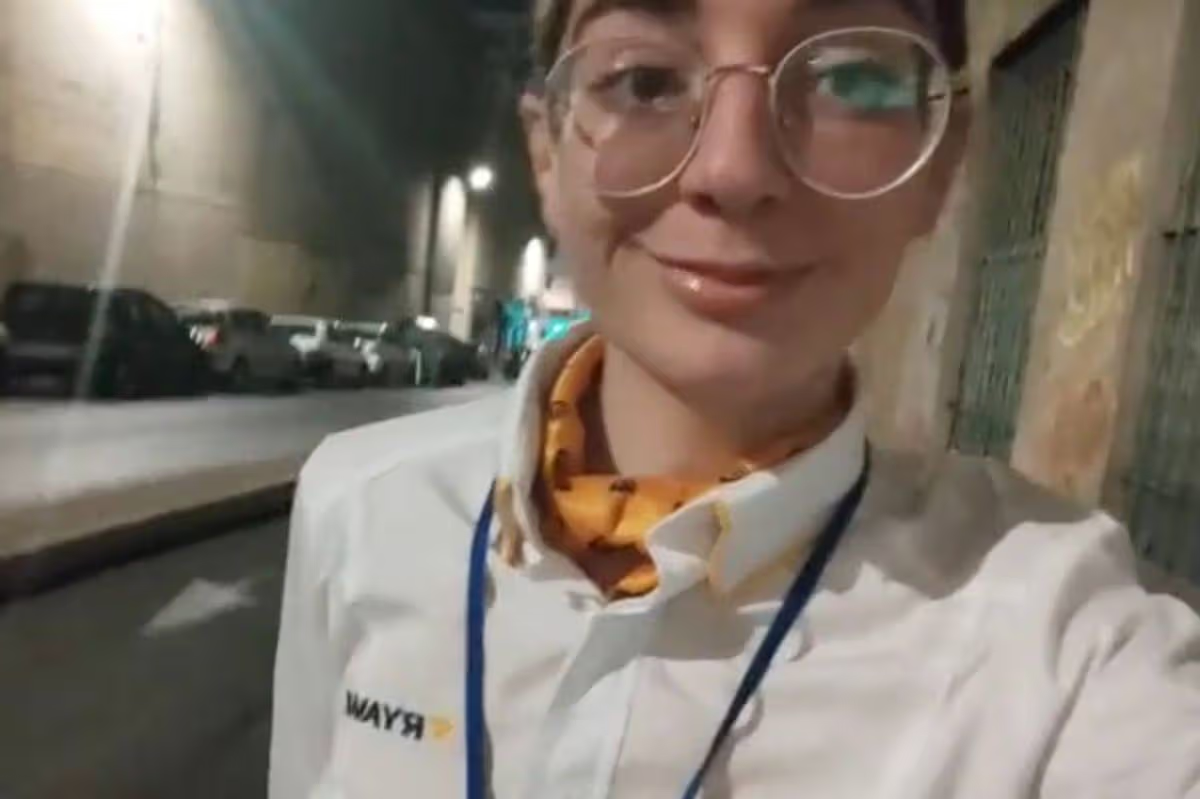
A former Ryanair cabin crew member has issued a warning to travellers about two seats they should swerve when making their bookings. Eleanor, who was stationed in Marseille, France, clocked up significant flight hours with the no-frills carrier and has pinpointed the seats that could seriously dampen your journey.

The 25-year-old content creator revealed to the Manchester Evening News: “I can only say to avoid 11A. That’s supposed to be a window seat – but it doesn’t have a window! You won’t be able to see outside.”

Eleanor isn’t the first member of cabin crew to sound the alarm about the infamous 11A seat, previously dubbed “Europe’s most hated”. It’s widely recognised as the sole ‘A’ seat on a Boeing 737 that’s missing an actual window.

But Eleanor didn’t stop there. Having previously documented the highs and lows of working for Ryanair on her YouTube channel, she went on to share additional guidance on seating choices.

Following her 11A caution, she added: “Also avoid row 32 on the 737 MAX, an aircraft that Ryanair has only in some bases. That has emergency exits at the wings, and a crew seat near them that faces the passengers.

“So, if you sit in that row, you’ll have the flight attendant stare at you during take off and landing, and you’ll have to move every time they have to pass. It was very uncomfortable as a flight attendant, I imagine it is as a passenger also.”

However, she stressed that on the whole, seat selection on Ryanair isn’t terribly crucial. This is largely down to the fact that flights tend to be relatively brief and there’s no complimentary meal service on offer, meaning your seating position won’t guarantee you’ll receive your food first, as it might with other carriers.

Eleanor suggested it ultimately boils down to individual preference, noting: “Another thing I can say is to avoid sitting at the rear of the aircraft, most because sometimes, although not often with Ryanair, only in some airports, you will have a bridge from the front and you’ll be the last one to disembark if you’re sitting at the back.

“And also because in case of ditching (controlled emergency landing onto water), that’s the first part that goes in the water, and you won’t be able to open the doors at the back, so you’re less likely to make it in case of a landing in water.”

For those keen to be more selective during booking, Eleanor, an Italian now based in New Zealand, reckons certain seats provide optimal comfort and are even guaranteed to be child-free zones.

She disclosed: “I would say usually it’s better to sit at the emergency exits in the middle of the aircraft, usually around row 17 for safety reasons. You have more space and also because children under 16 can’t sit at the emergency exits and infants under two can’t even be in the two rows before and ahead of the emergency exits.

“So these and row 1 are basically the only seats where you can be sure you won’t be spending your flight with crying babies next to you.”

Source link