





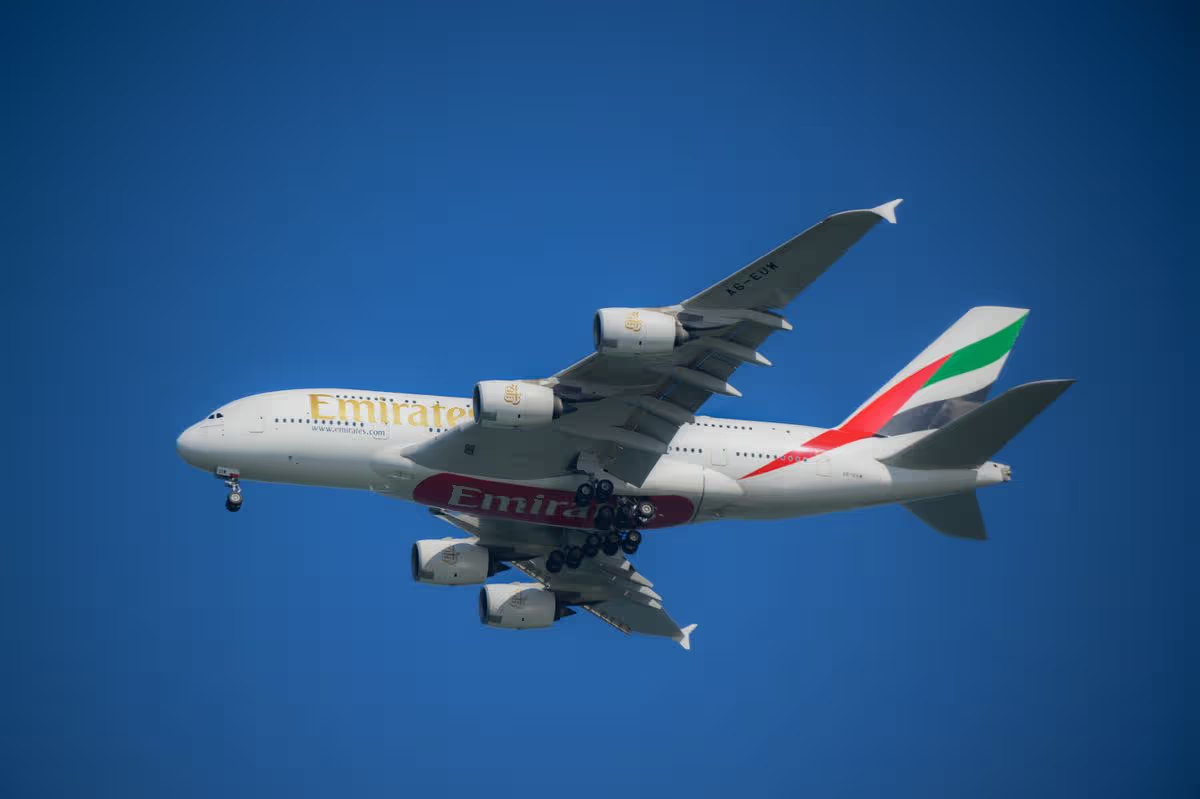
Airlines serving the Middle East cancelled or diverted a large number of flights on Saturday in the wake of US and Israeli airstrikes against on Iran – Emirates have issued an update

Many passengers are facing delays or cancelled flights to UAE(Image: Anadolu via Getty Images)
Thousands of holidaymakers have been left stranded after aviation giant Emirates axed all flights in and out of Dubai on Saturday.
The ongoing situation in Iran and the Middle East has lead to multiple regional airspace closures over Dubai.
Emirates issued a “red alert” suspension lasting until at least 3pm local time Sunday. The carrier is “actively monitoring” the high-stakes situation as authorities scramble to manage the unfolding crisis. While safety remains the “highest priority,” the move has sparked travel mayhem for those caught in the crossfire.
Airlines serving the Middle East cancelled or diverted a large number of flights on Saturday in the wake of US and Israeli airstrikes against on Iran. British Airways, Virgin Atlantic and Wizz Air were among carriers to scale back their schedules to destinations in the Middle East, citing safety concerns.
READ MORE: WW3 mapped as US and Israel launch strikes on IranREAD MORE: Ayatollah Ali Khamenei’s daughter, son-in-law, and grandchild reportedly killed in airstrikes
Ensure our latest headlines always appear at the top of your Google Search by making us a Preferred Source. Click here to activate or add us as your Preferred Source in your Google search settings.
Taking to X an Emirates spokesperson said: “Due to multiple regional airspace closures, Emirates has temporarily suspended all operations to and from Dubai, up until 1500hrs UAE time on Sunday, 1 March. If you are booked to travel in the next 72 hours, your options are:
“Rebook on an alternate flight. You can rebook on another flight to your intended destination up to 10 days from your original date of travel. If you booked your flight with a travel agent, please contact them. If you booked with us directly, contact us.
“Request for refund. You can request for a refund of your ticket by completing the refund form if you booked with us directly. If you booked your flights with a travel agent, please contact them. We urge all customers to check flight status before proceeding to the airport. Customers impacted by flight cancellations must contact their travel agency for rebooking.
“If booked directly with Emirates, please contact us. Customers are requested to ensure their contact details are correct by visiting http://emirat.es/managebooking to receive updates We are actively monitoring the situation and engaging with relevant authorities. We apologise to customers affected by disruptions for any inconvenience caused. The safety and security of our passengers and crew remain our highest priority.”
The update comes in the wake of confirmation from Iran’s state broadcaster that Supreme Leader Ali Khamenei was killed in the early hours Sunday local time in US and Israeli aristrikes.
Follow our live blog for the latest travel updates by clicking here.