firefighter

Who made the call to leave the Lachman fire? In sworn testimony, LAFD officials pass the buck

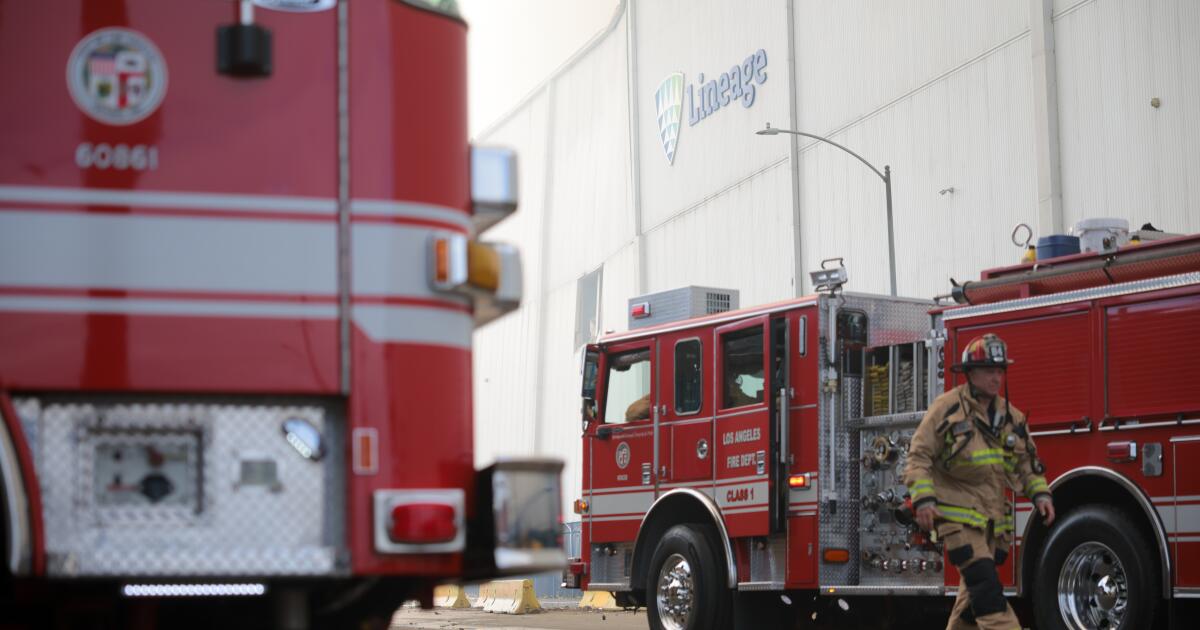
Early in Michael McIndoe’s shift on Jan. 2, 2025, his crew got their marching orders: Pick up hoses left overnight at the scene of the Lachman fire.

McIndoe, a captain at Fire Station 69 in Pacific Palisades, didn’t think the plan was a good idea, he said in sworn testimony obtained by The Times. He had read the National Weather Service’s forecast for the day — temperatures were expected to be warmer — and handling any lingering hot spots would be easier with hoses in place.

While he was still at the station, he said, he relayed his concerns by phone to Battalion Chief Mario Garcia, who was in charge of the operation.

Garcia “said something along the lines of, ‘OK. Let me go check it out, and then I’ll get back to you,’ ” McIndoe testified last month.

Despite the warning, Garcia’s orders never changed, and McIndoe spent a couple hours or so that morning rolling up hose lines.

At one point, McIndoe said, he came across a smoldering ash pit. He retrieved a backpack with water from his engine, sprayed into the ground with a couple gallons of water and dug up the dirt with his hand tool until he was satisfied it was cool.

Days later, amid high winds, embers from the Lachman fire ignited into the Palisades fire, which killed 12 people and destroyed thousands of homes.

McIndoe was one of a dozen Los Angeles firefighters deposed in January in a lawsuit filed by Palisades fire victims against the city and the state. Transcripts and videos of the testimony were released Thursday and Friday, backing up earlier reporting by The Times that crews were ordered to pack up their hoses despite signs that the Lachman fire was not completely out.

One firefighter, Scott Pike, testified that he informed a captain of hot spots and ash pits in the area but that he never received orders to take care of the hazards.

Garcia testified that no one informed him of any concerns about picking up the hoses and that he believed the decision was made before his shift.

The testimony raises questions about why LAFD officials did not address concerns expressed to them about weather conditions and potentially dangerous hot spots that could flare up into another fire. With Pike and McIndoe saying they were following directions from above, and Garcia and the battalion chief from the prior shift appearing to pass the buck to others, it is unclear who made the decision to leave the Lachman fire.

LAFD spokesperson Stephanie Bishop declined to answer the question of who decided to pull the hoses, citing an ongoing investigation. She also would not answer whether officials had identified the captain whom Pike spoke with or determined what the captain did with his concerns.

Pike said he did not know the captain’s name but believed the captain was from Engine 69.

McIndoe testified that he was the captain on Engine 69 that day. In an email Saturday, McIndoe said he was not authorized to speak with the media but wanted to correct the record: “I did not speak to, nor do I recall seeing, Firefighter Pike the day that we picked up hose at the Lachman fire.”

Garcia did not immediately respond to a request for comment. Pike did not respond to a request for comment.

That day, McIndoe testified, he saw Garcia on the hill picking up hoses and brought up their earlier conversation.

“I just went up to him, and I said, ‘Hey, I hope you don’t think I’m just trying to get out of work,’ ” McIndoe said. “And he said, no, that’s — that’s fine. Something along those lines, and that that’s all I can really recall.”

He said he was trying to clarify with Garcia that he believed “that the hose should stay up a little bit longer.”

Garcia testified that when he got to the burn scar, no one raised any concerns about the hose pickup, nor did he see any need to leave the equipment at the site.

He said he thought the decision to pick up the hoses was made before his shift — though he was “not 100 percent sure” — and that it was a “collaborative decision, based off all the information that was received.”

By the time he got up to the burn area, Garcia testified, half the hose had already been picked up. He walked the perimeter to ensure there was a line cut around it and that it was cold, and did not see any smoke or any sign that the fire was not fully extinguished.

“Came across several members,” he said. “Nobody mentioned anything about there being any concerns of any sort.”

Battalion Chief Martin Mullen, who was on duty before Garcia, testified that he walked the perimeter four times and left the hose lines in place overnight as a precaution, keeping two assistant chiefs, Vinny Alvarado and Joseph Everett, in the loop. Mullen said they informed another top chief, Phillip Fligiel.

The hoses could be hooked up again quickly “if something were to happen,” Mullen testified.

Mullen testified that he also notified Garcia: “I told him I left him hose lines in place overnight, you need to walk that and make sure there’s nothing going on up there.”

Mullen, who said he was not involved in deciding when to pick up the hoses, did not immediately respond to a request for comment.

In an email Sunday, Everett said: “I was not present or assigned to that incident. As a result I made no command decisions nor do I have information as to anyones testimony.”

Text messages obtained by The Times through a public records request in December show that Fligiel, Alvarado and Everett were making plans to remove the equipment on Jan. 1. The Lachman fire, which federal prosecutors believe was deliberately set, flared up shortly after midnight on Jan. 1, 2025. A few hours later, at 4:46 a.m., the LAFD announced that it was fully contained at eight acres.

“I imagine it might take all day to get that hose off the hill,” Fligiel said in a group chat early the morning of Jan. 1. “Make sure that plan is coordinated.”

At 1:35 p.m. on Jan. 2, Garcia texted Fligiel and Everett: “All hose and equipment has been picked up.”

Earlier that day, Pike was making troubling observations that led him to think that the entire area needed to be re-investigated. He saw about five smoky areas and ash pits, including one he remembered vividly that was too hot to touch with his gloved hand.

“So I just kicked it with my boot to kind of expose it, and there was, like red hot, like, coals,” he testified. “And I even heard crackling.”

Pike, a 23-year LAFD veteran based at a station in Sunland, was working an overtime shift at Fire Station 23, the LAFD’s second outpost in the Palisades, that day. He relayed his observations to a captain and two firefighters.

“That’s how I approached him, is like, ‘Hey, Cap … We have hot spots in general. We have some ash pits,’ ” Pike testified about his conversation with the captain. “That’s an alert to double-check the whole area and maybe we need to switch our tactics.”

Pike testified that it was not his job “to overstep and tell him what to do. He earned that rank.”

The captain, he said, suggested possibly bringing hand tools or a backpack filled with water up the hill to extinguish any hot spots. Pike went back to picking up the hose while awaiting new orders, which never came.

Pike testified that he felt his colleagues — the captain and two firefighters — blew him off.

“It kind of sits heavy with me that nobody listened to me,” he said.

In his deposition, McIndoe did not recall details about other conversations he had that day.

He was asked by a plaintiffs’ attorney: “Any dialogue with anyone else that you haven’t told me about concerning any of the work that was being done up there at the Lachman fire site, in terms of checking for smokers? Making sure that you got all the hose? Anything like that?”

McIndoe responded: “I don’t recall specific conversations. I think I may have had a conversation with one or two of the other captains that were on scene before we left.”

McIndoe testified that he told that captain — whom he said was from Fire Station 37 — that he thought it would be a good idea to leave the hose out because the warm weather could preheat the ground and bring up smokers, “and it would be nice to have the hose lines in place to address those.”

The Times reported in October that crews were ordered to leave the Lachman fire, even though the ground was still smoldering and rocks were hot to the touch.

In a text message reviewed by The Times, a firefighter who was at the scene wrote that Garcia had been told it was a “bad idea” to leave because of the visible signs of smoking terrain, which crews feared could start a new fire if left unprotected.

“And the rest is history,” the firefighter wrote.

Source link

L.A. firefighter testifies that Lachman fire was not fully put out when crews were ordered to leave

A Los Angeles firefighter said in sworn testimony that he sounded the alarm about the inadequate mop-up of the Lachman fire — and was blown off by a captain — days before the embers reignited into the deadly Palisades fire.

The firefighter, Scott Pike, testified last month in a lawsuit brought by Palisades fire victims against the city and the state.

Pike, a 23-year LAFD veteran normally assigned to a station in Sunland, was working an overtime shift on Jan. 2 when he was assigned to pick up the hoses from the Lachman fire. But he said he saw about five areas that were still smoking.

At one ash pit, he said, “I didn’t even want to use my gloved hand because it was hot. So I just kicked it with my boot to kind of expose it, and there was, like red hot, like, coals … that was still smoldering. And I even heard crackling.”

  • Share via

Pike’s dramatic retelling, which city attorneys initially blocked from release along with transcripts of deposition testimony from 11 other firefighters, corroborates previous reporting by The Times that a battalion chief ordered crews to pack up their hoses and leave, despite signs that the earlier fire was not completely extinguished.

Pike testified that when he reported his observations to other firefighters at the scene, “I felt like I kind of got blown off a little bit.”

Then he tried the captain.

“That’s how I approached him, is like, ‘Hey, Cap … We have hot spots in general. We have some ash pits,’” Pike said of the captain on the scene, whose name he did not know. “That’s an alert to double-check the whole area and maybe we need to switch our tactics.”

Pike testified that it was not his job “to overstep and tell him what to do. He earned that rank.”

The other firefighters, too, seemed eager to “just get this hose picked up,” Pike said, adding that he was working overtime the day after a holiday “because nobody else wanted to work it.”

“It kind of sits heavy with me that nobody listened to me,” he said.

LAFD commanders have insisted that the flames were completely out and barely mentioned the earlier fire in an after-action review report designed to examine mistakes and prevent them from happening again.

Pike said in his testimony that he was never interviewed for the after-action report.

After the firefighters testified over the course of three weeks, city attorneys invoked a general protective order that any party in the litigation can designate testimony as confidential for up to 30 days. A city attorney previously told The Times that this allowed them to review the testimony and determine which parts, if any, should stay confidential.

Days after the firefighters left the scene, high winds reignited the embers into the inferno that destroyed much of Pacific Palisades and killed 12 people.

Alex Robertson, an attorney representing the Palisades fire victims in the lawsuit, said the 11 other firefighters who were deposed testified that the fire was out and that they did not see hot spots or smoldering.

“Only one of the firefighters we deposed had the courage to tell the truth — that his fellow firefighters and captain ignored his warnings that the fire had not been fully extinguished,” Robertson said.

The fire victims allege that the state government, which owns Topanga State Park, failed in the week between the two fires to inspect the burn scar after firefighters left and make sure a “dangerous condition” did not exist on its property.

The LAFD was responsible for putting out the fire, but plaintiffs’ attorneys argue that the state should have done more to monitor the burn scar and ensure the area was safe.

Several California State Parks representatives also testified in the case. Their testimony and text messages show that their initial concern was whether the fire was on parkland and whether firefighting efforts and equipment would harm federally endangered plants and artifacts.

The Times report about crews being ordered to leave the earlier fire, published Oct. 30, described text messages from firefighters indicating that at the scene of the Lachman fire on Jan. 2, 2025, the ground was still smoldering and rocks were hot to the touch.

In one text message, a firefighter who was at the scene wrote that the battalion chief had been told it was a “bad idea” to leave because of the visible signs of smoking terrain, which crews feared could start a new fire if left unprotected.

“And the rest is history,” the firefighter wrote.

A second firefighter was told that tree stumps were still hot when the crew packed up and left, according to the texts. And a third firefighter said last month that crew members were upset when told to pack up and leave but that they could not ignore orders, according to the texts. The third firefighter also wrote that he and his colleagues knew immediately that the Palisades fire was a rekindle of the Jan. 1 blaze.

LAFD officials were emphatic early on that the Lachman fire, which federal prosecutors believe was deliberately set, was fully extinguished.

“We won’t leave a fire that has any hot spots,” Kristin Crowley, the fire chief at the time, said at a community meeting Jan. 16, 2025.

“That fire was dead out,” Chief Deputy Joe Everett said at the same meeting, adding that he was out of town but communicating with the incident commander. “If it is determined that was the cause, it would be a phenomenon.”

The Lachman fire broke out shortly after midnight on New Years Day. A few hours later, at 4:46 a.m., the LAFD announced that the blaze was fully contained at eight acres.

Top fire commanders soon made plans to finish mopping up the scene and to leave with their equipment, according to another set of text messages obtained by The Times through a state Public Records Act request.

“I imagine it might take all day to get that hose off the hill,” LAFD Chief Deputy Phillip Fligiel said in a group chat early the morning of Jan. 1. “Make sure that plan is coordinated.”

At 1:35 p.m. on Jan. 2, Battalion Chief Mario Garcia — whom firefighters said had received the observations about the smoldering ground and hot rocks, according to the private text messages The Times reviewed — texted Fligiel and Everett: “All hose and equipment has been picked up.”

Five days after that, on the morning of Jan. 7, an LAFD captain called Fire Station 23 to say that the Lachman fire had started up again.

In June, LAFD Battalion Chief Nick Ferrari had told a high-ranking fire official who works for a different agency in the L.A. region that LAFD officials knew about the firefighters’ complaints at the Lachman fire scene, The Times also reported.

After the Oct. 30 Times report, Bass directed Fire Chief Jaime Moore, who started the job in November, to commission an independent investigation into the LAFD’s handling of the Lachman fire.

In an interview last month, Moore said he opened an internal investigation into the Lachman fire through the LAFD’s Professional Standards Division, which probes complaints against department members. He said he requested the Fire Safety Research Institute, which is reviewing last January’s wildfires at the request of Gov. Gavin Newsom, to include the Lachman fire as part of its analysis, and the institute agreed. Moore also pointed to the L.A. City Council’s move to hire an outside firm to examine the Lachman and Palisades fires.

Even with the internal investigation underway, Moore said he spoke with the battalion chief who was on duty during the Lachman fire mop-up.

“He swears to me that nobody ever told him verbally or through a text message that there was any hot spots,” Moore said.

Source link

LAFD chief will make $473,600 a year to run an embattled department

Los Angeles Fire Department Chief Jaime Moore has taken over an agency under intense scrutiny — and he’s getting paid handsomely to do it.

Moore, who was appointed by Mayor Karen Bass in October, will earn $473,600 a year, the City Council decided Tuesday — $18,000 more than his predecessor, Kristin Crowley, made when she was ousted by Bass in February 2025 for her handling of the Palisades fire.

The LAFD and the mayor continue to face intense scrutiny over their handling of the Palisades fire, which killed 12 people and destroyed thousands of homes in January of last year, as well as the watering down of the LAFD after-action report on the fire.

When Crowley started as fire chief in 2022, her annual salary was $367,100.

Soon after that, the city amended its salary ranges for department heads to keep up with inflation, said Matt Szabo, the city’s top budget analyst.

Crowley, the city’s first female and first LGBTQ fire chief, received annual merit raises, according to Szabo.

On Monday, Crowley filed a whistleblower lawsuit claiming that Bass “orchestrated a campaign of retaliation” to protect her own political future and paper over her failures during the Palisades fire.

The LAFD did not immediately comment on Moore’s salary, which was recommended by the mayor and the City Council’s Executive Employee Relations Committee before going to the full council on Tuesday.

“Investing in strong and experienced leadership fortifies public safety for residents,” said a spokesperson for council President Marqueece Harris-Dawson, who chairs the employee relations committee.

Moore’s salary is fairly comparable to that of other city and county public safety leaders.

The chief of the Los Angeles County Fire Department, Anthony Marrone, made $475,000 in base pay in 2024, according to county data.

Los Angeles Police Chief Jim McDonnell was sworn in at a $450,000 salary in 2024 — less than the $507,500 the Board of Police Commissioners had initially recommended. McDonnell’s salary as of Tuesday was still about $450,000.

McDonnell’s salary was a significant jump over the initial pay of his predecessor, Michel Moore, who earned $350,000 when he first assumed the position in 2018.

The LAFD has about 3,200 uniformed fire personnel, while the LAPD has about 8,700 sworn officers.

Both McDonnell and the new fire chief make far less than Janisse Quiñones, general manager of the Department of Water and Power, who was sworn in at $750,000 a year. Salaries for DWP executives must remain competitive with those of utility company execs to retain top talent, according to the city’s Office of Public Accountability, which recommended Quiñones’ salary.

She makes much more than Marty Adams, the previous department head, who earned about $447,000 a year when he departed.

Moore, a 30-year LAFD veteran, has spent his first months as chief dealing with persistent questions about the department’s management of the Palisades fire.

A week after the fire, a Times investigation found that top LAFD officials did not fully staff up and pre-deploy all available engines and firefighters to the Palisades and other high-risk areas, despite a forecast of dangerously high winds.

Bass cited the failure to keep firefighters on duty for a second shift as one reason she dismissed Crowley.

The new chief has swerved between candid reflection over the department’s failures during the Palisades fire and lashing out at the media over what he has called a “smear” campaign against firefighters who bravely worked to put out the catastrophic blaze.

Moore appeared to be referencing a Times report that a battalion chief ordered crews to roll up their hoses and leave the area of the Jan. 1 Lachman fire, even though firefighters had complained that the ground was still smoldering and rocks remained hot to the touch. Days later, the Lachman fire reignited into the Palisades fire.

Moore has also tried to walk a fine line on the LAFD’s after-action report, which was meant to spell out mistakes and suggest measures to avoid repeating them.

The author of the report, Battalion Chief Kenneth Cook, declined to endorse the final version because of changes that altered his findings and made the report, in his words, “highly unprofessional and inconsistent with our established standards.”

The most significant change to the report involved downplaying LAFD officials’ pre-deployment mistakes.

Moore has admitted that the report was watered down to “soften language and reduce explicit criticism of department leadership,” while saying he would not look into who directed the watering down. But Moore has also said that he will not allow similar edits to future after-action reports.

Bass has repeatedly denied that she was involved in any effort to water down the report. But two sources with knowledge of Bass’ office have said that Bass wanted key findings about the LAFD’s actions removed or softened.

Bass has called The Times’ reporting “dangerous and irresponsible.”

Source link

Ousted L.A. Fire Chief Crowley sues over her dismissal

Former Los Angeles Fire Chief Kristin Crowley is suing the city, claiming in a whistleblower lawsuit that Mayor Karen Bass “orchestrated a campaign of retaliation” to protect her own political future and paper over her failures during the most destructive fire in city history.

In the lawsuit, filed Monday in L.A. County Superior Court, Crowley and her attorneys allege Bass sought to shift blame for the way the city handled last year’s catastrophic Palisades fire to Crowley amid mounting criticism of the mayor’s decision to attend a ceremony in Ghana on Jan. 7, the day the fire erupted. Bass, the suit alleges, left L.A. despite knowing of the potential severe winds and fire danger.

“She sought to avoid accountability by shifting blame and lying — including falsely claiming that she was not aware of the nationally anticipated weather event, falsely claiming that the LAFD’s budget was not cut, and falsely claiming that LAFD’s resources would have supported an additional 1,000 firefighters to fight the blaze — claims contradicted by public records and Bass’ own prior statements,” the lawsuit alleges. “These false statements were not mistakes but part of a deliberate strategy to divert scrutiny from Bass’ decisions and to avoid accountability.”

The Palisades fire took off the morning of Jan. 7, 2025 amid fierce Santa Ana winds, killing 12 people and destroying thousands of homes amounting to billions of dollars in damage. While authorities allege a Florida man started the fire, saying it was actually a rekindling of a Jan. 1 fire, decisions by both LAFD brass and the mayor before, during and after Jan. 7 have come under scrutiny.

According to records obtained by The Times, shortly before releasing an after-action review report on the Palisades fire, the Los Angeles Fire Department issued a confidential memo detailing plans to protect Bass and others from “reputational harm.” The 13-page document is on LAFD letterhead and includes email addresses for department officials, representatives of Bass’ office, and public relations consultants hired to help shape messaging about the fire.

But as questions about the fire response swirled, instead of getting in lockstep with Bass, Crowley revealed to the public that “budget cuts had weakened the department’s readiness and jeopardized public and firefighter safety” and said her repeated warnings were ignored, the lawsuit says. It alleges Bass retaliated by ousting her as fire chief on Feb. 21, 2025.

Since the fire, the city has faced criticism for an inadequate deployment of firefighters, a chaotic evacuation of Pacific Palisades and a lack of water caused in part by a local reservoir being left empty for repairs. In December, The Times revealed that the city’s after-action report had been altered to deflect criticism of LAFD’s failure to predeploy engines and crews to the Palisades, among other shortcomings.

Crowley’s lawyers claim Bass’ view of her performance shifted with political opinion — starting with initial praise before reversing course and criticizing Crowley as the mayor came under fire for being out of the country during the blaze.

The mayor’s office did not immediately respond to a request for comment.

When Crowley was ousted, the mayor said it was because Crowley failed to inform her about the dangerous conditions that day or to predeploy hundreds of firefighters just in case. She also said Crowley rebuffed a request to prepare a report on the fires — a critical part of ongoing investigations into the cause of the fire and the city’s response.

But Crowley’s lawyers, Genie Harrison and Mia Munro, allege their client “repeatedly warned of the LAFD’s worsening resource and staffing crisis” prior to the fire and warned that aging infrastructure, surging emergency calls and shrinking staff left the city at risk.

“An analysis of the 90th percentile of all incidents indicates that the overall response time of LAFD resources has increased from 6:51 (minutes) in 2018 to 7:53 in 2022. This dramatic increase is nearly double the time by national standards for first-arriving units,” the lawsuit says.

Three days after the fire, Crowley told a local TV news station that her department was “screaming to be properly funded,” which prompted Bass to summon Crowley to her office, according to the lawsuit.

“I don’t know why you had to do that; normally we are on the same page, and I don’t know why you had to say stuff to the media,” Bass told Crowley, according to the lawsuit. Bass allegedly told Crowley she wasn’t firing her then because “right now I can’t do that.”

Before Crowley was ousted, the city’s top financial analyst pushed back on her budget-cutting narrative, saying that spending on the Fire Department actually went up during that budget year — in large part because of a package of firefighter raises. Those increases added an estimated $53 million to the department’s budget.

Regardless, the day after Crowley and Bass met in her office, the lawsuit alleges, retired LAFD Chief Deputy Ronnie Villanueva began working at the Emergency Operations Center, donning a mayor’s office badge. On Feb. 3, 2025, more than two weeks before Crowley was removed from her position, Villanueva wrote a report to the Board of Fire Commissioners identifying himself as the interim fire chief — a position he held until the appointment of Fire Chief Jaime Moore last fall.

The lawsuit alleges that Bass and others in her administration defamed Crowley, retaliated against her in violation of California’s labor code and violated Crowley’s 1st Amendment rights. Crowley is seeking unspecified damages.

Bass repeatedly has denied she was involved in any effort to water down the after-action report, which was meant to spell out mistakes in the Palisades fire response and suggest measures to avoid repeating them. But two sources with knowledge of Bass’ office said that after receiving an early draft of the report, the mayor told Villanueva it could expose the city to legal liabilities.

Bass wanted key findings about the LAFD’s actions removed or softened before the report was made public, the sources told The Times this month. The mayor has said The Times’ story based on the sources’ accounts was “completely fabricated.”

Crowley and her lawyers allege the LAFD “did not have sufficient operating emergency vehicles to safely and effectively pre-deploy 1,000 (or anywhere near 1,000) additional firefighters on January 7.” The department did not have the money or personnel “to repair and maintain emergency fire engines, fire trucks, and ambulances,” the suit alleges.

“This case is about accountability,” said Harrison, Crowley’s attorney. “Public servants should not face punishment or be silenced for telling the truth about public or firefighter safety and on matters of public importance.”

Times staff writers Alene Tcheckmedyian, David Zahniser and Paul Pringle contributed to this report. Pringle is a former Times staff writer.

Source link

LAFD tried to protect Bass from ‘reputational harm’ stemming from after-action report

Shortly before releasing an after-action report on the Palisades fire, the Los Angeles Fire Department issued a confidential memo detailing plans to protect Mayor Karen Bass and others from “reputational harm” in connection with the city’s handling of the catastrophic blaze, records obtained by The Times show.

“It’s our goal to prepare and protect Mayor Bass, the City, and the LAFD from reputational harm associated with the upcoming public release of its AARR, through a comprehensive strategy that includes risk assessment, proactive and reactive communications, and crisis response,” the memo states, referring to the acronym for the LAFD’s report.

The 13-page document is on LAFD letterhead and includes email addresses for department officials, representatives of Bass’ office and public relations consultants hired to help shape messaging about the fire, although it is not known to whom it was eventually distributed. The Times obtained the memo, titled “LAFD AARR: Strategic Response Plan,” from the LAFD through the California Public Records Act.

Labeled “for internal use only,” the memo, which is unsigned, aims to shape news media coverage of the report’s findings, including through efforts to “minimize tough Q&A” by asking to hold closed-door briefings with the Fire Commission and City Council. The memo is undated but notes that “This plan has been updated with the latest timeline as of 10/7.” The after-action report was released to the public on Oct. 8.

The Times disclosed in December that the report had been altered to deflect criticism of the LAFD’s failure to pre-deploy engines and crews to the Palisades ahead of the Jan. 7, 2025 fire, among other shortcomings in the city’s preparations for and response to the deadly disaster.

Mayor Karen Bass joins L.A. City Council and community safety leaders at City Hall

Mayor Karen Bass joins L.A. City Council and community safety leaders at City Hall in downtown Los Angeles on February 17, 2026.

(Christina House/Los Angeles Times)

Bass has repeatedly denied that she was involved in any effort to water down the report, which was meant to spell out mistakes and suggest measures to avoid repeating them after a fire that killed 12 people and destroyed thousands of homes. But two sources with knowledge of Bass’ office have said that after receiving an early draft of the report, the mayor told then-Interim Fire Chief Ronnie Villanueva that it could expose the city to legal liabilities.

Bass wanted key findings about the LAFD’s actions removed or softened before the report was made public, the sources told The Times early this month. The mayor has said that The Times’ story based on the sources’ accounts was “completely fabricated.”

Representatives of Bass’ office and the LAFD did not immediately comment this week on the 13-page “strategic response plan” memo.

The disclosure about the effort to protect the mayor’s reputation comes after other records revealed that she was leading damage control efforts around both the after-action report and an announcement by federal prosecutors that the Palisades fire was caused by a rekindling of a smaller blaze.

The LAFD was facing scrutiny over why it failed to put out the earlier blaze.

“Any additional interviews with the Fire Chief would likely depend on the Mayor’s guidance,” LAFD spokesperson Capt. Erik Scott wrote in an Oct. 9 email to a Bass aide, Villanueva and others. “Regarding a press conference, I would be cautious as it could invite a high volume of challenging questions, and this would also be contingent on the Mayor’s direction.”

Before releasing the after-action report, the LAFD formed an internal crisis management team and brought in the public relations consultants, Beverly Hills-based Lede Co., to help shape its messaging about the fire. In the 13-page strategy memo, Lede, whose fee was covered by the nonprofit Los Angeles Fire Department Foundation, is tasked with helping to manage and monitor news media coverage of the report.

The latest set of documents obtained by The Times includes a “Tough Q&A” with proposed answers to questions that news reporters might ask Bass and Villanueva. The questions for Bass centered around the budget and former Fire Chief Kristin Crowley’s claims that budget restrictions hampered the department’s ability to fight the Palisades fire, with the proposed answers emphasizing that the budget was not cut.

Ronnie Villanueva at City Hall

Ronnie Villanueva speaks during his appointment as interim LAFD Chief on Feb. 21, 2025.

(Drew A. Kelley / Long Beach Press-Telegram via Getty Images)

Villanueva’s proposed answers focused on the “unstoppable” nature of the fire and improvements LAFD has since made to ensure adequate staffing on red flag days.

Other internal emails reviewed by The Times show that Bass met with Villanueva about the after-action report in mid-July.

The mayor’s role in altering the after-action report and managing its release has become an issue in her reelection campaign. Bass previously said through a spokesperson that her office merely encouraged the LAFD to fact-check references in the report about city finances and the forecast of high winds leading up to Jan. 7. The mayor later told The Times that the report was “technical,” saying, “I’m not a firefighter.”

The changes that ended up in the final report were significant, with some Palisades residents and former LAFD chiefs saying they amounted to a cover-up.

A week after the fire, The Times exposed LAFD officials’ decisions not to fully staff up and pre-deploy all available engines and firefighters to the Palisades and other high-risk areas before the dangerous winds hit. Bass later removed Crowley, citing the failure to keep firefighters on duty for a second shift.

An initial draft of the after-action report said the pre-deployment decisions “did not align” with policy, but the final version said the number of companies pre-deployed “went above and beyond the standard LAFD pre-deployment matrix.”

Fire fighters work to extinguish flames during the Eaton fire on Wednesday, Jan. 8, 2025 in Altadena, CA.

Fire fighters work to extinguish flames during the Eaton fire on Wednesday, Jan. 8, 2025 in Altadena, CA.

(Jason Armond/Los Angeles Times)

The author of the report, Battalion Chief Kenneth Cook, declined to endorse the final version because of changes that altered his findings and made the report, in his words, “highly unprofessional and inconsistent with our established standards.”

Even with the deletions and changes, the report delivered a harsh critique of the LAFD’s performance during the Palisades fire, pointing to a disorganized response, failures in communication and chiefs who didn’t understand their roles. The report found that top commanders lacked a fundamental knowledge of wildland firefighting tactics, including “basic suppression techniques.”

Fire Chief Jaime Moore, an LAFD veteran whom Bass named as chief in November, has said he is focused on the future and not interested in assigning blame for changes to the report. But he said he will not allow similar edits to future after-action reports.

The after-action report included just a brief reference to the Lachman fire, a small Jan. 1, 2025, blaze that rekindled six days later into the Palisades fire.

The Times found that a battalion chief ordered firefighters to roll up their hoses and leave the Lachman burn area the day after the fire was supposedly extinguished, despite complaints by crew members that the ground still was smoldering.

After the Times report, Bass directed Moore to commission an independent investigation into the LAFD’s handling of the Lachman fire.

LAFD officials have said that most of the 42 recommendations in the after-action report have been implemented, including mandatory staffing protocols on red flag days and training on wind-driven fires, tactical operations and evacuations.

Pringle is a former Times staff writer.

Source link

Ballot proposal may change pay for L.A. County deputies, firefighters

Los Angeles County leaders are pushing forward a measure for the November ballot that would remove their ability to have final say on one of the costliest decisions they make: How much to pay firefighters and sheriff’s deputies.

The supervisors voted 4 to 0 on Tuesday to have their lawyers draft a ballot measure that would give final decision-making power in contract disputes regarding pay and working conditions for public safety workers to a three-person panel, a practice known as binding arbitration.

Supporters say the proposal, which the supervisors are pushing to get on the November ballot, would offer a new tool to smooth over disputes and provide a “reset” after recent tumultuous contract negotiations.

“It incentivizes both parties to come to a fair agreement,” said Supervisor Lindsey Horvath, who introduced the measure along with Supervisor Hilda Solis.

The supervisors are expected to vote again on the proposal in the coming months before putting it on the ballot.

Currently, if contract talks hit an impasse, the five county supervisors can, after a complex mediation process, impose a final offer. Public safety workers, who are not allowed to strike, say they have no leverage with which to fight back, giving the county final word.

Under the new proposal, the power dynamics would shift. An arbitration panel would instead make the final decision on some contract disputes for public safety employees, including firefighters, sheriff’s deputies and county lifeguards. The panel would have one arbitrator chosen by the county, one chosen by the union and one agreed to by both sides.

It’s rare for labor negotiations to get to this point. The county said it has imposed contract terms after reaching impasse over negotiations twice since 2001, once with the Union of American Physicians and Dentists in 2001 and Supervising Deputy Probation Officers in 2024.

“The goal is to never have to get to that step,” Horvath said.

Unions say the measure would give them needed leverage and remove political pressure from the thorniest contract questions. Critics say it shifts financial control away from politicians and into the hands of unaccountable arbitrators, which could lead to bloated labor costs.

“Arbitrators aren’t elected, they’re not required to weigh countywide trade-offs like homeless services, healthcare, capital improvements, all of those things,” said Supervisor Holly Mitchell, the only supervisor to abstain from the vote.

Interim County Executive Officer Joseph M. Nicchitta said he viewed it as a potential “seismic change” in how the county handles labor negotiations.

“Because the arbitrators ‘pick a winner’ as between the parties’ final offers, the decision will no longer be a compromise. One side will win,” Nicchitta wrote in a Feb. 9 letter to the board.

Substantial raises mandated by arbitrators, he wrote, “could, among other things, materially and detrimentally increase the County’s day-to-day operating costs, lead to workforce reductions and program curtailments, balloon our unfunded pension liabilities, and damage the County’s credit ratings.”

The decision of who gets final say over wage increases will become increasingly important as county leaders try to steer the government through financial tumult brought on by federal cuts, booming labor costs and billions in sex abuse payouts. Last week, the supervisors unanimously approved $200 million in homeless service cuts to close the budget gap.

Horvath said more than 20 jurisdictions in California use binding arbitration for public safety workers, including the counties of San Francisco and Sacramento.

Public safety unions are simultaneously gathering signatures to get the proposal on the ballot in case the board decides against moving forward. A coalition of public safety unions has started a campaign arguing that binding arbitration would “remove politics from pay decisions” and leave “pay decisions in the hands of neutral experts.”

“They have every intention and probably all of the resources needed to collect signatures to put something on the ballot that gets them this,” Supervisor Janice Hahn said. “This makes sense to work on something that we can have some input in.”

Source link

Bass directed watering down of Palisades fire after-action report, sources say

For nearly two months, Mayor Karen Bass has repeatedly denied that she was involved in altering an after-action report on the Palisades fire to downplay failures by the city and the Los Angeles Fire Department in combating the catastrophic blaze.

But two sources with knowledge of Bass’ office said that after receiving an early draft, the mayor told then-interim Fire Chief Ronnie Villanueva that the report could expose the city to legal liabilities for those failures. Bass wanted key findings about the LAFD’s actions removed or softened before the report was made public, the sources said — and that is what happened.

The changes to the report, which was released on Oct. 8, came to light through a Times investigation published in December.

The sources told The Times that two people close to Bass informed them of the mayor’s behind-the-scenes role in watering down the report. One source spoke to both of the people; the other spoke to one of them. The sources requested anonymity to speak frankly about the mayor’s private conversations with Villanueva and others. The Times is not naming the people who are close to Bass because that could have the effect of identifying the sources.

One Bass confidant told one of the sources that “the mayor didn’t tell the truth when she said she had nothing to do with changing the report.” The source said the confidant advised Bass that altering the report “was a bad idea” because it would hurt her politically.

According to the source, the two confidants said that Bass held onto the original draft until after the changes were made. The source added that both confidants said they are prepared to testify under oath to verify their accounts if the matter ends up in a legal proceeding.

Both sources said they did not know if Villanueva or anyone else in the LAFD or in the mayor’s office made line-by-line edits at Bass’ specific instructions, or if they imposed the changes after receiving a general direction from her.

“All the changes [The Times] reported on were the ones Karen wanted,” the second source said, referring primarily to the newspaper’s determination that the report was altered to deflect attention from the LAFD’s failure to pre-deploy crews to the Palisades before the fire, which killed 12 people and destroyed more than 6,000 homes and other structures, amid forecasts of catastrophically high winds.

Bass did not respond this week to a request for comment for this article.

The mayor has previously rejected several requests by The Times to be interviewed about the report. In response to written questions, a spokesperson for Bass’ office said in an email in December: “The report was written and edited by the Fire Department. We did not red-line, review every page or review every draft of the report.”

The spokesperson, Clara Karger, said the mayor’s office asked only that the LAFD fact-check any findings regarding the effect of city finances and high-wind forecasts on the department’s performance in the fire.

In a brief interview last month, Bass told The Times that she did not work with the Fire Department on changes to the report, nor did the agency consult her about any changes.

“The only thing that I told them to do was I told them to talk to Matt Szabo about the budget and the funding, and that was it,” she said, referring to the city’s administrative officer. “That’s a technical report. I’m not a firefighter.”

Villanueva declined to comment. He has made no public statements about the after-action report or any conversations he might have had with Bass about it.

After admitting that the report was altered in places so as not to reflect poorly on top commanders, Fire Chief Jaime Moore said last month that he did not plan to determine who was responsible, adding that he did not see the benefit of doing that.

In an interview last month, Fire Commission President Genethia Hudley Hayes said Villanueva told her in mid-August or later that a draft of the report was sent to the mayor’s office for “refinements.” Hudley Hayes said she did not know what the refinements were, but she was concerned enough to consult a deputy city attorney about possible changes to the report.

Hudley Hayes, who was appointed by Bass, said that after reviewing an early draft of the report as well as the final document, she was satisfied that “material findings” were not altered.

But the changes to the after-action report, which was meant to spell out mistakes and suggest measures to avoid repeating them after the worst fire in city history, were significant, with some Palisades residents and former LAFD chiefs saying they amounted to a “cover-up.”

A week after the Jan. 7, 2025, fire, The Times exposed LAFD officials’ decisions not to fully staff up and pre-deploy all available engines and firefighters to the Palisades or other high-risk areas ahead of the dangerous winds. Bass later ousted Fire Chief Kristin Crowley, citing the failure to keep firefighters on duty for a second shift.

An initial draft of the after-action report said the pre-deployment decisions “did not align” with policy, while the final version said the number of companies pre-deployed “went above and beyond the standard LAFD pre-deployment matrix.”

The author of the report, Battalion Chief Kenneth Cook, declined to endorse the final version because of changes that altered his findings and made the report, in his words, “highly unprofessional and inconsistent with our established standards.”

Before the report was released, the LAFD formed an internal crisis management team and brought in a public relations firm to help shape its messaging about the fire, though it’s unclear what role each played, if any, in editing the report.

Moore, an LAFD veteran whom Bass named as chief in November, said he is focused on the future and not interested in assigning blame for changes to the report. But he said he will not allow similar edits to future after-action reports.

Asked last month how he would handle a mayor’s request for similar changes, he said: “That’s very easy, I’d just say absolutely not. We don’t do that.”

The after-action report included just a brief reference to the Lachman fire, a small Jan. 1, 2025, blaze that rekindled six days later into the Palisades fire.

The Times found that a battalion chief ordered firefighters to roll up their hoses and leave the Lachman burn area the day after the fire was supposedly extinguished, despite complaints by crew members that the ground still was smoldering. The Times reviewed text messages among firefighters and a third party, sent in the weeks and months after the fire, describing the crew’s concerns, and reported that at least one battalion chief assigned to the LAFD’s risk management section knew about them for months.

After the Times report, Bass directed Moore to commission an independent investigation into the LAFD’s handling of the Lachman fire.

LAFD officials said Tuesday that most of the 42 recommendations in the after-action report have been implemented, including mandatory staffing protocols on red flag days and training on wind-driven fires, tactical operations and evacuations.

Pringle is a former Times staff writer.

Source link