





fire

The Hundred Cricket: What next for Welsh Fire?

After a comfortable 15-run win against London Spirit at Sophia Gardens, Michael Klinger’s side finished fifth in the women’s overall standings.

They looked a much improved outfit compared to last season but three defeats in their first four games – alongside the loss of captain Sophie Devine, The Hundred’s joint most expensive signing – extinguished any hopes of a spot in Friday’s knockout match.

Replacement skipper Georgia Wareham led the side to three wins from four as they finished on a high and insists she has enjoyed her time in the Welsh capital, despite the ultimate lack of success.

“I’ve really enjoyed Cardiff, I’ve loved it here,” Wareham said.

“I’ve loved every minute with the team and the support staff. It’s been incredible.

“The fans, they’ve been awesome as well, they’ve been turning out every game. Even on the final game, despite us being out of the competition, they’ve showed up.

“It’s been really cool.”

Source link

Wafcon 2026: Algeria 1-3 Malawi – Chawinga sisters fire Scorchers into final

Malawi’s success at an expanded 16-team tournament in Morocco is proving that women’s football in Africa has the potential to grow beyond the traditional big names.

Excluding the inaugural edition in 1998, they are the first debutant to reach the final.

But having already booked their place at next year’s Fifa Women’s World Cup in Brazil, courtesy of their run to the last four, the Scorchers are now on the verge of something very special – and anything looks possible with the Chawinga sisters firing on all cylinders in attack.

With Tabitha helping OL Lyonnes to another French title last season, and with Temwa winning a second golden boot and MVP award with NWSL side Kansas City Current, there was plenty of hype ahead of this campaign.

All of it now appears justified as the sisters have scored eight of their team’s 12 goals – with five for Temwa and three for Tabitha – and appear to have a level of pace, power and positional awareness which opposition defences struggle to cope with.

Tabitha’s opener in this match will be remembered for a long time.

When Asimenye Simwaka, who just two weeks ago was running in the 200m and 400m semi-finals at the Commonwealth Games in Glasgow, headed a corner back into the middle of the penalty area, the elder Chawinga looked to pose little danger given she had her back to goal.

But the 30-year-old twisted to apply a clever left-footed overhead kick which beat Algeria goalkeeper Chloe N’Gazi but not the crossbar.

As N’Gazi also twisted to avoid being struck by the ricochet, she probably thought she would be able to collect the ball on the bounce, but the backspin meant it could only end up in the back of the net.

Belkhiter’s red card, which had come midway through the first half, had looked harsh, even if replays clearly showed the defender catching Tabitha on the back of the heel.

The challenge came a long way from goal and Belkhiter’s team-mate Roselene Khezami, who was challenging from Chawinga’s other side, did get something on the ball as she lunged in at the same time.

Temwa Chawinga took advantage of the numerical advantage to round N’Gazi and stroke home to make it 2-0, but Kadzere’s deserved red card shortly after opened the door to the North Africans.

The Malawi midfielder just about made contact with the top of the ball before going over the top and catching Marine Dafeur above the ankle.

The challenge, however, came inside the Algeria penalty area and was totally unnecessary.

Algeria’s Melissa Bethi and Temwa Chawinga both missed glorious opportunities inside the opening minutes of the second period before Adjabi’s strike on the hour.

Two Malawi defenders made a mess of dealing with Dafeur’s deep free-kick, allowing the forward to fire back across goal on the volley to half the deficit.

Both sides looked to be running out of steam before Tabitha Chawinga settled the contest with her second goal, driving into the penalty area almost unchallenged to side-foot home from just outside the six yard box.

Ranked 153rd in the world, Malawi have taken Wafcon by storm.

One final hurdle remains in the form of Cameroon, after they saw off the hosts on penalties, but on this form the Chawinga sisters will feel anyone is beatable.

Source link

State lawmakers seek tougher rules for industrial facilities after Boyle Heights fire

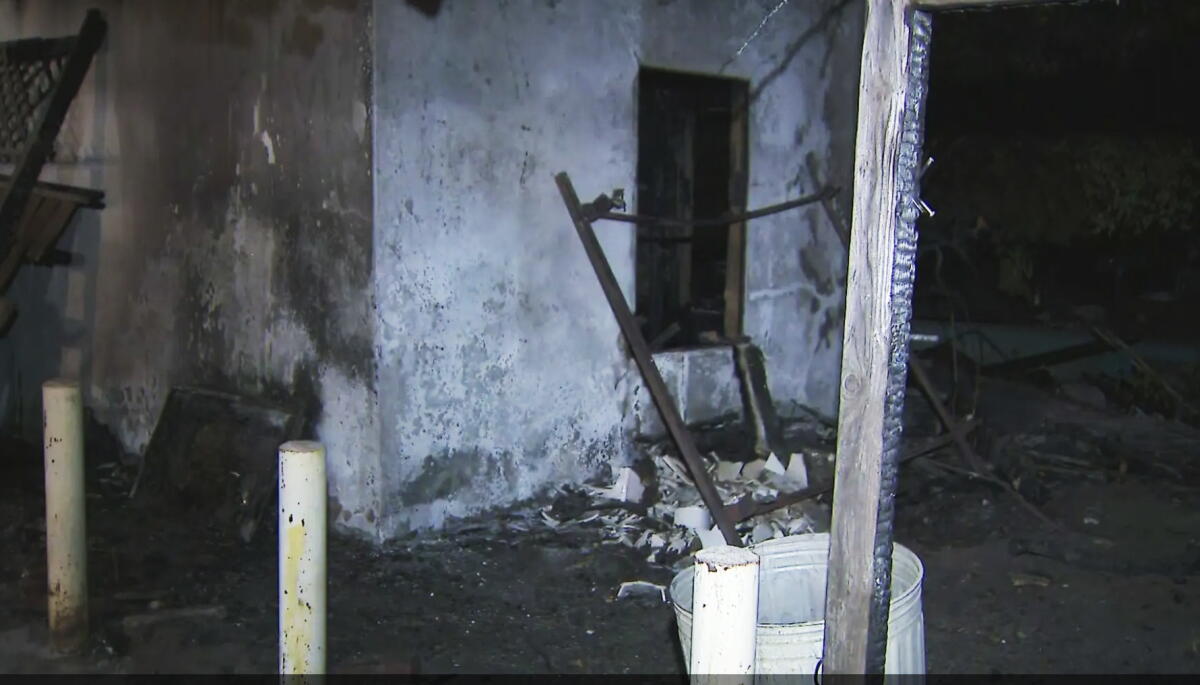
Two state lawmakers from Los Angeles want tougher penalties for disasters caused by industrial companies after a massive fire in Boyle Heights left neighbors struggling with smoky air and the smell of rotting meat.

Assemblymember Mark González and state Sen. María Elena Durazo, both Democrats, are seeking a new law that would require any new cold storage facility to create a contingency fund for emergencies.

The fund would be used to help neighbors mitigate the fallout from a disaster.

Los Angeles Mayor Karen Bass, who is running for reelection, will appear with González and Durazo at an event Wednesday to discuss the proposed laws.

Lineage’s 500,000-square-foot food warehouse in Boyle Heights caught fire on June 17. The company blames a power company, which was working on the warehouse’s roof, for the blaze.

The company, Altus Power, has denied responsibility, stating that the cause is undetermined. The company accused Lineage of finger-pointing instead of focusing on community relief.

Noxious smoke and an influx of rats and flies attracted to rotting meat stored at the facility have tormented neighbors. The Los Angeles County Department of Public Health has cited Lineage for unsanitary and nuisance conditions related to rodent and pest control violations.

The South Coast Air Quality Management District has issued at least 20 violation notices to Lineage for public nuisance.

Lineage recently applied for building permits to replace the site, which Bass called “a slap in the face” to Boyle Heights families.

A press release ahead of Wednesday’s news conference said the proposal by lawmakers “will ensure that Lineage can’t rebuild without being accountable to the community.”

González and Durazo plan to insert proposed legislation related to the Lineage fire into existing bills, a process known as “gut and amend.”

The politicians also want to allow for stiffer fines against companies following a disaster.

Their proposed legislation also would ensure that anyone who sues over the fire doesn’t have to pay state taxes on any settlement, and that local jurisdictions are responsible for pest extermination efforts.

Greg Lehmkuhl, president and chief executive of Lineage, said in a quarterly earnings call last week that the company has committed $3.3 million to the community in the aftermath of the fire.

“Safety remains our top priority, and I’m incredibly proud of our team and how they’re handling this very challenging situation,” Lehmkuhl said on the call.

Source link

Rangers seek striker & ‘playing with fire’ in defence

Rangers are being “proactive” in seeking a new striker after Youssef Chermiti was ruled out long term, says manager Derek McInnes, who warned defensive injuries have left the club “playing with fire”.

Chermiti, 22, sustained an anterior cruciate ligament injury in Saturday’s defeat by Hibernian, shortly after McInnes confirmed a bid had been rejected for the Portugal Under-21 cap. Galatasaray have been linked with the former Everton player.

A specialist in London will be consulted, with a possible operation next week.

Chermiti is joined on the sidelines by left-back Tuur Rommens, who has been ruled out for up to eight weeks with a groin problem suffered in the same game.

McInnes, whose side will attempt to overturn a 2-1 first-leg deficit at home to Jagiellonia Bialystok in their Europa League third-round qualifier on Thursday, said of Chermiti: “Obviously, really disappointing for ourselves.

“Selfishly, he’s a big part of what we wanted to do this season and he’s obviously a talented boy.

“For Youssef himself, obviously he’s very young. It’ll be difficult for him to accept and understand what’s happened to him.

“The only saving grace from our point of view as a club is the fact it’s happened in a transfer window and we’ve got the opportunity to react to that.

“The plan was for Youssef to stay in. Obviously it was a big number that was reportedly bid for him. I don’t know exactly what the figure was. Obviously the club rejected that. It’s neither here nor there now, to be honest. It’s done.

“We are obviously looking at maybe strengthening that area of the pitch. We’re trying to be quite proactive with that and seeing what is available. Number nines are normally the most difficult ones to get.”

Source link

Senator ‘deeply troubled’ by utility threats

The chair of the California Senate’s utilities committee said Tuesday that he was “deeply troubled” by electric company executives’ recent threats to take action to protect their shareholders if they don’t get legislation in Sacramento to limit their wildfire liabilities.

In a letter to Southern California Edison and Pacific Gas & Electric, Sen. Benjamin Allen (D-Santa Monica) wrote that he was considering calling the utility executives to an oversight hearing to have them explain their plans.

Allen sent the letter after the Times reported that the two companies’ top executives promised their investors in recent conference calls that they planned to respond if they don’t get legislation for which they have been lobbying. Gov. Gavin Newsom and lawmakers are working behind closed doors on a package of wildfire bills.

“While I understand that utility investors seek predictability for their invested dollars, and stable utilities are important to the state of California, we as legislators must balance the additional interests of wildfire victims and survivors, our residents’ ability to access affordable insurance, and the need to ensure affordable utility service,” Allen wrote.

“We are certainly not interested in being threatened as we seek a balanced path that is right for California,” he added.

In response to the letter, PG&E and Edison said Tuesday night that The Times had “mischaracterized” their executives’ comments to investors.

“PG&E’s objectives remain unchanged: safely and reliably serve our customers, ensure wildfire victims are compensated quickly and fairly, and protect customer affordability,” PG&E said in a statement.

Edison declined to comment further.

Besides chairing the Senate’s Energy, Utilities and Communications Committee, Allen also is running in November’s election to be the state’s next insurance commissioner.

Newsom and lawmakers already passed legislation that cut the state’s three biggest electric companies’ liabilities for wildfires. Edison’s shareholders, for example, may pay little of the billions of dollars of damage from last year’s devastating Eaton fire — which killed 19 people and left thousands of families in Altadena homeless — under current laws championed by Newsom to protect the utilities from bankruptcy.

The utilities say more needs to be done. Among the recommendations in a report ordered by Newsom is limiting the amounts that victims can receive for pain and suffering and capping the fees of attorneys who represent them.

The commissioned report also suggested that utilities should no longer reimburse property insurers for damage from fires sparked by electrical equipment. Although this would reduce utilities’ liability for fires, insurers say it would increase premiums for homeowners.

“If the Legislature does not act, or if they act and don’t actually solve the problem, then we’re going to have to take action,” Patti Poppe, PG&E’s chief executive, said on a July 23 call with Wall Street analysts.

Poppe did not specify what her company would do, but made it clear that any action would protect shareholders’ money.

In earlier conversations with analysts, PG&E executives had “alluded to the possibility of opportunistic share repurchases should the legislative process fail to deliver a more durable wildfire liability framework,” according to a report by the bank Jeffries.

Such buybacks could raise the company’s stock price and benefit shareholders while reducing money available for the utility’s California programs.

Last month, Pedro Pizarro, chief executive of Edison International, told Wall Street analysts on a conference call that he too was prepared to make financial changes if the Legislature does not pass a comprehensive bill to cut the utilities’ financial wildfire risk before the legislative session ends Aug. 31.

Any legislation that passes without a protective framework for utilities, Pizarro said, would “influence how we prioritize and deploy future capital.”

Pizarro declined analysts’ requests to say where the company would cut back, but said the utility would continue spending aimed at keeping its grid safe and reliable.

“We’re going to evaluate the totality of the package that comes to us and figure out our response that goes along with it,” Pizarro said.

This month, state and county officials released their investigation into the Eaton fire, blaming the deadly inferno on Edison’s century-old transmission line that the company kept in place even though it hadn’t carried electricity since 1971.

Utilities have long known that idle lines could spark fires. In 2019, the Kincade fire in Sonoma County, which destroyed hundreds of homes, was ignited by an old, unused transmission line owned by PG&E.

At least seven of the 20 most destructive fires in California history have been sparked by the three biggest for-profit utilities.

Source link

Huge fire breaks out at Libya’s Zawiya refinery after drone attack | Oil and Gas News

Libya’s National Oil Corporation warns it may halt operations at the country’s largest operating refinery if drone attacks continue.

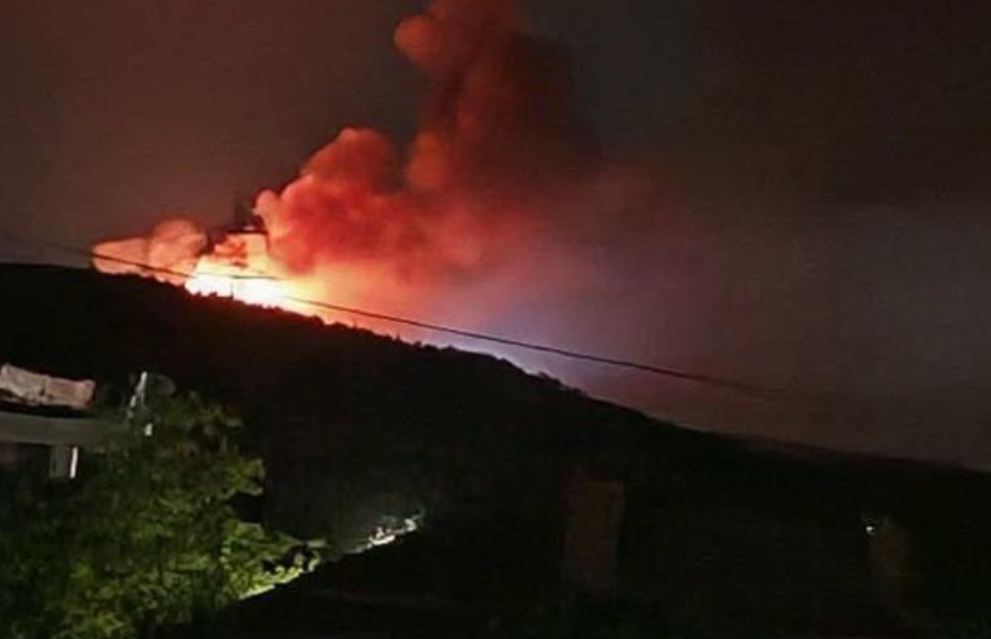
Firefighters in Libya are battling a massive blaze at the Zawiya refinery following a drone attack, with the country’s national oil company warning it may declare a force majeure and shut down operations if attacks continue.

Libya’s Ambulance and Emergency Service said in a statement on Tuesday there were no “serious injuries” from the fire, with most patients treated for smoke inhalation.

Recommended Stories

list of 4 itemsend of list

Footage verified by Al Jazeera showed huge flames and thick black ‌smoke billowing over the facility, the largest operating refinery in Libya with a refining capacity of 120,000 barrels per day.

It is located about 40km (25 miles) west of the capital, Tripoli.

The National Oil Corporation (NOC) said in a statement on Facebook that the fire broke out on Monday evening at tank number 402-T, belonging to the Brega Oil Company.

It said the tank, which contained about 4.5 million litres (1.2 million gallons) of gasoline, was “directly targeted, resulting in a severe fire before the tank completely collapsed”.

The NOC said the attack followed drone strikes on a water desalination plant at the refinery on Sunday and on a naphtha reservoir on Saturday.

The company declared a “maximum emergency” in the region and urged authorities to launch an investigation and bring the perpetrators to justice.

There was no immediate claim of responsibility for the attacks, and the company did ‌not say who they believed was behind them.

In a statement hours later, the NOC said the refinery was “still being subject to sabotage attacks” with a drone targeting an oil blending and filling ⁠plant operated by the Zawiya Oil Refining Company.

It said the drone fell near its main oil tank and a pipeline network used to produce oils for the domestic market, without causing any casualties or damage.

“The company’s board of directors also confirms that if these attacks continue, it will have to declare a state of force majeure and suspend operations at the refinery,” it warned.

The Brega Oil Company, meanwhile, appealed to “all parties to stop the fighting and stay away from oil facilities and depots”. It said “oil facilities are vital infrastructure and owned by all Libyans” and that “protecting them is a national responsibility that does not tolerate any negligence”.

The attacks highlight the continuing security challenges in Libya, where rival administrations and armed groups have retained influence despite a ‌2020 ⁠ceasefire that halted major warfare. The country split in 2014 after a NATO-backed uprising that toppled longtime leader Muammar ⁠Gaddafi in 2011.

Two governments are currently vying for power: the United Nations-recognised administration in Tripoli, led by Prime Minister Abdul Hamid Dbeibah, and a rival in the east backed by military commander Khalifa Haftar.

In a statement, the Tripoli-based government said Dbeibah held a meeting earlier in the day with key officials, including the interior minister and the chiefs of some armed groups in the capital, “to follow up on the latest security developments”.

Dbeibah “stressed the need to deal firmly with any transgressions or actions that threaten security or harm vital facilities and installations”, the statement said.

Separately, a Libyan parliamentary panel condemned the attack and called for stronger protection of oil installations.

“The House of Representatives’ Energy and Natural Resources Committee condemns in the strongest terms the criminal attack targeting the Zawiya Refinery, one of the most vital facilities in the oil and gas sector that is a cornerstone of the national economy,” it said in a statement.

Source link

Saudi Arabia says fire extinguished at Aramco facility in Jizan | Conflict News

No casualties were reported after the flames broke out early on Sunday, the Saudi Energy Ministry says.

A fire reported at a facility belonging to Saudi Arabian state oil giant Aramco has been extinguished, authorities say.

The blaze broke out early on Sunday at a site in the coastal city of Jizan, the Saudi Ministry of Energy wrote in a statement on X. No casualties were reported.

Recommended Stories

list of 4 itemsend of list

“The competent authorities are completing the necessary procedures to deal with the incident,” the ministry added.

It did not say what caused the fire.

Yemen’s Iran-backed Houthi armed group claimed it carried out an attack on the facility, located on the Red Sea near its border, the latest in a series of Houthi claims of strikes targeting Saudi oil sites.

A military spokesman for the Houthi led government in the capital Sanaa, Yahya Saree, wrote on X the group “succeeded in targeting the Aramco refinery in Jizan with a drone, and the strike was precise”.

He said the attack came in response to Saudi Arabia’s “breach of the airspace of the provinces of Saada and Hajjah” with drones.

There was no immediate comment on the claim from Riyadh. Al Jazeera has contacted the Saudi Ministry of Foreign Affairs.

The Houthis last month claimed attacks on Aramco facilities in Jizan. The Houthis also said they targeted oil installations in Yanbu, Saudi Arabia’s principal west coast export gateway.

Aramco chief Amin Nasser said last ⁠week that recent attacks on the company’s facilities had caused some production interruptions but that he was confident operations could be restored quickly. He said the attacks ‌had no material operational or financial impact.

The attacks have added to growing strains on a 2022 truce in the war between the Houthis and Yemen’s internationally recognised government, backed by Saudi Arabia.

The Houthis, which took control of the capital, Sanaa, in 2014, also declared a blockade on Saudi Arabia in the Red Sea last month, threatening shipping through the Bab al-Mandeb strait.

Saudi authorities have also blamed Iran-aligned armed groups in Iraq for attacks on its oil facilities.

On Friday, Riyadh signed a defence pact with Turkiye and Pakistan amid rising regional tensions from the US-Israel war on Iran.

Source link

Pratt spent big on luxury hotels and security, campaign reports show

During the Los Angeles mayoral primary, Spencer Pratt put out a video saying he was living in a trailer on the burned-out lot where his Pacific Palisades home once stood — a claim that was soon debunked by TMZ, which reported that he was actually staying at the Hotel Bel-Air.

While Pratt’s mayoral bid has come to a close, his campaign’s final spending on luxury hotels — including the Hotel Bel-Air — is now coming to light.

Pratt spent just under $71,000 on hotels for himself, his campaign staff and his fundraising operation, mostly at the Hotel Bel-Air and the Four Seasons Hotel in New York, according to recently released campaign finance filings in the mayoral race.

The former reality TV star has a history of lavish spending on hotels, according to his memoir, “The Guy You Loved to Hate,” where he recounts staying at the Four Seasons in Costa Rica for a month in 2010. He said the hotel stay was “bleeding him dry.”

The tens of thousands of dollars Pratt’s campaign spent on hotels represent just a fraction of the more than $3 million Pratt’s campaign spent overall, including hundreds of thousands to campaign strategy firms and more than $200,000 to the company Black Llama Inc. for billboards. Pratt had AI-designed billboards placed across the city.

Pratt also spent more than $180,000 on private security firm Delta Special Operations Corp., almost entirely in the final month before the June 3 primary.

Delta Special Operations charges $650 per day to provide a single security officer in Los Angeles, but also offers a higher level of “executive protection.” Pratt has said he faced threats during his candidacy.

Pratt placed third in the primary, behind Councilmember Nithya Raman and L.A. Mayor Karen Bass, who will square off in the Nov. 3 general election. Raman’s campaign reported spending about $1,000 on security, while Bass has security provided by the city.

Building out her support

Raman secured what could be one of her most significant endorsements of the entire election cycle this week, pulling in the support of the Western States Regional Council of Carpenters.

The endorsement from the carpenters union marks a sharp turn for the labor group, which backed Bass in 2022. The union committed more than $2 million to independent expenditure groups supporting Bass’ candidacy in 2022, paying for television ads that ran in advance of the general election.

During the primary, Raman and independent group supporting her focused on ads on social media and streaming platforms, which are cheaper than traditional television ads.

“We will be matching the same energy and we’ll have same type of commitment as when we endorsed Bass. We don’t plan on holding back,” said Pete Rodriguez, the second general vice president of the international union.

Rodriguez said the union would spend significantly to support Raman, though he did not give a figure.

Bass has dominated labor endorsements throughout the campaign. She has secured more than two dozen endorsements from influential labor unions including the Police Protective League, which represents rank and file police officers in the LAPD, and SEIU 721, which represents public sector workers at the airport and in street services, among other departments. She also has the backing of the powerful Los Angeles Federation of Labor, a coalition of unions (Bass calls its leader, Yvonne Wheeler, “The Beyoncé of Labor”).

“Workers are overwhelmingly behind Karen Bass … because she delivers real results,” said the mayor’s campaign spokesperson, Alex Stack. “Results like building more affordable housing immediately to drive down rents, mortgages, and the cost of housing.”

Rodriguez said one major issue that caused the carpenters union to break with Bass was the mayor’s failure to include higher labor standards in the codified version of Executive Directive 1, which fast-tracked some affordable housing applications.

That law was passed by the council and Raman voted in favor of the law that codified the mayor’s directive.

Raman told The Times in a statement that she stood by her vote, but that she appreciated the union’s ability to work with legislators to enact legislation that “combines density with higher labor standards.”

You’re reading the L.A. on the Record newsletter

Sign up to make sense of the often unexplained world of L.A. politics.

The DSA endorsement …

Raman could get another key and much-discussed endorsement later this month.

The Los Angeles chapter of the Democratic Socialists of America is once again considering endorsing her for mayor. The endorsement would bring doorknockers for Raman and could bring more national attention to the race.

An internal petition shared with The Times is circulating in the group and needs just 50 signatures by Aug. 8 in order for the consideration of Raman to go to a vote. Raman would then need 60% of the vote at an Aug. 22 chapter meeting in order to win the endorsement.

“Nithya Raman is running an insurgent left-wing campaign for the mayor’s office against Karen Bass and L.A.’s unpopular status quo Democratic establishment,” the petition reads. “Will an insurgent Left seize control of our city government to build a Los Angeles for its working class? Or will the establishment fend off this insurgency and deepen its power?”

After jumping into the race on the last possible day in February, Raman was not endorsed by the left-wing organization in the primary. The group instead “recommended” her — a status that means the DSA wouldn’t actively campaign on her behalf but urged voters to cast their ballots for Raman.

Raman was endorsed by the group in both her council campaigns, but her late entry came after DSA had made its endorsements.

The group considered reopening its endorsement process for either Raman or Rae Huang — who like Raman is a member of the DSA — but ultimately decided to focus on other down ballot races in the primary.

DSA-LA declined to say whether the petition had gained the requisite number of signatures for a vote.

State of play

— LINEAGE LEGISLATION: Los Angeles city and county officials unveiled a slate of measures aimed at speeding recovery, increasing corporate accountability and expanding financial assistance for residents and businesses affected by the June fire at the Lineage cold food storage facility.

— PRICED OUT: Councilmember Curren Price’s motion to get his perjury and embezzlement case dropped was denied Friday by a Los Angeles Superior Court judge. Price’s lawyers maintain that he did not knowingly vote on city contracts for real estate developers that contracted with his wife. The judge argued there was “ample evidence, albeit circumstantial, that this was a scheme and not just happenstance.” The outgoing council member’s next court date is set for October.

— E-BIKES UNDER FIRE: The council’s Rules Committee passed a motion Tuesday that asks the city’s Department of Transportation to come up with ways to regulate e-bikes, including who can ride them and how. The measure next goes to the ways to regulate e-bikesPublic Safety Committee, then the full City Council.

— A NEW ERA: For the first time since 1963, Council District 9 in South Los Angeles will soon have a non-Black representative in the City Council. Estuardo Mazariegos and Jose Ugarte, who are facing each other in the Nov. 3 election to represent parts of downtown and South Los Angeles, are both immigrants from Latin America who arrived undocumented as children.

— OFF THE RAILS: Homelessness on Metro’s rail and bus system has dropped by 57% since 2024, the agency said this week.

— A ROSE AND A THORN: The Rose Bowl Aquatics Center will close April 1, and not be returned to its regular users until the fall of 2028, after the conclusion of the Olympic Games. The announcement came after The Times reported on the impending shutdown.

QUICK HITS

  • Where is Inside Safe? The mayor’s signature program went to the intersection of Alameda Street and E. 223rd Street in City Councilmember Tim McOsker’s district where it brought 22 people indoors.
  • On the docket next week: The City Council will vote on whether to execute the Enhanced City Resources Master Agreement for the 2028 Olympic and Paralympic Games.

Stay in touch

That’s it for this week! Send your questions, comments and gossip to LAontheRecord@latimes.com. Did a friend forward you this email? Sign up here to get it in your inbox every Saturday morning.

Source link

Donald Trump renews effort to fire Federal Reserve governor Lisa Cook | Inflation News

The US president has clashed with Federal Reserve members over his bid to rapidly slash interest rates despite inflation.

The White House has revived its efforts to remove Lisa Cook, the first Black woman to serve as a governor at the Federal Reserve, the United States’ central bank.

On Friday, media reports emerged that the administration of President Donald Trump had sent Cook a letter threatening her position at the Federal Reserve.

Recommended Stories

list of 3 itemsend of list

“You are hereby provided notice that the President is considering removing you from your position,” the letter read.

Signed by White House Deputy Chief of Staff Dan Scavino, the letter gave Cook a deadline of three weeks to respond to unproven allegations that she had committed mortgage fraud.

It also warned that the crime she was accused of was punishable by up to 30 years in prison. Her conduct, the letter added, constituted negligence that calls into question her trustworthiness as a Federal Reserve governor.

Trump first unveiled the claims against Cook in August 2025, in a push to fire her from her role.

No other president since the central bank’s founding in 1913 has sought to oust a Federal Reserve governor.

The central bank has historically been insulated from political pressure, and under the law, Federal Reserve governors can only be removed by the president “for cause”. A full term runs 14 years.

Such laws aim is to shield the central bank from making economic decisions based on political pressures.

But Trump has undertaken an aggressive campaign to slash interest rates, which are elevated as a means of combatting inflation.

He has also sought to rid the federal government of appointees aligned with his Democratic predecessors. Cook was nominated in 2022 under President Democrat Joe Biden, Trump’s two-time election rival.

Trump’s claims against Cook centre on the idea that she listed two homes as her primary residence: one in Georgia and the other in Michigan. That could have made her eligible for favourable mortgage rates.

But there is no conclusive evidence so far that Cook sought to deceive lenders, making a successful fraud prosecution unlikely.

In June, a US Supreme Court ruling also blocked Trump’s attempt to fire her, though it did clear the way for the president to fire the heads of other independent agencies.

The letter sent to Cook this week was dated August 5. That same day, Cook spoke at an economic luncheon in Alaska, saying inflation is “too high” and indicating that she is “prepared to act” by raising interest rates, a position shared by others at the Federal Reserve.

Trump has long sparred with the Federal Reserve over interest rates, repeatedly threatening to fire former Federal Reserve Chair Jerome Powell for refusing to bow to his demands.

Kevin Warsh, a Trump appointee, took over Powell’s position as chair in May. He has yet to deliver Trump’s wished-for rate cuts, amid stubborn inflation.

“We should have the lowest interest rate in the world,” Trump said after last week’s decision by the Federal Reserve to hold interest rates steady for the fifth consecutive time.

In a statement, Cook’s legal team said “there is no valid cause” for removing her from her position.

“As we did before, we will challenge this latest pretext and preserve her position and the historic role of the Fed,” lawyer Abbe D Lowell said.

Source link

Earth, Wind & Fire postpones concert with Lionel Richie

For San Francisco fans of Lionel Richie and Earth, Wind & Fire, the party at Chase Center ended before it even started.

Earth, Wind & Fire abruptly called off its concert at the NorCal venue on Thursday, notifying fans in a social media statement that the cancellation was “due to a medical emergency involving a member of our band.” A spokesperson for the San Francisco Fire Department confirmed to The Times that personnel were dispatched at 5:30 p.m. to respond to a medical emergency at Chase Center. One person was transported to a hospital via private ambulance, but the individual’s identity was not disclosed. TMZ reported that the Fire Department responded to a “cardiac incident.”

A representative for Earth, Wind & Fire did not provide additional details. The band said in its post that it has rescheduled Thursday’s show for a later date to be announced soon and that tickets will be valid for the new date. “We sincerely apologize for the unexpected change and appreciate everyone’s understanding,” the band said.

Live Nation announced Richie and Earth, Wind & Fire’s joint Sing a Song All Night Long tour in January. The tour kicked off in June but quickly hit a snag when Richie also suffered an unspecified health issue while on the road. Richie, 77, postponed a stop at Chicago’s United Center and another show at the Schottenstein Center in Columbus, Ohio, after he brought his first tour stop to an abrupt end.

The Grammy-winning hitmaker of “Hello” and “Say You, Say Me” unexpectedly stopped the concert at the Grand Casino Arena in St. Paul, Minn., after taking a seat on stage multiple times during his performance of “Dancing on the Ceiling” and telling his audience he felt “dizzy,” according to videos shared on social media.

“When you are feeling dizzy, sit your a— down,” he joked, according to video a fan posted to TikTok. “When you are feeling strange about yourself, sit your a— down.”

TMZ reported at the time that the singer-songwriter was hospitalized after the health scare. Paramedics reportedly met the artist backstage and transported him to a nearby hospital out of precaution. In a statement following the incident, Richie thanked fans for their support and informed them, “I’m doing well, and I’m grateful for all of you.”

The Sing a Song All Night Long tour is slated to continue Saturday at Acrisure Arena in Palm Desert. Richie and Earth, Wind & Fire are scheduled to play the Intuit Dome in Inglewood on Sunday. The tour ends Aug. 14 at the Moody Center in Austin, Texas.


Source link

UCLA coach Bob Chesney works to make Bruins uncomfortable

You compete.

Or you complain.

UCLA head coach Bob Chesney coined it at the beginning of preseason camp last year in Harrisonburg, Va., before leading James Madison to a 12-2 record, a Sun Belt championship and its first College Football Playoff appearance.

“You either compete or complain, you can’t do both,” Chesney said on Aug. 5, 2025. “You are either full of pride and won’t allow yourself to have mental, physical and emotional lack of discipline and toughness, or you fill yourselves with pity and you have a lack of all three of those things.”

Chesney carried that same tune on his first day of fall camp in Westwood, leading his new team.

The Bruin faithful got its first taste of their newly minted head honcho at his introductory news conference on Dec. 9, where he made promises of turning around the football program, elevating it to its height of the past, and reengaging the Bruin community.

UCLA quarterback Nico Iamaleava looks to throw a pass during the first day of preseason camp at Spalding Field.

UCLA quarterback Nico Iamaleava looks to throw a pass during the first day of preseason camp at Spalding Field on Thursday.

(Ronaldo Bolanos/Los Angeles Times)

And Chesney has not wavered since.

From his halftime speech at a UCLA men’s basketball game versus Indiana — where he proclaimed that the Bruins would be Big Ten champions — to throughout spring practice and all through Big Ten media day last week, Chesney has stayed consistent.

And that consistency includes the way he is training his players leading up to UCLA’s opener against California, where the former Pac-12 rivals will meet for a night game between two first-year head coaches.

Chesney has emphasized, throughout his short tenure in Westwood, that while physical development is imperative in the offseason, the mental side of the game carries the same weight. Central to that, is putting players in adverse situations in the offseason to get them battle-tested come game day.

“Those are the moments that test you. Pay no attention to a virtue that’s not been tested in fire, and that’s ultimately something that we got to be able to do is put them in situations where we’ve tested them in fire,” Chesney said. “We know how they’re going to react and how they’re going to respond. We know when the moment’s on the line. That’s the most important thing that we can do out here. That’s what this whole entire camp is ultimately about.”

In order to test his players’ resiliency, Chesney has implemented “compete periods” throughout his time in Westwood to emulate the speed and intensity of live reps.

Alongside competition has been grading everything a player does, so there is no ambiguity as to where a player stands on the depth chart or in the program.

Outside of the actual drills and exercises Chesney implements, the coach has also purposefully scheduled some of his practices in the afternoon to expose his players to the intense Los Angeles heat — his version of throwing his players into the fire to help get them acclimated and test their mental toughness.

Chesney’s mental training ultimately serves as a litmus test in discovering who is cut from a different cloth.

“Procedural discipline was a big part of what we want to make sure that we’re constantly talking about,” Chesney said. “And then, how quickly can I get to the next play? How much do I love being coached, and how hard am I going to be coached and accept that coaching and make myself get better?”

With passion and excitement emanating from players on the first day of fall camp, and less than a month away from the first game of the season, Chesney highlighted that it is about striking a balance: testing his players’ resolve but also not being reactionary.

The new head coach underscored that it can be easy for impulse and emotion to take over, but uplifting one another and letting mistakes refine you rather than define you is integral to success.

UCLA defensive linemen Jacob Busic and Anthony Jones run drills during preseason camp at Spalding Field on Thursday.

UCLA defensive linemen Jacob Busic (97) and Anthony Jones (15) run drills during the first day of preseason camp at Spalding Field on Thursday.

(Ronaldo Bolanos/Los Angeles Times)

Central to that is teammates, particularly within the same position group, celebrating the success of one another rather than letting the depth chart dictate morale.

“If someone’s above you and perceived to be above you, what are you doing? Are you trying to elevate your game and compete with them, or are you trying to knock them down and pull them back towards you?” Chesney asked.

“The best teams in the world love that that guy above him is a little better, and they are chasing him every single day. We have a good amount of that on our team, and it’s got to continue because we are going to need everybody, whether they know it or not,” he said.

UCLA will not play its first game until Sept. 5.

However, battles will be won and lost within the team along the way.

But to Chesney, it is how you respond to those successes and failures that prevail.


Source link

The Hundred 2026 results: Welsh Fire captain Phil Salt would like extra week in competition schedule

Welsh Fire captain Phil Salt would ideally like The Hundred to be a week longer after his side played three matches in five days.

His second-placed side won at Birmingham Phoenix on Saturday afternoon and defeated Southern Brave in Cardiff on Monday evening, before losing to Manchester Super Giants on Wednesday afternoon.

“It’s been a little bit hectic the last few days,” Salt told BBC Sport.

“Birmingham, back to Cardiff, up here. It’s a lot to be honest with you in five days and managing bodies through.

“From a player’s point of view I’d like this competition to be probably a week longer.”

The Hundred group stage takes place over 23 days with teams playing eight games in that period.

In comparison, Indian Premier League sides each play 14 group games in a 56-day period, while in last season’s men’s Big Bash League in Australia teams played 10 group games each in a 36-day window.

Since its introduction in 2021, The Hundred has further complicated a packed English summer schedule, with the Professional Cricketers Association (PCA) continuing to raise concerns about the impact on player welfare.

In their response to the 2026 schedule, which saw the T20 Blast reduced by two matches, PCA chief executive Daryl Mitchell said, external the unchanged County Championship season “does raise concerns with player burnout with mental and physical dangers attached to an overly intense end to the season following the conclusion of The Hundred”.

Salt acknowledged the difficulties of finding more time in the schedule, while noting the impact the current scheduling had on his squad.

“We import the best stars in the game for this. We’ve got on our side [the 6ft 8in tall] Marco Jansen and Lockie Ferguson,” he added.

“They’ve done a lot of time on the bus in the last three days! A bus that’s not built for lads that size.

“I’d like a bit more time in between to be honest with you, but I understand we’re working with a pretty tight schedule already as it is.

“I’m not the man for the answer on the schedule, I just like to magic another week of the year somewhere!”

Welsh Fire return to action at Headingley on Sunday (14:30 BST) against Sunrisers Leeds, before playing their final group game at home to London Spirit next Wednesday.

Source link

The Hundred 2026 results: Orla Prendergast takes four wickets as Welsh Fire beat Manchester Super Giants

The Hundred women’s competition, Old Trafford

Manchester Super Giants 85-9 (100 balls): MacDonald-Gay 18* (14); Prendergast 4-18

Welsh Fire (91 balls): Wareham 17 (12); Ecclestone 3-14

Welsh Fire won by three wickets

Scorecard. Table

Ireland international Orla Prendergast took 4-18 as Welsh Fire beat Manchester Super Giants by three wickets at Old Trafford.

Playing only her second Hundred match after arriving as an injury replacement for Sophie Devine, the seamer tore through the Super Giants’ top-order as the hosts slipped to 24-4.

Prendergast bowled Super Giants captain Meg Lanning for a golden duck, had Mady Villiers caught for five and then trapped Kathryn Bryce (4) lbw, before Heather Graham had Paige Scholfield (5) stumped.

India’s Smriti Mandhana made 15 before she was run-out after being called through for a risky single, while Sophie Ecclestone (9) became Graham’s second stumping victim.

Richa Ghosh was Prendergast’s fourth wicket, caught in the covers for 11, but Ryana MacDonald-Gay top-scored from number nine, hitting an unbeaten 18 to help her side reach 85-9.

Fire reached 27 in their reply, before losing Sarah Bryce, caught and bowled by Bex Tyson for 16, while fellow opener Georgia Voll reached the same score before skying a catch off Villiers.

Ecclestone removed Freya Kemp (6) and Prendergast with successive balls, having her England team-mate clip to Lanning at short mid-on and then bowling the Ireland all-rounder. She also had Georgia Wareham caught well by Lanning for 17 in her figures of 3-14.

Graham guided Fire to a nervy victory, losing two further partners but hitting an unbeaten 16, including the winning runs as her side reached 88-7 with nine balls to spare.

The win moved Fire above Leeds Sunrisers into fourth place and two points behind Super Giants who remain third.

Source link

Chad le Clos: South Africa swimmer’s home destroyed by fatal fire after he sets Commonwealth Games record

Chad le Clos says his apartment in South Africa was destroyed by a fatal fire – the night after the swimmer became the most decorated athlete in Commonwealth Games history.

Le Clos picked up his 21st medal to overtake Australia’s Emma McKeon as the athlete with the most medals in Commonwealths history, when South Africa took bronze in the men’s 4x100m medley relay in Glasgow last week.

It was the 34-year-old’s third medal of the 2026 Games, having won silver in the mixed 4×100 ⁠medley and bronze in the men’s 4×100 freestyle relays.

Only days later, Le Clos has revealed that a fire destroyed his home of more than a decade in Sea Point, Cape Town and killed one of his neighbours.

“It has taken me a while to process this heartbreaking tragedy,” the 2012 Olympic gold medallist wrote on Instagram, external.

“On the evening of 30 July, amid breaking the all-time Commonwealth record, a fire started in my apartment block, which quickly spread to my home. Sadly my home, where I’ve lived for more than a decade, burnt down and there is nothing left to salvage.”

In the post, Le Clos also paid tribute to his “neighbour of many years” who died in the fire, offering his “deepest and most sincere condolences” to the victim’s family and friends.

“No words can truly ease a loss like this, but I hope the family knows that the thoughts of an entire community are with them,” the Durban-born swimmer said.

According to reports, external, a 93-year-old resident died in the incident.

Le Clos added: “To my fellow neighbours whose homes and lives have been severely affected by this fire, please know that you are not alone. This is a tight-knit community and it is in moments like these that we lean on one another.”

Le Clos, who famously beat Michael Phelps to win 200m butterfly gold at the London Olympics in 2012, said he has launched a fundraising campaign to help his neighbours affected by the blaze.

Phelps was a 14-time Olympic champion and had not lost in the event since 2001 when the United States icon was beaten by Le Clos.

The South African won his first Commonwealth medal in Delhi in 2010 at the age of 18 and now has seven gold, five silver and nine bronze medals across five editions of the Games.

Over his career, he has won four Olympic medals, 16 world titles, seven Commonwealth golds and 10 African titles.


Source link

More than 150 people rescued in English Channel after boat catches fire | Migration News

Rescue boats from both France and the UK took part in the operation to evacuate passengers from the stricken vessel.

More than 150 migrants travelling to the United Kingdom in a boat across the English Channel have been rescued after the vessel caught fire.

A major rescue operation was launched on Tuesday morning near the French port of Boulogne-sur-Mer, with both French and British authorities working to evacuate those on board, some of whom had jumped into the sea.

Recommended Stories

list of 3 itemsend of list

The local French maritime prefecture said five of the 157 people on board had requested rescue overnight and were evacuated. It said the remaining passengers refused assistance and the boat continued its journey towards the UK, until the engine caught fire and all those on board were rescued.

Since Andy Burnham became UK prime minister two weeks ago, more than 2,000 people have crossed the English Channel in small boats.

Immigration is an extremely divisive and hotly contested issue in the UK, prompting Burnham to pledge that he will be “relentless” in stopping people from reaching the country in small boats.

A person generally must be in the UK to lodge an asylum application, as current rules do not allow people to make asylum claims from overseas. Amnesty International has argued that this makes it “impossible” for people abroad to seek asylum in the UK.

The 1951 United Nations Refugee Convention, to which the UK is a signatory, establishes protections for people fleeing persecution and recognises that those seeking safety may have to use irregular routes.

Reform UK leader Nigel Farage commented on the incident in the English Channel in a post on X.

“We must put a stop to this. Our plan will save lives,” he said.

Farage’s party has pledged to abolish what is known as indefinite leave to remain (ILR) if it wins the next election, due to take place in 2029. ILR allows people to live and work in the UK without a time limit. Reform has also said it would rescind existing ILR grants.

Source link

Ukraine’s Fire Point CEO On How It’s Making Missiles And Drones To “Destroy The Russian Empire”

As a keen reminder of the threats Ukraine is facing, Fire Point CEO Iryna Terekh had to stop a recent interview with TWZ to scramble to a shelter as Russian ballistic missiles were approaching. A 35-year-old architect by training, Terekh helped turn Fire Point from a Ukrainian start-up making weapons in a garage into a leading producer of indigenously made long-range strike drones and missiles, and we talked to her about the company’s weapons and future plans. 

Fire Point’s FP-1 and FP-2 drones have been striking Russian targets to devastating effect and its heavy-hitting Flamingo cruise missiles are adding a new level of long-range threat. 

Beyond these, Fire Point is developing the FP-9 ballistic missile to hit targets up to about 500 miles away and the FP-7.x ballistic missile interceptor, intended to provide a more plentiful and cheaper alternative to Patriot munitions.

Among the many topics discussed, Terekh talked about the status of the FP-9 ballistic missile program, roadblocks to fielding an indigenous Patriot interceptor alternative, how her firm is using AI, why the FP-2 drones were so successful against Russian ships in the Sea of Azov and the challenges of building complex weapons systems while under constant Russian fire. Some of the questions and answers have been slightly edited for clarity.

Iryna Terekh, the CEO of Fire Point, a Ukrainian drone and missile firm, poses for a photograph following an interview with AFP in central London on July 22, 2026, on the sidelines of the Farnborough International Airshow 2026. (Photo by HENRY NICHOLLS / AFP via Getty Images)
Iryna Terekh, the CEO of Fire Point, a Ukrainian drone and missile firm. (Photo by HENRY NICHOLLS / AFP) HENRY NICHOLLS

Q: Tell me how Fire Point came to build drones and missiles.

A: Well, we started with the intention to win the war and destroy the Russian Empire, some knowledge in engineering, physics, mathematics, and industrial production, and we started with the FP-1 drone, which was basically the idea behind this. There were two ideas. First is to make an analog of the Shahed drone by technical characteristics, and the second was to utilize a huge stock of Fab 50 bombs. It’s an old Soviet aviation bomb. There was a rumor that there were dozens of thousands of these in Ukrainian stocks, so we decided to build a platform to carry this huge stock.

When we finished designing the aircraft, it turned out that this rumor was just a rumor about the huge stocks of Fab 50s. But anyway, this was a start for FP-1. And when we started to really scale up the production and design a model that would be fitting to be scaled at volume, then we were forced to build a lot of satellite productions around the main production because very soon we met all the possible bottlenecks. And while developing this huge satellite network of productions of the spare parts of different components, we understood that probably we now have enough missiles to go into missile design. That’s the short story.

Footage of the production and testing of the FP-1/2 attack UAVs and the FP-5 Flamingo cruise missile thumbnail

Footage of the production and testing of the FP-1/2 attack UAVs and the FP-5 Flamingo cruise missile


Q: The Flamingo ground-launched cruise missile, which broke cover last fall, has a claimed range of about 1,800 miles. It uses Ivchenko AI-25 turbofan engines that are commonly found on the L-39 Albatros jet trainer. How many of these engines still exist and how long can you sustain production with those surplus powerplants without switching to something that can be produced en masse cheaply today?

A: First of all, the AI-25 TL was the initial engine with which we started to fly, but this is just one of five different engines that we use on Flamingo. So it’s not the only engine, and Flamingo was initially designed to be flexible and to be able to work with different types of engines. So we can really widen up the stock of used engines. 

But at the same time, we started to develop our own turbojet engine with the same design bureau that designed the 25 TL many years ago, and we built it specifically for the purpose of UAV, not for aviation. And it took quite some time, more than a year and a half. And now we are assembling our first 10 prototypes of the future turbojet fan engines of our production.

The AI-25 turbofan engine, part 1 thumbnail

The AI-25 turbofan engine, part 1


Q: And when will that be ready?

A: As soon as possible. Obviously it is harder to make a turbojet engine than it is to make a missile.

Q: What’s the timeline?

A: The goal is to finish testing all the samples and making all the improvements by the end of this year, and next year go into mass production. 

Q: Fire Point has said that it aims to increase Flamingo production to a daily rate of at least seven missiles by October of this year. This would translate to 2,555 built annually. How can you make this happen?

A: We did not increase the production to these numbers. This is the maximum capacity of our production that we built. Unfortunately, since Ukraine was waiting for the funds coming from the European Union loan, the orders did not match the maximum capacity of the production, so the production was lowered to a lower percentage of what it could possibly provide. We expect to ramp it up to the named number. Probably by the end of this year or beginning next year. It depends on how the contracts will arrive. 

Q: How does the Flamingo do its job? Can you run us through what mission preparation, launch, navigation, impact and after action activities look like? 

A: I personally place Flamingo in the drone category, despite the fact that it’s a big missile, because the process looks almost the same. 

Of course, there are nuances that we need to count on during mission planning, but the mission planning is on the side of Ukrainian armed forces. In terms of our company, as a manufacturer, we do a very detailed after-action review. After each mission, we understand how it reacted to electronic warfare. We were able to do a very effective countermeasure against on-ground air defense systems like Pantsir and Tor. So basically, there is just one threat that is really left for Flamingo, and this is aviation. Against this, we cannot really fight. Otherwise, it’s half of the technical perfection of the missile and half of the art of mission planning. So, to fly as low as possible to plan the mission correctly, to understand the altitudes, we cannot afford the luxury of doing the ramp up before the final attack, because then we would be visible to radars. 

Therefore, when you plan the ramp up picket, it is much easier than to plan a very smooth, almost horizontal few degrees attack. 

Anyway, our armed forces already mastered this as well, and from our side, it is important that we provide a navigation solution that is completely resistant towards electronic warfare, jamming, spoofing, any sort of interference, and this we did. So we see the improvements after each mission on both sides, both on our software part and on the mission planning part.

ANKARA, TURKIYE - JULY 6: An infographic titled "Long-range Flamingo cruise missile" created in Ankara, Turkiye on July 6, 2026. Ukraineâs domestically produced long-range Flamingo cruise missiles are being used in strikes deep inside Russia. (Photo by Murat Usubali/Anadolu via Getty Images)
Ukraine’s domestically produced long-range Flamingo cruise missiles are being used in strikes deep inside Russia. (Photo by Murat Usubali/Anadolu via Getty Images) Anadolu

Q: What navigation and target package suites are available for Flamingo at this time? What about in the future?

A: I don’t want to name exact systems for obvious reasons, but it’s a combination of a [Controlled Reception Pattern Antenna] antenna, inertial navigation system, of specific software, of additional data sources, and sometimes it’s visual navigation as well.

Q: Olena Kryzhanivska, a defense fellow at the Canadian Global Affairs Institute, recently told the New York Times that the Flamingo missiles have shown “low effectiveness,” possibly because of accuracy problems and that the “results that we see are not the ones that Ukraine would like to have.” How do you respond?

A: Honestly, I don’t respond to such things at all because in the end, we are no magicians. If anybody could create a cruise missile in one year and then already pay back all of the money spent on this missile with the effect of the damage on the enemy’s territory, they can show better and more effective results.

Ukraine’s New FP-5 Missile Has Twice the Range of a Tomahawk | WSJ Equipped thumbnail

Ukraine’s New FP-5 Missile Has Twice the Range of a Tomahawk | WSJ Equipped


Q: Let’s talk about the FP-9. Ukraine getting its own ballistic missile is a big deal. What went into developing it and what can you tell us about its design?

A: The FP-9 is a missile that we planned would be able to reach Moscow with a range of 850 kilometers. It required building the whole new infrastructure specifically for casting solid rocket propellants in such a huge amount. The engine itself is 4.6 tons of solid rocket fuel, compared to FP-7, where it’s just one ton of solid rocket fuel, so a whole set of factories of preparation infrastructure. 

Anyway, as we are speaking now, the engines are being cast. Therefore, we expect test launches soon, as soon as possible. The navigation solution, everything else on this missile is already ready. So basically, it’s the last touch on the engine, and we are ready to start. 

Ukrainian FP-9 ballistics ready to strike! 800 km range – MOSCOW is now within reach! thumbnail

Ukrainian FP-9 ballistics ready to strike! 800 km range – MOSCOW is now within reach!


Q: So when will it be operational? It hasn’t been used yet, right?

A: No, we are preparing for the first flight.

Q: When do you think that will be?

A: I understand the curiosity behind the question on when exactly this would happen, but we have our specific dates in mind where we are aiming. But I don’t like naming them because a lot of things could go wrong on the way, so my expectation is that this would be autumn. I would not specify better at this moment.

Q: For the FP-9 ballistic missile, Ukraine had to build a new solid-fuel engine casting facility. How difficult was that and what is the status of it?

A: Obviously, it was quite a challenge because we do have such a factory. Ukraine had such a factory in Pavlograd, but Pavlograd is under constant attack, and also they’re using a little bit different technology for that. We understand if we do not build an alternative to Pavlograd, then we will have no future for the missile program. 

So we built multiple factories in Ukraine and one in Denmark for the sake of solving this task. Of course, it’s extremely challenging. It’s equipment. It’s mixers for casting. It’s a specific post-curing process, casting process. This is a dangerous production, and we had to reinvent in a way this whole technology almost from scratch. Therefore, it was quite a challenge, but I like how it went out. Since we are already casting a lot of solid rocket fuel for smaller rockets, I like how it’s developing and how it’s going. 

Q: How difficult is it to put all this together from so many dispersed locations?

A: Well, the logistics are hell, to be frank (chuckles). But we do not have the luxury to have the factory in a classic way, with the walls and roof, we if when I say factory and we have 90 of them in the moment, when I say factory I mean this whole ecosystem with logistics, with warehouses, everything is hidden and dissolved in a way that the critical components are always duplicated, triplicated, quadruplicated. It’s a lot of additional investments and, of course, a lot of risks and a lot of additional time for logistics specifically, but again, we do not have any other choice. Therefore, the factory in this matter is a whole ecosystem.

A render of the FP-9 ballistic missile. (Fire Point)

Q: Fire Point claims that Ukraine can build missiles faster than Russia by building cheaper, less complex missiles. How would that work?

A: I personally believe that if you want to build something in volume, you need to think of this from day one of future product development, and this is probably a critical thing that we changed in this culture at Fire Point. So understanding how the production works is a very important thought to be established as a fundament of the future development. So in practice, how it looks when we start the R&D process, our chief designer has a lot of ideas. But I have the power to interrupt and to block any idea that will not be possible to mass produce later. Therefore, we are rethinking and rethinking until we get the solution that is possible to mass produce. 

And when you think of this in the design stage, then of course it is easier to do it. In fact, and also technological sovereignty is very important for all the critical components and processes. We have our own capabilities inside Fire Point, all the critical, even the machine production. So we do cover lots of things. We rely at least on subcontractors and contractors, and we try to set up the maximum control over the supply chain. 

Author’s note: At this point Terekh stops talking and looks at her phone.

Terekh: I am looking to see if this is a ballistic missile attack or not. Yeah, it’s ballistics. So, I would be glad to maybe talk more with you on this point, but I have to evacuate now to the shelter. The flight time is like two minutes.

The scene of a Russian missile strike just outside of Kyiv where six people were killed and dozens injured on July 24, 2026. Iryna Terekh had to seek shelter during this widespread attack. (Office of Ukrainian President Volodymyr Zelensky)

Author’s note: A week later, we continued the conversation.

Q: Can you talk about the arrangement with Diehl Defense to build Flamingos in Germany? How does this help Fire Point and Ukraine? Can you provide any details about the new seeker Diehl is working to outfit the weapon with and any other details about how Diehl will improve the munition?

A: I cannot provide many details yet because the negotiations are ongoing. But basically, in terms of Germany, we are in negotiations with Diehl Defense, they initiated this discussion. We, I’m sure, can be a mutually interested industrial partner for each other. There is something that Diehl can bring to the table in terms of technology. There is definitely something that we could bring to the table in terms of technology and industrial knowledge.

So I consider such types of negotiations and cooperations very useful. Because the way big primes rethink their future by learning from Ukrainian companies and at the same time using their legacy knowledge for future development – I think is very fruitful for both sides. And of course, it all started by an initiative of the German government because everybody wants to have long-range capabilities of domestic production. 

Visitors walk at the stand of Ukrainian defence technology company Fire Point during the Eurosatory land and airland defence and security trade fair, at the Paris-Nord Villepinte Exhibition Centre in Villepinte, north of Paris on June 15, 2026. (Photo by Guillaume BAPTISTE / AFP via Getty Images)
Visitors walk at the stand of Ukrainian defense technology company Fire Point during the Eurosatory land and airland defence and security trade fair, at the Paris-Nord Villepinte Exhibition Centre in Villepinte, north of Paris on June 15, 2026. (Photo by Guillaume BAPTISTE / AFP) GUILLAUME BAPTISTE

Q: Let’s talk about the FP-1 drone. Created in 2023, it has been widely used in Ukrainian attacks on targets deep inside Russia. How did you ramp up production of this system and improve it to keep it effective against always adapting Russian defenses?

A: At the beginning, I thought that just constantly analyzing the feedback in a correct way, and then adapting and making changes would be enough. But from today’s point of view, I would say that’s definitely not enough. You have to be so deep in the context of what’s happening on the front line, and in general of the development of enemy tactics of electronic warfare. So you have to be able to make some sort of forecast and try to predict what will happen in the future, find a solution for this future problem, test it, validate it, and when the problem actually comes, you have to have something on your shelf already ready for solving this solution. 

So we are trying to trick the timelines a little bit, even if in some cases, my forecasts are not correct. Eighty percent of the time, they are correct, and that’s definitely enough to always keep up in this technological race. 

You can see video of an FP-1 drone being used in an attack below:

Q: There are now two configurations of this drone, one for longer range and one for a larger warhead. Can you talk about them and how they were adapted to be useful over such a wide range of target sets?

A: You know, when we just made the FP-1, it was just 700 kilometers, and then we found a way to increase the distance and increase the accuracy as well. The same logic happened with FP-2. It started as a middle strike of 200 kilometers, and now it’s up to 500 kilometers. So these are gentle improvements, or as I call them, nuanceful improvements. You can work with an engine. You can work with engine consumption. You can work with reassembling some part of the aircraft in a way that is more aerodynamically effective. So when you make a product that you are satisfied with, there is always room for improvement, to be frank. 

In the case of the longer-ranged version of FP-1, it is a little bit more complicated in production. So it’s not possible, at the moment, to make 300 of them per day, but it allows us to go such long distances. It has a different wing. This wing contains additional fuel tanks, and there are also some minor improvements here and there that provide this result.

An employee assembles a long-range drone in a workshop of the Fire Point company which manufactures FP-1 deep-strike drones and FP-2 strike drones in an undisclosed location in Ukraine on January 29, 2026, amid the Russian invasion of Ukraine. (Photo by Serhii Okunev / AFP via Getty Images)
An employee assembles a long-range drone in a workshop of the Fire Point company, which manufactures FP-1 deep-strike drones and FP-2 strike drones in an undisclosed location in Ukraine on January 29, 2026, amid the Russian invasion of Ukraine. (Photo by Serhii Okunev / AFP) SERHII OKUNEV

Q: And the FP-2?

A: The same logic. It could be different changes, but the same logic.

Q: Can you provide any insights into the ongoing Sea of Azov campaign against Russian shipping that relies heavily on the FP-2 drone? What makes this a good weapon for such attacks?

A: It is controlled manually. There is additional AI assistance on that control. So basically, that makes it the best option to fight dynamic moving targets. Especially, it has multiple options for content streamline. I would explain it like this. So, in case one type of connectivity does not work, there are other options for this as well, and it is very effective when you are controlling your aircraft in real time. Then the pilot can target the most vulnerable part of the ship, and unfortunately, as far as I can see, these are the only sanctions that our enemy really understands.

Q: What other options are there when one type of connectivity doesn’t work?

A: I don’t really want to share exactly what the setup we use is because the more detailed I will explain it, the faster the enemy will find the countermeasures for this.

The following video shows Fire Point drones being used to attack Russian ships in the Sea of Azov:

Q: News reports state that you look to arm this drone with rockets to take on multiple ground targets at standoff ranges. Can you talk about this concept and how you aim to see it be used on the battlefield? 

A: Actually, the FP-1 and FP-2 are pretty universal platforms. There are so many versions of this that we didn’t announce it publicly yet, however these airplanes can make a lot of different side quests, and one of these side quests is of course carrying uncontrolled short-range missiles. We do have a huge stockpile of this missile in the Ukrainian army that is not largely used, and it is the way to utilize them with the most possible sense. It helps to counterattack the mobile interceptor groups, and when the aircraft is done with letting the missiles out, it can go further for the initial mission. So it’s really like a side quest. 

Q: What kind of rockets are you talking about?

A: Old Soviet 57mm S-5 rockets.

Soviet 57mm S-5KO High Explosive Anti-Tank FRAG Aircraft Rocket #military #coldwar #airforce #rocket thumbnail

Soviet 57mm S-5KO High Explosive Anti-Tank FRAG Aircraft Rocket #military #coldwar #airforce #rocket


Q: How many S-5 rockets can it carry?

A: But it could be any, to be frank. But that does not matter much.

Q: But how many can the drone carry?

A: Eight.

You can see an FP-1 drone launching rockets in this video:

Q: How do you use AI in these drones and other weapons? Where is this headed in the future? 

A: Since we are using quite a big platform, our user experience with AI is slightly different from smaller FPV or reconnaissance drones. We use it for visual map-matching for final target corrections. But I do not say that it’s largely changing the narrative of how we’re using drones because I still believe there should be a person behind making a final decision. So we do use AI a lot in our daily work in software development, in technical consultancy, but in terms of directing the flight, it is still in the end a human who makes the final decision.

Q: Do you use man-in-the-loop or man-on-the-loop?

A: Both.

Q: Can you provide more details about how you use AI in the terminal phase of an attack?

A: There are multiple versions for this type of terminal work. At the moment, we are mostly at the point of collecting more precise data for more inertial platforms like ours. At the same time, it helps to correct and lead the aircraft if the connectivity is lost for quite some time because it has the target recognition possibility and the final targeting as well. But it should still be human-in-the-loop at this moment. 

This photograph shows a long-range drone during its' assembling in a workshop of the Fire Point company which manufactures FP-1 deep-strike drones and FP-2 strike drones in an undisclosed location in Ukraine on January 29, 2026, amid the Russian invasion of Ukraine. (Photo by Serhii Okunev / AFP via Getty Images)
This photograph shows a long-range drone during its’ assembling in a workshop of the Fire Point company which manufactures FP-1 deep-strike drones and FP-2 strike drones in an undisclosed location in Ukraine on January 29, 2026, amid the Russian invasion of Ukraine. (Photo by Serhii Okunev / AFP) SERHII OKUNEV

Q: Where is this headed in the future? 

A: You know, AI companies are now hiring philosophers to decide on where it’s heading in the future. My perfect scenario would be that we will use AI for finding alternative deterrence options. What I mean is, instead of just relying on nukes as a deterrent, it could be that we will build some sort of drone walls, or we will operate the kill zones where the decision-making would be solely on AI. 

There are pros and cons to this as well. For example, we all knew of cases where Russians were infiltrating their agents in the governments of different countries, and when it came to making a fair response to barbarian actions, somebody sabotaged this fair response. So probably AI could be an instrument to provide an immediate response for aggressive actions in the future of whoever this could be, the aggressor. I don’t have a clear answer. Obviously, we are all thinking about this: to what point we can delegate the responsibility, and it’s still an open question.

Q: Satellite communications are also key to long-range strikes against dynamic targets like ships. How has the miniaturization of this technology changed how your products are used? 

A: Miniaturization is crucial, but that is all the detail I can share at this stage.

Q: Let’s talk about Project Freya and the FP-7.x interceptor missile you are developing. Who is providing the seeker to make this work? What is the timeline and what are the expected costs per interceptor? And how will it compare to PAC-3 Patriot?

A: We are working with two European and one Ukrainian company on secret development, and I don’t know which of the options would be the fastest out of this. The final goal is to make the whole interceptor cheaper than 1 million euros. I think with the expected price range of the seekers that we discussed with our partners, this is doable. Probably not from the first iterations, but definitely in serial production. 

Q: What seekers are you using, and from which companies?

A: It is [imaging infrared] seekers. One deal is public, so one option is from Diehl Defense that we are currently integrating. The other is – I don’t know if they’re comfortable with public disclosure yet, so I have to talk with them first.

Q: What’s the timeline for this?

A: Nobody can answer at this point. So the deep technical integration is happening right now. We expect, of course, it to be in the nearest months, because the seekers aside, we are on a good level of readiness. But nobody can answer this point. 

Q: What’s the major issue that still has to be overcome?

A: On technical integration?

Q: On being able to produce the interceptor at scale.

A: If we look at everything but the seeker, our production is already ready, even for mass production, and we finished all the tests on this matter. But the amount in which we will have seekers and their accuracy and the results of technical integration – it’s still something that we are cooking at the moment. Of course, we will be doing our best to maximize both the accuracy, the energy consumption, and the mass production in the future. But we have to understand that even the seeker manufacturers are doing this for the first time in such an integration. So it requires a lot of talent, a lot.

Q: How will it compare to PAC-3 Patriot interceptor?

A: The PAC-3 is a different missile designed for different consumption levels. I think FP-7.x is more comparable in the first iteration to the Patriot PAC-2 because we do not expect immediate success with hit-to-kill, and the first interception we expect to do with the blast interception. Hit-to-kill is the next iteration. So at the beginning we will have more the analog of the PAC-2, but more mass-produced and cheaper.

Q: How many do you think you will be able to make?

A: From our side, we are ready to make almost an infinite amount. So we are targeting to do at least 2,000 a year as a starter, and then develop the production. Right now, we are solving the bottlenecks again, especially on the seeker part of this. But everything that is dependent on Fire Point, we can scale these numbers up.

A rendering of the FP-7 surface-to-surface ballistic missile on which the FP-7.X missile is based. (Fire Point)

Q: What do you think about the Patriot interceptor licensing deal Presidents Trump and Zelensky discussed before the American leader backed away from that? Would this affect anything you are doing?

A: No, it could be a good addition to what we are already doing.

Q: Why?

A: Because, in my opinion, every industrial corporation is like the greatest university of all. And the more you cooperate with different companies – there are not that many companies in the world who can produce anti-ballistic capabilities, and we have to kind of stay together on solving massive threats.

Q: On his last day as defense minister, Mykhalio Fedorov wrote that “a successful ballistics test was conducted, which was developed within the Ministry of Defense’s area of responsibility. We significantly changed the technical specifications and demonstrated maximum accuracy. We reduced the price by 30%. Ukraine will enter a new league.” Is this something you are working on or is it the government-run Sapsan program? What can you tell me about this?

A: I don’t know what exactly his words meant to be about because around the same time we were both testing our missiles and Pivdenne was testing theirs [the Sapsan], but from what I know, Sapsan also got a big improvement, and they had recently one of their first big successes with accuracy and technologically. So I think probably he meant both of us or just Sapsan. I don’t know.

Q: A little more than six months after naming the tech-savvy Fedorov defense minister, Zelensky fired him, ultimately replacing him with Major General Yevhen Khmara, who now serves as acting defense minister. How has the change in command in the Ministry of Defense affected Fire Point and Ukrainian domestic weapons development in general?

A: I think in general, our president has a big vision on why he’s doing specific things. The team of Mykhailo Fedorov helped a lot to develop Ukrainian industry, specifically with removing a lot of bureaucracy from the process. I think this initiative alone was the reason why Ukrainian industry is looking like this today. It was back in 2023. But the new minister is a war person. He is deep in the knowledge of asymmetric actions. So we expect a positive future.

Q: Fire Point has talked about the need for a Medium-Altitude Long-Endurance (MALE) UAS armed with a 30mm cannon that can intercept glide bombs before they hit their targets. What details can you provide about that?

A: There is a version of this, like an interceptor. We have multiple versions for interceptors on the platform of FP-1. One is with a gun, the other with small interceptors, like the ones that are popular now, the [General Cherry] Bullet interceptors. And there are also a few other options. As I mentioned at the beginning, it’s a pretty universal platform that can do a side quest. 

Q: What kind of gun are you talking about?

A: Honestly, it was created to intercept Shaheds. I think for intercepting the glide bombs, it’s almost impossible to do so after the glide bomb has left the aircraft. It looks unrealistic to me, to be frank. Maybe, there would be a way, for example, to try and catch the aircraft before it launches. But the most effective way to fight glide bombs is to destroy Russian aviation, and I don’t know yet a more effective way to do this. 

Q: What else is on the horizon for Fire Point? What new capabilities and platforms are you looking at developing and what battlefield realities are driving those developments?

A: Aside from everything that is well known, we are also focusing on creating our own satellite constellation, so we have an independent connectivity for the drones. So this is one of the focuses, and of course we are working on improving the autonomous flight for the drones, so there are many small and big developments, but the biggest one is probably satcom.

Q: Tell me about this. Are you actually going to launch your own satellites? Are you building satellites for someone else to launch?

A: We are working together with a company that produces satellites, and we are also starting to develop our future possibility to deliver satellites. We are far from that yet, but we already have the equipment, and we already are experimenting with the bigger rocket engines. So this development had already started. It’s not the main focus at the moment, of course, because at the moment we have to win the war first. But this is something we are preparing for the future. 

Q: What company are you working with?

A: Again, I have to talk with them whether or not they want to be public.

Q: Finally, what about Fire Point as a weapons exporter? Where do you see the company as a global arms provider in the near future and after the war hopefully ends?

A: We have a big interest from a majority of European countries to have Fire Point products in their armies, and we already started to work on that because they all saw the threat that may potentially come from Russia. Of course, we also have other negotiations, but now we have to be more careful how we ensure that our products do not wind up with the bad guys. So every export movement would be treated with the maximum cautiousness.

This photograph shows parts of long-range drones stored in a workshop of the Fire Point company which manufactures FP-1 deep-strike drones and FP-2 strike drones in an undisclosed location in Ukraine on January 29, 2026, amid the Russian invasion of Ukraine. (Photo by Serhii Okunev / AFP via Getty Images)
This photograph shows parts of long-range drones stored in a workshop of the Fire Point company which manufactures FP-1 deep-strike drones and FP-2 strike drones in an undisclosed location in Ukraine on January 29, 2026, amid the Russian invasion of Ukraine. (Photo by Serhii Okunev / AFP) SERHII OKUNEV

Q: How could your weapons land in the hands of the bad guys?

A: Ah, that’s a good question, how these deals could be possibly secured from being redirected to the wrong place? We have a huge level of trust with our partners, but those countries that are new to us, we do not yet have this relationship and this level of trust.

Q: Are you selling any weapons right now to either the U.S. or, say, some of the Gulf Arab nations, given what’s going on there? 

A: Not at the moment.

Q: Are you in negotiations with the U.S. and/or Gulf Arab nations?

A: Yeah, we have a lot of negotiations and discussions going on in parallel. I will comment once the negotiations are successful.

UKRAINE - JULY 17: Ukrainian workers use 3D printing and carbon fiber at a secret factory to build and fit wings, components, and fuselages of FP-2 drones, made by the Fire Point defense company, for deep-strike attacks inside Russia that have targeted Russia's energy infrastructure and military logistics hubs, on July 17, 2026 at an undisclosed location in Ukraine. Fire Point also builds the Flamingo cruise missile, and its drones and the Flamingo account for 60% of all of Ukraine's increasing deep-strike attacks, which have helped turn the war in Ukraine's favor, and which President Volodymyr Zelensky calls remote sanctions against Russia. (Photo by Scott Peterson/Getty Images)
Ukrainian workers use 3D printing and carbon fiber at a secret factory to build and fit wings, components, and fuselages of FP-2 drones, made by the Fire Point defense company, for deep-strike attacks inside Russia that have targeted Russia’s energy infrastructure and military logistics hubs. (Photo by Scott Peterson/Getty Images) Scott Peterson

Q: Are there any weapons or products that you’re developing that I haven’t asked about?

A: I think it is important to understand that we will soon consider all the weapons more in terms of security subscription rather than actual hardware product.

Q: What do you mean?

A: I mean the amount of updates that we make, even on the software side, is huge and happens so often. It kinda reminds me of how you update your smartphone. This does not mean that you have to buy each new smartphone every month, but the software updates quite fast, and also could be that in a year or two you will need a new smartphone. So Ukraine is rethinking the weaponry more in the possibility of how the company can ensure that the army will always have a capability, and how this capability is provided is now a headache of the company. 

So in the old model, when a defense contractor delivers the contract, that’s it. Maybe after some time he will be called for maintenance. But our responsibility isn’t finished on the day that we deploy the weapon, but after I finally receive the post-flight analysis and I’m happy with this. So the whole logistic services, software updates, up-training, any changes that are happening on the way we do by ourselves. The end user can focus on launching and planning the missions, and of course we work shoulder to shoulder to ensure that we will use the battlefield data to a maximum level of usefulness.

Q: What can the U.S. learn from Fire Point?

A: Make the market more transparent and attractive to younger startups. Remove bureaucracy as much as possible, share the risks with the contractors to make everybody more flexible, and probably that’s it. 

Contact the author: howard@twz.com

Howard is a Senior Staff Writer for TWZ. He writes frequently about conflict, focusing heavily on the Middle East and Ukraine, and interviews with military and intelligence officials and industry leaders from around the globe. He lives near Tampa, Florida, home of U.S. Central Command, U.S. Special Operations Command.


Source link

Three L.A. city candidates pull way ahead of their rivals in fundraising. But it’s still early.

Good morning, and welcome to L.A. on the Record — our City Hall newsletter. It’s David Zahniser, with an assist from Gavin J. Quinton, giving you the latest on city and county government.

Deputy Atty. Gen. Marissa Roy did big numbers in the June 2 primary election, coming in first place in the race for city attorney and knocking City Atty. Hydee Feldstein Soto out of the running entirely.

Roy secured 43% of the vote in round one. Now that she’s in a head-to-head contest against Deputy Dist. Atty. John McKinney, she’s well ahead in fundraising as well.

Campaign spending reports for the Nov. 3 runoff, filed over the last few days, show that Roy’s campaign collected nearly $74,000 during the fundraising period that ended June 30. By comparison, McKinney collected just $3,000, according to his own contribution report.

“I plan to be a City Attorney for the people, and I’m proud to have a campaign supported by the people. If your campaign isn’t, then I think it’s fair to ask who it is for,” Roy said in a statement.

You’re reading the L.A. on the Record newsletter

Sign up to make sense of the often unexplained world of L.A. politics.

The race is one of three downballot contests where the candidate who came in first on June 2 is also well ahead in the scramble for campaign contributions. Things were similarly lopsided in council races in South L.A. and the San Fernando Valley.

McKinney, who received nearly 29% of the vote in the primary, said his campaign will have plenty of resources to “educate voters that Marissa Roy is a bad fit for Los Angeles.”

“The recent financial disclosure reflects just one week of activity,” he said in a statement. “Since the June 30th [fundraising] deadline, we’ve raised more than $65,000 from more than 80 individual donors and have nearly 15 fundraising events scheduled.”

Several of the donors who gave to Roy occupy the left end of the political spectrum, such as Loraine Lundquist, who ran for City Council twice in the San Fernando Valley, losing both times to Councilmember John Lee. Roy also picked up a donation from airport commissioner Victor Narro, project director for the UCLA Labor Center.

Roy received $1,800 from attorney Carol Sobel, who has sued the city many times on behalf of various clients over policing and its treatment of the homeless population. Another $1,800 came from Genie Harrison, who is representing former fire chief Kristin Crowley in her lawsuit over her ouster.

McKinney, who works for Dist. Atty. Nathan Hochman, is likely to have his own big-money support in the coming weeks. During the primary, an array of well-financed allies, including Airbnb, spent a combined $3.2 million on efforts to elect him.

In South L.A., Ugarte ramps up his fundraising

The fundraising was also lopsided in the race to replace City Councilmember Curren Price, a veteran lawmaker who is stepping down after 13 years in a district stretching from the Convention Center south to 95th Street.

Former Price aide Jose Ugarte collected about $35,000 for the runoff, much of it from other city workers, particularly council aides, records show.

Community organizer Estuardo Mazariegos took in about $5,400, pulling in donations from the progressive L.A. Forward Action Fund and from Lundquist, the former council candidate.

A number of elected officials have lined up behind Ugarte, who garnered 39% of the vote in the primary. He received $1,000 apiece from State Assemblymembers Mark Gonzalez (D-Los Angeles), Mike Fong (D-Alhambra) and José Luis Solache (D-Lynwood), according to his filing. Ugarte also received $1,000 each from former Councilmember David Ryu and from the Hollywood Chamber of Commerce.

Records show that Ugarte received $1,000 from the Los Angeles Police Protective League, the union that represents rank-and-file police officers, but then returned the contribution. Ugarte does not accept donations from the police union, his campaign strategist said.

“I support Mayor Bass’s efforts to increase staffing, strengthen community policing, and improve transparency and accountability. I also want to see more officers on foot patrols and bike patrols in our neighborhoods,” Ugarte said in a statement. “Returning this contribution does not change or influence my views on these priorities.”

In the Valley, Gaspar pulls in a big haul

In the race to replace Councilmember Bob Blumenfield in the west San Fernando Valley, businessman Tim Gaspar is proving to be a fundraising powerhouse.

Gaspar reported more than $180,000 in donations to his runoff campaign through June 30, compared with about $31,000 for Barri Worth Girvan, an aide to County Supervisor Lindsey Horvath, according to her filing.

“After finishing with the most votes in the primary, our campaign is grateful for the outpouring of support from business owners, neighbors, and friends across the West Valley,” Gaspar said in a statement.

Gaspar received 46% of the vote in the primary, compared with more than 42% for Worth Girvan.

In an interview, Worth Girvan said she’s not troubled by the fundraising gap. During the primary, backers of Gaspar spent about $1.4 million on independent expenditures supporting his election bid.

“We still came within 4 percentage points,” she said. “To me, it’s always been about the voters, so that’s what I’m focused on.”

Worth Girvan picked up donations from longtime Democrats, including Gonzlaez, the state Assembly member, former state Assembly Speaker Anthony Rendon and Ryu, the former City Council member. She told The Times her fundraising picked up significantly after the June 30 fundraising deadline, bringing her total haul to more than $100,000.

Gaspar picked up donations from several public safety unions, including $1,000 from the Police Protective League and $500 from a political action committee set up by the city’s port police. He received $1,000 from real estate developer Rick Caruso, who ran unsuccessfully for mayor in 2022.

State of play

— WINDS OF CHANGE: For the first time since 1963, L.A.’s 9th Council District will not have a Black representative. The race to represent that South L.A. district features two Latino candidates who immigrated to the U.S. as children, both of them undocumented at the time. Ugarte, the former council aide, was born in Oaxaca and is Mazateco, an Indigenous group native to the Mexican state. Mazariegos, a community organizer, was born in Guatemala.

— DISAPPEARING ACT: Records dealing with the activities of the Los Angeles Police Department — emails, text messages, audio recordings — have vanished from a city website devoted to the release of public information. Although the removal of such records does not violate any laws, “it’s certainly not a best practice,” one expert said.

— PERMIT PROBLEMS: A representative of Lineage, whose massive cold storage facility burned down in Boyle Heights two months ago, filed a permit this week to rebuild the company’s 491,000-square-foot warehouse to its original pre-fire condition. Bass called the filing a “slap in the face” to families in Boyle Heights and ordered her department heads to put the application on hold until the site receives extensive study.

— SCHOOLS AND SAFETY: Meanwhile, with less than two weeks left before the start of school, families in Boyle Heights and East L.A. are worried about health and safety at eight campuses located within a mile of the Lineage site, which has been beset with the stench of rotting food, rats and swarms of flies.

— ZOO COUP: Feldstein Soto may have lost her bid for a second term, but she did rack up a key court victory in the city’s battle over money for the Los Angeles Zoo. The city has been trying to claw back about $50 million raised for the facility by the Greater Los Angeles Zoo Assn., the nonprofit that helped run it until recently. GLAZA filed for Chapter 11 bankruptcy protection in June, citing “incessant litigation” from the city. This week, at the city’s request, a judge dismissed the bankruptcy filing.

— TAKING IT TO THE STREETS: L.A. is on track to repeal a city law prohibiting kids from playing baseball, basketball, soccer or other ball games out in the street. The law was passed in 1936 out of a fear that children would be struck by cars. Councilmember Bob Blumenfield says it’s time the ordinance was erased from the books.

— FIXING THEIR MISTAKE: L.A. County’s Board of Supervisors voted Tuesday to send voters a charter amendment that would reverse the repeal of Measure J, which was approved six years ago and sets aside money for alternatives to incarceration. Measure J, through a series of errors, was supplanted in 2024 by Measure G, which will increase the number of supervisors. The new measure would restore Measure J to the county charter.

— SPEAKING OF ERRORS: Last week, we mentioned a proposal to reduce the number of required council meetings from three per week down to one, saying that the idea failed to make the ballot. That was wrong! The measure will in fact go before voters in the Nov. 3 election as part of Charter Amendment EE.

QUICK HITS

  • Where is Inside Safe? The mayor’s signature program to bring homeless people indoors went to Skid Row, bringing 23 people inside, according to the mayor’s team. The area is represented by Councilmember Ysabel Jurado.
  • On the docket next week: After a month off, the City Council resumes its business on Tuesday.

Stay in touch

That’s it for this week! Send your questions, comments and gossip to LAontheRecord@latimes.com. Did a friend forward you this email? Sign up here to get it in your inbox every Saturday morning.

Source link