In an otherwise empty compartment of a regional train on its way to a small town in Germany last month, a friendly passenger asked if I was headed to Halberstadt for “the note change.” He was an Australian law professor based in Hong Kong who was traveling with his Swiss mother for the irregular ritual every few years of a new note being sounded on a decommissioned old church’s diminutive modern pipe organ in what feels like the middle of nowhere.
He was hardly alone. The audience the next day in the packed late-Romanesque St. Burchardi “John Cage Organ” Church had come from seemingly everywhere, along with international media, to witness a barely distinguishable new note added to a sustained chord in Cage’s “Organ2/ASLSP.”
“ASLSP” stands for as “As Slow(ly) and Soft(ly) as Possible,” adapted from the opening line of the final paragraph in James Joyce’s “Finnegans Wake”: “Soft morning City! Lsp.” Cage had meant his organ piece to enjoy the indeterminacy of neither the performer nor the audience knowing how long the score, in eight parts, would last. In Halberstadt, they are stretching it out 639 years! The performance began in 2001 with the intent that each note change would be a great event.
Four years ago, Times columnist Nicolas Goldberg wrote an opinion piece about his fascination with what to him sounded like a profound project about the meaning of time. I tried to talk him out of what I believed to be a gimmicky violation of the being-in-the-moment spirit of Cage. But what mattered to Nick was the idea, not the intent, and he used me in his column as a foil. Still, Cage has been central to my practicing what some people (not me) call music criticism, and I contended wild horses couldn’t drag me to Halberstadt.
Nevertheless, early August’s “From 7 to 8,” as the note change was advertised, occurred almost exactly to the day, as when, 50 years earlier, I filed my first music review in the Los Angeles Herald Examiner. This was also to be my last summer and 121st season on staff of the Los Angeles Times. I step down as music critic Friday. (I still plan to contribute to The Times on an irregular basis.)
I happened to be visiting the Salzburg Festival in August and, in a spirit of endgame, hopped on a train to Halberstadt. On the seven-hour ride, my half-century Cage-suffused career passed through my mind.
I thought about how Cage had once told me that when he was a boy in Los Angeles, he loved Grieg with no need to know why. When he studied music, reason replaced love. It was only regaining the ability to hear music as music that he could compose.
Cage described this as an example of the celebrated Zen koan about reality: First there is a mountain, then there is no mountain, then there is.
When I accidentally stumbled into music criticism with an academic penchant for music analysis, my crutches for writing about music were technical and of little use in a newspaper. I had to find a way to simply listen. It gave me new ears, and I was hooked.
Cage solved my next problem by insisting that the way to discover new things is to overcome our dependence on our likes and dislikes, those supposed pillars of criticism. College taught me to investigate the “great” composers who mattered and disdain those of no value. Consequently, I had never paid attention to the likes of Rachmaninoff and Shostakovich but discovered that they moved listeners deeply. Again, for me, so-called criticism proved a pathway to opening the mind, and writing about discovery is an ancient pleasure. Cage put it this way: “It’s not what I don’t know that scares me, it’s what I do know.”
The great enticement to return to L.A. after spending nine years in New York (and periodically reporting on Cage from the East Coast and Europe for The Times) was the prospect of Walt Disney Concert Hall. Construction hadn’t yet begun and fundraising was iffy; the community was scared about what it didn’t know. I came armed with another Cage-ism: Every seat is the best seat in the house.
I tried to get the Music Center to make that the motto of the hall. After all, Cage was born at Good Samaritan Hospital about a mile from Disney. That didn’t fly. Still, thanks to Frank Gehry, every seat meant every view inside and out was the best. Every way of seeing also meant every way of hearing. Disney taught L.A. the joy of architecture in a way many of us had never known in this haphazardly built town. Once it was built, there was no choice but to embark on an ongoing love letter to L.A.
Such thoughts on the Cage train poorly suited arriving in the heart of the state of Saxony-Anhalt. One of the first things to catch my eye was a campaign billboard for a far-right Alternative for Germany candidate. A month later AfD would win a landslide victory, dividing Germany and alarming much of Europe.
The streets were mostly deserted. There wasn’t much open, giving the handsome and well-preserved Halberstadt a “Twilight Zone” aura.
In the St. Burchardi Church in Halberstadt, Germany, “The Cage Organ Project” is to be played for 639 years.
(Mark Swed/Los Angeles Times)
Dawn, though, attracted life. “The Cage Organ Project” proved marvelous, to use one of Cage’s favorite words. Whether they were 200-euro ticket holders who had journeyed long and far to be in the church for the note change or the hundreds on complimentary folding chairs outside on the lawn, unshaded in the hot sun watching on large video screens and listening with the assist of a fine amplification system, the aura was now calmness, grace and gratitude.
Nick had been right all along. Time became grounded. The note change is a marker, but the organ, in which air is electronically blown through the pipes day and night for all to hear, has become an endearing sound that connects you to your being. Here and now and hear and now are the same.
ASLSP, moreover, reflects the magical unhurriedness the world craves, be it the slowing down of AI or turning down the volume on social media and politicians’ bully pulpits. None of this may have been on Cage’s mind when “Organ2/ASLSP” had its premiere in Metz, France, in 1987, five years before Cage’s death. That performance lasted a half hour. But Cage is no longer with us, and “Organ2/ASLSP” now has a marvelous life of its own.
One of my most memorable interviews at The Times was with the Dalai Lama in 1999. He had never given one about music and appeared at first sorry he had agreed to. Every question about music got a negative response. The only need he expressed for it was as a fundraising tool for his Tibetan government in exile.
Noting my distress, he explained the problem with music is how easily we get attached to it, and at the heart of Buddhism is nonattachment. Then, breaking the tension with his trademark belly laugh, he admitted his problem was attachment to Buddhism.
At Halberstadt, I may have found my way of letting go. But I also leave The Times with the gratitude not only for the freedom it allowed me to champion causes but also to be part of a very long, quirky process that makes this newspaper unique.
Going back to 1925, there have only been four Times classical music critics in 101 years, and arriving here in 1996, I immediately discovered my roots in Isabel Morse Jones. A violinist who covered music from 1925 to 1947, she was a modernist with her finger on the pulse of the times and stood in refreshing contrast to the fussy East Coast male critics.
She was said to have provided an intellectual awakening of music on the West Coast. She put the Hollywood Bowl on the map. She championed new music and not just the stellar locals, Stravinsky and Schoenberg, but also the avant-garde and world music no one else gave the time of day. After leaving The Times, Jones founded the Music Academy of the West in Santa Barbara originally modeled after the Salzburg Festival.
She threw her lot in with the society page editor, who covered women’s clubs. Together they became a power duo who campaigned to build a home for the Los Angeles Philharmonic, which three decades later led to the Music Center. That society editor — who chronicled and illuminated the social, political and artistic issues in L.A. in the 1930s from the women’s perspective — was Crete Cage. John Cage’s mother was a must-read for all women in L.A.
We cannot hold on to Cage, but we can’t escape him either. Times look bad. L.A. feels in the dumps. It was like that, as well, when I arrived at The Times in 1996. The city was still recovering from the 1992 riots — the beating of Rodney King had caused a profound social reckoning — and the 1994 earthquake. There was a recession. The L.A. Phil, now the model arts institution in the country if not the world, was millions of dollars in the hole.
Today, catastrophe is wherever you look. The Olympics, the environment, the damn developers, self-driving cars, LAX. The news business isn’t so hot either.
But let history — and John Cage — remind us that opening our ears can be the conduit to opening our minds. We have a wealth of new artistic leadership on the way at the L.A. Phil, L.A. Opera, L.A. Chamber orchestra and Pacific Symphony; new management at the L.A. Master Chorale and the Wallis and Long Beach Opera. And new ideas all around us.
Just as Disney Hall spread joy when we needed it most, one of Gehry’s final masterpieces is taking shape, the Colburn Center on 2nd Street a block from Disney. I took a hard-hat tour after returning home from Halberstadt and experienced the same combination of awe and promise. When it opens next year, it will be a game changer.
And even here, Cage the connector can’t keep out. At the press opening of Peter Zumthor’s new LACMA building, I buttonholed the architect, telling him I see John Cage all over the place. He looked startled for a moment and then with an uncharacteristic grin replied that he considered that a welcome compliment. Chance, he said, is very important.
Across town, one of MOCA’s most successful exhibitions was its 1993 Cage celebration, “Rolywholyover A Circus.” Cage asked for natural light, so that paintings would always look different whenever you saw them. He wanted the surprise of artwork hung in an unpredictable fashion. He wanted to let the outdoors in and the indoors out.
It is no coincidence that this describes aspects of the new LACMA. “Rolywholyover” traveled to the Guggenheim in New York’s SoHo district the next year, and the young curator in charge was Michael Govan, LACMA’s visionary head behind the Zumthor galleries.
Along with the new LACMA building we have a new Metro D Line stop nearby. Now a direct connector between LACMA and the Colburn Center passes almost directly under Good Samaritan Hospital.
Let me make my last suggestion as “music critic.” How about naming the new D Line connection between LACMA and the Colburn Center the John Cage Express?
Sri Lanka were bowled out for 69 runs, 10 less than Mandhana’s belligerent match-winning innings as India retained gold.
Published On 22 Sep 202622 Sep 2026
Smriti Mandhana’s whirlwind innings of 79 runs helped India crush Sri Lanka by 147 runs and win a second consecutive women’s cricket gold at the Asian Games.
India smashed 216-3 off their 20 overs, the highest women’s total in Asian Games history, with 18 fours and 13 sixes in the final on Tuesday.
Richa Ghosh and Bharti Fulmali plundered 25 off the final over from the hapless Mithali Ayodhya, who did not help her cause by conceding eight wides.
Sri Lanka were never in the hunt, and captain Chamari Athapaththu’s 29 was their only innings of note as they were skittled for 69 in 15.4 overs and had to settle for silver.
Opening batter Mandhana hit seven sixes and five fours in a 45-ball knock that sent the ball to all parts of the Korogi Athletic Park ground in Nagoya.
Smriti Mandhana hits a six [David Gray/AFP]
After India captain Harmanpreet Kaur won the toss and opted to bat, Shafali Verma, who made an unbeaten century in the semifinal, and Mandhana put on a blistering opening partnership.
The pair had raced to 99 in the 10th over when Verma had a rush of blood, playing a needless reverse sweep which she top-edged to Kawya Kavindi at point to fall for 48 off 29 balls.
Mandhana, the greatest run-scorer in women’s T20 cricket history, had reached her fifty earlier in the over and sailed on in style, clubbing anything loose to the boundary.
Harmanpreet joined her, and the pair took the score to 141 before the captain holed out to long-off for 19.
Mandhana, looking to accelerate further in the latter overs, skied an attempted six and was out in the 17th over with the score on 163.
Ghosh clattered 49 off 22 balls with three sixes and six fours to take India past 200 in the final over.
Mandhana scored 79 off 45 balls [Mark Baker/AP]
Earlier, some late-order hitting by Pakistan captain Fatima Sana set up a 31-run win over Bangladesh in the bronze medal match.
Sana came in with her side rocking at 67-5 in the 12th over but plundered 45 off 30 balls, including three fours and three sixes, and was out off the last ball of the 20 overs after seeing Pakistan to 145-8.
Her 67-run partnership with Aliya Riaz (25) for the sixth wicket proved the turning point, and Bangladesh could only muster 114-7 in reply.
Indian players celebrate after winning [Mark Baker/AP]
U.S. Immigration and Customs Enforcement has stopped publicly revealing where it is holding thousands of detainees who are subject to final deportation orders, an unannounced move that has made it far more difficult for lawyers and relatives to find them, according to current and former officials familiar with the practice.
ICE removed those detainees from its online detainee locator system on Sept. 15, according to three current and former ICE officials who spoke on condition of anonymity because they were not authorized to discuss the change. Several lawyers contacted by The Associated Press confirmed their clients vanished from the system this week, and the American Immigration Lawyers Association warned its members about the situation Friday.
The move represents a stark departure from previous practice and highlights the hardline nature of President Trump’s immigration crackdown, leaving thousands of detainees exceedingly hard to trace and potentially unable to exercise all of their legal options.
The practice, which applies to detainees who have received final orders of removal from an immigration court, could speed deportations by making last-minute legal challenges harder to pursue, immigration lawyers said. Nearly 16,000 people who were arrested and booked into ICE detention in July were subject to final removal orders, more than a third of the overall bookings, according to ICE data obtained by the Deportation Data Project based at U.C. Berkeley and UCLA.
The practice does not apply to detainees held at a detention facility in Adelanto, California or at temporary holding facilities in Minneapolis, New York City or suburban Chicago, the sources said. Judges have ordered ICE to list detainees in those facilities in the online locator promptly upon their arrival, as part of litigation over their detention practices.
Lawyers and relatives distressed by lack of information on detainees
The effort to hide their locations adds to the ways in which the Trump administration has made life harder for detainees and their families as it has increased pressure on them to waive appeals and agree to deportation.
ICE did not publicize the move and in a statement issued to the AP, the agency did not confirm or deny it. The statement said detainees with final removal orders were being prioritized for deportation, even as ICE faces a “historic number of injunctions” from courts stopping individual removals.
As a result of the change, lawyers and relatives lost track of their clients and loved ones without explanation, which is especially concerning because detainees are frequently moved to new facilities before deportation, said Greg Chen, senior director of government relations at the American Immigration Lawyers Association.
“Families are freaking out because they think the person has been deported and they don’t know where the person might be,” he said. “On the attorney side, this has serious implications for the ability to contact their client. It certainly has implications about how it will interfere with the attorney-client relationship.”
The Department of Homeland Security, ICE’s parent agency, has argued that people who are subject to final removal orders have received due process. That usually means an immigration judge has ordered their removal after a hearing, including cases when immigrants fail to show up, and the decision was affirmed on appeal or not appealed.
Detainees with final removal orders still have options to appeal
Still, those detainees have options to challenge their detention and removal, including seeking to reopen the case or by bringing what’s known as a habeas petition asking a judge to release them on constitutional grounds. Federal judges have granted thousands of rulings ordering that detainees be released or granted bond hearings.
ICE detention facilities held more than 65,000 people as of early July, the most recent available data. Around 30% of them likely have final removal orders, said Michelle Mendez, legal director at the National Immigration Project.
More people have been issued final removal orders after failing to show up for hearings in recent months because the administration’s immigration courts have taken steps to make it harder to participate and to reopen such cases, she said.
“To me, it’s just another iteration of disappearing people,” she said. “Why would we do that in the United States of America? It’s something we’d hear about in another country and be concerned about individual rights and due process.”
Some with final removal orders also have legal protections against deportation to their countries of origin based on the likelihood they would be tortured or persecuted. Many of them are facing removal to third-party countries where they have no ties and their disappearance in ICE’s system will make legal challenges harder, lawyers said.
Lawyers say clients have vanished from ICE locator system
ICE initiated the online detainee locator system in 2010 to allow relatives, lawyers and the public to search for people in custody. Previously they had to call ICE regional offices or individual facilities to try to track them down.
Many advocates and lawmakers have complained that the system updates too slowly and contains too much inaccurate or missing information, allowing ICE to shield the locations of detainees for days or weeks. Minors, people who have been held by U.S. Customs and Border Protection for less than 48 hours, and detainees who are being transported are not in the system, among others.
But the exclusion of detainees with final removal orders has no apparent parallel, several immigration lawyers said. Atenas Burrola Estrada, a deputy program director with the Amica Center for Immigrant Rights, said that “every single one of our clients who has a final order has disappeared from the locator,” including 17 in all as of Monday.
Among those disappeared from the locator system are eight Somali men being detained at the U.S. military base in Guantanamo Bay, Cuba, according to one of their attorneys, My Khanh Ngo, of the American Civil Liberties Union. She said the change could make it “nearly impossible” for people to challenge their removals in some cases.
“If you can’t find your client, don’t know what’s happening to your client, you can’t get that information to the court to stop their removal,” she said.
Alan Roden hit a three-run homer and drove in a career-high four runs, and Dean Kremer yielded one hit over six stellar innings in the Minnesota Twins’ 8-0 victory over the Angels on Sunday.
Josh Bell had three hits and two RBIs for the Twins (73-83), who have won three of five overall after splitting four games at Angel Stadium with two shutout victories. Brooks Lee added three hits and scored three runs.
Roden had three hits in his first major league game this month, punctuated by a shot to right in the seventh for his third career homer, his first since Aug. 6, 2025.
Kremer (3-1) shut down the Angels in the third consecutive strong start by Minnesota’s deadline acquisition. He walked three, but struck out eight for his most in a start since April.
Minnesota allowed just two singles by the Angels, with Bailey Ober pitching the final three innings to earn his first career save.
Ryan Johnson (5-9) yielded three runs on seven hits and couldn’t get out of the fifth inning despite striking out six for the AL-worst Angels (60-96) in the home finale of their 11th consecutive losing season and their 12th straight non-playoff campaign, both the longest active streaks in the majors.
Bell and Roden singled in runs with two outs in the third, and Bell added another two-out RBI single in the fifth to chase Johnson.
Emmanuel Rodriguez got credit for a double in the sixth even though Jose Siri dropped his catchable fly ball to the warning track in center. Rodriguez beat Siri’s throw to score on a single by Ben Ross, who then stole second and scored when Zach Neto let the throw trickle into center.
Up next for the Angels: Yusei Kikuchi (1-6, 5.02 ERA) makes the 13th start of his injury-plagued season in West Sacramento against the Athletics on Tuesday night.
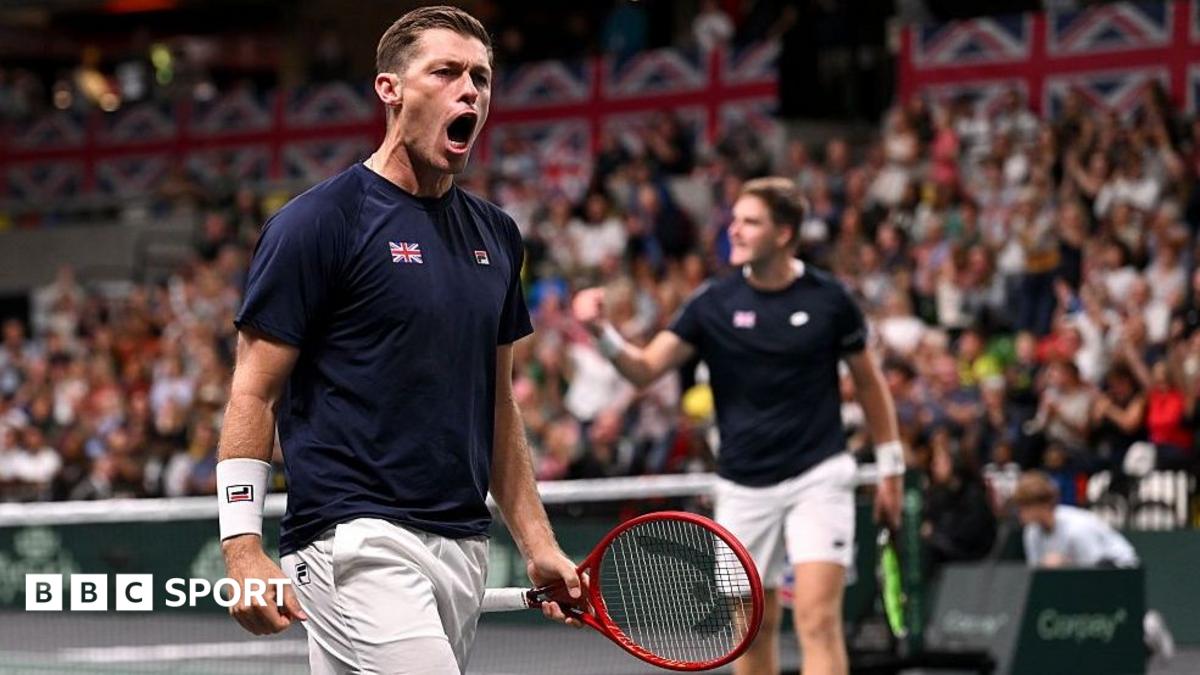
Great Britain will play in November’s Davis Cup Finals as Henry Patten and Neal Skuspki won their doubles match to give the nation an unassailable 3-0 lead in their qualifying tie against Ecuador.
Toby Samuel and Arthur Fery both triumphed in their singles matches at a sold-out Copper Box Arena in London on Saturday to get Britain off to a winning start in the best-of-five tie.
Patten and Skupski then took to the court on Sunday and booked Britain’s ticket to the ‘Final Eight’ event in Bologna at the earliest opportunity with a 6-3 6-4 win over Gonzalo Escobar and Diego Hidalgo.
“We’re feeling great,” said Patten in his on-court interview.
“[Captain] Leon [Smith] was giving us the team talk and saying we needed to be ready for the singles so we’re very, very happy to get it done on the first match.”
Great Britain had not reached the knockout stage of the Davis Cup since 2023 and, even against underdogs Ecuador, there were doubts if captain Leon Smith could end that run given his inexperienced team in London.
Smith was then dealt a late blow when British number two Cameron Norrie pulled out on Friday after feeling pain in his arm during a practice session.
However, Samuel – after a breakthrough season that has seen him rise from outside the world’s top 250 to 95th in the rankings – stepped up on his Davis Cup debut.
Just weeks after winning his first Grand Slam match at the US Open, the 24-year-old overcame nerves and fought back from a set down to beat Andres Andrade 4-6 6-4 6-1.
Fery, meanwhile, was making just his second Davis Cup appearance as the British number one claimed an assured 7-5 6-0 win over Alvaro Guillen Meza.
And with world number one Patten and new US Open champion Skupski to call upon for Sunday’s doubles rubber, victory seemed to be well within Britain’s grasp.
The pair, despite not playing together on the ATP Tour, combined effortlessly and did not face a single break point against the Ecuadorians.
“I made my debut in 2019 with all the other guys like Jamie Murray, Andy Murray, Evo [Dan Evans] and now I guess I am the oldest in the team,” said 36-year-old Skupsi, who was making his 16th Davis Cup appearance.
“It’s been amazing to be back with the team, it’s been a big 18 months and it’s such an honour to play for your county, especially in front of a home crowd like you guys coming out to support – it’s been amazing.”
The original 7 Up kids have returned for one final series of the groundbreaking social experiment.
70 Up is coming to an end (Image: Nick Wall/ITV)
70 Up viewers have shared their reaction to the series coming to an end, as the groundbreaking social experiment reaches its final chapter.
14 children, consisting of ten schoolboys and four little girls, gave cameras an insight into their lives back in 1964. Every seven years since, they’ve continued to show a glimpse of their story, from education, their early careers, marriages, raising children and retirement.
ITV has now returned one final time, for 70 Up. The synopsis previously teased: “Seven decades. One extraordinary experiment. The groundbreaking documentary series returns to meet the people we first saw as 7-year-olds as they reflect on life at 70.”
As well as several of the original children returning, now in their 70s, the programme paid tribute to two who have died, Nick and Lynn, and features Charles, who stopped taking part in the franchise from his 20s.
Viewers have admitted they found the series “heartbreaking”, as one person said: “I’m bawling already knowing Nick is no longer with us.” Another agreed, saying: “I’ve watched this all my life, makes me sad and reflective I’m the same age.”
Someone else wrote: “I admit to having shed a few tears, watching tonight. I’ve grown up with them. It’s been wonderful.” Another commented: “Absolutely, life’s ups and downs, at 7 full of hope and life, I feel i know these people, I don’t.”
Someone else said: “All of it is making me very emotional. In the blink of an eye, hopes and aspirations are just distant memories and time has run out. Life is over so very quickly . Too quickly.”
Another said: “I hope you’re watching seventy Up It’s heartbreaking.” Another added: “The sadness in watching #70UP is not only the lives drawing to a close and the challenges facing individuals but also the knowledge that television will never again be this ambitious.”
One person added: “Ah even a glimpse of Neil on #70UP bring the tears, watched religiously with mum and dad growing up, comparing, dreaming, crying, feel so blessed watching but also wish these were longer eps, I could watch for hours more…. this programme was a huge part of how I learned about life and my country.”
Several others called Neil’s journey heartbreaking and sad, after he opened up about his loneliness and being homeless at times in his life, candidly sharing his struggles. One person said: “I’ve watched all of these series from the get go even though I’m no where near their age group, just to add! It’s made me feel quite reflective on my own life, quite emotional really. But watching Neil’s story has flawed me, big time! His loneliness is a hard watch.”
Another echoed: “Watching #70Up. Neil breaks my heart every 7 years. He was such a happy little boy.” Yet another wrote: “Ooh that was a hard watch at times.” One person added: “I was in tears even from the opening titles Such a touching and interesting series.”
Ahead of the series airing, Jo Clinton-Davis, controller of factual ITV and commissioner of 70 Up, said: “The 7 Up story is much more than a TV documentary, it’s a document of our times. A truly distinctive landmark piece of film-making that has become part of our cultural fabric.
“In the evolving stories of our cast we see the universal themes of life play out. It is the series that made me want to get into television. It is the series that I am beyond proud of having been involved in since 56 Up. It is a tribute to Michael Apted who will forever be associated with it and to the continued dedication and remarkable skill of Claire Lewis.
“Yet in Asif Kapadia we have an outstanding director who will bring his passion, creativity and incredible flair whilst safeguarding the very precious ‘Up’ legacy. Ultimately, this is a tribute to the courage of all the cast who continue to share their lives with us so we can see our lives in them.”
BRICS leaders gathered in New Delhi for the final day of the summit amid divisions over the wars in Iran and Ukraine, as the group seeks to project unity, strengthen the voice of the Global South and push for a more multipolar world order.
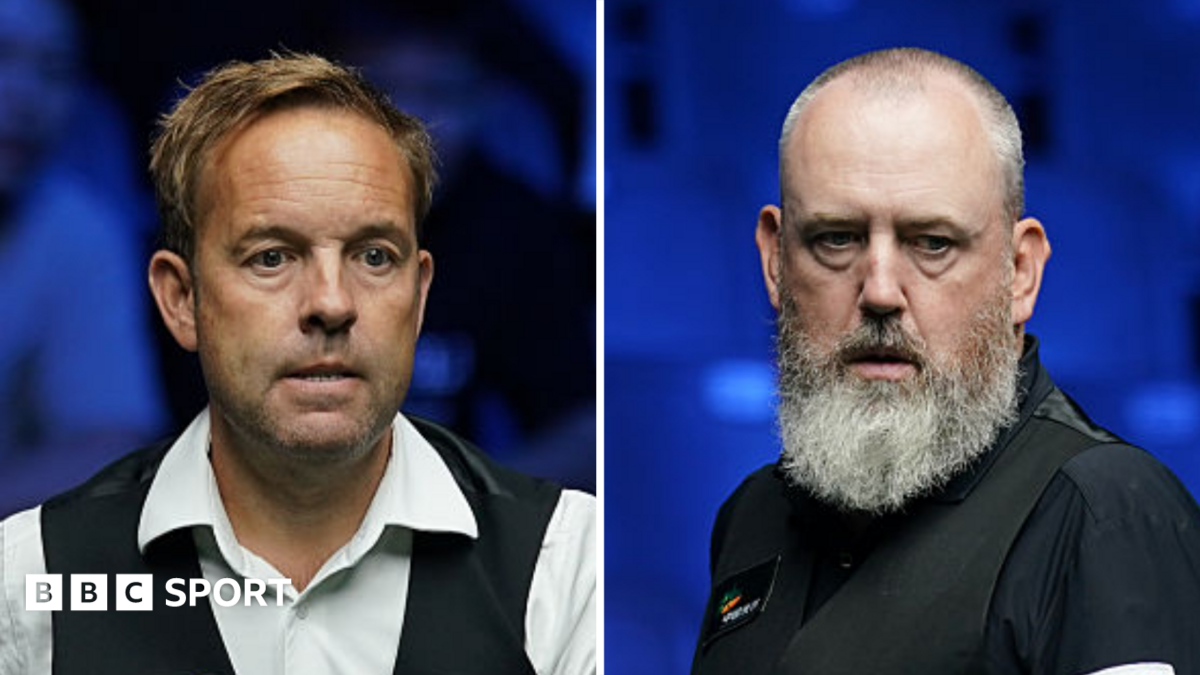
But this time it was the world number seven who was denied as Welshman Williams claimed five straight frames to snatch a 6-5 win.
Murphy looked set to clinch victory in the 10th frame with a break of 51 but handed Williams a lifeline and the world number nine took full advantage.
The 51-year-old made 65 to level things up and again prevailed in the decider, with a break of 69 completing the three-time world champion’s remarkable comeback.
Williams and Carter will now battle it out for their first English Open title at the Brentwood Centre in Essex.
In the first semi-final, Carter reeled off five frames in a row to claim a 6-2 win over China’s Ding Junhui, producing a highest break of 119.
The 47-year-old from Essex started the week 25th in the world rankings and will return to the elite top 16 if he beats Williams.
“To get in the top 16 at my ripe old age of 47 wouldn’t be too bad,” said Carter.
“There is a lot to play for tomorrow, but I’m going to be in there fighting.
“I’m still competing with the best players in the world and it is a feather in my cap.”
Who: India vs Sri Lanka What: Women’s T20 Asia Cup final Where: Dubai International Stadium, Dubai, United Arab Emirates When: Sunday, September 13, 6:30pm local time (14:30 GMT) How to follow: We’ll have all the build-up on Al Jazeera Sport from 3:30pm local time (13:30 GMT) before our live text commentary stream.
Record seven-time winners India face defending champions Sri Lanka in the Women’s T20 Asia Cup final on Sunday, as the 15-match competition in the United Arab Emirates readies itself for its closing act.
Recommended Stories
list of 4 itemsend of list
In a tournament which has largely yielded low-scoring contests, both Indian and Sri Lankan spin units have tasted success – Deepti Sharma spearheading the heavyweights’ charge and captain Chamari Athapaththu leading by example for the title holders.
Shafali Verma and Smriti Mandhana’s terrific top-order pairing has further strengthened India’s title bid at the tournament, where both teams boast a perfect record.
Having reached the final in every edition of the Women’s Asia Cup they have played, India are favourites to add another trophy to their glittering cabinet.
But Sri Lanka possess a threat of their own – they are one of only two sides who have beaten India in the title clash in past and will be eager to retain the trophy they proudly lifted two years ago.
Before Sunday’s showdown, Al Jazeera Sport takes a closer look at the game:
Who did India and Sri Lanka beat in the semifinals?
India defeated Bangladesh in the first semifinal on Thursday by 40 runs before Sri Lanka beat Pakistan by four wickets in Friday’s low-scoring thriller.
When did India and Sri Lanka last meet?
The pair last met in a T20 international in Thiruvananthapuram on December 30, 2025, as hosts India defeated Sri Lanka by 15 runs, sweeping that series 5-0.
Records swing heavily in India’s favour – they have won nine of their last 10 T20Is against Sri Lanka.
How many Women’s Asia Cup titles have India won?
India are the most successful team in the Women’s Asia Cup, having won a record seven titles.
They won the 2004, 2005, 2006 and 2008 editions, when the tournament was played in a one-day international format, as well as the 2012, 2016 and 2022 T20 editions.
How many Women’s Asia Cup titles have Sri Lanka won?
Sri Lanka have won the Women’s Asia Cup once, winning the last edition in 2024 after beating India by eight wickets in the final.
Deepti Sharma attempts to run out Sobhana Mostary during the Women’s T20 Asia Cup semifinal match between India and Bangladesh [Francois Nel/Getty Images]
Who are India’s key players?
India’s openers Shafali and Mandhana are the top two leading scorers in the ongoing edition, having scored 168 and 154 runs each in four matches.
Shafali has registered two half-centuries – scoring identical 64s against Thailand in the opener and Bangladesh in the semifinals – while Mandhana hit an incredible 124 against Hong Kong in the league phase.
With the ball, all-rounder Deepti has been most impactful with her spin bowling, bagging a joint-highest 11 wickets with an average of 3.63.
N Shree Charani has also played a key role with eight wickets and holds the record for the second-most economical bowler (3.27).
Who are Sri Lanka’s key players?
Captain Athapaththu, who bowls right arm off-break, has been Sri Lanka’s most impactful player, sharing the honours of the most wickets with Deepti at 11, with an average of 5.36. Left-arm orthodox bowler Sugandika Kumari has also contributed with six wickets.
With the bat, top-order left-hander Harsthitha Samarawickrama has chipped in 89 runs for the fourth-highest scorer in the competition.
Chamari Athapaththu has been impactful with the ball for Sri Lanka [File: Sameera Peiris/Getty Images]
Form guide
Last five matches, most recent first:
India: W-W-W-W-L
Sri Lanka: W-W-W-W-L
What have the players said?
India’s Deepti Sharma: “[This] team doesn’t take any team lightly … We always think as a team, ‘How we can do better in each and every game. As a collective team performance, how we can do better.’”
Sri Lanka’s Chamari Athapaththu: “If we can execute our plans in the final, I think we can beat any team.”
Aryna Sabalenka was fully aware she would have to win the US Open to stand any chance of stopping Elena Rybakina overtaking her as world number one.
Even that would not necessarily be enough. And as the pair prepare to meet in Saturday’s final, Sabalenka knows her 99-week stay at the top of the world rankings is at an end.
Kazakhstan’s Rybakina is assured of replacing Sabalenka at the top of the rankings, guaranteeing that by reaching the semi-finals.
Having also beaten the Belarusian to win this year’s Australian Open title, Rybakina now has the opportunity to inflict further damage.
But that provides extra motivation for Sabalenka before their fourth meeting of the year.
“It is going to be red rag to a bull for her – she is not going to be happy,” said former British number one Annabel Croft on BBC Radio 5 Live.
“Now she has the opportunity to end this year on a high.”
Sabalenka, who has beaten Rybakina in Indian Wells and Miami since the Melbourne final, still has history in her sights as she bids to become only the third woman in the Open era to win the New York singles title three years in a row.
The four-time Grand Slam champion’s victory over American third seed Jessica Pegula in the semi-finals was her finest display in months, playing with a fire and freedom that had been missing previously.
Afterwards, Sabalenka played down the significance of losing her ranking, joking she did not care about it.
But she clearly does. Sabalenka’s coach Anton Dubrov said as much when he spoke about how the issue has been hanging over her.
“I actually like this [losing the ranking] happened. It’s ended and it’s extra fuel,” Dubrov said.
“There is no more extra draining [of mental energy] or thinking about it.
“There’s a next chapter right now. You have to chase again. It’s extra motivation for you. Just go and get it.”
In the evening session, with a star-studded crowd watching on, it was over to Shelton and Tiafoe to provide the entertainment – and they did not disappoint.
The pair combined for 74 winners, with 47 coming from the racquet of Shelton, who also sent down 20 aces as he backed up a stunning quarter-final win over Carlos Alcaraz with another memorable showing.
He won 77% points behind his first serve, while successfully targeting the second serve of Tiafoe, winning 62% of points when he opponent failed to land a first serve.
Shelton signalled his intent with an ace hammered down the T to start the match as the pair went at each other from the outset.
While an early break-point chance passed Tiafoe by, the 11th seed continued to threaten the Shelton serve and, aided by a double fault, broke for 5-4 before serving out the set.
Shelton wasted no time in mounting his comeback in the second, though, as he lasered a forehand down the line to break to love for a 2-0 lead.
Although Tiafoe broke back immediately, Shelton remained in the ascendancy and the pressure told as he broke to lead 5-3 before seeing out the set.
The third set included a number of scintillating rallies, Tiafoe coming out on top after 31 shots back and forth to stave off a break point – only for his opponent to hit a winner at the end of a 28-shot rally to break a couple of games later.
Shelton broke again at the end of a gruelling 15-minute game to take a two-sets-to-one lead.
The chance to regroup and take a breather between sets resulted in a refreshed Tiafoe mounting an early attack in the fourth, but he failed to convert two break points in the opening game, Shelton got his chance at 6-5 and brought up three match points.
Shelton netted on the first of them, but that was the last shot he played as a Tiafoe double fault gave a thrilling contest a rather tame end.
These will be the final tickets available for the 2026 events and there will also be tickets to the Golden Experience available.
Tickets will be available for both Lapland Ascot and Lapland Manchester – which has more availability of the two.
Sign up for the Travel newsletter
Thank you!
Fans can also nab tickets to The Golden Experience – a VIP experience with a personal guide, private check in, a meal in Pumpernickel’s secret pantry in the Eleven Village, priority seating and access, honorary elf hats, Golden Explorers pin badge, onsite currency, a signed Lapland storybook and a 2026 bauble.
Aryna Sabalenka beat Jessica Pegula 7-5, 6-2 to reach US Open final with Elena Rybakina, who toppled her as World No 1.
Published On 11 Sep 202611 Sep 2026
Aryna Sabalenka stormed past Jessica Pegula in straight sets on Thursday to keep her bid for a rare US Open threepeat on track, booking a championship showdown with Elena Rybakina.
Sabalenka was simply unstoppable in a 7-5, 6-2 victory on Arthur Ashe Stadium, where she beat Pegula en route to US Open victories in 2024 and 2025.
Recommended Stories
list of 4 itemsend of list
Rybakina battled back to beat 2023 champion Coco Gauff 3-6, 6-4, 6-4.
In Saturday’s final, the Kazakh will try to deal Sabalenka another blow after her run to the semifinals ensured she will end the Belarusian’s reign atop the world rankings.
Sabalenka, bidding to join Chris Evert and Serena Williams as the only women to win three straight US Open titles, pounded third-seeded Pegula remorselessly with her powerful groundstrokes.
“I was super desperate,” said Sabalenka, who has had a slow summer since back-to-back wins at Indian Wells and Miami in March.
“I wanted it badly to go to the finals, and of course, I want to go all the way.
“The mentality was just I’m ready. I’m ready for whatever it’s going to take to get the win,” Sabalenka added, after producing her best performance of the tournament to snuff out Pegula’s dream of a first-ever Grand Slam title.
Sabalenka’s frustration at her inability to make any headway against Pegula’s serve showed in a tense first set. But she maintained her focus and was rewarded as Pegula, feeling the pressure to stay in the set as she served down 6-5, fell behind 0-40.
The American saved one set point but could not salvage the next.
Sabalenka kept rolling in the second set, attacking Pegula’s suspect second serve and seizing a break for a 3-1 lead when she lasered a forehand into the corner.
She sealed the victory with another break courtesy of another thunderous forehand.
“I thought her level was insanely high,” Pegula said. “Honestly, I don’t really know if there was much I could do today.”
Rybakina, who beat Sabalenka in the Australian Open final in January to claim her second Grand Slam title, said she would need to raise her level to do the same in Flushing Meadows.
“I feel like I definitely need to step my game up, serve much better than today and stay aggressive,” Rybakina said.
Gauff’s bid to return to the final for the first time since she defeated Sabalenka for the 2023 title had got off to a smooth start, the American gaining the lone break of the opening set for a 4-2 lead and pocketing the set with a love game.
But Rybakina hit back with an early break on the way to a 4-1 lead in the second.
Gauff responded superbly, breaking back and holding to square the set at 4-4 to roars from the crowd.
But she was unable to make the most of her fightback and double-faulted in the 10th game to hand two set points to Rybakina, who pounced to force a third set.
Rybakina looked on the brink of victory after breaking Gauff for a 5-3 lead in the third. Gauff broke back, but Rybakina clinched it in the next game.
A deft volley from Rybakina left her with two match points, and Gauff then hit a wide-open smash long to hand her opponent victory.
“I feel like I was a little bit lucky on her serve,” Rybakina said. “A couple of deep returns, one mistake from her, it went quickly my way … It was a real battle.”
Gauff, meanwhile, was left reflecting on the fine margins of the defeat.
“It honestly came down to a couple of service games of mine in both sets and I didn’t quite hold,” Gauff said. “I think she was able to hold the line a bit better than I could tonight.”
The men’s semifinals are on Friday, when eighth-seeded Ben Shelton takes on 11th seed Frances Tiafoe in an all-American clash.
Shelton took out defending champion and seven-time Grand Slam winner Carlos Alcaraz in an epic quarterfinal that ended at 3:34am on Wednesday – the latest finish in tournament history.
“Big Ben” and “Big Foe” will duel for a chance to end American men’s 23-year Grand Slam title drought.
The winner will take on either top-seeded French Open champion Alexander Zverev or unseeded Russian Karen Khachanov.
CASABLANCA, Morocco: Morocco and Spain are arguing over the right to host the 2030 World Cup final — with besieged FIFA boss Gianni Infantino hovering backstage.
FIFA has yet to officially announce which country will host the biggest match of the biggest event in soccer. And even though the 2026 edition just finished with Spain winning the title this summer, Moroccan and Spanish officials are staking their claim on the next final.
The tussle over the soccer match also comes with Spain still reeling from a massive border crossing by tens of thousands of migrants who pushed through the frontier from Morocco into the north African Spanish enclave in late July.
One big game for two proud countries
The head of Moroccan soccer boasted that his country had it locked up on Thursday.
“The city of Benslimane will host the World Cup final. Hate it or love it, and if anyone wants to talk on top of that, let them talk,” Moroccan federation president Fouzi Lakjaa told a political rally.
“The city is Benslimane, the Hassan II stadium is the stadium, and I hope that Morocco will be playing it,” he added.
This week, the head of the Spanish soccer federation, Rafael Louzán, insisted it was Spain that deserved the game, while acknowledging that it has not been guaranteed that honor.
“We all signed to accept the candidacy … it’s too bad that, regarding the final, it wasn’t made clear, totally clear, where it is to be played,” Louzán said. “Spain, as world champion both in men’s and women’s soccer, must host the final.”
European soccer officials believe that the sprawling, multi-nation 2030 event, which includes Portugal and even a handful of games in South America, should be considered a European event with the final on the continent.
In a request for comment by the Associated Press on Thursday, FIFA said its decision will be made “in due course.”
Infantino has found support in Morocco
The dispute over the final comes with Infantino under intense pressure after UEFA, the umbrella organization of European soccer federations, led a successful revolt to scuttle his plan to sell stakes in the World Cup.
By contrast, six Arab nation federations, including Morocco’s, have backed him since that fiasco.
The King Hassan II Stadium near Casablanca is being built in Benslimane, on the outskirts of Casablanca. It is planned to seat 115,000 spectators. Spain can offer the home stadiums of Real Madrid or Barcelona as potential sites for the final.
Infantino has recently made two trips to Morocco, meeting with King Mohammed VI during annual celebrations of his ascent to the throne in July and then holding a FIFA crisis meeting there in August.
World Cup final spat among other tensions
When confirmed three years ago, the joint candidacy between Spain, Portugal and Morocco looked like a perfect event to bridge Europe and Africa and strengthen bonds between the western Mediterranean neighbors.
But the dispute over the final comes with diplomatic tensions between Madrid and Rabat already frayed over who was responsible when tens of thousands of mostly Moroccans driven by posts on social media pushed into the small Spanish enclave of Ceuta that borders Morocco. Spain’s prime minister said 140 people died in the crossing.
Spain’s government has been under political pressure at home to get tough on Morocco, which it has said acted in good faith in the border crisis. Spanish police assessments couldn’t rule out complicity by Moroccan security forces but said that it was unlikely the Moroccan government had intentionally orchestrated it.
24 Hours in Police Custody fans have been left gutted as fan favourite Tom Hamm revealed he’s left the show.
Detective Sergeant Tom Hammhas announced he’s officially retired after more than 22 years of police service and seven years on the show.
Detective Sergeant Tom Hamm has quit the Channel 4 showCredit: channel 4Detective Sergeant Tom Hamm has been on the show intermittently for seven yearsCredit: Not known, clear with picture desk
He shared the news with his fans on social media this week, writing: “So tonight is likely to be my last appearance on #24hoursinpolicecustody.
“I hope that the episodes I have appeared in have somehow influenced people by showing the difficulties that police face when investigating crime. Thanks for the support.”
Sign up for the Showbiz newsletter
Thank you!
Tom’s followers were devastated by the news.
One wrote: “Happy retirement Tom, I bet all the free time you get will be a breath of fresh air.”
Hamid was arrested but the four attackers have never been identifiedCredit: The Garden Productions
A second said: “Happy retirement Tom! Love the series, its great to see what goes on behind the scenes. Time to relax now.”
“The series won’t be the same without you working on the team. Well done to your team and everyone else who was involved,” this person posted.
The last episode featured a 17-year-old boy was left for dead under a railway bridge, suffering traumatic brain injuries.
Police originally thought he was a victim of a hit-and-run in Luton in June 2022.
They boy survived but had life-changing injuries.
Tom, who worked for Bedfordshire Police, said: “This case, for me was quite emotional because the victim was a twin and I have twin boys of similar ages to him and the parallel of how my children’s lives and the difficulties and circumstances of his life was something that played on my mind.”
“I could put myself in the position of his parents and how I would feel if I got that knock on the door from a police officer saying one of them had been hurt.
“This, by the grace of God, could be me.
“And I understand how it would affect the other twin.
“They do share a different bond than other siblings I think.
“Knowing how close mine are, if one of them is suddenly not there, it does affect them deeply.”
He had another reason to feel personally attached because of an enduring regret over the loss in quick succession of first his father and then his mother.
Tom’s personal feelings are evident in the two-part documentary,24 Hours in Police Custody, in which he and his team investigate the mystery of why a 17-year-old boy was left critically injured on the roadside after suffering catastrophic head injuries.
“Initially, we didn’t know who the victim was, and we were working hard to establish his identity,” says Tom, who has now retired from Luton CID after 22 years of service.
At first, it looked like a hit and run but as all the injuries were to his head, medics believed they were inconsistent with a car collision.
When the victim’s twin brother arrived at the police station, he told them that he believed his brother had come to Luton from London to meet a girl.
But then he learnt on social media that he had been involved in some sort of altercation,
With the victim lying in hospital in a life-threatening coma, Tom told his team their priority was to get his family by his bedside as soon as possible.
He discovered that the case was linked to a county line drugs trade, where drugs are moved between different part of the country.
Hamid was found guilty of conspiracy to cause grievous bodily harm and was sentenced to 10 years and nine months in jail.
Jasmine Aldrich was also charged with conspiracy to cause grievous bodily harm but was found not guilty.
EXCLUSIVE: There were arguments aplenty and several walkouts – but Jackie Bassett and Peter Davies say they’d still do it all over again, given the choice
00:09, 07 Sep 2026Updated 07:30, 07 Sep 2026
The final emotional episodes go back over the lives of all of the contributors, since 1964(Image: Nick Wall)
In 1964, 14 children aged seven were plucked from obscurity to take part in the TV experiment Seven Up!, which would follow them every seven years to see how their different starts in life would affect them.
The nation has long been fascinated by these kids, who have now (mostly) reached the grand age of 70. Two of them have died, along with the show’s long-term director Michael Apted, who went on to have a career making films in Hollywood.
Two of the most outspoken were Jackie Bassett and Peter Davies – and both say that, despite everything they didn’t like over the decades, they’d do it all again.
Left-wing Peter, from Liverpool, was working as a teacher at a comprehensive in 1984 when 28 Up aired. He was vilified by the right-wing press for calling the Thatcher government “the most incompetent, uncaring bloody shower we’ve ever had” and pulled out for many years after that, not returning until 56 Up, when he realised it was a good way to promote the music he was releasing.
“I think for a long time I felt cynical about the programme and the way in which individual stories were shaped,” he says now. “I’m thinking particularly back to when I did 28 Up – I think one of the headlines was, ‘Would you let this man teach your children?’
“At the time I was quite shocked because I’d never experienced anything like that – the sheer level of vitriol involved in some of the comments. I was quite taken aback.”
He held Michael partly responsible for the way in which he was portrayed. “I actually spoke to Michael and said, ‘You know, you’ve really condensed me there almost to a caricature – the angry young man from the North of England.’”
But “on balance” he’d still do it all again, because of how it turned out. “It’s not a decision I’d have taken lightly because there has been a downside as well.” This downside, in turns out, is the fame that the show has inevitably brought the participants. “I’ve found that intrusion difficult at times,” he admits.
Jackie has now left Scotland, where she brought up her three sons, and moved to the Norfolk coast. “I love my children, I love my grandchildren, but it was time for me to have a life and that’s what I’m doing now,” she declares. “It only took me 65 years to get there, but I’m finally pleasing myself.” She agrees that sometimes the public’s reaction to the show can feel a bit much. “The thing is, they see you for 15 minutes on that screen and suddenly believe they know everything about you. And that’s ridiculous, as most normal people would understand.”
Peter feels the show’s aim of showing the class system evolved into “something much bigger” but still didn’t explore certain areas enough. “I think something they missed was the emergence of a new lower middle class perhaps – people like myself whose parents were working class, but who were able, by virtue of a properly resourced welfare state and state education system, to move out of that background, go to university, change our lives.”
Prior to film-maker Michael’s death in 2021, Jackie enjoyed sometimes putting him in his place, famously challenging him on camera in 2005 for asking the women about marriage and children rather than anything else.
Later, she would point blank refuse to speak about certain topics. “He never saw us, never had contact with us. So he’d come back from America to do a film with me, or Peter, or whoever, and he just sat down and started throwing questions at you. And sometimes he didn’t like the fact that we didn’t want to answer them. I was not going to talk about something that would affect my family, my children – so I basically just told him no. He didn’t like it, but there wasn’t much he could do about it.”
That said, she also had warm feelings for him, and knew he gave her opportunities she wouldn’t otherwise have had. “I probably would do it all over again yes,” she confesses. “Because Michael opened up a whole different world to me with the screenings of his films and things like that. Obviously there’s points on the programme that I’ve not enjoyed, usually because I sort of opened my mouth without engaging my brain, but I think I would do it.”
She thinks it was outrageous to only have four girls alongside ten boys – comprised of herself and two friends Lynn and Sue, all from the same primary school in working class East London, along with solo upper-class Suzy, who liked ballet and thought she’d probably hire a nanny one day.
“The quote wasn’t ‘show me the boy and I’ll give you the man,’ it just says ‘give me the child at seven’,” Jackie points out. “I think it was partly because at that time women were mostly at home looking after children. Women didn’t have careers – you may have had one or two, but they were few and far between. It was just, ‘well, we’ll keep it to a minimum because they’re not going to go very far and they’re not going to do very much.’ But they knew they made a mistake. They really did.”
Peter says Michael actually admitted he’d got that wrong. “It was outrageously sexist, but this was the early 60s and people behaved in outrageously sexist ways all the time.”
They have not yet seen the final films and know that watching themselves for a final time is going to feel emotional. “I’ve been told to take plenty of tissues. I have no idea what to expect, and it’s probably going to feel strange,” Jackie says. Peter believes it will be “momentous”, reasoning: “It’s just the culmination of so much, isn’t it?”
The pair of them enormously enjoyed making the double-bill 70Up finale, with new director Asif Kapadia. “I think it had become a little formulaic,” Peter says. “So having someone new on board was going to shake things up a bit. And I think he did. Some of the questions he asked were difficult to answer, but they were interesting and made me work a bit harder.”
Jackie concurs. “I’ll second that. I think it had got very staid and in its box, and Asif came in like a breath of fresh air. It was far more relaxed, nowhere near as formal. I think it actually should have worked pretty well, fingers crossed.”
They feel that now is the right time to pull the plug. “The last thing we want is us all walking in with Zimmer frames or in wheelchairs or whatever age does to us. I think it’s very appropriate to end on 70,” Jackie says., laughing: “I have no idea why it fascinates people, not really.”
“It can’t go on forever,” Peter agrees. “Two of the cast members have gone, Michael’s gone. So yeah, this feels like the right time to end it.”
Seven Up! launched in 1964 with 14 participants – 10 boys and four girls – picked to represent different elements of the UK’s class structure. They are:
Andrew Brackfield – Upper class schoolboy who read the Financial Times aged 7, went to Oxford and became a solicitor
Bruce Balden – Schoolteacher who attended a prestigious boarding school and wanted to be a missionary
Charles Furneaux – Kensington prep school boy who became a documentary producer and left after 21 Up, returns this time – but only in audio
Jackie Bassett – Working class schoolgirl from East London who moved to Scotland and had three sons
John Brisby – Upper class schoolboy whose father died when he was nine, he became a barrister and is angry over his portrayal
Lynn Johnson – Jackie and Sue’s friend Lynn died from a brain condition in 2013. She thought she would work in Woolworths but was a children’s librarian
Nick Hitchon – Yorkshire farm boy who became a nuclear scientist and moved to the US in 1982. He is featured despite his death, from throat cancer, in 2023
Paul Kligerman – A carehome resident who moved to Australia and settled in to family life
Peter Davies – A middle-class lawyer and musician from Liverpool who dropped out after 28 Up but returned for 56 Up
Neil Hughes – Peter’s classmate, wanted to be an astronaut but became a local politician and preacher and has experienced homelessness
Sue Davis – Jackie’s schoolfriend who was a single mum in 42 Up and became a university administrator who has remarried
Suzy Lusk– Upper class schoolgirl who dropped out of education at 16 and later became a bereavement counsellor
Symon Basterfield – Brought up in a Barnardo’s children’s home, he has fostered more than 120 children.
Tony Walker – Working class “cheeky chappie” from Essex who dreamed of being a jockey but became a London cabbie.
– 70 Up: The Final Chapter, 15 & 22 September, 9pm, ITV and ITVX
SOUTH WILLIAMSPORT, Pa. — Juriensly De Windt and Shardijon De Lanoi combined to drive in six runs, and Curaçao won its second Little League World Series title, beating Nevada 11-2 in the championship game on Sunday.
De Windt started on the mound and gave up two runs in three innings. Giendry Ryan and Steven Felix were nearly flawless in relief with four strikeouts over the final three innings for the tiny island nation, which previously won the tournament in 2004.
Curaçao had advanced to the finals by winning the international title in 2005, 2019, 2022 and 2023. This time, the group from Pariba Little League in Willemstad had enough firepower from the mound and at the plate to beat the U.S. champion.
Curaçao went unbeaten in the double-elimination tournament before overcoming an early two-run deficit to the team from Henderson, Nev.
Ryan fanned four in 2⅓ innings. Felix forced Nevada’s final batter to pop out to Giendry in center field. Once the ball was safely in his glove, the celebration began.
Giendry tossed his glove in the air as his teammates swarmed him in the outfield. Curaçao’s infielders showered each other with water as a pack of fans tucked behind the third base dugout waved the Curaçao flag.
They were quiet early as it looked like Nevada, the first U.S. team to advance to the championship without a home run, would finally crack Curaçao’s standout pitchers.
Following a bunt from Nevada’s Michael Kleiner, Maddox Bryan hit a line drive to center field, driving in two runs.
Curaçao tied it when De Lanoi lined a ball off the glove of a diving Kleiner at second base.
The international champions took the lead for good on a two-run double by Jaymiell Martina in the fourth. De Windt added a bases-clearing hit in the fifth.
Nevada also was the runner-up last year, falling to Taiwan in the championship game.
Emmerdale star Olivia Bromley shed real tears when she filmed the tragic death of her character, Dawn Fletcher, tonight. Due to marry bad boy Joe Tate, their plans were scuppered when Jimmy King crashed into the wedding marquee, causing a big explosion, and pregnant Dawn was rushed to hospital.
Sent into premature labour, while Dawn gave birth safely to a baby boy with Joe at her side, she had a serious internal bleed. Suddenly, without warning, she crashed and, despite medics’ best efforts to resuscitate her, she died.
In her first interview since the explosive scenes, Olivia, 30, who was originally signed by Emmerdale for just 12 episodes in 2018, tells The Mirror: “It was the toughest storyline I’ve done during my time in the soap.
“I was surprised by how emotional I found it and it was way more emotional than I was expecting. I did cry. It is very strange to kill off your character as an actor and in front of your colleagues. But that said, what a gift to be given. Often people leave and just slip off.”
The actress was told earlier this year her character would be at the heart of a huge exit storyline during the soap’s biggest week of the year. Having reached a crossroads playing Dawn, she says it was almost a relief to have the decision over what to do with the role made for her.
She says: “This is a good time for me to go on a personal level. I had felt ready for the character to go. This character felt like she had done so much and I didn’t know what direction she could go in next. I had played her for a long time, and it felt like I needed to do other things. I am proud this was such a big finale to my time in the soap.”
But news that Dawn was being killed off came as a bolt from the blue and she confesses she would have liked to have left the door open to one day return.
Despite the initial shock, she says: “Psychologically, now I have had time to reflect, I know it’s good for me, because I can say bye to my Emmerdale chapter. It’s been brilliant. I was originally only signed up for 12 episodes and I’ve stayed eight years!”
And if viewers found her final scenes surprisingly realistic, she can now share the secret – that real life paramedics, rather than actors, were used to make the medical scenes convincing. She says: “They had real life paramedics and intensive care workers who came in to play those parts. Emmerdale is a fast-paced soap and we often don’t have time to train actors up, so they bring supporting people in with a lot of experience.”
Likening it to an “out of body” experience, she adds of her character’s death scenes: “They had rehearsed the crash response with Ned [who plays Joe Tate] and the supporting artists first and, right at the last minute, they put me in the scene. I had no idea what was going on.
“They went into the crash response, and it felt like an out of body experience lying there. They were all so professional and brilliant at what they did.”
But Olivia is sad that Dawn’s life ended so tragically. She says: “Even though she was able to cradle the baby with her children and Joe by her side, nobody had picked up on her bleeding internally. Finally, she had got what she wanted and so it was a sad end for her.”
Dawn originally arrived in the village as a drug addicted sex worker. Her big storylines included finding her long lost son and her on-off romance with her big love, ex-husband Billy. But she fell for Joe Tate in January 2025, after embarking on an affair behind Billy’s back.
They got engaged in December 2025 and by February 2026 discovered they were expecting a baby. But in recent months, Dawn, who had two other children and an adopted daughter, had been troubled by her lingering feelings for Billy.
And when he was attacked last month, she believed Joe was responsible and had planned to escape with Billy, rather than marrying the bad boy. However, in a massive plot twist, it became apparent Billy had actually been attacked by Kev – making Dawn want to marry Joe after all.
Olivia says: “Only a few weeks ago, she was talking about escaping with Billy, but in the end chose Joe. If Dawn hadn’t returned to Joe at the end, she would still be alive now. Billy is her true love but ultimately, she is an addict and she was drawn to Joe.”
She continues: “I’ve loved playing Dawn and I’ve enjoyed watching her develop and change. I’ve made many friends too and I am going to miss them a lot – especially everyone at Home Farm and Jay, who plays Billy. We are like brother and sister; we get on so well.”
Away from Emmerdale, Olivia lives happily in Leeds with her partner, who she keeps out of the public eye. She says: “My life has changed since joining the show. It has given me stability and, alongside the character, I’ve grown and changed. It’s made me ambitious in different ways and taken my life in a different way.”
After graduating from Oxford School of Drama, Olivia moved to London to work in theatre, before the call from Emmerdale came. She says: “This did change things for me and to be a working actor for eight years has been very special.”
And she would love to continue working in TV drama. She says: “I want to try some new things. It’s an exciting time and I would love to do a period drama or a gritty 9pm drama like Line of Duty.”
Now awaiting auditions, she has her leaving party to look forward to next weekend. She says: “It’s themed and I think we all deserve a drink after such a chaotic, complex end for Dawn. I’m also looking forward to just being me and not Dawn!”
As for Emmerdale without her? Olivia says: “The audience will go on a rollercoaster I am sure! I will always be so grateful to Emmerdale for giving me this role and to have been able to play Dawn fully until the end has been so much fun.”
*Emmerdale airs every weekday on ITV1 and STV1 at 8pm. Episodes can also be downloaded on ITVX.
Andy Murray has long been a guiding figure for British tennis, but newly-married Katie Boulter will not be following his lead when it comes to keeping her wedding ring safe.
Three-time Grand Slam champion Murray, who married wife Kim in 2015, famously briefly lost his wedding band after playing with it tied to his shoe laces.
Murray had left his trainers – with the ring still attached – under a car to dry out after a practice session in California in 2021, and after discovering they were missing the next day, was eventually reunited with both after putting out an appeal for their return.
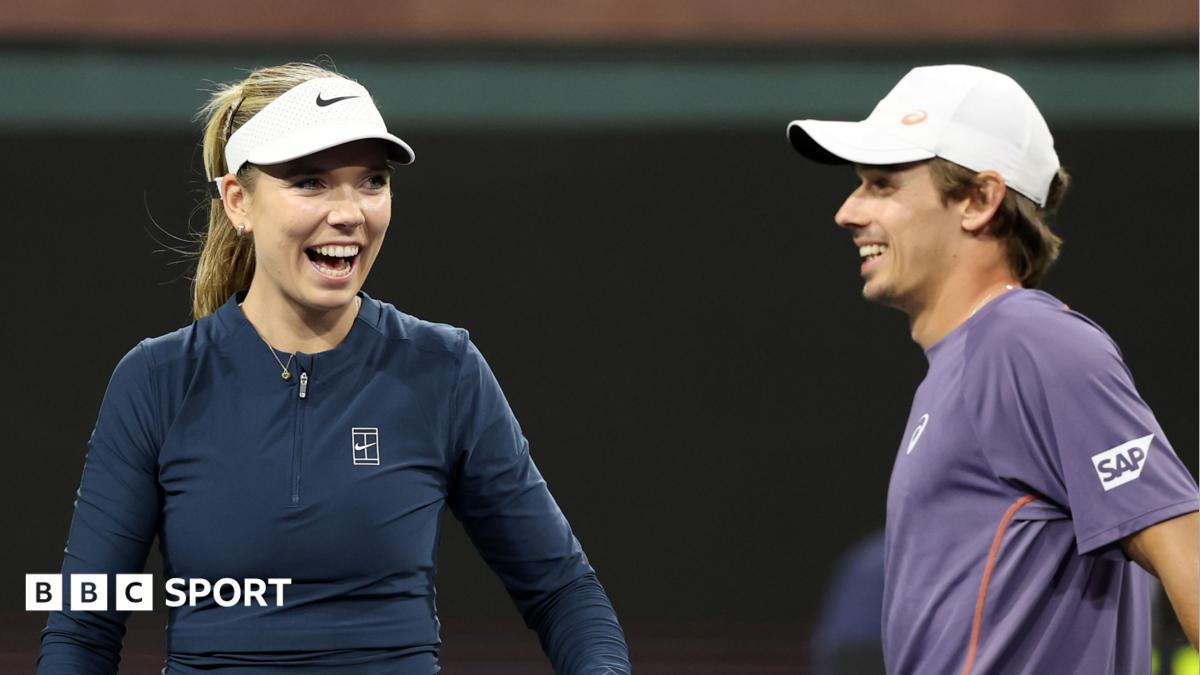
Boulter, who married Australia’s world number seven Alex de Minaur this summer, said she will not be making the same mistake.
“I learned from Andy. I’m not going to do that,” the 30-year-old said. “I don’t wear it. Not during matches.”
Boulter and De Minaur tied the knot at a small, private ceremony in England before holding a bigger celebration in Tuscany, Italy, in July.
Speaking to BBC Radio 5 Live, Boulter said: “One was in the UK for my nearest and dearest. It was like eight people – very, very small, very much for my grandpa.
“It was a huge contrast to the Italian wedding, which had all of our closest people, all of our friends, and was a little bit more of a party and a lot of fun.”
When it came to De Minaur’s speech, however, Boulter admitted she was “sceptical”.
“I hadn’t seen him do any preparation for the speech at all. And he was like, ‘I’m just going to wing it. It’s fine. How hard can it be?’,” she said.
“He was amazing. He was so, good. I was crying the whole time. I think I permanently cried for like three hours straight during all the speeches.”
Since their wedding, the world number 60 has wasted no time in throwing herself back into tennis before the US Open, which gets under way on Sunday.
“I actually just chose to go straight back into the conditions, go into the deep end and see what we’ve got,” said Boulter, who lost in the first round in Washington and Toronto before suffering a second-round exit in Cincinnati.
“I do think the conditions in the States are very different from the UK. I think you can’t really replicate them.
“So I felt like I’d be a little underprepared coming to the US and just getting used to the conditions again would have been quite difficult.”
Boulter’s US Open begins with a first-round encounter against American wildcard Carol Young Suh Lee, who is ranked 143rd in the world.