A two-part docuseries about Melania Trump arrives later this year, the first lady revealed Wednesday. The new project follows the January release of director Brett Ratner’s documentary, which made $16.7 million worldwide at the box office and was universally panned by critics.
“It will come out this year, and it will be very different what is in the movie,” Trump told “Fox & Friends” ahead of her appearance to ring the New York Stock Exchange opening bell. “It’s more [like a] conversation one on one with me.”
Trump indicated that the docuseries will cover new ground.
“So when I was traveling and doing all of the filming, the director was asking me questions, and there’s some private questions that I will answer that people never heard before,” she said.
The Times has reached out to Amazon Studios for more information on the project, which does not appear in press materials, though Ratner teased the new “chapters” in an Aug. 11 Instagram post.
“Here we go again….” the director wrote. “The saga continues …. can’t wait to share with everyone around the world the next two chapters of MELANIA, THE DOCU SERIES!”
Ratner’s film followed the first lady in the 20 days leading up to President Trump’s 2025 inauguration, promising “exclusive footage capturing critical meetings, private conversations, and never-before-seen environments” as Melania “orchestrates inauguration plans, navigates the complexities of the White House transition, and moves her family back to the Nation’s Capital.”
Critics, however, found the cinematic experience lacking.
“I’m hesitant to call ‘Melania’ propaganda because I can’t imagine anyone watching this movie and thinking that Melania Trump comes off well,” Times film critic Amy Nicholson wrote in a February review. “If this vapid, airless, mindless time-waster had subversive designs of being a satire about the first lady of the United States, there’s not much it would have changed. Yet somehow, ‘Melania’ is exactly the film that the first lady wanted to make — her company was paid $40 million for the rights to this self-greenlit production — and no one around her warned that it was a very expensive bad idea.”
“Melania” was Ratner’s first film since six women accused him of sexual assault in 2017. In February 2026, The Times reported that the “Rush Hour” filmmaker appeared in the unsealed Epstein files in photos with unidentified women and the financier, who died by suicide in 2019 while awaiting trial on sex trafficking charges.
In addition to the initial $40 million Amazon MGM Studios paid to license the project, the marketing and promotion budget was reportedly another $35 million.
The new incentive is aimed at bringing back jobs for the industry’s editors, sound mixers, composers and visual effects artists. It will allow a 35% to 50% credit on qualified expenses related specifically to post-production work done in California, and unlike the state’s existing film and TV credit, it doesn’t require productions to shoot here.
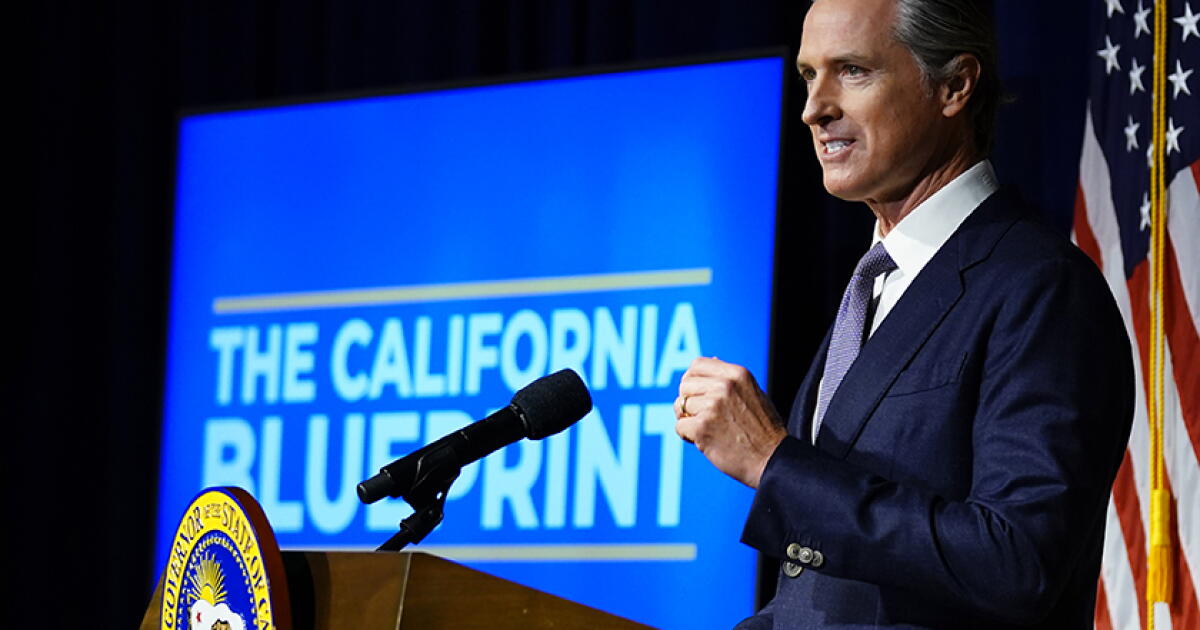
“This legislation protects the extraordinary people who make this industry possible and makes it unmistakably clear: California is still the future of film and television,” said Gov. Newsom in a statement. “We have the talent. We have the infrastructure.”
The bill, AB 2319, was authored by Assemblymember Nick Schultz (D-Burbank) and introduced earlier this year. It cleared the state Senate 33 to 5 on Aug. 30, and the Assembly approved the final version 72 to 2 the same day. Schultz originally sought $100 million for the program. It is expected to start in January with $10 million, according to the Assemblymember Schulz’s office.
“It’s a historic moment for California’s post-production community. But it’s also just the beginning of what we really need to do to to fight for our industry,” said Marielle Abaunza, president of the California Post Alliance, a group advocating for the bill. She said the group is readying its strategy to get more funding for the program next year.
As Hollywood productions continue chase tax credits to other states and countries, much of the post-production work is going with them. California’s share of U.S. post-production employment has fallen from 53% to 42% over the last 13 years, according to CVL Economics, an economic consulting firm tied to California Post Alliance. The state had about 12,000 post-production jobs last year, per CVL Economics.
Ben Urquhart, 51, spent 18 years as a post-production executive at NBCUniversal. The Culver City resident hasn’t been able to find work in the two and a half years since he was laid off.
“It’s grim and it’s hard. There are jobs, but we have a large amount of extremely qualified people competing for every level of job,” Urquhart said. “When I was a kid, I was a [production assistant] in the 90s, and you could get a job within a couple of weeks. But when I got laid off a couple of years ago, I realized that is certainly not the case at all anymore. It’s been a large-scale transformation.”
Urquhart said the new incentive would help California compete with jurisdictions that already offer these credits and “level the playing field.”
Last year, California expanded its film and TV tax credit program, more than doubling the old $330-million cap to $750 million through June 30, 2030. The existing program already covers post-production, but only if 75% of filming or the overall budget is spent in the state.
Newsom also signed a bill that would strengthen the current tax incentive program overall. In June he revealed a state budget measure that capped how much in tax credits a business can claim each year, a limit industry groups warned would undercut the expanded program. But the new Senate Bill 186 enhances refundability for the industry and exempts independent productions from the credit limits, starting next year.
There’s no better way to draw attention to an artist’s work than threatening to shut it down.
Take this week, when Macklemore was kicked off singer-songwriter Ed Sheeran’s tour at the behest of concert venue owners who found the rapper’s on-stage pleas to “Free Palestine” offensive.
Now Macklemore, who hasn’t had a major hit since the 2010s, is relevant again. He has the support of artists, fans and thousands more outraged by his dismissal and the humanitarian catastrophe in Gaza. The “Thrift Shop” rapper has emerged a hero, and a chastened Sheeran and Gillette Stadium owner Robert Kraft have pledged to donate millions toward humanitarian causes in “the region.”
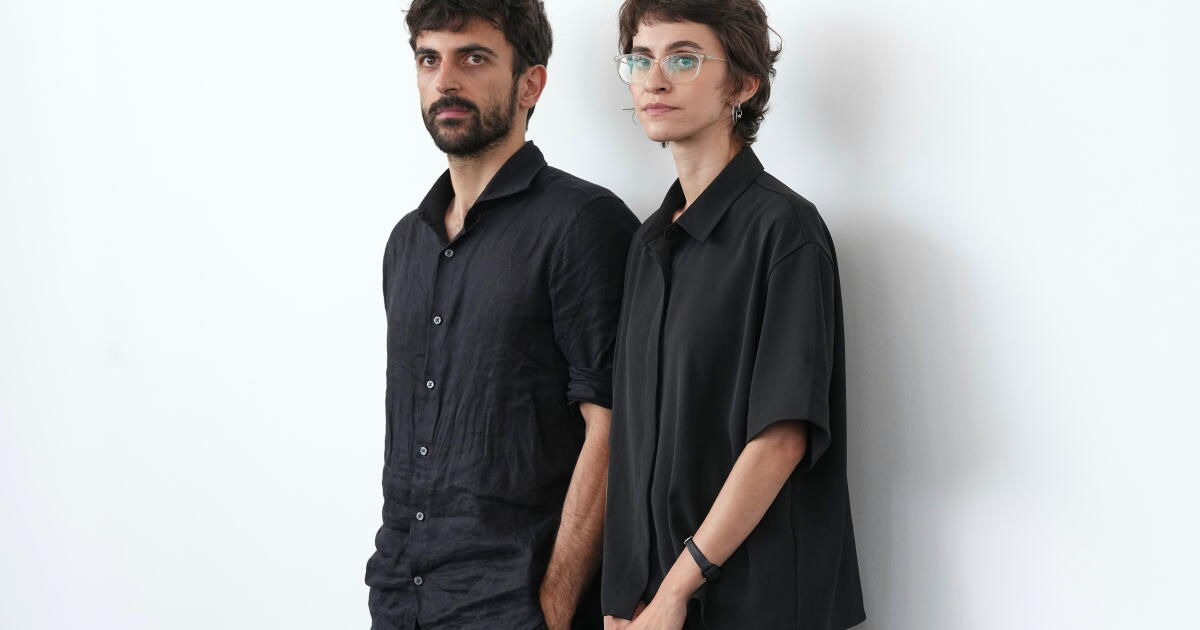
The stakes are considerably higher for Israeli documentarians Yuval Abraham and Rachel Szor. Israeli Prime Minister Benjamin Netanyahu threatened this week to revoke their citizenship for what he called the “shocking incitement” that is of their forthcoming documentary, “NAZA.”
NAZA is an acronym used by Israeli military intelligence to describe the number of civilians it estimates will be killed in an airstrike. The documentary captures the actions of Israel’s military after the Oct. 7, 2023, Hamas attack in footage shot at night from Tel Aviv rooftops. “NAZA” also features anonymous interviews with intelligence officers and soldiers from the Israel Defense Forces, and builds on reporting first published by the Israeli-Palestinian publication +972 Magazine, the Hebrew-language outlet Local Call and The Guardian to make the case that mass civilian deaths were built into Israel’s target decisions in Gaza.
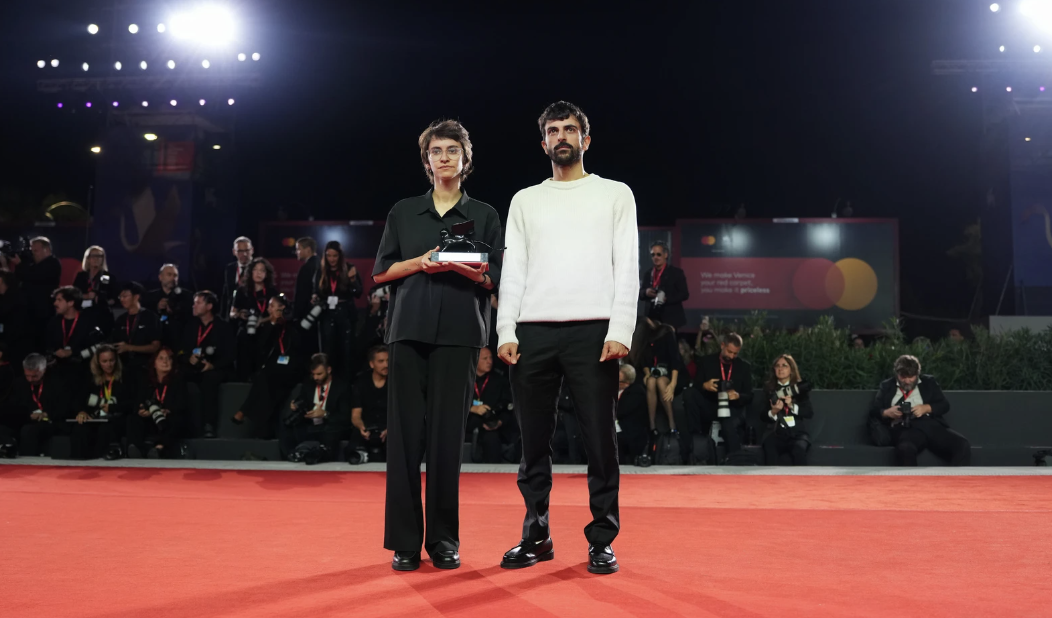
When “NAZA” premiered at the Venice Film Festival on Sept. 10, the documentary received a 25-minute standing ovation, setting a festival record. It went on to win the prestigious Special Jury Prize.
Soon after, the directors came under attack from members of Israel’s government, with Culture Minister Miki Zohar accusing them of “treason against the state” and calling for their citizenship to be revoked.
But it’s Netanyahu who’s providing free publicity for “NAZA,” ensuring that everyone outside the film festival circuit will know of the documentary by the time of its official North American premiere at the New York Film Festival on Sept. 26.
In a move that’s likely designed to quash “NAZA’s” release and silence its directors, the prime minster pledged this week to advance two bills that would address the “immense damage” done to Israeli soldiers in the film.
Netanyahu explained in a social media clip that one bill would “revoke the citizenship of anyone who defames soldiers, and the second [bill will] hit them in their pockets and increase the statutory damages for defamation they can be sued for by 20 times. We will hit them both in their pockets and in their citizenship, as their place is not with us.”
Macklemore lost his place on a pop music tour for speaking out against Israel’s military. Abraham and Szor may lose their place as Israeli citizens. The pair were already considered controversial for their 2024 documentary, “No Other Land,” a film chronicling five years of displacement and violence in the life of Palestinians in a small village in the occupied West Bank. It won the 2025 documentary feature film Oscar.
They explained in a statement why making “NAZA” was so important.
“We made this film out of a sense of obligation to use our position as Israeli filmmakers and journalists to examine the systems behind the mass killing of Palestinian civilians for which our country is responsible,” the statement said. “While filming members of Israel’s military on rooftops at night in Tel Aviv over the past three years, we found ourselves asking the very questions that were asked by our grandparents’ generation and throughout the 20th century: How does one group of people allow the total dehumanization of another? What do the inner workings of such a system look like? … The film lets us explore something deeper than we could in our investigative journalism alone: not only the words being said, but also those that are not said, the silence. It is up to all of us to break that silence.”
The filmmakers have said that they’re using an “innovative distribution model” to bring the film to audiences “as quickly as possible.” It’s slated to reach Los Angeles on Oct. 9 before rolling out in theaters nationwide.
“NAZA” may not need a robust marketing plan if Netanyahu and the Israeli government continue to condemn the film and threaten its creators with expulsion from their own country. Censorship, and worse, are the surest way to elevate an artist and their work. Just ask Macklemore.
With a boisterous laugh, Giselle Bonilla recalls her introduction to Hollywood at the age of 12: on the set of “Freedom Writers,” the 2007 drama about at-risk high school students in Long Beach. She played a young version of Eva, one of the film’s main characters.
“I remember the first thing we shot was an initiation scene where I get the s— beat out of me,” she tells De Los, sitting at a coffee shop in Silver Lake on Sept. 11 (more on this date later). “They put this candy blood in my mouth, and I thought it was so fun.”
In retrospect, Bonilla, 31, finds great irony in how that initial foray into professional acting fictionally materialized her Mexican immigrant parents’ worst nightmare.
“We don’t come from money. They hustled all their lives and put my sister and I in private education, because they had this irrational fear that I would join a gang … then the first thing I ended up booking as an actor was getting initiated into a gang,” she says grinning.
Since that unique formative experience, Bonilla has traveled a winding path in and out of the industry, which ultimately led her to direct her first feature: the dark comedy “The Musical,” in theaters Friday.
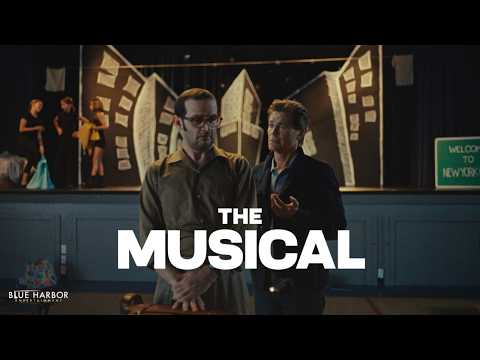
The movie’s antihero, Doug (Will Brill), is a middle school theater teacher plotting his revenge against his ex-girlfriend Abigail (Gillian Jacobs), also a teacher — and her new boyfriend, the more charming Principal Brady (Rob Lowe).
Doug’s plan? To secretly persuade his young students to put on a musical about the horrors of 9/11 and its aftermath that’s certain to cause controversy and get the principal in trouble.
“I feel like you can be more honest with comedy,” says Bonilla about why this genre appeals to her. “You can get away with everything that you’re angry about and want to yell about. If you make them laugh first, people tend to listen.”
Left to right, back row: Alex Heller (screenwriter), Will Brill (center row) Gillian Jacobs, Giselle Bonilla (director) and Rob Lowe (on the floor) from “The Musical” at the Los Angeles Times 2026 Sundance Film Festival studio presented by Chase Sapphire in Park City, Utah on Jan. 24.
(Christina House / Los Angeles Times)
Though the actual show is only a small element of the narrative, it turned off distributors, who argued they wouldn’t be able to market a comedy that involved such a delicate subject.
Still, “The Musical” is making it to the big screen as a self-released title thanks to its executive producers, who believed in the film enough to put in more money for a release.
“I’m going to make sure people watch it regardless,” Bonilla says about being very involved in the marketing. “Even though it didn’t sell at Sundance, we still found a way, which is how we made the whole movie. It was nonstop fighting against the universe just to make a comedy.”
Less than a week before production started, Bonilla lost the actors who were originally playing Principal Brady and Abigail. As her film fell apart, she reached out to the industry contacts she had made after working as an assistant for a few years. Miraculously, the screenplay piqued Lowe’s interest. He came on board, essentially saving the project.
Will Brill and Rob Lowe star in “The Musical.”
(Blue Harbor Entertainment)
As a student at the AFI Conservatory, Bonilla had directed a short film version of “The Musical” that writer Alexander Heller, aware of her affinity for comedy, had conceived for Bonilla to direct. The core group of artists who made the short also worked on the feature.
And though she has always pushed for diversity on screen — including in her short films “Virgencita” and “Bullfighter” — for “The Musical,” Bonilla believed the adults had to be white.
“It would be way more damaging if I had pinned a brown person to be behind the staging of a musical about 9/11,” she explains. “It was very clear to me that this was a comedy about white liberalism and how people weaponize tragedy for their own agenda.”
When it came to the kids in Doug’s class, Bonilla wanted to reflect the multicultural mosaic that is the Los Angeles Unified School District. To be able to see herself in “The Musical,” Bonilla wanted a Latina girl as the child with the most ambition to succeed in the arts. That character became Lata: played in the feature by Melanie Herrera in her first acting credit.
“She’s a dancer. But she’s very precocious and has a really confident, type-A personality,” Bonilla says of the young actor. “Melanie gives Reese Witherspoon in ‘Election,’ like, ‘I will do whatever I have to do for the part,’ and I recognized that in myself as a kid.”
Filmmaker Giselle Bonilla on the set of “The Musical.”
(Peter McCollough)
An L.A. native raised in North Hollywood, Bonilla started doing improv at a young age encouraged by her father, Art Bonilla, who grew up in Tijuana and has worked as an actor in the U.S. for over 40 years.
Her mother, originally from Sinaloa, does workers’ compensation insurance, which provided a stable income and allowed her partner to pursue acting.
“It was tough seeing him struggle and not have any agency over work,” Bonilla says of her father. “He’s such a great actor and he’s really funny, but he’s always getting cast in these very small bit parts as a gardener or an immigrant crossing on the border.”
Unsurprisingly, when Bonilla began auditioning for roles as a teenager, similarly one-dimensional and stereotypical characters from a “troubling perspective” came her way.
“They always make the main character in those stories a white person,” she says. “And then we’re painted as these puppies that just keep getting beat up. I didn’t want to contribute to that.”
Bonilla’s interest in being on the other side of the camera solidified after playing an illiterate South Central high school student in the Byron Allen sitcom “Mr. Box Office.” She attended Pasadena City College, where she studied film production, then used the residuals from the show to help pay for her tuition at NYU Tisch School of the Arts.
Attending film school on the East Coast was, as she puts it, a necessary experience, because she grew up rather sheltered.
“I’m a first-gen Mexican American woman and I was supposed to live at home until I get married,” she explains; but it also exposed her to the concept of impostor syndrome.
“I always had this impostor syndrome at NYU, because that was where I first really confronted wealthy people,” she explains. “I had never been in a predominantly white institution before. And that was really eye-opening.”
It was only when COVID restrictions were lifted that Bonilla decided to apply to the AFI Conservatory, where she regained her confidence and met her now close collaborators.
She has, however, never forgotten her biggest and earliest supporters. Since she started directing, Bonilla has cast her father in many of her short films. And in “The Musical,” you can see both of her parents in the audience during the culminating school show.
“My dad is the one that yells at Rob Lowe at the end in slow motion. He’s pissed that I cut his line, but it was a union film, and we couldn’t afford to give my dad a line,” she says. “But he will be the first one to tell you that he’s not an extra. He did a ‘cameo!’”
“The Musical” director Gisella Bonilla poses at the Los Angeles Times 2026 Sundance Film Festival studio presented by Chase Sapphire in Park City, Utah, on Jan. 24.
(Christina House / Los Angeles Times)
Bonilla’s next project takes inspiration from her memories attending a Catholic school run by nuns in Sun Valley, where a teacher was discovered to be a pedophile. She describes it as “an erotic thriller told from the perspective of virgins.”
Once again, she’ll tackle an unsavory topic and figure out how to bring it to fruition; then distribute it come what may, because she refuses to be boxed in by the industry’s expectations.
“Identity stories are very important. If someone wants to do that, they should be able to do that,” Bonilla says. “But I don’t think our opportunity as Latinos should be limited to painting ourselves as victims against the supremacists.”
Among novelist Mona Awad’s prized possessions is a handmade rabbit brooch with delicate hanging daggers. It’s a gift from a reader. The present was inspired by Awad’s goth-tinged comic novel “Bunny,” which has garnered a cult following on social platforms like BookTok over the last several years with readers who call themselves “bunnies.” Driven largely by these devoted fans, the book’s sequel “We Love You, Bunny” hits shelves this month in paperback, while Awad hops across the U.S. on her latest book tour.
The bunnies are so enamored with Awad’s horror-adjacent satires centered on academia and female friendships (and often compared to “Heathers” and “Mean Girls”), they have created their own online — and offline — aesthetic universe.
Their videos and artwork, spanning Pinterest, YouTube, Instagram and TikTok, bring the novels’ surreal, “creepy-cute” aesthetic to life. The fan art features moody Ivy League backdrops with bunny ears, heavy tomes, blood-red candles and saccharine doll-like fashion. It’s a style ripped straight from the book’s antagonists — one of whom wears a pink dress patterned with beheaded girls. Some bunnies cosplay lace-adorned, ax-wielding characters and post the images on social media, or illustrate them.
Sara Ah Sing, a 30-year-old multidisciplinary artist in San Diego who considers herself a bunny, is one such illustrator. She discovered Awad’s fiction when she went down a BookTube dark academia genre-themed rabbit hole. “I was taken aback by how intense and vivid the descriptions were, and not only detailed, but very viscerally described … Mona Awad is not a generic prose writer,” Ah Sing says.
Author Mona Awad writes and dreams up her fiction in La Jolla, where she has a second home.
(Ariana Drehsler / For The Times)
She recalls a protagonist called Cupcake. “She’s described as a person who looks like a cupcake … something like ‘The Children of the Corn’ going to prom. And, it’s like, OK, what does that mean? For an artist it begs for interpretation — and I just have to illustrate it.”
Her imagination has been reignited with the sequel, “We Love You, Bunny.” Ah Sing illustrated its tortured central character, Aerius, as a muscled romance book cover star — with a twist. “Instantly when we meet him in the new book, he’s described with all these delicious descriptions. He’s got all these very specific tattoos that are in very specific places on his body,” Ah Sing says. “He’s wearing pearls and has auburn hair that covers one eye — it’s like a playground for your brain reading that kind of stuff.”
Awad’s vivid descriptions have led to all kinds of fan-led creations. Los Angeles-area Bookstagrammer Michelle Grondine, 40, is inked with five “Bunny”-inspired tattoos. “I have one on my inner ankle, one on my forearm, one on my collarbone, one on my lower back of a cat reading ‘Bunny’ and one on my thigh,” Grondine says. Each of the tattoos varies in style, not unlike the distinct personalities in the book’s fictional MFA cohort.
Grondine plans to attend Awad’s upcoming event at Skylight Books in Los Angeles on Sept. 21 with her best friend, Valentina Feldstedt, who lives in Northridge. The two met online after Grondine spotted Feldstedt’s “Bunny” social posts, and they quickly bonded over their shared obsession. They have collected various editions of the series (including the Barnes & Noble-released “We Love You, Bunny,” which features a bonus chapter), gone to see Awad live several times and crafted Taylor Swift Eras tour-style friendship bracelets for fellow fans and Awad (whom they call “our alpha bunny.”)
“Bunny” author Mona Awad’s spread of her fan art and gifts in her home in La Jolla.(Ariana Drehsler / For The Times)
Feldstedt, 30, has her own “Bunny” tattoo, which she says doubles as an excuse to pitch the novel to strangers. “It’s weird, but if you get it, you get it,” Feldstedt says. “And if you don’t, you’re not a bunny — and that’s fine.”
Awad says her sequel, in part, owes to bunnies like Ah Sing, Grondine and Feldstedt. “When readers started finding it online and creating and expanding the universe of it, it gave me permission to go back to it,” Awad reflects.
She walks around her Boston home and plucks up a fan-made crocheted rabbit toting an ax. Another fan, a nail artist, crafted spooky bespoke black and purple press-ons decorated with intricate white hares. Awad says there’s a song written about the book by an indie band from western Massachusetts called the Greys, and you can buy fan-crafted “Bunny” merch on Etsy.
A poster signed by fans at Mona Awad’s book signing for “We Love You, Bunny” at the Center for Yoga in Los Angeles.
(Ariana Drehsler / For The Times)
But “Bunny” didn’t always have such a rabid fan group. In fact, when the first book was published in 2019, it received critical acclaim, but Awad was disappointed it wasn’t selling as well as her previous novel, “13 Ways of Looking at a Fat Girl.”
“I was like, well, maybe it’s just a weird book,” she recalls on a Zoom call in her literature-lined home. A few years later, during the height of the COVID-19 pandemic, Awad got a call from her publisher. The book was selling, and they couldn’t figure out why. “It was beginning to sell more than 1,000 copies a week, which is crazy two years after publication,” she says. Around that time, BookTok and BookTube had discovered her novel. Next came the bunny ears.
“More and more readers were tagging me on Instagram, and they were dressed in bunny ears, or they had a bunny tattoo, or they were sharing visual art that they had made, envisioning the characters — paintings, ink drawings, cartoons, comics, so many different iterations of this — and then all of these reels and collages that were just so incredible to see,” she says, pausing to emphasize her amazement. “I was really startled by it. It just kind of came in this wave, and then it just grew from there.”
Jane Friedman, a books industry veteran who tracks publishing news, trends and the intersection with technology in her newsletter “The Bottom Line,” says that intense literary fandoms aren’t entirely new. “Apart from BookTok, there have always been these really obsessive fan communities,” Friedman says. “The internet and social media just made it easier for them to come together, making them far more powerful.”
Friedman emphasizes that some critics are concerned that a so-called BookTok phenomenon pushes literature toward consumerism and waters down literary quality. “You can sometimes see authors chasing a trend rather than writing what they would ordinarily write, hoping their book will go viral,” Friedman says. “But I don’t think that’s the case here. It’s probably a mix of timing, serendipity, literary quality and, you know, the stars aligning.”
Awad was born in Montreal to a French Canadian mother and an Egyptian father. She grew up in a French-speaking family, and when her mother enrolled her in an English-speaking school, she recalls feeling like a complete outsider. It was an experience that would happen again and again — like later when her family moved to a Toronto suburb (where, of course, she had a few goth years), and again in her 30s during grad school when she earned her MFA at Brown University.
1
2
3
4
5
1.Superfan Valentina Bunny lives in Northridge.(Valentina Feldstedt)2.Madelyn Bunny hails from Kentucky.(Madelyn Chimento)3.L.A.’s Michelle Bunny has five rabbit tattoos with plans for more.(Michelle Grondine)4.Valentina Bunny, left, and Michelle Bunny with author Mona Awad.(Michelle Grondine)5.Chloe Bunny lives in Australia.(Chloe Bunnie)
“It was kind of my first taste of New England, which was very, very mythical to anybody who doesn’t come from there … It was disorienting in ways that I suppose were productive in retrospect, but it was hard. It was my first taste of being critiqued. It was my first experience of sharing work with others and having them talk about it with me, and it wasn’t easy,” she says. “I mean, the whole world of the MFA felt like fodder for horror.”
Being an outsider looking in remains a central theme across her novels, including her other critically acclaimed works, and it resonates deeply with readers. The wildly imaginative “Bunny,” often described on TikTok as a “fever dream,” has been translated into 17 different languages. Awad notes that she has an especially huge readership in war-plagued Ukraine, where the book is a breakout bestseller. “It’s so moving to me,” she says. “What they say is that it’s a very anti-fascist book, and it’s a very anti-establishment kind of book. It is about resisting the pull of the clique, finding your own ground, standing on your own ground, and being authentically yourself and embracing that.”
It’s a theme she will continue in the third Bunny book. “The minute I turned in ‘We Love You, Bunny,’ I missed the characters and the world,” Awad reflects. She knew there would be another one. Although Awad has deep roots on the East Coast where she’s taught university-level creative writing courses — her students perhaps not so unlike some of the MFA characters in her “Bunny”-verse — nearly all of her books were written in Southern California, where she has a second home and plans to write her next novel. She notes that a short story she wrote in 2025 for the New Yorker was set in the San Diego area, as was her novel “Rogue.” “It’s been such a generative place for me,” she says. “I’ve become sort of superstitious about it.”
Her next book is taking shape as she works and dreams near the ocean. Meanwhile, her existing work is set to make waves in Hollywood. “Bunny” is slated to be adapted into a film by J.J. Abrams’ production company, Bad Robot, and was recently acquired by a major streaming service — although Awad can’t disclose which one yet. She says she’s been deeply involved. “I feel like my vision of the book is being honored, which is really meaningful. Part of the reason that’s so important to me is because I want to honor my readers’ connection to it.”
That deep bond is something Awad witnesses firsthand nearly every night on the road, where her digital fandom materializes into physical rooms filled with devoted readers (often donning rabbit ears). “The thing that moved me the most about going on tour for the hardback — and it’s happening as I’m on tour for the paperback too — is seeing just how many people bond over the book,” Awad reflects. “Not only the art that has been generated by ‘Bunny,’ but so much community and friendship has been formed. You see this kindred spirit through reading, and it’s the most beautiful thing.”
Mona Awad presents “We Love You, Bunny” at Skylight Books on Sept. 21. 1818 N. Vermont Ave., L.A.
TORONTO — An actor from last year’s Toronto International Film Festival has been turning heads around town this week: Inde Navarrette, whose “Obsession” went from a modest 2025 Midnight Madness slot to a box office behemoth.
But if you had to pick this year’s Navarrette, who would it be? Among the breakout names of TIFF 2026 is unquestionably Rosalind Eleazar, the London-born 38-year-old star of “Misty Green,” the first film written and directed by Chris Rock since 2014’s “Top Five” and among the most notable world premieres at this year’s festival.
Misty is a Hollywood survivor who was never able to make the most of her own success, winning an Emmy a few years back but now losing the apartment she has been living in because the widow of the man she was cheating with wants it back. With her bad attitude and personal problems, Misty has burned many bridges along the way. There’s a chance she could be cast in a remake of “Dreamgirls” that would turn everything around for her, but Misty’s brother, Jay (Daniel Kaluuya, in his first major screen role since 2022’s “Nope”), was recently released from a mental facility and needs monitoring.
Though there are comedic moments along the way, “Misty Green” is very much a character study, as well as an unsparring examination of the systemic pressures on Black women in Hollywood — one executive interrupts Misty’s audition to ask if she is “mixed.” She does herself no favors, frequently self-sabotaging and getting in her own way.
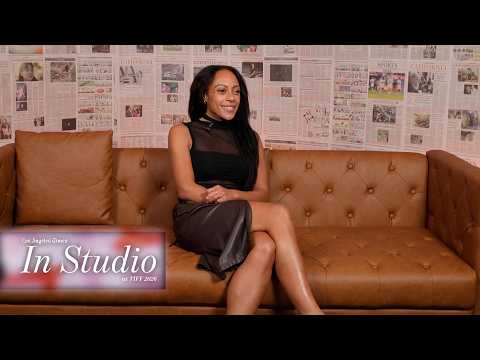
“Being an actor is hard,” Eleazar said in an interview at The Times’ photo and video studio in Toronto on Sunday with a sense of well-earned candor. “I could totally relate to Misty’s journey and the setbacks and the constant picking yourself back up after multiple rejections and just going again. And trying not to have armor because as an actor you want to keep yourself open and you don’t want to harden too much. But it can be easy to harden yourself to an industry that can be unforgiving.”
Though “Misty Green” is Eleazar’s first lead in a film, she has had a steadily building career. She is probably most familiar to American audiences from her role as an MI5 agent on the Apple TV series “Slow Horses.” But soon she will likely be known for the explosive announcement that is “Misty Green.” The film will go on to play at the New York Film Festival and the London Film Festival and be released by distributor A24 on Oct. 9.
“It can be easy to harden yourself to an industry that can be unforgiving,” Eleazar says.
(Jason Armond / Los Angeles Times)
After her movie’s TIFF world premiere in a coveted Saturday night slot at Roy Thompson Hall, Eleazar was included among those celebrated at the annual TIFF Tribute Awards, a fundraising gala put on by the festival. She was recognized alongside such actors as Helen Mirren, Penélope Cruz and Isabelle Huppert, whom she called “extraordinary company.”
“I grew up watching them and admired their work,” Eleazar says earlier in the day. “It’s just such an honor to be considered amongst heavyweights like that. Dame Helen Mirren. Crikey.”
With a warm smile she adds, “Just went very British.”
In accepting the prize, Eleazar recalled how when she came to Toronto for the premiere of her first feature film, 2019’s “The Personal History of David Copperfield,” she stepped away from a party to call her mother at 4 a.m. London time. Not wanting to make that same mistake again, she made sure her mother was there with her in Toronto for this year’s Sunday gala, sitting at a table with Eleazar’s husband, the actor and producer Gabriele Lo Giudice.
Eleazar performs two songs in the film, a heartbreakingly vulnerable cabaret version of Radiohead’s “Creep” and a stripped-down, tender reading of “One Night Only” from “Dreamgirls.” (Eleazar does not consider herself a singer and took vocal lessons before shooting.) Then, in a scene in which Misty demands she be allowed to finish an audition, she flashes into someone else in a bit of pure craft that leaves those in the room astonished.
It was important that Misty be seen as someone who is in fact immensely talented, who may even be worth all the bother and strife that she brings along with her.
“I think we’ve seen movies before where the character isn’t talented and it’s about the hustle and the dream of making it in Hollywood,” says Eleazar. “But I think it’s really interesting seeing someone that cannot get out of their own way — someone that is railing against the industry and is fighting Hollywood, fighting herself, fighting the people around her. It becomes quite a universal subject. It is about our industry but it’s also just about someone who is trying to escape herself.”
Despite Misty’s obvious talents, acting simply may not be the best career for her anymore; it strains her emotional and mental health and enables her substance abuse. Over the course of her own career, Eleazar has at times had to check in with herself to make sure she was heading down the right path.
“There are definitely times that I’ve questioned it,” she says. “For me it does really feed my soul and therefore, at my low points, I’ve managed better. But it can be really heavy. And maybe I shouldn’t but I feel like I’m pretty happy being an actor.”
Chris Rock and Rosalind Eleazar in the movie “Misty Green.”
(A24)
To land the role, after a few meetings with Rock over Zoom, Eleazar flew herself from London to Los Angeles so she could read in the room. As it happened, it made for an intense few days: First she had a chemistry read with Ralph Fiennes in the U.K. for a stage role (she would appear opposite Fiennes in “Small Hotel” in 2025) and then immediately flew to L.A. to read with Rock.
“What a mad, amazing three days,” she recalls. Similarly, Eleazar would be ending her whirlwind few days in Toronto by heading to Los Angeles to be with the “Slow Horses” team for the Emmys on Monday.
In introducing her tribute on Sunday night, Rock recalled when Eleazar auditioned for the part.
“The room just changed,” he said. “She was funny, she was dangerous, she was moving and completely in command. Misty Green is a woman whose life is coming apart. Rosalind never played her as a victim. She made you see the intelligence, the appetite and the fight underneath all the chaos. The audition was supposed to help me decide who to play Misty, but halfway through, the decision had already been made.”
“It becomes quite a universal subject,” Eleazar says of Chris Rock’s latest movie. “It is about our industry but it’s also just about someone who is trying to escape herself.”
(Jason Armond / Los Angeles Times)
There is something poetic about the fact that playing a mid-career actress struggling to land her next job may be the very thing that brings Eleazar wider recognition.
“It’s kind of meta, isn’t it?” she says with a laugh. “Look, I’m so happy that people are responding to the film and my performance. That really is the cherry on top because for me — I know it sounds rather cheesy — but I literally felt like I won once I did that film. I had such a great time exploring who she was and working with Chris and Daniel and Adam [Driver] and that cast. So everything else is just so lovely.”
In accepting her own tribute award on Sunday, Helen Mirren went off-script from her prepared remarks to say how moved she had been by Eleazar’s earlier speech, adding, “It’s exciting to see the generations coming up, especially women.”
As Rock succinctly added in his speech, “Misty Green wishes she could be Rosalind Eleazar.”
Regardless of what happens with “Misty Green” commercially or throughout awards season, Eleazar will continue tending her steady climb. Production will begin soon on season 7 of “Slow Horses” and Eleazar is currently shooting a film role that she isn’t yet allowed to talk about.
But Misty and the experience of bringing her to life on the screen will remain transformative.
“It almost reminded me of like a Shakespearean character in a way,” Eleazar says. “She’s so self-destructive and flawed and contradictory and at times it’s hard to get onside with her. We see it a lot of the time with male roles and I’d love to see it more with female roles — these really complex and messy characters.”
DUBAI: Film AlUla has signed a memorandum of understanding with international film financier Sherborne Media at the 2026 Toronto International Film Festival, establishing a financial framework designed to expand production support for Saudi, regional, and international filmmakers shooting in AlUla in the northwest of Saudi Arabia.
Qualifying productions filming in AlUla will be able to access debt financing solutions secured against available production rebates, grants, incentives, and soft money. The combined support packages will cover up to 50 percent of eligible production expenditure incurred in AlUla.
The partnership aims to address one of the filmmaking industry’s key barriers: upfront liquidity for producers against their contracted rebate and incentives receivables, ensuring sufficient cash flow to facilitate production.
By providing a standardized, transparent process for financial due diligence, the initiative supports established Saudi, MENA (Middle East and North Africa), and international storytellers in bringing their projects to life using AlUla’s production facilities, purpose-built soundstages, and historic landscapes.
The partnership will also integrate workforce development opportunities to support the sustainable growth of Saudi Arabia’s film industry. Film AlUla and Sherborne will collaborate on structured training programmes, crew upskilling, and local hiring initiatives to build long-term regional production capacity.
Zaid Shaker, acting executive director of Film AlUla, said: “Financing remains one of the most critical challenges facing creators today — particularly for emerging creators in Saudi Arabia and the region. Our partnership with Sherborne Media allows us to establish an efficient, transparent mechanism that bridges the gap between creative vision and financial execution. By pairing our state-of-the-art facilities and rebate structures with institutional debt solutions, we are providing a reliable platform for local and international artists to tell authentic, compelling stories – right here in AlUla.”
Alastair Burlingham, CO-CEO of Sherborne Media, said: “Saudi Arabia’s screen sector is expanding rapidly, supported by strategic leadership and infrastructure investment. After the successful financing and production of ‘Chasing Red’ earlier in 2026, and leveraging the services offered by Caravan — our Saudi joint venture company with Stampede — we are delighted to join forces with Film AlUla during TIFF 2026 to help facilitate its growth by introducing a structured financing model.
“Curated credit facilities against soft money and incentives receivables give producers the financial certainty required to execute high-quality feature and television projects efficiently in AlUla.”
LONDON: Film festivals and filmmakers around the world have rallied around the directors of the Gaza documentary “NAZA,” after an Israeli minister accused them of treason and threatened to revoke their citizenship.
Israeli filmmakers Yuval Abraham and Rachel Szor have faced mounting criticism from officials in Israel since their documentary, which documents Israeli military operations in Gaza, and in particular the killing of civilians, won the Special Jury Prize at the Venice Film Festival at the weekend.
Israel’s minister of culture and sports, Miki Zohar, said he would “act immediately” to revoke the citizenship of the filmmakers, accusing them of “treason against the state.”
The film, produced by The Guardian newspaper, features testimonies from 24 Israeli military and intelligence personnel about the use of AI-powered targeting systems in Gaza. It builds on investigations published by Israeli media outlets +972 Magazine and Local Call, as well as Guardian news reports.
The threats against the directors prompted a broad response from the international film community, with the directors of the Telluride, Locarno, Berlin and San Sebastian film festivals among those expressing support.
Julie Huntsinger, artistic director of the Telluride Film Festival, said that threatening the filmmakers’ citizenship was “unacceptable” and that the issue “should be condemned by any thinking human.”
The Berlin International Film Festival’s director, Tricia Tuttle, said artists must be free to examine events critically, and argued that in a democratic society the response to films should be “dialogue and scrutiny, not intimidation or punishment by the state.”
More than 1,500 Israeli filmmakers signed a petition backing Abraham and Szor, and rejecting the accusation that they sought to damage Israel’s international reputation. The petition warned that the campaign against them was moving toward rhetoric that could effectively sanction violence and pose a threat to their lives.
Abraham and Szor won an Oscar last year for their documentary “No Other Land”, made in partnership with Palestinian filmmakers Basel Adra and Hamdan Ballal, which examined Israeli settler violence against Palestinian communities in the occupied West Bank.
The Israeli military has rejected claims “NAZA” makes about its operations, saying they were based on anonymous sources that could not be independently verified.
Another Metropolitan Police officer has been dismissed following BBC Panorama’s undercover investigation into the force’s Charing Cross station.
PC Mason O’Connor was sacked after a hearing found he had breached standards of professional behaviour, relating to a comment he made to a female colleague, the Met said.
O’Connor was reported to a “proactive wider investigation” following the broadcast of the programme in October 2025 and he has become the 13th officer to be sacked since then, the force added.
Other officers who were covertly filmed for the documentary were seen calling for immigrants to be shot, boasting about excessive use of force and joking about rape and sexual assault.
O’Connor’s dismissal relates to a comment he is alleged to have made to a female colleague while off-duty in a pub in October 2024.
A hearing held on Tuesday found he had breached standards of professional behaviour for authority, respect and courtesy, equality and diversity, and discreditable conduct.
A federal film and television tax credit could boost U.S. production spending by $125 billion and add more than 143,000 jobs by 2035, according to a new study commissioned by the Motion Picture Assn.
The analysis, released Tuesday morning, is expected to bolster Hollywood’s push for a federal production incentive, which the industry says is necessary to compete with the generous credits offered abroad. Sixty-five nations now offer them, the study said.
The effort has been quietly building for more than a year. It got a major boost last month when President Trump posted on Truth Social backing a proposed credit.
Details are still being worked out,, but the study assumed a transferable credit with a minimum rate of 20% on qualified spending for U.S. resident labor — broadly what industry groups have supported. It also assumed add-ons of 5% for independent production companies and 5% for labor costs in areas the Federal Emergency Management Agency has declared disasters.
If the incentive took effect Jan. 1, 2027, U.S. production spending would reach $277.5 billion through 2035, the study said, compared with $152.2 billion without it.
A coalition that includes the Motion Picture Assn., industry unions, producers’ groups and small production businesses, along with Democratic and Republican lawmakers, is expected to press the case at a virtual news conference Tuesday.
“A federal incentive would be a gamechanger for our industry,” Charles Rivkin, chairman and chief executive of the Motion Picture Assn., said in a statement. “This study tells us that we can bring more opportunities to life for people in all 50 states who bring great stories to life.”
TORONTO — Greetings from the Great White North, where the Toronto International Film Festival rolls to the end of its first weekend.
As packed as our viewing schedules have been, Amy Nicholson notices something lacking at this year’s festival: big Hollywood. In her first critical dispatch, she sees no “Frankenstein” or “Wake Up Dead Man” in the lineup.
Toronto has even resorted to rebooking the under-the-radar smash “Obsession,” the little movie that grew from a 2025 midnight TIFF launch into a global phenomenon.
Director Curry Barker and star Inde Navarrette delighted festgoers who lined up around the block to watch a special conversation.
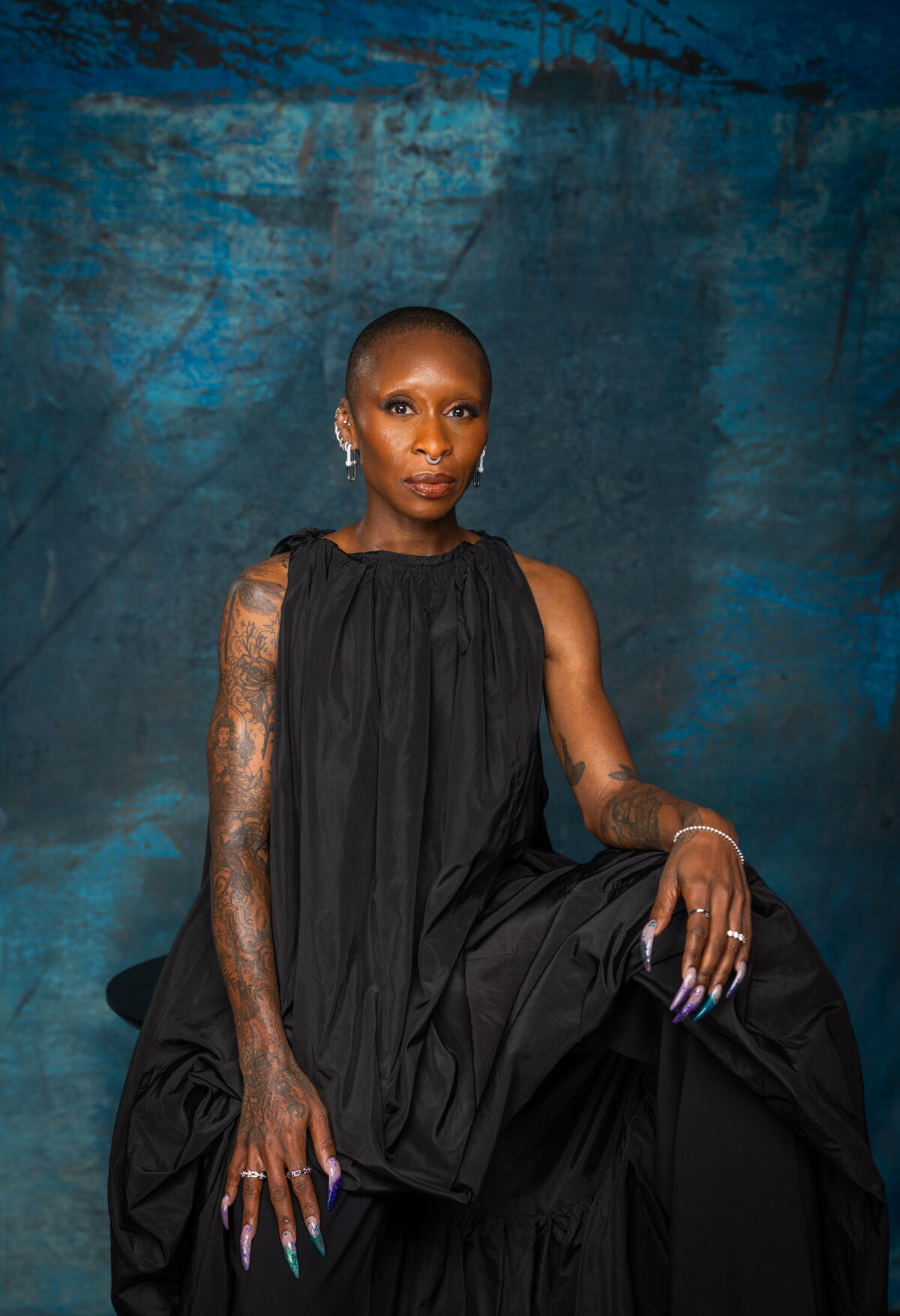
Cynthia Erivo of the film “Prima Facie,” photographed in the Los Angeles Times Studio at RBC House during the 2026 Toronto International Film Festival.
(Jason Armond / Los Angeles Times)
Cynthia Erivo stunned us in our studio space, looking fierce in a dark ensemble and scary nails. We also saw the likes of the luminous Laura Linney and the dapper Korean cast of “Possible Love.” Click through for more celebrity photos and daily surprises.
It takes thermonuclear moxie to write, direct and star in your debut feature — and cast yourself as the cad. No wonder Jordan Firstman‘s uproarious dramedy “Club Kid” blew away expectations at Cannes and has landed in Toronto ready to shake up awards season.
Firstman plays Peter, an aging New York City party promoter whose scene-y shindigs and subsequent hangovers are starting to feel old.
Enter Arlo (a self-possessed Reggie Absolom) the 9-year-old kid he never knew he had and never fathomed he would have, given that women aren’t his thing (except for that one drug-fueled night with a British girl he barely remembers).
You may think you know where the story is headed and you aren’t entirely wrong, but the route there is a riot. — Amy Nicholson
‘Alpha Gang’
A scene from the movie “Alpha Gang.”
(TIFF)
The latest from filmmaking siblings Nathan and David Zellner rolls into Toronto after having just had its world premiere at Telluride.
Their oddball sensibilities and elastic imagination means that you never quite know what to expect from one of their films and this is no exception: a wholly unpredictable story of an alien invasion told from the aliens’ point-of-view that is inscrutably absurd and touched by a startling romantic fatalism.
Two alien cadres, having assumed the looks of 1950s biker gang members, bicker and fight with one another even as they largely overlook their common enemy, the humans.
The cast is likewise a preposterous mash-up of performers you would not wholly expect to see together, including Cate Blanchett, Kelvin Harrison Jr, Léa Seydoux, Riley Keough, Chris Pine, Dave Bautista and others, making the film’s very existence seem like something dropped from outer space. — Mark Olsen
‘The Spiral’
A scene from the movie “The Spiral.”
(TIFF)
Italian horror is my happy place and this is where I’ll be tonight at midnight, sopping up what many early viewers have already described as stylish and vicious.
Director Paolo Strippoli’s domestic drama got sharp reviews out of Venice; it sounds like a cross between a Bava film and “Parasite.” I’ll investigate. — Joshua Rothkopf
For 10 days, the center of the cinematic universe is the Toronto International Film Festival, whose closest geographical landmark is currently a ludicrous controversy.
“Welcome to TIFF and welcome to the beautiful shore of — say it with me — Lake Ontario,” festival CEO Cameron Bailey said on opening night as he introduced “Being Heumann,” director Sian Heder’s crowd-pleasing follow-up to her best picture Oscar-winner “CODA.”
The crowd said it back. Google Maps, however, insists that the festival is actually a 15-minute stroll to Lake America. I’ve yet to hear a single person call it that without an eyeroll.
What’s in a name? Last year in the spirit of patriotism, my favorite Toronto coffee shop taped over the menu listing for its Americano to re-dub it a Canadiano. This fall, the sign has returned to Americano. Taking a pause from politics, I ordered a flat white.
Yet, the festival’s programmers seem to be decentralizing their attention-hogging neighbors to the south. Typically, TIFF is a launch pad for awards contenders. But there are fewer high profile Hollywood filmmakers this year than usual — which was also the case in Cannes. Perhaps these international festivals are testing their own waters to see if they’re obliged to invite Americans to their party.
Instead, the Toronto line-up boasts pointed films about fascism. On its surface, Michaël R. Roskam’s “Le Faux Soir” is a procedural account of how a network of rebels in occupied Belgium published its own parody issue of a pro-Nazi newspaper on the 25th anniversary of Armistice Day in 1943. Most of the script’s energy goes to talking about typesetting and rotary press flongs, but right before the end credits roll, “Le Faux Soir” blurts out its timeliness about combating Le Fox News with comedy. Metaphorically alluding to the satirical newspaper “The Onion,” the narrator says that to pull off this operation, the team had to stick together like layers of an onion: “Never forget, onion is strength.”
Plenty of local comedies abound, including “The Stunt Driver” by Michael Dowse (“Goon”), an energetic biopic about Ken “The Mad Canadian” Carter, the ’70s speedster who vowed to vault across the mile-wide river between Ottawa and New York in a rocket-powered Lincoln Continental. The site of Carter’s jump is four hours away from the fest, although at his car’s top speed of 280 mph, you could get there in less than one. Safer just to enjoy Jay Baruchel’s funny and endearing portrait of a reckless risk-taker who hates being called a daredevil as much as he resents Ben Foster’s Evel Knievel attempting to give him some advice. “Canadians are God’s chosen people,” Carter growls defiantly. “The last thing we need is a Yankee doodle dandy telling us how to do our jobs.”
It’s also possible that this year’s lack of big films — unlike 2025’s “Frankenstein,”“The Smashing Machine” and “Wake Up Dead Man: A Knives Out Mystery” — is just a reflection of the industry’s changing tides. Two of the buzziest guests at this year’s fest have been Inde Navarrette of the micro-budget horror hit “Obsession,” which premiered at last year’s TIFF, and British Columbia-born Hudson Williams of the TV hockey romance “Heated Rivalry.” Twelve months ago, both actors were anonymous Gen Z-ers who could have easily popped into Tim Hortons for a maple-glazed donut without causing a stir. Now they’re stars.
Personally, I’m all for fresh talent. Audiences and critics alike are bored of film executives clinging to the same proven names and proven plots as tightly as worry beads. Yes, I’m hoping to see some Oscar contenders while I’m here and have my fingers crossed for a few movies I’ll be seeing shortly. But for the sake of filmgoing at large, I’d be more thrilled to spot another under-the-radar “Obsession.”
So far, I haven’t found one. However, I have seen ingenuity made for peanuts, like Jenna Cato Bass’ “Future Tense,” a South African sci-fi drama about a travel service that allows the wealthy to blip back to the 1600s to hot tub under the clear skies before the land was ruined by centuries of trash, trade and colonization. Mismatched new couple Tara and Lwando (Kristen Raath and Lawrence Maleka) — she’s white and sunny, he’s Black and snide — take a blistering vacation that their relationship might not survive.
The script gets screwy in the last act, but Bass proves she can pull off a bold time travel premise using only tastefully bland décor, gorgeous nature footage and a couple of menacing brutes with guns. As a bonus, Raath, her lead, has the spunk, charm and smile of Karen Allen, giving a breakout performance that’s such a delight that you could almost swear the “Raiders of the Lost Ark” ingenue had leapt back four decades to star in the film.
An image from “Voices,” a musical drama set in the 1960s.
(TIFF)
While we’re talking about pivotal moments in personal histories, nine years ago Deanté Gray was a rookie wide receiver for the Houston Texans. He tore his ACL in practice and, after muscling through that disappointment, is now a first-time feature director with “Voices,” a lean and loud musical-thriller about thwarted dreams. Set in one tatty motel room in 1967 Detroit, “Voices” is a vicious flick about rising two soul acts hellbent on getting on stage that night to impress Motown Records’ Barry Gordy.
Technically, only the Harmony Brothers, Bubbles and Melvin (Joe Maye and Jamal R. Averett), are booked to play the gig. But a fame-hungry bellboy, Jordan (Francis C. Edemobi), and his cousin Derrick (Ezekiel Ajeigbe) hatch an impulsive, half-baked plan to perform in their rivals’ place. Egged on by Derrick’s ambitious girlfriend Mia (Raél Ba), who’s angling to be the duo’s opening act, this bad idea crescendos with a half-dozen original songs — and a body count.
The sound design of “Voices” is raw and the rumored $50,000 budget so strapped that minor period piece inconsistencies like cheap plastic trash cans sneak into the frame. Who cares? Sam Buckner III and Charlie T. Savage’s smart and surprising screenplay is crowded with scenes that let its cast shine. Someone — ideally, several people — in here will wind up getting their own major break.
Admittedly, I’m biased. Morbid musicals are one of my favorite micro-genres, from “Little Shop of Horrors” and “All That Jazz” to “A Star Is Born” and “Cabaret.” (If you haven’t seen Steve Martin’s 1981 Depression-era hoofer “Pennies From Heaven,” do that this week.)
Add Theo Rhys’ “Stuffed” to that list. Jodie Comer (“Killing Eve”) plays a goth taxidermist; Harry Melling (“Pillion”) is a lonely man terrified of dying, buried and forgotten. Can she convince the sad sack to kill himself now to become a piece of her permanent collection?
The plot alone gives you the shivers, nodding to predatory internet meet-ups and that volatile mix of victimization and egomania that causes people to hurt themselves and/or others. Dark as the story is, though, co-writer Joss Holden-Rea’s tunes are stunners with limber melodies and creatively off-kilter lyrics. “My past is still before me,” Melling belts, picturing himself proudly mounted in a velvet suit and bronze plaque.
“Stuffed” isn’t for everyone. But my fellow sickos are going to love this bleak and lovely tragicomedy once it sets sail from these shores (whatever they’re called by then) to a theater near you.
Filmmaker Paul Greengrass is often associated with a cinematic aesthetic colloquially known as “shaky cam” — handheld cinematography enabled by lightweight digital cameras that function a lot like another character in the room, on foot, at eye-level, responding and reacting to action and dialogue the way a person would.
It’s a style that has served him well in modern action thrillers like his installments of the “Bourne” franchise, and films depicting recent real-world events like “Captain Phillips” and “The Lost Bus.” Now, Greengrass applies his signature style to the Middle Ages — can shaky cam work in a medieval movie?
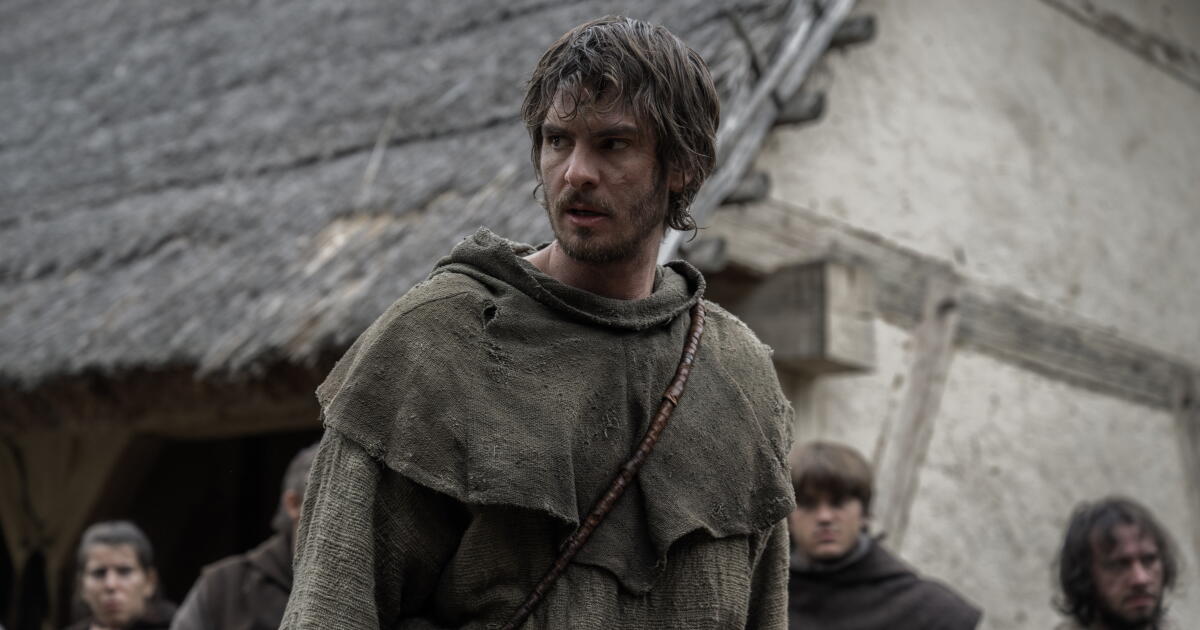
It may seem odd, but it’s a brilliant creative choice when considering that while “The Uprising” is technically about the 1381 Peasants’ Revolt in England, that’s not really what it’s about. It’s about right now.
The shaky cam is intended to jolt us into that awareness. When we pick up with our protagonist, a pathetic ploughman (Andrew Garfield) living a grief-filled and wretched existence, a plague has wiped out half the population. A small group of men hoards wealth and resources, while the peasant class is heavily taxed, laws brutally enforced. As Greengrass lays out the bare facts of this situation with a cinematic style that’s more news documentary than stuffy period piece, the parallels to our own current situation are laid bare.
“The Uprising,” which Greengrass wrote and directed, is told in a fairly simple fashion, with an emphasis on visual storytelling and visceral sensation (the disparate English accents are also lost in the melee of the mob). All we need to know is that the council advising the 14-year-old King Richard II (Woody Norman) conspires while the young royal prays and his mother (Katherine Waterston) glowers. Outside, a bloodthirsty mob armed with farm tools marches on London, led in part by Garfield’s ploughman, who started his own local uprising when he fought back against the taxman. He joins forces with Wat Tyler (Cosmo Jarvis), a former soldier, and John Ball (Jamie Bell), a priest deemed heretic, as the crowd demands an audience with the king.
As the chaos unfolds, Greengrass doesn’t pontificate on the morality of these events and, in fact, maintains a rather neutral stance on them for most of the film, withholding judgment. A revolution is not right or wrong for most of “The Uprising.” It is simply inevitable under the conditions the film presents.
The ploughman wants to play by the rules, but it’s how the revolt plays out that radicalizes him. While Greengrass shows us the uprising in all its messy confusion as the logical outcome of oppression, by following our protagonist as he witnesses treachery and deceit, Greengrass ultimately arrives at the belief that revolution is necessary, even in failure, and that freedom is worth more than anything.
The opening and closing of “The Uprising” are bracing and stark in their storytelling — the middle is a bit mushy and confusing. But it’s the performances that carry us through. Garfield, sensitive and earthy, is our bellwether as the events descend into bloody carnage dictated by muddled agendas. When he turns, we turn, and the anguish that Garfield wordlessly conveys is our compass.
Greengrass surrounds Garfield with actors who deliver bigger performances, like Jarvis as the brutish but shrewd Tyler, and Bell as the fervent Ball. Thomasin McKenzie plays a young woman, Alyce, steeped in her own trauma and loss, who attaches herself to the ploughman, and her ability to express wide-eyed, barely contained hysteria and fear is unmatched. Young Norman is riveting as the increasingly dastardly king.
The Peasant’s Revolt of 1381 is a fascinating moment because it’s a time when the notion of democracy wasn’t even a twinkle in a feudal servant’s eye. The mob’s actions are frustrating because they’re religiously bound to the king, who they believe is an emissary of God, and desperate to change their day-to-day existence. When those two instincts collide, it’s bound to be complex and conflicting, and Greengrass delivers that with a boots-on-the-ground style.
The murkiness of it all clarifies by the end of the film, not just in terms of its heroes, villains and message, but Greengrass also situates this story within a recognizable cinematic and storytelling history. There’s a thrill as it all comes together. Greengrass might be taking a big swing (of the scythe), but his blade finds its target nevertheless.
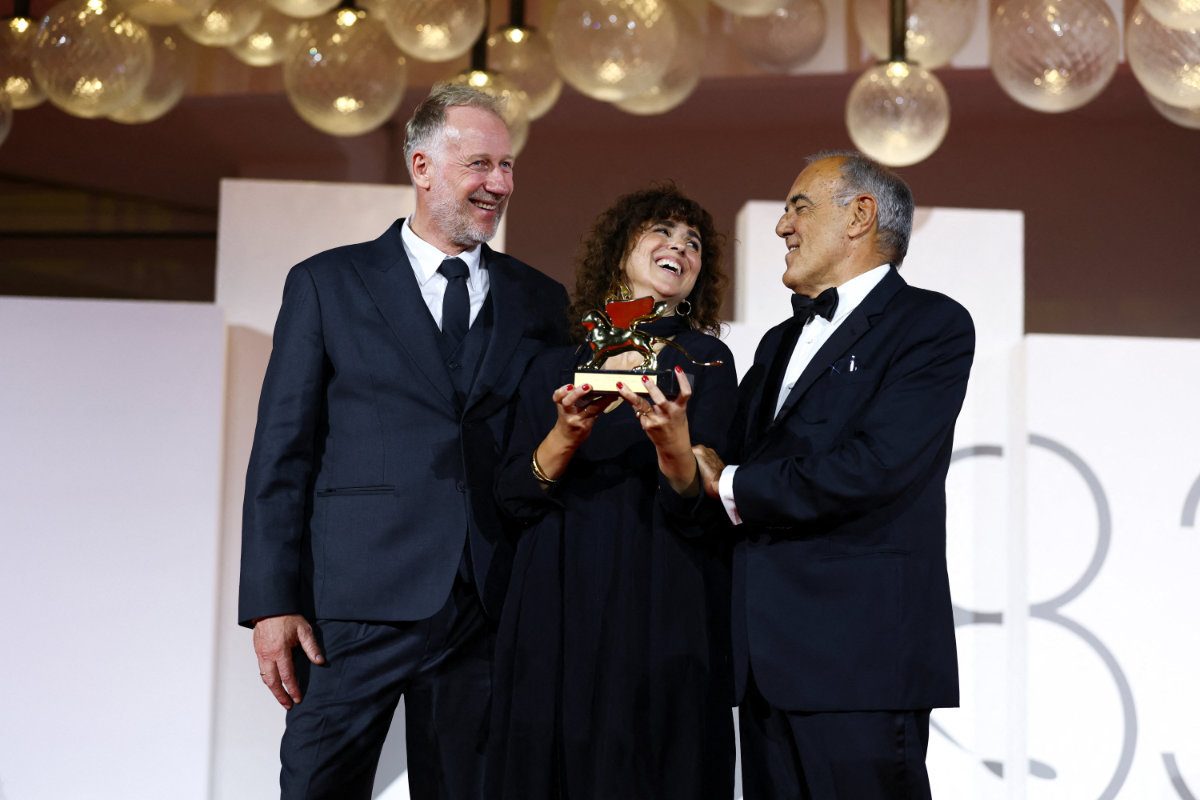
VENICE, Italy: “Woman Unknown,” a drama about Denmark in the aftermath of the Nazi occupation directed by May el-Toukhy, won the prestigious Golden Lion at the 83rd Venice Film Festival on Saturday.
The Maggie Gyllenhaal -led jury announced the winners, which included a best actor prize for John Malkovich for his performance in the dark CIA comedy “Wild Horse Nine.”
Malkovich was not in attendance at the ceremony, but he sent a video message, explaining that he is shooting in Montreal.
“I am humbled to be chosen for this award which has been given to so many wonderful actors,” Malkovich said.
Only 8 women have won a Golden Lion
El-Toukhy, who was the only woman to have solely directed a film in the main competition this year, is the eighth woman to have won the festival’s top prize.
“To me personally, ‘Woman Unknown’ is about the female body as a battleground,” el-Toukhy said. “At the same time the film tells the tale of women who are unseen, invisible and voiceless.”
May El-Toukhy, winner of the Golden Lion Award for Best Film for the movie “Woman Unknown”, poses with the artistic director of the Venice Film Festival Alberto Barbera, during the closing ceremony of the 83rd Venice International Film Festival on September 12, 2026. (REUTERS/Yves Herman)
She thanked Gyllenhaal for using her voice to shine a light on unequal opportunities for women in moviemaking.
The film, which does not yet have distribution in North America, is centered on a young nanny and housemaid who is about to marry her wealthy employer in the immediate aftermath of the war. But she harbors a secret past intimate relationship with a German soldier that threatens to upend her reputation. The lead, Mathilde Arcel, won the festival’s best actress prize.
Arcel was visibly emotional as she accepted the award, which she placed on the floor as she spoke as she said it was very heavy.
“This is my first lead role in a movie and my first time at a film festival,” she said. “I’m extremely honored.”
Director Lee Chang-dong, winner of the grand jury prize for the film ‘Possible Love’, poses for photographers at the awards photo call during the closing ceremony of the 83rd edition of the Venice Film Festival. (Photo by Scott A Garfitt/Invision/AP)
South Korean auteur Lee Chang-dong’s poetic portrait of class and labor, “Possible Love,” won the Silver Lion grand jury prize. “Possible Love” is Lee’s first film in eight years, following his acclaimed “Burning.”
“We are living in an era where the meaning of labor is fading and human connections are increasingly becoming severed,” Lee said through a translator. “I made this film to ask what cinema can and should do in times like these. I take this award as a sign that you want me to keep asking these questions.”
Gaza documentary takes special jury prize
“NAZA,” a harrowing documentary about military strategies employed in the war in Gaza from Israeli filmmakers Yuval Abraham and Rachel Szor, was awarded a special jury prize.
“It’s honestly not very easy to stand here, thinking of all the people, the Israeli politicians, the journalists back home who are attacking this film, denying it without even seeing it,” Abraham said. “It is really, really especially important to us that Israelis watch this film.”
Director Yuval Abraham and Director Rachel Szor winners of the Special Jury Prize for “Naza” attend a photocall on the red carpet following the closing ceremony of the 83rd Venice Film Festival at Venice Lido on September 12, 2026. (Photo by Tiziana Fabi / AFP)
The was added to the main competition late — at the request of the filmmakers — and debuted late in the schedule as well, but its impact was felt as it received a record-breaking standing ovation, lasting some 25 minutes, after its premiere.
Shot on the rooftops of Tel Aviv at night in extreme secrecy over three years, “NAZA” features testimony from 24 Israeli military insiders including intelligence officers and soldiers give who insight into the war in Gaza and what they say is the systemic killing of Palestinian civilians.
The jury gave the Silver Lion for directing to Ilya Krzhanovsky for his film “Dau,” a project about the Soviet physicists who built the atomic bomb that has taken over 20 years to make. Krzhanovsky, who renounced his Russian citizenship in protest of the war in Ukraine, dedicated the prize to Ukrainians, including his mother who was born there.
Director Ilya Khrzhanovsky poses with the Silver Lion Best Director Award for “Dau” during the closing ceremony of the 83rd Venice International Film Festival on September 12, 2026. (REUTERS/Yves Herman)
French director Stéphane Brizé’s won the screenplay prize for his corporate drama “A Good Little Soldier.” Malou Khebizi was given the Marcello Mastroianni award for emerging actor for her role in Cédric Kahn’s “A Place to Heal,” which is set in an adolescent psychiatric ward in a public hospital.
The jury this year included “The Voice of Hind Rajab” director Kaouther Ben Hania, English composer Daniel Blumberg, French filmmaker Xavier Giannoli, Afghan filmmaker Shahrbanoo Sadat and Hong Kong filmmaker Johnnie To.
Malkovich’s Oscar chances just went up
Aside from Malkovich’s win, the starrier, Hollywood films playing in competition were shut out of the awards, including “Primetime,” “Bunker” and “Ink.”
US actor John Malkovich attends the red carpet event for the screening of “Wild Horse Nine” at the 83rd International Venice Film Festival, at Venice Lido on September 3, 2026. (Photo by Stefano Rellandini / AFP)
Some look to the Venice Film Festival awards for early indications of who might be in with a shot at Oscar nominations and wins. In recent years, Venice has launched winning best actor campaigns for people like Brendan Fraser and Adrien Brody.
JERUSALEM: The Israeli military on Friday said it “categorically rejects” allegations made in a new documentary about Israel’s AI-powered mass killing of civilians in Gaza, which received a 25-minute ovation at its premiere in Venice the day before.
The Israeli-made film “NAZA” uses conversations with 24 different Israeli military or intelligence whistleblowers who spoke on condition that their identities be protected, with interviewees describing how they felt like they worked in a killing “factory” or a lethal video game.
The Israeli military criticized the use of anonymous testimonies in the film which it said “cannot be verified”, saying in a statement that it “makes unprecedented efforts to minimize harm to civilians” during its offensive in Gaza.
“It felt like a movie” — that’s what we all said in the days and weeks after Sept. 11, 2001, when a Michael Bay action film slammed uncomfortably into real life. But with the perspective of 25 years, what’s lingered for the most part aren’t the most literal depictions of the day, but oblique dramas that capture something more subtle: the free-floating anxiety of a nightmare. In our list, you’ll find titles that confront Sept. 11 directly, but others that bring to mind a deeper, broader canon of trauma.
‘Donnie Darko’ (2001)
Jake Gyllenhaal in the 2001 movie “Donnie Darko.”
(NewMarket Films)
Going to the movies in the fall of 2001 was a solace and escape for many New Yorkers, though the films themselves often had an eerie, unplanned timeliness that made them resonate in an unshakable way. You could ache for the cozy city of the past in “The Royal Tenenbaums” or grapple with the schism of everything suddenly feeling different in “Mulholland Drive.” Or you could envelop yourself in Richard Kelly’s moody “Donnie Darko,” a teen drama touched by metaphysical doominess in which plane engines fall from the sky and death wears a rabbit costume. The movie has since become an unexplainable piece of comfort for a spooked generation. In its weather, its soundtrack and the haunted stare of Jake Gyllenhaal, it evokes the weeks after 9/11, even if it anticipated them. — Joshua Rothkopf
‘25th Hour’ (2002)
Edward Norton in the movie “25th Hour.”
(David Lee / Touchstone Pictures)
Only months after the attacks, Spike Lee took on 9/11 with a boldness that only 15 years of provocative filmmaking — and a lifetime of loving New York — could sharpen into an artist. This interpersonal drama, about the fallout of a drug dealer (Edward Norton) going to prison, was deep in development when real-life events altered its trajectory. Lee insisted on including the American flags dotting lawns, the general sense of unease and, in a somber touch, a credits sequence featuring the Tribute in Light. Overwhelmingly, one scene takes place in a Tribeca hi-rise with a view of ground zero, and even though the conversation itself concerns a friend in trouble, it quickly shifts onto metaphorical grounds of guilt, responsibility and rage. There still may not be a better 9/11 film than this one. — J. Rothkopf
‘Munich’ (2005)
A scene from the movie “Munich.”
(Karen Ballard / Universal Pictures)
On the surface, Steven Spielberg’s “War of the Worlds,” released earlier in 2005, may seem like his more obviously 9/11-coded film (“Is it the terrorists?” Dakota Fanning’s character asks). But “Munich,” which followed six months later, goes straight to the questions of terrorism and endless cycles of retaliation that hung over the period. Eric Bana plays Avner, a Mossad operative sent to hunt down the Palestinians whom Israel holds responsible for the 1972 Munich Olympics massacre. As the revenge killings mount, the mission begins to eat away at him — and Avner’s belief in closure is shaken. Spielberg makes the contemporary connections hard to ignore. In a final scene, set in mid-’70s New York, after Avner and his handler Ephraim, played by Geoffrey Rush, argue over what they have done, the camera pans across the Manhattan skyline southward, toward the Twin Towers, which Spielberg had digitally added to the shot. — Josh Rottenberg
‘United 93’ (2006)
A scene from the movie “United 93.”
(Jonathan Olley / Universal Pictures)
Five years after 9/11, it still wasn’t clear whether audiences were ready for a Hollywood movie that directly re-created the attacks. Director Paul Greengrass, then most recently of “The Bourne Supremacy,” took on the hijacked flight whose passengers fought back before it crashed in Pennsylvania. He used a largely unknown cast and shot with an almost documentary immediacy, cutting between the plane and air-traffic controllers trying to make sense of what was happening. There’s no movie star to take charge, and Greengrass doesn’t inflate the passengers into larger-than-life heroes. We simply watch as they piece together the situation from phone calls and scraps of information and realize what they have to do. We know from the beginning that none of them will survive. Watching them slowly come to that realization is what makes “United 93” so devastating. — J. Rottenberg
‘The Dark Knight’ (2008)
Christian Bale in the movie “The Dark Knight.”
(Warner Bros. Pictures)
It was probably inevitable that the anxieties of the post-9/11 era would find their way into a Batman movie. In “The Dark Knight,” Christopher Nolan fills Gotham with bombings, acts of mass surveillance and questions about how far is too far. Heath Ledger’s Joker is an enemy who doesn’t play by the rules, attacking the city with no clear political goal beyond creating panic and chaos. Christian Bale’s Batman, meanwhile, builds a Patriot Act-like system that turns every cellphone in Gotham into a tracking device and uses increasingly brutal methods to stop him. Nolan folds all of that into a hugely entertaining superhero movie without turning it into a lecture. — J. Rottenberg
‘Man on Wire’ (2008)
Philippe Petit, as seen in the documentary “Man on Wire.”
(Jean-Louis Blondeau / Polaris)
By the time James Marsh’s Oscar-winning documentary arrived in 2008, the Twin Towers had been gone for seven years. The film recounts French high-wire artist Philippe Petit’s astonishing 1974 stunt, in which he and a small band of co-conspirators secretly rigged a cable between the towers, allowing Petit to walk high above lower Manhattan. The movie never needs to mention 9/11 to feel devastating. We already know what became of those buildings. Watching Petit step onto the wire lets us see them differently, not as the site of catastrophe but as the setting for something beautiful and absurdly daring. A ghostly montage of the Twin Towers being constructed, set to composer Michael Nyman’s “Fish Beach,” brought New Yorkers to tears. For me, that feeling is also personal. I was living in New York on 9/11 and had been at an outdoor concert in the plaza beneath the towers just weeks before the attacks, so there was something especially moving about seeing them again as part of the city’s everyday life. — J. Rottenberg
‘The Hurt Locker’ (2009)
Anthony Mackie, left, and Jeremy Renner in the movie “The Hurt Locker.”
(Jonathan Olley / Summit Entertainment)
Has there ever been a better cinematic metaphor for the War on Terror than Jeremy Renner in a bomb suit, kneeling over a device in a Baghdad street while everyone around him scans the rooftops for danger? Kathryn Bigelow’s film narrows the Iraq War down to the nerve-shredding work of an explosives-disposal unit, with Renner’s Staff Sgt. William James almost eerily comfortable in situations that terrify everyone around him. The suspense often comes down to the simplest question: Is this thing going to blow up? Bigelow, the action expert behind “Point Break” and “Strange Days,” mostly leaves the larger politics offscreen and stays with the men doing the dangerous work, their detachment a survival tactic. Though initially little-seen, “The Hurt Locker” pulled off its own improbable feat, becoming, at the time, the lowest-grossing movie to ever win Oscar’s best picture — while Bigelow became the first woman ever to win best director. — J. Rottenberg
‘Margaret’ (2011)
Anna Paquin and Matt Damon in the movie “Margaret.”
(Myles Aronowitz / 20th Century Fox)
Kenneth Lonergan shot this seething, richly authentic New York City drama in 2005, when the rawness of post-9/11 NYC was already a part of everyday life. But the trauma feels ingrained in every frame, and there are shots of wary street life — an occasional flinch or look upward — that New Yorkers could watch and think: Yes, that’s what it felt like. The plot itself concerns a teenage girl, Lisa (Anna Paquin, never better), whose hyperdramatic tendencies are both recognizable and lovable. She is involved in a bus accident that results in a fatality and, with the crusading passion that so many people felt after 9/11, decides to get involved as a witness and truth-teller. The need to fix things — amid so much that was unfixable — is a marker of all the movies on this list. — J. Rothkopf
‘Zero Dark Thirty’ (2012)
Jessica Chastain, center, in the movie “Zero Dark Thirty.”
(Jonathan Olley / Columbia Pictures)
Perhaps the most explicit film on our list, Kathryn Bigelow’s daring military procedural about the 2011 midnight raid that took out Osama bin Laden was a political hot potato in its moment. Now with distance, it impresses as a skilled piece of political moviemaking, one that captures the era’s sense of moral compromise and queasy vengeance. It contains scenes of torture and goes deeply into the CIA’s planning and execution of the operation — choices that remain provocative. But the movie’s most lingering piece of drama is a silent shot of one woman crying in a cargo plane: a high-level analyst played by Jessica Chastain, who has accomplished the unthinkable but doesn’t feel relief. The fight will not end. Only a filmmaker who had just won Oscars and made history would have been granted the artistic freedom to make this movie, arguably Bigelow’s finest. — J. Rothkopf
The biggest news to come out of two film festivals this week stemmed from documentaries about tech moguls gone bad.
When Alex Gibney’s film production “Musk” premiered at the Venice Film Festival on Tuesday, it received a five-minute standing ovation, shouts of “thank you” from the audience and endless play across social media. The nearly four-hour production chronicles the rise of the world’s first trillionaire out of the dot-com boom, and lays bare the dangers that the Tesla and SpaceX chief executive now presents as a plutocrat with questionable judgment and unchecked power.
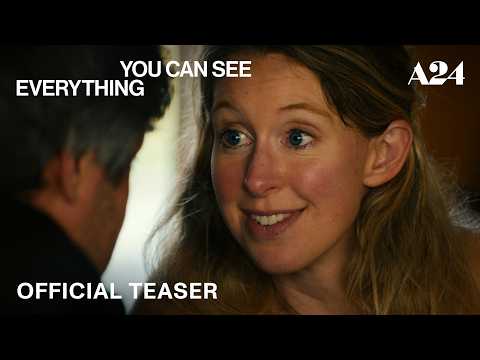
Closer to home, at the Telluride Film Festival, it was comedian Nathan Fielder (“The Rehearsal”) and Lance Oppenheim’s “You Can See Everything” that made breaking news. Their film features unfettered access to former Theranos Chief Executive Elizabeth Holmes in the weeks before she reported to federal prison to serve a sentence of 10 years and three months. She rode the early 2000s wave of venture-capitalism consumer-tech hype, defrauding investors and the public with a bogus new way to test blood. By 2014, she was the world’s youngest self-made female billionaire.
A couple of decades ago, films about Musk and Holmes probably would have framed the pair as forward-thinking entrepreneurs and architects of a new era. Today, the pitchforks are out, and who else better represents the hubris and greed of late-stage capitalism?
There’s plenty of buzz around both films ahead of their October releases, yet the richest man in the world is helping promote the “Musk” doc by incessantly posting about Gibney and his “hit” piece.
Musk’s X posts have referred to the filmmaker as a “horrible human” and a “bitter old man” and declared, “Dogs— is worth more respect.” Always looking for a conspiracy to explain away the perfectly explainable, he wrote that the film was a “psy op.” He included in the post an image of Gibney as a puppet of the Democratic Party and George Soros. Musk also offered Trumpian prose: “Gutless Gibney’s fatal flaw of fabricating a false film.”
“Musk” is due for a theatrical release in the U.S. on Oct. 16 followed by a streaming launch on HBO Max.
Musk’s attorney Alex Spiro is threatening a lawsuit. He sent a letter to the Gibney-led Jigsaw Productions accusing the filmmaker of misrepresenting facts about the mogul. Spiro says the filmmaker suggested that Musk used his Starlink satellites to bend the 2024 election in favor of his friend and ally Donald Trump.
“You are … on notice, before release, that the insinuation is false, that the material refuting it is public, and that you chose not to be told the rest,” Spiro wrote. Spiro claimed he contacted the production “multiple times” and “requested an opportunity to present the facts in the normal fact-checking process that is the hallmark of ethical journalism. You have refused to engage.”
Gibney says Musk declined to be interviewed for the film. In his absence, the documentarian created a digital avatar of the Tesla CEO and used statements pulled from decades worth of the entrepreneur’s interviews and public appearances. The film chronicles his childhood in South Africa and his time in Silicon Valley, and suggests that Musk’s genius is not as an inventor but as an investor. His talent, the film contends, is stock-pumping.
“Musk” also reportedly explores how the trillionaire had access to sensitive techno-surveillance data when he ran the Department of Government Efficiency (DOGE) under President Trump in 2025. Geoffrey Hinton , often referred to as the Godfather of AI, is interviewed in the film and explains why Musk’s potential access to the data is such a problem: “It’s fairly clear to me that Trump is hell-bent on corrupting the midterm elections,” Hinton says. “If you wanted to corrupt those midterm elections and you wanted to use AI, all you needed to do was get detailed information on U.S. citizens. And what DOGE did looked like just what you would do.”
Gibney in interviews about the film has warned that Musk’s widespread, unchecked power is “extremely dangerous to world democracy.”
“What I discovered was that the story of Musk was not [a] new tech story,” Gibney said in a news conference at the Venice Film Fest. “[It’s] really the story of an old wine in a new bottle. His story turns out to be the story of the confidence man, the stock pumper, his wealth and power comes from inflated stock, and so I had told that story before with Enron and with Elizabeth Holmes, and so it was a story that was oddly familiar to me.”
Gibney is renowned for taking on big money, corruption and anything else that reeks of injustice. He’s tackled Wall Street, big pharma, Scientology, Guantanamo, and even Theranos founder Holmes.
The new film about Holmes, “You Can See Everything,” offers a quirkier, up-close take on Holmes. Produced by A24 and set for an Oct. 16 theater release, it follows the disgraced CEO post-conviction, and she appears more than comfortable in front of the filmmakers and their cameras. Audiences at Telluride were surprised by the access she gave to the filmmakers, and that Holmes spoke openly about her plans to launch a biotech comeback and revive Theranos from her cell in a Texas prison camp.
Forget the celebrity glitz of high-profile film festivals. In these eat-the-rich times, it’s the dark side of wealth, fame and alleged genius that satiate audience appetites. Enter two new documentaries that feed the beast.
Hollywood’s film and TV post-production workers took their case directly to Gov. Gavin Newsom on Thursday, urging him to sign a bill that would create the state’s first standalone post-production tax incentive.
Workers such as editors, singers and sound supervisors joined bill author Assemblymember Nick Schultz (D-Burbank) and Mayor Karen Bass at a news conference Thursday morning in front of the Television Academy’s headquarters in North Hollywood.
The bill, AB 2319, is aimed at supporting the industry’s editors, sound mixers, composers and visual effects artists. It passed the state Senate 33 to 5 on Aug. 30, and the Assembly approved the final version 72 to 2 the same day. Newsom, who has not taken a public position on the measure, has until Sept. 30 to sign or veto it.
Bass urged supporters not to let up before then.
“We need our industry in full force,” Bass said. “It’s all a part of making our city more affordable. We know that this is one of the biggest issues in our city, and so having a strong, robust industry helps Angelenos across the board.”
The incentive would allow a 35% to 50% credit on qualified expenses relating specifically to post-production in California. The state’s existing film and TV tax credit program already covers post-production, but only if 75% of filming or the overall budget is spent in the state. The new credit doesn’t require productions to shoot in California.
Even if Newsom signs the bill, the program would start small. Schultz initially proposed $100 million to fund the effort, but the Legislature’s end-of-session budget sets aside $10 million to launch it.
“When you think about production, it’s easy to think about the actors, the directors and the writers; you don’t think about all that happens when the camera stops rolling,” Schultz said. “What’s changed is that they’re now telling their story about the struggles they’re facing.”
For industry veteran Karen Baker Landers, the decline in local post-production work is impossible to overlook. A two-time Oscar-winning supervising sound editor, Baker Landers is vice president of California Post Alliance, the group sponsoring the bill.
“It’s affecting people in huge ways, like losing their health insurance. I get people calling me asking to get just two weeks of work to qualify for coverage,” said Baker Landers. “It’s really difficult.”
Despite the state’s bigger bet on the industry — and this summer’s fight over the cap — L.A. City Councilmember Adrin Nazarian, whose district includes North Hollywood, argued at the press conference that this is the right moment to keep asking for more.
“It’s that exact momentum that we need. When you double down on something, you’re giving more than hope, and you’re saying welcome back. Please come and do your work. Don’t stop doing this,” Nazarian said.
Bruce Davis spent more than two decades as the motion picture academy’s chief executive. Even when he retired in 2011, it was not because he didn’t still love the work. In fact, he kept at it in retirement, retaining an office at the Pickford Center for Motion Picture Study where he focused on writing a definitive history of the early days of the Oscars.
“I don’t think I’ve been bored for a minute in 30 years here,” Davis told the Associated Press upon leaving the academy. “I feel like such a rube sometimes. To this day, when I get out of the car on Oscar night and step up there onto that carpet, you get that rush of energy. The lights are popping — not that anybody’s aiming at me — but still I think it’s one of the great rushes, emotionally speaking, that a person can have.”
Following a battle with leukemia, Davis died Saturday. He was 83.
Davis’ career at the academy was, according to wife Joann, partly a matter of being in the right place at the right time.
“Not that he wasn’t really good at what he did,” she says by phone. “But he was also a lucky man.”
Davis was working as chair of the theater department at Juniata College in Pennsylvania when he and Joann loaded all of their belongings atop their Mazda GLC and headed to Los Angles in pursuit of Hollywood dreams. Davis had been working on a few screenplays while teaching, and his agent told him needed to move closer to the action to network and take meetings.
“Neither of us had jobs when we left Pennsylvania,” Joann says. “We just bit the bullet and drove out. It was a leap of faith.”
Shortly after arriving, Davis met someone at a party whose wife worked at the motion picture academy. That soon led to Davis taking a job arranging lectures and seminars and, later, overseeing the organization’s public programming.
Davis became the academy’s seventh executive director in 1989, leading it through a sizable expansion of staff, relocating the academy’s Margaret Herrick Library to the Beverly Hills Waterworks building in 1991 and setting up its film archive at the Pickford Center for Motion Picture Study in 2002.
“Bruce would drive back and forth to work and see that Waterworks building at the time that they were looking for places for the library to expand,” Joann says. “And one day, it just occurred to him that maybe that would be a building, and so initiated conversation with Beverly Hills. It was kismet.”
Davis had hoped to build an academy museum next to the Pickford, convincing the group’s board of governors to purchase a nearby 3.5-acre site in 2006 for a reported $50 million, but the 2008 recession derailed those plans. His successor, Dawn Hudson, led the push to partner with the Los Angeles County Museum of Art, eventually building the museum at the former May Co. building at Wilshire and Fairfax. It opened in 2021.
“That way, best picture reflects the choice of the greatest number of people,” Davis told The Times.
Davis’ Oscar book, “The Academy and the Award,” was first published in 2022, long after he originally anticipated it would hit stores.
“He thought a couple months of research, a couple more months to write it, and voila, in two years, he’d have it done,” Joann says. “But he kept finding new things he wanted to explore.”
Shortly before it published, Davis told The Times that he hoped the book would dispel myths surrounding the Oscars, including Susan Orlean’s assertion in her Rin Tin Tin biography that the dog received more votes than any male actor at the first Academy Awards and that Bette Davis gave the golden statue its nickname because its backside mirrored that of her then-husband Harmon Oscar Nelson.
“There’s a lot of nonsense out there,” Davis said, “and the real story is almost always more interesting.”
“He was deeply committed to preserving the academy’s history, establishing dedicated homes for our library and film archive, and relaunching the concept of creating a museum,” current academy CEO Bill Kramer and President Lynette Howell Taylor said in a statement. “He had a profound love for the academy.”
Davis loved to read and collect books, devouring anything from John Updike and Margaret Atwood, among other authors, a passion that necessitated having bookshelves in every room of his home. Language itself was an obsession, with many family dinners ending with Davis pulling out his unabridged Oxford English Dictionary to share the derivation of a word.
“He was a really fascinating guy,” Joann says.
Perhaps the only thing Davis didn’t like about the Oscars was the ceremony’s annual in memoriam segment, which pays tribute to those who died in the previous year.
“It is the single most troubling element of the Oscar show every year,” Davis told the Associated Press, “because more people die each year than can possibly be included in that segment.”
Next year’s ceremony now has one certain addition.
In addition to Joann, Davis is survived by four daughters: Brangien Davis, Alexandra Davis, Archer Davis and Roxanne Davis.
It’s pronounced “human.” Yet writer-director Siân Heder acknowledges that the unusual spelling of the title of her new movie, “Being Heumann,” is something people might give a puzzled second look, unsure of how to say it and possibly dismissing it altogether.
Which, the more she sat with it, made it perfect as the title for a portrait of real-life disability rights activist Judy Heumann, who, while being in a wheelchair, made herself undismissable.
More specifically, the film looks at the pivotal 1977 protest in which Heumann led a group in a 26-day sit-in at a federal office building in San Francisco until the government began enforcing Section 504 of the Rehabilitation Act of 1973 — the first federal law that recognized disability as a civil rights category.
“The fact that her last name was ‘human’ has so many beautiful layers of meaning,” says Heder, 49, during a recent interview in Los Angeles. “I think Judy was asking for the world to see disabled people as human beings who were worthy of rights and being looked at and being included.”
A world premiere and the opening-night selection of this year’s Toronto International Film Festival, which begins on Thursday, “Being Heumann” will hit theaters Nov. 6 and begin streaming on Apple TV Nov. 13. It is also, crucially, Heder’s first film since 2021’s “CODA,” the bittersweet drama about a young woman in a Deaf family (the title is an acronym for “child of Deaf adults”) that won three Academy Awards including adapted screenplay for Heder and best picture.
Actor Ruth Madeley and filmmaker Siân Heder during production on “Being Heumann.”
(Apple TV)
In Heumann, a wheelchair user after contracting polio as a child, Heder found a subject who was in the process of discovering herself as a leader: learning when to hold firm and when to cede ground and empower other people. And for someone who was grappling with the aftermath of unexpected success, that felt familiar.
“I think I was making a movie about myself, honestly,” Heder says. “When you’re moving forward on a massive project or a movement or anything, there’s a necessary drive and ambition and focus that is needed. And if you look at any major change that’s happened in human history, it takes a certain kind of person to push that through. I’m not identifying myself with great leaders of the civil rights movement, but directing a movie is a similar thing.”
Heder is tucked into a quiet corner of a busy coffee shop in L.A.’s Eagle Rock neighborhood, where she has long lived. She is in the process of moving from one historic house to an even older one a few blocks away. Heder didn’t want to disrupt the schooling of her two young children, ages 10 and 12, and has become too enmeshed in the area to want to leave it.
“There’s definitely an element of: ‘She manipulated everyone with that movie. She made us all cry and that’s why she won,’” Heder says of “CODA,” her Oscar-winning best picture. “I was an indie filmmaker that was compelled to tell that story.”
(Jason Armond / Los Angeles Times)
Community is a word that comes up often over the course of a conversation with Heder, who has a warm manner and a quiet self-possession. Though “CODA” may have brought her wider attention, she was far from a novice by the time she made that film. She won a Peabody Award as a writer on the series “Men of a Certain Age” and was a writer, director and producer on the acclaimed “Orange Is the New Black.” She expanded her 2006 short film “Mother” into her first feature “Tallulah,” about a young woman who takes a baby from a reckless mother and tries to pass it off as her own. It premiered at Sundance in 2016.
Winning the Oscar created changes in her life both big and small. Heder at first kept it on her desk at home, but had to move it because she began to feel the statuette’s crossed arms quietly judging her as she worked. When she drove herself to the Spirit Awards the year after “CODA’s” triumph and spontaneously gave a ride to an afterparty to Maggie Gyllenhaal and Ebon Moss-Bachrach, Heder suddenly realized her 10-year-old Subaru wasn’t going to cut it anymore.
“I have a nicer car now,” she says, laughing at the memory. “It’s baby steps.”
The day after the Oscars, Heder recalls that she couldn’t stop crying, all the pressure built up from months of campaigning events and Q&As finally letting itself out.
She says two things changed almost immediately after winning the Oscar. One was a sense of expectation, wanting to make the most of whatever the moment might allow.
“This was not a part of my plans,” she says. “I didn’t ever intend to have so many eyeballs turn to me and go, ’What are you doing now?’”
The second was simply the volume of material and opportunities incoming. Heder says she met with Marvel “so many times” about different projects but none of them felt right. As an independent filmmaker “you’re always pushing against the no,” she puts it, moving projects forward against all odds. But now she felt she had to be the resistance, the one to ask whether something was worthwhile.
“Suddenly there are a lot of voices chiming in too because your reps have an idea of what you should do next and the industry has an idea of what you should do next,” Heder says. “And it was really important for me to center myself back in a feeling of: I’ve always been drawn to stories because they move me. And that hasn’t changed.”
Her Oscars triumph was also the night of the notorious Will Smith-Chris Rock on-stage slap, which overshadowed coverage. Heder is online enough that she knows that some film fans would want an asterisk next to the Oscar wins for “CODA,” as if to note some sort of COVID-era exception for the first film from a streaming service to win Hollywood’s top award.
“There’s definitely an element of: ‘She manipulated everyone with that movie. She made us all cry and that’s why she won,’” Heder says with a edge of defiance. “I was an indie filmmaker that was compelled to tell that story. And then audiences embraced that story and that story took off in a way that was unexpected and surprising even for me.”
Siân Heder holds her Oscar for best adapted screenplay for “CODA” backstage during the Oscars in 2022.
(Robert Gauthier / Los Angeles Times)
Heder had been developing “Being Heumann” before “CODA” was released. A friend encouraged Heder to see the 2020 documentary “Crip Camp,” which includes Heumann as a subject, and the filmmaker was so struck by that story, she followed up by reading Heumann’s 2020 memoir.
She sent Heumann a cold email expressing interest in the book. As it turned out, Heumann was deciding that very day who should direct a movie of her life. Heumann gave the filmmaker a last-minute chance to pitch herself. After saying she’d cast authentically disabled performers as she did on “CODA,” Heder got the job.
Heder would work for two years on researching and developing the project with Heumann, interviewing dozens of people involved in the actual Carter-era protest. When Heumann died unexpectedly in 2023, Heder did not think she could continue, but it was “Crip Camp” co-director James Lebrecht who convinced her otherwise.
“I think Judy’s death, which was sudden — it made me feel like she had left her legacy in my hands,” remembers Heder.
After developing other scripts post-Oscars that never quite became her next film, Heder eventually found herself in the enviable position of having two projects greenlit at once: “Being Heumann” at Apple and an adaptation of Gabrielle Zevin’s popular novel “Tomorrow and Tomorrow and Tomorrow” at Paramount.
As she was trying to make a decision, she went to a meeting with several other directors about the relaunching of the Village Theater in Westwood. She found herself having coffee with Guillermo del Toro and asked him how he decided between potential projects.
“And he said, ‘Make the movie that can’t get made without you,’” she recalls. “And that was very clarifying for me. When you are the element that gets that story told, it takes on an importance and urgency.”
As can often be the case, Del Toro’s advice confirmed what she already felt and she began to move forward with “Being Heumann.” (She is currently prepping “Tomorrow and Tomorrow and Tomorrow” so there will not be another five-year gap between releasing films.)
“I was having a rare moment of power in the industry to push something forward,” Heder says, “and it felt like there was a path to go make a big paycheck and have that kind of jump up, or I could use that moment of power and success to try to push through the hardest project I could think of. It was in that moment, after ‘CODA,’ where I really realized: I could make this incredibly difficult movie that no one might make.”
Andrew Pilkington, from left, Siena Rafter, Charlie Rush-Reese, Dylan O’Brien, Roberta Colindrez, Ruth Madeley and Madeline Delp in the movie “Being Heumann.”
(Apple TV)
Following what Heder describes as “the casting Olympics,’ she arrived at BAFTA-nominated actor Ruth Madeley, a wheelchair user, to play the lead role. “Being Heumann” was shot in Toronto, largely on a soundstage built to stand in for the San Francisco federal office building where the sit-in took place.
“Hollywood might be the least accessible industry out there,” Heder notes while beginning to explain the accommodations that needed to be made for a cast that included performers with a wide range of disabilities. Custom-built trailers were created and the set had to be made accessible in ways that a filming location typically is not. An accessibility team oversaw everything, from large-scale logistics to the personal needs of individual background actors.
Rather than a more conventional biopic, Heder wanted to tell the more specific story of the 504 sit-in, building out an ensemble of characters around Heumann.
“I said, “It’s almost like ‘Bad News Bears’ and ‘Dog Day Afternoon’ together,” says Heder. “There’s an underdog-sports-team feeling and bank-heist-gone-wrong.”
But a filmmaker friend asked her: Is making movies about disability now her “thing”? It is a question Heder had already considered.
“Of course it was on my mind if it starts to feel like: Oh, is Siân Heder a social justice warrior who’s just out to try to make these movies that have some kind of message behind them,” she says preemptively. “But I think this is just a great story. Outside of disability, outside of anything else, it is a great story.”
Heder remains interested in stories about outsiders, about class and people generally ignored by or on the fringes of society. And it remains important that she herself feel a part of a larger community in her life and her work.
“My daughter said to me the other day, ‘Mom, I think you’re the right kind of famous because you are important to people who know who you are, but you can still just be in the world and be anonymous.” And I think there’s something true about that.”
Her daughter has obviously inherited Heder’s deep well of empathy, one that is more concerned with bringing new, unseen stories to the screen than with the pursuit of cool points or pure fame.
“‘Earnest’ has become a dirty word,” says Heder. “And what earnest actually means is direct and truthful.”
TELLURIDE, Colo. — The Telluride Film Festival has always enjoyed keeping a secret. Tucked away in the Colorado mountains with nary a red carpet or paparazzo in sight, the low-key film festival doesn’t announce its lineup until the day before opening and surprise additions have long been a fixture of the event.
But even by Telluride standards, organizers went to unusual lengths this year to keep their biggest surprise under wraps. They had carved out a prime Sunday evening slot for a world premiere that, fingers crossed, would remain unknown until the audience was seated inside the theater. Festival director Julie Huntsinger offered only a few clues beforehand. The film involved some “very known names,” she told The Times. “Do not miss it. Your jaw will be on the ground for the entire length of the film.”
For three days, trying to crack the mystery became Telluride’s unofficial parlor game. Was it Aaron Sorkin’s “The Social Reckoning”? Denis Villeneuve’s “Dune: Part Three”? Alex Gibney’s Elon Musk documentary “Musk”? By Sunday, the mounting speculation had become fodder for jokes: Introducing his new movie “Club Kid” earlier in the day, writer-director-star Jordan Firstman announced that the evening’s TBA would be a newly restored print of Jerry Seinfeld’s 2007 animated film “Bee Movie.” “Just kidding,” he added. “I love Jerry.”
The festival kept the suspense going right up to showtime. Before entering the Werner Herzog Theatre on Sunday evening, hundreds of moviegoers were required to lock their phones in pouches to prevent spreading the word. Inside, they were warned that security guards equipped with night-vision goggles would be watching for anyone who managed to keep a phone accessible.
Taking the stage, Huntsinger made one last plea for secrecy. “What happens in Telluride stays in Telluride,” she told the crowd, before bringing out Nathan Fielder, the deadpan comic mind behind the reality-bending television shows “Nathan for You,” “The Rehearsal” and “The Curse.”
What Telluride had been guarding so carefully was “You Can See Everything,” a nearly three-hour documentary about convicted Theranos founder Elizabeth Holmes, co-directed by Fielder and documentary filmmaker Lance Oppenheim. The film, which A24 will release theatrically in October, had been made largely in secret over three years.
“For those of you who don’t know who we are and are disappointed, I apologize,” Fielder, joined onstage by Oppenheim, told the crowd to laughs. “But hopefully by the end of the film, you’ll be slightly less disappointed.”
The movie begins 34 days before Holmes is due to report to federal prison, with Fielder, Oppenheim and a small crew given extraordinary access to her life with her partner, Billy Evans, and their young children. Holmes and Evans embrace what they call “radical transparency,” opening their home to the cameras in hopes of convincing the filmmakers — and eventually the world — that the public has fundamentally misunderstood her.
But as anyone familiar with Fielder’s reenactment-heavy work can imagine, “You Can See Everything” quickly becomes something far stranger than a conventional documentary. Fielder finds himself drawn from behind the camera into the story, struggling to determine whether Holmes and Evans are being candid with him or manipulating him. From there, the movie takes a series of increasingly surreal turns, including elaborate reenactments involving a Hollywood actress (her arrival is too good to spoil) that further scramble the line between reality and performance.
During a post-screening Q&A moderated by Emma Stone, who co-starred with Fielder in the darkly comic A24 series “The Curse,” Fielder said that his own inability to get a firm grip on what he was witnessing became one of the forces driving the project.
“We’re all smart and we’re really working at the top of our intelligence,” he recalled thinking as he and the crew tried to make sense of their time with Holmes and Evans. “Why can’t we make sense of what’s happening in this house?”
The project began, appropriately enough, with a magic trick.
Oppenheim said he and Fielder were at the Magic Castle in Los Angeles several years ago when a magician asked the audience to name a celebrity. Someone called out Elizabeth Holmes. Afterward, Oppenheim told Fielder he had heard through a friend of a friend that Holmes was looking for someone to document her life.
Fielder had read John Carreyrou’s “Bad Blood,” the bestselling 2018 account of Theranos’ rise and collapse and initially saw little reason to make another documentary about Holmes.
“I thought the story was really fully told,” he told the Telluride crowd. Holmes, however, had largely disappeared from public view, and Fielder was curious about what she might have to say for herself.
Meeting her only deepened that curiosity. Sitting across from Holmes, Fielder said, he found her “sort of honest and charming,” even as his brain was warning him, “No, don’t trust.” That disconnect — between what he knew about Holmes and what he felt in her presence — became central to the movie.
A24 gave Fielder and Oppenheim unusual freedom to pursue the project without any deadline or obligation to turn what they captured into a finished film. If nothing came of it, Fielder recalled being told, “you can just throw everything away.”
Holmes founded Theranos in 2003 and became one of Silicon Valley’s most celebrated young entrepreneurs by claiming the company could perform a wide range of medical tests using only a few drops of blood. The company collapsed after investigations exposed serious problems with its technology and business practices. In 2022, Holmes was convicted on four counts related to defrauding investors and later sentenced to more than 11 years in federal prison.
As shown in “You Can See Everything,” once Holmes reports to federal prison, the filmmakers’ access to her changes dramatically, with Evans — who takes over Holmes’ Twitter feed and assumes power of attorney over her decisions — becoming their main conduit. Fielder said the relationship grew strained as Evans tried to exert greater control over the project. Neither Holmes nor Evans has seen the finished movie.
Fielder is hoping to keep the film’s biggest surprises under wraps. During the Q&A, he told the Telluride audience he hoped future viewers could experience the film without knowing where it was headed. Stone seconded the request.
“You won’t be upsetting me,” Fielder joked. “You’ll be upsetting Oscar-winning actress Emma Stone.”
Fielder said that even after three years immersed in her world, he still doesn’t know quite what to make of Holmes — or how much of what she says can be believed.
“I really am struggling to this day to understand exactly what I experienced in this,” he said. “I don’t quite know what I went through.”
As the crowd filed out of the Herzog, one reaction seemed to recur more than any other: “That was wild.”