Far-right and far-left parties gain ground in local elections as Merz’s approval rating sinks.
Published On 7 Oct 20267 Oct 2026
Chancellor Friedrich Merz has hit out at what he called political “extremism” in Germany after recent stinging defeats in local elections to far-right and far-left parties.
“This is a task for our society as a whole, and it is one I intend to play my part in,” he said on Wednesday at an event in Berlin.
Recommended Stories
list of 3 itemsend of list
Merz said “extremism” was forcefully making its way into the country’s parliaments, a day after a member of the far-right Alternative for Germany (AfD) was elected president of the state parliament in Saxony-Anhalt and the Left Party won out in Berlin’s state election last month.
“Anyone who casts their vote for the AfD is playing the extremists’ game and undermining credibility,” Merz said. “In any case, this is incompatible with the values of my party, the CDU [Christian Democratic Union of Germany].”
Despite winning the vote in the September 6 election in Saxony-Anhalt, the AfD fell three seats short of the absolute majority it had had sought. AfD lawmaker Tobias Rausch won the presidency of the parliament in the eastern German state Tuesday, backed by the left-populists in a secret ballot.
Founded in 2013 as a Eurosceptic movement, the AfD won over voters with an increasingly hardline opposition to immigration after about a million people fled to Germany in 2015, many of them from war-torn Syria.
The party has since become a dominant political force in much of eastern Germany, especially among voters disillusioned with mainstream parties, though most traditional parties have pledged not to enter coalitions with the AfD.
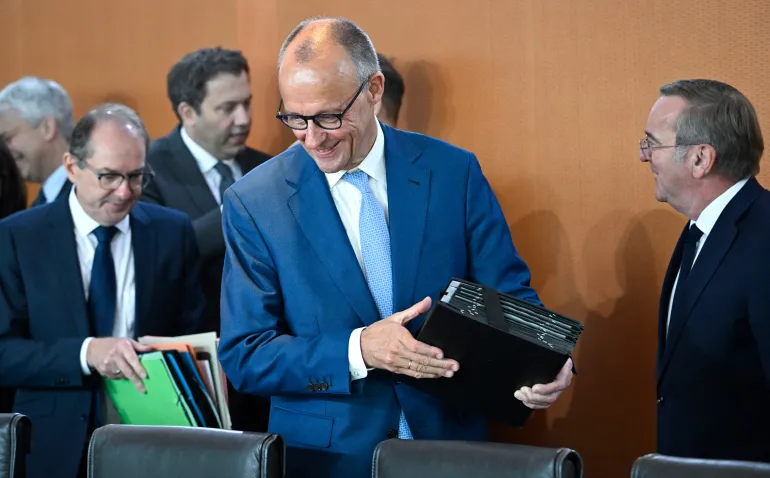
German Chancellor Friedrich Merz arrives for the weekly cabinet meeting in Berlin on October 7, 2026 [Tobias Schwarz/AFP]
Berlin election
Merz’s comments followed the far-left Left Party’s victory in the Berlin state election on September 20, in another defeat for the chancellor’s ruling Christian Democrats.
Lead candidate Elif Eralp campaigned on the soaring cost of housing in the German capital and immediately promised to follow through with a pledge to nationalise private housing associations that account for a large share of the city’s housing stock.
The result, which roughly doubled the party’s previous score, could see her become the first mayor of Berlin from the Left Party, which grew out of the former East German communist party following the reunification of the country 36 years ago.
Eralp, the 45-year-old daughter of left-wing Turkish parents who fled a coup in 1980, said the increasingly difficult rental situation was the biggest social problem in the capital.
She promised to proceed with nationalising the housing associations she said drove property speculation, in accordance with a referendum from 2021 in which 58 percent of voters backed a proposal to promulgate the move.
While the AfD has attracted most attention, the Left Party has also benefitted from a general turn against the mainstream centre-left and centre-right parties.
Meanwhile, Merz has received a record low approval rating. Earlier this month, a survey by Germany’s public broadcaster ARD found that only one in 10 respondents were satisfied or very satisfied with his performance, the lowest figure for any chancellor since the survey began in 1997.
Another major election test will come in North Rhine-Westphalia, Germany’s most populous state, where voters are set to elect a new parliament in April.
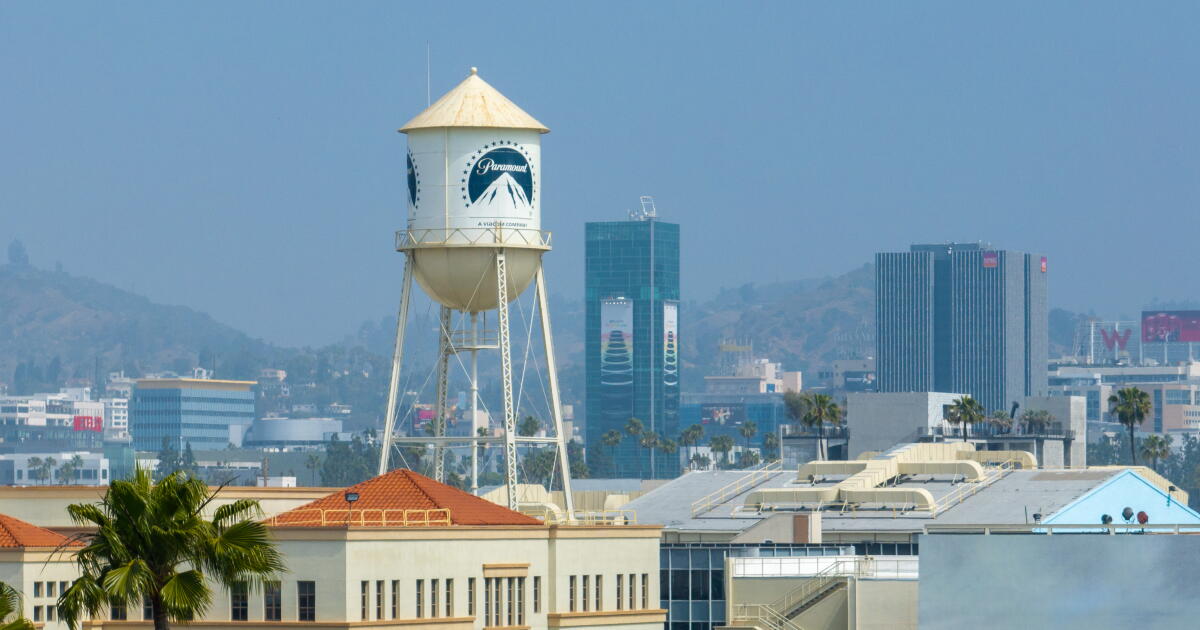
David Ellison emerged with his prized Hollywood juggernaut Tuesday as the merger of Paramount Skydance and Warner Bros. Discovery officially closed.
The $111-billion transaction culminated a year-long battle by the 43-year-old tech scion to add Warner Bros. Discovery to his family’s growing portfolio.
The Ellison family now controls one of the largest traditional media companies ever formed, with HBO, CNN, CBS, Comedy Central, TBS, Food Network, two traditional Hollywood studios and two major streaming services.
Shares of the new company began trading under the ticker SKYD, a switch from last week when the company went by PSKY for Paramount Skydance. Ellison has called the merged company, Skydance, the name he selected two decades ago when he began building his Hollywood studio.
Even Fox News, one of President Trump’s preferred media outlets, isn’t exempt from his go-to term for any woman he dislikes.
“She can be so nasty,” was how Trump recently described the conservative-leaning network’s senior White House correspondent Jacqui Heinrich.
Never one to hold back, the president has also had harsh words for her spouse, Rep. Brian Fitzpatrick of Pennsylvania, a moderate Republican congressman. “Her husband votes against me all the time,” Trump once said. “Can you imagine?”
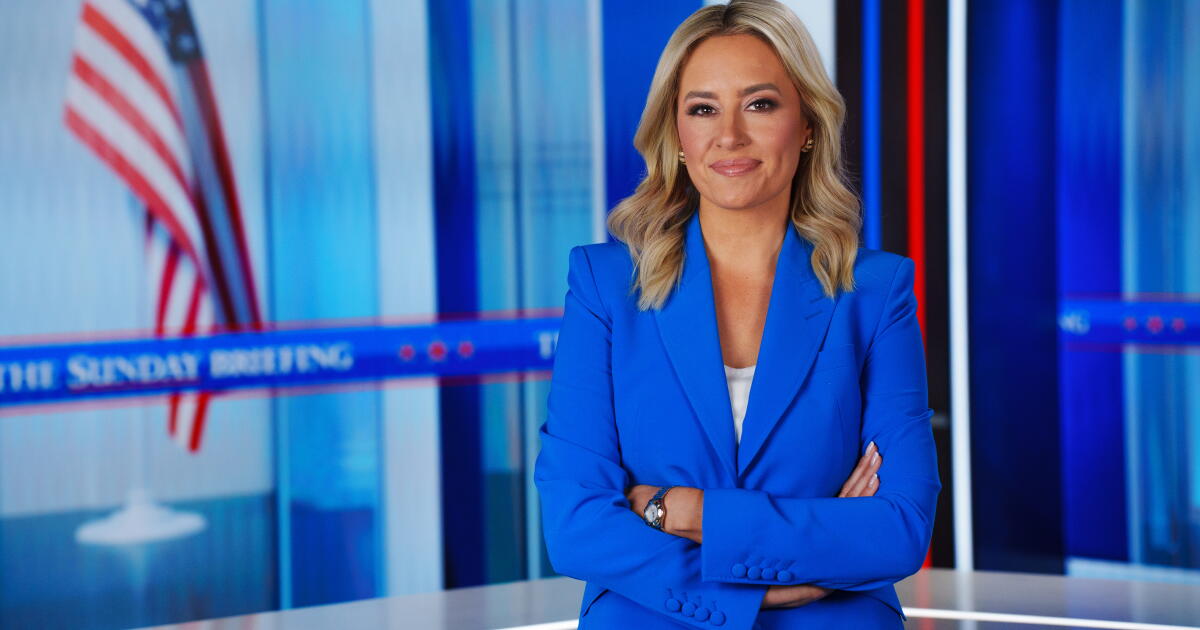
The double-barreled attacks don’t bother Heinrich, who as president of the White House Correspondents Assn. is leading the fight against Trump’s ban on CNN, MS NOW and Politico. When Trump delivered his insult at the WHCA’s dinner in July, Heinrich just shrugged and smiled.
“You don’t get into journalism to be well liked by the subject that you’re covering,” Heinrich said in a recent phone interview. “As long as I’m doing my job, which is to get the story and tell it fairly and fully, the rest of it is not really my business to care about. It’s probably not the last time I’ll upset him. The president still takes my calls.”
Heinrich’s durability is being put to the test as she delivers the public and private messaging on the latest battle with the White House over press freedom. Trump banned the three outlets from the White House grounds due to what he believes is their constant negative coverage.
A federal judge issued a temporary restraining order to block the move, calling it viewpoint discrimination and a violation of the outlets’ 1st Amendment rights. But the administration continues to prevent CNN from serving in the press pool that follows the president at all times. More court hearings are ahead.
Over the last 10 days, Heinrich has issued public statements condemning the ban, monitored the legal proceedings and held back channel conversations with the White House in an effort to get Trump’s decision reversed. It’s a second job on top of covering the president and co-hosting a weekend program “The Sunday Briefing.”
Executives and journalists say privately that it’s helpful to have someone from a Trump-friendly outlet lead the organization to restore the press credentials of outlets the president views as hostile. The WHCA exists to maintain and facilitate access to the White House for its 900 members across 250 news organizations.
But for Heinrich, it’s logical that 1st Amendment arguments transcend any political leanings of any media outlet. If Trump’s ban stands, conservative news organizations could find themselves facing similar restrictions the next time a Democrat is in the Oval Office.
“When you empower the president to select who is allowed to ask them questions, it shrinks the room,” Heinrich said. “It shrinks the perspective and it hands over that same authority to the next administration, who will surround themselves with only voices that approve of or are supportive or friendly toward what they’re doing.”
Eugene Daniels, a co-host at the progressive-leaning MS NOW and a former White House Correspondents Assn. president, said the organization’s members from Fox News and the further right-leaning Newsmax were always supportive of 1st Amendment and press access issues during his tenure.
“A lot of our news organizations understand intrinsically that at some point the shoe could be on the other foot,” Daniels said. “The solidarity matters.”
Daniels has also known Heinrich since the two worked together years ago at a TV station in Colorado Springs, Colo., and believes she is well-equipped to push the WHCA’s cause.
“She’s clear eyed about the role of White House correspondents in covering any president,” he said. “She is very tough and always has been since we’ve met. She stands 10 toes down when it comes to what’s right.”
Heinrich’s respect for journalistic principles has even extended to her personal life. When Fitzpatrick first asked her out on a date five years ago, he had to wait several weeks for an answer. Heinrich checked with her Fox News bosses to see if dating an elected official was a conflict even though she was no longer assigned to covering congress.
“He was very patient,” Heinrich said. The couple was married at New York’s St. Patrick’s Cathedral in June.
Heinrich is among the correspondents at Fox News — which this week will mark 30 years on the air — whose reporting doesn’t adhere to the leanings of its opinion hosts and commentators.
In 2020, Heinrich reported on Trump’s false claims of voter fraud in the election he lost to Joe Biden, while commentators, hosts and guests on the network continued to raise doubts about the results. Her reporting angered hosts such as Tucker Carlson and Sean Hannity, who were concerned that her work was alienating viewers loyal to the president.
Carlson called on Fox News Media Chief Executive Suzanne Scott to fire Heinrich in a text that came to light three years later when Dominion Voting System filed its defamation suit against the network. Dominion claimed Fox News deliberately aired false statements about the company’s role in the 2020 election, settling the suit for $787 million.
But Heinrich said she was unaware of the conversations before they were revealed in a legal brief in February 2023. (Carlson was fired from Fox News two months later.) She has been promoted twice since 2020.
“My bosses never interfered with my reporting,” she said.
Heinrich, 37, studied international affairs at George Washington University and wanted to pursue a career in the State Department before internships at MSNBC and WRC-TV in Washington led her to journalism. After working at several local TV stations she became a Fox News correspondent in New York in 2018. She covered Congress and the 2020 presidential campaign before moving to the White House beat in 2021.
Heinrich was raised in New England in what she describes as a politically diverse family. Her parents divorced when she was young, and she split her time between a conservative father in New Hampshire, a politically moderate mother in Maine and a Bernie Sanders-supporting stepfather from Vermont. She believes her upbringing was excellent training for her profession.
“It was ‘Live Free or Die’ and socialism all under two roofs but one family,” she said. “We have developed a really keen ability to listen. I think that’s one of the most important parts of journalism, is hearing and understanding someone’s perspective enough that you can describe it to someone else in a way that is fair and complete.”
Once Heinrich gets past the current conflict with the White House, she’ll have to plan the association’s annual dinner. (The event was cut short and rescheduled this year after a gunman attempted to enter the ballroom at the Washington Hilton.)
Heinrich said even with the president’s open hostility toward the press, he will be welcomed to the event in 2027.
“We have invited the president every single year for the last 115 years and that’s not going to change just because of President Trump,” Heinrich said. “We uphold laws, norms, and traditions around here and we intend to keep it that way.”
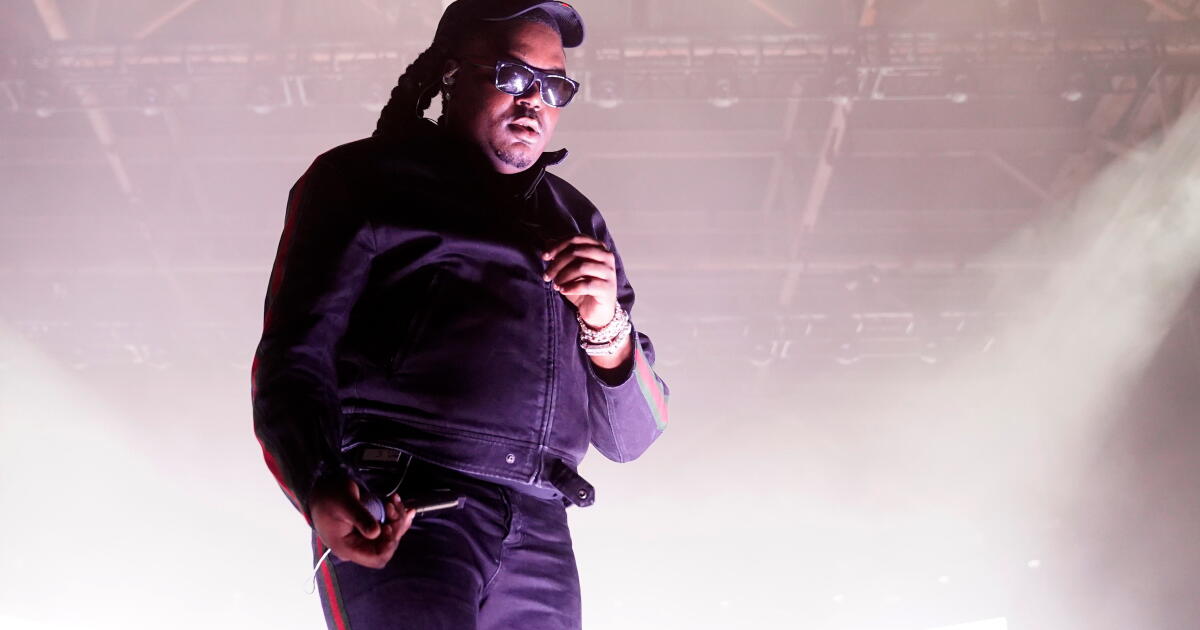
Rapper Lucki was allegedly involved in a fight at ComplexCon in downtown Los Angeles on Saturday, leaving him with a gash on his neck, according to videos on social media.
Police confirmed to The Times on Sunday evening that four people were wounded in what appeared to be a knife attack but did not name the victims. Officers responded to reports of a fight involving multiple people near Chick Hearn Court and Georgia Street around 4:45 p.m. Saturday, police said. When officers arrived, people were still fighting, according to police.
Footage shared on X appears to show a brawl involving Lucki, 30, outside the L.A. Convention Center.
In one part of the video, as onlookers shout for a paramedic, one unidentified bloodied man shuffles to a car while holding a towel to his neck.
Although police did not confirm whether the rapper or his associates were involved in the fight, police told TMZ that Lucki was surrounded by fans for photos when a suspect “hit him on the side of his face, causing a laceration.”
Additional footage posted to TikTok appears to show a visibly shaken Lucki climbing into the back seat of a black car with a wound near his jaw.
Two people were transported to a local hospital after sustaining injuries “that appeared to be the result of a knife attack,” police told The Times. A third person self-transported to a local hospital for treatment of a severe laceration.
A fourth person approached an officer at the scene and showed a laceration to his elbow, police confirmed. The victim declined medical treatment and left the scene on his own. Authorities did not know if the victim sought medical help afterward.
Before the violence, ComplexCon shared a story to Instagram on Saturday in which the rapper said he was “happy to be here.” In a statement to People Magazine, the venue said officials were aware of the situation, adding that they “take incidents of this nature extremely seriously and remain focused on maintaining a safe and secure environment for everyone.”
Authorities did not provide any further information Sunday.
Ireland and Israel drew 1-1 in a second ill-tempered Nations League match. Irish and Israeli players wore black armbands to commemorate lives lost in Gaza and in the October 7 attacks, before tensions flared at half time over allegations of spitting.
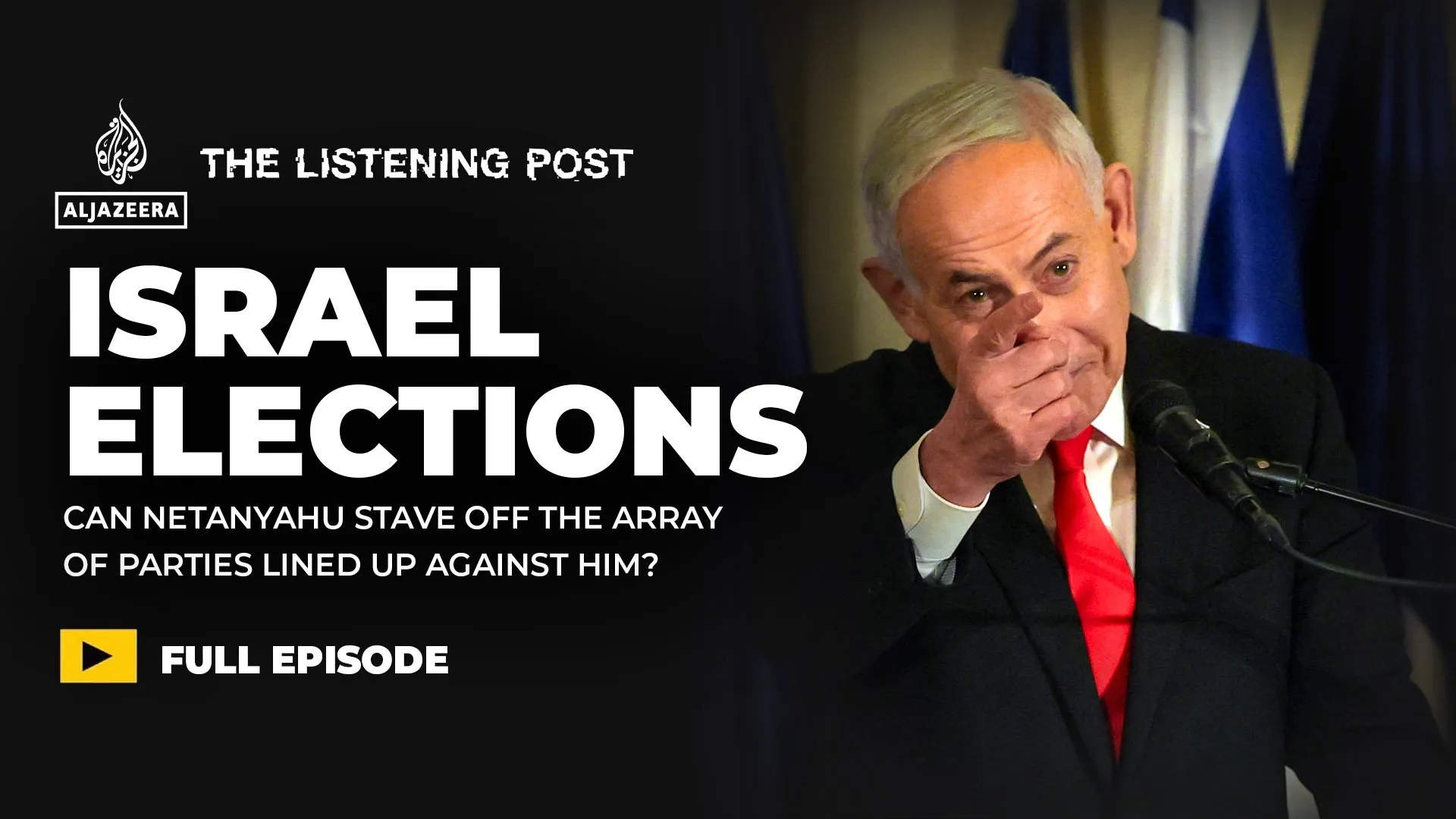
With elections one month away, the media discourse in Israel has narrowed in on one question about one man: What did Benjamin Netanyahu know before October 7?
The prime minister is suing the Israeli newspaper that reported the claim, while the right-wing Channel 14 insists none of it matters. Missing from the coverage is any reckoning with what Israel has done in Gaza.
Contributors: Dan Perry – Author, Ask Questions Later on Substack Diana Buttu – Human rights lawyer Ron Skolnik – Political consultant, Partners for Progressive Israel Yael Berda – Associate professor, Hebrew University of Jerusalem
On our radar
Donald Trump gathered some of the biggest names in AI this week and got them to agree to regulate themselves. Meenakshi Ravi examines the “morally binding” pact.
Kidfluencers: The business of broadcasting childhood
One of the most popular genres of online content these days is made by children – or rather, made of them.
Family vlogging has become one of the internet’s most profitable genres. But questions remain over its stars’ labour protections and ability to consent to what is published about them. The Listening Post’s Tariq Nafi looks at the business of broadcasting childhood.
Featuring: Caymi Barrett – Former child influencer Fortesa Latifi – Author, Like, Follow, Subscribe Sarah Adams – Founder, Mom.Uncharted
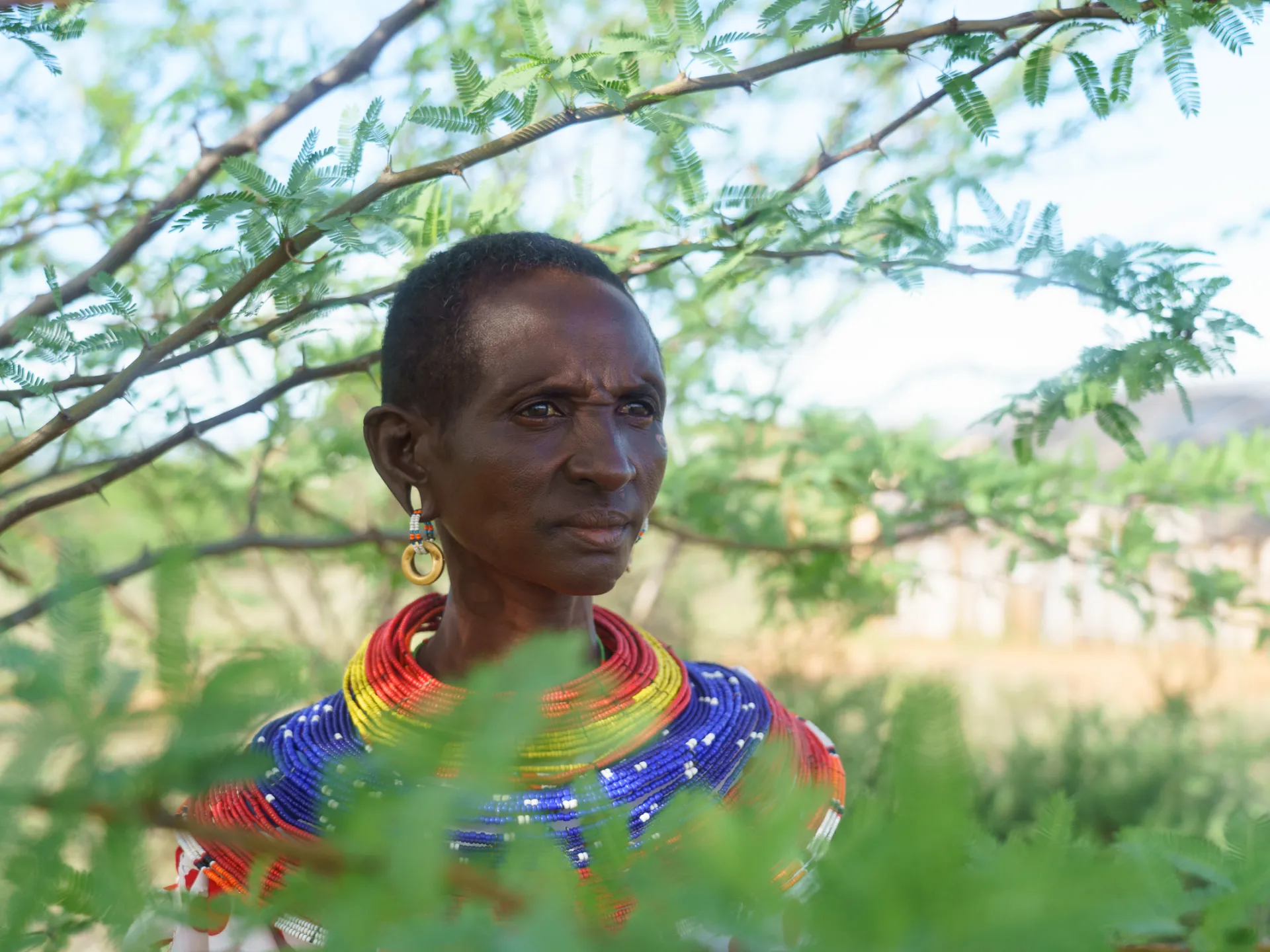
Memusi Lochede sits on a bed as her 24-year-old daughter Chaula lies motionless on the floor of their home in Archer’s Post, in the shadow of the training grounds. A donated wheelchair sits in the corner. Her daughter’s right leg is gone; metal rods brace a body so badly injured that she struggles to hold up her head.
“I have so much pain in my heart seeing my daughter in this condition,” 46-year-old Lochede tells Al Jazeera, wiping the drool from her daughter’s chin. “I feel ashamed that she needs so much help, and I don’t know how to help her.”
In 2019, Chaula, then a teenager, says she was hit by a speeding BATUK vehicle while crossing the road. Her leg was amputated and, her mother says, she was left paralysed and spent nearly three years in hospital.
A BATUK representative later came to see Lochede, she says.
“He apologised for what happened and said they don’t want a court case and would take care of my daughter — anything she needs,” she recounts.
The MOD said it “has not located a record of an approach having been made by a BATUK representative to the family.”
When her daughter was discharged, BATUK paid the hospital bills — without receipts or disclosing the amount — and disappeared, Lochede says. For years, Lochede called its community liaison officer, the Kenyan official tasked with receiving complaints like hers, who never answered. Eventually she gave up.
The MOD told Al Jazeera in August that BATUK is aware of the claim that one of its drivers “hit and injured a minor” in 2019, “resulting in permanent injuries”.
It said legal representatives have been in contact with the Kenya National Commission on Human Rights about the case and that a compensation offer has been made but the commission has not responded.
In late September, Al Jazeera asked the MOD what had been offered, when, and through whom. It did not provide those details, saying instead that BATUK “remains willing to engage with the child’s family, through an appropriate representative and on a without-prejudice basis,” but that “to date, we have been unable to establish contact with the family or an authorised representative”. Any resolution would have to rest on “verified medical and factual information” and, because the claim concerns a minor, be approved by a Kenyan court.
Ruth Getobai Nchagwa, a deputy director at the commission, says it has “never engaged with BATUK directly as our letters to them went unanswered”.
Chaula’s case “has not been addressed to date,” she notes, and the commission is not aware of any discussions about compensation. Lochede similarly says no one has ever approached her about compensation.
Before the accident, Lochede supported her five children by making beaded necklaces and selling them in Nairobi. Now she cannot leave her daughter’s side, and Chaula’s care costs about 30,000 Kenyan shillings ($230) a month — more than Lochede usually earns.
“It’s a shameful feeling to pick up the phone and call so many numbers for help, and no one picks up your call,” she explains, her lips quivering as she fights tears. “In those moments where I can’t provide for my daughter, I just lock myself inside the room and lie in my bed and cry.”
Her daughter, once healthy and active, now barely speaks.
“There are some days she wakes up and says just one word, like ‘food’ or ‘bathroom,’” Lochede says. “Those are the good days. Other days, she refuses to eat. I can see that she’s depressed and lonely. Inside, her soul is shattered.”
“These soldiers do these things because they know they can get away with it,” she adds sharply. “They know we don’t have money. We don’t have power. It’s extremely difficult for us to fight them.”
Cases like Chaula’s are far from isolated. Last year, a landmark two-year inquiry by Kenya’s parliamentary defence committee put decades of alleged BATUK abuses on the official record.
The 94-page report gathered testimony from hearings across Laikipia and Samburu, including a herder allegedly shot by a British sergeant; the alleged gang rape of 30 women at knifepoint in 1997; a boy who lost both arms and an eye to unexploded ordnance; and women with children their British fathers had never acknowledged.
BATUK declined to appear, citing its status and immunities under the defence arrangements. The committee condemned the refusal as contemptuous, calling it “emblematic of institutional contempt for the authority of Parliament and, by extension, the sovereignty of the people of Kenya”.
It concluded that BATUK “is increasingly seen as an occupying presence rather than a development partner”, with affected residents drawing parallels to colonial injustices. Witnesses told the committee that “suspected BATUK abuses are not only unpunished but actively covered up” — that whenever a BATUK member is implicated, police files often “go missing” and complainants are “intimidated into silence.”
An MOD spokesperson told Al Jazeera the UK “deeply” values its relationship with Kenya, “which has long been the UK’s defence partner of choice in East Africa”.
The MOD is “addressing concerns raised by Kenyan authorities and communities, focusing on legal accountability, ethical standards, environmental stewardship, economic benefit and social responsibility,” the spokesperson said.
Regarding road traffic incidents, the spokesperson said BATUK “cooperates fully with the local authorities and Kenyan Police”, that all such incidents are “investigated thoroughly” and that “where claims are made, BATUK submits to the jurisdiction of the Kenyan courts”.
When asked what progress the MOD had made on the concerns raised by the committee, and whether it was investigating any of the specific cases, it referred Al Jazeera to the written statement it submitted to the inquiry, which said it was “not aware of any evidence to support any allegation of collusion with security forces to suppress or dismiss complaints, or intimidate, bribe or coerce victims into silence”, and that any such evidence “would be taken extremely seriously and investigated accordingly”.
For Awino Okech, professor of feminist and security studies at SOAS University of London, the parliamentary report points beyond individual abuses. “This is no longer a case of a few bad apples but reckoning with what many will interpret as accepted militarised institutional culture,” she tells Al Jazeera.
“The fundamental question the British government is being asked to reflect on is their responsibility when there is a documented pattern of malbehaviour by their employees in a foreign country.”
Okech says the pattern cannot be separated from race. “We cannot ignore the racialised element. In this case, it is visible when crimes committed in Kenya are taken less seriously.”
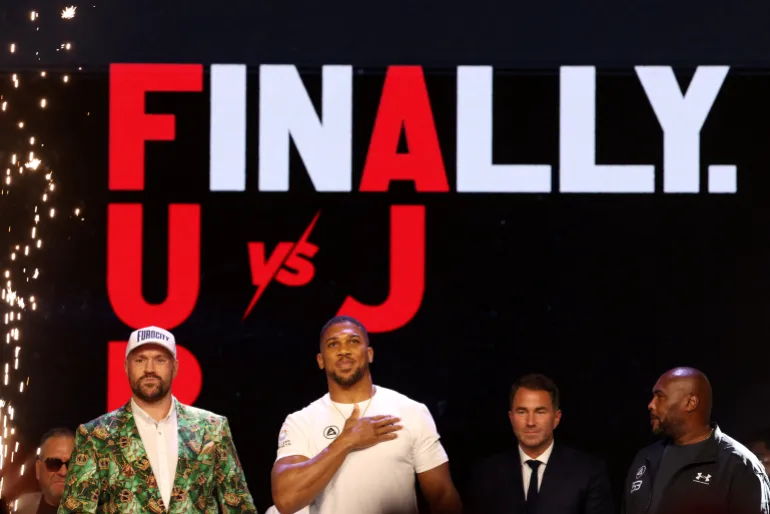
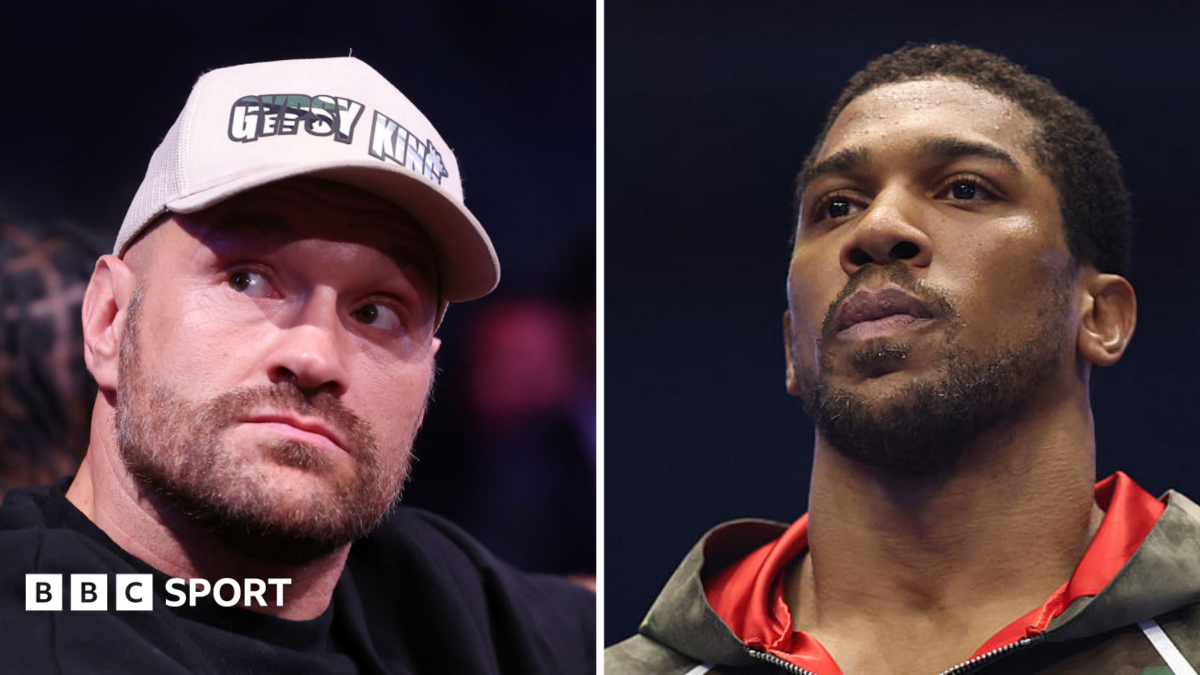
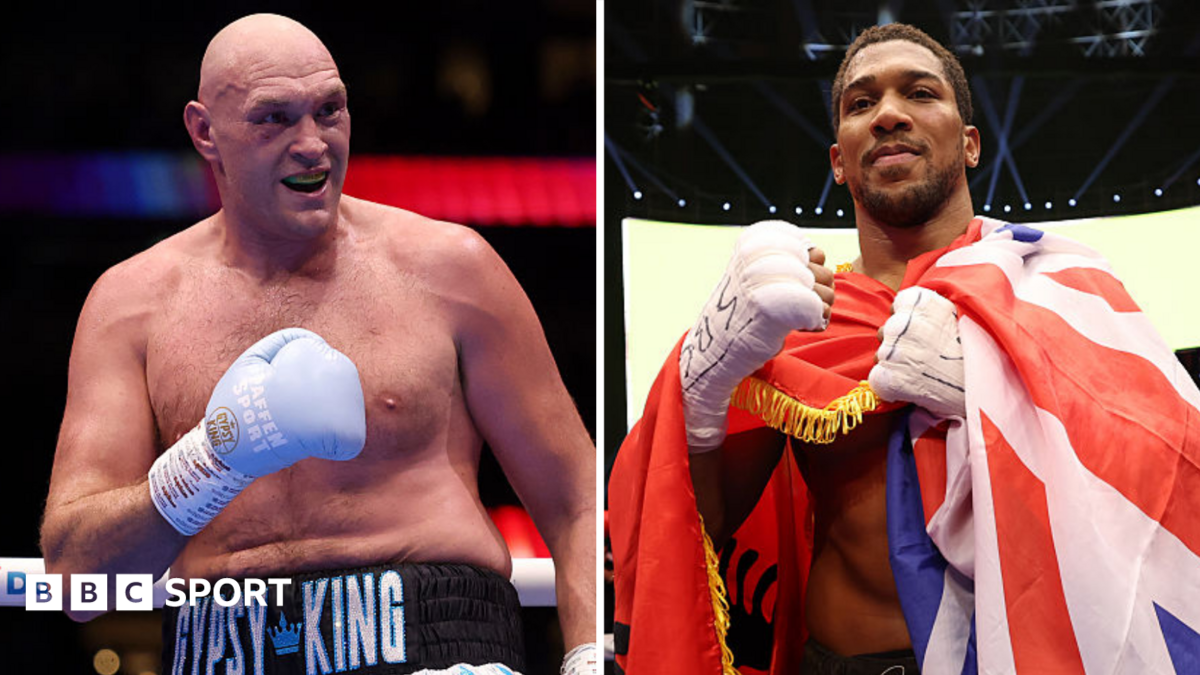
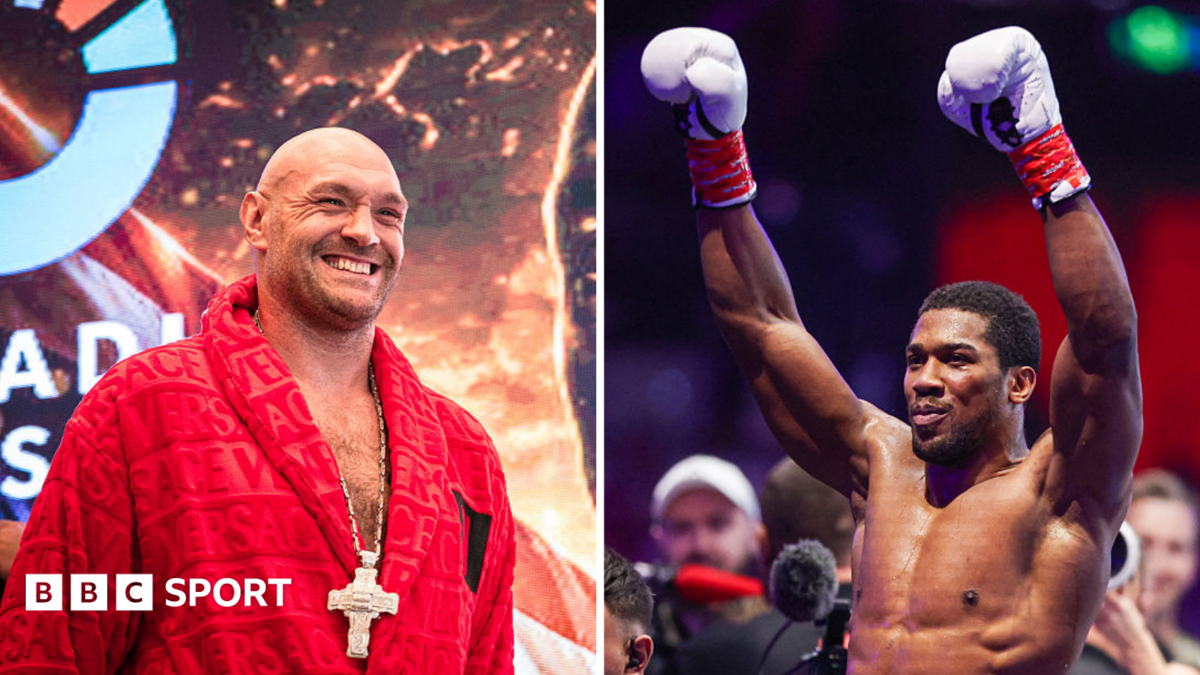
When Tyson Fury was asked whether his fight against Anthony Joshua had come too late for both boxers, the Gypsy King responded: “Is it too late?… It’s the icing on the cake of two great careers.”
Former heavyweight world champions Fury and Joshua came face to face in London on Wednesday to allay months-long fears and rumours surrounding their long-awaited fight, which has been confirmed for December 11 in Cardiff.
The British boxing stars are 38 and 36 years old, respectively, and have kept the boxing world waiting for years.
For many fans, why it took so long to agree on a fight is almost as big a question as who will win.
Neither boxer wanted to take the hit for delaying the biggest fight in British boxing history when they appeared in front of the media in London. Fury blamed Joshua, despite reports stating Joshua insisted the fight take place in the United Kingdom for the sake of home fans.
“You’ve been crying behind the scenes to get out of this fight,” Fury said. “I’ve checkmated you. You have to fight. I’ve said I’ll fight anywhere.”
But is the Gypsy King right? Can Fury vs Joshua live up to more than 10 years of hype?
Al Jazeera Sport breaks it down:
Ten years of near misses
Joshua and Fury are prizefighters who decide their destiny in the ring, but outside of it, their promoters negotiate contracts, choose venues and make calls on top billing.
The history goes back 10 years and is full of near misses, contractual problems and other fighters entering the fray.
It all started in 2020, when the two camps agreed to a two-fight deal. A year later, contracts were signed for an undisputed heavyweight showdown. However, Deontay Wilder, an American former world heavyweight champion, won an arbitration case that forced Fury into a trilogy fight in 2021.
In 2022, Joshua reportedly accepted a 60-40 purse split in Fury’s favour, but that deal collapsed too. During this period, unbeaten Ukrainian heavyweight champion Oleksandr Usyk defeated Joshua twice and proceeded to beat Fury twice as well.
All this while, Fury vs Joshua failed to materialise.
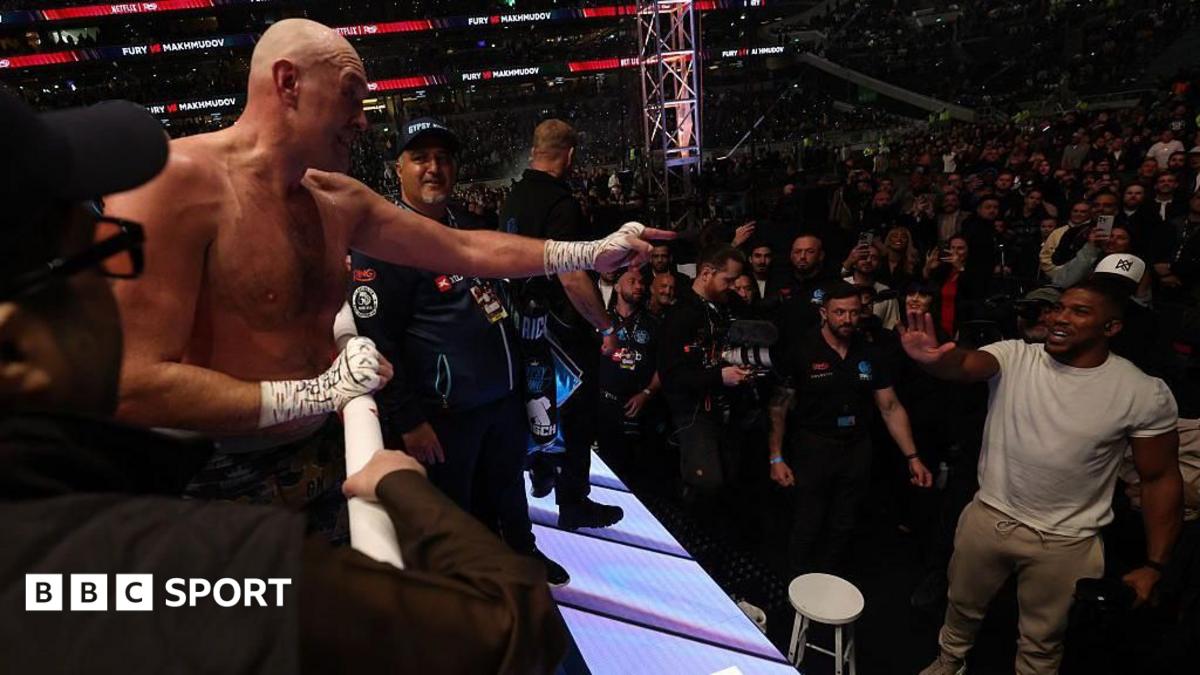
Tyson Fury and Anthony Joshua confirmed their fight at a media event in London [Adrian Dennis/AFP]
Eddie Hearn vs Dana White
Online streaming platform Netflix, which holds global rights to the fight, has billed it as a collaboration between Saudi sports powerbroker Turki Alshikh’s The Ring magazine and Dana White, the owner of mixed martial arts promotion UFC.
Neither Joshua’s promoter, Eddie Hearn, nor Fury’s, Frank Warren, was named when talks of the fight resurfaced earlier this year.
Alshikh and White cofounded a boxing promotion, Zuffa Boxing, which was launched earlier this year and became a point of contention in the Joshua-Fury fight. Hearn was of the view that Joshua’s contract barred White and Zuffa’s parent company from any promotional role.
“Dana White cannot be involved with this fight promotion,” Hearn said recently.
However, Fury saw it differently and blamed Hearn for costing “the biggest fight in boxing history” in an Instagram post.
White was not seen at the London news conference, where fans booed his name.
A battle of egos
In boxing, the name that comes first on the poster usually signals the A-side, or the bigger fighter.
Joshua claimed he got a call asking whether he minded Fury’s name going first, because Fury was “unwilling to sign unless he does”.
Fury boasted: “I’m number one.”
There was also the issue of the fight venue and, specifically, the host country.
Joshua insisted he ensured it would happen in the UK, whereas White had pushed for it to be held at Madison Square Garden in New York.
“I know we are going to inspire this generation, and I know for a fact we are going to inspire the next generation,” Joshua said.
The niceties didn’t last long between the opponents as Fury claimed he would knock Joshua out.
“I’m going to catch him and, when I do, it’s going to be curtains,” Fury said.
Joshua welcomed the outburst and said: “This is the energy that we want.”
In the end, money got the deal over the line.
Reports in UK media say the fighters will share a $200m purse and will bag more than “any British fighter has earned in a fight ever”.
Fury and Joshua pose following the news conference in London [Adrian Dennis/AFP]
A flight from Dubai to Tel Aviv was unexpectedly diverted after a physical fight between the pilots, Israeli officials told local media.
The Flydubai plane – which took off from Dubai International Airport in the United Arab Emirates early on Wednesday morning – signalled an emergency code two hours into the journey, flight tracking website Flightradar24 said.
Minutes later it switched to a code used to report a hijacking, but was later turned back to the general emergency signal, the website reported.
The incident was not believed to have been a hijacking, the Israeli prime minister’s office said.
Instead, the signal was thought to be issued following an altercation between the pilot and co-pilot, local media reported citing Israeli defence officials.
The plane – carrying around 150 people, most of whom are Israeli – was due to land at Ben-Gurion Airport but instead landed at Tabuk Airport in northeastern Saudi Arabia.
The Israeli air force dispatched fighter jets in response to the incident and Prime Minister Benjamin Netanyahu held urgent consultations on the incident.
For Dylan Feierabend, there are few things more life-affirming than fishing for redtail surfperch and smelt at Centerville Beach in rural Humboldt County.
His favorite spot, where the Eel River meets the Pacific Ocean, is a few miles from the main road — too far to walk with fishing poles and an ice chest in tow. He instead gets there by driving a side-by-side, a small off-road vehicle, right onto the sand.
He might not be able to do so much longer.
If the California Coastal Commission has its way, vehicular access will soon be nixed at Centerville Beach County Park outside Ferndale — one of just a handful of beaches along the state’s 840-mile coastline where driving is allowed.
This month, the Coastal Commission approved a request from Humboldt County for a coastal development permit to rebuild a 0.17-mile segment of a storm-battered road adjacent to the fast-eroding beach — but only if the county stops people from driving on the sand.
Coastal Commission staff, in a 78-page report, said motorized vehicles threaten both sensitive vegetation and critical habitat for the federally threatened western snowy plover, a small, white-bellied shorebird.
“California’s dune habitats are particularly rare and important, so where driving could damage these sensitive areas, the Coastal Act requires that we protect them,” commission spokesman Joshua Smith said in a statement to The Times.
However, he said, the agency does not “have a one-size-fits-all policy on driving on the beach.”
But Humboldt County residents and officials decry the move as just the latest example of overregulation and government overreach in liberal California — and of the disconnect between its rural and urban places.
“What you see in Southern California isn’t what we see up here,” resident Joey Sancho told the Coastal Commission during its meeting in Eureka this month. “The beaches aren’t overly populated. They’re not being torn up by ATVs and so forth. But yet, [it’s] just one more thing just to take away from us up here in the North Coast.”
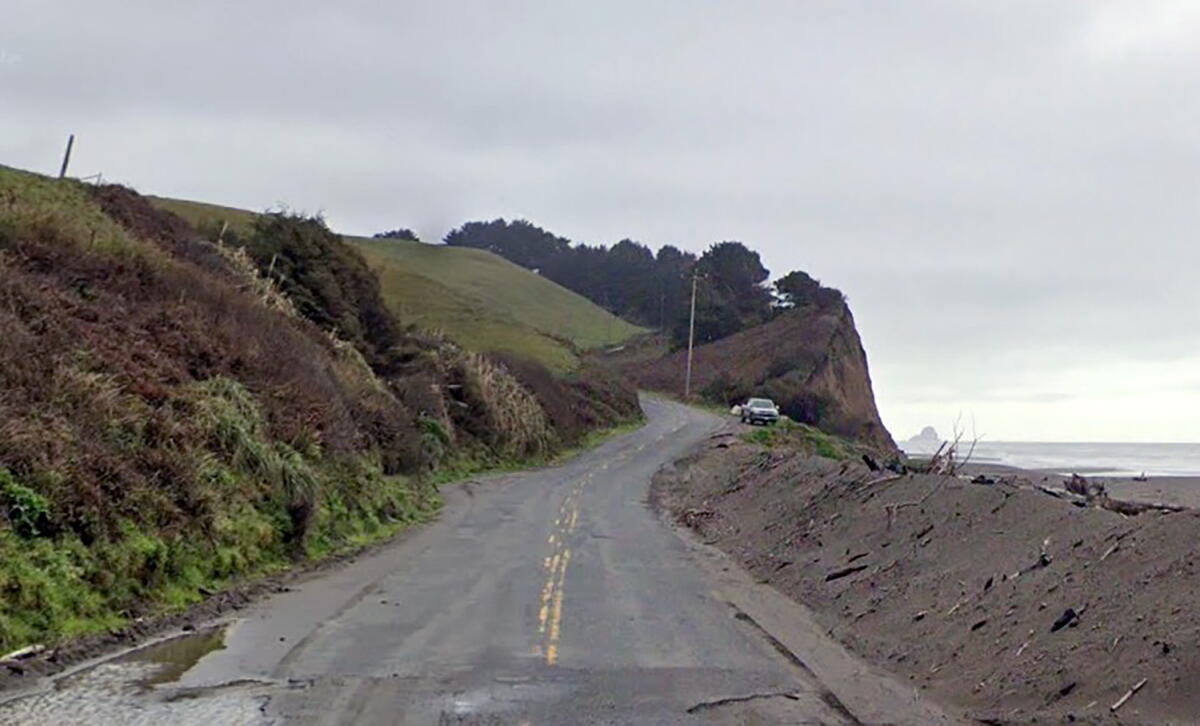
Humboldt County wants to make improvements to Centerville Road.
(Google street view)
Feierabend, a 36-year-old loan officer, told The Times: “It’s about slowly choking out the individuals that utilize the beach and gaining control under the ruse, or the guise, of conservation.”
Amid this wider debate, beach driving has emerged as an unexpected flashpoint.
Last month, Republican gubernatorial candidate Steve Hilton called coastal commissioners “idiots” for their years-long effort to end off-road driving at Oceano Dunes State Vehicular Recreation Area, the only state park that allows recreational driving on the beach.
Cars, bikes and pedestrians share the sand at Oceano Dunes State Vehicular Recreation Area near Pismo Beach in February 2021.
(Myung J. Chun / Los Angeles Times)
Oceano Dunes, near Pismo Beach in San Luis Obispo County, temporarily closed to off-roaders this spring amid long-running legal battles between recreation advocates and environmentalists who say all-terrain vehicles are tearing through western snowy plover habitat and sending clouds of unhealthy dust into nearby neighborhoods.
“Surprise, the Coastal Commission are trying to shut it down because they’re joyless bureaucrats who don’t want anyone to have fun,” Hilton said in a social media video as he leaned on a bright yellow dune buggy on the sand. “And it’s not just about fun. This is a real economic engine for this community.”
If elected, he said, he would create a state “Office of Fun and Freedom.” Its first task? Protecting off-roading at Oceano Dunes.
The campaign for Xavier Becerra, the Democratic gubernatorial candidate, did not return requests for comment.
In Humboldt County, residents have stressed that rural Centerville Beach is nothing like Oceano Dunes, where thousands of pickup trucks, ATVs and dirt bikes may carve through the sand on a given day.
Centerville Beach’s nearest town, Ferndale, the childhood home of celebrity chef Guy Fieri, has a population of just 1,500. Residents say the beach typically sees a handful of four-wheelers and side-by-sides — with most heading out to fish, not joy-riding.
“Centerville is not a beach anyone can just drive on — you’ve got to know what you’re doing,” said Shawn Griggs, a painter who surfs there most mornings. “It’s a very volatile beach with coarse sand. It’s steep right off the shore; the sand bars are transient.”
A view of Centerville Beach, near where Humboldt County is looking to repair a stretch of Centerville Road.
(Beau Sanders / For The Times)
Griggs, 57, described himself as “an environmentalist at heart” who appreciates efforts to protect threatened species. But he doubts vehicles are doing much harm at Centerville.
“With the amount of sand that is pushed off that beach every year and moved around, it’s hard for me to imagine that beach would be a super stable beach for the snowy plover,” he said.
The Coastal Commission staff report says the area is “moderately suitable for plovers,” but that “heavy human use” has degraded the habitat.
In Humboldt County, driving is allowed on a handful of county-maintained beaches, as well as portions of the Samoa Dunes Recreation Area, which is managed by the federal Bureau of Land Management.
Feierabend, who grew up next to Centerville Beach, said vehicles are not destroying the beach — the ocean is.
“No one’s going too fast,” he told the Coastal Commission. “No one’s driving through dunes. In fact, there are no dunes.”
Centerville Beach, home to some of the state’s fastest-eroding cliffs, has been shrinking for decades. The rising and warming sea has accelerated that process in recent years, and powerful El Niño-charged storms this fall and winter could wreak further havoc on the coastline.
A beach parking lot that once accommodated up to 100 vehicles has already washed away. And Centerville Road — a narrow county thoroughfare that provides access to the beach, a few rural homes and the federally managed Lost Coast Headlands — is so regularly slammed by powerful storm waves that it is often covered with sand and made impassable.
The road is what initially brought Centerville Beach to the Coastal Commission’s attention.
The Humboldt County Department of Public Works applied for a required coastal development permit to repair a short stretch of storm-damaged roadway, a project for which it had already secured federal and state funding.
The county has proposed elevating the road 10 feet and adding a new parking area. It also is looking to build a revetment — a sloping layer of rocks on the sand meant to protect the road from waves, at least for a few decades.
Humboldt County initially pushed to move the roadway farther inland, but faced resistance from private landowners.
According to the Coastal Commission staff report, beach erosion puts Centerville Road at “severe risk of being destroyed” within the next five years.
Given the urgency of the needed repairs, the decision to tie the development permit to beach driving felt like “a backroom deal stuck into the project,” Humboldt County Planning Commissioner Iver Skavdal said at the Coastal Commission meeting.
The commission is “holding the project, the residents and the county hostage,” said Skavdal, noting that seven generations of his family had enjoyed the beach.
Though the commission approved the permit on the condition beach driving will be stopped, it added an amendment after locals pushed back — giving Humboldt County an opportunity to write a plan to allow restricted driving, provided it would not harm sensitive habitats. That plan would have to come back to the commission for approval.
The Humboldt County Board of Supervisors still must decide whether to accept the stipulations of the coastal development permit before any construction begins.
The potential loss of driving on Centerville Beach — a unique attraction in California’s sparsely populated, economically depressed northwest corner — struck a chord with residents, about two dozen of whom sat through several hours of a Coastal Commission meeting on a Wednesday morning to speak about it.
“Families here don’t have a lot to do,” Sue Long, former mayor of the nearby city of Fortuna, told the commission. “There’s not a lot of the kind of entertainment you guys have, with waterslides and Disneyland and all of those things. … We count on nature.”
Mike Astry, who runs a small off-road recovery business pulling out vehicles stuck in sand or mud throughout the region, told the commission most people towed off Centerville Beach are out-of-town tourists who traveled just to drive on the beach.
Stopping vehicular access is “a big deal to a lot of people,” Astry, 49, said in an interview. “People driving from out of town that want to come drive on that beach are not going to come to our town and spend money on hotels and food.”
Astry, who also is an automotive maintenance supervisor for Humboldt County, started the towing business with his souped-up Jeep during the COVID-19 pandemic, when people flocked to outdoor spaces during lockdowns. Now, he typically gets one or two calls a week.
At Centerville Beach, he said, “I’ve had some pretty gnarly tows,” including some “little old ladies who thought, ‘Oh, I thought my Prius could go here,’ and it can’t.”
A few years ago, he yanked a Tesla out of the ocean. Powerful waves ripped off its bumper. The driver was from the Bay Area.
“People are just sick of California, their mandates, and this is just one more thing to add to it,” he said of the coastal commission decision. “It’s just a power trip. We pay our frickin taxes.”
Jennifer Savage — California policy associate director for the Surfrider Foundation, a coastal protection nonprofit — was one of the few speakers at the Coastal Commission meeting who focused on a different aspect of the county’s Centerville Beach proposal: the rock revetment next to the old, crumbling road.
Revetments and sea walls, which generally are not allowed for developments built after the Coastal Act took effect in 1977, “make a beach erode significantly faster,” she told The Times.
Erosion has been a known problem for a long time, she said, and “the failure to prepare doesn’t justify sacrificing the public beach.”
JUNEAU, Alaska — One of the most biting insults in Alaska politics is to be accused of being aligned with the “Lower 48,” code for candidates taking marching orders from powerful forces in the contiguous United States rather than sticking up for Alaskans.
It’s a central theme of the Alaska’s U.S. Senate race, one of a handful expected to determine control of the chamber in the November elections.
Republican Sen. Dan Sullivan’s campaign has made it a key attack line against Democrat Mary Peltola, a former congresswoman. He lumps her in with “Lower 48 liberals” who have opposed expanded oil and gas drilling in a state that has relied heavily on that industry for decades.
Peltola, an Alaska Native, has countered that she “took on” then-President Biden, a fellow Democrat, to help win approval in 2023 of the huge Willow oil project, which environmentalists strongly opposed. She also says she will “take on anyone, including Democrats — anyone in the Lower 48 who doesn’t understand what Alaska needs.”
The pejorative label reflects a mystique about Alaska, which outsiders often refer to as “The Last Frontier.” A state for less than 70 years, Alaska is renowned for its natural beauty, wildlife and vast landscapes. Its rural nature — isolated from the rest of the country and with many of its communities accessible only by air or water — breeds a self-reliance. It’s a place where many residents hunt and fish to fill their freezers for winter and take pride in their independence.
The two major Senate campaigns and some third-party groups have leaned into that sentiment — that Alaska is different — and cast their candidates as authentic voices for Alaskans.
“We love the persona Alaska is a tough place to live,” said Republican Andrew Halcro, a political podcast host and former state lawmaker who has lived in the state nearly all his life.
Abundance of oil and other resources has created friction with federal government
Alaska, rich in natural resources, has long had a love-hate relationship with the federal government, which owns about 60% of the state’s land. That relationship has been especially strained under Democratic presidential administrations that have sought to restrict logging, mining and the availability of areas for oil and gas development over environmental concerns.
Policies can shift dramatically from one administration to the next.
The Democratic Obama and Biden administrations banned leasing on roughly half the National Petroleum Reserve-Alaska, which is home to wildlife such as caribou and polar bears and provides habitat for millions of migrating birds. Republican President Trump’s administration has rolled back those and other restrictions as part of a broader push for expanded oil and gas development in Alaska. The administration also is supporting lease sales in the Arctic National Wildlife Refuge.
The state also has bristled at Democratic efforts to stifle road building and logging in areas such as the Tongass National Forest, a temperate rainforest in southeast Alaska. That dispute dates to the Clinton administration.
Alaska’s share of royalty revenue from oil and minerals on federal land has been another ongoing source of tension. Some lawmakers say the state was promised a larger share at statehood and that the federal government has failed to uphold its end of the deal.
While oil production is a fraction of what it was at its peak in the late 1980s and has fallen in recent years, political leaders have pointed to signs of a turnaround. They cite in part the strong interest from major companies that snatched up leases in a sale earlier this year for the petroleum reserve, home to the Willow project.
Alaska communities have been hit hard by spikes in fuel prices caused by the Iran war. That is especially true for remote communities that must have their fuel flown in or delivered by barge before the rivers ice over.
Oil development is the top issue in this year’s election for Darryl Hugo, who lives in the small North Slope community of Anaktuvuk Pass. He is backing Sullivan and notes that revenue from oil development is largely responsible for his town’s health clinic, school, police and fire departments and water system.
“My region’s economy depends on oil,” he said via a messaging app.
Candidates are seen as trying to stake claim as ‘the real spokesperson for the real Alaska’
Robert Sewell, an independent from the Juneau area, said he sees the “Lower 48” taunts and Peltola trying to distance herself from national Democrats as examples of the candidates “fighting to establish who is the real spokesperson for the real Alaska.”
He also likens it a bit to the schoolyard jeer, “I know you are, but what am I?”
Peltola, during her unsuccessful 2024 congressional reelection campaign, refused to endorse Democratic presidential nominee Kamala Harris and said she would not vote for Trump. This year, before Alaska’s August primary, Harris sent a fundraising appeal that offered support of Peltola.
In response, Peltola’s campaign told reporters that she “isn’t seeking endorsements from anyone from the Lower 48.”
In videos highlighting her backing of the Willow oil project, Peltola said she will work with Trump, who handily carried Alaska each of the three times he has run, to advance more oil and gas projects.
“I took on Joe Biden to secure the largest development project in decades,” she said in one video on social media. “And I’ll work with Donald Trump on more.”
Sewell, a Peltola supporter, said he does not begrudge that position. He said he does not think “for one moment that she likes Trump or Trump’s agendas” on other issues.
‘Lower 48’ jabs fill social media and airwaves, but do voters care?
Peltola, who is Yup’ik, is among the roughly 43% of Alaskans born in the state. She grew up fishing on the Kuskokwim River in western Alaska and prominently displays fishing photos on her website. Her campaign slogan, “Fish, Family, Freedom,” is intended to appeal to what she believes are Alaskans’ shared values.
Sullivan, originally from Ohio, came to Alaska in the late 1990s when he was in his early 30s. Now a retired Marine, he served as Alaska attorney general and natural resources commissioner, and was an assistant secretary of state in President George W. Bush’s administration.
Sullivan spokesperson Nate Adams said that for the senator, “being an Alaskan means loving this state, fighting everyday for his fellow Alaskans and making sure Alaskans, not Lower 48 liberals, decide our future.”
The SLF PAC, which supports a Republican Senate majority, has been keying in on that theme. In one of its ads, a speaker says of Peltola, “They dress her up, throw her out on a stream somewhere, make her look like an Alaskan.” Another says: “Mary Peltola sounds like Alaska, but toes a different line in Washington, D.C.”
Peltola’s campaign said Alaskans “won’t be fooled by mudslinging ads.” In a statement, her campaign sought to link Sullivan with “Lower 48 special interest donors.”
Halcro, the former lawmaker and podcaster, said Alaskans have been inundated with such ads and flyers, but he is not sure the messaging over which candidate aligns less with the “Lower 48” is one voters want to hear this year.
“It’s all of this stuff just to make us angry at a time where we really genuinely, genuinely just need stability,” he said. “We just need to elect somebody who’s not going to break anything.”
Netflix and Saudi powerbroker Turki Alalshikh’s fight announcement was striking for who it included – and who it did not. The event was presented as a collaboration involving Alalshikh’s The Ring and White.
There was no mention of Matchroom’s Eddie Hearn, who has promoted Joshua throughout his professional career, or Queensberry’s Frank Warren, Fury’s long-time promoter.
White’s involvement was not entirely unexpected.
The Zuffa Boxing promoter has been saying for weeks he would be involved in Fury-Joshua.
Hearn has been equally adamant he would not. After Thursday’s announcement, Hearn said Joshua’s contract specifically prevented White and American sports entertainment company TKO from having a promotional role, claiming Netflix had not been made aware of that provision.
Hearn said there had been breaches of the agreement which needed to be resolved and cast doubt on whether Wednesday’s news conference would go ahead.
Fury says a similar restriction originally appeared in his own contract but was removed because he wanted White involved.
Warren has taken a more pragmatic position. Speaking to BBC Sport before the latest dispute escalated, he said his understanding was White had helped secure the Netflix deal and compromises had been necessary to get the fight made.
On Saturday, White was generally non-committal on the future of the contest but much clearer in his criticism of Hearn. “The guy who is supposed to be helping the fight has been hurting the fight,” White said. “He hasn’t done the fight any favours.”
The 7,500-capacity Copper Box was some way short of full, with the upper tier closed and empty seats dotted around the arena.
But Fisher’s “Bosh Army” did their best to fill the gaps with noise, giving the “Romford Bull” a raucous reception.
Alongside his social-media star father “Big John”, Fisher has built a loyal following through an unusually unfiltered glimpse into family life, training camps and the pair’s well-documented enthusiasm for Chinese takeaways.
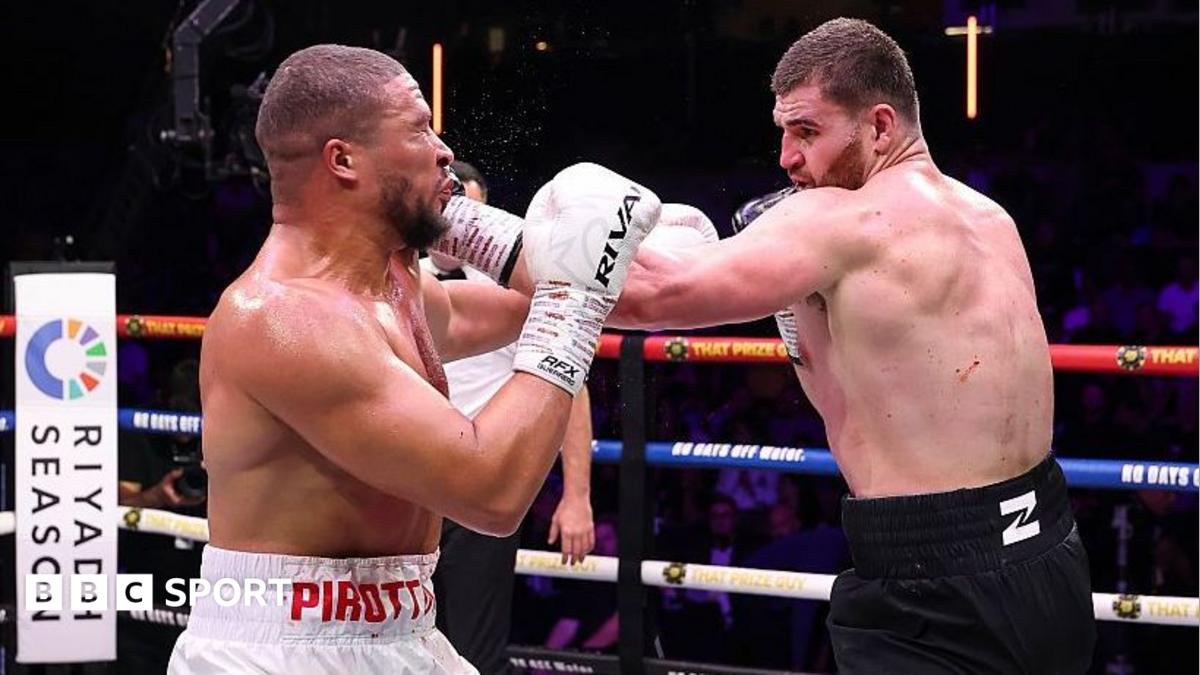
Fisher started with intent, swinging heavy hooks and reddening Pirotton’s eye in the opening round.
The little-known Belgian was unfazed by the home support or Fisher’s pressure, but his eye was cut by the second.
“I can see, don’t stop the fight,” Pirotton told the referee before a doctor examined him in the fourth.
Allowed to continue, he came out firing, but Fisher responded with a flurry to head and body.
Blood stained Pirotton’s white shorts, yet he rallied in the fifth – his best round – as Fisher began to look tired and static.
Among those in attendance were British fighters Derek Chisora, Conor Benn and Caroline Dubois, alongside WWE stars AJ Styles and LA Knight.
WWE is owned by American sports and entertainment group TKO, which is also behind Zuffa Boxing.
The doctor took another look at Pirotton before the seventh but allowed the bout to continue.
Neither man was offering much by the latter stages until a short right hand from Fisher staggered Pirotton in the 10th.
For a moment, a 13th stoppage victory appeared within reach, but Fisher could not find the finishing burst as Pirotton slipped to his third loss in 15 fights.
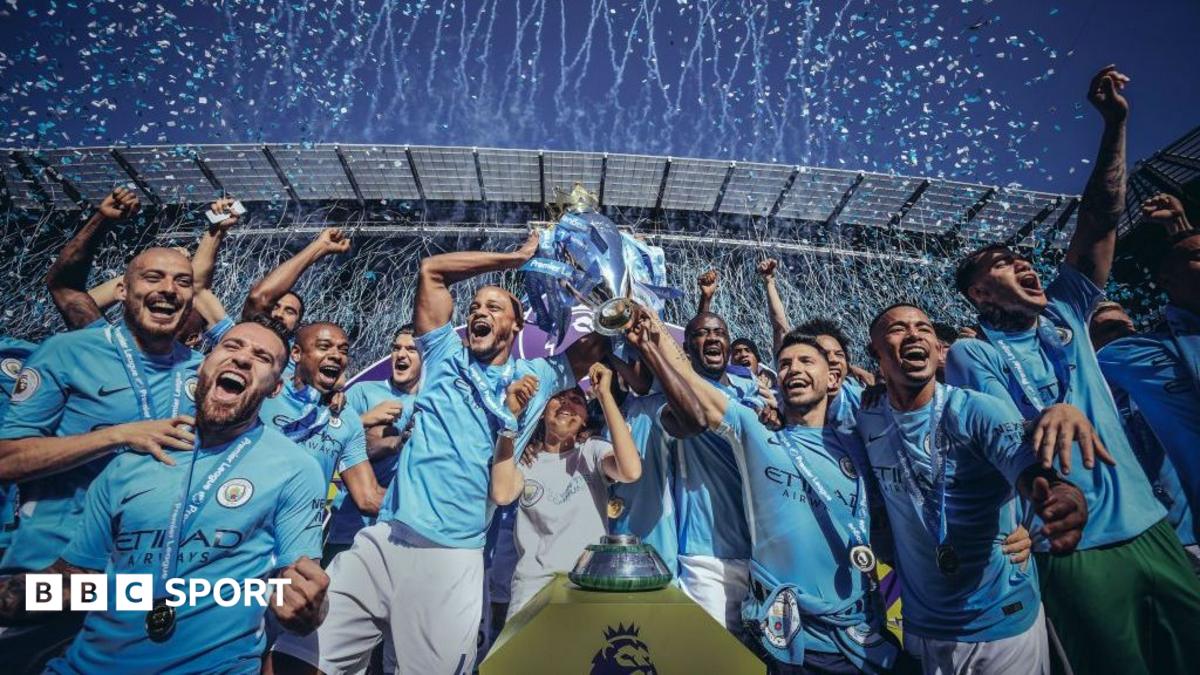
Manchester City‘s legal fight with the Premier League has the potential to “spiral out of control”, a former top club executive has warned.
Christian Purslow, a former Liverpool managing director and Aston Villa chief executive, who also held a senior role at Chelsea, said the case could begin a chain of events that would be “appalling for the game”.
City have been found guilty of the vast majority of 115 charges brought forward by the Premier League.
The club were accused of a wide range of rule breaches which centred around claims that they inflated sponsorship revenue from connected companies and made other “off the books” payments to circumvent football’s financial rules.
Premier League clubs are seeking legal advice about compensation relating to the charges, while BBC Sport has been told that City will appeal.
Sanctions on the club are yet to be announced, but repercussions could include a points deduction, expulsion from the Premier League or a huge fine.
Speaking on Radio 4’s Today programme, Purslow appeared alongside football law expert Paul Gilroy KC, who described the case as a “seismic moment for world football”.
Purslow said: “It’s a sort of ‘where does this end?’ because if you look at every single season – the nine seasons which we now know Manchester City breached rules – then all of their 19 Premier League rivals in that season, to differing extents, suffered easy-to-compute loss. Whether it was a place in the Premier League – every place was worth £3m.
“Teams that came fifth who didn’t make the Champions League maybe lost tens of millions of pounds – and of course teams that were relegated. Let’s say the team that finished 18th would’ve finished 17th if Manchester City weren’t there. And they, of course, suffered huge loss.
“If you add all those claims up, over nine years, and that’s just in the Premier League, you can see that the potential here for this to spiral out of control is huge.
“I really hope that common sense prevails here and that there is a comprehensive solution between the authorities and Manchester City that looks at all these issues and tries to draw a line in the sand.
“Because a never-ending waterfall of legal claims and uncertainties for another four or five years would be absolutely appalling for the game.”
Gilroy added that, so far, four clubs have put in protective claims “reserving the right to claim compensation if City are found guilty”.
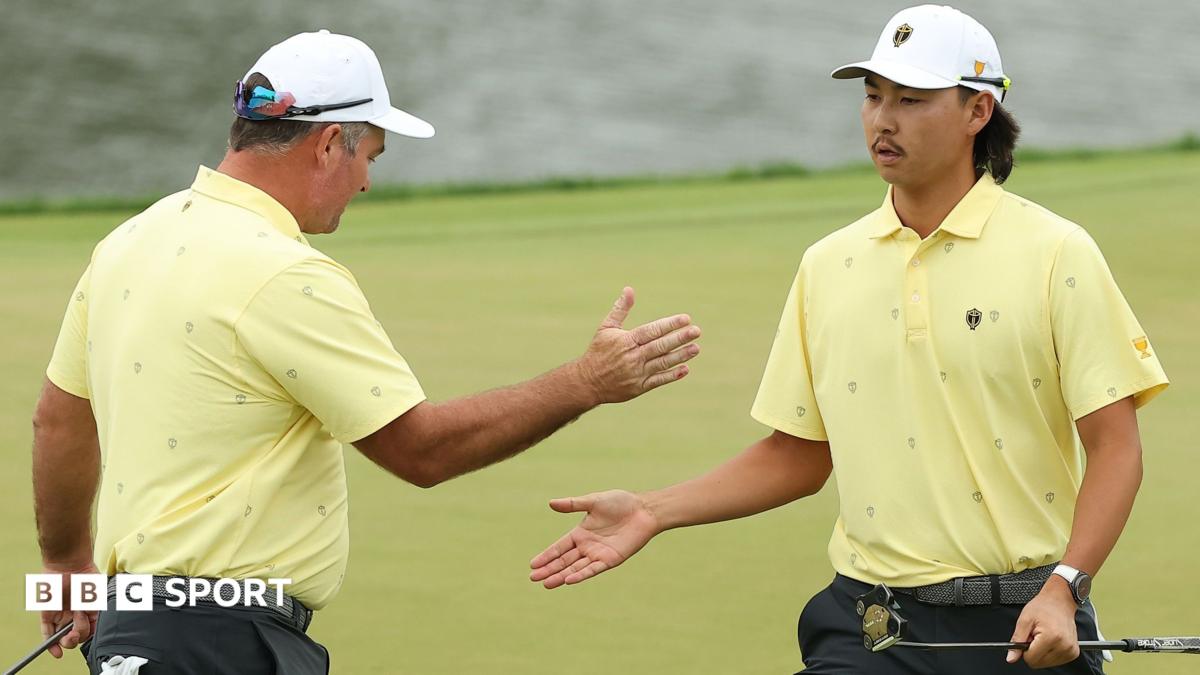
The International team produced a brilliant fightback in the foursomes on day two of the Presidents Cup to take a 7-3 lead over the United States.
The US had been 3-2 up after the fourballs on Thursday but in a stunning turnaround were beaten in all five matches in the alternate-shot format in Medinah on Friday.
It boosted their hopes of a first victory in the event since 1998 and only a second since the competition began in 1994.
Geoff Ogilvy’s side secured their first point of the day as Sungjae Im and Hideki Matsuyama saw off Russell Henley and Jacob Bridgeman 3&2.
Canadian duo Corey Conners and Nick Taylor then produced a stunning result as they held on to beat world number one Scottie Scheffler and Sam Burns by one hole.
Burns almost snatched a half when his 20-foot putt at the last lipped out.
Open champion Ryan Fox and Min Woo Lee also edged a see-saw contest with Collin Morikawa and Wyndham Clark by one hole, before Adam Scott and Christiaan Bezuidenhout defeated Justin Thomas and Cameron Young 3&2.
Tom Kim and Si Woo Kim wrapped up the day with a dominant 4&3 victory over Patrick Cantlay and Xander Schauffele.
There will be four further foursomes matches and four more fourballs on Saturday, with 12 singles games taking place on Sunday.
Speaking to BBC Sport after the fight was announced, Fury’s promoter Frank Warren repeatedly returned to one word: compromise.
“Everybody’s got to make a compromise,” the Queensberry boss said. “Tyson really compromised. He didn’t dig his heels in.
“He said, ‘Fine, wherever they want it, I’ll do it. If they want me to go to New York, I’ll go. They want it in the UK, I just want to get the fight on.”
The fighters had already agreed to the contest but the venue was a sticking point.
Warren says Netflix wanted New York, while Joshua, 36, was determined to fight in Britain. Predictably, their camps disagree over who finally got it done.
Joshua’s promoter Eddie Hearn described the push to keep the fight in Britain as a “two-man crusade”.
“AJ has turned down money to keep it in the UK,” Hearn told the Matchroom YouTube channel. “I wouldn’t be able to look people in the eye if I was part of the movement to take this to the US.”
Hearn says Joshua had specifically requested protection for a UK fight in his contract and refused to relent.
“We were under so much pressure to fold,” he added. “It was only really the support of the British public that made Joshua stand 10 toes down and say no.”
Warren sees it differently.
He says Fury, 38, could have insisted on his own contractual position but instead accepted Britain to ensure the fight did not collapse.
Anthony Joshua and Tyson Fury will contest their long-awaited all-British heavyweight fight at Cardiff’s Principality Stadium on 11 December.
The bout, more than a decade in the making, will be broadcast globally on Netflix.
BBC Sport understands the main event could take place in the early hours of Saturday morning in the UK, with organisers considering a late start to cater for audiences in the United States.
Joshua and Fury will come face-to-face at a news conference in London on Wednesday, 30 September, as the build-up begins to one of the most anticipated fights in British boxing history.
“I am inspiring a generation,” Joshua, 36, posted on Instagram. Fury is yet to comment on the announcement.
The event is being promoted as a collaboration between Saudi boxing powerbroker Turki Alalshikh’s The Ring and UFC chief Dana White.
“Two of the best heavyweights of this generation, finally in the ring together,” Alalshikh said.
“This will be one of the biggest fights in boxing history. I am very happy to make this fight happen for the fans.”
The former two-time world champions had already signed contracts for the bout earlier this year, but the date and venue had yet to be confirmed.
London’s Wembley Stadium and New York’s Madison Square Garden were the frontrunners to stage the fight, but both presented issues before Cardiff recently emerged as an alternative.
The Principality Stadium has hosted late-night boxing before, including Joe Calzaghe’s fight with Mikkel Kessler in November 2007, which began at 01:00 GMT.
Welsh Rugby Union and Cardiff Council officials welcomed the fight, saying it would reinforce the city’s reputation for staging major events and could bring a significant economic boost, although some operational details still need to be finalised.
Joshua had been pushing for the fight to take place in the UK and has got his wish.
“Forever indebted to the UK public for their support of Anthony Joshua. We couldn’t have got this over the line without you,” his promoter Eddie Hearn said.
It is notable that White, who fronts Zuffa Boxing, is involved in the promotion.
“For more than a decade, boxing fans have been clamouring for the heavyweight showdown between Tyson Fury and Anthony Joshua. Together, they bring 66 wins, 52 knockouts and multiple heavyweight world titles into the ring,” White said.
“On December 11, two of the biggest heavyweights of this generation finally collide – and the winner will take a significant place in heavyweight history.”
There was no official statement from Hearn or Fury’s promoter Frank Warren in the official news release sent by Netflix. Hearn had previously said he did not want White to be involved in promoting the fight.
The fight had initially been discussed for November but, with negotiations over the venue dragging on, it now looks set for December.
Staging an open-air stadium fight in the UK at that time carries immense risk.
While Wembley offers unmatched prestige, exposing tens of thousands of fans and a massive international broadcast operation to potentially freezing temperatures, wind and rain was deemed unacceptable.
Moving the event indoors to an arena like London’s O2 would eliminate weather risks, but at the cost of sacrificing tens of thousands of ticket sales.
The Principality Stadium’s retractable roof allows organisers to capture the immense scale, atmosphere and gate revenue of a stadium show while offering full protection from the elements.
The venue’s official seated capacity is just under 74,000, but boxing configurations allow for even larger crowds.
Joshua has already proven he can sell out the venue, having defended his WBA and IBF titles there against Carlos Takam in front of nearly 80,000 fans in 2017 before adding the WBO belt against Joseph Parker five months later.
Lisandro Brusco is an Argentine political scientist and Palestine solidarity activist with a track record in geopolitical analysis and journalism focused on Global South struggles. He has contributed as a columnist to international media outlets such as Hispan TV, El Salto, Alma Plus TV, and Huellas del Sur, and is a prominent organizer at Masar Badil. In this exclusive interview, Brusco shares his perspective on the genocide in Palestine, analyzes the expansion of Zionism in Latin America, and outlines the challenges facing anti-imperialist internationalism.
Venezuela recently announced the establishment of consular relations and “technical cooperation” with Israel. The rapprochement began with the arrival of a military-humanitarian contingent days after the June 24 earthquake. How can we explain that an army that destroys hospitals and schools and murders people in Gaza would travel to other countries to portray itself as a lifesaver?
What we saw in Venezuela after the double earthquakes, and in Colombia as well, is part of the Israeli colonial regime’s “humanitarian washing” policy. This involves sending humanitarian contingents to aid the civilian population following a natural disaster. The genocidal state of Israel seeks to restore the image it has lost, especially since October 7. On a global scale, its mask has slipped. People began to see, especially in the West, what the State of Israel was doing to the Palestinian people, even before October 7. After October 7, what we call a “televised genocide” became even more evident. Much credit goes to the press and grassroots journalists, many of whom have been killed, especially in the Gaza Strip.
Israel has lost the legitimacy it once enjoyed in global Western opinion as a democratic state, as a state constantly under attack by neighboring nations, by Arab countries. All those myths are crumbling.
“Humanitarian washing” is an attempt to say, “Here are the good guys coming to show solidarity with this population.”
How is it possible that a regime – which has destroyed more than 70% of the infrastructure in the Gaza Strip, which blows up hospitals, schools, and mosques, which has destroyed the agricultural production capacity, the very little the Gaza Strip had, which blocks the entry of humanitarian aid, could turn around and send so-called humanitarian contingents to other regions?
Some of these contingents include soldiers who have even been accused of genocide and are wanted for arrest.
How can this happen? Because governments complicit in this genocide allow these troops to enter their territories. Unfortunately, this is happening in Latin America.
This entire whitewashing mechanism is also applied on social media. In 2025, Israel invested $1 billion in PR firms, influencers, digital diplomacy, artificial intelligence, and so on. The settler-colonial regime needs to control search engines to steer information in its favor and create a permanent stranglehold on social media, so that the public consumes fake news it produces.
Venezuelan Acting President Delcy Rodríguez held multiple meetings with the Israeli military-diplomatic mission. (Presidential Press)
Israel’s influence in Latin America has been linked to the sale of surveillance technology and “combat-tested” weaponry used against the Palestinian people and on other fronts. As Venezuela normalizes its relationship with Israel, what are the main risks you see?
The Zionist lobby in Latin America operates in tandem with imperialist interests in the region. It is very important to highlight this premise in order to analyze the situation correctly and implement sound political strategies.
This is not a recent development: that organic link already existed between the Israeli colonial entity and the ecclesiastical-civil-military dictatorships that were imposed by blood and fire across Latin America in the 1960s and 1970s.
They were not individual Zionist links with each dictatorship, but with the imperial project being imposed on the region: Operation Condor, the US policy toward Latin America and the Caribbean aimed at quelling the revolutionary movements that were taking shape. Israel sold weapons and provided military training to those dictatorships.
The process continued with the so-called democratic transitions of the 1980s and gained new momentum following the US “War on Terror” offensive beginning in 2001. Today we also see this expressed in a clear strengthening of the ties between the Zionist movement, the State of Israel, and US imperialism.
This is not about particular interests, nor is there any intention to create a situation in Latin America similar to that in Palestine. Israel has no plan to build settlements in the region. Here, Zionism continues to support the capitalist imperialist interests of the United States.
We see this in the trade agreements that various governments have signed with Israeli surveillance, arms, and extractive companies.
For example, the Israeli state-owned water company Mekorot advises various provincial governments in Argentina on water management. Similarly, the Israeli company XtraLit is involved in the extraction of lithium, a strategic mineral for contemporary capitalism. Another example is Navitas Petroleum, an oil company that also extracts resources in Argentina.
The focus of these Israeli companies is the same as that of global capitalism: resources. And to ensure the extraction of resources, they need repression; that is why they have military companies, surveillance software, and so on.
Because what Israel has historically sold to the world is repressive technology tested on the ground. Who can better vouch for military tools than the genocidal regime par excellence?
Obviously, there is a political landscape in the region that facilitates all of this: governments like we have in Argentina, Colombia, Chile, and Ecuador. These are governments subservient to imperialist interests, which even create regional and global political structures such as the Isaac Agreements – signed by the Milei administration – that are set to expand to other nations. All of this goes hand in hand with military initiatives such as the Shield of the Americas.
The presence of Zionism in Latin America is a political concern for anti-imperialist activists: there is a hegemonic bloc that is coming for our resources, our territories, to plunder, pollute, and destroy our land. We must fight this bloc.
Having been on the ground in the West Bank, you describe how the machinery of home demolitions, checkpoints, and the violent expansion of settlements operates on a daily basis. How is the settler-colonial project sustained economically and militarily, and what role does the complicity of the international community play?
Israel is sustained, to a great extent, by the United States, international banks, and European powers such as Germany. Without US support, Israel would not have lasted a week in the recent war against Iran. The US Congress, driven by the Zionist lobby, had to approve emergency funds to support Israel’s military defense.
On the other hand, the settlements in the West Bank are sustained economically by state support from the Israeli regime, through subsidies – largely contributions from multinational corporations, ranging from investment funds to Zionist foundations such as the Jewish National Fund.
And the international community, such as the United Nations, has historically legitimized and normalized this occupation, not only through the resolution that allowed for the establishment of the State of Israel, but also by failing to take action against Jewish settlements in the West Bank, despite declaring them illegal.
It is worth noting that when the Oslo Accords were signed in 1993, there were just over 150,000 settlers in the West Bank. Today there are approximately 700,000. There are entire cities that are illegal settlements, with industries, schools, police stations, and so on.
The UN member states are also doing nothing. They could sever trade and diplomatic ties with this genocidal entity, but even the powers that proclaim themselves anti-hegemonic fail to do so.
The only sovereign state that has no ties to the Israeli regime and whose political goal is the destruction of this colonial entity is the Islamic Republic of Iran. It is the only country that has advocated for the destruction of the Israeli occupation of Palestine since 1948.
In short, there is no political initiative by the international community to at least halt the advance of illegal settlements in Palestine. Recently, although the systematic aggression against Gaza continues, the Zionist entity is making much greater inroads in the West Bank through its settlers.
Settler civilians – the vast majority of whom are armed – set fire to Palestinian homes and fields, kill grazing animals, and prevent Palestinian children from going to school. All of this takes place under the protection of the Israeli occupation army. The situation is desperate, and often – with a few honorable exceptions – Palestinians feel that they are on their own.
Brusco has witnessed the brutality of the Israeli occupation first-hand. (Archive)
In the West Bank, you spent time alongside local families. In the face of Israeli violence, how do the Palestinian people sustain their daily lives, their culture, and their resistance in the face of this ongoing occupation?
It is a question as important as it is difficult to answer, because from our perspective it is hard to understand how the Palestinian people sustain their daily lives, their culture, and their resistance in the face of such genocide and ongoing occupation.
As with all anti-colonial struggles, there is a fundamental factor that the colonizers fail to consider as a variable: the Palestinian people’s deep connection with their land. This goes far beyond a purely utilitarian view; it is an ancestral, cultural, social, and historical bond. That is why, despite the brutal attacks of the Zionist occupation, the Palestinian people have no intention of leaving their territory.
Getting them to leave is the primary objective of the Zionist movement: a project of ethnic cleansing that has failed to do so for over 100 years, despite Western support. As time goes on, the Israeli regime faces increasingly severe crises, while the Palestinian population remains steadfast on its land.
We must bear in mind that there is also a deliberate effort to destroy written historical records, civil registries, libraries, and universities. All of this is part of a very clear mission to erase the written history of the Palestinian people. In the face of this, memory is preserved and expressed through oral history – the stories that refugees pass down to new generations.
Therein lies the idea of return and liberation, symbolized by the key. This goes far beyond the material property that families once owned in what is now the State of Israel. The key embodies the history of a people, of a family, their tradition of struggle, their connection to the land, and their origins. It is not conceived in terms of private property, but rather from a social and historical perspective.
That is why, in every refugee camp – whether in the West Bank, Gaza, Lebanon, Jordan, or Syria – each family preserves not only the key but also its customs and identity. If we ask a third- or fourth-generation Palestinian refugee, born in Beirut, where they are from, they will immediately name the Palestinian village razed in 1948 from which their family hails. That identity remains extremely strong even several generations later. That is why there is such brutal repression against the refugee camps, because that is where the revolutionary spirit is preserved.
This tradition is sustained in large part by the daily efforts of families and, in a very special way, by the educational role of women. They are the ones who pass down oral history to children and take charge of their education, especially in contexts where children are prevented from attending school due to Israeli checkpoints or settler attacks.
Alongside this collective memory, Palestinian society draws on solidarity and community resilience. Facing daily policies of apartheid, displacement, torture, home demolitions, and mass incarceration, the community responds collectively. Committees of prisoners’ family members are organized, and when a home is slated for demolition, the community mobilizes to ensure that the family is not left homeless.
In the face of apartheid and ethnic cleansing, resistance is practiced in daily life.
In your writings, you address the essence of the Zionist colonial project and the imposition of permanent control structures in Gaza. What plans does the Israeli government have in store, together with Trump’s Board of Peace, for Gaza?
The Board of Peace is yet another of the many tools of the Israeli colonial regime. In this case, it was proposed by the United States, just as others came from the British Empire, just as the UN hatched a plan to create the State of Israel on Palestinian territory.
These are proposals imposed by the West to ensure the expansion of the State of Israel – as a Zionist project – across all Palestinian territory and beyond.
Thus, the Board of Peace is a strategic policy of the Zionist movement, a tool for administering this occupation, denying the genocide, and imposing a supposed stability built upon the total massacre of the Palestinian people.
We’ve seen this story before, even in Oslo in 1993. At that time, there was talk of building a Palestinian state, of economic growth, of foreign investment, of an economy integrated into the region, and of the creation of a so-called Palestinian Authority.
Far from that, the result was a territory that became even more controlled, more occupied, more fragmented, and more bombed. The Palestinian Authority, it is now undeniable, serves the occupation, collaborating in the repression of those who oppose normalization and the recognition of the State of Israel.
So, I’ll say it again: Trump’s Board of Peace has nothing to do with peace. It serves to uphold the policy of exterminating the Palestinian population and destroying homes, farmland, water supply systems, roads, hospitals, schools, markets, refugee camps, and so on. All the infrastructure that supported daily Palestinian life in the Gaza Strip has now been destroyed.
And this Board of Peace proposes the reconstruction of this territory. Reconstruction for what purpose and for whose benefit? Who will manage this reconstruction? Who will control food supplies and productive land? This Board of Peace goes hand in hand with a plan for the total colonization of the Gaza Strip and total control over its territory, with the possible establishment of a Palestinian governing body in the future.
But in reality, just like the Palestinian Authority in the West Bank, what it will guarantee is the occupying power’s control over that territory, along with a supply of cheap labor.
“Yankees and Zionists out of Venezuela” banner in a recent protest. (Leo Fernandes)
For years, progressive governments in Latin America firmly condemned Israel, and in some cases even severed ties. In the current climate, where realpolitik prevails and the normalization of the Zionist regime is advancing, what challenges do solidarity movements face in sustaining support for the Palestinian cause?
From a communications perspective, the role of grassroots solidarity movements with Palestine is central. We saw this beginning on October 7, 2023, when Palestinian journalists and media workers in Gaza and Lebanon became military targets of the Israeli colonial regime, in response to the threat that was beginning to emerge in the battle of ideas, in the battle for the hearts and minds of the people.
Communication work is strategic when it comes to fostering critical thinking and a revolutionary, solidarity-based practice that breaks with the commodified conception of news to uphold the basic principles of informing the public.
On the other hand, the role of international movements – both in the West and in West Asia, as well as in the countries of the Global South – is fundamental. What the Al-Aqsa Flood operation did was precisely to mobilize and awaken many peoples who were dormant and to show that the enemy is not invincible.
We can launch our own political initiatives, including military ones, to create crises in these genocidal, criminal, and occupation projects that exist today in West Asia and throughout the world.
One key question to address from a solidarity perspective is: How do we bring these national liberation resistance movements together? We must approach this from an internationalist perspective. For example, any victory for the movements organized around the Axis of Resistance that directly confront imperialism – the United States and Israel – is a victory for the peoples of Latin America who face the same enemy. This is the Guevarist conception that any defeat of imperialism anywhere in the world is a victory for the peoples.
It seems to me that this solidarity bond must be organic and strategic when considering the building of international fronts that break the capitalist domination that prevails in much of the world.
If revolutionary governments came to power in Latin America and truly severed ties with the Israeli entity, that would weaken all those fronts involved in the sale of arms, technology, etc,. and set a precedent for other peoples around the world.
And that is the way to support the Palestinian cause, which is the cause of liberation and return. We, too, must instill in public opinion and in our discussions with all organizations the conviction that Palestine will be free from the river to the sea. Today, we cannot reconcile the liberation of the Palestinian people and their return with the existence of the State of Israel.
We need to build political, organic, and genuine solidarity that focuses on projects of national liberation and collective emancipation. And it seems to me that the Al-Aqsa Flood has, in a way, established precisely that: that the best way to change the status quo is by dealing real and tangible blows to colonialism and imperialism.
Brusco interviewing Georges Abdallah, a Lebanese militant who was released in 2025 after more than four decades as a political prisoner in France. (Resumen Latinoamericano)
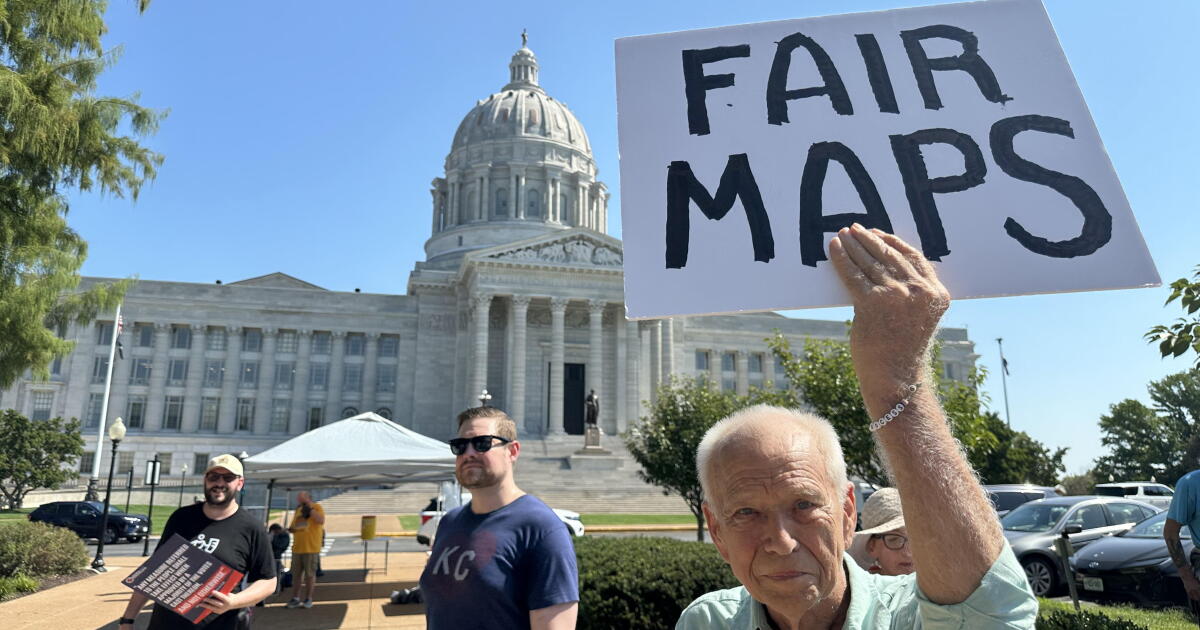
WASHINGTON — The unprecedented spate of mid-decade redistricting for the U.S. House has changed the congressional districts for one-tenth of Americans and significantly altered the makeup of at least one-fifth of districts, according to a new study.
A report by Protect Democracy found that 34.8 million people — about one in 10 Americans — now live in a different district than they did during the 2024 election cycle. And about one-fifth of all Americans now live in a district where more than a quarter of voters are new to the district compared with the last election cycle.
The findings display the stark overhaul that partisan redistricting fights kicked off by President Trump last year have caused for Americans across the country. The new congressional maps are increasingly drawn in ways that favor partisan politics over factors like geography and shared communities. That raises concerns among scholars about how the country’s hyperpolarized politics are affecting American democracy.
“If this trend continues, it really brings into question whether or not elected officials are really representing their constituents anymore, or if the voters are being randomly picked by mapmakers to squeeze out partisan advantage,” said Ben Raderstorf, a policy advocate at Protect Democracy and one of the paper’s co-authors.
The bare-knuckled partisan redistricting battle for the House began when Trump urged the Republican-controlled legislature in Texas, the second most populous state, to redraw its congressional map to help the party. The highly unusual plan prompted an immediate response from California, the most populous state, which held a successful referendum to tilt its map toward Democrats.
Other states followed, and Republicans are positioned to potentially gain nine seats because of redistricting.
The Protect Democracy report warns that such partisan tactics reduce faith in American elections generally and insulate incumbent lawmakers from public opinion. That can make political organizing more difficult, the report cautioned, potentially worsening the country’s already highly polarized politics. Both parties may also enter a “doom loop” where they embrace more aggressive and frequent redistricting efforts to avoid ceding any ground to their rivals.
In some states such as Missouri, the mid-decade redistricting has created confusion for voters about which district they live in and which candidates will appear on their November ballot. After conflicting lower court rulings, the U.S. Supreme Court last week blocked new Missouri districts backed by Trump that had been used in the primary, leaving the state to revert to its previous districts for the general election.
The report concludes with a call for new electoral structures the authors believe would eliminate the potential downsides of partisan redistricting, like proportional representation or a formal truce between the parties to implement nonpartisan districting plans.
Nine states already use nonpartisan commissions to draw congressional district lines but those provisions have limits. California, for instance, suspended its nonpartisan maps with a referendum last year in response to Texas’ redistricting measures.
Such remedies would face long odds in Congress and statehouses, but scholars believe there are few other avenues to turn down the temperature in the partisan redistricting fights.
“This is only going to get worse until somebody stops it,” Raderstorf said. “The logic of gerrymandering points inevitably towards maximalist partisan advantage on both sides. There is no off-ramp other than reform. It is the only way to break the cycle.”
José Rivera’s “Marisol” came out around the same time as Tony Kushner’s “Angels in America,” and both plays, vibrating with millennial anxieties, carry the earthly battle for human survival up to the heavens.
There’s a dramatically prominent Angel (Taylor Scott) as well in Rivera’s drama, now in an Open Fist Theater Company revival at Atwater Village Theatre. This celestial warrior has been protecting Marisol (Jade Santana) without her knowing it throughout her life. Marisol, referred to by a publishing colleague as “Miss Puerto Rican Yuppy Princess of the Universe,” still lives in the Bronx and is assailed by dangers just getting to and from work every day.
After an incident on the subway with a deranged man threatening her with a golf club, Marisol returns to her cramped, noisy apartment to learn that her guardian angel is abandoning her to enlist in the battle to replace a senile God, who (to judge by the ailing state of the universe) has grown too old for the job.
Jack Sharpe and Jade Santana in ‘Marisol’ at Open Fist.
(John Dlugolecki)
Marisol will have to fend for herself in New York, a dystopian landscape where crime is rampant, poverty is pervasive and the unhoused are threatened by roving gangs of Nazi skinheads who set them on fire for kicks.
What follows is a modern picaresque journey, in which a clever underdog has to rely on her wit and wiles to survive a corrupt and perilous world. Rivera’s play, which won an Obie Award, caught fire in its 1993 New York premiere at the Public Theater with its theatrical street sense, savage imagery and Puerto Rican-inflected magical realism.
The apocalyptic fears boiling up in the play are perhaps even more acutely felt today, with the ravages of climate change compounding each year and the threat of AI hanging an existential cloud over our heads.
But what’s most satisfying about this reencounter with “Marisol” is seeing a new generation embrace the play’s kinetic freedom. Rivera, who received an Oscar nomination for his adapted screenplay for the 2004 film “The Motorcycle Diaries,” solidified his reputation with this play after his breakthrough work “The House of Ramón Iglesia.”
Director Amanda Weier and her company approach “Marisol” as though it were a new play. The quicksilver changes of scene in this urban hellscape are handled with crisp dispatch. Subway cars and burned-out streets don’t require much in the way of elaborate illustration for the overhang of menace to be felt.
Occasionally, particularly in the early going, the blocking and Christopher Moscatiello’s sound design seemed to be working at cross-purposes. The production’s adventurousness, traversing every corner of Brad Bentz’s scenic design, can have a diffuse effect.
But the clever props design (Bruce Dickinson and Anna Krause) fills in any shoestring gaps. And Mylette Nora’s costumes artfully conjure both the underworld and the spiritual realm.
Jade Santana and Hutchins Foster in ‘Marisol’ at Open Fist.
(John Dlugolecki)
Santana’s Marisol, likable yet spiky, anchors the revival. Her interactions with the golf club maniac (Matthew Goodrich) and the scarred homeless man (Hutchins Foster) are fearfully intense, as they should be.
Grace Soens, who plays June, Marisol’s confederate at work, and Jack Sharpe, who takes on the role of Lenny, June’s mentally disturbed brother, expand this unstable world, where it’s hard to know who to trust.
“Marisol” is rife with ambiguity. One of the biggest questions is whether Marisol is dead or alive. But the surreal reality extends to the map of New York. Marisol can no longer tell if she is heading north or south. And the number of characters wielding golf clubs as deadly weapons raises the concern that the villains are interchangeable — and that the good guys have all fled.
One thing that’s certain is that Marisol will have to take up the fight for her own future. With no one left to protect her, she’s learning to look after herself and those she cares about. To become, in other words, the hero that’s needed to turn this momentous struggle around.
‘Marisol’
Where: Atwater Village Theatre, 3269 Casitas Ave, L.A.
When: 8 p.m. Fridays-Saturdays, 4 p.m. Sundays. (Check for exceptions and additions.) Ends Oct. 24