More than a year after California Atty. Gen. Rob Bonta announced indictments against 30 probation officers accused of coordinating or allowing so-called “gladiator fights” between youths inside L.A. County juvenile halls, almost half of the criminal cases are falling apart.
In recent weeks, state prosecutors dismissed charges against at least 10 of the 30 officers from the initial indictment, according to court documents and interviews with defense attorneys. An additional four officers entered into plea deals Tuesday that will end with their cases dropped after completing community service.
Attorneys for the officers and probation union officials said the prosecutions were an overreaction to a video — first published by The Times in 2024 — that showed officers standing by as several youths pummeled a fellow inmate at Los Padrinos Juvenile Hall in Downey.
“I believe the case was a reactionary case that was overcharged,” said attorney Adam Koppekin, who represents an officer whose case was dismissed. “They swept in a bunch of truly innocent probation officers who were following directives and doing their jobs.”
Two officers at the center of the Los Padrinos fight video — identified in court filings as Taneha Brooks and Shawn Smyles — remain charged with multiple counts of child abuse and conspiracy to commit willful cruelty against children. In the security video, the two officers can be seen laughing and shaking hands with the assailants. The 17-year-old who was attacked in the video suffered a broken nose and a concussion, according to a summary of his grand jury testimony contained in a motion filed in the case.
Brooks has repeatedly declined to speak to Times reporters. She showed up in court Tuesday in support of the other officers. E-mails to her attorney and a lawyer representing Smyles were not immediately returned.
Taneha Brooks, an L.A. County probation officer listed as the top defendant in the “Gladiator Fight” case, leaves the Clara Foltzridge Criminal Justice Center on Tuesday, April 7, 2026 in Los Angeles, CA. Brooks has been accused of orchestrating and allowing many of the fights between juveniles in L.A. County detention centers that sparked the California Department of Justice’s investigation. Her case will be heard in May.
(Genaro Molina/Los Angeles Times)
Bonta said when announcing charges last year that his office had identified 69 other fight incidents involving nearly 150 youths between the ages of 12 and 18. The 30 officers were indicted on 71 counts of conspiracy, battery and child abuse.
But many of those other fights were different from the 2023 video in that they lasted only seconds, involved minimal injuries and ended after probation officers intervened, according to defense motions and video reviewed by The Times.
The Times confirmed that state prosecutors dismissed charges against 10 officers in recent weeks through interviews with attorneys and two law enforcement sources who spoke on the condition of anonymity to discuss an ongoing investigation.
Court documents reviewed by The Times showed that some of the cases were dismissed “in the interest of justice” after motions filed by the state attorney general’s office. Records of those officers’ arrests were then ordered sealed, the documents show.
In a statement Tuesday, the attorney general’s office said it adjusts its treatment of defendants “based on our continued consideration of all evidence developed before, during and after criminal charges were initiated.”
“Some defendants were appropriately dismissed from the case based on the law as applied to their factual circumstances,” the statement said.
“What we are seeing raises real questions about a rush to judgment, one that has already had the effect of maligning an entire profession without the facts being fully vetted,” Curtis Chambers, president of the union that represents rank-and-file probation officers, said in a statement. “When cases begin to fall apart after being advanced so publicly, it is fair to ask whether the process itself was flawed from the outset.”
Motions to dismiss charges in the case paint some of the officers as rookies deferring to their superiors. Defense attorneys for others questioned why state prosecutors charged officers who failed to intervene in fights that were in effect over before they began.
The Times reviewed video of one incident that showed a fistfight between two youths that lasted 20 seconds. In the brief dust-up, the teens throw a series of wild hooks at each other with few of the punches actually making contact. The officer charged in that incident briefly paused before joining a crowd of other officers who pulled the two apart. That officer, whose case has since been dismissed, was charged with two counts of willful cruelty to a child.
The indictments — along with a civil lawsuit and grand jury testimony referenced in motions to dismiss the charges — portray Brooks and Smyles as the main drivers of the fights.
They told other officers who were present, all of them rookies in the juvenile halls, “not to say anything, write down anything, and just watch when youth fights occurred,” according to the charges.
One juvenile told grand jurors he was “incentivized to fight” by Brooks and claimed both officers “rewarded him for fighting by giving him extra snacks,” according to a motion to dismiss filed on behalf of one officer.
According to the court filing, the juvenile told the grand jury that Brooks awarded special jobs to kids she favored.
“He testified Ms. Brooks would pick the ‘KP’ or kitchen patrol person based upon that person’s fighting prowess,” the motion said.
A Times investigation last year found the practice of probation officers rewarding teens who beat up other youths in custody was a problem that predated the “Gladiator Fight” scandal, with one attorney calling it an “open secret.”
Jonathan Evans, who represents Officer Isaiah Goodie, said his client was specifically told by Brooks and Smyles not to break up fights.
“They were seeing that these kids from different neighborhoods were going to fight anyway and they were finding a way to get it out of their system,” Evans said of the senior officers’ training of his client.
Two law enforcement officials told The Times that Brooks and Smyles had been investigated for allowing fights to happen years earlier while assigned to Central Juvenile Hall. It was unclear what, if any, discipline they faced.
One of the cases that will be dismissed after a plea agreement involved a high-ranking officer, 54-year-old Ramses Patron. He was charged with child abuse for failing to stop a fight that lasted less than 10 seconds, according to a motion to dismiss. His attorney, Tom Yu, argued that the state had wrongly accused many officers of planning fights that either occurred spontaneously or were arranged by Brooks and Smyles.
Patron must serve 40 hours of community service and then his case will be dismissed. Yu said his client has served the Probation Department for 30 years with a “spotless record” and the indictment upended his life.
“There’s no words to describe what my client and his family went through,” Yu said.
Indicted probation officer Ramses Patron, center, stands with his attorney Tom Yu, right, pleading no contest in the “Gladiator Fights” case.
(Genaro Molina/Los Angeles Times)
Advocates for the officers whose cases were dismissed said they had suffered serious harm to their finances and reputations, with each placed on leave without pay for more than a year.
“County employees are entitled to due process. To the extent that charges are reduced or dismissed, employees may have the right to seek reinstatement or back pay,” said Vicky Waters, communications director for the Probation Department.
Several defense attorneys credited the state prosecutors for scrutinizing the charges more thoroughly and ultimately deciding that some of the cases did not pass the smell test.
“Everybody would love an apology letter,” said defense attorney Bart Kasperowicz. “They did this giant witch hunt sweep and effectively changed the lives of 30 people and all the people that depend on them.”
Former WBC champion comes out on top in the closely-contested fight against his British opponent in London.
Published On 5 Apr 20265 Apr 2026
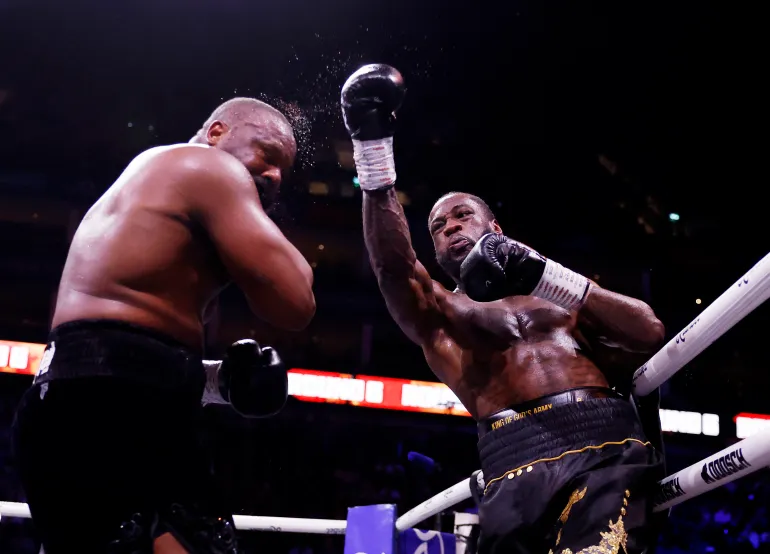
Former world champion Deontay Wilder sent Derek Chisora into retirement by edging their engaging yet chaotic heavyweight fight in London, United Kingdom.
The boxers, aged 40 and 42 respectively, threw hopeful knockout punches and barely jabbed. Both slipped and fell to the canvas frequently during the bout at the O2 Arena on Saturday.
Wilder got the only knockdown in the eighth round, sending Chisora through the ropes, but the American was deducted a point in the same round for pushing. Chisora was rattled, but Wilder did not press his advantage.
Wilder dominated the early rounds, and Chisora rallied late. The judges were split in their scoring: Wilder received scores of 115-111 and 115-113, and the third picked Chisora by 115-112.
Deontay Wilder throws a punch at Derek Chisora [Peter Cziborra/Action Images via Reuters]
Wilder said the fight was fun and suggested he didn’t want to knock out Chisora.
“Tonight, I looked out for him. I want him to live for his kids,” he told broadcaster DAZN. “It’s time for us to take care of each other.”
Chisora said in the build-up that the fight was to be his last, but the Londoner was reluctant to confirm it afterwards.
“I’m going to go home with the boss lady and see,” he told DAZN. “I’m going to go home and drop the kids, do the school run.”
It was the 50th fight for both in the professional ranks.
Wilder improved his record to 45-4-1. The WBC titleholder from 2015 to 2020 came to London having lost four of his last six fights.
Chisora’s record since 2007, when he turned pro a year before Wilder, dropped to 36-14. He lost his only two title shots against Vitali Klitschko in 2012 and Tyson Fury in 2022.
“Anything can happen in a boxing match. It depends how Harper approaches the fight. If she comes out and genuinely tries to win the fight, she will walk on to something. If she goes super negative, it will go a bit later. But I do think Caroline will stop her.”
Prediction – Dubois
Mikaela Mayer – American three-weight world champion:
“I think Harper is a good boxer. You know she’s going to work hard, will do her best and always puts on fights that everyone wants to see.
“She’s challenged herself against some top names so you have to respect her for that. But I don’t know if she has the pedigree to beat Dubois, who has an extensive amateur career and is a very technically sound boxer.
“So if I had to put my money on it, I’d put it on a Dubois win but either way, it’s going to be a great fight and I’m looking forward to it.”
Prediction – Dubois
Shannon Courtenay – bantamweight boxer:
“It comes down to discipline under pressure. The fighter who controls the tempo and doesn’t get emotional will win.”
Before the start, Yorkshire confirmed that Joe Root will play three Championship matches and fellow England batter Harry Brook two games as their preparations for the Test summer.
Glamorgan gave debuts to ex-Somerset batter Sean Dickson and New South Wales paceman Ryan Hadley, while Yorkshire’s new faces are Western Australia batter Sam Whiteman, born in Doncaster, and Dutch all-rounder Van Beek. Australian paceman Jhye Richardson was not pressed into early service.
Intermittent rain, combined with a chilly wind, meant that play did not begin in grey, windy and inhospitable weather until 16:15 BST.
Asa Tribe and Eddie Byrom, a rare bespectacled pair of batters, formed a new opening partnership for Glamorgan and Byrom hit his first ball back in the team to the square-leg boundary.
But Ben Coad beat him several times before forcing him to edge to slip where Finlay Bean clung on well.
In the next over, England contender Tribe feathered White through to Bairstow for 11, and the same combination accounted for Dickson without scoring as Bairstow took a good grab in front of slip.
The chaos continued as new captain Kiran Carlson flicked White to leg slip where Dom Bess clung on to take a catch above his head.
Despite some tentative shots early on, Ingram and England Lions all-rounder Kellaway settled in to stop the slide against the change seamers, with Ingram slapping Van Beek over point for the first Glamorgan six of the season.
The half-century partnership marked the first stage in Glamorgan’s recovery before Bairstow’s early exit for treatment, with Bean taking the keeper’s gloves.
Glamorgan survived a second blast from White and a token over of spin from Bess to reach the close with some batting resources intact, although Yorkshire will be more content with their work.
Weekly insights and analysis on the latest developments in military technology, strategy, and foreign policy.
As Epic Fury grinds into a second month, the Air Force continues to rely heavily on its fleet of aerial refueling tankers, the majority of which are over 60 years old, to gas up aircraft attacking Iran and those still pouring into the Middle East. The strain on the force has been exacerbated by the loss of a KC-135 Stratotanker and damage to another after a collision over Iraq and several more tankers being destroyed and damaged on the ground by Iranian long-range weapons. Meanwhile, given this large commitment of aircraft and personnel, there are questions about how the U.S. tanker fleet can respond to a fight in the Pacific should one break out tonight. To get a better sense of that, we spoke to retired Air Force Col. Troy Pananon, who flew tankers and commanded a tanker wing.
In the second installment of our two-hour, wide-ranging exclusive interview – the first centering on Epic Fury’s strain on the force – Pananon offers insights into whether there are enough tankers and crews to sustain combat in two theaters more than 4,000 miles apart, the challenges of flying long distance over contested airspace and what, if any, countermeasures tankers should be given to survive.
Some of the questions and answers have been lightly edited for clarity.
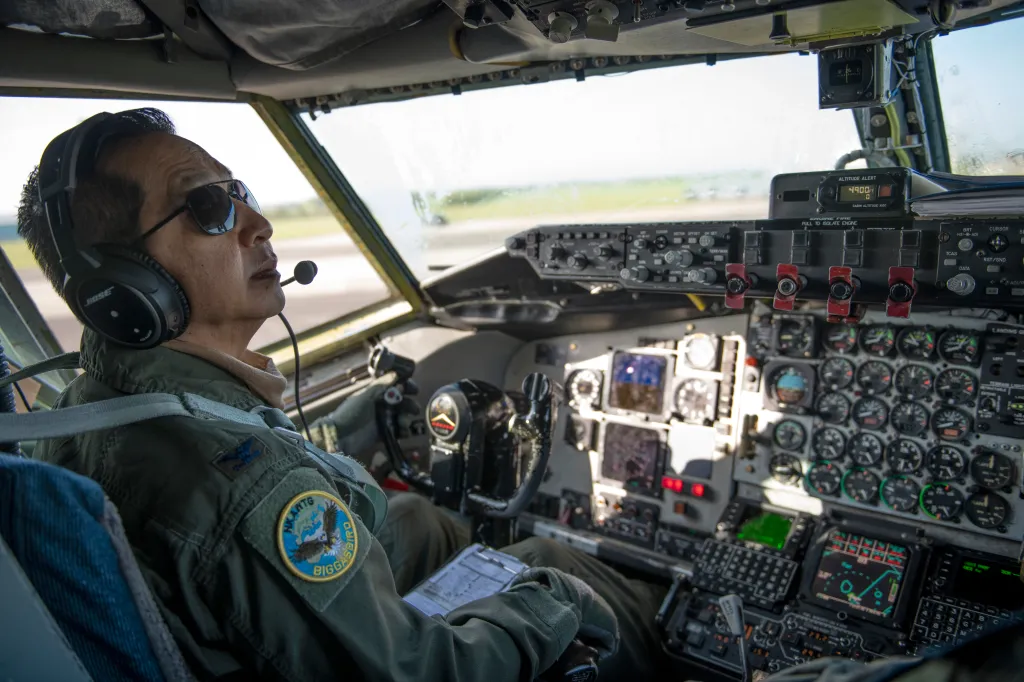
Col. Troy Pananon, 100th Air Refueling Wing commander, prepares for take-off aboard a KC-135 Stratotanker at RAF Mildenhall, England, April 23, 2020. (U.S. Air Force photo by Tech. Sgt. Emerson Nuñez) Tech. Sgt. Emerson Nunez
Q: Given the heavy use of aerial refueling for Epic Fury, how concerned are you about the ability to fuel a fight in the Pacific, if one should break out tonight or in the near term?
A: There is a high demand on the tanker community. We retired the KC-10s, so that is a void that can’t be filled as quickly as we would like. But the tanker force is robust, and even though we have a contingency of aircraft in the Middle East region and parts of Europe, we still have tankers that are all over the world, to include the Pacific. Kadena has its own wing of tankers there. And so the ability for our tanker fleet to pivot or to surge and scale to another region – there is not another military out there that can do it – but it puts that demand on the total force.
I think that we could do it, sure, but it would put a significant strain if we were trying to operate in two different parts of the globe, especially if it was involving major combat operations. And not to mention, there’s an element of protecting the homeland as well. Tankers are required to do that too. So you can’t just say, ‘Oh well, we’ll deplete the entire force and focus abroad.’ There’s an element required to support homeland operations as well.
A KC-10 Extender assigned to the 908th Air Refueling Squadron lands after conducting the airframe’s final combat sortie before inactivation at Prince Sultan Air Base, Kingdom of Saudi Arabia, Oct. 3, 2023. The flight served as a capstone for the KC-10 after over 30 years of service within the U.S. Air Forces Central (AFCENT) Area of Responsibility. By September 2024, the U.S. Air Force’s fleet of KC-10s will be decommissioned and gradually replaced by the KC-46 aircraft. (U.S. Air Force photo by Tech. Sgt. Alexander Frank) A KC-10 Extender assigned to the 908th Air Refueling Squadron touches down at Prince Sultan Air Base, Oct. 3, 2023. U.S. Air Force photo by Tech. Sgt. Alexander Frank
Q: Does the need to do all those missions at once worry you?
A: At my level, when I was at the tactical level or the operational level, I always felt that we were adequately supported. There was certainly a stressor involved with trying to manage all that. But whenever there was a concern, you always would go up to your higher headquarters, and say, ‘Hey, here’s the current situation. We don’t need help now, or we do need help, and this is how you can help.’
It was their ability to resource those needs that really made my job easier and made the jobs of those who worked with me easier, knowing that they had support from above. But it’s not an unlimited resource. It’d be hard for me to say what would be required if we needed to pivot, or if we needed to support two operations in different parts of the world. But I would say that we were certainly capable of doing it.
I just don’t know the duration of that, and unfortunately we always tend to think of these things in short-term snippets. But there are long-lasting impacts to things where high operations tempo means higher strain on the resources, higher strain on the aircraft.
Looking at the long view, if you have to increase your operational tempo on a particular platform versus what you had planned for that, it is going to put a strain on the acquisition process. It’s going to put a strain on the supply system. All these things, they do have an impact, not only in the short, but in the long-view as well.
Tech. Sgt. Jessica Dear, a 507th Aircraft Maintenance Squadron crew chief, tracks the amount of fuel being loaded into a KC-135 Stratotanker aircraft. (U.S. Air Force photo by Senior Airman Katriel Coffee) Airman 1st Class Katriel Coffee
Q: Considering how long it took to build up forces in the Middle East, how concerned are you about being able to fly long distances to protect Taiwan from attack by China? Can the current fleet sustain a major conflict with China, where fighters will need to fly thousands of miles on each sortie just to get to the effective fighting range?
A: I can’t completely comment on this for various reasons. There are certainly war plans in place. There have been studies that have taken place that are certainly higher classification levels, and we can’t discuss in this session or in public, right? It’s been looked at. I would say that there are plans in place that would prove that we could support operations in the Pacific region.
Is it complex? Yes. Does it require certain things to be successful? Yes, There are certain dominoes that need to fall into place in support of an operation like that.
Maintainers from the 718th Aircraft Maintenance Squadron attach a drogue to a KC-135 Stratotanker at Kadena Air Base, Japan, Aug. 25, 2023. (U.S. Air Force photo by Airman 1st Class Tylir Meyer) Staff Sgt. Tylir Meyer
Q: But from a tanker pilot and wing commander perspective, what are the challenges of flying over these long distances through a very robust Chinese anti-aircraft, area denial environment?
A: I like to use the term, it’s a young man’s or woman’s game. It’s fatigue that is the enemy here, because when you have to operate at these distances and for the duration that is involved, it is certainly a physical stressor. Often, we’re operating in multiple time zones, and we’re not probably getting adequate rest, and that’s a cumulative effect, as you are asked to operate for these long durations.
I’ve been on a cruise where we operated for 24 hours straight, and to do that over a sustained length of time – I don’t know that you can do it. In order to do that, it means you need more personnel. And so where an operation might be successful with – and I’ll just use easy numbers here – with 100 personnel that don’t have to range like you would in the Pacific or in Europe or even in the Middle East, depending on basing. Well, you’re probably going to need maybe twice as many to operate in the Pacific, because of the human element. You don’t want personnel to be fatigued to the point where they are not operating in a safe manner, and so you need to give them the appropriate rest.
It goes all the way down the line, from air traffic control to ground personnel to maintenance to logistics. You need more personnel to support that effort at the distances and the range that you’re talking about. And the Pacific is a challenge, and it would require more personnel to just operate the aircraft, let alone the logistics tail required to support those aircraft. It is a significant challenge. And I’ve certainly endured operations where you bring in multiple energy drinks or keep the coffee brewing for long periods of time.
Aircraft propulsion technicians with the 6th Aircraft Maintenance Squadron install an engine on a KC-135 Stratotanker at MacDill Air Force Base, Florida, March 28, 2023. Replacing this engine was a 72-hour task that required a team of highly trained maintainers with a keen sense of attention to detail. (U.S. Air Force photo by Senior Airman Lauren Cobin) Staff Sgt. Lauren Diaz
Q: What about the addition of robust Chinese air defenses into that equation? How much additional concern does that raise?
A: Tanker aircraft are not inherently survivable from enemy aircraft or missiles. There are upgrades or updates that could help in certain ways. The [AN/AAQ-24(V)N Large Aircraft Infrared Countermeasure] LAIRCM is one of those technologies that would certainly help some of those aircraft. But, again, that means that we’ve got to stay out of harm’s way. Typically, we’ve got to set our tanker orbits up further away from the enemy’s reach and their engagement zone.
It is a team effort, right. The role of our strike aircraft and joint partners to eliminate that threat is probably more important than our ability to add protection to these aircraft. I think they go hand in hand. It would be nice for tankers to have protective measures in place to make sure that they are survivable if we need them to operate in a contested environment, but in their current state, I would be definitely worried about pushing tankers closer to that engagement zone, because they don’t have the survivability or protections that maybe even aircraft like the F-22 or F-35 might have.
We don’t have chaff or flares. We don’t have other measures that would protect our fleet, and so I think it’s the role of the warfighting commander to protect those assets and to ensure that they’re operating in a safe zone. And if they’re moved closer to that Weapon Engagement Zone, then they have the ability to retrograde or the connectivity and communication ability to ensure that those tankers can move back or retrograde away from the threat. There are some technology solutions out there, but I don’t know if that’s the sole solution. It is a comprehensive solution that is required to kind of go after that challenge.
U.S. Air Force Capt. Nick ‘Laz’ Le Tourneau, F-22 Raptor Demonstration Team commander and pilot, releases flares during an aerial demonstration at the 2025 Marine Corps Air Station Miramar Air Show in San Diego, Sept. 28, 2025. (U.S. Air Force photo by Staff Sgt. Lauren Cobin) Staff Sgt. Lauren Diaz
Q: How difficult is to get, say, an F-35 into effective combat range and to fuel them up outside of the Chinese Weapons Engagement Zone?
A: It’s layers, right? In order for those aircraft to move into those high threat areas, it will probably require preparation of that environment. I think there are other elements of our military that would go to great lengths to create lanes or passageways to allow those aircraft to move closer to wherever they’re trying to get to their objective.
The preparation of the environment that’s required probably is not the F-35 – the shorter range aircraft. There are other elements that would be used to prepare certain areas to allow our aircraft to move closer. There are other aircraft that would probably be capable of penetrating those air defenses and eliminating some of those threats.
Q: Which aircraft?
A: You have highly capable B-2A Spirit bombers and maybe in the future, B-21 Raider aircraft. There’s other non-manned platforms that I would assume could be used to help eliminate some of the threat, but not all of it.
The Chinese have a very, very robust air defense environment and system of systems in place. But I think that we as a military certainly have capabilities that could give us moments of opportunity. And I think once we find an opportunity, our trained airmen and joint force can leverage that. I don’t think that we want to go toe-to-toe right now. I don’t think we ever want to go toe-to-toe with an adversary like China. I hope that we don’t have to do that, but I know that our joint force is preparing for that if it ever happens.
A U.S. Air Force B-21 Raider stealth bomber undergoing a test flight. (USAF)
A: Prevention is the best cure here. Not putting them in harm’s way would be the best way for them to survive. But I think it would be certainly comforting to know that they have onboard systems or bolt-on systems that would help them at least have a chance against some of these threats. There are certainly a lot of opportunities out there. I’ve heard of efforts where you would outfit certain aircraft with certain defensive measures.
If you got into a situation and we needed to do it, I think the KC-46 Pegasus is a great platform to utilize for this, because it has so much advanced avionics architecture already on board. Trying to do it on the KC-135? That is because you’re trying to answer a scale problem. We don’t have enough KC-46s and we need more. And I know that they’re trying to procure more and and they’re coming, but they’re not to the scale that we have with the KC-135. And so the problem with trying to work with that is that now we’ve got an older airframe, and we’re trying to bolt on new technology that may or may not be compatible, and so we’re gonna have to upgrade other elements on board the aircraft, just to make sure that it can work.
We have an old aircraft. We have some things that have been updated, like the avionics have been updated. But is it the same technological advancement as what is going to be required to bolt on to protect that particular aircraft? Well, no, because it probably – from a data infrastructure set – is not going to operate at the same speed. It’s not going to operate in a similar fashion. There’s some latency that gets introduced if you’re trying to onboard new technology with older technology.
KC-46 Pegasus aerial refueling tankers. (USAF)
Q: What about adding electronic warfare pods, CCAs or mini interceptors?
A: I think nothing is off the table. I think those are fantastic ideas, and I know that there are people that have probably experimented or modeled to and then probably proven that it’s a successful option. But you have to resource it. We have a lot of mouths to feed here – it’s not a limitless pot, and there’s the research and development and then product production of that.
It doesn’t happen overnight and with every new technology that is offered to the warfighter, it is a challenge to make sure that all the personnel are trained and learn how to leverage these resources, not just individually, but collectively, as a team, as an organization, to really harness that and make sure that anything that’s introduced is successful.
You can’t just say, ‘Oh, well, look, I got this bright, shiny object. I’m just going to bolt it onto this aircraft, and everything is going to be working beautifully.’ No, there’s a whole host of problems that creates because you don’t have personnel that are all collectively trained, that have all operated with it, that have all that is integrated with it, that ensures that when you add this to that platform, that it is operating the way it was designed or intended to be operated. You can’t just snap your fingers and think that it’s gonna work right away.
A view of one of the repurposed Multipoint Refueling System (MPRS) pods under the wing of a Utah Air National Guard KC-135. (MSgt Nicholas Perez/Utah Air National Guard)
Q: As a flight commander, would you like to have been able to have air-to-air interceptors under the wings of your tanker?
A: The one thing about airmen, and I would say Air Force in general, is that we tend to like new technologies. We’re not afraid of technology in general. We embrace it. The people that we attract into our service are people that embrace technology, that are innovative themselves. So, yeah, sure if I could roll back time, and that technology was introduced to me, I’d be first in awe. And two, I’d say, ‘Okay, well, how can we make this work? How can I integrate? How can I be able to leverage that and exceed expectations, and ensure that we meet the potential for that new technology?’
A graphic from 2019 describing “tech enablers” for various AFRL projects, including the MSDM’s seeker. (USAF)
Q: There’s been a great deal of discussion about the importance of improving communications connectivity on the tanker fleet. We’ve already talked a little about it. Why is connectivity an issue? And what’s your advice to improve it?
A: Connectivity provides us situational awareness, and that situational awareness improves our ability to operate. It’s a team effort, and in order to do things collectively as a team, we have to be connected. And then the challenge is deciding, well, how should we connect? What sole-source platform should we be all collectively using because it does us no good to be connected as an Air Force, but not be able to talk to a Marine Corps or Navy, or Army or a coalition partner.
And so the challenge is not only do we need to find the right technological solution, we have to ensure that it is able to integrate and communicate harmoniously with all our other partners, because it is not just an Air Force by itself, game. It is a joint force coalition game in terms of what we’re doing right now and what we’ll do in the future.
I know that it’s a huge discussion about, okay, what platform do we use? How do we get it to our airmen right away? How do we make sure that it can integrate with the joint force? And then, ok, now we’ve got the solution. Where’s the money, right? There are so many elements to ensure that we can do this at scale and at speed. I trust that our leadership has been advocating with Congress and with other elements of the administration to get this in place. I don’t know how long it’ll take, but it certainly will help from a situational awareness perspective.
The Roll-On Beyond Line-of-Sight Enhancement (ROBE) package seen here is among the add-on communications and data-sharing capabilities that has been available for use on the KC-135, as well as other aircraft, for years now already. USAF
Q: Is there any particular system that you think would help improve situational awareness?
A: I think there are some age-old systems that have been in place. Link 16 architecture comes to mind. There are probably other modern solutions out there, but I don’t want to say that ‘this is the right system,’ because I’m not in the position to really argue for that. There are some systems out there that help, that are already in place, that would help us immensely, if we were to have that particular system across all platforms, right where the AOC [air operations center] can talk directly to the tanker element, who is also receiving data from other elements in the air, whether it be fighter aircraft, bomber aircraft, reconnaissance aircraft, and then, feeding that through our platform – maybe a KC-46 – back to the AOC, instantaneously. I know there are efforts out there to enhance that pipeline, but it’s not my place to say one system’s better than the other.
I just know that’s the panacea. That’s where you have to get to. You have to get to where the shooter is, all the way back to where the decisions are being made, and harness that data and then allow that data to help inform a decision, so that now you can give that decision over to the activity that’s operating. And so this constant cycle, and they use the term OODA loop, right? This constant cycle of observe, orient, decide, act – it’s got to happen faster than the enemy cycle for us to be successful. Connecting those points with technology can help us do that faster.
A stock picture of a KC-46A refueling an F-15E Strike Eagle. USAF
Q: You’re in the aircraft, you’ve got a receiver coming up. You don’t necessarily know where everything is. How does it help a pilot and the crew to have better connectivity?
A: Let me just put a hypothesis out there as an example. Say we have a receiver that was coming up, and they’ve got a really good understanding of where the threat rings are, what enemy positions are, where our friendly forces are, and that’s all in a data packet on board their aircraft. And if you don’t have a secure connection over the air, but you do have a secure connection once you’re connected with the boom, that data packet can then be uploaded to our aircraft and then displayed for our airmen to see, right? Because now, it’s like that whole moving map idea, like you may have a navigation system in your car that says, ‘hey, where’s the nearest gas station?’ and then it pops up and it tells you where the nearest gas stations are.
Same thing can be said if you’re operating a tanker aircraft, and now you get a data packet that gives you the full display of what the battlefield looks like in front of you. You now know, okay, here’s where I want to go, and here’s where I don’t want to go. So, if the technologies in place or are available now, it’s just a matter of connecting the dots. And this is a huge situational awareness improvement, if we can get to the point where the tanker crew on board has the ability to see exactly what is taking place, where the threats are, where the green zones are, where it’s safe to operate. And if they can do this in a secure manner that’s impenetrable by enemy forces, that is where we need to get to.
In our next installment, Pananon talks about drone incursions, the challenges of creating a new tanker fleet and whether single-pilot operations are a good idea.
President Trump signed an executive order Tuesday purporting to place new federal controls on voting by mail in states such as California, repeating his long-held but unsubstantiated claim that mail-in ballots are a source of widespread fraud in U.S. elections.
California leaders immediately responded with promises to fight the order in court. They said mail ballots are a safe and secure method for voting relied on by millions of Californians, that Trump’s order infringes on the state’s constitutional right to administer elections as it sees fit, and that it amounts to an “illegal power grab” ahead of midterm elections in which his party is poised to suffer substantial losses.
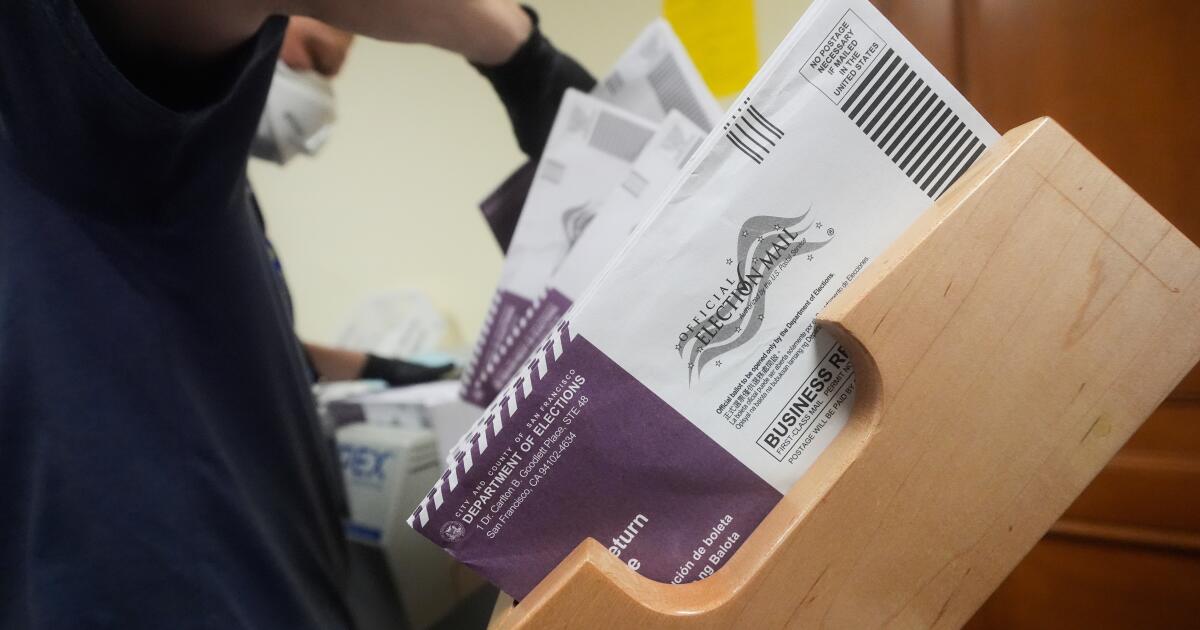
The order directs the United States Postal Service to take control of mail balloting by designing new envelopes with special bar codes that will allow the federal government to ensure that such ballots go out only to eligible voters, and that only eligible voters return such ballots.
It requires states to submit to the USPS process if they plan to use the federal mail system for sending or receiving ballots, and to submit to the USPS lists of eligible voters in advance of such ballots passing through the mail system.
It also requires the Department of Homeland Security, U.S. Citizenship and Immigration Services, and the Social Security Administration to “compile and transmit to the chief election official of each State a list of individuals confirmed to be United States citizens who will be above the age of 18 at the time of an upcoming Federal election and who maintain a residence in the subject State.”
Those lists will be drawn from federal citizenship and naturalization records, Social Security records and “other relevant Federal databases,” and the USPS will be barred from transmitting ballots that do not match those lists, the order says.
“Secure ballot envelope identifiers provide a reliable, auditable mechanism to enforce Federal law without unduly burdening or infringing on the rights of eligible voters,” the order reads. “Unique ballot envelope identifiers, such as bar codes, enable confirmation that only citizens receive and cast ballots, reducing the risk of fraud and protecting the integrity of Federal elections.”
Trump — who recently voted by mail himself in Florida — framed the order as a solution to “massive cheating” in U.S. elections currently, which he did not back up with evidence.
“The cheating on mail-in voting is legendary. It’s horrible what’s going on,” Trump said.
“He’s going to make sure that mail-in ballots are safe secure and accurate,” said Commerce Secretary Howard Lutnick, who appeared alongside Trump and whose agency the order requires to be involved in the coordination of the new voting measures.
California officials blasted the president for attacking and undermining election integrity, rather than shoring it up, and said they would fight the order from taking effect.
“President Trump’s Executive Order marks a dangerous and unprecedented escalation in his ongoing attacks on our elections. The power to regulate elections belongs to the States and to Congress — he has no role to play. We blocked his previous Executive Order on elections in court, and we are prepared to stop him again,” said California Atty. Gen. Rob Bonta.
“The reality is that President Trump and Congressional Republicans see the writing on the wall — that they are likely to lose in the upcoming midterms — and they are pushing to make it harder for people to vote,” Bonta added. “We won’t stand idly by.”
Sen. Alex Padilla (D-Calif.), in a statement to The Times, said Trump’s actions were “a clear and present threat to our democracy,” that he will “use every tool I can to stop him,” and that he expects “immediate legal challenges in order to protect our free and fair elections.”
“Instead of focusing on lowering the cost of energy, groceries, and health care, Donald Trump is desperately attempting to take over and rig our elections and avoid accountability in November. This executive order is a blatant, unconstitutional abuse of power,” said Padilla, the ranking Democrat on the Senate Committee on Rules and Administration.
“The President and the Department of Homeland Security have no authority to commandeer federal elections or direct the independent Postal Service to undermine mail and absentee voting that nearly 50 million Americans relied on in 2024,” he said. “A decade of lies about election fraud does not change the Constitution.”
“In the middle of an unauthorized war abroad and an escalating authoritarian crackdown by ICE here at home, Trump is attempting another illegal power grab,” Padilla said.
A vast majority of Californians vote by mail. In the state’s 2025 special election on Proposition 50, the state’s mid-decade redistricting measure, nearly 89% of votes were cast by mail, according to California Secretary of State Shirley Weber’s office — or nearly 10.3 million out of about 11.6 million votes cast.
Trump has long criticized mail-in ballots — without evidence — as a source of fraud and a factor in his losing the 2020 election to President Biden, which he still contends was illegitimate.
Election experts, voting rights advocates, local elections officials and other California leaders have all dismissed those claims as unfounded and inaccurate. They have also been preparing for Trump to act to curtail such voting.
Padilla previously warned colleagues that he would force a vote on any effort by Trump to declare a national emergency in order to seize control of this year’s midterm elections from the states, forcing them to either co-sign on the power grab or resist it.
Critics of mail ballots have also been actively working to end or curtail the practice. Just last week, the U.S. Supreme Court heard arguments in a case in which the Republican Party challenged a Mississippi law that allows ballots to be accepted and counted if they arrive up to five days after election day.
During those arguments, the court’s six conservatives sounded ready to rule that federal law requires ballots to be received by election day in order to be counted as legal.
Weber, California’s top elections official, has warned that attacks on mail-in voting risked undermining a system the state has spent years building around universal mail voting.
Trump’s executive order is the latest front in a years-long campaign he has led attacking the integrity of U.S. elections — which has contributed to a steep decline in voter trust in U.S. elections.
On Tuesday, Trump said his order was drafted by “great legal minds,” and will survive any legal challenges unless “rogue” judges rule against it inappropriately.
“We want to have honest voting in our country,” he said.
Rick Hasen, an election law expert and director of the Safeguarding Democracy Project at UCLA Law, argued otherwise in a post Tuesday, noting that an earlier executive order purporting to place new federal controls on elections was blocked in court, and “this one is likely to fare no better.”
“To put this in plain terms: the order would use the USPS, which is not under the direct control of the President, to interfere with a state’s lawful transmission of ballots. If the state does not comply with these rules, federal law would purport to interfere with a state’s conduct of its own elections,” Hasen wrote. “The President does not have the authority to do this.”
‘We’re going to be vocal about it, we’re going to make noise until we’re heard,’ South Africa’s gold medallist says.
Published On 31 Mar 202631 Mar 2026
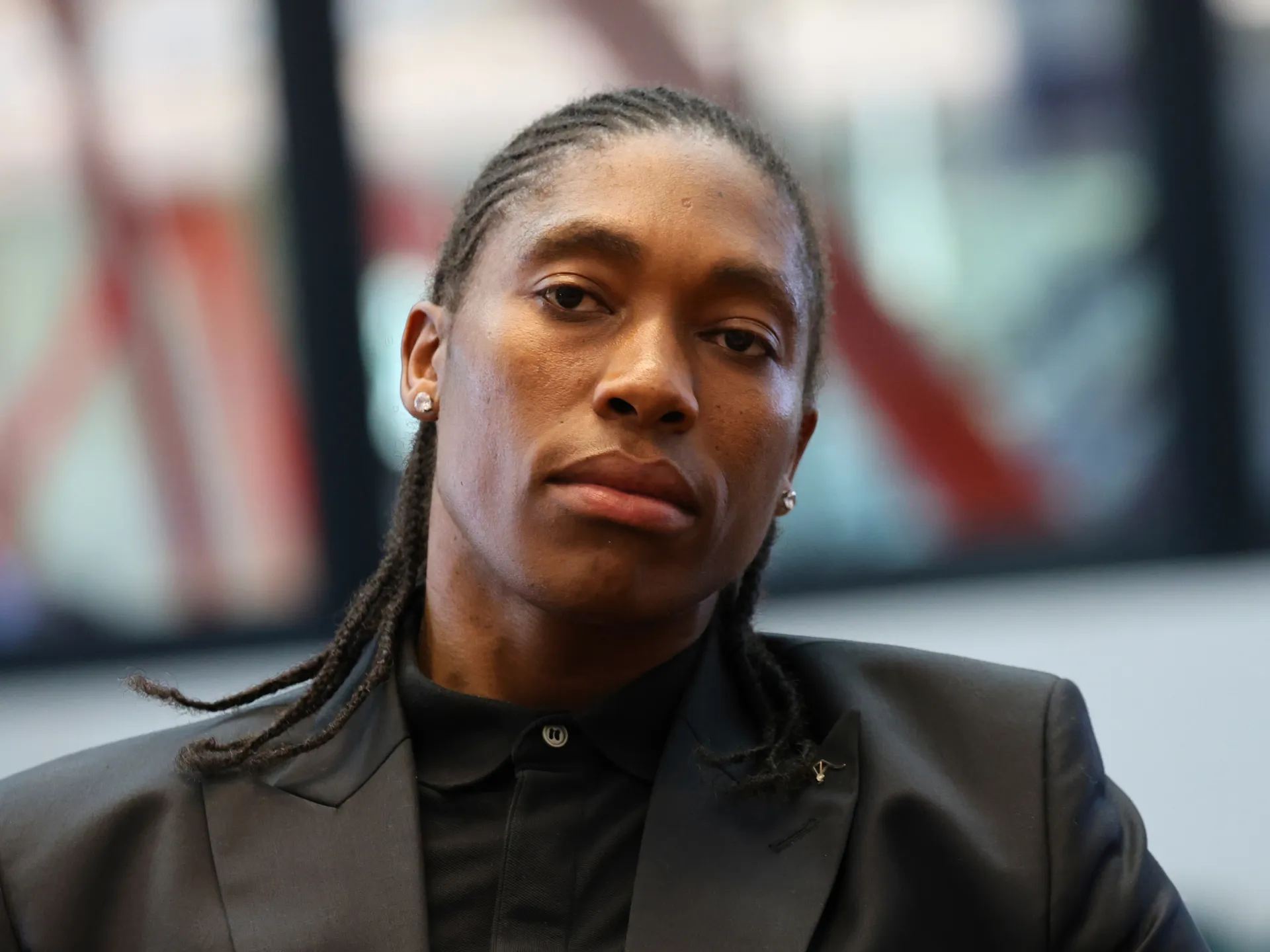
Double Olympic champion Caster Semenya says she intends to fight against the introduction of gender testing for the female category at the Olympics, a policy the South African insists “undermines women’s rights”.
The International Olympic Committee (IOC) unveiled the policy last week and it is expected to become a universal rule for competitors in female elite sports after years of fragmented regulation that led to controversy.
Recommended Stories
list of 4 itemsend of list
Semenya has been at the centre of one of those controversies due to her long-running legal case against World Athletics over her right to compete on the track despite having a Difference of Sexual Development (DSD).
“We’re going to be vocal about it, we’re going to make noise until we’re heard,” the 35-year-old athlete told the Reuters news agency on Monday.
“Now it’s a matter of women standing for themselves to say, ‘Enough is enough.’ We are not going to be told how to do things.
“If really we are accepted as women to take part, why does my appearance or my voice, why do my inner parts need to be a problem to take part in the sport?”
DSDs are a group of rare conditions involving genes, hormones and reproductive organs. Some people with DSDs are raised as female but have XY sex chromosomes and blood testosterone levels in the male range.
The IOC policy document said including “androgen-sensitive XY-DSD athletes” in the female category in events that rely on strength, power or endurance “runs fundamentally counter to ensuring fairness, safety and integrity in elite competition”.
Semenya, who won two Olympic and three world titles in the 800 metres before being limited to shorter events, believes the IOC got the science wrong.
Semenya said “there’s no science” that XY-DSD gave an athlete an advantage. “I’ve been there, I’ve done that. There’s no such thing as that,” she said.
“There are people who are delusional. There are people who are convinced because a woman is masculine, a woman is born with intersex conditions, the DSD, they’ve mentioned all those things [that they have an advantage].
“But what I say is that if you’re going to be a great athlete, it’s through hard work.”
The test that will be applied to all athletes who want to compete in the female class will be conducted by a cheek swab or saliva analysis.
There will be further investigation for any athletes who test positive for the SRY gene, which is on the Y chromosome and triggers the development of male characteristics in mammals.
“What this decision does, it undermines women. It undermines women’s dignity. It violates women’s rights because we know historically, these [tests] have failed before,” Semenya said.
“Women need to be celebrated. Women are not supposed to be questioned about their gender. Why that is their physique? Why it is how they look like? It doesn’t matter. Neither also the hormone level. Those are the things that are obviously genetics that cannot be controlled.”
Semenya said IOC President Kirsty Coventry, the first woman and first African to hold the office, had failed to properly consult her or other athletes living with DSDs about the policy.
“They sent us a letter the day they were going to publish [the new policy],” she said.
“If you’re going to consult, consult with a genuine heart. Don’t consult because you’re ticking the box. Unfortunately, they have ticked a wrong box.”
Former two-time champion loses his fourth straight bout after being stopped by Pyfer in the second round.
Published On 29 Mar 202629 Mar 2026
Joe Pyfer sent former Ultimate Fighting Championship middleweight champion Israel Adesanya back to the drawing board in Saturday’s UFC Fight Night headliner in Seattle, stopping Adesanya at 4:18 of the second round to cap the night.
Before the technical knockout (TKO) finish, both fighters exchanged their best punches in a stand-up battle until a Pyfer (16-3 MMA) takedown signalled the beginning of the end.
Recommended Stories
list of 3 itemsend of list
“I just have this mentality where I don’t care; I’m going to search and destroy,” Pyfer said, following the stoppage, securing the finish in top control.
Adesanya (24-6 MMA), fighting out of New Zealand, has not won a bout since regaining middleweight gold in April 2023 at UFC 287, and confirmed he has no plans to retire.
“I’m just going to keep going and going and going,” Adesanya said.
Pyfer, left, delivers a right-hand punch to Adesanya [Steven Bisig/Imagn Images via Reuters]
Grasso dominates Barber in rematch
A rematch five years in the making commenced at flyweight as former champion Alexa Grasso made short work of Maycee Barber with a TKO stoppage at 2:42 of the opening round. The Mexican used a left hook to down Barber before jumping on top of her immediately as the referee stepped in.
The two first met in February 2021, with Grasso earning a decision. Grasso (17-5-1 MMA) snapped a two-fight losing skid, whereas Barber (15-3 MMA) had not lost since the first meeting with Grasso, having won her previous seven fights.
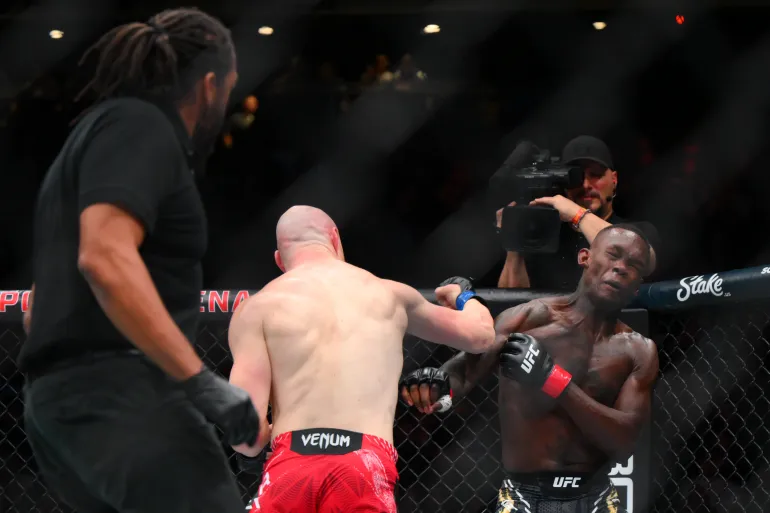
In his final MMA fight, welterweight Michael Chiesa (20-7 MMA) had a hometown send-off as he submitted Niko Price (16-11 MMA) with a first-round rear-naked choke. Chiesa needed just 63 seconds to put a bow on his UFC career, one that spanned a decade-plus and included winning the 15th season of The Ultimate Fighter in June 2012.
Chiesa ended his UFC career at 15-7, while Price, who has been in the promotion for over a decade himself, now sits at 8-11, with two no contests in the Octagon and has dropped four straight fights.
The finishes were a theme on the night, as featherweight Lerryan Douglas (14-5 MMA) of Brazil needed 3:33 of the opening round to deliver a devastating TKO against Julian Erosa (31-13 MMA). Douglas has now won his last six in a row while Erosa continues to struggle at 9-9 in the UFC.
At middleweight, Yousri Belgaroui of the Netherlands scored a third-round TKO stoppage against Mansur Abdul-Malik by landing a perfectly timed knee to end the fight in a back-and-forth battle. Belgaroui (10-3 MMA) has won five straight and remains undefeated in the UFC. Conversely, it was Abdul-Malik’s (9-1-1 MMA) first professional loss, as he had won seven of his 11 outings by KO/TKO.
The main card got under way in emphatic fashion in the opener, with lightweight Terrance McKinney needing just 24 seconds to dispatch Canadian Kyle Nelson with a series of punches following a head kick. McKinney (18-8 MMA) has won three of his last four, while Nelson (17-7-1 MMA) has lost two of his last three.
Around 16,000 fans packed into the Manchester arena bought into the Itauma buzz, greeting him with a warm roar as he was walked to the ring by British rapper Meekz.
Itauma – the prodigy who was sparring seasoned professionals while still at school – was in wonderful form from the first bell, using his speed and variation to send Franklin backtracking.
In truth, the knockout felt inevitable even when 32-year-old Franklin managed to recover from a third-round right hand that sent him crashing to the floor.
Working behind a jab and picking his shots wisely, Itauma avoided anything reckless. “It’s a breakdown job,” trainer Ben Davison aptly told him between rounds.
This was another night that thrilled and told us a little more about the rising heavyweight.
Itauma’s devastating power is undeniable, once again on display as he dispatched a seasoned opponent inside the first half of the fight.
But the bigger questions remain.
His chin has yet to be properly tested. Franklin landed a right in the fourth, and Itauma just smiled, but he will face bigger punches in the future.
And while the knockouts keep coming, he is still unproven beyond six rounds, with his engine and endurance untested at the highest level.
Promoter Warren expects Itauma to fight for a world title this year.
Within boxing circles, that talk may be slightly premature but Itauma is keeping pace with two-time world champion Anthony Joshua.
At the same stage of his career, Joshua beat Gary Cornish to register a 14th stoppage and was selling out the O2 Arena. Itauma is on a similar trajectory, almost filling the Co-op Live Arena – and arguably facing higher-level opponents along the way.
The key step-up for Joshua came in his 15th fight: a win over Dillian Whyte for the British title, which developed his resolve and enhanced his profile.
By his 17th, he was world champion after defeating Charles Martin.
Tommy Fury has risked pregnant Molly-Mae’s wrath after announcing a huge fight the day after her due dateCredit: facebook/@SportskeedacombatMolly Mae and Tommy announced they’re expecting second child in heart-warming post last monthCredit: Instagram @mollymaeIf you look closely at the photo, it gives away when the influencer’s baby will be bornCredit: Refer to source
As she showed off some young lambs on her Instagram stories, it sparked worry as there is a risk of contracting disease from animals who’ve recently given birth.
.The Children’s Farm has a section on its website dedicated to safety and measures pregnant women can take to reduce the risk of infection.
Molly went on to admit she is not suffering from a cold or any illness but still finds herself feeling as though she cannot breathe in the morning – leading to her reaching for the sprays every day.
She said: “I don’t have a cold. I don’t feel ill but I wake up and I can’t breathe.”
But she assured fans she was feeling well within herself and her pregnancy as she nears her due date.
Molly-Mae has been teasing her fans about her unborn child since the pregnancy newsCredit: InstagramMolly Mae appears to be due to give birth a day before Tommy’s big fightCredit: @mollymae9879/YouTubeFans were excited to hear the news of Tommy’s next fightFans wondered if Tommy might miss the birth of his second childMolly-Mae recently raised concerns when she visited Ash End House Children’s Farm with BambiThe couple’s fans were delighted at their pregnancy news last month
Weekly insights and analysis on the latest developments in military technology, strategy, and foreign policy.
On this episode of TWZ: Special Access, Jamie Hunter visited TacAir to learn about their heavily upgraded F-5AT fighters and how they replicate enemy aircraft to keep U.S. fighter aircrews sharp.
Tactical Air Support, better known as TacAir, is a Reno, Nevada-based private ‘red air’ commercial adversary support contractor that aims to efficiently simulate enemy capabilities to better prepare U.S. and allied aircrews for future conflicts. They support all branches in various training and testing events, but they’re most known for the contract they fulfill out of NAS Fallon in Nevada, where Topgun is based and where air wings spin-up for deployments.
TacAir’s fleet is made up of ex-Jordanian and Saudi F-5E/Fs airframes that have been equipped with tailored upgrades to create a “4th generation adversary platform with 3rd generation economy,” as described by the company. The latest configuration includes an AESA radar, datalink, Garmin wide-area display open architecture avionics, Scorpion helmet mounted display, and internal IRST. You can read more about TacAir and their F-5ATs here: https://www.twz.com/category/tac-air
Watch the full video here:
Private F-5 Adversary Jets Taking The Fight To Navy Fighter Pilots
MONTCLAIR, N.J. — A few years ago, Allison Posner was barely involved in politics.
Now the 42-year-old mother of two from Maplewood, New Jersey, hands out food and diapers to immigrant families outside a nearby detention facility. She waves signs on a highway overpass between school pickups and orthodontist appointments. And this weekend, she’ll lead a No Kings protest march across this affluent town alongside her husband, her children and thousands of others who are convinced President Trump represents a direct threat to American democracy.
“The people in the suburbs are definitely radicalizing,” said Posner, a freelance actor.
A growing faction of concerned citizens living in suburban communities across the United States — places once known for political moderation or even conservatism — are increasingly positioned on the front lines of the anti-Trump resistance. More than a year into the Republican president’s second term, the soccer moms are becoming bona fide activists taking to their well-manicured streets to fight Trump and his allies.
The leftward lurch could cost Republicans control of Congress for the president’s final two years in office. It could also reshape the Democratic Party by elevating a fresh crop of fiery progressive candidates emboldened to push back against the Trump administration more aggressively than the establishment may prefer.
Indivisible, the activist organization spearheading the third round of No Kings protests this weekend, said roughly two-thirds of more than 3,000 planned demonstrations will be held outside urban areas. Overall, more than 9 million people are expected to turn out nationwide for what leaders predict will be the largest day of protesting in U.S. history.
“We’re going to be everywhere,” Indivisible co-founder Ezra Levin said.
Organizers said sign-ups have been especially enthusiastic in suburban areas with high-profile congressional races like Scottsdale, Arizona; Langhorne, Pennsylvania; East Cobb, Georgia; and here in northern New Jersey’s 11th District, which holds a special election April 16.
Democratic voters last month chose Analilia Mejia, a former political director for Vermont independent Sen. Bernie Sanders, as their candidate to replace Mikie Sherrill, the more moderate Democrat who was recently elected as New Jersey’s governor.
Posner said she’s excited to have a fighter represent her district, someone who can channel the outrage she sees every day.
“I’m seeing people from the PTA or the neighborhood who would have never joined a protest in the past, who are now asking how they can get involved,” Posner said. “This is not some other people’s fight. This is our fight.”
‘Our hair is on fire’
For decades, affluent suburbs like those in northern New Jersey helped elect Republicans who fit the districts they represented: business-oriented, culturally moderate and disinterested in ideological fights.
That began to change in the Trump era.
Across the country, college-educated suburban voters recoiled from Trump’s brand of politics. They shifted sharply toward Democrats in the 2018 midterms and in the presidential elections that followed. Districts like New Jersey’s 11th, once a Republican stronghold, have since become part of a new liberal coalition rooted in places that were, until very recently, politically competitive.
Even in Summit, New Jersey, one of the nation’s wealthiest suburbs, Jeff Naiman feels as if he’s living in an “authoritarian nightmare” of Trump’s making.
“It’s like our hair is on fire,” says Naiman, a 59-year-old radiologist who leads his local chapter of Indivisible. “Our country’s being torn apart.”
He’s supporting Mejia, and he has no doubt she’ll win next month’s special election — and again in November’s general election.
“In this environment,” Naiman said, “I think the chances of her losing the general election are basically zero.”
Mejia, an outspoken progressive activist endorsed by Sanders and Rep. Alexandria Ocasio-Cortez, D-N.Y., emerged from the crowded Democratic primary last month, beating more moderate candidates like former congressman Tom Malinowski.
She’s critical of Israel’s war in Gaza, calls for the abolition of the U.S. Immigration and Customs Enforcement and backs Medicare for All. She’s also eager to raise concerns about what she describes as Trump’s dictatorial tendencies and will be one of the featured speakers at a No Kings protest this weekend.
“A ZIP code does not protect anyone from rising violent authoritarianism,” she said in an interview.
Mejia still describes herself as a soccer mom, even as her Republican critics accuse her of trying to soften her activist image ahead of Election Day.
“My youngest plays baseball and soccer, my oldest lacrosse and basketball,” she said. “And when I take my children to activities, to games, and I speak to other parents, I know that we’re all experiencing this economy and this political moment very similarly.”
Mejia defended herself against accusations of antisemitism for her position on Israel, which she accused of committing genocide in the war in Gaza, a topic that emerged as a key issue in the race.
“When I say Palestinians have rights, like Jewish people and Israelis have rights, that is not antisemitism, that is humanism,” she said while acknowledging there is antisemitism within the Republican and Democratic parties. “I am an Afro Latina raising two Black sons in America. I know othering kills. I know how dangerous it is when we dehumanize communities.”
A Republican balancing act
New Jersey’s 11th District was represented by a Republican until Sherrill was elected during the 2018 midterm elections that served as a harsh verdict at the halfway mark of Trump’s first term.
Joe Hathaway, the Republican nominee in next month’s special election and a town councilman from Randolph Township, hopes to convince voters that Mejia is too radical for them. Republican strategists in Washington, too, believe a surge of far-left Democratic candidates nationwide like Mejia in otherwise moderate districts might help their party maintain its razor-thin House majority this fall.
Yet suburban Republicans are facing serious political headwinds from the leader of their own party in the White House. Hathaway, for example, initially declined to say whether he voted for Trump.
“I don’t think it’s important,” he said in an interview, before acknowledging that he cast his ballot for the president three times. “This job is representing the district. NJ-11 comes first, before a president, before your party.”
Hathaway backs the president’s war in Iran and many of the economic policies in Trump’s big tax and spending cuts bill. But he was also quick to highlight areas of disagreement.
The Republican said he supports most of the Democrats’ demands in the Department of Homeland Security shutdown fight, including proposals to require federal immigration agents to wear body cameras, clearly identify themselves, take off face masks and receive better training.
He also wants Republicans who lead Congress to stand up to Trump, whose use of executive authority Hathaway said is “pressure testing” the checks and balances outlined in the Constitution.
“Congress needs to reassert that it is the first branch of government and take more of a leadership role than it’s been doing,” he said.
Inside the suburban shift
Suburban Americans have been slowly moving away from the Republicans over the past 15 years, according to Gallup polling that tracks party affiliation over time.
Trump was unable to stop the shift despite warnings that Democrats would “destroy” the suburbs with low-income housing.
In 2020, Democrat Joe Biden won 54% of voters who said they lived in the suburbs while Trump won only 44%, according to AP VoteCast. That was a substantial improvement on Democrat Hillary Clinton’s performance in a smaller survey of validated 2016 voters conducted by the Pew Research Center, which found that Clinton and Trump split the group about evenly.
The suburbs have also grown more diverse and educated over the past few decades, demographic shifts that may make Democrats more confident. In both of the past two presidential elections, AP VoteCast found that college-educated and non-white suburban voters were much likelier to support the Democratic candidate.
Naiman, the Summit radiologist, said he’s witnessed a transformation in his town, which was represented by Republicans at the state and federal level for decades until Trump took over.
“I don’t think that Summit is going to be swinging towards Republicans anytime soon — at least not as long as Trumpism is around,” he said.
Peoples writes for the Associated Press. AP polling editor Amelia Thomson DeVeaux in Washington contributed to this report.
France’s president Emmanuel Macron said Lebanon’s fight against threats to its security is ‘just’, while stressing that no violation of sovereignty can be justified. His comments come as fighting escalates between Israel and Hezbollah, with more than 1,000 people killed and 1.1 million displaced in Lebanon.
After defeat to Klein in July 2022, Jones and UFC mutually agreed to not sign a new deal.
Reflecting on what alternative path he could have chosen, Jones gave an honest appraisal.
“I remember sitting down in my coach’s office after the whole thing in London because I was in a mess,” he recalled.
“My one coach said to me, ‘Look I think you need to go somewhere else and work with someone else because I don’t think I can give you what you need’.
“I said to him in tears at the time, ‘Please just stick with me, as long as you boys are in my corner I’ll go through anything’.
“They’ve stuck by me since then, and I can’t thank the boys enough.
“As long as those boys are there for me I’ll give them as much as they give me and I couldn’t ask for anyone else to stand by me and help me reach the top.”
For Jones there really was no other possibility than to stick to chasing his UFC dreams.
“I had an acknowledgment on this camp when I was running through the mountains, and I chose this life.
“I know it’s a weird thing to say, but every day I wake up I choose this life.”
Jones admitted the easy thing would have been to go and get a job.
“I could literally at any time just think, no, I’m done, and get a different job that pays on a weekly basis,” he added.
“After I left London I didn’t get paid for two years, I racked up credit card debt, and family members and friends told me to quit.
“I had a family business I could have gone into, done more with school.
“But for me fighting is what’s in my blood and fighting is what I want to do.”
Belfast’s IBF world welterweight champion Lewis Crocker says he hopes that a victory over Australian Liam Paro in his next fight can open the door to a unification bout with another belt holder in the division.
Crocker is set to defend his title in Australia, with May the likely month for the contest and the Queensland city of Townsville seeming like the probable venue.
The 29-year-old won the title with a split decision verdict over Paddy Donovan at Belfast’s Windsor Park in September and his team had hoped to stage the defence against mandatory challenger Paro back in his home city.
However, with no agreement reached between both parties, the matter was resolved by a purse bid with No Limit outbidding Crocker’s promoter Matchroom by $27,000 (£20,000).
When asked by BBC Sport NI’s Thomas Kane where he hoped a potential win over Paro could lead, Crocker replied: “The biggest fight possible. Unification, which is something I feel I deserve if I get through Paro.
“You look at the names in the division as well, everything’s massive. You have Garcia [Ryan, WBC champion], Haney [Devin, WBO holder], Rolly [Rolando Romero, WBA champion] and Benn [currently ranked number one challenger by the WBC] there so there’s so much to gain from this fight for the winner.
“Any of the big boys because it will be easy to make. We all want a unification in the division, we all want to become undisputed.”
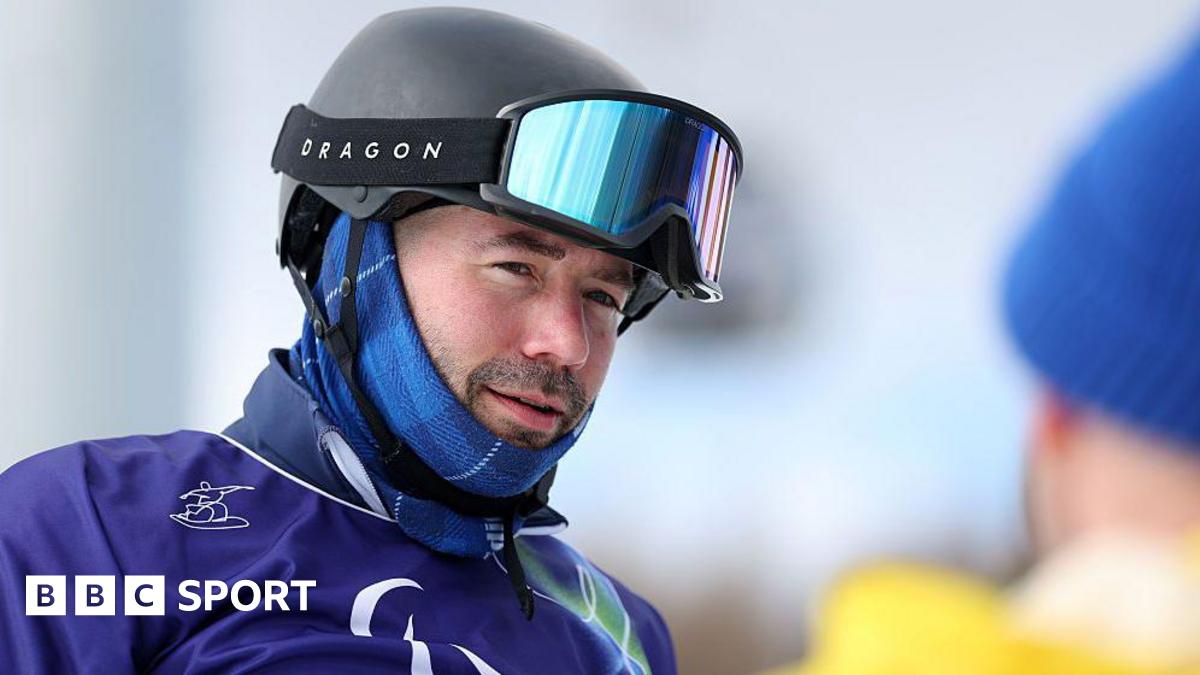
When Zyw was diagnosed with MND, he was working as a sommelier and wine buyer in London. His first symptom was his left thumb going numb.
Initially misdiagnosed as carpal tunnel syndrome, Zyw “had no reason to think about this impossible, improbable diagnosis at the time”.
A third of those diagnosed with the devastating disease die within a year, half die within two. Zyw is one of the “lucky ones”.
While his disease has progressed slowly, he has now lost most of the functionality in his hands, and the muscles in his upper body are wasting away.
A return to snowboarding was one of the positives in the dark aftermath of his diagnosis.
Having learned to snowboard as a child on a dry slope in Edinburgh, he competed as a freestyler into his early 20s before a knee injury put paid to that.
“I learned very quickly that the only aspect of this diagnosis in my control is my attitude towards it,” he added.
“I couldn’t affect how quickly the disease was going to manifest itself, how quickly I was going to fall off a cliff, how quickly I was going to lose motor functions.
“When I held on to that positive message, every day became easier and that’s what I’ve done every day since.”
The Davy Zyw Fan Club has been out in full force at the Games, flying British and Scottish flags and donning blue beanies emblazoned with his surname to watch him in action.
On a bus up to the snowboard park, an impromptu chant of “No Davy, No Party” sounded out, renditions of which carried on throughout the day.
Among those singing course-side were Zyw’s wife Yvie and four-year-old son Aleksander, who was “shouting his head off in celebration and admiration” as his daddy whizzed past during the opening run.
That race, however, did not end as he had hoped – in hospital with two broken ribs after a heavy crash, having already injured his knee in official training.
Such is the pain from his broken ribs, he cannot laugh nor sneeze but nothing was going to stop him being back in the start gate for Friday’s banked slalom.
In that, he finished 19th – but that is irrelevant. This Paralympic experience was never about the medals or results.
“Two years ago I wouldn’t have been classifiable as a Para-athlete and in two years’ time I’m not going to be a competitive snowboarder,” he said.
“So I’m in this sort of tragic period of my diagnosis where I’m ill enough to be classified as a Para-athlete, but well enough to still be able to rip down on my snowboard.
“I’m grateful for the fact that the Games have come at this moment, because in a few years’ time it wouldn’t have been possible.”
Despite the miserable weather, it wasn’t quite a storm in Dublin on Thursday, but one is quietly brewing for Saturday night when James ‘Jazza’ Dickens puts his WBA super-featherweight world title on the line against Anthony Cacace in the city’s 3 Arena.
As is the way, there were no bold statements or gimmicks from either at Thursday’s final press conference as their no-frills approach to the fight game ensured the exchanges were complimentary rather than confrontational.
Described as Cinderella Man v Cinderella Man, the pair have travelled rough terrain to get here and that is what sets this up perfectly.
Both have had their setbacks in boxing, with 34-year-old Dickens falling short in world title fights at super-bantamweight and featherweight before getting his hands on the gold when upgraded from the ‘interim’ title he won against Albert Batyrgaziev last summer.
Cacace, 37, endured years of disappointment before stopping Joe Cordina for the IBF version in May 2024, opting to vacate in order to face Leigh Wood in Nottingham last year.
“Until that first bell, all of this [build-up] is just nonsense and we have to sit here and talk,” said Liverpool’s Dickens.
“We just like to fight, but this is part of the business. I think we both just want to get in there and get the respect, throw some punches and shake hands after.”
Cacace is cut from the same cloth, with the Belfast man fully aware of what it has taken the champion to get here considering he has travelled a similar road.
“There is no point sitting here and saying ‘I’m going to do this and that’ because we are fighters and one punch can change everything,” Cacace said.
“I know Jazza has a big heart, same as me. We’re pretty similar in terms of career, so I fully respect Jazza for what he’s done in his career. He’s here for the same reason as me – to put food on the table for his family and that’s the bottom line.”