FEMA

Trump nominates Cameron Hamilton to lead FEMA, a year after he was fired from the role

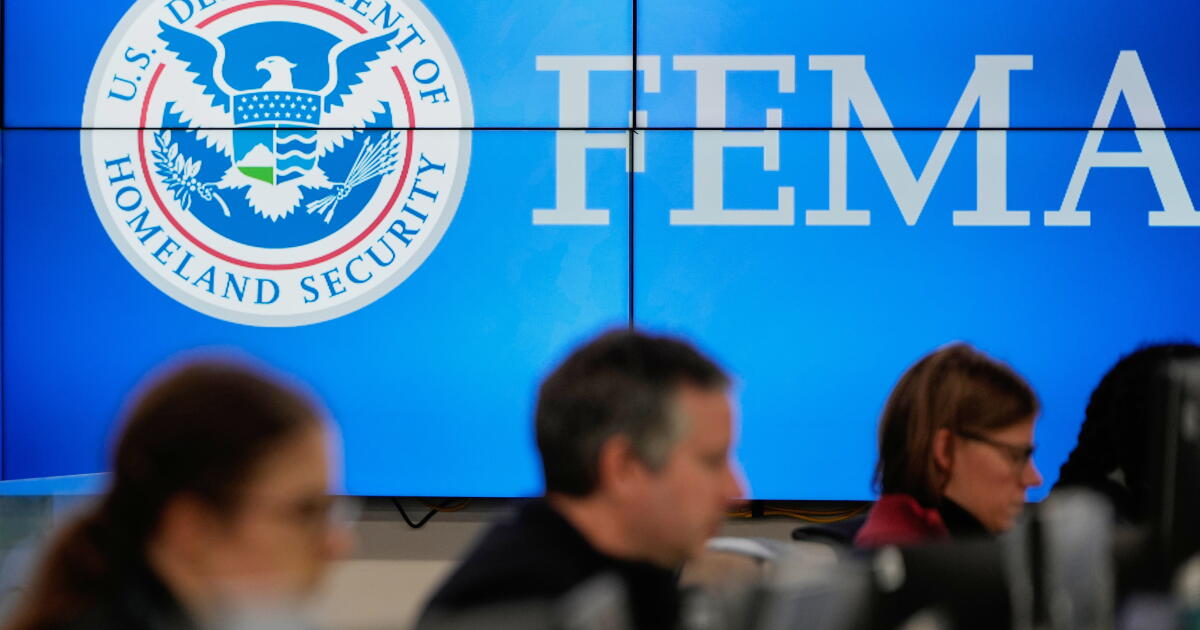
President Trump nominated Cameron Hamilton on Monday to lead the Federal Emergency Management Agency, a surprising comeback for the former Navy SEAL who was fired from his role as FEMA’s temporary leader last year after he defended its existence.

His nomination comes as the Trump administration has increasingly signaled it is backing away from promises to dismantle FEMA, an agency that has faced withering criticism by the president. The nomination of Hamilton, who argued abolishing FEMA was not in the country’s best interests, is the latest indication of that change.

If confirmed, Hamilton would be the principal advisor to Trump and Homeland Security Secretary Markwayne Mullin on emergency management and FEMA’s first permanent administrator in Trump’s second term. The agency has gone through three temporary leaders, including Hamilton’s brief tenure from January to May 2025.

He would take over an embattled agency still reeling from Kristi Noem’s turbulent leadership of the Department of Homeland Security, of which FEMA is part. FEMA’s workforce has been worn down by mass staff departures, policies that hamstrung operations and a 75-day-long Homeland Security shutdown that ended April 30.

Hamilton will need to ensure the agency is prepared for summer disaster season, just weeks away, while answering to Trump, who is likely to expect major reforms after a council he appointed recommended sweeping changes on Friday.

“Now is the opportunity to stabilize FEMA,” said Michael Coen, the agency’s chief of staff in the Obama and Biden administrations.

Fired after defending FEMA

Hamilton, who had never been a state or local emergency management director and who had publicly criticized FEMA in the past, was a controversial choice when Trump named him temporary leader in January 2025, just days before the president floated the idea of “getting rid” of FEMA.

His rupture with Homeland Security officials began as he defended a federal role in supporting disaster-affected states, tribes and territories.

“Once the conversation shifted to, ‘Now we’re going to abolish,’ I immediately expressed concern,” he said in September on the “Disaster Tough” podcast with John Scardena, a former FEMA incident management team leader.

Homeland Security officials even subjected him to a polygraph test, accusing him and other officials of leaking details of a private meeting. He passed but said he knew his dismissal was inevitable.

At a May 7, 2025, appearance before a House Appropriations subcommittee, Rep. Rosa DeLauro, a Connecticut Democrat, asked Hamilton if he believed FEMA should be abolished.

“I do not believe it is in the best interest of the American people to eliminate the Federal Emergency Management Agency,” he replied. The next day, he was fired.

Hamilton will have to rebuild trust

Defending FEMA despite knowing it would probably cost him his job generated respect and trust among people whose job it is to lead communities through crisis, said Scardena, now president of the consultancy Doberman Emergency Management Group, which trains emergency managers.

“He won myself over and I think a lot of people by what he did,” Scardena said.

But multiple current FEMA employees who requested anonymity for fear of retribution for speaking publicly told the Associated Press they had concerns over some of the actions taken under Hamilton.

In 2024, Hamilton shared posts on X promoting misinformation about FEMA spending during Hurricane Helene.

During his temporary leadership, FEMA ceased door-to-door canvassing to reach survivors after disasters, and canceled a multibillion-dollar resilience grant program, since restored by a federal judge. The Department of Government Efficiency gained access to internal FEMA networks containing survivors’ private information. FEMA staff were fired for fulfilling a reimbursement payment to New York City for housing undocumented immigrants as part of FEMA’s Shelter and Services program.

Hamilton has said he believes FEMA needs major reform. He has said that he wants FEMA to move faster, that the agency is saddled with responsibilities he sees as outside its remit, and that some states have become too dependent on the agency. A Trump-appointed council last week urged sweeping changes to FEMA, which would require congressional action.

“I think he’s going to need to rebuild trust across the agency,” said Deanne Criswell, FEMA administrator under former President Biden, adding that she believes Hamilton cares about FEMA and she appreciated his outreach to emergency management directors and former officials during and after his tenure.

Senate confirmation process could raise questions of experience

Hamilton could face pushback in the Senate confirmation process over never having led an emergency management agency, a common stepping stone to becoming administrator of an agency with over 21,000 employees.

Federal law requires the FEMA administrator to have “a demonstrated ability in and knowledge of emergency management and homeland security” and at least five years of “executive leadership and management experience.”

Hamilton trained as a Navy hospital corpsman before spending a decade as a Navy SEAL on SEAL Team Eight. He then became a U.S. State Department emergency management specialist handling overseas crisis response, then directed emergency medical services at the Department of Homeland Security.

Angueira writes for the Associated Press.

Source link

Trump’s FEMA review council recommends widespread changes

May 7 (UPI) — A group appointed by President Donald Trump made its final recommendations Thursday on changes to the Federal Emergency Management Agency, suggesting moves that would put more responsibility back on states and other authorities.

The changes also include reviews of agency staffing and privatizing flood insurance, The Hill reported.

“We need to refocus FEMA to get it back on what its mission originally was,” Homeland Security Secretary Markwayne Mullin said. FEMA is part of Homeland Security.

Panel members said FEMA has become too involved in politics, specifically mentioning state assistance during the coronavirus epidemic, The New York Times reported. Recommendations included changes in how FEMA helps state and local governments with financial recovery.

“Disaster response is complicated and increasingly expensive,” the final report said. “With taxpayers bearing the burden of funding emergency management in the United States, it is the responsibility of every American to embrace their individual responsibility to lessen this burden by being prepared for disasters. … As our nation returns ownership of emergency management back to local communities and their states, tribes and territories, we encourage every American to review their insurance policies and personal disaster plans as well as engaging with their local community leaders to be better prepared when disaster strikes.”

Trump has said that FEMA’s work is too expensive and that state governors should be able to manage more on their own, the Times reported. He has also suggested in the past that the agency should “go away” entirely.

The changes recommended by the report would require congressional approval. They include tweaks meant to make the reimbursement process, once approved, quicker and more direct, and changes meaning the FEMA plays less of a role in helping disaster survivors find housing.

“These recommendations are all about accelerating federal dollars, streamlining the process, making it less bureaucratic, so that Americans can get the help they need on the worst day of their lives,” said former Virginia Gov. Glenn Youngkin, a member of the council. “And this is not a moment for bureaucracy, it is a moment for action, it is a moment for clarity.”

The Environmental Defense Fund said in a statement that Americans are facing increasingly severe weather and the council’s recommendations “don’t meet this reality.”

“The proposed changes would leave communities without the necessary funding, information and access to insurance to stay prepared and safe when disasters strike,” said Will McDow, the fund’s associate vice president for coasts and watersheds.

The group said the proposed changes would “shift enormous burdens onto states and communities and reduce government efficiency.”

Source link

Bass, Barger meets with Trump to push for L.A. fire recovery funds

Los Angeles Mayor Karen Bass and L.A. County Supervisor Kathryn Barger met privately with President Trump and administration officials Wednesday to press for federal support and yet-unpaid wildfire recovery funding as the region continues to rebuild from the 2025 fires.

“This afternoon we met with President Trump and Administration officials to advocate for families who lost everything,” Bass and Barger said in a statement. “We had a very positive discussion about FEMA and other rebuilding funds as well as the support of the President to continue joining us in pressuring the insurance companies to pay what they owe — and for the big banks to step up to ease the financial pressure on L.A. families.”

Barger said the two leaders had a “high-level discussion” with the president in the Oval Office, sharing stories about what fire survivors are experiencing day to day. She added that “we left details behind with the President,” but did not specify whether Trump made any funding or policy promises during the meeting.

“First and foremost, today’s meeting was to thank the President for his initial support of infusing federal resources to expedite debris removal, as well as his recent tweet about insurance companies, which have already proven fruitful,” she said in a statement provided to The Times.

Bass was similarly reserved about the discussions, telling reporters that “we will follow up with the details,” but signaled progress is being made on federal support.

“I think what’s important is that we certainly got the president’s support in terms of, you know, what is needed, and then the appropriate people were in the room for us to follow up. And that was Russ Vought, who is the head of the Office of Management and budget,” Bass told KNX on Wednesday.

The meeting comes on the heels of a yearlong standoff between California leaders and the Trump administration over wildfire recovery funding, disaster response and whether the federal government should have a say in local rebuilding permitting.

California leaders, led by Gov. Gavin Newsom, have accused the Trump administration of withholding billions in critical wildfire aid, prompting a lawsuit over stalled recovery funds. Officials allege political bias in the delay of billions of dollars from the Federal Emergency Management Agency.

Newsom visited Washington in December. When he made his rounds on Capitol Hill, he met with five lawmakers, including three who serve on the Senate and House appropriations committees, to renew calls for $33.9 billion in federal aid for Los Angeles County fire recovery.

But the governor said he was denied a meeting with FEMA and would not say whether he had attempted to meet with Trump to discuss the issue.

Bass, meanwhile, appears to have found a path to the president on a subject that has been paramount for her community.

The fruitful meeting comes after Trump lobbed insults at the mayor at a news conference earlier this year, where he called her “incompetent” for how she handled last year’s wildfire recovery efforts. He alleged that under Bass’ leadership, the city’s delay in issuing local building permits will take years when it should have taken “two or three days.”

California officials, including Newsom, have urged the Trump administration to send Congress a formal request for the $33.9 billion in recovery aid needed to rebuild homes, schools, utilities and other critical infrastructure destroyed or damaged when the fires tore through neighborhoods more than 15 months ago.

What Bass and Barger’s meeting with the president ultimately produces remains to be seen.

The billions in recovery aid have not yet materialized, but the meeting could potentially give those discussions new momentum.

The White House did not immediately respond to a request seeking comment about the meeting.

Earlier this month, Trump criticized insurance provider State Farm on Truth Social for its handling of the devastating Los Angeles County wildfires. He accused the insurance giant of abandoning its policyholders when tragedy struck.

“It was brought to my attention that the Insurance Companies, in particular, State Farm, have been absolutely horrible to people that have been paying them large Premiums for years, only to find that when tragedy struck, these horrendous Companies were not there to help!” Trump wrote.

But the rebuke didn’t come out of the blue. It stemmed from a controversial February visit to Los Angeles by Trump administration officials.

Trump tapped Environmental Protection Agency Administrator Lee Zeldin in an effort to strip California state and local governments of their authority to permit the rebuilding of homes destroyed in the Eaton and Palisades fires.

Within the week, Zeldin was in Los Angeles, bashing Newsom and Los Angeles officials at a roundtable with fire victims and reporters, saying that residents were suffering from “bureaucratic, red tape delays and incompetency” and that leadership was “denying them … the ability to rebuild their lives”.

During the trip, officials heard direct complaints from local leaders and fire victims about insurers being slow, restrictive and insufficient with their claim payouts.

After these meetings, Trump directed Zeldin to investigate the insurers’ responses. State Farm, facing roughly $7 billion in fire-related claims, is also under formal investigation by California’s insurance commissioner over its handling of the crisis.

Despite tensions with the administration, Bass and Barger appeared confident that progress was being made on the insurance and funding issues.

“Our job is to fight for our communities,” their joint statement concluded. “When it comes to this recovery, our federal partners are essential, and we are grateful for the support of the President.”

Source link