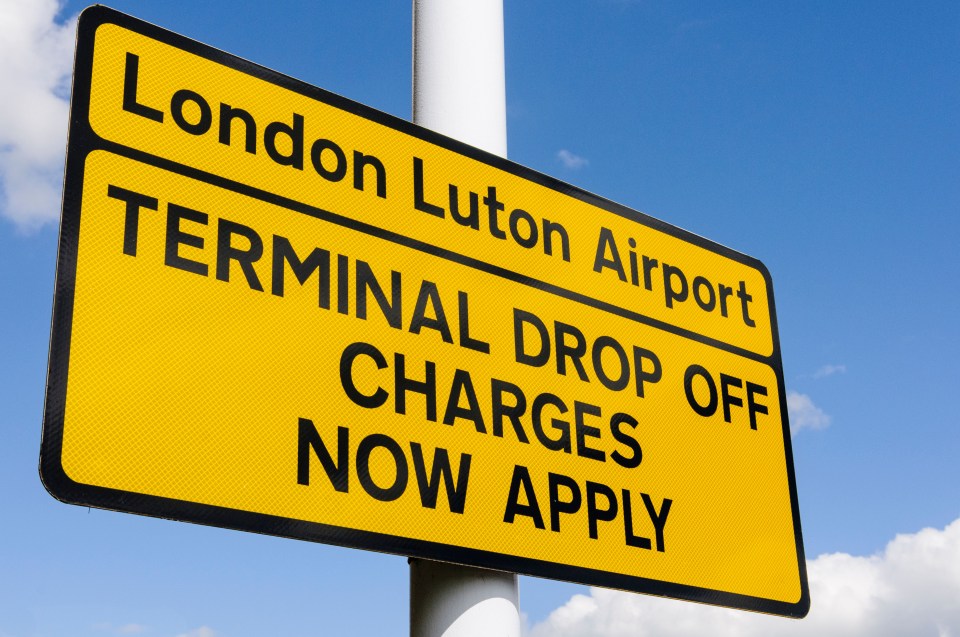


fees

Iran Now Trying To Cement Long-Term Control Over Strait Via Fees

Iran is reportedly working to solidify its control over the Strait of Hormuz despite U.S. objections by seeking a joint deal to impose fees on ships transiting the strategic waterway with Oman. The move comes amid increasing hopes of a peace deal to end the war that began Feb. 28 and highlights just how difficult it will be to reach such an agreement. Iran’s closure of the Strait has created severe global economic impacts and spurred the Trump administration to stand up Project Freedom, a short-lived effort to provide military protection for ships stuck in the Persian Gulf and trying to get out.

Though U.S. President Donald Trump has insisted the Strait remain open and free of any tolls, Iran is in discussions with Oman, a U.S. ally, to impose financial burdens on vessels passing through the critical chokepoint, The New York Times reported. Together, the countries border both sides of the Gulf of Oman, through which any ship must pass to get into or out of the Strait.

Gulf of Oman. (Google Earth)

Two people familiar with the discussions over management of the waterway said that “Iran was not planning a toll system, which would charge simply for transit,” according to the Times. Instead, the talks with Oman have “explored a proposal to charge vessels fees for services.”

“Oman had initially rejected a joint partnership with Iran on the strait but is now in discussion over a share of the revenues,” the newspaper stated, citing two Iranian officials familiar with the talks. “The officials said Oman told the Iranians that it was willing to use its influence with neighbors in the Gulf, including Bahrain, Kuwait, Qatar, Saudi Arabia and the United Arab Emirates, and with the United States to push the plan, having realized the potential economic benefits of a fee system.”

Iran and Oman “appear to be emphasizing that the proposed system would involve fees, not tolls, a legally significant distinction,” the Times posited. “A tolling system that simply charges ships to pass through the waterway would be illegal under international law, but charging fees for actual services rendered to vessels, such as waste disposal at a port, is allowed under certain circumstances.”

Breaking News: Iran and Oman are in talks over a payment system for ships crossing the Strait of Hormuz, despite warnings from the Trump administration. https://t.co/IuBux7BHnV

— The New York Times (@nytimes) May 22, 2026

On Wednesday, Iran’s newly created Persian Gulf Strait Authority declared on X that it has “defined the boundaries of the Strait of Hormuz management supervision area” as the “line connecting Kuh Mobarak in Iran and the south of Fujairah in the UAE in the east of the strait to the line connecting the end of Qeshm Island in Iran and Umm al-Qaiwain in the UAE in the west of the strait.”

Iran’s claimed area of control includes the coastal waters of the United Arab Emirates (UAE) and Oman in addition to its own.

1/
جمهورى اسلامى ايران محدودهٔ نظارتى مديریت تنگه هرمز را به این شرح تعيین کرده است: «خط اتصال كوه مبارك درايران وجنوب فجيره درامارات در شرق تنگه تاخط اتصال انتهاى جزيره قشم درايران و ام القيوین امارات درغرب تنگه.» pic.twitter.com/3ELSwYx5Bp

— PGSA | نهاد مدیریت آبراه خلیج فارس (@PGSA_IRAN) May 20, 2026

In the face of Iran’s insistence on controlling the Strait, Rubio on Friday reiterated that the Trump administration rejects any form of Iranian tolling on the Strait.

“That’s just not acceptable. It can’t happen,” Rubio said of any Iranian effort to impose payment for the safe passage of vessels. “If that were to happen in the Straits of Hormuz, it will happen in five other places around the world.” 

🇺🇳Secretary of State Rubio cited Bahrain-led and co-sponsored UN Security Council resolution as the definitive international answer to Iran’s proposed tolling scheme in Strait of Hormuz noting it carries the highest number of co-sponsors in the history of Security Council. pic.twitter.com/RYEiAg5h7M

— Adla Massoud (@Adlamassoud) May 22, 2026

Rubio added that NATO allies are beginning to think through a worst-case scenario if Iran refuses to open the Strait of Hormuz.

“We all would love to see an agreement with Iran in which the Straits are open and they abandon their nuclear ambitions and so forth,” he told reporters. “We also have to have a plan B…We have to start thinking about what do we do if, a few weeks from now, Iran decides ‘We don’t care, we’re going to keep the Straits closed. We’re going to sink any ship that doesn’t listen to us or doesn’t pay us.’ Then someone’s going to have to do something about it.”

BREAKING: Secretary Marco Rubio says NATO allies are beginning to think through a worst-case scenario if Iran refuses to open the Strait of Hormuz:

“We all would love to see an agreement with Iran in which the Straits are open and they abandon their nuclear ambitions and so… pic.twitter.com/jQvHZd8rLv

— Fox News (@FoxNews) May 22, 2026

Since implementing the blockade on Iranian ports on April 13, “U.S. forces have redirected 97 commercial vessels and disabled 4 since the start of the blockade,” CENTCOM claimed on X.

A U.S. Sailor aboard USS Comstock (LSD 45) observes a commercial vessel while enforcing the U.S. blockade against Iran, May 21. U.S. forces have redirected 97 commercial vessels and disabled 4 since the start of the blockade. pic.twitter.com/1Zgsoykhy4

— U.S. Central Command (@CENTCOM) May 22, 2026

Regardless of the blockade, Japan is anticipating the arrival of the first tanker full of oil that transited the Strait of Hormuz since the war began.

The Idemitsu Maru, a very large crude carrier that passed through the waterway in late April, could dock as soon as Monday, according to the trade ministry. Hauling two million barrels of Saudi crude, the vessel is on track to arrive at Idemitsu Kosan Co.’s Aichi refinery, the Ministry of Economy, Trade and Industry said in a briefing document on Friday, according to Bloomberg News.

The announcement highlights the difficult choices many nations now have as a result of the war. Japan is a key U.S. ally and risks running afoul of Trump, who maintains opposition to Iranian control of the vital waterway, including tolls on shipping levied by Iran, something Trump vehemently opposes. But Japan is also one of the world’s importers of Middle Eastern oil and the inability to get what it needs as a result of the Iranian Strait closure is having dramatic economic effects.

Japan is about to receive the first Persian Gulf oil shipment to transit the Strait of Hormuz since the Iran war began https://t.co/Inb3yOuGfM

— Bloomberg (@business) May 22, 2026

Most of the ships passing through the Strait under the new Iranian system “were linked to Southeast Asian nations that maintain friendly relations with Iran,” the official state broadcaster IRIB claimed on Friday in a post on X.

Most ships that passed through the Strait of Hormuz with Iran’s permission, were linked to Southeast Asian nations that maintain #friendly relations with IRAN. https://t.co/hqPmBBC1Yz

— IRIB (Islamic Republic of Iran Broadcasting) (@iribnews_irib) May 22, 2026

There has been a large increase in the number of Iranian-trading tankers at anchor off the country’s main oil export port of Kharg Island in the past week, according to the Windward maritime intelligence firm’s multi-source intelligence (MSI) analysis.

“MSI images show 27 tankers off Kharg Island as of May 21, including 18 assessed as very large crude carriers (VLCC),” Windward reported. “This has expanded from 14 tankers a week ago on May 14, a 93% increase. All were ‘dark’ and not broadcasting their position via AIS.”

Windward “assesses the majority of VLCCs at anchor off Kharg Island are being used for floating storage. About two-thirds of Iranian-trading tankers are now constrained in the Gulf of Oman or Arabian Gulf by the U.S. blockade. The remaining third are either waiting at ports off China or at anchor off the Riau archipelago, in Malaysia’s EEZ.”

The number of Iranian-trading tankers at anchor off Iran’s main oil export port of Kharg Island has increased by 93% in the past week, according to Windward’s multi-source intelligence analysis.

While numbers observed off Kharg Island are gaining, tankers anchored off the… pic.twitter.com/uYbVQschty

— Windward (@WindwardAI) May 22, 2026

UPDATE: 5:25 PM EDT –

Trump convened a meeting with his senior national security team on the war with Iran on Friday morning, Axios reported Friday evening, citing two U.S. officials.

The president “is seriously considering launching new strikes against Iran barring a last-minute breakthrough in negotiations, sources who have spoken directly with the president say,” the news outlet stated.

Vice President JD Vance, Secretary of Defense Pete Hegseth, CIA Director John Ratcliffe, White House chief of staff Susie Wiles and other officials attended the meeting along with Trump, the sources told Axios.

Hours later, Trump issued his cryptic message on Truth Social about not attending his son’s wedding due to “circumstances pertaining to Government.”

NEW: Trump convened a meeting with his senior national security team on the war with Iran this morning.

He is seriously considering launching new strikes against Iran barring a last-minute breakthrough in negotiations, sources say. https://t.co/dN7UuWUcGe

— Axios (@axios) May 22, 2026

Iran insists it is ready with new tactics, weapons and a threat to extend the conflict beyond the region should a new round of fighting break out.

Iran’s state-run Tasnim News Agency has said that the Iranian Armed Forces is preparing for any possible U.S. attack, adding that a third round of fighting would involve new equipment, targets, tactics, and war strategy, along with additional trans-regional fronts that extend… pic.twitter.com/fsuv7Dfdx6

— OSINTdefender (@sentdefender) May 22, 2026

UPDATES

There are growing indications that the U.S. and Iran could be moving closer to a deal to end the war. However, both sides are poised to resume fighting as major sticking points remain over Iran’s nuclear ambitions, its control over the Strait of Hormuz and the future of its ballistic missile arsenal as well as U.S. sanctions.

In a sign that progress has been made in talks to reach a deal, Pakistani and Qatari negotiators are now in Tehran.

Pakistan’s Army Chief Field Marshal Asim Munir has arrived in Tehran as part of ongoing mediation efforts and upon arrival he was received and warmly welcomed by Iranian Minister for Interior Eskandar Momeni, per ISPR https://t.co/I6yk6BlpvY pic.twitter.com/DToLp4OJ0J

— Anas Mallick (@AnasMallick) May 22, 2026

“Field Marshal Asim Munir, is traveling to Tehran on Friday in an effort to reach a deal under which the U.S. and Iran would agree to end the war and launch negotiations for a broader agreement,” Axios reported on Friday, citing a Pakistani security source.

The Qatari negotiating team arrived in ​Tehran on Friday ‌”in coordination with United States to help secure ​a deal to ​end the war with ⁠Iran and resolve ​outstanding issues,” Reuters reported on X, citing a source ​with knowledge of the matter. “Doha, ​which has worked ​as a mediator in the ‌Gaza ⁠war and other areas international tensions, had till now distanced ​itself ​from ⁠playing a mediation role in the ​Iran war after ​it ⁠came under attack from Iranian missiles and ⁠drones ​during the ​latest conflict.”

(Reuters) – A Qatari negotiating team arrived in ​Tehran on Friday ‌in coordination with United States to help secure ​a deal to ​end the war with ⁠Iran and resolve ​outstanding issues, a source ​with knowledge of the matter told Reuters on Friday.
Doha, ​which has worked ​as a…

— Phil Stewart (@phildstewart) May 22, 2026

Confirmation of Munir’s trip to Tehran, from several media outlets, came after U.S. Secretary of State Marco Rubio said there was “slight progress” in negotiations with Iran.

“I don’t want to exaggerate it, but there’s been a little bit of movement, and that’s good,” Rubio said at a meeting of NATO foreign ministers in Sweden, on Friday.

In a post on X, the Saudi-based Al Arabiya news outlet claimed it has obtained a “final draft of a possible agreement between the United States and Iran, mediated by Pakistan” that is “expected to be announced within hours.”

The purported details of the nine-point plan are as follows, according to the publication:

  • Immediate, comprehensive, unconditional ceasefire on all fronts, including land, sea, air.
  • Mutual commitment not to target military, civilian or economic infrastructure.
  • End to military operations and halt media war.
  • Commitments to respect sovereignty, territorial integrity and non-interference in internal affairs.
  • Guarantees freedom of navigation in the Arabian Gulf, the Strait of Hormuz and the Gulf of Oman.
  • Joint mechanism to monitor implementation and resolve disputes 
  • Negotiations on outstanding issues would begin within seven days.
  • Gradual lifting of US sanctions in exchange for Iran’s commitment to the terms of the agreement.
  • Draft agreement reaffirms compliance with international law and UN Charter. 

🔴 BREAKING: The final draft of a possible agreement between the United States and Iran, mediated by Pakistan, is expected to be announced within hours, according to Al Arabiya sources. Its key terms include the following:

🔴 Final draft of possible US-Iran agreement mediated by… pic.twitter.com/Fb0gTmv8nd

— Al Arabiya English (@AlArabiya_Eng) May 22, 2026

However, the reported draft agreement does not explicitly mention Trump’s key demands, including the dismantling of Iran’s nuclear program and export of its stockpile of 60%-enriched uranium, limiting its ballistic missiles and ending its support for Iranian proxies like Hezbollah, the Houthis and several groups in Iraq.

Trump has repeatedly stated that Iran must dismantle its nuclear weapons program, turn over the enriched uranium and reopen the Strait.

U.S. President Donald Trump on Iran:

“Right now, we’re negotiating, and we’ll see, but we’re going to get it one way or the other. They’re not going to have a nuclear weapon.” pic.twitter.com/wfjJBoOZVi

— Open Source Intel (@Osint613) May 21, 2026

Given the American leader’s stance on the issues, it seems unlikely that he would agree to such a deal as stated by Al Arabiya. TWZ cannot verify the validity of these details. Asked if they are accurate, the White House gave us the following response:

“Iran will never be allowed to have a nuclear weapon, and while President Trump always prefers a diplomatic solution, he has been clear about the consequences if Iran refuses to make a deal,” a White House official told us. “As the president stated, he will only make a good deal for the American people. He is not going to be rushed into making a bad deal. Due to the successes of Operation Epic Fury, Economic Fury, and the blockade, President Trump holds the cards and has all the time he needs to make the best deal for the United States and the world.”

The White House, however, pushed back on a Reuters report that Iranian Supreme Leader Mojtaba Khamenei told his country’s decision-makers not to agree to any deal to remove enriched uranium out of the country. A White House official told Fox News that the claim is untrue and that as of yet, no decision has been made on the matter by either side.

The White House has told Fox News that recent reports from Reuters on the supreme leader’s edict to Iranian decision-makers not to accede to a deal where enriched uranium is moved out of Iran are untrue and that as of yet, no decision has been made on the matter by both sides. pic.twitter.com/ZF36aCMLit

— OSINTdefender (@sentdefender) May 21, 2026

With the status of the peace process uncertain, Trump claimed he decided not to attend the wedding this weekend of his eldest son, Donald Trump Jr., to socialite Bettina Anderson due to “circumstances pertaining to Government, and my love for the United States of America.”

“I feel it is important for me to remain in Washington, D.C., at the White House during this important period of time,” Trump stated on Truth Social.

President Trump announces his official decision on attending his son’s wedding this week — he’s not going.

This comes after he said yesterday it was bad timing because of the Iran issue. pic.twitter.com/cha3QO14Uo

— Caitlin Doornbos (@CaitlinDoornbos) May 22, 2026

Amid talk of diplomacy, U.S. Central Command (CENTCOM) indicated that the Abraham Lincoln Carrier Strike Group, loitering in the Arabian Sea, “is maintaining peak readiness while enforcing the U.S. blockade against Iranian ports.”

The post messaged that should negotiations break down, the U.S. is ready to resume attacking Iran should Trump so order.

U.S. Navy fighter jets launch from aircraft carrier USS Abraham Lincoln (CVN 72) in the Arabian Sea. The Abraham Lincoln Carrier Strike Group is maintaining peak readiness while enforcing the U.S. blockade against Iranian ports. pic.twitter.com/VdgD1S8jrB

— U.S. Central Command (@CENTCOM) May 22, 2026

For its part, the Islamic Revolutionary Guard Corps (IRGC) has threatened to push the war “beyond the region” if the U.S. or Israel resume attacks, promising “crushing blows … in places you cannot even imagine.”

Iran has warned the United States of far-reaching consequences in the event of any renewed act of aggression, amid President Donald Trump’s repeated military threats and deadlines.https://t.co/i7ppAoGfym

— Tehran Times (@TehranTimes79) May 21, 2026

Despite a bombing campaign that top U.S. officials say has severely crippled Iran’s ability to produce drones and missiles, Tehran has reportedly used the six-week old ceasefire to rearm far faster than anticipated.

“While the time to restart production of different weapons components varies, some US intelligence estimates indicate Iran could fully reconstitute its drone attack capability in as soon as six months,” CNN reported on Thursday, citing a source familiar with those assessments. “The Iranians have exceeded all timelines the IC had for reconstitution,” the US official said.

The network claimed that Iran is “rebuilding…military capabilities, including replacing missile sites, launchers and production capacity for key weapons systems destroyed during the current conflict.”

Iran “also still maintains ballistic-missile, drone-attack and anti-air capability despite the serious damage inflicted by US-Israeli strikes,” the network claimed, citing recent US intelligence assessments. That means “the quick rebuilding of military production capacity isn’t starting from scratch.”

These efforts are being aided by China and Russia, CNN added.

While the time to restart production of different weapons components varies, some US intelligence estimates indicate Iran could reconstitute its drone attack capability in as soon as six months, one of the sources said. https://t.co/u9mxm0hB8D

— Zachary Cohen (@ZcohenCNN) May 21, 2026

The U.S. military “has depleted much of its inventory of advanced missile-defense interceptors after expending far more high-end munitions defending Israel amid hostilities with Iran than Israeli forces used themselves,” The Washington Post reported, citing Defense Department assessments.

“The imbalance, according to three U.S. officials who spoke on the condition of anonymity to discuss sensitive security matters, underscores the extent to which Washington has shouldered the burden of countering Iranian ballistic missile strikes duringOperation Epic Fury, and raises questions about U.S. military readiness and security commitments around the world,” the publication added. “The United States launched more than 200 Terminal High Altitude Area Defense, or THAAD, interceptors in defense of Israel — roughly half of the Pentagon’s total inventory — along with more than 100 Standard Missile-3 and Standard Missile-6 interceptors fired from naval vessels in the eastern Mediterranean, said the U.S. officials, who, like others in this article, spoke on the condition of anonymity to discuss sensitive security matters.”

By contrast, the newspaper noted, “Israel fired fewer than 100 of its Arrow interceptors and around 90 David’s Sling interceptors, some of which were used against less sophisticated projectiles fired by Iran-backed groups in Yemen and Lebanon.”

Acting Navy Secretary Hung Cao on Thursday testified before the Senate that the U.S. is pausing arms sales to Taiwan because of the war with Iran. 

“Right now we’re doing a pause in order to make sure we have the munitions we need for Epic Fury,” Cao told Sen. Mitch McConnell.

During the Senate Appropriations Committee’s defense subcommittee hearing earlier today, Acting Navy Secretary Hung Cao told senators that arms shipments to Taiwan have been paused, saying “Right now we’re doing a pause in order to make sure we have the munitions we need for Epic… pic.twitter.com/DIcQCBh5hq

— OSINTdefender (@sentdefender) May 21, 2026

Ukraine’s ambassador to the U.S. Olga Stefanishyna, however, told Politico Washington Bureau Chief Dasha Burns that the war with Iran has not yet affected U.S. weapons shipments to Kyiv. Still, she said American military officials told Ukraine “there’s nothing that could be guaranteed for the future.”

Ukraine’s ambassador to the U.S. said the war with Iran has not yet affected U.S. weapons shipments to Kyiv, but said American military officials told Ukraine “there’s nothing that could be guaranteed for the future.”

Listen to my full interview with Olga Stefanishyna on… https://t.co/ZB73BCWCqf

— Dasha Burns (@DashaBurns) May 22, 2026

The war is facing increasing opposition in Washington. House Republicans on Thursday “abruptly canceled a vote on a resolution directing Trump to withdraw U.S. forces from Iran or win approval from Congress to continue the war, after it became clear they lacked the votes to defeat the measure,” The New York Times reported. “The retreat was a striking setback that exposed fractures within the G.O.P. over the conflict at a moment when the party has begun pushing back forcefully on Mr. Trump and his agenda.”

Breaking News: House Republicans abruptly canceled a vote on a resolution directing President Trump to withdraw U.S. forces from Iran or win approval from Congress to continue the war, after it became clear they lacked the votes to defeat the measure. https://t.co/2YCMl8GIbj

— The New York Times (@nytimes) May 21, 2026

In another sticking point to a peace deal, Israel continues to hit Hezbollah targets in southern Lebanon.

The Israeli Air Force (IAF) on Friday released video it claims struck a structure in which five Hezbollah fighters “were located north of the forward defense line in southern Lebanon and eliminated.”

אתמול, חיל-האוויר תקף מבנה בו היו חמישה מחבלי חיזבאללה צפונית לקו ההגנה הקדמי בדרום לבנון וחיסל את המחבלים, בהכוונת כוחות צוות הקרב של חטיבה 551 בפיקוד אוגדה 146. pic.twitter.com/S4fGQLK35e

— Israeli Air Force (@IAFsite) May 22, 2026

Contact the author: howard@TWZ.com

Howard is a Senior Staff Writer for The War Zone, and a former Senior Managing Editor for Military Times. Prior to this, he covered military affairs for the Tampa Bay Times as a Senior Writer. Howard’s work has appeared in various publications including Yahoo News, RealClearDefense, and Air Force Times.


Source link

Passengers are ditching luggage at the airport due to overweight fees

Blue wheeled suitcase with an extended handle standing on a patterned floor in an airport terminal.

HIDDEN airline fees are getting so ridiculous, passengers are now just ditching their luggage entirely.

Airlines – although budget ones in particular – now charge as much as £70 for cabins bags that are oversized.

Budget airlines are charging so much for excess luggage, that people are leaving their suitcases or half their gear Credit: Alamy

One dad told Seattle Times how he was charged $35 for his extra luggage fee, while his son opted for throwing all of his food away to avoid the costs.

Another frequent traveller told them: “Sometimes, I’ve abandoned so many clothes that I no longer need a checked bag.”

It’s become so bad in some places like Japan that they have introduced signs saying: “Abandon your luggage and you will be charged.”

Others on Reddit say some tourists visiting cold countries leave all the heavy ski and thermal gear at their hotels to avoid having to pack it on their flight.

FUEL FEAR

All the airlines that have cancelled flights amid jet fuel shortage holiday fears


PLANE TO SEE

Airline boss warns fuel crisis is WORSE than Covid as costs triple in months

But, like most normal people, the idea of leaving behind our best holiday clothes and fanciest toiletries is a no-go.

So, as someone who never checks in a bag but has never been charged, here are some of my top tips to keeping your bag underweight.

Suitcase ditching is on the rise Credit: Alamy

Invest in a good luggage weigher

Before you even get to the airport, a luggage weigher can make sure you don’t break the rules of the weight restrictions.

Here’s one currently on 36 per cent discount.

Wear your heaviest shoes

You only need three pairs of shoes for your standard holiday, in my opinion – comfy sandals, fancy sandals and trainers.

Wear the latter for the flight, as these will weigh the most.

Ditch most of the toiletries

Shampoo and body wash are at most hotels; serums can be forgone for a few days;

Try conditioner sheets to save space, and don’t lug that massive toothpaste with you – buy some little ones.

Share the hairtools

Going on a girly holiday? Have one of you bring the straighteners and one bring the hairdryer if you want to avoid the built in hotel one.

Here’s our latest review of Dyson’s newest light travel hair dryer.

Try a lighter holdall to reduce the weight of the suitcase itself Credit: Alamy

Go for a holdall over a suitcase

While they might not be as comfortable to carry, a bag always weighs less than a suitcase as it doesn’t have the wheels as well.

Or make sure it is a newer, lighter-made suitcase – it Luggage claim to have the world’s lightest in fact, at just 1.8kg.

Fill your pockets

Of course wearing your jacket is a no-brainer – but make sure to get one with lots of pockets to shove things in.

Heavy portable chargers, spare sunglasses… just don’t make it TOO obvious.

Send your entire bag

If you’re travelling domestically, why not try sending your bag instead?

One woman refused to pay the £30 luggage fee – and paid £2.59 to post her clothes instead.

Source link

Jet2, TUI and easyJet holidaymakers warned of extra fees

easyJet, TUI and Jet2holidays are some of the UK’s biggest package holiday providers

Travellers planning to book holidays with easyJet, Jet2, and TUI are being cautioned by the travel firms that they could face additional charges they may not have previously been aware of.

With summer now just around the corner, millions of Brits are eagerly looking forward to a well-deserved break in the sun. easyJet, TUI, and Jet2holidays rank among the UK’s biggest package holiday providers, with countless travellers turning to them to arrange all manner of trips overseas – and 2026 is set to be a busy one.

When browsing the respective websites, customers can explore a vast range of holidays and will be presented with a price for their chosen trip. Each of these operators helpfully outlines why these holidays may carry extra costs, and how much travellers might be expected to fork out.

It all comes down to tourism taxes. The amount you’ll pay depends on your destination, the length of your stay, and whether you’re travelling during peak season.

Alongside the quoted price for your holiday, whether booked through TUI, easyJet, or Jet2holidays, you’ll also find an estimated tourism tax figure for the full duration of your trip. This is typically payable directly at your accommodation upon arrival.

In any destination where a tourism tax applies, all holidaymakers will be required to pay a standard rate – regardless of which airline or travel operator they have chosen to book with.

Source link

Hand luggage hack doubles your carry-on and avoids extra airline fees

The traveller shared her top hand luggage hacks to avoid having to check in a bag, and it’s inspired other holidaymakers to reveal their favourite airport tips and tricks

A savvy traveller has been praised for her ‘genius’ hack to effectively double her hand luggage allowance without forking out for additional fees when flying.

The holidaymaker, known as @lifeofjazz_ on social media, has revealed her top trick for getting away with hand luggage only, dodging the need to check a bag in at the airport. First and foremost, she makes sure her suitcase meets the required dimensions and weight restrictions to avoid any headaches at check-in. She went on to explain: “I have a few tricks that I do when travelling with only hand luggage.

“Number one, I put a bag inside a bag. You see this bag [referencing her video], there’s another bag inside of it. I usually go to Boots or Duty Free, and get a bag because they are not allowed to touch anything inside something you’ve bought already within the airport.

“I have a crossbody bag, obviously that’s fine, it’s tiny. Then I have my small suitcase, make sure you roll everything within your suitcase so it can fit.”

She also advises getting on the plane early to secure overhead locker space rather than having to cram your bag beneath the seat in front.

Responding to her post, one follower commented: “I do the duty thing too. Get a cheeky meal deal from Boots and ask for the biggest bag.”

Another added: “People also don’t realise you don’t need to use those plastic bags for toiletries, you can use your own see through makeup bag, doesn’t matter how big.”

Content cannot be displayed without consent

A third user said: “But nowadays you can even bring a cabin wheeled bag, just a rucksack. I do the duty free bag but Ryanair told me they have limitations on duty.”

One more user added: “I always bring a pillow case put some clothes in.”

This follows other passengers revealing their tricks to enhance the airport experience overall, with one user saying: “You can’t bring a full water bottle through airport security, but you can bring an empty one.

“Most airports have water bottle fillers installed at drinking fountains after security. Beats paying six dollars for bottled water.”

Adding to the discussion, another traveller recommended speeding up security screenings by taking off bottle lids, thereby demonstrating to officials the bottles are completely empty.

Meanwhile, someone else chimed in with: “You can bring ice in a bottle though as long as it’s not melted. I like to do that and then fill it up inside the airport. I love ice water.”

Another comment advised against using the first water refill station immediately after security – typically congested due to high traffic – suggesting instead to look for the next available one for a swifter top-up.

A different user contributed yet another travel tip, advising travellers to pack compression socks for longer journeys, explaining: “For personal comfort, I find compression socks to really help during longer flights/trips. I also carry an empty water bottle through security, then refill it before boarding in order to have plenty of water for the flight.

“I carry a light sweater or thin-down vest in my bag (too many cold flights). Noise-cancelling headphones. I also carry a small external battery pack. Always plan for the worst (long lines, delays) allow plenty of time and arrive early.”

Source link

US Allows Venezuela to Cover Maduro’s Legal Fees

Maduro and Flores at a public event. (EFE)

Mérida, April 28, 2026 (venezuelanalysis.com) – The US government has authorized the use of Venezuelan state assets to cover the legal defense fees of President Nicolás Maduro and First Lady Cilia Flores. 

According to reports, the Treasury Department’s Office of Foreign Assets Control (OFAC) issued a waiver to its existing sanctions against the Caribbean country.

The resolution, formalized in an April 24 letter from the US Justice Department to New York District Judge Alvin Hellerstein, removes an early hurdle in the high-profile case against Maduro and Flores. The pair was kidnapped by US Special Forces on January 3 and is facing charges including drug trafficking conspiracy.

The joint letter, signed by US Attorney Jay Clayton and several assistant prosecutors, clarifies that the amended OFAC licenses allow defense counsel to receive payments under strict parameters. 

“The amended licenses authorize defense counsel to receive payments from the government of Venezuela with funds made available after March 5, 2026,” the document read. US prosecutors further clarified that the defense cannot be funded with Venezuelan oil revenues that are currently controlled by the US Treasury, as well as Venezuelan state assets that have been frozen for years.

The issue of access to legal funding had previously been a central flashpoint in the case. Barry Pollack, Maduro’s defense attorney, had filed a motion to dismiss the case, arguing that the US government was effectively denying the defendants their constitutional right to a fair trial by blocking their ability to pay for attorneys of their choice.

At the latest hearing on March 26, Judge Hellerstein ruled out dismissing the charges but challenged the US prosecutors’ justifications for blocking Caracas’ ability to fund Maduro and Flores’ defense.

Following the issuance of the OFAC licenses, the defense has reportedly withdrawn its motions to dismiss the case, though it retains the right to refile should similar financial obstacles arise in the future. The Venezuelan government has yet to comment on this latest development in the case.

At present, no date has been scheduled for either a hearing or the commencement of the trial. The parties have submitted a request to the court for a status conference to be scheduled in approximately 60 days. The case has progressed slowly, with the prosecution pointing to the complexity of the discovery process.

At their January 5 arraignment, Maduro and Flores pleaded not guilty to charges. Despite repeated “narcoterrorism” accusations over the years, US officials have not publicly provided evidence tying Venezuelan leaders to narcotics activities. In addition, reports from specialized agencies including the US’ DEA have consistently found Venezuela to play a marginal role in global drug trafficking.

Edited by Ricardo Vaz in Caracas.

Source link

Holidaymakers worry about mobile data usage abroad & are shocked by roaming fees

SIX in ten Brits say free roaming is their top priority when choosing a phone plan – with a third being stung by additional fees.

A study of 2,000 adults revealed of the 34 per cent who had been charged, 22 per cent had to fork out £50 or more extra from a single trip – with 1.5 million travellers facing bills of over £100.

Harry Redknapp has partnered with iD Mobile to showcase the network’s inclusive Roaming available in 50 destinations worldwide Credit: Will Ireland/PinPep
iD Mobile is a British mobile virtual network operator using the Three network Credit: Will Ireland/PinPep

Nearly a quarter (24 per cent) admitted they had no idea different charges applied to varying countries in Europe.

Almost half (48 per cent) who were hit with surprise additional costs due to roaming said it had negatively affected their holiday as a result.

The research was commissioned by iD Mobile, which has teamed up with the former King of the Jungle and I’m a Celebrity… South Africa returnee, Harry Redknapp, to beat the sting of holiday bill shock.

A spokesperson for the network provider, which offers inclusive roaming as standard in 50 European destinations, said: “Being hit with a huge roaming bill when you return home is genuinely frustrating.

MAKING WAVES

UK’s biggest aquapark is reopening this week – and is getting a new 39ft slide


GROUNDED

UK airline goes into liquidation after 3 years due to fuel crisis & rising costs

1.5 million travellers face bills of over £100 when they use their phone abroad Credit: Will Ireland/PinPep
A majority of Brits said that they do not understand how charges are calculated on their phone plan Credit: Will Ireland/PinPep

“Our research shows just how many people are unsure about roaming charges, how they work, and where they apply.”

The study also found, of those who have been charged with unexpected roaming fees, 90 per cent were shocked by the amount.

Meanwhile 54 per cent said they do not understand how such charges are calculated on their current mobile phone plan, including what they are charged for calls, texts and data when abroad.

Over a quarter (28 per cent) said they did not understand what mobile roaming is and how the charges would work when travelling abroad.

When using their phone abroad, 42 per cent said it left them feeling anxious, regularly checking their usage (29 per cent) or actively limiting what they do to avoid unexpected costs (13 per cent).

Tactics to avoid unexpected fees included switching off mobile data entirely (40 per cent) and not sending photos or videos to family and friends (20 per cent).

The study also found 30 per cent felt disconnected from friends and family while on holiday abroad, according to OnePoll.com figures.

In a bid to stay connected, for 21 per cent, finding Wi-Fi would be the first thing they would do.

ATM withdrawal or foreign transaction card fees were the most unexpected costs (25 per cent), as well as hotel extras for pool towels, Wi-Fi and safe hire (16 per cent).

A spokesperson for iD Mobile, which partnered with Harry Redknapp for a campaign video which features the football star fighting the sting of roaming bills with his ‘Roaming Sting Repellent’, added: “People feel it when it comes to using their phones abroad.

“Many travellers don’t know what’s included in their phone plan, or when charges might apply, until they’re already away.

“That confusion is clearly influencing how people behave on holiday, with some cutting back on phone use entirely to avoid the risk of unexpected costs.

“No one should have to worry about being stung by their phone bill while trying to enjoy a well-earned break.”

TOP 10 HIDDEN HOLIDAY COSTS:

1.        ATM withdrawal or foreign transaction card fees
2.        Hotel or resort extras (e.g. pool towels, Wi-Fi, safe hire)
3.        Data roaming charges
4.        Baggage or hold luggage fees
5.        Charges for calling or texting friends/family at home
6.        Airline seat selection charges
7.        Car hire add-ons
8.        Mini-bar or in-room charges
9.        Airport parking
10.      Airport transfers

Source link

US to allow Venezuelan government to cover Maduro’s lawyer fees | Nicolas Maduro News

Defence lawyers had asked for case to be thrown out, claiming Maduro’s rights were violated following US abduction.

The United States has agreed to ease certain sanctions on Venezuela in order to allow the country’s government to cover the legal fees for ex-president Nicolas Maduro, who is on federal trial in New York City for drug trafficking charges after being abducted by US forces in January.

Maduro’s lawyer, Barry Pollack, had asked the Manhattan-based US District Judge Alvin Hellerstein to toss out the case in February, arguing that a prohibition on the government in Caracas paying the legal fees constituted a violation of Maduro’s legal right to the counsel of his choice.

Recommended Stories

list of 3 itemsend of list

In a court filing, US Department of Justice lawyers agreed to modify US sanctions so that the Venezuelan government could pay Maduro’s defence lawyer. They said the change makes the defence’s motion to throw out the case “moot”.

The pivot is the latest update in a closely watched trial that has raised a series of legal questions based on Maduro’s status as a former head of state and how he was taken into US custody.

Critics have condemned the proceedings as fundamentally illegitimate, pointing to the extraordinary US military operation to abduct Maduro and his wife, Cilia Flores, from Venezuela. Legal experts have called the raid a blatant violation of international law.

The Trump administration has maintained that the abduction was a law enforcement operation supported by the military. It has argued that Washington does not recognise Maduro as the legitimate leader of Venezuela following several contested elections.

Under the international law concept of “head of state immunity”, sitting world leaders are typically granted immunity from foreign national courts.

After being spirited to the US, Maduro and Flores pleaded not guilty and remain jailed in Brooklyn, New York. Maduro has rejected the US charges as a false pretext for seizing control of the South American country’s natural resources.

US President Donald Trump has repeatedly expressed his desire for foreign companies to access Venezuela’s vast oil reserves.

During a hearing on March 26, Judge Hellerstein did not signal that he would throw out the trial, but did question whether the sanctions preventing the Venezuelan government from covering Maduro’s legal fees were a violation of constitutional rights.

All criminal defendants in the US have constitutional rights, regardless of whether or not they are US citizens.

Prosecutors, at the time, argued that the sanctions were based on national security interests and asserted that the executive branch, rather than the judiciary, oversees foreign policy.

They further argued that Maduro and Flores could use personal funds to pay for a lawyer of their choice.

“The defendant is here, Flores is here. They present no further national security threat,” said Hellerstein.

“The right that’s implicated, paramount over other rights, is the right to constitutional counsel.”

Source link