After taking us through stunning caves, with crystal-clear water, she put bait on to our poles and insisted: “You will find it the most relaxing thing you ever do.”
She wasn’t wrong. And now, pardon the pun, I am hooked. We caught fish after fish and it was relaxing, but also exciting and fun.
Back on land, Eva has an agreement with a lovely restaurant, Agkyra, to grill her customers’ catch and they served ours with roasted vegetables and lemon butter.
Although Alex had seen her gut and descale the fish, my husband Chris and I watched in amazement as he tucked in enthusiastically — even picking his way through the bones and asking for more.
I opted for tzatziki and a Greek salad.
With wine, complimentary orange cake and a shot of raki, it cost less than 25 euros for all three of us.
The boat fun was the highlight of our holiday — but not the first exciting trip.
On our flight from Manchester, with Tui, Alex got to visit the cockpit — then the fancy ceiling lights of our airport taxi made us feel like we were in a limo.
Our hotel, The Royal Senses Resort & Spa, which is part of the Curio Collection by Hilton, was also pretty fancy — and not least its reception, with floor-to-ceiling gleaming glass doors and the smartest- looking staff you have ever seen.
By the way, those staff were also the kindest of teams, ensuring each guest felt like a VIP.
Like Yorgos, who ushered us into a golf buggy to whisk us to our room — and let Alex help with the driving.
Along the way, Yorgos pointed out the kids’ club, as well as the main pool, a waterslides zone, adult pool, gym, spa, bar and four restaurants.
The picturesque Rethymno has history and charmCredit: Getty
There are 178 rooms, ranging from doubles to villas, and spread out up a hill so that each has a sea view.
A cable car-style glass lift travels up and down the hill, lest you have to work too hard.
We were upgraded to a room with, joy of joy, a private plunge pool.
Our room had a kingsize bed plus sofa-bed for Alex, plenty of storage, a coffee machine, free bottled water, fluffy white towels and locally made toiletries crafted from olive oil and mandarin.
But we didn’t get to relax in our room for long.
At 5am, Alex was up, trunks on, goggles ready and raring to go. And breakfast only added to his giddiness.
Lifes a beach at the Royal Senses resortCredit: Supplied
Although he tucked into fresh pineapple and watermelon, I struggled to divert him from the temptaion of fresh cookies, pancakes, cakes and waffles.
I loved the Cretan breakfast with rusks, fresh tomato, olive oil and feta cheese while Chris struggled to resist the free- flowing fizz.
The hotel isn’t bang on the beach but its sister, The Royal Blue, is and guests share facilities.
There is a free shuttle bus but we walked.
It took five minutes and there’s a supermarket en route.
Although the city of Rethymno, with an old Venetian harbour, is just 30 minutes and 25 euros away in a taxi, we loved the relaxed vibe in Panormos.
It is six minutes from the hotel by taxi, £7 each way.
Or the green and yellow Magic Train travels by road to and from the village several times a day. It’s £2.60 for kids over five and £4.35 for adults.
It felt like an easy funfair ride and Alex loved it.
Panormos has a sandy beach, church, bakery, supermarket, taxi office and a few tourist shops.
We bought olive oil from a man whose family have farmed locally for hundreds of years.
There are several restaurants, too.
Every room at the resort has a sea viewCredit: Supplied
Our No1 was the Locus Deli, on a cobbled pedestrian street where local musicians played Greek music and Alex ran around, danced and played with the local cats.
We had chicken with pistachios and a fava-bean dip with fresh basil oil.
Even the child pasta was made with chopped local tomatoes.
With drinks, our bill came to less than £50.
The hotel also offered great dining options.
Alex was desperate to try a spot of fishingCredit: Supplied
The evening buffet had amazing variety, plus homemade pizzas that could have come from Italy.
Other treats included a restaurant with Michelin-starred chef — which welcomed kids and offered adult mains from £30 — as well as wine-tasting evenings.
Musicians played of an evening, and the hotel even invited loom weavers to demonstrate their art — we crammed a new bath mat into our suitcase, which was already bulging with pottery after a Tui trip to Margarites.
The mountain town stands on rich clay, and pottery has been made there since 3000BC, during the Minoan period.
But my best trip was to the hotel spa. It’s the largest on Crete, with therapeutic thalassotherapy seawater pool.
I celebrated my birthday on holiday so also had some pocket money.
The Sun’s Jane Atkinson had a go tooCredit: Supplied
And during an hour-long massage for £58, chiropractor Costos rid me of longstanding shoulder knots.
We spent our last night at Geropotamos Beach’s Old River taverna, 1km from the hotel.
As Alex played on the beach and the sun set, we had some very drinkable local wine and reminisced.
We agreed few places could beat Crete, for its warm hospitality, fab food, glorious beauty — and modes of transport.
GO: CRETE
GETTING/STAYING THERE: Seven nights’ bed and breakfast at the 5H Royal Senses Resort & Spa, part of the Curio Collection by Hilton, is from £859 per person including Tui flights from Stansted on May 17, 20kg of hold luggage and airport transfers.
To book your stay, go to tui.co.uk, visit your local Tui holiday store or download the app.
NASHVILLE, N.C. — Ricky Brinkley has lived in rural North Carolina nearly all of his 65 years, and he likes it “out in the county,” past the street lights and bustle of the small towns that carpet the landscape.
But the former truck driver can feel left out when elections roll around in this battleground state.
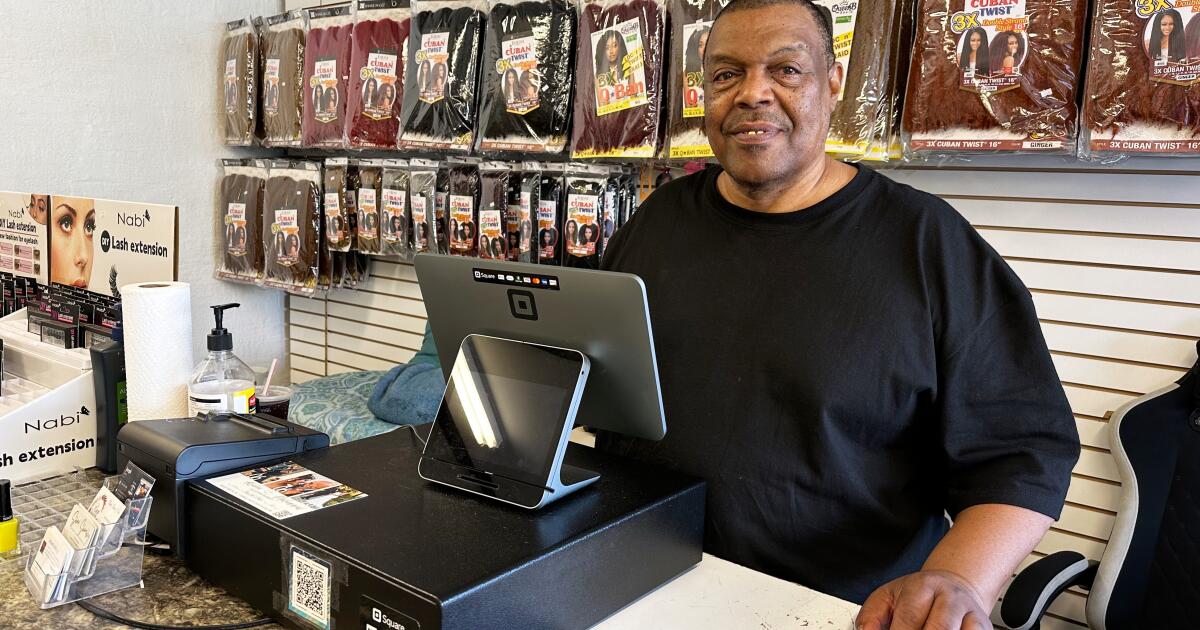
“People don’t come out like they should and ask you how you feel about things,” Brinkley said while he manned the counter at his daughter’s beauty supply store down the street from the Nashville courthouse. “You want somebody to vote, but you don’t want to do nothing to get the vote. No, it don’t work that way.”
Brinkley is among the rural Black residents who Democrats have often failed to mobilize as they try to dent Republican advantages here. It’s an urgent demographic puzzle for the party, which is normally strong with Black voters but tends to fall short in rural areas.
Success could help former Gov. Roy Cooper win a hotly contested U.S. Senate race this year and tilt the balance of power in Washington. It could also reshape presidential elections, providing Democrats with a wider path to the White House.
“People want to look at the word ‘rural’ in North Carolina and equate it to the word ‘white,’” said state party chair Anderson Clayton, a 28-year-old who won her job three years ago promising to expand the party beyond cities. “In my vision of a Democratic Party, when you talk about reaching out to rural voters, you are talking about rural Black voters.”
The Rev. James Gailliard, a former state lawmaker who leads a large Black congregation in Rocky Mount, put it even more bluntly.
“You don’t win this state in Durham,” Gailliard said. “You win it in the east.”
It’s about more than Cooper’s Senate bid
North Carolina is known for the university-heavy Research Triangle that includes Durham, Raleigh and Chapel Hill, along with Charlotte’s banking hub. But it also includes large swaths of small towns and rural areas where Democrats have lost ground in recent decades.
That’s not just because of white voters realigning with Republicans. It’s also because Black voters who lean Democratic don’t vote as often as their urban counterparts. Those rural Black voters are concentrated east of the triangle, extending along winding state highways through small towns, flatlands and farmland toward the Atlantic coastline.
Cooper, 68, won two terms as governor and four terms as state attorney general. However, Republicans control the state courts and the legislature, and they’ve redrawn the congressional map to expand their advantage in the U.S. House. Donald Trump carried the state for Republicans all three times he ran for the White House.
A native of rural Nash County, Cooper already in recent months held roundtable sessions with Black farmers, business owners and civic leaders in eastern North Carolina, along with students from North Carolina A&T University, a historically Black school that draws students from across the state. His campaign promises a statewide organizing effort before November.
Gailliard wants a more intentional effort
But Gailliard wants more.
The founding pastor at Word Tabernacle Church, Gailliard was among the Black state lawmakers who lost seats after Republican-led redistricting. He said regaining ground will require neighborhood-level organizing and investment from national Democrats, something he struggled to get from Kamala Harris’ 2024 presidential campaign.
“I couldn’t get any traction,” Gailliard recalled. “I begged them to bring her to Rocky Mount. I said, ‘Listen, Rocky Mount is the gateway to the East. If we crack Rocky Mount, we’ve cracked the East.’ Could not convince them to come. Two weeks later, guess who’s in Rocky Mount? Donald Trump.”
The Harris campaign sent former President Bill Clinton to the area instead.
Gailliard said Cooper needs people like him to get elected.
“Roy is a great friend, and I’m gonna run my butt off to help him in every way, but I’m not banking on his coattails,” Gailliard said. “I’m going to do the opposite. I’m going to grow coattails for him.”
The state party tries to fill gaps
Clayton, the state party chair, said the national party and its donors haven’t prioritized North Carolina early enough in recent cycles.
She said she’s relied mostly on local money to finance 25 full-time staffers, more than three times what the state party had heading into the 2022 midterms.
Bertie County Democratic chairwoman Camille Taylor, whose hometown of Powellsville has fewer than 200 residents, said she’s felt the shift.
She speaks regularly with a field organizer in nearby Greenville, the city closest to the northeastern counties with large proportions of Black residents. But she said it’s especially difficult to persuade rural voters to care about voting beyond the presidency, even though she tells them “these are the races and the people that you’re going to interact with more.”
Democrats have recruited candidates in all 170 legislative districts — two are Democratic-aligned independents — and every U.S. House district. State Supreme Court Justice Anita Earls, a noted civil rights attorney and Black woman, is running statewide for reelection.
Gailliard said he’s identified a few hundred nonprofits, neighborhood associations and other groups that can do issue-orientated work in his district as the election approaches. He wants to match each of them to specific precincts, routing money for them to reach voters and persuade them to vote.
He wants volunteers to get training from Democratic and left-leaning organizations rather than have the outsiders themselves knocking on rural Black voters’ doors.
“We can’t have 21-year-old recent college graduates from Utah knocking doors at $22 an hour in the hood,” Gailliard said. “That just does not work. They’re not a trusted messenger.”
Marginal voting changes add up
About 2 in 10 North Carolina voters in the 2024 and 2020 presidential elections were Black, according to AP VoteCast, as well as in the 2022 Senate election.
Roughly 4 in 10 Black voters in North Carolina’s last presidential election said they live in small towns or rural communities, similar to the share who said they live in the suburbs. Only about one-quarter reported living in urban areas.
Small shifts in persuasion matter, particularly when races are close. In 2008, Barack Obama became the last Democratic presidential candidate to win North Carolina, by a margin of just 14,000 votes out of 4.3 million votes cast.
Voter turnout between the 2020 and 2024 elections declined more in North Carolina counties that have larger Black populations.
Counties where Black voters make up about 30% to 40% of the electorate saw the biggest drop, with turnout falling by more than 3 percentage points. Counties with smaller Black populations saw more modest declines of about 1 percentage point. Overall, turnout remains higher in counties with fewer Black voters.
An old Cooper schoolmate just wants to be asked
Gailliard said Democrats cannot underestimate how much it means for someone to simply get asked for their vote.
“Black and rural voters are not transactional,” he said. “They are relational.”
Back in Nashville at the beauty supply store, Brinkley agreed.
“You get to be a big wheel, and you can forget where you came from,” Brinkley said. “I ain’t gonna say Roy forgot. He’s a hometown guy, so to speak, but I don’t expect to see him out here walking.”
Brinkley made it clear that if he votes, it would be for Cooper and other Democrats — but only if he votes.
“I could. I could. I may vote,” he said. “There’s just so much going on.”
Barrow and Sweedler write for the Associated Press. Sweedler reported from Washington. AP journalist Linley Sanders in Washington contributed to this report.
Stu Spencer, guru of political gurus, towed three old Latino buddies to the side at his annual holiday party. “Here, listen to these guys,” he said. “You don’t need to quote me.” Minutes later he returned with another, and then another. “They’ll tell ya. . . . Hey Manuel, don’t talk his ear off.”
Manuel Hidalgo, 67, East Los Angeles attorney. Frank Veiga, 59, East Los Angeles mortician. Albert Zapanta, 55, executive vice president of the U.S.-Mexico Chamber of Commerce. . . .
All had one thing in common besides their Mexican ancestry. They’re lifelong California Republicans who are disenchanted with their party. Not just disappointed and discouraged, but downright disgusted.
“I like the [Republican] philosophy, but they don’t like me,” Hidalgo said. “I like ‘em, but I can’t go to the party.”
Zapanta: “The party has too much of a bigot streak in it. And that’s 25 years of Republican activism talking.”
They’ve been working up to this point for years. Proposition 187 pushed them to the edge. Proposition 209 was one more boot. In their view, the policies were bad enough–taking public services from illegal immigrants and dismantling race-based affirmative action. Much worse was the politics.
“187 was racist, bigoted,” said Veiga. “Who’d you see in the ads?”
Not Russians or Asians, he and his friends noted. TV viewers saw Mexicans streaming across the border and were told, in ominous tones, that “they keep coming.” Latinos–even third-generation Americans–saw Republican fingers pointed at them. This year, again, GOP ads pointed to brown skins.
And Latino fingers pointed back–particularly at Gov. Pete Wilson, the wizard of wedge.
“We’ve lost a lot of respect for him,” Veiga said. Added Zapanta: “Pete’s a big boy. He knows what he’s doing.”
*
Playing the race card?
“Pete does not play the race card,” Spencer insisted. “He just got to the point where he believes [the policy].”
Spencer has been a Wilson loyalist for 30-plus years. He won’t criticize him personally. But he does think that the governor’s 187 ads, in the heat of a reelection campaign, “scared the hell out of” Latinos. “The fallout’s going to be around for awhile.”
In fact, Spencer said the dubious duo of 187 and immigrant bashing by conservatives nationally could drive Latinos away from the GOP en masse–just as blacks aligned solidly with Democrats during FDR’s New Deal and, later, the civil rights movement.
Rather than pushing punitive 187, asserted the guru and his Latino buddies, the GOP merely should have attacked President Clinton for neither enforcing the border nor reimbursing the state for its illegal immigrant costs.
Republicans paid the price in last month’s elections. How much of that price is directly attributable to the state ballot props and the Buchanan-style immigrant bashing is only speculative. But clearly it’s substantial.
We do know, according to The Times’ exit polling, that the Latino slice of the California vote jumped 43% between 1992 and 1996, to 10% of the total. In 1992, 51% of Latinos voted for Clinton; this year, 75% did.
Latinos apparently tipped the balance in several legislative and congressional races. A record 14 Latinos were elected to the Assembly, which then elected its first Latino speaker, Cruz Bustamante (D-Fresno).
Bustamante attended Spencer’s party Tuesday night.
*
Pundits and pols everywhere have been expounding on the growing muscle of Latinos. But Spencer has been doing it for decades, mostly to plugged ears.
Although he could steer Ronald Reagan to the governor’s office and the White House and help elect countless other candidates, Spencer has struck out trying to persuade Republicans to focus on Latinos.
“I keep losing every battle,” he lamented. “They don’t get it.”
Spencer, 69, cut his political teeth in East L.A. in the 1950s, organizing Mexican Americans for the party. In the early ‘60s, he opened a community “service center”–precursor to a would-be political machine–and “handed out goodies” like free polio shots. But the GOP shut it down when he left.
“We never have taken advantage of our patronage–judgeships, commissions. You’ve got to get people active and reward them. You’ve got to look at the figures and see that the future of this state is going to be determined by Mexicans. We don’t have to change our basic message–get government off our back, low taxation, family values. . . .
“But I’m past that point. There’s got to be a young Stu Spencer out there somewhere who understands it.”
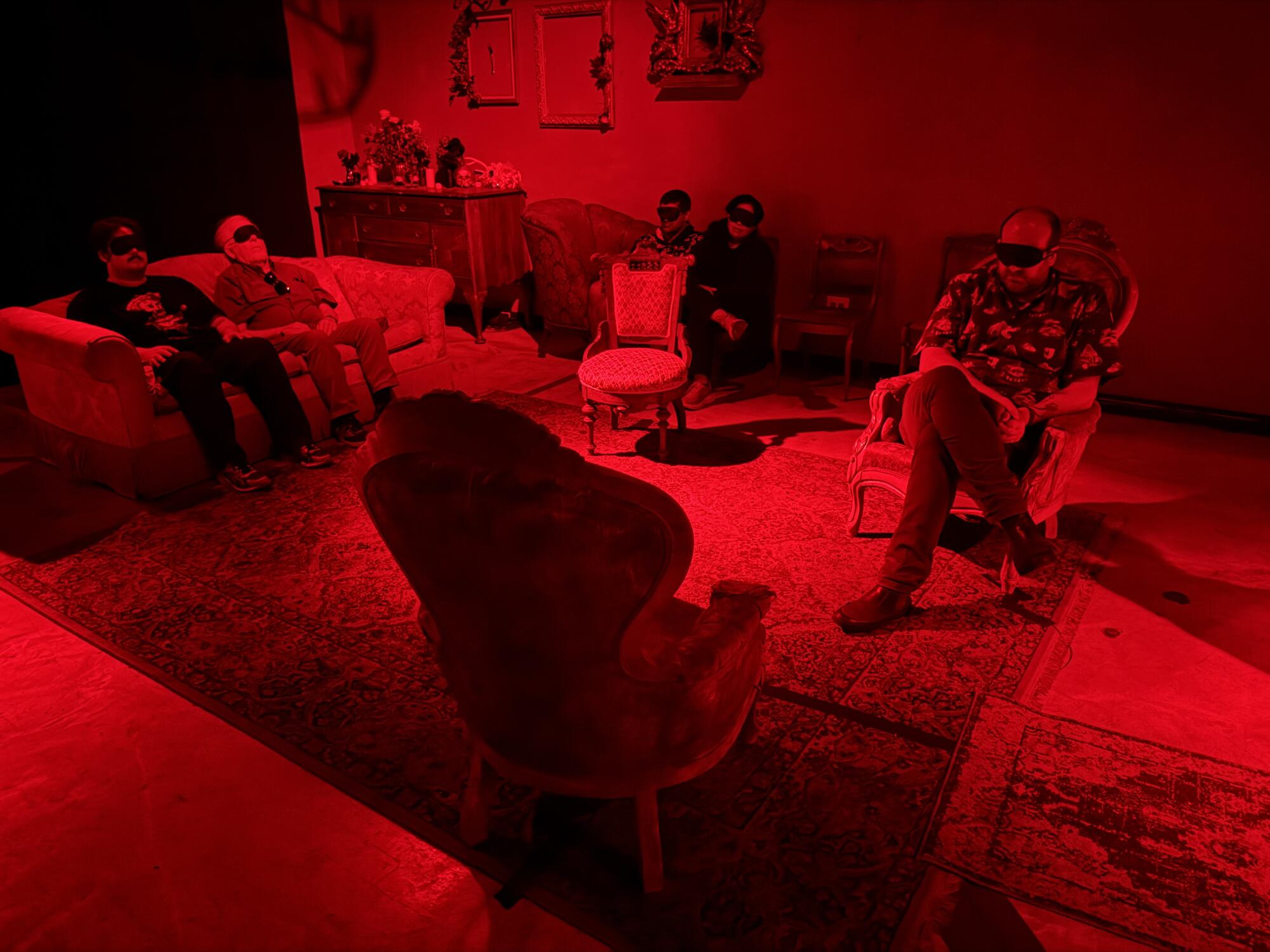
I am blindfolded and seated in a vintage armchair set in the center of a darkened, red-lit room with Gothic accents. An actor is performing nearby. I hear their voice, but cannot, of course, see them. I suddenly spring upward in my seat, alarmed at the touch of some sort of cloth — or perhaps a feather? — across my ankles.
I’ll never be entirely sure. For wearing the small veil across my eyes was a requirement to participate in “Poe: Pulse & Pendulum,” the debut offering from new troupe Theatre Obscura L.A. The company’s initial performance contains two one-act plays, modern interpretations of Edgar Allan Poe’s “The Pit and the Pendulum” and “The Tell-Tale Heart.”
While the stories are familiar to many, Theatre Obscura increases the levels of discomfort. In this room, I am at times unsettled, at once tracking the movements of the actors while attempting to remain hyper aware of any sudden touch or scent. “The Pit and the Pendulum,” the first half of the program, translates especially well to this setting, its dark sense of demented confinement keeping my nerves on high alert.
Conjuring such a state of anxiety was the point.
“If you take the visual away, it’s going to make you feel uneasy,” says Paul Millet, who devised the concept.
There are jump scares. Downtown event space the Count’s Den has been outfitted with about 50 speakers for the Obscura shows, which run through April 12. Some are visible before one puts on the blindfold. Many, though, are hidden under seats or couches, as the audio will trail the actors around the room, or perhaps a sudden crash or door opening will have me jolting my attention elsewhere.
“The Pit and the Pendulum” is a story of torture, and as the narrator, here played by Melissa Lugo, desperately speaks of a blade swinging above, actors will fan us, timing their waves with each swoosh of the audio. I was prepared for that one, as a fellow theatergoer nearby let out a soft yelp when the unseen gestures first arrived above their head.
For many, sight is the most coveted sense. “If you take that away, you’re already naturally uncomfortable,” Millet says. “So we lean into that. We know you’re going to be uncomfortable. We know this is not the norm. But get on that ride with us. Be willing to be uncomfortable. Discomfort, I think, helps to heighten the experience, and ideally allow it to trigger the emotional reactions that the story does.”
“Poe: Pulse & Pendulum” is two one-act, audio-focused performances of Edgar Allan Poe stories.
(Joe Camareno / Theatre Obscura)
Still, touch is limited in the show. Occasionally a rattling of a chair, but little more. The fluttering I felt near my ankles was to mimic the sensation of a running critter. The troupe will ask for audience consent, and participants can opt out. While I went in wondering if “Poe: Pulse & Pendulum” would seek to recall more extreme haunt experiences with lengthy waivers, Millet wanted to keep it light — an audio play, primarily, with just a few in-the-flesh signals.
“We want people to feel unease, but I don’t want anyone taken out of the story because a boundary or line was crossed,” Millet says.
Scent, too, is used with restraint. There are moments when guests will get a whiff of a fragrance that pairs with the storyline. Millet considers the first run of Theatre Obscure to be an experiment in how much touch and scent audiences may want to endure. Smell, he says, is tricky, as the aroma may linger and become a distraction.
Millet has been honing the concept since 2023. Previously, he was part of the team behind Wicked Lit, which ended in 2019 after running for a number of years at unique locations such as Altadena’s Mountain View Mausoleum. Those immersive performances would feature casts and guests walking the venue. Theatre Obscura, however, is fully seated.
“Poe: Pulse & Pendulum” focuses on the fear that something may happen to us when stripped of sight.
(Joe Camareno / Theatre Obscura)
And while the stories of Poe lend themselves to the Halloween season, spooky events increasingly occur year round. Long-running production “The Willows” is set to wrap in early April, and “Monster Party,” a period piece that takes guests to a devilishly extravagant cocktail party, is re-launching in mid-April. Millet, a longtime theater producer who has a day job in television editing, is hoping to stand out by avoiding “the glut” of horror events that occur each September and October.
Theatre Obscura may face challenges, namely persuading potential guests that “The Pit and the Pendulum” is more than simply a live reading with audio effects.
“You can feel the movement of the characters around you,” Millet says. “You’re in the environment with the story as it unfolds. You can experience it on a more visceral level.”
Blindfolded, I felt Theatre Obscura was mostly playing off our fears rather than giving in to them, largely keying in on our anticipation that something may happen to us when stripped of sight. Lugo in much of “The Pit and the Pendulum” circles guests, who are seated sporadically around the room, allowing each of us to imagine how close or far we may be from the hole we are told is at its center. Each show deals with claustrophobia in some way, either of a space, or of a mind.
“The Tell-Tale Heart” is louder, more crowded. The sounds of crashing glass and creaky floorboards had my head working overtime to draw a floorplan, only to then have it distorted when actors would unexpectedly whisper in both of my ears to bring forth the protagonist’s nightmares. While I expected Theatre Obscura to be slightly more aggressive in its uses of touch and scent, it’s a show that asks us to live in our heads, and to sit in our own feeling of trepidation.
“I was intrigued,” Millet says, “with really trying to engage the audience’s imagination.”
SHE is an Oscar-winner married to a former James Bond, but Rachel Weisz says Hollywood made her feel so ugly she considered having plastic surgery.
When the British beauty first went there in the Nineties, she contemplated a nose job, boob job or liposuction to get noticed and boost her career.
Sign up for the Showbiz newsletter
Thank you!
Oscar-winner Rachel Weisz says Hollywood made her feel so ugly she considered having plastic surgeryCredit: Shutterstock EditorialRachel with Leo Woodall in new Netflix thriller VladimirCredit: PARachel in 2015’s YouthCredit: GIANNI FIORITO
Rachel, now 56 and one of the world’s most sought-after stars, said: “I went into quite a major depression.
“I was watching so many daytime TV shows. And then I would get in my car and drive to these auditions while listening to the radio.
“I feel sick now when I listen to the radio, all these commercials for different car dealers.
“I just felt like the world was so desperate and lonely and sad and people were trying to sell cars and no one wanted to buy them.
“People are very focused on their own thing. In LA unless you’ve just won an Oscar or you’re ‘Mr Studio Head’, no one talks to you. Even at parties. I was at this big Hollywood party, and no one looked.
“Everyone is blinkered and they just kind of scan the room for anyone important. LA makes you feel ugly. Because if you’re an actress, no one pays you any attention.
“And you immediately start thinking, ‘God, I must have a nose job. Or, I must get that boob job, or I must get that lipo’, whatever it is.”
For Rachel, who started her career with bit-parts on Inspector Morse and whose new thriller Vladimir was released on Netflix on March 5, real success and happiness came when she turned her back on the glitz and glamour of Los Angeles.
She decided to split her time between London, where she grew up, and New York with her then-partner, director Darren Aronofsky, and their son Henry, now 19.
Rachel, who has been married to 007 actor Daniel Craig since 2011, told Index mag: “There’s not much room for eccentricity in Hollywood, and eccentricity is what’s sexy in people.
“I think London’s sexy because it’s so full of eccentrics.”
The actress’s breakthrough came in 1999 when she landed the role of feisty librarian Evelyn Carnahan in blockbuster The Mummy.
By 2006 her A-list status was cemented when she won the Best Supporting Actress Oscar for The Constant Gardener.
She went on to star in 2009’s The Lovely Bones and 2015’s Youth, as well as 2021 Marvel film Black Widow.
Now Vladimir sees her as married college professor M, whose life spirals into a steamy, all-consuming obsession with her younger colleague, played by One Day and White Lotus star Leo Woodall.
The series is based on the book of the same name by Julia May Jonas, which Rachel describes as a brilliant piece of writing.
She added of the character she plays: “I deeply empathise with her and understand her. But I left her when I got home.
“She’s like a projection of what a viewer might want to live out.”
Rachel and Daniel, who officially ended his 15-year stint as James Bond with No Time To Die in 2021, were friends for years before falling for each other in 2010 while filming thriller Dream House.
Within months they secretly wed in New York and went on to have daughter Grace, now seven. They split their time between Brooklyn in New York and Primrose Hill in North London.
But the couple deliberately choose not to do films together.
Rachel said: “I think we really love our private life as a life, as a family, and then we go to work separately.
“It means we can alternate, so I can stay home with the family while he works. We can swap out. If we’re both doing something at the same time, it’s probably less ideal.”
Rachel grew up in Hampstead, North London, with dad George, a Hungarian-Jewish mechanical engineer, and mum Edith, who originated from Austria and was a teacher-turned-psychotherapist.
The star started modelling at 14 and studied English at Cambridge University, with her parents hoping she would choose a more traditional career.
Rachel told the Sunday Sitdown With Willie Geist podcast: “They were just the kind of parents who were like, ‘You’ve got to get a degree, like you have to go to college’, which in the end I did.
“They wanted me to have a fall-back, so I could be a teacher . . . that would be a really good job.
“My parents would be really happy if I was a teacher. My dad was very sceptical about my career choice. I think he wasn’t very impressed by what I was doing.
“He was my harshest critic for a very long time. I think he only, after a good 15 years, was like, ‘OK, yeah’.
“He was tough — yeah, he was tough, in a good way. He was always honest, he didn’t make it nice. He’d take things apart and say, ‘I didn’t understand what you were doing,’ or, ‘That was a bit wooden’.”
But winning her Oscar changed everything.
Actress Rachel holds her Oscar for her performance in The Constant GardnerCredit: EPA
Rachel said: “That definitely changed my life. Maybe my dad was like, ‘OK, all right, you were OK’.
“He would never be more over the top than that.”
And that Oscar meant she had the freedom to choose the roles she truly wanted, just like the one in Vladimir.
She said: “In the beginning of my career, I just did whatever job I got so I could pay the rent. I wasn’t picky.
“Now I’m in this luxurious position where I can choose things. It’s really about the character and writing, if it appeals to me or if it seems it would be interesting to pretend that story.
“I was never the kind of kid that got on the table and did a tap dance and a song. I wasn’t the star of the school plays or anything. I was actually really shy.
“I think a lot of actors, when I meet them as grown-ups, they go, ‘I was really shy too’.
“I think I’m just a daydreamer. I think storytelling is, in a way, daydreaming, but putting your daydreams into writing and getting people to embody them.
“I think my daydreaming skills have just come into it, I get paid for it.”
Despite now being praised for her stylish looks, ranging from velvet trouser suits to Valentino haute couture, walking the red carpet still makes Rachel nervous even today.
She said: “I don’t think any actress would say doing the red carpet is not terrifying. The way to get through it is to pretend.
“It’s a fantasy, like walking into a fantasy world. These people, they transform you, and that is fun.
“What you see on the red carpet is not a character that has anything to say.
“I used to be very shy, and in a way that was what was so great about the idea of acting. You can hide the real you behind that character.”
But after years of struggling with fame, Rachel says she has finally learned to be content with exactly where she is in life.
She said: “Someone once said to me when I was younger, ‘Never think the best party is somewhere else’. You know that feeling of being somewhere and thinking you should go somewhere better?
“You can’t do that. Wherever you are is the right place to be.”
Whether it’s a long-haul flight or a weekend city break, there’s one item I always ensure I pack, and it’s an absolute game-changer for feeling refreshed, and it costs just £3
I won’t fly anywhere without making sure I have one item in my hand luggage (Image: Amy Jones)
Before jetting off abroad, there are a few essentials I always make sure I pack, and there’s one particular item I can’t go without. While I thought it was pretty common, it turns out not everyone does, and I guarantee it’s a game-changer for feeling fresh after a flight.
Packing my hand luggage ahead of a flight, or any trip for that matter, has become something of a ritual. I’ll lay everything out on my bed, deciding between what is essential and what I can go without (in a bid to save space), tick everything off my mental checklist, and then stuff it neatly into my bag.
My noise-cancelling headphones are often top of the list, followed by my eye mask, my reusable water bottle, hydration tablets and a handful of skincare products, so I can feel somewhat restored, particularly after a long flight. Yet, nestled among my bag and packed alongside everything else is my toothbrush and toothpaste.
After every flight, without fail, I will brush my teeth. Whether that’s on the aeroplane or in the airport bathroom, it’s a lifesaver for feeling refreshed after a flight. And if I ever forget it, I’m a little out of sorts.
Aside from a simple skincare routine to level out the dryness, I guarantee that brushing your teeth before landing will leave you feeling like a new person. And if you’re concerned about using tap water on an aeroplane to brush your teeth, simply go to the bathroom and use bottled water.
I know it’s not glamorous, and I know there are other ways to leave feeling refreshed, but this small everyday item can really do wonders. Plus, there’s nothing worse than walking around worried that you have bad breath, and sometimes chewing gum just doesn’t quite cut it, especially after a long flight, and those G&Ts or red wines.
What’s more, it will barely take up any space in your hand luggage, as nifty travel toothbrushes are available on Amazon. Instead of packing my electric toothbrush, which is a bit unnecessary for a flight, I take a portable bamboo toothbrush that folds into a cylinder case, reducing it to half its size.
Not only does it ensure the toothbrush remains clean, but it also attaches the toothbrush head to the case, creating a standard-sized toothbrush. Plus, it’s good for the environment as it’s made from bamboo rather than plastic.
A pack of two portable bamboo toothbrushes is available from Amazon for £5.99, or just over £3 each. The travel toothbrushes are also handy for any trip, whether that’s a festival, a weekend away, or just having a spare in your bag whenever you want to clean your gnashers. (Boots also offers Bamboo toothbrushes from £3 ).
To accompany my travel toothbrush, I always pack a mini tube of toothpaste to save extra space. I often grab these from my local dentist, but they’re available at various shops, so it really couldn’t be easier to stay refreshed after your flight.
Do you have a travel story to share? Email webtravel@reachplc.com
NESTLED in the Yorkshire Dales, you will find a camping and glamping site with a twist.
Instead of your usual glamping pods, at Catgill Farm, you can stay in Moroccan and Alpine-themed pods.
Sign up for the Travel newsletter
Thank you!
Catgill Farm in Yorkshire features a number of pods with different themesCredit: Catgill ParkFor example, there is a Moroccan-inspired podCredit: Catgill Park
For example, the Alpine-themed pod has a converted ski lift cart outside that is now a booth to sit and eat in.
The Moroccan-themed pod features sleek styling, with bold pinks and oranges and sleeps up to four people via a bunk bed and a double bed.
If you are travelling with your four-legged best friend, then there are options for you as well such as The Duck glamping pod, which has an enclosed outdoor area for your pooch to roam in.
Each of the glamping pods comes with its own private, log-fired hot tub as well.
And for the evenings, you can set light to the fire pit for warmth and barbeques.
Fancy something a little more like camping but still a little refined? Then opt for one of the two luxury bell tents that sleep up to four people.
And of course, they all have views of the rolling Yorkshire Dales.
At night, guests can also make the most of stargazing as the Yorkshire Dales National Park is a designated dark skies area of the UK.
If you do have your own tent, then there is a campsite open between April and October as well, which features 34 electrical hookup pitches.
On-site there are also alpacas known to join morning yoga sessions and a playing field for letting off some steam.
As for facilities, there is everything you could need including modern shower blocks, a washing up area and even a small shop selling essentials such as air beds, coffee, milk and kindling.
If you don’t fancy cooking for yourself, you can grab some food from Cat’s Kitchen which is onsite, serving up hot drinks and wood-fired pizzas.
When it comes to the local area, you’ll be surrounded by amazing walking and cycling routes (even the Tour de France and Tour de Yorkshire routes).
Just a short walk from the campsite itself, you will reach Bolton Abbey Station on the Embsay and Bolton Steam Railway line.
And they all have views of the Yorkshire DalesCredit: Catgill ParkAlternatively, you could stay in a safari-style bell tentCredit: Catgill Park
The station is in the style of the original Midland Railway from the 1800s and a ticket to travel to the half way station and back costs £17 per adult.
Not much further from the campsite, you will find the remains of Bolton Abbey which you can explore.
If you walk for 15 minutes from the glamping and campsite, you will reach the Devonshire Arms brasserie-style pub serving dishes such as sirloin steak and roast beef.
When you stay at Catgill Farm, you can also get 10 per cent off of Shipton Canal Boat Trips and also 10 per cent off of entry to Stump Cross Caverns.
Stays cost from £179.99 per night for one of the glamping pods or from £14 a night for a grass tent pitch.
What’s it like to stay at Catgill Farm?
SUN writer Jamie Harkin recently visited Catgill Farm and here is what he thought…
With a glittering trail of fairy lights as our only guide, my partner Katie and I followed the hill path up to a gorgeous secluded lodge.
Nestled deep within a wooded section of the stunning Yorkshire Dales that locals refer to as ‘God’s own country’, sits Catgill Farm – a working farm that is home to a selection of luxury glamping pods.
Each has everything you need to immerse yourself in the beautiful scenery without having to freeze yourself half to death to do it.
Our home for two nights was the Swiss ski Station pod. A chic apres ski-themed lodge with just the right amount of kitsch, and perfect for enjoying the beauty of the autumnal surroundings.
The attention to detail was immaculate, from the little red and white striped table, to the miniature cable car dining set up outside, it felt like the Alps, although in a destination that’s just a few hours drive away.
It was a joy to take in the rolling hills while we cooked dinner on the outdoor barbeque.
And to top it all, we had our own spacious, log-fired hot tub, where we could take in the surrounding beauty while relaxing in warm, bubbly bliss.
Holloway, 34, first did the point-down against Ricardo Lamas in 2016, while he repeated it against Dustin Poirier last year in becoming the first fighter to defend the BMF title.
In every fight Holloway has initiated the point-down, he has been up on the judges’ scorecards and closing in on a win, meaning he has given opponents one final opportunity to steal victory.
“My coaches aren’t a fan of it, they want me to circle away, stay away and be smart for the 10 seconds,” said Holloway.
“But they come up with great game plans and we execute it to that point. So let me have my 10 seconds of fun, you know. If I’m on the wrong end, then so be it.”
Fans imitate the gesture during meet-and-greets with Holloway, while fellow fighters have also copied it during bouts.
Charles Oliveira, who faces Holloway for the BMF title at UFC 326 in Las Vegas on Saturday, has even been filmed training for the edge-of-your-seat exchange which follows the point-down.
Holloway has created a set of rules for any fighter, including Oliveira, planning to initiate the point-down.
“If you’re winning the fight, you are the person who can call the 10 seconds. And then when you call the 10 seconds, you cannot step back, or shoot or clinch,” said Holloway.
“The other guy, if he obliges and then shoots or clinches, whatever, because he’s on the losing side already.”