federal judge

Trump rails against court decision that once again stalls his White House ballroom project

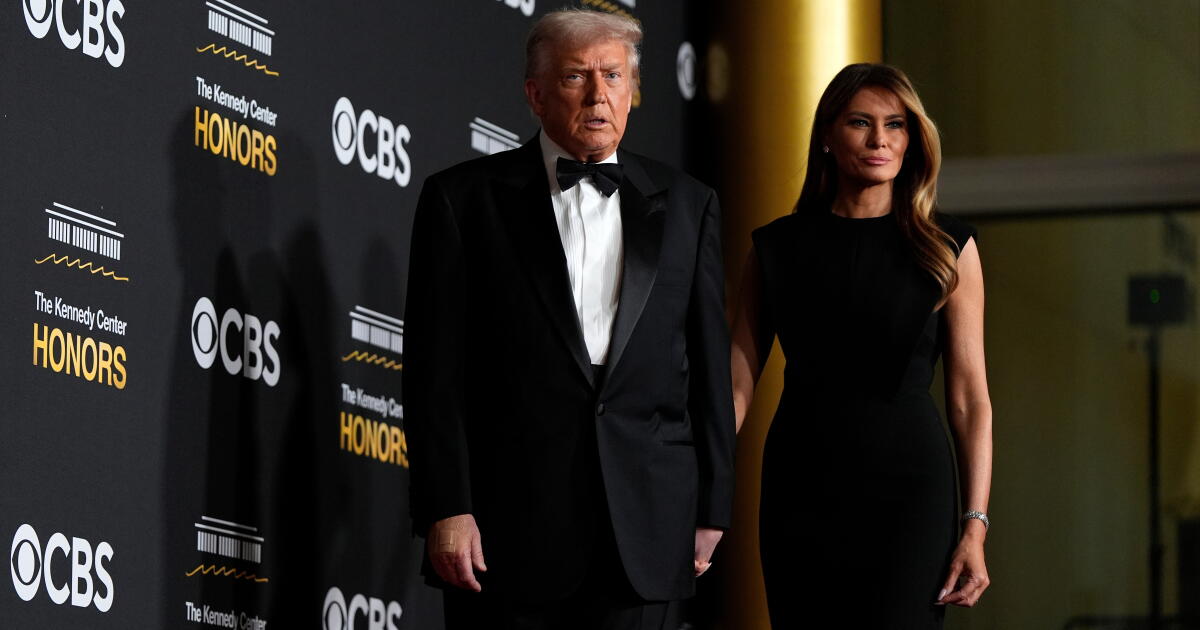
President Trump railed against a federal judge’s decision on Thursday that continues to block above-ground construction of a $400-million White House ballroom, allowing only below-ground work on a bunker and other “national security facilities” at the site.

U.S. District Judge Richard Leon’s latest ruling comes in response to an appeals court’s instruction to clarify an earlier decision on the 90,000-square-foot ballroom planned for the site where the East Wing of the White House once stood.

Trump on social media called Leon, who was nominated to the bench by Republican President George W. Bush, a “Trump Hating” judge who “has gone out of his way to undermine National Security, and to make sure that this Great Gift to America gets delayed, or doesn’t get built.”

The administration filed a notice that it will ask the U.S. Court of Appeals for the District of Columbia Circuit to review Leon’s latest decision, too.

Carol Quillen, president and chief executive of National Trust for Historic Preservation, whose group sued to challenge the project, said in a statement that the group is pleased with the court’s ruling.

Leon said that below-ground work on security measures is exempt from his order suspending above-ground construction. Government lawyers have argued that the project includes critical security features to guard against a range of possible threats, such as drones, ballistic missiles and biohazards.

Leon’s latest ruling comes several days after a three-judge panel from the D.C. appeals court instructed him to reconsider the possible national security implications of stopping construction.

In his previous order, Leon barred above-ground work on the ballroom from proceeding without congressional approval. The judge also ruled on March 31 that any construction work that’s necessary to ensure the safety and security of the White House is exempt from the scope of the injunction. Leon said he reviewed material that the government privately submitted to him before concluding that halting construction wouldn’t jeopardize national security.

Leon had suspended his March 31 order for two weeks. He stayed his latest decision for another week, which gives the administration more time to seek Supreme Court review.

Leon said he is ordering a stop only to the above-ground construction of the planned ballroom, apart from any work needed to cover or secure that part of the project. Otherwise, the Trump administration is free to proceed with the construction of any excavations, bunkers, military installations, and medical facilities below the ballroom.

“Defendants argue that the entire ballroom construction project, from tip to tail, falls within the safety-and-security exception and therefore may proceed unabated,” the judge wrote. “That is neither a reasonable nor a correct reading of my Order!”

On Saturday, the appeals court panel said it didn’t have enough information to decide how much of the project can be suspended without jeopardizing the safety of the president, his family or the White House staff.

Leon said he recognizes the safety implications of the case, but stressed that “national security is not a blank check to proceed with otherwise unlawful activity.” He also said he has “no desire or intention to be dragooned into the role of construction manager.”

On April 2, two days after Leon’s previous ruling, Trump’s ballroom won final approval from the 12-member National Capital Planning Commission, which is charged with approving construction on federal property in the Washington region.

The preservation group sued in December, a week after the White House finished demolishing the East Wing to make way for a ballroom that Trump said would fit 999 people. Trump says the project is funded by private donations, although public money is paying for the bunker construction and security upgrades.

Kunzelman writes for the Associated Press.

Source link

Lawyer says guards beat and pepper-sprayed detainees at Florida’s ‘Alligator Alcatraz’

Guards severely beat and pepper-sprayed detainees at a state-run immigration detention center known as “Alligator Alcatraz” in the Florida Everglades this month, according to a lawyer for two detainees.

The guards targeted Katherine Blankenship’s clients and other detainees at the facility after they complained about not having phone access on April 2, Blankenship said in a court declaration.

The phones, which weren’t functioning, are the primary way for detainees to communicate with family and their attorneys while in the detention center. The guards began taunting the detainees, who were in a cell, then became “more aggressive and were yelling and threatening to enter the cage,” Blankenship wrote.

When one detainee approached a guard, he was punched in the face. The guards then started beating other detainees in the cell. One of Blankenship’s clients was punched in the right eye, thrown to the floor and beaten by several guards. He was kicked in the head and his shoulder and arm were injured. A guard put his knee on the detainee’s neck while restraining him, according to the attorney’s declaration, which included a photo made during a video call almost a week later showing the detainee with a bruised eye.

“The officers beat several people during this incident and broke another detained individual’s wrist,” Blankenship wrote. The detainee whose wrist was broken is not one of her clients.

Phone service was restored the next day without any explanation for why it was cut off.

The Florida Department of Emergency Management didn’t respond to questions emailed Wednesday about the incident.

Blankenship’s declaration was included in a court filing accusing state and federal officials of failing to comply with a federal judge’s preliminary injunction last month ordering detention center officials to provide access to timely, free, confidential, unmonitored and unrecorded outgoing legal calls. U.S. District Judge Sheri Polster Chappell in Fort Myers, Florida also said facility officials must provide at least one operable telephone for every 25 people held in the facility.

The judge’s order came in a response to a lawsuit that claimed detainees’ First Amendment rights were being violated.

State officials have denied restricting detainees’ access to their attorneys and cited security and staffing reasons for any challenges. Federal officials who also are defendants denied that detainees’ First Amendment rights were violated. State officials last week filed a notice that they plan to appeal the judge’s order.

The Everglades facility was built last summer at a remote airstrip by Republican Gov. Ron DeSantis’ administration to support President Trump’s immigration policies. Florida also has built a second immigration detention center in north Florida.

During a visit last week to the detention center, U.S. Rep. Debbie Wasserman Schultz, a Florida Democrat, said she wasn’t given the chance to talk to detainees. She described conditions at the detention center as “inhumane.”

“The way the detainees are housed is cruel and unnecessary,” she said.

Schneider writes for the Associated Press. AP journalist Gisela Salomon in Miami contributed to this report.

Source link

A federal judge dismisses another Justice Department lawsuit seeking voter data, this time in Massachusetts

A federal judge on Thursday dismissed a lawsuit from the U.S. Department of Justice seeking Massachusetts’ state voter rolls, marking the latest setback in a wide-ranging effort by the Trump administration to collect detailed data on the nation’s voters.

The ruling from U.S. District Court Judge Leo Sorokin marks at least the fifth time a judge has rejected similar attempts by the Justice Department. Sorokin, an appointee of former President Barack Obama, said the U.S. attorney general’s office did not take the necessary steps required to access voter rolls, as outlined in federal law.

“Put simply, the statute requires a statement of why the Attorney General demands production of the requested records,” Sorokin wrote. That statement has to be factual, “not just a conceivable or possible basis.”

In an emailed response, the Justice Department said it “does not comment on ongoing litigation.”

It has said it’s seeking the voter data as part of an effort to ensure election security, but Democratic and Republican officials in several states have refused, saying the demand violates state and federal privacy laws. Some have raised concerns that federal officials will use the sensitive data for other purposes, such as searching for potential noncitizens.

During a hearing last month in Rhode Island, a Justice Department attorney told a federal judge that the department was seeking unredacted voter roll information so it could be shared with the Department of Homeland Security to check citizenship status. Homeland Security over the past year has beefed up the Systematic Alien Verification for Entitlements, or SAVE, program, for just this purpose.

“Our intention is to run this against the DHS SAVE database,” Department of Justice attorney Eric Neff told U.S. District Judge Mary McElroy during a March 26 hearing challenging the federal government’s authority to access the voter data.

The Justice Department has sued at least 30 states and the District of Columbia seeking to force release of the data, which includes dates of birth, addresses, driver’s license numbers and partial Social Security numbers.

At least 12 states have either provided or promised to provide their detailed voter registration lists to the department, according to the Brennan Center: Alaska, Arkansas, Indiana, Louisiana, Mississippi, Nebraska, Ohio, Oklahoma, South Dakota, Tennessee, Texas and Wyoming.

In the Massachusetts case, the the judge found that the Justice Department failed to follow the requirements for demanding the voter rolls set by a 1960 civil rights law.

That law, enacted as part of an effort to end racial discrimination in elections, says state voter records must be made available for inspection by the U.S. attorney general if the office includes a statement outlining why the information is being demanded and how it will be used.

The department’s letter demanding Massachusetts’ voter data made no reference to the Civil Rights Act and didn’t cite any concerns about the way Massachusetts complied with federal voting laws, the judge said. Most importantly, it didn’t include any factual basis for the demand, Sorokin wrote.

In court documents, the Justice Department said it was demanding the data to check for “Massachusetts’ possible lack of compliance” with federal voter registration list requirements. It also said the Civil Rights Act was designed to be an investigatory tool to identify federal election law violations and argued that the U.S. attorney general can’t be required to prove a violation before seeking evidence of one.

“These arguments miss the point,” Sorokin wrote.

Massachusetts Atty. Gen. Andrea Joy Campbell called the ruling a decisive win for voters and the rule of law.

“The privacy of our voters is not up for negotiation, and I will continue to defend the integrity and security of our elections from the Trump Administration’s cruel and harmful agenda,” she said in a news release.

Four federal judges in other states have dismissed similar lawsuits from the Department of Justice.

A federal judge in Michigan found the laws cited by the Justice Department do not require the disclosure of the voter records sought by the federal government. A federal judge in California said the administration “may not unilaterally usurp the authority over elections,” which the Constitution gives to the states and Congress. A federal judge in Oregon said the federal government was not entitled to unredacted voter registration lists containing sensitive data.

A federal judge in Georgia dismissed a Justice Department lawsuit because he found it had been filed in the wrong city. The federal government then refiled the lawsuit in the city specified by the judge; that case is ongoing.

The Justice Department has appealed the Oregon, California and Michigan dismissals.

Boone writes for the Associated Press. Boone reported from Boise, Idaho. AP writer Kimberlee Kruesi in Providence, R.I., contributed to this report.

Source link

Federal judge could halt Nexstar-Tegna TV station merger

A federal judge appears willing to block a $6.2-billion merger of two large TV station groups as he evaluates whether Nexstar Media Group’s takeover of a rival violates U.S. antitrust laws.

At the conclusion of a two-hour hearing in Sacramento on Tuesday, U.S. District Court Chief Judge Troy L. Nunley signaled he was preparing to issue a preliminary injunction that would prevent Nexstar and Tegna from combining operations amid an ongoing legal challenge.

Nunley said he would draft a written order, which is expected by Friday.

Previously, Nunley had issued a temporary restraining order to pause the merger.

Last month, Nexstar raced to finalize its blockbuster purchase of Tegnadespite a lawsuit filed by California Atty. Gen. Rob Bonta and seven other state attorneys general. The state officials, all Democrats, claimed the massive merger would give Nexstar too much control over local TV stations, ultimately hurting consumers by diminishing the diversity and quality of their newscasts.

California Deputy Attorney General Laura Antonini argued that when news consolidates, it results in a loss of diverse viewpoints.

“That’s extremely harmful to democracy and to the citizens of this state,” she said at the hearing.

President Trump has championed the Nexstar-Tegna merger, suggesting it would diminish the clout of the major TV networks, including those he often gripes about: ABC and NBC. Nexstar, based in Irving, Texas, owns dozens of network affiliate stations.

Nexstar, which also owns KTLA-TV Channel 5 in Los Angeles, already is the nation’s largest station group. The deal was expected to reshape the local television industry by extending Nexstar’s reach to 265 television stations, up from 164.

If the acquisition is finalized , Nexstar stations would cover 80% of the U.S. population, exceeding a 39% ownership cap set by Congress.

El Segundo-based DirecTV separately sued, alleging the combination of the nation’s two largest television station groups would do irreparable harm to its pay-TV business by raising prices and potentially increasing programming blackouts.

Representatives of Nexstar, DirecTV and Bonta’s office declined to comment after Tuesday’s hearing.

During the hearing, Nexstar attorney Alexander Okuliar, argued against an injunction, saying the plaintiffs had failed to demonstrate that the merger posed an immediate threat to the public. He said DirecTV and the attorneys general had only offered proposed financial harms.

In court documents, the state attorneys general and DirecTV alleged the deal would give Nexstar multiple TV stations in dozens of markets. That raised concerns about layoffs in an industry that has sustained significant downsizing in recent years as viewers and advertisers migrate to streaming options and social media platforms like TikTok.

Nexstar could “shut down local newsrooms in dozens of markets, reducing the amount, variety, and quality of local broadcast news that Americans rely on for trusted information about their communities,” DirecTV alleged.

For example, Nexstar owns the Fox station in Sacramento, while McLean, Virginia-based Tegna owns the ABC affiliate.

Okuliar pushed back, saying there was no evidence that local newsrooms would be shuttered.

“One of the reasons for this deal is to protect local broadcasters, to protect local journalism,” he told the judge.

Nexstar contends the deal would strengthen TV station economics, allowing stations to bolster their news gathering and expand the number of newscasts. The company cited dozens of awards won by Nexstar journalists, including in Oklahoma City.

In addition to Bonta, the plaintiffs include state attorneys general in Colorado, Connecticut, Illinois, New York, North Carolina, Oregon and Virginia.

Nearly two dozen lawyers attended the hearing on behalf of the other plaintiffs. Eight lawyers represented Nexstar and Tegna.

Nexstar Chief Executive Perry Sook and Chief Operating officer Michael Biard also attended.

In its complaint, DirecTV argued that it would suffer financial harm because Nexstar would use its increased heft to demand significantly higher fees for the rights to carry its network-affiliate stations, which carry local news, primetime shows and professional sports, including NFL football. Such programming disputes can lead to blackouts which infuriate customers.

Nexstar’s lawyers disputed such allegations, telling the judge the merger would ultimately increase the value of content. The company suggested the deal could lower prices for distributors like DirecTV, which has about 10 million customers nationwide.

Nunley recently combined the DirecTV and state attorneys general lawsuits into one.

The judge, who was elevated to the federal bench by President Obama, had already expressed concerns about the merger.

In his March 27 order granting the temporary restraining order, Nunley said DirecTV had demonstrated that it could prevail at a trial due to the merits of its arguments.

He then instructed Nexstar to “immediately cease all ongoing actions relating to integration and consolidation of Nexstar and Tegna.”

Instead, the Tegna unit must continue to operate independently as “an ongoing, economically viable, and active competitor,” the judge wrote.

The Nexstar-Tegna merger took on political overtones in early February after Trump threw his weight behind it, writing in a post on Truth Social that the proposed union was among the “good deals,” because it would provide competition against “THE ENEMY, the Fake News National TV Networks.”

“GET THAT DEAL DONE!” Trump wrote.

The state attorneys general sued to block the merger on March 18, when the transaction was still pending at the U.S. Justice Department, which is tasked with conducting anti-trust reviews, and the Federal Communications Commission, which oversees TV station licenses.

The DOJ and FCC blessed the deal the following day.

Within an hour, Nexstar announced that it finalized the transaction and that Tegna had been disbanded.

“It’s very rare to do what Nexstar did here,” DirecTV’s attorney Glenn Pomerantz said.

Nexstar had asked the judge to require the plaintiffs to post a $150 million bond to compensate it for damages it would suffer from any delays in closing the deal.

Source link

Citing First Amendment, federal judge blocks Trump order to end funding for NPR and PBS

Citing the First Amendment, a federal judge on Tuesday agreed to permanently block the Trump administration from implementing a presidential directive to end federal funding for National Public Radio and the Public Broadcasting Service, two media entities that the White House has said are counterproductive to American priorities.

The operational impact of U.S. District Judge Randolph Moss’ decision was not immediately clear — both because it will likely be appealed and because too much damage to the public-broadcasting system has already been done, both by the president and Congress.

Moss ruled that President Trump’s executive order to cease funding for NPR and PBS is unlawful and unenforceable. The judge said the First Amendment right to free speech “does not tolerate viewpoint discrimination and retaliation of this type.”

“It is difficult to conceive of clearer evidence that a government action is targeted at viewpoints that the President does not like and seeks to squelch,” wrote Moss, who was nominated to the bench by President Barack Obama, a Democrat.

Punishment for ‘past speech’ cited in decision

The judge noted that Trump’s executive order simply directs that all federal agencies “cut off any and all funding” to NPR, which is based in Washington, and PBS, based in Arlington, Virginia.

“The Federal Defendants fail to cite a single case in which a court has ever upheld a statute or executive action that bars a particular person or entity from participating in any federally funded activity based on that person or entity’s past speech,” the judge wrote.

Last year, Trump, a Republican, said at a news conference he would “love to” defund NPR and PBS because he believes they’re biased in favor of Democrats.

“The message is clear: NPR and PBS need not apply for any federal benefit because the President disapproves of their ‘left wing’ coverage of the news,” Moss wrote.

NPR accused the Corporation for Public Broadcasting of violating its First Amendment free speech rights when it moved to cut off its access to grant money appropriated by Congress. NPR also claims Trump wants to punish it for the content of its journalism.

“Public media exists to serve the public interest — that of Americans — not that of any political agenda or elected official,” said Katherine Maher, NPR’s president and CEO. She called the decision a decisive affirmation of the rights of a free and independent press.

PBS chief Paula Kerger said she was thrilled with the decision. The executive order, she said, is “textbook” unconstitutional viewpoint discrimination and retaliation. “At PBS, we will continue to do what we’ve always done: serve our mission to educate and inspire all Americans as the nation’s most trusted media institution.”

Last August, CPB announced it would take steps toward closing itself down after being defunded by Congress.

A victory, though incremental, for press freedom

Plaintiffs’ attorney Theodore Boutrous said Tuesday’s ruling is “a victory for the First Amendment and for freedom of the press.”

“As the Court expressly recognized, the First Amendment draws a line, which the government may not cross, at efforts to use government power — including the power of the purse — ‘to punish or suppress disfavored expression’ by others,” Boutrous said in a statement. “The Executive Order crossed that line.”

The judge agreed with government attorneys that some of the news outlets’ legal claims are moot, partly because the CPB no longer exists.

“But that does not end the matter because the Executive Order sweeps beyond the CPB,” Moss added. “It also directs that all federal agencies refrain from funding NPR and PBS — regardless of the nature of the program or the merits of their applications or requests for funding.”

While Trump was sued in this legal action, the case did not include Congress — and the legislative body has played a large role in the public-broadcasting saga in the past year.

Trump’s executive order immediately cut millions of dollars in funding from the Education Department to PBS for its children’s programming, forcing the system to lay off one-third of the PBS Kids staff. The Trump order didn’t impact Congress’ vote to eliminate the overall federal appropriations for PBS and NPR, which forced the closure of the Corporation for Public Broadcasting, the entity that funneled that money to the TV and radio networks.

Kunzelman writes for the Associated Press. AP writer David Bauder contributed to this report.

Source link