
Market expectations for an October Federal Reserve rate hike tumbled to just over 50% on Tuesday after New York Fed President John Williams indicated he is in no rush to increase borrowing costs next month.
After the Federal Open Market
By Christopher RugaberAP Economics Writer
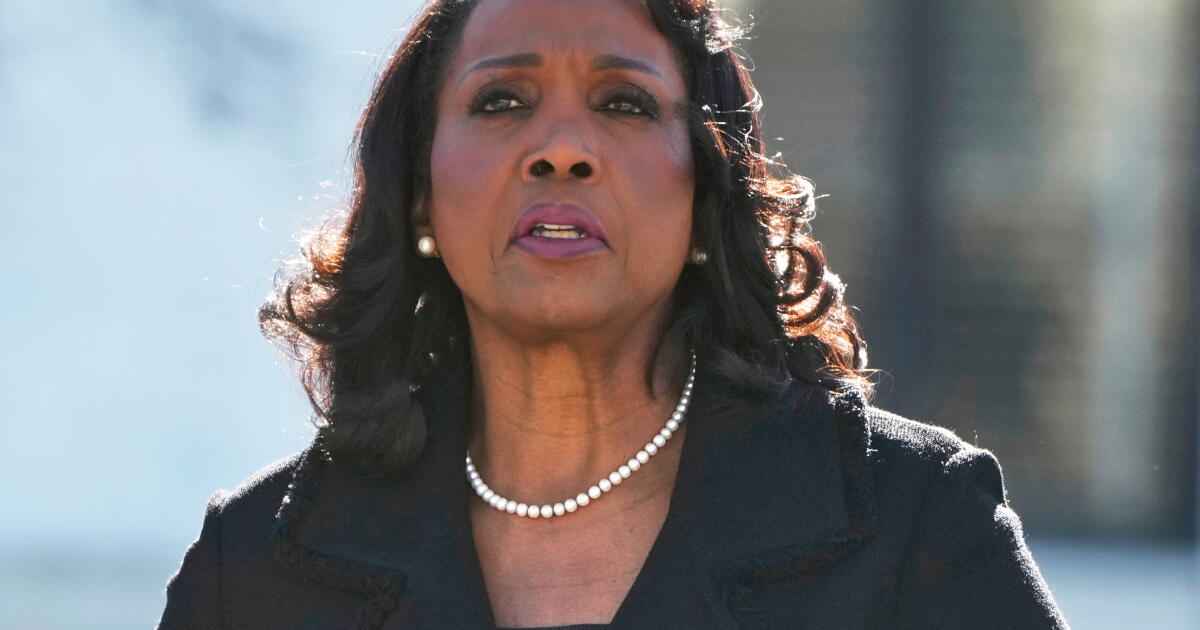
WASHINGTON — Federal Reserve governor Lisa Cook’s lawyers say that a committee set up by the White House last week to investigate an accusation against her is “demonstrably biased,” though they did not close the door on the possibility that she would appear before the panel.
Lawyer Abbe Lowell also said in a letter Tuesday that Cook would not be able to participate in a hearing Nov. 5 because she “will be executing her official duties as Governor at financial and monetary policy meetings in Europe.”
The earliest that Cook could appear before a “committee of inquiry” that the White House set up last Friday would be after the Fed’s policy meeting Dec. 8-9, the letter said. The letter was sent to William Scharf, a counsel to President Trump.
Lowell’s comments are the latest turn in the Trump administration’s extended efforts to fire Cook from her position as one of seven members of the Fed’s board of governors. Trump has accused Cook of committing mortgage fraud in 2021, before she joined the board, a claim she has denied. No criminal charges have been filed.
No president has fired a Fed governor before, a reflection of the Fed’s traditional independence from politics. Yet Trump, who has repeatedly demanded that the central bank lower its key interest rate, has taken numerous steps that economists say have threatened that independence. The Justice Department earlier this year sought to investigate then-Chair Jerome Powell over brief testimony he had given about an extensive building renovation, though a judge threw out subpoenas in the case and it was later dropped.
Cook was appointed by former President Biden and is the first Black woman on the Fed’s board.
Trump first tried to fire Cook in August 2025, but the Supreme Court ruled earlier this year she could remain in her position while litigation continued. The court also suggested, in a footnote to the ruling, that Trump could try again to fire her if the administration provided her adequate notice and an opportunity to respond. The committee of inquiry announced by the White House last Friday is an effort to meet those conditions.
Under the law governing the Fed, the president can only fire a Fed governor “for cause,” but the Supreme Court didn’t address whether Cook’s actions met that standard. The committee of inquiry will ultimately recommend whether there is cause to fire Cook, a White House memo last week said.
Lowell also said in the Tuesday letter that “we have significant concerns regarding the objectivity and fitness of the committee for its assigned purpose.”
One of its three members, Kevin Hassett, a top economic adviser to Trump, has already said the president has “cause” to fire Cook, the letter noted. The other two members — Labor Secretary Keith Sonderling and chair of the Equal Employment Opportunity Commission Andrea Rich — are also Trump appointees.
“A hearing with demonstrably biased members, unspecified additional allegations, and an unclear schedule for the disclosure of any additional evidence – with no explanation for why it was not previously produced – is not a process that respects the appearance or history of independence,” Lowell’s letter said.
Rugaber writes for the Associated Press.
By Christopher RugaberAP Economics Writer
WASHINGTON — President Trump opened another chapter in his effort to fire Federal Reserve Governor Lisa Cook Friday by establishing a “committee of inquiry” to investigate allegations that she made false statements in mortgage applications.
The inquiry will include a hearing at the White House Nov. 5, Trump said in a written memo, that Cook “shall” attend to answer questions from the committee. The hearing wouldn’t be public but a transcript would be published, the memo said.
Trump’s extraordinary demand that Cook testify before the committee will likely renew concerns about threats to the Federal Reserve’s independence as the president demands the central bank cut its key interest rate. Just last month, the Fed raised its key rate instead, led by Chairman Kevin Warsh, whom Trump appointed earlier this year.
“As President, it is my job to ensure the laws are faithfully executed, including by firing subordinates who cannot be trusted to tell the truth and follow the law,” Trump wrote in the memorandum.
Trump and some of his economic advisers have blamed the Fed’s broader rate-setting committee, which includes 12 voting members and 19 officials in total, for the rate hike. Cook is one of the 12 participants on the committee that votes on interest-rate decisions. The vote to lift rates Sept. 16 was unanimous.
The move follows a Supreme Court ruling in June that Cook could keep her job after Trump sought to fire her last year. That ruling included a footnote that said nothing prevented Trump from “trying again” as long as she was given proper notice and an opportunity to respond to the charges.
Cook has denied any wrongdoing and has not been charged with a crime.
Rugaber writes for the Associated Press.
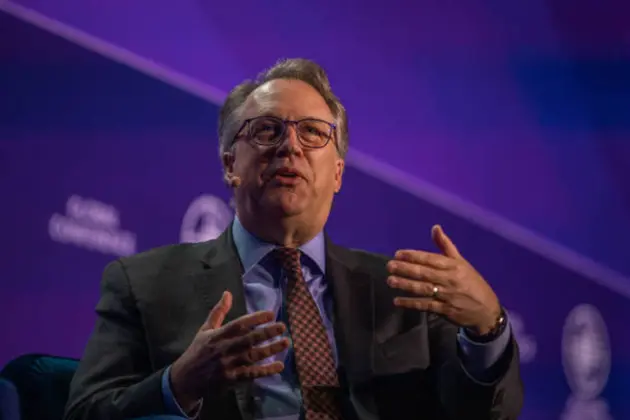
Market expectations for an October Federal Reserve rate hike tumbled to just over 50% on Tuesday after New York Fed President John Williams indicated he is in no rush to increase borrowing costs next month.
After the Federal Open Market
IF you’ve ever struggled with agreeing on where to go on holiday, getting the same time off as your mates or simply wanted to split off and do your own thing – this one’s for you.
Holiday company Opodo has looked into why more and more Brits are choosing to go away on solo holidays, plus they offer package deals that make it cheap and easy to do so.
It’s that freedom to do what you want that makes a solo holiday so appealing, as ‘travellers are no longer waiting for someone else to be available before they book.’
And it turns out travelling alone has loads of benefits too, with 47% of solo-travelling Brits saying it makes them feel more capable, and 32% saying it gives them better mental clarity.
Not only is a solo holiday good for self-confidence, but it can work out to be very cheap, too.
When you’re only visiting the attractions you want to go to, you have complete control over the holiday budget – so you can skip the expensive museums you didn’t really care about, or the fancy sit-down meals when you wanted to try the street food.
Read more on cheap holidays
If you’re planning a solo holiday, with Opodo you can save up to 40% off breaks if you book your flights and hotel together as a package.
From Spanish city breaks to red sand beaches and sunny islands, here’s our pick of Opodo’s best value solo holiday deals.
Book a break to Barcelona for great beaches, food and architecture that makes walking around the city feel like strolling through a giant, open-air museum.
When you’re not admiring Gaudi’s House of Bones or the world-famous Sagrada Familia, the Picasso Museum and MACBA (museum of contemporary art) both offer free entry.
Come evening, the bars around El Born and Gracia are made for pulling up a stool at the counter, tucking into some delicious tapas and getting to know some fellow travellers over a cheap beer.
This Opodo offer includes a stay at the clean and comfortable Hotel 170, plus return flights from Manchester.
A city made up of maze-like streets, colourful bazaars and gorgeous mosques, Istanbul is perfect for a solo holiday.
Wander through its historic centre at your own pace, stopping to take pictures of the impressively giant Blue Mosque and Hagia Sophia.
Then stroll across the Galata Bridge to watch fishermen and tea sellers stroll along the Bosphorus sea strait at sunset.
This deal includes return flights from London plus a stay at Hamzabey Hotel, which is a 10-minute drive from Grand Bazaar and Galata Tower.
Whether you’re after a slow-paced break to chill and stroll alongside pretty canals, or an action-packed weekend ticking off all the amazing museums, Amsterdam is an ideal solo holiday destination.
You can visit the OSCAM art museum, the quirky ‘Mouse Mansion’ and the Amsterdam City Archives all for free. But if you’re wanting to tick off all the big sights, opt for a city card (£58), which gives you access to over 70 of the city’s top museums and attractions.
To soak up the outdoors, Vondelpark and Rijksmuseum gardens are totally free to visit and make for a great spot to sit and watch the world go by.
This deal is for a stay at the Boutique Hotel 43 Zaandam, which sits in a quiet spot shaded by trees that is only 15 minutes’ drive from Vondelpark.
With year-round sunshine, dramatic volcanic landscapes and plenty of cheap, laid-back bars and restaurants to grab a sundowner, why would you not book a break to Tenerife?
There’s plenty to explore here, including Teide National Park, a UNESCO World Heritage site overlooked by two incredible twin volcanoes.
If you’re less into hiking and more into partying, make sure to visit the strip on Playa de las Americas, which is packed with lively bars.
This deal includes return flights from London plus a stay at the Grand Muthu Golf Plaza Hotel, a sprawling holiday resort with a giant pool and its own spa.
Once you’ve touched down on the island, Santorini’s postcard-perfect views come free of charge, from the cascading clifftops of Fira to the sunsets behind the blue domes of Oia.
It’s easy to spend all of your time drifting between these dramatic viewpoints, but make sure to spend some time discovering Santorini’s beaches.
At Kamari Beach you’ll find rich black sand, while Red Beach gets its name from sand made from its rust-coloured volcanic cliffs.
This Opodo deal includes a stay at Castro Hotel, a friendly, family-owned spot surrounded by green gardens in the coastal village of Kamari.
Prices correct at the time of publication.
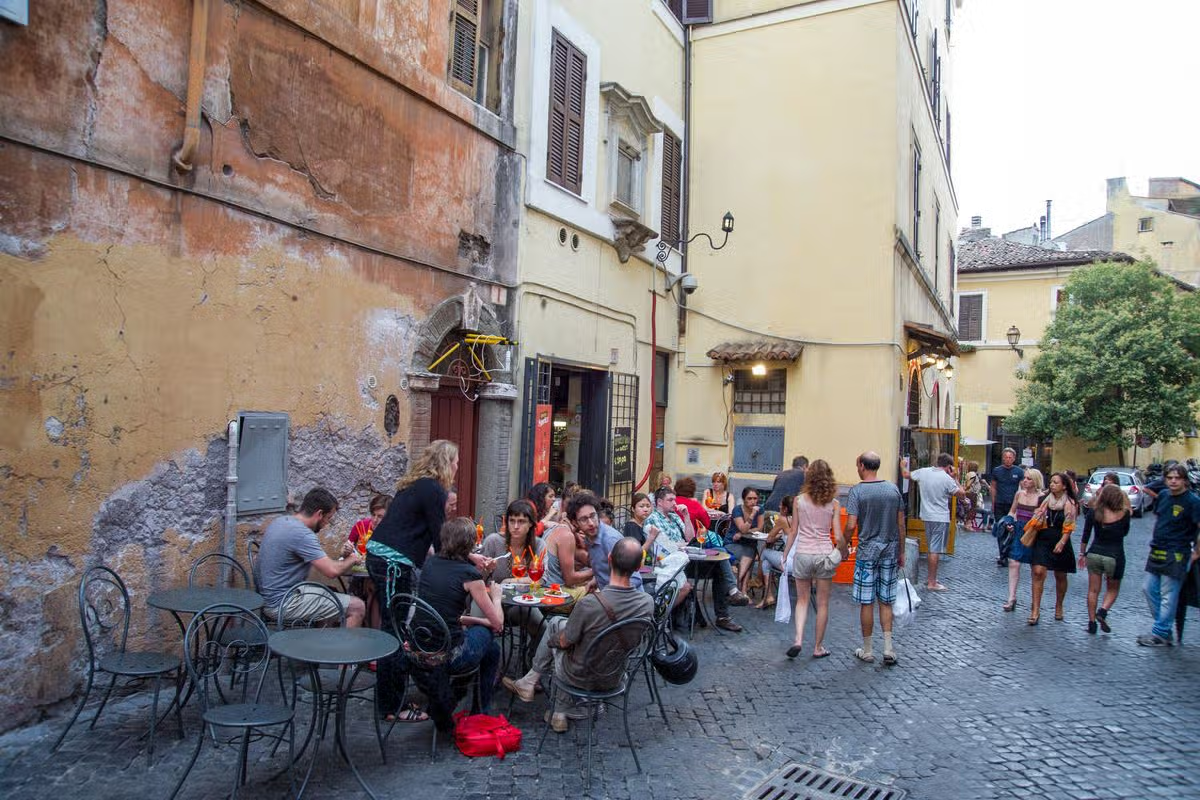

Trastevere neighbourhood in Rome
A frustrated Italian local has admitted to dousing rowdy, “drunk” British tourists with buckets of water after they disturbed her in the night. Locals in Rome’s Trastevere district complain that UK and US tourists have been making noise beneath apartments in the early hours, leading one 74-year-old to resort to extreme measures.
Rome has long been a popular holiday destination, drawing in millions of visitors each year. Tourists flock to the Italian capital to soak up the city’s Roman history and art, and enjoy its nightlife and world-famous cuisine.
With the swathes of tourists comes a downside, though: some allegedly get “extremely drunk” and cause a nuisance in the middle of the night. Local Simonetta Marcellini told The i Paper that she keeps buckets of water by her window.
She said: “At first I’m polite, and I point out to them that it is the early hours of the morning and that people will be sleeping. The moment they start arguing back and insulting me, I pour water on them.”
Simonetta, a former radiographer born in the area, has grown frustrated with the changes she’s witnessed. She claims there has been a marked decline in the quality of restaurants, and businesses have been replaced by bars and sandwich shops.
Meanwhile, Rome was inundated with 22.9 million visitors last year, a figure said to be more than seven times the local population. Simonetta decided she’d had enough when she spotted tourists urinating against her building.
She claims that life has “gotten much worse” in relation to tourism since the Covid pandemic. “Regulations are fewer and our complaints from years ago were underestimated.
“So a phenomenon that could have been controlled was practically left unchecked and we’ve arrived today with all the reckless partying.”
It comes after British holidaymakers were warned they could face a 500 euro fine in “some Italian towns”. The Foreign, Commonwealth and Development Office (FCDO) plays a crucial role in keeping Brits informed when travelling.
In its travel advice section for Italy, the FCDO warns that “some Italian towns and cities have specific laws, and you could be fined for breaking them”.
Some of the acts include eating and drinking near certain churches, historic monuments and public buildings. It’s also important to remember that entering or bathing in many public fountains is prohibited – including in Rome.
On the sun-kissed island of Capri (situated off Italy’s Amalfi Coast), a rule is in place regarding disposable plastic. Visitors are banned from bringing items such as plastic bags, cutlery, cups, trays, or straws onto the island.
Further FCDO guidance reads: “Illegal traders operate on the streets of all major Italian cities. It is illegal to buy items from unlicensed street traders. If you do, you could be stopped by the local police and fined.
“It’s illegal to remove sand, shells or pebbles from coastal areas in Italy. You could face a large fine for doing so. It’s also illegal to collect various species of flowers, plants and herbs from mountain and wooded areas.
“For more information, check with the regional authorities of the area you’re visiting.”

Published on •Updated
Investors in Europe took the Federal Reserve rate hike in their stride.

Both the Euro Stoxx 50 and the broader pan-European Stoxx 600 traded over 0.6% higher at the start of Thursday’s session.
France’s CAC 40, Germany’s DAX 30, Italy’s FTSE MIB, Spain’s IBEX 35, the Netherlands’ AEX and Switzerland’s CH20, all traded between 0.2% and 0.7% higher than their Wednesday close.
The UK’s FTSE 100 led the pack and rose more than 1%.
Carmakers and industrials led the Paris index, with Renault gaining more than 2%, Stellantis 1.6% and Schneider Electric 1.3%. Technology went the other way, with Dassault Systèmes falling 2.4%.
The calm followed a rougher session in New York, where the Dow Jones Industrial Average closed 1.2% lower on Wednesday and the S&P 500 fell 0.4%, while the Nasdaq was broadly flat.
Asian markets were mixed overnight with Tokyo’s Nikkei 225 rising 0.2%, Seoul’s Kospi gaining 0.9%, while Hong Kong’s Hang Seng lost 0.7% and the Shanghai Composite 0.4%.
Reactions were “pretty much expected since the rate hike was also in line with market expectations”, said Lorraine Tan, director of equity research for Asia at Morningstar, adding that the Iran war is likely to keep pressure on inflation.
The more consequential moves were in currencies and bonds.
The US dollar climbed to its highest in seven weeks against a basket of major currencies, lifted by the jump in short-dated Treasury yields that followed the decision.
The euro was trading around $1.146, down 0.5% from Wednesday’s open.
A stronger US dollar makes European exports more competitive in American markets, but it also raises the cost of anything priced in dollars, which includes oil and gas, which compounds Europe’s energy bill at a difficult moment.
In bond markets, the two-year Treasury yield, the maturity most sensitive to rate expectations, jumped to around 4.72% from 4.67% before the decision, holding near that level on Thursday.
The 10-year sat close to 5%, reflecting both the war-driven energy shock and mounting investor concern about American government debt.
Traders now fully expect another rate hike by December and put the odds of a move as soon as October at around 50%. Goldman Sachs became one of the first major Wall Street banks to forecast consecutive hikes, reversing its previous view that this month’s move would be the only one.
Attention turns next to the Bank of England, which announces its decision later on Thursday and is expected to hold rates steady, and to the Bank of Japan on Friday, where a hike is anticipated.
Additional sources • AP
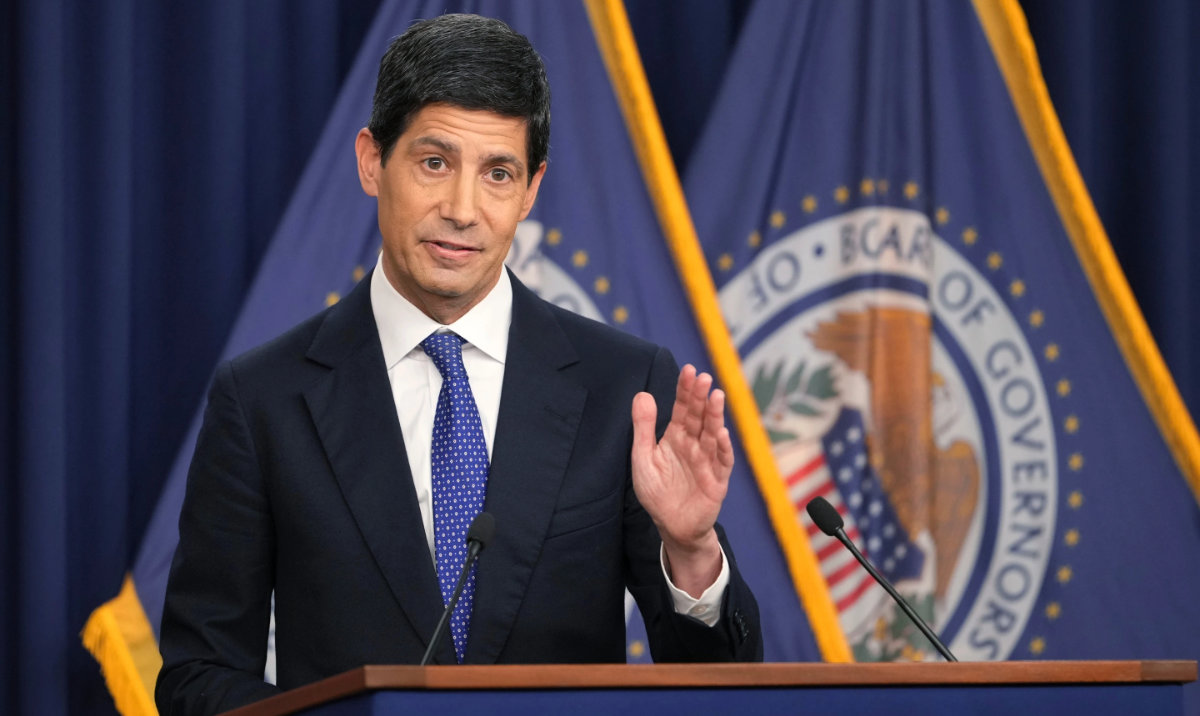

WASHINGTON, United States: The US Federal Reserve on Wednesday raised interest rates for the first time since 2023, defying President Donald Trump’s demand for cuts, as central bank chief Kevin Warsh stressed the need to combat inflation that has been “too high” for “too long.”
The Fed’s Federal Open Market Committee voted unanimously to raise rates by 25 basis points to between 3.75 and 4.00 percent, saying the rate hike would support a “timelier return” to its two-percent target for inflation.
Warsh, appointed by Trump, said the decision was a “serious” one, but needed to be taken.
“The plain fact is that inflation is too high, and has been for too long,” he told a press conference.
And Wednesday’s rate hike may not be the last — the vast majority of Fed policymakers indicated that at least one more rate hike was likely necessary before the end of the year, according to their Summary of Economic Projections.
US households and businesses have been battered by years of higher-than-target inflation, and prices have surged in the wake of Trump’s war on Iran, his signature tariff policies and the ongoing AI boom.
Trump has launched an unprecedented assault on the Fed’s independence since taking office, attempting to fire a Fed Governor and launching a criminal probe against Warsh’s predecessor in his quest for lower rates to spur economic activity.
The president’s Republican Party faces a stern test in upcoming midterm elections, with rival Democrats seeking to wrest control of both houses of Congress and economic issues front-and-center for voters.
Growing calls for hike
The Fed has held rates steady since January, choosing to wait to gauge the effects of the Iran war’s energy price shocks and to let the impact of tariffs on prices ripple through the economy.
Since July, however, a growing faction of policymakers had indicated a rate hike may be required to tame inflation, as the war grinds on and prices remained elevated.
On Friday, August’s consumer price index came in at 3.4 percent — unchanged from the month before, but still well above the Fed’s long-term two-percent target.
In its SEP, the Fed raised its forecast for its preferred gauge of inflation — the Personal Consumption Expenditures (PCE) price index — by 0.1 percentage points to 3.7 percent by year-end.
The Fed also raised its projection for GDP growth by year-end to 2.3 percent, up 0.1 percentage points.
‘Rather unfortunate’
US stock markets largely priced in Wednesday’s rate hike, but they were still down on the news — expected with any rate hike as equities become less attractive.
Yields on 10-year US Treasury bonds — which have surged in recent days as uncertainty on long-term inflation has spiked — were also up past the five-percent threshold.
Following the Fed’s announcement, White House spokesperson Kush Desai said the decision was “rather unfortunate” and that Trump had been clear that he wanted lower interest rates.
Warsh was named to his position after a contentious Senate confirmation process, where Democratic lawmakers accused him of being a “sock puppet” for Trump, which he denied.
So far, Trump has supported Warsh, claiming that the Fed chair wants lower rates and accusing the board of being “political.”
The Fed has a dual mandate to deliver maximum employment while keeping inflation to its long-term two-percent target.
It mainly achieves these goals by setting the key US interest rate — lower rates tend to spur economic activity but fuel inflation, and hiking them cools both activity and prices.
The Fed’s SEP showed that at least 12 of 18 policymakers who participated in the projection expected one more rate hike would be required before the end of the year.
Four policymakers expect two more rate hikes to be required.
Warsh has criticized the Fed’s policy of offering such projections in the past and did not participate in the previous iteration in June.
This projection also included only 18 policymakers, suggesting he had once again withheld his contribution.

Home  Private Credit Fed Rate Hike Squeezes an Already Stressed Private Credit Sector
Fed rate hikes threaten to further strain direct lenders as private credit default rates hit record highs.
The private credit industry keeps insisting it’s fine. The data keeps suggesting otherwise, and Wednesday’s interest rate hike from the Federal Reserve isn’t going to help the argument.
The Federal Open Market Committee officially raised the federal funds target range by 25 basis points to 3.75%-4.00%. The decision, which was unanimous among the 12 board members, marks the first rate hike since 2023.
“Whenever the Fed increases rates, the pressure on the liability side becomes very high,” David Yahalomi, chief operating officer and co-founder of Tel Aviv-based loan-management platform Hypercore, said in an email.
Companies that borrow through direct lending typically carry floating-rate debt, meaning their interest costs rise automatically whenever the U.S. central bank moves rates. The hike officially pushes up borrowing expenses at a moment when defaults are already climbing to levels not seen before.
“In the event of a prime rate increase, this structure shrinks [private credit portfolio company] margins,” Yahalomi added. And the squeeze is already showing up in the numbers.
A Fitch Ratings report from Monday shows that the U.S. Private Credit Default Rate, or PCDR, hit 6.3% for the 12 months ended in August. That’s up from 6.1% in July. The rate has now held at or above 6.0% since April. Here’s the credit rating agency’s breakdown of the findings:
While the overall PCDR blends middle-market CLO ratings (MCO) and insurer-monitored private ratings (PMR), August’s rise was driven by record stress in MCOs (5.6%), even as PMR rates eased slightly to an elevated 8.5%.

Harvey Tian, head of loan operations at Suntera Fund Services, said a size-weighted view changes how PIK interest should be read as well.
“Once the prime rate goes up, the terms on all the rates will increase, and it will definitely put pressure on the borrower side — the ones paying cash interest,” Tian told Global Finance on a call.
Loans structured with PIK options, however, aren’t paying cash interest at all, he noted. That insulates that particular pool of borrowers from a higher interest rate.
“I don’t see a huge effect on the underlying portfolio of PIK borrowers if it’s a one-time hike,” Tian said of Wednesday’s Fed announcement. A quarter-point increase would phase into the PIK rate structure over time rather than land all at once.
Multiple hikes are a different story, given the inflationary pressures caused by a worsening U.S.-Iran conflict.
Anthony Noto covers corporate finance and private credit. Contact him at anoto@gfmag.com.
Kevin Warsh has broken away from US President Donald Trump in his first Fed move, and he has done it with the entire committee behind him.
The Federal Open Market Committee lifted rates on Wednesday after holding them at 3.5% to 3.75% since December, ending a pause that had grown harder to justify as energy costs pushed prices higher.
Not a single member dissented in a unanimous 12-0 vote.
That matters because the pressure ran in both directions as three regional presidents had voted for a hike in July, while the White House spent months demanding cuts.
Nobody voted for either extreme.
At the time of writing, the market reaction to the decision has been fairly muted likely due to the fact that the hike was widely expected.
The Fed’s communication was as striking as its decision.
The statement ran to three short paragraphs, a fraction of the length markets are used to, with no forward guidance and no hedging.
“Inflation remains elevated,” it read, adding that “today’s policy action will support a timelier return to the Committee’s 2 percent goal.”
The word “timelier” carries an implicit admission that the return had been too slow.
Then a sentence the Fed almost never writes: “The Committee will deliver price stability.” Not seeks to, not is committed to. Will.
The economic assessment was also confident throughout.
Activity is “expanding at a solid pace”, domestic spending “has been resilient”, productivity growth is “strong” and capital investment “robust”, while job gains “have kept pace with the workforce”.
Uncertainty remains elevated, the Fed said, owing partly to “geopolitical developments”, its formulation for the Iran war.
By describing an economy in good health, the committee removed the argument that higher rates would damage growth, which is precisely the case US President Donald Trump has been making.
The decision had been building for months.
Three regional Fed presidents dissented in July in favour of an increase, the most in one direction since 2016, and several others said afterwards they were ready to move unless inflation eased which it did not.
The Fed’s preferred gauge, the personal consumption expenditures index, ran at 3.7% in both June and July, with core inflation at 3.3%. Before the Iran war sent fuel prices climbing, core stood at 3%.
Consumer prices held at 3.4% in August, but the monthly increase of 0.4% was the sharpest since May, evidence the energy shock is feeding through. Inflation has now been above the 2% target for more than five years.
Warsh had effectively committed himself at Jackson Hole in August, telling the symposium he “would be hard pressed to describe broad financial conditions as restrictive” and warning that unless underlying inflation moved to target “clearly and at sufficient speed”, the Fed had “work to do”.
Markets took him at his word as the CME’s FedWatch tool put the probability of a rate hike above 90% before today’s decision.
US President Donald Trump had spent months demanding the opposite, insisting the country should have the lowest interest rates in the world and choosing Warsh partly on the expectation he would deliver them.
Warsh himself said while campaigning for the job that rates could come down.
The treatment of his predecessor sharpened the stakes as Jerome Powell was publicly attacked for moving too slowly, and the US Justice Department opened a criminal investigation into testimony he gave to Congress.
Today’s decision could also have a restoring effect on the perceived independence of the Federal Reserve as an institution.
The technical details point to a Fed settling in at the new level.
The interest rate on reserve balances rises to 3.90% from Thursday, the primary credit rate to 4%, and standing repurchase operations will run at 4%. Seven regional reserve banks requested the discount rate increase.
The Fed’s new dot plot shows 12 of 18 officials expect another 0.25% hike by year-end, taking rates to 4.125%, while four see rates reaching 4.375%.
The hawkish signal extends well beyond 2026 as 14 officials see rates ending 2027 above today’s level, while the 2028 median stands at 3.9% versus 3.4% expected.
The longer-run rate also rose to 3.2%, suggesting officials increasingly believe neutral rates have moved higher while economists also expect more to follow.
DEVELOPING STORYDEVELOPING STORY,
The 25 basis-point hike is the first raise in three years and comes ahead of critical midterm elections in the United States.
The United States Federal Reserve has said it will raise interest rates by a quarter of a percentage point as inflation, driven by soaring fuel prices amid the US-Iran war, continues to weigh on the economy.
The Fed, which is the central bank of the US, said on Wednesday that it will hike interest rates by 25 basis points to 3.75 percent to 4 percent.
It is the first hike in more than three years and comes just weeks before the US midterm elections, despite repeated demands from US President Donald Trump to lower rates.
“Economic activity is expanding at a solid pace. While uncertainty remains elevated owing, in part, to geopolitical developments, domestic spending has been resilient,” the Fed said in a statement on Wednesday.
“Inflation remains elevated. Today’s policy action will support a timelier return to the Committee’s 2 percent goal. The Committee will deliver price stability.”
After Wednesday’s hike, Fed officials expect one more rate increase this year, according to their quarterly projections.
CME FedWatch, which tracks the likelihood of monetary policy decisions, forecast a 92.3 percent chance of the Fed increasing rates to 3.75 to 4 percent. A week ago, that forecast was a 40 percent chance of a quarter-percent rate increase.
But in the days since, a slew of data shifted those expectations.
For one, consumer prices jumped in August by 0.4 percent, the highest increase in four months. On an annual basis, prices rose 3.4 percent, matching the increase recorded in July, while the job market remains healthy.
Since then, benchmark crude oil prices have continued to soar as strikes in the US-Israel war on Iran have intensified. Brent crude hovered near $109 per barrel on Tuesday.
The average price for a gallon (3.8 litres) of petrol is $4.36, up 14 cents in the past week, and up from $4.06 in the last month, according to the American Automobile Association (AAA), which tracks daily petrol prices.
Diesel, on the other hand, was at $6.31, the highest recorded average and roughly double from a year ago. That, in turn, is expected to further stoke prices as diesel is used in trucks to haul everything from fruits and vegetables to steel and cement.
At the same time, the benchmark 10-year Treasury yield broke above the psychologically important 5 percent threshold on Tuesday, hitting 5.02 percent, its highest level in 19 years. The yield serves as a benchmark for borrowing costs, including car loans and home mortgages, and is a bellwether for inflation.
“The economy is in an unusual place,” Michael Klein, professor of international economic affairs at Tufts University’s Fletcher School and executive editor of EconoFact, a nonpartisan economic and social policy publication, as unemployment remains at a comfortable level while higher prices continue to stick, sending inflation beyond the Fed’s target of 2 percent.
“There [has been] a lot of pressure on Chairman Warsh to raise interest rates because of inflation coming in high, and that has been compounded by concerns about Trump’s pressure” as the president has continued to demand that interest rates be lowered, Klein said.
“Higher interest rates tend to weaken the economy… but if the market believes that there’s going to be a rate increase, it’s priced in already as prices move on news, so this won’t be news,” Klein said, adding that should help steady yields.

