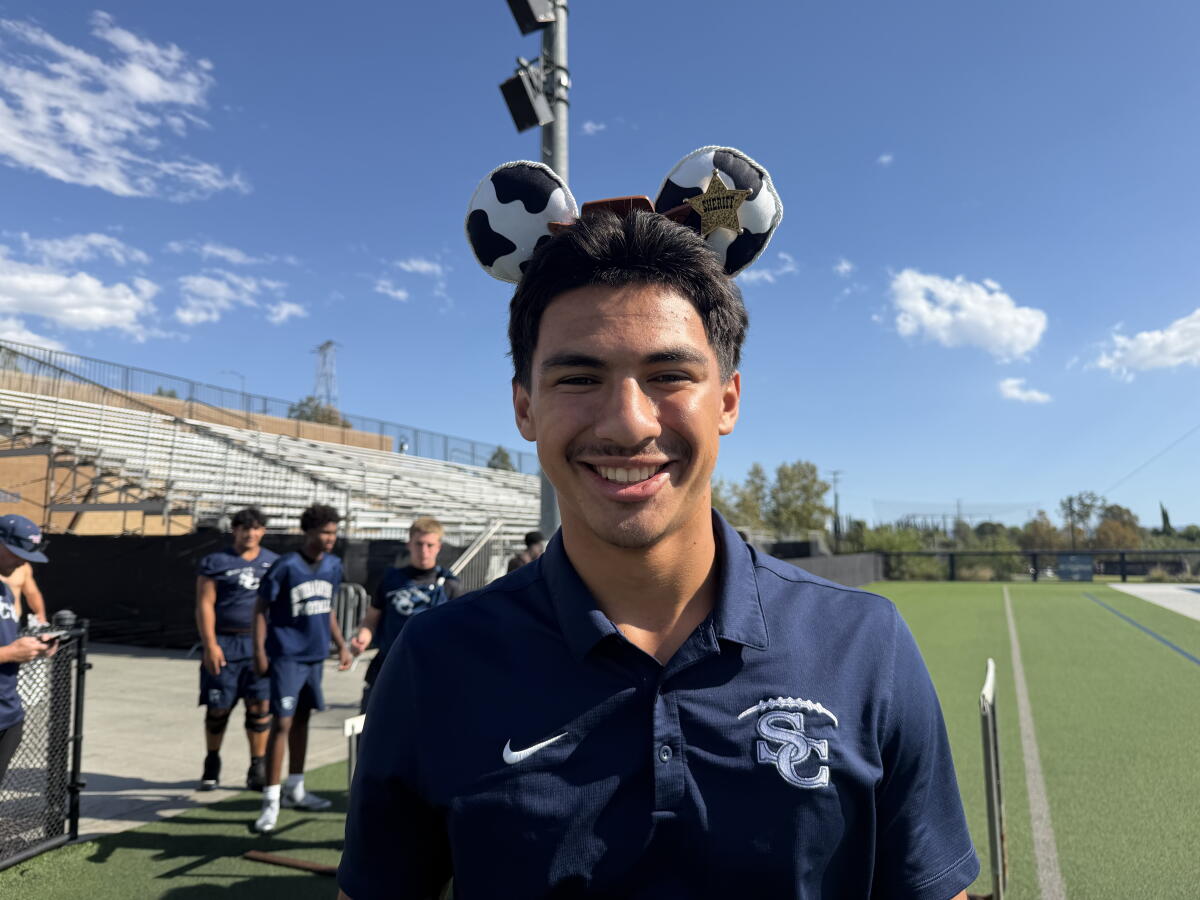
It was Disney Day at Sierra Canyon High, so standout sophomore linebacker Eli Zamorano showed up at football practice wearing Mickey Mouse ears atop his head on Monday.
Walking past, teammates either stared or smiled at the ears.
“He’s a kid who beats to his own drum,” coach Jon Ellinghouse said.
It makes perfect sense, for it was Zamorano as a freshman who was walking in rain and freezing temperatures last November on the field two hours before Sierra Canyon’s playoff game against Santa Margarita going through his pregame routine listening to music from Nirvana and not letting any elements disrupt him.
Freshman Eli Zamorano of Sierra Canyon thinks he’s in Green Bay with freezing temperatures walking in the rain to show everyone he’s ready. pic.twitter.com/FxJppvIfUk
“I’m not gonna let the weather determine my pregame,” he said. “And I’m actually used to the cold experience. My dad taught me to swim in cold water. That’s who I am.”
At 6 feet 2, 205 pounds, Zamorano is showing signs of becoming one of the best linebackers in the state for a 5-0 Sierra Canyon team that opens Mission League play on Friday against Loyola. He can be the player who’s in on every tackle up the middle or the player covering running backs out of the backfield. He watched his brother, Roman, now at Air Force, play for the Trailblazers last season at middle linebacker and has been taught by his father, Antonio, a former Garfield football player, to focus on toughness and fundamentals.
“It’s the mental toughness our dad taught both of us,” he said. “He played old-school football.”
Linebacker Eli Zamorano wearing his Mickey Mouse ears on Disney Day at Sierra Canyon.
(Eric Sondheimer / Los Angeles Times)
His father became a doctor, his mother a lawyer. They’ve shown their boys a path to success but each must find their own way, though having a doctor in the family while playing football is pretty neat.
“When we were little, 7 or 8 years old, he would take us to see his patients at the hospital,” Zamorano said. “So we learned a lot there. It’s like we have free health care. He walks in our room and feels the [ankle]. He knows what the risks are.”
Zamorano can play the ukulele, listens to music created years ago and doesn’t pay attention to what others think.
“I would like to say I’m a very enthusiastic kid,” he said. “I still like to live life to its fullest. I’m not going to let any outside voices determine what makes me, me. I kind of don’t listen to the music that people do nowadays, and a lot of people call me out. It makes me Eli. And you know, it’s just who I am.”
When he was 15, he spent nearly three months living in Rapa Nui, one of the world’s most remote Polynesian islands. His grandmother was born there. It’s also known as Easter Island and is a special territory of Chile. There’s wilderness, beautiful beaches, amazing sunsets and time for a teenager to reflect on the future.
“I was down there training hard, learning more about my culture, where my family’s from,” he said. “I actually did dancing. It was a really fun experience.”
Whether walking in freezing rain without an umbrella or wearing Mickey Mouse ears around campus, Zamorano always knows what he’s doing.
“A couple girls said they were cute,” he said of his borrowed ears.
Pittsburgh Penguins forward Andrei Kuzmenko has returned to Russia before the start of the NHL season after his father was killed by a bear.
Kuzmenko’s father Alexander, who was an ice hockey coach in Russia, was on a fishing trip along the Krasnaya River in Southern Siberia with a group of seven others when a bear attacked from the trees.
The 62-year-old suffered severe facial injuries in the attack.
A member of the fishing party called for an ambulance but the dense forest made it difficult for emergency services to reach the area.
Kuzmenko was taken by river downstream for four hours before then being airlifted to hospital, where he was later pronounced dead.
Penguins president Kyle Dubas said the team was “deeply saddened” by the death.
“Our deepest thoughts and sympathies are with the Kuzmenko family and their loved ones as they grieve the loss of Alexander. We ask that the privacy of Andrei and the Kuzmenko family be respected at this time,” the team said in a statement.
“Andrei chose to be surrounded by his team-mates and practice with the team this morning before returning to Moscow to be with his family this afternoon. Andrei and the Kuzmenko family have the full support of the Penguins organisation during this time.”
The 30-year-old signed a one-year contract with the Penguins this summer and is about to compete in his fifth season in the NHL, following previous stints with the Vancouver Canucks, Calgary Flames, Philadelphia Flyers and Los Angeles Kings.
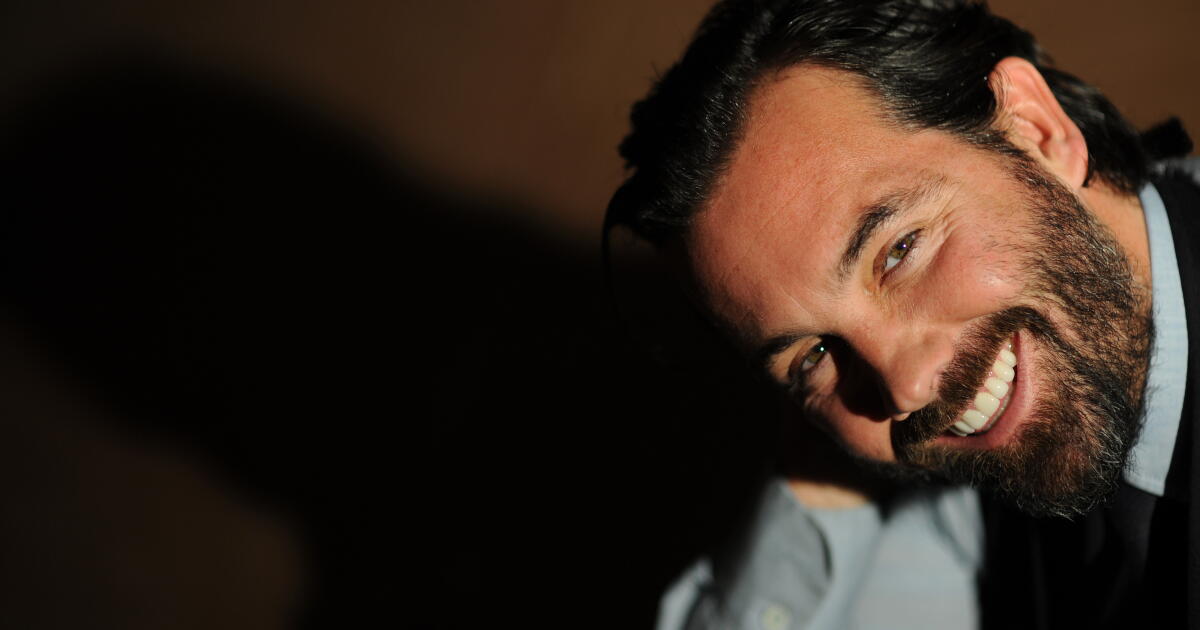
Duncan Sheik, who earned a Grammy nomination for his ubiquitous 1990s hit “Barely Breathing” and won a Tony Award for composing the music for “Spring Awakening,” died Thursday. He was 56.
“It is with profound sadness that we confirm the passing of Duncan Sheik,” a statement posted Friday on Sheik’s Instagram account read. “The world has a lost a singular talent, and deeply influential voice in music and theater…. Duncan’s artistry touched many and leaves an indelible mark on the cultural landscape.
“Duncan was a father, husband, son, brother, and friend. He will be remembered for his sensitivity, wit, inteligence, and depth of spirit he brought to those who knew and loved him.”
The statement added that “Duncan passed away last night surrounded by love.”
His mother, Suzanne Sheik, told the New York Times that her son died of organ failure. A statement posted to his Instagram account Thursday said that Sheik was “receiving medical care and remains in critical but stable condition.”
Sheik, a New Jersey native, went to Brown University, where he played in an early band with singer-songwriter Lisa Loeb. His 1996 self-titled debut LP was a hit on the strength of “Barely Breathing,” an exemplar of the upbeat coffeeshop rock that emerged in the wake of grunge on the pop charts. The single stayed on the Hot 100 for over a year, and the album went gold, earning earned him a Grammy nomination for male pop vocal performance.
Sheik’s followup, 1998’s “Humming,” featured rich orchestration, but he already had an eye on Broadway (his sister Kacie Sheik is a stage actor who has appeared in “Hair,” “American Idiot” and “Because of Winn-Dixie,” for which Duncan wrote the score).
He wrote his 2001 album “Phantom Moon” with poet and playwright Steven Sater, whom he’d again collaborate with on the score for the musical “Spring Awakening” — based on the play by German Expressionist Frank Wedekind, which won him a Tony Award — and “Alice by Heart.” His 2009 album “Whisper House” yielded a companion musical of the same name. He also composed the score for the 2004 film “A Home at the End of the World.”
While Sheik sought treatment for alcohol addiction after canceling a tour in 2011, his stage and studio career never slowed. Other major stage credits include hit productions of “American Psycho,” “Bob & Carol & Ted & Alice,” the thriller “Noir” and “The Secret Life of Bees,” along with Shakespeare’s “Twelfth Night” and “The Taming of the Shrew.” His last album, “Claptrap,” came out in 2022.
With a boisterous laugh, Giselle Bonilla recalls her introduction to Hollywood at the age of 12: on the set of “Freedom Writers,” the 2007 drama about at-risk high school students in Long Beach. She played a young version of Eva, one of the film’s main characters.
“I remember the first thing we shot was an initiation scene where I get the s— beat out of me,” she tells De Los, sitting at a coffee shop in Silver Lake on Sept. 11 (more on this date later). “They put this candy blood in my mouth, and I thought it was so fun.”
In retrospect, Bonilla, 31, finds great irony in how that initial foray into professional acting fictionally materialized her Mexican immigrant parents’ worst nightmare.
“We don’t come from money. They hustled all their lives and put my sister and I in private education, because they had this irrational fear that I would join a gang … then the first thing I ended up booking as an actor was getting initiated into a gang,” she says grinning.
Since that unique formative experience, Bonilla has traveled a winding path in and out of the industry, which ultimately led her to direct her first feature: the dark comedy “The Musical,” in theaters Friday.
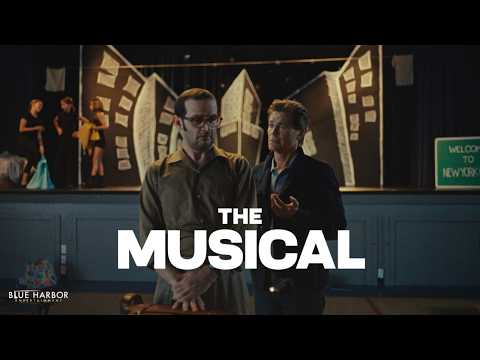
The movie’s antihero, Doug (Will Brill), is a middle school theater teacher plotting his revenge against his ex-girlfriend Abigail (Gillian Jacobs), also a teacher — and her new boyfriend, the more charming Principal Brady (Rob Lowe).
Doug’s plan? To secretly persuade his young students to put on a musical about the horrors of 9/11 and its aftermath that’s certain to cause controversy and get the principal in trouble.
“I feel like you can be more honest with comedy,” says Bonilla about why this genre appeals to her. “You can get away with everything that you’re angry about and want to yell about. If you make them laugh first, people tend to listen.”
Left to right, back row: Alex Heller (screenwriter), Will Brill (center row) Gillian Jacobs, Giselle Bonilla (director) and Rob Lowe (on the floor) from “The Musical” at the Los Angeles Times 2026 Sundance Film Festival studio presented by Chase Sapphire in Park City, Utah on Jan. 24.
(Christina House / Los Angeles Times)
Though the actual show is only a small element of the narrative, it turned off distributors, who argued they wouldn’t be able to market a comedy that involved such a delicate subject.
Still, “The Musical” is making it to the big screen as a self-released title thanks to its executive producers, who believed in the film enough to put in more money for a release.
“I’m going to make sure people watch it regardless,” Bonilla says about being very involved in the marketing. “Even though it didn’t sell at Sundance, we still found a way, which is how we made the whole movie. It was nonstop fighting against the universe just to make a comedy.”
Less than a week before production started, Bonilla lost the actors who were originally playing Principal Brady and Abigail. As her film fell apart, she reached out to the industry contacts she had made after working as an assistant for a few years. Miraculously, the screenplay piqued Lowe’s interest. He came on board, essentially saving the project.
Will Brill and Rob Lowe star in “The Musical.”
(Blue Harbor Entertainment)
As a student at the AFI Conservatory, Bonilla had directed a short film version of “The Musical” that writer Alexander Heller, aware of her affinity for comedy, had conceived for Bonilla to direct. The core group of artists who made the short also worked on the feature.
And though she has always pushed for diversity on screen — including in her short films “Virgencita” and “Bullfighter” — for “The Musical,” Bonilla believed the adults had to be white.
“It would be way more damaging if I had pinned a brown person to be behind the staging of a musical about 9/11,” she explains. “It was very clear to me that this was a comedy about white liberalism and how people weaponize tragedy for their own agenda.”
When it came to the kids in Doug’s class, Bonilla wanted to reflect the multicultural mosaic that is the Los Angeles Unified School District. To be able to see herself in “The Musical,” Bonilla wanted a Latina girl as the child with the most ambition to succeed in the arts. That character became Lata: played in the feature by Melanie Herrera in her first acting credit.
“She’s a dancer. But she’s very precocious and has a really confident, type-A personality,” Bonilla says of the young actor. “Melanie gives Reese Witherspoon in ‘Election,’ like, ‘I will do whatever I have to do for the part,’ and I recognized that in myself as a kid.”
Filmmaker Giselle Bonilla on the set of “The Musical.”
(Peter McCollough)
An L.A. native raised in North Hollywood, Bonilla started doing improv at a young age encouraged by her father, Art Bonilla, who grew up in Tijuana and has worked as an actor in the U.S. for over 40 years.
Her mother, originally from Sinaloa, does workers’ compensation insurance, which provided a stable income and allowed her partner to pursue acting.
“It was tough seeing him struggle and not have any agency over work,” Bonilla says of her father. “He’s such a great actor and he’s really funny, but he’s always getting cast in these very small bit parts as a gardener or an immigrant crossing on the border.”
Unsurprisingly, when Bonilla began auditioning for roles as a teenager, similarly one-dimensional and stereotypical characters from a “troubling perspective” came her way.
“They always make the main character in those stories a white person,” she says. “And then we’re painted as these puppies that just keep getting beat up. I didn’t want to contribute to that.”
Bonilla’s interest in being on the other side of the camera solidified after playing an illiterate South Central high school student in the Byron Allen sitcom “Mr. Box Office.” She attended Pasadena City College, where she studied film production, then used the residuals from the show to help pay for her tuition at NYU Tisch School of the Arts.
Attending film school on the East Coast was, as she puts it, a necessary experience, because she grew up rather sheltered.
“I’m a first-gen Mexican American woman and I was supposed to live at home until I get married,” she explains; but it also exposed her to the concept of impostor syndrome.
“I always had this impostor syndrome at NYU, because that was where I first really confronted wealthy people,” she explains. “I had never been in a predominantly white institution before. And that was really eye-opening.”
It was only when COVID restrictions were lifted that Bonilla decided to apply to the AFI Conservatory, where she regained her confidence and met her now close collaborators.
She has, however, never forgotten her biggest and earliest supporters. Since she started directing, Bonilla has cast her father in many of her short films. And in “The Musical,” you can see both of her parents in the audience during the culminating school show.
“My dad is the one that yells at Rob Lowe at the end in slow motion. He’s pissed that I cut his line, but it was a union film, and we couldn’t afford to give my dad a line,” she says. “But he will be the first one to tell you that he’s not an extra. He did a ‘cameo!’”
“The Musical” director Gisella Bonilla poses at the Los Angeles Times 2026 Sundance Film Festival studio presented by Chase Sapphire in Park City, Utah, on Jan. 24.
(Christina House / Los Angeles Times)
Bonilla’s next project takes inspiration from her memories attending a Catholic school run by nuns in Sun Valley, where a teacher was discovered to be a pedophile. She describes it as “an erotic thriller told from the perspective of virgins.”
Once again, she’ll tackle an unsavory topic and figure out how to bring it to fruition; then distribute it come what may, because she refuses to be boxed in by the industry’s expectations.
“Identity stories are very important. If someone wants to do that, they should be able to do that,” Bonilla says. “But I don’t think our opportunity as Latinos should be limited to painting ourselves as victims against the supremacists.”
Four days before they’re set to play the first-ever concert by their new band, Dhani Harrison and Nigel Godrich sit down to enjoy a post-rehearsal libation in the parking lot of a North Hollywood practice space.
“Is there an opener?” asks Godrich, who holds a bottle of fancy root beer. Harrison, who’s clutching a Sapporo, grabs his friend’s drink and neatly pops the top off using his own bottle.
“I went to Brown,” he says with a little smile. “That’s what they teach you in the Ivy League.”
Harrison, 48, is the son of the late Beatles legend George Harrison; long before college, he got a priceless musical education from his father, whose final solo album — 2002’s Grammy-winning “Brainwashed” — Dhani helped complete after George’s death in 2001. Godrich, 55, made his name working in the studio with Radiohead on game-changing records like “OK Computer” and “Kid A”; he’s also produced for Beck, Paul McCartney and Roger Waters and played with Thom Yorke and Flea in Atoms for Peace.
Now the two have teamed up in Dragonflies, a spacey and atmospheric art-rock duo with a self-titled debut album due Friday from Dark Horse Records, the label George Harrison founded in 1974 and Dhani Harrison relaunched in 2020. This weekend, Harrison and Godrich will celebrate the LP’s release with two shows at Hollywood Forever’s Masonic Lodge, where they’ll be joined by guitarist Nick Valensi (of the Strokes) and drummer Joey Waronker (who’s played with Beck, R.E.M. and Oasis).
Asked how exactly the group came together, Godrich and Harrison look at each other across a picnic table and shrug. “The real reason we did it was as a vehicle to hang out,” Godrich says of the two, who’ve been pals since both were living in Los Angeles in the early 2000s and who both found themselves back home in England a few years ago.
Yet “Dragonflies” has plenty to offer the rest of us: Built around Harrison’s high, sighing vocals, the music moves with a funky rhythmic propulsion rooted in Godrich’s signature tape loops; lush string arrangements by David Campbell (also known as Beck’s dad) add a touch of slightly spooked romance to songs about nature and friendship.
Harrison describes the band’s sound as “a bit creaky” and compares it to the feeling of being out on the water. “I always thought that’s a cool place to start — like you’re on a sinking ship,” he says.
Godrich laughs and adds, “Well, I hope not.”
For Harrison, working with Godrich provided a kind of full-circle moment nearly two decades after he caught one of Atoms for Peace’s first gigs at downtown L.A.’s Orpheum Theatre in 2009.
“I remember it made me want to quit music,” he says, which draws a frown from his bandmate.
“That’s not a great review,” Godrich says.
“No, that concert blew me away,” Harrison replies. “I went home and I was like, Oh, they’ve already done all the things I want to do. So I just went and sulked for a few days.”
Dragonflies began after Harrison returned to England, where he’d grown up on his father’s Friar Park estate, following the death of his grandmother, who famously raised George Harrison’s widow, Olivia Harrison, in Hawthorne. “I was still here basically to be around her,” says the musician, who formed the bands Thenewno2 and Fistful of Mercy while in L.A. “When she passed, that was the last of my grandparents. My mom was living in England, and so I just thought, Well, time to go.”
Harrison sought out Godrich for help on his 2023 solo album, “Innerstanding”; later, he lent the producer one of his dad’s old tape machines — “They did ‘Shankar Family & Friends’ on it,” he points out — which led to a series of casual jam sessions at Godrich’s studio in London’s Brixton neighborhood.
“It was like, ‘Hey, you want to get some Japanese food and make some tape loops?’” Harrison recalls.
Godrich notes proudly that “the way the record was made was completely mechanical,” meaning nothing was programmed on a computer but instead recorded “live on the fly” using older equipment.
“Fortunately, we both own a ridiculous amount of analog gear,” Harrison adds. “Because we’re nerds.”
“I’m not a nerd,” Godrich says. “I hate gear chat.”
“That’s true,” Harrison says. “He doesn’t nerd out about that stuff — I’m the nerd. He won’t even let me use six Kaoss Pads onstage.”
What’s a Kaoss Pad?
“You don’t want to know,” Godrich replies.
Gearhead or no, the producer was adamant that Dragonflies not rely on prerecorded backing tracks when it starts playing live.
“No computers were harmed in the making of this show,” Harrison says — thus the extra players.
(Brian Feinzimer / For The Times)
Waronker is an old friend of Godrich’s who played drums in Atoms for Peace and on Beck’s “Sea Change” and “Morning Phase” (not to mention Beck’s brand-new “Ride Lonesome,” which Godrich mixed); the producer has known Valensi since he “didn’t work with the Strokes,” as he puts it, in 2003, when Godrich tried a couple of sessions with the New York garage-rock band before deciding it wasn’t a good fit.
Godrich says he plays bass in the live group because it’s easy. But also: “Bass is such an important part of the sound that if somebody else was doing it, they would never do it the same as me, and it would annoy me.”
Top three bass players of all time, according to Dragonflies?
“McCartney’s good, isn’t he?” Godrich asks.
“Les Claypool,” says Harrison. “I’m a huge Primus fan.”
“I like David J from Bauhaus,” Godrich says. “He’s an incredibly innovative bass player — always did very interesting things. Stylistically, he’s someone that I probably copy a lot from. It’s just the root notes, but whoever’s in control of the root notes is in control of everything.”
“It really is a power move to be the bass player,” Harrison says.
“I don’t want to be at the front — that’s not my thing,” says Godrich. “I don’t want to be the guy.”
Does Harrison?
“It takes me a while to get warmed up,” he says. “I don’t really look at people when I’m playing a show. I’m not sure if that means I’m mildly spectoral. I took the test, actually — I scored highest in my old band. I know a lot of neurodivergent people who perform.” He shrugs. “Sometimes you don’t get to choose if you’re the guy, but you’re the guy.”
In addition to his father, one of Dhani’s mentors was George’s friend and latter-day creative partner Jeff Lynne, who for all his musical genius has never seemed particularly comfortable onstage.
“He’s brilliant at what he does, but you talk about in-ear monitors or the sound onstage or the lighting or something, and it’s over,” Harrison says. “It’s too much input. That’s why Jeff wears the Spider-Man goggles,” he adds, referring to the ELO frontman’s ever-present aviator shades. “He has too much Spider-Sense. My dad was the same way. He definitely was like, ‘Look at him — don’t look at me!’”
After Dragonflies’ Hollywood Forever shows, Godrich and Harrison have dates scheduled in Europe for November and hope to play more in the future, depending on when Godrich finishes a couple of records he’s producing. (To give a sense of the stress he’s under, he mimes putting a gun to his head.) The duo already has enough material for a second album too.
How much time does Harrison intend to dedicate to the project?
“As much as I can, really,” he says. “How much do you want to hang out with your mate? I got bored of being Dhani Harrison anyway — I like being Dragonflies now.”
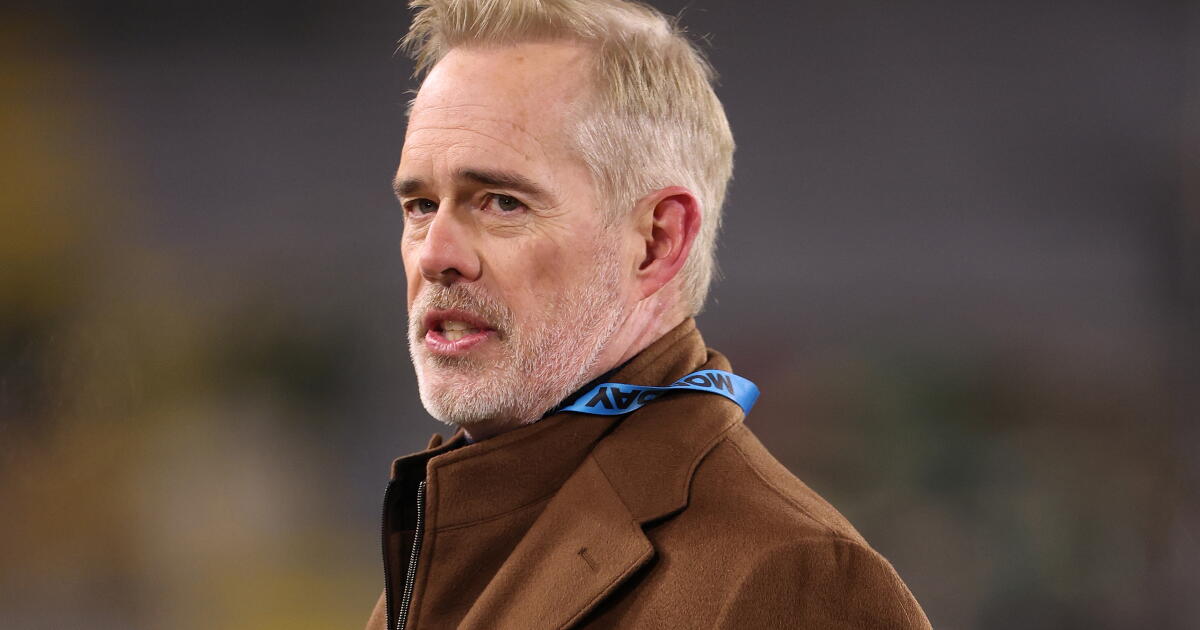
Joe Buck will call his seventh Super Bowl in February. It will be his first with ESPN — and, it turns out, won’t be his last.
The “Monday Night Football” play-by-play announcer and the network agreed to a six-year, $108-million extension, according to the Athletic. Buck’s deal was set to expire following this season.
Super Bowl LXI at SoFi Stadium will be broadcast on ESPN and simulcast on Disney sister network ABC. It will be the first Super Bowl on ESPN and the first on ABC since Super Bowl XL, which followed the 2005 season. The game is scheduled to rotate back to ESPN/ABC in February 2031.
While Buck seems locked in for that Super Bowl LXV broadcast, his longtime booth partner may not be — at least not yet. The Athletic reports that color commentator Troy Aikman remains unsigned beyond this season.
When asked about the contract situations for Buck and Aikman, an ESPN spokesperson directed The Times to a statement executive vice president of communications Josh Krulewitz gave to the Athletic.
“With this historic season for ESPN now underway, our entire focus is on bringing fans the best possible football coverage, culminating with our first Super Bowl,” Krulewitz said. “To that end, we won’t be addressing talent contract specifics publicly before the Super Bowl.”
Buck broke into broadcasting in 1989, calling games for the Louisville Redbirds, a minor-league affiliate of the St. Louis Cardinals. Two years later, he joined his father, Sports Broadcasting Hall of Famer Jack Buck, in the radio and TV booths for the Cardinals’ games.
In 1994, Buck was hired by Fox Sports. He eventually became the network’s top play-by-play voice for the NFL and MLB, calling 24 World Series and six Super Bowls for the network. Buck joined his father in the Sports Broadcasting Hall of Fame in 2022.
Buck and Aikman have been calling football games together since 2002 and left Fox for ESPN together before the 2022 season. Last season, “Monday Night Football” averaged 15.8 million viewers per game, the second-best ratings in ESPN’s 20 seasons of broadcasting the franchise (it averaged 17.4 viewers in 2023).
After appearing last year on a contentious political panel discussion in Washington, D.C., Jessica Tarlov, co-host of the the popular Fox News show “The Five,” was approached by a transgender woman from Alabama.
Tarlov had said that Democratic candidates in tough races might have to concede that transgender collegiate swimmer Lia Thomas should not be competing against women assigned female at birth. But the matter never came up. Instead, the Alabama woman thanked Tarlov for making the case for Democrats against four conservatives on “The Five,” the most watched program in cable news and a favorite of family members who no longer speak to her.
On the Shelf
I Disagree: Winning Arguments Without Losing Friends
By Jessica Tarlov Random House: 272 pages, $30
If you buy books linked on our site, The Times may earn a commission from Bookshop.org, whose fees support independent bookstores.
“If more people talked like you, I might get my family back,” the woman said. “I’m just happy my parents can hear someone like you.”
Tarlov describes the encounter in her new book “I Disagree: Winning Arguments Without Losing Friends,” out Sept. 15. The part how-to book and part personal memoir is aimed at helping readers navigate the harsh political divisiveness in the culture. Her role on “The Five” has made her an advocate of going into not-so-friendly territory to debate issues rather than staying in comfort zones where views are unchallenged.
“I’m trying to show that a Democratic voice like mine can exist there, without an apology,” she writes of her Fox News position. “And that a person with strong liberal beliefs can bring that same perspective to a host of outlets and places.”
During a recent conversation at Fox News headquarters in Manhattan, Tarlov said the kind words of the fan from Alabama align with what she’s heard from children and grandchildren of the network’s loyal viewers. They are grateful their Fox News-loving families are exposed to a voice from outside the conservative media ecosystem.
Fox News co-host Jessica Tarlov is the author of “I Disagree.”
(Penguin Random House)
Tarlov, 42, has been a sturdy liberal counterweight at “The Five,” which averages 3.5 million viewers daily, according to Nielsen. She comes to the panel’s table highly prepared with data-based talking points, forcing her often intractable co-hosts to engage and listen. She often does it while deflecting the mocking remarks of rambunctious colleagues Jesse Watters and Greg Gutfeld, who try to throw off her arguments.
“Interruptions are an indication that you’re winning,” said Tarlov, evoking the pithy chapter summaries in “I Disagree.”
Tarlov games out numerous scenarios with recommendations on how to deploy statistics and when to lighten up. She also explains the necessity of allowing the other side to blow off steam as she did when “The Five” co-hosts became emotional and overwrought over the shooting of right wing activist Charlie Kirk.
Tarlov believes the key to the success of “The Five” is the camaraderie the panel has off-camera. While the co-hosts will battle it out on set over President Trump’s policies or the excesses of the socialist wing of the Democratic Party, they are supportive of each other once the show is over (three of them are represented by the same CAA agent).
“We don’t talk politics outside of work,” Tarlov said.
Tarlov has been an accepted part of the Fox News family, recently signing a three-year contract despite Trump’s suggestion that “The Five” would be better off without her.
But it has taken time for Tarlov to gain credibility among like-minded pundits and thought leaders on the political left. Most are dismissive of the network as its most popular hosts are unwavering Trump loyalists. Tarlov also resists being in lockstep with every Democratic position and trend. (She voted for Andrew Cuomo over New York Mayor Zohran Mamdani, citing the former governor’s experience.)
“Even in the last year I’ve been at big liberal gatherings, very clearly hosts on other big podcasts or show were not interested in talking to me,” said Tarlov, who has had many conversations that start with the question “Why are you on that network?”
But with younger news consumers getting their news and information through social media platforms, Fox News clips of Tarlov scoring points for the Democrats are gaining attention. Tarlov said she has felt more welcome in left-leaning circles since the 2024 presidential campaign when the digital accounts of Joe Biden and then Kamala Harris put her commentary in heavy rotation. (Scott Galloway, the author and social critic, partnered with Tarlov on a podcast, “Raging Moderates,” after seeing her come up repeatedly in his feeds and then meeting her on the set of “Real Time With Bill Maher”).
Tarlov didn’t start out seeking a career as a TV personality, although her family background likely helped her understand media and communication. Her parents were attorneys who met while working on the Warner Bros. lot in New York, and raised their two daughters in the hip lower Manhattan neighborhood of Tribeca.
Her father, Mark Tarlov, was a onetime speechwriter for Supreme Court Justice Warren Burger who went on to produce two of John Waters’ films and direct projects of his own. Tarlov and her sister Molly, an actor who co-starred in the MTV sitcom “Awkward,” traveled the world with their father to shooting locations. (Tarlov pays tribute to her father, who died in 2021 of 9/11-related cancer, by wearing his nerd-chic Oliver Peoples eyeglass frames made of buffalo horn).
A graduate of Bryn Mawr College and the London School of Economics, Tarlov worked as a strategist on the London mayoral campaign of Boris Johnson. She talked Democratic pollster Doug Schoen into giving her a job. Schoen hired her and brought her to the attention of Fox News, which started using her as a guest on Sean Hannity’s program in 2016.
The ability to effectively volley with conservatives led Democratic Party leaders to approach Tarlov about running for Congress in the district representing Staten Island. (She has no desire to seek political office.)
Tarlov was named co-host on “The Five” in 2022. She and husband Brian McKenna, who works in finance, welcomed their first daughter in 2021, the other in 2024. She remains awed that the show’s viewers — most of whom don’t agree with her politics — have acknowledged her personal milestones with warm greetings and homemade gifts.
She is aware that she’s had a rarefied career. But in “I Disagree,” she goes beyond her impressive resume to reveal her insecurities — unusual in the ego driven TV news business — and tells readers how she’s tried to resolve them.
“I have a good amount of shyness to me,” she said. “I have a lot of imposter syndrome. I’m constantly in wonder that I ended up getting to do this and that hopefully, am the right person to do it.”
Long self-conscious about her raspy voice, which Trump once described as “grating and irritating,” she shares how a 2016 meeting with former Chief Executive Roger Ailes made her relax about it. He told her viewer criticisms were more aimed at her positions, at not how she sounded. “No matter what room the television is in, you want to make sure the person listening in the next room knows you’re on it,” he told her. “Don’t try to smooth your voice out. They may hate what you stand for and what you’re saying, but you want them to know it’s you on TV.”
Tarlov met with Ailes just months before he was ousted over sexual harassment allegations. While Tarlov was grateful for his advice, her book praises current Fox News Chief Executive Suzanne Scott for creating a workplace culture that is much more hospitable to women. Scott promoted Tarlov to co-host right before she was due to give birth to her first child.
“The knowledge that I’m supported allows me to take big swings and not be intimidated,” Tarlov writes. She knows that’s not the situation for all women; in her signature style, she presents the data and the narrative to back it up.
“We have a chance to put it together against another opponent, a really good opponent, very well-coached, phenomenal talent on this team, but it all starts with No. 3,” Chesney said.
And while No. 3, Cal quarterback Jaron Keawe-Sagapolutele, may be familiar with UCLA’s defensive scheme and personnel — telling reporters Tuesday that the offense has been studying film from James Madison’s 2025 unit for the past few weeks — he may not be as accustomed with the defense’s new identity.
Defensive lineman Sahir West, who transferred to from James Madison to UCLA, says the Bruins have embraced their coach’s emphasis on toughness and attention to detail.
(Robert Simmons / Associated Press)
UCLA defensive coordinator Colin Hitschler, who has made stops as defensive coordinator and safeties coach at JMU, Alabama, Wisconsin and Cincinnati during the past six years, wanted his defense to enter 2026 with a brand — a reputation to describe the team’s play.
And after presenting his team with different options, the defense settled on the “Bruin Bullies,” a name based on the 1970s Philadelphia Flyers “Broad Street Bullies” — an homage to Hitschler’s home city.
“It’s a lifestyle, it’s a mentality more than anything,” Hitschler said. “It’s what we need to do to win the next play. That toughness, that internal belief. That’s what it’s about.”
Since arriving in Westwood, Hitschler has consistently been touted for his toughness and encouraging his players to compete with an unwavering belief — values he developed as a wrestler.
Hitschler, who won a national prep championship at William Penn Charter School and then wrestled at the University of Pennsylvania from 2005 to 2010, grew up in Philadelphia surrounded by the sport, with his older brother, father and grandfather all lettering at his alma mater, and his father working as a longtime football and wrestling coach at his high school.
“Wrestling is a unique sport in that it’s an individual sport, and you walk out on a mat and you win or lose, and it’s all about just you,” Hitschler said. “It’s a glorified fight with rules. Winning your individual battle in football is what leads to team success, and when those guys really buy into that toughness that it takes to beat the guy across from you, then you’re going to have a really good defense.”
Beyond toughness, Hitschler wanted the Bruins to show intensity and relentless attention to detail, emphasizing the importance of “being intentional in everything you do.”
“The first fundamental is effort and attitude, which is four to six, A to B, and nasty intentions,” UCLA sophomore linebacker Scott Taylor said. “He won’t tolerate low effort or low intensity, and it could be on any play. … We might do all the things we want to do, and then we’re going to come back to meeting that night, and he’s going to pull up the three bad clips from practice and go, ‘This is unacceptable. We better fix it tomorrow.’”
Hitschler’s emphasis on attacking extends to the secondary.
“All 11 guys want to tackle the ball. We have some really tough kids playing [defensive back.] … Those guys love hitting,” Hitschler said.
Hitschler’s track record developing elite defensive backs — such as the Indianapolis Colts’ Ahmad “Sauce” Gardner, Chicago Bears’ Coby Bryant and San Francisco 49ers’ Darrick Forest — drew players such as Derrick Barksdale to UCLA.
“His intensity level, the way he approaches the game, is something that inspires a player to even play even harder, play with even more technique, or play with more detail,” Barksdale said.
James Madison’s Derrick Barksdale said UCLA defensive coordinator Colin Hitschler’s history of developing players inspired him to join the Bruins.
(Carmen Mandato / Getty Images)
Hitschler’s revitalized defense will have to create splash plays — something the Bruins lacked last season, finishing last in the nation in sacks and tying for third worst in interceptions — if it wants to stop the potent Cal offense.
“Takeaways are all about playing longer and harder than the offense does, and our job doesn’t stop till somebody or the ball is on the ground,” Taylor said. “Personnel aside, the way we’re going to attack offenses, and the way we’re going to play on defense, is going to create stress and chaos for every team we play. Inherently, with how we play, there’s going to be a lot of big plays, and we’re not going to sit back and hope that the offense messes up.”
Junior defensive lineman Sahir West said the UCLA defense has fully embraced the challenge of being “Bruin Bullies” all season.
“That’s who we truly want to be. That’s not just a moniker. That’s what we live by. That’s basically the brand of football that we want to play,” West said. “Be bullies on the field. Be dominant. Take play by play. Just play hard. That’s who we are.”
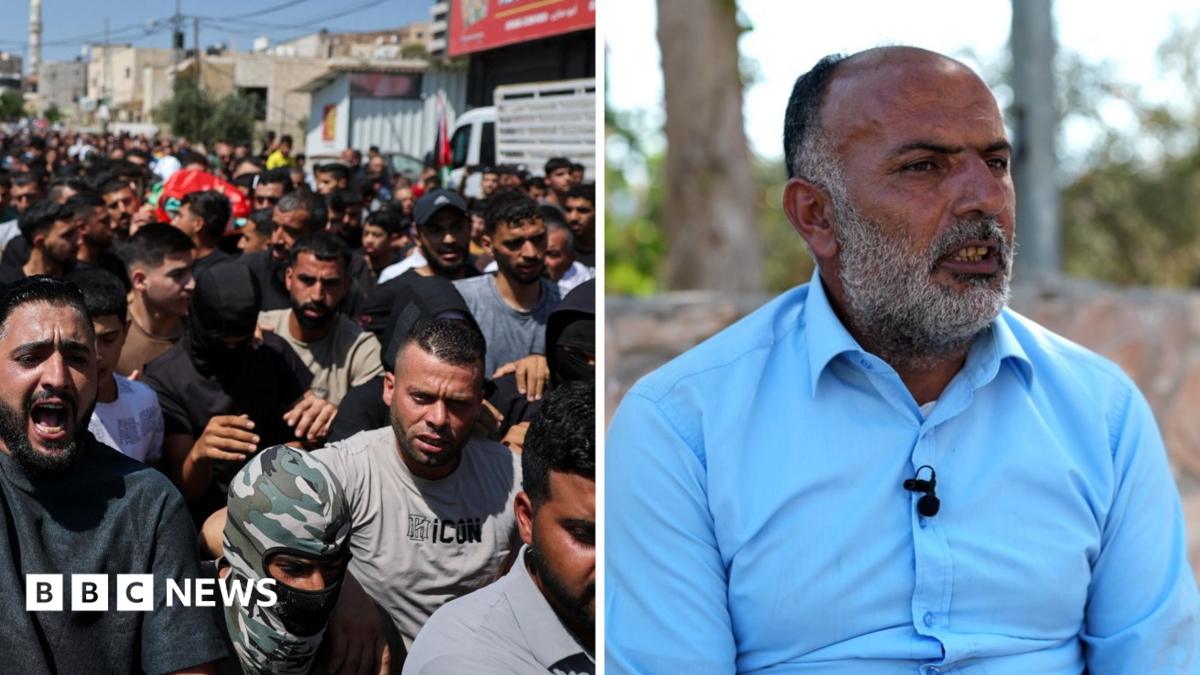
Funerals have taken place for two Palestinian teenagers who were shot dead this week when settlers and soldiers entered a Palestinian village in the occupied West Bank.
The killing of Omar al-Naasan and Khalil Abu Alia comes amid near-daily attacks by Jewish settlers in the village of al-Mughayyir, south of Nablus.
“We expect that when our sons walk in the street, they are likely to return to you injured or killed,” Mohammed Al-Naasan, Omar’s father, told the BBC.
Israel’s military says it fired on “instigators of a violent riot” and that the incident is under review.
The United Nations says more than 80 Palestinians have been killed by Israeli forces or settlers in the territory since the beginning of the year.
Wendell Berry, a Kentucky farmer and writer whose work advocated fiercely for working landscapes and working people, died “suddenly and peacefully” on Monday at his home in Port Royal, Ky., according to his family. He was 92.
His daughter, Mary Berry, confirmed his death. On Thursday, she told The Times that her father, until about six months ago, was still writing regularly in his cabin on the banks of the Kentucky River, a place he called “camp,” where many of his more than 50 volumes of poetry, short stories, essays and novels were written.
Berry championed sustainable farming and rural community preservation and railed against industrial agriculture and corporate agribusiness.
“He was fierce and he was fearless, and he remained fearless,” she said, explaining that her family taught her the erosion of rural places wasn’t inevitable but “destruction by design,” engineered by corporate interests and political policies.
Berry, whose writings were often fueled by an anger toward the forces that have driven the destruction of the rural land and communities that he dedicated his life to defending, softened in his final years, according to his daughter. “He was always a tender man, and that part of him got stronger. He was rereading a lot of books that he had loved in his life, and he told me he was looking for the tenderness in the books, and that’s a lovely thing.”
Berry’s most influential work began with a list of the problems he’d observed in modern agriculture, scribbled onto a legal pad as he traveled the long stretch of road between Kentucky’s Henry County and Spokane, Wash., where Berry would deliver a speech at the “Agriculture for a Small Planet” symposium in 1974.
“I was asked to talk about labor-intensive microsystems agriculture. That’s not my language, and it’s not the sort of language that I wish to use because it’s the way people speak when they don’t want to be understood by most people,” he began.
Berry spoke of the six generations of farmers who worked his land before him, and the concerns for farming communities and their agricultural economy that he inherited from his father. He decried “the experts and politicians who have prescribed, encouraged, and applauded the disintegration of such farming communities all over this country into our allegedly miraculous modern American agriculture.”
The speech would later become Berry’s 1977 manifesto “The Unsettling of America: Culture & Agriculture,” which launched a sustainable-farming movement and cemented Berry’s authority on agrarian issues on the national stage.
Beyond his cultural critiques, Berry wrote notable novels including “The Memory of Old Jack,” “Jayber Crow” and “Hannah Coulter.” He was a prolific poet as well. His verse included his debut collection, “The Broken Ground,” and his celebrated Sabbath Poems series, which explored living in harmony with the land.
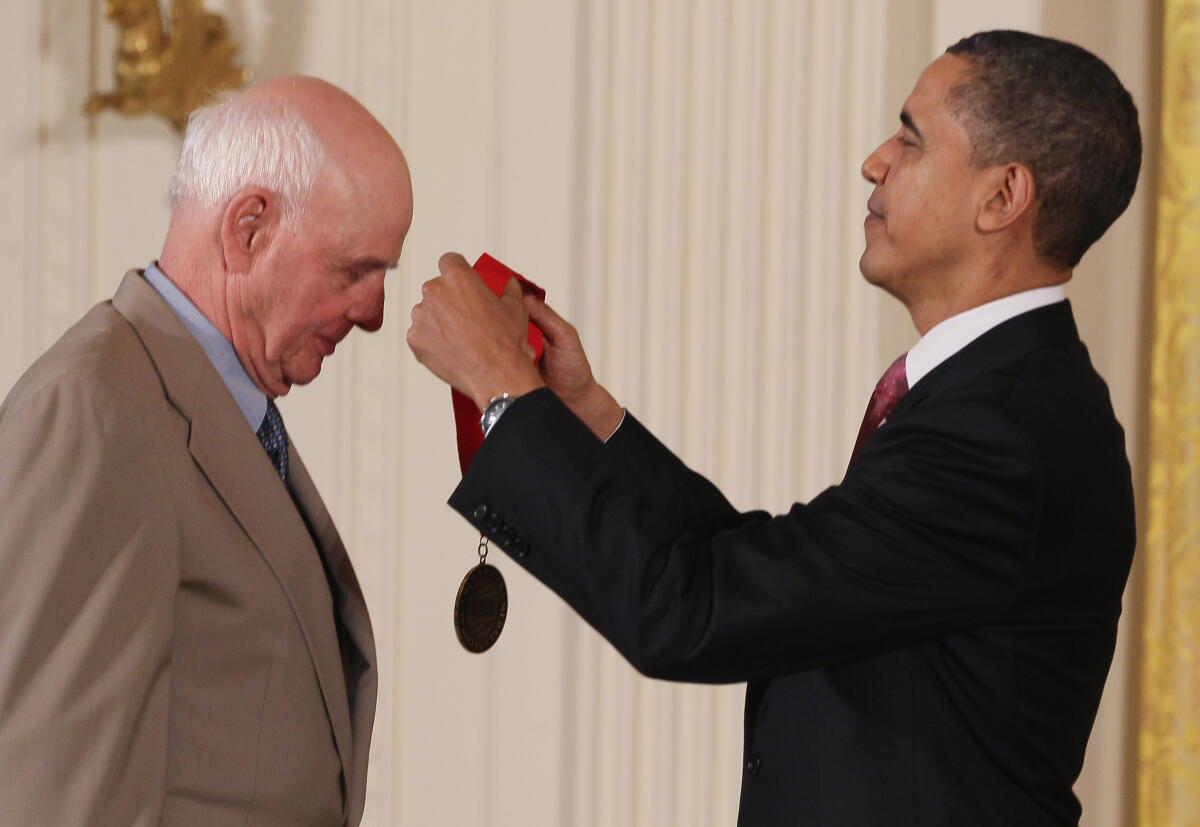
Over the course of his career, he was honored with the T. S. Eliot Prize, the Aiken Taylor Award for Modern American Poetry and the Richard C. Holbrooke Distinguished Achievement Award from the Dayton Literary Peace Prize, among other accolades. In 2010, Berry was awarded the National Humanities Medal by then-President Obama for his achievements as a poet, novelist, farmer and conservationist. In 2016, he was the recipient of the Ivan Sandrof Life Achievement Award from the National Book Critics Circle.
Wendell Erdman Berry was born on Aug. 5, 1934, in Louisville, Ky., to John Marshall Berry Sr., a lawyer and tobacco farmer, and Virginia Perry Berry. Wendell was the eldest of four children, two boys and two girls. In high school, his parents shipped him off to Millersburg Military Institute, a former military boarding school in Kentucky, where rather than conform to the teachings, he later wrote that his takeaway was, “Take a simpleton and give him power and confront him with intelligence — and you have a tyrant.”
He went on to study English and creative writing at the University of Kentucky. There he met and wooed Tanya Amyx, who would become his wife and the mother of his two children, Mary and Pryor. He landed a Wallace Stegner writing fellowship at Stanford in 1958, and in 1961 he was granted a Guggenheim Fellowship, which allowed him to pack up the family and live in Tuscany and southern France.
After Berry’s scholarly pursuits took him to the West Coast, then Europe, then the East Coast, where he taught at New York University, he accepted a job at the University of Kentucky, allowing him to return home and back to his roots, on a farm near the river.
Then-President Obama presents the 2010 National Humanities Medal to Wendell Berry during a ceremony March 2, 2011, in the East Room of the White House.
(Mark Wilson / Getty Images)
“Within a few years, Mom and Dad were raising 85% of the food we were eating,” Mary told The Times. “We had a milk cow, raised hogs for our own use, and by the time I was a teenager, I resented the whole thing pretty seriously, and I remember saying to them more than once, ‘I did not choose to live this way, and I don’t know why we have to do everything the hardest way possible.’ We had no television. … But I was in a heck of a position with my parents because I never really thought they were wrong about anything, and I still don’t.”
When Mary would gripe, she said, her dad would laugh or “just keep working.” But “he talked about what we were doing and why we were doing it,” she said. “He told my brother and me from the time I can remember to look and see that this is good and don’t forget, and I have not forgotten.”
In 2011, when Berry was nearly 80 years old, he joined a high-profile sit-in at the office of Kentucky’s then-Gov. Steve Beshear to protest the destructive mountaintop strip-mining of coal. In an interview with Bill Moyers shared by the Berry Center in 2025, Berry said that he and his compatriots had had enough of the state government ceding control of resources to the coal companies. “In our society,” he said, “people with money are bigger and more powerful and more noticeable and count more as citizens than people without much money. … So we did confront the governor and tell him we weren’t going to leave.”
His attempt at civil disobedience was turned on its head when the governor invited Berry and the Kentucky Rising activists to stay.
“We did stay,” he said. “The whole weekend.”
“We were beautifully treated by the security staff and people who sent us food and bedding and good wishes and even came in and gave us massages. And it was altogether one of the loveliest weekends I’ve ever spent in my life.”
Berry continued writing into his old age.
Next month, Counterpoint Press will posthumously release “Dispatches From Rural America,” a collection of 15 essays. In one, “The Problem Is Industrialism,” Berry wrote about a 2021 conversation he had with a friend of more than 40 years, author Wes Jackson.
“To the extent that we were talking in earnest, our subject was the set of calamities that the media and the commentators frequently take up, typically dealing with each one in isolation from the others and representing each as an emergency more or less apocalyptic, and in tones recalling a number of vernacular alarms, from ‘Last chance for beer’ to ‘Prepare to meet God.’”
He continued later that the two discussed how industrialism “grows only by consuming, once and for all, the living world.”
Mary said she wanted people to know that, yes, her father was worried and wouldn’t have written so much if he weren’t terribly concerned about the future of rural America, but she wants people to understand that he was a man of great hope.
“Hope he felt was a duty, and I learned that from him,” she said. “As he said in one of his many poems, hope is what we owe people younger than ourselves.”
Mary said she was continuing her father’s work through the Berry Center, a nonprofit that aims to put Berry’s writings to work and advocates for farmers, land-conserving communities and healthy regional economies.
Berry is survived by his wife of nearly 70 years, Tanya, his daughter Mary, son Pryor, five grandchildren and four great-grandchildren.