fatal shooting

Minnesota prosecutors obtain long-withheld evidence in investigation into protest shooting deaths

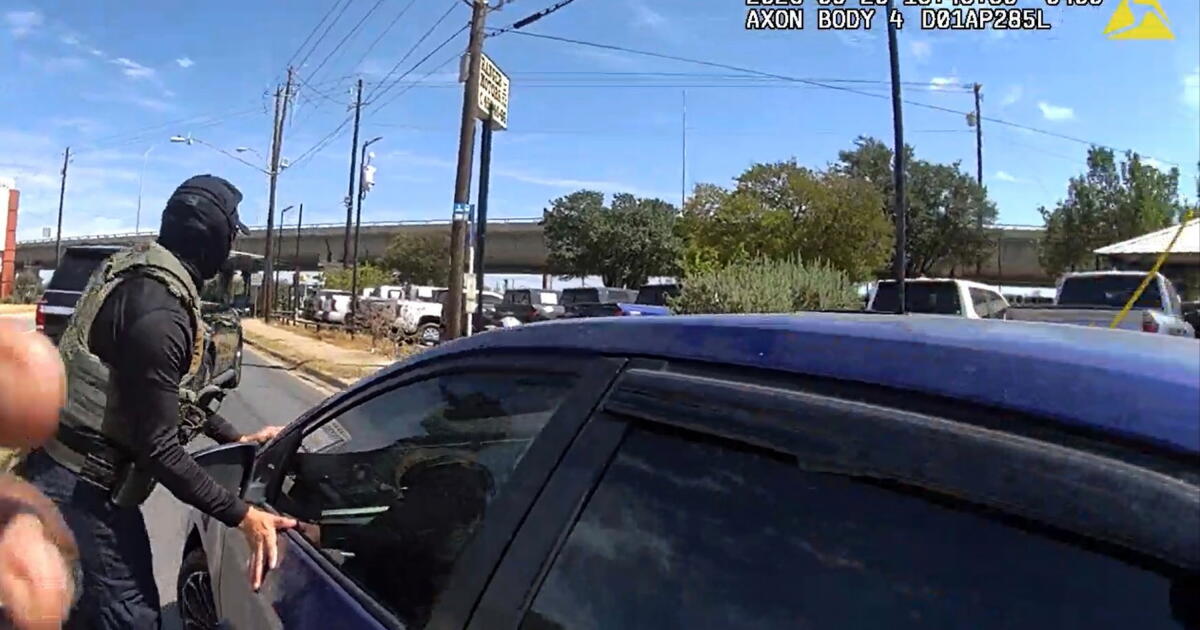
Minnesota prosecutors announced Monday that they have obtained key evidence in their ongoing investigations into fatal shootings of Renee Good and Alex Pretti during pitched protests against a federal immigration enforcement crackdown in the state earlier this year.

“Through the cooperation of our federal partners we have obtained the hard drives of previously withheld evidence in the killings of Renee Good and Alex Pretti and the shooting of Julio Sosa-Celis,” Hennepin County Attorney Mary Moriarty said. “We have also obtained some of the physical evidence that was previously withheld, including Renee Good’s car.”

Statements, police body camera video and other evidence had previously been withheld by federal officials in the killings.

She said state and local investigators now also have in their possession Good’s damaged car.

Good, a 37-year-old mother of three, was shot and killed in her car while leaving an anti-immigration enforcement protest in Minneapolis on Jan. 7 as U.S. Immigration and Customs Enforcement agents surged through the region.

Her death and that of Pretti, a 37-year-old intensive care nurse shot and killed by federal officers just weeks later during a Jan. 24 protest, sparked outrage across the country and calls to rein in immigration enforcement.

“The wonderful thing now is we have all the evidence,” Moriarty said.

Investigators are going through all the evidence, including hard drives with statements, hours of video recorded by body-worn cameras and the car, Moriarty said.

“We need transparency. We need cooperation. Our community needs it,” she said. “Our democracy requires it.”

At the end of June, Minnesota Atty. Gen. Keith Ellison and Moriarty asked a federal judge to push out the deadlines in their lawsuit against the U.S. Department of Justice because they said they were in the midst of recently reinitiated “ongoing discussions” with the FBI about information sharing.

Those ongoing discussions with the FBI about information sharing are likely to affect Minnesota’s request for summary judgment in the case, Ellison and Moriarty wrote in their motion to the court.

The attorneys representing the federal government signed onto the motion.

Ellison said he remains “deeply troubled that the federal government spent more than half a year attempting to conceal this evidence from state investigators.”

“It should never have taken this long for Minnesota law enforcement to gain access to the federal government’s evidence,” he said in a statement. “I hope that this is the beginning of a major course correction on the part of the federal government.”

There have been at least eight deaths since the Trump administration’s immigration enforcement campaign began last year, but nobody has been charged in connection with them.

A Minneapolis resident, Julio Cesar Sosa-Celis, was also shot and injured in his home while ICE agents were in pursuit of another man.

In May, Christian Castro, an ICE agent, was arrested and charged with assault as well as falsely reporting a crime in connection with that Jan. 14 nonfatal shooting.

Prosecutors say Castro, 52, fired through a home’s front door and shot Sosa-Celis in the thigh.

In April, Gregory Donnell Morgan Jr., another ICE agent, was charged with pointing his gun at a motorist and passenger on a Minneapolis highway.

Prosecutors said at the time it was the first criminal case against a federal officer involved in the Minnesota immigration crackdown.

On Monday, ICE was involved in the fatal shooting in Maine, according to state House Speaker Ryan Fecteau, a Democrat.

Details of what transpired in Biddeford, a coastal city of about 23,000 people roughly 15 miles southwest of Portland, remain unclear.

Last week, an ICE agent in Houston fatally shot a Mexican national who had lived in the U.S. for decades as the homebuilder drove his construction crew to a job site.

The federal Department of Homeland Security, which oversees ICE, has acknowledged officers were looking for someone else when they attempted to stop Lorenzo Salgado Araujo’s vehicle. The agency maintains Salgado Araujo rammed an ICE vehicle, prompting an officer to open fire in self-defense.

Marcelo and Boone write for the Associated Press.

Source link

Lawyers for man charged with killing Charlie Kirk question reliability of evidence

Lawyers for the man accused of killing conservative activist Charlie Kirk planned to call a final witness Friday as they try to raise doubts about the prosecution’s case before it can go to trial.

A Utah judge is deciding whether prosecutors have enough evidence to put Tyler Robinson on trial on a charge of aggravated murder. Kirk, 31, was killed as he spoke to a crowd of thousands at Utah Valley University on Sept. 10.

One of Robinson’s attorneys, Michael Burt, tried to inject uncertainty into the case Thursday by challenging the reliability of ballistics tests on a bullet fragment recovered from Kirk’s body.

Authorities sought to tie the fragment to the suspected murder weapon, but the results were inconclusive.

“Saying anything but inconclusive was inappropriate,” said Samantha Karner with the Bureau of Alcohol, Tobacco, Firearms and Explosives.

Earlier in the week, Robinson’s team questioned the reliability of DNA evidence that investigators said linked Robinson to the scene. Experts say the science behind DNA testing is sound.

Robinson has not entered a plea. He turned himself in a day after the fatal shooting of Kirk, a close ally of President Trump credited with helping galvanize young voters for the Republican in the 2024 election.

At the request of Kirk’s family, State District Judge Tony Graf said he would allow to be shown inside the courtroom an altered version of campus surveillance video that prosecutors said shows Robinson crawling out to a rooftop “sniper’s perch” before shooting Kirk.

The unaltered video was previously shown. The altered version includes footage that zooms in on a figure that prosecutors said was Robinson and red marks that were added to the video.

The weeklong preliminary hearing ends Friday, but a decision won’t come until after Sept. 1, when Graf scheduled oral arguments in the matter.

Prosecutors on Thursday aired portions of a recorded interview with Robinson’s roommate, Lance Twiggs. The day after Kirk was shot in the neck, Robinson allegedly told Twiggs “he wishes he hadn’t done it,” a recording played in court revealed.

Later that same day — and only about an hour before turning himself in — Robinson posted “it was me at UVU yesterday,” in a chat room on the Discord social media platform, according to investigators and messages shown by prosecutors.

Defense attorneys unsuccessfully fought the public release of the statements from Twiggs and the chat room messages. They argued prosecutors would characterize the material as a confession, undermining Robinson’s right to a fair trial.

Prosecutors contend the shooting endangered others at Kirk’s campus event — an aggravating circumstance that could make the crime punishable by death under Utah law. Robinson also faces possible sentence enhancements based on claims by prosecutors that he targeted Kirk because of his political views.

Twiggs said in the April interview with prosecutors and investigators that Robinson sometimes talked about politics, including Trump. But Twiggs said he never heard Robinson talk about Kirk before the shooting. The defendant also did not talk much about gender issues or LGBTQ rights, Twiggs said.

The weeklong preliminary hearing has attracted intense media coverage and spectators who have angled for one of the 14 seats in the courtroom that are reserved for the public.

People have lined up early — sometimes sleeping there overnight — in hopes of getting in.

Schoenbaum and Brown write for the Associated Press. Brown reported from Billings, Montana.

Source link

Houston shooting marks at least the 8th fatality in U.S. immigration sweeps

The fatal shooting of a Houston man by a federal immigration officer Tuesday marks at least the eighth death during the Trump administration’s immigration enforcement campaign, and the first fatality amid a newly intensified push by the administration to carry out its mass deportations agenda.

Department of Homeland Security officials said in a statement that Lorenzo Salgado Araujo, a Mexican national, ignored commands while trying to evade arrest during an enforcement operation. They say he attempted to ram his car into an agent, who opened fire in self-defense.

Araujo’s family said he was on his way to work at a construction job. He died on the way to the hospital.

The fatal shooting drew immediate criticism from immigrants rights groups and some Democrats who called for an independent investigation and for all footage, communication and evidence to be preserved.

Video footage in several previous shootings has contradicted the accounts of federal officers. No immigration officers have been charged in those fatal encounters.

Man shot during vacation trip traffic stop

A fatal late-night traffic stop in Texas in March 2025 marked the earliest deadly shooting by federal officers during the nationwide immigration crackdown. It took almost a year for records in the fatal shooting of the 23-year-old U.S. citizen to be disclosed.

A Homeland Security Investigations team was conducting an immigration enforcement operation with local police when agents stopped Ruben Ray Martinez, who was on his way from San Antonio to South Padre Island. Family members said he had just turned 23 and was with his best friend on his way to celebrate.

DHS officials said Martinez was told to exit the vehicle, but he refused and instead “intentionally ran over” an agent. Another agent fired shots through the open driver’s window, striking Martinez, who died at a hospital. The HSI agent was treated for an undisclosed knee injury.

Martinez’s mother said she was contacted by investigators with the Texas Rangers who told her there was video that contradicted the account given by federal agents. Federal and state authorities have declined to comment on potential discrepancies.

Nurse shot during Minneapolis protest

A Border Patrol officer shot and killed Alex Pretti, a 37-year-old nurse, during a Jan. 24 protest against the Metro Surge immigration operation in Minneapolis.

Federal authorities immediately described Pretti, a U.S. citizen, as an armed agitator who was a threat to officers. But bystander video showed Pretti was on the ground and had been holding a cellphone during the interaction with officers.

The video showed an officer appearing to pull a gun from Pretti’s waistband and step away before the first shot was fired by another officer, followed by more shots. Pretti had a permit to possess a firearm.

State and local officials pushed back against the federal officials’ initial characterizations of Pretti, with Gov. Tim Walz calling the comments “despicable.”

Driver shot behind the wheel of an SUV

Renee Good, a U.S. citizen, was repeatedly shot by an Immigration and Customs Enforcement officer in Minneapolis on Jan. 7. Videos show she was turning the wheels of her car away from an officer, Jonathan Ross, when he opened fire. Trump administration officials have repeatedly defended Ross, claiming his life was at risk from the moving vehicle.

Good’s death caused a firestorm across the country. The U.S. Justice Department said it wouldn’t share information on the shooting with state authorities.

State and local officials subsequently sued to try to stop the immigration sweeps. Protesters with whistles trailed officers who, in response, deployed tear gas and other chemical irritants.

Cook from Mexico shot during a traffic stop

ICE agents fatally shot Silverio Villegas González during a traffic stop Sept. 12 in suburban Chicago. Relatives said the 38-year-old line cook from Mexico had dropped off a child at daycare that morning.

At the time, DHS officials said agents were pursuing a man with a history of reckless driving who was in the country illegally. They alleged Villegas González evaded arrest and dragged an officer with his vehicle.

Homeland Security said the officer opened fire fearing for his life and was hospitalized with “serious injuries.” However, local police videos showed the agent walking around and dismissing his injuries as “nothing major.”

DHS has said the death remains under investigation.

Farmworker fell from greenhouse roof during ICE raid

Authorities were arresting dozens of farmworkers July 10 at Glass House Farms in Camarillo when Jaime Alanis fell from the roof of a greenhouse and broke his neck. The 57-year-old laborer from Mexico died at a hospital two days later.

Relatives said Alanis had spent a decade working at the farm. During the raid, Alanis called family to say he was hiding. Officials said he fell about 30 feet from the greenhouse roof.

Homeland Security said Alanis was never in custody and was not being chased by immigration authorities.

Man struck on California freeway after running from officers

A man fleeing from immigration officers outside a Home Depot store in Monrovia died after being hit by an SUV as he tried to cross a freeway on Aug. 14.

Monrovia police said ICE agents were conducting enforcement operations when the man was hit while running across the eastbound lanes of the 210 Freeway.

The man, identified by the National Day Laborer Organizing Network as Carlos Roberto Montoya Valdez, 52, of Guatemala, died at a hospital.

Homeland Security said Montoya Valdez wasn’t being pursued by immigration authorities when he ran.

Gardener from Honduras killed on Virginia interstate

A pickup truck fatally struck Josué Castro Rivera on a highway in Norfolk, Va., as he tried to escape authorities during a traffic stop on Oct. 23.

Castro Rivera, 24, of Honduras, was heading to a gardening job with three passengers when ICE officers pulled over the vehicle, according to his brother, Henry Castro.

State and federal authorities said Castro Rivera ran away on foot and was hit by a pickup truck on Interstate 264.

Homeland Security said Castro Rivera’s vehicle was stopped as part of a “targeted, intelligence-based” operation and that Castro Rivera had “resisted heavily and fled.”

Bynum and Lauer write for the Associated Press. Bynum reported from Savannah, Ga. Lauer reported from Philadelphia. AP reporters Ed White in Detroit; Sophia Tareen in Chicago; and Michael Biesecker in Washington contributed to this report.

Source link

Claudine Longet dead: Starlet who shot her Olympian boyfriend was 84

Claudine Longet, the French-born star and ex-wife of crooner Andy Williams who became notorious for the fatal shooting of Olympic skier Vladimir “Spider” Sabich, has died. She was 84.

Her death was confirmed by her nephew, Bryan Longet, who posted a social media tribute on Thursday. Translated from French by The Times, he wrote, “You have been a true inspiration in my life and you will always be. … Another star in the sky. Thank you for everything, my aunt.”

Born in Paris on Jan. 29, 1942, Longet was the daughter of a doctor and an X-ray manufacturer. From a young age, she showed a knack for singing and dancing and envisioned her name on the marquee. In 1960, when she turned 18, American impresario Lou Walters (father of Barbara Walters) saw Longet dancing on French television and hired the ingénue to join the Tropicana casino’s flashy new production. She bid Paris adieu and sashayed to Las Vegas, where she starred in the Folies Bergère revue.

While working as a showgirl in Sin City, Longet met then-fellow Vegas performer Andy Williams one evening when her car broke down on the side of the road. Williams happened to be passing by as the young dancer was pushing her car down the highway with a friend, and Williams along with his manager stopped to help and was quickly charmed. The two were married on Christmas Day the following year, in 1961.

In 1962, Williams released “Moon River,” and the crooner’s career took off. The newlyweds left Las Vegas and moved into an oceanfront mansion in Malibu where they started a family, and over the next several years welcomed daughter Noelle and sons Christian and Robert, or “Bobby,” who was named after the couple’s close friend Robert F. Kennedy. Also in 1962, Williams’ eponymous variety show debuted and quickly became a hit. Longet was a regular on the show, and the family-oriented Christmas TV specials, often featuring the entire Williams clan, were a ratings juggernaut.

In addition to her regular appearances on “The Andy Williams Show,” Longet acted in television and film. Notably, the chanteuse captivated audiences singing Henry Mancini and Don Black’s “Nothing to Lose” in the 1968 comedy “The Party,” in which she played an aspiring actress. From 1967 to 1972, she released seven studio albums, five with A&M Records, including her debut single and album titled “Claudine,” and two with Barnaby Records. Her music was known for its breathy, lounge-pop quality, and she sang in both English and French.

By 1970, Williams and Longet’s marriage was on the rocks, and the pair separated. They officially divorced in 1975. The Emmy-winning host chalked it up to the pair growing apart. He told CBS’ “This Morning” during a 2009 appearance that he was never home. “It was all my fault, and I just didn’t take care of my marriage,” he said, noting that he regretted the split. The two stayed friendly afterward, and Williams stood by Longet when tragedy and scandal struck a year later, in 1976.

Longet met Olympian skier Sabich in Bear Valley at a celebrity skiing exhibition in 1972. There was an instant attraction between the two, and Longet relocated to Aspen, Colo., and ultimately moved into the pro skier’s ritzy Starwood chalet around 1975. On March 21, 1976, Longet shot Sabich in the abdomen with an imitation World War II .22-caliber German‐made pistol. Her daughter, Noelle, who was in the house at the time, testified that she heard Sabich yell out, “Claudine! Claudine!”

According to The Times’ archives, Longet told authorities that she found the handgun and asked Sabich how to use it. During Longet’s trial, Aspen Det. David Garms testified that Longet insisted the shooting was an accident. Garms said that Longet told him she’d pointed the gun at Sabich and then “jokingly said ‘bang, bang.’” She told investigators she thought the safety was on, and a ballistics expert said the safety did not work.

Longet was with Sabich in the ambulance when he died en route to the Aspen hospital. The “Love Is Blue” singer was subsequently questioned by investigators and charged with felony reckless manslaughter weeks later. She initially faced up to 10 years in prison. But in January 1977, after four days of testimony and 3½ hours of deliberations, Longet was acquitted of the felony charge and convicted of a misdemeanor charge of negligent homicide.

Ex-husband Williams accompanied Longet to her trial and told “This Morning” years later that he supported his ex-wife because he believed in her innocence.

“I did because I thought it was unfair,” he said. “I thought she was innocent. I thought it was an accident.”

During the trial, she testified in her signature French accent that she and Sabich were the “best of friends.”

“There were times over the four years that we would disagree. … [T]here would be times he would be a little bit offended by the attention I got and I would be a little bit offended by the attention he got, but we were the best of friends and we loved each other very much,” she told the court, per The Times’ archives.

Longet was sentenced to serve 30 days in jail “at a time of her own choosing.”

“There is not really much to say,” she told reporters outside the courtroom, per The Times’ archives. “Only that I have too much respect for living things to do that. I’m not guilty.”

The parents of Sabich filed a $1.3-million civil suit against Longet later the same year, but the case was settled out of court two years later. Longet was reportedly forbidden from speaking or writing about the shooting. As for her career in show business, she was finished.

The Sabich case became an absolute sensation in the media, not just in America but also globally, and Longet was internationally labeled Aspen’s femme fatale. Pop culture had its way with the incident as well. The Rolling Stones’ song “Claudine” was withheld from their 1978 album, “Some Girls,” because of legal considerations but was featured on the 2011 reissue of the album.

“You’re the prettiest girl I ever seen / I want to see you on the movie screen / I hope you never try to make a sacrifice of me, Claudine,” belted Mick Jagger in what may have been considered a diss track or a tribute, depending on whom you ask. “Nah ah / Don’t get, don’t get trigger happy with me, Claudine.”

In an April 1976 episode, “Saturday Night Live” also took aim at the deadly affair with a sketch titled “The Claudine Longet Invitational,” in which Chevy Chase and Jane Curtin play sports commentators who offer a play-by-play of a competition in which male skiers are “accidentally” shot by Longet as they race down the slopes.

The producers read an apology on air the following week.

Aspen attorney Ron Austin, who was on Longet’s defense team, left his wife shortly after the trial concluded to be with the embattled starlet. The two married in 1985 and remained in Aspen afterLonget’s conviction but also spent time at their second home in Hawaii. In 2023, the pair listed her $60-million Red Mountain Ranch estate, according to Robb Report.

Longet’s last known public appearance was in 2003 on the A&E channel’s Andy Williams “Biography” documentary, in which she recorded only voice-over. “To this day people stop me in the street and say how much they loved the Christmas show.”


Source link