failures

Audit finds failures in South Korea housing guarantor

Kim Ho-cheol, Chairman of the Board of Audit and Inspection, attends a press conference at the state auditor’s headquarters in Seoul, South Korea, 24 June 2026. Photo by YONHAP / EPA

July 30 (Asia Today) — South Korea’s state-run housing guarantor failed to properly investigate debtors and recover claims after paying about 15 trillion won, or $10.3 billion, under defaulted guarantees over the past five years, a government audit found Thursday.

The Housing and Urban Guarantee Corporation, commonly known as HUG, has yet to recover about 12 trillion won, or $8.2 billion, of that amount.

The Board of Audit and Inspection released the findings of its regular audit of the corporation, identifying problems in guarantee issuance, project financing reviews, debt collection and customer refunds.

HUG provides guarantees intended to protect tenants if landlords fail to return jeonse deposits.

Jeonse is a housing rental arrangement widely used in South Korea in which a tenant provides a large refundable deposit instead of paying, or in exchange for paying less, monthly rent.

Corporation undercharged guarantee fees

Auditors found that HUG undercharged a corporate rental business by about 2.77 billion won, or $1.9 million, when issuing guarantees covering 12,752 homes.

HUG’s rules required it to calculate the fee using the company’s credit rating on the date the guarantee was issued. Employees instead used an earlier, more favorable credit rating from the application date.

The audit board called for disciplinary action against the employees involved and instructed HUG to review ways of collecting the unpaid fees.

HUG has reported financial losses since 2022 as rental deposit guarantee defaults increased, including cases involving large-scale jeonse fraud.

Its operating loss grew from 242.9 billion won, or about $166 million, in 2022 to 2.19 trillion won, or about $1.5 billion, in 2024.

Weak reviews led to $261 million in PF guarantees

The audit also found deficiencies in HUG’s reviews of housing project financing guarantees.

Such guarantees rely largely on a developer’s projected income from future home sales, making an accurate assessment of expected cash flow essential.

Auditors found that HUG accepted financial data in which developers had arbitrarily delayed construction payments, improving the projects’ apparent debt-service capacity.

As a result, HUG approved a combined 382 billion won, or about $261 million, in guarantees for three projects that should have been rejected under its own standards.

HUG also incorrectly graded two other projects and collected about 1.64 billion won, or $1.1 million, less in guarantee fees than it should have.

Thousands of debtors were not investigated

The audit board also found major gaps in HUG’s efforts to identify assets belonging to debtors after paying claims on their behalf.

An examination of seven regional management centers found no record of an asset investigation for 2,915 of 9,003 debtors, or 32.3%.

The rate varied widely among regional offices. The Seoul Northern Center investigated the assets of only 21.6% of the debtors assigned to it, compared with 99.8% at the Seoul Western Center.

HUG’s headquarters failed to adequately monitor or address those differences, auditors said.

Tenants missed refunds

HUG also failed to refund fees to some tenants who had been enrolled in both a landlord rental deposit guarantee and a tenant jeonse deposit return guarantee.

The audit identified 1,699 cases involving about 173 million won, or approximately $118,000, in unreturned fees.

It also found 454 guarantee-default cases in which money owed to tenants had not been properly returned.

The audit board instructed HUG to analyze the causes of the problems and develop improvements in its core operations, including guarantee reviews, issuance procedures and debt recovery.

It also called for disciplinary or corrective action against employees responsible for improper decisions.

— Reported by Asia Today; translated by UPI

© Asia Today. Unauthorized reproduction or redistribution prohibited.

Original Korean report: https://www.asiatoday.co.kr/kn/view.php?key=20260730010011338
Source link

Trump’s border czar probes possible vetting failures after ICE shooting | Donald Trump News

ICE officer under review for alleged mental health struggles, violent behavior amid deadly shooting case in Maine.

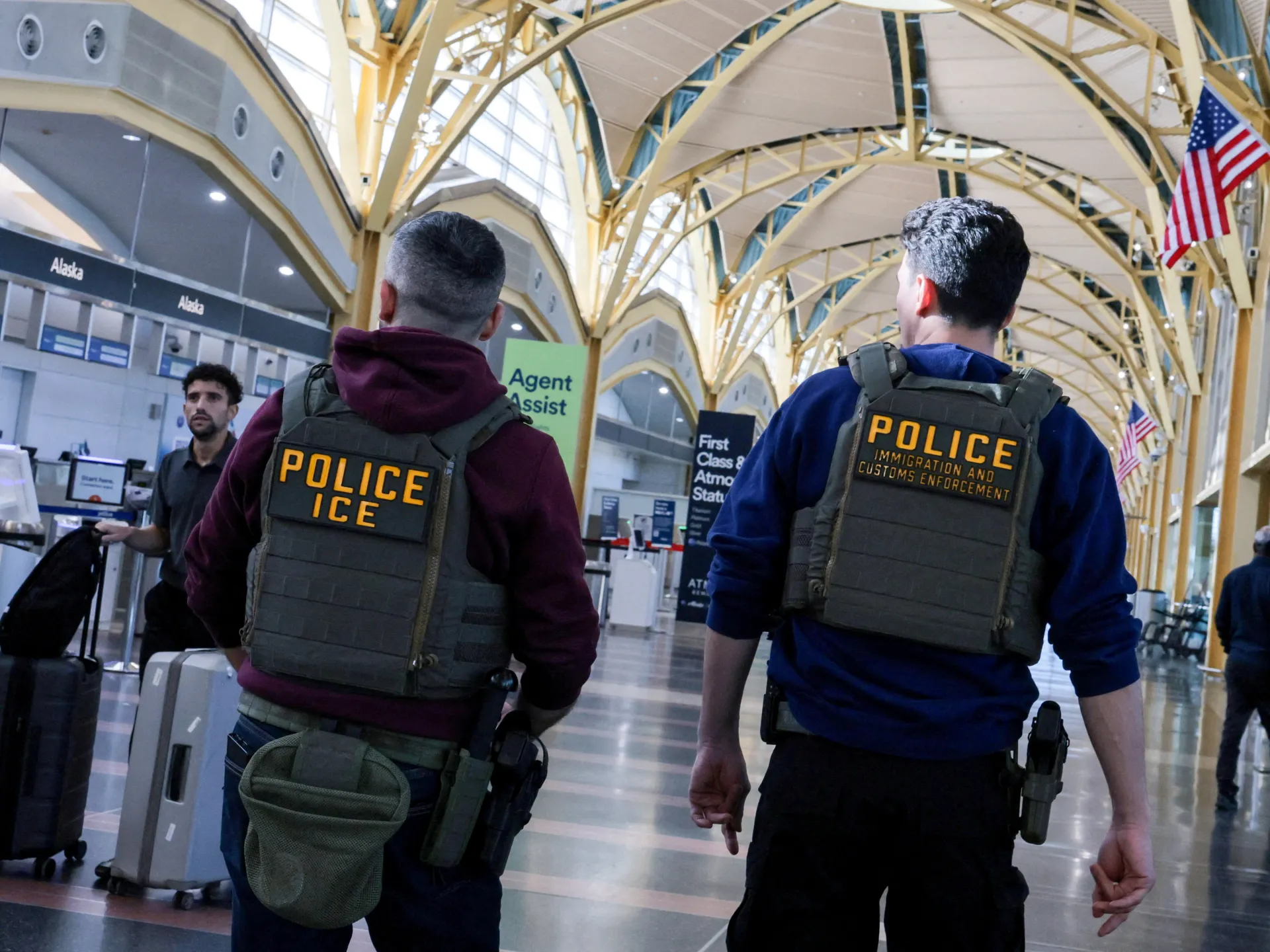
United States President Donald Trump’s border czar says the vetting of an immigration officer involved in the deadly shooting of a Colombian native in Maine is under internal review after the officer’s relatives revealed to The Associated Press that he had a history of serious mental health struggles and violent behaviour.

Tom Homan said on Sunday that if the allegations against the Immigration and Customs Enforcement (ICE) officer are true, “I don’t think he should ever have cleared vetting.”

Recommended Stories

list of 3 itemsend of list

“There’s several things under review,” Homan said on CNN about the officer, Army veteran David Brouillette. “The training is under review. I know this specific case, as far as the vetting, is under review by the internal affairs section.”

Questions about the Department of Homeland Security’s (DHS) rush to hire, train and deploy thousands of new ICE officers to carry out Trump’s immigration crackdown have come into stark focus after back-to-back deadly shootings of immigrants in Maine and Houston.

Homeland Security Secretary Markwayne Mullin ordered a pause in vehicle stops after the Maine shooting, but Trump almost immediately reversed course and insisted the stops resume as a necessary tool in his campaign to round up and deport immigrants without current legal status.

DHS did not immediately respond on Sunday to a request for comment about the internal review.

ICE mandates body cameras during vehicle stops

Homan said that “changes have been made” and that acting ICE director David Venturella has issued a new directive that body cameras must be in use if officers make a vehicle stop.

“Right now, on all vehicle stops, there’s at least one body camera on site to record the entire event,” he said.

He said Venturella “sent an instruction out that he wants at least one body camera on those vehicle stops, so we have everything on video”.

It is unclear if the steps the department is taking will be enough to quell the concerns coming from certain Congress lawmakers over DHS training and tactics as it tries to reach Trump’s mass deportation goals.

Lawmakers push for answers

Lawmakers from both parties have raised concerns.

Democrats pressed ICE officials during a closed-door briefing for the House of Representatives Homeland Security Committee last week, leaving some with more questions than answers.

Lawmakers were told during the briefing that there have been 56 complaints of excessive force against ICE officers – 32 were cleared, and one was referred for disciplinary action.

No discipline had yet been handed out, the lawmakers said they were told. The rest of the incidents are still under investigation.

Meanwhile, Republican Senator Susan Collins of Maine, chair of the powerful Senate Appropriations Committee, has pushed for the use of body cameras and ensured funding for the effort. She had said it was “extremely unfortunate” that the officer involved in the shooting in her home state was not using a camera.

Source link

Capitol Police chief apologizes for failures in D.C. riot

The interim chief of the Capitol Police apologized Tuesday for failing to prepare for what became a violent insurrection despite having warnings that white supremacists and far-right groups would target Congress.

Yogananda Pittman, in prepared testimony before Congress, said the Capitol Police “failed to meet its own high standards as well as yours.” She listed several missteps: not having enough manpower or supplies on hand, not following through with a lockdown order she issued during the siege, and not having a sufficient communications plan for a crisis.

“We knew that militia groups and white supremacists organizations would be attending,” Pittman wrote. “We also knew that some of these participants were intending to bring firearms and other weapons to the event. We knew that there was a strong potential for violence and that Congress was the target.”

Her admissions come as U.S. law enforcement investigates a number of threats aimed at members of Congress and as the second impeachment trial of former President Trump gets underway. A law enforcement official told the Associated Press that authorities have detected ominous chatter about killing legislators or attacking them outside the Capitol.

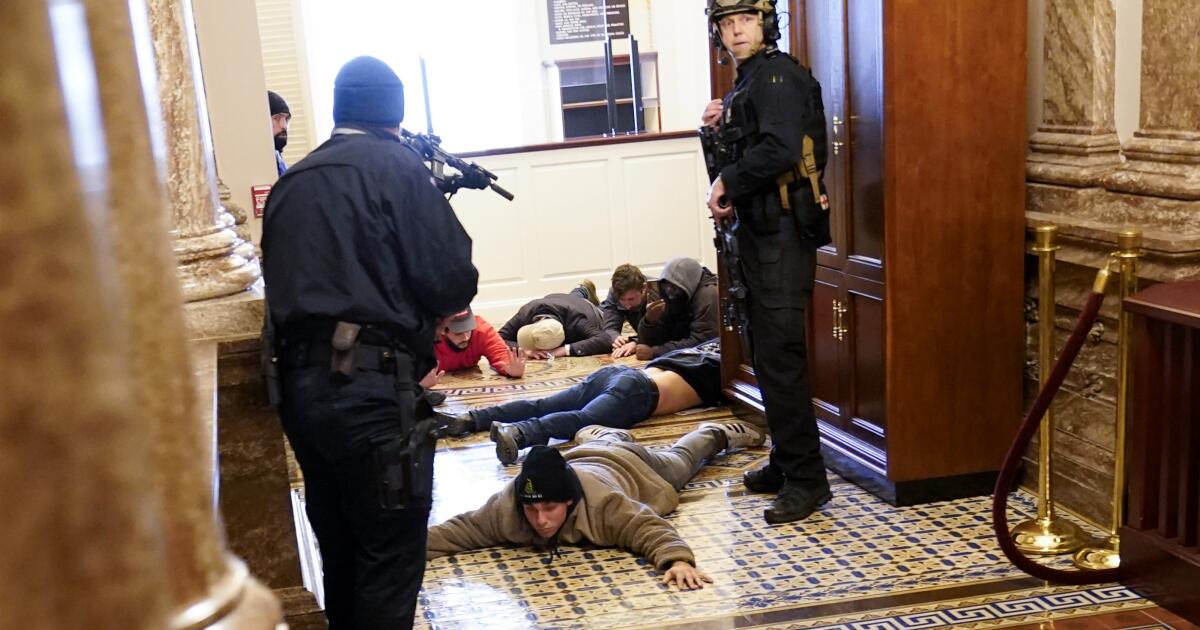
Trump supporters tore down fences and broke through doors and windows after an event in which the now-former president called on them to “fight” and “stop the steal.”

Inside the building, Congress was certifying the victory of President Biden. Five people died, including Capitol Police Officer Brian Sicknick, who was hit in the head with a fire extinguisher. A sixth person, another Capitol Police officer, later died by suicide.

The day after the riot, then-Capitol Police Chief Steven Sund said his force “had a robust plan established to address anticipated 1st Amendment activities.” Sund has since resigned, as have the sergeants at arms for the House and Senate.

Officers who have spoken to the AP described being overrun by insurrectionists who in many cases were more armed than they were. The officers said they were given next to no plan beforehand or communication during the riot.

There are conflicting accounts of why the Capitol Police did not have more backup. Pittman’s statement provoked a new round of finger-pointing.

In her testimony, Pittman said Sund asked the Capitol Police Board, which oversees the department, to declare a state of emergency and allow him to request National Guard support, but the board declined. The Defense Department has said it asked the Capitol Police if it needed the Guard, but the request was denied.

A member of the Capitol Police Board denied Pittman’s claim after her testimony was released. J. Brett Blanton, the architect of the Capitol, said that Sund didn’t ask him for help and that there was “no record of a request for an emergency declaration.”

Several law enforcement and congressional reviews are underway.

Both Pittman and Timothy Blodgett, the acting House sergeant at arms, told Congress on Tuesday that they need stronger communications and more fortifications around the Capitol building. Blodgett called on Congress to prepare for future emergencies and offered training for any offices that requested it.

“You want people to have some level of access to the government,” said Rep. Tim Ryan (D-Ohio). But he noted that it’s also important that lawmakers feel protected and positioned to respond quickly to anything that might happen.

Source link