Facilities

Why have the US and Israel bombed more than 75 Iranian police facilities? | Armed Groups News

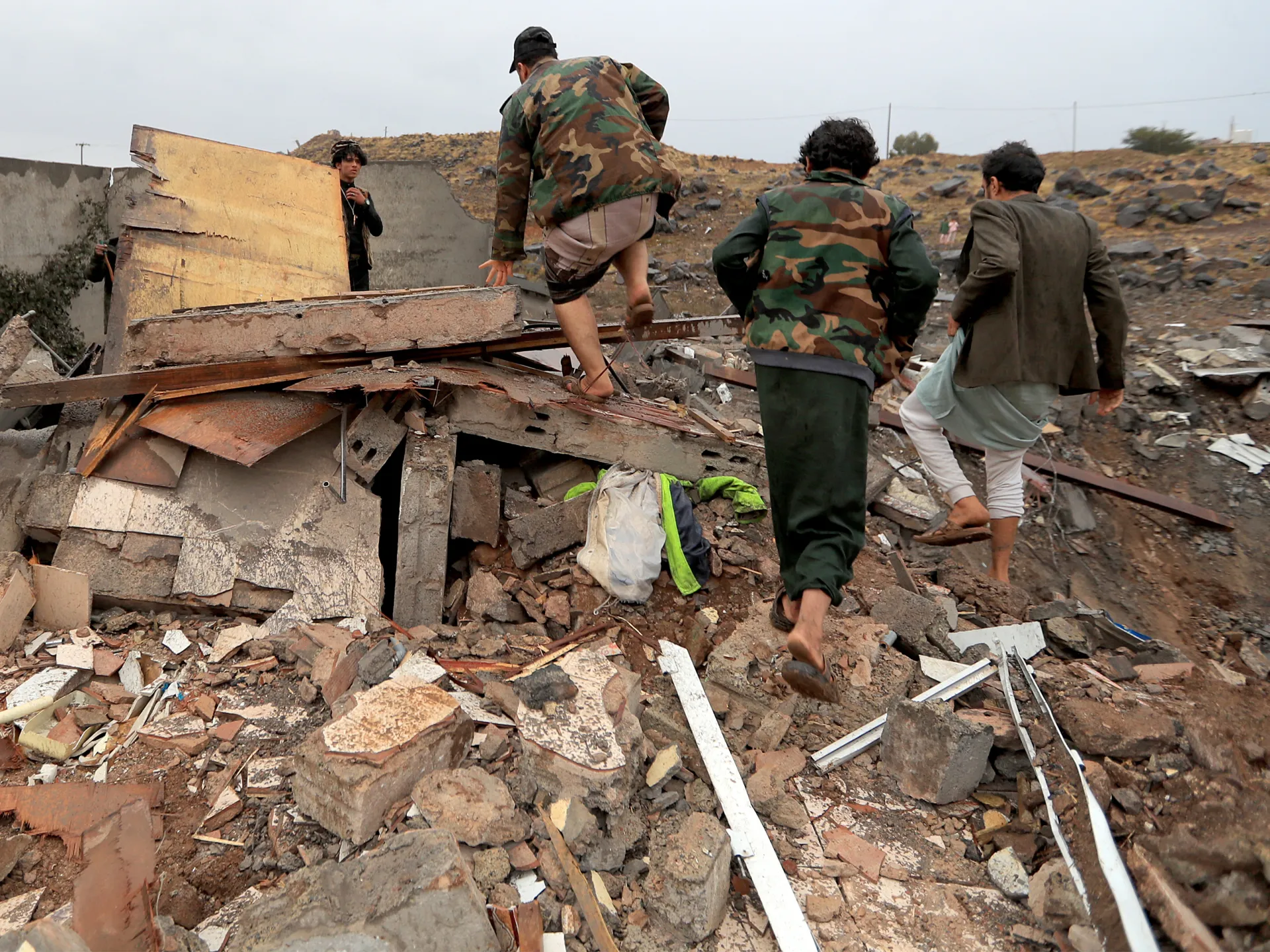
In the densely populated neighbourhoods of southern Tehran, the 11th Criminal Investigation Base once stood as a mundane symbol of local law enforcement. Its detectives investigated economic crimes, fraud and petty thefts.

The building housed no ballistic missiles, no uranium centrifuges and no military command centres. Today, it is a crater. In the opening wave of the United States-Israel war on Iran, warplanes wiped the local police station off the map.

Satellite imagery provided by Planet Labs shows the complete destruction of the 11th Criminal Investigation Base in southern Tehran between February 26 and March 6, 2026.
Satellite imagery provided by Planet Labs shows the destruction of the 11th Criminal Investigation Base in southern Tehran on February 26 and March 6, 2026. [Al Jazeera/Planet]

It was not an isolated incident. An investigation by Al Jazeera’s Digital Investigations unit has verified that at least 75 internal security sites were destroyed or damaged in bombardments by Israel and the US from February 28 to March 10. The targeted facilities included local police stations, criminal investigation headquarters, public security offices and checkpoints operated by the Basij paramilitary force.

Al Jazeera mapped the strikes using open-source data, cross-referencing field reports with satellite imagery to confirm the destruction. However, conducting independent verification has grown increasingly difficult. On March 6, commercial satellite providers Planet Labs and Vantor restricted imagery over the Middle East, later expanding the blackout to impose a 14-day delay on all images of Iran.

While the companies said the blackout prevents hostile actors from endangering civilians, independent journalist Ken Klippenstein recently revealed a leaked US Space Force directive dictating how commercial satellite firms describe damage. The leak exposed a deliberate US effort to control the flow of information and obscure the reality of the battlefield.

Targeting population centres

The spatial distribution of the 75 verified strikes revealed a clear and deliberate strategy. Warplanes bypassed isolated military installations to hit the infrastructure Tehran uses to police its citizens.

An Al Jazeera map detailing the geographic distribution of the 75 internal security sites targeted by US and Israeli strikes, showing a heavy concentration in Tehran and the western provinces.
An Al Jazeera map details the geographic distribution of the 75 internal security sites targeted by US-Israeli strikes, showing a heavy concentration in Tehran and western provinces. [Al Jazeera]

The capital alone absorbed 31 strikes, more than 40 percent of the total targets. Sanandaj, the capital of Kurdistan province, suffered eight strikes. The remaining targets were clustered tightly in major western and central cities, including Isfahan, Kermanshah and Hamedan. Meanwhile, Iran’s sprawling eastern and southeastern provinces remained largely untouched by this campaign.

By overlaying the strike coordinates with demographic maps, the investigation shows a near-perfect alignment with urban density. More than 70 percent of Iran’s population lives in these targeted western urban areas.

INTERACTIVE - Iran population density - FEB26, 2026-1772104770
A population density map of Iran demonstrates how the strike locations closely align with the country’s most heavily populated urban centres. [Al Jazeera]

The strikes systematically targeted the Law Enforcement Command, known as FARAJA, and the Basij network. FARAJA, elevated in 2021 by late Supreme Leader Ali Khamenei to operate alongside the military, is currently led by Ahmad-Reza Radan. It manages daily urban law enforcement and riot control. The Basij, an immense volunteer paramilitary force deeply embedded in Iranian neighbourhoods, acts as the state’s ultimate tool for social control.

Engineering state collapse

The pattern of the US-Israeli air strikes points to an objective far removed from dismantling nuclear facilities or degrading military infrastructure. It reveals a calculated attempt to engineer the collapse of the Iranian state.

On February 28, US President Donald Trump launched the war and in a video address urged Iranians to take over their government once the bombs stopped falling. Israeli Prime Minister Benjamin Netanyahu echoed this sentiment in Farsi, calling on millions of Iranians to take to the streets and describing the military strategy as breaking the Iranian government’s bones.

The military planning, however, preceded events on the ground that Trump and Netanyahu pointed to for justification for their war. Israeli Defence Minister Israel Katz revealed in early March that Israel had been planning to strike Iran in mid-2026, long before January’s deadly government crackdown across Iran against economic protests.

Satellite imagery captures the extensive damage inflicted on the Beheshti Basij headquarters in Tehran's District 8 following the initial wave of strikes. (Al Jazeera/Planet).
Satellite imagery captures extensive damage to the Beheshti Basij headquarters in Tehran’s District 8 after the initial wave of strikes. [Al Jazeera/Planet]

This approach aligns with a broader Israeli doctrine. Daniel Levy, a former Israeli government adviser, previously told Al Jazeera that Israel has no interest in a smooth political transition in Tehran. What Israel wants is the collapse of the government and the state, Levy said, adding that if the repercussions spread to Iraq, the Gulf and the entire region, that is better from Israel’s point of view.

A failing strategy

Still, a month into the war, the US-Israeli strategy to spark an internal revolution through the systematic destruction of Iran’s internal security apparatus appears to be failing.

Iranians are living under daily bombardments. As missiles destroy civilian infrastructure and oil refineries burn, daily survival has eclipsed any coordinated political uprising. The United Nations special rapporteur on human rights in Iran has warned that civilians are facing a simultaneous military and human rights crisis.

Rather than collapsing, Iran’s internal security apparatus has adapted. During Ramadan, FARAJA deployed 24-hour patrols across Tehran, and riot police shut down public gatherings before the Persian New Year holiday. After the March 17 assassination of Basij commander Gholamreza Soleimani, Israeli forces released footage of strikes on mobile Basij checkpoints, indicating that Iranian security forces are still controlling the streets.

The US attempt to dismantle state security from the air mirrors its disastrous 2003 de-Baathification policy in neighbouring Iraq, which barred members of the former ruling Baath Party from holding government jobs, dismantled local policing and birthed a devastating sectarian war. Unlike in Iraq, Washington today has no troops on the ground in Iran to fill a security void it is trying to create.

Beneath the rubble of the 11th Criminal Investigation Base and dozens of stations like it, the US and Israel are aiming to bury the Iranian state and spark a popular revolt. Instead, they have trapped millions of civilians in a burning country.

Source link

Hardened Underground Facilities Now Being Sought For Al Udeid Air Base

With its facilities in the Middle East frequently targeted by Iranian missiles and drones, U.S. Central Command is looking for better ways to protect its troops and capabilities. This week, the command and its subordinate units put out two calls for information from companies that can design and provide hardened infrastructure, including underground facilities, as well as shelters. The need for hardened shelters is something that The War Zone has been raising for years, especially when it pertains to aircraft.

The moves come as 13 U.S. troops have been killed, more than 300 wounded and facilities and equipment like radar systems and aircraft have been destroyed and damaged since the launch of Epic Fury on Feb. 28.

The attacks have been so intense that they’ve forced “many American troops to relocate to hotels and office spaces throughout the region,” The New York Times reported on Thursday, citing military personnel and American officials. “So now much of the land-based military is, in essence, fighting the war while working remotely, with the exception of fighter pilots and crews operating and maintaining warplanes and conducting strikes.”

You can see video from one of those Iranian attacks, on the U.S. Navy base in Bahrain, below.

The troop relocations spurred Iran’s powerful Speaker of the Parliament Mohamed Bagher Ghalibaf to mock the U.S. war effort in a post on X.

How can the US, which can’t even protect its own soldiers at its bases in the region and instead leaves them stashed away in hotels and parks, protect them on our soil?

— محمدباقر قالیباف | MB Ghalibaf (@mb_ghalibaf) March 27, 2026

One of the shelter sources sought requests from CENTCOM this week is a long-term seven-year project while the other is for more immediate protection. Neither addresses the issue of protecting aircraft.

On Wednesday, U.S. Air Forces Central (AFCENT) put out a call for vendors who are able to help bolster force protection at Al Udeid Air Base in Qatar, the largest American military installation in the Middle East. Like many other bases in the region, it has come under frequent attack from Iran. AFCENT is seeking information from companies able to plan and design “a hardened, underground, secure, Combat Center Building…and squadron operations buildings supporting a variety of airframe and missions to include, but not limited to, bombers, fighters, and unmanned aircraft systems for intelligence, surveillance, and reconnaissance (ISR).”

The sources sought solicitation, which could lead to a sole-source contract award, states that the plan may also seek construction of additional facilities, including administrative offices, command and control facilities, operational readiness and life support facilities for specialized personnel, elevators, and a parking garage. However, there is a long lead time for this project, even if it gets approved. A contract solicitation won’t be issued until April 2027, with the award anticipated in January 2028. 

A U.S. Air Force KC-135 Stratotanker takes off on a newly reopened runway at Al Udeid Air Base, Qatar, Nov. 1, 2023. Due to the joint efforts of the Qatari contractors and the Airmen of the 379th Air Expeditionary Wing, the project was completed two weeks early. (U.S. Air Force photo by Senior Airman Sarah Williams)
CENTCOM is looking for companies who can design a hardened, underground sheltered command center at Al Udeid. (U.S. Air Force photo by Senior Airman Sarah Williams) Senior Airman Sarah Williams

The underground shelter plan for Al Udeid is part of Strategic Master Plan 2040 (SMP2040), “a portfolio of over 170 Qatar-funded projects worth $10 billion that will be carried out from the first quarter of 2026 until 2040,” according to AFCENT. “Most of the projects are designed and will be constructed by Qatar with a few being U.S.-designed and constructed.”

It is unclear whether the new shelter project was spurred by current events, but a Feb. 3 AFCENT release on SMP2040 makes no mention of such structures. That fact that the plan will take years to come to fruition also raises questions about why it had not been unveiled sooner, given that Al Udeid has long been known to be a target of potential Iranian attacks. It is also not publicly known whether the proposed Combat Center Building at Al Udeid will replace or augment the current Combined Air Operations Center (CAOC) that serves as a command and control headquarters for U.S. and allied aircraft operating across the Middle East. We’ve reached out to AFCENT for clarification, but they deferred us to CENTCOM, which declined comment.

Al Udeid, just 175 miles from Iran across the Persian Gulf, has already been hit by Iran, suffering damage to a radar and buildings during Epic Fury and forcing the relocation of troops. Last year, Iran launched 10 ballistic missiles at the base in retaliation for the Operation Midnight Hammer strike on Iranian nuclear facilities. That incident spurred what was at the time the largest volley of Patriot interceptors ever expended by the U.S. for one single event.

Attacks on and damage to Al Udeid from Iranian missiles can be seen below.

This satellite imagery is noteworthy. It appears to show at least two precise impact points on a large bunker used by U.S. forces at Al Udeid Air Base in Qatar 🇶🇦, located at 25°06’45.71″N 51°20’43.17″E.

Curious which munitions were used in that strike. https://t.co/unbsGZmZUc pic.twitter.com/CItRQjA9gr

— Egypt’s Intel Observer (@EGYOSINT) March 13, 2026

In a more immediate request, CENTCOM is looking for vendors capable of providing “prefabricated, transportable, hardened shelter systems designed to protect personnel from blast and fragmentation threats,” according to a sources sought posting on Monday. “All proposed solutions must be deliverable to the Aqaba Air Cargo Terminal at King Hussein International Airport in Aqaba, Jordan.”

Unlike the Al Udeid plan, CENTCOM is looking for a quick turnaround on these shelters, asking that vendors submit “three potential delivery options reflecting estimated timelines of 3 days, 15 days, and 30 days.”

“Responses shall include a comprehensive description of the materials used in fabrication, including composition, structural design, and any reinforcement features,” according to the solicitation. “Vendors must also clearly identify the protection level of each proposed bunker, including the highest level of threat (e.g., blast force, fragmentation, or ballistic impact) the system is designed to withstand.”

The total quantity of these shelters is currently unknown and vendors are being asked to provide pricing structures “that reflect any available economies of scale.” The timeline for this project is unclear. Responses are due today, but there is no contract award deadline listed in the solicitation. CENTCOM declined our request for details, citing operational security concerns.

“Vendors are requested to submit three potential delivery options reflecting estimated timelines of 3 days, 15 days, and 30 days.”

“The USG’s review of documentation priorities are delivery timeline first, followed by protection level of the bunker systems.”

— 1st ETSG/TKO

— Carter Johnston (@__CJohnston__) March 23, 2026

As noted earlier in this story, we have long wondered why the U.S. military has not done more to protect its assets by building hardened shelters, particularly for aircraft.  For years now, U.S. military officials have often pushed back on the utility and cost-effectiveness of investing more in the physical hardening of bases and other critical facilities, especially shelters to shield aircraft from drones and other threats.

The most recent incident took place earlier this month when Barksdale Air Force Base in Louisiana experienced waves of drone incursions. The base is home of B-52 Stratofortress bombers and nuclear weapons storage facilities, and is a key part of the airborne leg of America’s nuclear triad.

I have spent a good part of my career just getting people to believe this was actually happening. Now we are here. With 15 drones, you can lose roughly 1/4 of the B-52 force as it sits idle on the ground. This was always the most concerning scenario. Time to move to hardening.… https://t.co/bBgE5taas9

— Tyler Rogoway (@Aviation_Intel) March 20, 2026

One of the biggest concerns we have raised over the years is the lack of shelters at the massive and highly strategic Andersen Air Force Base on the island of Guam. The base, a key location for U.S. power projection in the Pacific, will be a prime target for Chinese long-range missiles in the event of a war.

Friday morning, retired Air Force Lt. Gen. David Deptula, now dean of the Mitchell Institute, concurred with our concerns about the lack of shelters and other hardened infrastructure.

“It absolutely has been needed and I made that case back when [Al Udeid] was being built,” Deptula told us. “But it’s all about money. That, along with not hardening aircraft shelters in Guam.

Deputla added that he tried to get hardened shelters built in Guam back when he was Director of Air and Space Operations for Pacific Air Forces more than 20 years ago.

“We were passed over due to other priorities at the time,” he explained.

As for the concept for hardened infrastructure at Al Udeid, Deptula said he was not aware of the plan, “but it is too little too late for this war.”

The reluctance about hardened shelters may be starting to change. Last year, the U.S. Army Corps of Engineers (USACE) announced anti-drone updates to the Modular Protective System-Overhead Cover (MPS-OHC). MPS-OHC was originally developed during the Global War on Terror era in response to indirect fire threats like artillery shells, rockets, and mortar rounds that U.S. forces were facing in Afghanistan and Iraq. The modular shelters, while still hardened, could provide a more temporary and cost-effective way to protect aircraft, other equipment and personnel from drones.

A Modular Protective System-Overhead Cover. (US Army Corps of Engineers)

Meanwhile, weeks before Epic Fury was launched, the Pentagon released new guidelines for hardening civilian and military facilities in the homeland from the growing threat from small drones that The War Zone has long warned about. These concerns have been spurred by years of incursions over U.S. bases and critical facilities and were hammered home by Ukraine’s 2025 near-field attack, dubbed Operation Spider Web, that wiped out a large number of Russia’s bombers with concealed arrays of drones stashed near airbases.

Epic Fury, of course, presents a different threat as U.S. bases get hit by ballistic missiles and large drones like Shahed-136s, in addition to first-person view (FPV) drones. Regardless, this conflict has once again highlighted the need to find better ways of protecting American troops and assets.

Contact the author: howard@thewarzone.com

Howard is a Senior Staff Writer for The War Zone, and a former Senior Managing Editor for Military Times. Prior to this, he covered military affairs for the Tampa Bay Times as a Senior Writer. Howard’s work has appeared in various publications including Yahoo News, RealClearDefense, and Air Force Times.


Source link

Oil surges to $110 a barrel after Israel strikes Iran’s energy facilities

Published on Updated

Brent crude oil prices reached $110 a barrel on Wednesday afternoon, after Iranian state media reported that part of the South Pars gas field, the largest plant in Iran, and the Asaluyeh oil facility were struck by Israel.


ADVERTISEMENT


ADVERTISEMENT

Moreover, the US oil benchmark WTI also rose and is trading at $98 a barrel at the time of writing.

In response to the latest Israeli attacks, the IRGC announced that some Gulf energy sites are once again “legitimate targets”.

The prospect of escalation and prolongation of the conflict in the Middle East, resulting in further destruction of energy infrastructure, and consequently disruption to global markets, has sent oil prices higher once again.

The climb occurs despite other positive news that would normally have a dampening effect on energy markets.

Saudi Arabia confirmed on Wednesday that its biggest oil refinery, Ras Tanura, restarted operations on 13 March.

Additionally, the Trump administration officially announced a 60-day waiver of the Jones Act, a century-old maritime law that restricts the movement of cargo between US ports to vessels that are American-built, American-owned, American-flagged and crewed.

However, in the face of increased tensions and more attacks on oil infrastructure, these potentially mitigating developments have not had any effect in taming prices.

Trump administration confirms Jones Act waiver

The White House Press Secretary, Karoline Leavitt, confirmed the Trump administration’s decision to issue a 60-day waiver of the Jones Act.

The measure lifts the restriction on the movement of cargo between US ports, allowing foreign tankers temporarily and cheaply to transport vital resources such as oil, gas and fertilisers along the US coastline.

In a post on X on Wednesday, Leavitt explained that the decision is “just another step to mitigate the short-term disruptions to the oil market as the US military continues meeting the objectives of Operation Epic Fury.”

The last Jones Act waiver was issued in October 2022 for a tanker supplying Puerto Rico after Hurricane Fiona.

Before that, the Biden administration temporarily eased the law in 2021 for refiner Valero Energy, after a cyberattack crippled a major East Coast fuel pipeline.

Trump renews pressure on allies to secure the Strait of Hormuz

In a separate development, US President Donald Trump has renewed pressure on allies to join a naval escort mission in order to secure the Strait of Hormuz and normalise the circulation of vessels in the region.

In a post on Truth Social, President Trump argued that allied countries need to use the Strait of Hormuz while the US does not, and warned that they could be left managing it on their own in the aftermath of the war.

Since President Trump’s original request, no firm commitments have emerged, but on Monday, the Wall Street Journal reported that the White House plans to announce as early as this week that multiple countries have agreed to join the escort mission.

The report also stated that officials are still deliberating whether such an operation would start before or after the war ends.

After meeting in Brussels, EU foreign ministers discussed extending the bloc’s Aspides naval mission to the Strait of Hormuz, but ultimately declined to participate.

Source link

Iran’s ambassador to Saudi Arabia denies attacks on its oil facilities | US-Israel war on Iran News

Alireza Enayati says relations with Saudi Arabia are ‘progressing naturally’ and he’s in direct contact with Saudi officials.

Iran’s ambassador to Saudi Arabia denied Tehran is responsible for attacks on Saudi Arabia’s oil infrastructure, saying if it was behind the strikes, it would have announced it.

Alireza Enayati did not suggest who carried out the attacks, but added Iran is only attacking United States and Israeli military targets and interests during the ongoing war, Reuters news agency quoted him as saying on Sunday.

Recommended Stories

list of 4 itemsend of list

After the US and Israel launched attacks on Iran at the end of February, Tehran retaliated against US and Israeli military assets, including in Saudi Arabia, Qatar, Bahrain, Jordan, Iraq, and the United Arab Emirates (UAE).

Last week, the Ras Tanura oil refinery was forced to stop operations after debris from a drone caused a small fire. Attempted attacks were also reported on the Shaybah oilfield in the desert near the border with the UAE.

So far, Saudi Arabia’s Defence Ministry has not blamed anyone for the attacks.

Enayati said he’s in direct contact with Saudi officials, explaining that relations are “progressing naturally” in many areas.

Talks included Saudi Arabia’s publicly stated position that its land, sea, and air would not be used to target Iran. He didn’t elaborate.

Iran and Saudi Arabia re-established diplomatic relations in 2023, in a deal brokered by China, that saw the two sides, which backed rival groups across the region, agree on a new chapter in bilateral relations.

‘Reliance on external powers’

Enayati reiterated to the Gulf states that the war “has been imposed on us and the region” following coordinated US and Israeli attacks.

Asked about the attacks on Gulf nations, Enayati replied: “We are neighbours, and we cannot do without each other; we will need a serious review.”

“What the region has witnessed over the past five decades is the result of an exclusionary approach and an excessive reliance on external powers,” he said, calling for deeper ties between the Gulf Cooperation Council’s six members along with Iraq and Iran.

Iran’s Foreign Minister Abbas Araghchi also denied his country is targeting civilian or residential areas in the Middle East, and said Tehran is ready to form a committee with its neighbours to investigate the responsibility for such strikes.

So far, the UAE, which normalised relations with Israel in 2020, has faced the brunt of Iran’s attacks, with US bases and oil refineries heavily targeted.

While all countries targeted have strongly condemned Iran’s missile and drone strikes, regional sources say there remains growing frustration at the United States for dragging them into a war they did not sign up for but are now paying the heaviest price for, Reuters reported.

Enayati said to resolve the conflict, the US and Israel need to stop their attacks, and international security guarantees to prevent future “aggression” must be given.

Paul Musgrave, associate professor at Georgetown University in Qatar, said the administration of US President Donald Trump has lost much of its leverage in the region, and the US engaged in the wrong conflict at the wrong moment, without proper planning.

Iran’s strategy, meanwhile, now seems to be “not who has a bigger bomb or bigger munitions, but who has the highest threshold for pain”, Musgrave told Al Jazeera.

INTERACTIVE - DEATH TOLL - tracker - war - US Israel and Iran attacks - March 15, 2026-1773559836


Source link
