F35

F-35 Canopy And Weapons-Bay Door Loss To China: Separating Fact From Fiction

Chinese authorities have reportedly taken possession of an F-35 cockpit canopy and weapons-bay door that were inexplicably diverted to Hong Kong while being shipped from Australia to the United States. The incident appears to have left physical components that incorporate aspects of the fighter’s low-observable design in the hands of a country that has spent years doing whatever it could to gain information on the aircraft and America’s stealth technology secrets in general.

So, what does all this mean? Let’s put it in perspective.

The parts in question were being shipped by UPS from Australia to the United States in late May, according to people familiar with the matter cited by Bloomberg. The components from a Royal Australian Air Force F-35A were being sent to the United States for inspection and possible repair or disposal.

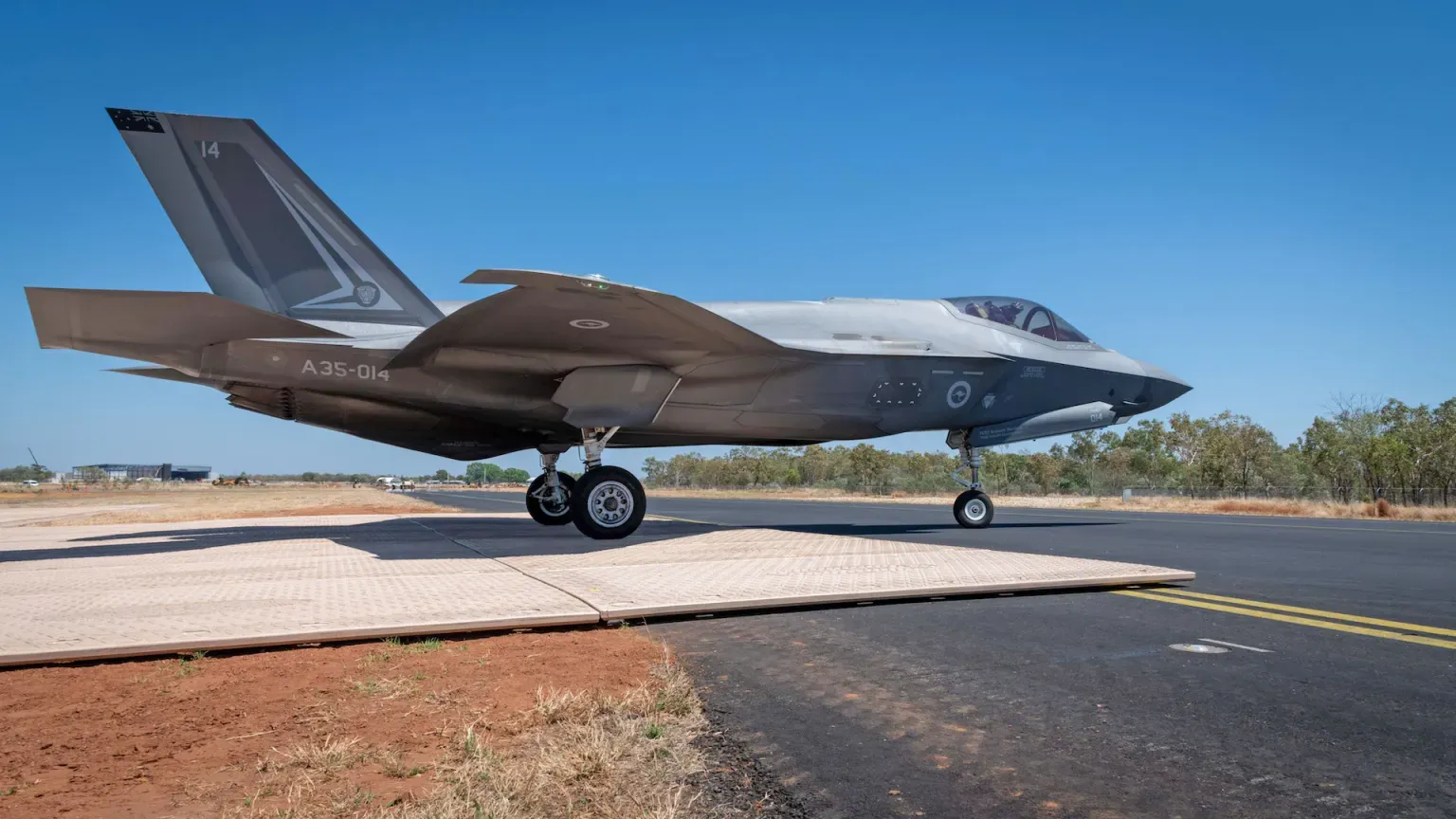
A Royal Australian Air Force F-35A from 75 Squadron taxiing at RAAF Base Tindal, Northern Territory. Australian Defense Force

F-35 sustainment procedures explicitly cover the movement of F-35 parts, including unserviceable components, through the program’s logistics network. The U.S. Air Force’s transportation guidance directs F-35 shipments outside the Defense Transportation System to follow approved Joint Program Office procedures. In other words, moving an unserviceable Australian F-35 component to the United States for inspection, repair, or disposition is consistent with the normal sustainment process.

What is highly unusual is where this particular shipment ended up. F-35 components moving through an established international logistics system apparently stopped in South Korea, were then routed to Hong Kong. Chinese authorities subsequently took possession of the parts and have not returned them, according to the sources cited by Bloomberg.

Brig. Gen. Brook Leonard, 56th Fighter Wing commander, learns about an innovative process for F-35 Lightning II canopy component replacement from Staff Sgt. Tyler Volk, 56th Component Maintenance Squadron egress technician April 13, 2018, at Luke Air Force Base, Ariz. The 56th CMS spent two months refining the process to replace the charges that separate the canopy from the jet during ejection, condensing it from 10 days to three. (U.S. Air Force photo by Senior Airman Ridge Shan)
F-35 canopy component replacement at Luke Air Force Base, Arizona. U.S. Air Force photo by Senior Airman Ridge Shan
Secretary of War Pete Hegseth autographs the weapons bay of an F-35 Lightning II at Lockheed Martin Air Force Plant 4, as part of his Arsenal of Freedom Tour, Fort Worth, Texas, Jan. 12, 2025. (DoW photo by U.S. Navy Petty Officer 1st Class Alexander Kubitza)
Secretary of War Pete Hegseth autographs the weapons bay door of an F-35 at Lockheed Martin Air Force Plant 4, in Fort Worth, Texas. DoW photo by U.S. Navy Petty Officer 1st Class Alexander Kubitza

“For security reasons, we can’t discuss the status of specific shipments or our shipping procedures,” Lockheed Martin told us in response to a request for clarification about the incident. The company added that it “follows all U.S. regulations established by the Department of War and regulated by the Defense Logistics Agency (DLA) regarding the shipment of aircraft components. Our teams handle every shipment with the utmost diligence and safeguards to ensure the integrity of the F-35 program and the security of our allied partners.”

The Pentagon’s F-35 Joint Program Office has acknowledged a “shipment issue” involving F-35 components and said U.S. authorities and industry partners are working to recover them and investigate what happened.

Lockheed Martin, UPS, and the Pentagon have not publicly provided a detailed account of how the shipment was diverted or what happened to the parts after they reached Hong Kong.

Australian Defense Minister Richard Marles also confirmed that Canberra was aware of the incident and was working with the United States and Lockheed Martin.

Acting Prime Minister and Minister for Defense, Richard Marles, accompanied by Chief of Air Force Air Marshal Stephen Chappell at RAAF Base Edinburgh, South Australia. Australian Defense Force

Marles has sought to play down the potential security implications of the components, saying his understanding was that the shipment did not contain sensitive equipment or sensitive parts. That does not by itself answer the more specific question of what could potentially be learned from these particular pieces of an F-35. After all, not every physical component of an F-35 is necessarily highly classified or capable of revealing meaningful information about the aircraft’s design. At the same time, a cockpit canopy and weapons-bay door involve structures, materials, interfaces, tolerances, and treatments that all have to work within the aircraft’s low-observable design. If radar-absorbing material or other specialized treatments remain on the components, that could potentially make them far more sensitive from a technological exploitation standpoint.

The condition of the parts is also unknown. We do not know how much of their coatings or other treatments remain intact, whether Chinese authorities have examined them, or what information could actually be extracted from them in their current state.

Above all else, there is little specific information in the public domain about what F-35-related technical information Chinese intelligence already has acquired over the years, what physical components or materials it may already possess, or what additional information could be gained through espionage, cyber operations, industrial access, observation of deployed aircraft, or other means.

Without these facts, it is impossible to gauge what damage could have been done by this loss. Still, viewed in a vacuum of those unknowns, simply having an F-35 canopy and weapons-bay door in Chinese possession represents a significant loss of control over sensitive physical hardware — there is no way around that reality — and the severity of that loss could be substantial depending on the physical state of the parts.

The circumstances are particularly sensitive because, as we mentioned in the opening of this article, China has pursued multiple avenues for acquiring information on the F-35 for many years, with publicly documented cases involving cyber operations, technical information, supply chains, and human expertise. Some aspects of China’s subsequent stealth aircraft designs have also prompted comparisons with U.S. aircraft, although claims that China simply ‘cloned’ entire aircraft are not supported by the available evidence.

China And The F-35: A History Of Espionage

In 2014, U.S. authorities charged Chinese businessman Su Bin with conspiring with two other Chinese hackers to break into the computer systems of U.S. defense contractors. Prosecutors alleged that the group targeted information on aircraft including the F-35 and F-22. The alleged hacking campaign ran from 2009 to 2013.

Su Bin later pleaded guilty and was sentenced to nearly four years in prison. The Justice Department’s 2026 case against former Air Force fighter pilot Gerald “Runner” Brown connects the two cases. Prosecutors allege that Brown used a co-conspirator to negotiate his work training Chinese military pilots with Su Bin.

Brown, a retired U.S. Air Force major who spent more than 24 years in the service, subsequently worked as a contract simulator instructor training U.S. military pilots on the A-10 and F-35. In February 2026, the Justice Department charged him with providing and conspiring to provide unauthorized defense services to Chinese military pilots.

According to the criminal complaint, Brown traveled to China in December 2023, where he allegedly began training People’s Liberation Army Air Force (PLAAF) personnel. Prosecutors say he also answered questions about the U.S. Air Force for three hours on his first day in China. Brown has been charged, and the allegations have not been adjudicated. He is one of multiple former Western aviators alleged to have provided training services and/or intelligence to Beijing.

The Honeywell case provides yet another example, this time involving the defense industry’s supply of technical information.

In 2021, the State Department reached a $13-million administrative settlement with Honeywell over alleged violations of the Arms Export Control Act and International Traffic in Arms Regulations (ITAR). Honeywell had voluntarily disclosed alleged unauthorized exports and retransfers of ITAR-controlled technical data.

The case involved 71 engineering drawings containing dimensions, geometries and layouts for manufacturing castings and finished parts used across multiple aircraft, engines and military systems. The State Department said the unauthorized exports and retransfers involved Canada, Ireland, Mexico, China, and Taiwan.

Among the systems covered by the drawings were components associated with the F-35 and F-22. The case did not allege that Honeywell deliberately sought to provide China with sensitive military technology; rather, it concerned alleged violations of export-control requirements.

A U.S. Air Force F-22 Raptor flies alongside an F-35 Lightning II during a special formation flight in Fort Lauderdale, Fla. Nov. 20, 2020. These two 5th-generation aircraft represent the Air Force’s stealth fighter capability and perform a variety of air-to-air and air-to-ground mission. (U.S. Air Force photo by Lt. Sam Eckholm)
A U.S. Air Force F-22 (nearest camera) flies alongside an F-35A. U.S. Air Force photo by Lt. Sam Eckholm

There has also been a physical supply-chain precedent.

In 2022, F-35 deliveries were temporarily halted after the Pentagon discovered that a magnet in the aircraft’s Honeywell-built turbomachine pumps —which provide critical power functions to the jet — contained a cobalt and samarium alloy produced in China. The material itself was not considered a security or flight-safety threat, but the discovery demonstrated how difficult it can be to maintain complete visibility over a global supply chain involving thousands of companies and multiple tiers of subcontractors.

Taken together, these cases demonstrate several different pathways through which China has appeared in the F-35 security story: cyber theft, unauthorized technical-data transfers, supply-chain exposure, and alleged exploitation of former Western military expertise.

The Hong Kong incident would add another major category: physical access to actual F-35 components.

These are only some of the publicly documented examples. There is no public way to know the full extent of information or physical material Chinese intelligence may have acquired over the years, but is very likely far larger in scope than what is available in the open source.

Chinese Access Concerns Have Shaped F-35 Export Policy

The security issues surrounding the F-35 are significant enough that concerns about China have affected not only how the United States protects F-35 technology, but where Washington is willing to export the aircraft in the first place.

The proposed sale of F-35s to the United Arab Emirates became deeply entangled in U.S. concerns about Abu Dhabi’s growing military and technology relationship with China.

A 34th Expeditionary Fighter Squadron F-35 Lighting II conducts an inflight refueling with a 908th Expeditionary Air Refueling Squadron KC-10 Extender in the skies above the United Arab Emirates, May 8, 2020. The F-35A is the U.S. Air Force’s latest fifth-generation fighter. It has an enhanced capability to survive in the advanced threat environment in which it was designed to operate. With its aerodynamic performance and advanced integrated avionics, the F-35A provides next-generation stealth, enhanced situational awareness, and reduced vulnerability for the United States and allied nations. (U.S. Air Force photo by Tech. Sgt. Kat Justen)
A 34th Expeditionary Fighter Squadron F-35A conducts inflight refueling above the United Arab Emirates. U.S. Air Force photo by Tech. Sgt. Kat Justen

Washington had approved a potential package involving 50 F-35As, but U.S. officials and lawmakers expressed concerns about Chinese intelligence activity and technology in the UAE. Among the broader concerns were Chinese telecommunications infrastructure and the possibility of Chinese military or intelligence access to facilities associated with advanced U.S. weapons. A Congressional U.S.-China Economic and Security Review Commission report later cited the potential presence of Chinese intelligence collection capabilities and military facilities in the UAE as risks to the proposed F-35 sale.

The issue has now resurfaced with Saudi Arabia.

The State Department recently approved a potential $24.3-billion sale to the Kingdom involving 48 F-35s and associated equipment. But U.S. intelligence agencies have reportedly warned that China’s military and technology relationship with Saudi Arabia could create opportunities for Beijing to obtain sensitive F-35 information.

According to reporting based on U.S. officials familiar with intelligence assessments, a Defense Intelligence Agency report raised concerns about Chinese military access to Saudi bases, Chinese technology in Saudi telecommunications infrastructure, and whether secure facilities could be maintained for F-35 operations. The assessments also questioned whether Saudi Arabia would limit contact between Chinese military and intelligence personnel and F-35-related sites.

What Could The Components Reveal?

As we noted earlier, there is no way to gauge the intelligence impact of the loss at this stage. The central unknown of what China already knows about the F-35, and what it may already have in its possession — especially related to these components — is the key variable here.

Regardless, an F-35 canopy and weapons-bay door can provide information that cannot otherwise be easily obtained and gives a different level of fidelity in terms of material exploitation than what construction data and blueprints alone could.

The F-35’s low observability is the product of an extremely complex combination of airframe shaping, construction materials, external coatings, manufacturing tolerances, speciality apertures, and more.

U.S. Air Force Staff Sgt. Ossoren Kade, left, and Tech. Sgt. Ryan McGarrigle shares information with Senior Airman Tyrese Baylis, 325th Maintenance Squadron low observable maintainers, as he works on an F-35A Lightning II at Tyndall Air Force Base, Florida, Aug. 16, 2024. Low observability is a complex system that goes far beyond simply painting an aircraft. LO requires a specialized and intricate technique that is essential for the F-35A to remain undetectable in contested areas. (U.S. Air Force photo by Airman 1st Class Victoria Moehlman)
U.S. Air Force 325th Maintenance Squadron low-observable maintainers work on an F-35A at Tyndall Air Force Base, Florida, in August 2024. U.S. Air Force photo by Airman 1st Class Victoria Moehlman

A canopy is a particularly demanding part of any stealth aircraft. It has to satisfy optical and structural requirements while also controlling radar reflections. The cockpit is historically a major source of radar reflectivity, including the pilot’s helmet. Therefore the canopy’s materials, construction, interfaces, and specialized treatments can be critical to the aircraft’s overall low-observable performance, and especially from the critical frontal aspect.

The F-35’s canopy has been an ongoing work in progress for many years. It has had chronic material issues, especially when it comes to delamination. Multiple iterations spread over two decades have recently resulted in a major improvement of the issue. The tight balancing act of keeping the canopy transparent enough, while controlling the F-35’s stealthy signature and having that mix of materials be robust enough to last for a reasonable amount of time has been a major investment for the program. If the canopy is of a later variation, that loss alone could be substantial and could help China with their own low-observable canopy development programs even if they already had original information on the F-35’s canopy original design dating back years.

(Pictured: Royal Navy Commander, Nathan Gray in his F35B gives a celebratory thumbs up after succesfully landing onboard) Two F-35B Lightning II fighter jets have successfully landed onboard HMS Queen Elizabeth for the first time, laying the foundations for the next 50 years of fixed wing aviation in support of the UK’s Carrier Strike Capability. Royal Navy Commander, Nathan Gray, 41, made history by being the first to land on, carefully manoeuvring his stealth jet onto the thermal coated deck. He was followed by Squadron Leader Andy Edgell, RAF, both of whom are test pilots, operating with the Integrated Test Force (ITF) based at Naval Air Station Patuxent River, Maryland. Shortly afterwards, once a deck inspection has been conducted and the all-clear given, Cdr Gray became the first pilot to take off using the ship’s ski-ramp. Image taken by and credit to PO Arron Hoare
Evidence of the F-35’s canopy delamination issue on an early example of the F-35B. Crown Copyright

The F-35’s weapons-bay door has its of sensitivity issues. It is effectively a major section of the aircraft’s outer shell, with its structure, edges, interfaces, tolerances and treatments all having to function without creating unacceptable radar signatures. Its construction and material attributes can be reasonably extrapolated for the rest of much of the F-35’s outer mold-line. Above all else, if the radar absorbent material remained intact on the door, that would signify a major loss when viewed without any understanding of what China already knows about the F-35’s radar absorbing surface treatments. Historically speaking, RAM technology is among America’s closest guarded material sciences secrets.

A Belgian Air Force service member stationed at Luke Air Force Base inspects the weapons bay of an F-35A Lightning II at Luke AFB, Arizona, Aug. 12, 2026. Integrated maintenance operations with Allied and partner forces strengthen readiness and mutual interoperability, ensuring combat-ready forces are prepared to outpace evolving global threats. (U.S. Air Force photo by Airman 1st Class Tekorey Watkins)
A Belgian Air Force service member inspects the open weapons bay of an F-35A at Luke AFB, Arizona. U.S. Air Force photo by Airman 1st Class Tekorey Watkins

For the time being, Australian officials have said they do not understand the parts to be sensitive. The investigation will ultimately have to establish what the components actually contain and what could be learned from them.

The incident comes at a moment when China’s own stealth fighter efforts are undergoing an extraordinary expansion.

The PLAAF is now operating the J-20, China’s first operational fifth-generation stealth fighter, in increasingly large numbers. The smaller J-35 is also moving toward broader service, including a carrier role for the People’s Liberation Army Navy.

CHANGCHUN, CHINA - SEPTEMBER 22: Aircraft maintenance workers clean the fuselage of a J-20 fighter jet during the 2025 aviation open-day activities of the Chinese People's Liberation Army (PLA) Air Force and the Changchun Air Show on September 22, 2025 in Changchun, Jilin Province of China. (Photo by Zhang Xiangyi/China News Service/VCG via Getty Images)
Aircraft maintainers clean the fuselage of a J-20 fighter during the Changchun Air Show in the Jilin Province of China, in September 2025. Photo by Zhang Xiangyi/China News Service/VCG via Getty Images

China has also moved into what Western observers generally describe as sixth-generation fighter development.

Two new tailless combat-aircraft designs emerged publicly in December 2024. One is the large Chengdu aircraft commonly referred to as the J-36, while the other is associated with Shenyang and is variously called the J-XDS or J-50. Both have continued flight testing and yielded several prototypes with individual refinements.

The exact capabilities and eventual operational roles of these aircraft remain uncertain. They are developmental designs, not established operational equivalents of the F-35 or other sixth-generation systems. However, China is clearly building an increasingly broad ecosystem of fifth- and next-generation low-observable combat aircraft, both crewed and uncrewed. In the latter category is a growing number of stealthy drones, including long-endurance types.

A satellite image taken last month shows the WZ-X very large, low-observable, flying-wing drone undergoing testing. PHOTO © 2026 PLANET LABS INC. ALL RIGHTS RESERVED. REPRINTED BY PERMISSION

China didn’t likely need physical access to an F-35 canopy or weapons-bay door to develop the J-20, J-35, or its next-generation aircraft. But additional information about how a mature Western stealth aircraft handles materials, coatings, interfaces, manufacturing, and the integration of those elements can still have great potential value to an industry developing its own systems. This includes technologies intended to counter the U.S. combat aircraft and their low-observable characteristics.

The F-35 has been produced in large numbers, is operated by a growing coalition of countries, and has been subjected to years of testing and operational experience. Its low-observable design represents decades of accumulated U.S. research and industrial know-how. At the same time, the global scale of the program inevitably makes control over sensitive information more complicated. More aircraft, more maintainers, more industrial partners, and more international logistics mean more points at which information and physical hardware have to be controlled. Over time, a program of this size will see an erosion in its secrets, but a major loss can drastically accelerate what should be a more gradual and control decline in security.

Lockheed Martin Fort Worth Texas Photo by Alexander H Groves Production Line from Monorail FP170764 1707383 JSF F-35 AF Plant 4 04_06_17 Leeya Davis Image has NOT been released FOUO FOR OFFICIAL USE ONLY
The Lockheed Martin F-35 production line at Fort Worth, Texas. Lockheed Martin photo by Alexander H Groves

The potential intelligence value of the components also has to be considered in the context of foreign material exploitation, or FME. Major military powers maintain dedicated capabilities to recover, examine and characterize foreign weapons, aircraft, sensors, materials and other equipment. The objective is not necessarily to reproduce an entire system. More important is determining how something is built, what materials and manufacturing techniques are used, how individual components perform, and where industrial strengths or limitations may lie.

That is why countries have historically gone to extraordinary lengths to recover even crashed or damaged pieces of sensitive military hardware. The bigger the prize, the more risk an intelligence service would be willing to take in order to realize a recovery.

The sensitivity surrounding the physical remnants of an F-35 is not new. When a Japan Air Self-Defense Force F-35A disappeared over the Pacific in 2019, the search quickly became more than a rescue operation. U.S. and Japanese forces mounted an extensive effort to locate the wreckage, with U.S. Navy P-8A aircraft and a destroyer joining the search. TWZ noted at the time that even scattered F-35 wreckage could expose valuable technological secrets, while the aircraft’s location on the seabed raised the prospect of an underwater espionage and recovery operation.

That concern has also been evident in subsequent F-35 recovery operations. That concern has been reflected in subsequent F-35 recoveries. In 2022, the U.S. Navy recovered an F-35C from roughly 12,400 feet in the South China Sea after a carrier landing accident, removing the possibility that the aircraft could be accessed by another country.

Unanswered Security Questions

At this point, there is no public evidence that the Hong Kong diversion was a deliberate Chinese intelligence operation, although it is certainly possible. It is also unclear whether Chinese authorities have examined the F-35 parts or what level of new and useful information has been recovered from them.

If, as reported, Chinese authorities have taken possession of the parts and have not returned them, that would be an extraordinary development. If the diversion was genuinely the result of a shipping or logistics error, the outcome would itself be extraordinary. It would raise serious questions about the security controls surrounding the movement of F-35 hardware even without evidence of deliberate interference.

The timing is also notable. Chinese President Xi Jinping arrived in Washington this week for a state visit with President Donald Trump, with the two leaders meeting amid broader disputes involving technology, security, and the future of U.S.-China relations. Whether the F-35 shipment comes up directly in those discussions is not known, but it would be an obvious subject for U.S. and Chinese officials to address through diplomatic channels.

For now, however, the central question remains how the parts got there. Until that is answered, we won’t know if this was a simple logistics failure or a deliberate intelligence operation. And beyond that, what China already knew about the components it now may have in its possession — a question we may never truly get an answer to.

Contact the author: thomas@thewarzone.com
Thomas Newdick is a staff writer at TWZ, where he covers military aviation, defense technology, weapons systems, and international security. Based in Berlin, Germany, he reports on conflicts, military modernization efforts, and emerging aerospace technologies around the world, with a particular interest in airpower and its role in contemporary warfare. His reporting is informed by deep expertise in modern and historical airpower, particularly in Europe, with a focus on military aviation, air campaigns, and aerospace developments across the continent and beyond.


Tyler’s passion is the study of military technology, strategy, as well as foreign policy, and he has fostered a dominant voice on those topics in the defense and national security space. Tyler was the creator of the hugely popular defense site Foxtrot Alpha before developing TWZ, which he continues to lead as the Editor-In-Chief to this day.


Source link

Israel Is Bringing SPICE 1000 Standoff Weapon To The F-35

Israel’s Rafael and Lockheed Martin are working to accelerate integration of the 1,000-pound-class SPICE standoff weapon with the Israeli Air Force’s F-35I Adir. The development could potentially open the door for the precision-guided munition to be offered to other Joint Strike Fighter operators.

Rafael Advanced Defense Systems announced the effort September 15 during the Air & Space Forces Air, Space and Cyber Symposium that TWZ is attending. The work is being conducted as a joint project with Lockheed Martin at the U.S. contractor’s facilities in the United States and is expected to take several months.

Rafael says the effort could eventually make the weapon available to other F-35 operators. “At a later stage, F-35 operators worldwide will be able to field SPICE 1000,” the company said.

The effort was previously referenced in U.S. government documentation before Rafael’s announcement. Published in August, the Pentagon F-35 Modernized Selected Acquisition Report identified the weapon as the “Israel-unique Smart, Precise Impact, Cost-Effective 1000B,” or SPICE 1000B, and said its integration was progressing “with a strategy to accelerate the implementation via a SPICE Lite process.”

The report does not explain what the “SPICE Lite” process entails.

SPICE — which stands for Smart, Precise Impact, and Cost-Effective — is a family of electro-optically guided standoff weapons developed by Rafael. The family includes SPICE 2000, SPICE 1000, and SPICE 250, with the numbers corresponding broadly to the weight class of the underlying warheads.

SPICE 250, SPICE 1000 & SPICE 2000 Air-to-Surface Missiles thumbnail

SPICE 250, SPICE 1000 & SPICE 2000 Air-to-Surface Missiles

Based around a 1,000-pound-class bomb, SPICE 1000 uses pop-out wings to achieve a manufacturer-stated range of approximately 125 kilometers, or 78 miles. Rafael gives the weapon a claimed circular error probable of around three meters.

The glide bomb combines inertial and satellite-aided navigation with an electro-optical seeker. During the terminal phase, its seeker can compare the observed target area with stored imagery using scene-matching algorithms, allowing the weapon to continue its attack without relying exclusively on GPS. That feature allows it to engage targets autonomously, offering the launch aircraft a true ‘fire and forget’ capability, and provides resilience in GPS-denied or GPS-degraded environments.

SPICE can also be programmed to approach a target from a particular azimuth and impact angle. This provides flexibility in selecting the terminal attack geometry and can support steep attack profiles against targets where penetration from above is desirable.

SPICE 1000 is not a new Israeli capability. It has been operational with the Israel Air Force since 2017 and is already integrated with Israeli F-16I Sufa, F-16C/D Barak, F-15I Ra’am, and F-15 Baz fighters.

An F-15 Baz configured for precision strike, with a pair of 2,000-pound Rafael SPICE standoff weapons on the underwing pylons. Amit Agronov

“SPICE 1000 has been sold to several countries and is in operational service with a number of air forces worldwide,” Rafael said. “It has served as a primary munition of the Israeli Air Force for several years, including extensive use in recent long-range operations flown from F-15 and F-16 aircraft.”

The Israeli Air Force has released footage showing SPICE weapons being used during recent operations, including imagery from the weapon’s own perspective during its terminal attack.

Israel’s F-35I is already unusual within the international Joint Strike Fighter fleet. The IDF has developed and demonstrated an external Joint Direct Attack Munition (JDAM) carriage capability, and said in March 2025 that the Israeli Adir was the only F-35 to have conducted operational strikes with an external weapons configuration. You can read more about that here.

The unique instrumented F-35I assigned to the Israeli Flight Test Center carrying four external 2,000-pound class GBU-31 JDAMs. A single AIM-120 AMRAAM air-to-air missile can be seen in one of the internal weapons bays, which may also house another internal JDAM. Israeli Air Force

However, according to The Jerusalem Post, the SPICE weapon is expected to be carried internally by F-35Is equipped with Technology Refresh 3, or TR-3, hardware, which would maintain its low-observable configuration. Neither Rafael nor Lockheed Martin has publicly detailed the specific carriage configuration, aircraft modifications or software associated with the current integration effort.

The long-delayed TR-3 is a major upgrade to the F-35’s computing architecture and provides the processing infrastructure required for subsequent Block 4 capabilities. Israel received its first three F-35Is equipped with TR-3 hardware in January of this year.

Lockheed Martin describes Block 4 as the F-35 program’s “most significant evolution of F-35 capabilities to date,” encompassing more than 70 major upgrades, including increased weapons capacity, advanced electronic warfare capabilities, and improved target recognition.

Some of the unclassified upgrades within Block 4. The exact configuration has not been publicly disclosed. U.S. Department of Defense

It remains unclear if the SPICE 1000 integration itself requires the full Block 4 configuration.

The potential significance of the Israeli integration extends beyond the Israel Air Force. If SPICE 1000 ultimately becomes available to other F-35 operators, the completed Israeli integration could provide those countries with another pathway toward fielding a precision standoff weapon rather than requiring them to begin an integration effort entirely from scratch.

Integrating national weapons onto the F-35 can be a lengthy process. It involves not only the weapon itself, but aircraft software, interfaces, weapons-bay compatibility, flight testing, mission-system integration and certification within the U.S.-led F-35 program.

The United Kingdom’s experience with MBDA’s SPEAR 3 provides a good example of the challenges.

In 2022, the U.K. Ministry of Defence said that scheduled delivery dates for SPEAR 3 had been delayed because of “prioritisation in the overall F-35 development programme,” which is managed by the U.S.-led F-35 Joint Program Office.

An artist’s impression of an F-35 armed with SPEAR 3 and Meteor missiles. MBDA

The program has continued to progress, including F-35B integration work and flight testing. But in June 2026, the U.K. government said that completion of mission-systems integration and jettison trials remained part of a wider weapons-integration program and that SPEAR 3 integration and subsequent release to service would occur in the early 2030s.

The United Kingdom has consequently approved the acquisition of the GBU-53/B Small Diameter Bomb II as an interim standoff weapon for the F-35B until SPEAR 3 enters service.

Nevertheless, another F-35 operator would not be able to adopt the Israeli SPICE integration without additional work. National configurations, software baselines, certification requirements, weapons procurement, and export approvals would still have to be addressed.

Already, however, aided by its uniquely configured test jet, Israel has demonstrated an unusual ability to integrate nationally developed capabilities onto its F-35I. This has been aided by privileged access to the Joint Strike Fighter’s closely guarded software codes.

The Israeli Air Force F-35I test jet on the flight line together with an F-15I strike fighter. Amit Agronov/Israeli Air Force

A U.K. parliamentary report noted delays in integrating British weapons onto the F-35B while contrasting that with Israel’s ability to integrate domestic electronic warfare systems, sensors, and communications technology onto its Adir.

Meanwhile, Rafael and Lockheed Martin already have experience working together on the SPICE family.

The companies signed a teaming agreement in 2019 covering the joint development, marketing and manufacture of SPICE guidance kits for the U.S. market. In 2021, they expanded the agreement to include SPICE 250, including development for potential sales to the United States and Poland. With some unque capabilities, SPICE could be of particular interest to the U.S. military, especially as it seeks to leverage multiple sources of precision munitions.

The SPICE family also extends beyond the 1,000-pound-class weapon now being integrated with the F-35.

At the other end of the family is SPICE 250, a much smaller weapon designed around a 250-pound-class payload. It incorporates a man-in-the-loop capability that allows an operator to redirect the weapon during its flight and abort the attack if necessary.

SPICE 250 - Stand-Off Air-to-Surface Weapon System thumbnail

SPICE 250 – Stand-Off Air-to-Surface Weapon System

Its smaller dimensions also allow substantially greater weapon carriage. Rafael has marketed configurations in which a fighter can carry as many as 16 SPICE 250 weapons.

SPICE 1000, by comparison, is a substantially heavier weapon intended to provide longer-range precision attack capability with a larger warhead.

The SPICE effort is taking place alongside several other Israeli initiatives aimed at extending the F-35I’s range and weapons capabilities.

The Pentagon’s F-35 documentation has referenced ongoing work on extended-range fuel tanks and electronic warfare pods for the Israeli Air Force, although it did not provide fielding dates.

In May 2026, Israel’s defense ministry awarded an extended-range capability development contract for the F-35I to Elbit Systems subsidiary Cyclone. The capability is intended to increase the aircraft’s radius of action and reduce its reliance on aerial refueling during long-range missions.

Israel has also announced a major expansion of its F-35I fleet, with plans to increase the number of aircraft from 50 to 100. The country is simultaneously expanding its forthcoming F-15IA fleet from 25 to 50 aircraft.

A rendering of the F-15IA for Israel. Boeing

For the F-35I, SPICE 1000 adds a long-range strike option that pairs the aircraft’s low observability with substantial standoff range and a relatively heavy warhead. This offers a survivability advantage in increasingly contested environments, allowing attacks from farther outside capable air defense systems and under heavy electronic warfare conditions. This factor will only become more important as integrated air defense systems become more capable and the F-35 more detectable.

Exactly how the weapon will be integrated remains undisclosed. Rafael and Lockheed Martin have not announced the final carriage configuration, aircraft software requirements, flight-test schedule, or expected date for operational clearance.

At the same time, Rafael is explicitly positioning the effort as a potential pathway for SPICE 1000 to become available to the wider F-35 community. This would conceivably give other operators another option at a time when integrating a new standoff weapon onto the fighter can take years.

Contact the author: thomas@thewarzone.com

Thomas Newdick is a staff writer at TWZ, where he covers military aviation, defense technology, weapons systems, and international security. Based in Berlin, Germany, he reports on conflicts, military modernization efforts, and emerging aerospace technologies around the world, with a particular interest in airpower and its role in contemporary warfare. His reporting is informed by deep expertise in modern and historical airpower, particularly in Europe, with a focus on military aviation, air campaigns, and aerospace developments across the continent and beyond.


Source link

F-35 Sale To Saudi Arabia Approved By State Department

The U.S. State Department today approved the possible sale of 48 F-35 Lightning II Joint Strike Fighters to the Kingdom of Saudi Arabia.

The proposed deal, worth an estimated total cost of $24.3 billion, was announced as the Kingdom is in the midst of a fierce fight against the Houthi rebels of Yemen. It marks a major policy shift, with Washington previously being unwilling to export the advanced stealth fighters to Arab states and will likely serve as a reminder at a very challenging time for the Saudis of the unique security capabilities that only the U.S. can provide them.

In addition to the jets, which will be conventional takeoff and landing variants, Saudi Arabia has requested 49 Pratt & Whitney F135-PW-100 engines, support and other items.

Despite concerns from Israel that providing Saudi Arabia with the advanced fighters will tip the balance of power in the region, the proposed sale of this equipment and support “will not alter the military balance in the region,” the State Department noted. 

The United States has a requirement to maintain Israel’s so-called qualitative military edge, which essentially guarantees that Israel will be prioritized for advanced U.S. weapons ahead of Arab states in the region. Among these advanced weapons, the stealthy F-35 is highly prominent.

You can read our past feature about the wide-ranging impacts of an F-35 sale to Saudi Arabia here.

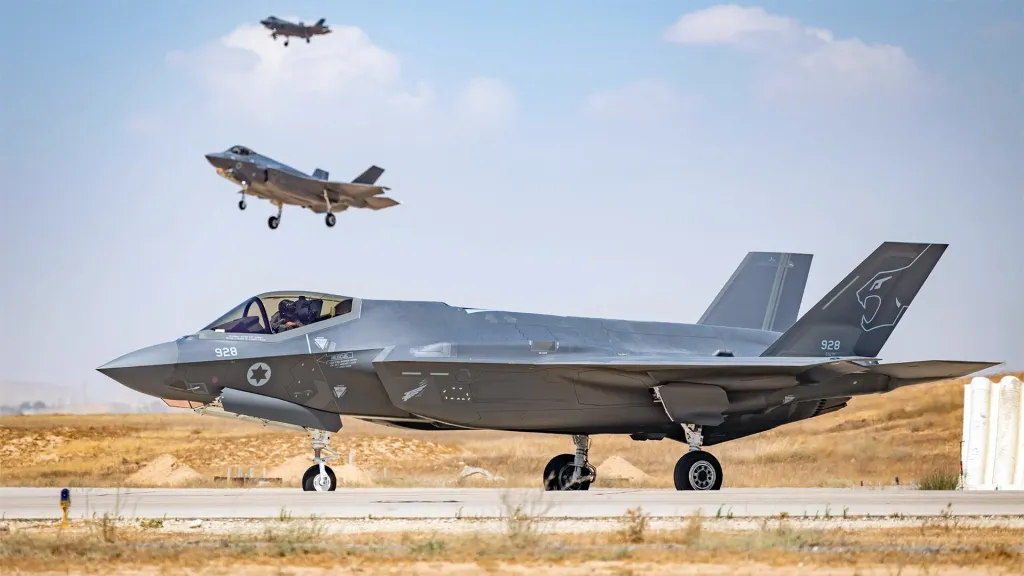
Israeli Air Force F-35i fighters. (Israeli Air Force)

“This proposed sale will support the foreign policy and national security objectives of the United States by improving the security of a major non-NATO ally that is a force for political stability and economic progress in the Gulf region,” the State Department wrote. “The proposed sale will improve Saudi Arabia’s capability to deter current and future threats by strengthening its homeland defense, and improving interoperability with U.S. forces, and other regional and NATO forces.  The proposed sale will also augment Saudi Arabia’s operational aircraft and enhance its air-to-air, and air-to-ground self-defense capability.  The Kingdom of Saudi Arabia will have no difficulty absorbing this equipment and services into its armed forces.”

In November, “President Trump approved a major defense sale package, including future F-35 deliveries, which strengthens the U.S. defense industrial base and ensures Saudi Arabia continues to buy American,” according to the White House.

Trump has pushed for closer ties between Israel and Saudi Arabia and wants the Kingdom to join the Abraham Accords initiative. This is a set of agreements that establish normalized diplomatic relations between Israel and different Arab states. Doing so would be a major breakthrough, following the United Arab Emirates, Bahrain, Morocco, and others.

A Saudi F-35 deal was also discussed under the Biden administration, as part of a broader deal that sought to normalize the Kingdom’s relations with Israel.

This is a developing story.

Contact the author: howard@twz.com

Howard is a Senior Staff Writer for TWZ. He writes frequently about conflict, focusing heavily on the Middle East and Ukraine, and interviews with military and intelligence officials and industry leaders from around the globe. He lives near Tampa, Florida, home of U.S. Central Command, U.S. Special Operations Command.


Source link