F15E

Everything We Now Know About The Operation To Rescue The F-15E WSO

Bleeding from injuries incurred ejecting from his F-15E Strike Eagle fighter and climbing a craggy mountain to escape, the U.S. Air Force Weapon Systems Officer (WSO) hid out in a crevice as both rescuers and Iranians frantically searched for him. Monday afternoon, President Donald Trump and Air Force Gen. Dan Caine, chairman of the Joint Chiefs of Staff, offered new details about the complex and dangerous missions to rescue the WSO and pilot – call signs DUDE44 Bravo and DUDE44 Alpha – whose Strike Eagle had been shot down April 3, the first loss of crewed aircraft to enemy fire during Epic Fury. While they offered the government’s take on events, other details emerged that we will address later in this story.

These rescue missions involved hundreds of troops, scores of aircraft and diversion operations over more than a half dozen different parts of Iran. It required risking the lives of many of those personnel to recover the two airmen.

President Trump News Conference After U.S. Airmen Rescue in Iran


The WSO’s recovery occurred on Easter Sunday some 50 hours after being shot down. It all began in the early morning hours of April 3 in Iran. After the F-15E was shot down, officials at U.S. Central Command received a message that would kick start the operation.

“A U.S. Air Force F-15E Strike Eagle, call sign DUDE44… was down in hostile Iranian territory, the pilot and weapon systems officer had both safely ejected and were isolated behind enemy lines,” Caine told reporters during a White House briefing. “Following confirmation of active rescue beacons, and on the direction of the Secretary [of War Pete Hegseth] and by order of the President, a rescue operation was launched with the stated purpose of bringing both Americans home safely.”

Jordan, where U.S. F-15E Strike Eagles are base, says the U.S. cannot launch an attack from its country.
The downing of an F-15E Strike Eagle, like the one pictured, set off missions to recover its crew. (U.S. Air Force photo by Staff Sgt. Jackson Manske) (U.S. Air Force photo by Staff Sgt. Jackson Manske)

A US Air Force combat search and rescue (CSAR) task force was quickly spun up, Caine explained. It included 10 A-10C Thunderbolt II close support jets, HC-130J Combat King CSAR planes, HH-60W Jolly Green II CSAR helicopters and Air Force special operations airmen.

“A package comprised of combat rescue officers and pararescuemen operators audaciously penetrated enemy territory in broad daylight to find, fix and recover DUDE44 Alpha from behind enemy lines,” Caine proffered.

As the CSAR package, protected by a fighter strike package, crossed into Iran, “A-10s and …drones and other tactical aircraft were violently suppressing and engaging the enemy in a close in gunfight to keep them away from the front seater and allow the pickup force to get into the objective area,” Caine noted. During this engagement, one of the A-10s – “the one primarily responsible for communicating with the downed pilot, was hit by enemy fire,” said Caine. “This pilot continued to fight, continued the mission, and then upon exit, flew his aircraft into another country and determined that the airplane was not landable… The pilot then made the decision to eject over friendly territory, and was quickly and safely recovered and is doing fine.”

U.S. Air Force Capts. Andrew Glowa, lead, and William Piepenbring, both with the 74th Fighter Squadron out of Moody Air Force Base, Ga., fly two A-10C Thunderbolt II over the skies of southern Georgia, Aug. 18, 2014. The 74th FS is one of two active-duty, combat-ready squadrons at Moody that performs close air support missions with the A-10. (U.S. Air Force photo by Staff Sgt. Jamal D. Sutter/Released)
A strike package of 10 A-10 Thunderbolt II close support jets protected the mission to rescue the pilot of the F-15E Strike Eagle downed over Iran. (U.S. Air Force photo by Staff Sgt. Jamal D. Sutter/Released) Tech. Sgt. Jamal Sutter

After picking up the F-15E pilot, the HH 60W Jolly Green “was engaged by every single person in Iran who had a small arms weapon, and one of the aircraft, the trailing aircraft, took several hits,” Caine told reporters. “The crew sustained minor injury, and they are going to be fine.”

“The A-10 force and the rescue force did a fantastic job rescuing DUDE44 Alpha,” Caine continued. “He was recovered Friday afternoon, as I said, and the nation needs to know this. This was an incredibly brave and courageous mission, and a testament to the courage, skill and tenacity of the joint force and our leaders, and especially a daylight option.”

Rescuing the pilot was only the first step. The WSO was still out there, alone and being hunted by the military and civilians. Officials in Tehran put out a large bounty for his recovery. If was captured or killed, it would have been a tremendous propaganda coup for Iran and a huge problem for America.

“Meanwhile, the second crew member, the weapon system officer, a highly respected colonel, had landed a significant distance away from the pilot,” Trump explained. “When you’re going at those speeds, even if you go out two or three seconds later, it’s miles and miles away, because you’re going fast.”

The Death-Defying Mechanics of Fighter Jet Ejections | Cars Insider


The WSO “was injured quite badly and stranded in an area teeming with terrorists from the Islamic Revolutionary Guard Corps, a rough group, as well as the Basij militia and local authorities,” recounted Trump, who was watching it all unfold in real time. “Despite the peril, the officer followed his training and climbed into the treacherous mountain terrain and started climbing toward a higher altitude, something they were trained to do in order to evade capture.”

“He scaled cliff faces bleeding rather profusely, treated his own wounds and contacted American forces to transmit his location,” the president continued. “They have a very sophisticated beeper type apparatus that is on them at all times.”

The WSO was located thanks in large measure to help from the CIA.

“As an agency, the CIA possesses unique capabilities that only the president can deploy,” said its director, John Ratcliffe, who also spoke at the presser. “Some of these capabilities fall under covert action authorities, and because covert means exactly that I’m not going to be able to tell you everything that you want to know. At the President’s direction, we deployed both human assets and exquisite technologies that no other intelligence service in the world possesses to a daunting challenge, comparable to hunting for a single grain of sand in the middle of a desert.”

Trump praised Ratcliffe and the agency.

“And John Ratcliffe was incredible,” the president proffered. “It was actually their genius that called us from – he was 40 miles away – and he said, ‘you know, we’re seeing something moving up in a mountain.’ It’s at night And they kept the camera on for 45 minutes. He wasn’t moving. And they said, ‘you know, probably wrong, but we’re seeing something moving.’ This a man, vast mountain, vast thick with bushes, trees. He said, ‘We see something moving 40 miles away…I’m telling you, it’s moving.’ And then all of a sudden, 45 minutes later, he moved a lot, stood up, and they said, ‘we have him.’”

“And that was really the beginning of something incredible,” Trump added. “We had an idea where he was, but not specifically. That’s big mountain. So I want to thank the CIA too. I don’t think they get enough credit for the great job they’ve done.”

Donald Trump personally takes credit for finding still captured WSO. Trump claims CIA was using camera technology looking at side of entire mountain, and barely noticed a head move. He found him.

The movie gets better. https://t.co/syvvm86rIo

— Roger (@rdd147) April 6, 2026

Once the WSO was located, “[w]e immediately mobilized a massive operation to retrieve him from the mountain,” Trump continued. “He kept going higher and higher. The mountain kept getting rougher and rougher, and was really, very, very hard to find. The second rescue mission involved 155 aircraft, including four bombers, 64 fighters, 48 refueling tankers, 13 rescue aircraft and more.”

U.S. Dropped 100 Massive Bombs During Rescue Mission. The U.S. focused on destroying roads near the rescue site to prevent Iranians from closing in on American forces and aircraft. Some of the craters in the roads can be seen from satellite imagery. https://t.co/xakYNDresc

— Мilàn Czerny (@milanczerny) April 6, 2026

All these assets, however, weren’t just for the spot where the WSO was located. Many of these aircraft were taking part in diversion efforts to throw Iranians off the trail. 

“We were bringing them all over, and a lot of it was subterfuge,” Trump stated. “We wanted to have them think he was in a different location, because they had a vast military force out there, thousands and thousands of people were looking. So we wanted them to look in different areas. So we were scattered all over, like we were right on top of them. We had seven different locations where they thought, and they were very confused. They said, ‘Well, wait a minute, they’ve got groups here. They’ve got groups there.’”

As the WSO hid, the military had created a forward arming and refueling point on a farm, Trump noted. You can read more about how the Air Force would set up and defend such a location in our interview with a former Air Force Special Tactics Squadron airman here.

Airmen from the 17th Special Operations Squadron and 18th Logistics Readiness Squadron forward area refueling point team members prepare an MC-130J Commando II to deliver fuel during nighttime training Aug. 17, 2017, at Kadena Air Base, Japan. The 17th Special Operations Squadron conducts routine nighttime training with the 18th Logistics Readiness Squadron forward area refueling point team to help maintain readiness in adverse conditions. (U.S. Air Force photo by Senior Airman Omari Bernard)
Airmen from the 17th Special Operations Squadron and 18th Logistics Readiness Squadron forward area refueling point team members prepare an MC-130J Commando II to deliver fuel during nighttime training Aug. 17, 2017, at Kadena Air Base, Japan. (U.S. Air Force photo by Senior Airman Omari Bernard) Staff Sgt. Omari Bernard

That location, the president proffered, was less than ideal for such operations, which involved landing two heavily loaded MC-130J Commando II special operations cargo planes that included several H-6 Little Bird special operations helicopters among other equipment in their holds.

“This was not much of a runway,” the president stated, adding that the ground was wet and sandy, making landing, and especially takeoff, a challenge. “This was a farm, not a runway. It’s a farm. But it did the trick.”

After the wounded WSO was found, he was whisked back to the FARP, but getting him and the aircraft brought in to help find him was a tremendous challenge.

Trump said that with the MC-130s stuck in the wet, sandy soil, “we blew them up to smithereens.” The Little Birds were also blown up in place as well, because the aircraft that replaced the Commando IIs weren’t capable of exfilling them.

The wreckage of an MC-130J Commando II and a H-6 Litter Bird after it reportedly got stuck during the operation to rescue the downed F-15E weapons system operator and later blown up by the U.S. so it would not fall into Iranian hands. (Iranian media)

To replace the C-130s, “lighter, faster aircraft came in, and they took them out,” Trump said about the personnel and equipment. He was almost certainly referring to the CASA C-295W, a short take off and landing (STOL) twin turboprop that are modified for the special operations role.

A video has previously emerged said to show a C-295W flying at extremely low altitude in the general vicinity of the crash site. The U.S. Air Force operates a handful of these aircraft, likely assigned to the secretive 427th Special Operations Squadron. This unit is known to specialize in covert and clandestine infiltration and exfiltration missions, among other duties.

You can see that video below.

Casa C-295W Perssauder from the USAF’s 427th SOS from Ft. Bragg, North Carolina low level over Iran today. 😎💪

About a month ago, these guys were practicing low-level flying around 200ft AGL around North Carolina and one person thought it was a plane crashing, called 911 and… pic.twitter.com/rvSKvPHRMq

— Thenewarea51 (@thenewarea51) April 5, 2026

During the press conference, Trump pointed out not everyone in the military was in agreement that the U.S. should commit so many resources, human and equipment, to such a dangerous effort to rescue two men.

“There was military people, very professional, that preferred not doing it,” explained the president. “There were military people that said, ‘you just don’t do this. You don’t go into the heart of a very powerful military.’”

Trump of course listened instead to Caine and Hegseth, each of whom implored him to green light the missions.

🚨WOW! President Trump just revealed that there were military officials who OPPOSED the CSAR operation for the F-15 pilot downed over Iran:

Thank God Gen. Dan Caine and SecWar Pete Hegseth were there!

“Not everybody was on board. There was military people, very professional,… https://t.co/KUP8S84Bu4 pic.twitter.com/ZkfDV6l8XT

— Morse Report (@MorseReport) April 6, 2026

Now with the official account of the mission behind us, here are some additional details about the rescue that were reported elsewhere.

The communication device the airmen used was the CSEL, or Combat Survivor Evader Locator, according to Ynet. The manufacturer, Boeing, describes it as being “like a global 911 emergency call system for downed personnel, providing U.S. forces with a tactical advantage.”

The CSEL system uses a flexible, modular communications architecture over multiple satellite links for secure communications and sends simple messages in bursts, with a low probability of intercept (LPI). These messages can include basic information about the status of the downed airman. It can then switch to less stealthy line-of-sight radio when extraction forces are nearby.

Approximately 14 hours after the jet was hit, “U.S. officials got a lock on the weapons officer’s location via a beacon he was carrying.” According to The New York Times, in addition to the CSEL, the CIA “used a special piece of technology unique to the agency to locate the airman hiding in the mountain crevice and confirm his identity.”

Intelligence gathered by U.S. and Israeli officials was put together to determine if the airman was alone, surrounded by Iranians, or whether they had been captured, and this was an attempt to dupe them, The New York Times noted.

Prime Minister Netanyahu confirmed that Israel had assisted the U.S. military in the rescue, according to the Times of Israel. Netanyahu said he had spoken to President Trump and “congratulated him on his bold decision and a perfectly executed American mission.”

“The president expressed his appreciation for Israel’s help,” Netanyahu added. “I am deeply proud that our cooperation on and off the battlefield is unprecedented, and that Israel could contribute to saving a brave American warrior.”

Unconfirmed reports identify two particular Israel Defense Forces (IDF) commando units, which, it is claimed, helped in the CSAR mission. These are Sayeret Matkal and Unit 5101 “Shaldag.”

Sayeret Matkal is an elite special reconnaissance unit of the IDF. As well as conducting deep reconnaissance behind enemy lines, the unit can be tasked with a wide variety of special operations, including CSAR and hostage rescue.

Shaldag is an Israeli Air Force special forces unit, based at Palmachim Air Base. It specializes in clandestine operations, and as well as CSAR and hostage rescue, it is proficient at commando-style raids and long-range penetration within enemy territory.

🚨 BREAKING : Two Israeli commando units — Sayeret Matkal and Unit 5101 “Shaldag” — participated in the rescue of the American pilot near Isfahan, according to the latest reports.

•Sayeret Matkal is the IDF’s elite general‑purpose commando unit with deep‑penetration and… pic.twitter.com/aJuCxqizqr

— Mossad Commentary (@MOSSADil) April 5, 2026

To try and buy more time, the CIA put together a deception plan, throwing the Iranians off the scent by making it look as if the airman had been found and was being moved out of the country in a ground convoy, which would take them to the coast for a maritime exfiltration.

U.S. DECEPTION CAMPAIGN: The CIA leaked through multiple sources that they were trying to move a valuable package out of the country through a maritime exfil, I’m told by a senior U.S. official.

This was meant to draw the Iranians away from the area where the U.S. crew member…

— Trey Yingst (@TreyYingst) April 5, 2026

Meanwhile, one of several Iranian search parties had assembled at the base of the mountain where the WSO was hiding.

Details about the rescue op for the U.S. Weapon Systems Officer, via a U.S. military official:

“The mountain top area on the left is where the WSO was hiding (he ejected 5ish miles northwest of there). The right area is the makeshift landing strip where they landed 2 C-130s… pic.twitter.com/iYJkzd5eTP

— Michael Weiss (@michaeldweiss) April 5, 2026

Forces deployed to the remote airstrip provided suppressive fire but did not engage in an actual firefight with the enemy. But the U.S. military took additional steps, “jamming electronics and bombing key roads around the location to prevent people from getting close,” in an area denial operation, Reuters reported, citing a U.S. source familiar with the planning said. Satellite imagery shows roads approaching the landing area were cratered in a uniform fashion with precision munitions.

NEW on CNN: Satellite imagery shows cratered roads in area where US staged airman rescue in Esfahan province.

Satellite images from Airbus taken on Sunday show dozens of craters along several roads in central Esfahan province, around 20 kilometers from a remote airstrip where US… pic.twitter.com/MJy7g5gdvA

— Isaac Yee (@isaacyeephoto) April 6, 2026

There are reports from Fox News, citing high-ranking U.S. sources, that B-2 bombers were using Massive Ordnance Penetrators to strike an IRGC underground headquarters outside of the Iranian capital, Tehran, while the rescue was ongoing.

EXCLUSIVE: While the airman rescue was going on, CENTCOM commander Admiral Brad Cooper directed a strike on an IRGC headquarters in an underground facility near Tehran. It was done with B2 bombers, using MOPs, the same weapon used in Midnight Hammer, high-level U.S. sources told… pic.twitter.com/jcEI9HMOSA

— Trey Yingst (@TreyYingst) April 6, 2026

This rescue operation was certainly a bright spot for a White House and Pentagon beleaguered by global criticism of an unpopular war that has dragged on for more than a month with no clear end in sight. It also highlights that, no matter how much damage the U.S. and Israel have done to the Islamic Republic’s air defense infrastructure through a devastating aerial campaign, Iran still presents a danger to the aircrews flying in its airspace. Above all else, it is a reminder of just how far the U.S. will go and what it is willing to sacrifice in terms of lives and material in order to get their people back.

TWZ deputy editor Joe Trevithick contributed to this report.

Contact the author: howard@thewarzone.com

Howard is a Senior Staff Writer for The War Zone, and a former Senior Managing Editor for Military Times. Prior to this, he covered military affairs for the Tampa Bay Times as a Senior Writer. Howard’s work has appeared in various publications including Yahoo News, RealClearDefense, and Air Force Times.


Thomas is a defense writer and editor with over 20 years of experience covering military aerospace topics and conflicts. He’s written a number of books, edited many more, and has contributed to many of the world’s leading aviation publications. Before joining The War Zone in 2020, he was the editor of AirForces Monthly.


Source link

US pilot from downed F-15E plane rescued in Iran: What we know | US-Israel war on Iran News

United States President Donald Trump said early on Sunday that an American soldier who went missing in Iran after the downing of his F-15E jet has been rescued following what observers called a dramatic firefight between Iranian and US rescue forces.

The US and Iran were racing to find the airman for about two days, with Tehran calling on the public to hand over the soldier to the authorities in what appeared to be attempts to capture an American prisoner of war as the US-Israel war on Iran entered its 37th day.

Recommended Stories

list of 3 itemsend of list

That scenario would have delivered a significant win to Tehran amid the ongoing pummelling of its territory, and for Washington, a stunning blow, analysts say. It could have been the moment that parts of Trump’s support base, which has so far supported the war, started to rethink their stance, they say.

“It was a major test for the American military because they really don’t want to leave any of their servicemen behind enemy lines,” Amin Saikal, a professor of Middle East and Central Asian studies at the Australian National University, told Al Jazeera.

But this rescue “also really frees up President Trump to pursue whatever strategy he has in mind”, Saikal added, referencing Trump’s 48-hour deadline for Iran to make a deal or open the Strait of Hormuz “before all Hell will reign down on them”. Trump has already threatened to bomb energy plants in Iran. Targeting of civilian infrastructure is seen as a violation of the laws of war.

At least 2,076 people have been killed, and 26,500 have been injured in Iran since February 28, when the US and Israel first launched strikes on Iran and killed Supreme Leader Ayatollah Khamenei and several other senior military and political leaders.

The conflict has since escalated into a regional war with Iran retaliating against Gulf countries hosting US military and commercial assets.

What happened to the missing airman?

The F-15E jet carrying two members was flying over southern Iran when it was shot down on Friday morning local time.

According to Tehran, the aircraft was shot down by Iran’s “new advanced air defence system”, which it said remained effective despite claims by the US that it had been destroyed.

It was the first time during the war, and the first time since the invasion of Iraq in 2003, that a US aircraft had been shot down.

Washington immediately launched a rescue mission. Although US forces rescued one crew member hours after the crash, the second pilot, believed to be a colonel-rank weapons system officer, was yet to be found.

At least one Black Hawk helicopter was hit in the initial rescue, but US officials said it managed to stay airborne.

Trump suggested that the US appeared to have the location of the airman and was tracking him as the rescue mission unfolded in an area with difficult, mountainous terrain that made physical recovery challenging.

An A-10 Warthog aircraft was also hit near the Strait of Hormuz around the same time as the F-15E, but its pilot was able to eject before the plane crashed and was subsequently rescued. Iranian media reported that this aircraft was also hit by Iran’s defence system.

INTERACTIVE - F-15How did Iran react?

Following the downing of the F-15E, Iran’s Islamic Revolutionary Guard Corps (IRGC) cordoned off some parts of the mountainous southwestern Kohgiluyeh and Boyer-Ahmad province because they believed the airman went down in the vicinity.

Iranian media also reported that parts of the southern Khuzestan region, an important energy hub, were being scrutinised. That region was the focus of heavy US-Israeli strikes on Saturday that killed at least five people and injured dozens.

Iranian authorities, in a rare move, called on the public on Friday to help find and capture the missing American soldier. State media reported that Tehran offered a $60,000 reward for the airman as clips on state TV repeatedly played footage showing the remnants of the downed US aircraft.

Nomadic tribes in the area, appearing to heed the calls, set about searching for the US airman. Footage from state media showed men carrying rifles and Iranian flags moving in between the mountains of the country’s southwest region.

Some successfully shot at two US Black Hawks that were part of the rescue mission, Iranian officials said. The BBC also verified footage appearing to show Iranian men firing their rifles at US helicopters.

Nomadic groups in Iran, and elsewhere, usually carry rifles to protect their cattle from wildlife and bandits.

The IRGC on Sunday claimed that Iranian forces destroyed two C-130 aircraft and two Black Hawk helicopters during the operation to rescue the US pilot in southern Isfahan.

What did the US do to retrieve the soldier?

Early on Sunday morning, Trump announced in a post on Truth Social that the missing soldier had been rescued in “one of the most daring Search and Rescue Operations in U.S History”.

“This brave Warrior was behind enemy lines in the treacherous mountains of Iran, being hunted down by our enemies, who were getting closer and closer by the hour, but was never truly alone because his Commander in Chief, Secretary of War, Chairman of the Joint Chiefs of Staff, and fellow Warfighters were monitoring his location 24 hours a day, and diligently planning for his rescue,” Trump said in his message.

The president revealed some details of the high-risk operation. He had ordered that dozens of aircraft carrying “lethal weapons” be sent in to retrieve the airman who had managed to evade Iranian forces for two days. All the while, the US was tracking the airman.

Although Trump did not reveal details of the firefight believed to have ensued when the US closed in on the airman and went to retrieve him, he confirmed that the officer “sustained injuries” and added that “he will be just fine”.

Al Jazeera’s John Hendren gathered that there was a “heavy firefight” as what was meant to be a “get-in and get-out” rescue operation dragged on.

While US forces had aimed to use the cover of night to conduct the rescue mission after closing in on the airman, enemy fire prolonged the mission into daylight, making it more dangerous.

“We’ve heard it described to us as a heavy firefight,” Hendren reported. “In the end, they managed to spirit that airman out of the country … and into safety, but it didn’t come without injuries, including injuries to that airman himself, but in the end, the US was allowed to avoid a situation where they would have a prisoner of war inside of Iran.”

Hendren added that the US had earlier started a disinformation campaign in Iran, according to officials, claiming the airman was already rescued, to jeopardise Iran’s search.

Iran has not yet confirmed the incident. Al Jazeera’s Tohid Asadi, reporting from Tehran, said the firefight appeared to have occurred in the Kohgiluyeh Boyer-Ahmad region, and that nine people have been reported killed in “strikes”, although it is unclear if it was related to the US rescue mission.

Meanwhile, Iranian authorities said on Sunday morning that yet another US aircraft – a Lockheed C-130 Hercules – had been downed.

The US has not responded to those claims. At least one such aircraft was spotted flying low over southwest Iran, along with two smaller refuelling helicopters, during the rescue mission effort of the last 48 hours.

Source link

F-15E Weapon Systems Officer Shot Down Over Iran Has Been Rescued (Updated)

The F-15E Weapons System Officer (WSO), missing since his plane was shot down on Friday, has been rescued after a very risky combat search and rescue operation and fierce firefight in southern Iran. The pilot had already been retrieved during the rescue operation in which two HH-60H Jolly Green II combat search and rescue (CSAR) helicopters were reportedly damaged by incoming fire, injuring several troops.

President Trump took to Truth Social confirming multiple reports that the WSO was safely in American hands.

WE GOT HIM! My fellow Americans, over the past several hours, the United States Military pulled off one of the most daring Search and Rescue Operations in U.S. History, for one of our incredible Crew Member Officers, who also happens to be a highly respected Colonel, and who I am thrilled to let you know is now SAFE and SOUND! This brave Warrior was behind enemy lines in the treacherous mountains of Iran, being hunted down by our enemies, who were getting closer and closer by the hour, but was never truly alone because his Commander in Chief, Secretary of War, Chairman of the Joint Chiefs of Staff, and fellow Warfighters were monitoring his location 24 hours a day, and diligently planning for his rescue. At my direction, the U.S. Military sent dozens of aircraft, armed with the most lethal weapons in the World, to retrieve him. He sustained injuries, but he will be just fine. This miraculous Search and Rescue Operation comes in addition to a successful rescue of another brave Pilot, yesterday, which we did not confirm, because we did not want to jeopardize our second rescue operation. This is the first time in military memory that two U.S. Pilots have been rescued, separately, deep in Enemy Territory. WE WILL NEVER LEAVE AN AMERICAN WARFIGHTER BEHIND! The fact that we were able to pull off both of these operations, without a SINGLE American killed, or even wounded, just proves once again, that we have achieved overwhelming Air Dominance and Superiority over the Iranian skies. This is a moment that ALL Americans, Republican, Democrat, and everyone else, should be proud of and united around. We truly have the best, most professional, and lethal Military in the History of the World. GOD BLESS AMERICA, GOD BLESS OUR TROOPS, AND HAPPY EASTER TO ALL!

🚨“WE GOT HIM! My fellow Americans, over the past several hours, the United States Military pulled off one of the most daring Search and Rescue Operations in U.S. History, for one of our incredible Crew Office Members, who also happens to be a highly respected Colonel, and who I… pic.twitter.com/FNPWV6MPvA

— The White House (@WhiteHouse) April 5, 2026

“U.S. special forces rescued the second crew member of the F-15 fighter jet that was shot down over Iran,” Axios reported prior to Trump’s posting, citing three U.S. officials. “Saturday’s operation was conducted by a specialized commando unit with a high volume of air cover…the U.S. forces unleashed a hail of heavy fire, and that all of the forces were now out of Iran.”

BREAKING: U.S. special forces rescued the second crew member of the F-15 fighter jet that was shot down over Iran, three U.S. officials tell Axios. https://t.co/uZ0nTGbJkP

— Axios (@axios) April 5, 2026

Videos emerged from the scene showing what appears to be missile strikes, with the sounds of gunfire and explosions being heard.

Heavy clashes have been reported in Dehdasht, a city in the Central District of Kohgiluyeh County, where the second American pilot was reportedly spotted. pic.twitter.com/DDleOptrfD

— Afshin Ismaeli (@Afshin_Ismaeli) April 5, 2026

Another video purports to show Iranian citizens in the area, searching for the pilot. Tehran has offered a large reward for the WSO’s capture. Seizing the airman, or killing them, would have provided an enormous public relations windfall for Tehran and embarrassment for Washington.

⚡️🚨 Iran: As the clock passes 4 am, local residents in villages surrounding the Black Mountain are still entering the area to search for the missing pilot. pic.twitter.com/LSV5M34oix

— Middle East Observer (@ME_Observer_) April 5, 2026

Earlier Saturday evening, the Instagram account for U.S. Air Force Special Warfare Recruiting said the WSO was rescued.

“BREAKING: The missing F-15E weapons systems officer that was shot down in Iran yesterday was recovered alive by American Special Operations with Air Force Special Warfare attachments inside contested enemy area in Iran.

Special operators willingly put their lives on the line to rescue the fallen, engaged in a ‘massive firefight’ at the extraction site, and fought with all they had ‘so that others may live.’

What a win for America, and the WSO who paid attention in SERE training. What a win for the Air Force Special Warfare community. If you are looking to join America’s best and bravest that bring our fellow Americans home on their worst days, contact your local Air Force Recruiter today!

F-15 WSO recovered alive. Was escaping and evading. Massive fire fight on tgt. Iranians were actively looking for him in the area.”

Update: Air Force Special Warfare recruiting Instagram stating that the shot down F-15 WSO has been successfully rescued

This is the first I’m seeing this from a government source

Air Force Pararescue: 2
IRGC Goat Fuckers: 0 pic.twitter.com/8v5pMEycWC

— RiverOaksGuy (@Bowtiedplayer) April 5, 2026

In addition, journalist and former Green Beret Jack Murphy stated on X that they were rescued before reports began to hit online.

Good news for once.

F-15 WSO recovered alive. Was escaping and evading. Massive fire fight on tgt. Iranians were actively looking for him in the area.

— Jack Murphy (@JackMurphyRGR) April 4, 2026

Since the shootdown, the U.S. has deployed a rescue packages including fighters for top cover, the HH-60W Jolly Green II helicopters and HC-130J Combat King CSAR planes, surveillance jets and drones, among many other assets. You can read more about what goes into a CSAR package in our previous reporting here. As the U.S. search continued Saturday for the WSO, a large firefight reportedly broke out in the southern area of Iran near where the crash took place.

As we have frequently noted, CSAR operations are among the most dangerous and complex missions U.S. troops perform, penetrating into potentially highly defended territory where, in this case, one of America’s most capable combat aircraft did not survive. All this is taking place with the Iranians on the highest alert and very active with their own hunt for the WSO. The fact that the operation was launched in broad daylight soon after the F-15E went down shows the stunning amount of risk U.S. personnel took on in order to save one of their own.

After the crash, videos emerged of the rescue efforts.

One showed a Combat King flying low over the Iranian countryside.

U.S. Air Force HC-130J Combat King II search and rescue plane overflying an Iranian countryside at ultra-low altitude during the ongoing operation to evacuate two American crew-member of the downed F-15E Strike Eagle fighter jet. pic.twitter.com/CWc5SzokRT

— Status-6 (War & Military News) (@Archer83Able) April 3, 2026

A rescue helicopter can be seen coming under Iranian fire in the following video.

You can see a Combat King trailed by two Jolly Green IIs in this next video.

In addition to the F-15E that was shot down and the two rescue helicopters damaged by Iranian fire, an A-10C Thunderbolt II close support jet crashed after being hit, with the pilot bailing out. Another A-10 may have been damaged during the search effort as well.

The reality is that this was one of the most daring combined arms operations in years and the whole story as to how it all went down successfully is sure to be of huge interest in the coming days and weeks. As always with this type of operation and the initial reporting surrounding, details are bound to change as a clearer picture of what happened and what didn’t happen comes to light.

UPDATE: 12:57 AM EDT—

NYT reports that the operation involved landing multiple transport aircraft inside enemy territory. Two of the aircraft (likely MC-130Js) got stuck at the forward airfield and three more aircraft had to come and pickup the U.S. forces now stranded there. The aircraft were demolished in place in order for them not to fall into enemy hands.

So this went far beyond a heliborne rescue operation and according to the report, fixed-wing aircraft landed in enemy territory that was hot with activity. Of course, there are shades of the disastrous Operation Eagle Claw here, but this time, the end result was very different.

Iranian semi-state media has posted an image that appears to show two C-130s on the ground and another that shows a thick plume of black smoke at their location.

This appears to have been a stunning display of USAF/special operations joint forcible entry capability.

UPDATE: 1:47AM EDT—

There are reports that the CIA used highly unique capabilities to locate the WSO and executed an elaborate ‘deception campaign’ targeting Iranian forces in order to allow U.S. aircraft to make it to their forward location to execute the rescue.

Jennifer Griffin writes:

According to a senior administration official: Prior to locating the WSO (Weapons System Officer) and the US military’s daring rescue, the CIA first launched a deception campaign spreading word inside Iran that U.S. forces had already found him and were moving him on the ground for exfiltration out of the country. While the Iranians were confused and uncertain of what was happening, the Agency used its unique, exquisite capabilities to search for — and find — the American airman. This was the ultimate “needle in a haystack,” but in this case it was a brave American soul inside a mountain crevice, invisible but for CIA’s capabilities. The CIA immediately shared the WSO’s exact location with the Pentagon and The White House. The President ordered an immediate rescue mission, which CENTCOM executed with boldness and precision, with CIA continuing to provide real time information.

According to a senior administration official:

Prior to locating the WSO (Weapons System Officer) and the US military’s daring rescue, the CIA first launched a deception campaign spreading word inside Iran that U.S. forces had already found him and were moving him on the ground…

— Jennifer Griffin (@JenGriffinFNC) April 5, 2026

Contact the author: howard@thewarzone.com

Howard is a Senior Staff Writer for The War Zone, and a former Senior Managing Editor for Military Times. Prior to this, he covered military affairs for the Tampa Bay Times as a Senior Writer. Howard’s work has appeared in various publications including Yahoo News, RealClearDefense, and Air Force Times.


Tyler’s passion is the study of military technology, strategy, and foreign policy and he has fostered a dominant voice on those topics in the defense media space. He was the creator of the hugely popular defense site Foxtrot Alpha before developing The War Zone.


Source link

F-15E Down In Iran, Rescue Operation Ongoing (Updated)

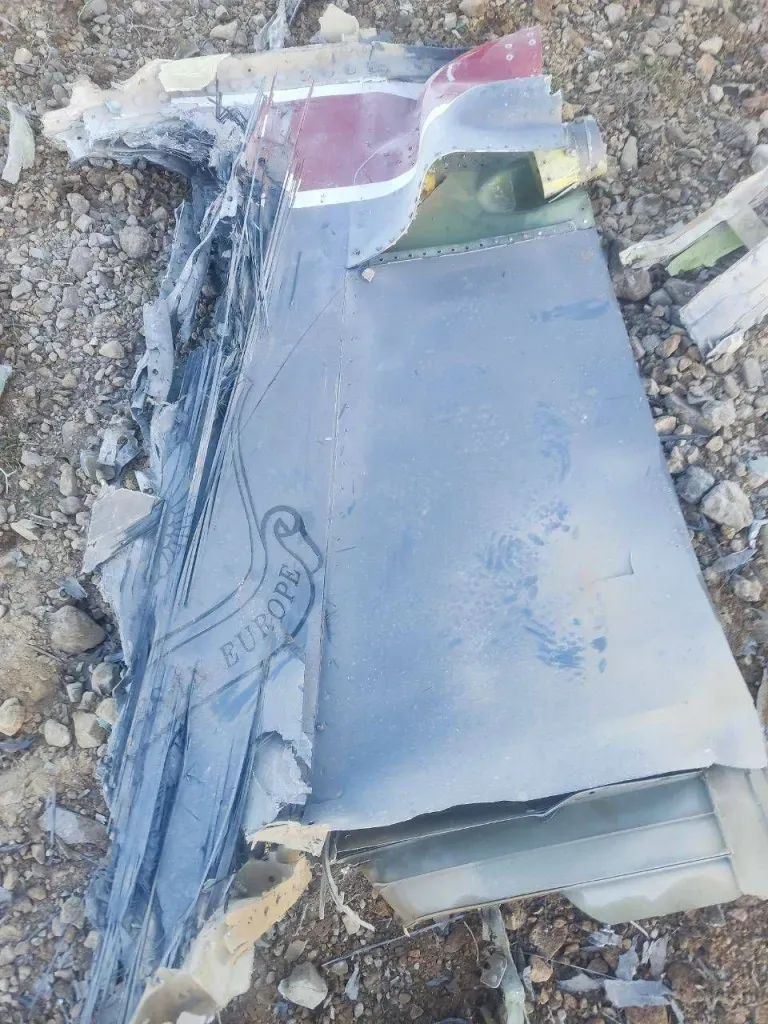
Iran’s armed forces claim that a U.S. fighter jet has been shot down over the country. According to Iranian state media, a U.S. F-35 was downed, although photos of the wreckage of a fighter on the ground point squarely to the aircraft involved being a U.S. Air Force F-15E Strike Eagle — provided they are legitimate.

UPDATE: See latest info on the loss of the F-15E over Iran and the ongoing combat search and rescue operation at the bottom of this post.

A photo published by Iranian state media shows the apparent tailfin of an F-15E. Iranian state media
Iranian state media
Iranian state media
Iranian state media

A spokesperson for Iran’s Khatam al-Anbiya central headquarters said today that an F-35 was brought down over the central part of the country by a new type of air defense system operated by the Islamic Revolutionary Guard Corps (IRGC), with little chance the pilot survived, Reuters reports. The F-15E carries two aircrew, while the F-35 is a single-seater. At this point, we have no firm indication of the fate of the crew if such an incident did indeed take place.

Spokesman of Iran’s Khatam al-Anbiya Headquarters:

🔺 A second US fifth-generation F-35 was struck & downed over central Iran by a new IRGC Aerospace Force air-defense system.

🔺 Given the massive explosion on impact and during the crash, the pilot is unlikely to have ejected. pic.twitter.com/akrsz1m8Mm

— Press TV 🔻 (@PressTV) April 3, 2026

A view of the apparent impact site, as published by the semi-official Tasnim News Agency. Tasnim

It also remains possible that the images of the wreckage have been manipulated, and we are dealing with misinformation. However, the photos appear genuine and are certainly consistent with parts of an F-15E, including one of the vertical tails, and parts of the wing and tail. There is also the possibility that the images derive from an earlier F-15E loss, which we will come to later.

Iranian state media
Iranian state media

Specifically, the tail seen here would indicate an aircraft assigned to the 494th Fighter Squadron at RAF Lakenheath in England, based on its red band. This is one of the units that has been deployed to the U.S. Central Command (CENTCOM) area of operations for Epic Fury. The 494th FS has also been extremely active over the CENTCOM area of responsibility for many years.

Iranian state media
A U.S. Air Force F-15E Strike Eagle assigned to the 494th Expeditionary Fighter Squadron lands at a base in the Middle East, Jan. 18, 2026. The F-15's presence enhances combat readiness and promotes regional security and stability. (Courtesy Photo)
A U.S. Air Force F-15E Strike Eagle assigned to the 494th Expeditionary Fighter Squadron lands at a base in the Middle East, Jan. 18, 2026. U.S. Air Force/courtesy photo U.S. Central Command Public Affa

We should also consider that the F-15E could have come down for multiple reasons other than being shot down by air defenses, as Iran claims. Potentially, the jet could have been hit and lost its tail and even part of its wing, before returning to safe airspace. That might sound incredible, but F-15s have done this before.

Iran might also be presenting some other F-15E wreckage. Iran has collected many wrecks of foreign aircraft over the years, but where this one would have come from is not clear.

Previous documented F-15E crashes in the Middle East or Afghanistan don’t involve aircraft from the 494th Fighter Squadron, as far as we can ascertain. Specifically, since Desert Storm (when the 48th Fighter Wing operated F-111s, not F-15Es), these (non-combat) losses occurred in Iraq (April 2003, 335th FS, 4th FW), Afghanistan (July 2009, 336th FS, 4th FW), and Libya (March 2011, 492nd FS, 48th FW).

Hours before the F-35 claim, the IRGC released a video of what it said showed the successful shootdown of a U.S. F-15 over Qeshm Island, in the Strait of Hormuz. In this case, they attributed the claimed shootdown to an unnamed advanced naval air defense system. The video shows the typical ground-based FLIR systems we have seen in use by air defenses in Yemen and, more recently, Iran. The video does not show the aircraft being struck, but it does show it maneuvering and releasing flares.

A sophisticated US-Israeli enemy fighter jet was struck and downed moments ago over southern Qeshm Island by Iran’s advanced naval air defense system, in a direct rebuttal to the US president’s false claim of having completely destroyed the Iran’ air defenses. pic.twitter.com/sLHV9ASKoi

— Tasnim News Agency (@Tasnimnews_EN) April 2, 2026

That claim was swiftly rebutted by CENTCOM.

🚫 CLAIM: Iran’s Islamic Revolutionary Guard Corps (IRGC) says it downed an “enemy” fighter jet over Qeshm Island in the Strait of Hormuz.

✅ FACT: All U.S. fighter aircraft are accounted for. Iran’s IRGC has made the same false claim at least half a dozen times. pic.twitter.com/bN7HJdLxEr

— U.S. Central Command (@CENTCOM) April 2, 2026

At this point, it is unclear if these various incidents are connected, especially since the IRGC specifically identified an F-35 as being shot down, while the claimed Qeshm Island video and the apparent wreckage on the ground clearly show F-15s.

It should be recalled that three F-15Es were brought down over Kuwait in a friendly fire incident earlier in the campaign. CENTCOM confirmed that the six crew members involved ejected safely, and at least some of those remained in theater and have resumed combat operations. It was reported that the three Strike Eagles were brought down by a Kuwaiti Air Force F/A-18 Hornet, although many details of the incident remain unclear. At least one of these jets was from the 48th FW, so we cannot entirely rule out the possibility that we are seeing photos of wreckage from that incident here.

At 11:03 p.m. ET, March 1, three U.S. F-15E Strike Eagles flying in support of Operation Epic Fury went down over Kuwait due to an apparent friendly fire incident.

Read more:https://t.co/i2y3Q3vo2E

— U.S. Central Command (@CENTCOM) March 2, 2026

Last month, the IRCG claimed that a U.S. Air Force F-35A was hit over Iran, and U.S. officials confirmed the jet made an emergency landing, with the pilot having sustained shrapnel injuries. The IRGC released a video that they claimed shows the F-35 being hit by a missile, as seen through a forward-looking infrared (FLIR) system that is identical to the kind in yesterday’s supposed footage of the shootdown.

Iran’s IRGC released a footage reportedly showing U.S. F-35 jet being hit over Iran.

Note that we can’t independently confirm the authenticity of the footage. pic.twitter.com/9N0ePd2LLf

— Clash Report (@clashreport) March 19, 2026

There appear to have been near-misses for U.S. fighter jets operating over Iran, too. On March 26, videos emerged showing an apparent very close call for a U.S. Navy F/A-18E/F Super Hornet after it was targeted by what appears to have been an Iranian man-portable air defense system (MANPADS). The F/A-18 was conducting a low-level strafing run at the time.

Taken together, all these events underscore the persistent threat posed by Iranian air defenses, whatever is left of them. Despite claims from U.S. officials of aerial superiority over Iran, the continued risk from various air defense systems is something that we have repeatedly drawn attention to.

The apparent incident today comes amid continuing regional tensions, with Iran launching more attacks across the Middle East, including missile strikes targeting Israel and Bahrain, as well as a drone attack that set an oil refinery in Kuwait on fire.

We have approached CENTCOM, the Pentagon, and U.S. Air Forces in Europe for more information and will continue to update this story as more details emerge.

UPDATES:

UPDATE: 6:27 PM EST –

The video we showed earlier of Iranian law enforcement shooting at low-flying U.S. Black Hawk helicopters was geolocated to near Choram, Iran, about 70 miles north of the Persian Gulf in that country’s southwest.

UPDATE: 5:28 PM EST –

The White House has called a “lid,” meaning that Trump has no further scheduled public events or media engagements this evening. However, he and his national security team are reportedly still meeting as the search goes on for the missing F-15E aviator.

UPDATE: 5:28 PM EST –

In a brief Friday phone interview with The Independent, Trump declined to say what his course of action might be if the missing crew member of a downed F-15E is captured or harmed by Iran..

“Well, I can’t comment on it because — we hope that’s not going to happen,” the president stated before ending the call.

Trump gave little clarity on how the U.S. would respond if the missing pilot in Iran is harmed, saying only, “We hope that’s not going to happen,” and declining further comment.

Source: The Independent

— Clash Report (@clashreport) April 3, 2026

UPDATE: 5: 19 PM EST –

The House Armed Services Committee was “notified by the Pentagon on Friday that the status of the second F-15E Strike Eagle service member is NOT known,” the Hill reported on X.

NEWS: The House Armed Services Committee was notified by the Pentagon on Friday that the status of the second F-15E Strike Eagle service member is NOT known, a congressional aide, speaking on condition of anonymity, told me @thehill @NewsNation

— Filip Timotija (@filip_timotija) April 3, 2026

UPDATE: 5:11 PM EST –

Trump’s national security team is gathered at the White House, ABC News is reporting on X.

The president “has been working in the Oval Office or Oval Dining Room all day receiving updates,” the network added, citing a senior official.

There has been no public comments from Trump outside of social media posts, ABC noted.

A senior White House official tells me the President’s national security team is gathered at the White House.

Trump has been working in the Oval Office or Oval Dining Room all day receiving updates, the official adds.

No public comments from Trump outside of social media posts

— Selina Wang (@selinawangtv) April 3, 2026

UPDATE: 4:59 PM EST –

The Washington Post is also reporting that an A-10 was struck by incoming fire over Iran. The pilot “navigated the damaged plane to Kuwaiti airspace before ejecting and was subsequently rescued,” the publication stated.

In addition, it confirmed an earlier NBC report that two U.S. Black Hawk helicopters involved in the search-and-rescue effort were also hit by Iranian fire. The Post added that the attack “injured U.S. personnel on board, though both aircraft have safely returned to their base.”

As we noted earlier in this story, The New York Times reported that an A-10 was shot down while Fox said that was inaccurate.

Neither the Pentagon nor CENTCOM have responded to requests for comment.

NEW: Two U.S. military aircraft were shot down in separate incidents Friday while conducting combat operations against Iran, setting off a frantic search-and-rescue effort that remains ongoing for one missing crew member, U.S. officials said. https://t.co/MTQavgZ90u

— Tara Copp (@TaraCopp) April 3, 2026

UPDATE: 4:22 PM EST –

NBC News reports that two U.S. helicopters taking part in the recovery of the pilot of the downed F-15E were struck by Iranian fire, but that the troops are all safe.

UPDATE: 4:08 PM EST –

NBC News stated that in a brief phone interview, President Trump “refused to discuss the specifics of ongoing search and rescue efforts in Iran after an American jet was downed.”

However, he “expressed frustration about some of the coverage of what is plainly an intense and sensitive rescue operation,” the network reported.

Asked if today’s events will affect any negotiations with Iran, the president said it would not.

“No, not at all. No, it’s war. We’re in war, Garrett,” he said.

UPDATE: 3:58 PM EST –

Now Fox News is pushing back against the New York Times story about the A-10 crash,

“An A-10 Warthog attack caught ‘enemy fire’ while a rescue operation for the U.S. crew member took place,” the network reported, citing “a well-placed source.”

We have reached out to CENTCOM, which has not responded to numerous requests for comment, for clarity on these claims.

UPDATE: 3:31 PM EST –

Video emerged purporting to show members of the Iranian Law Enforcement Command (FARAJA) firing small arms at Black Hawks flying at low altitude. While Newsmax reported that a Black Hawk was struck in Iran, it is unclear if it was during this engagement.

And here is the scene of the FARAJA (Iranian Law Enforcement Command) engagement with American Blackhawks at low altitude. One Blackhawk was confirmed hit by Iran. It was a catastrophic day for the United States; many more are to follow. pic.twitter.com/657Th0J4xI

— NEUTRINO (@ETERNALPHYSICS) April 3, 2026

UPDATE: 3:25 PM EST –

Newsmax is now reporting that the Black Hawk was indeed hit and that the crew is accounted for and safe.

UPDATE: 3:15 PM EST –

Iran’s semi-official Fars news said Tehran has rejected a White House request for a 48-hour ceasefire.

“Assessments indicate that this proposal came after the escalation of the crisis in the region and serious problems for US military forces due to an incorrect estimate of the Islamic Republic of Iran’s military capabilities,” the outlet claimed. “Iran’s response to this proposal was not in writing, but rather a field response with continued heavy attacks.”

We have reached out to the White House for comment.

UPDATE: 3:03 PM EST –

The Pentagon has finally added Epic Fury to its online casualty database. To date, there have been 13 troops killed and another 365 wounded.

NEW: The Pentagon has finally added Operation Epic Fury to its online database of U.S. military casualties

As of April 3, a total of 365 have been wounded in action:

• Army = 247
• Navy = 63
• Marine = 19
• Air Force = 36

Death toll remains at 13https://t.co/VaC8OcXmDg

— Julia Jester (@JulesJester) April 3, 2026

UPDATE: 2:58 PM EST –

The New York Times is reporting that an A-10 Warthog close support jet also crashed in the Persian Gulf region on Friday. The pilot was safely rescued, the newspaper stated, citing two anonymous officials.

“The A-10 Warthog attack plane went down near the Strait of Hormuz about the same time that an Air Force F-15E was shot down over Iran,” according to the publication. 

UPDATE: 2:50 PM EST –

Israel suspended airstrikes in Iran amid the U.S. search and rescue effort after a F-15E fighter jet was downed on Friday, according to The Associated Press.

An Israeli official told the AP that the airstrikes were halted in areas “relevant” to the rescue effort.

UPDATE 2:35 PM EST –

Newsmax is reporting that in addition to the F-15E being downed and one of the pilots rescued, a Black Hawk helicopter taking part in CSAR operations may have been hit over Iran as well. While The War Zone cannot independently verify this, the claim highlights the dangerous nature of these operations.

Report from @CarlaBNewsmax: “One source tells me a Blackhawk may have also been hit over Iran while conducting rescue ops to find the second F-15 pilot. I’m told the Blackhawk was tailed by a trail of smoke as it crossed into southern Iraq from Iran today.” https://t.co/mByzZrwMZu

— Steve Lookner (@lookner) April 3, 2026

UPDATE: 2:10 PM EST –

President Donald Trump has been briefed on the downing of the F-15E, Al Jazeera is reporting.

“He has been briefed,” White House Press Secretary Karoline Leavitt said, the White House told us.

The White House has confirmed President Trump has been briefed on the shooting down of a US fighter jet in Iran. It comes as Iranian state TV announced a reward for anyone who captures the US pilots alive.

US media reported one crew member has been rescued. Here’s what we know. pic.twitter.com/dNBnMcqVAn

— Al Jazeera Breaking News (@AJENews) April 3, 2026

UPDATE: 12:30 PM EST

The critical nature and the huge challenges involved in mounting a CSAR operation in Iranian territory are something we discussed before the war began, as you can read about here.

Specifically, on the CSAR part, we highlighted:

The U.S. has the most advanced air combat capabilities on earth, but ‘shit happens,’ especially during war. Even the Houthis nearly downed U.S. fighter aircraft optimized to destroy enemy air defenses. But regardless of defenses and the state of Iran’s air defense overlay, putting Americans over Iran, and repeatedly over days and weeks, is a risk. Aircraft can malfunction, and mistakes can be made. When that happens, it will require even more risk to push combat search and rescue assets into the area to try to recover the crew. In other words, regardless of America’s outstanding air warfare capabilities, there is still a real risk involved in any operation over Iran.

And that is just what we’ve seen today.

As for CSAR operations and the packages of assets used to go in and pluck downed aircrews from deep inside contested territory, these can look different based on where the incident occurred, what the enemy’s capabilities are, what assets are available and intelligence at the time. These highly tailored groups of assets are tasked with one of the toughest missions imaginable, penetrating into potentially highly defended territory where, in some cases, even America’s most capable combat aircraft did not survive. This would likely be occurring when an enemy is on its highest alert and very active searching for the downed aircrew. In other words, they know you are coming. Executing these operations at night is ideal, but sometimes, daylight cannot be avoided, upping the danger.

The risks are immense as putting many more lives and assets, the latter of which could be more vulnerable than the one lost, at risk in order to rescue a small number or aircrew can cascade quickly into a much larger disaster. While the rotary-wing aircraft and the Pararescuemen (PJs) they carry are often the stars of the CSAR show, a huge array of assets participate in these operations to make them have the best chance at success. This includes C-130s working in the aerial refueling and support role that enables the rescue helicopters to get to their target area. Fixed-wing attack aircraft working in the ‘Sandy’ close air support role aimed at opening holes for helicopters at their landing zones and protecting them and the rescue party once on the ground. They are also a contingency in place if a rescue asset also goes down, buying that crew time until another asset in the rescue party can swoop in and grab them. In the modern era of warfare, drones, such a MQ-9 Reapers, can also be risked ahead of the CSAR force to gather intel and surveil the landing zone. Also knowing what took down the stranded aircrew’s aircraft can be a big help in seeing the rescue force gets in and out of the area safely, as well.

CSAR Training • A-10 Warthogs Fly Close Air Support


From there the list is endless. This package would often require a counter-air capability of fighters providing defense against aerial threats. F-22s, F-15s, F-16s, can all provide this depending on the level of threat in the area. The force would also need to be backed by suppression of enemy air defenses (SEAD) aircraft, such as F-16CJ/CMs or F-35As, that would work to suppress or destroy any pop-up surface-to-air missile threats. Then you have standoff jamming support aircraft to help all this survive and airborne early warning and control (AEW&C) assets to coordinate the air battle and keep an eye out for threats. Then there are the tankers, lots and lots of tankers, to keep all this stuff in the air for a prolonged period of time. Beyond this sampling of aircraft, there are many more assets and capabilities all over the globe and in space that would support such an operation.

And this is just a snapshot of the USAF’s CSAR portfolio, the Navy and Marines have their own tactical recovery of aircrew and personnel (TRAP) packages.

In the case of an air war like the one over Iran, these tailored packages were well thought through in advance and CSAR sits alert at all times ready to go execute the mission. The longer it takes to get to the target area the lower chances the crew has of surviving and/or not being captured. This can be a game of minutes or hours, not days, but bringing all these assets together and getting them on the same page without making things worse does take some time. Considering what is at stake, CSAR crews move as fast as possible to get the mission in motion as they know their job only gets exponentially harder and more dangerous with time, as does evading enemy capture for the downed crew.

The big takeaway here is that these are extremely complex and highly-integrated operations, usually executed under very tight timelines.

UPDATE: 12:20 PM EST

U.S. officials have confirmed to CBS News that one crew member from the F-15E downed over Iran has been rescued by American forces.

A search and rescue effort is ongoing for the other crew member, the same sources said. 

UPDATE: 12:00 PM EST

White House Press Secretary Karoline Leavitt has apparently told CNN that President Trump has been briefed on the situation regarding the F-15E shootdown. We are still waiting to hear back from CENTCOM, the Pentagon, and U.S. Air Forces in Europe for anything more concrete on the incident.

President Trump has been briefed on the US fighter jet shot down over Iran, White House Press Secretary Karoline Leavitt tells CNN

— Faytuks News (@Faytuks) April 3, 2026

In what may well turn out to be a separate incident, there are reports that a U.S. Air Force F-16 flying in an area around the Iraq-Iran border has squawked 7700, the universal, international transponder code used by aircraft to immediately alert Air Traffic Control (ATC) of a general emergency. We have again reached out to CENTCOM for more details.

A U.S. Air Force F-16CJ is flying out of Iran/Iraq airspace and has squawked 7700— the universal code for a general in-flight emergency, indicating the crew is dealing with a serious issue. https://t.co/De9S0gkjax

— Clash Report (@clashreport) April 3, 2026

UPDATE: 11:35 AM EST

Very much unconfirmed at this stage is a report from N12 News in Israel, citing a Western source, who says that one of the two U.S. aircrew of the downed F-15E has been rescued.

N12 News’ Amit Segal reports, citing a Western source, that one of the two US crew members of the downed fighter jet has been rescued. https://t.co/fpB6JNTJgv

— Faytuks News (@Faytuks) April 3, 2026

UPDATE: 11:30 AM EST

We seem to have gotten an update on the earlier report that Iran was offering a bounty for the safe recovery of a U.S. pilot. Authorities are now reportedly offering a sum of around $60,000.

Iranian authorities are offering a reward of 10 billion tomans (~$60k) for the capture of the American F-15E aircrew downed earlier today.

— OSINTtechnical (@Osinttechnical) April 3, 2026

The Iranian Mehr News Agency reports that a U.S. helicopter involved in the rescue effort was hit by some kind of Iranian projectile. It is unclear if the helicopter was brought down or if it is the same example that was reported as “attacked by air defense near the border and fled the scene.” Of course, this could be nothing more than propaganda. Although imagery reportedly showing a hit on the helicopter is circulating on social media, it is far from clear whether or not it is authentic.

UPDATE: 11:20 AM EST

Videos also continue to emerge claiming to show HC-130Js operating over Iran, often at low level. In its official factsheet, the Air Force stresses that HC-130J crews “normally fly night, at low to medium altitude levels in contested or sensitive environments, both over land or overwater.” Such overt daytime flights would point to the particular urgency of this mission, but it is worth noting that the HC-130J is also well equipped with self-protection gear.

U.S. Air Force HC-130J Combat King II search and rescue plane overflying an Iranian countryside at ultra-low altitude during the ongoing operation to evacuate two American crew-member of the downed F-15E Strike Eagle fighter jet. pic.twitter.com/CWc5SzokRT

— Status-6 (War & Military News) (@Archer83Able) April 3, 2026

«جمعه ۱۴ فروردین ۱۵:۱۶. نزدیک جزیره خارگ. بعد از ما رفت سمت ایران و خارگ.» pic.twitter.com/lqYC2dhWYG

— مملکته (@mamlekate) April 3, 2026

Unverified for now are videos coming out of Iran that claim to show locals firing small arms at U.S. aircraft involved in the rescue effort.

UPDATE: 11:10 AM EST

The Guardian appears to be one of the first major news outlets to report that the aircraft shot down was an F-15E, citing U.S. officials familiar with the situation who confirmed this fact off the record, and that the Pentagon was scrambling to find the crew.

The same has been reported by specialist press, including Air & Space Forces Magazine.

A U.S. Air Force F-15E Strike Eagle was downed over Iran and combat search and rescue efforts are underway, people familiar with the matter told Air & Space Forces Magazine. https://t.co/divbKi1VT0

— Chris Gordon (@ByChrisGordon) April 3, 2026

UPDATE: 10:40 AM EST

Multiple major news agencies, including CNN, the New York Times, and Reuters, are now reporting that a U.S. fighter jet has been shot down over Iran. The incident would mark the first time a U.S. aircraft has been shot down over Iran during the conflict — at least that we know about. 

According to CNN, three U.S. sources have confirmed Iranian state media reports. Reuters cites a single U.S. official.

CNN has geolocated some of the videos of CSAR efforts in the Khuzestan province in central Iran. One of the videos shows a bridge over the Karoon River, which is around 290 miles south of Tehran.

A US fighter jet has been shot down over Iran, three US sources said confirming Iranian state media reports.
US forces have launched search and rescue efforts, the sources said. Potential rescue efforts appeared to be captured in video posted to social media and geolocated by…

— Natasha Bertrand (@NatashaBertrand) April 3, 2026

An unverified video said to be taken from the area of the rescue effort shows an A-10C attack jet. The A-10 is well-versed in the Sandy mission, a specialized CSAR role in which the jets provide close air support for downed aircrew and escort rescue helicopters.

UPDATE: 9:00 AM EST

Citing Iranian media as well as an unnamed source familiar with the incident, Axios reports that Iran did shoot down a U.S. jet, and that a search and rescue effort is underway to locate two crew.

UPDATE: 8:50 AM EST

At least some official Iranian media channels are now also reporting the U.S. military aircraft claimed shot down over the country earlier today as an F-15E, rather than an F-35.

🚨Iran has shot down an F-15E ‘Strike Eagle’ belonging to the 494th Fighter Squadron ‘LN’ based at RAF Lakenheath in the United Kingdom

Debris of the tail fin confirm the downing. The fate of the pilots is currently unclear. pic.twitter.com/onicosCPAp

— IRIB (Islamic Republic of Iran Broadcasting) (@iribnews_irib) April 3, 2026

UPDATE: 8:35 AM EST

Iranian television channels are apparently now broadcasting a message offering a reward from the regime for anyone who can capture the U.S. pilot alive.

UPDATE: 8:30 AM EST

Additional videos, purportedly taken in Iran, appear to show a pair of HH-60 helicopters taking turns to refuel from an HC-130J.

Wild footage from a USAF C-130 fueling two helicopters over Iran shared by telegram channels. The cars & the dialect are Iranian and from southwest. pic.twitter.com/K9cufOOY26

— Ramin Khanizadeh (@RKhanizadeh) April 3, 2026

🚨Many people in southwestern Iran have gone to the area around the crash site of the American fighter jet in private cars to #capture the American pilot.

The Iranian armed forces have called on the people NOT TO LET anyone mistreat the pilot.

— IRIB (Islamic Republic of Iran Broadcasting) (@iribnews_irib) April 3, 2026

UPDATE: 8:15 AM EST

Tasnim, the semi-official news agency in Iran associated with the Islamic Revolutionary Guard Corps, claims that U.S. attempts to rescue a downed fighter pilot (singular) have failed. The agency says that this was confirmed to them by “news sources” in Kohgiluyeh. The report continues: “The Americans have been conducting search operations for hours using Black Hawk helicopters and a Hercules 130 aircraft to rescue their fighter pilot who was shot down by Iranian armed forces; however, their attempt has failed.”

One of the helicopters involved in the rescue effort was “attacked by air defense near the border and fled the scene,” Tasnim adds.

In a post on X, Tasnim claims: “Unconfirmed reports suggest that Iranian security forces have taken into custody the pilot of a U.S. F-35 fighter jet following its destruction by the country’s air defense system inside Iranian territory.”

Of course, all of these claims remain unverified at this point. It is also puzzling, to say the least, why Iranian reports are consistently identifying the jet as an F-35, while publishing photos of an F-15E.

Iranian Forces Capture F-35 Pilot After Downing Advanced US Warplane

Unconfirmed reports suggest that Iranian security forces have taken into custody the pilot of a US F-35 fighter jet following its destruction by the country’s air defense system inside Iranian territory. https://t.co/PiQDh7xoo9 pic.twitter.com/FK4OGROOYi

— Tasnim News Agency (@Tasnimnews_EN) April 3, 2026

Normally, CSAR operations would be kept under wraps until the crew was safe, but in our digital world that is no longer guaranteed. The US has well practiced and resourced procedures, but there is always the risk of losing more assets in the act of saving downed aircrew.🤞 https://t.co/zyDXqIueMP

— Greg Bagwell (@gregbagwell) April 3, 2026

Unverified footage suggests that the CSAR effort over Iran may also now be supported by F-35 fighters and MQ-9 Reaper drones.

NOW: F-35 jets and MQ-9 drones were also spotted supporting U.S. helicopters over Iran, searching for the pilots of downed F-15E jet. pic.twitter.com/1cpNQ7pJq0

— Clash Report (@clashreport) April 3, 2026

UPDATE: 7:50 AM EST

Unverified claims from Iranian sources, as well as imagery, suggest that the U.S. military may have staged an effort to rescue pilots from the downed F-15E fighter jet in Iran. Available imagery points to the use of C-130 and H-60 Black Hawk series aircraft. Specifically, U.S. Air Force combat search and rescue efforts typically rely upon the heavily modified HH-60 helicopters for extraction, HC-130J Combat King II aircraft for command and refueling, and highly specialized pararescuemen (PJs).

WATCH: U.S. C-130 Hercules reportedly flying very low over Iran, deploying flares.

The U.S. forces are highly likely searching the pilots of downed F-15E jet. pic.twitter.com/cPaQg29bOg

— Clash Report (@clashreport) April 3, 2026

Also unverified, at this point, is the following image, which claims to show one of the two ejection seats from the downed F-15E.

The Iranians have found the Advanced Concept Ejection Seat II (ACES II) ejection seat system employed in U.S. Air Force F-15E Strike Eagle fighter jet that crashed in Iran this morning.

The whereabouts of the F-15E’s two crew-members are still unknown. pic.twitter.com/Q2Fz558TBr

— Status-6 (War & Military News) (@Archer83Able) April 3, 2026

Contact the author: thomas@thewarzone.com

Thomas is a defense writer and editor with over 20 years of experience covering military aerospace topics and conflicts. He’s written a number of books, edited many more, and has contributed to many of the world’s leading aviation publications. Before joining The War Zone in 2020, he was the editor of AirForces Monthly.


Howard is a Senior Staff Writer for The War Zone, and a former Senior Managing Editor for Military Times. Prior to this, he covered military affairs for the Tampa Bay Times as a Senior Writer. Howard’s work has appeared in various publications including Yahoo News, RealClearDefense, and Air Force Times.


Tyler’s passion is the study of military technology, strategy, and foreign policy and he has fostered a dominant voice on those topics in the defense media space. He was the creator of the hugely popular defense site Foxtrot Alpha before developing The War Zone.


Source link