extradition

As US seeks Gaza donor’s extradition, wife warns of ‘terrifying precedent’ | Israel-Palestine conflict News

Madrid, Spain – A wealthy American donor to Palestinian causes who faces extradition from Spain to the United States over alleged financial support of Hamas is a victim of “political persecution”, his wife and lawyers have told Al Jazeera.

James “Fergie” Chambers was arrested on the Spanish island of Ibiza in July while searching for a school for his son with his wife, actress Stella Schnabel.

Recommended Stories

list of 4 itemsend of list

US authorities have linked Chambers to the transfer of $7.5m to Tunisia and allege that the funds were ultimately used to provide financial support to the Palestinian armed group Hamas.

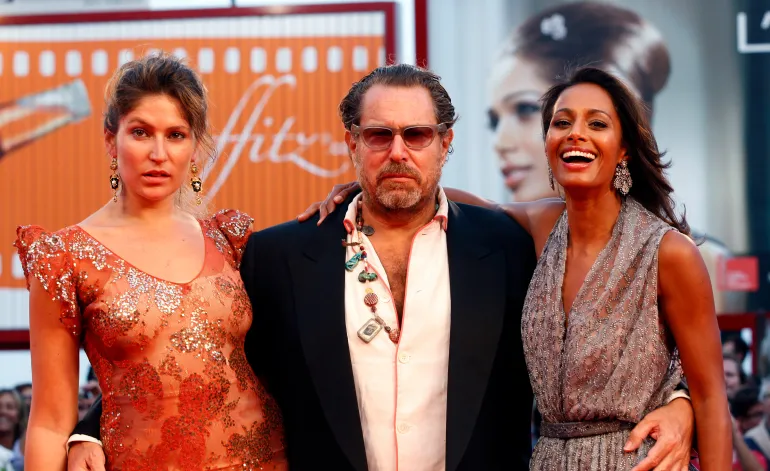
Director Julian Schnabel (C), screenwriter Rula Jebreal (R) and actress Stella Schnabel pose during the "Miral" red carpet event at the 67th Venice Film Festival September 2, 2010. REUTERS/Tony Gentile (ITALY - Tags: ENTERTAINMENT)
Director Julian Schnabel (centre), screenwriter Rula Jebreal (right) and actress Stella Schnabel pose during the ‘Miral’ red carpet event at the 67th Venice Film Festival, September 2, 2010 [Tony Gentile/Reuters]

The indictment remains sealed, so the specific allegations against Chambers – who denies wrongdoing – are not yet known.

Chambers, heir to one of the richest families in the US, has supported a handful of humanitarian projects in Gaza with funds totalling more than $1m, a member of his legal team said shortly after his arrest.

The extradition effort is believed to be the first of its kind involving a US citizen accused of providing support to Hamas.

Chambers, who describes himself as a Marxist-Leninist, has been held in a Madrid jail for six weeks as Spanish authorities consider the US extradition request.

Schnabel, who is also an activist, said she was driving through the Balearic island of Ibiza with her husband to search for a school for their five-year-old son, as they were moving from Ireland to Spain, when he was arrested.

“Suddenly, several unmarked cars cut us off. Police officers got out of the cars and told us to get out of the car. I got out my phone, and they told me not to phone,” she told Al Jazeera. “They handcuffed Fergie. We said we loved each other, and he said, ‘Tell the kids I love them’. And they bundled him into a car, and he was gone. That was July 10. Over six weeks ago.”

Schnabel said US President Donald Trump’s administration was targeting her husband for being one of the largest donors to humanitarian projects in Gaza. This included supplying bread, water and medical care.

“He should be at home with his family, continuing his humanitarian work. Instead, he is facing political persecution because he has stood with the Palestinian people,” she said. “This sets a terrifying precedent for repression of the wider movement for a free Palestine, including precedent for the Trump administration exporting its repression far beyond the US borders to target the people of Europe.”

The US Department of Justice declined to comment when contacted by Al Jazeera.

The US sent the indictment and documentation to Spain last week, in time to meet the 45-day deadline after Chambers’s arrest in July.

Al Jazeera understands that the indictment is still sealed and has not been revealed to his defence team.

Spanish authorities must now assess the US request. Among the issues they may consider is whether the extradition would amount to political persecution, a circumstance that could provide grounds for refusing it.

Chambers comes from the family behind Atlanta-based Cox Communications. In 2023, he reached an agreement with his relatives under which his stake in the family business was bought back for approximately $250m, following a break with the family.

Since then, he has been funding dozens of projects in 20 countries, Schnabel has said.

On the central allegation about funding Hamas, Schnabel said this was a “trumped-up charge” for which the US has not provided a “shred of evidence”.

“My understanding is that the US appears to rely on the fact that he transferred $7.5m of his own funds from the US to Tunisia. The reality is that this money was transferred to Tunisia because we were living there, and for philanthropic activities, including supporting Club Africain [a football team],” Schnabel said.

“The money sponsored the club, helped to pay its debts and overdue salaries, rebuild its training centre and develop football fields for young people.”

The Tunisian side secured the league title in May.

Lawyers for Chambers have also pointed to his outspoken views on Israel and its genocidal war on Gaza.

In the week after the October 2023 Hamas-led attacks on Israel, Chambers posted on X about Israel’s response: “Stop calling it ‘collective punishment’. There’s nothing to be ‘punished’ for. No faction of the Palestinian resistance, Hamas or other, has done anything wrong. It’s simply genocide. Like it has been.”

In the wake of the 41-year-old’s arrest, FBI agents raided the rented property in Ibiza where Chambers had been staying, The Guardian reported.

Chambers is represented by Spanish human-rights lawyer Baltasar Garzon, who has argued that the case against his client is politically motivated and connected to his humanitarian work in Palestine.

“We request our client’s provisional release and to file all necessary legal actions with the courts,” he told Al Jazeera.

In 1998, Garzon sprang to international attention when he sought the extradition from London of the former Chilean dictator Augusto Pinochet. He has also acted in human rights cases in Spain and Argentina.

“We hope that Spain will not grant extradition in what we consider to be a case of political persecution based on our client’s ideas and humanitarian aid to Palestine,” he added, referring to Chambers.
Source link

ICE officer charged in Minneapolis shooting released in Texas after immediate extradition rejected

An Immigration and Customs Enforcement officer charged with shooting a man and lying about it during the immigration crackdown in Minneapolis was released from a Texas jail Thursday, after a judge refused to order his return to Minnesota.

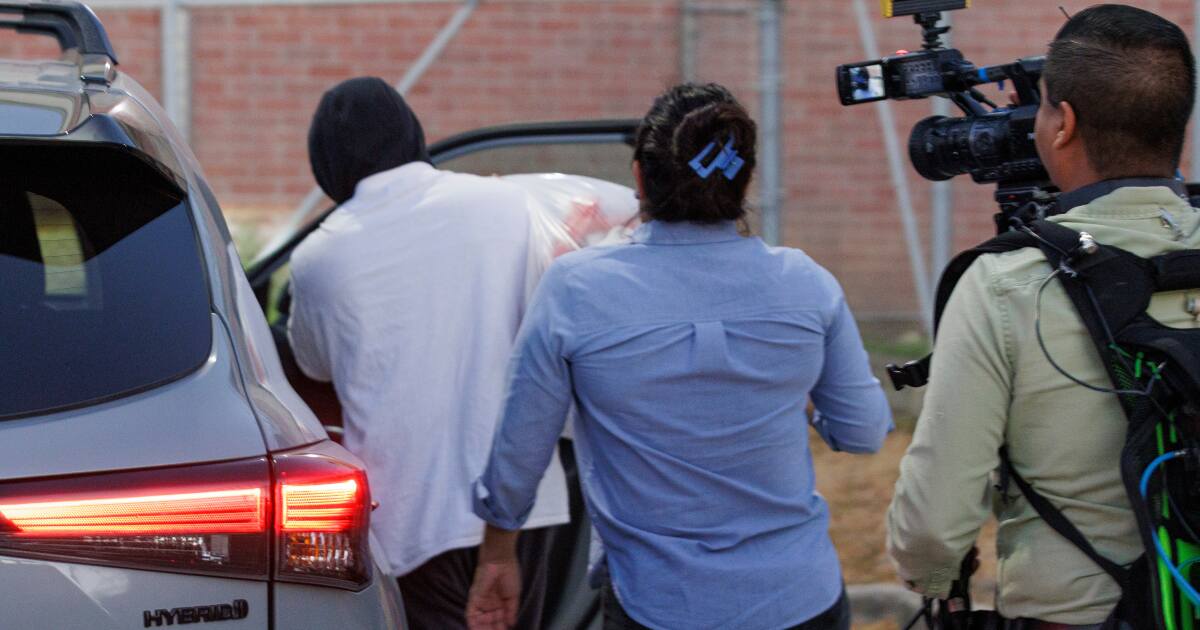
Christian Castro was released at the break of dawn from a detention center in Brownsville. He motioned his hand toward a few camera operators and a reporter crowding around him and quickly got into an SUV that drove off.

A day earlier, U.S. District Judge Fernando Rodriguez Jr. wrote in an order that said he couldn’t prevent a county sheriff from releasing Castro or order Texas Gov. Greg Abbott to sign his extradition warrant.

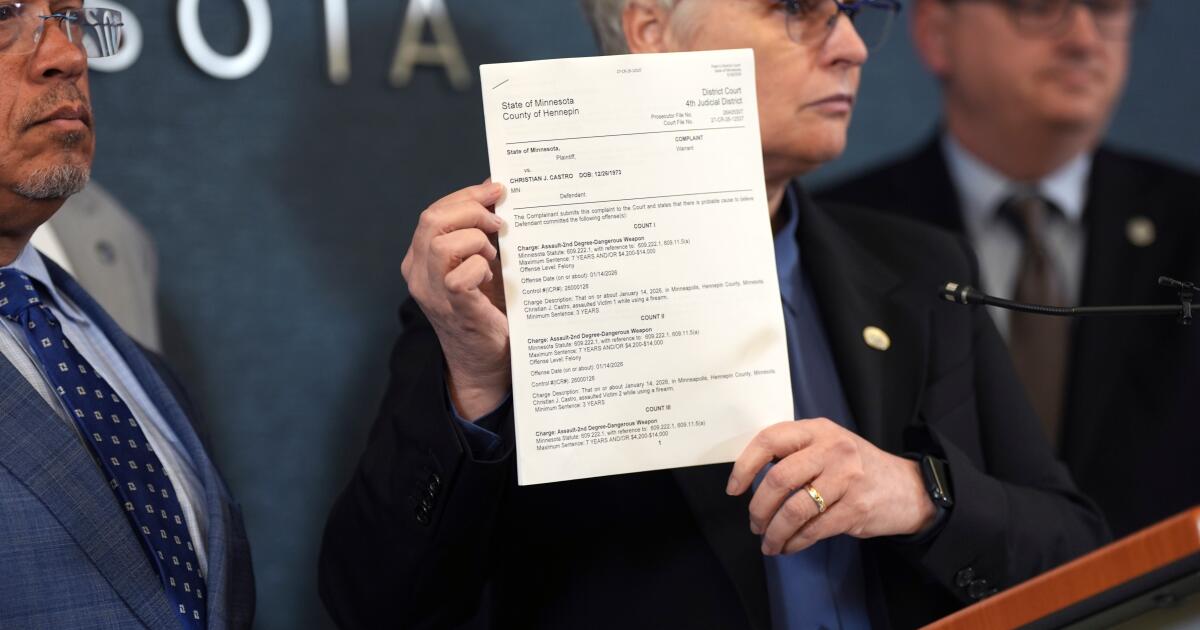
Castro is charged in Minnesota with assault and falsely reporting a crime in the Jan. 14 shooting of 24-year-old Julio Cesar Sosa-Celis.

Castro is accused of firing gun through door of home

Castro is accused of firing a gun through the front door of a Minneapolis home, shooting Sosa-Celis in the leg. Prosecutors say Castro also falsely accused Sosa-Celis and another man of attacking an ICE officer with a broom handle and a snow shovel.

After a Minnesota judge issued a nationwide warrant for Castro’s arrest in May, authorities, including Minnesota’s Bureau of Criminal Apprehension, arrested Castro in Cameron County on May 29. Minnesota authorities have sought his extradition since his arrest, but he remained in custody in Brownsville, a city bordering Mexico.

Under Texas law and barring extradition, Castro had to be released after 90 days of detention, which was Thursday.

Minnesota officials believe Castro could flee to Mexico.

Minnesota Attorney General Keith Ellison filed a request for a temporary restraining order last week seeking to block Castro’s release or to order his return to Minnesota.

Abbott waiting for internal state investigation about Castro

Texas attorneys on Tuesday argued the judge could not rule on a decision that’s still pending. Abbott has not denied the extradition. Instead he is waiting for the outcome of an internal state investigation considering whether Castro was legally a “fugitive” under the Extradition Clause, the lawyers said.

The judge wrote in Wednesday’s order that the court couldn’t yet step in.

“The Court concludes that it lacks subject matter jurisdiction because the case is not ripe for adjudication,” the order read. “Minnesota cannot premise its causes of action on the allegation that Governor Abbott may violate those authorities in the future; it must prove that a violation has already occurred.”

The judge said in his order that the extradition laws do not outline how long the Texas governor can take to make that decision.

Ellison said in a statement that his office would keep litigating the case but didn’t specify what it would do next.

Abbott’s press secretary, Andrew Mahaleris, welcomed the ruling and said it was the governor’s duty to carefully consider the merits of extradition requests.

Abbott said last week he would not respond to the extradition request, citing the ongoing investigation into fraud in government social service programs in Minnesota, which President Trump used to justify his immigration crackdown there.

Minnesota officials say Castro could flee the country, citing calls he made from jail to a woman in Mexico, talking “about marrying her and buying a house in Mexico when he is released,” according to the lawsuit.

The judge conceded that Castro could flee the country but added that “the threat of injury by itself does not create an issue ripe for adjudication.”

Michael Gonzalez and Valerie Gonzalez write for the Associated Press. Valerie Gonzalez reported from McAllen, Texas. AP writer Kathy McCormack in Concord, N.H., contributed to this report.

Source link

Judge denies Minnesota bid to extradite ICE officer from Texas, paving way for his release

A federal judge on Wednesday refused to order Texas to extradite an Immigration and Customs Enforcement officer charged with shooting a man and lying about it during the immigration crackdown in Minneapolis.

Christian Castro is charged in Minnesota with assault and falsely reporting a crime in the Jan. 14 shooting of 24-year-old Julio Cesar Sosa-Celis. Minnesota authorities have sought his extradition since his arrest, but he remains in custody in Brownsville, Texas, a city bordering Mexico.

Under Texas law and barring extradition, Castro must be released after 90 days of detention, which is Thursday.

Minnesota Atty. Gen. Keith Ellison filed a request for a temporary restraining order last week, asking a federal judge to prevent the sheriff in Cameron County, Texas, from releasing Castro, and to order Texas Gov. Greg Abbott to sign his extradition warrant.

Minnesota officials believe Castro could flee the country, citing calls he made from jail to a woman in Mexico, talking “about marrying her and buying a house in Mexico when he is released,” according to the lawsuit.

Castro is accused of firing a gun through the front door of a Minneapolis home, shooting Sosa-Celis in the leg. Prosecutors say Castro also falsely accused Sosa-Celis and another man of attacking an ICE officer with a broom handle and a snow shovel.

At a federal hearing in Brownsville on Tuesday, attorneys with the Minnesota attorney general’s office argued it would be hard to compel Castro to face charges in their state if he was released, and they fear Castro may flee the country, citing his phone conversations.

Texas Gov. Greg Abbott said last week he would not respond to the extradition request, citing the ongoing investigation into fraud in government social service programs in Minnesota, which President Trump used to justify his immigration crackdown there.

Gonzalez writes for the Associated Press.

Source link