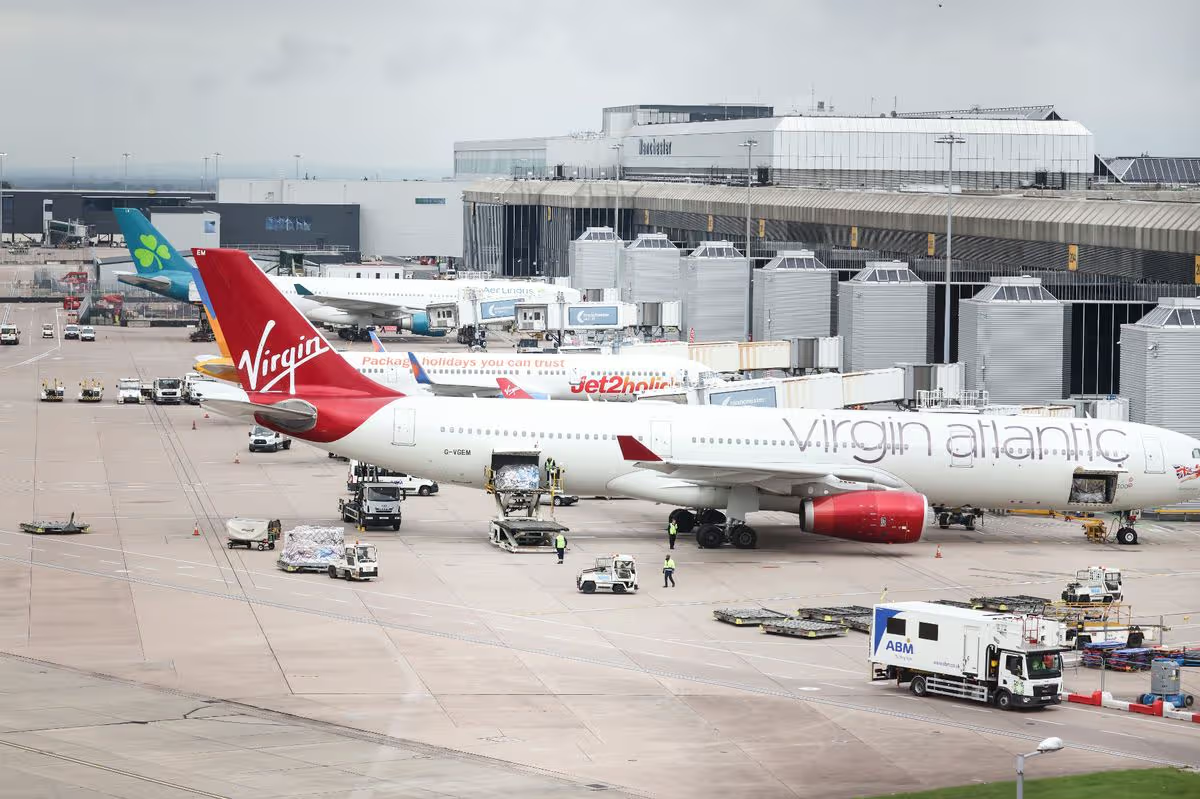
Rules around travel to Europe are changing – make sure you’re prepared by following a travel expert’s tips.
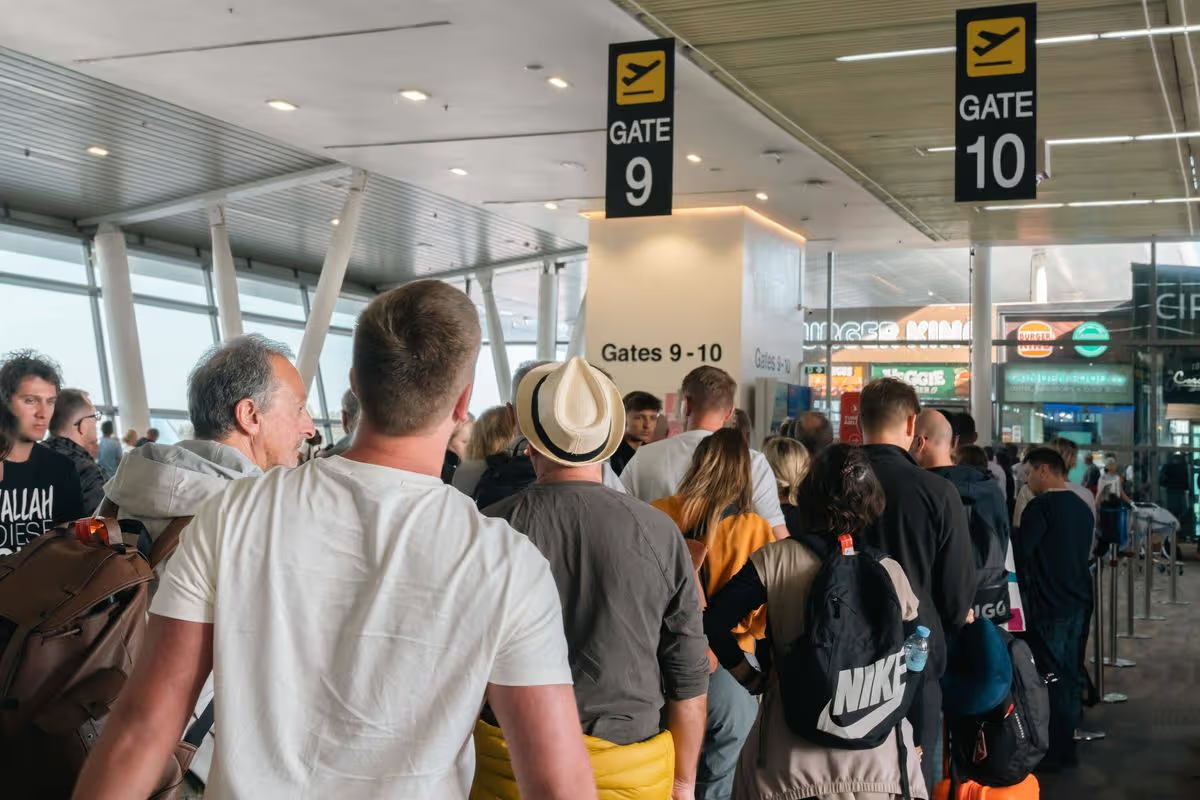
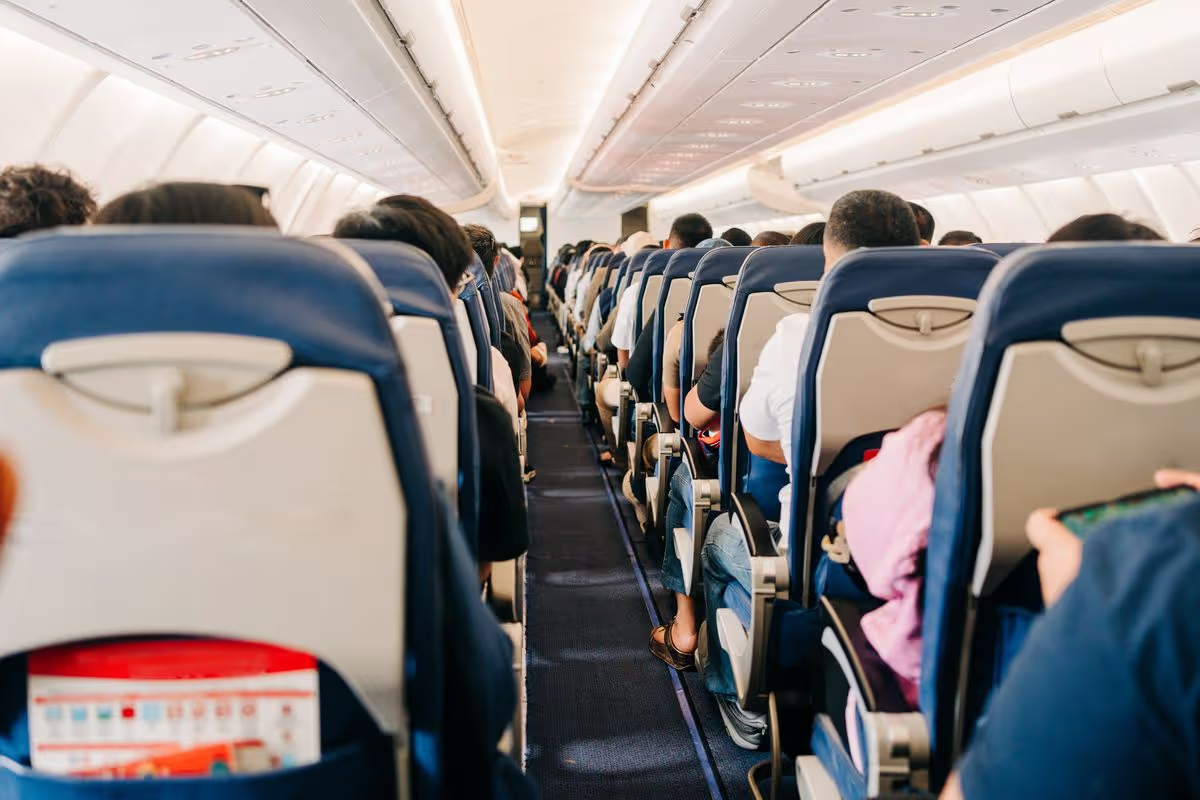
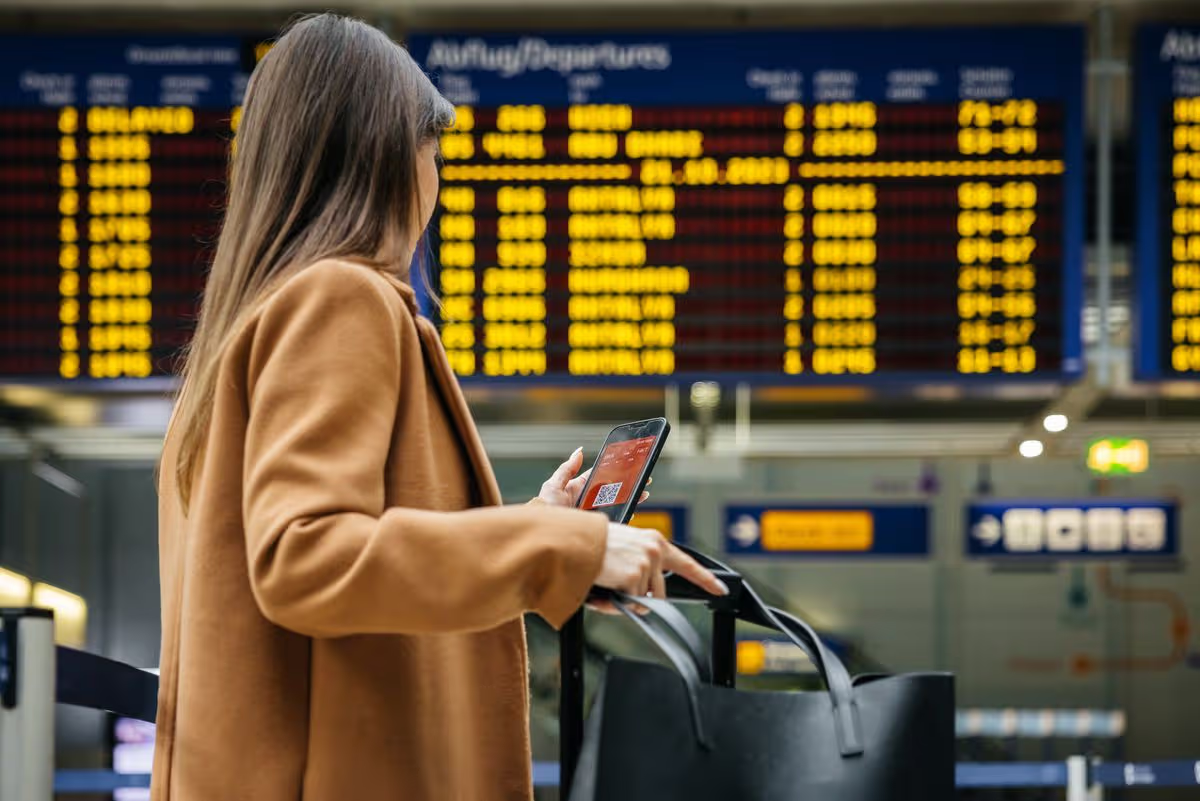
Arrive early and have documents ready to avoid queues, especially if you’re travelling with a big family(Image: Getty)
Nobody wants to face those dreaded airport queues; there’s nothing to ruin the start of a holiday than being stuck in a long queue, stressing about whether you’ll make your flight, surrounded by equally frustrated travellers.
From April 10, new biometric checks will become mandatory for all non-EU travellers entering the Schengen Area which will include Brits. Traditional passport stamping is now replaced by fingerprint scans and facial recognition. While it is meant to be a quick process, major international hubs are already reporting long queues of up to four hours for the service, especially at airports that host multiple airlines.
With that in mind, Jane Bolton, a travel expert at Erna Low, has shared four simple but essential tips to help passengers avoid unnecessary delays and start their trip without delays.
Arrive earlier than you think you need to
“Airport wait times can vary, but with the new EES checks, queues of up to four hours are expected at peak times,” Jane explains. “In the past, travellers were advised to arrive two hours before a domestic flight and three hours for an international flight. Now, it’s worth allowing more time than usual.”
To be extra prepared, Jane would recommend arriving three to four hours before the flight to account for additional biometric checks slowing down border processing – especially if you’re flying during busier holiday periods.
Consider fast-track options where possible
But spending so much time in airports isn’t exactly everyone’s idea of fun. In that case, fast-track security could be worth the investment. “As long queues are expected, passengers should opt for alternative time-saving methods where possible,” Jane says. “Purchasing fast-track tickets for security is a great method for reducing the time needed prior to a flight.” Typically costing between £3 and £12, these passes can help you bypass long security lines, a price she says is “a relatively small investment for peace of mind.”
Plan carefully if you’re travelling with family
Under the new system, families might even face additional challenges – children under 12 are exempt from fingerprinting and facial recognition, but they must be linked to a registered adult. “For families or large parties travelling, allowing extra time at the airport is essential,” Jane explains. “This process will take longer than average, so plan ahead and keep all documents ready.”
Double-check your passport before you go
Since Brexit, Jane says, one of the most common mistakes travellers make is assuming their passport is valid everywhere, at any point. “Your passport must have been issued less than 10 years before your travel date and be valid for at least three months after departure,” Jane says. She stresses that, while most would know their passport is expired, some wouldn’t think to check one thing that also matters: the issue date. She explains: “For example, a passport issued in March 2015 and expiring in December 2025 won’t be valid for EU travel after March 2025.” Failing to check this could mean being turned away at the airport before your trip even begins.
YouTube travel expert Mark Wolters, who has travelled to more than 80 countries, says there are two areas of a hotel guests should avoid staying in – and they may even consider asking to move rooms
Robin Cottle Assistant Editor Trendswatch
19:49, 08 Apr 2026
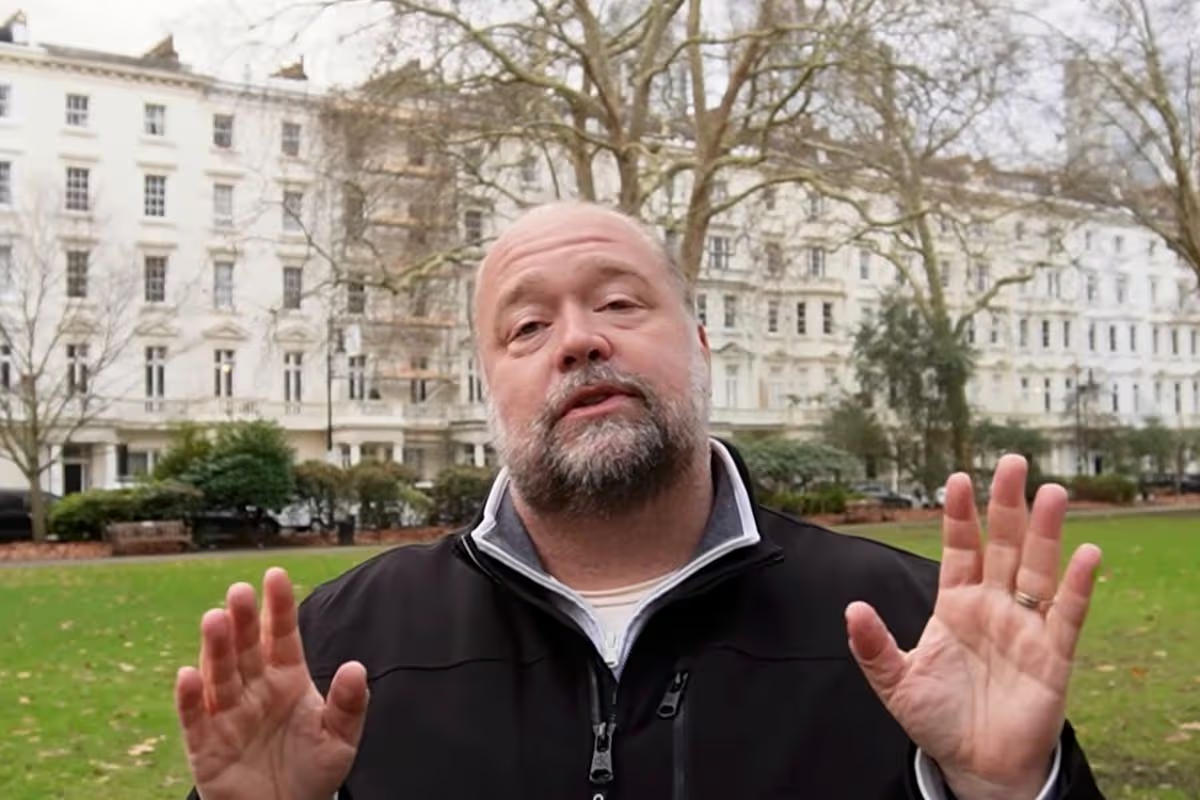
Mark Wolters offered his tips for which areas of hotels to avoid(Image: WoltersWorld/YouTube)
A travel expert has claimed there are two parts of a hotel where guests should never stay.
Globe-trotting YouTuber Mark Wolters, who runs the channel Wolters World, suggested people should even look to move if they are situated near one of the areas in question.
Mark has visited more than 80 countries so knows a thing or two about staying in hotels, what to expect and what should not be considered acceptable.
While it is generally considered poor etiquette to complain in the UK, he uploaded a video detailing the specific situations where people should be asking to change room in their hotel.
Two of those scenarios are when the room is located near the lifts (or even an ice machine) or by the stairwell.
Speaking on his channel, which has 1.17 million subscribers, he said: “You might want to think about your sleep. If you’re by the elevators (lifts) or ice machine, those are heavy traffic, heavy noise areas. No matter what time people are coming home, they’re using the elevators, right. You’re going to have the drunk people coming back late, the people coming back from the wedding, or the little kids going to the pool in the morning, you’re going to have a lot of movement there.
“So if you want to get sleep, say, ‘can I move my room away from the ice machine or away from the elevator because that might make it a little bit harder to sleep.”
He went on to recommend asking the front desk to move if you’re hotel room is by the stairwell, which he branded a “weird access point”.
Mark said: “Another thing to think about is if you’re by the stairwell. The stairwell is an odd access point. It might have little weird noises, you might want to consider that.”
The well-travelled YouTuber suggested there are a number of other occasions which might persuade tourists to ask their hotel for a switch in rooms.
One of these could be if you feel generally unsafe. This could be an issue with the windows or the door or even your neighbours in the hotel.
Mark explained: “You do not need to explain to them why this makes you feel uncomfortable. It’s about your safety. Something of the things to look out for – the door doesn’t feel quite secure, check the locks, look at the peephole.”
Another big issue could be if the room is not clean. This could include the bed not being made or something unsavoury being left in the toilet.
He added: “We’ve seen lipstick on the mirror in the bathroom. We were like: ‘This obviously hasn’t been cleaned very well.’ These kind of things are important to bring up because sometimes rooms are missed by the cleaning crew or people left a little bit later, these things do happen.
“Maybe you’re ok with the cleaning crew coming up but do you want to wait two or three hours? That’s why it might be better to ask for a new room instead of waiting for them to clean those rooms because they don’t clean those rooms in five minutes.
“When I’m talking about cleanliness I’m also talking about the smell.”
With two bank holidays on the horizon, many people are keen to jet off on a cheap long weekend getaway and a travel expert has shared the four best value destinations he’d “genuinely” book himself
Jess Flaherty Senior News Reporter
09:36, 08 Apr 2026
A holiday expert has listed four destinations he’d “genuinely” book himself for a “hot and cheap” May getaway and some spots may come as a surprise (stock image)(Image: Frans Sellies/Getty Images)
A holiday expert has listed four “hot and cheap” destinations well worth booking this May for a spring getaway without the “summer prices”.
With two bank holidays on the horizon, many people are looking to make the most of a break from work by jetting off on a long weekend on the quest for some guaranteed sunshine – never a safe bet here in the UK. With that in mind, holiday expert Rob, known online as Rob On The Beach, listed four places he’d “genuinely” book for himself.
Taking to Instagram, he said: “Four places I’d personally book for May if you want a properly hot holiday without paying summer prices.”
He continued: “May is easily one of the best value months for good weather at a pinch of a price. Plus, the UK’s fully into bank holiday season so you can stretch that annual leave a bit further, too.
“So I’ve looked at the data, the weather and the live pricing to find the four places I’d genuinely book myself.”
4. Malta
Kicking off his list, Rob began with island country Malta, which boasts 300 days of sunshine per year.
The holiday expert said: “In fourth, Malta. This is one people are slowly catching onto now. You’re getting consistent mid-20s heat, loads of sunshine, but it’s still not hit the peak pricing window yet in May.
“And the best part about Malta is it’s not just sit by the pool, either, which you can do, but there’s loads to explore and loads to see on the island.”
He then shared a deal he found from Monday, May 4 until Saturday, May 9, which cost £240 per person for direct flights from London Luton and a stay at the “gorgeous” St Julian’s Levante, Affiliated by Melia hotel.
3. Cyprus
Next, Rob listed Cyprus, another island country, which is located in the eastern Mediterranean Sea. It offers renowned beaches and 320 days of sunshine a year, as well as rich history and culture.
Rob said: “This is your safe bet because in Cyprus in May, there’s proper sunshine every single day and by mid May, you’re well into the high 20s here.
“Also, quick one, because people always ask; yes it is safe in Cyprus right now. The FCDO advice has not changed and everything there is operating as normal. But speaking of things that aren’t normal, just look at this deal.”
Content cannot be displayed without consent
Rob detailed a five night stay at Hylatio Tourist Village in Paphos from Friday, May 15 until Wednesday, May 20, at half board, with direct flights from London Stansted for £280 per person.
He added: “For that level of weather, this early in the year in a premium destination like Cyprus, that’s a cracking price.”
2. Dalaman
In second place, Rob put Dalaman, a municipality and district of Muğla Province, Turkey. Dalaman is famed for its award winning beaches, scenic snorkelling, rich history, views of the legendary Turquoise Coast, as well as its natural beauty complete with nesting loggerhead turtles, and plenty more.
Rob “specifically” recommended Fethiye and said: “Now look, Fethiye is unreal all year round but May is when I personally think it’s at its best.
“You’ve got that perfect balance of temperatures in the mid 20s, proper sunshine all month and all without the peak pricing the peak level of tourists.
“It’s green, it’s scenic, there’s loads to explore, it’s absolutely drop dead gorgeous and you still get that classic Turkey all-inclusive value here, too.”
Rob shared a deal he’d found for a five night all-inclusive stay at the five-star Club Tuana Fethiye with direct flights from London Gatwick from Saturday, May 2 until Thursday, May 7, for £350 per person.
He said: “This is one of the best value holidays you can book in May, full stop.”
1. Albania
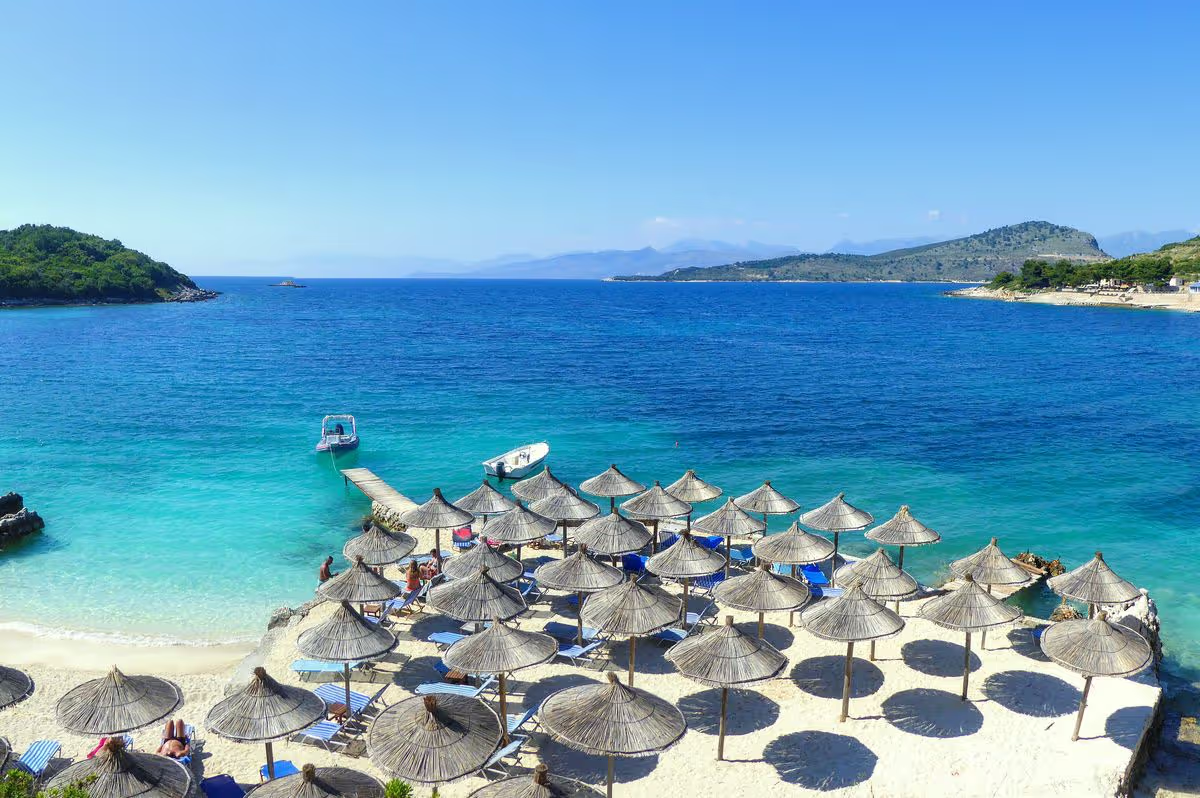
Rob said he’d “gone for something a bit different this time”, putting Albania in first place. The small Balkan country boasts vibrant coastlines and rich history and culture. There’s many castles and archaeological sites, as well as hiking options and peaceful, uncrowded Mediterranean beaches.
The holiday expert explained: “Somehow, Albania is still flying under the radar – because here, you’ve got coastline that looks like Greece but prices that really do not.
“In May, you’re comfortably in mid-20s heat with loads of sun and crucially not a lot of people there.”
Rob shared a deal he found for four nights at the three star Hotel Vola with breakfast included from Saturday, May 9, until Thursday, May 14, and direct flights from London Stansted, priced at £175 per person.
He added: “For a sunny, cheap European beach break that’s also a hidden gem, that’s cheaper than most people’s weekends at home. This is the kind of place to go to now as well because people will cotton on and it will be busy next year.”
House Democrats and a panel of elections experts expressed unwavering confidence in state voting systems and dismissed Trump administration claims of widespread fraud and other vulnerabilities during a special “shadow hearing” in Los Angeles on Tuesday.
They accused President Trump and his Republican allies of pushing sweeping federal reforms — including stricter voter ID laws and new restrictions on voting by mail — that would disenfranchise millions of eligible Americans, especially low-income, rural and elderly voters, as well as voters of color and those with disabilities.
“They are taking us backward, and not to a good place,” said Rep. Nancy Pelosi (D-San Francisco), who helped lead the hearing at the Daniel K. Inouye National Center for the Preservation of Democracy in Little Tokyo.
They also stressed that they and their allies were working hard to prevent such backsliding.
“While Republicans are expecting Democrats to just sit idly by as they attempt to steal yet another election, Democrats are getting out in the community, raising the alarm bells about the GOP’s efforts to rig these elections and fighting back in the courts, in Congress and in our communities,” said Rep. Pete Aguilar (D-Redlands), chair of the Democratic Caucus. “We won’t let Republicans get away with their anti-democratic and un-American schemes.”
Such “shadow hearings” allow Democrats to highlight issues their majority-Republican counterparts won’t schedule for formal hearings in Washington. This week’s discussions — a second is scheduled Thursday in San Francisco — follow others in California in recent months, including on Trump’s immigration raids.
Pelosi, the former House speaker, led the hearing alongside Aguilar and Rep. Joseph Morelle of New York, the ranking Democrat on the House Administration Committee, which has oversight of elections. Joining them were fellow Democratic Reps. Nanette Barragán of San Pedro, Judy Chu of Monterey Park, Gil Cisneros of Covina, Laura Friedman of Glendale, Luz Rivas of North Hollywood, Linda Sánchez of Whittier, Norma Torres of Pomona and Maxine Waters of L.A.
Pelosi noted the setting on the grounds of the Japanese American National Museum, where Japanese Americans were detained before being unconstitutionally stripped of their belongings and taken to internment camps during World War II.
“To be here on a day when the president of the United States has talked about destroying the civilization of a country is so appalling. It’s so appalling, and I don’t think we can ignore comments like that, especially in a setting like this,” Pelosi said.
She also said that securing the nation’s elections against Trump’s threats and getting out the Democratic vote was the surest way of restoring order to U.S. relations abroad — and far more likely than getting Trump’s Cabinet to remove him from office by invoking the 25th Amendment.
“We have to make sure that the mentality that would obliterate a civilization, undermine a democracy by fighting free and fair elections, just cannot prevail,” she said.
The hearings were designed to challenge a narrative Trump has pushed for years — that U.S. elections are badly compromised by widespread fraud, that mail ballots such as those used in California are a particularly large source of abuse, and that noncitizens are voting in large numbers — none of which he has supported with evidence.
Trump tried unsuccessfully to challenge his 2020 loss to Joe Biden using similar arguments. When he returned to the White House, he immediately directed his administration to pursue the claims anew, including under executive orders he issued asserting new and sweeping federal authority over elections, which by law are controlled by the states.
Trump has said his efforts are “common sense” steps average Americans support to secure elections against noncitizens voting and other threats.
Experts who provided testimony at Tuesday’s hearing roundly rejected that argument, saying the measures address problems that don’t existand are more geared toward securing wins for Republicans than ensuring election safety.
Jenny Farrell, executive director of the League of Women Voters of California, said that Americans are “more likely to be struck by lightning” than to commit voter fraud, and that many recent proposals framed around election integrity are really designed to narrow access to voting for certain groups. She also said California’s elections are particularly strong.
“We’re like the Dodgers of elections,” she said.
Darius Kemp, executive director of Common Cause California, said the state’s elections “are safe and secure,” and the Trump administration is threatening democratic participation in novel and alarming ways that his organization is watching carefully.
Justin Levitt, a Loyola Law School professor, said Trump is trying to project power over elections “that he simply does not have,” and if local and state officials, the courts and pro-democracy groups stand their ground, he will fail.
“If we keep calm and carry on, we can make our voices heard loud and clear,” he said.
Hector Villagra, vice president of policy advocacy and community education at MALDEF, or the Mexican American Legal Defense and Educational Fund, said “the evidence could not be more clear — noncitizen voting is exceedingly rare,” and Trump’s proposals would simply “raise the cost of lawful voting” for groups already underrepresented at the polls.
“The question is not whether we can verify eligibility. We already do that,” he said. “The question is whether we will impose new barriers that will prevent eligible citizens from participating at all.”
Sonni Waknin, senior staff attorney at the UCLA Voting Rights Project, said “democracy is under attack” across the nation, and that the photo identification requirement Trump and other Republicans are pushing would disenfranchise a million eligible voters in California alone.
When Cisneros asked about what could be done to prepare for the inevitable claims of fraud from Trump and other Republicans after the midterms, Levitt said that such claims must be called out for what they are.
“We call those lies, because they are lies,” he said.
When Waters asked the experts about the effect of federal immigration agents being deployed to polling places, as some in Trump’s orbit have suggested, Villagra said damage was already being done just from the rumors of such action — whether agents show up or not.
“It’s the threat that’s really what’s powerful here,” he said, as people — especially Latino voters — are already intimidated, and leaders should do more to reassure voters and offer alternatives to showing up to polls, such as voting by mail.
Mark Wolters shared some advice for tourists on how to approach British pubs, listing six unwritten rules that people should be aware of if they ever find themselves visiting the UK
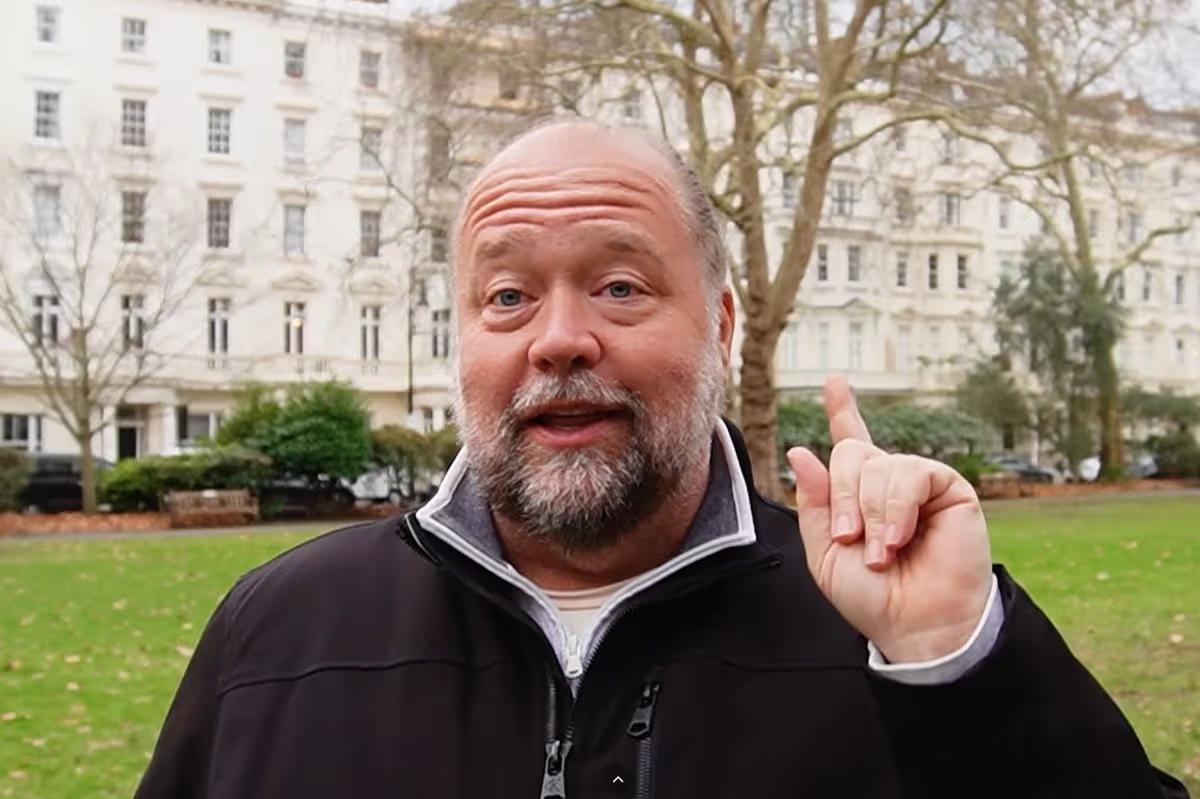
Mark Wolters has more than 80 countries under his belt
(Image: Wolters World/YouTube
)
A world traveller has listed six unwritten rules that tourists should pay attention to if they ever visit a British pub. Proper pub etiquette may feel second nature to Brits, but the unspoken rules of the boozer aren’t universal — and the UK has its own quirks that could potentially catch out overseas visitors.
Mark Wolters is one such visitor who’s spotted this, but with trips to more than 80 countries under his belt, he’s clearly no stranger to navigating the cultural differences that come with travelling.
A familiar face on YouTube, Mark had some advice on how to approach British pubs for his 1.17m subscribers, specifically six tips that tourists should be aware of if they ever visit Blighty.
1. Order at the bar
For his first rule, Mark warned prospective punters watching his video on Wolters World that pub staff are “not coming” to their tables, stressing that they need to go up to the bar to order.
He said: “And whether you’re going to be ordering your pints or you’re going to order your food or you’re getting your snacks and your crisps, you order there. Also, when you go up and order, that’s when you pay.
“It is not one of the things like in the US where you do all your drinking, you do all your eating, then you pay at the end. You’re paying each time you go up there. “
2. Respect the queue
Mark noted that people should “respect the queue” when they come to the UK, but pointed out that there may not be a single discernible queue at the bar. As we all know, people tend to gather at different points.
But Mark said everyone “kind of knows” who was there before them and will ensure they go first.
3. Order in rounds
Mark said: “Now the third unwritten rule of going to the pub is that they order in rounds. So if we’re going with friends, we’re not all going up to the bar to order.
“We will go in rounds. It’s like I’ll go up first, ask everybody what they want, and then I’ll go and I’ll pay the first round. Then the next time up, my friend will go up and take the orders, and they’ll order and get a round for everybody. And everybody needs to pay for a round.”
He went on to warn people not to “skip your round” and “don’t leave early” to avoid getting one, as “people remember that”.
4. Not all pubs sell good pub food
Mark observed that not every pub that sells traditional food actually sells “good” British fare. He noted that you can sometimes get “phenomenal” food such as Scotch eggs and bangers and mash.
But if an establishment sells food and nobody is eating it when you walk in, this should be a “red flag”.
5. Watch out for stairs
Something that he says becomes “more precarious” as your night goes on, Mark claimed that pub toilets will “undoubtedly” be down a “very narrow and steep” set of stairs.
He advised people with accessibility issues to research the pub beforehand, as visitors may be be presented by what he described as “little stairwells”.
6. Don’t linger past closing time
Finally, Mark stressed the importance of not lingering past closing time and how, generally, bars don’t really stay open “super late”, adding that staff like to “wrap things up really quickly.”
He advised people to be “respectful” and do the same for those in the local community by being quiet when you leave.
THE SUN’S £9.50 Hols Agony Aunt, Tracey Kennedy has tried and tested holiday parks across the UK for over 30 years.
Over her decades of staycations, Tracy’s ticked off popular holiday spots from the Isle of Wight, to North Wales, down to Land’s End in Cornwall.
Tracy Kennedy has been taking her family away on budget-friendly staycations for 30 yearsCredit: Tracy Kennedy
It’s fair to say that Tracy knows her stuff when it comes to UK holiday parks – whether it’s how to bag a bargain break, or find the best free and cheap family attractions whilst you’re away.
Over three decades of staying at holiday parks up and down the UK, Tracy has ranked her top five holiday parks based on accommodation, entertainment and location.
Plus she’s sharing all of the hacks she uses to save while she’s away.
We’ve paired each park with the cheapest deal available online, including three-night breaks for two for under £50.
5. Haven Burnham-on-Sea Holiday Village
“This holiday park is in a lovely seaside town in Somerset, and I like it so much that I’ve been back several times.
“My tip for booking a Haven holiday would be to book a Haven Hideaway package.
“These are the cheapest breaks possible, and can cost just £49pp. I paid just £120 for a full week away on a Haven Hideaway.
“However it’s worth noting that Hideaway holidays don’t come with a Play Pass as the standard breaks do, so make sure to check which activities are included at each Haven park, and which you would have to pay extra for”.
Entertainment and activities
“There’s plenty to do here without paying extra for the add-on activities. This site has a lovely arcade, which is cashless apart from the classic 2p machines.
“I wasn’t too keen on it being cashless at first, but once you’ve got your card and have topped it up with as much or little as you want, it’s easy to use.
“As for the evening entertainment, I went last year and it was really quite good. The comedy is especially great.
“With Haven parks, if you make sure to download the app, about 2 weeks before it’ll tell you which activities you can book if you have the Play Passes.
“But you dont need passes for the arcade or evening entertainment, it’s just for swimming and paid activities. They can be nice to have, but you don’t have to get them”.
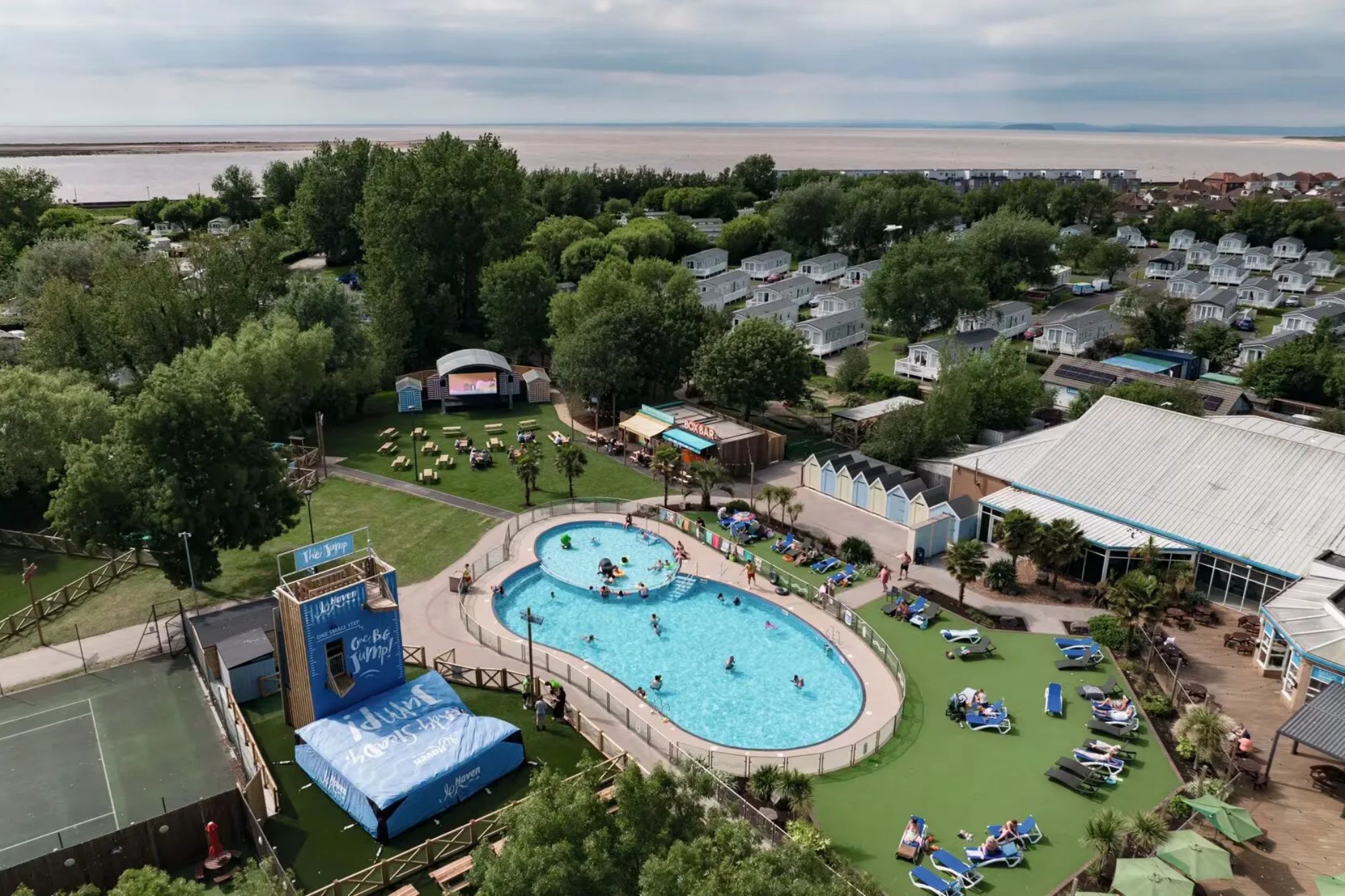
Haven Burnham-on-Sea Holiday Village has an outdoor pool and caravans looking out to seaCredit: HavenKids will love the indoor splash park and water slide at Haven Burnham-on-Sea Holiday VillageCredit: Haven
Accommodation
“I stayed in a saver caravan, which is the lowest grade, but it still has heating and everything you need.
“I always go for the cheapest I can but that is still nice, and the saver option here is great if you’re looking to stay on a budget“.
Local area
“Burnham is a quiet town, so it can be quite a peaceful place to stay. There’s also a lovely beach and lighthouse in walking distance from the park, as well as a cinema. But mainly this is a great base for exploring.
“Brean is about a 10-minute drive away, and there’s loads to do there. Brean Beach is gorgeous, plus there’s a splash park, Brean Theme Park and an animal farm, so there’s loads to do.
“You’ve also got Cheddar Gorge a half-hour drive away. You can of course try loads of cheese, but there’s really fascinating caves and clifftop walks there, too.
“If you’re willing to drive a bit further, about 40 minutes, you can also visit Wells. There’s loads of medieval historic sites there, like Wells Cathedral as well as the Palace and gardens”.
Bag a cheap stay
You can book a four-night stay in a saver caravan with a Haven Hideaways deal from £49, based on two adults sharing. This deal also comes with a low-deposit option from £30.
Haven Burnham-on-Sea is only 10 minutes away from the beautiful Brean DownCredit: GettyTake a day trip from Burnham to Cheddar Gorge, just a 30-minute drive awayCredit: Getty
4. Riverside Holiday Village, Bleadon, Weston-super-Mare
“I went to this holiday park last year for my 50th, and had such a fantastic time. I have lots of memories coming here with parents, and now I get to bring my kids!
“One of the best things about this park is where it’s located. It’s less than 10 minutes from Weston-super-Mare‘s seafront”.
Entertainment and activities
“This is quite a small site, but it does have a good arcade, restaurant, and entertainment performances.
“There’s no costume characters for the kids, but if you visit in peak season, there’s a pretty packed activity schedule that keeps them busy.
“It’s a very relaxing site if you prefer a peaceful holiday. There’s a beautiful lake to walk around, and you can pop out into Weston whenever you’d like”.
Accommodation
“We stayed in a large Gold caravan, which doesn’t work out to be too expensive once you split the cost between a group of people.
“We paid £650 total, and the Gold caravans can sleep up to six people, so that works out at around £109pp – which isn’t bad at all for a full seven days during the summer holidays.
“We had wrap-around decking which is lovely to sit on and enjoy your coffee in the morning or a drink in the evening.
“I recommend going as a large group and splitting costs so you can try out the nicer accommodation. This is one of the parks where I’d say it’s worth it”.
Riverside Holiday Village is a peaceful escape in the countryside town of BleadonCredit: TripAdvisorIt’s only an 11-minute drive from Bleadon into Weston Super Mare, where there’s an exciting pierCredit: Alamy
Local area
“The surrounding area, Bleadon, is very quiet. There’s just a couple of cosy pubs.
“But if you want a proper day out, then you should drive or catch the bus into Weston-super-Mare itself.
“There’s loads of things to do in Weston. If you want to stick to free things to do, Weston Museum is a great one and has activities for kids.
“Visiting the Grand Pier is a full day out itself – there is a small charge of £2, which is the same for both adults and kids.
“There’s lots of cost-friendly places to eat on the pier, like chip shops, a Costa and a Tiffany’s.
“My favourite though is Revo Kitchen. It’s inside the old Sea Life centre and it has 360-degree views of the sea. It’s dog-friendly, and does amazing, family-friendly food.
“It’s easy to spend the whole day at just the pier. There’s a ball pit, arcade games, fun house, ghost train – loads to do.
“Obviously it can be costly, but there are great-value wristbands available for kids to go on unlimited rides.”
“The Little Kids wristband, with unlimited rides suitable for younger children, costs £15 and lasts all day. The Big Kids wristband costs £20.
“There is also an Ultimate wristband available for £30, which includes unlimited rounds of golf and go-kart races.
“You don’t have to pay the entry fee cost of £2 for those with wristbands. You can buy the wristbands for the Grand Pier ahead of time online“.
Bag a cheap stay
You can book a three-night stay at Riverside Holiday Village in a Purn Gold WF caravan from £169, based on two adults sharing. This deal also offers a low deposit option of £25.
You can book a four-night stay in a saver caravan at Martin Mere Holiday Village from £49Credit: TripAdvisorMartin Mere Holiday Village is a 10-minute drive into the popular seaside resort of BlackpoolCredit: Alamy
3. Martin Mere Holiday Village, Blackpool
“This park is around 10 minutes’ drive into Blackpool, and there is so much to do there for families.
“They have also just had a major upgrade, with a brand-new restaurant, a refreshed Show Bar, and an expanded arcade added”.
Entertainment and activities
“It’s all about the entertainment with Haven. And the best part is that most of it is free.
“There’s an outdoor pool and lazy river, and you can book inflatables for your little ones to use.
“They’ve got plenty of fun things for families with kids like a climbing wall and a giant football dartboard.
“You’ve also got Linked Bingo at 5:15pm every evening, which sometimes has massive cash prizes.
“They’re also adding four new kids shows ready for summer this year”.
Accommodation
“The caravans are spacious, clean and have everything you need. Even the saver caravans are tremendous value for what you get.
“What I like about the accommodation here is that most caravans are only a short walk to the entertainment, which is great if you stay up late”.
You could visit Blackpool Pleasure Beach, with its brand-new ride Aviktas set to open this MayCredit: SuppliedHaven Martin Mere has an outdoor splash park that can be enjoyed in the warmer monthsCredit: Refer to source
Local area
“There is absolutely loads to do in Blackpool. You can even see the tower flashing its lights at night from the park.
“Blackpool can be as cheap or expensive as you like, but I’ve been going for years and found some good ways to save money.
“One of the best-value places to go is Coral Island Arcade, which has a restaurant where kids eat free.
“Once you’re at Coral Island, make sure to pick up any free leaflets that are there. They often have vouchers inside for discounted attractions.
“We picked one up and got a free go on the camel derby – so always look out for leaflets before you book something!
“Some of my other favourite things to do are going up into the tower, where there’s an arcade, the dungeons and a circus inside the tower itself.
“Then of course you’ve got Pleasure Beach – but if you know you want to go, book ahead of time online.
“That way you can pay £30 for entry rather than £60 on the day.
“If you’re wanting to save money on ticking off the paid attractions, there’s a new card where you can do them all for a fixed price called The Blackpool Pass.”
“The Blackpool Pass starts from £35 and includes unlimited entry to eight Blackpool attractions: Madame Tussauds,SEA LIFE,Blackpool Tower Ballroom,Blackpool Tower Eye,Blackpool Tower Dungeon,Blackpool Tower Circus,Gruffalo and Friends Clubhouse and Peter Rabbit: Explore and Play.
“You can expect to save up to 70 per cent on attractions compared to booking individually.”
Bag a cheap stay
You can book a four-night stay in a saver caravan with a Haven Hideaways deal from £49, based on two adults sharing.
This deal also comes with a low-deposit option of £30.
A Platinum caravan at Lyons Robin Hood is a spacious option that comes with a balconyCredit: TripAdvisor
2. Lyons Robin Hood, Rhyl, North Wales
“This site is really up-to-date. It’s recently undergone a £1.5m makeover, with all the new developments set to be fully done in May 2026, ready for your summer holiday!
“Some of my favourite things about this park are the enthusiastic entertainment staff, as well as the food – I always really look forward to the food when holidaying here!”
Entertainment and activities
“The pool here is so good that my youngest went swimming every single day. It has a brand-new splash zone, three super slides and even a spa for the adults.
“It’s just had activities like go-karting added to the list of things to do, and there’s new sports courts and trampolines.
“Ilast went at Halloween and it was just absolutely fantastic, but the entertainment is great year-round too.
“The costume characters come out to meet the kids – all the info on who is coming out when is listed on the wall, so you can meet the characters, comedians and singers.”
Accommodation
“The standard caravans here are slightly different to other holiday parks, for example like at a Haven resort.
“Their highest-ranking option is a platinum. We’ve stayed in platinum and it’s lovely. We had a little bit of a balcony that we had our coffee and drinks on.
“I’ve stayed in three levels of accommodation here, and I liked all of them. Each caravan was clean and spacious, with multiple big bedrooms, so you can’t go wrong here no matter what your budget is.
“I usually like to bring my own food to save money, however the food here is just lovely and definitely worth the money!
“We had cod and chips (£6.95) from the on-site chip shop here and really enjoyed it – in fact, we had it twice because it was that good! Food here is also really good value for money”.
Tracy recommends a sightseeing bus trip from Rhyl to LlandudnoCredit: AlamyTracy Kennedy continues to return to Lyons Robin Hood as one of her top-rated parksCredit: Supplied
Local area
“There’s a beautiful beach just across the road from the park, just remember to bring some snacks, as there’s no cafe or shop to buy food.
“You might see seals here – we saw some on my last visit and I was so excited.
“You can see them bobbing around in the sea, it’s nice to see them out in the open compared to an aquarium.
“Rhyl is just 5 minutes away, and there’s loads to do there. Shops, a massive marine lake, and my favourite – a little train that takes you around.
“Lots of people go crabbing, too…we caught some massive ones!
“A trip into Rhyl could be a free day out if you planned for it. Pack a picnic, wander through its streets, plus there’s even a free attraction: Rhyl Museum and Arts Centre.
“The only thing you would have to pay extra for if you wanted to would be the train, which costs £4 per adult and £3 per child.”
Bag a cheap stay
You can book a three-night stay at Lyons Robin Hood in a Bronze three-bedroom caravan from £111.30, based on two adults sharing.
Lyons Robin Hood is also available at Sun Hols from £9.50, where a break for four people can cost as little as £38.
Lower Hyde has entertainment for families ranging from pool time to discos to magic actsCredit: Lower Hyde Holiday ParkLower Hyde in the Isle of Wight came out on top for Tracy’s pick of the best UK holiday parksCredit: TripAdvisor
1. Lower Hyde, Isle of Wight
“The best holiday park I’ve ever been to is Lower Hyde on the Isle of Wight – that is my firm favourite.
“I’ve returned several times because my family and I really liked it. I like everything about the park.
“There’s loads to do on site itself, it’s actually one of the only sites where we didn’t mind spending the entire day there.
“There’s plenty of nature trails around the park, and there’s also an adventure park on site.
“Lower Hyde also have a restaurant with really good pub-style food called The Barnhouse,plus they also have little food huts such as the Thunderbird Chicken shack and an ice cream parlour.
“They’ve just hada new outdoor bar open up, too.”
Entertainment and activities
“The entertainment teams are top-quality at Lower Hyde and plenty is free compared to other parks.
“I like the archery in the daytime, plus there’s a great pool to make use of, too.
“I watched some brilliant entertainment there last year.
“In the evenings, the entertainment starts off with discos and character meet and greets for the younger kids, with their own show.
“Then there’s some great bingo, followed by an adult game show.
“Later in the evening there’s more acts from visiting acts such as comedians or magicians, or a performance from the entertainment team.
“There’s then a disco until midnight, so you can stay there all night, if you fancy it.”
Accommodation
“I’ve stayed in both chalets and caravans, and the caravans are top-notch, very cosy and warm.
“The accommodation is in a really nice quiet area. There is a little bit of a hill walking down, so do let the site know if that’s an issue if you plan to visit”.
Accommodation in Lower Hyde is set in pretty woodland close to the beachCredit: Refer to sourceYou could visit the old village of Shanklin and stop by the Old Thatch Teashop for afternoon teaCredit: Getty
Local area
“The must-visit spot nearby is Shanklin. There’s lots of little artisan shops, and it’s not a far walk, about a 10-minute walk into the centre.
“If you walk further, it takes you into Shanklin Old Village. There’s a lovely little restaurant there called The Crab, with beautiful seafood.
“There is also the famous old thatched cottage from all the postcards. Not only is it lovely to look at, but it does afternoon tea inside (from £7.95).
“There’s also Shanklin Chine, a wooded coastal ravine that is the oldest attraction on the island.
“If you wanted to visit, then you can loop right down to the beach afterwards and make your way back up – that’s the perfect day out.
“Some of my favourite things to do in the area are keep an eye out for red squirrels on nature walks, and go stargazing at night – the Isle of Wight has clear skies where you can see the stars”.
Bag a cheap stay
You can book a three-night stay at Parkdean Lower Hyde in a Bronze three-bedroom caravan from £99, based on two adults sharing.
Parkdean Lower Hyde is also available at Sun Hols from £9.50, where a break for four people can cost as little as £38.
How Tracy saves extra on her holidays
As ouur Hols From £9.50 Agony Aunt, Tracy Kennedy has several tips and tricks up her sleeve when it comes to saving money on your staycations.
Here is exactly what Tracy does to prepare ahead of time and save on her holidays, as well as her top tips for saving whilst you’re away.
She told us: “One of the most cost effective things you can do is cook your own meals.
“I’d make a note of some easy, cost-effective meals that are quick to make so you can get it done and get out and enjoy your holiday.
“I like to pack an essentials box of non-perishable food bits with me, like packets of rice, pasta, and tinned food – just make sure you don’t forget to bring a tin opener, too.
“I also bring a small amount of washing up liquid and cleaning products in little travel bottles so we don’t have to buy full-sized ones. This really helps with the shopping, especially if you’re on a budget.
“Then when you do go shopping, all you have to do is buy the fresh stuff like bread, milk and butter.
“I like to slowly buy bits to add to my box in the months before my holiday, as it spreads the cost out and saves you spending too much in the expensive on-site supermarkets when you arrive.
Tracy and her daughter Chloe enjoy packing up a picnic and visiting local historic attractionsCredit: Tracy Kennedy
“Once you’re prepared with food and cleaning supplies, it’s time to start thinking ahead on how to save on attractions.
“Before I go anywhere, I make sure to Google everything there is to do nearby. Especially for days out. See if there are any two for one ticket offers at local attractions, or even places that are free to visit.
“Especially during holidays like Easter, as nearby attractions will often have free events for kids like Easter egg hunts.
“When I visited Prestatyn in North Wales, I did my research ahead of time and found free pottery classes for kids, so we spent an afternoon doing that.
“Also check the National Trust website as well as English Heritage, because sometimes they offer free days out, too. Also check Sun Superdays and Sun Club offers, too!
“If you’re staying at a seaside resort, you can easily spend an entire day out on the coast for free. Check which dates you are there have good weather, and plan to pack a picnic, walk along the promenade, go for a swim.
“Sometimes there will be free children’s Punch and Judy shows, or local festivals – always Google the area and search on local Facebook groups in case there are events whilst you’re there.
“If you’re going as a couple or friends, it can be nice to explore local towns with cheap public transport.
My friend and I visited Lyons Robin Hood last year, and planned to go to Llandudno.
“We bought a £6.50 day saver ticket, jumped on a bus with Llandudno as the final stop and sat on the top deck at the front, and the views we had were absolutely amazing.”
Visit Newquay in Cornwall for a free day out of beautiful beaches and scenic filming locationsCredit: Alamy
“You can get family saver tickets too if there are more of you, then you can go out for the day, get a great view of the local towns and all you have to buy is the bus ticket. It’s a nice, cheap day out for all of the family.
“Similarly, I planned a cheap day out at the coast a few years ago in Newquay, Cornwall.
“We visited all the local beaches, walked to Lands End, and I planned a walk past the hotel where the Roald Dahl film The Witches was made.
“We also drove out to Port Isaac, and walked around where Doc Martin was filmed. All you have to do in these places is pay for is parking and bring your own food.
Then you can just walk around and see all of these really cool filming locations, and that costs you nothing!
“Definitely research the area before you go to see if any movies or TV shows were filmed there”.
Read more of our Hols From £9.50 Agony Aunt’s holiday park tips
Tracy Kennedy is our Hols from £9.50 Agony Aunt, and has plenty more tips and advice when it comes to UK holiday parks…
A backpacker’s viral TikTok reveals four items she deeply regretted not packing on a six-month trip – and why travellers keep making the same mistake.
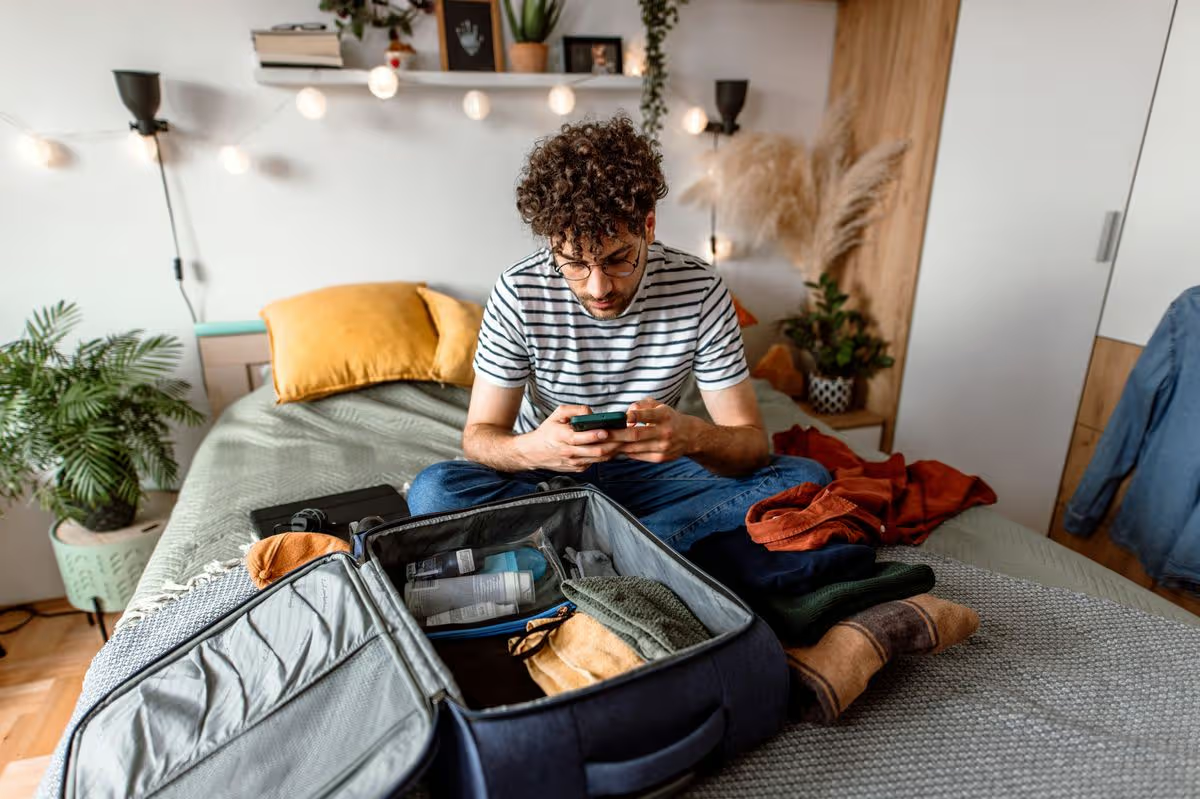
It’s easy to forget things when packing for a trip abroad(Image: Getty Images)
A holidaymaker’s worst nightmare – aside from a cancelled flight – is realising they’ve forgotten to pack something important. One backpacker has gone viral on TikTok after revealing four items she deeply regretted not taking on a six-month trip across Asia.
Dill, an adventurer with more than 11,000 followers and 1.5 million likes, has spent months travelling between countries. But she admitted her packing mistakes in a recent video that has racked up thousands of views and sparked plenty of discussion.
Packing light has become a major trend among travellers, especially backpackers. According to a 2023 survey by Statista, around 40 per cent of holidaymakers aim to travel with carry-on luggage only to save money and avoid hassle.
That often means tough choices about what to bring, and what to leave behind. Here are four items she says she wishes she’d packed, after they caused repeated frustration during her travels.
Jean shorts
Obviously this one depends on the type of holiday you’re packing for. After all, there’s not a chance jean shorts would be of much use in places with colder climates like Iceland and Switzerland.
Nevertheless, Dill admitted one of her biggest regrets was not taking her favourite pair. She wished she had them “two or three times a week”.
Clothing comfort plays a huge role in travel satisfaction, with research from Condé Nast Traveler suggesting packing versatile clothing reduces travel stress. In warmer climates, staple items like shorts can be worn repeatedly, making them more valuable than expected.
Headphones
Another item Dill missed utilising during her Asian adventure was a reliable pair of wired earphones. After relying on Bluetooth and buying a low-quality replacement abroad, she struggled with poor sound and audio issues.
Tech experts at CNET say wired headphones are often more reliable for travel, particularly when it comes to battery-free use and consistent audio quality. This can also be crucial during long journeys or remote trips where charging options are limited.
Content cannot be displayed without consent
Journal
Dill also regretted bringing a journal that was too small. She said limited space meant she couldn’t properly document her experiences, leaving pages feeling incomplete.
Travel psychology research shows that journaling can enhance memory and emotional processing during trips, helping people retain experiences more vividly. A larger journal allows for more detailed reflections and creativity.
iPad
Last but not least, it appears an iPad was one of Dill’s biggest missed opportunities during her holidays. Perfect for those who enjoy unwinding with shows or videos on-the-go, she says it’s worth bringing if you own one already.
Streaming habits remain a key part of downtime, with Ofcom reporting that over 70% of UK adults regularly watch streaming content. Having a device like an iPad can make long flights and quiet evenings far more enjoyable.
Choosing the right seat on the plane can determine a lot for your overall flight experience, and a travel expert has revealed exactly why you should avoid booking 11A
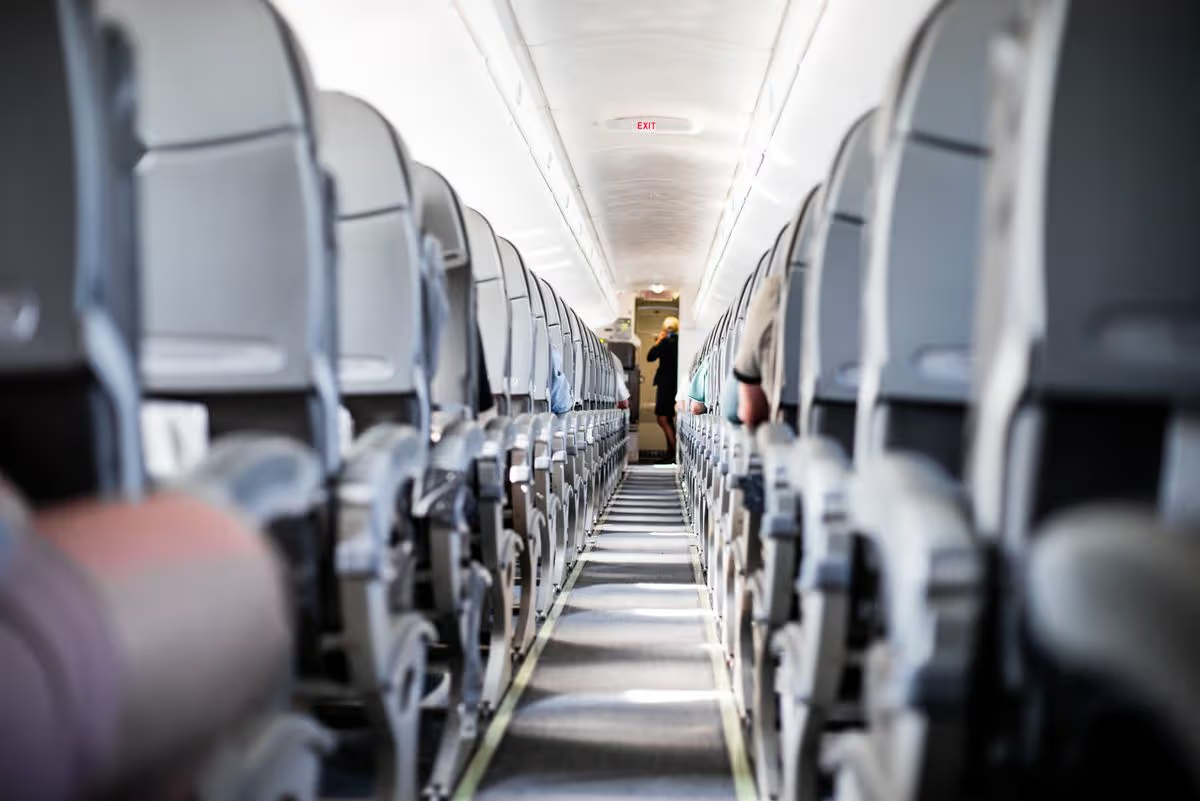
You might want to think carefully about choosing your seat on the plane(Image: Getty Images/Stock Image)
We all have a preferred window or aisle seat when flying, but one travel expert has revealed the exact seat you should always avoid.
Choosing the right seat on a plane can certainly come with its bonuses. Whether that’s more legroom, closer to the bathrooms, being the first row to be served refreshments, or a quieter spot near the back, away from babies. Yet some seats can be a disadvantage.
Window seats are popular among travellers, particularly for those wanting to enjoy the view during take-off or landing, for a little more privacy, or to take a little snooze against the cabin. One favoured window seat on planes has been 11A, due to its positioning near or over the wing, which is thought to offer less disruption from turbulence.
While it may sound appealing, 11A might not be as relaxing as it sounds. Andrea Platania, operations manager at airport transfer platform Transfeero, said that this specific seat often leaves passengers disappointed.
“Seat 11A might sound ideal because it’s by the window, but it can quickly become frustrating, especially on anything longer than a short hop,” the travel expert said. “You’re quite far from the toilets, which isn’t ideal, and getting in and out of that seat can be awkward.”
Andrea also explained that this seat can prove tricky for those who want to move around and stretch during the flight. “If you’re in 11A, you’re relying on the people next to you to move every time you want to get up. That might be fine once or twice, but over a longer journey it becomes inconvenient very quickly.”
It’s a seat that can also feel a little cut off from the rest of the cabin. “You’re not close to the aisle, so you don’t have that easy access, and you’re not in a premium position either. It ends up being a seat that looks better when you book it than it feels when you sit in it,” he outlined.
But that’s not the only seat you might want to think twice about booking. The expert said that seats 11A and 11F are among the “least rewarding seats” on a flight.
“Seats like 11A and 11F are often overlooked when people are booking, but they’re right in that middle section of the aircraft where you lose a lot of the small conveniences. They don’t seem bad on paper, but in practice, they’re some of the least rewarding seats to be in, Andrea said.
Yet one of the biggest disadvantages of these seats is during food and drink service. “On most short and mid-haul flights, cabin crew will begin service from both the front and the back of the plane, then work their way towards the centre. If you’re sitting in rows like 11, you’re effectively last in line from both directions.”
It can become even more of a drawback during busy flights. He said: “Passengers in seats like 11A and 11F are far more likely to find that popular snacks, meals, or even drinks have already run out by the time the trolley reaches them. It’s something people don’t think about when booking, but it becomes very obvious once you’re in the air.”
If that wasn’t enough to deter you from seats 11A and 11F, Andrea noted that they are inconveniently positioned on board. “You’re not particularly close to the toilets, and you’re not near the exits either, so you don’t get the benefit of convenience in either direction.
“You’re just in that middle zone where everything takes a bit longer.” So next time you book your plane seat, have a think about where you’d rather sit, whether that’s to ensure you’re one of the first to be served your meal or somewhere to ensure little disruption during your flight.
Do you have a travel story to share? Email webtravel@reachplc.com
As you begin to book seats on flights for the trips ahead of you this summer, there’s something you may want to consider when it comes to the most fuss-free flight
If you end up with one of these seats you might want to reconsider (Image: Getty Images)
Ahead of your big holidays this year you may be starting to look at your flights, or maybe you’re checking in and choosing your seats last minute; either way, you might want to hear this.
Most planes have a handful of seats that tend be located in the same place. Some with extra leg room, others with less, some in between windows, and some even on their own. Those boarding these flights and helping to keep everything streamlined know no more about those inside of those planes than anyone else.
That’s why it would be smart to consider this key piece of seat advice from Andrea Platania, operations manager at the airport transfer platform Transfeero. According to the firm’s onboard knowledge, there are a handful of seats that passengers continuously regret going for, and it may not be the ones that have even crossed your mind.
Seat 30F is a clear seat to avoid booking on a standard aircraft, along with 30E, as these tend to be located close to the toilets. In turn, the area tends to see a lot more disruption as people queue in the aisle or pass the seat to go in and out of the toilet.
He explained: “It’s not just about proximity, it’s about the constant movement around you.” He further claimed that these areas can quickly become gathering points during flights.
The expert shared: “The toilet doors opening and closing, people chatting as they wait, and general foot traffic all add up. If you’re hoping for a quiet, relaxed journey, these seats make that much harder.”
While these are notoriously standout bad seats, the specifics don’t quite stop there, especially in the 30 zone. Typically, seats 30A and 30F can’t be reclined as much as others.
This is worth noting for those particularly long journeys of yours, such as longer-haul flights. Andra suggested: “If you’re on a flight where you’re hoping to rest or even just sit comfortably, not being able to recline makes a big difference.” You end up feeling much more tired by the time you land.”
Adding to the already growing list of reasons as to why you might want to avoid these seats is time. If you’re a quick traveller, you have a short transfer time, you’ve got another flight to catch, or you just like to be efficient, you will not be cutting time by sitting in these seats.
These seats typically are some of the very last to leave the aircraft, according to the expert. Passengers in these rows often are left waiting longer as they have to allow time for almost everyone to disembark.
“It might not sound like a big deal, but when you’re eager to get off or have a connection to catch, it can feel like a long delay,” Andra said.
WASHINGTON — President Trump is threatening to deploy ground troops to seize critical oil infrastructure on Iran’s Kharg Island, a military gambit that experts say would risk American lives and could still fail to end the war.
If Trump wants to hobble Iran’s oil industry for leverage in negotiations, a better option might be setting up a blockade at sea against ships that have filled up at Kharg Island’s oil terminals, the experts said.
The island — located on the other side of the Persian Gulf from U.S. bases in Kuwait and Saudi Arabia — is the beating heart of Iran’s oil industry, through which 90% of its exports pass. It is important because Iran’s coastline is mostly too shallow for tanker ships to dock.
“Putting people on the ground might be the most psychologically compelling way of striking a blow at Iran,” said Michael Eisenstadt, a former U.S. military analyst who now directs the Military and Security Studies Program at the Washington Institute for Near East Policy.
“On the other hand, you’re putting your own troops at jeopardy,” said Eisenstadt, a retired Army reserve officer who served in Iraq. “It’s not far from the mainland. So they can potentially rain a lot of destruction on the island, if they’re willing to inflict damage on their own infrastructure.”
Seizing Kharg Island could escalate the conflict, said Danny Citrinowicz, an Iran expert at Israel’s Institute for National Security Studies.
He said Iran and its proxies — including Yemen’s Houthi rebels — could intensify their retaliation, including by laying mines in the Strait of Hormuz or striking targets with drones across the Arabian Peninsula, from the Persian Gulf to the Red Sea.
Commodities researchers and investment banks warn major retaliation could have lasting implications for energy prices and the global economy.
“It will be hard to take. It will be hard to hold,” Citrinowicz said of Kharg Island. “And it might damage the economy, but not in a way that will force the Iranians to capitulate.”
Trump says ‘maybe we take Kharg Island’
Trump is under growing pressure to end the monthlong conflict with Iran, which has attacked U.S. bases and allies in the region.
Iran also has largely closed the Strait of Hormuz, a narrow chokepoint through which 20% of the world’s oil normally flows, causing fuel prices to soar and other economic tumult.
Trump said in a social media post Monday that “great progress is being made” in talks with Iran to end military operations. But he said that if a deal is not reached “shortly” and the strait is not immediately reopened, the U.S. would obliterate power plants, oil wells, Kharg Island and possibly even desalination plants.
Trump has raised the idea of American forces seizing Kharg Island.
“Maybe we take Kharg Island, maybe we don’t. We have a lot of options,” Trump told the Financial Times. “It would also mean we had to be there (on Kharg Island) for a while.”
Asked about Iranian defenses there, he said: “I don’t think they have any defense. We could take it very easily.”
Secretary of State Marco Rubio said Friday that ground troops would not be needed to achieve the Trump administration’s goals. He did not repeat that assertion Monday after being asked about plans for U.S. ground troops, saying “the president has several options at his disposal” but diplomacy is Trump’s preference.
“Now, they are making threats about controlling the Hormuz Strait in perpetuity, creating a tolling system and the like,” Rubio told ABC’s “Good Morning America.” “That’s not going to be allowed to happen. And the president has a number of options available to him, if he so chooses, to prevent that from happening.”
U.S. has hit targets on the island crucial to Iran
The U.S. has already struck various targets on the island, including air defenses, a radar site, the airport and a hovercraft base, according to satellite analysis by the Institute for the Study of War and American Enterprise Institute’s Critical Threats Project.
Petras Katinas, an energy researcher at the Royal United Services Institute, said disrupting Kharg Island would not completely halt oil exports as Iran has other small ports. But it would reduce the oil revenue flowing to Iran’s government, “forcing flows through a much smaller, costlier and less efficient export system,” he said.
However, Tehran has too much at stake to surrender over a single asset, no matter how economically significant, said Citrinowicz, the Iran expert at Israel’s Institute for National Security Studies.
While occupying Kharg might offer Washington some leverage in any negotiations, he said the notion that control of the island could be traded for Iran’s stockpile of enriched uranium was far-fetched.
“It’s in no way a decisive blow,” Citrinowicz said.
U.S. troops face risk from Iran’s mainland if they tried to seize Kharg Island
A U.S. Navy ship carrying about 2,500 Marines recently arrived in the Middle East, while at least 1,000 troops from the 82nd Airborne Division are expected soon. Another 2,500 Marines are being deployed from California. The Trump administration has not said what all those troops will be doing, but the 82nd Airborne is trained to parachute into hostile or contested territory to secure key territory and airfields.
One of the reasons American troops would be vulnerable on Kharg Island is its close proximity — about 33 kilometers (21 miles) — to the Iranian mainland, from which missiles, drones and artillery could be fired. Despite continued U.S. and Israeli strikes, the Islamic Republic is still attacking targets across the region, including a Saudi air base hundreds of miles away where more than two dozen American troops were injured last week.
Even with American ships and planes providing support, there would still be a relatively short window of time to shoot down every drone or missile launched from the mainland at the island, Eisenstadt said.
“The coast tends to be mountainous, so the drones can come in through mountain passes where it’s hard for our radar to pick up,” he said. “And we don’t have the warning time.”
Eisenstadt says a sea blockade against ships carrying Iranian oil would be a safer strategy and achieve the same goal of controlling most of Iran’s oil industry.
“Throw up a quarantine that seeks to seize Iranian oil shipments that are exiting the Gulf,” agreed Clayton Seigle, an energy security expert at the Center for Strategic and International Studies. It could be done at a distance “outside the range of the lion’s share of Iran’s weapon systems.”
Seigle argued against destroying Kharg Island’s oil infrastructure, which Trump also suggested.
“We were supposed to be coming to the rescue of the people that had been rising up and protesting for a better future,” Seigle said. “So to cripple Iran’s revenue-generating potential for many years to come would definitely not work in that direction.”
Finley and Metz write for the Associated Press. Metz reported from Ramallah, West Bank.
There are some overlooked UK seaside destinations that offer a serene escape with golden sand beaches and dramatic scenery that are set to rival those in Cornwall
There are some beautiful UK seaside spots set to rival those in Cornwall(Image: Getty Images)
A travel expert has outlined some underrated UK seaside escapes that are a far cry from the crowds in Cornwall.
Cornwall is one of the most popular UK seaside destinations, with its sprawling golden-sand beaches, surfing waves, culinary scene, and charming towns like St Ives and Falmouth. Every year, it’s thought to welcome around 4million overnight visitors and a whopping 14million day trippers.
Its busiest time is notoriously during the school holidays and summer months, as thousands of Brits flock down to the coast to soak up the rays on the picturesque coastline. According to ONS figures, a staggering 710,860 short-time holiday let nights were recorded in August alone.
Not only can a break to the Cornish coast become overrun by tourists, but it can also come with a hefty price tag for the privilege, as demand soars. But all is not lost for that desirable escape to the British coast, as there are some underrated UK destinations that are just as beautiful, and far quieter.
“Cornwall is magnificent, and the popularity is completely understandable,” Mark Hutchins, founder of Beach Stays, said. “But there are stretches of coastline in this country that are just as stunning, far less crowded, and meaningfully cheaper. Most people never consider them simply because they’re less familiar. That’s their loss, and the gain of anyone willing to look a little further.”
Mark argues that some lesser-known locations are not a compromise and still offer picturesque coastal vistas alongside stunning beaches. The travel expert recommends West Wales and Northumberland for a seaside escape, and they’ll be a fraction of the price you’d pay for the same time in Cornwall.
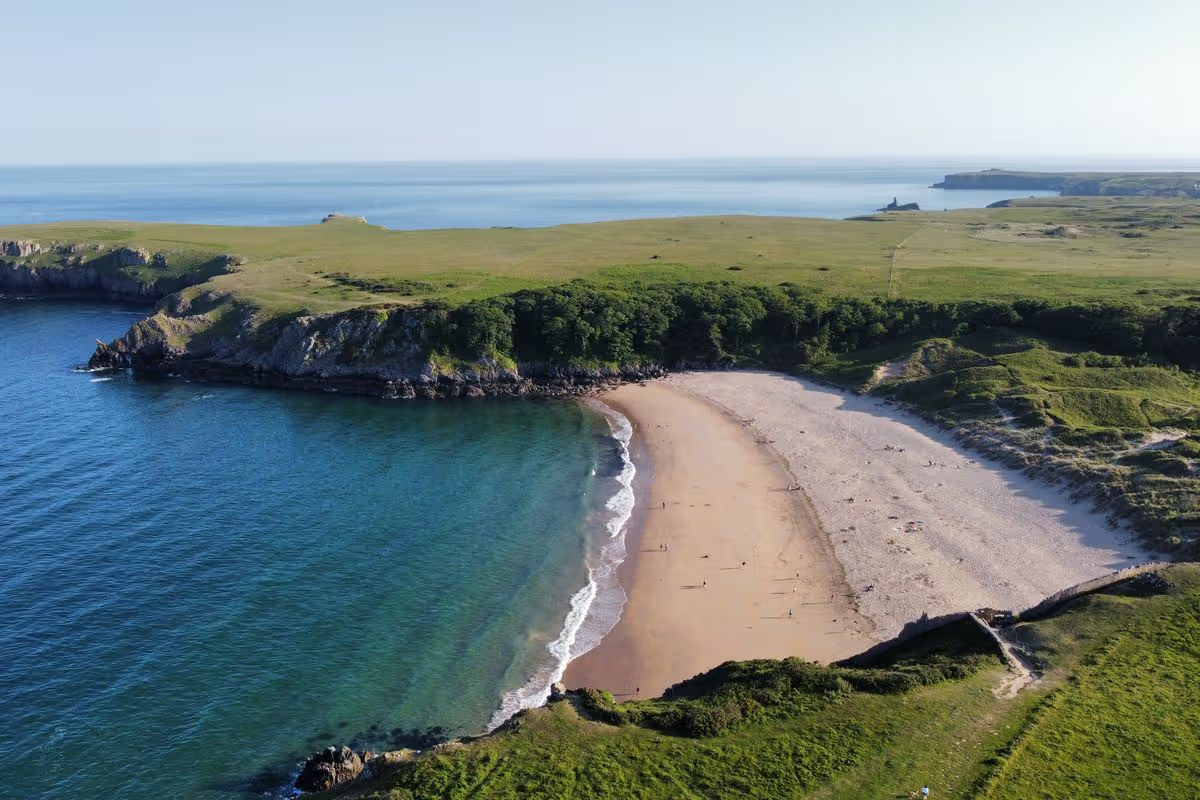
West Wales is characterised by its dramatic cliffs, stretches of pristine beaches, secluded coves, and charming seaside towns, such as Cardigan and Aberaeron. Some of the most well-known beaches in the area include Barafundle Bay, Pendine Sands, and Whitesands Bay, which have miles of golden sand shores against the blue waters.
One visitor to Pendine Sands shared on TripAdvisor: “What a beautiful beach, miles of beach, beautiful views, plenty of parking, loads of shops to visit, there is also a museum of speed there, lots of food options to choose from, I would highly recommend.”
Following a trip to their favourite spot in West Wales, another holidaymaker said: “We have been coming to Whitsand Bay for our holiday almost every year. Beautiful, gorgeous, sandy beaches, still unspoiled, hardly anyone around. So peaceful.”
The region of Wales is also home to the Pembrokeshire Coast National Park, the only one of its kind in the UK, which stretches 186 miles along the scenic coastline. It offers ample hiking opportunities and some of the most breathtaking views of winding estuaries, enormous beaches, and rugged cliffs.
Northumberland is also home to some of the most spectacular scenery, with unspoilt sand beaches lined by dunes, rolling hills, and heather moorlands. One of its most famous beaches is the dramatic Bamburgh, with golden sand that stretches for around three miles, backed by the majestic Bamburgh Castle, and offering panoramic views of the Farne Islands.
It’s an uncrowded paradise and a haven for dog walkers, much like the beaches in Northumberland, which are often open to dogs year-round. Following a visit to Bamburgh beach this year, one holidaymaker noted: “A fantastic beach with breathtaking views of the Farne Islands and Holy Island with Lindisfarne castle.
“It was a lovely walk where you could easily spend hours with family, and it’s great to tire the dogs out! Overlooked by Bamburgh castle, it also offers great photo opportunities, and is near a few local cafes for after your walk.”
Other notable beaches in Northumberland include the sweeping coast of Budle Bay, the horseshoe-shaped Beadnell Bay, and Embleton Bay, which is overlooked by the ancient ruins of Dunstanburgh Castle. Known as the ‘castle county’, there’s also the famed Alnwick Castle that has been used as a filming location for Harry Potter and Downton Abbey.
There are also plenty of charming towns to explore, including the historic Alnwick and Hexham, which has been named as one of the happiest places to live in the UK. There’s also the village of Corbridge, offering scenic riverside walks, along with the coastal towns of Bamburgh and Berwick-upon-Tweed, with their mix of English and Scottish heritage.
With West Wales and Northumberland offering a catalogue of pristine beaches, delightful towns and picture-postcard coastal vistas, it might just be the time to switch it up from the Cornish coast.
Do you have a travel story to share? Email webtravel@reachplc.com
We’re headed to the 25th edition of the festival, which returns to the Empire Polo Club in Indio on April 10-12 and April 17-19 with Sabrina Carpenter, Justin Bieber,Karol G at the top of the bill.
Our crew heading to the desert has literally decades of experience covering the festival, giving us unique insight into one of the world’s most famous music festivals.
So tell us — what do you want to know about Coachella? And what do you want to see from our live coverage in the field?
Are you heading to Indio or celebrating Couch-ella (and its more affordable beverage options) at home? Do you have tried-and-true tips you tell anyone when Coachella comes up in conversation? We want to know about them.
AI is coming. AI is here. AI is a bubble. AI is the future we want. AI is the end. AI is the path to a better us (at least the ones who survive it).
A big topic, this artificial intelligence, with a lot of different ways to think about it. To grapple with AI is a worthy endeavor for any filmmaker. (And by grapple, I don’t mean asking AI to make the film for you.)
Daniel Roher, the man behind the Oscar-winning “Navalny,” has, along with co-director Charlie Tyrell, attempted a nonfiction primer of sorts on the biggest technological, societal and existential challenge of our time with “The AI Doc: Or How I Became an Apocaloptimist,” a title boasting a hybrid coinage Roher picks up from one of his interviewed experts — one of too many, it turns out. “The AI Doc” is a well-intentioned but aggravating soup of information and opinion that wants to move at the speed of machine thought.
Roher’s approach is understandable for a mainstream doc. He assumes many of us are tech-competent, anxious and confused as to what AI even is to begin with. In his pursuit of answers, Roher employs a cloying framework: his loving wife occasionally narrating as if this were a storybook and Roher the protagonist of a scary adventure. The fable construct extends to a frenetic visual scheme of handmade art and animation that interrupts our absorption process as if we were kids needing stimulation between all the talking heads.
As for the AI itself, the experts — a mix of tech founders (such as Sam Altman and Anthropic’s Amodei siblings), historians, scientists and assorted champions and skeptics — come to Roher’s home, because he wants to foreground a key question as an expectant father: Should he be bringing a child into this world?
Perhaps more urgently, should Roher have made an AI doc that treats us like children? First, he parades all the safety doomers, seeming to believe their warnings that an unfeeling superintelligence is upon us and we can’t trust it. Then, sufficiently disturbed, he hauls in the AI cheerleaders, a suspiciously positive gang who can envision only medical miracles and grindless lives in which we’re all full-time artists.
Only then, after this simplistic setup where platitudes reign, do we get the section in which the subject is treated like the brave (and grave) new world it is: geopolitically fraught, economically tenuous and a playground for billionaires.
Why couldn’t the complexity have been the dialogue from the beginning, instead of the play-dumb cartoon “The AI Doc” feels like for so long? Maybe Roher believes this is what our increasingly gullible, truth-challenged citizenry needs from an explanatory doc: a flashy, kindhearted reminder that we’re the change we need to be.
But if you thirst for a sober-minded investigation into this ominous tool — one with an approach that treats you like the intelligent being you are — you’ll have to wait for AI doc 2.0.
‘The AI Doc: Or How I Became an Apocaloptimist’
Rated: PG-13 for language
Running time: 1 hour, 44 minutes
Playing: Opens Friday, March 27 in limited release
An On the Beach travel influencer has shared recommendations for holidaymakers
People could save on their holidays with the expert’s tip (stock photo)(Image: Getty)
People booking holidays after payday could benefit from a travel expert’s destination tips. A travel influencer has shared six holiday trends he predicts for March and April, and the knowledge could benefit anyone looking for a ‘cheap city break’ in the coming weeks.
The tips were highlighted in a video shared by Rob Brooks, a travel enthusiast and influencer with the travel company On The Beach. Rob is well-known for posting budget-friendly travel advice, hotel reviews, and holiday tips for his 114k TikTok followers, where he goes by the username @Robonthebeach.
In a new video shared this week, the travel lover shared ‘six holiday trends’ he is ‘predicting for payday’. In the clip, Rob explained: “If I got paid today and I had seven days to book a holiday, this is exactly what I’d be doing.
“I’m Rob, I work in travel, and I spend my days deep in holiday data, what people are searching, what people are booking, what’s getting sneakily cheaper. And these are my payday predictions as a holiday expert, and more importantly, exactly how I’d use them.”
First, Rob predicted that city breaks will soar in popularity this year. He said: “Short trips are crazy popular in 2026, and I’m seeing loads of demand because people want a quick break without burning loads of annual leave. And when flights price dynamically, weekends get expensive really fast.
Content cannot be displayed without consent
“So midweek is currently where the value sits on city breaks. And if I was booking one right now, I’d be looking at a midweek break in Prague, Lisbon or Barcelona. I’d try and line them up with a May bank holiday so you can stretch your time off without paying peak prices.”
Moving on, the travel enthusiast said Turkey ‘will see a surge of bookings.’ He said: “You’re getting five-star all-inclusive holidays for the same prices that you’d pay for three-star elsewhere. And interestingly, according to the data, the longer the transfer, the cheaper the holiday.”
As for when you want to book your trip, the holiday expert suggested May. Rob told viewers: “May is a perfect crossover for holidays, and I’m seeing some pretty nuts prices in some destinations where the weather is already properly warm.
“Airlines and hotels haven’t quite pushed up the prices yet in line with peak demand, but that demand is now starting to build. So if I was booking today I would lock in a holiday in May in somewhere like Morocco or Egypt, Tunisia or Turkey because they’re hot, reliable and still really good value before summer kicks in.”
Sharing another tip, Rob added that all-inclusive holidays are proving popular. For his next prediction, the influencer said: “Last-minute bookings will spike. There’s a real wait and see behaviour with holidaymakers right now.”
He continued: “People are watching prices then jumping in to book as soon as they drop. And when airlines and hotels need to fill seats and rooms close to departure, that’s when prices on package holidays suddenly start to dip. If I were going for pure value, I would actually wait and book about seven days before departure, possibly even later than that. It’s risky. But when it works, it really works. I should say, please, only do this if you’re prepared and in a position to take that risk.”
Concluding his video, Rob added that he thinks people will treat themselves more this payday. “There’s definitely a bit of a go on then mindset in the UK right now, and I personally think it might be tied to the cost of living creeping up again cause people know prices are only going one way, so they’re locking in the good prices now before they go up. So if I were booking this week, I’d probably stretch my budget a little bit to book a better hotel or a nicer room and lock it in before prices inevitably climb over the next few weeks.”
Certain types of snacks can make your flight experience very uncomfortable.
Nicola Roy Multimedia content creator
12:06, 21 Mar 2026
Many plane travellers will grab a snack at the airport before boarding (Image: EvgeniyShkolenko via Getty Images)
Anyone planning to jet off this Easter or beyond is being advised to steer clear of a very common airport snack before boarding. Plane food isn’t everyone’s cup of tea, and it’s not always on offer during shorter flights, so grabbing something beforehand is vital.
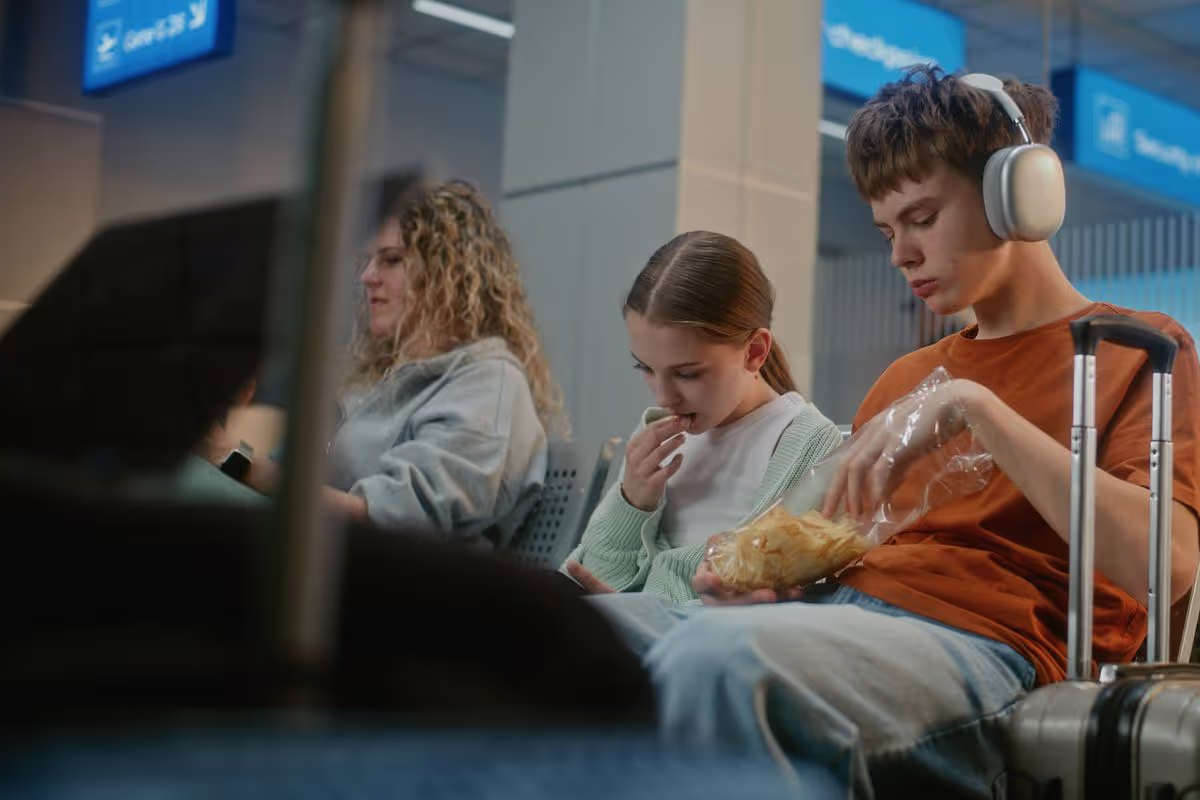
However, travel experts at Ski Vertigo have warned that one particular type of food can make lengthy flights feel even more drawn-out, causing a lot of discomfort. They say the main culprit is the “grab-and-go” salty snack many travellers purchase at the gate, such as pretzels, crisps or salted nuts, as it can leave passengers feeling bloated, thirsty and uncomfortable once the cabin doors shut. Aircraft cabins are extremely dry, which can worsen dehydration.
Low humidity at cruising altitude can leave you feeling dried out, which is why water is frequently the best option in the air. But salty snacks can make matters worse, since foods packed with sodium can prompt the body to retain fluid, contributing to puffiness and swelling – especially in the feet and ankles during longer journeys.
That “tight shoes” sensation is typical after remaining still for hours, but what you eat can influence how uncomfortable it becomes. NHS guidance related to swelling often highlights reducing salt intake as part of managing fluid retention.
Alex Dyer, Head of customer success at Ski Vertigo, said: “People buy a salty snack because it’s quick and it feels harmless, but on a flight it can leave you chasing water and feeling heavy. If you already get puffy ankles or feel rough when you fly, it is worth skipping it.”
Airports also promote last-minute purchases, and salty snacks are dotted everywhere near the checkouts. A packet eaten just before boarding is more likely to take effect when you’re buckled into your seat with limited opportunity to move about, especially if the seatbelt sign is illuminated, reports the Express.
Experts say the key thing is to drink water before and throughout the flight, and reduce caffeine and alcohol where possible, as dehydration can make travel feel more difficult.
For passengers wanting something to snack on, the experts recommend opting for choices that aren’t as salty, like a banana or a cereal bar. Checking the label can be useful, because many ‘snack size’ products are still packed with salt.
The professionals added that the aim is not to ban treats, but to steer clear of the type that makes the cabin feel more uncomfortable, adding: “If you want the easiest flight, skip the salty snack before take-off, choose a sealed drink, and you will usually feel better by the time you land.”
Before taking any travel trip, it’s vital that you’re aware of any rules that are in place for the country you’re visiting, as a harmless habit can catch you out and land you a hefty fine
There’s a strict travel rule in this popular European destination (Image: Getty Images)
Jetting off abroad is always exciting, but if you’re visiting a popular European destination, there’s a little-known rule you need to be aware of.
Taking photos while wandering the quaint streets of a European town or capturing snaps of the city’s famed landmarks comes second nature to holidaymakers when exploring somewhere new. And afterwards, many tourists look forward to sharing their snaps on social media, but this harmless habit could land you in trouble, alongside a hefty fine.
Travellers planning a trip to Germany are being warned about the country’s strict rules on taking photos in public and sharing them on social media. While tourists have every right to take photos while visiting Germany, there are regulations on publishing or sharing images of people without their consent, even if the photo was taken in a public place, under the Art Copyright Act (KUG).
Simon Hood, a travel expert and Executive Director of John Mason International, explained: “Taking a photograph of a stranger and publishing or distributing this without their permission is illegal in Germany. Even if a person’s face is not in the picture, if they can be recognised by their tattoos, clothes, or the context of the photo, this is still disallowed.
“The regulations are complicated, for example, posting photos of strangers at public events such as parades, sports events and demonstrations are allowed, as long as they are not specific photos of the crowd. The Federal Court of Justice judge cases individually and ultimately determines what is and isn’t unlawful.”
Fines for sharing an unauthorised image online can range from £850 (€1,000) upwards, Simon added. “With this in mind, it’s best to ask those in-frame before posting a photo that includes them.”
Family Law Attorney Stephen Bardol explained the rule further: “From a family law perspective, this topic is often underestimated, especially when children appear in photos. Many assume that posting a photo of someone else is a harmless act, such as during travel, holidays or at family celebrations. But the fundamental rights of the image and privacy protection in Germany are often highly violated here.
“If a person can clearly be identified in a photo, posting the photo is no longer a decision for the person posting the photo, but rather a consent, privacy and interference with the fundamental rights of others.”
Stephen added that the situation can become much more complex when children are involved. He said: “The fact that a child cannot fully understand what the publication of their photo on the internet implies, eg, where it will be accessible, for what period of time and who will have access to it, and most of all the possibility that the picture will be shared or re-published by other users, means that the protection of children is greater than that of adults.”
He advised: “Tourists who are visiting Germany should be careful when taking photos, especially of families with small children. Posting a photo of a square where the families are only visible in the background is one thing, but posting a photo of a single child or a single family is an entirely different matter.”
Do you have a travel story to share? Email webtravel@reachplc.com
A ‘stylish Spanish’ city that is packed with ‘character’, has been recommended by a TUI travel expert for a serene escape with sprawling beaches and seawater pools
A TUI travel expert has hailed a Tenerife city as a must-visit (Image: Getty Images)
It’s not easy finding the right destination for that sun-soaked getaway, but a travel expert highly recommends a vibrant city in Tenerife, where you can grab a bottle of wine for around £5 and bask in the balmy 24C in April.
TUI travel advisor, Natasha Mooney, has booked holidays to Tenerife for more than a decade and lives there part-time with her husband, Javier, who hails from the Spanish island.
“I’ve been a TUI travel advisor for 10 years, now working as a homeworking retail expert. Javi and I split our time between the UK and Güímar in northern Tenerife, so I can genuinely call it my speciality,” Natasha said.
As a Tenerife expert, Natasha certainly knows a thing or two about where to go, particularly for those looking to ditch the crowds and opt for a quieter escape. One destination that Natasha can’t recommend more is the coastal city of Puerto de la Cruz, with its incredible seawater pools, black-sand beaches, a charming harbour and historic old town.
“This is Tenerife at its most authentic,” the expert explains. “Puerto de la Cruz, on the north coast, is the place I recommend for travellers who want a stylish but genuinely Spanish experience. There’s a relaxed elegance to it. A pretty harbour, historic streets, colonial-style restaurants serving modern Canarian cuisine, and cocktail bars with live music.”
The city offers that desirable beach escape, alongside a town bursting with character, eateries, and cafés, against its colourful architecture and vibrant Spanish atmosphere. Adding to its allure is the promise of blistering rays of up to 24C in April.
One of the city’s most striking features is the iconic saltwater pool complex, Lago Martiánez, designed by Canarian architect César Manrique. The outdoor interconnected pools, with four for adults and three for children, are filled with Atlantic water, framed by volcanic rock and palm trees.
It’s been beautifully designed to incorporate natural elements against the backdrop of the rugged terrain of the striking volcano, Mount Teid, alongside views of the sea, for a spectacular day spent in the basking heat. There are plenty of terraces and sun loungers with umbrellas dotted around the leisure complex for extra comfort, along with kiosks and restaurants for a bite to eat.
Of course, there are plenty of beaches to uncover in the area, with Playa Jardín, Playa Martianez and Playa del Castillo, all with their striking black sand and blue waters for an inviting dip. The city itself is packed with character from its Puerto Street Art Project, where vibrant artwork lines the street, to the art installation of the Agatha Christie Steps, with printed titles of her most famous books.
There are botanical gardens, including Sitio Litre Garden, to wander around during a leisurely afternoon, along with colourful streets lined with bars offering drinks al fresco. Natasha noted that visitors could even bag themselves a bottle of wine for a mere £5, and advised holidaymakers to look out for Listán Blanco or Malvasía whites and Listán Negro reds.
“You’ll often find good bottles in local restaurants and shops from around €6–€10 (£5.19 to £8.60). It’s a brilliant way to taste the island for very little money,” she explained.
The food scene is another highlight across Tenerife, as Natasha said: “Tenerife has Michelin-starred restaurants, but most visitors fall in love with the guachinches. They’re family-run eateries serving traditional Canarian food with their own local wine. They’re always authentic and very affordable too.”
If you’re tempted by a trip to Puerto de la Cruz, you can grab a flight from London Stansted to Tenerife from as little as £18 one-way. There are also affordable flights from Birmingham, Bristol, Glasgow and various UK airports, making it even easier to jet off to this charming coastal city.
TUI also offers a seven-night package at Hotel Rui Garoe from £634 per person, based on two adults sharing on a half-board basis. It includes travel from Birmingham Airport on Tuesday, 28 April with TUI Airways, along with overseas transfers, 10kg of cabin luggage, and a 20kg checked-in bag.
Do you have a travel story to share? Email webtravel@reachplc.com
He has just returned from the UAE with crucial advice
The war in the Middle East is having a major knock-on effect on international travel(Image: NurPhoto via Getty Images)
A travel expert has issued a warning to individuals with flights booked to or from the Middle East. The alert comes as tensions continue in the area, with Israel and the US maintaining their strikes on Iran which commenced over a fortnight ago.
Iran continues to hit back with drone and missile attacks on several neighbouring and nearby nations. This resulted in Dubai, a major hub for international travel and home to the world’s busiest airport, temporarily closing its airspace for the second time in 48 hours due to strikes in the vicinity.
Simon Calder, a journalist with the Independent, has just returned from the United Arab Emirates. He provided an update on the current situation for those flying to or from the Middle East, including passengers transiting through the region en route to other destinations.
He stated: “I’ve just arrived at London Heathrow Terminal 4 after a fairly normal flight from Abu Dhabi on Etihad. What wasn’t normal was just how quiet it was when I arrived. Terminal 4, the main hub for the Middle East from London, is frankly a bit of a ghost town. Many of the flights that you would normally expect to see multiple departures on Qatar Airways to Doha and on Etihad to Abu Dhabi are not flying, and there’s also, for instance, Gulf Air based in Bahrain who are not going there.
Content cannot be displayed without consent
“Having said that, there’s perhaps more flights than you might expect, given that, for example, Qatar and the UAE are on the Foreign Office no-go list. There’s a departure this evening to Abu Dhabi on Etihad and one a little later on Qatar Airways overnight to Doha. As well as that, El Al is going out to Tel Aviv. Now, you might have heard that the airspace in Israel is closed; well, it kind of is, but if you’ve got permission, and El Al certainly has, then you can go in.
“And finally, Gulf Air is flying from here later on today, but not to the normal destination of Bahrain. Instead, it’s going to Dammam, which is very close by in Saudi Arabia, from where passengers can travel to that island quite happily over the causeway. But bear in mind that the UAE, Qatar, Kuwait, and Bahrain are all on the Foreign Office no-go list. If you choose to ignore that advice, then it’s likely your travel insurance will not be valid.
Unsurprisingly, the conflict has impacted international travel in numerous ways. Not only have passenger numbers and flights passing through the Middle East declined dramatically, but neighbouring countries favoured by Brits seeking spring sunshine, including Cyprus and Turkey, have also experienced a fall in visitor numbers.
Conversely, nations to the west boasting milder weather, including Spain and Portugal, have witnessed a surge in reservations – as has the Caribbean. The situation has not only left thousands of British holidaymakers stuck in the Middle East, but many are also anxious about their upcoming travel arrangements.
The Association of British Insurers attempted to address these worries with the following statement when questioned about whether insurance will cover the cancellation of a trip to the Middle East due to concerns over the conflict.
It stated: “As the situation evolves, we can understand why people may be reconsidering their future plans to travel to the region. If you wish to cancel your trip, contact your airline, accommodation provider or tour operator in the first instance. They may be able to rebook parts of your trip or offer a refund.
“Travel insurance may not cover cancellations linked to the conflict, depending on your policy’s terms, any war exclusions, and when you bought it. Policies differ, and insurers may take different approaches, so it’s important to check with your insurer to understand what’s covered.”
Tourism consultant David Evans has warned that the cost of flying is likely to rise sharply
Expert David Evans warned that the cost of flying could soon surge
A travel expert has advised folks to snap up flights now in anticipation of a predicted ‘surge’ in airfare costs. Tourism consultant David Evans revealed that aviation fuel prices have rocketed by 70 per cent in the wake of the US-Israeli strikes on Iran.
Speaking on BBC Radio 5 Live, he suggested that this could soon make flying considerably pricier. This situation is likely to be compounded by the financial strain many airlines are under due to the cancellation of numerous flights amid the unrest in the Middle East.
When asked by host Rachel Burden whether people should book now before flight prices soar, Mr Evans responded: “If you can get a flight that you feel is offering you a really good value-for-money price and it is via somewhere like Singapore (then yes).
“It’s also worth bearing in mind that, once all this blows over, which hopefully won’t be too far off, the Middle Eastern airlines will undoubtedly be introducing some attractive fares into the market to try and recoup the demand they’ve lost over the past few weeks.
“According to the data we’ve seen, the cost of jet fuel has risen by about 70 per cent. Fuel accounts for roughly a quarter of an airline’s operating cost, so the maths are pretty straightforward – if the fuel price is climbing that much, it won’t be long before air fares start to rise. If this carries on for many more weeks, travelling is likely to become more expensive.”
Mr Evans’ remarks follow revelations that holiday-goers are eschewing Easter trips to traditionally favoured destinations such as Cyprus, Turkey, and Dubai, opting instead for western locations like Spain, Italy, and Portugal, as well as the Caribbean and Mauritius. According to Thomas Cook, bookings to Portugal saw a 42 per cent surge in the fortnight leading up to 13 March.
British Airways has axed some Middle East flight routes until June due to ‘airspace instability’, whilst the UAE and Dubai have been compelled to repeatedly shut down both airports and airspace following retaliatory Iranian strikes. Iraqi officials reported that Iranian strikes over the country on Monday (March 16) were the most intense they had seen throughout the entire war.
Content cannot be displayed without consent
“I think the announcement from BA is probably good news in that it gives those people who would otherwise have been in complete limbo thinking, ‘crikey, is this situation going to improve or not over the next few months’ – now they know their flight is cancelled, they can either rebook on a different route or they can get a refund and use the money to either holiday domestically or to go to a different destination, so at least it provides certainty,” Mr Evans added.
“I guess we could say that the 2020s have been a bingo card of doom and this is the square for 2026, but it is also worth saying that the tourism industry and indeed tourists are incredibly resilient.
“Yes, clearly many people are being disrupted if they had either to or from the UK to or via the Middle East, but there are lots of other destinations that are still open for business and lots of other visitors able to get to the UK very easily.”
A travel expert claims he has saved money by looking for flights at a specific time, and early risers could bag a bargain, but there are also other ways to cut the cost of your flight
Night owls could pay less for their flights(Image: MEN MEDIA)
A travel expert has claimed that the time you book a flight can be just as important as the day you choose to travel, and that setting your alarm at a very specific time could help you land the best deals.
Jamie Fraser, owner of Wild Packs, claims that the cheapest time to book flights is exactly 2:48am in what could be good news for night owls and insomniacs. He also claims that evening searches between 8pm and 2pm can also be around 5% cheaper than searching during peak morning hours.
Airlines will often raise prices when they see heavy demand for a destination, so if lots of other people are up at the same time looking for the same route and dates, this could potentially put prices up. Jamie says: “Most people search for flights first thing in the morning while they’re having coffee, but that’s exactly when everyone else is doing the same thing.
“When airline systems see that spike in demand, prices can rise quickly. It’s one of the easiest ways travellers overpay. The cheapest time to book is usually in the early hours of the morning, around 2:48 am, when far fewer people are searching, and airline pricing systems have reset overnight.”
He added: “If you’re not willing to set a 2 am alarm, the next best option is late evening. Booking between 8 pm and 10 pm can still save around 5% compared to that busy morning window.”
So does this hack work? In the early years of internet travel booking, airlines and other sites would update their fares manually overnight. This meant that savvy travellers could sometimes pick up middle of the night bargains. However, nowadays, it’s more complex because systems have evolved, so you may still need a bit of luck on your side.
You could also potentially save money by using Jamie’s other suggested hack, which is to set up price alerts rather than checking fares repeatedly. Jamie also reiterated the often given advice that travellers should be flexible with travel plans, looking out for different airlines, dates, or nearby airports.
If you use sites such as Skyscanner, you can often tick a ‘nearby airports’ box, as an airport a short drive away could end up being cheaper. If you’re flexible on destination, for example you simply want to go somewhere sunny with a beach, then choosing ‘everywhere’ as a destination will show you the cheapest options for your dates.
It’s also worth signing up for emails from specific airlines and looking out for deals such as flash sales or kids fly for free offers, which often have limited availability and need to be snapped up quickly.
Have a story you want to share? Email us at webtravel@reachplc.com
Our journalists strive for accuracy but on occasion we make mistakes. For further details of our complaints policy and to make a complaint please click this link: thesun.co.uk/editorial-complaints/