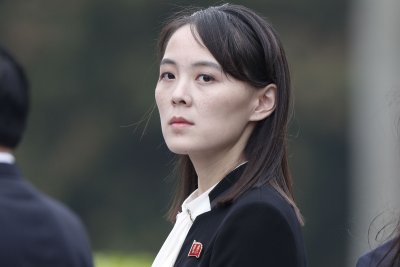
Kim Yo Jong, sister of North Korean leader Kim Jong Un, on Wednesday warned Japan over its expanding military capabilities. in this March 2019 photo, Kim is seen in Hanoi, Vietnam. File Pool Photo by Jorge Silva/EPA-EFE
SEOUL, Aug. 5 (UPI) — Kim Yo Jong, the powerful sister of North Korean leader Kim Jong Un, warned Wednesday that Pyongyang could adopt “additional military options” against Japan, accusing Tokyo of becoming a “war state” through its expanding military capabilities.
Kim made the remarks in a statement carried by the state-run Korean Central News Agency.
“Japan, a war criminal state, is accelerating its transformation into a war state,” she wrote, claiming that Tokyo was exploiting growing geopolitical tensions to boost its offensive military capacity.
She cited Japan’s recent test-firing of U.S.-made Tomahawk cruise missiles from a destroyer in the Pacific Ocean and its March deployment of long-range surface-to-ship missiles and high-speed gliding projectiles at bases in Kumamoto and Shizuoka prefectures as examples of Tokyo’s changing military posture.
Kim also pointed to Japan’s participation in U.S.-led military exercises in the Philippines in May, where it launched offensive missiles outside its territory for the first time since World War II.
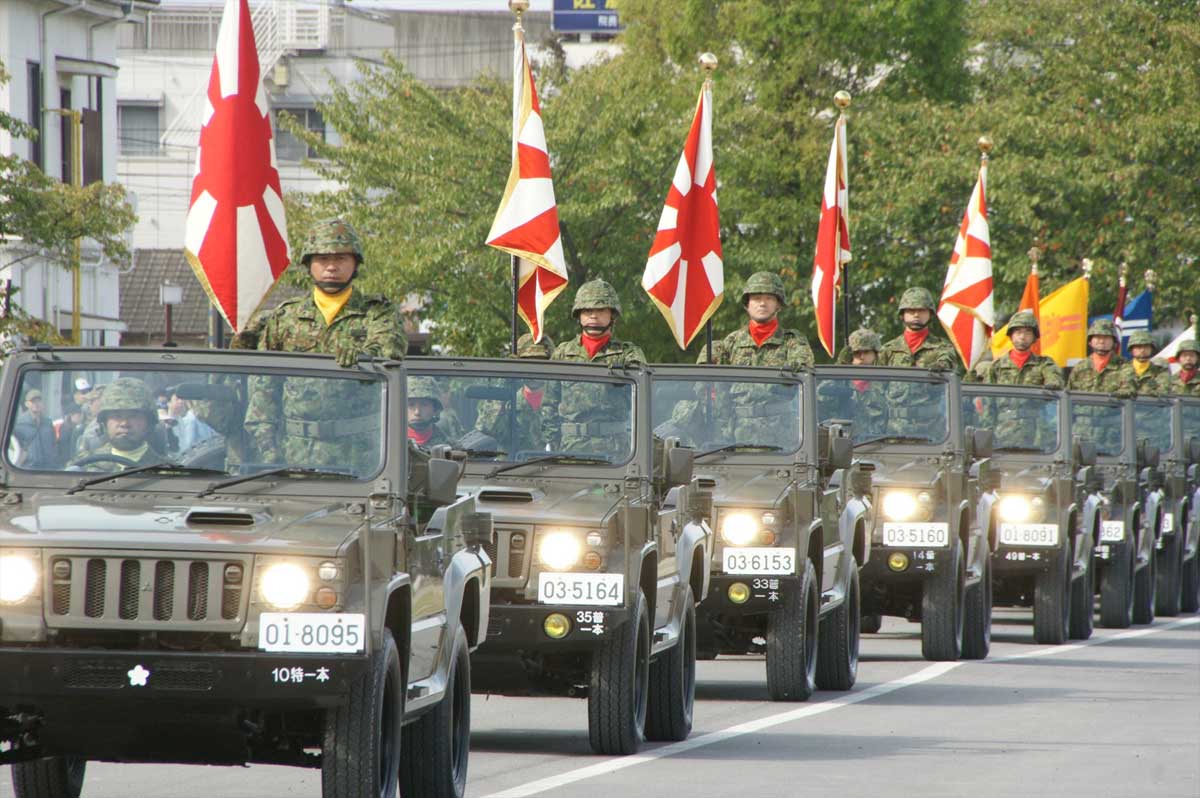
Kim claimed that Japan’s growing arsenal of long-range weapons was transforming its Self-Defense Forces into an offensive military.
“The mass possession of different kinds of long-range strike means with an unexpectedness of preemptive attack and a drastic increase in the radius of their operation … make Japan reorganize its overall armed forces as a formation of preemptive attack and overseas aggression,” she wrote.
Kim also accused the United States of driving Japan’s military expansion, saying Tokyo and Seoul were acting as Washington’s “shock brigade” in the region.
“Japan’s military expansion in the Asia-Pacific region, which is being turned into the world’s biggest hotspot due to the U.S. exclusive and aggressive foreign policy … seriously threatens international peace and stability,” she wrote.
North Korea has repeatedly criticized the administration of Japanese Prime Minister Sanae Takaichi, a hawkish conservative who took office in February, over efforts to strengthen Japan’s military and broaden its regional security role.
Tokyo has bolstered its defense posture since adopting a new National Security Strategy in late 2022 that calls for acquiring “counterstrike capabilities,” including long-range missiles intended to strike enemy launch sites if Japan comes under attack.
In a commentary published in KCNA on Tuesday, North Korea condemned a recent U.S.-led multinational naval exercise in Hawaii and criticized military cooperation among Washington and its regional allies, including the Pentagon’s recent move to upgrade U.S. Forces Japan into a joint force headquarters with expanded operational responsibilities.
Kim said North Korea should make Japan “regret” its growing military ambitions.
“One effective way is to make Japan feel that its security has been exposed to greater danger due to its greediness,” she wrote. “We will never remain a passive onlooker to the military evolution of Japan which may pose a grave threat to the security of the Democratic People’s Republic of Korea.”
The Democratic People’s Republic of Korea is the official name of North Korea.
“I make it clear upon authorization that the armed forces of the DPRK and the military leadership will set up additional military options which are obviously due to Japan’s transformation,” she added.
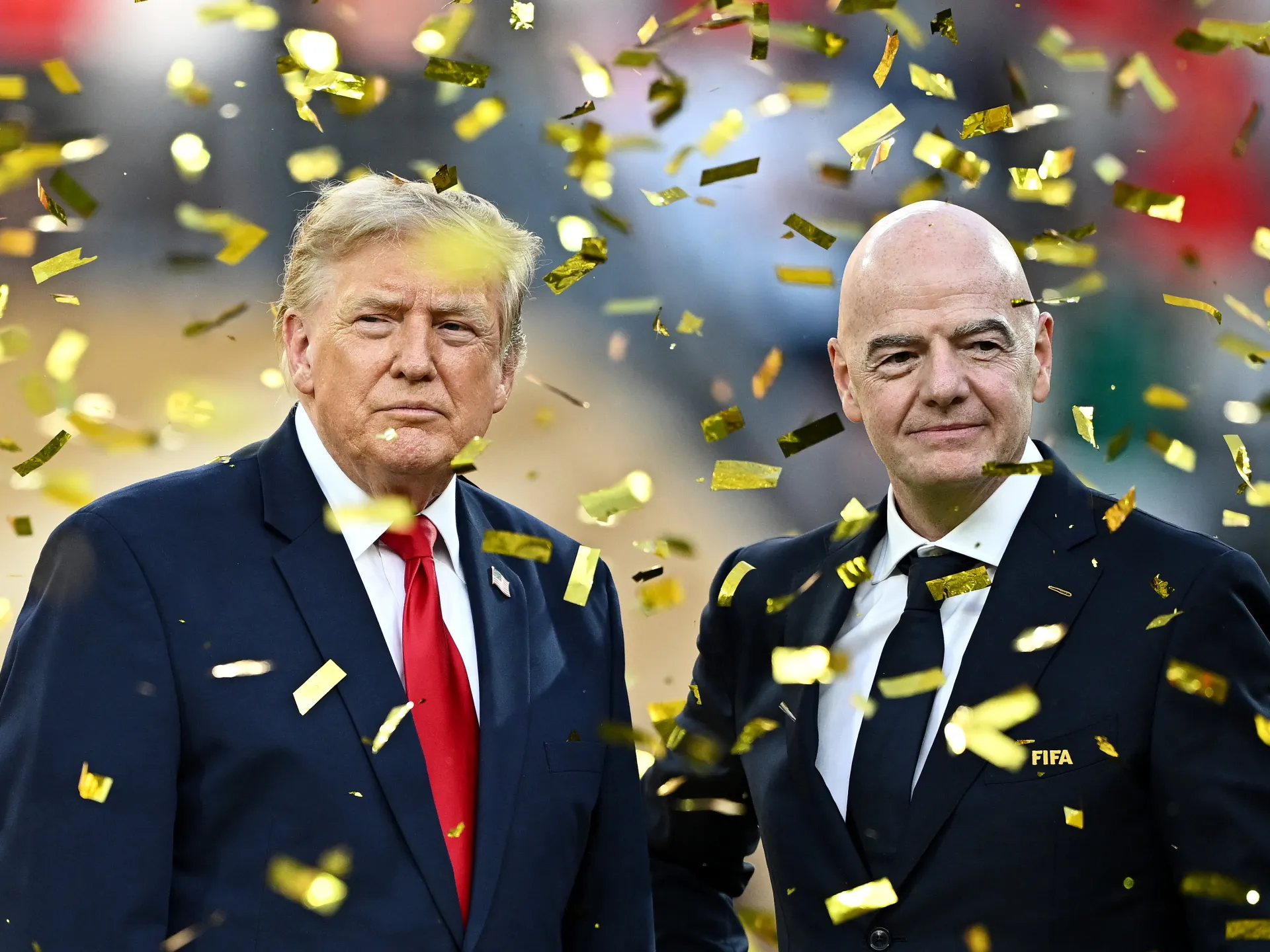
FIFA’s World Cup 2026 expansion was their first since 1998, but the 2030 edition could rise to 64 teams.
Published On 31 Jul 202631 Jul 2026
FIFA is studying whether to expand the World Cup from 48 to 64 teams for the 2030 edition in a move that could reshape football’s showpiece tournament when it celebrates its centennial.
World football’s governing body wants to appoint an independent agency to assess the ambitious expansion plan, which would add another 16 nations to a tournament that had already grown from 32 to 48 teams in 2026.
Recommended Stories
list of 4 itemsend of list
“FIFA wishes to appoint an independent agency to determine whether and how expanding the FIFA World Cup from 48 to 64 participating national teams, starting with the 2030 edition, would impact on the tournament proposition,” it said in a research brief seen by the news agency Reuters.
South American confederation CONMEBOL had officially proposed hosting the 2030 World Cup with 64 teams last year, allowing more countries the opportunity to join in the celebrations for the tournament’s centennial edition.
The 2026 edition in the US, Canada and Mexico was the first since 1998 to move away from the 32-team format, adding four more groups and an extra knockout round in the process, resulting in 104 matches over more than five weeks.
The accelerated study comes on the heels of FIFA’s plan to create a $20bn subsidiary to run the World Cup and its other events with external investors, a move that has attracted criticism and a UEFA decision to boycott FIFA events.
Al Jazeera has contacted FIFA for comment.
UEFA and FIFA could be on another World Cup collision course
UEFA President Aleksander Ceferin said last year that expanding the World Cup to 64 teams was not a good idea.
The European governing body’s position has not changed since then, while Asian Football Confederation President Sheikh Salman bin Ibrahim Al Khalifa had also voiced opposition, questioning last year where further expansion might end.
FIFA’s proposed analysis is meant to assess whether the proposed expansion can strengthen the tournament or whether concerns such as competition dilution, calendar congestion, operational complexity and market saturation outweigh the potential benefits.
The study will examine the potential impact of expanding the tournament to 64 teams, including the effects on the competition, competitive balance, qualification, player welfare and the international calendar.
It will also estimate the revenues that could be generated from ticket sales, sponsorship and media rights under the proposed format.
“The final recommendation should demonstrate not only whether a 64-team tournament can generate incremental value, but whether that value is sustainable,” the document added.
FIFA said a decision on selecting the agency would be made on August 14 and they would have only four weeks to deliver their analysis by September 11.
The 2030 World Cup is being jointly hosted by Morocco, Portugal and Spain, while Argentina, Paraguay and Uruguay will host one match each to celebrate the tournament’s 100th anniversary.
FIFA is already facing a dispute with its confederations due to a plan to sell stakes in World Cups and other events to private investors.
“Alphabet revenue grew 24% year-over-year” (CEO & Director Sundar Pichai). “We saw 17% revenue growth in Search and Other and YouTube ads grew 13%. Cloud revenue grew 82%… and Cloud backlog grew to $514 billion.”
Seeking Alpha’s Disclaimer:This article was automatically generated by an AI tool based on content available on the Seeking Alpha website, and has not been curated or reviewed by humans. Due to inherent limitations in using AI-based tools, the accuracy, completeness, or timeliness of such articles cannot be guaranteed. This article is intended for informational purposes only. Seeking Alpha does not take account of your objectives or your financial situation and does not offer any personalized investment advice. Seeking Alpha is not a licensed securities dealer, broker or US investment adviser or investment bank.
Relations between North Korea and Japan remain deeply strained due to historical grievances, North Korea’s nuclear and missile programmes, and growing regional security tensions. In recent years, Japan has significantly increased defence spending and accelerated military modernisation in response to North Korea’s missile launches and China’s expanding military presence.
Tokyo has adopted a new national security strategy that includes acquiring long range strike capabilities, expanding missile defence and strengthening cooperation with the United States and other regional partners. Japan says these measures are necessary to deter growing security threats, while North Korea and China have criticised them as evidence of Japan moving away from its post World War Two defensive posture.
The latest remarks come as North Korea also continues expanding its own naval capabilities and developing new missile systems.
North Korea accused Japan on Tuesday of transforming its military into an offensive force, claiming Tokyo’s overseas military ambitions are now a reality rather than a hypothetical threat.
Stay ahead of the geopolitical week.
MD Briefing delivers expert analysis across five global fronts — the Indo-Pacific, energy, geoeconomics, European security, and the Middle East — every Monday morning. Free.
A commentary published by the state run Korean Central News Agency criticised Japan’s defence modernisation programme, pointing to plans to develop unmanned submarines, expand long range missile capabilities and acquire advanced weapons from the United States.
The comments come amid growing military activity across East Asia as regional powers continue strengthening their armed forces.
The KCNA commentary argued that Japan is abandoning its long standing policy of maintaining forces solely for self defence.
It claimed Tokyo is developing unmanned submarines capable of carrying torpedoes and naval mines that could be deployed near neighbouring coastlines to conduct pre emptive attacks during a conflict.
The report portrayed these developments as evidence that Japan is shifting toward a more offensive military posture.
Japan’s Foreign Ministry did not immediately comment on the allegations.
North Korea also highlighted Japan’s efforts to strengthen its missile capabilities.
According to the commentary, Tokyo is pursuing domestically developed long range missiles, a new ballistic missile with a reported range of up to 3,000 kilometres, upgraded anti ship missiles and hypersonic glide weapons.
The report also criticised Japan’s acquisition of United States made Tomahawk cruise missiles as part of its broader military modernisation programme.
Japan has argued that these capabilities are intended to strengthen deterrence against growing regional threats.
The criticism comes as North Korea continues expanding its own military capabilities.
State media recently reported that leader Kim Jong Un observed the launch of a strategic cruise missile and inspected weapons systems aboard the newly built 5,000 tonne destroyer Kang Kon.
Kim has instructed that the vessel enter operational service within two months as part of efforts to strengthen North Korea’s naval combat capabilities.
Pyongyang has also commissioned another destroyer, the Choe Hyon, and announced plans to construct additional warships, including larger 10,000 tonne vessels.
The exchange of criticism reflects broader security tensions across Northeast Asia.
Japan has strengthened defence cooperation with the United States and regional partners while increasing military investment in response to North Korea’s expanding nuclear and missile programmes and China’s growing military activities.
North Korea has responded by accelerating weapons development, conducting missile launches and modernising its naval forces, further contributing to regional strategic competition.
The latest comments highlight the increasingly confrontational security environment in Northeast Asia, where military modernisation by one country is often cited by others to justify their own defence expansion.
As Japan strengthens its deterrence capabilities and North Korea continues developing advanced weapons, the risk of heightened regional tensions and military competition is likely to remain elevated.
North Korea
Seeking to strengthen its military capabilities while criticising Japan’s expanding defence posture.
Japan
Modernising its armed forces in response to growing regional security threats.
United States
Supporting Japan’s defence strategy as part of its broader Indo Pacific security framework.
South Korea
Closely monitoring military developments involving both North Korea and Japan.
Regional Neighbours
Watching the evolving security balance as military competition intensifies across Northeast Asia.
Regional attention will remain focused on Japan’s continuing defence modernisation and North Korea’s naval expansion, including the planned deployment of its new destroyers.
Any additional missile tests, military exercises or defence announcements by either country are likely to be closely monitored by neighbouring governments and could further shape the security dynamics of the Indo Pacific region.