The U.S. Postal Service is poised to launch a hastily built, error-riddled computer system that could jeopardize the process of mail voting relied upon by one-third of all voters, according to a whistleblower statement released Tuesday by Democratic Sen. Richard Blumenthal.
The effort is part of the implementation of President Trump’s executive order limiting mail voting and has been temporarily halted by a federal judge. The ruling is being appealed by the administration and the directive may ultimately end up back before the U.S. Supreme Court.
The disclosure from the unidentified whistleblower contends that the Postal Service has been scrambling to try to build a complex system that would normally take a year or more in only three months, sometimes in defiance of the judge’s orders halting work. The goal is to have it ready for use in the midterm elections.
The disclosure contends that, due to the new procedures, a single scanning error in a batch of tens of thousands of ballot envelopes could prevent any from reaching voters. It details a system that election officials have already warned could not be implemented before the first mail ballots begin going out Friday in North Carolina.
“The Postal Service has designed a system to disenfranchise millions of Americans,” Blumenthal told reporters in advance of releasing the whistleblower information. “This administration seems hell-bent on changing the framework on casting ballots in this country clearly for political reasons.”
Executive order is subject to furious court action with midterms nearing
Trump’s executive order, signed in March, directed U.S. Citizenship and Immigration Services and the commissioner of the Social Security Administration to develop state citizenship lists and then required the Postal Service to send mail ballots only to voters who are on such a list. Ballot envelopes would have to comply with new Postal Service rules and include bar codes.
The online portal that is the subject of the whistleblower complaint is intended for states to deliver their lists of verified voters to the Postal Service.
The Postal Service did not comment on Monday night. The White House did not immediately respond to a request for comment Tuesday. The White House has called the mail voting provisions “commonsense measures” necessary to combat fraud.
Trump has long opposed voting by mail, even though he has repeatedly used the method to cast his own ballot. He falsely blamed mail voting for his 2020 election loss and has spent years spreading conspiracy theories about it. A report by the Brookings Institution published in 2025 found that mail voting fraud occurred in only about four cases out of every 10 million mail ballots cast.
Since returning to office, Trump has said Republicans should be “taking over” vote counting in Democratic areas and launched a sweeping attempt to reinvestigate the 2020 election, despite a mountain of evidence that he lost fairly to Democrat Joe Biden.
Until Trump came out against mail voting in 2020, the system was used equally by both parties. Since then, it has become more common among Democratic voters. More than 29% of all voters in 2024 cast their ballots through the mail.
After Trump issued his executive order, Democrats and civil rights groups sued and eventually won a ruling from U.S. District Court Judge Indira Talwani in Boston barring implementation of the system before the November midterms. But without ruling on the legality of Trump’s order, the Supreme Court’s conservative majority last week found that was premature and overruled Talwani, momentarily clearing the way for its implementation.
On the night of Aug. 21, the Postal Service released a final rule outlining how it would implement the order.
It said it would only send mail ballots for states that got approval for the design of their envelopes and submitted a list of voters receiving them through the still-not-active online portal. That rule gave plaintiffs a chance to sue again, and Talwani on Thursday night issued a 14-day restraining order against implementation of the measure.
Whistleblower complaint says portal development is rushed and sloppy
The letter from Blumenthal and an accompanying summary of the whistleblower’s statements says the Postal Service began work on the portal on June 15 and stopped on June 25 after Talwani’s initial order. Then on July 29, the Postal Service restarted the work. That was when the administration appealed the judge’s order to the Supreme Court. The high court did not strike Talwani’s injunction down until Aug. 24.
Talwani last week found the Postal Service violated her order by continuing to work on the final rule, but she imposed no sanctions on the government. On Monday, she issued a ruling refusing to lift the restraining order that also said the Postal Service could continue work on its portal, as long as it wasn’t forcing states to use it.
In its summary of the whistleblower’s statement, the group Whistleblower Aid says the hurried construction of the portal, with a goal of being active on Tuesday, meant it did not undergo full testing.
“The apparently sloppy and rushed manner in which the Federal Ballot Mail Portal and supporting IT systems are being built poses significant risk,” the group wrote. “Potentially millions of American voters may not receive their mail-in ballot this election cycle in a timely manner, or at all.”
The statement also says the Postal Service is implementing a “zero percent” rule in which any errors in any mail ballots sent out by an election office could lead to all of them being discarded — even if it’s simply one problem amid tens of thousands of legitimate ballots.
The rule requires ballots to be handled in a physical post office by an election official. Those will then be scanned to ensure they match the voter database. During three layers of checks, a single apparent error could cause the whole batch to be rejected, the statement says.
Blumenthal said he has “a very strong hope and some faith that our system of justice will strike down this unconstitutional and unconscionable rule.” But, he added, if it somehow goes into effect for the midterms, he would not advise voting by mail.
Riccardi writes for the Associated Press. AP writer Lindsay Whitehurst contributed to this story.
A federal judge on Wednesday lifted a major obstacle to President Trump’s executive order limiting mail voting, even as Democratic state officials filed a new court challenge with the midterm elections fast approaching.
The fresh round of legal wrangling comes just two days after the Supreme Court handed down a procedural ruling in Trump’s favor, and could mean the issue lands before the high court again before the pivotal contests for control of Congress. The first mailed ballots are set to be sent out next week.
U.S. District Judge Indira Talwani in Boston agreed to lift an order prohibiting the U.S. Postal Service from carrying out Trump’s order for November’s elections. She wrote that she was “compelled” to do so after the Supreme Court’s conservative majority ruled that a similar injunction she granted in a separate case was premature.
Talwani nevertheless said the executive order could unleash “chaos” and referred to it as “likely unconstitutional.”
The administration can now move forward and implement a Postal Service rule published late Friday. It would require states to follow a uniform envelope style for mail ballots and to give the Postal Service a list of voters eligible to receive them. Talwani found on Tuesday that the rule’s issuance technically violated her injunction, but she declined to penalize the administration.
The new lawsuit, filed by about two dozen Democratically controlled states against the U.S. Postal Service, marked a new phase in the high-stakes litigation creating confusion around the midterm elections.
It came after the Supreme Court ruled against them in a separate case, but did not say Trump’s order was legal.
The high court majority found the initial Democratic lawsuit was premature, but that was before the Republican administration issued a rule governing Postal Service delivery of mail ballots. Election officials warn it will be impossible to implement before the first wave of mail ballots are sent out next week.
“Across the country, states are already deep into preparations for the 2026 elections. Now, at the last moment, the federal government is attempting to meddle in those preparations and potentially threaten countless Americans’ right to vote,” New York Attorney General Letitia James, one of 25 Democratic attorneys general filing the lawsuit, said in a statement. “USPS has no authority to decide who can and cannot vote by mail.”
The Trump administration plan faces a third lawsuit originally filed in May in the nation’s capital, though judges there have so far declined to block it.
All previous challenges were filed before the administration published its mail ballot rule Friday night.
White House spokesperson Lauren Bis on Wednesday said the Postal Service’s proposals were “commonsense measures that protect the security of mail-in ballots” and that the administration would continue to work to implement them to boost “the safety and security of our elections.”
The Postal Service said it would not comment because of the pending lawsuit.
National Democrats on Tuesday cited the rule in asking the federal judge in the Washington case to block Trump’s order after he declined to do so last spring, saying the administration at the time had not taken concrete action. In Boston, Talwani also found that the administration had violated a separate injunction she had placed on the Postal Service in drafting the new rule, although she did not take any action against the government.
Talwani had issued the injunction against Trump’s executive order in the prior Democratic state case, which is the one the Supreme Court overturned on Monday. She also issued a second injunction Aug. 11 in a case filed by the League of Women Voters and other voting rights groups, while the Supreme Court was considering the administration’s appeal of the judge’s first order.
Trump has long targeted mail voting, which he falsely blames for his 2020 election loss and is disproportionately used by Democrats as a result of Trump’s condemnations. Since returning to power, Trump has tried to claim authority over election rules, saying he thinks Republicans should “take over” vote counting in Democratic areas.
He issued his first election executive order just months after retaking office, attempting to require documentary proof of citizenship to vote, among other changes. He has also been pushing a sweeping election bill that has stalled in the Senate amid opposition from Democrats and even some within his own party.
Riccardi and Whitehurst write for the Associated Press.
Big-city mayors are giving poll workers panic buttons in case election skeptics question their work. County and state officials are gaming out responses to immigration raids near voting centers.
Lawyers for Democratic states and civic groups are pre-writing legal challenges to ballot seizures. And Democratic aides in Washington are preparing members of Congress to push back in the court of public opinion against any baseless claims of voter fraud in competitive districts.
Across California and the nation, civic organizations, voting rights advocates and Democratic leaders are preparing for a raft of potential actions by the Trump administration to interfere in, subvert or deny November’s midterm vote.
President Trump, an election denier for years, has without evidence described the U.S. election system as badly corrupted by fraud and dangerously vulnerable to both domestic and foreign interference.
He has said he would do “anything necessary” to have “honest elections,” and has tried since returning to office to unilaterally rewrite the rules for voting nationwide and wrest control of elections from the states through executive orders and other administrative measures.
Now, he has declined to rule out additional and unprecedented steps to force his will on the November election, including through emergency declarations and military deployments, and in February suggested Republicans should simply take over voting in blue states.
Election experts say there is no evidence of widespread voter fraud in American elections, despite Trump’s allies searching for years.
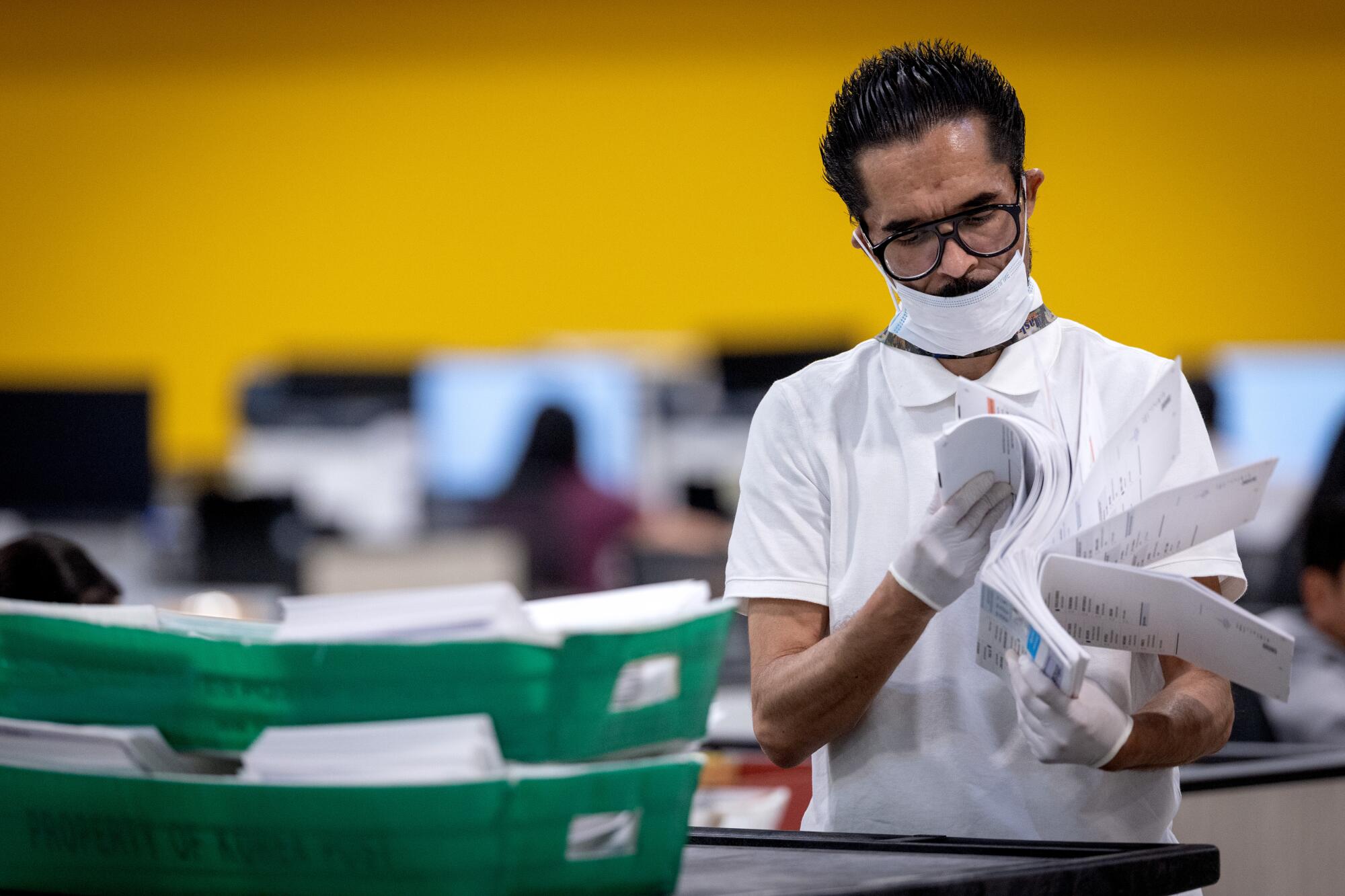
A worker looks through ballots at a Los Angeles County Ballot Processing Center on Monday, June 8, 2026 in City of Industry, CA. Counting continues on ballots cast for the state’s primary election held June 2.
(Eric Thayer/Los Angeles Times)
Much of the work to resist any Trump interference or power grab is being done quietly to avoid revealing too much of the strategy to the Trump administration or stoking unnecessary fear among voters.
It is designed to match what Trump’s opponents see as his three-part “interference playbook” — to “deceive” voters before the election, “disrupt” the vote itself and “deny” any unfavorable results after, said Justin Vail of Protect Democracy, a prominent litigant against the administration.
“The threats are real,” Vail said, “but the preparation is larger and more coordinated than ever before.”
The scenarios being planned for include the president deploying troops or immigration agents to polling sites to intimidate voters, fomenting unrest as a pretext to declare a national emergency, claiming fraud in the ballot counts of key congressional races or commanding the U.S. Postal Service to intervene in mail ballot delivery.
All told, the efforts amount to an unprecedented exercise to ensure the nation’s elections are safe from its own federal government.
They also reflect a deterioration in trust between states and counties overseeing elections, voting rights and pro-democracy advocates and a federal administration that has denigrated their work and tried to take control of voting away from states.
As public frustration with the economy mounts and Trump’s approval rating sinks, Democrats have become hopeful their party will retake power in Congress. Trump, meanwhile, has suggested that alleged election integrity problems will be the culprit if Republicans lose.
In California, 61% of voters recently identified federal inference in November as a “major concern,” according to a UC Berkeley Institute of Governmental Studies poll co-sponsored by The Times.
“We are taking this threat really seriously,” said Sen. Adam Schiff (D-Calif.), who helped form a Senate task force to prepare. “Politically, I’m very optimistic about the midterms. But I’m also deeply concerned with the president’s willingness to interfere with them — and the fact that, unlike even in 2020, where there were at least some people around him to try to constrain what he was doing, all those people are gone.”
President Donald Trump is seen on a screen as his supporters cheer during a rally on the National Mall on January 6, 2021 in Washington, DC. Trump supporters gathered in the nation’s capital today to protest the ratification of President-elect Joe Biden’s Electoral College victory over President Trump in the 2020 election.
(Samuel Corum / Getty Images)
Much of the work is legal preparation among Democratic state attorneys general and lawyers with leading civic organizations. Nothing is being ruled out after Trump’s supporters, at his goading, violently attacked the U.S. Capitol on Jan. 6, 2021, following his 2020 election loss to Joe Biden.
Other preparation is political, as members of Congress, mayors and other elected officials position themselves to use their bully pulpits and legislative powers to punch back. And grassroots campaigns are also unfolding, as community leaders recruit voters to defend their local elections, including online.
“This is an all-hands-on-deck task,” said Skye Perryman, president of the nonpartisan legal organization Democracy Forward. “We’re anticipating scenarios we haven’t seen before in the United States.”
Trump, who has never accepted his 2020 loss to Biden despite scores of reviews and audits confirming the result, has consistently sought to undermine Americans’ trust in elections, telling the nation in a prime-time speech last month that the voting system was “broken” and claiming that the SAVE America Act, a strict Republican-proposed voter ID and citizenship measure, is necessary to fix it.
The White House said it wouldn’t respond to hypothetical questions about the midterm election, but said anyone who breaks voting laws will be held accountable. Lauren Bis, a White House spokesperson, blamed “extreme liberal Democrats” for undermining U.S. confidence in elections by blocking the SAVE America Act, which Trump has failed to push through Congress.
Bis claimed voters support such changes, and said “President Trump is absolutely right: We fix this now, or we lose our country.”
Causes for concern
The fears of interference are driven by Trump’s long record of election denial; his recent insistence that the midterms are vulnerable to both domestic fraud and foreign interference; his success installing loyalists and fellow election deniers in powerful positions throughout his government; and his current administration’s many attempts to usurp control over state voting processes, including through executive orders, lawsuits and legislation.
Sen. Majority Leader John Thune (R-SD) (C) departs after a meeting with U.S. President Donald Trump and Republican senators at the U.S. Capitol on June 24, 2026 in Washington, DC. President Trump is visiting Capitol Hill to attend a closed-door luncheon with the Republican Senate Steering Committee to push his SAVE America Act, which would impose strict voter ID and proof-of-citizenship requirements in federal elections.
(Kevin Dietsch / Getty Images)
Some analysts saw Trump’s speech last month as laying the groundwork for greater intervention in November, and he raised further alarm this month by entertaining a suggestion from conservative radio host and election conspiracy theorist Wayne Allyn Root that the president has “the right to declare a national security emergency” to unilaterally enforce new voting restrictions.
“Stranger things have happened,” Trump responded.
The White House has previously downplayed the likelihood of immigration agents being deployed to polling locations, but Trump has refused to rule it out. Legal experts say such a move would probably be swiftly blocked by courts, as would any unlawful deployment of military troops to polls.
Some voting experts said Trump’s efforts shouldn’t be blown out of proportion, particularly given federal courts’ dim view of them to date.
David Becker, executive director of the nonpartisan Center for Election Innovation & Research, noted Trump’s executive orders on elections were blocked, the Justice Department is 0 for 23 in cases demanding state voter rolls, and the primaries have run smoothly with high turnout — showing the president is “having very little effect.”
Kim Alexander, president of the California Voter Foundation, said it is “important that people be aware that there are threats, but to not let those threats be debilitating” or prevent them from voting.
Civic experts are urging regular voters to help debunk misinformation about voting within their communities. Democracy Forward has asked people to take one civic-minded action per day leading up to the election, while Indivisible, a progressive grassroots organization, is training volunteers nationwide to mount public push-back to any interference.
Coordination in Congress
A Senate aide who spoke with The Times on condition of anonymity said members of the Senate task force meet regularly to plan for as many potential forms of interference as possible — and that there is “no bottom” to what they’re considering.
Task force members are studying nuanced local election laws to understand how Congress members should respond to any federal interference in their home states, and working on “coordinated messaging” that all members can use in response to immigration raids or other broad interference, the aide said.
National Guard troops stand in the shade at The Park at LeDroit in Northwest on August 12, 2026 in Washington, DC. U.S. President Donald Trump is claiming credit for Washington’s dramatic crime decline a year after Trump sent thousands of National Guard troops to the nation’s Capitol, but the evidence shows crime was already falling before his federal intervention and the extent to which his policies accelerated that decline remains disputed.
(Andrew Harnik / Getty Images)
They are also reading “line by line” through recent legal decisions limiting National Guard deployments and other federal actions to identify any “loopholes” the administration might exploit.
They are paying particular attention to districts with competitive congressional races and where past problems have arisen. In California, they’ve studied the recent seizure of ballots by Riverside County Sheriff Chad Bianco and the criticism of slow ballot counting statewide, the aide said.
Schiff said the scenario he is “most concerned” about is one in which the president or his allies “seed” unrest in big cities to “give the president a pretext, Reichstag fire-like, to call out the military or invoke the Insurrection Act or call out ICE or Border Patrol.”
The Reichstag fire erupted in the German parliament four weeks after Adolf Hitler was sworn in as chancellor in 1933, and was used to justify a sweeping crackdown on political opponents and the suspension of civil liberties — ushering in Nazi rule.
Schiff said lawsuits will be a necessary but “very imperfect remedy” in such a scenario, and Democrats will need to develop a more robust response combining “litigation with mobilization” and legislative oversight.
Sen. Alex Padilla (D-Calif.), the ranking Democrat on the Senate Committee on Rules and Administration, which has election oversight, is helping to create an election observer program for hotly contested races, and has warned his colleagues that he will call a vote on any election-related emergency Trump declares, so that they must co-sign or resist it.
Separately in the House, staffers have been building their own “road map” for how to deal with a laundry list of “terrible things that bad-faith actors who seek to subvert the election could do,” with a principal focus on any ways they might disrupt the Jan. 3 swearing in of new Congress members, said a House aide involved in the preparations there, who spoke with The Times on the condition of anonymity.
The U.S. Capitol, on July 20, 2026 in Washington, DC.
(Tom Brenner / Getty Images)
House staffers are also looking at how court imposed limits on Trump’s emergency powers might be “exploited, weaponized [or] ignored” by the administration, including the Justice Department.
A Justice Department spokesperson said the department is “working diligently” to fulfill the demands of Trump’s election-related executive order purporting to “strengthen the integrity of our elections,” which courts have blocked, and has “statutory authority to enforce our nation’s election laws, including through requesting state voter rolls,” which courts have also blocked.
Assistant Atty. Gen. Harmeet Dhillon, who heads the department’s civil rights division and has threatened local elections officials with legal consequences if they don’t comply with her voter roll demands, said her division “has a statutory mandate to enforce our federal voting rights laws, and ensuring the voting public’s confidence in the integrity of our elections is a top priority of this administration.”
State and local preparations
California Atty. Gen. Rob Bonta said attorneys from his office and similar Democratic ones across the country are “hard at work planning, preparing, strategizing, researching, getting ready for all the different ways the Trump administration can break the law.”
California Attorney General Rob Bonta, right, holds a press conference at the Ronald Reagan State Building in downtown Los Angeles on Thursday, May 14, 2026.
(Christina House/Los Angeles Times)
That includes any attempts to seize ballots, deploy federal law enforcement or the military, or command the U.S. Postal Service to interfere with mail ballots, he said. “The right to vote is the right from which all other rights flow. It’s fundamental. We need to protect it.”
Dean Logan, registrar-recorder and county clerk for Los Angeles County, said he has a responsibility to ensure that “election operations remain secure and uninterrupted” no matter the threat, and is taking steps to do so, though he declined to address potential acts by Trump. Long Beach Mayor Rex Richardson said big cities are also preparing, including to prevent harassment of voters or election workers.
“Cities are where we host vote centers. It’s where the volunteers come from, where people go with their questions,” Richardson said. “We have to pay attention to national rhetoric. We have to be aware of anxiety that might — tensions that may — arise.”
WASHINGTON — President Trump is trying again to limit the number of people born in the country who can become American citizens, in a sign that even after his first attempt at limiting birthright citizenship was rejected by the Supreme Court, he’s ready to renew his efforts.
The president said he was signing two executive actions on immigration, including one limiting the number of people eligible for citizenship after being born in the United States. The written executive order released Thursday was narrower in scope than the previous one shot down by the Supreme Court and appeared to focus on restricting automatic citizenship to specific categories of people, including children born to adults with connections to foreign embassies or organizations as well as anyone considered an “alien enemy” of the United States.
It also aimed to restrict birthright citizenship to anyone whose parents “engaged in fraudulent activity to obtain citizenship.”
A second order seeks to curb what Trump called “birth tourism” by increasing restrictions on visitors to the U.S. who want to obtain visas to give birth while in the country.
Trump said he thought his latest actions would be constitutional.
“I thought we were going to win it at the Supreme Court. Unfortunately, we had a bad decision, very unfair decision. Our country suffers because of it and we’re ending it a different way,” Trump said.
In June, the Supreme Court rejected Trump’s previous efforts to declare that children born to people in the U.S. illegally or temporarily aren’t American citizens, and upheld a broad conception of birthright citizenship.
On the first day of Trump’s second term, he signed an executive order aimed at ending birthright citizenship, which allows anyone born in the United States to automatically become an American citizen.
Trump’s administration immediately was sued by opponents who said the executive order went against the 14th Amendment, adopted after the Civil War, which makes anyone born in the country a citizen, with very limited exceptions.
The executive order was blocked by several lower courts and never took effect.
In June, the Supreme Court struck down Trump’s order by a 6-3 vote. But the vote was too close for many immigration advocates and legal observers who felt the legal question of birthright citizenship was a long-settled issue.
Weissert and Santana write for the Associated Press.
WASHINGTON — California and 22 other Democratic-led states urged the Supreme Court on Monday to block President Trump’s plan to take control of voting by mail through the U.S. Postal Service.
They said it is too late in the election year to impose a new set of regulations for mail ballots.
Doing so, they said, would lead to mistakes, including eligible and registered voters being told they are not on the federal government’s approved list.
“Because of the high risk of errors and the limited window for correcting mistakes, many of the millions of voters who rely on mail voting — especially voters with disabilities and those in rural areas — would likely be denied mail ballots and disenfranchised,” they told the court.
More broadly, they argued that the Constitution “entrusted the states and Congress — not the president — with the responsibility to set rules for federal elections.”
The justices are likely to act in a few days on whether to allow the Trump administration‘s plan to proceed pending the adoption of new and detailed guidelines.
Last week, Trump Solicitor Gen. D. John Sauer sent an emergency appeal to the Supreme Court contending judges in Boston moved too quickly to halt the administration’s new federal restrictions on voting by mail.
He argued judges should stand back for now, even though the midterm elections are only three months away.
Trump’s executive order required the U.S. Postal Service to use state-by-state lists of eligible voters who may send a ballot by mail.
Until now, states have had the constitutional authority to register voters for federal and state elections. And nearly a third of Americans now vote by mail.
Trump, however, has insisted that voting by mail leads to fraud, including by allowing noncitizens to vote.
Congress has refused to adopt new voting restrictions at Trump’s behest.
Instead, he issued an executive order on March 31 to enlist the Postal Service and the Department of Homeland Security to ensure “citizenship verification and integrity in federal elections.”
The order called on Homeland Security to compile state-by-state lists of citizens who are eligible to vote. And it told the postal service that it must use those lists to restrict who may vote by mail.
“The USPS shall not transmit mail-in or absentee ballots from any individual unless those individuals have been enrolled on a State-specific list,” the order said.
But a federal judge and the 1st Circuit Court in Boston ruled Trump’s new regulations may not be enforced this year, at least in the 23 Democratic-led states which sued.
On Monday, they told the court that USPS delivered nearly 100 million mail ballots to or from voters in 2024, with roughly 30% of all voters nationwide casting ballots by mail.
Roughly six weeks before the first midterm ballots are mailed out, the U.S. Postal Service is emerging as a pivotal player in an election season that will determine control of Congress.
President Trump is seeking greater control over mail balloting through an executive order while a change to how the agency processes mail is leading to criticism that it’s failing to deliver ballots on time.
Democratic officials have raised concerns over the past week about how quickly the Postal Service will process ballots after tens of thousands of them in California and hundreds in Wisconsin arrived at local election offices too late to be counted in elections earlier this year. The top election offices in Kansas and Michigan are urging voters who want to cast their ballots early to avoid the mail and instead drop them off in person.
The Postal Service replied to those concerns by saying it remains “committed to fulfilling our role in the electoral process.”
“We provide a secure, efficient, and effective way for citizens to participate when policymakers decide to use mail as part of their elections,” it said in a statement Tuesday.
Trump’s order puts more focus on mail ballots
The Postal Service faced similar questions about mail delivery in 2024, but the scrutiny this year is heightened because of an executive order Trump issued in March that seeks to create a national voter list to guide the Postal Service in deciding who gets a mail ballot.
The order has sparked multiple lawsuits and federal court orders, leading to a case now before the U.S. Supreme Court in which the administration is asking the justices to allow it to impose its restrictions on mail balloting.
Trump has lied for years about voter fraud to try to explain away his loss to Democrat Joe Biden in 2020, and mail balloting is a favorite target, even though he has used the method himself. During a recent stop in Michigan, he falsely characterized mail balloting as “inherently corrupt” and added, “Hopefully there will be no mail-in ballots.”
A 2025 report from the research group Brookings identified about four cases of fraud for every 10 million mail ballots cast.
Despite Trump’s attacks, the method remains popular with voters of both major parties. In 2024, nearly 30% of U.S. voters cast their ballots by mail, according to federal data. In Michigan, where competitive U.S. House and Senate races could help determine the balance of power in Congress, the state said it has sent out more than 2 million absentee ballots for the state’s Aug. 4 primary.
“We want to keep vote by mail. We want to protect it. We want to expand it,” said Jonathan Smith, president of the 200,000-member American Postal Workers Union, which launched a campaign in April promoting it and is opposed to turning the Postal Service into an election administrator. “Why? Because it works.”
Legal battles intensify over Trump’s order
The Postal Service proposed a rule in June in line with Trump’s executive order that would create a national list of eligible voters, based on databases kept by other federal agencies. Only those on the list would be eligible to receive mail ballots.
Democratic officials in nearly two dozen states filed a federal lawsuit in Massachusetts. A federal judge there blocked Trump’s order last month, and an appeals court upheld that ruling, prompting Trump’s appeal to the Supreme Court. But the appeals court for the District of Columbia refused Tuesday to block the order in a separate case, calling a legal challenge premature.
Democratic senators and governors have written to the Postal Service urging it to abandon efforts to implement Trump’s order.
“Donald Trump has shown he’ll stop at nothing to meddle in our upcoming elections,” Wisconsin Sen. Tammy Baldwin said in a statement to The Associated Press. “At best, this new push will exacerbate already severe delays for mail-in voters and at worst, it will stop eligible Americans from casting their ballots.”
In a letter to Democratic senators earlier this month, the heads of the Postal Service said they were abiding by the court rulings that had halted the executive order. But Smith, of the postal workers union, told the AP on Tuesday that USPS information technology staffers who are union members are working on a planned portal for the list of eligible voters “behind the scenes.”
The Postal Service declined to respond to Smith’s statements and said it could not comment about whether it’s moving forward with work related to Trump’s order because of the litigation.
The postal workers’ union opposes the plan for a portal, a national list of eligible voters and using that list to determine who can receive a mail ballot. Smith said it shouldn’t be postal workers’ responsibility “to decide who can vote and who can’t vote.”
A plan to consolidate mail processing centers upsets officials
The Postal Service has been under financial stress for years and has been consolidating mail processing into fewer regional centers. Mail travels an average of 139 miles to reach one and sometimes 500 miles, according to a recent Brookings report.
In January, a group of mostly Democratic senators said it was concerned about a decision to end twice-daily mail dispatches from local post offices to regional processing centers. The result is that mail arriving after the only daily dispatch would go out the next day.
California officials said the change was a factor in the state rejecting more than 148,000 ballots from its June primary, with 63% of them arriving too late despite a seven-day grace period. Officials worried that some ballots were postmarked at processing facilities the day after they were dropped off at a post office, possibly invalidating them. Wisconsin officials also said hundreds of ballots from an election in April arrived late.
The Postal Service said postmarks generally are being applied with automated equipment at processing centers, “in the same manner and to the same extent as before.” It said someone who wants to make sure their ballot envelope gets a timely postmark can get a free one applied by a postal worker.
A report on the 2024 election by the USPS Office of Inspector General said the Postal Service handled more than 59 million pieces of ballot mail from Sept. 1 to Nov. 15 that year and that 97.3% arrived on time.
Some state election officials advise voters to avoid the mail
The Michigan secretary of state’s office is advising voters to hand-deliver ballots to their local clerk’s office or a drop box.
“We’ve seen these issues over a number of election cycles now — they’re always concerning, and that’s why we’ve put out that guidance,” said Deputy Secretary of State Aghogho Edevbie.
The Postal Service said its Michigan centers are not seeing processing delays.
In Kansas, concerns about late ballot deliveries in the state’s 2024 primary election prompted a quip on the social platform X from Secretary of State Scott Schwab, a Republican: “The Pony Express is more efficient at this point.” Asked his view now, spokesperson Whitney Tempel said Schwab still believes “keeping your ballot out of the hands of the federal government is best.”
Jamie Shew, a Democrat elected to oversee elections in Douglas County, home to the main University of Kansas campus, said his office is trying to change voters’ perceptions.
“I think voters are used to, you can drop it off on Friday and we’re going to receive it by Election Day,” Shew said Tuesday. “That’s just not the reality.”
California’s state budget includes $10 million for social media campaigns and other efforts to discourage last-minute ballot mailings.
And the Postal Service said it hasn’t changed its own longstanding advice for voters: They should get their ballots in the mail at least a week before their state’s deadline for receiving them.
Hanna writes for the Associated Press. AP writers Scott Bauer in Madison, Wis., Michael R. Blood in Los Angeles, Michael Casey in Boston, and Jacqueline GaNun in Lansing, Mich., contributed to this report.
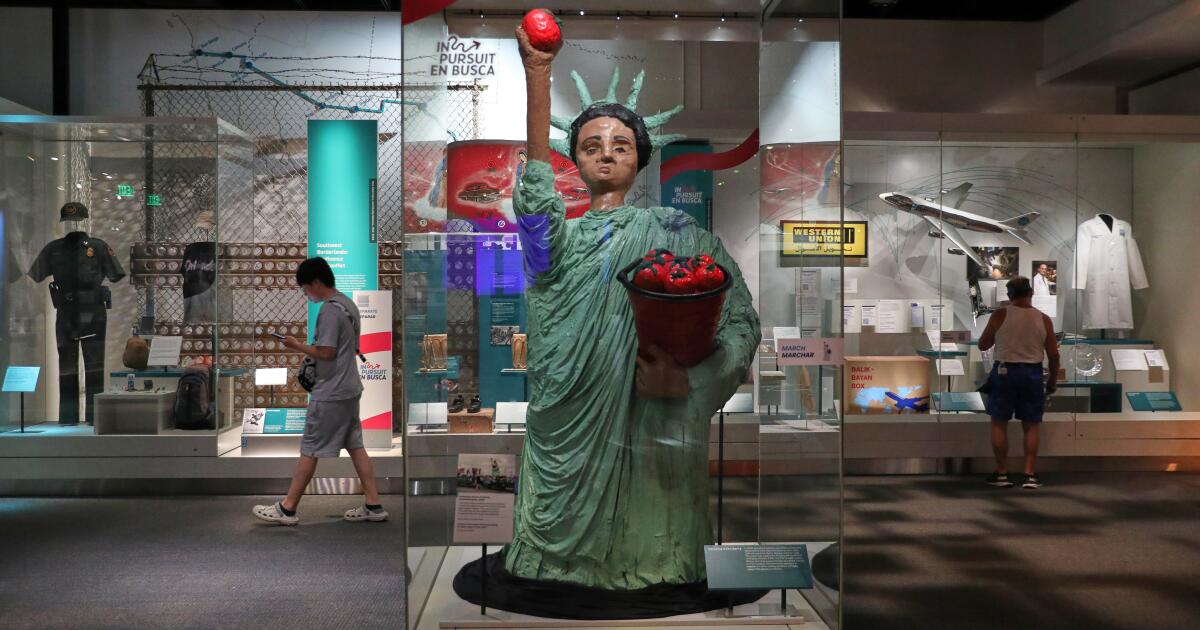
President Trump ordered his administration Friday to install signs in front of the Smithsonian Institution’s U.S. history museum telling visitors that some of the exhibits are inaccurate, his latest move to reshape how the story of the United States is told.
Trump’s move follows a report released July 4 by his Domestic Policy Council saying leaders of the Smithsonian and its National Museum of American History don’t tell history “in a way that is inspiring, unifying, and worthy of our great republic.”
The president lacks authority to quickly fire the Smithsonian leadership or to order changes to exhibits, so his executive order targets the sidewalks out front, which are maintained by the National Park Service. The order calls for signs telling visitors about the White House report and directing them to resources for what he calls “accurate information regarding America’s history.” It also calls for a temporary exhibit that corrects information he deems inaccurate.
Smithsonian officials declined to comment on Trump’s order.
Anthea M. Hartig, director of the National Museum of American History, challenged the White House report during congressional hearings last week.
“As we continue to fact-check the report, we unwaveringly attest that it does not fairly or accurately characterize the full body of work at the museum,” she told lawmakers. “There is always room for improvement. But I also know the beauty and the inspiration and the expertise that lies in our collections, our exhibits, and our programming.”
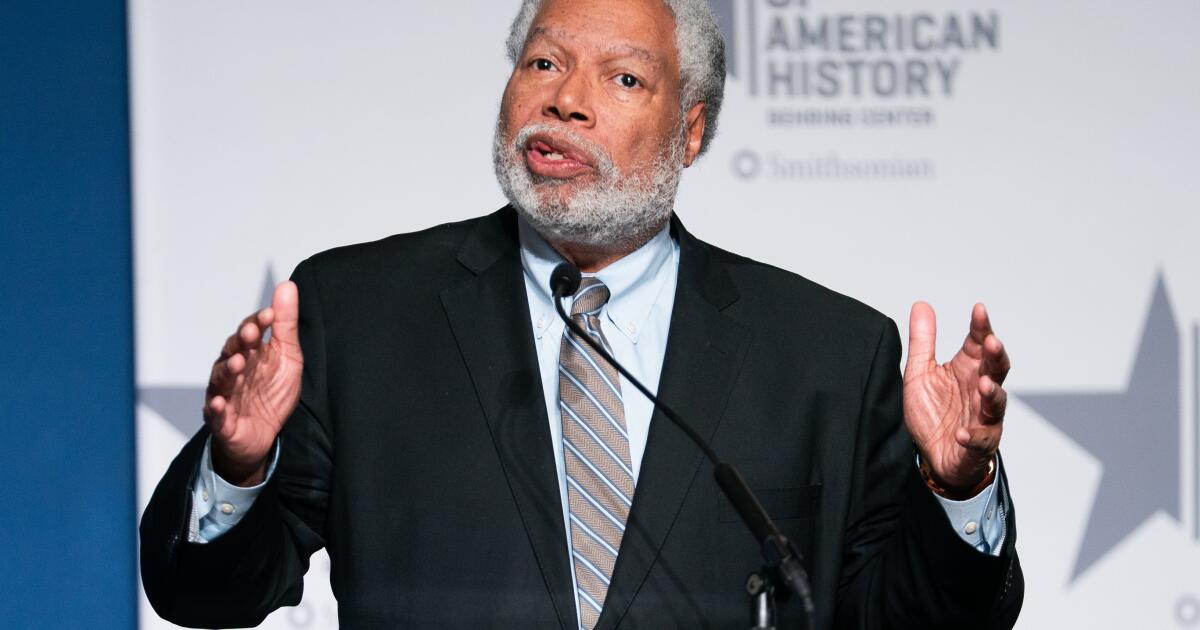
The Smithsonian operates outside the executive branch, and museum directors report to Smithsonian Institution Secretary Lonnie Bunch, who is subject to oversight from its Board of Regents.
Trump’s escalating effort to force changes at the Smithsonian marks the president’s latest move to transform cultural pillars of society, such as universities and art, that he considers out of step with conservative sensibilities. Trump had himself installed as chairman of the John F. Kennedy Center for the Performing Arts with the aim of overhauling programming, and his handpicked board voted to add his name to the building, only for a federal judge to later order the signs to be removed.
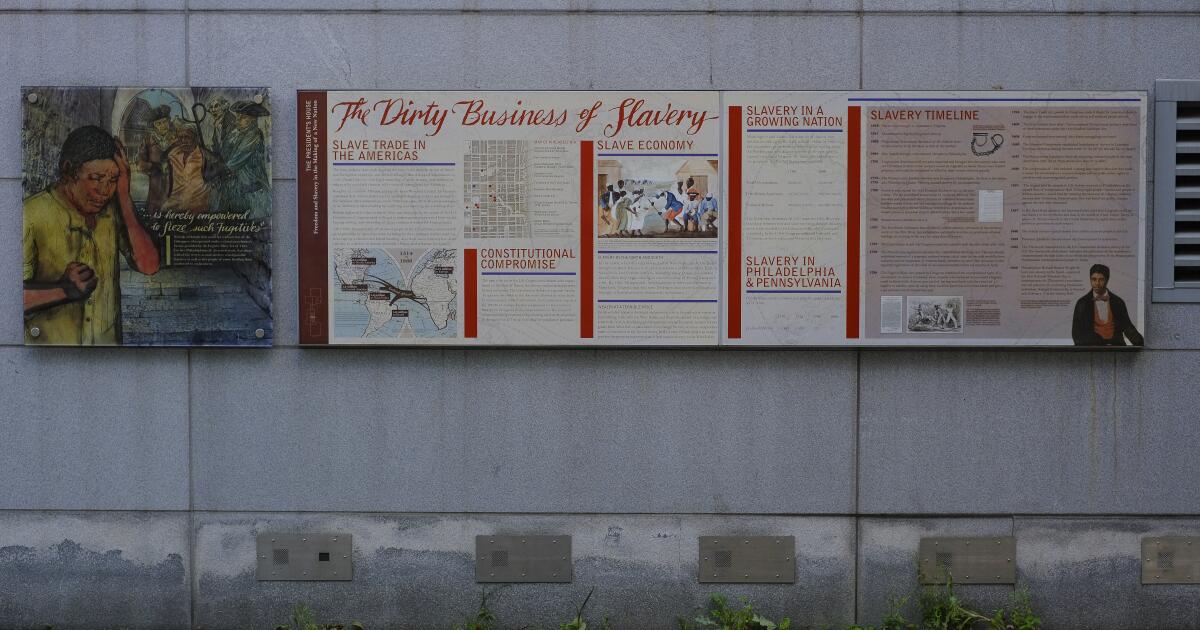
Trump has also imposed changes on historical sites beyond Washington, including in Philadelphia, where the administration won a court ruling this month allowing it to reinstall interpretive panels that critics say whitewash the history of slavery at the site of President Washington’s home. Advocates, academics and officials have been concerned for months that the version that complies with Trump’s order could give a history that plays down the pain in the nation’s past in favor of a more triumphant view.
Trump in March revealed his intention to force changes at the Smithsonian Institution with an executive order that targeted funding for programs that advanced “divisive narratives” and “improper ideology.”
NEW YORK — A White House report brands the leadership of the Smithsonian Institution, especially at the National Museum of American History, as radical activists who cannot be trusted, indicating that President Trump may be preparing to install his own team.
The report released late on Independence Day by the White House Domestic Policy Council comes in the midst of Trump’s aggressive campaign to overhaul some of Washington’s most sacred cultural and historic institutions. Trump in March revealed his intention to force changes at the Smithsonian Institution with an executive order that targeted funding for programs that advanced “divisive narratives” and “improper ideology,” as he continued a broadside against culture he deems too liberal.
“The Smithsonian Institution, and the National Museum of American History in particular, under its current leadership and current interpretive ideology, cannot be trusted to tell America’s story honestly and in a way that is inspiring, unifying, and worthy of our great republic,” according to the report by the council, which is led by a former top Trump speechwriter.
The authors added: “As this report shows, confirmed in the words of Museum leadership, this ideological capture has moved the Museum’s mission away from straightforward historical education and scholarship toward an extreme political activism that seeks to transform our country.”
The Smithsonian did not immediately respond to requests for comment Sunday.
Historian Lonnie Bunch, the Smithsonian’s current secretary, is the first African American to lead the institution. In an unrelated interview that aired Sunday on NBC’s “Meet the Press,” Bunch said “the notion of being a more perfect union, not the perfect union, is really what motivates me.”
“I think what I want people to understand is that there is a responsibility to continue to make those aspirations available, accessible, meaningful to a whole range of people,” Bunch said. “And that, in essence, America’s greatest strength, it’s not running away from its history, but it’s understanding how that history shaped us and continues to shape us.”
Historian Anthea M. Hartig is the first woman to serve as director of National Museum of American History.
Trump’s escalating effort to force changes at the Smithsonian marks the Republican president’s latest move to transform cultural pillars of society, such as universities and art, that he considers out of step with conservative sensibilities. Trump had himself installed as chairman of the John F. Kennedy Center for the Performing Arts with the aim of overhauling programming, and his handpicked board voted to add his name to the building, only to have a federal judge later order the signage to be removed.
The administration also forced Columbia University to make a series of policy changes by threatening the Ivy League school with the loss of several hundred million dollars in federal funding.
Trump has also imposed changes on historical sites beyond Washington, including in Philadelphia, where the administration won a court ruling last week allowing it to reinstall interpretive panels that critics say whitewash the history of slavery at the site of President George Washington’s home. Advocates, academics and officials have been concerned for months that the version that complies with Trump’s order could give a history that plays down the pain in the nation’s past in favor of a more triumphant view.
Gov. Josh Shapiro, D-Pa., accused Trump and his allies of trying to “rewrite history.”
“There’s not one individual narrative that a president gets about our history,” Shapiro, a potential presidential prospect, said in an interview that aired Sunday on CNN’s “State of the Union.” “And any president should want to make sure that that full history is shared, that the American people are able to draw their own conclusions.”
Shapiro added, “If we understand where we came from, we’re going to have a better path forward.”
Trump’s Domestic Policy Council does not necessarily agree.
The National Museum of American History “confronts visitors with materials intended to undermine faith in American institutions and the longstanding shared ideals of the American people,” the council’s report said. “We must be committed to restoring truth and sanity in how American history is presented and taught.”
In seeking to fulfill Trump’s order, which he called “Restoring Truth and Sanity to American History,” the review concluded by finding that the museum “by the intention and at the direction of current Museum and Smithsonian leadership, has become subject to institutional capture by a radical, activist ideology that is fundamentally opposed to telling the noble, honest story of the great country we know and love.”
WASHINGTON — The Supreme Court on Tuesday upheld the Constitution’s promise that all those born here are citizens of the United States, regardless of the status of their parents.
In a 6-3 decision, the justices rejected President Trump’s plan to revise the Constitution by executive order and to end citizenship at birth for newborns whose parents were here illegally or temporarily.
Chief Justice John G. Roberts spoke for the court to reject Trump’s proposed limits on birthright citizenship.
“Citizenship, then and now, was the right to have rights — to freely participate in our political community,” he said. “The Framers of the 14th Amendment extended that promise to ‘every free-born person in this land.’ We keep that promise today.”
Justices Sonia Sotomayor, Elena Kagan, Amy Coney Barrett and Ketanji Brown Jackson joined in full. Justice Brett M. Kavanaugh concurred in the outcome based on the federal law that incorporates birthright citizenship.
But the outcome was closer than most had predicted.
Justices Clarence Thomas, Samuel A. Alito and Neil M. Gorsuch dissented in agreement with Trump.
The decision is the second major defeat for Trump from a conservative court that usually supports broad presidential power.
In February, the court struck down Trump’s sweeping worldwide tariffs, his signature economic policy. Roberts said Congress, not the president, has the power to raise revenue and impose taxes, including duties on imports.
In April, Trump came to the court to hear the arguments over birthright citizenship. He sat in the gallery while the justices posed steadily skeptical questions to his solicitor general.
He left after an hour having heard enough to know he was likely to lose.
It was the rare Supreme Court case which was decided based simply on the words of the Constitution.
The justices, both conservative and liberal, say they look to what the Constitution says and how its words were originally understood.
The 14th Amendment adopted in 1868 says: “All persons born or naturalized in the United States and subject to the jurisdiction thereof are citizens of the United States and of the State where they reside.”
In its place, the Reconstruction Congress adopted the broad view of citizenship based on the place of birth, not parentage, that had been part of English law for centuries.
In the 19th Century, it was understood that the only exceptions to this rule of birthright citizenship were for the children of foreign diplomats, foreign troops on American soil or, for a time, Native Americans who lived on tribal reservations.
In 1924, Congress extended full citizenship to all Native Americans who were born in this country.
The Supreme Court had also confirmed the broad understanding of birthright citizenship in 1898. The justices upheld the U.S. citizenship of Wong Kim Ark who born in San Francisco to Chinese parents who later returned to China.
“The 14th Amendment affirms the ancient and fundamental rule of citizenship by birth within the territory,” the court said then. “In clear words and in manifest intent, [it] includes the children born, within the territory of the United States, of all other persons, of whatever race or color.”
Congress added birthright citizenship to the immigration laws in 1952.
“The privilege of United States citizenship is a priceless and profound gift,” he wrote, and in the future, it will not extend to newborns whose parents are in this country unlawfully or temporarily, such as on tourist, student or work visa, he said.
His proposal was quickly blocked by judges as unconstitutional, and it never went into effect.
In his appeal, Trump’s attorney argued that judges have been “misreading” the phrase “subject to the jurisdiction.” He said this refers to “political allegiance.”
By that standard, the children of temporary visitors and unlawful immigrants are not citizens because they and their parents “not completely subject to the United States’ political jurisdiction,” according to the administration.
Trump could have proposed legislation on tariffs and birthright citizenship and urged the Republican-led Congress to adopt new laws. Instead, he chose to try to change the law and revise the Constitution by executive order.
Before the Supreme Court, Trump’s attorney pointed to the surge of illegal immigration in recent decades.
“We’re in a new world now,” he said, one that calls for new restrictions on citizenship.
“It’s a new world. It’s the same Constitution,” responded Roberts.
A federal judge has ordered the Trump administration to restore signs related to topics such as climate change, slavery and Indigenous and LGBTQ+ history that were removed under an executive order to purge language at national parks that allegedly cast America in a negative light.
The order has prompted the removal of mentions of President Washington’s slaves at Independence National Historical Park in Philadelphia, signs regarding climate threats at Fort Sumter in South Carolina and a pride flag at the Stonewall National Monument in New York City, according to the lawsuit challenging the action.
A preliminary injunction was issued Friday by U.S. District Judge Angel Kelley in Boston, who sided with a coalition of conservation and historical groups and ordered all language removed under the order to be reinstated before the Fourth of July. Earlier this year, another federal judge ordered the signage related to Washington’s slaves restored.
In Friday’s injunction, Kelley accused the Trump administration of seeking “to rewrite the Nation’s history with a white-out pen,” and said that national parks play an important role in telling the multifaceted history of America, including “the good, the bad, and the ugly.”
“Because Defendants deemed it important to strip the parks of these undeniable truths in anticipation of the 250th Anniversary of our great Nation,” she wrote, “it is equally important that our shared history be honestly told and fully restored by the 250th Anniversary to properly honor the remarkable achievements of the United States.”
A spokesperson for the U.S. Department of the Interior dismissed the ruling as the work of a “liberal activist judge.”
“The Department will look at our appeal options while we celebrate UFC Freedom 250 on the South Lawn of the White House this weekend in honor of our nation’s 250th with the greatest president in the history of our country — President Donald J. Trump,” the spokesperson said in a statement.
Trump initially signed the executive order in March 2025, arguing that a revisionist movement is seeking to undermine American history by replacing objective fact with a distorted, ideologically driven narrative.
“Under this historical revision, our Nation’s unparalleled legacy of advancing liberty, individual rights, and human happiness is reconstructed as inherently racist, sexist, oppressive, or otherwise irredeemably flawed,” the order stated.
Under the order, more than 430 sites under the purview of the National Park Service were told to review language on monuments, memorials, statues and markers to ensure they didn’t disparage Americans past or present, with a close eye on language added during former President Biden’s administration. QR codes were also added at sites encouraging visitors to report any signs they believed violated the order.
In February, a coalition including the National Parks Conservation Assn., American Assn. for State and Local History, Assn. of National Park Rangers and Union of Concerned Scientists filed a lawsuit in federal court in Boston alleging that the order was erasing American history and science.
“National parks serve as living classrooms for our country, where science and history come to life for visitors,” Alan Spears, senior director of cultural resources at the parks conservation association, said in a February statement. “As Americans, we deserve national parks that tell stories of our country’s triumphs and heartbreaks alike. We can handle the truth.”