event

We were there: Hearing gunfire and ducking for cover at the D.C. gala shooting

Directly outside the Washington Hilton ballroom, as the yearly White House Correspondents’ Assn. dinner got underway Saturday, a Times reporter had just entered the men’s room when he heard a handful of loud pops ring out.

“Shooter!” someone shouted. “Get down! Shots fired!”

Inside the ballroom, thousands of journalists and politicians began to duck for cover as the event devolved from a celebration of free speech to a scene of fear.

The Times had six reporters at the dinner, seated at a table near the right side of the stage.

The Times reporter in the restroom, Gavin Quinton, heard the gunfire around 8:30 p.m. He had left The Times’ table minutes earlier, moving past the TV cameras and up toward the raised terrace near the ballroom’s security entrance. He crossed paths with CNN anchor Wolf Blitzer.

Outside the restroom, Cole Tomas Allen, 31, had broken into a sprint through the metal detectors, security footage would later show, getting within feet of the ballroom entrance.

Five or six shots fired by Secret Service agents missed Allen before agents brought him down near a staircase leading to the main floor, where Trump sat prominently in view.

A federal agent was hit in the chest in the exchange of gunfire but was wearing a bullet-proof vest and not seriously injured.

Inside the restroom, Quinton crouched near a corner. Others rushed into the room, including three hotel security guards who flung themselves in so quickly their backs slammed against the tiled wall. Within moments, a Secret Service agent positioned himself at the bathroom entrance, his pistol drawn.

“Head count?” he asked.

“A dozen — no, 15!” someone shouted back.

People stayed locked in bathroom stalls. Some tried to overcome the poor cellphone service to call loved ones. Confused, the mix of tuxedo-clad attendees, uniformed hotel guards and waitstaff tried to piece together what had happened.

“He had a gun,” one of the hotel guards said.

Another witness told Quinton that he initially thought Blitzer had been the shooter’s target.

“I look around and I hear shots as I’m opening the door. And I turn and I see him,” the man said of the gunman. “I look again and I’m like, ‘Oh, they just shot someone.’ ”

Blitzer, who was tackled to the floor by officers during the incident, would later say that “the first thing that went through my mind was whether he was going to shoot me.”

As the group speculated over whether the shooter had died in the volley, one man wondered aloud whether the event would continue. Initially thinking the gunman must have been killed, Quinton replied no.

“Why not?” the man asked. “It’s a bad guy who’s dead. It was a good f— ending. Seriously.”

The Washington Hilton has hosted the annual correspondents’ dinner for decades. The event, referred to locally as “Nerd Prom,” now comes with a slate of pre-parties and after-parties.

This was the president’s first appearance at the dinner since 2015; he had skipped it during his entire first term.

Questions now surround the security protocols. Guests faced little screening to enter the hotel on Saturday — a quick flash of a paper ticket — before heading down escalators to the only area with magnetometers, where bags were also searched.

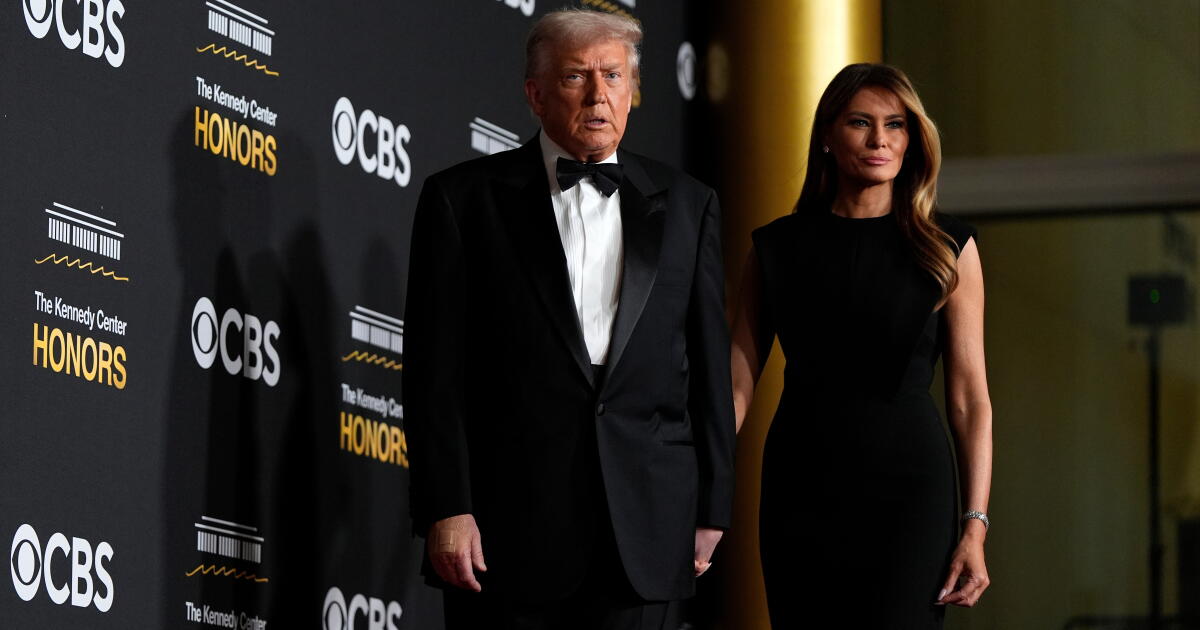
Trump had entered the ballroom at 8:15 p.m. as the Marine band played “Hail to the Chief.”

Twenty minutes later, videos show, Secret Service officers with ballistic vests and long guns barked instructions to clear a path as they rushed into the ballroom and onto the stage.

One agent pulled Vice President JD Vance away. Another escorted Trump, who appeared to trip, but later explained he had been urged to drop to the floor.

Other officials — Secretary of State Marco Rubio, Defense Secretary Pete Hegseth, FBI Director Kash Patel, Homeland Security advisor Stephen Miller — were quickly whisked away too.

At The Times’ table in the ballroom, nothing appeared amiss at first.

Waiters had just begun to clear plates of spring pea and burrata salad. The reporters did not hear the gunshots, but watched as the room fell silent and others began to drop from their seats and duck under the floor-length white tablecloths.

One reporter lost a shoe in the process and then feared a gunman would spot it. She dragged it under the table.

They stayed in place for several minutes, texting loved ones and waiting for an all-clear, but none came.

From under the tablecloth, reporters heard someone yell out, “God bless America! USA!” They feared that was the shooter.

It turned out to be Dan Scavino, White House deputy chief of staff. The chant did not catch on.

Eventually, others could be heard speaking loudly and dishes clanking. Guests began to peek out from under their tables and warily stand up. Uneasy laughter flickered about the ballroom.

Cellphone service inside the ballroom was spotty. There was confusion at first about whether a shooting had occurred or whether plates dropping to the floor had been mistaken for gunshots.

“I thought it was a tray going down,” Trump said later.

Just before 9 p.m., Weijia Jiang, a senior White House correspondent for CBS News who is president of the White House Correspondents’ Assn., told guests the program would “resume momentarily.”

A half hour later, Jiang returned to the stage and announced that law enforcement had requested guests leave the premises. She said Trump had told her no one was hurt and that he, the first lady and members of the Cabinet were safe.

In closing remarks, Jiang said journalism is a public service “because when there is an emergency, we run to the crisis — not away from it.”

“And on a night when we are thinking about the freedoms of the 1st Amendment, we must also think about how fragile they are,” she said. “I saw all of you reporting, and that’s what we do.”

Law enforcement and media leaders offered conflicting guidance. Quinton was among the first to evacuate the building, though the vast majority of guests waited inside for longer.

On his way out, he noticed a metal detector had already partially been dismantled when the shooter ran through.

Quinton passed the grounded shooter, restrained on his stomach, near the staircase just 20 or so feet from the bathroom entrance. He lifted his phone and recorded a brief, shaky video of the scene before security forced him out of the hotel and onto the street.

The entire spectrum of emotion was on display when security finally ordered everyone to evacuate. Women in gowns ran in fear. One man sobbed into the sleeves of his evening jacket.

Photos on social media showed others stopping to take selfies. Some drank wine straight form the bottle.

Quinton spotted the presidential motorcade outside of the hotel lobby at about 8:45 p.m. Around the same time, an ambulance arrived as about 100 event attendees were escorted out of the secured event perimeter.

More law enforcement was inside the hotel as guests exited the building, including agents from the Secret Service, ATF, FBI and the Department of Homeland Security. National Guard soldiers replaced celebrities and politicians at the red carpet entrance.

Outside, Metropolitan police ushered people north on Columbia Road NW. Hungry guests in tuxedos filed into a nearby 7-Eleven. The dinner’s main course — prime beef and Maine lobster — had not been served.

At the White House afterward, Trump said the event would be rescheduled.

“We’re not going to let anybody take over our society,” he told reporters who had rushed to the news conference still dressed in gowns and black tie. “We’re not going to cancel things out because we can’t do that.”

Meanwhile, the night’s after-parties continued, though organizers attempted a more somber tone. MS NOW, for instance, told those who had RSVP’d that their “Democracy After Hours” party would be a “space for friends and colleagues to be together.”

Independent journalist Tara Palmeri posted a photo on the social media site X of a full party with blue mood lighting.

“People were still partying, still hitting WHCD afterparties last night,” she wrote. “Epstein corruption, an escalating Iran conflict, and an active shooter— and Washington just… kept going. The cognitive dissonance is the system.”

On Sunday morning, the Washington Hilton appeared back to normal, except for the presence of journalists using the hotel as a backdrop for their live shots.

Source link

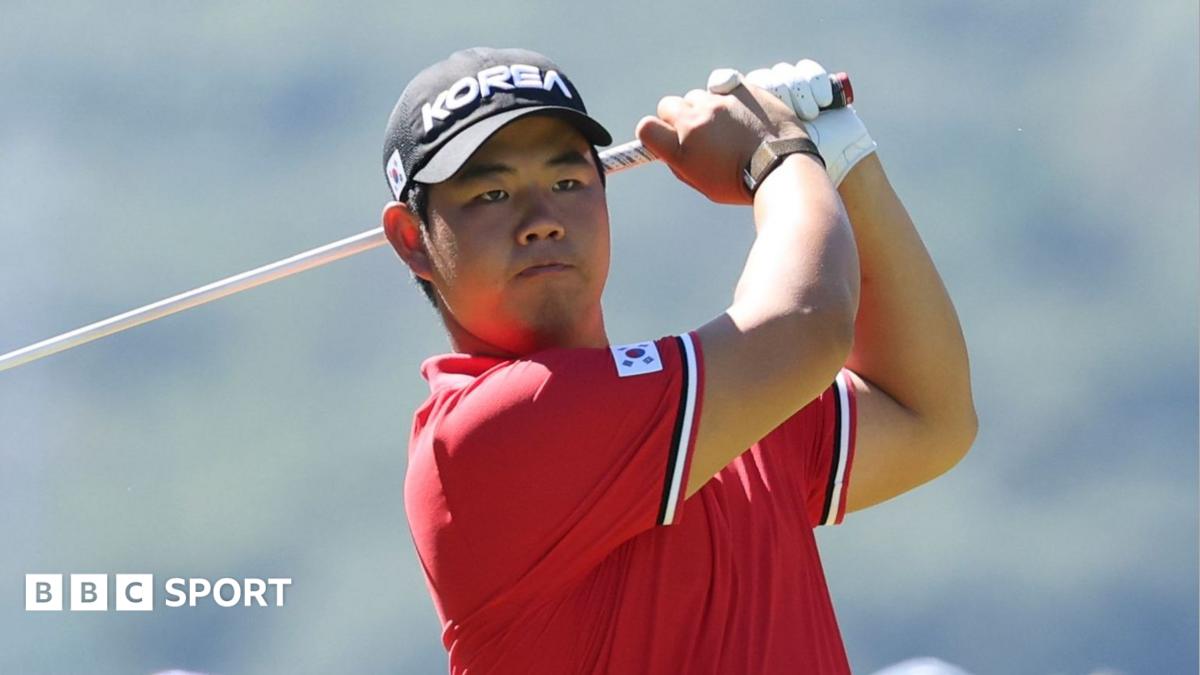
Zurich Classic: Brothers Alex and Matt Fitzpatrick make history by winning PGA Tour pairs event

The Fitzpatricks missed the cut in last year’s Zurich Classic and finished in a tie for 11th in 2024.

But this victory earns them a cheque worth £1m.

“It was a struggle,” Matt, who won the 2022 US Open, said.

“I was doing zero to help him but he was fantastic on the back nine. I said ‘just give us a chance on the last to hit a bunker shot like that’.”

“It means the world. I’m absolutely speechless, it was a grind today but he was unbelievable and I could not be more proud.”

The event was played over four rounds, with teams of two alternating between fourball (best ball) in the first and third rounds and foursomes (alternate shot) in the second and fourth rounds.

Matt, 31, already had two wins this year, including last week’s RBC Heritage.

Source link

Shooter’s path to White House press gala prompts security questions

An attack on the White House correspondents’ dinner by a gunman who came within feet of the ballroom where President Trump sat raised immediate questions about the night’s security protocol — and the future of large, high-profile events in a country with easy access to firearms and increasingly high political tensions.

The man breached metal detectors in front of the Washington Hilton ballroom and sprinted dozens of feet ahead before exchanging fire with federal agents. Shots were fired in an anteroom that had not an hour before seen thousands of guests, including senior government officials, streaming through.

A manifesto allegedly written by the suspect described his targets as members of the Trump administration, ranking from the highest to the lowest — but said he was willing to “go through” any guest standing in his way in order to kill the president’s aides.

The attempted attack on a room full of dignitaries underscored domestic unrest in Trump’s second term and deepened questions about how to effectively create security in a modern era of lone actors, online radicalization and mass shootings. It was the third known time an attempted assassin has come close to Trump since his 2024 presidential campaign began.

Acting Atty. Gen. Todd Blanche on Sunday called the U.S. Secret Service response a “massive security success story.” But within hours of the incident, bipartisan leaders of the House Oversight Committee demanded a hearing on the agency’s security plans for the dinner.

In the manifesto sent to his family, the alleged gunman, Cole Tomas Allen, of Torrance, marveled at a lack of security.

“No damn security. Not in transport. Not in the hotel. Not in the event,” he wrote. “I walk in with multiple weapons and not a single person there considers the possibility that I could be a threat.”

The Hilton, in a ritzy Washington neighborhood, has long hosted the White House correspondents’ dinner. It is the same hotel where President Reagan and three others were shot in 1981.

The shooting caused terror among guests, some of whom noted they had expected more security to enter the event and Trump was whisked offstage within the first minute of shots being fired. While the event has traditionally hosted sitting presidents in the past, Trump’s decision this year to appear for the first time since taking office made the event particularly high profile.

His presence, alongside Vice President JD Vance and much of the Cabinet and line of succession, brought with it added security protocols and personnel — raising questions over whether the storied dinner and its guests of congressional members, diplomats and mid-level officials would have been even more susceptible to attack without Trump in attendance.

Trump on Sunday said it is “tough” to secure a hotel in the middle of a city with “buildings all around and hotel rooms on top,” but praised the Secret Service and law enforcement officers. One officer was shot, not fatally.

Talking to reporters after the incident Saturday night, Trump swiftly likened it to the attempt on his life by a gunman in Butler, Pa., during the 2024 presidential campaign, and suggested that it justified his controversial plans to construct a fortified ballroom on the White House grounds. He called the hotel “not a particularly secure building,” though he later said the room was “very, very secure.”

Plans to reschedule the dinner are under review. White House Correspondents’ Assn. President Wiejia Jiang of CBS News said the organization’s board would meet to assess what had happened.

Blanche said Sunday an investigation into what had happened was ongoing. He had attended a reception before the dinner on the first floor of the hotel hosted by CBS News, one of many that did not require any security check by law enforcement authorities.

“The first takeaway, or the takeaway that should be obvious, is that the system worked. And that we stopped the suspect, and we stopped him as soon as he tried to do what he was trying to do,” Blanche said on NBC’s “Meet the Press.”

But the attack raises a question about whether presidential security protocols are effective for modern tactics, or whether the country is “in a new domain” in which those procedures no longer meet the nature of the possible threats, said Neil Shortland, director of the Center for Terrorism and Security Studies at the University of Massachusetts Lowell.

Federal investigators should examine what the security policies were, what type of attacks they were designed to prevent, and whether that protocol was out of date, Shortland said.

“Did you follow the policy is a great question,” he said. “Was the policy correct in this modern day and for this modern situation is a separate question.”

The country is facing “the most complex threat environment in our nation’s history,” particularly from lone actors who are often radicalized online, Sam Vinograd, a former official at the Department of Homeland Security, said on CBS’ “Face the Nation.”

“It can be true that law enforcement and intelligence professionals prepared exhaustively for last night,” she said Sunday. “But it can also be true that in this moment, in this security environment, the paradigms of the past may not be sufficient to meet the moment.”

That raises the “need to rethink what it is going to take to actually secure these mass gatherings,” she said.

Trump appeared to voice the same idea Saturday evening, telling reporters, “Today, we need levels of security that probably nobody’s ever seen before.” He went on to say that “this is why we have to have” the East Wing ballroom, which he described as drone-proof and having bulletproof glass.

Kris Brown, president of the gun control organization Brady — which is named after Reagan’s press secretary, James Brady, who was shot in the 1981 attack — said lawmakers should instead consider passing legislation to help prevent gun violence.

“Not every public event can take place in the ballroom, in that kind of protection — nor can we afford to live in a society where our solution to gun violence is to barricade our public officials, our children, away in fortresses,” Brown said.

About 2,000 journalists, dignitaries and other guests attended the event, rushing through rain to enter using multiple hotel entrances. They were asked to show their tickets as they walked past security guards, but there was no check-in procedure or ID check. A Times reporter was waved toward the entrance without showing a ticket as she tried to get it out of her purse.

Inside, guests milled about on multiple levels where pre-dinner receptions were occurring. Hotel guests mingled with the crowd, granted full access to the hotel’s amenities, including its boutiques and restaurants.

Two protesters briefly took over a small red carpet where guests were lined up to take professional photos; Times reporters saw a third woman dressed in a formal gown and shouting protest slogans being escorted out by security guards after apparently having entered the event.

Guests were required to flash their tickets to go down an escalator to the ballroom level, then present the ticket before walking through metal detectors and having bags searched ahead of the ballroom entrance.

Allen, who had reserved a room as a hotel guest, said in his manifesto obtained by the New York Post that security was far less stringent than he had expected. Two U.S. officials told The Times that the contents of the manifesto are authentic.

“I expected security cameras at every bend, bugged hotel rooms, armed agents every 10 feet, metal detectors out the wazoo. What I got (who knows, maybe they’re pranking me!) is nothing,” he wrote.

He noted that security guards appeared to be focused on protesters and arrivals outside, writing, “apparently no one thought about what happens if someone checks in the day before.”

It is possible that steps to further restrict access to the ballroom level, keep guests away from the event location and check attendees’ identities outside could have provided additional security, said Erin Kearns, director of law enforcement partnerships at the National Counterterrorism Innovation, Technology and Education Center.

“The lesson that can be taken away is just thinking about how to harden and strengthen security at future events when you have so many high-profile people,” she said.

The hotel was a “soft target” with a makeshift perimeter, and there were “almost zero intervention points” where the shooter could have been apprehended before arriving, Shortland said. That was partly because he traveled by train, which does not have security screenings.

Authorities should also examine whether Allen was known to authorities and, if so, whether intelligence operatives could have pieced together his train travel and arrival in the president’s orbit, Shortland said.

The attempted shooting added to a growing list of instances of political violence in the United States. Last year, one Minnesota state legislator and her spouse were killed by a gunman while another lawmaker and his wife survived; the conservative activist Charlie Kirk — whose wife, Erika, was in attendance Saturday — was shot and killed at a speaking event; an arsonist attacked the residence of Pennsylvania Gov. Josh Shapiro.

Some of that violence has been directed toward Trump, something he frequently talks about. He was injured in the Butler incident, but has used his survival to argue that God saved him so he could become president. Two months later, a Secret Service agent shot at a gunman pointing a rifle on Trump’s golf course as the president golfed.

On Feb. 22, an armed man was shot and killed after entering the secure perimeter around Trump’s Mar-a-Lago home, when the president was in Washington.

“It’s always shocking when something like this happens. It’s happened to me a little bit,” Trump said Saturday.

Source link

Potential 2028 presidential candidates gather in L.A. for Democratic fundraiser

Prominent Democratic governors, some considering 2028 presidential bids, gathered Thursday in Los Angeles for a high-dollar fundraiser.

Tickets to attend the event cost up to $100,000, according to an invitation. Closed to the press, it was expected to raise more than $1.5 million for the Democratic Governors Assn., among the largest amount the group has ever raised at a fundraiser in Los Angeles.

Gov. Gavin Newsom introduced fellow Democratic Govs. Andy Beshear of Kentucky, Maura Healey of Massachusetts, Laura Kelly of Kansas, Katie Hobbs of Arizona, Wes Moore of Maryland, Josh Stein of North Carolina, Tim Walz of Minnesota and Gretchen Whitmer of Michigan.

Several attendees, including Newson, Beshear and Whitmore, are widely believed to be eyeing a presidential run in 2028. Walz was then-Vice President Kamala Harris’ running mate in her unsuccessful 2024 bid for the presidency.

Beshear moderated the conversation among the state leaders at the Los Angeles-area home of liquor heiress Ellen Bronfman Hauptman and her husband, former Chicago Fire soccer club owner Andrew Hauptman. Attendees enjoyed cocktails and passed hors d’oeuvres
around the pool before settling in for a conversation in the house that focused on how governors must focus on results more than ideological disputes, and how that ought to be a model for federal elected officials.

About 45 donors attended, including Damon Lindelof, the creator of “Lost,” and Scott Budnick, the executive producer of “The Hangover” movie series. Others who supported the event included director J.J. Abrams and former Walt Disney Studios Chairman Alan Horn.

Source link

Janet and Paris Jackson skipped the ‘Michael’ premiere

Michael Jackson’s famous clan stepped out to celebrate the premiere of the new “Michael” biopic, but some of the Jacksons snubbed the event and have opposed the film.

On Monday at the Dolby Theatre in Hollywood, several members of the Jackson family gushed about the Antoine Fuqua-helmed film, which depicts the origin story of the King of Pop and follows the hitmaker from childhood through his upward trajectory to superstar status in the 1980s.

Michael Jackson’s nephew Jaafar Jackson, son of Jermaine Jackson, starred in the title role, and his aunts and uncles dropped accolades for his performance in red carpet interviews. Marlon Jackson said, “Watching the movie, sometimes we think we’re watching Michael up there, that’s how good he is.”

La Toya Jackson called his performance “absolutely excellent” and echoed Marlon, saying that she forgot she was watching Jaafar: “I thought I was watching my brother.”

But not all of the Jacksons were up for celebrating the film. Most notably absent were the “Beat It” singer’s pop star sister, Janet Jackson, and his daughter, Paris Jackson. The eldest of the siblings, Rebbie Jackson, also skipped the event. And although the film includes portrayals of many of the Jackson siblings, some also asked to be left out of the biopic, including Janet.

“I wish everybody was in the movie,” La Toya Jackson told Variety at the premiere. “She was asked and she kindly declined, so you have to respect her wishes.”

Last month, rumors began to swirl that the “All for You” singer attended a family screening of the film and wasn’t pleased. Page Six reported that Janet and Jermaine got into a spat, with Janet critiquing almost every scene.

At Monday’s premiere, “Entertainment Tonight” asked La Toya about the controversy, which she was quick to shut down. “There was absolutely no problem whatsoever, none whatsoever,” she said. “Please believe it.”

Although both of Michael Jackson’s sons, Prince and Bigi, have supported events for the film (Prince attended Monday’s premiere, and Bigi attended a Berlin premiere last week), and Prince served as an executive producer and was regularly on set, Paris Jackson has been vocal about her lack of involvement.

Last year, she posted on social media that she gave feedback on an early draft of the film, but her notes weren’t addressed. “I’ve left it alone,” she said. “It’s not my project, they’re going to make whatever they’re going to make.”

Paris Jackson, who works in the entertainment industry as a model, actor and musician, said she had stayed quiet about her feelings toward the “sugar-coated” project because she knew many people would be happy with it. “The film panders to a very specific section of my dad’s fandom that still lives in the fantasy,” she said.

“The thing about these biopics is, it’s Hollywood. It’s fantasy land. It’s not real, but it’s sold to you as real,” she continued. “The narrative is being controlled, and there’s a lot of inaccuracy, and there’s a lot of full blown lies, and at the end of the day, that doesn’t really fly with me.”

In earlier drafts of the “Michael” script, plot points included sexual abuse allegations brought by 13-year-old Jordan Chandler in 1993. Reportedly, the Michael Jackson estate became aware of a contract that legally barred the dramatization of the Chandler family and had to scrap parts of the script.

The film was originally set to premiere last year, but the production needed a new ending and weeks of reshoots to make the new iteration of the film work. In the version that hit theaters this week, “Michael” concludes in 1988, with a teaser for a potential Part 2.

Colman Domingo and Nia Long, who portray Michael Jackson’s parents, Joe and Katherine Jackson, appeared on “Today” this week and addressed the elephant in the movie theater.

“The film takes place from the ‘60s to 1988, so it does not go into the first allegations,” Domingo said. “Basically, we center it on the makings of Michael. So it’s an intimate portrait of who Michael is … through his eyes. So that’s what this film is.

“And there’s a possibility of there being a Part 2 that may deal with some other things that happen afterward,” he continued. “This is about the making of Michael, how he was raised, and then how he was trying to find his voice as an artist and be a solo artist.”

Long added that there might be a sequel, “if the price is right.”

Source link

All Saints’ Natalie Appleton’s son Ace Howlett towers over her as they attend immersive David Bowie event

NATALIE Appleton’s son Ace looked every inch the grown-up rockstar as he attended a new Bowie exhibition with his famous Mum.

​The pair posed on the red carpet at the opening night of David Bowie: You’re Not Alone at The Lightroom in London.

Natalie poses with her rockstar son Ace at the Bowie exhibition Credit: Getty
Natalie and Ace spent some quality time together at the event Credit: Getty
Natalie posed proudly on the red carpet alongside Ace who towered over her Credit: Getty

Ace is the son of the All Saints star and her husband, The Prodigy’s Liam Howlett.

​Natalie is around 5’5″, while her famous other half, Liam, is 6’1″, and it looks like Ace certainly inherited his Dad’s lofty genes.

The 22-year-old towered over his Mum as the mum-and-son duo posed for photographers at the showbiz event.

​Liam Howlett and Natalie have been together for 25 years after they met at V Festival in 2000.  They married in 2002, and Ace was born in 2004.

seeing double

All Saints’ Natalie Appleton shares picture of rarely seen daughter Rachel


ABSOLUTELY APPLETON

What you need to know about All Saints star Natalie Appleton

​Natalie also has an older daughter, Rachel, 33, from a previous relationship with Dreamboys stripper Carl Robinson.

Despite their fame, Natalie and Liam have kept their family life relatively private, choosing to let their son carve out his own path.

And it seems that approach has paid off, with Ace now making a name for himself on the London music scene in his own right.

​Following in the footsteps of his musical parents, Ace is bass guitarist for the Camden-based group, Pedestrian Band, with his proud Mum known to plug his music on her socials.

Ace’s band Pedestrian are still emerging on the London indie scene, but they’re already turning heads with their experimental sound.

The trio have released their debut EP and built a cult following, earning a reputation as one of Camden’s most exciting up-and-coming acts.

The exhibition received a thumbs up from Ace Credit: Getty
Ace’s Auntie is All Saints star Nicole Appleton Credit: Getty
Ace is making a name for himself on the Camden music scene Credit: Instagram/Natalie Appleton

Prodigy star Liam and Natalie have been a couple for 25 years Credit: Getty – Contributor

While he isn’t relying on his famous surname, Ace is well-connected in music, with cousin Gene Gallagher, son of Nicole Appleton and Liam Gallagher.

Meanwhile, Natalie and her sister Nicole shot to fame in 1996 alongside Shaznay Lewis and Melanie Blatt in the girl band All Saints.

The group proved a massive hit and brought fans songs like Pure Shores, Black Coffee, and Never Ever.

The foursome became huge stars, with Nicole and Natalie going on to date some big celebrities, before settling down with Liam.

Nicole once had a high-profile with Robbie Williams between 1997 and 1999, which included an engagement and a terminated pregnancy.

Natalie and Ace attended the launch of Lightroom’s latest exhibition of immersive Bowie content projected onto it’s 11-metre-high walls and floor.

​The hour-long experience features live recordings, interviews and unseen footage from the David Bowie Archive.

​With a huge sound system and Bowie as narrator, it’s considered the closest to experiencing the late icon live.

​David Bowie: You’re Not Alone will run at Lightroom near King’s Cross from 22nd April 2026.

Tickets are priced from £25 for adults and £15 for students and concessions.

Nicole Appleton and Liam Gallagher shortly after Gene was born in 2001 Credit: News Group Newspapers Ltd
All Saints were one of the biggest acts of the 90s Credit: Getty

Source link

Punk in the Park festival’s founder donated to Trump. The fans revolted

Cameron Collins was sick of Joe Biden.

The owner of concert promoter Brew Ha Ha Productions describes himself as a libertarian-leaning conservative who built his career in San Juan Capistrano. He’d kept his personal politics out of his popular SoCal events, like the ska fest OC Super Show and the nationally touring Punk in the Park fest, a staple for bands like Bad Religion and Pennywise.

On May 30, 2024, Collins felt dismayed that Biden had pursued reelection. In a fit of anger, he donated $225 to Donald Trump’s campaign.

“It was just an impulsive thing,” Collins said in an interview. “Biden had said he was going to run again. I was like, nope. He’d said he wasn’t. It was more about that than anything. I don’t post anything political or talk about anything politically. I’ve never donated to anything like that before.”

That donation proved fateful. After a small punk label discovered and decried Collins’ donation, the scene turned on him. Influential bands pulled out of his festivals or said they wouldn’t return.

On Feb. 27, Collins canceled every Punk in the Park date for 2026.

“The current climate surrounding the events has created challenges that make it impossible for us to move forward,” the organizers wrote on Instagram.

It’s no surprise that an underground music scene would loathe a Trump-donating promoter. Amid the Iran war, raids by U.S. Immigration and Customs Enforcement, and the Epstein files, many Americans want Trump supporters gone from their lives, some viewing any form of support for him as an attack on their and others’ safety and dignity.

Yet until this donation, Collins was a respected promoter whose events sustained hundreds of acts, including progressive bands. Some artists who relied on Collins’ festivals — even if they hate his politics — said the backlash will hurt their livelihoods too.

“It was the worst money I ever spent,” Collins said. “It was not worth this.”

On a March afternoon after canceling his tours, Collins spoke to The Times on a Zoom from his home in Texas. He wore a thick gray beard and the chunky glasses of an aging rocker. His home office was plastered in concert posters from his decades of shows, which include Punk in Drublic (a long-running collaboration with his friends in the left-leaning band NOFX), Silverado Showdown in Orange County and SoCal rock radio station KLOS’ Sabroso Festival.

He expressed bewilderment over the fan revolt that turned him from a scene mogul who gave to pediatric cancer research charities to a villain with a gutted festival business.

“I feel like my reputation with every artist I ever worked with was that they would say, ‘The guy’s got integrity. He treats everyone right. He fights for this scene,’ ” Collins said. “I’m wondering what is happening right now that this has become so polarizing.”

Asked what Trump policies he supported, Collins sighed and said, “A vote for a candidate is not an endorsement of everything they stand for. I am very antiwar. There were promises that Trump made — no more foreign wars, supporting Ukraine by ending that war, lowering prices on gas and on groceries. Dinner table topics.”

Those goals are significantly at odds with the president’s track record. Did Trump deliver on Collins’ donation?

“The way that this whole fiasco has gone down — no one would have voted for that,” he said.

Punk has long struggled with a reactionary streak. British bands in the ‘70s wore swastika armbands for shock value. The Sex Pistols’ Johnny Rotten and the Ramones’ Johnny Ramone turned rightward, and Orange County’s hardcore scene has had neo-Nazi extremists. Gen X punk fans who consider themselves anti-establishment might see online leftists as imposing on their ability to have consequence-free political speech.

Yet the vitality of today’s punk scene is driven by young, racially and sexuality-diverse fans who believe they are in grave danger from Trump’s policies.

Last year, Brandon Lewis, the founder of the Columbus, Ohio-based label Punkerton Records, was poking around on the donor database Open Secrets. He was curious how his scene was donating, and he’d attended Brew Ha Ha events like the Ohio punk festival Camp Anarchy. He checked where Collins put his money and was appalled that it went to Trump.

“We refuse to support, defend, or stay silent about someone who gave money to a man actively destroying everything we care about, deporting our friends and families, erasing the existence of our trans community, stripping away civil liberties, civil rights, and workers’ rights, while dismantling the Constitution itself,” Lewis wrote from Punkerton’s Instagram.

“I’m a combat veteran, and this administration is just pushing everything I believe in about freedom out the window,” Lewis told The Times. “When I would listen to Trump’s rhetoric about ICE — I’ve got friends who are undocumented. Supporting that in a financial way, supporting someone saying my trans friends don’t exist, and to do so coming from a music scene that to me is accepting and kind and certainly not ripping families apart, I couldn’t in good conscience let that go.”

Other bands in the scene, like Dillinger Four, found more donations — around $100 or $200 each — from Collins going to the Trump-supporting political action committees WinRed and Never Surrender and the Trump National Committee. Collins’ support ran deeper than a one-off gesture.

Left-leaning fans demanded that bands drop off Collins’ festival bills.

Dropkick Murphys, a rough-and-ready enemy of Trumpism in punk, had played Collins’ past events. When word of his donations spread, the band came out swinging.

“Punk Rock and Donald Trump just don’t belong together,” they wrote in an Instagram post . “So, upon finding out that Brew Ha Ha promotions donated to the Trump campaign, we will not be playing any more Punk in the Park shows.”

Some acts, like old-guard punks the Adicts and ska group the Aquabats, canceled sets at Collins’ events. Other bands, like Dead Kennedys, said they opposed his beliefs but fulfilled their contracts.

“Dead Kennedys have always stood firmly against authoritarianism, racism, and fascism. That has not changed,” the group wroteon social media. “After these scheduled appearances, we will not be participating in future Punk In the Park events.”

Collins said he understood why bands jumped ship. “There was so much pressure building,” he said. “The bands are a business. You have to say, at what level is the pay worth the headache?”

Yet he insisted that “anyone that pulled off did not pull out because they were standing for something, but were being pummeled to the ground by everyone that said they’d better do it or else. I don’t want those bands to go through that.”

Many fans say that Collins is seeing the predictable consequences of supporting a politician the scene despises.

Others struggled with what to do in response. Monique Powell, the singer for the Orange County ska band Save Ferris, describes herself as a “queer anarchist anti-Netanyahu Jewish child of a North African immigrant,” and far from a Trump sympathizer. Yet Save Ferris played Collins’ OC Super Show event in spite of the protests and bands pulling out.

She said that, while she opposes MAGA, she “wasn’t willing to disappoint fans and put hundreds of people out of work just because someone had a view I didn’t agree with.”

She said Collins “has been an important part of creating and nurturing this scene. He gave a lot of people work. From onstage, I see all the vendors, the stage crew, all providing jobs for people of all backgrounds. He’s given a place for fans to come together, even if they don’t all believe the same stuff.”

Save Ferris was a breakout act in the ‘90s and is now a working-class band on the ska and punk festival circuit. “I see the midsized, hometown venues that the bands of my ilk play — they’re being bought out or dying,” Powell said. “I’m not about to start getting out pitchforks for someone who did something that’s nothing compared to the effects of larger companies.”

Take, for example, Beverly Hills-based concert giant Live Nation, which was in the news last week after a federal jury in New York ruled against it in an antitrust case. Live Nation’s chief executive, Michael Rapino, has donated to Democrats Kamala Harris, Sens. Jacky Rosen of Nevada, Lisa Blunt Rochester of Delaware and Adam Schiff of California, and the music biz-friendly Texas Republican John Cornyn. Live Nation’s PAC has given to Republican Sens. Marsha Blackburn of Tennessee and Ohio Rep. Jim Jordan, alongside several Democrats. Billionaire Philip Anschutz, whose namesake firm AEG is the parent company of Coachella promoter Goldenvoice, has donated millions to Republican politicians, PACs and party organizations for decades — exponentially more than Collins ever did.

It’s fair for to wonder why music fans who hold the line on supporting a Trump donor like Collins might attend those other shows. Lewis said he struggles with that contradiction too but said it hurt worse coming from a punk promoter.

“Donating to Trump is antithesis of what punk means. Hating people for their sexuality or skin color is not punk in the least bit. People clearly expected better from a punk rock festival,” he said.

“I think Live Nation should be broken in half,” Lewis added. “But it’s no knock on someone who wants to see Social Distortion at a Live Nation venue; they need escape as well. I’m just not going to pretend Live Nation is a beacon for good things.”

Those punk communities are pushing back beyond Collins’ events. The SoCal gothic-cumbia DJ collective Los Goths pulled out of the Orange County festival Los Darks after learning its organizers, Peachtree Entertainment, produced the MAGA-champion Kid Rock’s controversial Rock the Country festival. The Los Angeles crust-punk event C.Y. Fest was scrapped after its organizer, Ignacio “Nacho Corrupted” Rodriguera was accused of sexual misconduct (he called the claims “false allegations and misinformation,” but stepped back from the festival).

Collins’ company produces events outside the punk scene, focused on craft beer and other music genres. He recently revamped his upcoming Me Gusta festival into Sublime Fest after the rap group Cypress Hill pulled out. (Last year, Sublime played at the Trump National Doral golf course for the Saudi-backed LIV Golf tour.)

Collins is not sure how he’ll find his way back into the punk scene or if the fans will want him there again.

“I still go out into the audience because I just want to see, is it real? Do people hate me?” he said. “We have bands up there like the Casualties, who are flying [anti-ICE] flags. People are like, ‘You’re a fascist,’ but I’m paying a band to go on my stage to say whatever they want, and then signing a check and going, ‘Thanks for doing it.’ ”

In America‘s current political climate, left-leaning punk fans may not have patience for Trump sympathizers. Having heterodox beliefs is one thing; financially supporting the president is another. Collins is a free market guy, and the punk market has spoken.

Yet huge companies that donate to Trump and his allies are consolidating the industry. It’s harder for progressive punks who want the scene to reflect their values.

“I feel like we created a sustainable, realistic scene that can keep going for years, and bands can earn the money that they need to anchor those tours,” Collins said. His donation caused this avoidable backlash, but “if you take away festivals that are their anchors, like we have been for so many of these artists over the years, how do they tour? This is what the bands are telling me, that ‘we’re the ones getting killed here.’ ”


Source link

L.A. Times Festival of Books kicks off with packed panels at USC

Tens of thousands of readers of all ages, from toddlers clutching picture books to longtime fans carrying armfuls of paperbacks, fanned out across the USC campus Saturday for the opening day of the 31st Los Angeles Times Festival of Books, packing panels and lining up to see favorite authors and celebrity guests.

It was too early to know how many people attended the first day of the event, billed as the country’s largest literary festival, though organizers said they expect between 150,000 and 155,000 attendees over the weekend. By late morning, the campus was already bustling, with strong turnout expected for appearances by author T.C. Boyle and actors Sarah Jessica Parker and David Duchovny, among others.

Founded in 1996 and spread across eight outdoor stages and 12 indoor venues, the festival has become a fixture on Los Angeles’ cultural calendar, bringing together more than 550 storytellers for panels, author interviews, book signings, performances and screenings spanning a wide range of genres, from children’s story times to cooking demonstrations.

This year’s lineup features a broad mix of writers, performers and public figures, including comedian Larry David, musician Lionel Richie, multihyphenate businesswoman (and Beyoncé’s mother) Tina Knowles, author and social critic Roxane Gay and scholar Reza Aslan.

Under sunny skies, actor and reality TV personality Lisa Rinna brought humor and a bit of bite to a 10:30 a.m. conversation on the festival’s main stage. The “Real Housewives of Beverly Hills” alum released her second memoir, “You Better Believe I’m Gonna Talk About It,” in February, chronicling her time on the show and her recent turn on Season 4 of Peacock’s reality competition series “The Traitors.”

Reflecting on her approach to “Traitors,” Rinna said she wanted to strip away the conflict-driven persona she had cultivated on “Real Housewives” and present a more unfiltered version of herself. “I was like, ‘Self, listen. You’re gonna go in there and just be you. No housewife s—, none of that reactionary stuff.’ ”

In conversation with Times senior television writer Yvonne Villarreal, Rinna also spoke candidly about the loss of her mother, Lois Rinna, in 2021 and how her grief manifested in a feeling of rage while she was filming Season 12 of “Real Housewives.”

“It really took me by surprise,” she said. “And you have to give space for it because you can’t make it go away. … They always say time heals, but time makes everything just a little less intense.”

At a noon panel titled “Fire Escape: Wildfires and the Changing Geography of Southern California,” moderated by Times climate and energy reporter Blanca Begert, author and former wildland firefighter Jordan Thomas said the scale and frequency of California wildfires have shifted dramatically in recent decades.

“The vast majority of the largest wildfires in California’s recorded history have happened just in the past 20 years,” said Thomas, author of last year’s National Book Award finalist “When It All Burns: Fighting Fire in a Transformed World.” “While I was a hotshot, there were three of those fires burning simultaneously, including a million-acre fire — more than used to burn across the entire American West over the course of a decade.”

In the early afternoon, former Georgia Rep. Stacey Abrams spoke with moderator Leigh Haber about artificial intelligence and voter suppression in front of an enthusiastic, packed crowd at USC’s Bovard Auditorium.

Abrams’ latest Avery Keene novel, “Coded Justice,” came out last year and explores the role of artificial intelligence in the healthcare industry. AI has already become enmeshed in everyday life, she said, asking audience members to raise their hands if they had used TSA PreCheck or a streaming service.

“AI is a tool … but it is created by someone, it is programmed by someone, it is controlled by someone,” she said. “Regulation is not about slowing down progress. It is about asking questions and saying that in the absence of answers, we’re going to put on reasonable restraints that we can revisit.”

Abrams also revealed that her next book, the fourth in her Avery Keene thriller series, will focus on prediction markets.

“I write Avery Keene novels to tell stories about social justice, but I put it in a form that’s accessible to people who don’t think that they are social justice people,” Abrams said. “I want to meet people where they are, not where I want them to be.”

She also encouraged audience members to push back against voter suppression and defend democracy by volunteering at polling places — even in reliably blue districts — warning that she believes masked paramilitary groups will be allowed to patrol voting locations and target people of color in the upcoming midterm elections.

The festival kicked off Friday evening with the 46th Los Angeles Times Book Prizes ceremony at Bovard Auditorium, emceed by Times columnist LZ Granderson, recognizing both emerging voices and established writers.

Winners were announced in 13 categories for works published last year. Find a full list of winners here.

Oakland-born novelist Amy Tan, whose work often explores identity and the Chinese American immigrant experience, received the Robert Kirsch Award for lifetime achievement, and the literary nonprofit We Need Diverse Books received the Innovator’s Award for its work promoting diversity in publishing.

Accepting her award, Tan, author of the 1989 bestseller “The Joy Luck Club,” said that as a birthright citizen, she had never questioned her place in the country until recent debates over citizenship and belonging led her to reconsider whether she is, in fact, a “political writer.”

“My birthright and that of millions of others is now being argued before the Supreme Court, and no matter what the outcome is, it’s been a kick in the gut to know that those in the highest echelons of government and those who support them believe that we don’t belong.”

Tan said that as an author, “I imagine the lives of the people I write about,” and that act of compassion “reflects our politics and our beliefs. And so yes, I am a political writer.”

Addressing the attendees, Times Executive Editor Terry Tang pointed to the breadth of the weekend’s programming as an opportunity for connection and discovery. “If you take in just a fraction of these events, it will expand your mind,” she said. “This weekend gives all of us a chance to celebrate a sense of unity, purpose and support.”

The festival runs through Sunday. More information, including a schedule of events, can be found on the festival’s website.

Source link

As Vance rallies with Turning Point, some supporters bristle at Trump’s war, memes and feuds

Fresh from a marathon trip to Pakistan that failed to reach a deal for ending the war with Iran, Vice President JD Vance jetted to this Georgia college town for a campus tour organized by the conservative powerhouse Turning Point USA.

But instead of showcasing the youthful energy that the organization harnessed to return President Trump to the White House less than two years ago, there was a mostly empty arena, awkward questions and unusually sharp criticism.

The event affirmed Trump’s difficulty selling the war and how much he’s complicated his own political fortunes by assailing Pope Leo XIV and posting a social media meme that depicted himself as Jesus.

“I did vote for Trump. I am not a Trump supporter anymore,” said Joseph Bercher, a Catholic who said he was glad that Leo has expressed opposition to the war with Iran.

Bercher said the Jesus meme, which the president took down Monday after a rare conservative backlash, was a “red flag” indicating Trump’s true character.

“He sees himself as like a demagogue or someone to be worshipped,” Bercher said.

C.J. Santini, a recent graduate of Liberty University, an evangelical school in Virginia, said he didn’t have an opinion on whether Iran was truly close to manufacturing a nuclear weapon and thus needed to be attacked. But he laughed and shook his head when asked about Trump attacking Leo.

“It’s just stupid. Stupid,” he said, calling it a “distraction” from Trump’s agenda in Iran and at home.

Mostly empty arena contrasts with 2024 rallies

Many of the college-age attendees donned Turning Point attire, Trump hats and red-white-and-blue paraphernalia for the event. Yet they were outnumbered more than 2-to-1 by empty seats in what is not even the largest arena on this sprawling campus that sits about a 90-minute drive from downtown Atlanta.

A Marine veteran who served in Iraq, Vance acknowledged that not all young conservatives are enamored with another U.S. war in the Middle East.

“I’m not saying you have to agree with me on every issue,” Vance told the young crowd. “What I’m saying,” he added, “is don’t get disengaged.”

The vice president took questions from Turning Point executive Andrew Kolvet instead of Erika Kirk, who began leading the organization after the assassination of her husband Charlie Kirk. Kolvet said Erika Kirk canceled her plans to be on stage because of unspecified threats she had received.

Vance, whose presence ensured significant Secret Service and other law enforcement protection around the venue, said he’d been worried that the event would be canceled altogether.

Kolvet asked Vance directly about the war and Trump’s back-and-forth with Leo. Audience questions were more aggressive. Vance jousted with at least one heckler over the war in Gaza, and he was pressed by another person over the administration’s handling of the Jeffrey Epstein case files.

In the audience, even some of Vance’s sympathetic listeners offered caveats and critiques.

“The pope needs to stay out of politics,” said Jessie Williams, a Methodist. But he noted his mother is Catholic, and he said he understands why Catholics recoil at Trump calling the pope “weak” and suggesting that the first U.S.-born pontiff was chosen only as a counter to Trump.

Williams called Trump’s meme distasteful.

“I don’t like it, but it’s — what can we do?” Williams said. “He’s a grown man, he’s gonna do what he wants.”

Blake McCluggage, a Baptist, said he did not approve of the meme or Trump’s profane Easter Sunday message that threatened widespread destruction of Iran’s civilian infrastructure.

The threat, plus Trump’s follow up message that a “whole civilization” would die, prompted escalating criticism from Leo, with the pope calling the president’s comments “truly unacceptable.”

However, McCluggage said, “you can still be a Republican” despite disagreeing with Trump.

A day before coming to Georgia, Vance tried to laugh off the meme as a joke that “a lot of people weren’t understanding.” The vice president also seemed to echo Trump’s assertion that Leo should concentrate less on global affairs.

“It would be best for the Vatican to stick to matters of morality, to stick to matters of what’s going on in the Catholic church and let the president of the United States stick to dictating American public policy,” Vance said in a Fox News interview.

On stage in Athens, he shifted his arguments, saying he welcomes Leo’s comments even if he disagrees with them.

“At the very least, it invites conversation,” said Vance, who converted to Catholicism as an adult.

Still, Vance questioned Leo anew, pushing back specifically at the pope’s Palm Sunday assertion that God does not hear the prayers of those who make war. Leo was quoting scripture from the Old Testament book of Isaiah. Vance asked whether God was on the side of Allied forces in World War II as they liberated Jewish survivors of Nazi extermination camps.

“I certainly think the answer is yes,” Vance said. When Leo mixes global affairs and complex theology, Vance said, “it’s very important for the pope to be careful.”

Barrow and Megnien write for the Associated Press.

Source link

Nexstar’s California TV stations will carry gubernatorial debate

Nexstar Media Group will host a California gubernatorial candidate debate next week that will air across the company’s TV stations in the state.

“Debate Night in California: The Race for Governor,” will air April 22 starting at 7 p.m. Pacific, the company announced Monday. The event will originate from TV station KRON in San Francisco and be carried on KTLA in Los Angeles, KSWB in San Diego, KTXL in Sacramento, KGET in Bakersfield and KSEE in Fresno.

The debate will be moderated by Nikki Laurenzo, news anchor at KTXL and host of its public affairs program “Inside California Politics,” and Frank Buckley, veteran morning news anchor at KTLA.

The debate will include candidates who reached a minimum of 5% support in Nexstar’s March statewide poll conducted in March. Those candidates — Sheriff Chad Bianco, former Fox News host Steve Hilton, former U.S. Rep. Katie Porter and philanthropist Tom Steyer — have all agreed to participate in the event.

The debate will also air nationally on Nexstar’s cable news outlet NewsNation and be livestreamed over its political website The Hill. The network will also provide coverage leading up to the event with anchors Chris Cuomo and Leland Vittert, whose show will air live from San Francisco. Katie Pavlich will host post-debate coverage.

CNN previously announced it will bring the gubernatorial candidates together for a debate in Los Angeles that will air May 5 on the network and its subscription streaming platform. The debate will be moderated by Elex Michaelson and Kaitlan Collins.

Source link

“Diplomacy is not an event, it’s a process, it takes time.” | US-Israel war on Iran

“We should recognise that diplomacy is not an event, it’s a process, it takes time.”

NewsFeed

Former Pakistani diplomat to the US Maleeha Lodhi says expectations from the Islamabad talks between the US and Iran should be realistic, stressing that “we should recognise that diplomacy is not an event, it’s a process, it takes time.”

Source link

Prep talk: Arcadia Invitational is set for Saturday at Arcadia High

Olympian Quincy Wilson from Bullis High in Maryland is ready to unleash his speed in two relay races and the 400 at Saturday’s Arcadia Invitational at Arcadia High. The night portion begins at 5 p.m.

Servite’s 4×100-meter relay team set a state record last week, becoming the first to break 40 seconds in the event. The Friars will be strong contenders in both events.

Jaslene Massey of Aliso Niguel is among the best all time to compete in the girls’ shot put and discus, and she always likes to perform well at Arcadia.

Defending state champion high jumper JJ Harel from Sherman Oaks Notre Dame will compete even though he only recently returned to full-time practice.

There should be lots of outstanding performances in the boys’ and girls’ 100 meters.

This is a daily look at the positive happenings in high school sports. To submit any news, please email eric.sondheimer@latimes.com.

Source link

LA28’s first Olympic ticket drop is a major flop for locals

Duped. Scammed. Gouged. Sidelined.

LA28 organizers probably didn’t count on such words accompanying their first big ticket rollout ahead of the 2028 Olympic and Paralympic Games in Los Angeles. After all, the committee and city leaders spent the last six months talking up the event.

The LA28 committee described the arrival of the Games as a boon for the city’s inhabitants, with unifying statements: “Creating the Games together!” Mayor Karen Bass promoted a “Games for All” vision. And we’ve been told over and over that tickets to events would start as low as $28, the 24% ticketing fee included!

The presale ticket lottery for those residing in ZIP Codes around LA28 venues also meant we would have a fair shake at getting into the Games, right? Finally, an affordable way into a major L.A. sporting event for those of us who are not Casey Wasserman, the multimillionaire chairman of the Los Angeles Organizing Committee for the 2028 Olympic and Paralympic Games.

But that’s not what SoCal locals found in their first real brush with ticket access over the past week.

The presale launched Thursday, and by 10 a.m. Friday, aspiring ticket buyers reported that all artistic gymnastics events were marked “unavailable,” as was the opening ceremony. The few available tickets to swimming and athletic events such as track and field started at $1,116.27 per seat. Friends described the prices as “Criminal,” “Greedy AF” and “horrific.” My sibling said she felt crestfallen and likened it to discovering there was no Santa Claus. Jeffrey Epstein-level deception is where my mind went (please refer back to Wasserman).

Sunday was my window to sign in for the privilege of seeing what wasn’t available, or what was so far out of my price range it might as well have been cordoned off behind a gold rope and glass. There were no tennis, artistic gymnastics or men’s basketball tickets available. And by Monday, there were only a handful of events accessible for less than $150 a ticket (handball, women’s cricket, Judo). The women’s basketball bronze-medal game started at $407.17 a ticket.

Wait, was that a FBL08 Football (Soccer) Women’s Preliminary ticket at only $104.30? Forget it. It’s in St.Louis, among the handful of football (soccer) games that will take place outside California. The canoe slalom and kayak cross are scheduled for venues in Oklahoma City. Tickets are probably still available for those events, which even with air travel figured in may be the closest you’ll get an affordable LA28 event.

By Tuesday’s draw, we were graciously given the option to purchase closing ceremony tickets at the Los Angeles Memorial Coliseum, at $4,961.20 apiece.

Remember L.A., we’re all in this together.

With that in mind, LA28 has offered locals another way in that won’t cost a dime: Volunteer to work the events throughout L.A., be it at the SoFi Arena, the Rose Bowl, the Coliseum or in Santa Anita. We should probably clarify that the dime saved is theirs, not yours. You’ll be working for free.

Those of us who registered and were selected for the ticket draw had a 48-hour time slot once the LA28 ticket portal opened to purchase up to 12 tickets per session or event. As that was hardly enough time to sell my home, jewelry and pets for ticket funds, my family and I will be watching swimming, table tennis and the 4×400-meter relay competitions from somewhere outside of L.A. That way we’ll avoid the LA28 traffic, limited parking and inflated prices.

More tickets will become available, according to LA28. Tickets for the general public for the LA28 Olympic Games are on sale from April 9 to 19. This “Drop 1” is available to fans worldwide who registered for the ticket draw and were selected for a time slot. Maybe they saved the lion’s share of tickets for the rest of the world … because they need locals to volunteer?

When the organizers claimed they would be “celebrating the communities closest to the action with the LA & OKC Locals Presale … giving local residents the chance to experience the Games up close and secure seats starting at $28,” they didn’t say that the “experience” would likely be outside their venues, on your TV screen, with $28 worth of streaming fees and snacks.

Nothing like being locked out of a party that’s taking place in your own backyard. Way to go, LA28.

Source link

Justice Alito fell ill at a March event and was treated for dehydration, Supreme Court says

Supreme Court Justice Samuel A. Alito Jr. fell ill at an event in Philadelphia last month and was treated for dehydration before returning home to suburban Washington, the court’s spokeswoman said Friday.

Alito’s illness did not require an overnight hospital stay and he was back on the bench the following Monday, spokeswoman Patricia McCabe said in a statement.

Alito was an active questioner during arguments that day in an important case about mailed ballots and participated in all the court’s hearings over the ensuing two weeks.

Alito, who turned 76 on Wednesday, is the second-oldest member of the court, after 77-year-old Justice Clarence Thomas.

The episode was first reported by CNN, which also said the treatment was administered at a Philadelphia hospital. The court did not say where Alito had been taken.

The incident is the latest example of the justices’ reticence to discuss their health, at least until the news somehow leaks.

In 2020, the court confirmed that Chief Justice John G. Roberts Jr. had spent a night in the hospital after a fall that required stitches in his forehead, only after the Washington Post reported it first.

Alito was driven by his security detail from Washington to what CNN said was a dinner following a Federalist Society panel that looked at his 20 years on the court.

When he didn’t feel well in the evening, “he agreed with his security detail’s recommendation to see a physician before the three-hour drive home” to northern Virginia, McCabe said. He was given fluids for dehydration, she said.

While the justice has not said anything about retirement, speculation has swirled that Alito might soon step down, which would give President Trump the chance to appoint a fourth justice, after the three who were confirmed during his first term.

While Alito is young by Supreme Court standards, he might not want to stay around and gamble on the possibility of Democrats flipping the Senate in the November elections and seeing a Democrat capture the White House two years later.

Retiring in the summer would allow Trump to name a similarly conservative but much younger replacement who would almost certainly win confirmation from the Republican-led Senate.

Sherman writes for the Associated Press.

Source link

Prep talk: Olympian Quincy Wilson scheduled to compete at Arcadia Invitational

Rich Gonzalez, the meet director for the Arcadia Invitational, remembers when LeBron James showed up at Pauley Pavilion in 2003 to play in a high school basketball tournament, filling the venue.

Now he’s pulled off the track equivalent with the announcement that 2024 Olympian Quincy Wilson, from Bullis School in Potomac, Md., is coming on April 11 to compete at the Arcadia Invitational at Arcadia High.

Wilson competed at the 2024 Olympic Games as a 16-year-old running a leg in the qualifying for the 4×400 relay and earning a gold medal when the team won in the finals. The 400 meters is his specialty, and he’s scheduled to run in that event along with the school’s 4×100 and 4×400 relay teams. That means he’ll get to face Servite, which has California’s best 400-meter relay team. It also means no one is going to leave the meet early since the final event is the 4×400 relay. Loyola, Servite and Long Beach Poly will be challenging Bullis.

Another star committed is from the girls ranks, Natalie Dumas from Eastern Regional High in Voorhees Township, N.J. She’s coming to try to break the national record in the 300 intermediate hurdles held by Sydney McLaughlin-Levrone.

Wilson is committed to Maryland and Dumas to Arkansas.

The meet begins at 5 p.m. on April 11. Tickets will go on sale this week.

This is a daily look at the positive happenings in high school sports. To submit any news, please email eric.sondheimer@latimes.com.

Source link

Ilia Malinin wins third straight world figure skating title

Ilia Malinin is back on the top step of the podium.

Six weeks after a disastrous skate knocked the Olympic gold-medal favorite off the podium, the “quad god” reeled off one huge jump after another, and a backflip for good measure, to retain his world championship title for the third year running.

Malinin shouted and punched the air with relief after finishing a skate that showed he had achieved his desire to “move on” from the Olympics after days tormented by his mistakes.

He praised the crowd’s support, saying: “It was really challenging, really hard but with you guys I was able to make it through.” His aim, he added, had simply been to get through the free skate “in one piece.”

Skating last after leading the short program, just as he did in Milan, Malinin landed five high-scoring quadruple jumps but not his pioneering quad axel, a jump he didn’t attempt at the Olympics.

Malinin scored 218.11 in the free skate for a total 329.40, far ahead of silver medalist Yuma Kagiyama of Japan on 306.67. Another Japanese skater, Shun Sato, was third on 288.54.

Ilia Malinin is upside down as he performs a backflip during his free skate on Saturday.

Ilia Malinin performs a backflip during his free skate at the World Figure Skating Championships on Saturday in Prague.

(Petr David Josek / Associated Press)

Kagiyama beat his personal-best free skate score but still had to make do with a fourth career world championship silver in a career which includes four Olympic silvers and five total worlds medals, but no gold from either event. He still embraced Malinin after his skate and they jumped together in celebration.

In a showcase of top-level skating, there was no podium spot for France’s Adam Siao Him Fa, who had been in second after the short program but dropped to fifth overall after a fall. Estonia’s Aleksandr Selevko also fell dropped from third to sixth.

Malinin had no rematch with Mikhail Shaidorov, the skater from Kazakhstan who won the Olympic gold, because he opted against competing again this season.

That’s relatively common in figure skating for gold medal winners who face a rush of media and commercial opportunities after a grueling four-year Olympic buildup.

Malinin becomes the first skater to win three consecutive men’s world titles since fellow American Nathan Chen, who achieved the feat in 2018, 2019 and 2021 after the 2020 event was canceled because of the COVID-19 pandemic.

The last competition of the championships is the free dance portion of the ice dance event later Saturday. France’s Laurence Fournier Beaudry and Guillaume Cizeron are in the lead after Friday’s rhythm dance.

Source link

The best literary and books events in L.A. right now

“What happened to my dreams? Simply put: they changed,” reads Phil Augusta Jackson aloud to a crowd in a furniture store. Tonight’s theme is change. From a podium, the television writer reflects on the long, thorny odyssey of his career. A pinball machine blinks in the background. Behind him, dreamy abstract prints hang on the wall, their shapes seeming to melt in the unseasonable spring heat.

Alongside mid-century furnishings and art in Echo Park, siblings Madeline Walter and Evan Walter host their wildly popular reading series, Essays. It’s a warm spring night. In a tender essay, Evan considers what he’s inherited from his idiosyncratic father. “I scream-sneeze like him now,” he reads. “It feels like a mess figuring out what parts of your parents you’re going to keep.”

In March 2024, the Walter siblings began the reading series in a friend’s backyard. “It was cold and wet, and we were so nervous nobody would come,” says Madeline. Since then, the show has moved through a series of venues before settling into a home at The Hunt Vintage. In just two years, it has grown into a local phenomenon, regularly drawing crowds of more than 150 people into the singular space.

The idea for Essays took shape during a conversation about creative constraints. Both writers and comedians, the siblings wanted to host a show that pushed beyond snappy punchlines and polished half-truths. “The objective is different from just being funny,” Madeline says. “It’s to tell me about yourself. Tell me something you’re thinking about.”

Siblings Madeline and Evan Walter host a popular monthly reading series called Essays at Echo Park's Hunt Vintage.

Siblings Madeline and Evan Walter host a popular monthly reading series called Essays at Echo Park’s Hunt Vintage.

(Ryan Wall )

Like many readings across Los Angeles, Essays taps into a growing appetite for sincerity. “People are really craving a space where you can be funny, be vulnerable, laugh at yourself — and where there’s an earnestness,” Evan says. That sensibility feels familiar to them. They grew up in what Madeline describes as a “very NPR-coded household that loved David Sedaris-style stuff.” She adds: “Doing something in the essay space feels like a surprising return to form.”

“One of my roommates describes it as a church-like experience, because everything is just so emotionally0driven and connective,” says Kaitlyn Kilmer, a longtime attendee.

The legacy of the series has begun to ripple outward. Their reading series has created a complementary Substack. Kilmer is now hosting a reading in her living room among friends.“We decided that we wanted to do our own, so I gathered a few friends who had been fans of the Essays show,” she says.

Essays exists in a larger network of reading series that make up Los Angeles’ diverse and ever-evolving literary scene. “There are so many readings now,” explains non-fiction writer Diana Ruzova, who frequently attends readings. “I’m not mad at it, though, mostly grateful that L.A. has a thriving literary community.”

In Los Feliz, Skylight Books continues to host intimate book launches for some of the most anticipated literary releases, drawing local favorites and celebrities.

“Our vibe is cozy,” says Mary Williams, general manager of Skylight Books. “We set up chairs under the big tree that grows in the middle of the store, and we hope this is a go-to place for our community to see their favorite authors while mingling with other book lovers.”

Elsewhere, at Heavy Manners Library, the tone of literary events leans more toward the experimental. “Experimental, unpolished writing can be shared and reflected on in an accessible, communal setting,” says program assistant Jane Shin.

This spring, literary events across the city run the gamut — from independent book fairs to poetry workshops, from the bizarre to the deeply vulnerable — welcoming everyone from curious newcomers to die-hard bookworms.


Source link

Oscars to leave Hollywood’s Dolby Theatre in 2029

• The Academy Awards will move from the Dolby Theatre to L.A. Live in downtown Los Angeles beginning in 2029 under a new agreement with AEG that runs through 2039.

• The shift to L.A. Live will place the ceremony within a larger, campus-style complex, allowing the red carpet, show, press operations and post-show events to be staged in a more centralized footprint with increased capacity.

• The move will coincide with the Oscars’ shift to YouTube, part of a broader reset for the ceremony as it looks to expand its global reach after years of declining television viewership.

The Oscars are leaving Hollywood — or at least Hollywood Boulevard.

Beginning in 2029, the Academy Awards will move from the Dolby Theatre, their home for nearly a quarter century, to L.A. Live in downtown Los Angeles, the Academy of Motion Picture Arts and Sciences and AEG announced on Thursday. The ceremony will be held in the theater currently known as the Peacock Theater, which is expected to be renamed before the Oscars arrive as part of a new naming rights deal.

The new agreement runs through 2039. Discussions about the move have been underway for the last couple of years, according to people familiar with the planning who were not authorized to speak publicly.

The change in venue comes as the Oscars are also moving away from their traditional home on broadcast television. Earlier this year, the Academy announced that the ceremony will begin streaming live worldwide on YouTube in 2029, ending a five-decade run on ABC.

Since 2002, the show has been closely associated with Hollywood Boulevard, where the red carpet runs alongside the Walk of Fame and, for one night a year, the area becomes the symbolic center of the film industry. The Dolby Theatre sits at the corner of Hollywood and Highland, inside a retail and entertainment center near the TCL Chinese Theatre and the El Capitan.

L.A. Live offers a more centralized, campus-style setting, with venues and event spaces clustered together. The complex is adjacent to Crypto.com Arena and the Los Angeles Convention Center and is part of a larger sports and entertainment district developed and operated by AEG that regularly hosts concerts, sporting events and awards shows, including the Emmys and the Grammys. AEG has recently proposed adding a new hotel, residences and additional entertainment space to the complex, part of a longer-term expansion of the site.

In some ways, the move out of the Dolby is less a break than a return: The ceremony was staged for years in downtown L.A. at the Dorothy Chandler Pavilion and at the Shrine Auditorium before settling at the Dolby.

At the Oscars’ new home, the red carpet, ceremony, press operations and post-show events can all be staged within a compact footprint that includes the adjacent JW Marriott hotel and its ballroom. The theater itself is expected to undergo upgrades to its stage, sound and lighting systems, allowing it to be configured more specifically around the show. The move is also expected to increase capacity, a growing consideration as the academy’s ranks have expanded significantly in recent years, now numbering more than 11,000 members.

At the Dolby, space has long been tight. Each year, multiple blocks of Hollywood Boulevard are shut down for days at a time, rerouting traffic and turning the area into a heavily secured zone — conditions that were even more restrictive this year with security tightened further amid the war in Iran, including a one-mile police buffer around the theater.

The Academy had been looking for a venue that offered greater control over how the show is staged, including how the audience is arranged and how the room is used for both the broadcast and the live event. The new venue is expected to provide more room for press areas, green rooms and backstage operations, along with upgraded technical infrastructure for staging the ceremony.

Early design renderings released by the academy suggest that, for viewers at home, the Oscars may not look all that different. The stage retains the sweeping, curved proscenium that has defined the Dolby Theatre era, suggesting a similar visual approach at a larger scale, with expanded screen space and a more immersive ceiling design.

For both the academy and AEG, which owns and operates the complex, the appeal is in keeping everything in one place — arrivals, ceremony, the Governors Ball and afterparties — rather than spreading events across multiple locations. The setup also creates new opportunities for hospitality and sponsorship tied to the broader campus.

“L.A. Live was built to host the moments that define culture and there is no greater global stage than the Oscars,” said Todd Goldstein, AEG’s chief revenue officer. “Together, we will create an environment that celebrates creativity, honors excellence and delivers an unforgettable experience for movie fans everywhere.”

Taken together, the changes amount to a significant reset for the Oscars, which have seen their audience decline from more than 40 million viewers in the late 1990s to 17.9 million this year, down 9% from the previous year. Moving to YouTube offers a way to reach a broader, more global audience at a time when traditional television viewership has declined.

The Oscars will remain at the Dolby through the 100th ceremony in 2028 before making the transition the following year.

“For the 101st Oscars and beyond, the Academy looks forward to closely collaborating with AEG to make L.A. Live the perfect backdrop for our global celebration of cinema,” Academy Chief Executive Bill Kramer and President Lynette Howell Taylor said in a statement.

Source link

Conservatives gather for CPAC with the right openly divided over the Iran war

Conservatives are holding one of their largest annual gatherings at a perilous political moment for President Trump and with open division on the right over the war he launched in Iran.

While Trump maintains broad support among conservatives, the war in Iran is more than a wrinkle for activists drawn to his “America First” campaign pledge against getting involved in foreign conflicts. A new AP-NORC poll shows about 59% of Americans think the military action in Iran is excessive. The debate will be a subtext — and likely flare publicly — as thousands of activists, influencers and Republican lawmakers gather at the Conservative Political Action Conference that begins Wednesday outside Dallas.

The event also comes a day after a Democrat flipped the Florida state legislative seat that’s home to Trump’s Mar-a-Lago estate.

The gathering will be a contrast to the celebratory meeting one year ago when Trump, newly returned to office, vowed to “forge a new and lasting political majority” and Elon Musk wielded a chain saw to symbolize how the Republican administration was slashing the government workforce and red tape.

This year, neither Trump nor Vice President JD Vance has been publicly announced as speaking to the gathering. But among those who are slated to speak are big names in the MAGA movement who have voiced conflicting views on the Iran war.

“This is obviously going to be a hot topic,” said John Gizzi, a CPAC veteran and columnist for the conservative media outlet Newsmax, who noted the possibility of greater U.S. involvement over an uncertain length of time.

Among the featured speakers scheduled at the four-day event is longtime Trump ally Steve Bannon. Bannon said during his “War Room” podcast this month that should the war become “a hard slog,” it could cost the GOP conservative voters ahead of the midterms.

“We are going to bleed support,” Bannon said.

Texas Sen. Ted Cruz, who supports the war, also is on the agenda at the Gaylord Texan Resort and Convention Center.

“I think President Trump was exactly right to act to protect Americans,” Cruz said last week in a CBS News interview.

Former Florida Rep. Matt Gaetz’s scheduled speaking slot is a reminder of the disagreement among some conservatives about the U.S. military alliance with Israel against Iran.

Gaetz, host of a show on the conservative One America News Network, has said the U.S. has been too cozy with Israel as popular conservative personalities such as Tucker Carlson have challenged conservatives’ longtime bond with the country, prompting criticism from GOP groups, including pro-Israel Republicans, of antisemitism.

Others scheduled to speak include Trump border czar Tom Homan and former Republican National Committee Chairman Michael Whatley, who is running for the U.S. Senate in North Carolina.

Trump’s standing is strong among his base

A year after Trump presided over the group’s jubilant conference upon his return to office, he is in a much different place.

At war while worries about jobs and household costs linger, his approval is down. His signature domestic policy, aimed at tightening voting rules ahead of November’s midterm elections, has stalled in a Congress his party controls, while the House Republican majority is in jeopardy and the party’s hold on the Senate is less certain than a year ago.

Despite the dividing lines, Trump enjoys enduring approval from his party’s right flank. Eighty-six percent of conservatives said they approved of the president’s job performance in a February AP-NORC poll.

And while Trump’s supporters remain devoted, some within the most conservative circles say division over Iran could signal trouble for Republicans in November.

Texas Rep. Steve Toth, who plans to attend CPAC, suggested that Trump’s support remains robust among conservatives but that Republican messaging on the war could be stronger.

“From MAGA people, for the most part, I don’t hear frustration with the president,” said Toth, who beat incumbent Republican Rep. Dan Crenshaw in Texas’ March 3 primary. “I don’t know that we’re doing a great job at communicating the full ramifications.”

Texas’ GOP Senate primary is a lingering issue

Another stark reminder of the contrast with last year is Texas’ unresolved Senate primary, a particular political headache for Trump.

Texas Attorney Gen. Ken Paxton, who is challenging four-term GOP Sen. John Cornyn, not only is attending the event but also has one of the event’s premier speaking roles, the Ronald Reagan Dinner on Friday evening. Cornyn is not attending the Texas conference.

Trump said three weeks ago he would soon endorse one of them after Paxton finished narrowly behind Cornyn in the March 3 primary, though neither received a majority to avoid a May 26 runoff.

Trump implored whoever didn’t get the endorsement to drop out, writing in a social media post that the bitter contest “cannot, for the good of the Party, and our Country, itself, be allowed to go on any longer.”

The deadline for candidates to remove their names from the May 26 runoff ballot passed last week, as Paxton and Cornyn were launching stepped-up attack ads targeting one another.

Beaumont and Catalini write for the Associated Press. Catalini reported from Morrisville, Pa. AP writer Amelia Thomson DeVeaux in Washington contributed to this report.

Source link

Plans for forum to replace scrapped USC governor’s debate fall apart

A proposed gubernatorial forum hastily cobbled together in the hours after USC canceled its Tuesday debate fell apart because the candidates of color who were excluded from the previously planned event were unable to show up in person at KNBC-TV’s studio in Universal City, according to multiple sources.

Facing mounting pressure that its debate selection criteria excluded every candidate of color, the university canceled its debate late Monday. On Tuesday morning, billionaire Tom Steyer — a Democrat — proposed holding an alternative face-off, with KNBC moderating. But the candidates who had not been invited to the USC debate had already made other commitments.

“A lot of this came out of nowhere — there’s a debate and you’re not invited, followed by there’s no debate, and then maybe we should all hang out and have a conversation,” said Kyle Layman, a strategist advising former U.S. Health and Human Services Secretary Xavier Becerra.

USC officials declined to comment on Tuesday’s developments — as did KABC-TV, one of the broadcast partners of the canceled debate. KNBC did not respond to a request for comment, but someone involved with planning a potential debate there said pulling together such an event in just a few hours was impossible, and also unfair to the candidates who had made other plans after initially being excluded from the USC debate.

“We looked into the possibility of doing something. It just wasn’t possible because of the last-minute logistics. It was not feasible,” said the person, who asked for anonymity to speak candidly. “We couldn’t get everybody here.”

The fact that the candidates excluded from the USC debate couldn’t find a way to participate in Tuesday evening’s alternative forum irritated some people involved in the planning, however. Becerra, state Supt. of Public Instruction Tony Thurmond, former Los Angeles Mayor Antonio Villaraigosa and former state Controller Betty Yee had loudly protested not being invited to the USC event.

“This is like probably one of the last opportunities they have to be with other leading contenders of the race, so why not take this opportunity?” said someone who took part in conversations about the proposed last-minute debate, who asked for anonymity to speak openly. “If the whole thing is about bringing your message to the voters, making sure voters have as much information as possible, talking about the issues that matter, wouldn’t you want to take every opportunity to do that?

“If you’re going to talk a big game about taking your message to voters, the importance of debates, why not do it?” this person said.

Becerra, Thurmond, Villaraigosa and Yee have reportedly formed an informal pact not to participate in any debate that does not include all of them, which Yee referenced in a Tuesday afternoon news conference.

“The idea that none of the candidates of color are going to be joining a debate is just inappropriate for a state like California,” Yee said. “We also need to have a commitment from all of the debate sponsors that they will include all of us going forward.”

Yee and Thurmond were not invited to the next major televised debate, which will take place April 1 at Fresno State University. Becerra and Villaraigosa had previously confirmed their attendance, according to a news release from the Western Growers Assn., one of the event’s sponsors.

And all four candidates of color, along with San José Mayor Matt Mahan, were not invited to a debate on April 22 in San Francisco that will be hosted by KRON-TV and broadcast on Nexstar Media Group stations throughout California.

“We don’t need gatekeepers,” Mahan said in a statement Tuesday evening. “I’m calling on my fellow candidates to work together to organize our own debates — so we can take our ideas for a better California to every corner of California. Let’s let the voters truly decide.”

The scrapped USC debate was going to be hosted by the institution’s Dornsife Center for the Political Future and co-sponsored by KABC and Univision. Six candidates had been invited to participate: Democrats Rep. Eric Swalwell (D-Dublin), former Orange County Rep. Katie Porter, Mahan and Steyer; along with the leading Republicans, conservative commentator Steve Hilton and Riverside County Sheriff Chad Bianco.

Candidates and elected officials called the criteria used to determine participation in the debate biased because it included Mahan, a white candidate who is polling near the bottom of the pack but is supported by notable names in the USC community. Hours after the debate was canceled, Steyer’s campaign sought to create an alternate event that would include all of the candidates.

“We were trying to do the right thing upon learning that the debate was canceled at USC,” said a member of Steyer’s campaign who asked for anonymity to speak candidly. “Tom immediately was like, ‘We can do something alternative.’ People want to hear from the gubernatorial candidates. It was on the table. It was offered.

“NBC couldn’t get all the candidates here, but we tried,” this person said. “Given the short amount of time we were trying to put this together, it ultimately could not happen because not all the candidates could get to the studio.”

Thurmond, who was in Sacramento and Richmond on Tuesday, joined a political influencer on YouTube Tuesday evening, while Yee attended previously scheduled events with the East Area Progressive Democrats and a women’s group in the L.A. area. Villaraigosa had lined up other interviews at his Wilshire campaign office, Becerra was traveling, and Porter was scheduled to host a livestream on her Instagram account Tuesday evening.

Source link

Fun social clubs and events to meet new friends in L.A.

p]:text-cms-story-body-color-text clearfix”>

Keeping and maintaining friends as an adult is hard, especially with the demands of life, travel and work. In volunteering, I encounter more people like myself, which is nice, but sometimes it’s difficult to participate without a lot of commitment to the organizations. I’m wanting to explore smaller, intimate groups to build community with people who I share similar values with. I’m interested in self-growth, psychology, games, mindfulness and yoga. I loved the L.A. Times story “Awaken your inner child at this welcoming collage club for adults” and I would love to know about similar activities. Thanks! —Marlen I.

Looking for things to do in L.A.? Ask us your questions and our expert guides will share highly specific recommendations.

Here’s what we suggest:

Marlen, I couldn’t agree more. As we get older, it can feel more and more difficult to sustain friendships, especially in Los Angeles, where people live so far apart and have busy lives. This struggle is exactly why so many social clubs have been sprouting up in L.A. over the last few years. From board game clubs to junk journaling meetups, there’s so many different ways to connect and maybe try something new. I’ve compiled a list of social clubs and community spaces that I think you’ll enjoy.

Since you’re already familiar with Art+Mind Studios, you should definitely check out Junk Journal Club. Junk journaling is essentially a craft practice that combines elements of collaging, journaling and scrapbooking. With the rise of junk journaling content on social media, the once solo pastime has turned into a lively social scene. Junk Journal Club, dubbed “the original junk journal club,” hosts monthly meetups, which can be found on its Instagram page. When my colleague Malia Mendez went to an event recently, people told her that attending Junk Journal Club “has made befriending strangers easy,” and many of them stay in touch.

Another craft-centered event that’s worth exploring is the Crafters Clubhouse, which founder Victoria Ansah calls “a creative third space for adult makers.” She hosts monthly arts and crafts workshops including activities like scrapbooking, punch needle embroidery and clay art.

Given that you’re interested in yoga and mindfulness, you may like WalkGood LA, a community-centered wellness organization that hosts a variety of activities including a run club and accessible yoga classes. During the pandemic, I found solace in attending their weekly yoga classes called BreatheGood. The outdoor sessions take place every first Sunday at Kenneth Hahn State Recreation Area and feature free chiropractic adjustments and healthy food vendors. The vibe of the intergenerational event feels warm and welcoming. All you have to do is show up with your yoga mat. The organization also hosts various classes including yoga, breath work, mindful meditation, mat Pilates and step aerobics at their studio, the WalkGood Yard, in Arlington Heights.

Another social club I recommend is Love, Peace & Spades, which my friend Kevin Clark started in 2022, to create a space where people could play the card game with others. With music provided by a live DJ, the monthly game night feels like being at a family cookout. Spades can be extremely intimidating to start as a beginner playing with pros. But don’t worry. Love, Peace & Spades has instructors who can teach you how to play.

If you’re interested in chess, L.A. Chess Club is “an event with the laid-back ease of a chill game night and all the social and romantic possibility of a night out on the town,” according to Times contributor Martine Thompson, who wrote a story about the event. At the weekly gathering, which features a food vendor, cocktails, tattoo artists and DJs, you can “competitively play chess, learn the game, meet new friends or mingle as a single person,” Thompson shares. Another fun event is RummiKlub, a monthly Rummikub game night that takes place in elevated, design-forward spaces across the city.

L.A. also has several fun creative venues that regularly bring people together, such as Junior High, a nonprofit art gallery and inclusive gathering space that hosts artist showcases, comedy nights, pottery workshops and more. There’s also Nina in Atwater, which holds a variety of gatherings including a monthly series that focuses on mindfulness called “Be Here Now: Simple Tools for an Everyday Nervous System Reset.”

I hope that these suggestions are a good starting point for finding the group, or several groups, that are an ideal fit for you. Just by putting yourself out there and being open, you are bound to build and find community. Best of luck on your journey!


Source link

Joe Kent speaks out against Iran war at prayer event after resigning | Conflict

NewsFeed

Joe Kent says he resigned as director of the US National Counterterrorism Center over opposition to the war in Iran, telling an audience at a Washington prayer event that he couldn’t “send young men and women off to die on foreign battlefields” in “good conscience.”

Source link