Holidaymakers are being warned of new rules around spending cash in popular hotspots which are set to be implemented by next summer

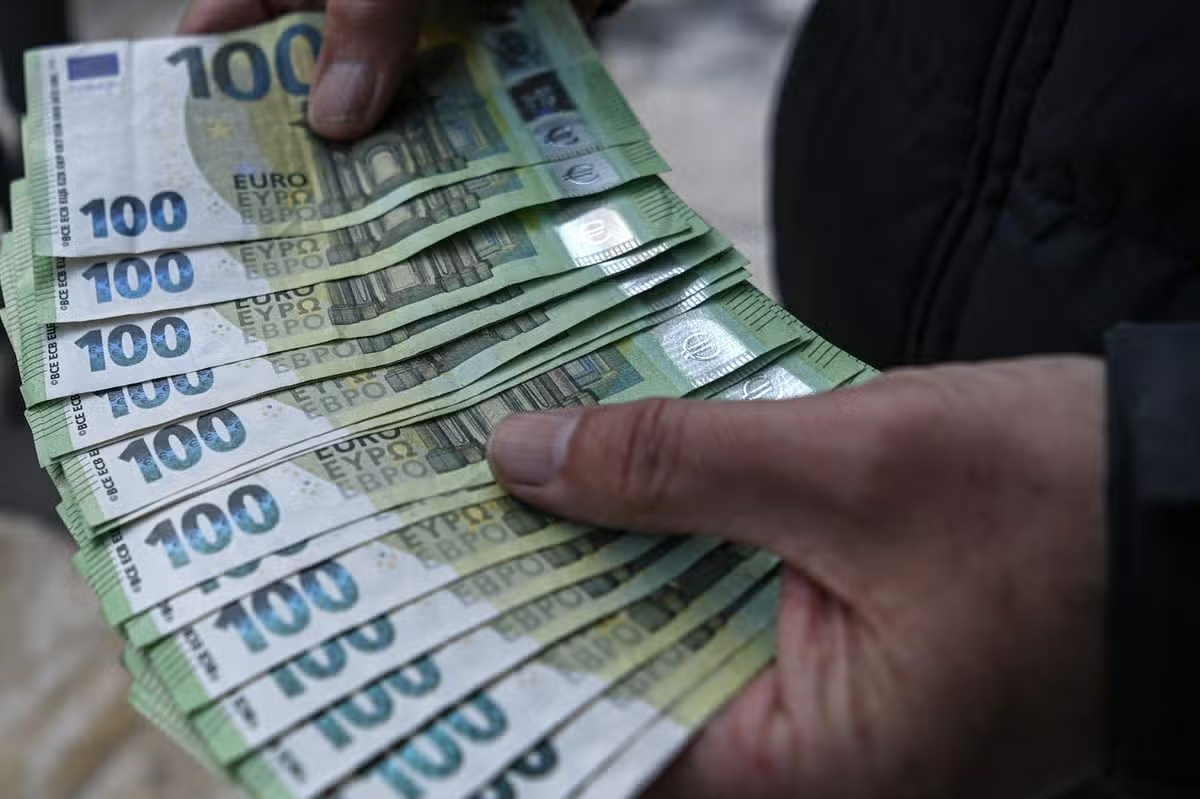
Brits won’t be able to make large cash transactions(Image: OZAN KOSE/AFP via Getty Images)
While many Brits use debit, credit, or travel money cards when they go on holiday, for some, cash is still king no matter where they go in the world.
But new plans from the European Central Bank (ECB) could see a digital equivalent to physical cash being introduced, and the first step, a cash payment limit in Euros, is set to be enforced as of next summer.
As reported by Majorca Daily News, as part of the move to a digital Euro, the cash payment limit of €10,000 (about £8,500) will be introduced in Spain as of July 10, 2027. It’ll apply to all commercial transactions for goods and services, and can’t be bypassed by making lots of smaller transactions, as linked cash payments will be treated as a single payment under the law.
For transactions between €3,000 and €10,000, merchants will be obliged to verify the customer’s identity before they pay in cash. This ensures that all financial transactions can be linked to individuals, even if cash is used, and aims to prevent money laundering. This could affect Brits looking to pay for hotels or car hire in cash.
EU countries will be able to set their own limits, and France has already confirmed for its own taxpayers the maximum amount will be just €1,000, but for holidaymakers it’ll be €15,000, about £12,800.
Banks in the EU will continue to monitor unusual deposits at cash points, and will also need to report transactions of over €3,000 where large banknotes are used. While it’s unlikely that the average tourist would ever carry this amount, there is also a limit on the amount of cash someone can carry in public when in Spain which is €100,000, about £85,500. which is to deter criminal activities and terrorism.
If you’re travelling between countries, even if you’re within the Schengen area, you’ll need to declare any amounts over €10,000 to customs when you arrive.
The digital Euro plan would create a central bank digital currency (CBDC) overseen by the ECB. It would offer a digital alternative to physical cash, and mean people could make on and off-line purchases free of charge with their Euros stored on a card or mobile app.
A rollout is planned for 2029, and aims to reduce reliance on US payment systems such as Visa and Mastercard. In Russia, huge numbers of people were left unable to make payments when the firms pulled out of the country due to the war with Ukraine, and Europe wants to avoid using US firms for banking functions in a time of political instability.
European Central Bank President Christine Lagarde claimed in a Euronews interview that the move to a digital Euro isn’t about scrapping cash and coins or monitoring citizens, saying: “Cash will not go away, it will be rejuvenated”.
Have a story you want to share? Email us at webtravel@reachplc.com