Ethiopias

Ethiopia’s government forces retake airport from Tigray rebels in Mekelle | Conflict News

The rebels are seen leaving the capital of the northern Tigray region, according to local sources.

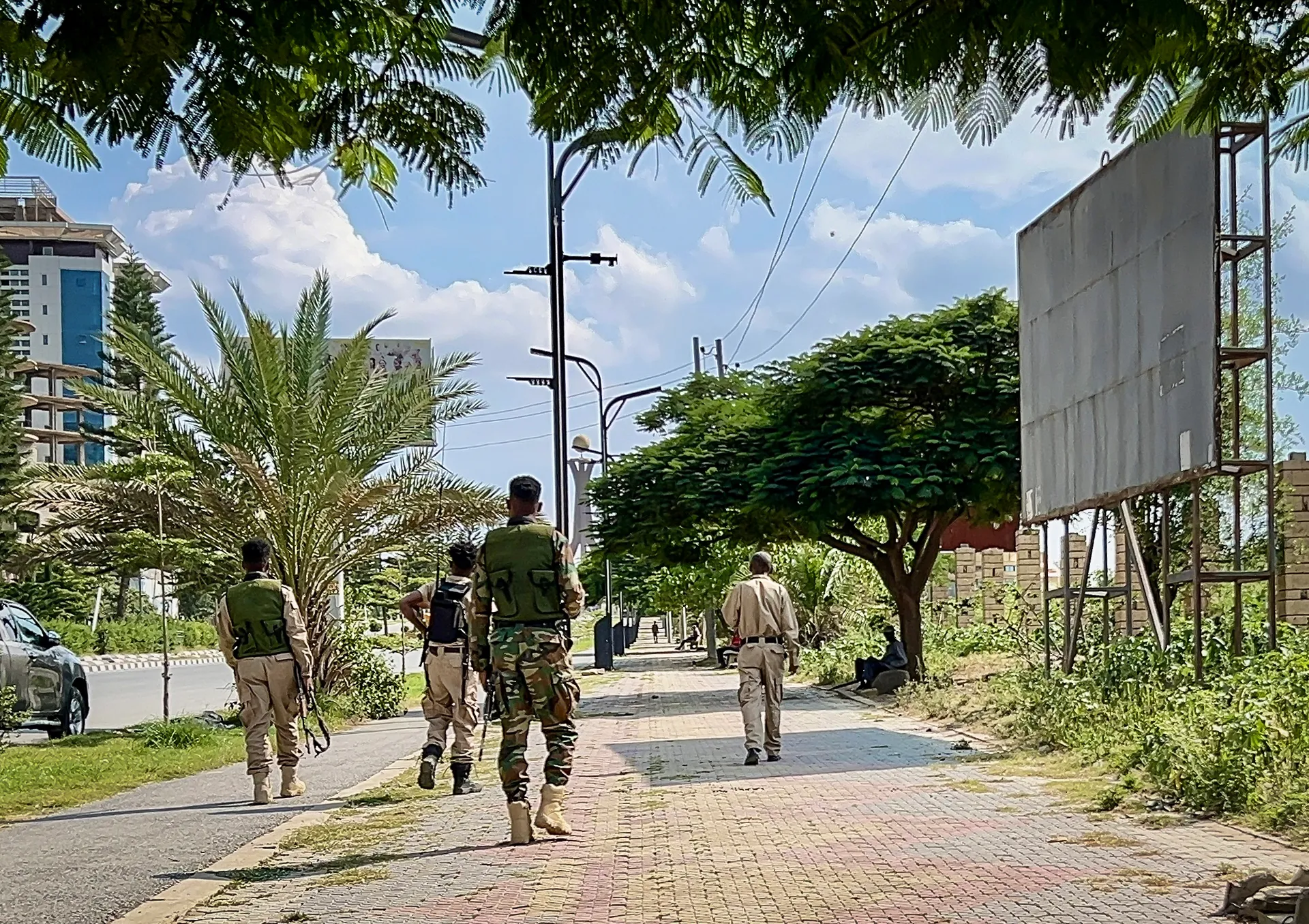
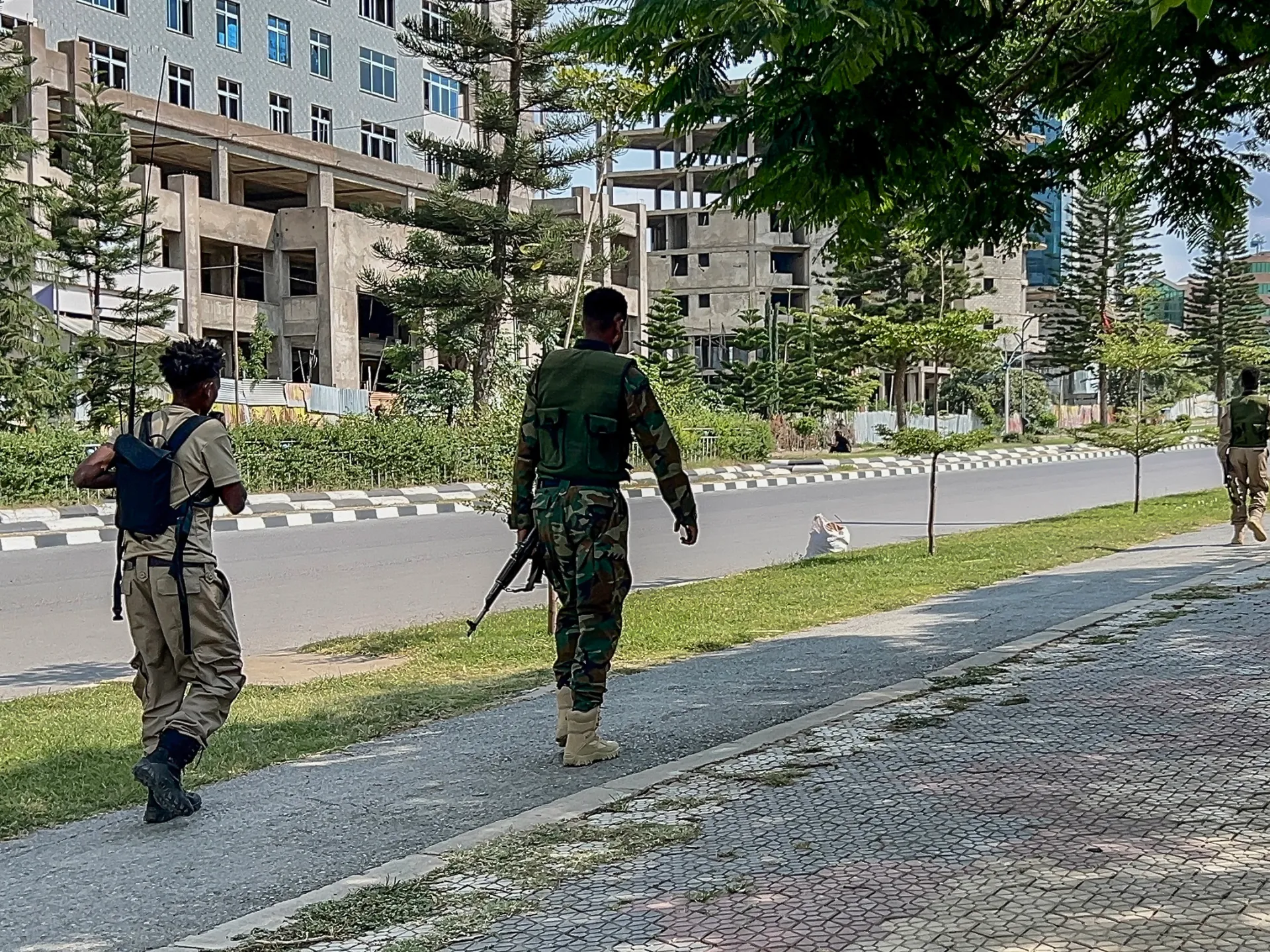
Ethiopia’s federal army and pro-government fighters have recaptured the main airport in the capital of the northern Tigray region, with the rebels seen leaving the city, according to multiple unnamed sources.

The Ethiopian National Defence Forces regained control of Alula Aba Nega Airport in Mekelle, one source with knowledge of events in the city and a humanitarian source told Reuters news agency on Saturday.

Recommended Stories

list of 3 itemsend of list

The airport, which is about ⁠10km (6 miles) from the centre of Mekelle, was one of three airfields in the region that were seized by the rebel forces at the start of the fighting on September 23.

The fighters, as well as the leaders of the Tigray People’s Liberation Front (TPLF), were seen retreating from the city, a local journalist and residents told the AFP news agency.

The journalist added that federal forces had not yet been seen inside Mekelle.

“I am concerned that government and public property could be exposed to looting because there are no security forces in the city,” a resident told AFP.

“I am worried that lawlessness could spread in the city, and I am also afraid for my life. I want us to quickly return to law and order,” added another resident.

Al Jazeera could not independently confirm these claims. Media access is currently heavily restricted in Ethiopia, and there have been significant communications blackouts.

Last month, rebels announced the formation of a seven-party rebel coalition led by the TPLF, the same armed group that fought in the 2020-2022 civil war against federal forces from Addis Ababa. The new coalition includes rebel groups of varying sizes from across the country.

Later that month, the coalition started an offensive, seizing three airports around the contested Tigray state and engaging in fighting on the borders with Amhara and Afar states.

The government is now engaged in a counteroffensive, pushing into Tigrayan territory along three axes towards Mekelle, according to the Critical Threats Project, part of the American Enterprise Institute think tank.

Fighting has so far been concentrated in Tigray. However, rebels have reportedly carried out drone attacks on Addis Ababa.

The TPLF and government have not commented on developments on the ground.

The fighting has seen drone attacks, intensified forced conscription, and attacks on civilian infrastructure, according to Amnesty International, a global rights group.

The renewed conflict has not yet reached the heights of the Tigray war, which lasted from 2020 to 2022 and saw hundreds of thousands of deaths, but it is quickly taking on an international dimension.

Risk of conflict spreading

The government of Prime Minister Abiy Ahmed has accused Eritrea, Sudan and Egypt of backing the opposition coalition. Khartoum and Cairo have denied involvement.

Eritrea has severed diplomatic ties with Ethiopia over the accusations.

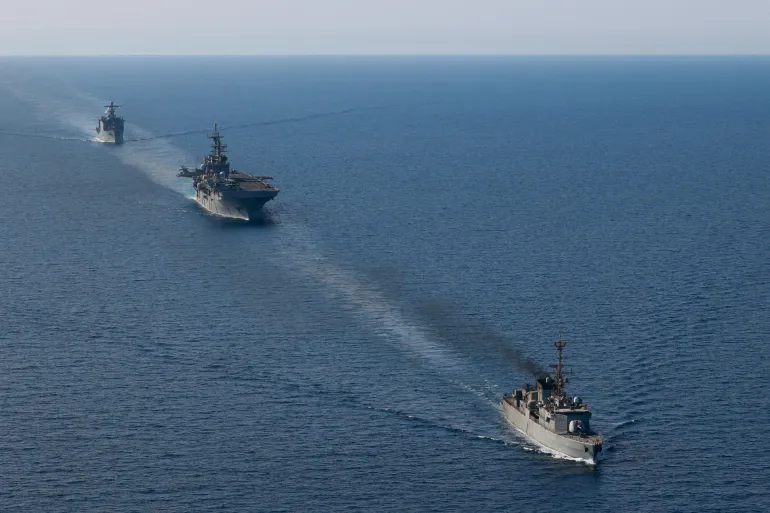
On Thursday, Eritrea also denied involvement in the Tigray conflict, and accused Addis Ababa of “pursuing an agenda of incessant hostility”. It also said Ethiopia, which is landlocked, was planning to invade Eritrea to secure sovereign access to the Red Sea coast.

The TPLF’s leader, Debretsion Gebremichael, said in a video published on Thursday that “the war is regional and it is a war to control the Red Sea”.

Ethiopia has previously ruled out seeking conflict with Eritrea over access to the coast.

Source link

Al Jazeera reports from near front line in Ethiopia’s Afar region | Government

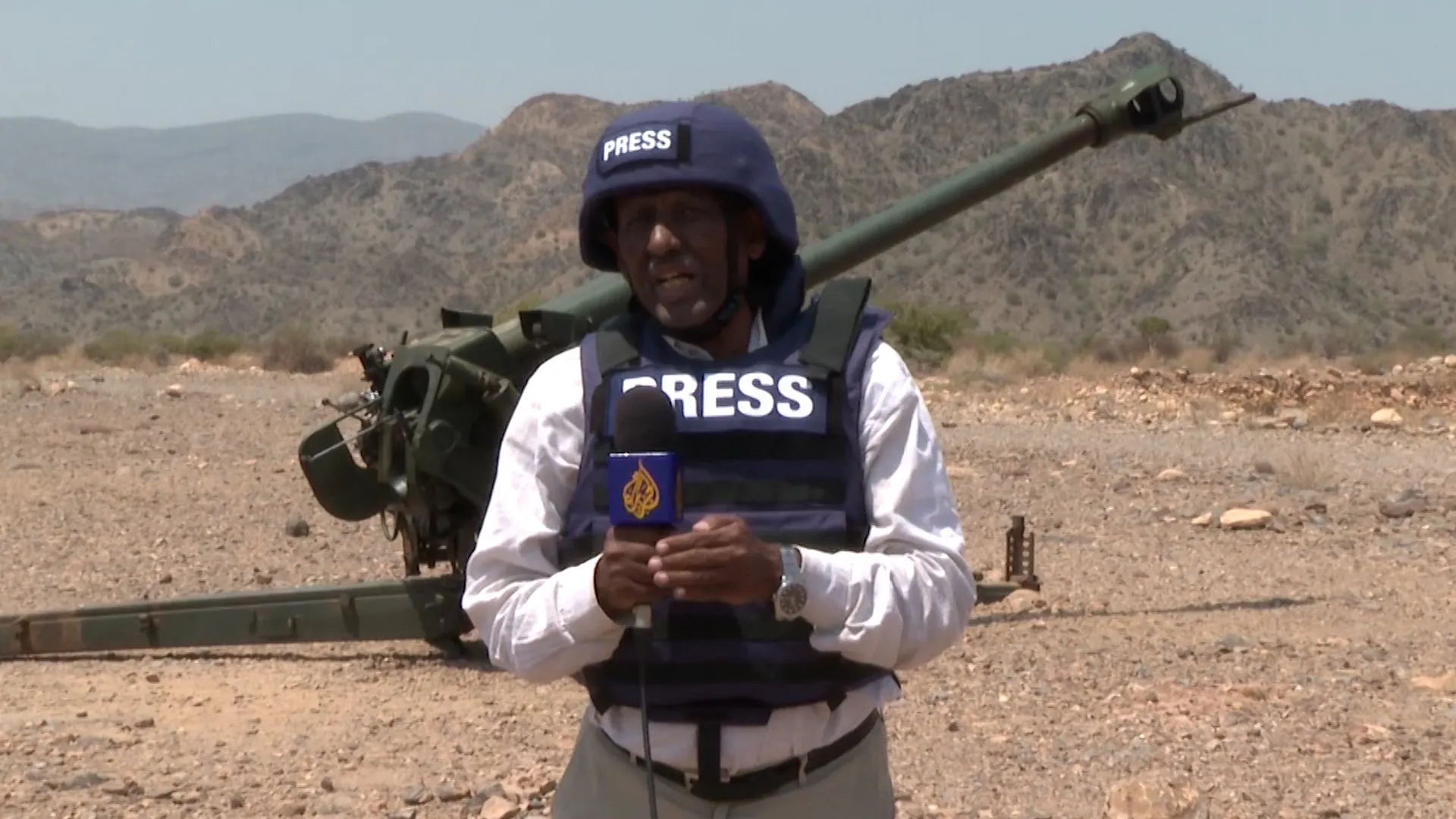
Al Jazeera’s Mohamed Tawakul is near a front line in Ethiopia’s Afar region, where fighting has spread after rebel groups formed an alliance to try to oust the government of Prime Minister Abiy Ahmed.

Source link

Ethiopia’s army promises restraint amid fears of new civil war | Conflict News

Army chief accuses Eritrea of funding and supporting armed groups to weaken Ethiopia.

Ethiopia’s federal military has said it is handling rising tensions in the country’s north with restraint, as fears grow that Ethiopia could be heading towards another civil war.

In his first comments on the recent military developments, Army Chief of Staff Field Marshal Berhanu Jula said the army was responding to what he called provocations from the Tigray front with “wisdom and restraint”.

Recommended Stories

list of 3 itemsend of list

He accused Eritrea of funding and supporting armed groups to weaken Ethiopia, describing the “Tsimdo” alliance as an extension of a longstanding pattern of hostile alliances, which he said cannot confront the state without outside backing.

Eritrea, wary that landlocked Ethiopia may be seeking to invade it to gain access to the Red Sea, denied the accusations.

The fighting has spread from Tigray into neighbouring Afar and Amhara regions after seven armed groups announced an alliance, the Ethiopian Peoples’ Forces Alliance for Survival, committed to removing Prime Minister Abiy Ahmed’s government.

In Afar, the latest battles have taken place around Abala, where the military has been trying to prevent rebels from seizing control.

Separately, in North Wollo, a zone of Amhara bordering Tigray, the army said on Thursday it had killed 272 Tigrayan fighters and wounded 260 in a counter-offensive, reporting heavy losses for the Tigray People’s Liberation Front (TPLF).

EEthiopia’s 2022 Pretoria Agreement ended the Tigray war but left key political, territorial and security disputes unresolved, allowing the TPLF to regroup and reposition as tensions have resurfaced.
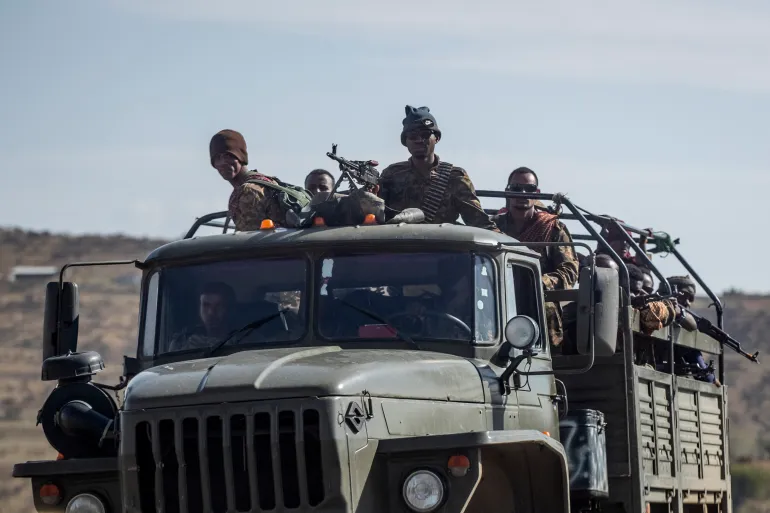
Members of the armed forces ride a military vehicle as fighting across Ethiopia intensifies amid fears of full-scale civil war [AP]

The TPLF’s Tigray Army said the federal government had launched a “full-scale offensive” involving infantry, mechanised units and drones.

Abdisalam Balema, a TPLF central committee member, told Al Jazeera the situation had become a “full war”.

Fighting has also continued around Sama, Soqota and Raya Alamata, with government forces reportedly closing in on the town of Alamata.

The army command said it prefers a strategy of “strategic calm” over a large-scale military confrontation, arguing the Tigray front’s popular support is dwindling and its leadership divided.

Internet access was reportedly cut across northern Ethiopia on Friday, a day after the UN said it was alarmed by reports of drones being used against civilians there.

The renewed fighting has put the 2022 Pretoria Agreement, which ended a brutal two-year civil war in Tigray, under severe strain. It comes weeks after Washington lifted sanctions on Ethiopia and Eritrea tied to atrocities from the last war, saying the “national emergency … has expired”.

It marks the most serious challenge yet to that agreement, raising fears of a wider regional conflict that could draw in armed groups from across Ethiopia.


Addressing the UN General Assembly, Ethiopia’s president sought to portray the country as a force for regional stability, accusing unnamed external actors of meddling in Ethiopia’s affairs while highlighting Addis Ababa’s role in supporting peace efforts in neighbouring Sudan.

Alemayehu Weldemariam, a professor of law at Indiana University, told Al Jazeera that the federal government bears much of the blame for the collapse of the Pretoria Agreement.

“This war has been in the making for a while now. Much of the provisions in the cessation of hostilities [in the 2022 agreement] were primarily sabotaged by the federal government itself,” he said, citing fuel, service and cash restrictions imposed on Tigray, and the government’s failure to set up the interim administration the deal had promised.

“What was supposed to be an interim arrangement turned out to be permanent,” with Tigray excluded from national elections since, he added.

Source link

Ethiopia’s Fano fighters claim capture of army vehicles and weapons | Abiy Ahmed News

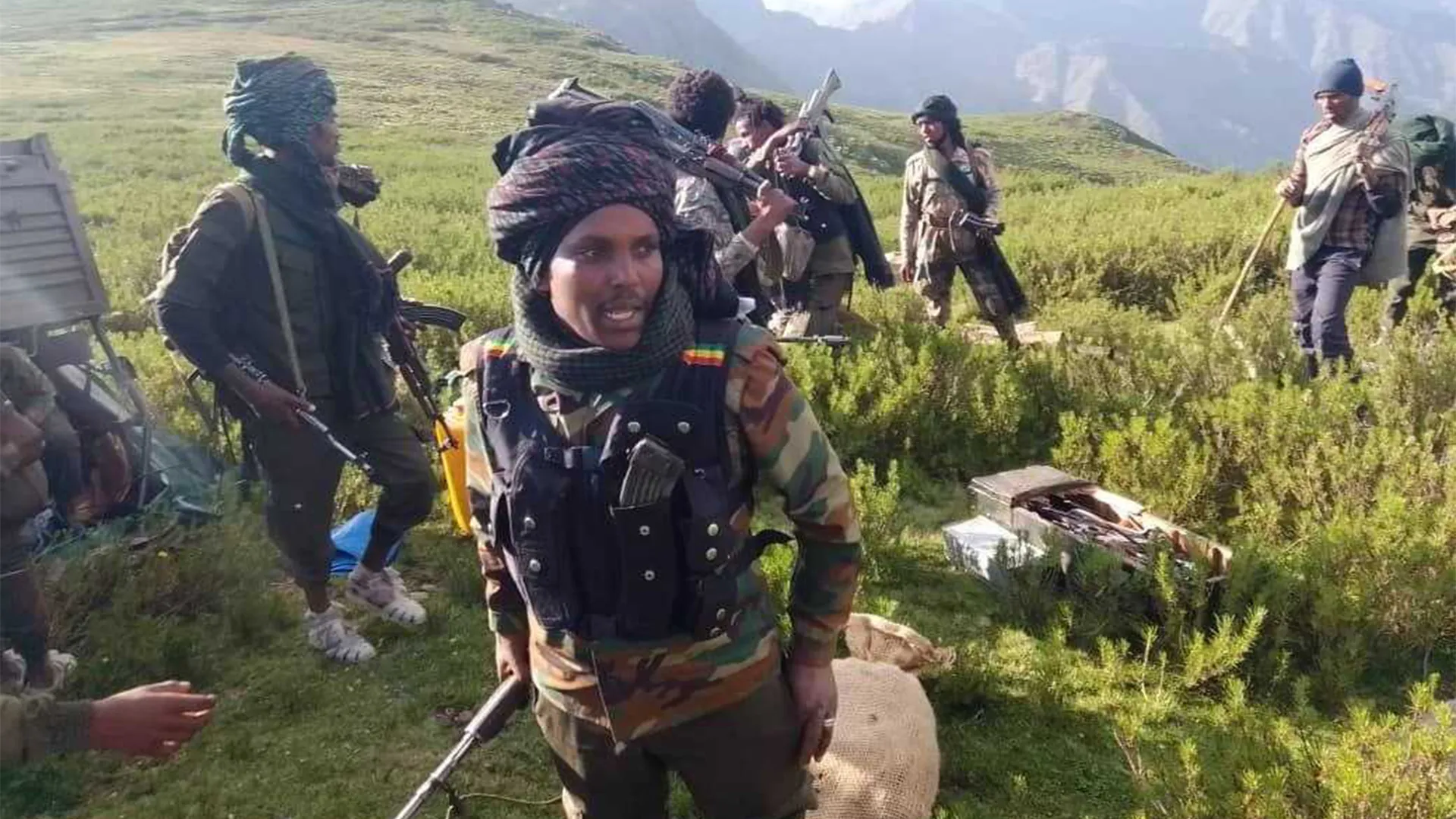
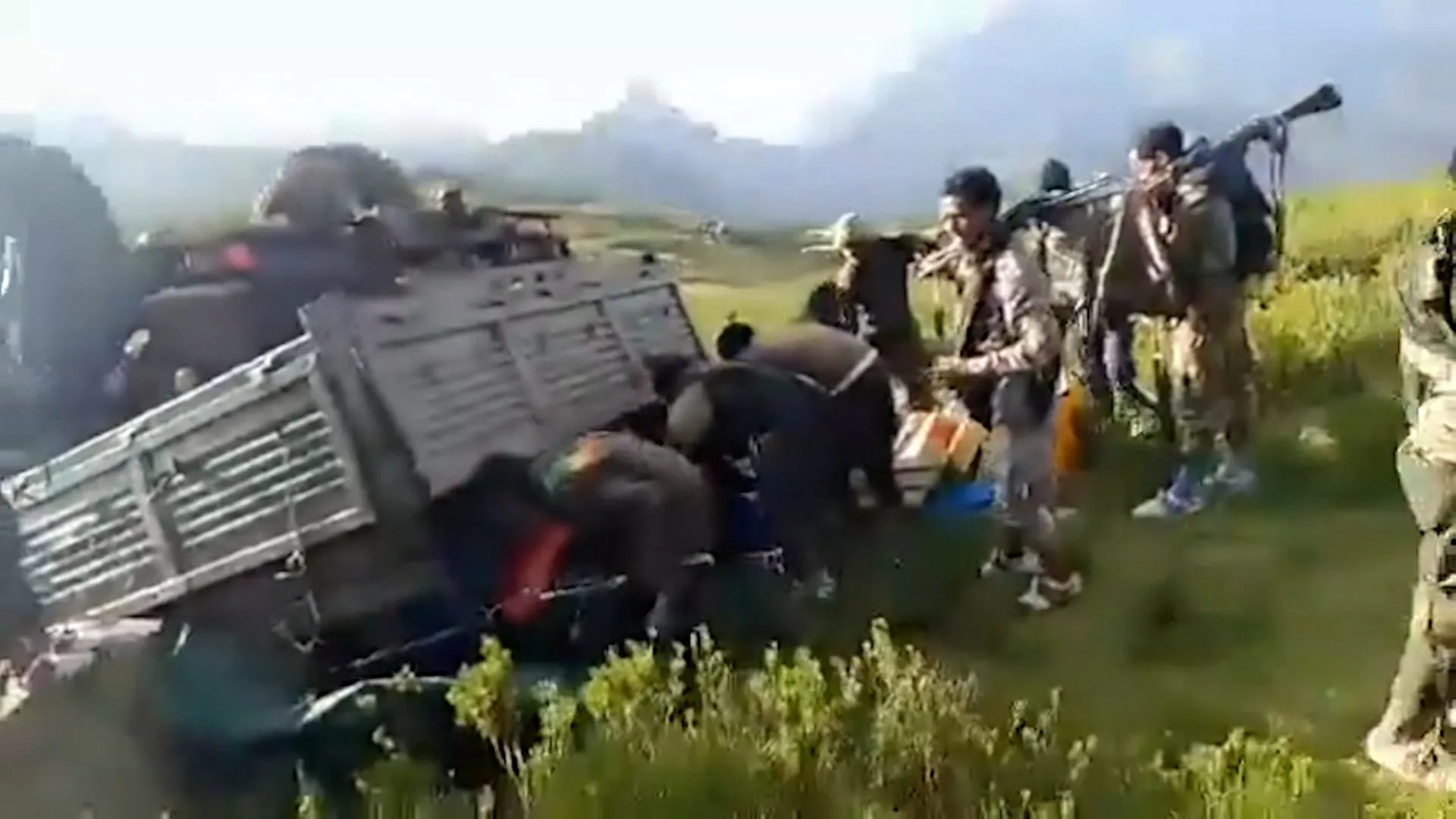
Armed fighters from Ethiopia’s Fano movement claim to have seized more than 10 military trucks carrying ammunition, machine guns and mortar shells in the Amhara region. Fighting in the country has intensified following the formation of a new alliance of seven armed groups seeking to overthrow Prime Minister Abiy Ahmed’s government.

Source link

Fighting erupts between Tigray’s rebel alliance and Ethiopia’s military | Conflict

Fighting has intensified between Ethiopia’s military and a new rebel alliance in Tigray, after the Tigray People’s Liberation Front announced a ‘full-blown war’ against the government.

Source link

Can Ethiopia’s seven-group rebel alliance challenge Abiy Ahmed? | News

Two days after seven Ethiopian armed groups announced the formation of the Ethiopian Peoples’ Forces Alliance for Survival and pledged to remove Prime Minister Abiy Ahmed, a senior official of the Tigray People’s Liberation Front (TPLF) was asked whether the statement amounted to a declaration of war.

He hesitated, then answered with a question of his own.

“We are at war now, aren’t we?”

He was speaking to Kjetil Tronvoll, professor of peace and conflict studies at Oslo New University College, who told Al Jazeera that the answer captured what the new rebel alliance had changed.

It has not created a single, coherent military force capable of marching on Addis Ababa. It has brought several of Ethiopia’s separate conflicts into the same political framework and, potentially, into the same military calculation.

The question now is how much further that can spread and whether seven movements with different enemies, territorial claims and histories can actually fight as one.

On Tuesday, drones struck two schools in Alamata, in southern Tigray, and the town’s mayor said 14 civilians were killed and 22 wounded. The account could not be independently verified, and the federal government did not immediately comment.

By Wednesday, Tigrayan forces had seized Alula Aba Nega International Airport in Mekelle, AFP reported, citing an airport employee and a Western embassy security source. The airport employee said staff had been told there were no flights.

The alliance, whose founding statement Fano commander Zemene Kassie read on Tigrai TV on Sunday, brings together the Amhara Fano National Movement, the TPLF and the Oromo Liberation Army (OLA), along with the Ogaden National Liberation Front (ONLF), the Afar Revolutionary Democratic Unity Front, the Benishangul Peoples’ Liberation Movement and the Gumuz Peoples’ Democratic Movement.

It promises a transitional administration once Abiy is gone.

Abiy’s spokesperson, Billene Seyoum, told Reuters that the members had been collaborating for some time with Eritrean financial backing, an accusation Asmara has repeatedly denied.

The war that never really ended

The TPLF dominated Ethiopia for 27 years, until Abiy took power in 2018 and pushed it to the margins.

In November 2020, the federal army, backed by Eritrean troops and Amhara forces, went to war with it. The conflict became one of the deadliest in Ethiopia’s modern history. African Union mediator Olusegun Obasanjo believes that about 600,000 people died, though estimates of the toll have varied.

Map showing Ethiopia’s Tigray region, where tensions between the federal government and the Tigray People’s Liberation Front (TPLF) have escalated [Graphic: Al Jazeera]
Map showing Ethiopia’s Tigray region, where tensions between the federal government and the Tigray People’s Liberation Front (TPLF) have escalated [Al Jazeera]

That war ended in November 2022 with an agreement signed in Pretoria, South Africa.

It was a permanent cessation of hostilities. It silenced the guns and set terms for Tigray’s disarmament, but left critical questions for later, above all Western Tigray, the fertile territory claimed by both sides and administered by Amhara forces since the war.

Only Addis Ababa and the TPLF signed. Neither Eritrea nor the Amhara forces had a seat.

Jawar Mohammed, the Oromo politician who was once an ally of Abiy and later spent time in prison, told Al Jazeera that shutting them out gave them every reason to wreck the deal.

The new alliance brings together forces that were excluded from the Pretoria negotiations with one of the agreement’s signatories.

The quiet it created ended in May, when the TPLF restored the legislative council that existed before the war and installed its chairman, Debretsion Gebremichael, as regional president, effectively setting up a rival political authority to the interim administration established under the Pretoria agreement. The TPLF accused the federal government of failing to honour its side of the deal.

Federal and Tigrayan forces then clashed at Shererina, near the Sudanese border, on August 1. Heavy artillery and drones were used in the fighting, and hundreds of Tigrayans, including wounded fighters, fled into Sudan.

Then came the drones.

On August 20, two drones struck homes in Mekelle, wounding 13 people, according to the TPLF. Al Jazeera could not independently verify the account.

On September 20, a drone destroyed a truck carrying 41 tonnes of food aid near Adi Daero, according to the TPLF. Addis Ababa has acknowledged none of the reported strikes.

“We signed the Pretoria Agreement, but the regime used the agreement to kill the people of Tigray systematically,” the TPLF’s spokesperson, Michael Asgedom, told Al Jazeera.

Two scripts

Asgedom tells it two ways.

The alliance “was created to bring peace and democracy to Ethiopia”, he said.

He also said it would build a new order “over the ruins of Abiy Ahmed’s system” and that this was “the right time to eradicate the regime”.

If war comes, he said, “it will be for survival.”

One script is for diplomats, the other for fighters.

Tronvoll calls it constructive ambiguity, a phrase that fits the alliance.

Ethiopian Prime Minister Abiy Ahmed Ali faces a new armed alliance that includes the Tigray People’s Liberation Front (TPLF) and six other groups [File: Sergei Bulkin, Sputnik, Kremlin Pool Photo via AP]
Ethiopian Prime Minister Abiy Ahmed Ali faces a new armed alliance that includes the Tigray People’s Liberation Front (TPLF) and six other groups [File: Sergei Bulkin/Sputnik/Kremlin Pool Photo via AP]

That the alliance claims to speak for seven peoples can delegitimise Abiy abroad and raise the price of any settlement, whether or not it fires a shot.

The first test is Eritrea, the neighbour whose name appears nowhere in the founding statement.

Over the past two years, Eritrea has reconciled with the TPLF, the enemy its troops helped to crush in 2020, as Abiy began demanding access to the Red Sea, which Asmara interpreted as a claim on its coast.

Jawar argues that Eritrea’s minimum aim is to keep any conflict on the Ethiopian side of the border.

The International Crisis Group has similarly assessed that Eritrea wants to establish a buffer zone on its southern border.

Asgedom has denied any Eritrean military presence in Tigray, but left the door ajar.

“If Eritrea can take action because of a potential danger to its survival, it is the Eritreans who should answer that question.”

Tronvoll says Eritrean troops are in Tigray now, a claim Al Jazeera could not independently verify. Magnus Taylor, deputy director of the International Crisis Group’s Horn of Africa project, told Al Jazeera that he was more cautious.

“This is substantially a domestic Ethiopian phenomenon,” he said.

Seven commands, one war?

The second test is whether seven commands can fight as one.

Zemene chairs the alliance, but the founding statement names no commander for a joint campaign.

If the line ever advances on Addis Ababa, Tronvoll asks, whose soldiers go first?

“If it is a Tigrayan general commanding Amharas to be sacrificed first to save the Tigrayan soldiers, that will split it immediately.”

Western Tigray is not mentioned in the statement either.

Taylor says the Fano are themselves divided over it: Commanders in Gojjam and Wollo can contemplate an alliance with Tigray, while those nearer the disputed land cannot.

“All these groups have their own different beef with the federal government,” Taylor said, and much of it dates from Abiy’s first year.

In 2018, Abiy invited exiled rebels home, and the OLA and the ONLF returned from Asmara.

But the OLA broke away to keep fighting, and talks with it in Tanzania collapsed in 2023.

The ONLF then split in 2025 after its then-chairman called for a return to armed struggle amid a dispute over a Chinese natural-gas concession in the Somali region.

The Amharan Fano rebelled against the government in 2023 after Abiy ordered the regional special forces to be folded into the federal army, a move many Amhara believed was tantamount to disarmament.

In June, Abiy’s Prosperity Party won 438 of 486 contested parliamentary seats. Voting did not take place in Tigray and was disrupted by insecurity in parts of Amhara and Oromia.

But their grievances are not only with Abiy’s government.

Referring to the news of the alliance, Jawar said he had “not seen anything as unpopular among the Oromos”, after years of accusations that Fano fighters have killed Oromo civilians in Wollega.

The OLA calls its participation a “procedural consensus” and has demanded that Fano disown a faction in Wollega that it says the government armed.

“There is no shared political objective,” Jawar said. “They don’t even have a shared tactical objective.”

And Tronvoll goes further: “If the members ever reached the palace, immediately a new war will start between them.”

The people being asked to fight

Then, there are the people being asked to fight.

Tigrayans are being mobilised alongside forces they remember from four years ago, when, in Tronvoll’s characterisation, “both the Eritreans and the Fano Amharas were perpetrating genocide on them.”

The charred remains of a tank lie on a road near Gereb Agew, southern Tigray, after clashes between the Ethiopian National Defence Force (ENDF) and the Tigray People’s Liberation Front (TPLF), on March 3, 2026 [File: Abel Gerezgiher/AFP]

Friends in Tigray have told Tronvoll of coercive recruitment. He estimates that tens of thousands have left the region in advance of a possible war and the draft.

“People are voting with their feet,” he said. “They are on their knees already. So what are the alternatives for them than to fight?”

Beyond the border

Abiy, for now, appears unmoved.

“As long as they don’t threaten the palace at Arat Kilo, he can live with that,” Tronvoll said. “I don’t think he skips lunch because of this.”

Taylor struggles for a word.

“Is it a headache? Is it an irritant? Is it a blow? It’s a combination of those things.”

In his assessment, the TPLF, which lost most of its heavy weapons in 2022, has come off worse in recent clashes against federal air power. The likelier course, he says, is a slow deterioration, with southern Tigray the flashpoint.

Jawar views Abiy’s approach as containment: Keep flights into Tigray running so that those who want to leave can do so, and let a war that few want sour public opinion.

With Tigrayan forces having seized Mekelle’s airport, that exit has closed.

Tom Gardner, author of The Abiy Project, said, “For months Abiy’s strategy has been to maintain a low-level conflict largely conducted via drones, proxies, and siege tactics. This could be the moment that strategy breaks down and a full-scale war erupts.”

The regional dimension is becoming harder to separate from the conflict inside Ethiopia.

The International Crisis Group says several thousand Tigrayans, mostly from Western Tigray/Welkait, have fought alongside the Sudanese army against the Rapid Support Forces.

Khartoum has also accused Addis Ababa of allowing drones to strike Sudan from Ethiopian soil, which Ethiopia denies.

Eritrea has aligned itself with Sudan’s army and established ties with Egypt, an opponent of Addis Ababa in the dispute surrounding Nile water resources.

The International Crisis Group has described Egypt as a close wartime ally of the Sudanese army.

Those alignments do not necessarily make the new Ethiopian alliance a regional military bloc. But they make it harder to treat Ethiopia’s conflicts as entirely domestic.

In Mekelle, the calculation is narrower.

“It is better to live than to die,” Asgedom said, “and the regime doesn’t allow us to live.”

A journalist in Mekelle, who spoke to Al Jazeera on condition of anonymity, said people had lived for months in a state of no-war-no-peace, and many now wanted it decided either way.

The alliance offers a path to war without making clear what that war would cost.

“We need peace,” residents told the journalist in Mekelle, after months without salaries or medicine.

In the city, there is an old belief that an unexpectedly windy and sunny day foretells fighting. Tuesday was both.

Source link