A cluster of fast-moving wildfires has devastated the outskirts of Spokane, Washington state, with 65,000 people told to leave their homes. More than 700 buildings have been destroyed as the fires spread from surrounding vegetation into residential neighbourhoods, posing an unprecedented threat to lives and property.
The blazes have become the top firefighting priority in the US because of their scale and the danger they pose to communities. While no deaths have been confirmed, authorities say it will take time to assess the full extent of the damage as search teams begin entering the hardest-hit areas.
Recommended Stories
list of 1 itemend of list
The evacuation orders expanded from about 4,000 people on Sunday to 65,000 by Monday, highlighting the speed at which the fires spread into populated communities.
Here is what to know:
What is happening in Spokane, Washington?
Spokane, Washington’s second-largest city, is at the centre of one of the state’s most destructive wildfire emergencies in recent history after three fast-moving wildfires erupted on its northern outskirts over the weekend. Fanned by strong winds and fueled by exceptionally dry vegetation, the fires have burned more than 8,000 acres (3237 hectares) and spread from surrounding forests and grasslands into residential neighbourhoods, forcing approximately 65,000 people to evacuate, according to the Spokane Valley Fire Department.
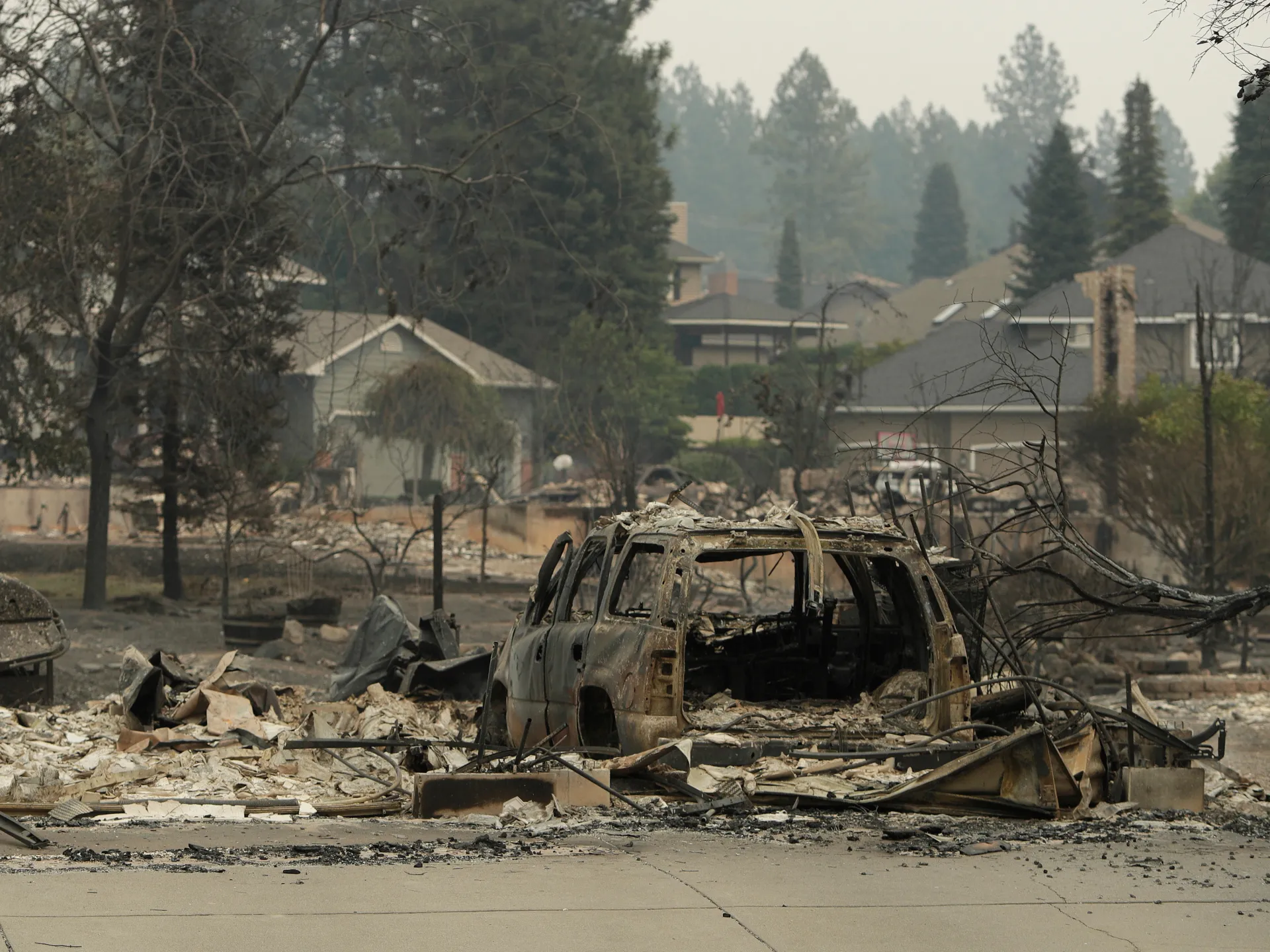
Hundreds of buildings, most of them homes, have already been destroyed, with aerial surveys suggesting many more may have been damaged. Entire neighbourhoods have been reduced to charred rubble, with some properties left standing only as brick chimneys.
The scale of the disaster has overwhelmed local resources, prompting one of the largest firefighting operations in the state, with more than 1,000 firefighters deployed from across the region.
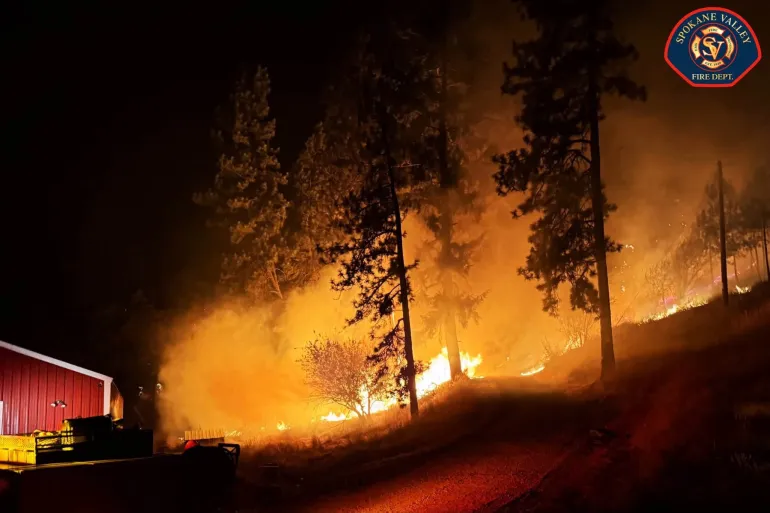
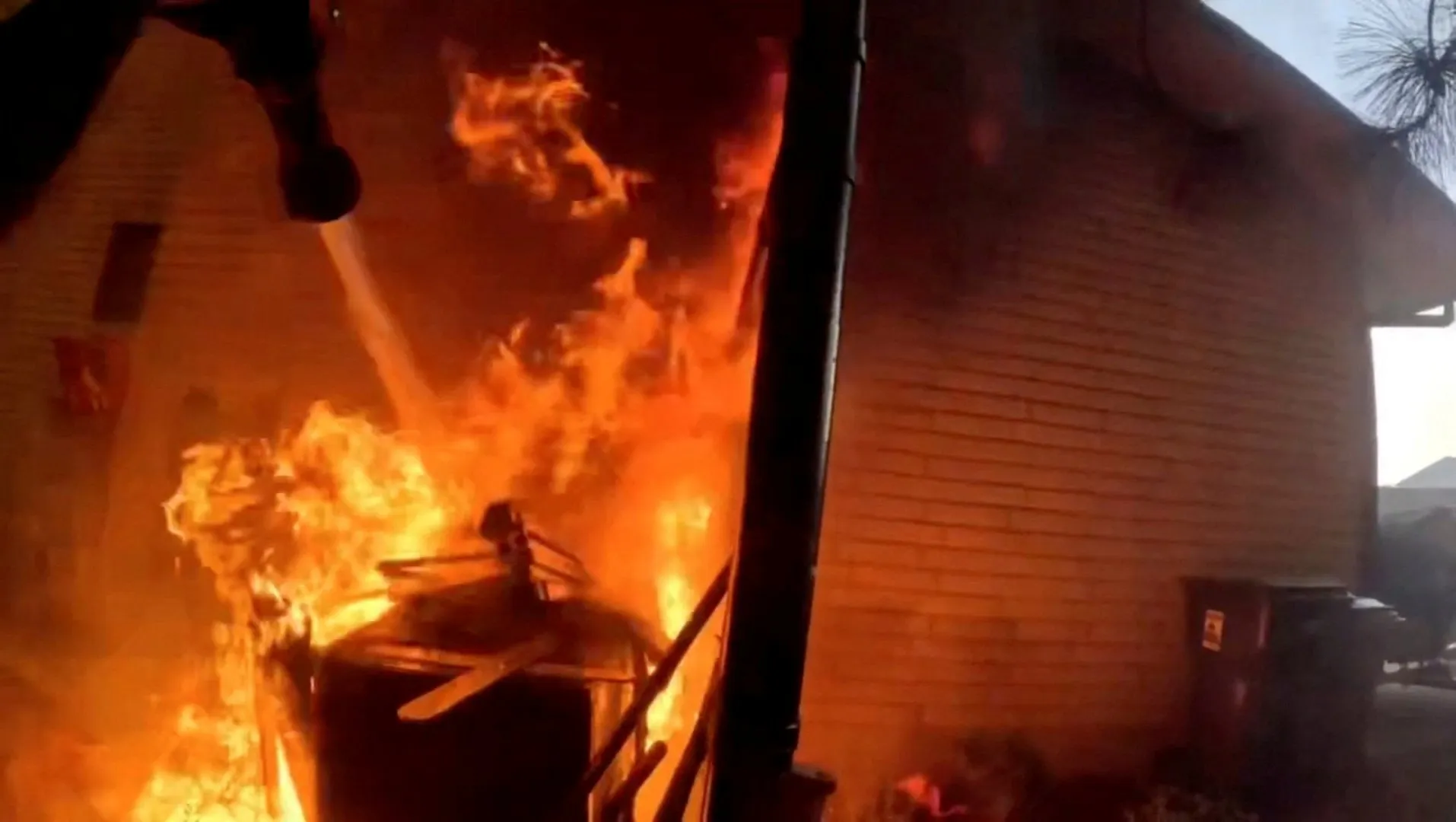
A handout photo made available by the Spokane Valley Fire Department shows the Fairview Fire northeast of Spokane, Washington [EPA]
Despite the massive response, the fires remain uncontained, and officials say it could take days to fully assess the destruction. While no deaths have been confirmed, authorities initially received nearly 300 reports of missing people after the evacuations, though that number has since fallen significantly as families have been reunited. Emergency shelters have been opened across Spokane, and officials are urging residents not to return to evacuated areas or fly drones, which can disrupt critical aerial firefighting operations.
Firefighters are taking advantage of a brief period of cooler temperatures and lighter winds, but forecasters warn that hotter, drier and windier weather is expected to return later this week, raising fears that the fires could spread even further.
Washington is experiencing one of its worst wildfire seasons in more than three decades, with about 450,000 acres (182,000 hectares) burned so far this summer. More than 250,000 acres have burned in recent major fires alone.
A handout photo made available by the Spokane Valley Fire Department shows the Fairview Fire northeast of Spokane, Washington [EPA]
What caused the fires?
Local news outlets have reported that the Spokane County Sheriff’s Office announced on Monday evening that a 37-year-old had been arrested on suspicion of arson in connection with the fire.
However, experts say the conditions that allowed the fires to spread so rapidly were already in place.
Washington has been experiencing severe drought and an unusually low winter snowpack, leaving vegetation exceptionally dry and highly flammable. Those conditions have been compounded by periods of extreme heat, low humidity and strong winds, creating an environment in which even a small ignition can quickly grow into a fast-moving wildfire.
Scientists have also linked increasingly severe wildfire seasons across the western US to human-caused climate change, which has contributed to hotter temperatures, longer droughts and drier landscapes. While climate change does not directly ignite wildfires, it makes them more likely to spread rapidly and become more destructive once they start.
Why are the Washington wildfires so severe?
The Washington wildfires have become particularly severe because several factors have converged, allowing the blazes to spread rapidly.
Multiple large fires burning simultaneously: Spokane is dealing with three major wildfires at once, while dozens of other significant fires are burning across the western US. Managing multiple large incidents simultaneously has made it harder to concentrate resources on a single fire.
The fires advanced rapidly into populated communities: Driven by strong winds, the flames jumped roads and rivers, allowing them to move from forests and grasslands into residential neighbourhoods. More than 700 buildings have been destroyed, making the fires far more difficult to contain as they threaten homes, businesses and critical infrastructure.
Firefighting resources are stretched: More than 100 new wildfires have been reported across 15 US states over a single weekend, placing extraordinary pressure on national firefighting resources. Although more than 1,000 firefighters have been deployed to Spokane, emergency officials say aircraft, equipment and personnel are being shared across multiple emergencies.
An ongoing threat despite improved weather: Firefighters have benefitted from a brief period of cooler temperatures and lighter winds, but officials warn that hotter, drier and windier conditions are expected to return. With the fires still not contained, there is a significant risk that they could grow further or ignite new areas.
What role are drought, heat and climate change playing?
Scientists say drought, extreme heat and climate change are making wildfire seasons longer, more frequent and more destructive across the western US.
Drought dries out vegetation, turning forests and grasslands into fuel that can ignite and burn more intensely.
Heat and low humidity accelerate fire spread by drying vegetation even further and creating conditions in which flames can move rapidly across the landscape.
Climate change amplifies these conditions, as rising global temperatures are increasing the likelihood of prolonged droughts, more frequent heatwaves and longer fire seasons, making large, destructive wildfires more likely once they ignite.
A Virgin Mary statue remains untouched in front of a burned-out residential home in the Balboa neighborhood of Spokane, Washington, on August 2, 2026 (AFP)
What is the weather forecast for midweek?
The weather is expected to worsen again by midweek.
While Monday and Tuesday offered a brief, helpful window of cooler temperatures and calmer winds, the midweek forecast calls for a return of:
Extremely high temperatures, particularly on Thursday, with highs forecasted up to 37 degrees Celsius (99 degrees Fahrenheit). On Monday, it was at 22C (72F).
Low humidity (very dry conditions).
Gusty winds with speeds up to 26 km/h.
Because the fires remain completely uncontained, authorities are keeping evacuations in place. They warn that the worst outcome would be letting residents return to their homes, only to have to evacuate them again 24 to 48 hours later when the hot, windy weather returns.
Washington’s entire congressional delegation is awaiting a response from President Donald Trump regarding their request for an expedited emergency declaration to deliver immediate federal relief to displaced families.
Are other states also fighting wildfires?
According to the National Interagency Fire Center, most of the fire activity in the US remains concentrated across the country’s northwest.
Right now, the major fires are mostly grassland burns in Idaho, Oregon and Utah, as well as fires in Florida’s Everglades National Park, in addition to new fires reported in Left Creek in Wyoming, Antelope Creek Fire in Nevada and the Sand Creek and Middle Coulee fires in Montana.
A lightning-caused fire that has burned more than 530 square miles (about 1,370 sq km) of grassland in western Idaho and eastern Oregon continued to grow on Monday. The area is home to cattle ranches, and authorities said the fire is threatening more than 600 homes and 800 other structures.
In central Utah, a blaze quadrupled in size more than the weekend to nearly 109 square miles (282 sq km) by Monday afternoon. More than 100 cattle have died, according to law enforcement.
Bodycam footage from firefighters shows the speed needed to put out the blaze sweeping through the northwestern US. More than 60,000 people have fled their homes as wildfires raged near Spokane, Washington for a third straight day.
A total of 1,000sq km (386sq miles) has burned across Washington state, and some of the fires have not been contained.
Published On 3 Aug 20263 Aug 2026
Wildfires in eastern Washington state have forced the evacuation of 60,000 people in the Spokane area and destroyed at least 600 homes, businesses and other structures, authorities said on Sunday.
The fires in and around Spokane, the state’s second-largest city, burned about 21 square kilometres (8sq miles) over the weekend and were among dozens of wildfires across the Western United States that stretched the ability of federal, state and local agencies to fight them.
Roughly 1,000sq km (386sq miles) have burned across the state, and some of the fires, including those in the Spokane area, have not been contained.
Fire and law enforcement officials said there had been no reports of injuries or people unaccounted for, but they stressed it was early in the response effort.
Videos from the Spokane area showed buildings on fire, black smoke billowing up near neighbourhoods, and the smoking ruins of homes, with only chimneys still standing. Several officials expressed concern that the area appears set to continue having dry weather in the coming days.
“We are not out of danger,” Senator Maria Cantwell said during a news conference with federal, state and local officials in Spokane. “The next couple of days will be challenging.”
Investigators have not determined how the blazes began.
Spokane was not the only region struggling to contain fires.
Crews using bulldozers and helicopters continued for a tenth day to fight a fire that has burned nearly 1,360sq km (525sq miles) of grassland in western Idaho and eastern Oregon. The area is home to cattle ranches, with authorities saying the fire is threatening more than 600 homes and 800 other structures.
In central Utah, a massive blaze more than doubled in size over the weekend, jumping from about 41sq km (16sq miles) to 145sq km (56sq miles) by Sunday morning. More than 100 cattle have been killed, according to local law enforcement.
Millions visit the Lake District every year but those who help look after the national park in Cumbria say overtourism tensions are threatening to boil over
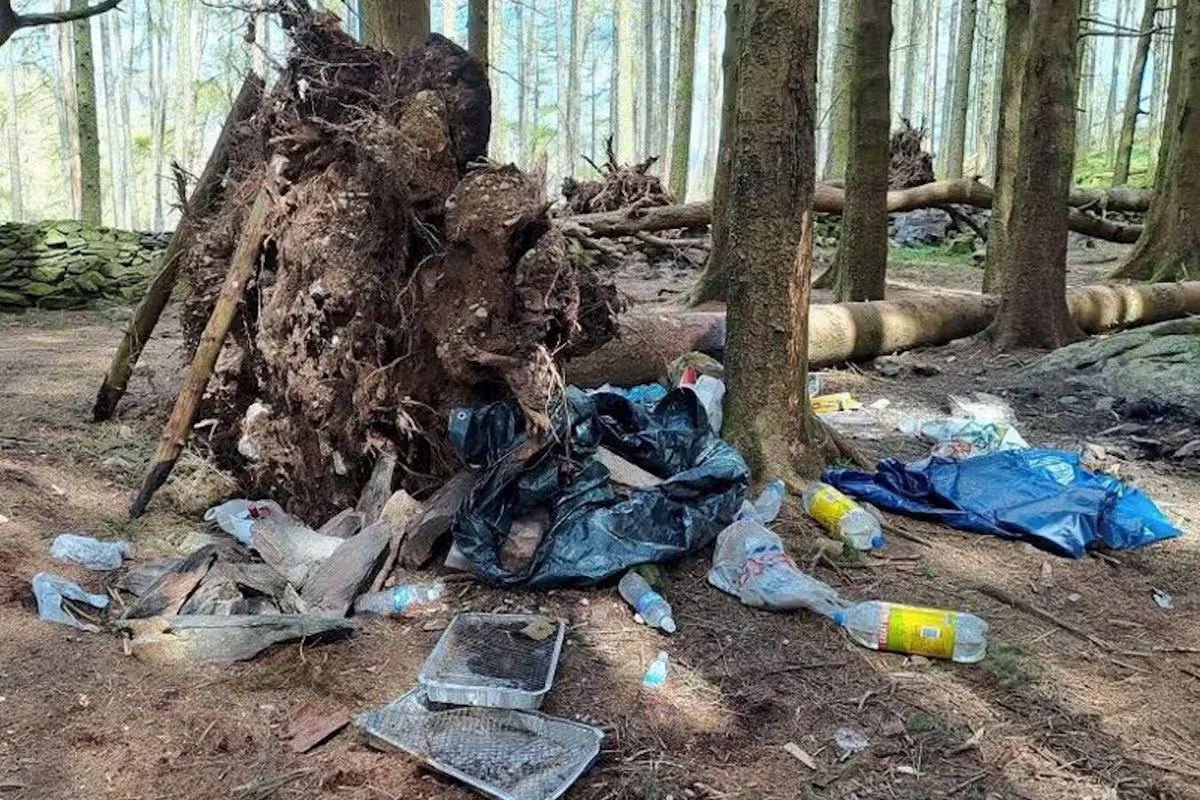
Local residents living in the Lake District National Park have complained about visitors’ behaviour(Image: United Utilities)
Wild campers visiting the Lake District are ignoring the long-standing Countryside Code – with human excrement, fly-camping and irresponsible behaviour surging this summer, campaigners say.
Those who manage the national park, which attracts millions of tourists every year, claim some guests are making life hell for locals. They say brainless parking, inconsiderate camping and mass littering is making a mockery of the “leave no trace” government guidelines to protect the environment. Paths blocked by campervans, discarded tampons and nappies and dogs let loose are just some of the other issues reported.
Judith Derbyshire, a Westmorland and Furness councillor, has referenced a report made by patrol officers who are responsible for tackling anti-social behaviour. She says, as enforcement officers and volunteers battle to preserve the stunning national parks, problems are only increasing.
Tourists risk huge fines in Lake District
She says the council has very few officers and a round-the-clock response service is a thing of the past. Local laws were tightened earlier this year in response to resident complaints.
Those causing environmental damage such as littering, starting fires, or the inappropriate use of motorhomes can now be fined up to £100 – but according to many locals, the rules are being flouted regularly.
Ms Derbyshire, who is responsible for community safety, says since Covid there has been a huge increase in visitors with many arriving without plans for accommodation. That leads to “fly-camping” – taking spots away from designated camp sites.
‘You shouldn’t be doing that’
Reading the report, she told the BBC: “Fifty-plus members of the public engaged with, 10 overnight campers spoken to, eight bags of rubbish collected and they had the joy of seeing one man using a bush as his toilet. I’m going to lower the standard of the conversation here but the issue is to do with human poo.
“Don’t feel you can just come up, park up on a lay-by and then go and put a tent up down by the lake shore – you shouldn’t be doing that.
“Putting it bluntly, we are going to have strong cutbacks from our funding as a local authority, we’re not going to have the staff to be able to put that sort of thing in place.”
She says people can contact police if they see anyone behaving in a dangerous way – such as lighting a bonfire that could spread to a large area. Working together with residents and visitors is vital to getting the situation under control.
Ms Derbyshire added: “We want people to come to Lake District and it’s good that there’s a wider range of people coming here, it’s just that we need to get them educated so they know what they can do and what they can’t do.”
‘It really saddens me to see’
Earlier this summer, footage showed the moment dozens of cars were covered in slurry after they parked in a private field just yards away from Rydal Water, one of the country’s prettiest beauty spots.
One unhappy local wrote in this year’s survey: “Some people have no social conscience and do not care about the impact of their behaviour on the environment or other people. We see litter on the fells, on lakesides and thrown out of cars onto grass verges. We even saw someone having a BBQ sat right next to a sign prohibiting it on Ullswater last year.
Another added: “I’m from the Lakes and have always appreciated the tourism and what it does for the area. However, I feel we have now got to the stage where tourism is over capacity and negatively impacting the area and the quality of life for residents and animals. Frequent traffic jams, poorly parked cars, and most upsetting of all, litter.
“Today we came across a discarded used nappy and a tampon. My children and I frequently go out with our litter pickers. It really saddens me to see the Lake District in environmental decline.”
French wildfires show signs of easing, with containment efforts holding in Var and Gironde after destructive blazes.
By Al Jazeera Staff, AP and Reuters
Published On 1 Aug 20261 Aug 2026
Gale-force winds have fanned flames across multiple parts of Greece, intensifying a new front in Europe’s wildfire emergency, while major fires in France and Spain show signs of easing, with blazes either not advancing or under control.
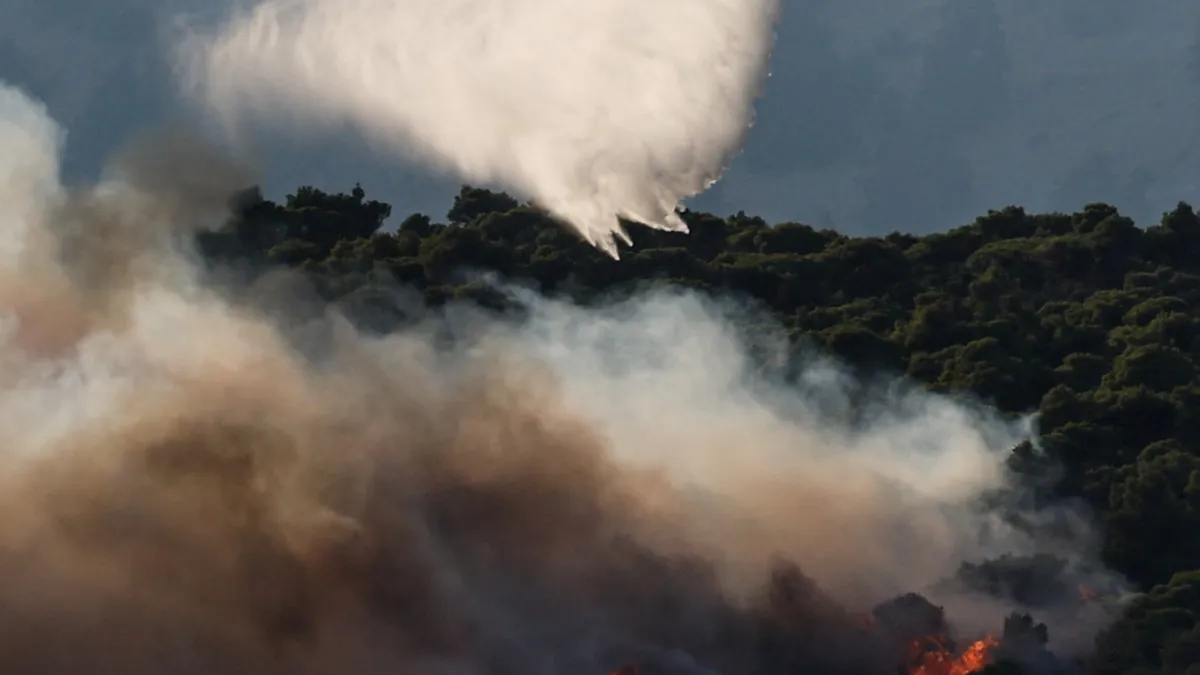
Hundreds of firefighters, backed by water-dropping planes and helicopters, worked with emergency workers to protect Porto Germeno, a popular resort on the Gulf of Corinth, as heavy winds drove flames through the coastal area west of Athens on Saturday.
Recommended Stories
list of 3 itemsend of list
The fire broke out on Friday near the neighbouring village of Agios Vasileios. About 300 people were evacuated by sea, and authorities issued further evacuation orders for the regions, according to The Associated Press.
Greek authorities issued emergency alerts for several areas for Saturday and warned of extreme wildfire risk in the regions of Attica and Evia.
A Greek newspaper, Protothema, reported the fire in Porto Germeno split into three fronts and many houses caught fire in the area, prompting authorities to issue evacuation orders for nearby towns of Agia Paraskevi, Kryo Pigadi and Agios Nektarios.
Theodore Giannaros, a wildfire meteorologist at the National Observatory of Athens, told The AP an estimated 15 to 19 square miles (39 – 50sq km) had been affected, although authorities had not issued an official burned-area figure.
Fires ‘under control’ in France
The wildfires that have ravaged France are “today under control”, French Prime Minister Sebastien Lecornu said on Saturday, more than a week after the largest wildfire since 1949 flared up.
“Overall, the fires are now under control in our country” and, in Gironde, in the southwest, “we have returned to a more stable situation,” he said in an interview with the La Tribune Dimanche weekly.
French Interior Minister Laurent Nunez said flames that left a trail of destruction across villages have eased. In a post on X, he said fires in Gironde were now under control while “significant work has been done to contain the fire’s progression by the 1,500 firefighters” in the mountainous southeastern Var department, where fire burnt through 1,500 additional hectares (3,700 acres) of land.
In the Var, defensive lines around the Gros Bessillon fire held overnight, and no additional ground burned, Var Prefect Simon Babre told French media on Saturday.
Portugal’s major wildfire was declared under control, while Spain’s largest fires were no longer making sustained advances and most evacuation orders had been lifted.
Spanish conditions mixed
Spain continued battling several wildfire hot spots on Saturday, two days after the government declared the end of a national emergency caused by huge fires in the country’s central provinces.
However, fires worsened overnight in Leon.
Europe is Earth’s fastest-warming continent, heating at more than twice the global average since the 1980s, according to the European Union’s Copernicus climate service. Rising temperatures and prolonged drought leave vegetation drier and more combustible, allowing fires to spread faster and burn more intensely.
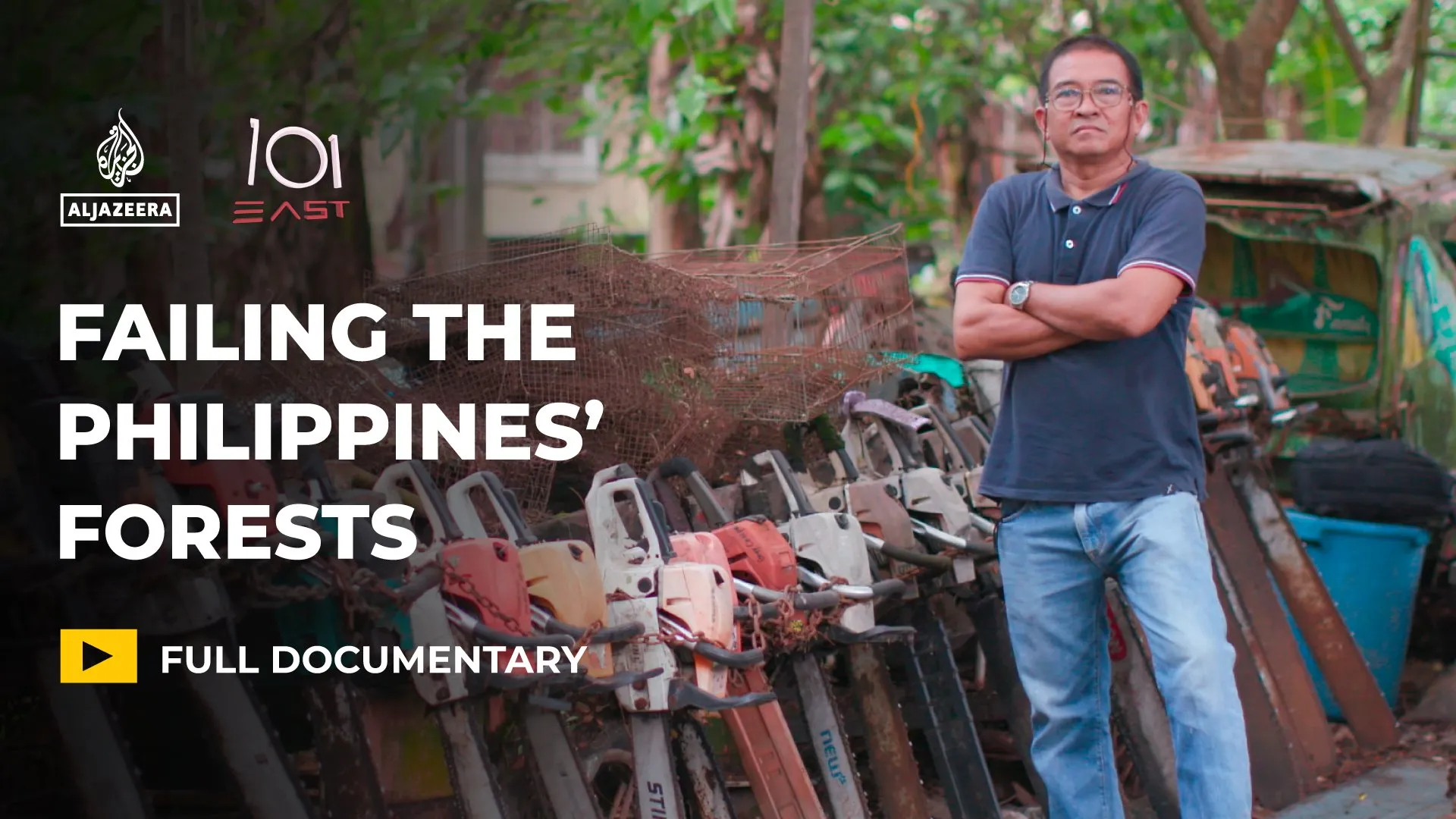
101 East investigates how the Philippines’ ambitious regreening programme is failing the nation’s forests.
In 2011, the Philippines’ government promised to deliver one of the world’s most ambitious regreening projects.
The idea was simple: pay locals to restore forests and cultivate barren land by planting and tending millions of trees.
But 15 years on, a joint investigation by 101 East and Lighthouse Reports reveals how the National Greening Program has failed to meet most of its targets.
Satellite imagery shows that instead of being protected, some forests are being destroyed, while some Indigenous communities fear losing the land their livelihoods depend on.
101 East investigates how the Philippines is failing its forests.
Mountaineer Nirmal Purja among those feared missing after avalanche hit Broad Peak, Pakistan alpine club says.
Published On 31 Jul 202631 Jul 2026
Ten climbers, led by renowned Nepali mountaineer Nirmal Purja, are feared missing after an avalanche in northern Pakistan where they were on a climbing expedition, the country’s alpine club said.
“The Alpine Club of Pakistan (ACP) has received deeply concerning reports of an avalanche that struck a team of climbers on Broad Peak (8,047m) in the Karakoram mountain range,” the club said late on Thursday, adding that the team was led by Purja and could not be reached since the incident.
Broad Peak is the 12th-highest mountain in the world.
The ACP said the expedition comprises 10 people, including five from Nepal, one from Pakistan, one from Oman, one from China, one from the United States, and another foreign climber whose nationality it did not disclose.
“The entire team has reportedly been out of communication since the avalanche,” the club said.
“Every possible effort is being made to ensure that helicopter support and all available rescue resources are mobilised at the earliest opportunity, subject to weather and operational conditions,” it added.
Purja, 43, also known as Nims Dai, has broken multiple climbing records since becoming a full-time mountaineer and tour guide in 2018, after leaving the British military.
He climbed all 14 “eight-thousanders” (peaks above 8,000 metres, or 26,000 feet) in six months and six days between April and October 2019, a record at the time.
In 2021, Purja completed the first winter ascent of K2 as part of a team of nine other Nepalese climbers.
Japanese PM Takaichi says it’s a ‘race against time’ to rescue those still trapped in the mall and others affected by the quake.
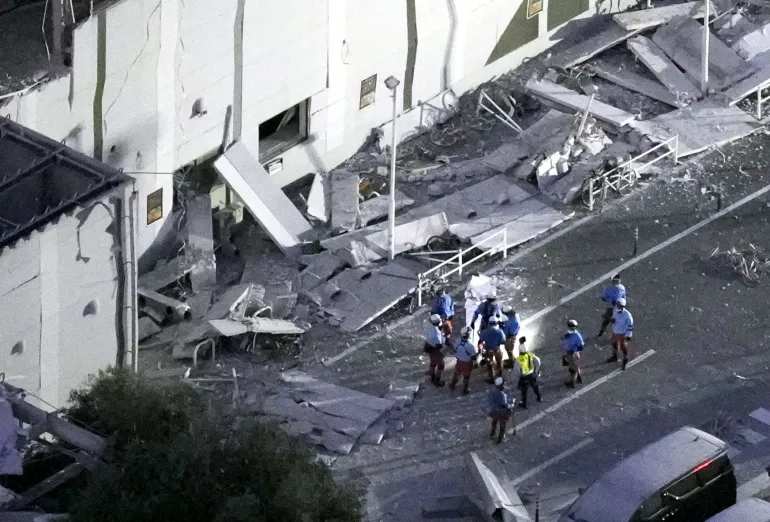
Thousands of shoppers and store employees, quickly evacuated by staff after a magnitude 7.1 earthquake, watched in horror as an explosion ripped through Kumamoto’s Aeon mall, exposing steel beams and catapulting debris across the parking lot.
Workers in and around one of southern Japan’s largest shopping centres described being thrown to the ground and enveloped in a disorienting cloud of dust by the explosion that followed the massive quake on Tuesday.
“I thought a bomb had gone off,” Takateru Sonoda, 41, who runs a combined hair salon and cafe near the mall, told news agency Jiji Press.
“There were people calling on others to evacuate, and sirens were ringing out. Nearby roads were gridlocked; it was a state of panic.”
First responders, initially fearful of entering the wreckage, hauled eight people from the partially collapsed site early on Wednesday, three dead among them.
The status of three shop workers remains unknown, Aeon said, adding that it was investigating a possible gas leak as a potential cause for the explosion.
Japanese Prime Minister Sanae Takaichi said on Wednesday that it was a “race against time” to rescue those trapped in the mall and others affected by the quake.
About 170 soldiers have been deployed to help with rescue operations at the site.
All 25 cats left behind in a cat cafe during the hasty evacuation were rescued on Wednesday, the cafe owner said in a social media post, thanking rescue workers.
Aeon mall had just reopened last month, a new and improved shopping and entertainment complex, after its recovery from another deadly tremor a decade ago.
After being badly damaged in the magnitude 7.3 Kumamoto earthquake in April 2016, the operator highlighted its seismically reinforced ceilings and overall improvements to safety and resilience.
Across the street, in a pub about 300 metres (330 yards) from the mall, Kazuya Tsurunaga was cleaning up dishes and glasses broken by the quake when he heard the deafening blast.
“A large cloud of smoke was billowing up, and because the wind happened to be blowing, and the wind direction was toward the shop, it was like volcanic ash was falling around us,” he told broadcaster TBS.
Police officers and firefighters were wary of entering the wreckage because of the risk of further collapse amid a series of aftershocks, a police official said. By the end of Tuesday, more than 100 aftershocks had occurred in Kumamoto.
Rescue workers conduct search and rescue operations at the Aeon mall, where an explosion occurred after a magnitude 7.1 earthquake, in Kashima, Kumamoto Prefecture, Japan, July 28, 2026 [Kyodo/via Reuters]
Aeon President Akio Yoshida told a news conference on Wednesday that staff evacuated 3,000 shoppers within half an hour after the quake hit. But an unlucky few were inside when, 50 minutes later, the explosion occurred.
“We confirmed that all customers had been evacuated. We believed that employees had also evacuated, but it later emerged that some people had remained inside, or returned for whatever reason,” Yoshida said, adding that one survivor was found injured in a toilet.
Video shot by a police officer inside the building early on Wednesday showed large sections of the ceiling collapsed, storefronts blown open and furniture strewn across the floor.
Yoshida said the possibility the explosion was caused by gas was “very high”, but that thorough investigations were needed to understand what went wrong.
“We had not fully anticipated that an explosion of this kind could occur,” he said. “We have never had an accident like this.”
Both countries expect to see temperatures soar into Wednesday, which could cause the blazes to spread.
Published On 28 Jul 202628 Jul 2026
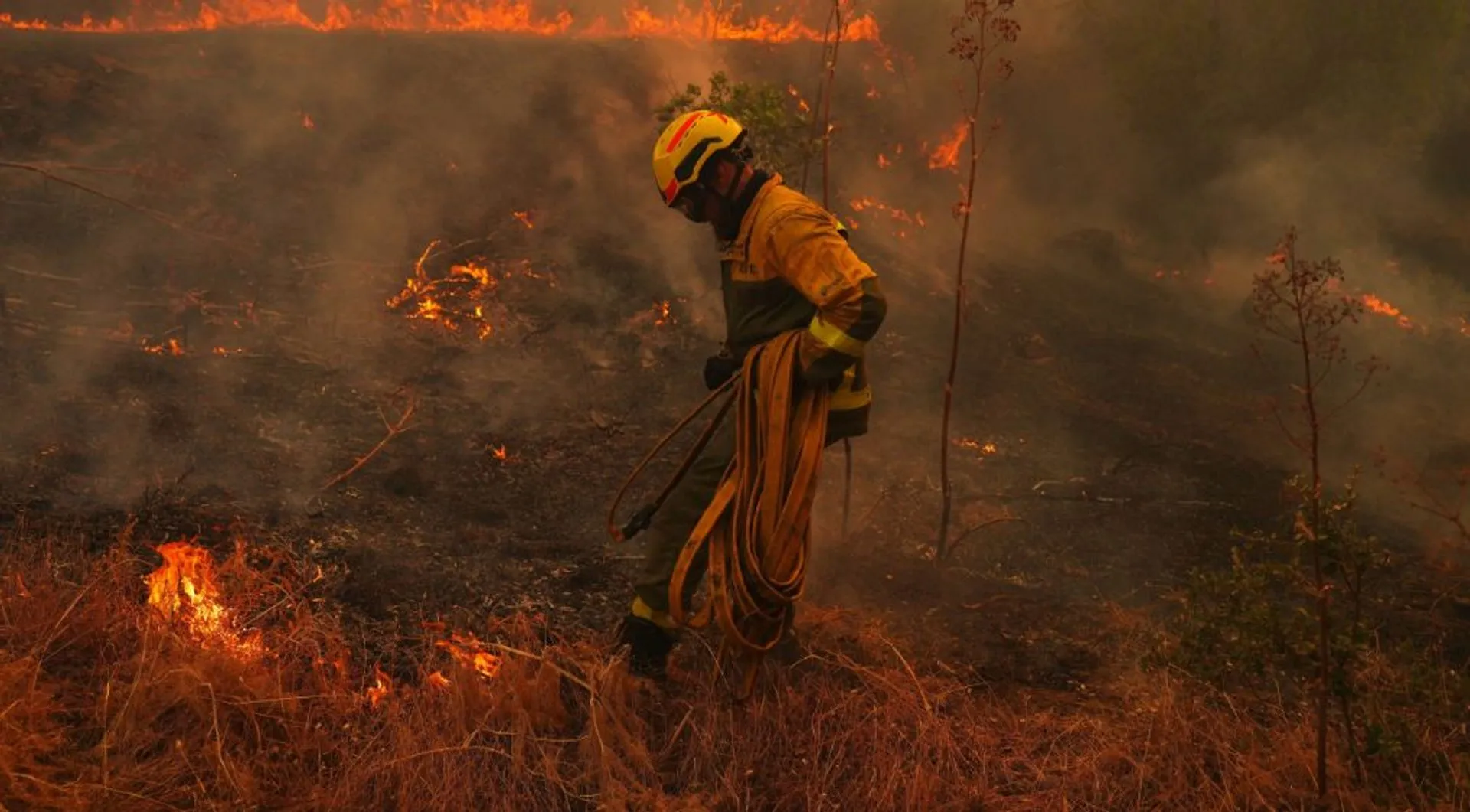
The spread of wildfires in France and Spain that had come dangerously close to the cities of Bordeaux and Madrid appears to be slowing, authorities say, but they are bracing for yet another stifling heatwave this week, which could fan the flames of current blazes and ignite new ones.
Nearly 4,000 people were evacuated from tourist sites in the Lacanau area of the Gironde region in southwestern France on Tuesday, bringing the total number who have fled Gironde to well over a quarter of a million. The wine-growing region, which includes the historic city of Bordeaux is the worst affected in France by the wildfires
Recommended Stories
list of 3 itemsend of list
“We are at a point of fragility,” Eric Brocardi, spokesperson for France’s national firefighters federation, told BFMTV on Tuesday. “We will continue attacking this fire despite the forecast rise in temperatures.”
Images posted by the French newspaper Le Figaro showed ash on a beach in Lacanau. Sophie Brocas, Gironde’s prefect, has banned all sporting and cultural events until August 8.
France’s fourth heatwave of 2026 is expected to begin on Tuesday as temperatures are forecast to reach as high as 40 degrees Celsius (104 degrees Fahrenheit) in the coming days. When the heatwave reaches Spain on Wednesday, temperatures are expected to be even hotter there.
In Spain, 116,000 people have had to leave their homes since the wildfires began, but some have since been able to return. In the central province of Toledo, people from nine of 11 evacuated towns were allowed to go back to their homes on Tuesday.
Interior Minister Fernando Grande-Marlaska said people “can be a little more at ease” after progress overnight in tackling the many blazes in the country, which are mostly concentrated in central Spain.
Firefighters are also dealing with blazes in the neighbouring provinces of Avila and Toledo. About 800sq km (310sq miles) of land have burned.
One Spanish evacuee from the east of the country told the Reuters news agency he had witnessed “total chaos”.
“It was like in the movies where hell cracked the ground open, and you see the red hell.”
The scorching heat has renewed concerns about climate change with Spanish Prime Minister Pedro Sanchez describing the fires as “the most painful expression of a climate emergency”.
Sanchez said authorities are beginning “to see the light at the end of the tunnel in the fight against wildfires” but cautioned that the upcoming heatwave still has to be dealt with.
Wildfires are rampaging through vast areas of land in southwestern Europe, forcing France and Spain to evacuate more than 325,000 people from their homes.
Some of the worst fires in France since World War II come just weeks after record-breaking heatwaves scorched Europe. Authorities have deployed thousands of firefighters to battle the blazes.
Recommended Stories
list of 3 itemsend of list
On Sunday, France’s Interior Minister, Laurent Nunez, said about “115,000 hectares (284,171 acres) have burned in wildfires in France since the start of the year”. In Spain, 119,458 hectares (295,187 acres) of land have been burnt as of July 22 , according to data from the Copernicus European Forest Fire Information System (EFFIS).
More than 150,000 hectares have burned across Spain since January, said Prime Minister Pedro Sanchez – that’s six times the area destroyed during the same period last year.
Wildfires destroyed 2.2 million hectares (5.4 million acres) of land in Europe in 2025 – up from 1.4 million hectares (3.5 million acres) in 2022, according to the United Nations.
What is the main cause of the wildfires and why are authorities struggling to contain them?
What has happened?
Since early July, wildfires have been burning across southern and western Europe, with France and Spain being the worst hit.
About 220,000 people have been evacuated from their homes in France, about 75,000 people in Spain, and around 30,000 others there ordered to shelter in place, according to authorities.
In Spain, a fast-moving wildfire in the Andalusia region killed at least 12 people on July 10 . By July 20 , the fires had spread hundreds of kilometres to the capital, Madrid. At least 10,000 people have been evacuated following wildfires in the central region of Madrid. On July 24 , Spanish authorities declared a national emergency, saying two major blazes were “out of control”.
Over the weekend, a separate blaze in Spain’s eastern Castellon province ravaged more than 4,300 hectares (10,625 acres), regional authorities said.
“The fire is out of control, it’s very difficult to extinguish from a technical standpoint, especially because of the adverse weather conditions that will continue throughout the day,” the regional leader of Valencia, Juanfran Perez, told reporters near the site.
The wildfire in Spain has now entered the Sierra de Espadan natural park, containing large forests of pine trees and cork oaks.
In France, the wildfires are among the country’s worst since World War II and have particularly ravaged the Cap Ferret peninsula, an exclusive holiday destination on France’s southern Atlantic coast about 70km (43 miles) from Bordeaux.
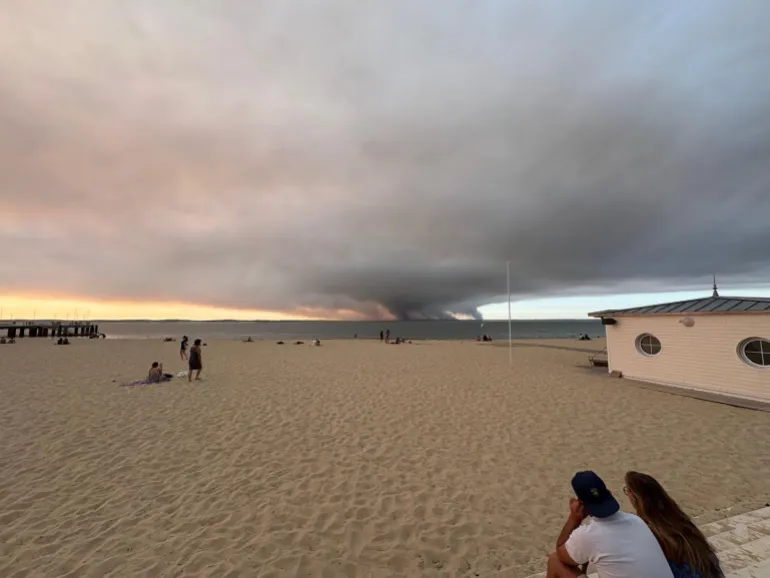
Reporting from Maubec, near Toulouse, Al Jazeera’s Nina Montagu-Smith said: “When I visited Arcachon, a seaside town just across the bay from Cap Ferret on Thursday last week, we could see the fires on the peninsula. Within hours, the sky had blackened and the smoke was thick over Arcachon town.”
“All trains from Arcachon were cancelled, apparently due to an ‘electrical fault’,” she added. “Fire engines were lining the A63 from Bordeaux towards Arcachon on Thursday evening as I drove eastwards to Libourne, which is 100km from the fires in the Gironde region,” she said.
Our correspondent noted that after the wind picked up on Thursday evening, smoke from the blaze reached Libourne, where ash was falling from the sky.
“We have since relocated further east in France towards Toulouse, where the sky is very grey and we could still smell the smoke on Sunday night,” she added.
Fires on the Cap Ferret peninsula in southwest France, as seen from across the bay in Arcachon, a town on the French Atlantic coast [File: Courtesy of Nina Montagu-Smith]
The wildfires have now spread through areas surrounding Bordeaux, where firefighters were trying to prevent the flames from reaching the regional capital.
Bordeaux Mayor Thomas Cazenave said the fire was just 15km (nine miles) from entrances to the main city.
“We have a fire that is not under control and which is moving in the direction of the city area,” Interior Minister Laurent Nunez told France 2 TV on Sunday evening. “The overall situation is very unfavourable, we are in a situation that is unprecedented.”
So far, authorities have moved 197,000 people from areas around Bordeaux – including popular holiday spots which are generally crowded at this time of the year.
The Bordeaux region is famed for its vineyards and the city is one of the main transport hubs for tourists visiting nearby holiday resorts on the Atlantic coast.
Cazenave said earlier on Sunday that there were no plans yet to evacuate Bordeaux, whose wider metropolitan area has a population of about 850,000. Nunez said authorities would continue to assess the situation calmly and realistically, and the government has warned against road or rail travel to the area.
The wildfires disrupted Sunday’s Tour de France finale in Paris, which organisers shortened from 133 to 89 kilometres (83 to 55 miles) after security forces originally assigned to the race were redeployed to fight the fires instead.
Why are these fires so bad?
Scientists are warning that pyrocumulonimbus clouds – unprecedented in southwest Europe – are forming.
According to the British Royal Meteorological Society, these are thunder clouds “created by intense heat from the Earth’s surface”. They can make conditions almost impossible for firefighters.
They are formed similarly to normal clouds, but “the intense heat that results in the vigorous updraft comes from fire, either large wildfires or volcanic eruptions”, the society said. It explained that there may be a burst of rain because of them but warned that this rain “can then carry embers from the fire, igniting spot fires away from the source. In some cases, dry lightning from these storms can strike without rain, further spreading the wildfire”.
A spokesman for France’s National Firefighters Federation of France (FNSPF) told the AFP news agency: “Lightning forms within the cloud, striking the embers on the ground and further fuelling the fire … It produces a low, rumbling sound. While this type of fire occurs regularly in Canada and Australia, it is unprecedented in France,” he said on Sunday.
“We have reached a point of ‘operational impossibility’ that requires us to accept the need for strategic retreat – to understand and acknowledge a natural force beyond our control,” he said.
“It calls for … knowing what can be done and, above all, what cannot. The situation on the ground is defensive rather than offensive; it is a war-like scenario where we are under constant bombardment and must get everyone to safety,” he added.
What are authorities doing now?
Spanish and French authorities say firefighters alone cannot fight the blaze and have appealed for international help.
On Sunday, Spanish PM Pedro Sanchez visited fire-hit areas in Avila, one of three central provinces affected by major blazes alongside Madrid and Toledo, where more than 45,000 hectares (111,000 acres) have burned.
“We have a window of opportunity this weekend to fight the wildfire and, therefore, to protect lives, protect population centres and, ultimately, to bring this very serious wildfire under control as far as possible,” he said.
Sanchez said his government will declare a civil protection emergency for the central provinces plagued by the wildfires on Tuesday, unlocking additional recovery funding.
French Prime Minister Sebastien Lecornu wrote on X on Saturday: “The fires which are hitting our country have reached a level that has never been seen before”.
Lecornu called another government crisis meeting on Saturday for ministers to discuss the response to the emergency, the second such meeting in as many days.
The European Union’s civil protection mechanism is monitoring the situation and has been assisting. Under the mechanism so far, Greece and Italy have sent firefighting aircraft to Spain, while Portugal has deployed more than 100 military personnel, along with equipment.
Two more aircraft will arrive “as soon as possible” from Turkey, the Spanish interior ministry added on X.
Why are these fires becoming so much harder to contain?
Wildfires have been a common occurrence in Europe in recent years, but authorities have increasingly been struggling to contain them.
Sanchez said the growing scale of the fires and their intensity, fuelled by increasingly extreme weather such as the heatwaves this summer, require policies grounded in climate science.
Eduardo Rojas, chairman of the Board at the Programme for the Endorsement of Forest Certification told Al Jazeera’s Inside Story programme on Sunday that there are multiple factors causing the wildfires which also need attention.
He said the fires in the wild lands of the country have occurred where the “urban interface is extraordinarily complex”. He noted that some areas were “built up in the 60s, 70s and 80s without a proper city plan and with lack of infrastructure, lack of water availability…and with a lack of knowledge of the neighbourhoods.” When a fire occurs, therefore, there is a “lack of knowledge” about how to deal with them.
“The fire in west Madrid is a kind of fire that doesn’t burn a huge area but creates a lot of hesitation,” he said.
“We also have farms where cereals are harvested and even [with] a small lightning [strike], the cereal can start to burn and at the end a big agricultural area ends up burning which is a big damage for farmers,” he noted.
“These kinds of fires need to be tackled in a totally different way because their cause and their environment and conditions are incomparable with one another,” he added.
Laurie Laybourn, executive director of Strategic Climate Risks Initiative, a non-partisan thinktank told Al Jazeera that governments across the continent are unable to cope with the pace at which climate change is occurring.
“All governments develop what are called reasonable worst-case scenarios to inform their planning and in many instances the events that we’re seeing are going beyond even those. So what that tells us is that the tools that we’ve got, the analysis that is informing government planning is a step behind how fast climate change and its supercharging of disasters is,” he said.
So is this all mainly because of climate change?
According to the European Forest Institute, a wildfire “is a chemical reaction of combustion, which requires a source of heat (lightning, an agricultural “burn” which escapes, or a spark originating in an electric line), oxygen and fuel (forests, shrubs or pastures) to get started.”
“Wildfire risks are increasing worldwide because of climate change and land use change,” the institute added in a July 9 report.
In a recent report, the World Health Organization’s regional director for Europe issued a warning about climate change, saying it is directly responsible for intensifying wildfires and their increasing frequency.
There are clear indications that climate change is “supercharging” incidents such as wildfires, Laybourn told Al Jazeera.
“Any disaster is very complex. The causes are multilayered, including how we build and how we use land…But climate change is supercharging the conditions that make us vulnerable to things like wildfires and that has been something that’s been predicted now for many decades and tragically becoming true in front of our eyes,” he said.
According to Copernicus, the European Union’s climate change service, Europe is now the fastest warming continent on Earth, with temperatures increasing twice as fast as the global average since 1980.
Laybourn explained that this summer’s heatwaves were also caused by climate change.
He warned and stressed that governments need to prioritise tackling the issue.
“This should be a moment of profound alarm and reflection, particularly for governments.”
France and Spain have deployed thousands of firefighters, and neighbouring countries have sent help.
Wildfires are ravaging many parts of western and southern Europe, with France and Spain among the hardest hit.
The World Health Organization has warned that climate change is contributing to the frequency and intensity of the fires. This is clear in the record temperatures and successive heatwaves seen across the continent since May. France and Spain have deployed thousands of firefighters, and neighbouring countries have sent assistance. Authorities say the situation is unprecedented.
Recommended Stories
list of 4 itemsend of list
So, what will it take to extinguish the flames?
Presenter: Per Nyberg
Guests:
Eduardo Rojas – chairman of the board at the Programme for the Endorsement of Forest Certification
Soraya Fettih – global campaigns coordinator at 350.org, an international environmental organisation focused on addressing the climate crisis
Laurie Laybourn – executive director of Strategic Climate Risks Initiative, a non-partisan think tank
Wadi Dawan, Yemen – From above, Wadi Dawan looks untouched – a ribbon of date palms winding through towering cliffs, divided by a white wadi bed. Scattered mud‑brick homes cling to the rocky slopes, overlooking one of Yemen’s most celebrated agricultural valleys, renowned for its palm dates and quality honey.
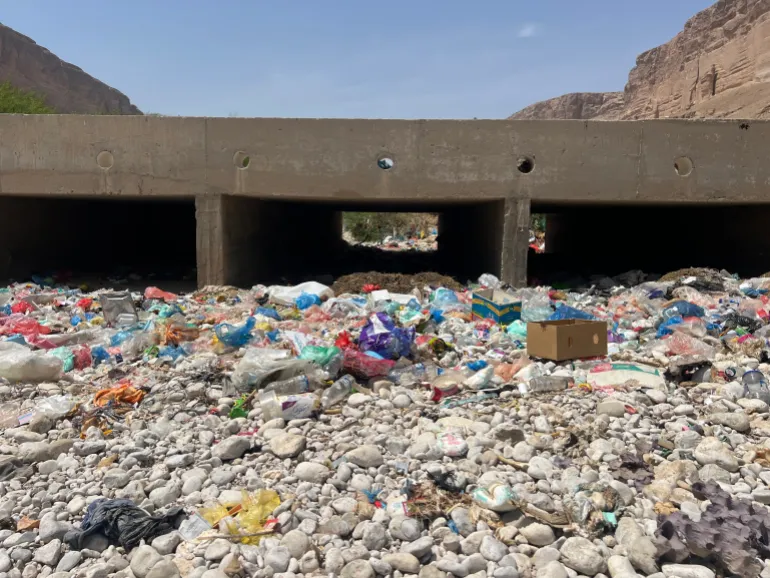
But continuing down into the valley, a starkly different picture emerges: plastic waste litters the flood channels, while the smell of burning rubbish hangs in the air, triggering coughs and polluting the valley’s once‑clean atmosphere.
Recommended Stories
list of 3 itemsend of list
“By God, this is a very serious problem,” said Yousef Abdullah, a 65‑year‑old farmer and orchard owner, speaking angrily to Al Jazeera. “If it remains unresolved, it will cause a disaster.”
Yousef stood beneath the shade of date palms, surrounded by a blanket of plastic bags, bottles, and food wrappers.
Throughout Wadi Dawan, home to thousands of people across dozens of scattered villages in Yemen’s eastern Hadramout province, plastic bags, bottles, and other household waste litter roadsides and palm groves.
Piles of rubbish – including dead animals – are dumped into flood channels that irrigate the valley’s farms. Household waste is mixed with sewage discharged into the wadi bed, while mounds of rubbish are dumped along roadsides just metres from people’s homes.
Yousef said that floods flowing through the valley pick up the waste, blocking irrigation channels, and depriving some farms of the vital waters they need. That has forced farmers to rush to the channels whenever the floods arrive, clearing the waste that has accumulated before the water recedes.
“We move from one irrigation channel to another leading to our farms, removing plastic bags, construction debris, and trees,” Yousef said. “We have to do it carefully because broken glass hidden in the rubbish can easily cut us.”
And then, after the floodwater recedes, Yousef and other farmers return to their fields and collect the plastic bottles and bags before they can sow their seeds.
Plastic waste and household rubbish accumulate beneath a bridge in Wadi Dawan, where residents say seasonal floods wash the debris into irrigation channels serving nearby farms [Saeed Al Batati/Al Jazeera]
Waste awareness initiative
Residents, environmental advocates, and local officials say the growing problem is driven by the lack of a proper waste collection system and limited public awareness of the environmental and health risks of indiscriminate dumping.
Large parts of the valley have no waste collection points at all. In the places that do, green rubbish bins can be seen along the roads, but are often overflowing. Garbage trucks are supposed to collect waste from the bins once a week, but the service is often disrupted because of a lack of funding and poor vehicle maintenance.
With almost no funding or resources, Salem Raji, who heads the Ministry of Agriculture’s office in Wadi Dawan and is also an agricultural researcher, launched an initiative to draw attention to the growing problem of waste dumping in his home valley. He has met with local officials, spoken to local media and used social media to warn residents about the environmental consequences of dumping rubbish into the valley’s flood channels.
“The agricultural sector is particularly affected by plastic waste, which contaminates the soil and leads to poor or even failed crop yields,” Raji said. “Waste causes numerous problems in the main irrigation canals, blocking water flow, damaging canal walls and preventing floodwater from reaching farmland. As a result, some farmers lose an entire harvest season because their fields receive no irrigation.”
The problem has worsened over the past decade as Yemen has been engulfed in a war between the Iran-backed Houthis and the Saudi-backed, internationally recognised government. The conflict has killed hundreds of thousands of people, displaced millions, and devastated state institutions, leaving local authorities, including municipalities and agricultural offices, with little funding or capacity to provide basic services.
“The problem has worsened in recent years because of the war, which has led to administrative instability and a lack of funding for local authorities,” Raji said.
Raji appeared frustrated that his efforts had yet to bear fruit and that his warnings had largely fallen on deaf ears, with residents continuing to dump waste across the valley. He called for an increase in his office’s monthly budget, currently just 8,000 Yemeni riyals, or about $5, so that staff could conduct field visits, reach more residents, and help remove rubbish from farms and flood channels.
Despite Raji’s best efforts, he has had little success with his attempts to raise awareness. “Our office’s [limited] budget leaves us unable to carry out regular field visits to educate the public or remove waste from flood channels.”
Salem Raji, an agricultural official and researcher, tries to raise awareness among residents about the risks of dumping waste into valleys [Saeed Al Batati/Al Jazeera]
Expanding problem
The crisis extends far beyond Wadi Dawan. Across Yemen, years of war, collapsing public services and inadequate waste management have turned rubbish dumping into a growing environmental and public health problem.
In cities such as Taiz, waste has polluted farmland, contaminated drinking wells and dams, and increased the risk of waterborne diseases, according to local officials and health experts.
Dr Yassin Abdul Malik al-Shuraihi, who heads disease surveillance in central Yemen’s Taiz governorate, told Al Jazeera by telephone that the province, home to millions of people, suffers from a severe shortage of rubbish bins and chronic delays in waste collection.
As a result, many residents have resorted to dumping rubbish into flood channels that run through agricultural areas.
“Sewage, household waste and construction debris are now being dumped directly into these channels,” al-Shuraihi said. “We record a large number of diarrhoea cases throughout the year because sewage contaminates some drinking wells, making the water unsafe.”
Environmental experts are now calling for urgent action, warning of the particular dangers the waste poses to Yemen’s rural areas and farmland.
Khaled Saleh Bawahidi, a professor and director of the Environmental Studies and Water Resources Centre at Hadramout University, said indiscriminate waste dumping poses serious long-term environmental and public health risks.
“Accumulated waste is degrading natural habitats and polluting the soil around the palms, threatening tree growth and long‑term productivity,” Bawahidi said. “Bee health is also at risk as grazing areas deteriorate and the quality of natural resources declines. This could lead to a drop in the quality of dates and honey.”
And ultimately, it will be local Yemenis who face the consequences.
“Waste dumped in valleys contaminates soil and surface water,” Bawahidi added, “and creates breeding grounds for insects and rodents that can transmit diseases to humans and livestock.”
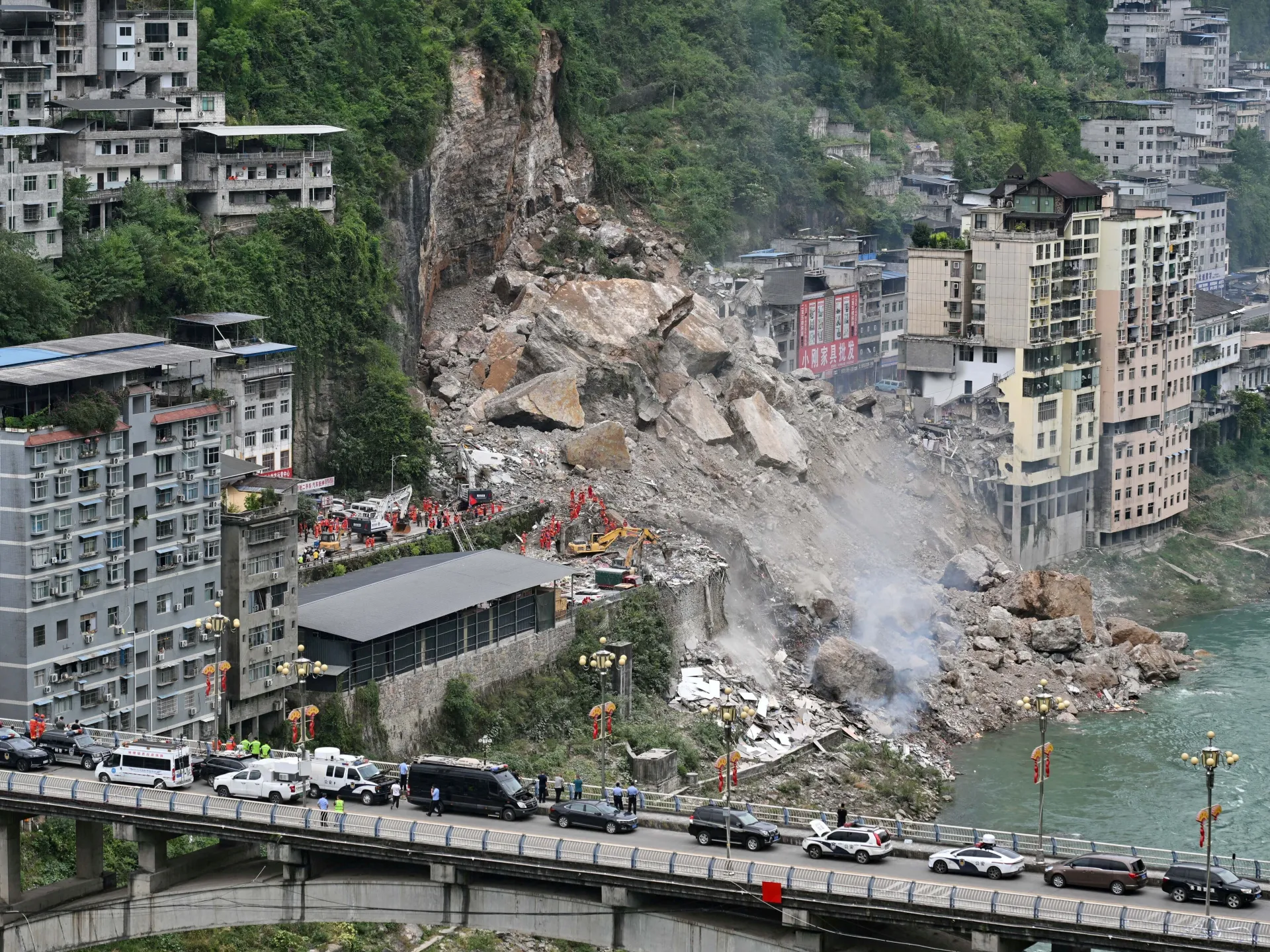
A landslide on the outskirts of the southwestern Chinese city of Chongqing has killed at least eight people and left 34 missing. 10 residential buildings have been buried, forcing more than a thousand residents to evacuate.
India joins a handful of countries that have successfully deployed the zero-emission technology in their rail networks.
By Reuters and The Associated Press
Published On 17 Jul 202617 Jul 2026
India has launched its first domestically built, hydrogen-powered train, as it pushes its efforts to expand clean energy use.
Prime Minister Narendra Modi inaugurated the locomotive ahead of its first trip on Friday, hailing the event as a significant day for India’s drive to become self-reliant and sustainable. The introduction of the train sees India join just a handful of countries that have successfully deployed the zero-emission technology in their rail networks.
Recommended Stories
list of 2 itemsend of list
Dubbed the “NaMo Green Rail”, including an abbreviation of the PM’s first and last names, the train will make two return trips each day along a 90km route linking the cities of Jind and Sonipat, in the state of Haryana. The 10-coach train can seat about 2,600 passengers and can travel at speeds of up to 75km/h.
Designed, engineered and built in India, the NaMo produces only heat and water vapour when running, making it an attractive alternative to diesel.
While India has already electrified almost all of its 70,000km railway network, one of the largest in the world, hydrogen trains can plug the gap where electrification is not possible.
The rollout is part of India’s wider push to expand use of hydrogen and cut its carbon emissions, with the government aiming to make the country’s railways net-zero by 2030.
Democrat Xavier Becerra holds a commanding lead in the California governor’s race in a new poll, which also shows broad voter support for a ballot proposition to reform the state’s landmark environmental law to speed up housing and infrastructure.
The survey by the Public Policy Institute of California, released Wednesday night, focused primarily on questions related to climate change and environmental policies.
The results show Californians have a strong distaste for building data centers for artificial intelligence technology, and largely favor the state’s efforts to protect the environment and cut emissions — with some exceptions.
The survey showed Becerra with a big lead over Republican Steve Hilton in the race to replace term-limited Gov. Gavin Newsom. Becerra, a longtime Democratic officeholder, received support from 61% of likely voters, compared with 36% for Hilton, a populist conservative who once advised a British prime minister.
Gubernatorial candidate Steve Hilton speaks at the National Assn. of Latino Elected and Appointed Officials conference in L.A. on Wednesday.
(Myung J. Chun / Los Angeles Times)
The results are not surprising in a state where Democratic voters significantly outnumber Republicans. The GOP has not won a statewide election since 2008.
Just 2% of likely voters said they were unsure which candidate to support in the November election. The poll results skewed heavily partisan, with more than 9 in 10 Democratic and Republican voters picking their party’s respective candidate. Most independent voters leaned toward Becerra, 60%, over Hilton, 34%.
The results are similar to data from a poll conducted just before the June 2 primary election that asked voters to pick between the two candidates. In that survey, 52% said they supported Becerra and 31% were for Hilton.
In a statement Wednesday, Hilton characterized the race as “wide open,” contending that Becerra’s support was weaker than the poll’s headline figures would indicate.
“Instead of a 36-year career politician, we need a positive, energetic problem-solver with business experience and plans to make our state ‘Califordable’ — that’s me,” Hilton said.
Becerra spokesman Jonathan Underland said in a statement that “Californians got to know Xavier Becerra during the primary, and they’re ready to make him their next governor. We’re keeping our eyes on the prize — hitting the trail every day ’til November to turn that support into votes.”
Support for CEQA reform
A ballot measure aimed at reforming the California Environmental Quality Act to speed up construction notched a strong showing in the poll.
Nearly three-quarters of likely voters, including majorities of Democrats, Republicans and independents, said that they would vote for Proposition 45. The measure would shorten windows for environmental review, public comment and legal challenges for certain housing, transportation, water infrastructure and other projects.
“At this early stage in the campaign, California voters are feeling more aligned with Democratic candidates on the environment, and it shows in the polling,” said PPIC survey director Mark Baldassare. “But strong support for Proposition 45 reveals their desire to balance environmental priorities with housing and infrastructure needs.”
Strong data center opposition
The poll found large majorities of Californians do not want new data centers to support the AI boom built in their area; 44% of adults say they “strongly oppose” such projects, and 29% “somewhat oppose” them.
The majority opposition holds across political parties, geographic regions, gender, race and income. It’s especially pronounced in the Inland Empire, where plans for a 950,000-square-foot data center came to a halt after fierce resident pushback. Three-quarters of people surveyed in that region said they oppose building new data centers.
“Every day, we are hearing about how local communities across the nation are responding to plans for data centers,” Baldassare said. “Californians have weighed in and they share this growing concern.”
Support for environmental policies — except if they cost more
The poll also shows strong, if somewhat qualified, support for California’s efforts to reduce climate-warming greenhouse gas emissions and protect the environment.
Three-quarters of adults said policies to reduce greenhouse gas emissions have been a good thing overall, and 65% said they support California leaders’ efforts to make their own environmental policies separate from the federal government.
While most respondents — 62% — said they favor a law requiring 100% of the state’s electricity to come from renewable energy sources within the next two decades, just 38% said they were willing to pay more for electricity sourced from renewables.
“With energy prices spiking and affordability a growing concern, Californians are just not willing to pay more for renewable energy,” Baldassare said. A near-unanimous majority, 96%, said the cost of energy — including gasoline, natural gas and electricity — is a problem.
Newsom’s move to ban the sale of new gas-powered vehicles in the state by 2035 also appears to have fallen out of favor. Two-thirds of Californians oppose the policy, a significant slip in approval from 2021, when a PPIC survey showed 49% supported the move.
Still, majorities of likely voters — 53% and 51%, respectively — said they approve of Newsom’s and the state Legislature’s handling of environmental issues.
At 28%, President Trump’s approval rating on the environment was much lower. In his second term, Trump has moved to slash environmental regulations, including easing pollution regulations on coal-fired power plants and pushing for oil drilling off California’s coast.
“Given this ratings gap, it’s not surprising that Californians want to see the state take the lead on climate change policy,” Baldassare said.
The survey polled 1,578 California adults, 1,003 of whom were likely voters, in English and Spanish from June 29 to July 6 and had a margin of error of 3.8 percentage points in either direction.
Monitor ranks Toronto as having the worst air quality on earth, surpassing Kinshasa, DR Congo, and New Delhi, India.
Published On 16 Jul 202616 Jul 2026
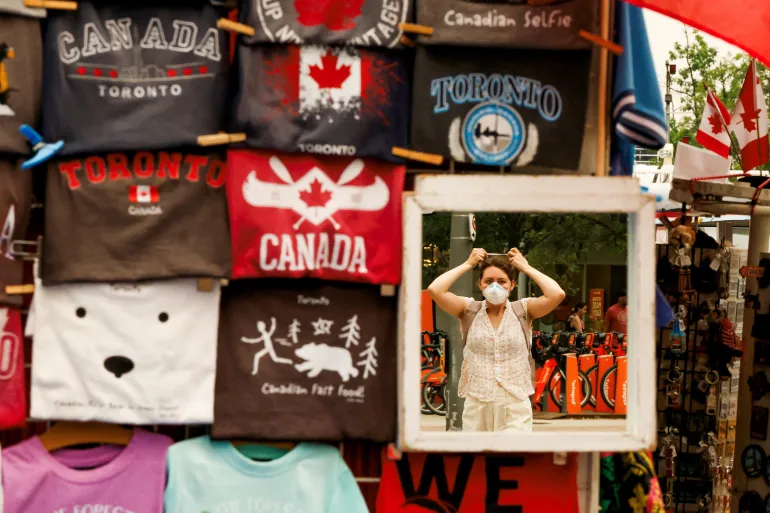
Toronto’s air quality has ranked the worst among all major cities in the world as smoke from wildfires in northwestern Ontario blankets the skies and spreads into the northeastern United States, triggering multiple health warnings and evacuations.
Wildfires continued burning through sparsely populated areas hundreds of miles from Toronto, Canada’s largest city, on Wednesday, sending smoke over a wide area, although cities in the area are not being threatened.
Recommended Stories
list of 3 itemsend of list
Environment Canada reported an Air Quality Health Index reading of 10+, classified as “very high risk”, for Toronto. Forecasts suggested that hazardous conditions could persist through Thursday night.
IQAir, a Swiss air quality technology company, ranked Toronto as having the worst air quality across the globe, surpassing the Democratic Republic of the Congo’s Kinshasa and India’s New Delhi.
“The biggest contributor to Toronto’s spike in air pollution right now is wildfires, though the higher-than-average temperatures are also playing a role,” Armen Araradian of IQAir told the AFP news agency.
While this year’s wildfire season in Canada has been fairly muted compared with recent years, there are more than 800 active fires nationwide.
A video that went viral on social media showed a Canadian National train surrounded by fire near Armstrong, Ontario. Canadian National employees in the area and residents of Armstrong were evacuated on Monday night, the railroad operator said in a statement. It suspended rail operations near Armstrong as a precaution.
Smoke from the wildfires also worsened air quality across the border in the US, with the states of Pennsylvania, New York, Connecticut, Massachusetts, Maine and New Hampshire particularly affected.
Authorities in New York City have issued an alert over unhealthy air quality, urging residents to reduce strenuous outdoor activity and take extra breaks if they are outside on Wednesday and Thursday.
The National Weather Service said smoke could linger until the end of the week.
“We probably haven’t seen the worst of it yet for New York City. We probably haven’t seen the worst of it yet for the Great Lakes and upstate, and New England yet either,” Dan Westervelt, Lamont associate research professor at Columbia University, told the Reuters news agency.
More than 80,000 people are expected to attend the FIFA World Cup final at an open-air stadium in New Jersey on Sunday, with another 50,000 planning to watch the game from New York City’s Central Park, where skies appeared hazy.
New York Governor Kathy Hochul urged people, especially those with health conditions, to exercise caution.
A person puts on a mask as reflected in a souvenir shop mirror, as wildfire smoke from northwestern Ontario fills the sky, in Toronto on Wednesday [Carlos Osorio/Reuters]
The Canadian government has said that wildfire season began more slowly this year than in 2023 or 2025 – the two worst seasons for wildfires – but warned that fires were likely, due to warmer-than-usual temperatures across the country.
It said some 835 active fires were burning across the country on Wednesday, with 112 considered out of control, and most in the central provinces of Manitoba, Saskatchewan and Ontario.
They have burned 1.9 million hectares (4.7 million acres) so far.
Greg Evans, a professor of chemical engineering and applied chemistry at the University of Toronto, said the city had been simultaneously hit with severe heat and wildfire smoke.
“I expect that this will occur more frequently over the coming decades, so cities and residents need to prepare for this in the future,” he said.
As if the college sports world weren’t crazy enough with roster limitations and rising numbers in the transfer portal, a new trend that isn’t really new but is accelerating involves coaches telling players they will have little chance to play as motivation for the player to leave and open up a roster spot.
That’s how a coach escapes bad publicity for chasing off a player. But maybe the coach is being honest in their evaluation? It’s all part of the strange happenings taking place.
When one door closes, opportunity knocks on another. I want to thank all my family, friends, teammates and coaches who have reached out to me since learning of my involuntary decommittment. I know I will find a new home soon and it will be better than before.@IowaPremierFP
Check out social media to see the growing number of high school and junior college players suddenly searching for new schools this summer by saying, “My recruitment is back open” or announcing an “involuntary decommitment.”
Just this week, Ole Miss is facing criticism after a longtime high school baseball commit from Iowa who has been battling cancer for three years, Brett Harris, said he had his baseball scholarship pulled.
College baseball, in particular, is being disrupted. Members from the high school class of 2027 are being forced to reopen their recruitment as schools take into consideration a new NCAA rule giving players five years of eligibility across five years.
Braden Ruiz, a Mater Dei High graduate who played shortstop at Cypress College, signed with Oregon last January. Last month he asked for his release from Oregon.
“It was the vibe I was getting,” Ruiz said. “They said I could still go up there and give it a shot. The conversations were they didn’t seem interested as before. I decided to decommit. The coach who recruited me ended up leaving Oregon a week later.”
Ruiz played with a hamstring injury at Cypress College last season.
“It’s all about performance,” he said. “If you’re not performing, it makes the coaches think differently.”
Ruiz has come to understand how college sports has become a business.
“They pretty much can do whatever they want,” he said. “They can pull your offer or in the conversations tell you you’re not wanted anymore. But it’s part of their job. They need to win to keep their job.”
Mater Dei coach Richard Mercado said he’s advising parents and players “if a school is giving out NIL money, it’s a business. You’re not going there to be friends with the coach. It’s a business relationship. They have to win immediately and with limited roster spots. They can’t be wrong.”
Players being pushed away to open a scholarship spot is not new. It’s happened in all sports. College baseball coaches have been engaged in a balancing act for years. Remember the days when Division I schools were limited to 11.7 scholarships. Players were being given partial scholarships and coaches had to project who might leave or stay after the amateur draft. Now college programs can offer full scholarships (think SEC), but rosters dropped to a maximum 34 players last season, forcing coaches to revise and regroup.
Add the impact of no more transfer restrictions and it’s understandable there’s uncertainty. The word loyalty is going to cease to exist in many programs.
So what’s the advice to players and parents?
Betting on yourself still works. If someone doesn’t want you, find someone who does.
“Everybody’s journey is different,” Ruiz said. “You can commit early or late. I would say people who commit now will make it on campus. Their past season was probably good. People performing better more recently have a better chance of playing.”
Do research to find programs that stick with old-fashioned rules and commitments and maybe mention academics.
On Thursday, Ruiz signed with New Mexico State. He’s one of the fortunate ones finding a school with a roster opening this summer before Saturday’s amateur draft begins. He’ll have three years of eligibility left. He’s finally healthy and can’t wait for the day he gets to play against Oregon.
If he becomes a standout, who knows, maybe the Ducks will want him again in this new world of college athletics.
Interim President of Venezuela, Delcy Rodriguez, says 80% of the buildings that collapsed in back-to-back earthquakes were privately developed. She also confirmed that more than 2,500 people are dead and that search and rescue operations still continue.
Temperatures in Europe hit a new high this summer, with hotter early-summer heatwaves triggering illness, deaths and the collapse of infrastructure across the continent.
Transport buckled on Sunday as temperatures hit 40C (104F) across Germany, the Czech Republic and Poland. In France, days averaging 29.8C (85.6F) – spiking to 44C (111.2F) in one town – gave way to storms, leaving an estimated 1,000 excess deaths behind.
Scenes like this may well be the new normal.
Last summer’s heatwave alone caused an estimated 2,300 climate-related deaths in 12 European countries, WWA says.
A study by World Weather Attribution (WWA) has found that intense heat on this level is now tens to hundreds of times more likely than it was in 2003, and was unheard of 50 years ago.
“Heat-related mortality is likely to remain a feature of Europe’s warming climate,” warns Dr Hans Kluge, the World Health Organization (WHO)’s regional director for Europe. Deaths have already risen by an average of 52 per million people annually since the 1990s, he told Al Jazeera – a trend he says shows little sign of reversing on its own.
So what does this mean for the future? Are these temperatures the new normal, and if so, why?
We asked the climate experts:
Is this really the new normal?
Yes, it certainly looks that way. According to WWA, heatwaves were generally about 3.5C cooler in June 1976, and 2C cooler even in 2003.
“Think of it like a race where the starting line has been moved much closer to the finish,” Dr Akshay Deoras of the University of Reading told Al Jazeera. Ultimately, this is down to global warming, he says.
Europe has warmed at roughly twice the global average since the 1980s, according to the European Commission’s climate change service, Copernicus.
Deoras says this amounts to “loading the dice” towards once-rare extremes.
WWA’s modelling goes further: at current emissions rates, an event of the magnitude of this summer’s heatwave is expected to occur every couple of decades – and today’s extremes are effectively a preview of what an ordinary summer could look like by the middle of the century.
Why is this happening in Europe now?
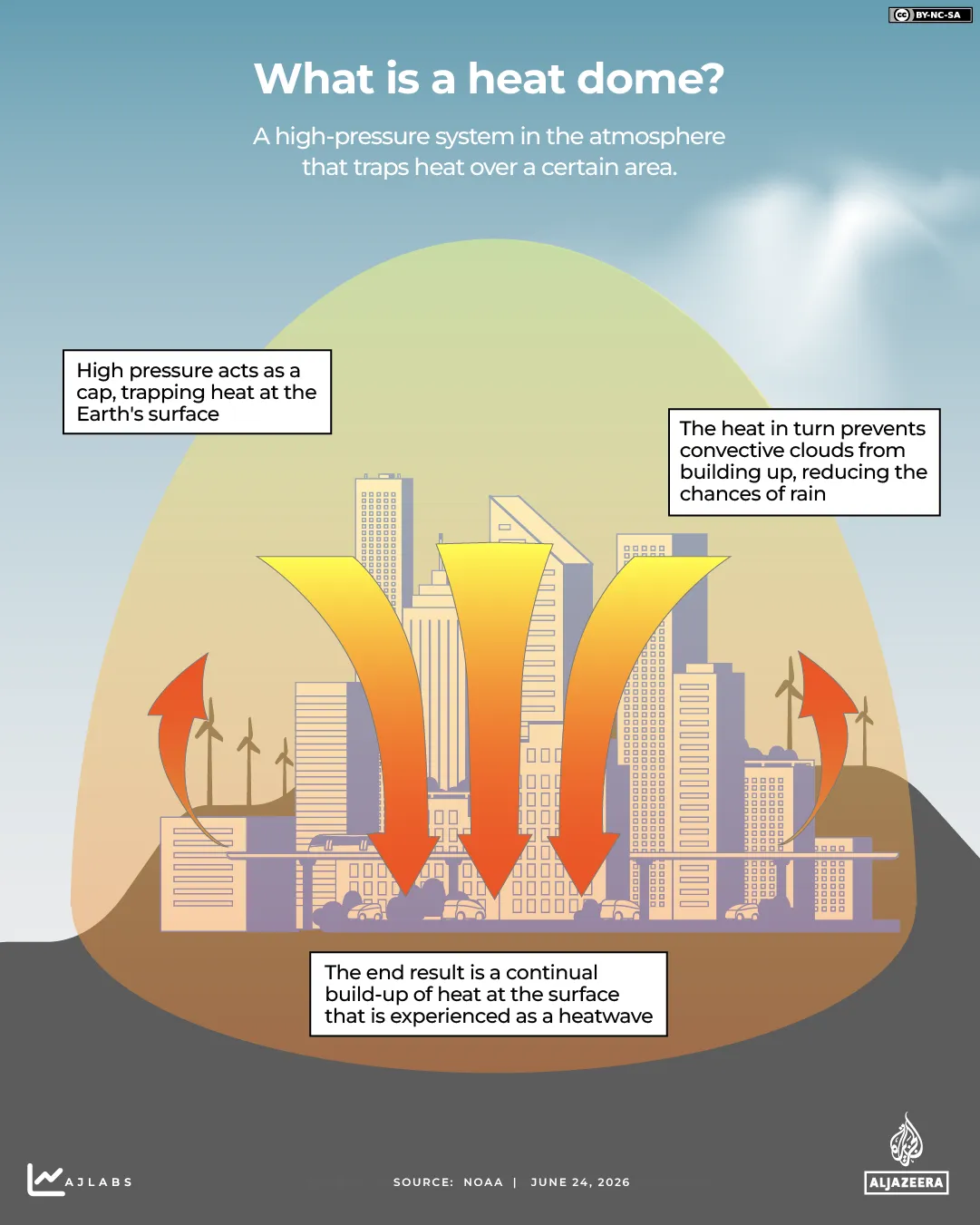
The immediate trigger is a stalled high-pressure system, or a “heat dome”, which traps heat in one concentrated area for days or weeks.
Heat domes aren’t new, but Europe’s already-shifted baseline means the same pattern now produces far hotter outcomes than decades ago, Deoras told Al Jazeera.
Professor Hannah Cloke of the University of Reading told Al Jazeera that’s because the warming behind new, extreme weather patterns comes from emissions released decades ago, and the climate system takes time to respond – so we’re feeling the effects now of pollution from the past.
Copernicus’s European State of the Climate 2025 report confirms this: more than 95 percent of the continent saw above-average annual temperatures last year, alongside record Alpine glacier loss and the highest sea-surface temperatures ever measured in Europe.
And because Europe is warming roughly twice as fast as the rest of the planet, that gap with the global average is projected to keep widening – meaning whatever the world experiences on average in the coming decades, Europe will likely see first, and worse.
Is this trajectory irreversible?
Partly. Some of the damage is permanent. Some of it isn’t – yet.
Take glaciers. Because the effects of pollution from decades ago are cumulative, “some of what we are experiencing this summer is already locked in”, Cloke says.
Alpine glaciers, which feed major European rivers, she says, have already shrunk past the point of recovery, and their contribution to summer river flow is “permanently reduced”.
Not everything is set in stone, however. “Every tonne of emissions avoided changes the odds of what comes next,” Cloke says.
What we do now, therefore, will decide the difference between summers that are simply hard to live with in the future, and summers that become “genuinely beyond our ability to cope with”.
Some resources, like groundwater in northern Europe, can still recover – “but the window to act is narrowing with each dry year”, she says.
What is this doing to human health?
The toll is already severe and likely to worsen.
The Lancet Countdown Europe calculates that there were 62,000 heat-related deaths across the region in 2024 alone, with projections showing a steep further rise by 2050 if we don’t make changes.
Much of the problem, Kluge told Al Jazeera, is architectural and largely unaddressed.
“Most of the housing stock across this region was designed for a colder climate – to retain heat, not shed it,” he said, warning that without large-scale retrofitting, deaths could keep climbing past 2050 regardless of how good warning systems become.
His prescription: treat heat as predictable, not an emergency.
“Governments need to plan for heat the way they plan for winter flu – as a recurring, predictable challenge requiring permanent infrastructure, not a one-off crisis requiring emergency improvisation.” The highest-return step, he added, is identifying who’s most at risk – often older people living alone – and reaching them before a heatwave hits, not after.
What else can be done?
Cloke points to two priorities: early warning systems that reliably reach the people who most need to be protected, and an overhaul of water infrastructure in Europe which has been built for rainfall patterns that no longer exist.
Deoras says emissions also still matter: cutting them won’t eliminate heatwaves, which are “a natural part of the climate system”, but doing so would make them “less intense, less frequent and shorter-lived”.
None of the experts who spoke to Al Jazeera describe this as hopeless.
They do warn that the window of opportunity for addressing the issue is narrowing: infrastructure can still be retrofitted, emissions can still be cut, warning systems can still be improved – if the decisions to do so are made now, rather than after the next heatwave.
What a “normal” European summer looks like in 2050 is still being written, they say.
Tests confirm a migratory brown skua found in Western Australia had the virus.
Published On 20 Jun 202620 Jun 2026
Prime Minister Anthony Albanese says Australia will do “whatever we can” to curb H5N1 bird flu after the first mainland case was confirmed in a seabird, which means the virus has now spread to every continent.
Tests confirmed a migratory brown skua found in Western Australia’s Cape Le Grand National Park had the deadly virus, authorities said on Saturday, and a giant petrel found in the same area was also suspected to be infected.
Recommended Stories
list of 3 itemsend of list
“This is concerning,” Albanese told reporters in Sydney, adding his government would do “whatever we can to restrict any spread”.
Previously, Australia had been the only continent without a confirmed mainland case, although the virus was detected in late 2025 on Heard Island, a sub-Antarctic territory about 4,100km (2,550 miles) from the mainland.
Agriculture Minister Julie Collins said the virus had not yet been detected in Australia’s poultry or agriculture sector.
“We all knew we couldn’t be bird flu-free forever,” she said.
Human infections remain rare, but the highly pathogenic avian influenza has led to the culling of hundreds of millions of birds globally in recent years, disrupting food supplies and driving up prices.
Khalil spent more than two decades protecting the nests of endangered turtle species in southern Lebanon.
Published On 20 Jun 202620 Jun 2026
Lebanese marine ecologist Mona Khalil, who was severely wounded after an Israeli strike hit her home near Tyre last week, has died, according to local reports.
Khalil, 77, succumbed to her wounds on Friday, the same day Israel escalated air attacks on southern Lebanon, killing at least 50 people and injuring dozens despite the risk posed to a fragile peace deal between Iran and the United States.
Recommended Stories
list of 4 itemsend of list
“It is with deep sadness that we mourn the passing of Mona Khalil today,” environmental group Live Love Tyre said in a Facebook statement on Friday.
“She will be remembered through an incredible legacy. Through it all, Mona chose to stay and care for the turtles of Live Love Tyre. Her life was selfless and impactful.”
A life of impact
Khalil was born in Lagos, Nigeria, in 1949. She spent several years abroad before moving to southern Lebanon.
A fleeting encounter with a turtle which had emerged from the ocean to lay its eggs on al-Mansouri beach near Tyre in 1999 propelled her on a lifelong journey devoted to animals.
She went on to dedicate decades to protecting the nesting sites of endangered loggerhead and green sea turtles on Lebanon’s southern coast.
Both species are highly threatened by coastal development, plastic pollution, fishing nets, and light pollution and are at risk of becoming extinct in the eastern Mediterranean.
In 2000, Khalil helped establish the Orange House, an eco-tourism project situated at al-Mansouri beach. She also helped document marine life in southern Lebanon and advocated for wildlife and against the pollution of Lebanon’s coastline.
“You have left us yet you remain within us – we, your children,” journalist and volunteer Fadia Joumaa, who worked closely with Khalil, said in a tribute shared on Facebook.
Khalil’s death “is a loss for all of Lebanon… not just for us. A loss for the life you guarded so faithfully,” she said.
The airline shared an update for passengers in a post on social media
The airline posted an update for passengers(Image: Getty)
Ryanair has shared a ‘fuel update’ for passengers. The airline shared the news on social media, explaining that it is making changes to flights. Posting on YouTube, Ryanair shared an overview of its plans to improve flights over the coming years.
The video was titled: “Pathway to net zero carbon emissions goal.” As part of the changes, the airline said flights will produce less noise and require less fuel, among other benefits. Ryanair describes itself as Europe’s largest airline group.
In the post, Ryanair told customers: “We’ve developed a pathway to achieve our net-zero carbon emissions goal by 2050, which aligns with the Paris Agreement and the aviation industry’s Destination 2050 initiative. Ryanair’s pathway aims to show incremental progress in decarbonising in line with EU climate targets are possible.”
In the video, the airline highlighted key areas of change. Ryanair started by discussing the benefits of new technology, such as 210 ‘game-changer’ aircraft, which deliver 16% less fuel usage and 40% less noise.
Ryanair also shared how sustainable aviation fuel can reduce lifecycle emissions by 80%. As well as how measures, such as single-engine taxiing and dynamic flight planning, can improve efficiency.
On its website, Ryanair shared further details for passengers interested in its plans. The airline said 32% of its carbon-emission reduction targets would come from technological and operational improvements, 34% from increased use of sustainable aviation fuel, 10% from the Single European Sky initiative, and 24% from offsetting and similar measures.
Ryanair’s website says: “We have teamed up with Trinity College Dublin to put in place a number of innovative actions to accelerate the use of sustainable aviation fuel (SAF). By appointing best-in class researchers, we’ll achieve our goal of powering 12.5% of our flights with SAF by 2030.”
Destination 2050 describes itself as an industry alliance committed to climate-neutral European aviation. The website says: “We believe that together, policy-makers and the industry we can make net zero CO2 emissions happen by 2050. European aviation is committed to play its part and ensure that air transport can continue to grow sustainably in the future.
“By 2030, net CO2 emissions from intra-European flights would be reduced by 55% compared to 1990 levels through a combination of fleet renewal, sustainable aviation fuel (SAF), operational improvements and the EU Emissions Trading System (ETS) –in line with the new EU climate goal for 2030.”
Why is CO2 bad for the environment?
Carbon dioxide (CO2) is a greenhouse gas that holds heat in the Earth’s atmosphere. Although it is essential for maintaining the planet’s warmth, human actions have led to a significant increase in its levels, intensifying the greenhouse effect and causing global warming, severe weather events, and ocean acidification.
![A handout photo made available by the Spokane Valley Fire Department shows the Fairview Fire northeast of Spokane, Washington [EPA]](https://i0.wp.com/occasionaldigest.com/wp-content/uploads/2026/08/14192119-1785811036.jpg?w=640&ssl=1)
![A handout photo made available by the Spokane Valley Fire Department shows the Fairview Fire northeast of Spokane, Washington [EPA]](https://i0.wp.com/occasionaldigest.com/wp-content/uploads/2026/08/14192121-1785811148.jpg?w=640&ssl=1)






![Plastic waste and household rubbish accumulate beneath a bridge in Wadi Daw’an, where residents say seasonal floods wash the debris into irrigation channels serving nearby farms. [Saeed Al-BatatiAl Jazeera]](https://i0.wp.com/occasionaldigest.com/wp-content/uploads/2026/07/Plastic-waste-and-household-rubbish-accumulate-beneath-a-bridge-in-Wadi-Dawan-where-residents-say-se.webp?w=640&ssl=1)