The right to enforce civil rights is under attack in the US | Civil Rights
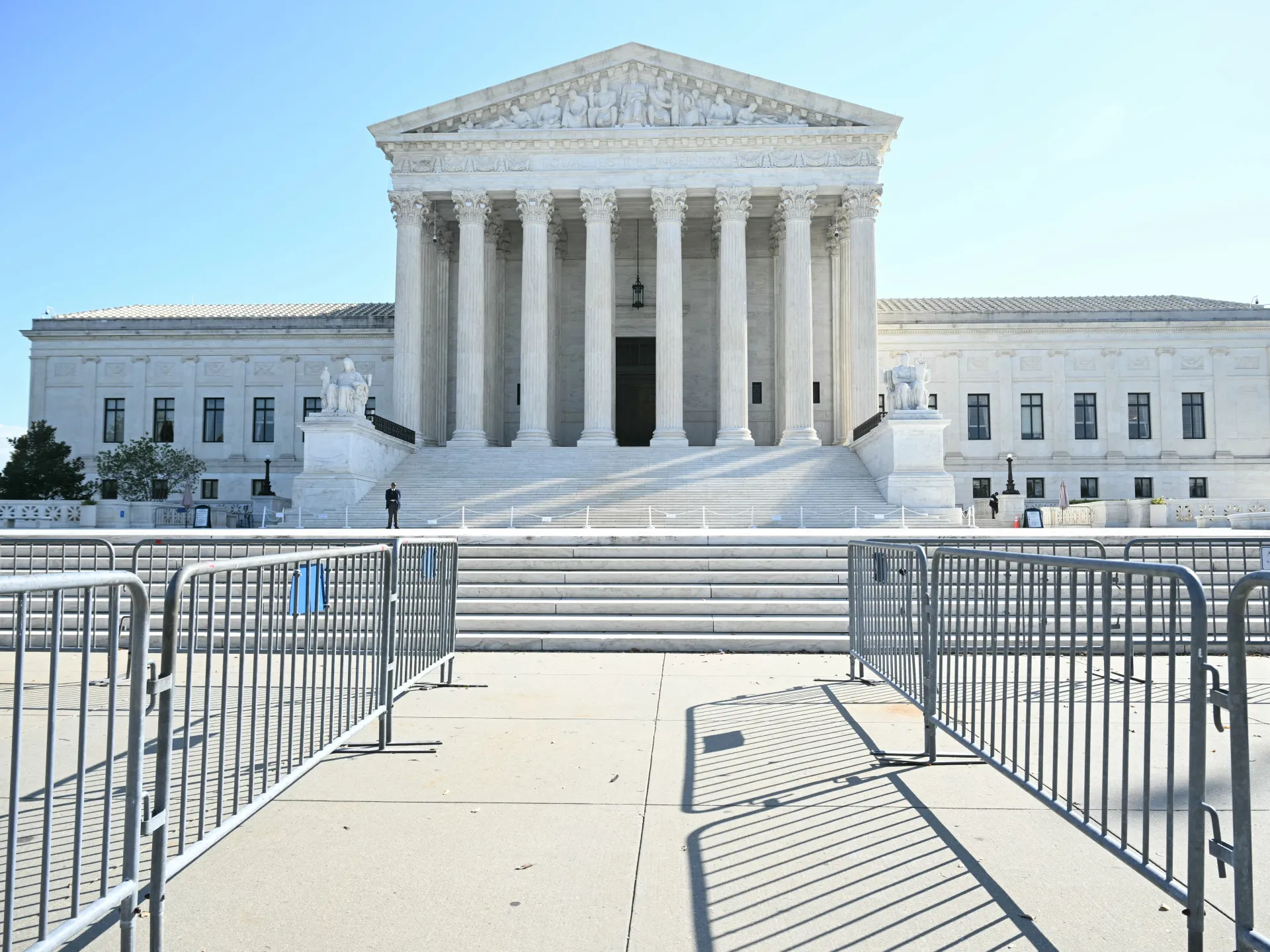
This autumn, the Supreme Court will consider a question with potentially far-reaching consequences for civil rights in the United States: Who gets to enforce them? On November 30, the justices will hear a case over whether employees of federally funded universities can sue under Title IX over alleged workplace sex discrimination. The Trump administration has urged the court to rule that they cannot, arguing that Congress never gave university employees a private right to bring such claims.
The dispute is the latest front in a broader legal push to restrict the ability of individuals and advocacy groups to take rights violations to court themselves. In June, the Supreme Court declined to hear a challenge to a federal appeals court ruling that barred Arkansas United, an immigrant advocacy organisation, from suing to enforce protections for voters who need assistance at the polls. Across a growing number of cases, Republican-led states and the Trump administration are advancing the same basic principle: Unless Congress has clearly authorised private citizens to sue, enforcement should largely be left to the government.
That may sound like an arcane legal argument, but its implications are anything but. If individuals and civil rights groups cannot go to court when laws protecting them are violated, the power to decide which rights are actually enforced increasingly rests with the very government that may be violating, ignoring or choosing not to enforce them.
A private right of action allows individuals, or groups acting on their behalf, to file lawsuits to enforce rights protected by law. These lawsuits can seek compliance with the law or compensation for past violations. Private rights of action are not automatic under US federal and state law. Congress and state legislatures sometimes explicitly authorise private lawsuits. Where they have not, courts have had to determine whether a law implicitly allows individuals or groups to sue, or whether enforcement rests solely with government authorities.
In practice, private litigation has been an essential part of enforcing rights throughout much of US history. As University of Virginia School of Law Professor George Rutherglen writes in a 2015 law review article (PDF):
“The long history of civil rights, dating back to Reconstruction, makes them quintessentially private rights, whose exercise and enforcement should depend primarily on the initiative of the individuals who bear those rights. Public enforcement no doubt remains necessary, and it has an equally long and distinguished pedigree in civil rights law, but it cannot entirely displace individual control over individual rights.”
Proponents of private rights of action, such as AARP, consider them an effective tool for vulnerable individuals and groups to protect their rights when government agencies are unwilling or unable to act. Critics, such as the US Chamber of Commerce Institute for Legal Reform, however, argue that private lawsuits can encourage frivolous litigation.
These critics, often from the political right, have attempted to restrict private litigation through legal arguments against private causes of action. An example is the 2001 Alexander v Sandoval decision, in which a Supreme Court majority led by Justice Antonin Scalia ruled that Title VI did not provide a private right of action to enforce regulations prohibiting policies or practices with a disparate impact on protected groups – discrimination that can occur without clear evidence of intent.
The legal push against private rights of action has intensified in recent years. Republican-led states have increasingly challenged the doctrine of implied private rights of action, arguing that courts should reject private suits to enforce various types of rights. The Trump administration has also adopted this stance. When the court decided a 2021 voting rights case, Justice Neil Gorsuch submitted a one-paragraph concurrence, joined by Justice Clarence Thomas, questioning whether “the Voting Rights Act of 1965 furnishes an implied cause of action,” despite that issue not being raised in the case itself.
The conservative push to restrict private rights of action has extended to a variety of areas. In June, the Supreme Court ruled against Falun Gong practitioners who accused Cisco Systems of helping the Chinese government develop surveillance technology used to facilitate their persecution, concluding that they could not pursue those aiding-and-abetting claims under the federal laws they had invoked.
One of the most consequential implications of restricting private rights of action is the threat to voting rights. In the Arkansas United case, the Eighth Circuit ruled that the immigrant advocacy organisation did not have the right to sue on behalf of non-native English speakers over the right to have language assistance in the voting booth. The ruling concerned Section 208 of the Voting Rights Act of 1965. But it extended a much broader argument already adopted by the Eighth Circuit: that private individuals and advocacy organisations cannot sue to enforce key provisions of the Voting Rights Act. The Supreme Court’s refusal in June to hear Arkansas United left that ruling in place.
This argument has also been pushed by Republican-led governments in two redistricting and vote-dilution cases: Board of Election Commissioners v NAACP in Mississippi and Turtle Mountain Band of Chippewa Indians v Howe in North Dakota. In May, the Supreme Court vacated judgments in both cases and sent them back for reconsideration in light of its ruling in Louisiana v Callais, without resolving the private-enforcement question. That decision sharply raised the bar for some racial vote-dilution claims, endangering the voting power of Black, Hispanic and Native American communities across the US. At the same time, conservative-controlled governments are attempting to deny members and advocates for these communities the right to even bring some of these cases before the courts, arguing that only the Department of Justice can initiate action over such voting rights violations.
The broader danger is that, as private rights of action are curtailed, enforcement of federal law increasingly depends on decisions made by the executive branch.
The Trump administration is now pursuing a different means of restricting private enforcement. The Clean Air Act explicitly gives private citizens the right to bring certain lawsuits, yet the Justice Department has sought to intervene and dismiss a case brought against xAI over allegations that gas turbines at its power facility in Southaven, Mississippi, are violating federal environmental law and polluting surrounding communities. The facility powers xAI’s Colossus 2 data centre in nearby Memphis. In September, the Justice Department appealed to the Fifth Circuit and sought to halt the case. The department has argued that allowing the suit to proceed would threaten national security and the US pursuit of global leadership in AI. Here, the issue is not whether Congress created a private right to sue – it did – but whether the executive branch can nevertheless step in to stop such a case when it conflicts with its priorities.
Relying solely on the Justice Department to pursue such cases at the federal level is a particularly dubious proposition under the current administration. The department has also been weaponised to target political foes of President Trump. Its Civil Rights Division has been steered away from defending the rights of racial and ethnic minorities and refocused on cases brought by white plaintiffs alleging so-called “reverse discrimination”.
The Justice Department’s current politicisation may be reversed under a future administration. But even then, the erosion of private rights of action would leave the enforcement of civil and political rights increasingly dependent on a federal agency with limited resources and subject to political direction. For example, as Democracy Docket noted in 2024, of the 216 active voting rights and redistricting cases it was tracking at the time, only five were cases brought by the Justice Department. As Professor Rutherglen noted in his article, to rely primarily on government actors to enforce rights “is to transform the nature of those rights: from private to public, from individuals to groups, from legal control by plaintiffs to political control by administrators.”
Private rights of action are now being eroded, case by case. Politicians, civil liberties advocates and organisations must challenge this trend before more avenues for enforcement are closed off. Otherwise, protections won over decades may become increasingly dependent on the willingness of government authorities to uphold them, leaving those whose rights are violated with fewer ways to seek redress.
The views expressed in this article are the author’s own and do not necessarily reflect Al Jazeera’s editorial stance.