NOT only is the Algarve one of Europe’s most affordable holiday destinations, but also still gets some great October warmth.
But if you want to avoid the crowds, there are some barely-known-to-Brits islands that are just of the coast where you can enjoy gloriously quiet beaches.
Don’t skip over Faro when heading to the AlgarveCredit: GettyIlha Deserta is the place for Caribbean like sandsCredit: Alamy
To get to the Algarve, most Brits will fly into Faro before heading over to their resort along the coast.
But I highly recommend staying in the city as it is home to Ria Formosa, a group of islands.
Sign up for the Travel newsletter
Thank you!
I was told about the islands by a local, as I had never heard about them or even seen them promoted as a holiday destination.
But just a few euros by boat (taking around 20 minutes) you’ll find empty beaches that rival Caribbean.
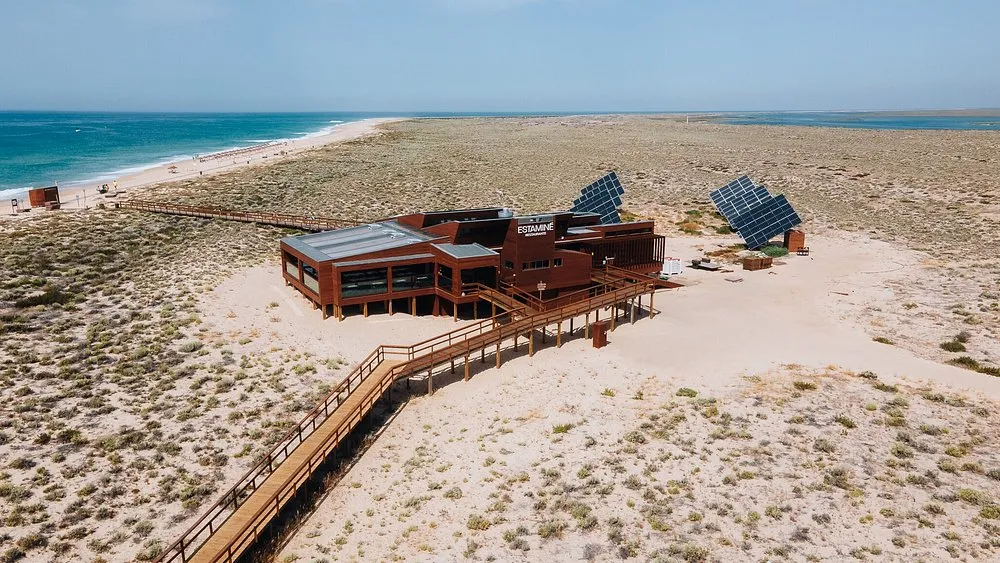
But don’t expect to see any huge holiday resorts or even houses, as no-one lives on the island.
Instead, the boardwalk stretches around the coastline, making it a gloriously peaceful walk.
There is one building on the island, however, which is a restaurant called Estamine.
It first opened in the 1960s, but sadly burnt down in 2021.
Thankfully it has since been rebuilt and it’s worth the boat ride – after all, where else can you go to a desert-like island just to see a restarant?
The only thing on the island? Estamine RestaurantCredit: Unknown
The huge glass windows mean you still get fantastic views, albeit the Portuguese wine and freshly caught fish help too.
Otherwise if you want something a bit more built up, try Isla Armona instead.
There are a few houses and cafes, with a pathway winding through the boat pier to the beach.
Yet that peace and quiet remains, with the stone cottages covered with flowers and tiled patterns.
Get to the soft sand and you can grab an ice cream and a drink before sitting on the beautifully quiet beach.
It still remains quiet however – the boat gets onto the island at one end, with along single path winding through the tiny cottages to the beach on the other side.
However, this beach is just as quiet, with just a small bar serving drinks and snacks.
Now is a great time to go – it’s 27C next week and you can still get flights to Faro for under £20.
If you need somewhere to stay, I highly recommend splashing out on 3HB, which was Faro’s first 5* hotel.
Rooftop restaurant, chic bedrooms and friendly staff all make it worth the stay.
As photographed at night from a satellite, or the International Space Station (ISS), the Iberian peninsula looks encrusted with lights along its coastal edges. Madrid forms a big pulsing cluster near the centre, while surrounding hinterlands appear as something of a void. Ever fewer people live out in Castile and León and Extremadura, adjoining regions that cover much of what is known as La España Vacía, or “Empty Spain”.
Not many visit either, or at least not compared with Barcelona and other glowing nodes of the tourist circuit. So, while the big ports and resorts struggle to manage surplus holidaymakers, there is room for plenty more out west, toward the Portuguese border. Some have been following the stars that way lately, under the auspices of an astrotourism initiative called Extremadura Buenas Noches.
A route map plotted point-to-point between optimal stargazing sites leads to distant outposts like La Siberia (so-called because it felt that remote to workers who laid down the first roads and railways in these parts) and the Corral de los Lobos, an ancient stone enclosure on a hilltop, built to trap wolves when they outnumbered the farmers and shepherds around here.
Corral de los Lobos also lies in one of the rainier reaches of the Spanish interior, and the weather has mostly closed over the night sky when I go up to look. But even through breaks in the clouds, I can see the ISS pass in its elliptical orbit. Beyond that, Jupiter. And, much farther out, the Milky Way.
The Iberian lynx population is increasing in Monfragüe national park, in Extremadura. Photograph: imagebroker.com/Alamy
“Big region, small population, almost no light pollution,” says forestry engineer and nature guide Alberto Garzón Fernández the next day, on a misty hike through Garganta de los Infiernos, a nature reserve named for the fearsome sound of water through its gorges.
There are no other forms of pollution either, it seems. We look down into gigantic cauldrons of granite known as marmitas, where the River Jerte swirls like soup in a pot around eroded rock smooth as brushed steel. The lichen across the wet surface is a luminous green, “a bioindicator of clean air”.
“Extremadura is, no doubt, the most natural and healthy place to live,” Garzón says. His claim extends to non-human natives, not least the birds, and he points skyward to the ghostly profiles of honey buzzards and griffon vultures floating in the vapour off the peaks above. Thanks to “sound management”, as he puts it, the Spanish imperial eagle is now seen in much healthier numbers up there.
The Iberian lynx population, meanwhile, is climbing steadily from dangerous lows of a few decades ago in neighbouring Monfragüe national park, where Garzón was born and raised. And the Iberian wolf – hunted and displaced almost to extinction before recent, belated protections – has been making a comeback over the flanking Gredos mountains.
That’s close enough for their howls to be heard again from the Corral de los Lobos, on those same clear nights when “the stars look so close you could touch them”, says Garzón. The return of these signature species gives him hope for our own. “To me, they represent our capacity to do things right, but we so often wait until the last minute.”
In the River Jerte’s giant cauldrons of granite, water swirls like soup in a pot. Photograph: Manoli Perez/Alamy
If this region has felt the benefit of a minimal human presence lately, it’s hardly untouched by the increasing hazards of our time. The heatwave-borne wildfires of 2025 burned through nearly 20,000 hectares (49,400 acres) of the Jerte valley’s famous cherry orchards. All that damage is bound to affect the harvests to follow – one of the few events to draw a crowd to this area. “It will still be beautiful,” says Sara Cudero Morcuende at Alimentación Sara, a grocery store in the nearby mountain town of Valverde de la Vera.
Her shop is so well stocked with local delicacies that the place would make a killing if transplanted to, say, east London: figs and olives from surrounding groves, sweet and hot paprika dried over open fires, all sorts of cherry jams and liqueurs. But her town, like many in the region, has lost thousands of residents in recent years.
There’s a gothic-romantic hush to the cobbled streets below Valverde de la Vera’s ruined and overgrown castle. The quietude, the quasi-abandonment, may yet enhance the appeal to those passing through, though it can’t be good for business. “A few more customers would be nice,” says Cudero, but otherwise the town has only a couple of tapas bars, a few guesthouses, and no hotel.
For my part, I make use of Spain’s state-owned parador network, which tends to offer surprisingly affordable rooms in converted convents and palaces, mostly within the medieval walls of the nearest comparatively big cities. The provincial capital, Cáceres; Trujillo, with its dreamlike hilltop fortress; and Plasencia, with its two half-cathedrals (one never fully demolished, the other forever unfinished), make good, solid bases.
Fun fact: there are more pigs than people in these regions, including the black, acorn-fed pigs of the dehesa forest, whose meat becomes the world-renowned jamón ibérico. Including, too, the very chunky fellow I encounter in La Alberca, enjoying a siesta in a sty that is also a kind of shrine. Custom dictates that a single fat pig be allowed to wander and eat at its leisure for seven months of each year, until it’s raffled off for the feast of San Antón in January. In the past, that porker was invariably eaten, but some recent winners have apparently kept them as pets.
The city of Trujillo makes a good base for exploring rural areas. Photograph: Ventura Carmona/Getty Images
La Alberca is also known for its gorgeous three-storey houses with half-timber facades, the legacy of Christian settlers from Burgundy, who came to occupy territory reconquered from the Moors 1,000 years ago. The encircling mountains are called the Sierra de Francia for that reason, their slopes thick with oak forests that yield many fine species of mushroom.
“You can eat them all,” says biologist and guide Marino Esteban (La Alberca visitor centreoperates hikes into the forest), on a walk through woods that look more like French or even English countryside. “But some you can only eat once.” This is his way of saying that certain types are toxic. This is also to say that a massive meal at Meson de San Martín – a stonebuilt tavern that seems the only place open in nearby village San Martín del Castañar – is not all about the ham.
There’s plenty of that, but also plenty of the freshly picked penny bun mushrooms grilled with garlic salt and olive oil, not to mention the chestnuts, cheeses, tomatoes and potatoes of surrounding farmlands, and the red wine made from native rufete grapes – as good as anything I’ve tried from more domineering production regions such as La Rioja and Ribera del Duero.
And here’s the big secret I learn on this little road trip: you can often eat and drink better and cheaper in “Empty Spain” than in most of the busier quarters. This was one of the great lunches of my life, I tell the cheery chef, Alfonso Buenaventura Calvo. His wife and co-owner Belén answers for him: “Of course it was.”
OUR Spotlight On column shines a light on the best things to see and do in popular holiday destinations, and some spots that are relatively under the radar.
This week we head to the Caribbean island of the Dominican Republic and the coastal town of Miches.
Here’s everything you need to know about the Dominican RepublicCredit: AlamyYou can see whales in the winter season as wellCredit: Alamy
Often said to be one of the cheapest islands in the Caribbean, it is also 30C in winter and beers are under £1.80.
eurochange has predicted where Brits will be jetting off to in 2026 thanks to recent money transactions – and it’s the Dominican Republic.
Sign up for the Travel newsletter
Thank you!
Laura Evans Fisk, Head of Digital & Engagement at eurochange said: “As we’ve seen transactions for the Dominican peso surge this year ahead of any other currency, we can definitely expect to see the Dominican Republic at the top of travel bucket lists for UK tourists in 2026.”
Direct flights make it easy to get to as well, taking around nine hours from London (both British Airways and TUI fly there) so here are some of our top tips.
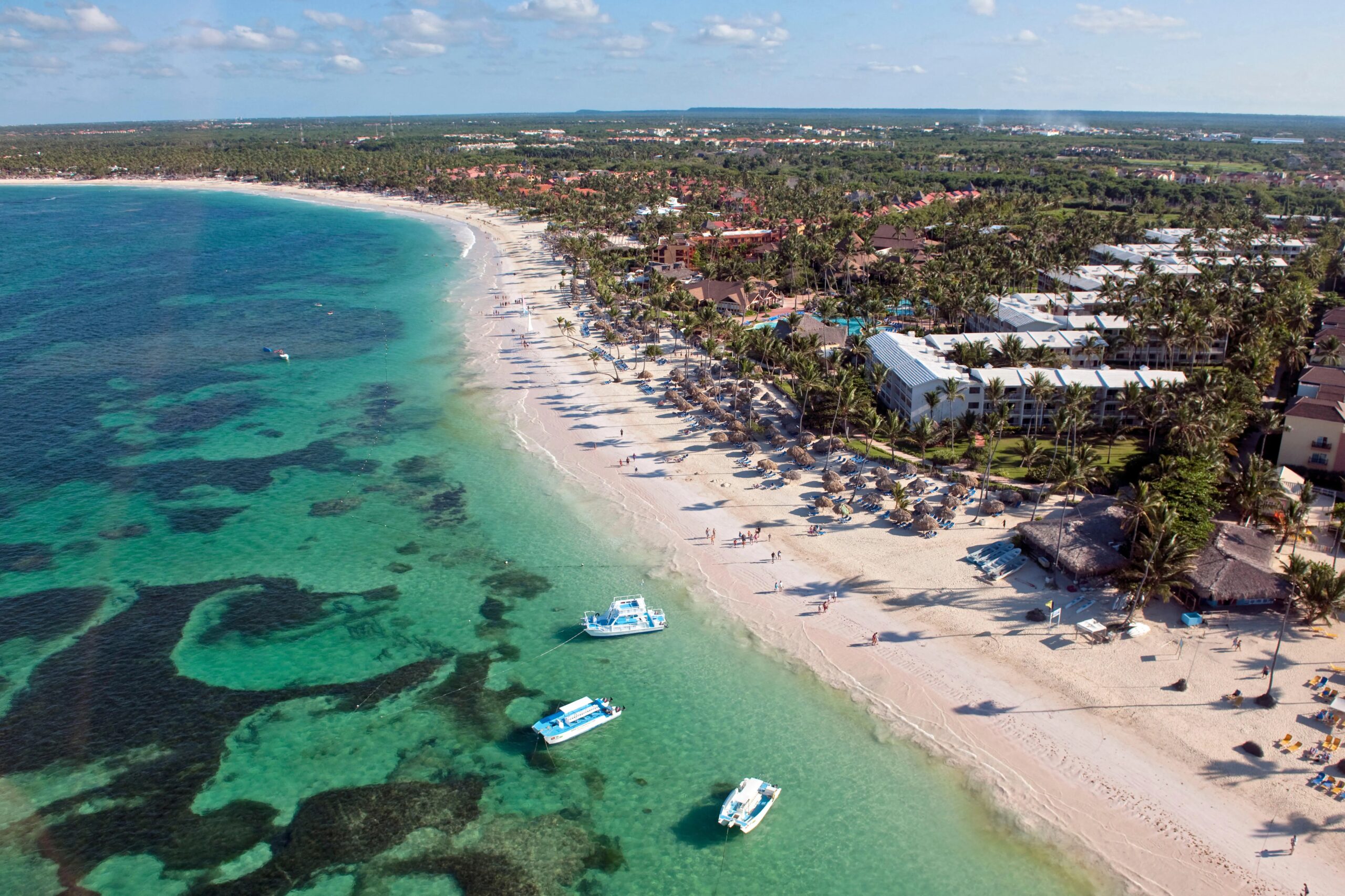
Playa Esmeralda is Miches’ showstopper. This vast ribbon of golden-white sand on the Dominican Republic’s northeastern coast stretches for miles, backed by coconut palms.
The water shifts from turquoise to deep emerald blue, giving the beach its name.
Unlike busier Caribbean resorts, it’s entirely possible to walk for half an hour here without seeing more than a handful of people – no fight for the sun loungers here!
Nature lovers shouldn’t miss Laguna Limón. This peaceful freshwater lagoon surrounded by tropical vegetation is home to dozens of bird species.
Boat tours glide through the wetlands while guides point out herons, pelicans and other wildlife.
Nearby, the crystal-clear pools of Caño Hondo offer a refreshing alternative to the beach, with natural pools cascading through lush forest.
HIDDEN GEM
The town itself and surrounding coastline – a place where emerald mountains tumble into palm-fringed beaches, humpback whales cruise offshore in winter, and brand new luxury hotels sit alongside sleepy fishing villages.
Unlike many Caribbean destinations, Miches still feels wonderfully undiscovered.
You can spend the morning hiking to panoramic viewpoints, the afternoon kayaking through mangroves and the evening watching the sun disappear over miles of virtually empty sand.
In recent years new resorts have arrived, but developers have taken a more low-key approach than elsewhere in the Dominican Republic, keeping much of the coastline untouched and embracing the natural surroundings.
Expect barely crowded beaches and very hot wintersCredit: Alamy
BEST VIEW
But the Instagram-worthy swings of Montaña Redonda have become one of the Dominican Republic’s most recognisable photo spots.
Perched hundreds of metres above sea level, the hill offers spectacular 360-degree views over lagoons, rainforest and the Atlantic Ocean.
Take a seat on the swing that stands at the end of the viewpoint and push out over the incredible green landscape.
RATED RESTAURANTS
Away from the resorts, Miches town offers a glimpse of local life. Small family-run restaurants serve freshly grilled fish, lobster, coconut rice and sancocho, the Dominican Republic’s famous hearty stew.
Try out Rajanoris in town, it’s an unassuming spot not often visited by tourists but it’s a good bet for meeting the locals and tasting mofongo, a savoury pork and plantain dish with lots of garlic!
BEST BAR
Rancho Lounge Miches has a casual atmosphere and lively music and serves up ice cold beer and of course, lots of rum!
WHERE TO STAY
The Zemi Miches All-Inclusive Resort, Curio Collection by Hilton is set on it’s own 800-metre stretch of sand, with nothing but palm trees and mountains for company.
Even though it’s secluded, there’s a wealth of things to do.
There are four different pools, including a kids pool, 11 bars and restaurants, and a swish spa for some pampering.
As for activities, there’s everything from a bowling alley to a padel court! See hilton.com.
Seven nights’ all-inclusive is from £1,569pp including flights from Manchester on November 17, 20kg luggage and transfers. See tui.co.uk.
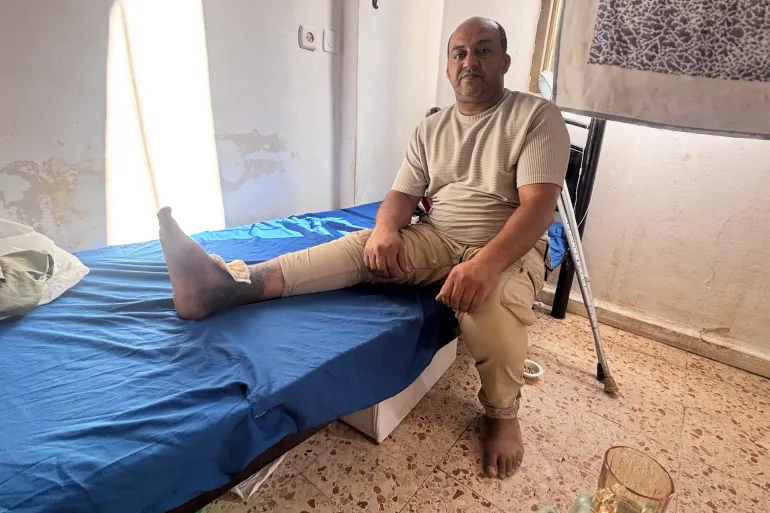
Tulkarem, occupied West Bank – Hakim Mar’i spends his days lying on a single bed, his disfigured leg raised. The windows of Mar’i’s dilapidated apartment, his latest temporary shelter, are covered with old blankets. Unable to work, Mar’i has no money for electricity, so the blankets have to do. At night, his family lives in near darkness.
The apartment is just around the corner from mounds of rubble and gnarled iron structures that mark one entrance to the now-emptied Tulkarem refugee camp. For Mar’i and other Palestinians, the camp was a home once considered temporary. But now, even the physical structure – their home – that tied those generations together is gone.
Recommended Stories
list of 4 itemsend of list
The apartment is just around the corner from mounds of rubble and gnarled iron structures that mark one entrance to the now-emptied Tulkarem refugee camp. For Mar’i and other Palestinians, the camp was a home once considered temporary. But generations lived there, and now, the physical structure – their home – that tied his family together over the years is gone.
Impoverished, Hakim’s family is in disarray. With its debts mounting and its members facing another eviction, he said he has considered taking his life several times over the past year and a half.
Mar’i cannot afford treatment for his debilitating leg injury, which has developed severe infections. He said he sustained it while working as a labourer inside Israel in 2019. The wound worsened after Israeli soldiers severely beat him when they forced his family from the Tulkarem camp. Diabetes and other untreated conditions have piled on, but he is unable to pay for the needed medical care.
“This joint here is completely gone,” he said, gesturing at the swollen, blackened lower leg that prevents him from working.
“The medicine – by God, the medicine, I haven’t been able to get. My wife and kids tell me: get out travel. Go to America, Turkey – so I can the medical treatment I need… I’m a sick man.”
His mother, Salwa, sat beside him, less than a kilometre (0.6 miles) from their former four-storey home. She wept when asked about the family home that was built floor by floor after they were first displaced in 1948 from al-Khudayra, the Arabic name for Hadera, a city in Israel. “We really put a lot into that house,” she said.
After their removal, the Israeli military razed the Mar’i home so a road traversing the now-emptied camp could be built. “Seeing it destroyed was really painful for us – all of us,” she said.
It has been more than 20 months since Israeli forces emptied the Jenin, Tulkarem and Nur Shams refugee camps in a sweeping military operation in the northern West Bank, displacing tens of thousands of Palestinians whose families had already been refugees for three generations. Constantly renewed orders for a closed military zone now prevent their return.
Since January 2025, Hakim’s family has been forced to move four times. First, they fled to a converted youth centre before landing in a cramped apartment with their four children, all under 15.
Unable to pay rent, the family could see the landlord’s generosity run its course as this once-temporary housing arrangement now has no end in sight. Hakim owes money at the local shops for food he bought on credit. Some nights, the children eat at neighbours’ houses.
“I have children. I have food. I have drink,” he said. “My hands are empty. Nobody is with me. Nobody is standing beside me.”
Hakim Mar’i in his family’s apartment with his injured leg, which prevents him from working [Al Jazeera]
‘We’re already at the brink’
The Mar’i family is among more than 33,000 Palestinians forcibly removed from the Jenin, Nur Shams and Tulkarem camps by Israeli forces in early 2025. This is the largest single episode of forced displacement in the West Bank since Israel’s occupation began in 1967, according to the United Nations agency for Palestinian refugees (UNRWA).
UN satellite imagery shows that 20 percent of all buildings across the three camps have been destroyed and another 28 percent are damaged.
“The level of destruction we are seeing is severe and unprecedented,” said Roland Friedrich, director of West Bank affairs for the UN agency for Palestinian refugees, UNRWA.
According to Friedrich, 85 percent of those displaced have no regular income after many lost jobs when the camps were emptied. More than 80 percent of residents are renting, an unfamiliar expense for families who never paid for housing or utilities inside the camps.
The closed military zone covering the camps is renewed every two months, Friedrich said, with no indication of when – or whether – residents will be allowed to return. “What we saw there is forced displacement,” Friedrich said. “The UN’s position is very clear: People have to be allowed to return. The camps must be rebuilt.”
Unlike after the 2000-2005 second Intifada when the Jenin camp was rebuilt, displaced families and UNRWA staff fear there is no return plan this time.
The Israeli military stated the camps were emptied for “operational security” in its effort to root out fighters from the camps. Friedrich worried the aim of the military operations is to “change the geographical expression of the Palestinian refugee issue”.
Now more than 20 months into what was meant to be an emergency response, funding shortages have left UNRWA unable to cover the vast needs of the displaced population. It has moved some operations to keep schools and basic health clinics functioning. With funds dwindling, the agency has shifted to a “targeted approach”, leaving thousands without support.
Friedrich pointed to a rise in gender-based violence linked to the economic strain on families and to growing depression and anxiety among displaced children observed by UNRWA’s psychosocial teams. “We’re already at the brink now,” he declared.
Members of the Zbeidat family sit on couches outside. The room they stay in is on the left [Al Jazeera]
‘Everyone went their own way’
While Hakim’s displacement plays out in the shadow of the camp, the family of Khadija Zbeidat face their own imminent eviction on the outskirts of Tulkarem. They live in the neighbourhood of Dhinnaba, where sparse houses are interspersed with greenhouses. They are unable to afford a residence closer to the city centre.
As Khadija sat on a couch in the middle of the yard, her many children and grandchildren ran past a small patch of plants she has planted – one of her few remaining joys. “I love plants,” she said. “We had many flowers in our home in the camp. Having the plants here is all I have to feel like myself,” she told Al Jazeera.
Khadija, a widow, shares a tiny spartan room with nine family members, nearly all children, along with a small bathroom and a kitchen barely big enough for one person to cook in. A worn couch takes up one corner. The ceiling is peeling above it.
The room was given to them rent free by a relative of Khadija’s brother-in-law after they spent four months crammed into her daughter’s house with nine other people. “It got really cramped, the pressure on each other,” Zbeidat said. “And we became a burden too.”
Khadija’s family was displaced in January 2025 from the Tulkarem camp’s Haret al-Nadi section, a significant part of which has been destroyed, she said.
“The camp was excellent,” she said of their life before. “I swear, I wish they’d take us back. Everything was close to us, dear – … the closeness, that sense of belonging and the warmth, the company and the neighbours.”
The memories that she cherishes most dearly and that bring her to tears are of food: the stuffed grape leaves and the maamoul cookies made as a neighbourhood together for Eid. This year, there was none of it.
“Nothing. No cookies,” she said. “Nobody even had it in them to do anything any more. Everyone went their own way – scattered.”
Like the Mar’i family and others, they were not allowed to bring their belongings during their abrupt displacement. Some residents have since been allowed to retrieve belongings once or twice from their homes in the camps, but much of what they own remains left behind. Khadija’s daughter-in-law at one point returned to the ruins of the camp – at the risk of being shot – to retrieve a doll left behind that Khadija’s granddaughter Sandy would not stop crying about.
In Tulkarem, displaced families live either in the poorest areas closest to the camp, like the Mar’is, or on the cheaper outskirts, like the Zbeidats, remaining close enough to the health and schooling services that UNRWA still provides. But even a simple trip to buy groceries requires Khadija, who has no car, to travel 2km (1.2 miles).
At night, the family sits outside rather than in the stifling heat of the poorly ventilated room, watching Israeli military drones pass low overhead. “What to do? We’re used to seeing them, to having them around, to them raiding houses,” Khadija said. “It doesn’t matter any more.”
The military raids that always haunted life in the refugee camps have now come to wherever the displaced refugees have fled to. “We don’t feel safe,” Khadija said. “Nor the kids. It’s dangerous. When they want to go out somewhere, my heart stays busy until they come back.”
The kitchen and bathroom the Zbeidats have are in the same room they sleep in [Al Jazeera]
Waiting to be kicked out again
For months after the displacement, landlords, relatives and shopkeepers absorbed much of the shock, allowing families to stay for free or buy food on credit. But as the emergency stretches to almost two years now, that informal safety net is fraying. The pressure is felt particularly in economically moribund Tulkarem, where many families had relied on jobs inside Israel before Palestinian work permits were revoked after the Hamas-led attacks in southern Israel and the start of Israel’s genocidal war in Gaza in October 2023.
The owner of the property where Khadija’s family is staying recently sent his sister to tell Khadija’s family to leave. “They think it’s been too long,” Khadija explained. “They want the land, to benefit from the land and the room. … But where can we get money, where to pay from? The rent is very high, and we can’t afford it. We don’t know what to do if she comes again and kicks us out.”
Hakim’s family is on the brink of eviction too. Like others, he received from UNRWA a one-time rental subsidy of 3,000 shekels ($985) and a separate 1,700-shekel ($560) multipurpose cash payment for short-term assistance. “Every minute, I am waiting for the landlord to kick us out,” he said.
Khadija’s family survives on credit from shopkeepers who know their situation and, for now, still extend it – but patience is wearing thin.
Hakim said this goodwill is collapsing: “You tell them: ‘Give me a day, two days. Be patient with me.’ They won’t bear it.”
As distant as a return to her family’s lands in 1948 feels now, Khadija still hopes to return to the camp one day. But she worries that her children may inherit an even more precarious existence than the one that preceded this latest dispossession – refugees for generations displaced yet again. “Only God knows what tomorrow will bring us,” Khadija said.
If you or someone you know is at risk of suicide, theseorganisations may be able to help.





![Hakim Mar’i in his family’s apartment with his injured leg, which prevents him from working [Al Jazeera]](https://i0.wp.com/occasionaldigest.com/wp-content/uploads/2026/09/d9-1790406476.jpg?w=640&ssl=1)
![Members of the Zbeidat family sit on couches outside. The room they stay in is on the left [Al Jazeera]](https://i0.wp.com/occasionaldigest.com/wp-content/uploads/2026/09/s2-1790406485.jpg?w=640&ssl=1)
![The kitchen and bathroom the Zbeidats have are in the same room they sleep in [Al Jazeera]](https://i0.wp.com/occasionaldigest.com/wp-content/uploads/2026/09/s4-1790406489.jpg?w=640&ssl=1)