
Emmanuel Macron

Macron tours East Africa amid push to redefine France’s role in Africa | Emmanuel Macron News

Paris seeks to repair economic and security ties while countering rising anti-French sentiment across Africa.

French President Emmanuel Macron has started a tour of East Africa as Paris seeks to rebuild its influence on the continent after a series of setbacks, especially in its former West African colonies.

Macron began the three-country tour in Egypt on Saturday, which will also take him to Kenya and Ethiopia.

He will cohost a summit in English-speaking Kenya on Monday and Tuesday as France seeks to redefine its role in Africa, moving away from its postcolonial role towards closer cooperation.

The summit will bring together African leaders and business executives, with several agreements between French and Kenyan companies set to be signed during the visit to boost economic and commercial cooperation.

The “Africa Forward” summit will be the first in an Anglophone country attended by Macron since he took office in 2017.

The French president will wrap up his tour in Addis Ababa on Wednesday, where he will hold meetings with Ethiopian officials and take part in talks at the African Union headquarters on peace and security in Africa.

The tour is widely seen as a bid by Paris to repair economic and security ties and counter rising anti-French sentiment across parts of Africa.

Africa’s changing balance

France colonised large parts of West and Central Africa, and maintained excessive political and economic influence long after independence.

France, once widely accused of supporting unpopular leaders for strategic gain, is no longer the dominant foreign power it once was in Francophone Africa.

Across the continent, there is a growing push for more equal, win-win partnerships, tighter control over natural resources and broader alliances beyond traditional Western partners.

Sahel turning point

Anti-French sentiment has generally grown alongside political instability, military coups and rising competition from other international powers.

The sharpest rupture has come in the Sahel region, where Mali, Burkina Faso and Niger have seen coups followed by rapidly deteriorating relations with France.

French forces were subsequently expelled after years of military operations against armed groups that many local governments and segments of the public viewed as ineffective.

In the vacuum, the region’s military rulers have turned to new security partners, particularly Russia, highlighting France’s declining influence in the region.

Russian influence, including through the Wagner Group and its successor networks, expanded in part by exploiting anti-French sentiment.

Can Macron succeed in reshaping France’s Africa policy?

Macron is seeking to reshape France’s Africa policy, replacing traditional influence with what he calls partnerships.

He is also pushing for deeper cultural and educational cooperation focused on entrepreneurship, climate and youth engagement.

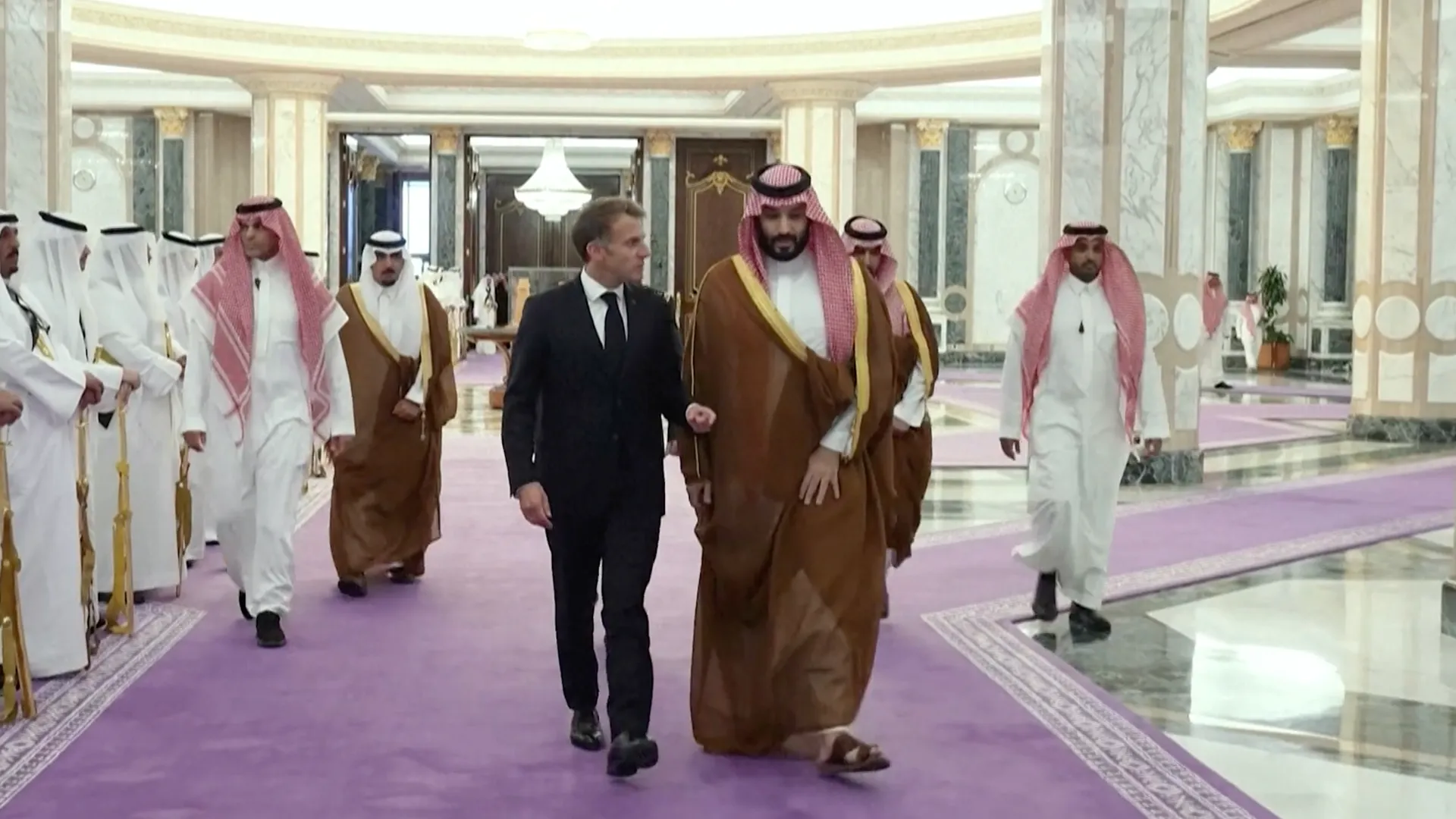
Emmanuel Macron began his three-country tour with a visit to Egypt
Emmanuel Macron began his three-country tour with a visit to Egypt [EPA]

Such efforts are seen as France’s attempt to reinvent its postcolonial relationship with African states and compete with powers like China and Russia.

Paris is, in fact, trying to shift its Africa policy; questions over its influence on the continent, however, persist.

Source link

Euronews explains: What are eurobonds, why is it divisive and does it make sense?

Eurobonds have returned to the spotlight after Emmanuel Macron revived the debate last week, calling for increased joint EU borrowing to boost the European economy.


ADVERTISEMENT


ADVERTISEMENT

The French president has often argued the EU will need billions in fresh funding as the bloc faces mounting competition from China and the United States and invest massively in defence and advanced technologies.

Macron is leading a group of countries that argue no single member state can meet these challenges alone. Instead, they argue it would be more effective to raise funds collectively on financial markets, unlocking billions of euros for shared European projects.

A growing number of economists and central bankers — including the typically cautious Deutsche Bundesbank — have also voiced support, noting that joint borrowing could reduce financing costs.

However, countries opposed to further debt, led by Germany, argue that eurobonds will only increase the EU’s debt load, while ignoring the real issue of declining productivity.

So, what happens next? Euronews explains:

What are eurobonds?

In the EU context, eurobonds means joint debt issued by EU institutions and backed collectively by member states. This means the responsibility to repay it is shared, with risk pooled across the bloc, and the additional debt does not impact national balance sheets alone, which is useful for the most indebted member states.

With a top-tier, AAA credit rating, they would be considered a safe asset, underpinned by the combined guarantees of EU countries. This could allow governments to borrow at a lower cost compared and thus pay less interests to creditors.

Eurobonds are intended to help finance major long-term investments, including infrastructure, the green transition and defence, where the EU will have to raise and spend billions of euros in a plan titled Readiness 2030.

The EU has already made use of joint borrowing through its €750 billion recovery plan, NextGenerationEU, agreed in 2020 in response to the COVID-19 pandemic, and Brussels agreed that it was successful. Still, it insists it was a one-off.

More recently, the idea was revived by Mario Draghi in his 2024 report on European competitiveness. The report argued that joint EU borrowing would be needed to mobilise an additional €800 billion in annual investment if the bloc is to remain competitive globally. A part of it would be private funds, but public investment would be needed too.

Who supports eurobonds — and who opposes them?

The debate over eurobonds has divided the EU for decades, stretching back to the euro zone’s sovereign debt crisis.

Fiscally conservative countries — including Germany, Netherlands, Austria, Finland and Sweden — often referred to as the “frugals”, have traditionally opposed joint borrowing.

They argue it could weaken fiscal discipline and leave more prudent countries exposed to the debts of others. Nonetheless, the need to massively rearm has eased some of the opposition from the Nordic countries which are open to it as long as it goes into defence.

By contrast, southern member states such as France, Greece, Spain, and Portugal have generally supported the idea, seeing it as a way to unlock investment and share financial risks across the bloc. Italy under Giorgia Meloni has played this both ways, saying it sees the benefits while trying to build a close rapport with Germany.

Emmanuel Macron has been among the most vocal advocates in recent months. Speaking at an informal EU summit in February, he called for the creation of a joint borrowing capacity for future investment. His proposal was quickly rejected by Germany.

But still, the French president has not given up on the idea, and by reviving the plan for eurobonds, he is looking to place the debate high on the agenda ahead of a June summit of European leaders.

Paris and Berlin did, however, work together in 2020. Emmanuel Macron and then-German chancellor Angela Merkel played key roles in pushing through the EU’s pandemic recovery fund, although Berlin insisted at the time that the measure was temporary.

Her successor, Friedrich Merz, has taken a firmer stance. Speaking on 24 April, he said that higher debt and the issuance of eurobonds were “out of the question” from a German perspective.

Who will pay for eurobonds?

As a form of collective debt, eurobonds would be repaid jointly by all 27 EU member states, with responsibility shared across the bloc.

The EU has already taken a similar approach with its €750 billion recovery instrument, NextGenerationEU. The repayments should begin in 2028, which kickstarts the next EU’s long-term budget through 2034, which is currently under negotiation in Brussels.

The deadline for the full repayment is 2058.

Some countries, led by France, have called for repayments to be delayed or refinanced through new joint borrowing. Macron said a quick reimbursement in the current context would be “idiotic” and the EU should not rush repayments at the expense of future investment.

Kyriakos Mitsotakis has made a similar case, questioning whether repaying the recovery fund now would reduce the EU’s budgetary capacity at a time when demand for European bonds remains strong.

How are discussions around eurobonds going in Brussels?

Eurobonds have so far gained little traction in Brussels.

They were briefly referenced in a preparatory note by the European Commission ahead of a 16 February meeting of euro-area ministers. However, the issue was not taken forward at the subsequent Eurogroup meeting in March.

“There is a divergence in appetite regarding eurobonds,” Eurogroup President Kyriakos Pierrakakis said at the time.

In recent months, Eurogroup discussions have instead focused on the fallout from the conflict in Iran, particularly its impact on European energy prices, as well as broader efforts to boost competitiveness and advance Capital Markets Union legislation.

For now, diplomats say momentum is limited.

“I don’t see a lot of appetite on eurobonds at this stage, and indeed it’s not being really discussed for now,” one EU official told Euronews.

What happens next?

The Eurogroup is due to meet again on 22 May, and EU leaders will gather for a summit in Brussels in June.

No major Eurogroup discussions on eurobonds are currently foreseen, and Macron’s endorsement is unlikely to change the agenda, diplomats told Euronews.

Part of the reason is the EU’s focus on the impact of the conflict in Iran on energy prices — a major concern for the bloc’s economic outlook. The firm opposition of Friedrich Merz is also weighing heavily on the debate.

However, eurobonds are likely to remain on the agenda for EU leaders, with further backing expected in the coming months.

Source link