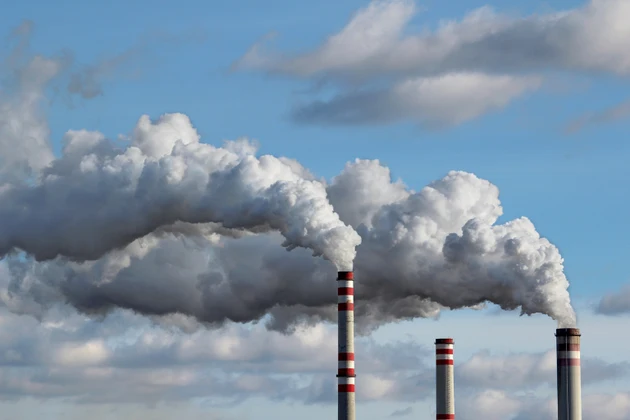
emissions

EPA proposes rollback of heavy duty diesel truck emissions regulation

July 9 (UPI) — The Trump administration on Thursday proposed to roll back a Biden-era rule on emissions from heavy duty diesel trucks because it is “unworkable.”

The Environmental Protection Agency proposed lowering requirements for heavy truck emissions systems because of issues with the technology for new trucks and penalties for older vehicles that do not measure up, the agency said in a press release.

The change is expected by the administration to save up to $6,000 per new truck and could help save truckers roughly $12 billion, Fox News and The Hill reported.

The change will shorten government requirements for engine warranties to 100,000 miles, from 450,000 miles, and will delay a requirement that trucks meet emissions standards for their first 650,000 miles — an increase from the first 435,000 miles — for three years.

“This proposal to eliminate engine deratements and reform the Biden-era … requirements will lower costs, increase safety and keep our nation’s food supply moving,” Secretary of Agriculture Brooke Rollins said in the release.

The Biden administration rule was aimed at strengthening rules about nitrogen oxide emissions by improving maintenance and repair requirements over a longer period of time.

Critics have said that the new rule will weaken clean air protections and potentially affect Americans’ health, but the administration has countered that lowering business and consumer costs are an essential focus and that environmental concerns are overblown.

Source link

Tackling methane emissions key for climate change and energy security: IEA | Climate Crisis News

Dealing with emissions could help alleviate effects of Iran crisis on global energy supply, says report.

Tackling methane emissions in the fossil fuel sector would help efforts to hold back climate change and increase energy security, especially as the Iran crisis threatens global supplies, according to a report by the International Energy Agency (IEA).

The oil, gas and coal industries account for about 35 percent of all methane emissions from human activity, notes the IEA’s Global Methane Tracker 2026, released on Monday. However, there is little progress in reducing them, the report points out.

Recommended Stories

list of 4 itemsend of list

“There is still no sign that methane emissions from fossil fuel operations are falling, despite well-known and proven mitigation pathways,” the IEA said.

Methane, the second-biggest contributor to climate change, stays in the atmosphere for far less time than carbon dioxide, but its warming effect is roughly 80 times more potent over a 20-year period.

The IEA estimates that methane emissions from oil, gas and coal total 124 million tonnes a year. Oil is the largest source at 45 million tonnes (Mt), followed by coal at 43 Mt, and natural gas at 36 Mt.

“A further 20 Mt comes from bioenergy production and consumption, largely from the incomplete combustion of traditional biomass used for cooking and heating in developing economies,” the report added.

Oil prices have soared since the United States and Israel launched their war against Iran in late February and Tehran closed the Strait of Hormuz in response. An April ceasefire between the sides is currently holding, but global energy supplies remain limited.

The ongoing crisis is reshaping the global energy system and disrupting about 20 percent of global liquefied natural gas (LNG) trade flows.

Nearly 100 billion cubic metres of natural gas could be made available annually through a global effort to cut methane from oil and gas operations, the IEA said, estimating that nearly 15 billion cubic metres could be made available in a sufficiently short period of time to provide some relief to gas markets.

A further 100 billion cubic metres would be unlocked through the elimination of non-emergency flaring worldwide, it added.

Paris initiative

France, using its role as rotating chair of the Group of Seven (G7) bloc of industrialised powers, convened government officials, industry leaders and experts on Monday to build momentum on cutting methane emissions.

The conference aimed at reducing methane emissions ahead of the United Nations’ November COP31 summit.

“I sincerely hope that the discussions we will have today will enable us to join our forces to accelerate the implementation of effective solutions to reduce methane emissions,” French Ecological Transition Minister Monique Barbut said in a speech.

“Of course, action on methane is not a fight of any single actor and nobody can win it alone,” she added, noting that the world remains “very far” from meeting a pledge to cut methane emissions by 30 percent by 2030 compared with 2020 levels.

“Reducing methane emissions remains one of the best things we can do to slow global warming while cleaning up our air, improving public health, and increasing our energy security,” British Secretary of State for Energy Security Ed Miliband said in a video message.

Source link